
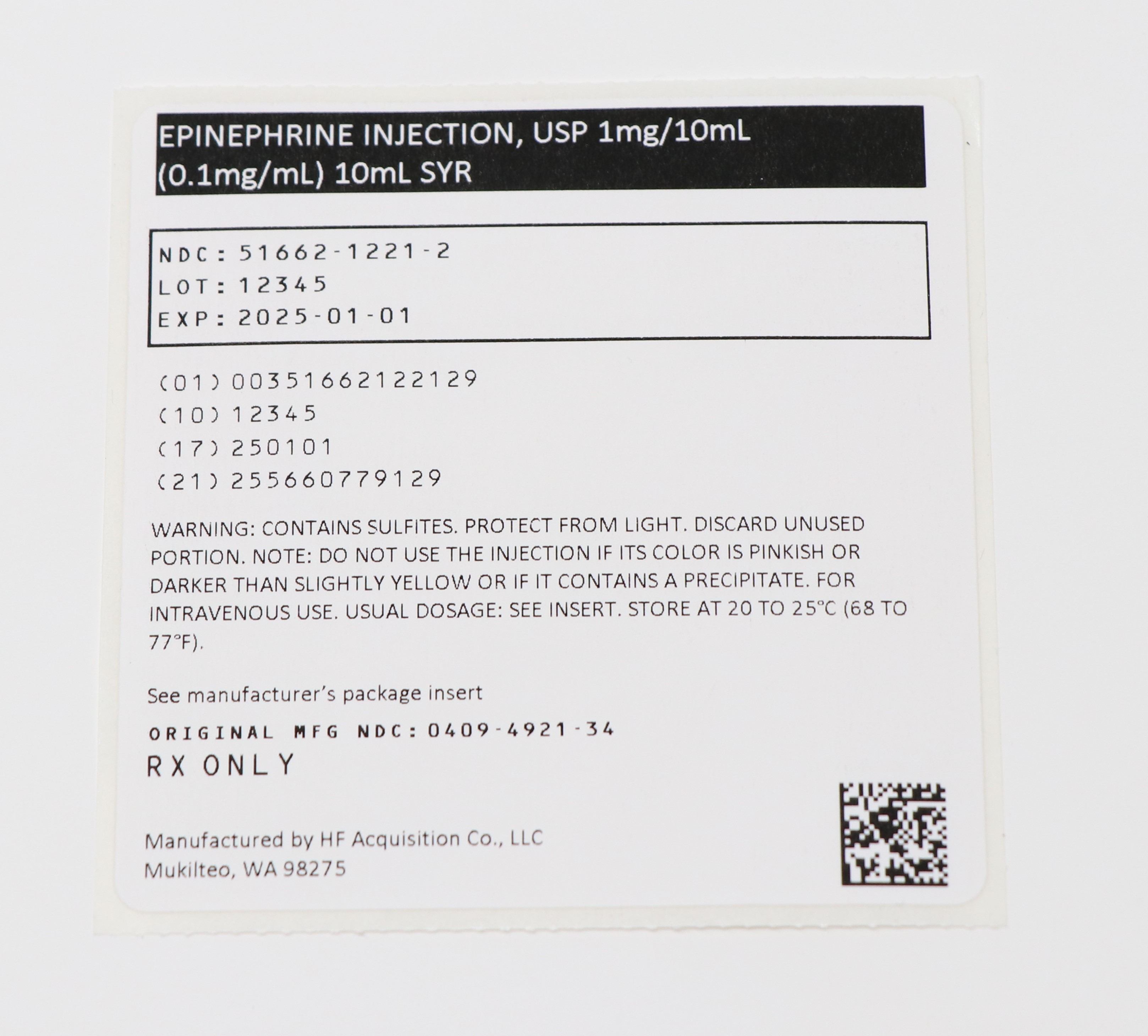
EPINEPHRINE 0.1 mg/mL Injection, Solution
Other active recalls for Epinephrine (different manufacturers) — 2 · tap to view
🆔 Identity & classification
Where does this data come from?
🏭 Manufacturer & labeler
Where does this data come from?
🩺 Clinical
- Epinephrine works fast but wears off quickly — sometimes in as little as 15 to 20 minutes. Anaphylaxis can come back (this is called a biphasic reaction), and you may need addition...
- Why do I need to go to the ER after using my EpiPen or Auvi-Q if I already feel better?
- Yes, it absolutely matters. Inject into the outer thigh — you can even go through your clothing if needed. Never inject into the buttocks (that spot carries a risk of serious infec...
- Where exactly do I inject it, and does it matter?
Patient education
Supplement & herbal interactions
Some supplements/herbs that may interact with Epinephrine — tap one for details:
Where does this data come from?
Ask a licensed pharmacist directly — free, answered by our team.
🧪 Inactive Ingredients / Excipients
Inactive ingredients, also called excipients, are components of the drug product other than the active ingredient. They may include fillers, dyes, coatings, preservatives, flavors, or other formulation ingredients.
💡 Tap an ingredient (hover on desktop) to see what it is and why it’s used.
-
2 mg / 1 mL
UNII XF417D3PSL
Anhydrous citric acid is a sour, crystalline powder derived from citric acid with water removed. In medicines, it acts as a buffer to control pH, adds tartness to improve taste, and helps tablets disintegrate.
-
8.16 mg / 1 mL
UNII 451W47IQ8X
Sodium chloride is common table salt. It's used in medicines as a buffer to maintain proper pH, as a filler to add bulk, or to adjust the osmotic balance in liquid formulations.
-
0.46 mg / 1 mL
UNII 4VON5FNS3C
Sodium metabisulfite is a preservative derived from sulfur compounds. It prevents microbial growth and oxidation in medicines, helping extend shelf life and maintain product stability.
-
0.6 mg / 1 mL
UNII B22547B95K
A salt derived from citric acid that helps maintain the proper acid-base balance in the medicine. It's used as a buffer to keep the product stable and at the right pH level.
4 inactive ingredients listed in the exact product block matched to this NDC.
Where does this data come from?
ingredient classCode="IACT" elements from the exact product block matched by this NDC. Label-section narrative from DailyMed / the openFDA label index is shown separately when available.Inactive ingredient FAQ
Are inactive ingredients the same for every manufacturer?
Why might an inactive ingredient be missing?
Can inactive ingredients matter?
💲 Pricing
A drug doesn't have one price. Each row is a different public payment system, and none is what you'd pay at the counter — that depends on your insurance. The ⓘ on each row explains what it measures.
| Price system | Per mL | Per package |
|---|---|---|
| Retail pharmacies payNADAC · weekly | Not in the retail survey — common for institutional, discontinued, or low-volume packs. | |
| Medicaid paysCMS SDUD · 12 mo | No recent Medicaid claims on file for this NDC — rare and low-volume NDCs are suppressed in the public data. | |
| Medicare drug plans payPart D · quarterly | No Part D plan price is available for this NDC in our data. | |
Where does this data come from?
🔁 Therapeutic equivalents
| Product | Labeler | Pack | NADAC/unit | TE | Status | Price vs. this |
|---|---|---|---|---|---|---|
| Epinephrine 0.1 mg/mLthis 51662-1221-01 | HF | 1 syringe | — | — | Discontinued | — |
Where does this data come from?
⏳ Availability & generic status
We did not find an FDA-approved generic match for this exact strength, form and route.
Where does this data come from?
📊 Medicare Part D spend CMS · PART D · 2026 (Q1)
🔬 Reported adverse events (FAERS)
Top reported reactions
Age at onset
Reporter sex
Serious outcomes
Where does this data come from?
📦 Packaging — all sizes for this product
| Package NDC | Description | Marketing start | Status |
|---|---|---|---|
| 51662-1221-01 You're viewing this | 1 SYRINGE, GLASS in 1 CARTON (51662-1221-1) / 10 mL in 1 SYRINGE, GLASS | 2018-09-17 | Inactivated by FDA |
| 51662-1221-03 | 50 POUCH in 1 CASE (51662-1221-3) / 1 mL in 1 POUCH (51662-1221-2) | 2021-01-12 | Inactivated by FDA |
Pack size FAQ
What quantity is in NDC 51662-1221-01?
What NDC number is used to bill for this package of EPINEPHRINE 0.1 mg/mL Injection, Solution?
🧭 About this NDC listing & data coverage
Listed without an FDA application
This product's marketing category indicates it is marketed without an approved FDA application (no NDA, ANDA, or BLA on file). Having an NDC does not by itself establish FDA approval — the NDC Directory is a listing system, not an approval decision. Approval-linked data such as Orange Book therapeutic-equivalence ratings therefore does not apply.
What data is (and isn’t) available for this NDC — tap to expand
| NDC identity (package / product / labeler codes) | ✓ Available |
| Labeler | ✓ Available |
| Product & package description | ✓ Available |
| Marketing category & status | ✓ Available |
| Active ingredient / dosage form / route | ✓ Available |
| FDA label (SPL via DailyMed) | ✓ Available |
| Package photos | ✓ Available |
| Inactive ingredients (structured) | ✓ Available |
| NADAC pharmacy acquisition price (CMS) | — Not published for this NDC CMS publishes NADAC only for NDCs reported in its retail-pharmacy survey. |
| Orange Book / therapeutic-equivalence data | — Not published for this NDC Applies only to products approved under an NDA/ANDA; many listings are out of scope. |
| HCPCS J-code billing crosswalk | — Not published for this NDC Most self-administered / retail products have no J-code — that is normal. |
| Medicaid utilization (CMS SDUD) | — Not published for this NDC CMS reports utilization only for NDCs with Medicaid claims above its privacy threshold. |
Questions about this listing
Is this NDC FDA-approved?
Why is there no price listed?
What does the discontinued status mean for this NDC?
Is the NDC printed on the package the same as the 11-digit billing NDC?
What do the three segments of this NDC mean?
Does this product come in other package sizes?
Who lists this product with the FDA?
Do I need a prescription for this product?
Where does this data come from?
📄 Full prescribing information FDA SPL
🎯 Indications and Usage ▾
INDICATIONS & USAGE Epinephrine Injection, USP is indicated for intravenous injection in (1) treatment of acute hypersensitivity (anaphylactoid reactions to drugs, animal serums and other allergens), (2) treatment of acute asthmatic attacks to relieve bronchospasm not controlled by inhalation or subcutaneous administration of other solutions of the drug and (3) treatment and prophylaxis of cardiac arrest and attacks of transitory atrioventricular (A-V) heart block with syncopal seizures (Stokes-Adams Syndrome). In acute attacks of ventricular standstill, physical measures should be applied first.
When external cardiac compression and attempts to restore the circulation by electrical defibrillation or use of a pacemaker fail, intracardiac puncture and intramyocardial injection of epinephrine may be effective.
⏱️ Dosage and Administration ▾
DOSAGE & ADMINISTRATION Epinephrine Injection, USP is administered by intravenous injection and/or in cardiac arrest, by intracardiac injection into the left ventricular chamber or via endotracheal tube directly into the bronchial tree. The adult intravenous dose for hypersensitivity reactions or to relieve bronchospasm usually ranges from 0.1 to 0.25 mg (1 to 2.5 mL of 0.1 mg/mL solution), injected slowly. Neonates may be given a dose of 0.01 mg per kg of body weight; for the infant 0.05 mg is an adequate initial dose and this may be repeated at 20 to 30 minute intervals in the management of asthma attacks.
In cardiac arrest, 0.5 to 1.0 mg (5 to 10 mL of 0.1 mg/mL solution) may be given. During a resuscitation effort, 0.5 mg (5 mL) should be administered intravenously every five minutes. Intracardiac injection should only be administered by personnel well trained in the technique, if there has not been sufficient time to establish an intravenous route.
The intracardiac dose usually ranges from 0.3 to 0.5 mg (3 to 5 mL of 0.1 mg/mL solution). Alternatively, if the patient has been intubated, epinephrine can be injected via the endotracheal tube directly into the bronchial tree at the same dosage as for intravenous injection. It is rapidly absorbed through the lung capillary bed.
Parenteral drug products should be inspected visually for particulate matter and discoloration prior to administration, whenever solution and container permit. (See PRECAUTIONS .) To prevent needle-stick injuries, needles should not be recapped, purposely bent or broken by hand.
⛔ Contraindications ▾
CONTRAINDICATIONS Epinephrine is contraindicated in patients with known hypersensitivity to sympathomimetic amines, in patients with angle closure glaucoma, and patients in shock (nonanaphylactic). It should not be used in patients anesthetized with agents such as cyclopropane or halothane as these may sensitize the heart to arrhythmic action of sympathomimetic drugs. Epinephrine should not ordinarily be used in those cases where vasopressor drugs may be contraindicated, e.g., in thyrotoxicosis, diabetes, in obstetrics when maternal blood pressure is in excess of 130/80 and in hypertension and other cardiovascular disorders.
⚠️ Warnings ▾
WARNINGS Inadvertently induced high arterial blood pressure may result in angina pectoris, aortic rupture or cerebral hemorrhage. Epinephrine may induce potentially serious cardiac arrhythmias in patients not suffering from heart disease and patients with organic heart disease or who are receiving drugs that sensitize the myocardium. Parenterally administered epinephrine initially may produce constriction of renal blood vessels and decrease urine formation.
Epinephrine is the preferred treatment for serious allergic or other emergency situations even though this product contains sodium metabisulfite, a sulfite that may in other products cause allergic-type reactions including anaphylactic symptoms or life-threatening or less severe asthmatic episodes in certain susceptible persons. The alternatives to using epinephrine in a life-threatening situation may not be satisfactory. The presence of a sulfite(s) in this product should not deter administration of the drug for treatment of serious allergic or other emergency situations.
🤒 Adverse Reactions ▾
ADVERSE REACTIONS Transient and minor side effects of anxiety, headache, fear and palpitations occur with systemic therapeutic doses, especially in hyperthyroid individuals. Adverse effects such as cardiac arrhythmias and excessive rise in blood pressure may also occur with therapeutic doses or inadvertent overdosage. Other adverse reactions include cerebral hemorrhage, hemiplegia, subarachnoid hemorrhage, anginal pain in patients with angina pectoris, anxiety, restlessness, throbbing headache, tremor, weakness, dizziness, pallor and respiratory difficulty.
🆘 Overdosage ▾
OVERDOSAGE Erroneous administration of large doses of epinephrine may lead to precordial distress, vomiting, headache, dyspnea, as well as unusually elevated blood pressure. (See WARNINGS .) Toxic effects of overdosage can be counteracted by injection of an alpha-adrenergic blocker and a beta-adrenergic blocker. In the event of a sharp rise in blood pressure, rapid-acting vasodilators such as the nitrites, or alpha-adrenergic blocking agents can be given to counteract the marked pressor effect of large doses of epinephrine.
🧬 Clinical Pharmacology ▾
CLINICAL PHARMACOLOGY The actions of epinephrine resemble the effects of stimulation of adrenergic nerves. To a variable degree it acts on both alpha and beta receptor sites of sympathetic effector cells. Its most prominent actions are on the beta receptors of the heart, vascular and other smooth muscle.
When given by rapid intravenous injection, it produces a rapid rise in blood pressure, mainly systolic, by (1) direct stimulation of cardiac muscle which increases the strength of ventricular contraction, (2) increasing the heart rate and (3) constriction of the arterioles in the skin, mucosa and splanchnic areas of the circulation. When given by slow intravenous injection, epinephrine usually produces only a moderate rise in systolic and a fall in diastolic pressure. Although some increase in pulse pressure occurs, there is usually no great elevation in mean blood pressure.
Accordingly, the compensatory reflex mechanisms that come into play with a pronounced increase in blood pressure do not antagonize the direct cardiac actions of epinephrine as much as with catecholamines that have a predominant action on alpha receptors. Total peripheral resistance decreases by action of epinephrine on beta receptors of the skeletal muscle vasculature and blood flow is thereby enhanced. Usually this vasodilator effect of the drug on the circulation predominates so that the modest rise in systolic pressure which follows slow injection or absorption is mainly the result of direct cardiac stimulation and increase in cardiac output.
In some instances peripheral resistance is not altered or may even rise owing to a greater ratio of alpha to beta activity in different vascular areas. Epinephrine relaxes the smooth muscles of the bronchi and iris and is a physiologic antagonist of histamine. The drug also produces an increase in blood sugar and glycogenolysis in the liver.
Intravenous injection produces an immediate and intensified response. Following intravenous injection epinephrine disappears rapidly from the blood stream. Epinephrine is rapidly inactivated in the body and is degraded by enzymes in the liver and other tissues.
The larger portion of injected doses is excreted in the urine as inactivated compounds and the remainder either partly unchanged or conjugated. The drug becomes fixed in the tissues and is inactivated chiefly by enzymatic transformation to metanephrine or normetanephrine either of which is subsequently conjugated and excreted in the urine in the form of sulfates and glucuronides. Either sequence results in the formation of 3-methoxy-4-hydroxy-mandelic acid (vanillyl-mandelic acid: VMA) which also is detectable in the urine.
Sodium chloride added to render the solution isotonic for injection of the active ingredient is present in amounts insufficient to affect serum electrolyte balance of sodium (Na+) and chloride (Cl–) ions.
📦 How Supplied / Storage and Handling ▾
HOW SUPPLIED EPINEPHRINE INJECTION, USP is supplied in the following dosage forms. NDC 51662-1221-1 EPINEPHRINE INJECTION, USP 1mg/10mL (0.1mg/mL) SYR (1:10,000) NDC 51662-1221-2 Pouch containing a single EPINEPHRINE INJECTION, USP 1mg/10mL (0.1mg/mL) SYR (1:10,000) NDC 51662-1221-3 Case of 50 pouches - EPINEPHRINE INJECTION, USP 1mg/10mL (0.1mg/mL) SYR (1:10,000) HF Acquisition Co LLC, DBA HealthFirst Mukilteo, WA 98275 Also supplied in the following manufacture supplied dosage forms Epinephrine Injection, USP is supplied in single-dose containers as follows: * Abboject™ LifeShield™ Unit of Use Syringe with protected needle and male luer lock adapter.
Store at 20 to 25ºC (68 to 77ºF). [See USP Controlled Room Temperature.] Protect from light. TO PREVENT NEEDLE-STICK INJURIES, NEEDLES SHOULD NOT BE RECAPPED, PURPOSELY BENT OR BROKEN BY HAND. Hospira, Inc., Lake Forest, IL 60045 USA Abboject™ is a trademark of Abbott Laboratories.
LAB-1136-1.0 Revised: 09/2017 HOW SUPPLIED TABEL HOW SUPPLIED LOGO
📋 Description ▾
DESCRIPTION Epinephrine Injection, USP is a sterile, nonpyrogenic solution administered parenterally by the intravenous or intracardiac (left ventricular chamber) routes, or via endotracheal tube into the bronchial tree. Each milliliter (mL) contains epinephrine 0.1 mg; sodium chloride 8.16 mg; sodium metabisulfite added 0.46 mg; citric acid, anhydrous 2 mg and sodium citrate, dihydrate 0.6 mg added as buffers. May contain additional citric acid and/or sodium citrate for pH adjustment. pH 3.3 (2.2 to 5.0).
Epinephrine Injection, USP is oxygen sensitive. The solution contains no bacteriostat or antimicrobial agent and is intended for use only as a single-dose injection. When smaller doses are required the unused portion should be discarded.
Epinephrine Injection, USP is a parenteral adrenergic (sympathomimetic) agent and cardiac stimulant. The drug belongs to the group of endogenous compounds known as catecholamines. Sodium Chloride, USP is chemically designated NaCl, a white crystalline powder freely soluble in water.
Epinephrine, USP is chemically designated 4-[1-hydroxy-2-(methylamino) ethyl]-1, 2 benzenediol, a white, microcrystalline powder. With acids, it forms salts that are freely soluble in water. Epinephrine has the following structural formula: STRUCTURE