
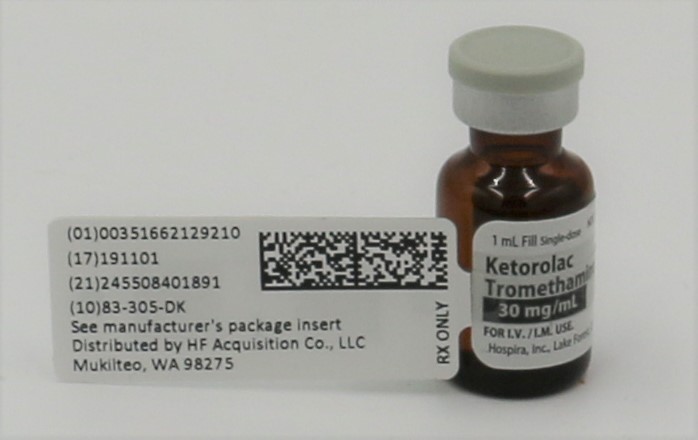
KETOROLAC TROMETHAMINE 30 mg/mL Injection, Solution, 1 mL — NDC 51662-1292-1 (Billing 51662-1292-01)
This is a package of 1 mL of KETOROLAC TROMETHAMINE 30 mg/mL Injection, Solution from HF Acquisition Co LLC, DBA HealthFirst, marketed since Sep 2018 and currently FDA-listed. It is the main listing for this product, which comes in 2 package sizes.
Other active recalls for Ketorolac Tromethamine (different manufacturers) — 3 · tap to view
Identity & classification
Regulatory identifiers FDA, NLM and CMS codes for this package
- RxCUI (RxNorm): 1665459
Where does this data come from?
- FDA openFDA NDC Directory · synced Oct 1, 2026
- FDA label on DailyMed · label index refreshed Oct 1, 2026
- RxNorm (NLM RxNav) · catalog refreshed Oct 1, 2026
- Medi-Span GPI (licensed)
- First Databank (licensed) · refreshed Oct 1, 2026
RxNorm drug class
This medicine belongs to the Nonsteroidal Anti-inflammatory Drug class.
Where does this data come from?
- RxClass (NLM) · catalog refreshed Oct 1, 2026
Clinical
Ketorolac is used to relieve moderately severe pain in adults, usually after surgery. Ketorolac is in a class of medications called NSAIDs. It works by stopping the body's production of a substance that causes pain, fever, and inflammation.
Read the full MedlinePlus article ↗- It depends on the form. The injection, tablets and Sprix nasal spray are for short-term relief of moderate to moderately severe pain in adults. The eye drops treat eye itching from...
- For pain, no more than 5 days total, counting injection, tablets and spray together. Taking it longer or at higher doses raises the risk of serious side effects without better reli...
- No. Ketorolac should not be combined with aspirin or other NSAIDs because the risk of stomach bleeding and other serious effects goes up with no extra benefit. Always check with me...
- Can I take it with ibuprofen or aspirin?
Patient education
Supplement & herbal interactions
Some supplements/herbs that may interact with Ketorolac Tromethamine — tap one for details:
Ketorolac Tromethamine may be associated with lower levels of 1 nutrient — worth a chat with your pharmacist, not a cause for alarm.
Where does this data come from?
- MedlinePlus (NLM) · refreshed Oct 1, 2026
- FDA label on DailyMed · label index refreshed Oct 1, 2026
Ask a licensed pharmacist directly — free, answered by our team.
Pricing
A drug doesn't have one price. Each row is a different public payment system, and none is what you'd pay at the counter — that depends on your insurance. The ⓘ on each row explains what it measures.
| Price system | Per mL | Per package |
|---|---|---|
| Retail pharmacies payNADAC · weekly | Not in the retail survey — common for institutional, discontinued, or low-volume packs. | |
| Medicaid paysCMS SDUD · 12 mo | No recent Medicaid claims on file for this NDC — rare and low-volume NDCs are suppressed in the public data. | |
| Medicare drug plans payPart D · quarterly | No Part D plan price is available for this NDC in our data. | |
| Medicare Part B allowsASP · J1885 | $0.286 / J1885 unit | — |
Where does this data come from?
- CMS NADAC weekly file
- CMS ASP pricing files · refreshed Sep 20, 2026
- CMS Medicaid State Drug Utilization Data · refreshed Oct 3, 2026
- CMS Part D plan pricing files · refreshed Sep 24, 2026
- VA National Acquisition Center price file
Billing & reimbursement
Where does this data come from?
- CMS ASP NDC-HCPCS crosswalk · refreshed Sep 22, 2026
- DMEPDAC NDC-HCPCS crosswalk
- openFDA NSDE billing units · refreshed Sep 7, 2026
Packaging — all sizes for this product
| Package NDC | Description | Marketing start | Marketing end | Status |
|---|---|---|---|---|
| 51662-1292-01 You're viewing this Main listing | 1 mL in 1 VIAL, SINGLE-DOSE | 2018-09-19 | — | Active |
| 51662-1292-03 51662-1292-3 | 25 POUCH in 1 CASE / 1 mL in 1 POUCH | 2020-09-04 | — | Active |
Pack size FAQ
What quantity is in this package?
How does this package differ from NDC 51662-1292-03?
What NDC number is used to bill for this package of KETOROLAC TROMETHAMINE 30 mg/mL Injection, Solution?
Therapeutic equivalents
| Product | Labeler | Pack | NADAC/unit | TE | Status | Price vs. this |
|---|---|---|---|---|---|---|
| ketorolac tromethamine 30 mg/mL 72266-0119-25 | FOSUN | 25 vials | $0.552 | AP | Availability likely | — |
| Ketorolac Tromethamine 30 mg/mL 72603-0161-25 | NorthStar | 25 vials | $0.879 | AP | Discontinued | — |
| Ketorolac Tromethamine 30 mg/mL 00338-0072-25 | Baxter | 25 vials | $1.017 | AP | Availability likely | — |
| Ketorolac Tromethamine 30 mg/mL 00409-3795-01 | Hospira, | 25 vials | $1.017 | AP | Discontinued | — |
| Ketorolac Tromethamine 30 mg/mL 00641-6042-25 | Hikma | 25 vials | $1.017 | AP | Availability likely | — |
| Ketorolac Tromethamine 30 mg/mL 25021-0701-01 | Sagent | 25 vials | $1.017 | AP | Availability likely | — |
| Ketorolac Tromethamine 30 mg/mL 31722-0306-25 | Camber | 25 vials | $1.017 | AP | Availability likely | — |
| Ketorolac Tromethamine 30 mg/mL 62332-0600-25 | Alembic | 25 vials | $1.017 | AP | Availability likely | — |
| Ketorolac Tromethamine 30 mg/mL 63323-0162-01 | Fresenius | 25 vials | $1.017 | AP | Availability likely | — |
| Ketorolac Tromethamine 30 mg/mL 65145-0145-25 | Caplin | 25 vials | $1.017 | AP | Availability likely | — |
| Ketorolac Tromethamine 30 mg/mL 68462-0756-25 | GLENMARK | 25 vials | $1.017 | AP | Availability likely | — |
| Ketorolac Tromethamine 30 mg/mL 70512-0843-25 | SOLA | 25 vials | $1.017 | AP | Availability likely | — |
| ketorolac tromethamine 30 mg/mL 72266-0118-25 | FOSUN | 25 vials | $1.017 | AP | Availability likely | — |
| Ketorolac Tromethamine 30 mg/mL 72572-0355-25 | Civica, | 25 vials | $1.017 | AP | Availability likely | — |
| Ketorolac Tromethamine 30 mg/mL 72572-0357-25 | Civica, | 25 vials | $1.017 | AP | Availability likely | — |
| Ketorolac tromethamine 30 mg/mL 00404-9996-01 | Henry | 1 vial | — | AP | FDA listed | — |
| Ketorolac Tromethamine 30 mg/mL 43066-0051-10 | Baxter | 10 vials | — | AP | FDA listed | — |
| ketorolac tromethamine 30 mg/mL 47335-0934-45 | Sun | 25 vials | — | — | FDA listed | — |
| Ketorolac tromethamine 30 mg/mL 50090-5428-00 | A-S | 25 vials | — | AP | FDA listed | — |
| Ketorolac Tromethamine 30 mg/mLthis 51662-1292-01 | HF | 1 ml | — | AP | FDA listed | — |
| Ketorolac Tromethamine 30 mg/mL 51662-1594-03 | HF | 25 pouches | — | AP | FDA listed | — |
| Ketorolac Tromethamine 30 mg/mL 55150-0340-01 | Eugia | 1 vial | — | — | FDA listed | — |
| Ketorolac Tromethamine 30 mg/mL 55154-0120-05 | Cardinal | 5 vials | — | AP | FDA listed | — |
| Ketorolac Tromethamine 30 mg/mL 55154-7833-05 | Cardinal | 5 vials | — | AP | FDA listed | — |
| Ketorolac Tromethamine 30 mg/mL 55154-9368-05 | Cardinal | 5 vials | — | AP | FDA listed | — |
| Ketorolac Tromethamine 30 mg/mL 55154-9398-05 | Cardinal | 5 vials | — | AP | FDA listed | — |
| ketorolac tromethamine 30 mg/mL 68083-0133-10 | Gland | 10 vials | — | AP | FDA listed | — |
| ketorolac tromethamine 30 mg/mL 70518-2927-00 | REMEDYREPACK | 25 vials | — | AP | FDA listed | — |
| Ketorolac Tromethamine 30 mg/mL 71205-0582-01 | Proficient | 1 vial | — | AP | FDA listed | — |
| Ketorolac Tromethamine 30 mg/mL 71872-7185-01 | Medical | 1 vial | — | AP | FDA listed | — |
| Ketorolac tromethamine 30 mg/mL 71872-7213-01 | Medical | 1 vial | — | AP | FDA listed | — |
| Ketorolac Tromethamine 30 mg/mL 71872-7327-01 | Medical | 1 vial | — | AP | FDA listed | — |
| Ketorolac Tromethamine 30 mg/mL 71872-7363-01 | Medical | 1 vial | — | AP | FDA listed | — |
| Ketorolac Tromethamine 30 mg/mL 83270-0154-03 | Onesource | 25 vials | — | — | FDA listed | — |
| Ketorolac Tromethamine 30 mg/mL 84549-0701-01 | ProPharma | 1 ml | — | AP | FDA listed | — |
| Ketorolac Tromethamine 30 mg/mL 85766-0064-25 | Sportpharm | 25 vials | — | AP | FDA listed | — |
| Ketorolac Tromethamine 30 mg/mL 00641-6043-25 | Hikma | 25 vials | — | AP | FDA listed | — |
| Ketorolac tromethamine 30 mg/mL 00404-9997-02 | Henry | 1 vial | — | AP | FDA listed | — |
| ketorolac tromethamine 30 mg/mL 68083-0134-10 | Gland | 10 vials | — | AP | FDA listed | — |
| Ketorolac Tromethamine 30 mg/mL 72189-0583-01 | Direct_rx | 1 ml | — | AP | FDA listed | — |
| Ketorolac Tromethamine 30 mg/mL 43066-0053-10 | Baxter | 10 vials | — | AP | FDA listed | — |
| ketorolac tromethamine 30 mg/mL 85766-0017-25 | Sportpharm | 25 vials | — | AP | FDA listed | — |
| ketorolac tromethamine 30 mg/mL 70518-3800-00 | REMEDYREPACK | 25 vials | — | AP | FDA listed | — |
| ketorolac tromethamine 30 mg/mL 84549-0119-25 | ProPharma | 2 ml | — | AP | FDA listed | — |
| Ketorolac Tromethamine 30 mg/mL 00487-6232-01 | Nephron | 30 vials | — | AP | FDA listed | — |
| Ketorolac Tromethamine 30 mg/mL 51662-1702-03 | HF | 25 pouches | — | AP | FDA listed | — |
Where does this data come from?
- FDA openFDA NDC Directory · synced Oct 1, 2026
- FDA Orange Book · refreshed Sep 3, 2026
- CMS NADAC weekly file
Availability & generic status
This product is an FDA-approved generic. Other versions of the same drug are listed under Therapeutic equivalents, least expensive first.
Where does this data come from?
- FDA Orange Book · refreshed Sep 3, 2026
Inactive Ingredients / Excipients
Inactive ingredients, also called excipients, are components of the drug product other than the active ingredient. They may include fillers, dyes, coatings, preservatives, flavors, or other formulation ingredients.
Where does this data come from?
IACT rows and label-wide narrative are kept separate; availability and product-level specificity depend on the submitted label.- FDA label on DailyMed · label index refreshed Oct 1, 2026
- FDA openFDA NDC Directory · synced Oct 1, 2026
Inactive ingredient FAQ
Are inactive ingredients the same for every manufacturer?
Why might an inactive ingredient be missing?
Can inactive ingredients matter?
Manufacturer & labeler
Where does this data come from?
- FDA openFDA NDC Directory · synced Oct 1, 2026
- Drugs@FDA
Full prescribing information FDA SPL
🚨 Boxed Warning ▾
BOXED WARNING BOXED WARNING
🎯 Indications and Usage ▾
INDICATIONS & USAGE Carefully consider the potential benefits and risks of ketorolac tromethamine and other treatment options before deciding to use ketorolac. Use the lowest effective dose for the shortest duration consistent with individual patient treatment goals (see WARNINGS) . Acute Pain in Adult Patients Ketorolac tromethamine is indicated for the short-term (≤5 days) management of moderately severe acute pain that requires analgesia at the opioid level, usually in a postoperative setting.
Therapy should always be initiated with intravenous or intramuscular dosing of ketorolac tromethamine, and oral ketorolac tromethamine is to be used only as continuation treatment, if necessary. The total combined duration of use of ketorolac tromethamine injection and oral ketorolac tromethamine is not to exceed 5 days of use because of the potential of increasing the frequency and severity of adverse reactions associated with the recommended doses (see WARNINGS , PRECAUTIONS , DOSAGE & ADMINISTRATION , and ADVERSE REACTIONS ).
Patients should be switched to alternative analgesics as soon as possible, but ketorolac tromethamine therapy is not to exceed 5 days. Ketorolac tromethamine injection has been used concomitantly with morphine and meperidine and has shown an opioid-sparing effect. For breakthrough pain, it is recommended to supplement the lower end of the ketorolac tromethamine injection dosage range with low doses of narcotics prn, unless otherwise contraindicated.
Ketorolac tromethamine injection and narcotics should not be administered in the same syringe (see DOSAGE & ADMINISTRATION – Pharmaceutical Information for Ketorolac Tromethamine Injection).
⏱️ Dosage and Administration ▾
DOSAGE & ADMINISTRATION Carefully consider the potential benefits and risks of ketorolac tromethamine and other treatment options before deciding to use ketorolac tromethamine. Use the lowest effective dose for the shortest duration consistent with individual patient treatment goals. In adults, the combined duration of use of intravenous or intramuscular dosing of ketorolac tromethamine and oral ketorolac tromethamine is not to exceed 5 days.
In adults, the use of oral ketorolac tromethamine is only indicated as continuation therapy to intravenous or intramuscular dosing of ketorolac tromethamine. See package insert for ketorolac tromethamine tablets for transition from intravenous or intramuscular dosing of ketorolac tromethamine (single- or multiple-dose) to multiple-dose oral ketorolac tromethamine. Note: Oral formulation should not be given as an initial dose.
Use minimum effective dose for the individual patient. Total duration of treatment in adult patients: the combined duration of use of intravenous or intramuscular dosing of ketorolac tromethamine and oral ketorolac tromethamine is not to exceed 5 days. KETOROLAC TROMETHAMINE INJECTION Ketorolac tromethamine injection may be used as a single or multiple dose on a regular or "prn" schedule for the management of moderately severe, acute pain that requires analgesia at the opioid level, usually in a postoperative setting.
Hypovolemia should be corrected prior to the administration of ketorolac tromethamine (see WARNINGS – Renal Effects). Patients should be switched to alternative analgesics as soon as possible, but ketorolac tromethamine therapy is not to exceed 5 days. When administering ketorolac tromethamine injection, the intravenous bolus must be given over no less than 15 seconds.
The intramuscular administration should be given slowly and deeply into the muscle. The analgesic effect begins in ~30 minutes with maximum effect in 1 to 2 hours after dosing intravenous or intramuscular. Duration of analgesic effect is usually 4 to 6 hours.
Single-Dose Treatment: The following regimen should be limited to single administration use only Intramuscular Dosing • Patients <65 years of age: One dose of 60 mg. • Patients ≥65 years of age, renally impaired and/or less than 50 kg (110 lbs) of body weight: One dose of 30 mg. Intravenous Dosing • Patients <65 years of age: One dose of 30 mg. • Patients ≥65 years of age, renally impaired and/or less than 50 kg (110 lbs) of body weight: One dose of 15 mg. Multiple-Dose Treatment (Intravenous or Intramuscular) • Patients <65 years of age: The recommended dose is 30 mg ketorolac tromethamine injection every 6 hours.
The maximum daily dose for these populations should not exceed 120 mg. • For patients ≥65 years of age, renally impaired patients (see WARNINGS ), and patients less than 50 kg (110 lbs): The recommended dose is 15 mg ketorolac tromethamine injection every 6 hours. The maximum daily dose for these populations should not exceed 60 mg. For breakthrough pain, do not increase the dose or the frequency of ketorolac tromethamine.
Consideration should be given to supplementing these regimens with low doses of opioids "prn" unless otherwise contraindicated. Pharmaceutical Information for Ketorolac Tromethamine Injection Ketorolac tromethamine injection should not be mixed in a small volume (e.g., in a syringe) with morphine sulfate, meperidine hydrochloride, promethazine hydrochloride or hydroxyzine hydrochloride; this will result in precipitation of ketorolac from solution. NOTE: Parenteral drug products should be inspected visually for particulate matter and discoloration prior to administration, whenever solution and container permit.
⛔ Contraindications ▾
CONTRAINDICATIONS (see also BOXED WARNING ) Ketorolac Tromethamine is contraindicated in patients with previously demonstrated hypersensitivity to ketorolac tromethamine. Ketorolac tromethamine is contraindicated in patients with active peptic ulcer disease, in patients with recent gastrointestinal bleeding or perforation and in patients with a history of peptic ulcer disease or gastrointestinal bleeding. Ketorolac tromethamine should not be given to patients who have experienced asthma, urticaria, or allergic-type reactions after taking aspirin or other NSAIDs.
Severe, rarely fatal, anaphylactic-like reactions to NSAIDs have been reported in such patients (see WARNINGS – Anaphylactoid Reactions, and PRECAUTIONS – Pre-existing Asthma). Ketorolac tromethamine is contraindicated as prophylactic analgesic before any major surgery. In the setting of coronary artery bypass graft (CABG) surgery (see WARNINGS ).
Ketorolac tromethamine is contraindicated in patients with advanced renal impairment or in patients at risk for renal failure due to volume depletion (see WARNINGS for correction of volume depletion). Ketorolac tromethamine is contraindicated in labor and delivery because, through its prostaglandin synthesis inhibitory effect, it may adversely affect fetal circulation and inhibit uterine musculature, thus increasing the risk of uterine hemorrhage. Ketorolac tromethamine inhibits platelet function and is, therefore, contraindicated in patients with suspected or confirmed cerebrovascular bleeding, hemorrhagic diathesis, incomplete hemostasis and those at high risk of bleeding (see WARNINGS and PRECAUTIONS ).
Ketorolac tromethamine is contraindicated in patients currently receiving aspirin or NSAIDs because of the cumulative risks of inducing serious NSAID-related adverse events. The concomitant use of ketorolac tromethamine and probenecid is contraindicated. The concomitant use of ketorolac tromethamine and pentoxifylline is contraindicated.
Ketorolac tromethamine injection is contraindicated for neuraxial (epidural or intrathecal) administration due to its alcohol content.
⚠️ Warnings ▾
WARNINGS (See also BOXED WARNING .) The total combined duration of use of oral ketorolac tromethamine and intravenous or intramuscular dosing of ketorolac tromethamine is not to exceed 5 days in adults. Ketorolac tromethamine is not indicated for use in pediatric patients. The most serious risks associated with ketorolac tromethamine are: • Gastrointestinal Effects – Risk of Ulceration, Bleeding and Perforation: Ketorolac tromethamine is contraindicated in patients with previously documented peptic ulcers and/or gastrointestinal (GI) bleeding.
Ketorolac tromethamine can cause serious GI adverse events including bleeding, ulceration and perforation, of the stomach, small intestine, or large intestine, which can be fatal. These serious adverse events can occur at any time, with or without warning symptoms, in patients treated with ketorolac tromethamine. Only one in five patients who develop a serious upper GI adverse event on NSAID therapy is symptomatic.
Minor upper gastrointestinal problems, such as dyspepsia, are common and may also occur at any time during NSAID therapy. The incidence and severity of gastrointestinal complications increases with increasing dose of, and duration of treatment with ketorolac tromethamine. Do not use ketorolac tromethamine for more than five days.
However, even short-term therapy is not without risk. In addition to past history of ulcer disease, other factors that increase the risk for GI bleeding in patients treated with NSAIDs include concomitant use of oral corticosteroids, or anticoagulants, longer duration of NSAID therapy, smoking, use of alcohol, older age, and poor general health status. Most spontaneous reports of fatal GI events are in elderly or debilitated patients and therefore, special care should be taken in treating this population.
To minimize the potential risk for an adverse GI event, the lowest effective dose should be used for the shortest possible duration. Patients and physicians should remain alert for signs and symptoms of GI ulceration and bleeding during NSAID therapy and promptly initiate additional evaluation and treatment if a serious GI adverse event is suspected. This should include discontinuation of ketorolac tromethamine until a serious GI adverse event is ruled out.
For high risk patients, alternate therapies that do not involve NSAIDs should be considered. NSAIDs should be given with care to patients with a history of inflammatory bowel disease (ulcerative colitis, Crohn's disease) as their condition may be exacerbated. Hemorrhage Because prostaglandins play an important role in hemostasis and NSAIDs affect platelet aggregation as well, use of ketorolac tromethamine in patients who have coagulation disorders should be undertaken very cautiously, and those patients should be carefully monitored.
Patients on therapeutic doses of anticoagulants (e.g., heparin or dicumarol derivatives) have an increased risk of bleeding complications if given ketorolac tromethamine concurrently; therefore, physicians should administer such concomitant therapy only extremely cautiously. The concurrent use of ketorolac tromethamine and therapy that affects hemostasis, including prophylactic low-dose heparin (2500-5000 units q12h), warfarin and dextrans have not been studied extensively, but may also be associated with an increased risk of bleeding.
Until data from such studies are available, physicians should carefully weigh the benefits against the risks, and use such concomitant therapy in these patients only extremely cautiously. Patients receiving therapy that affects hemostasis should be monitored closely. In postmarketing experience, postoperative hematomas and other signs of wound bleeding have been reported in association with the peri-operative use of intravenous or intramuscular dosing of ketorolac tromethamine.
Therefore, peri-operative use of ketorolac tromethamine should be avoided and postoperative use be undertaken with caution when hemostasis is critical (see PRECA… [Excerpted — this section continues on DailyMed.]
🤒 Adverse Reactions ▾
ADVERSE REACTIONS Adverse reaction rates increase with higher doses of ketorolac tromethamine. Practitioners should be alert for the severe complications of treatment with ketorolac tromethamine, such as G.I. ulceration, bleeding and perforation, postoperative bleeding, acute renal failure, anaphylactic and anaphylactoid reactions and liver failure (see BOXED WARNING , WARNINGS , PRECAUTIONS , and DOSAGE & ADMINISTRATION ). These NSAID-related complications can be serious in certain patients for whom ketorolac tromethamine is indicated, especially when the drug is used inappropriately.
In patients taking ketorolac tromethamine or other NSAIDs in clinical trials, the most frequently reported adverse experiences in approximately 1% to 10% of patients are: * Incidence greater than 10% Additional adverse experiences reported occasionally (<1% in patients taking ketorolac tromethamine or other NSAIDs in clinical trials) include: Body as a Whole: fever, infections, sepsis Cardiovascular: congestive heart failure, palpitation, pallor, tachycardia, syncope Dermatologic: alopecia, photosensitivity, urticaria Gastrointestinal: anorexia, dry mouth, eructation, esophagitis, excessive thirst, gastritis, glossitis, hematemesis, hepatitis, increased appetite, jaundice, melena, rectal bleeding Hemic and Lymphatic: ecchymosis, eosinophilia, epistaxis, leukopenia, thrombocytopenia Metabolic and Nutritional: weight change Nervous System: abnormal dreams, abnormal thinking, anxiety, asthenia, confusion, depression, euphoria, extrapyramidal symptoms, hallucinations, hyperkinesis, inability to concentrate, insomnia, nervousness, paresthesia, somnolence, stupor, tremors, vertigo, malaise Reproductive, female: infertility Respiratory: asthma, cough, dyspnea, pulmonary edema, rhinitis Special Senses: abnormal taste, abnormal vision, blurred vision, hearing loss Urogenital: cystitis, dysuria, hematuria, increased urinary frequency, interstitial nephritis, oliguria/polyuria, proteinuria, renal failure, urinary retention Other rarely observed reactions (reported from postmarketing experience in patients taking ketorolac tromethamine or other NSAIDs) are: Body as a Whole: angioedema, death, hypersensitivity reactions such as anaphylaxis, anaphylactoid reaction, laryngeal edema, tongue edema (see WARNINGS ), myalgia Cardiovascular: arrhythmia, bradycardia, chest pain, flushing, hypotension, myocardial infarction, vasculitis Dermatologic: exfoliative dermatitis, erythema multiforme, Lyell's syndrome, bullous reactions including Stevens-Johnson syndrome and toxic epidermal necrolysis Gastrointestinal: acute pancreatitis, liver failure, ulcerative stomatitis, exacerbation of inflammatory bowel disease (ulcerative colitis, Crohn's disease) Hemic and Lymphatic: agranulocytosis, aplastic anemia, hemolytic anemia, lymphadenopathy, pancytopenia, post operative wound hemorrhage (rarely requiring blood transfusion — see BOXED WARNING , WARNINGS , and PRECAUTIONS ) Metabolic and Nutritional: hyperglycemia, hyperkalemia, hyponatremia Nervous System: aseptic meningitis, convulsions, coma, psychosis Respiratory: bronchospasm, respiratory depression, pneumonia Special Senses: conjunctivitis Urogenital: flank pain with or without hematuria and/or azotemia, hemolytic uremic syndrome Postmarketing Surveillance Study A large postmarketing observational, nonrandomized study, involving approximately 10,000 patients receiving ketorolac tromethamine, demonstrated that the risk of clinically serious gastrointestinal (GI) bleeding was dose-dependent (see Tables 3A and 3B).
This was particularly true in elderly patients who received an average daily dose greater than 60 mg/day of ketorolac tromethamine (see Table 3A). Table 3: Incidence of Clinically Serious G.I. Bleeding as Related to Age, Total Daily Dose, and History of G.I.
Perforation, Ulcer, Bleeding (PUB) after up to 5 Days of Treatment with Ketorolac Tromethamine Injection TABEL 1 TABEL 2
🆘 Overdosage ▾
OVERDOSAGE Symptoms and Signs Symptoms following acute NSAIDs overdoses are usually limited to lethargy, drowsiness, nausea, vomiting, and epigastric pain, which are generally reversible with supportive care. Gastrointestinal bleeding can occur. Hypertension, acute renal failure, respiratory depression and coma may occur, but are rare.
Anaphylactoid reactions have been reported with therapeutic ingestion of NSAIDs, and may occur following an overdose. Treatment Patients should be managed by symptomatic and supportive care following a NSAIDs overdose. There are no specific antidotes.
Emesis and/or activated charcoal (60 g to 100 g in adults, 1 g/kg to 2 g/kg in children) and/or osmotic cathartic may be indicated in patients seen within 4 hours of ingestion with symptoms or following a large oral overdose (5 to 10 times the usual dose). Forced diuresis, alkalization of urine, hemodialysis or hemoperfusion may not be useful due to high protein binding. Single overdoses of ketorolac tromethamine have been variously associated with abdominal pain, nausea, vomiting, hyperventilation, peptic ulcers and/or erosive gastritis and renal dysfunction which have resolved after discontinuation of dosing.
🧬 Clinical Pharmacology ▾
CLINICAL PHARMACOLOGY Pharmacodynamics Ketorolac tromethamine is a nonsteroidal anti-inflammatory drug (NSAID) that exhibits analgesic activity in animal models. The mechanism of action of ketorolac, like that of other NSAIDs, is not completely understood but may be related to prostaglandin synthetase inhibition. The biological activity of ketorolac tromethamine is associated with the S-form.
Ketorolac tromethamine possesses no sedative or anxiolytic properties. The peak analgesic effect of ketorolac tromethamine occurs within 2 to 3 hours and is not statistically significantly different over the recommended dosage range of ketorolac tromethamine. The greatest difference between large and small doses of ketorolac tromethamine by either route is in the duration of analgesia.
Pharmacokinetics Ketorolac tromethamine is a racemic mixture of [-]S- and [+]R-enantiomeric forms, with the S‑form having analgesic activity. Comparison of Intravenous, Intramuscular and Oral Pharmacokinetics The pharmacokinetics of ketorolac tromethamine, following intravenous, intramuscular and oral doses of ketorolac tromethamine are compared in Table 1. In adults, the extent of bioavailability following administration of the ORAL and INTRAMUSCULAR forms of ketorolac tromethamine was equal to that following an intravenous bolus.
Table 1: Table of Approximate Average Pharmacokinetic Parameters (Mean±SD) Following Oral, Intramuscular and Intravenous Doses of Ketorolac Tromethamine Linear Kinetics In adults, following administration of single ORAL, INTRAMUSCULAR or INTRAVENOUS doses of ketorolac tromethamine in the recommended dosage ranges, the clearance of the racemate does not change. This implies that the pharmacokinetics of ketorolac tromethamine in adults, following single or multiple intramuscular, intravenous or recommended oral doses of ketorolac tromethamine, are linear.
At the higher recommended doses, there is a proportional increase in the concentrations of free and bound racemate. Distribution The mean apparent volume (Vβ) of ketorolac tromethamine following complete distribution was approximately 13 liters. This parameter was determined from single-dose data.
The ketorolac tromethamine racemate has been shown to be highly protein bound (99%). Nevertheless, plasma concentrations as high as 10 mcg/mL will only occupy approximately 5% of the albumin binding sites. Thus, the unbound fraction for each enantiomer will be constant over the therapeutic range.
A decrease in serum albumin, however, will result in increased free drug concentrations. Ketorolac tromethamine is excreted in human milk (see PRECAUTIONS – Nursing Mothers). Metabolism Ketorolac tromethamine is largely metabolized in the liver.
The metabolic products are hydroxylated and conjugated forms of the parent drug. The products of metabolism, and some unchanged drug, are excreted in the urine. Excretion The principal route of elimination of ketorolac and its metabolites is renal.
About 92% of a given dose is found in the urine, approximately 40% as metabolites and 60% as unchanged ketorolac. Approximately 6% of a dose is excreted in the feces. A single-dose study with 10 mg ketorolac tromethamine (n = 9) demonstrated that the S-enantiomer is cleared approximately two times faster than the R-enantiomer and that the clearance was independent of the route of administration.
This means that the ratio of S/R plasma concentrations decreases with time after each dose. There is little or no inversion of the R- to S- form in humans. The clearance of the racemate in normal subjects, elderly individuals and in hepatically and renally impaired patients is outlined in Table 2 (see CLINICAL PHARMACOLOGY – Kinetics in Special Populations).
The half-life of the ketorolac tromethamine S-enantiomer was approximately 2.5 hours (SD ± 0.4) compared with 5 hours (SD ± 1.7) for the R-enantiomer. In other studies, the half-life for the racemate has been reported to lie within the range of 5 to 6 hours. Accumu… [Excerpted — this section continues on DailyMed.]
📦 How Supplied / Storage and Handling ▾
HOW SUPPLIED KETOROLAC TROMETHAMINE is supplied in the following dosage forms. NDC 51662-1292-1 KETOROLAC TROMETHAMINE INJ, USP 30mg/mL 1mL VIAL NDC 51662-1295-1 KETOROLAC TROMETHAMINE INJ, USP 60mg/2mL VIAL NDC 51662-1295-2 Pouch of 1 KETOROLAC TROMETHAMINE INJ, USP 60mg/2mL VIAL NDC 51662-1295-3 Case of 25 Pouches of KETOROLAC TROMETHAMINE INJ, USP 60mg/2mL VIAL NDC 51662-1292-2 Pouch of 1 KETOROLAC TROMETHAMINE INJ., USP 30mg/mL 1mL VIAL NDC 51662-1292-3 Case of 25 Pouches of KETOROLAC TROMETHAMINE INJ., USP 30mg/mL 1mL VIAL HF Acquisition Co LLC, DBA HealthFirst Mukilteo, WA 98275 Also supplied in the following manufacture supplied dosage forms Ketorolac Tromethamine Injection, USP is supplied as follows: * FOR INTRAMUSCULAR USE ONLY.
Store at 20 to 25°C (68 to 77°F). [See USP Controlled Room Temperature.] Protect from light. Retain in carton until time of use. Distributed by Hospira, Inc., Lake Forest, IL 60045 USA LAB-0894-1.0 Revised: 04/2018 TABEL LOGO
📋 Description ▾
DESCRIPTION Ketorolac Tromethamine Injection, USP is a member of the pyrrolo-pyrrole group of nonsteroidal anti-inflammatory drugs (NSAIDs). The chemical name for ketorolac tromethamine is (±)-5-benzoyl-2,3-dihydro-1H-pyrrolizine-1-carboxylic acid, compound with 2-amino-2-(hydroxymethyl)-1,3-propanediol (1:1), and the structural formula is presented in Figure 1. Ketorolac tromethamine is a racemic mixture of [-]S and [+]R ketorolac tromethamine.
Ketorolac tromethamine may exist in three crystal forms. All forms are equally soluble in water. Ketorolac tromethamine has a pKa of 3.5 and an n-octanol/water partition coefficient of 0.26.
The molecular weight of ketorolac tromethamine is 376.40. Ketorolac Tromethamine Injection, USP is available for intravenous (IV) or intramuscular (IM) administration as: 15 mg in 1 mL (1.5%) and 30 mg in 1 mL (3%) in sterile solution; 60 mg in 2 mL (3%) of ketorolac tromethamine in sterile solution is available for intramuscular administration only. The solutions contain 10% (w/v) alcohol,USP, and 6.68 mg, 4.35 mg, and 8.70 mg, respectively, of sodium chloride in sterile water.
The pH range is 6.9 to 7.9 and is adjusted with sodium hydroxide and/or hydrochloric acid. The sterile solutions are clear and slightly yellow in color. STRUCTURE
💬 Patient Medication Information ▾
Medication Guide for Non-Steroidal Anti-Inflammatory Drugs (NSAIDs) What is the most important information I should know about medicines called Non-Steroidal Anti-Inflammatory Drugs (NSAIDs)? NSAIDs can cause serious side effects, including: • Increased risk of a heart attack or stroke that can lead to death. This risk may happen early in treatment and may increase: • with increasing doses of NSAIDs • with longer use of NSAIDs Do not take NSAIDs right before or after a heart surgery called a "coronary artery bypass graft (CABG)." Avoid taking NSAIDs after a recent heart attack, unless your healthcare provider tells you to.
You may have an increased risk of another heart attack if you take NSAIDs after a recent heart attack. • Increased risk of bleeding, ulcers, and tears (perforation) of the esophagus (tube leading from the mouth to the stomach), stomach and intestines: • anytime during use • without warning symptoms • that may cause death The risk of getting an ulcer or bleeding increases with: • past history of stomach ulcers, • increasing doses of NSAIDs or stomach or intestinal • longer use of NSAIDs bleeding with the use of • smoking NSAIDs • drinking alcohol • taking medicines called • older age "corticosteroids", • poor health "anticoagulants", "SSRIs", or • advanced liver disease "SNRIs" • bleeding problems NSAIDs should only be used: • exactly as prescribed • at the lowest dose possible for your treatment • for the shortest time needed What are NSAIDs?
NSAIDs are used to treat pain and redness, swelling, and heat (inflammation) from medical conditions such as different types of arthritis, menstrual cramps, and other types of short-term pain. Who should not take NSAIDs? Do not take NSAIDs: • if you had an asthma attack, hives, or other allergic reaction with aspirin or any other NSAIDs. • right before or after heart bypass surgery.
Before taking NSAIDs, tell your healthcare provider about all of your medical conditions, including if you: • have liver or kidney problems • have high blood pressure • have asthma • are pregnant or plan to become pregnant. Talk to your healthcare provider if you are considering taking NSAIDs during pregnancy. You should not take NSAIDs after 29 weeks of pregnancy. • are breastfeeding or plan to breast feed Tell your healthcare provider about all of the medicines you take, including prescription or over-the-counter medicines, vitamins or herbal supplements.
NSAIDs and some other medicines can interact with each other and cause serious side effects. Do not start taking any new medicine without talking to your healthcare provider first. What are the possible side effects of NSAIDs?
NSAIDs can cause serious side effects, including: See "What is the most important information I should know about medicines called NonSteroidal Anti-inflammatory Drugs (NSAIDs)?" • new or worse high blood pressure • heart failure • liver problems including liver failure • kidney problems including kidney failure • low red blood cells (anemia) • life-threatening skin reactions • life-threatening allergic reactions • Other side effects of NSAIDs include: stomach pain, constipation, diarrhea, gas, heartburn, nausea, vomiting, and dizziness.
Get emergency help right away if you get any of the following symptoms: • shortness of breath or trouble breathing • chest pain • weakness in one part or side of your body • slurred speech • swelling of the face or throat Stop taking your NSAID and call your healthcare provider right away if you get any of the following symptoms: • nausea • vomit blood • more tired or weaker than usual • there is blood in your bowel movement • diarrhea or it is black and sticky like tar • itching • unusual weight gain • your skin or eyes look yellow • skin rash or blisters with fever • indigestion or stomach pain • swelling of the arms and legs, hands and • flu-like symptoms feet If you take too much of your NSAID, call your healthcare provider or get medical help right away.
These are not all the p… [Excerpted — this section continues on DailyMed.]
⚠️ Precautions ▾
PRECAUTIONS General Ketorolac tromethamine cannot be expected to substitute for corticosteroids or to treat corticosteroid insufficiency. Abrupt discontinuation of corticosteroids may lead to disease exacerbation. Patients on prolonged corticosteroid therapy should have their therapy tapered slowly if a decision is made to discontinue corticosteroids.
The pharmacological activity of ketorolac tromethamine in reducing inflammation may diminish the utility of this diagnostic sign in detecting complications of presumed noninfectious, painful conditions. Hepatic Effects Ketorolac tromethamine should be used with caution in patients with impaired hepatic function or a history of liver disease. Borderline elevations of one or more liver tests may occur in up to 15% of patients taking NSAIDs including ketorolac tromethamine.
These laboratory abnormalities may progress, may remain unchanged, or may be transient with continuing therapy. Notable elevations of ALT or AST (approximately three or more times the upper limit of normal) have been reported in approximately 1% of patients in clinical trials with NSAIDs. In addition, rare cases of severe hepatic reactions, including jaundice and fatal fulminant hepatitis, liver necrosis and hepatic failure, some of them with fatal outcomes have been reported.
A patient with symptoms and/or signs suggesting liver dysfunction, or in whom an abnormal liver test has occurred, should be evaluated for evidence of the development of a more severe hepatic reaction while on therapy with ketorolac tromethamine. If clinical signs and symptoms consistent with liver disease develop, or if systemic manifestations occur (e.g., eosinophilia, rash, etc.), ketorolac tromethamine should be discontinued. Hematologic Effects Anemia is sometimes seen in patients receiving NSAIDs, including ketorolac tromethamine.
This may be due to fluid retention, occult or gross GI blood loss, or an incompletely described effect upon erythropoiesis. Patients on long-term treatment with NSAIDs, including ketorolac tromethamine, should have their hemoglobin or hematocrit checked if they exhibit any signs or symptoms of anemia. NSAIDs inhibit platelet aggregation and have been shown to prolong bleeding time in some patients.
Unlike aspirin, their effect on platelet function is quantitatively less, of shorter duration, and reversible. Patients receiving ketorolac tromethamine who may be adversely affected by alterations in platelet function, such as those with coagulation disorders or patients receiving anticoagulants, should be carefully monitored. Pre-existing Asthma Patients with asthma may have aspirin-sensitive asthma.
The use of aspirin in patients with aspirin-sensitive asthma has been associated with severe bronchospasm which can be fatal. Since cross reactivity, including bronchospasm, between aspirin and other nonsteroidal anti-inflammatory drugs has been reported in such aspirin-sensitive patients, ketorolac tromethamine should not be administered to patients with this form of aspirin sensitivity and should be used with caution in patients with pre-existing asthma. Information for Patients Ketorolac tromethamine is a potent NSAID and may cause serious side effects such as gastrointestinal bleeding or kidney failure, which may result in hospitalization and even fatal outcome.
Physicians, when prescribing ketorolac tromethamine, should inform their patients or their guardians of the potential risks of ketorolac tromethamine treatment (see BOXED WARNING , WARNINGS , PRECAUTIONS , and ADVERSE REACTIONS sections), instruct patients to seek medical advice if they develop treatment-related adverse events, and advise patients not to give oral ketorolac tromethamine to other family members and to discard any unused drug. Remember that the total combined duration of use of oral ketorolac tromethamine and intravenous or intramuscular dosing of ketorolac tromethamine is not to exceed 5 days in adults.
Ketorolac tromethamine is not indic… [Excerpted — this section continues on DailyMed.]
🔬 Clinical Studies ▾
CLINICAL STUDIES dult Patients In a postoperative study, where all patients received morphine by a PCA device, patients treated with ketorolac tromethamine intravenous as fixed intermittent boluses (e.g., 30 mg initial dose followed by 15 mg q3h), required significantly less morphine (26%) than the placebo group. Analgesia was significantly superior, at various postdosing pain assessment times, in the patients receiving ketorolac tromethamine intravenous plus PCA morphine as compared to patients receiving PCA-administered morphine alone.
📄 Package Label / Principal Display Panel ▾
PRINCIPAL DISPLAY PANEL, 2 mL VIAL LABEL NDC 0409-3796-19 2 mL Fill Single-dose NDC 0409-3796-19 Rx only Ketorolac Tromethamine Inj., USP 60 mg/2 mL (30 mg/mL) FOR I.M. USE ONLY. RL-4643 Hospira, Inc., Lake Forest, IL 60045 USA Hospira VIAL
PRINCIPAL DISPLAY PANEL, 2 mL SERIALIZED LABEL. NDC 51662-1295-1 SERIALIZED LABEL
PRINCIPAL DISPLAY PANEL, 1 mL vial. NDC 0409-3795-19 1 mL Vial
PRINCIPAL DISPLAY PANEL, 1 mL SERIALIZED LABEL. NDC 51662-1292-1 1 mL SERIALIZED LABEL
Principal Display Label - NDC 51662-1295-3 Serialized Case Label Serialized Case Label
Principal Display Label - NDC 51662-1295-2 Serialized Each Label Serialized Pouch Label
Principal Display Label - NDC 51662-1295-3 Serialized Case RFID Label Serialized RFID Case Label
PRINCIPAL DISPLAY LABEL - NDC 51662-1292-2 SERIALIZED POUCH LABEL POUCH LABEL
PRINCIPAL DISPLAY LABEL - NDC 51662-1292-3 SERIALIZED CASE LABEL CASE LABEL
PRINCIPAL DISPLAY LABEL - NDC 51662-1292-3 SERIALIZED RFID LABEL RFID LABEL
Medicare Part D spend CMS · PART D · 2026 (Q1)
About this NDC listing & data coverage
What data is (and isn’t) available for this NDC — tap to expand
| NDC identity (package / product / labeler codes) | ✓ Available |
| Labeler | ✓ Available |
| Product & package description | ✓ Available |
| Marketing category & status | ✓ Available |
| Active ingredient / dosage form / route | ✓ Available |
| FDA label (SPL via DailyMed) | ✓ Available |
| Package photos | ✓ Available |
| Inactive ingredients (structured) | — Not published for this NDC The labeler did not submit a structured excipient list, or no SPL is available. |
| NADAC pharmacy acquisition price (CMS) | — Not published for this NDC CMS publishes NADAC only for NDCs reported in its retail-pharmacy survey. |
| Orange Book / therapeutic-equivalence data | ✓ Available |
| HCPCS J-code billing crosswalk | ✓ Available |
| Medicaid utilization (CMS SDUD) | — Not published for this NDC CMS reports utilization only for NDCs with Medicaid claims above its privacy threshold. |