
CALCIUM CHLORIDE 100 mg/mL Injection — NDC 51662-1379-1 (Billing 51662-1379-01)
This is a package of CALCIUM CHLORIDE 100 mg/mL Injection from HF Acquisition Co LLC, DBA HealthFirst, marketed since Dec 2019 and currently FDA-listed. It is the main listing for this product, which comes in 2 package sizes.
Identity & classification
Regulatory identifiers FDA, NLM and CMS codes for this package
- RxCUI (RxNorm): 828527
Where does this data come from?
- FDA openFDA NDC Directory · synced Oct 1, 2026
- FDA label on DailyMed · label index refreshed Oct 1, 2026
- RxNorm (NLM RxNav) · catalog refreshed Oct 1, 2026
- Medi-Span GPI (licensed)
- First Databank (licensed) · refreshed Oct 1, 2026
RxNorm drug class
This medicine belongs to the Calcium class.
Where does this data come from?
- RxClass (NLM) · catalog refreshed Oct 1, 2026
Clinical
- When your calcium level drops to a dangerous level very quickly, your body needs calcium delivered directly into the bloodstream right away — there's no time to wait for a pill to...
- Why am I getting calcium chloride through an IV instead of just taking a calcium pill?
- Many people feel a warm or flushing sensation, a tingling (especially if it goes in a little fast), or notice a chalky or metallic taste. Some feel mild pressure or a burning sensa...
- This is a really important thing for your care team to know. Calcium chloride and digoxin together can cause dangerous heart rhythm problems, so your team will generally try to avo...
Patient education
Supplement & herbal interactions
Where does this data come from?
- MedlinePlus (NLM) · refreshed Oct 1, 2026
- FDA label on DailyMed · label index refreshed Oct 1, 2026
Ask a licensed pharmacist directly — free, answered by our team.
Pricing
A drug doesn't have one price. Each row is a different public payment system, and none is what you'd pay at the counter — that depends on your insurance. The ⓘ on each row explains what it measures.
| Price system | Per each | Per package |
|---|---|---|
| Retail pharmacies payNADAC · weekly | Not in the retail survey — common for institutional, discontinued, or low-volume packs. | |
| Medicaid paysCMS SDUD · 12 mo | No recent Medicaid claims on file for this NDC — rare and low-volume NDCs are suppressed in the public data. | |
| Medicare drug plans payPart D · quarterly | No Part D plan price is available for this NDC in our data. | |
Where does this data come from?
- CMS NADAC weekly file
- CMS ASP pricing files · refreshed Sep 20, 2026
- CMS Medicaid State Drug Utilization Data · refreshed Oct 3, 2026
- CMS Part D plan pricing files · refreshed Sep 24, 2026
- VA National Acquisition Center price file
Packaging — all sizes for this product
| Package NDC | Description | Marketing start | Marketing end | Status |
|---|---|---|---|---|
| 51662-1379-01 You're viewing this Main listing | 1 SYRINGE in 1 CARTON / 10 mL in 1 SYRINGE | 2019-12-09 | — | Active |
| 51662-1379-03 51662-1379-3 | 10 POUCH in 1 CASE / 1 CARTON in 1 POUCH / 1 SYRINGE in 1 CARTON / 10 mL in 1 SYRINGE | 2022-09-12 | — | Active |
Pack size FAQ
What quantity is in this package?
What NDC number is used to bill for this package of CALCIUM CHLORIDE 100 mg/mL Injection?
Therapeutic equivalents
| Product | Labeler | Pack | NADAC/unit | TE | Status | Price vs. this |
|---|---|---|---|---|---|---|
| Calcium Chloride 100 mg/mL 00409-1631-10 | Hospira, | 1 syringe | — | AP | FDA listed | — |
| Calcium Chloride 100 mg/mL 51662-1209-01 | HF | 1 syringe | — | — | FDA listed | — |
| Calcium Chloride 100 mg/mLthis 51662-1379-01 | HF | 1 syringe | — | AP | FDA listed | — |
| Calcium Chloride 100 mg/mL 51662-1452-01 | HF | 1 syringe | — | AP | FDA listed | — |
| Calcium Chloride 100 mg/mL 64253-0900-36 | Medefil, | 60 syringes | — | AP | FDA listed | — |
| calcium chloride 100 mg/mL 70121-2308-04 | Amneal | 1 syringe | — | AP | FDA listed | — |
| Calcium Chloride 100 mg/mL 70518-4180-00 | REMEDYREPACK | 10 syringes | — | AP | FDA listed | — |
| Calcium Chloride 100 mg/mL 71872-7044-01 | Medical | 1 syringe | — | — | FDA listed | — |
| Calcium Chloride 100 mg/mL 71872-7045-01 | Medical | 1 syringe | — | AP | FDA listed | — |
| Calcium Chloride 100 mg/mL 71872-7193-01 | Medical | 1 syringe | — | AP | FDA listed | — |
| Calcium Chloride 100 mg/mL 76329-3304-01 | International | 10 syringes | — | AP | FDA listed | — |
| Calcium Chloride 100 mg/mL 84549-0304-01 | ProPharma | 10 ml | — | AP | FDA listed | — |
Where does this data come from?
- FDA openFDA NDC Directory · synced Oct 1, 2026
- FDA Orange Book · refreshed Sep 3, 2026
- CMS NADAC weekly file
Availability & generic status
This product is an FDA-approved generic. Other versions of the same drug are listed under Therapeutic equivalents, least expensive first.
Where does this data come from?
- FDA Orange Book · refreshed Sep 3, 2026
Inactive Ingredients / Excipients
Inactive ingredients, also called excipients, are components of the drug product other than the active ingredient. They may include fillers, dyes, coatings, preservatives, flavors, or other formulation ingredients.
Where does this data come from?
IACT rows and label-wide narrative are kept separate; availability and product-level specificity depend on the submitted label.- FDA label on DailyMed · label index refreshed Oct 1, 2026
- FDA openFDA NDC Directory · synced Oct 1, 2026
Inactive ingredient FAQ
Are inactive ingredients the same for every manufacturer?
Why might an inactive ingredient be missing?
Can inactive ingredients matter?
Manufacturer & labeler
Where does this data come from?
- FDA openFDA NDC Directory · synced Oct 1, 2026
- Drugs@FDA
Full prescribing information FDA SPL
🎯 Indications and Usage ▾
INDICATIONS & USAGE 10% Calcium Chloride Injection, USP is indicated for the treatment of hypocalcemia in those conditions requiring a prompt increase in plasma calcium levels.
⏱️ Dosage and Administration ▾
DOSAGE AND ADMINISTRATION 10% Calcium Chloride Injection, USP is administered only by slow intravenous injection (not to exceed 1 mL/min), preferably in a central or deep vein. The usual precautions for intravenous therapy should be observed. If time permits, the solution should be warmed to body temperature.
The injection should be halted if the patient complains of any discomfort; it may be resumed when symptoms disappear. Following injection, the patient should remain recumbent for a short time. The usual adult dosage in hypocalcemic disorders ranges from 200 mg to 1 g (2 -10 mL) at intervals of 1 to 3 days depending on the response of the patient and/or results of serum ionized calcium determinations.
Repeated injections may be required because of rapid excretion of calcium. The pediatric dosage in hypocalcemic disorders ranges from 2.7 to 5.0 mg/kg hydrated calcium chloride (or 0.136 to 0.252 mEq elemental calcium per kg, or 0.027 to 0.05 mL of 10% Calcium Chloride Injection per kg). No data from clinical trials is available about repeated dosages, though textbook references recommend repeat dosages q 4 to 6 hours.
Caution: 10% Calcium Chloride Injection consists of 1 gram of calcium chloride in a 10 mL syringe, or 100 mg/mL. This concentration represents 27 mg or 1.4 mEq of elemental calcium per mL. Thus, one 10 mL syringe provides 270 mg of elemental calcium.
The dosage recommendation in various references is given either as amount of calcium chloride or amount of elemental calcium, and often it is not specified. Ionized calcium concentrations should be measured, to assist in dosage adjustment. Parenteral drug products should be inspected visually for particulate matter and discoloration prior to administration, whenever solution and container permit.
See PRECAUTIONS . To prevent needle-stick injuries, needles should not be recapped, purposely bent or broken by hand.
⛔ Contraindications ▾
CONTRAINDICATIONS Calcium chloride is contraindicated for cardiac resuscitation in the presence of ventricular fibrillation or in patients with the risk of existing digitalis toxicity. Calcium chloride is not recommended in the treatment of asystole and electromechanical dissociation.
⚠️ Warnings ▾
WARNINGS 10% Calcium Chloride Injection, USP is irritating to veins and must not be injected into tissues, since severe necrosis and sloughing may occur. Great care should be taken to avoid extravasation or accidental injection into perivascular tissues. WARNING: This product contains aluminum that may be toxic.
Aluminum may reach toxic levels with prolonged parenteral administration if kidney function is impaired. Premature neonates are particularly at risk because their kidneys are immature, and they require large amounts of calcium and phosphate solutions, which contain aluminum. Research indicates that patients with impaired kidney function, including premature neonates, who receive parenteral levels of aluminum at greater than 4 to 5 mcg/kg/day accumulate aluminum at levels associated with central nervous system and bone toxicity.
Tissue loading may occur at even lower rates of administration.
🤒 Adverse Reactions ▾
ADVERSE REACTIONS Rapid injection may cause the patient to complain of tingling sensations, a calcium taste, a sense of oppression or “heat wave”. Injections of calcium chloride are accompanied by peripheral vasodilatation as well as a local “burning” sensation and there may be a moderate fall in blood pressure. Should perivascular infiltration occur, I.V. administration at that site should be discontinued at once.
Local infiltration of the affected area with 1% procaine hydrochloride, to which hyaluronidase may be added, will often reduce venospasm and dilute the calcium remaining in the tissues locally. Local application of heat may also be helpful.
🆘 Overdosage ▾
OVERDOSAGE Too rapid injection may produce lowering of blood pressure and cardiac syncope. Persistent hypercalcemia from overdosage of calcium is unlikely because of rapid excretion. In the event of untoward effects from excessive calcium administration, the drug should be discontinued promptly, the patient re-evaluated and appropriate countermeasures instituted, if necessary. See PRECAUTIONS and ADVERSE REACTIONS .
🧬 Clinical Pharmacology ▾
CLINICAL PHARMACOLOGY Calcium is the fifth most abundant element in the body and the major fraction is in the bony structure. Calcium plays important physiological roles, many of which are poorly understood. It is essential for the functional integrity of the nervous and muscular systems.
It is necessary for normal cardiac function and is one of the factors that operates in the mechanisms involved in the coagulation of blood. Calcium chloride in water dissociates to provide calcium (Ca++) and chloride (Cl-) ions. They are normal constituents of the body fluids and are dependent on various physiological mechanisms for maintenance of balance between intake and output.
Approximately 80% of body calcium is excreted in the feces as insoluble salts; urinary excretion accounts for the remaining 20%.
📦 How Supplied / Storage and Handling ▾
HOW SUPPLIED 10% CALCIUM CHLORIDE INJECTION, USP is supplied in the following dosage forms. NDC 51662-1379-1 10% CALCIUM CHLORIDE INJECTION, USP 1 g/10 mL (100 mg/ mL) (1.4 mEq/mL) LUER-JET™ SYR NDC 51662-1379-2 10% CALCIUM CHLORIDE INJECTION, USP 1 g/10 mL (100 mg/ mL) (1.4 mEq/mL) LUER-JET™ SYR in a POUCH NDC 51662-1379-3 10% CALCIUM CHLORIDE INJECTION, USP 1 g/10 mL (100 mg/ mL) (1.4 mEq/mL) LUER-JET™ SYR in a Pouch, 10 Pouches per Case HF Acquisition Co LLC, DBA HealthFirst Mukilteo, WA 98275 Also supplied in the following manufacture supplied dosage forms 10% Calcium Chloride Injection, USP is supplied in single-dose containers as follows: One shrink wrapped package containing 10 unit cartons, each containing a Luer-Jet™ Luer-Lock Prefilled Syringe.
Store at 20° to 25°C (68° to 77°F). [See USP Controlled Room Temperature.] Syringe Assembly Directions: USE ASEPTIC TECHNIQUE Do not assemble until ready to use. *CAUTION: IMPROPER ENGAGING MAY CAUSE GLASS BREAKAGE AND SUBSEQUENT INJURY. HOW SUPPLIED HOW SUPPLIED IMAGE
📋 Description ▾
DESCRIPTION 10% Calcium Chloride Injection, USP is a sterile, nonpyrogenic, hypertonic solution. Each mL contains 100 mg (1.4 mEq/mL) of calcium chloride, dihydrate (1.4 mEq each of Ca++ and Cl-) in water for injection. It is provided in a 10 mL single dose Syringe to facilitate prompt intravenous injection.
The solution contains no bacteriostat, antimicrobial agent or added buffer and is intended for use only as a single-dose injection. The pH of 10% Calcium Chloride Injection, USP is 5.5 to 7.5 when diluted with water for injection to make a 5% solution. May contain hydrochloric acid and/or sodium hydroxide for pH adjustment.
The osmolar concentration is 2.04 mOsmol/mL (calc.). 10% Calcium Chloride Injection, USP is oxygen sensitive. Calcium Chloride, USP dihydrate is chemically designated CaCl2 • 2H2O (dihydrate) and is described as white, odorless fragments or granules freely soluble in water.
⚠️ Precautions ▾
PRECAUTIONS Do not administer unless solution is clear and seal is intact. Discard unused portion. Because of its additive effect, calcium should be administered very cautiously to a patient who is digitalized or who is taking effective doses of digitalis or digitalis-like preparations.
Injections should be made slowly through a small needle into a large vein to minimize venous irritation and avoid undesirable reactions. It is particularly important to prevent a high concentration of calcium from reaching the heart because of the danger of cardiac syncope. Pediatric Use: Safety and effectiveness are based on similar clinical conditions in children and adults.
Pregnancy Category C: Animal reproduction studies have not been conducted with calcium chloride. It also is not known whether calcium chloride can cause fetal harm when administered to a pregnant woman or can affect reproductive capacity. Calcium chloride should be given to a pregnant woman only if clearly needed.
Geriatric Use: An evaluation of current literature revealed no clinical experience identifying differences in response between elderly and younger patients. In general, dose selection for an elderly patient should be cautious, usually starting at the low end of the dosing range, reflecting the greater frequency of decreased hepatic, renal, or cardiac function, and of concomitant disease or other drug therapy.
🔬 Clinical Studies ▾
CLINICAL STUDIES Medical literature also refers to the administration of calcium chloride in the treatment of magnesium intoxication due to overdosage of magnesium sulfate, and to combat the deleterious effects of hyperkalemia as measured by electrocardiogram (ECG), pending correction of the increased potassium level in the extracellular fluid. However, adequate well-controlled, randomized clinical studies have not been done to support these indications.
🔒 Drug Abuse and Dependence ▾
DRUG ABUSE AND DEPENDENCE None known.
📄 Package Label / Principal Display Panel ▾
PRINCIPAL DISPLAY PANEL - SYRING LABEL SYRINGE LABELING
PRINCIPAL DISPLAY PANEL - CARTON LABEL CARTON LABELING
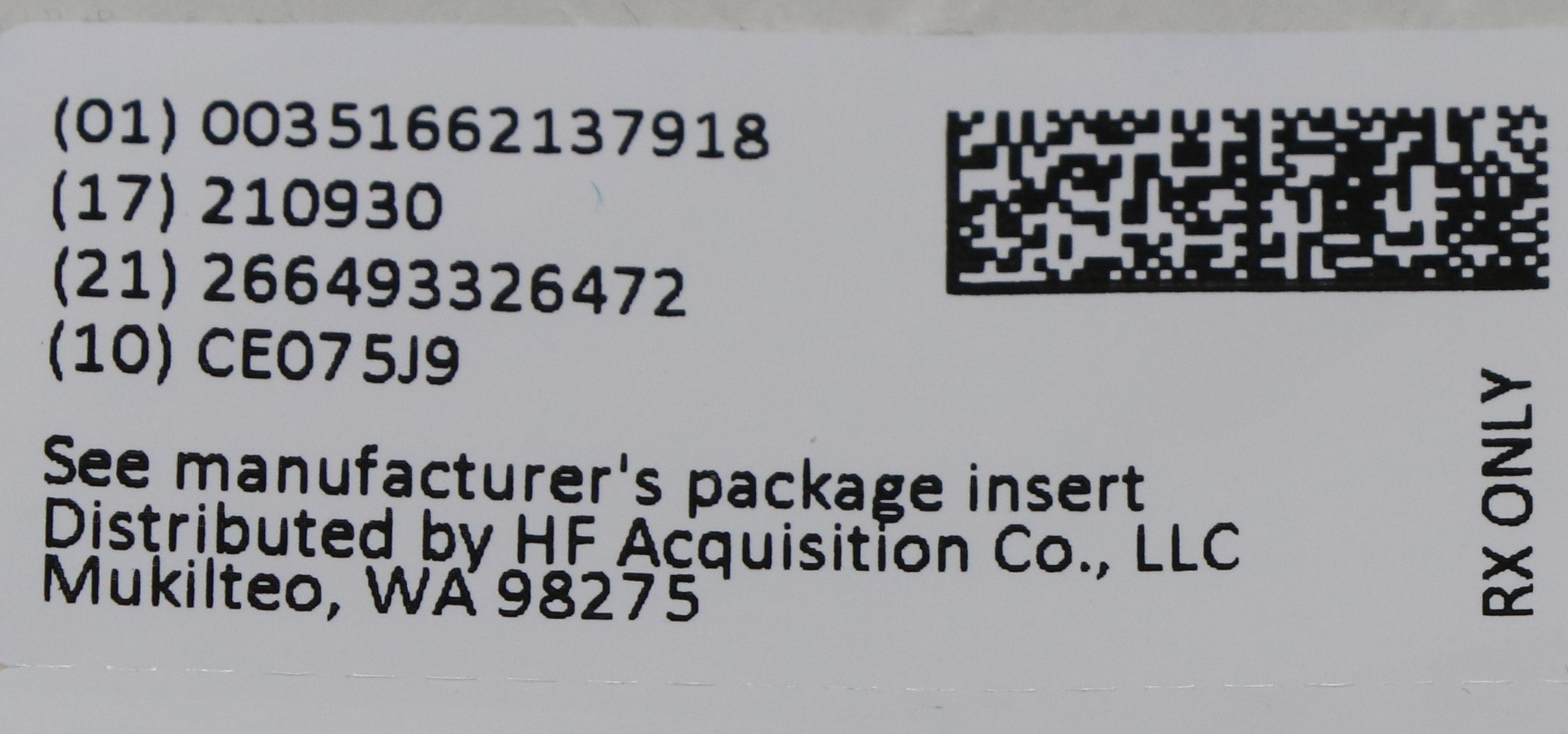
PRINCIPAL DISPLAY PANEL - SERIALIZED LABELING SERIALIZED CARTON LABELING
PRINCIPAL DISPLAY PANEL NDC 51662-1379-2 POUCH POUCH LABELING CARTON 2 SYRINGE POUCH LABELING CARTON 2 SYRINGE 2
PRINCIPAL DISPLAY PANEL NDC 51662-1379-3 CASE CASE LABELING SERIALIZED RFID LABELING CASE RFID Label
PRINCIPAL DISPLAY PANEL - 51662-1379-1 SERIALIZED LABELING CORRECTED AND UPDATED as of 2-9-2023 51662-1379-1 SERIALIZED LABELING as of 2-9-2023 serialized updated labeling
About this NDC listing & data coverage
What data is (and isn’t) available for this NDC — tap to expand
| NDC identity (package / product / labeler codes) | ✓ Available |
| Labeler | ✓ Available |
| Product & package description | ✓ Available |
| Marketing category & status | ✓ Available |
| Active ingredient / dosage form / route | ✓ Available |
| FDA label (SPL via DailyMed) | ✓ Available |
| Package photos | ✓ Available |
| Inactive ingredients (structured) | — Not published for this NDC The labeler did not submit a structured excipient list, or no SPL is available. |
| NADAC pharmacy acquisition price (CMS) | — Not published for this NDC CMS publishes NADAC only for NDCs reported in its retail-pharmacy survey. |
| Orange Book / therapeutic-equivalence data | ✓ Available |
| HCPCS J-code billing crosswalk | — Not published for this NDC Most self-administered / retail products have no J-code — that is normal. |
| Medicaid utilization (CMS SDUD) | — Not published for this NDC CMS reports utilization only for NDCs with Medicaid claims above its privacy threshold. |