
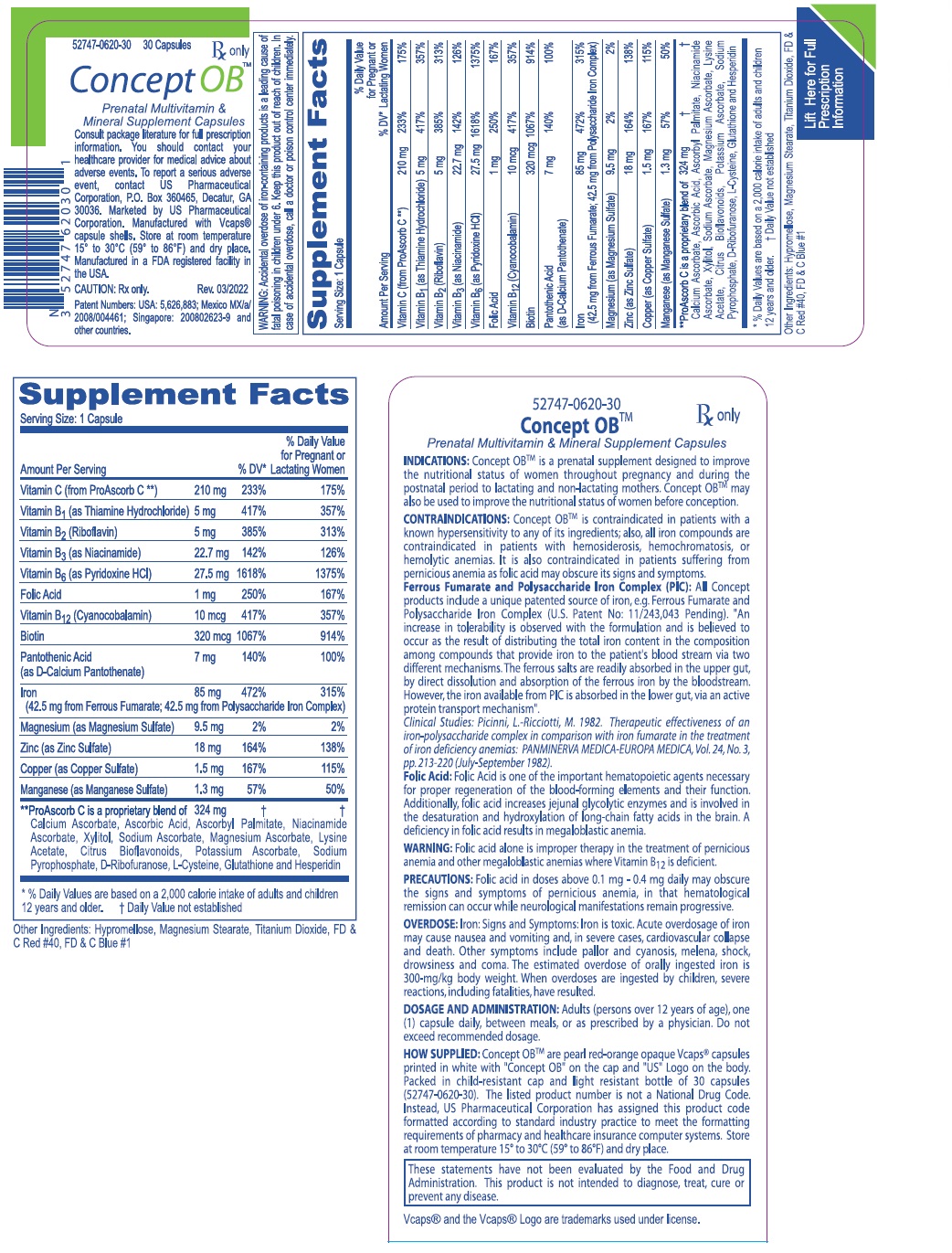
Concept OB Vitamin Mineral Supplement 42.5 mg; 42.5 mg; 210 mg; 1 mg; 5 mg; 5 mg; 20 mg; 7 mg; 25 mg; 300 ug; 10 ug Capsule, 30-count
🆔 Identity & classification
Where does this data come from?
🏷️ RxNorm drug class
This medicine belongs to the Vitamin B1, plain class.
Where does this data come from?
🏭 Manufacturer & labeler
Where does this data come from?
🩺 Clinical
Concept OB is an oral capsule supplement containing a combination of vitamins and minerals. It includes iron (as ferrous fumarate), B vitamins (thiamine, riboflavin, niacin, pantothenic acid, pyridoxine, and cyanocobalamin), vitamin C, folic acid, biotin, and trace minerals such as copper, magnesium, manganese, and zinc. These ingredients are typically used together in prenatal and postnatal vitamin supplements to support nutritional needs during and after pregnancy. This product is marketed without an approved FDA application.
Patient education
Supplement & herbal interactions
Where does this data come from?
Ask a licensed pharmacist directly — free, answered by our team.
💊 What it looks like
Where does this data come from?
🧪 Inactive Ingredients / Excipients
Inactive ingredients, also called excipients, are components of the drug product other than the active ingredient. They may include fillers, dyes, coatings, preservatives, flavors, or other formulation ingredients.
💡 Tap an ingredient (hover on desktop) to see what it is and why it’s used.
-
UNII H3R47K3TBD
FD&C Blue No. 1 is a synthetic blue dye approved for use in foods and medicines. It serves as a colorant to give the medication its distinctive appearance and help with product identification.
-
UNII WZB9127XOA
A synthetic red dye used to color medications and make them easier to identify. It serves as a colorant in tablets, capsules, and liquid formulations.
-
UNII 3NXW29V3WO
Hypromellose is a plant-based thickener made from cellulose. It's used in medicines as a binder to hold ingredients together, a coating for tablets, and a thickener for liquids.
-
UNII 70097M6I30
Magnesium stearate is a salt made from magnesium and stearic acid, a fatty substance. It's used in tablets and capsules as a lubricant and glidant to help ingredients flow smoothly during manufacturing and prevent sticking.
-
UNII 15FIX9V2JP
Titanium dioxide is a bright white mineral powder commonly used as a colorant and opacifying agent. It makes pills and tablets white or lighter in color and helps make coatings non-transparent.
5 inactive ingredients listed in the exact product block matched to this NDC.
Where does this data come from?
ingredient classCode="IACT" elements from the exact product block matched by this NDC. Label-section narrative from DailyMed / the openFDA label index is shown separately when available.Inactive ingredient FAQ
Are inactive ingredients the same for every manufacturer?
Why might an inactive ingredient be missing?
Can inactive ingredients matter?
💲 Pricing
A drug doesn't have one price. Each row is a different public payment system, and none is what you'd pay at the counter — that depends on your insurance. The ⓘ on each row explains what it measures.
| Price system | Per each | Per package |
|---|---|---|
| Retail pharmacies payNADAC · weekly | Not in the retail survey — common for institutional, discontinued, or low-volume packs. | |
| Medicaid paysCMS SDUD · 12 mo | $1.01 | $30.17 / 30 capsules |
| Medicare drug plans payPart D · quarterly | No Part D plan price is available for this NDC in our data. | |
Where does this data come from?
🔁 Therapeutic equivalents
| Product | Labeler | Pack | NADAC/unit | TE | Status | Price vs. this |
|---|---|---|---|---|---|---|
| Concept OB 42.5 mg/1; 42.5 mg/1; 210 mg/1; 1 mg/1; 5 mg/1; 5 mg/1; 20 mg/1; 7 mg/1; 25 mg/1; 300 ug/1; 10 ugthis 52747-0620-30 | U.S. | 30 capsules | — | — | FDA listed | — |
Where does this data come from?
⏳ Availability & generic status
We did not find an FDA-approved generic match for this exact strength, form and route.
Where does this data come from?
🗺️ Medicaid utilization & spend
💊 Medicaid utilization by pack size
🔬 Reported adverse events (FAERS)
Top reported reactions
Reporter sex
Serious outcomes
Where does this data come from?
📦 Packaging — all sizes for this product
| Package NDC | Description | Marketing start | Status |
|---|---|---|---|
| 52747-0620-10 | 10 BLISTER PACK in 1 BOX (52747-620-10) / 4 CAPSULE in 1 BLISTER PACK (52747-620-04) | 2009-01-01 | Active |
| 52747-0620-30 You're viewing this | 30 CAPSULE in 1 BOTTLE, PLASTIC (52747-620-30) | 2009-01-01 | Active |
Pack size FAQ
What quantity is in NDC 52747-0620-30?
What is the difference between NDC 52747-0620-30 and NDC 52747-0620-10?
What NDC number is used to bill for this package of Concept OB Vitamin Mineral Supplement 42.5 mg; 42.5 mg; 210 mg; 1 mg; 5 mg; 5 mg; 20 mg; 7 mg; 25 mg; 300 ug; 10 ug Capsule?
🧭 About this NDC listing & data coverage
Listed without an FDA application
This product's marketing category indicates it is marketed without an approved FDA application (no NDA, ANDA, or BLA on file). Having an NDC does not by itself establish FDA approval — the NDC Directory is a listing system, not an approval decision. Approval-linked data such as Orange Book therapeutic-equivalence ratings therefore does not apply.
What data is (and isn’t) available for this NDC — tap to expand
| NDC identity (package / product / labeler codes) | ✓ Available |
| Labeler | ✓ Available |
| Product & package description | ✓ Available |
| Marketing category & status | ✓ Available |
| Active ingredient / dosage form / route | ✓ Available |
| FDA label (SPL via DailyMed) | ✓ Available |
| Package photos | ✓ Available |
| Inactive ingredients (structured) | ✓ Available |
| NADAC pharmacy acquisition price (CMS) | — Not published for this NDC CMS publishes NADAC only for NDCs reported in its retail-pharmacy survey. |
| Orange Book / therapeutic-equivalence data | — Not published for this NDC Applies only to products approved under an NDA/ANDA; many listings are out of scope. |
| HCPCS J-code billing crosswalk | — Not published for this NDC Most self-administered / retail products have no J-code — that is normal. |
| Medicaid utilization (CMS SDUD) | ✓ Available |
Questions about this listing
Is this NDC FDA-approved?
Why is there no price listed?
Is the NDC printed on the package the same as the 11-digit billing NDC?
What do the three segments of this NDC mean?
Is this package still being marketed?
Does this product come in other package sizes?
Who lists this product with the FDA?
Do I need a prescription for this product?
Where does this data come from?
📄 Full prescribing information FDA SPL
🎯 Indications and Usage ▾
INDICATIONS: Concept OBTM is a prenatal supplement designed to improve the nutritional status for women throughout pregnancy and during the postnatal period to lactating and non-lactating mothers. Concept OBTM may also be used to improve the nutritional status of women before conception.
⏱️ Dosage and Administration ▾
DOSAGE AND ADMINISTRATION: Adults (persons over 12 years of age), One (1) capsule daily, between meals, or as prescribed by a physician. Do not exceed recommended dosage. Do not administer to children under the age of 12.
⛔ Contraindications ▾
CONTRAINDICATIONS: Concept OBTM is contraindicated in patients with known hypersensitivity to any of its ingredients; also, all iron compounds are contraindicated in patients with hemosiderosis, hemochromatosis, or hemolytic anemias. Pernicious anemia is a contraindication, as folic acid may obscure its signs and symptoms.
⚠️ Warnings and Cautions ▾
WARNING: Accidental overdose of iron-containing products is a leading cause of fatal poisoning in children under 6. Keep this product out of reach of children. In case of accidental overdose, call a doctor or poison control center immediately.
WARNING: Folic acid alone is improper therapy in the treatment for pernicious anemia and other megaloblastic anemias where Vitamin B12 is deficient. PRECAUTIONS: General: Folic acid in doses above 0.1 mg - 0.4 mg daily may obscure pernicious anemia, in that hematological remission can occur while neurological manifestations remain progressive.
🤒 Adverse Reactions ▾
Adverse Reactions: Folic Acid: Allergic sensitizations have been reported following both oral and parenteral administration of folic acid. Ferrous Fumarate: Gastrointestinal disturbances (anorexia, nausea, diarrhea, constipation) occur occasionally, but are usually mild and may subside with continuation of therapy. Although the absorption of iron is best when taken between meals, giving Concept OBTM after meals may control occasional G.I. disturbances.
Concept OBTM is best absorbed when taken at bedtime.
🧒 Pediatric Use ▾
Pediatric Use: Safety and effectiveness of this product have not been established in pediatric patients.
🧓 Geriatric Use ▾
Geriatric Use: No clinical studies have been performed in patients age 65 and over to determine whether older persons respond differently from younger persons. Dosage should always begin at the low end of the dosage scale and should consider that elderly persons may have decreased hepatic, renal, or cardiac function and or concomitant diseases.
🆘 Overdosage ▾
OVERDOSE: Iron: Signs and Symptoms: Iron is toxic. Acute overdosage of iron may cause nausea and vomiting and, in severe cases, cardiovascular collapse and death. Other symptoms include pallor and cyanosis, melena, shock, drowsiness and coma.
The estimated overdose of orally ingested iron is 300-mg/kg body weight. When overdoses are ingested by children, severe reactions, including fatalities, have resulted. Concept OBTM should be stored beyond the reach of children to prevent against accidental iron poisoning.
Keep this and all other drugs out of the reach of children. Treatment: For specific therapy, exchange transfusion and chelating agents should be used. For general management, perform gastric lavage with sodium bicarbonate solution or milk.
Administer intravenous fluids and electrolytes and use oxygen.
🧬 Clinical Pharmacology ▾
CLINICAL PHARMACOLOGY: Concept OBTM also supplies important prenatal vitamin minerals in a formulation that was especially designed to supplement the nutritional needs of pregnant women, before, during and after pregnancy. In Concept OBTM, patients receive the balanced support of 14 essential vitamins and minerals, including 1 mg of folic acid. The essential role of iron supplementation for pregnant women has long been recognized.
Concept OBTM is unique in that it utilizes two (2) different forms of iron, i.e., Ferrous Fumarate and Polysaccharide Iron Complex (as cell-contracted akaganèite), making available a total of 85 mg of elemental iron per capsule as follows: Ferrous Fumarate (anhydrous) 130 mg Polysaccharide iron complex (PIC) 92.4 mg Ferrous Fumarate: Provides about 42.5 mg of elemental iron per dose. Ferrous Fumarate is an anhydrous salt of a combination of ferrous iron and fumaric acid, containing 33% of iron per weight. The acute toxicity in experimental animals is low and Ferrous Fumarate is well tolerated clinically.
As a ferrous salt, it is more efficiently absorbed in the duodenum. Ferrous Fumarate contrasts very favorably with the availability of the 20% of elemental iron of ferrous sulfate, and the 13% of elemental iron of ferrous gluconate. Polysaccharide Iron Complex: Provides about 42.5 mg elemental iron, as a cell-contracted akaganèite.
It is a product of ferric iron complexed to a low molecular weight polysaccharide. This polysaccharide is produced by the extensive hydrolysis of starch and is a dark brown powder that dissolves in water to form a very dark brown solution, which is virtually odorless and tasteless. The most frequent cause of anemia in pregnant women is iron deficiency.
Because of the continuous loss of iron due to monthly menstruation, most women enter pregnancy with less than optimal iron stores. Supplementation of iron must suffice to meet the needs for maternal and fetal erythropoisis, and account for daily maternal gastrointestinal losses and obligate fetal transfer and growth. Iron requirements during pregnancy usually cannot be met with the average diet.
(ACOG technical bulletin (1993): Nutrition during Pregnancy. p.4. Number 179-April 1993: The American College of Obstetricians and Gynecologists, Washington, D.C. 20024-2188).
Concept OBTM does not contain calcium, as calcium may inhibit iron absorption because of the binding or conversion of ferrous salts by calcium and other minerals. Calcium salts can always be prescribed separately for women at high nutritional risk, including those who do not eat adequate amounts of dairy products. The recommendation of the National Academy of Sciences Tenth Ed.
1989 National Academy Press, Washington, D.C., suggests the supplementation of 1200 mg of calcium for pregnant and lactating women for the prevention of calcium deficiency. Folic acid is a hematopoetic vitamin and has been used extensively for the prevention of neural tube defects. The need for folic acid in pregnancy, with its increased demands of the fetus, or lactation, is not being met by normal dietary sources.
Concept OBTM capsules contain 1 mg of folic acid. Neural tube defects (NTD's) are the most common birth defects that result in infant mortality and serious disability. For women with a previous pregnancy that resulted in a child with a neural tube malformation, the use of 4 mg/d of folic acid has been reported to be effective in preventing a recurrence (MRC Vitamin Study Research Group, 1991).
However, earlier studies from the United Kingdom suggested that lower daily doses, for example 0.36 mg, might result in a comparable reduction of a recurrence of NTD's. Since neural tube closure is complete by four weeks following conception, beginning folic acid supplementation after that time is not likely to be of any value. It should be noted that a daily 4 mg dose of folic acid did not prevent all NTD's in the MRC study.
Patients should be cautioned that folic acid supplementatio…
📦 How Supplied / Storage and Handling ▾
HOW SUPPLIED: Concept OB TM are pearl red-orange opaque Vcaps ® capsules printed in white with "Concept OB" on the cap and "US" logo on the body. Packed in child-resistant cap and light resistant bottle of 30 capsules (52747-0620-30). The listed product number is not a National Drug Code.
Instead, US Pharmaceutical Corporation has assigned this product code formatted according to standard industry practice to meet the formatting requirements of pharmacy and healthcare insurance computer systems. Store at room temperature 15º to 30ºC (59º to 86ºF) and dry place. These statements have not been evaluated by the Food and Drug Administration.
This product is not intended to diagnose, treat, cure or prevent any disease. Vcaps ® and the Vcaps ® Logo are trademarks used under license.
📋 Description ▾
DESCRIPTION: Each capsule contains: Ferrous Fumarate (anhydrous) .....................................130 mg (Equivalent to about 42.5 mg of Elemental Iron) PolysaccharideIronComplex .....................................92.4mg (Equivalent to about 42.5 mg of Elemental Iron) Vitamin C (from ProAscorb C‡)..................................... 210 mg Folic Acid ................................................................................... 1 mg Thiamine Mononitrate (B1).................................................
5 mg Riboflavin (B2).......................................................................... 5 mg Niacin (B3)...............................................................................20 mg d-Calcium Pantothenate (B5)............................................. 7 mg Pyridoxine HCl (B6) ..............................................................25 mg Biotin (B7)...........................................................................
300 mcg Cyanocobalamin (B12) .....................................................10 mcg Copper (as Copper Sulfate)..........................................800 mcg Magnesium (as Magnesium Sulfate)............................6.9 mg Manganese (as Manganese Sulfate).............................1.3 mg Zinc (as Zinc Sulfate) ....................................................... 18.2 mg Inactive Ingredients: Hypromellose, Silicon Dioxide, Magnesium Stearate, Carmine, and Candurin Silver Fine. CLINICAL PHARMACOLOGY: Concept OBTM also supplies important prenatal vitamin minerals in a formulation that was especially designed to supplement the nutritional needs of pregnant women, before, during and after pregnancy.
In Concept OBTM, patients receive the balanced support of 14 essential vitamins and minerals, including 1 mg of folic acid. The essential role of iron supplementation for pregnant women has long been recognized. Concept OBTM is unique in that it utilizes two (2) different forms of iron, i.e., Ferrous Fumarate and Polysaccharide Iron Complex (as cell-contracted akaganèite), making available a total of 85 mg of elemental iron per capsule as follows: Ferrous Fumarate (anhydrous) 130 mg Polysaccharide iron complex (PIC) 92.4 mg Ferrous Fumarate: Provides about 42.5 mg of elemental iron per dose.
Ferrous Fumarate is an anhydrous salt of a combination of ferrous iron and fumaric acid, containing 33% of iron per weight. The acute toxicity in experimental animals is low and Ferrous Fumarate is well tolerated clinically. As a ferrous salt, it is more efficiently absorbed in the duodenum.
Ferrous Fumarate contrasts very favorably with the availability of the 20% of elemental iron of ferrous sulfate, and the 13% of elemental iron of ferrous gluconate. Polysaccharide Iron Complex: Provides about 42.5 mg elemental iron, as a cell-contracted akaganèite. It is a product of ferric iron complexed to a low molecular weight polysaccharide.
This polysaccharide is produced by the extensive hydrolysis of starch and is a dark brown powder that dissolves in water to form a very dark brown solution, which is virtually odorless and tasteless. The most frequent cause of anemia in pregnant women is iron deficiency. Because of the continuous loss of iron due to monthly menstruation, most women enter pregnancy with less than optimal iron stores.
Supplementation of iron must suffice to meet the needs for maternal and fetal erythropoisis, and account for daily maternal gastrointestinal losses and obligate fetal transfer and growth. Iron requirements during pregnancy usually cannot be met with the average diet. (ACOG technical bulletin (1993): Nutrition during Pregnancy. p.4.
Number 179-April 1993: The American College of Obstetricians and Gynecologists, Washington, D.C. 20024-2188). Concept OBTM does not contain calcium, as calcium may inhibit iron absorption because of the binding or conversion of ferrous salts by calcium and other minerals.
Calcium salts can always be prescribed separately for wo…