
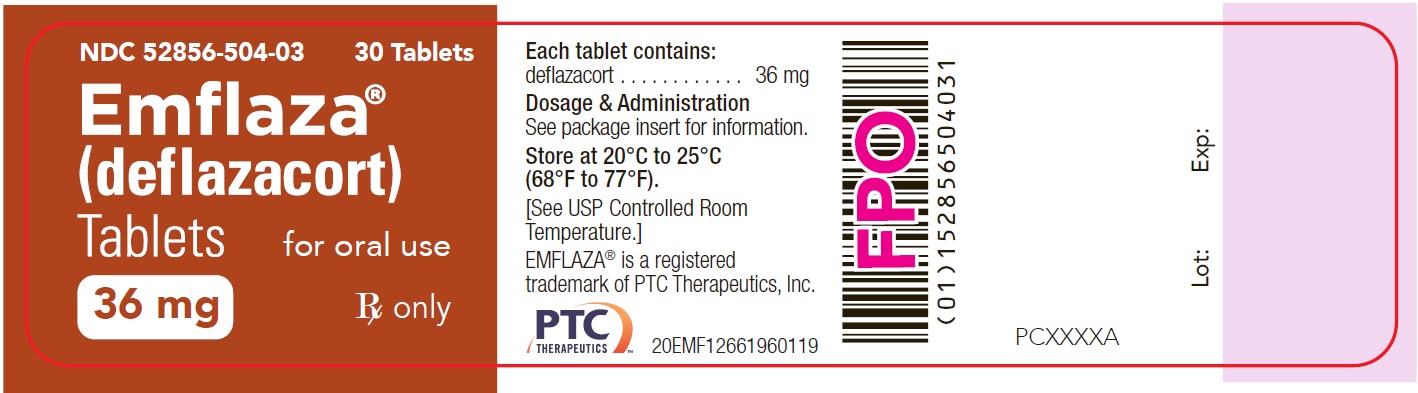
Emflaza deflazacort 36 mg Tablet, 30-count — NDC 52856-504-03 (Billing 52856-0504-03)
This is a package of 30 tablets of Emflaza deflazacort 36 mg Tablet from PTC Therapeutics, Inc., marketed since Sep 2018 and currently FDA-listed. It is this product's only package size.
NDC database record
One package, one record: these facts belong to NDC 52856-504-03 alone.
- Record
- FDA NDC Directory package listing · Human prescription drug
- Code segments
- 52856 labeler · 504 product · 03 package
- Package marketed since
- Sep 10, 2018
- Sample package
- No — commercial package
- Listing certified through
- Dec 31, 2026
- Billing quantity
- 30 EA per package
- Barcode (UPC-A, from the NDC)
- 3 5285650403 5
- Medicaid fills, this package
- 1,609 prescriptions in the last four reported quarters
- FDA record last changed
- Jul 24, 2026
Identity & classification
Regulatory identifiers FDA, NLM and CMS codes for this package
Drug-database identifiers Medi-Span GPI and First Databank GCN / HICL / AHFS classification
- GSN (GCN sequence number): 077116
- GCN: 43015
- GPI-14 (Medi-Span): 22100017000365
- HICL (First Databank): 011668
- AHFS class code: 68:04.00.00
- RxCUI (RxNorm): 153098
Where does this data come from?
- FDA openFDA NDC Directory · synced Oct 8, 2026
- FDA label on DailyMed · label index refreshed Oct 6, 2026
- RxNorm (NLM RxNav) · catalog refreshed Oct 1, 2026
- Medi-Span GPI (licensed)
- First Databank (licensed) · refreshed Oct 8, 2026
RxNorm drug class
This medicine belongs to the Corticosteroid class.
Where does this data come from?
- RxClass (NLM) · catalog refreshed Oct 1, 2026
Clinical
- It treats Duchenne muscular dystrophy (DMD). The age it is approved for depends on the product: some are for ages 2 and older, and others for ages 5 and older. Your pharmacist can...
- You take it by mouth once a day, with or without food. Avoid grapefruit juice. If you use the suspension, shake it well and use the dispenser that comes with it. Some tablets can b...
- No, please don’t stop it on your own. After more than a few days, stopping suddenly can cause dangerous adrenal problems. Your doctor will lower the dose gradually if it needs to b...
- Common ones include a rounder face, weight gain, bigger appetite, extra hair growth, and colds or cough. Call your doctor for rash, signs of infection, big mood changes, severe sto...
Patient education
Supplement & herbal interactions
Some supplements/herbs that may interact with Deflazacort — tap one for details:
Where does this data come from?
- MedlinePlus (NLM) · refreshed Oct 1, 2026
- FDA label on DailyMed · label index refreshed Oct 6, 2026
Ask a licensed pharmacist directly — free, answered by our team.
Pricing
A drug doesn't have one price. Each row is a different public payment system, and none is what you'd pay at the counter — that depends on your insurance. The ⓘ on each row explains what it measures.
| Price system | Per each | Per package |
|---|---|---|
| Retail pharmacies payNADAC · weekly | Not in the retail survey — common for institutional, discontinued, or low-volume packs. | |
| Medicaid paysCMS SDUD · 12 mo | $590.01 | $17,700.32 / 30 tablets |
| Medicare drug plans payPart D · quarterly | No Part D plan price is available for this NDC in our data. | |
Where does this data come from?
- CMS NADAC weekly file
- CMS ASP pricing files · refreshed Sep 20, 2026
- CMS Medicaid State Drug Utilization Data · through Q1 2026
- CMS Part D plan pricing files · refreshed Sep 24, 2026
- VA National Acquisition Center price file
Packaging — all sizes for this product
| Package NDC | Description | Marketing start | Marketing end | Status |
|---|---|---|---|---|
| 52856-0504-03 You're viewing this Main listing | 30 TABLET in 1 BOTTLE | 2018-09-10 | — | Active |
Therapeutic equivalents
| Product | Labeler | Pack | NADAC/unit | TE | Status | Price vs. this |
|---|---|---|---|---|---|---|
| Kymbee 36 mg 00245-0817-30 | Upsher-Smith | 30 tablets | — | AB | FDA listed | — |
| Deflazacort 36 mg 00832-0817-30 | Upsher-Smith | 30 tablets | — | AB | FDA listed | — |
| Emflaza 36 mgthis 52856-0504-03 | PTC | 30 tablets | — | AB | FDA listed | — |
| Deflazacort 36 mg 59651-0602-30 | Aurobindo | 30 tablets | — | AB | FDA listed | — |
| Deflazacort 36 mg 60219-2285-01 | Amneal | 30 tablets | — | AB | FDA listed | — |
| Deflazacort 36 mg 70095-0043-30 | Sun | 30 tablets | — | AB | FDA listed | — |
| Jaythari 36 mg 70710-1752-03 | Zydus | 30 tablets | — | AB | FDA listed | — |
| Deflazacort 36 mg 70710-2054-03 | Zydus | 30 tablets | — | AB | FDA listed | — |
| Deflazacort 36 mg 73190-0071-30 | AvKARE | 30 tablets | — | AB | FDA listed | — |
| Jaythari 36 mg 81806-0177-30 | Doppel | 30 tablets | — | AB | FDA listed | — |
| Deflazacort 36 mg 81806-0208-30 | Doppel | 30 tablets | — | AB | FDA listed | — |
Where does this data come from?
- FDA openFDA NDC Directory · synced Oct 8, 2026
- FDA Orange Book · refreshed Oct 3, 2026
- CMS NADAC weekly file
Availability & generic status
The FDA lists approved generic versions of this medicine, but that does not always mean a pharmacy can get one today. Patent rules, launch agreements, supply and pricing can affect when generics actually arrive.
Why the date isn’t exact: Generic timing can change because patents may be challenged, settled, licensed, added, removed, or worked around with a narrower label — and FDA approval does not always mean a pharmacy can get the generic today.
🛈 What do these terms mean?
- Patent
- Legal protection listed in the Orange Book that may delay generic approval or launch. Issued by the U.S. Patent & Trademark Office.
- Substance patent
- Covers the active drug molecule itself — the hardest to design around. A generic generally can’t launch until it expires.
- Formulation (product) patent
- Covers a specific formulation or dosage form. A generic can sometimes work around it with a different formulation.
- Method-of-use patent
- A patent covering one specific approved use of the drug — not necessarily the whole molecule. A generic can sometimes launch with a “skinny label” that carves out the protected use and keeps the others.
- Skinny label
- A generic label that omits a still-patented use when the FDA allows it — letting a generic reach the market for the unprotected uses.
- Exclusivity
- FDA-granted marketing protection, separate from patents — e.g. 5-yr new chemical entity, 7-yr orphan drug, or a +6-month pediatric extension.
- Paragraph IV
- A generic applicant’s formal challenge to a listed patent. It can potentially lead to earlier generic entry, but often involves litigation or a settlement.
- RLD / RS
- Reference Listed Drug — the brand product the FDA uses as the reference for generic applications. Reference Standard — the product the FDA expects generics to compare against in bioequivalence testing.
- TE / AB rating
- FDA therapeutic-equivalence rating. An AB rating generally means the FDA considers a generic therapeutically equivalent to — and substitutable for — the brand.
- LOE (loss of exclusivity)
- The latest patent or exclusivity currently listed — the loss-of-exclusivity / latest-listed-protection date shown on this page. Paragraph-IV challenges and settlements can move the real date earlier; FDA approval and a manufacturer’s decision to market can move it later.
Built from the FDA Orange Book. The bars above are scaled to each protection’s expiry; the red LOE marker is the last one to lapse.
| Code | What it grants | Expires |
|---|---|---|
| ODE-252 | Orphan Drug Exclusivity (7-year) | Jun 7, 2026 |
| ODE-252 | Orphan Drug Exclusivity (7-year) | Jun 7, 2026 |
| ODE-252 | Orphan Drug Exclusivity (7-year) | Jun 7, 2026 |
| ODE-252 | Orphan Drug Exclusivity (7-year) | Jun 7, 2026 |
Is there a generic version of EMFLAZA 36 MG TABLET?
The FDA approved a generic — why can’t I get it at my pharmacy yet?
Why do different websites show different generic release dates?
What does “FDA listed” mean?
What does a patent or protection date mean here?
What does “current Orange Book estimate” mean?
Can a generic come out before the last patent expires?
Can a generic come out after the listed dates?
What is the difference between patents and exclusivity?
Why are there multiple patent dates?
Where does this data come from?
- FDA Orange Book · refreshed Oct 3, 2026
What it looks like
Where does this data come from?
- FDA label on DailyMed · label index refreshed Oct 6, 2026
Inactive Ingredients / Excipients
Inactive ingredients, also called excipients, are components of the drug product other than the active ingredient. They may include fillers, dyes, coatings, preservatives, flavors, or other formulation ingredients.
🧪 Avoiding an ingredient? See Deflazacort inactive ingredients by manufacturer: every current product's list side by side, so you can ask your pharmacy for the version that does not list it.
💡 Tap an ingredient (hover on desktop) to see what it is and why it’s used.
-
UNII EWQ57Q8I5X
Lactose monohydrate is a natural sugar derived from milk. It serves as a filler and binder in tablets and capsules, helping create the proper size, texture, and consistency of the medicine.
-
UNII 70097M6I30
Magnesium stearate is a salt made from magnesium and stearic acid, a fatty substance. It's used in tablets and capsules as a lubricant and glidant to help ingredients flow smoothly during manufacturing and prevent sticking.
-
UNII ETJ7Z6XBU4
Silicon dioxide is a naturally occurring mineral used as a glidant and anti-caking agent. It helps powder ingredients flow smoothly and prevents clumping during manufacturing and storage.
-
UNII O8232NY3SJ
A plant-based carbohydrate derived from corn kernels. It acts as a filler to add bulk, a binder to hold ingredients together, and a disintegrant to help the tablet break apart in your stomach for absorption.
4 inactive ingredients listed in the exact product block matched to this NDC.
Where does this data come from?
ingredient classCode="IACT" elements from the exact product block matched by this NDC. Label-section narrative from DailyMed / the openFDA label index is shown separately when available.- FDA label on DailyMed · label index refreshed Oct 6, 2026
- FDA openFDA NDC Directory · synced Oct 8, 2026
Inactive ingredient FAQ
Are inactive ingredients the same for every manufacturer?
Why might an inactive ingredient be missing?
Can inactive ingredients matter?
Manufacturer & labeler
More NDCs from PTC Therapeutics, Inc. labeler code 52856
- Sephience sepiapterin 250 mg Powder NDC 52856-201-03
- Sephience sepiapterin 1000 mg Powder NDC 52856-301-03
- Emflaza deflazacort 6 mg Tablet NDC 52856-501-01
- Emflaza deflazacort 18 mg Tablet NDC 52856-502-03
- Emflaza deflazacort 30 mg Tablet NDC 52856-503-03
- EMFLAZA deflazacort 22.75 mg/mL Suspension NDC 52856-505-22
- KEBILIDI eladocagene exuparvovec-tneq 560000000000 {GC}/mL Suspension NDC 52856-601-01
Where does this data come from?
- FDA openFDA NDC Directory · synced Oct 8, 2026
- Drugs@FDA
Full prescribing information FDA SPL
🎯 Indications and Usage ▾
1 INDICATIONS AND USAGE EMFLAZA is indicated for the treatment of Duchenne muscular dystrophy (DMD) in patients 2 years of age and older. EMFLAZA is a corticosteroid indicated for the treatment of Duchenne muscular dystrophy (DMD) in patients 2 years of age and older ( 1 )
⏱️ Dosage and Administration ▾
2 DOSAGE AND ADMINISTRATION The recommended once-daily dosage is approximately 0.9 mg/kg/day administered orally ( 2.2 ) Discontinue gradually when administered for more than a few days ( 2.3 )
2.1Assessments Prior to First Dose of EMFLAZA Administer all immunizations according to immunization guidelines prior to starting EMFLAZA. Administer live-attenuated or live vaccines at least 4 to 6 weeks prior to starting EMFLAZA [see Warnings and Precautions ( 5.8 )] .
2.2Dosing Information The recommended oral dosage of EMFLAZA is approximately 0.9 mg/kg/day once daily. If tablets are used, round up to the nearest possible dose. Any combination of the four EMFLAZA tablet strengths can be used to achieve this dose. If the oral suspension is used, round up to the nearest tenth of a milliliter (mL).
2.3Discontinuation Dosage of EMFLAZA must be decreased gradually if the drug has been administered for more than a few days [see Warnings and Precautions ( 5.1 )] .
2.4Important Preparation and Administration Instructions EMFLAZA Tablets and Oral Suspension can be taken with or without food. Do not administer EMFLAZA with grapefruit juice [see Drug Interactions ( 7.1 )] EMFLAZA Tablets EMFLAZA Tablets can be administered whole or crushed and taken immediately after mixing with applesauce. EMFLAZA Oral Suspension Shake EMFLAZA Oral Suspension well before administration.
Use only the oral dispenser provided with the product. After withdrawing the appropriate dose into the oral dispenser, slowly add the EMFLAZA Oral Suspension into 3 to 4 ounces of juice (except grapefruit juice) or milk and mix well. The dose should then be administered immediately.
Discard any unused EMFLAZA Oral Suspension remaining after 1 month of first opening the bottle.
2.5Dosage Modification for Use with CYP3A4 Inhibitors and Inducers CYP3A4 Inhibitors Give one third of the recommended dosage when EMFLAZA is administered with moderate or strong CYP3A4 inhibitors. For example, a 36 mg per day dose would be reduced to a 12 mg per day dose when used with moderate or strong CYP3A4 inhibitors [see Drug Interactions ( 7.1 ) and Clinical Pharmacology ( 12.3 )] . CYP3A4 Inducers Avoid use with moderate or strong CYP3A4 inducers with EMFLAZA [see Drug Interactions ( 7.1 ) and Clinical Pharmacology ( 12.3 )] .
💊 Dosage Forms and Strengths ▾
3 DOSAGE FORMS AND STRENGTHS Tablets 6 mg: White and round with “6” debossed on one side 18 mg: White and round with “18” debossed on one side 30 mg: White and oval with “30” debossed on one side 36 mg: White and oval with “36” debossed on one side Oral Suspension 22.75 mg/mL: Whitish suspension Tablets: 6 mg, 18 mg, 30 mg, and 36 mg ( 3 ) Oral Suspension: 22.75 mg/mL ( 3 )
⛔ Contraindications ▾
4 CONTRAINDICATIONS EMFLAZA is contraindicated in patients with known hypersensitivity to deflazacort or to any of the inactive ingredients. Instances of hypersensitivity, including anaphylaxis, have occurred in patients receiving corticosteroid therapy [see Warnings and Precautions ( 5.15 ) and Adverse Reactions ( 6.2 )] . Hypersensitivity to deflazacort or any of the inactive ingredients in EMFLAZA ( 4 )
⚠️ Warnings and Cautions ▾
5 WARNINGS AND PRECAUTIONS Alterations in Endocrine Function: Hypothalamic-pituitary-adrenal axis suppression, Cushing’s syndrome, and hyperglycemia can occur; Monitor patients for these conditions with chronic use of EMFLAZA ( 2.3 , 5.1 ) Immunosuppression and Increased Risk of Infection: Increased risk of new, exacerbation, dissemination, or reactivation of latent infections, which can be severe and at times fatal; Signs and symptoms of infection may be masked ( 5.2 ) Alterations in Cardiovascular/Renal Function: Monitor for elevated blood pressure and sodium, and for decreased potassium levels ( 5.3 ) Gastrointestinal Perforation: Increased risk in patients with certain GI disorders; Signs and symptoms may be masked ( 5.4 ) Behavioral and Mood Disturbances: May include euphoria, insomnia, mood swings, personality changes, severe depression, and psychosis ( 5.5 ) Effects on Bones: Monitor for decreases in bone mineral density with chronic use of EMFLAZA ( 5.6 ) Ophthalmic Effects: May include cataracts, infections, and glaucoma; Monitor intraocular pressure if EMFLAZA is continued for more than 6 weeks ( 5.7 ) Vaccination: Do not administer live or live attenuated vaccines to patients receiving immunosuppressive doses of corticosteroids.
Administer live-attenuated or live vaccines at least 4 to 6 weeks prior to starting EMFLAZA ( 5.8 ) Serious Skin Rashes: Discontinue at the first sign of rash, unless the rash is clearly not drug related ( 5.9 )
5.1Alterations in Endocrine Function Corticosteroids, such as EMFLAZA, can cause serious and life-threatening alterations in endocrine function, especially with chronic use. Monitor patients receiving EMFLAZA for Cushing’s syndrome, hyperglycemia, and adrenal insufficiency after EMFLAZA withdrawal. In addition, patients with hypopituitarism, primary adrenal insufficiency or congenital adrenal hyperplasia, altered thyroid function, or pheochromocytoma may be at increased risk for adverse endocrine events.
Risk of Adrenal Insufficiency Following Corticosteroid Withdrawal Corticosteroids produce reversible hypothalamic-pituitary-adrenal (HPA) axis suppression, with the potential for the development of secondary adrenal insufficiency after withdrawal of corticosteroid treatment. Acute adrenal insufficiency can occur if corticosteroids are withdrawn abruptly, and can be fatal. The degree and duration of adrenocortical insufficiency produced is variable among patients and depends on the dose, frequency, and duration of corticosteroid therapy.
The risk is reduced by gradually tapering the corticosteroid dose when withdrawing treatment. This insufficiency may persist, however, for months after discontinuation of prolonged therapy; therefore, in any situation of stress occurring during that period of discontinuation, corticosteroid therapy should be reinstituted. For patients already taking corticosteroids during times of stress, the dosage may need to be increased.
A steroid “withdrawal syndrome”, seemingly unrelated to adrenocortical insufficiency, may also occur following abrupt discontinuance of corticosteroids. This syndrome includes symptoms such as anorexia, nausea, vomiting, lethargy, headache, fever, joint pain, desquamation, myalgia, and/or weight loss. These effects are thought to be due to the sudden change in corticosteroid concentration rather than to low corticosteroid levels.
Cushing’s Syndrome Cushing’s syndrome (hypercortisolism) occurs with prolonged exposure to exogenous corticosteroids, including EMFLAZA. Symptoms include hypertension, truncal obesity and thinning of the limbs, purple striae, facial rounding, facial plethora, muscle weakness, easy and frequent bruising with thin fragile skin, posterior neck fat deposition, osteopenia, acne, amenorrhea, hirsutism and psychiatric abnormalities. Hyperglycemia Corticosteroids can increase blood glucose, worsen pre-existing diabetes, predispose those on long-term therapy to diabetes mellitus, and may reduce the effect of anti… [Excerpted — this section continues on DailyMed.]
🤒 Adverse Reactions ▾
6 ADVERSE REACTIONS The following serious adverse reactions are discussed in more detail in other sections: Alterations in Endocrine Function [see Warnings and Precautions ( 5.1 )] Immunosuppression and Increased Risk of Infection [see Warnings and Precautions ( 5.2 )] Alterations in Cardiovascular/Renal Function [see Warnings and Precautions ( 5.3 )] Gastrointestinal Perforation [see Warnings and Precautions ( 5.4 )] Behavioral and Mood Disturbances [see Warnings and Precautions ( 5.5 )] Effects on Bones [see Warnings and Precautions ( 5.6 )] Ophthalmic Effects [see Warnings and Precautions ( 5.7 )] Immunizations [see Warnings and Precautions ( 5.8 )] Serious Skin Rashes [see Warnings and Precautions ( 5.9 )] Effects on Growth and Development [see Warnings and Precautions ( 5.10 )] Myopathy [see Warnings and Precautions ( 5.11 )] Kaposi’s Sarcoma [see Warnings and Precautions ( 5.12 )] Risk of Serious Adverse Reactions in Infants because of Benzyl Alcohol Preservative [see Warnings and Precautions ( 5.13 )] Thromboembolic Events [see Warnings and Precautions ( 5.14 )] Anaphylaxis [see Warnings and Precautions ( 5.15 )] The most common adverse reactions (≥ 10% for EMFLAZA and greater than placebo) are Cushingoid appearance, weight increased, increased appetite, upper respiratory tract infection, cough, pollakiuria, hirsutism, central obesity, and nasopharyngitis ( 6.1 ) To report SUSPECTED ADVERSE REACTIONS, contact PTC Therapeutics, Inc. at 1-866-562-4620 or [email protected] or FDA at 1-800-FDA-1088 or www.fda.gov/medwatch .
6.1Clinical Trials Experience Because clinical trials are conducted under widely varying conditions, adverse reaction rates observed in the clinical trials of a drug cannot be directly compared to rates in the clinical trials of another drug and may not reflect the rates observed in practice. In Study 1 [see Clinical Studies ( 14 )] , the adverse reactions that were associated with deflazacort treatment discontinuation, in decreasing order of frequency, were weight increased, obesity, cataract, and sleep disorder. Most Common Adverse Reactions in Clinical Studies Table 1 lists the adverse reactions that occurred in ≥ 5% of patients in the 0.9 mg/kg/day deflazacort-treated group and that occurred more frequently than in placebo patients in Study 1, which included patients with DMD between the ages of 5 and 15 years.
Table 1: Adverse Reactions that Occurred in ≥ 5% of Deflazacort-Treated Patients and Occurred More Frequently than in Placebo Patients with DMD (Study 1) 1 At 12 weeks placebo patients were re-randomized to receive either deflazacort or an active comparator. Adverse Reaction Deflazacort 0.9 mg/kg/d (N=51) % at 12 weeks Placebo (N=50) % at 12 weeks 1 Cushingoid appearance 33 12 Weight increased 20 6 Increased appetite 14 2 Upper respiratory tract infection 12 10 Cough 12 6 Pollakiuria 12 2 Nasopharyngitis 10 6 Hirsutism 10 2 Central obesity 10 4 Erythema 8 6 Irritability 8 4 Rhinorrhea 8 0 Abdominal discomfort 6 2 Common adverse reactions (≥ 5% of deflazacort-treated patients) that occurred over 52 weeks of exposure to deflazacort 0.9 mg/kg/day in Study 1 and at a higher rate than deflazacort 0.9 mg/kg/day in the 12-week placebo-controlled phase of the trial include Cushingoid appearance (60%), hirsutism (35%), weight increased (28%), erythema (28%), central obesity (25%), abdominal pain/abdominal pain upper (18% combined), pollakiuria (15%), constipation (10%), irritability (10%), abnormal behavior (9%), pyrexia (9%), back pain (7%), rash (7%), contusion (6%), nausea (6%), psychomotor hyperactivity (6%), epistaxis (6%), and skin striae (6%).
Study 1 also evaluated a higher dosage of deflazacort (1.2 mg/kg/day). Compared with the 0.9 mg/kg/day dosage, deflazacort 1.2 mg/kg/day over 52 weeks was associated with a higher incidence of certain adverse reactions, including Cushingoid appearance (69%), erythema (49%), hirsutism (37%), headache (34%), weight increased (32%), constipation (… [Excerpted — this section continues on DailyMed.]
🔄 Drug Interactions ▾
7 DRUG INTERACTIONS Moderate or strong CYP3A4 inhibitors: Give one third of the recommended dosage of EMFLAZA ( 7.1 ) Avoid use of moderate or strong CYP3A4 inducers with EMFLAZA, as they may reduce efficacy ( 7.1 )
7.1CYP3A4 Inhibitors and Inducers Moderate or Strong CYP3A4 Inhibitors The active metabolite of deflazacort, 21-desDFZ, is a substrate of CYP3A4 [see Clinical Pharmacology ( 12.3 )] . Co-administration of deflazacort with clarithromycin, a strong CYP3A4 inhibitor, increased total exposure to 21-desDFZ by about 3-fold. Therefore, give one third the recommended dosage of EMFLAZA when moderate or strong CYP3A4 inhibitors (e.g., clarithromycin, fluconazole, diltiazem, verapamil, grapefruit juice) are used concomitantly with EMFLAZA [see Dosage and Administration ( 2.5 ) and Clinical Pharmacology ( 12.3 )] .
Moderate or Strong CYP3A4 Inducers Co-administration of deflazacort with rifampin, a strong CYP3A4 inducer, significantly decreased the exposure of 21-desDFZ. Avoid concomitant use of strong (e.g., efavirenz) or moderate (e.g., carbamazepine, phenytoin) CYP3A4 inducers with EMFLAZA [see Dosage and Administration ( 2.5 ) and Clinical Pharmacology ( 12.3 )] .
7.2Neuromuscular Blockers Patients receiving corticosteroids, including EMFLAZA, and concomitant therapy with neuromuscular blocking drugs (e.g., pancuronium) may be at increased risk of developing an acute myopathy [see Warnings and Precautions ( 5.11 )] .
👥 Use in Specific Populations ▾
8 USE IN SPECIFIC POPULATIONS
8.1Pregnancy Risk Summary Corticosteroids should be used during pregnancy only if the potential benefit justifies the potential risk to the fetus. Infants born to mothers who have received substantial doses of corticosteroids during pregnancy should be carefully observed for signs of hypoadrenalism. There are no adequate and well-controlled studies with EMFLAZA in pregnant women to inform drug-associated risks.
Corticosteroids, including EMFLAZA, readily cross the placenta. Adverse developmental outcomes, including orofacial clefts (cleft lip, with or without cleft palate) and intrauterine growth restriction, and decreased birth weight, have been reported with maternal use of corticosteroids, including EMFLAZA, during pregnancy. Some epidemiologic studies report an increased risk of orofacial clefts from about 1 per 1000 infants to 3 to 5 per 1000 infants; however, a risk for orofacial clefts has not been observed in all studies.
Intrauterine growth restriction and decreased birth weight appear to be dose-related; however, the underlying maternal condition may also contribute to these risks (see Data ) . The estimated background risk of major birth defects and miscarriage for the indicated populations is unknown. In the U.S. general population, the estimated background risk of major birth defects and miscarriage in clinically recognized pregnancies is 2-4% and 15-20%, respectively.
Animal reproduction studies have not been conducted with deflazacort. Animal reproduction studies conducted with other corticosteroids in pregnant mice, rats, hamsters, and rabbits using clinically relevant doses have shown an increased incidence of cleft palate. An increase in embryofetal death, intrauterine growth retardation, and constriction of the ductus arteriosus were observed in some animal species.
Data Human Data Multiple cohort and case-controlled studies in humans suggest that maternal corticosteroid use during the first trimester increases the rate of cleft lip, with or without cleft palate, from about 1/1000 infants to 3-5/1000 infants. Two prospective case-controlled studies showed decreased birth weight in infants exposed to maternal corticosteroids in utero.
8.2Lactation Risk Summary Systemically administered corticosteroids appear in human milk and could suppress growth, interfere with endogenous corticosteroid production, or cause other untoward effects. The developmental and health benefits of breastfeeding should be considered along with the mother’s clinical need for EMFLAZA and any potential adverse effects on the breastfed infant from EMFLAZA. There are no data on the effects on milk production.
8.4Pediatric Use The safety and effectiveness of EMFLAZA for the treatment of DMD have been established in patients 2 years of age and older. Use of EMFLAZA in pediatric patients is supported by a multicenter, randomized, double-blind, placebo- and active-controlled study in 196 males 5 to 15 years of age [see Clinical Studies ( 14 )] . Use of EMFLAZA in patients 2 years to less than 5 years of age is supported by the findings of efficacy and safety in patients 5 years and older with DMD.
Safety and effectiveness in pediatric patients below the age of 2 years have not been established. EMFLAZA Oral Suspension contains benzyl alcohol and is not approved for use in pediatric patients less than 2 years of age. Serious adverse reactions including fatal reactions and “gasping syndrome” occurred in premature neonates and low birth weight infants in the neonatal intensive care unit who received drugs containing benzyl alcohol as a preservative.
In these cases, benzyl alcohol dosages of 99 to 234 mg/kg/day produced high levels of benzyl alcohol and its metabolites in the blood and urine (blood levels of benzyl alcohol were 0.61 to 1.378 mmol/L). Additional adverse reactions included gradual neurological deterioration, seizures, intracranial hemorrhage, hematologic abnormalities, skin breakdown, hepatic and ren… [Excerpted — this section continues on DailyMed.]
🤰 Pregnancy ▾
8.1Pregnancy Risk Summary Corticosteroids should be used during pregnancy only if the potential benefit justifies the potential risk to the fetus. Infants born to mothers who have received substantial doses of corticosteroids during pregnancy should be carefully observed for signs of hypoadrenalism. There are no adequate and well-controlled studies with EMFLAZA in pregnant women to inform drug-associated risks.
Corticosteroids, including EMFLAZA, readily cross the placenta. Adverse developmental outcomes, including orofacial clefts (cleft lip, with or without cleft palate) and intrauterine growth restriction, and decreased birth weight, have been reported with maternal use of corticosteroids, including EMFLAZA, during pregnancy. Some epidemiologic studies report an increased risk of orofacial clefts from about 1 per 1000 infants to 3 to 5 per 1000 infants; however, a risk for orofacial clefts has not been observed in all studies.
Intrauterine growth restriction and decreased birth weight appear to be dose-related; however, the underlying maternal condition may also contribute to these risks (see Data ) . The estimated background risk of major birth defects and miscarriage for the indicated populations is unknown. In the U.S. general population, the estimated background risk of major birth defects and miscarriage in clinically recognized pregnancies is 2-4% and 15-20%, respectively.
Animal reproduction studies have not been conducted with deflazacort. Animal reproduction studies conducted with other corticosteroids in pregnant mice, rats, hamsters, and rabbits using clinically relevant doses have shown an increased incidence of cleft palate. An increase in embryofetal death, intrauterine growth retardation, and constriction of the ductus arteriosus were observed in some animal species.
Data Human Data Multiple cohort and case-controlled studies in humans suggest that maternal corticosteroid use during the first trimester increases the rate of cleft lip, with or without cleft palate, from about 1/1000 infants to 3-5/1000 infants. Two prospective case-controlled studies showed decreased birth weight in infants exposed to maternal corticosteroids in utero.
🧒 Pediatric Use ▾
8.4Pediatric Use The safety and effectiveness of EMFLAZA for the treatment of DMD have been established in patients 2 years of age and older. Use of EMFLAZA in pediatric patients is supported by a multicenter, randomized, double-blind, placebo- and active-controlled study in 196 males 5 to 15 years of age [see Clinical Studies ( 14 )] . Use of EMFLAZA in patients 2 years to less than 5 years of age is supported by the findings of efficacy and safety in patients 5 years and older with DMD.
Safety and effectiveness in pediatric patients below the age of 2 years have not been established. EMFLAZA Oral Suspension contains benzyl alcohol and is not approved for use in pediatric patients less than 2 years of age. Serious adverse reactions including fatal reactions and “gasping syndrome” occurred in premature neonates and low birth weight infants in the neonatal intensive care unit who received drugs containing benzyl alcohol as a preservative.
In these cases, benzyl alcohol dosages of 99 to 234 mg/kg/day produced high levels of benzyl alcohol and its metabolites in the blood and urine (blood levels of benzyl alcohol were 0.61 to 1.378 mmol/L). Additional adverse reactions included gradual neurological deterioration, seizures, intracranial hemorrhage, hematologic abnormalities, skin breakdown, hepatic and renal failure, hypotension, bradycardia, and cardiovascular collapse. Preterm, low-birth weight infants may be more likely to develop these reactions because they may be less able to metabolize benzyl alcohol.
When prescribing EMFLAZA Oral Suspension consider the combined daily metabolic load of benzyl alcohol from all sources including EMFLAZA Oral Suspension (EMFLAZA Oral Suspension contains 10.45 mg of benzyl alcohol per mL; EMFLAZA Tablets do not contain benzyl alcohol) and other drugs containing benzyl alcohol. The minimum amount of benzyl alcohol at which serious adverse reactions may occur is not known. At the recommended dose of 0.9 mg/kg/day of EMFLAZA Oral Suspension, patients would receive approximately 0.4 mg/kg/day of benzyl alcohol [see Warnings and Precautions ( 5.13 )] .
Juvenile Animal Toxicity Data Oral administration of deflazacort (0, 0.1, 0.3, and 1.0 mg/kg/day) to juvenile rats from postnatal day (PND) 21 to 80 resulted in decreased body weight gain and adverse effects on skeletal development (including decreased cellularity of growth plate and altered bone distribution) and on lymphoid tissue (decreased cellularity). A no-effect dose was not identified. In addition, neurological and neurobehavioral abnormalities were observed at the mid and/or high dose.
Plasma 21-desDFZ exposure (AUC) at the lowest dose tested (0.1 mg/kg/day) was lower than that in humans at the recommended human dose of EMFLAZA (0.9 mg/kg/day).
🧓 Geriatric Use ▾
8.5Geriatric Use DMD is largely a disease of children and young adults; therefore, there is no geriatric experience with EMFLAZA.
🆘 Overdosage ▾
10 OVERDOSAGE Treatment of acute overdosage is by immediate gastric lavage or emesis followed by supportive and symptomatic therapy. For chronic overdosage in the face of severe disease requiring continuous steroid therapy, the dosage of EMFLAZA may be reduced temporarily, or alternate day treatment may be introduced.
🧬 Clinical Pharmacology ▾
12 CLINICAL PHARMACOLOGY
12.1Mechanism of Action Deflazacort is a corticosteroid prodrug, whose active metabolite, 21-desDFZ, acts through the glucocorticoid receptor to exert anti-inflammatory and immunosuppressive effects. The precise mechanism by which deflazacort exerts its therapeutic effects in patients with DMD is unknown.
12.3Pharmacokinetics Absorption After oral administration in the fasted state, the median T max with deflazacort tablets or suspension is about 1 hour (range 0.25 to 2 hours). Food Effect: Co-administration of deflazacort tablets with a high-fat meal reduced C max by about 30% and delayed T max by one hour, relative to administration under fasting conditions, but there was no effect on the overall systemic absorption as measured by AUC. The bioavailability of deflazacort tablets was similar to that of the oral suspension.
The administration of deflazacort with food or crushed in applesauce did not affect the absorption and bioavailability of deflazacort. Distribution The protein binding of the active metabolite of deflazacort is about 40%. Elimination Metabolism Deflazacort is rapidly converted to the active metabolite 21-desDFZ by esterases after oral administration.
21-desDFZ is further metabolized by CYP3A4 to several other inactive metabolites, including 6β-hydroxy-21-desacetyl deflazacort. Excretion Urinary excretion is the predominant route of deflazacort elimination (about 68% of the dose), and the elimination is almost completed by 24 hours post dose. 21-desDFZ accounts for 18% of the eliminated drug in the urine.
Specific Populations Pediatric Patients The C max values (Geometric mean, %CV) of 21-desDFZ in children (ages 4-11, N=16) and adolescents (ages 12-16, N=8) was 206 ng/mL (95.6%) and 381 ng/mL (37.7%), respectively, on Day 1 after administration of 0.9 mg/kg deflazacort. The AUC inf (Geometric mean, %CV) of 21-desDFZ in children (ages 4-11, N=16) and adolescents (ages 12-16, N=8) was 400 ng•h/mL (87.5%) and 655 ng•h/mL (58.1%) on Day 1 after administration of 0.9 mg/kg deflazacort. Male and Female Patients There are no differences in the pharmacokinetics of 21-desDFZ between males and females.
Racial or Ethnic Groups There are no differences in the pharmacokinetics of 21-desDFZ between Caucasians and non-Caucasians. Patients with Renal Impairment In a study (N=16) comparing subjects with end stage renal disease (creatinine clearance less than 15 mL/min) with healthy matched controls, 21-desDFZ exposure was similar between the groups. Patients with Hepatic Impairment In a study (N=16) comparing subjects with moderate hepatic impairment (Child-Pugh Class B) with healthy matched controls, 21-desDFZ exposure was similar between the groups.
There is no experience in patients with severe hepatic impairment. Drug Interaction Studies In Vivo Assessment of Drug Interactions Compared to administration of deflazacort alone, administration of deflazacort following multiple doses of a strong CYP3A4 and Pgp inhibitor (clarithromycin) resulted in markedly higher C max , AUC last , and AUC inf values of 21-desDFZ. Geometric mean exposure (C max , AUC last , and AUC inf ) of 21-desDFZ ranged from 2.3-fold to 3.4-fold higher following administration of clarithromycin [see Dosage and Administration ( 2.5 )] .
Compared to administration of deflazacort alone, administration of deflazacort following multiple doses of a strong CYP3A4 inducer (rifampicin) resulted in markedly lower C max , AUC last , and AUC inf values of 21-desDFZ. Geometric mean exposures (C max , AUC la st , and AUC inf ) of 21-desDFZ were approximately 95% lower following administration of rifampin [see Drug Interactions ( 7.1 )] . 6β-Hydroxy-21-desacetyl deflazacort, a secondary and inactive metabolite, is not expected to cause any clinically meaningful interactions with the CYP enzymes or transporters.
In Vitro Assessment of Drug Interactions Drug-Metabolizing Enzyme Inhibition 21-desDFZ at clinically relevant concentrations did not… [Excerpted — this section continues on DailyMed.]
🧬 Mechanism of Action ▾
12.1Mechanism of Action Deflazacort is a corticosteroid prodrug, whose active metabolite, 21-desDFZ, acts through the glucocorticoid receptor to exert anti-inflammatory and immunosuppressive effects. The precise mechanism by which deflazacort exerts its therapeutic effects in patients with DMD is unknown.
📦 How Supplied / Storage and Handling ▾
16 HOW SUPPLIED/STORAGE AND HANDLING
16.1How Supplied EMFLAZA Tablets 6 mg are white, round with “6” debossed on one side. They are supplied as follows: NDC 52856-501-01 Bottle of 100 tablets 18 mg are white, round with “18” debossed on one side. They are supplied as follows: NDC 52856-502-03 Bottle of 30 tablets 30 mg are white, oval with “30” debossed on one side.
They are supplied as follows: NDC 52856-503-03 Bottle of 30 tablets 36 mg are white, oval with “36” debossed on one side. They are supplied as follows: NDC 52856-504-03 Bottle of 30 tablets EMFLAZA Oral Suspension 22.75 mg/mL is a whitish colored suspension. Supplied as 13 mL in a 30 mL bottle packaged with one bottle adapter and two 1 mL oral dispensers.
NDC 52856-505-22
16.2Storage and Handling Store at 20°C to 25°C (68°F to 77°F). Excursion permitted between 15°C to 30°C (59°F to 86°F). See USP controlled room temperature. Discard any unused EMFLAZA Oral Suspension remaining after 1 month of first opening the bottle.
16.1How Supplied EMFLAZA Tablets 6 mg are white, round with “6” debossed on one side. They are supplied as follows: NDC 52856-501-01 Bottle of 100 tablets 18 mg are white, round with “18” debossed on one side. They are supplied as follows: NDC 52856-502-03 Bottle of 30 tablets 30 mg are white, oval with “30” debossed on one side.
They are supplied as follows: NDC 52856-503-03 Bottle of 30 tablets 36 mg are white, oval with “36” debossed on one side. They are supplied as follows: NDC 52856-504-03 Bottle of 30 tablets EMFLAZA Oral Suspension 22.75 mg/mL is a whitish colored suspension. Supplied as 13 mL in a 30 mL bottle packaged with one bottle adapter and two 1 mL oral dispensers.
NDC 52856-505-22
📦 Storage and Handling ▾
16.2Storage and Handling Store at 20°C to 25°C (68°F to 77°F). Excursion permitted between 15°C to 30°C (59°F to 86°F). See USP controlled room temperature. Discard any unused EMFLAZA Oral Suspension remaining after 1 month of first opening the bottle.
📋 Description ▾
11 DESCRIPTION The active ingredient in EMFLAZA is deflazacort (a corticosteroid). Corticosteroids are adrenocortical steroids, both naturally occurring and synthetic. The molecular formula for deflazacort is C 25 H 31 NO 6 .
The chemical name for deflazacort is (11β,16β)-21-(acetyloxy)-11-hydroxy-2'-methyl-5'H-pregna-1,4-dieno[17,16-d]oxazole-3,20-dione, and the structure is: Deflazacort is a white to off white, odorless fine powder and has a molecular weight of 441.517. Deflazacort is freely soluble in acetic acid and dichloromethane and soluble in methanol and acetone. EMFLAZA for oral administration is available as an immediate-release tablet in strengths of 6, 18, 30 and 36 mg and an immediate-release oral suspension in a strength of 22.75 mg/mL.
Each tablet contains deflazacort and the following inactive ingredients: colloidal silicon dioxide, lactose monohydrate, magnesium stearate, and pre-gelatinized corn starch. The oral suspension contains deflazacort and the following inactive ingredients: acetic acid, aluminum magnesium silicate, benzyl alcohol, carboxymethylcellulose sodium, polysorbate 80, purified water, and sorbitol. The structural formula for EMFLAZA is deflazacort (a corticosteroid).
Corticosteroids are adrenocortical steroids, both naturally occurring and synthetic. The molecular formula for deflazacort is C25H31NO6. The chemical name for deflazacort is (11β,16β)-21-(acetyloxy)-11-hydroxy-2'-methyl-5'H-pregna-1,4-dieno[17,16-d]oxazole-3,20-dione.
💬 Information for Patients ▾
17 PATIENT COUNSELING INFORMATION Advise the patients and/or caregivers to read the FDA-approved patient labeling if EMFLAZA Oral Suspension is prescribed ( Instructions for Use ). Administration Warn patients and/or caregivers to not stop taking EMFLAZA abruptly or without first checking with their healthcare providers as there may be a need for gradual dose reduction to decrease the risk of adrenal insufficiency [see Dosage and Administration ( 2.3 ) and Warnings and Precautions ( 5.1 )] . EMFLAZA may be taken with or without food.
Do not take EMFLAZA with grapefruit juice. Tablets EMFLAZA Tablets may be taken whole or crushed and taken immediately after mixing with applesauce. Oral Suspension EMFLAZA Oral Suspension must be shaken well prior to measuring out each dose with the enclosed oral dispenser.
The EMFLAZA Oral Suspension dose may be placed in 3-4 ounces of juice (except grapefruit juice) or milk, mixed thoroughly, and immediately administered. Discard any unused EMFLAZA Oral Suspension remaining after 1 month of first opening the bottle. Increased Risk of Infection Tell patients and/or caregivers to inform their healthcare provider if the patient has had recent or ongoing infections or if they have recently received a vaccine.
Medical advice should be sought immediately if the patient develops fever or other signs of infection. Patients and/or caregivers should be made aware that some infections can potentially be severe and fatal. Warn patients who are on corticosteroids to avoid exposure to chickenpox or measles and to alert their healthcare provider immediately if they are exposed [see Warnings and Precautions ( 5.2 )] .
Alterations in Cardiovascular/Renal Function Inform patients and/or caregivers that EMFLAZA can cause an increase in blood pressure and water retention. If this occurs, dietary salt restriction and potassium supplementation may be needed [see Warnings and Precautions ( 5.3 )] . Behavioral and Mood Disturbances Advise patients and/or caregivers about the potential for severe behavioral and mood changes with EMFLAZA and encourage them to seek medical attention if psychiatric symptoms develop [see Warnings and Precautions ( 5.5 )] .
Decreases in Bone Mineral Density Advise patients and/or caregivers about the risk of osteoporosis with prolonged use of EMFLAZA, which can predispose the patient to vertebral and long bone fractures [see Warnings and Precautions ( 5.6 )] . Ophthalmic Effects Inform patients and/or caregivers that EMFLAZA may cause cataracts or glaucoma and advise monitoring if corticosteroid therapy is continued for more than 6 weeks [see Warnings and Precautions ( 5.7 )] . Vaccination Advise patients and/or caregivers to bring immunizations up-to-date according to immunization guidelines prior to starting therapy with EMFLAZA.
Live-attenuated or live vaccines should be administered at least 4 to 6 weeks prior to starting EMFLAZA. Inform patients and/or caregivers that they may receive concurrent vaccinations with use of EMFLAZA, except for live-attenuated or live vaccines. [see Warnings and Precautions ( 5.8 )] . Serious Skin Rashes Instruct patients and/or caregivers to seek medical attention at the first sign of a rash [see Warnings and Precautions ( 5.9 )] .
Drug Interactions Certain medications can cause an interaction with EMFLAZA. Advise patients and/or caregivers to inform their healthcare provider of all the medicines the patient is taking, including over-the-counter medicines (such as insulin, aspirin or other NSAIDS), dietary supplements, and herbal products. Inform patients and/or caregivers that alternate therapy, dosage adjustment, and/or special test(s) may be needed during the treatment.
PTC Therapeutics Manufactured for: PTC Therapeutics, Inc. Warren, NJ 07059 U.S.A. EMFLAZA Oral Suspension made in Spain EMFLAZA ® is a trademark of PTC Therapeutics, Inc.
🧬 Pharmacokinetics ▾
12.3Pharmacokinetics Absorption After oral administration in the fasted state, the median T max with deflazacort tablets or suspension is about 1 hour (range 0.25 to 2 hours). Food Effect: Co-administration of deflazacort tablets with a high-fat meal reduced C max by about 30% and delayed T max by one hour, relative to administration under fasting conditions, but there was no effect on the overall systemic absorption as measured by AUC. The bioavailability of deflazacort tablets was similar to that of the oral suspension.
The administration of deflazacort with food or crushed in applesauce did not affect the absorption and bioavailability of deflazacort. Distribution The protein binding of the active metabolite of deflazacort is about 40%. Elimination Metabolism Deflazacort is rapidly converted to the active metabolite 21-desDFZ by esterases after oral administration.
21-desDFZ is further metabolized by CYP3A4 to several other inactive metabolites, including 6β-hydroxy-21-desacetyl deflazacort. Excretion Urinary excretion is the predominant route of deflazacort elimination (about 68% of the dose), and the elimination is almost completed by 24 hours post dose. 21-desDFZ accounts for 18% of the eliminated drug in the urine.
Specific Populations Pediatric Patients The C max values (Geometric mean, %CV) of 21-desDFZ in children (ages 4-11, N=16) and adolescents (ages 12-16, N=8) was 206 ng/mL (95.6%) and 381 ng/mL (37.7%), respectively, on Day 1 after administration of 0.9 mg/kg deflazacort. The AUC inf (Geometric mean, %CV) of 21-desDFZ in children (ages 4-11, N=16) and adolescents (ages 12-16, N=8) was 400 ng•h/mL (87.5%) and 655 ng•h/mL (58.1%) on Day 1 after administration of 0.9 mg/kg deflazacort. Male and Female Patients There are no differences in the pharmacokinetics of 21-desDFZ between males and females.
Racial or Ethnic Groups There are no differences in the pharmacokinetics of 21-desDFZ between Caucasians and non-Caucasians. Patients with Renal Impairment In a study (N=16) comparing subjects with end stage renal disease (creatinine clearance less than 15 mL/min) with healthy matched controls, 21-desDFZ exposure was similar between the groups. Patients with Hepatic Impairment In a study (N=16) comparing subjects with moderate hepatic impairment (Child-Pugh Class B) with healthy matched controls, 21-desDFZ exposure was similar between the groups.
There is no experience in patients with severe hepatic impairment. Drug Interaction Studies In Vivo Assessment of Drug Interactions Compared to administration of deflazacort alone, administration of deflazacort following multiple doses of a strong CYP3A4 and Pgp inhibitor (clarithromycin) resulted in markedly higher C max , AUC last , and AUC inf values of 21-desDFZ. Geometric mean exposure (C max , AUC last , and AUC inf ) of 21-desDFZ ranged from 2.3-fold to 3.4-fold higher following administration of clarithromycin [see Dosage and Administration ( 2.5 )] .
Compared to administration of deflazacort alone, administration of deflazacort following multiple doses of a strong CYP3A4 inducer (rifampicin) resulted in markedly lower C max , AUC last , and AUC inf values of 21-desDFZ. Geometric mean exposures (C max , AUC la st , and AUC inf ) of 21-desDFZ were approximately 95% lower following administration of rifampin [see Drug Interactions ( 7.1 )] . 6β-Hydroxy-21-desacetyl deflazacort, a secondary and inactive metabolite, is not expected to cause any clinically meaningful interactions with the CYP enzymes or transporters.
In Vitro Assessment of Drug Interactions Drug-Metabolizing Enzyme Inhibition 21-desDFZ at clinically relevant concentrations did not inhibit CYP1A2, 2C9, 2C19, 3A4, UGT1A1, UGT1A4, UGT1A6, UGT1A9, or UGT2B7 and exhibited weak and not likely clinically meaningful inhibition for 2B6, 2C8, 2D6, and 3A4, UGT1A3 and UGT2B15. 6β-Hydroxy-21-desacetyl deflazacort at clinically relevant concentrations did not significantly inhibit CYP2C19, 3A4 1A2, 2B6, 2C8, 2C9, or 2D6.… [Excerpted — this section continues on DailyMed.]
🔬 Clinical Studies ▾
6.1Clinical Trials Experience Because clinical trials are conducted under widely varying conditions, adverse reaction rates observed in the clinical trials of a drug cannot be directly compared to rates in the clinical trials of another drug and may not reflect the rates observed in practice. In Study 1 [see Clinical Studies ( 14 )] , the adverse reactions that were associated with deflazacort treatment discontinuation, in decreasing order of frequency, were weight increased, obesity, cataract, and sleep disorder. Most Common Adverse Reactions in Clinical Studies Table 1 lists the adverse reactions that occurred in ≥ 5% of patients in the 0.9 mg/kg/day deflazacort-treated group and that occurred more frequently than in placebo patients in Study 1, which included patients with DMD between the ages of 5 and 15 years.
Table 1: Adverse Reactions that Occurred in ≥ 5% of Deflazacort-Treated Patients and Occurred More Frequently than in Placebo Patients with DMD (Study 1) 1 At 12 weeks placebo patients were re-randomized to receive either deflazacort or an active comparator. Adverse Reaction Deflazacort 0.9 mg/kg/d (N=51) % at 12 weeks Placebo (N=50) % at 12 weeks 1 Cushingoid appearance 33 12 Weight increased 20 6 Increased appetite 14 2 Upper respiratory tract infection 12 10 Cough 12 6 Pollakiuria 12 2 Nasopharyngitis 10 6 Hirsutism 10 2 Central obesity 10 4 Erythema 8 6 Irritability 8 4 Rhinorrhea 8 0 Abdominal discomfort 6 2 Common adverse reactions (≥ 5% of deflazacort-treated patients) that occurred over 52 weeks of exposure to deflazacort 0.9 mg/kg/day in Study 1 and at a higher rate than deflazacort 0.9 mg/kg/day in the 12-week placebo-controlled phase of the trial include Cushingoid appearance (60%), hirsutism (35%), weight increased (28%), erythema (28%), central obesity (25%), abdominal pain/abdominal pain upper (18% combined), pollakiuria (15%), constipation (10%), irritability (10%), abnormal behavior (9%), pyrexia (9%), back pain (7%), rash (7%), contusion (6%), nausea (6%), psychomotor hyperactivity (6%), epistaxis (6%), and skin striae (6%).
Study 1 also evaluated a higher dosage of deflazacort (1.2 mg/kg/day). Compared with the 0.9 mg/kg/day dosage, deflazacort 1.2 mg/kg/day over 52 weeks was associated with a higher incidence of certain adverse reactions, including Cushingoid appearance (69%), erythema (49%), hirsutism (37%), headache (34%), weight increased (32%), constipation (15%), abdominal pain upper (14%), skin striae (11%), acne (11%), and abdominal discomfort (8%). As there was no additional benefit with the 1.2 mg/kg/day dose of deflazacort, use of EMFLAZA 1.2 mg/kg/day is not recommended for the treatment of DMD [see Dosage and Administration ( 2.2 )] .
In an additional clinical study of two years duration with extended follow-up (Study 2), many of the same adverse reactions were observed. In addition, musculoskeletal events associated with long-term steroid use were also observed, including muscle weakness, tendon disorder, and osteopenia. Less Common Adverse Reactions Observed in Clinical Studies Other adverse reactions (≥ 1% frequency in any deflazacort treatment group and greater than placebo) that were observed during the 12-week placebo-controlled phase of Study 1 are shown below.
Eye Disorders: Lacrimation increased Gastrointestinal Disorders: Dyspepsia, nausea, gastrointestinal disorder General Disorders and Administration Site Conditions: Thirst Infections: Hordeolum, impetigo, influenza, otitis externa, pharyngitis, tooth abscess, urinary tract infection, viral infection Injury, Poisoning and Procedural Complications: Back injury, contusion, face injury, fibula fracture, greenstick fracture, heat exhaustion Investigations: Glucose urine present, heart rate irregular Musculoskeletal and Connective Tissue Disorders: Back pain, muscle spasms, myalgia, neck mass, neck pain, pain in extremity Nervous System Disorders: Dizziness, psychomotor hyperactivity Psychiatric Disorders: Affect lability, aggr… [Excerpted — this section continues on DailyMed.]
🧪 Nonclinical Toxicology ▾
13 NONCLINICAL TOXICOLOGY
13.1Carcinogenesis, Mutagenesis, Impairment of Fertility Carcinogenesis In a published 2-year carcinogenicity study in rats, oral administration of deflazacort (0, 0.03, 0.06, 0.12, 0.25, 0.50, or 1.0 mg/kg/day) resulted in bone tumors (osteosarcoma and osteoma) of the head at 0.25 mg/kg/day, the highest evaluable dose. Doses higher than 0.25 mg/kg/day could not be evaluated for tumors because of a marked decrease in survival. In a 6-month carcinogenicity study in transgenic (Tg.RasH2) mice, oral administration of deflazacort (0, 2, 5, or 20 mg/kg/day in males; 0, 0.5, 2, or 5 mg/kg/day in females) resulted in an increase in stomach tumors (adenoma) at the highest dose tested in males and females.
Mutagenesis Deflazacort and 21-desDFZ were negative in in vitro (bacterial reverse mutation and human lymphocyte chromosomal aberration) assays and deflazacort was negative in an in vivo (rat micronucleus) assay. Impairment of Fertility Fertility studies in animals were not conducted with deflazacort. No effects on the male reproductive system were observed following oral administration of deflazacort to monkeys (0, 1.0, 3.0, or 6.0 mg/kg/day) for 39 weeks or rats (0, 0.05, 0.15, or 0.5 mg/kg/day) for 26 weeks.
Plasma 21-desDFZ exposures (AUC) at the highest doses tested in monkey and rat were 4 and 2 times, respectively, that in humans at the recommended human dose of EMFLAZA (0.9 mg/kg/day).
📄 Carcinogenesis, Mutagenesis, Impairment of Fertility ▾
13.1Carcinogenesis, Mutagenesis, Impairment of Fertility Carcinogenesis In a published 2-year carcinogenicity study in rats, oral administration of deflazacort (0, 0.03, 0.06, 0.12, 0.25, 0.50, or 1.0 mg/kg/day) resulted in bone tumors (osteosarcoma and osteoma) of the head at 0.25 mg/kg/day, the highest evaluable dose. Doses higher than 0.25 mg/kg/day could not be evaluated for tumors because of a marked decrease in survival. In a 6-month carcinogenicity study in transgenic (Tg.RasH2) mice, oral administration of deflazacort (0, 2, 5, or 20 mg/kg/day in males; 0, 0.5, 2, or 5 mg/kg/day in females) resulted in an increase in stomach tumors (adenoma) at the highest dose tested in males and females.
Mutagenesis Deflazacort and 21-desDFZ were negative in in vitro (bacterial reverse mutation and human lymphocyte chromosomal aberration) assays and deflazacort was negative in an in vivo (rat micronucleus) assay. Impairment of Fertility Fertility studies in animals were not conducted with deflazacort. No effects on the male reproductive system were observed following oral administration of deflazacort to monkeys (0, 1.0, 3.0, or 6.0 mg/kg/day) for 39 weeks or rats (0, 0.05, 0.15, or 0.5 mg/kg/day) for 26 weeks.
Plasma 21-desDFZ exposures (AUC) at the highest doses tested in monkey and rat were 4 and 2 times, respectively, that in humans at the recommended human dose of EMFLAZA (0.9 mg/kg/day).
📖 Instructions for Use ▾
Instructions for Use EMFLAZA™ (em fla' zah) (deflazacort) oral suspension Read this Instructions for Use before you start using EMFLAZA oral suspension and each time you get a refill. There may be new information. This information does not take the place of talking to your healthcare provider about your medical condition or treatment.
Important information before you use EMFLAZA oral suspension: Only use the oral dispenser (see Figure A below) that comes in your EMFLAZA carton when using this medicine. EMFLAZA oral suspension can be taken with or without food. Take your dose of EMFLAZA oral suspension with juice or milk.
Do not take EMFLAZA with grapefruit juice. Throw away (discard) any unused EMFLAZA oral suspension after 1 month of first opening the bottle. Do not stop taking EMFLAZA oral suspension without talking to your healthcare provider first.
Preparing for your EMFLAZA oral suspension dose: You will need the following supplies: See Figure A . 1 EMFLAZA oral suspension bottle 1 oral dispenser (2 oral dispensers are included in the EMFLAZA oral suspension carton. 1 is to be used to give (administer) the product and 1 extra oral dispenser is included as a spare, if needed.) 1 household cup filled with 3 to 4 ounces of juice or milk 1 spoon Figure A How to prepare your dose of EMFLAZA oral suspension: Step 1.
Remove the EMFLAZA oral suspension bottle and 1 of the oral dispensers from the carton. Step 2. Make sure the bottle cap is put on tightly and shake well before each use.
See Figure B. Figure B Step 3. Remove the cap from the bottle by pushing down firmly on the cap and turning the cap in a counter-clockwise direction (to the left).
See Figure C. Place the open bottle upright on a flat surface. Figure C First time use of bottle only: Unwrap the bottle adapter.
Place the ribbed end of the bottle adapter in the bottle top. Wrap both hands around the bottle. Press down on the bottle adapter using both thumbs.
Push the ribbed end of the bottle adapter firmly into the neck of the bottle until the adapter top is even with the bottle top. See Figure D. Do not remove the bottle adapter from the bottle after it is inserted.
Write the date that you first open the bottle on the bottle label. Figure D Step 4. Unwrap the oral dispenser if it is the first time you are using the oral dispenser.
Check your dose in milliliters (mL) as prescribed by your healthcare provider. Find this number on the barrel of the oral dispenser. See Figure E.
Figure E The oral dispenser only holds 1 mL of medicine at a time. If your dose is more than 1 mL, you will need to repeat Steps 5 through 8 using the same oral dispenser until your entire dose has been drawn from the bottle. Step 5.
Push the plunger of the oral dispenser all the way down. Insert the oral dispenser into the bottle adapter. See Figure F.
Figure F Step 6. With the oral dispenser in the bottle adapter, carefully turn the bottle upside down. Slowly pull back on the plunger until the widest part of the plunger is at the line marking on the oral dispenser of the number of mL needed for your dose.
See Figure G. Do not use the narrow tip on the end of the plunger to measure the dose. If you see air bubbles in the oral suspension, fully push in the plunger so the oral suspension flows back into the bottle.
Then withdraw the dose of oral suspension that you need. Figure G Step 7. Leave the oral dispenser in the bottle adapter and turn the bottle to an upright position.
Place the bottle onto a flat surface. Remove the oral dispenser from the bottle adapter by gently twisting the oral dispenser while pulling it straight up. See Figure H.
Figure H Step 8. Slowly push all the way down on the plunger of the oral dispenser to add the EMFLAZA oral suspension dose to a household cup filled with 3 to 4 ounces of juice or milk. See Figure I.
Figure I Step 9. Stir the EMFLAZA oral suspension and juice or milk with a spoon to mix well. See Figure J.
Figure J Step 10. Immediately drink the juice or mil… [Excerpted — this section continues on DailyMed.]
📄 Recent Major Changes ▾
Warnings and Precautions Immunosuppression and Increased Risk of Infection ( 5.2 ) 06/2024
📄 Package Label / Principal Display Panel ▾
PRINCIPAL DISPLAY PANEL - NDC: 52856-501-01 - 6 mg Tablet 100-Count Bottle Label NDC 52856-501-01 100 Tablets Emflaza™ (deflazacort) Tablets for oral use 6 mg Rx Only 6 mg Tablet 100-Count Bottle Label
PRINCIPAL DISPLAY PANEL - NDC: 52856-501-01 - 6 mg Tablet 100-Count Carton Label NDC 52856-501-01 100 Tablets Emflaza™ (deflazacort) Tablets for oral use 6 mg Rx Only 6 mg Tablet 100-Count Carton Label
PRINCIPAL DISPLAY PANEL - NDC: 52856-502-03 - 18 mg Tablet 30-Count Bottle Label NDC 52856-502-03 30 Tablets Emflaza™ (deflazacort) Tablets for oral use 18 mg Rx Only 18 mg Tablet 30-Count Bottle Label
PRINCIPAL DISPLAY PANEL - NDC: 52856-502-03 - 18 mg Tablet 30-Count Carton Label NDC 52856-502-03 30 Tablets Emflaza™ (deflazacort) Tablets for oral use 18 mg Rx Only 18 mg Tablet 30-Count Carton Label
PRINCIPAL DISPLAY PANEL - NDC: 52856-503-03 - 30 mg Tablet 30-Count Bottle Label NDC 52856-503-03 30 Tablets Emflaza™ (deflazacort) Tablets for oral use 30 mg Rx Only 30 mg Tablet 30-Count Bottle Label
PRINCIPAL DISPLAY PANEL - NDC: 52856-503-03 - 30 mg Tablet 30-Count Carton Label NDC 52856-503-03 30 Tablets Emflaza™ (deflazacort) Tablets for oral use 30 mg Rx Only 30 mg Tablet 30-Count Carton Label
PRINCIPAL DISPLAY PANEL - NDC: 52856-504-03 - 36 mg Tablet 30-Count Bottle Label NDC 52856-504-03 30 Tablets Emflaza™ (deflazacort) Tablets for oral use 36 mg Rx Only 36 mg Tablet 30-Count Bottle Label
PRINCIPAL DISPLAY PANEL - NDC: 52856-504-03 - 36 mg Tablet 30-Count Carton Label NDC 52856-504-03 30 Tablets Emflaza™ (deflazacort) Tablets for oral use 36 mg Rx Only 36 mg Tablet 30-Count Carton Label
PRINCIPAL DISPLAY PANEL - NDC: 52856-505-22 - 22.75 mg/mL Oral Suspension 13 mL Bottle Label NDC 52856-505-22 13 mL Emflaza ® (deflazacort) Oral Suspension Rx only 22.75 mg/mL For Oral Administration Only 22.75 mg/mL Oral Suspension 13 mL Bottle Label
PRINCIPAL DISPLAY PANEL - NDC: 52856-505-22 - 22.75 mg/mL Oral Suspension 13 mL Bottle Label NDC 52856-505-22 13 mL Emflaza ® (deflazacort) Oral Suspension Rx only 22.75 mg/mL For Oral Administration Only 22.75 mg/mL Oral Suspension 13 mL Bottle Label
PRINCIPAL DISPLAY PANEL - NDC: 52856-505-22 - 22.75 mg/mL Oral Suspension 13 mL Carton Label NDC 52856-505-22 13 mL Emflaza ® (deflazacort) Oral Suspension 22.75 mg/mL For Oral Administration Only Rx only 22.75 mg/mL Oral Suspension 13 mL Carton Label
Medicaid utilization & spend
Medicare Part D spend CMS · PART D · 2026 (Q1)
About this NDC listing & data coverage
What data is (and isn’t) available for this NDC — tap to expand
| NDC identity (package / product / labeler codes) | ✓ Available |
| Labeler | ✓ Available |
| Product & package description | ✓ Available |
| Marketing category & status | ✓ Available |
| Active ingredient / dosage form / route | ✓ Available |
| FDA label (SPL via DailyMed) | ✓ Available |
| Package photos | ✓ Available |
| Inactive ingredients (structured) | ✓ Available |
| NADAC pharmacy acquisition price (CMS) | — Not published for this NDC CMS publishes NADAC only for NDCs reported in its retail-pharmacy survey. |
| Orange Book / therapeutic-equivalence data | ✓ Available |
| HCPCS J-code billing crosswalk | — Not published for this NDC Most self-administered / retail products have no J-code — that is normal. |
| Medicaid utilization (CMS SDUD) | ✓ Available |