
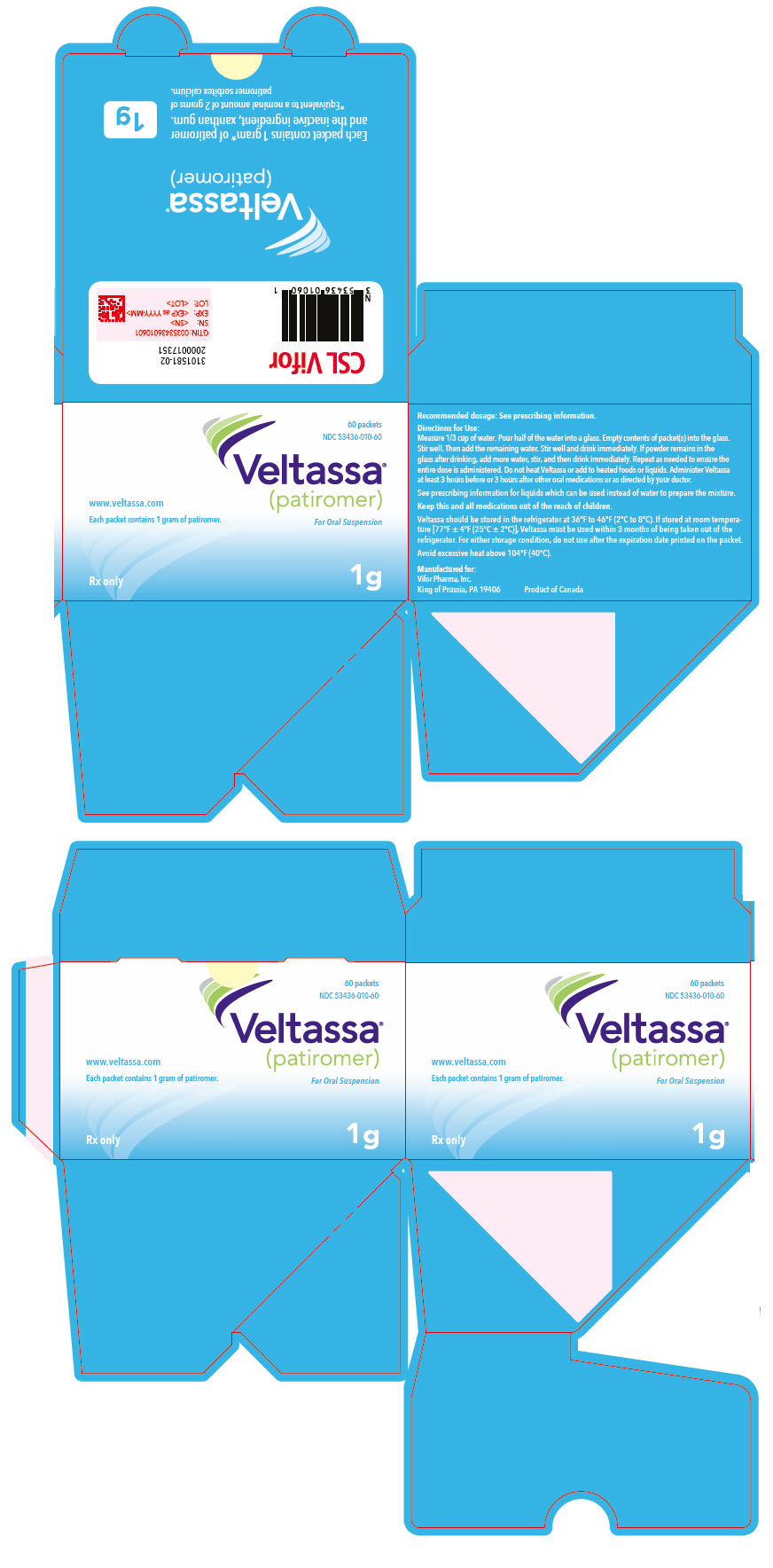
Veltassa patiromer 1 g Powder, For Suspension, 60 packets — NDC 53436-010-60 (Billing 53436-0010-60)
This is a package of 60 packets of Veltassa patiromer 1 g Powder, For Suspension from Vifor Pharma, Inc., marketed since Oct 2024 and currently FDA-listed. It is this product's only package size.
NDC database record
One package, one record: these facts belong to NDC 53436-010-60 alone.
- Record
- FDA NDC Directory package listing · Human prescription drug
- Code segments
- 53436 labeler · 010 product · 60 package
- Package marketed since
- Oct 2, 2024
- Sample package
- No — commercial package
- Listing certified through
- Dec 31, 2026
- Billing quantity
- 60 EA per package
- Barcode (UPC-A, from the NDC)
- 3 5343601060 1
- FDA record last changed
- Jul 24, 2026
Identity & classification
Regulatory identifiers FDA, NLM and CMS codes for this package
Drug-database identifiers Medi-Span GPI and First Databank GCN / HICL / AHFS classification
- GSN (GCN sequence number): 087215
- GCN: 57068
- GPI-14 (Medi-Span): 99450060203005
- HICL (First Databank): 042767
- AHFS class code: 40:18.18.00
- RxCUI (RxNorm): 1716209
Where does this data come from?
- FDA openFDA NDC Directory · synced Oct 8, 2026
- FDA label on DailyMed · label index refreshed Oct 6, 2026
- RxNorm (NLM RxNav) · catalog refreshed Oct 1, 2026
- Medi-Span GPI (licensed)
- First Databank (licensed) · refreshed Oct 8, 2026
RxNorm drug class
This medicine belongs to the Potassium Binder class.
Where does this data come from?
- RxClass (NLM) · catalog refreshed Oct 1, 2026
Clinical
- Think of Veltassa as a sponge that you swallow. It travels through your gut, latches onto excess potassium in your intestines, and carries it out of your body in your stool. It nev...
- What exactly is Veltassa doing in my body?
- Mix the packet of powder into about a third of a cup of water — or a soft food like applesauce or yogurt — right before you take it. Stir it well, drink it immediately, and if powd...
- How do I mix and take this medication correctly?
Patient education
Supplement & herbal interactions
Some supplements/herbs that may interact with Patiromer Sorbitex Calcium — tap one for details:
Where does this data come from?
- MedlinePlus (NLM) · refreshed Oct 1, 2026
- FDA label on DailyMed · label index refreshed Oct 6, 2026
Ask a licensed pharmacist directly — free, answered by our team.
Pricing
A drug doesn't have one price. Each row is a different public payment system, and none is what you'd pay at the counter — that depends on your insurance. The ⓘ on each row explains what it measures.
| Price system | Per mL | Per package |
|---|---|---|
| Retail pharmacies payNADAC · weekly | Not in the retail survey — common for institutional, discontinued, or low-volume packs. | |
| Medicaid paysCMS SDUD · 12 mo | No recent Medicaid claims on file for this NDC — rare and low-volume NDCs are suppressed in the public data. | |
| Medicare drug plans payPart D · Q2 2026 | $9.26 | — |
Where does this data come from?
- CMS NADAC weekly file
- CMS ASP pricing files · refreshed Sep 20, 2026
- CMS Medicaid State Drug Utilization Data · refreshed Oct 8, 2026
- CMS Part D plan pricing files · refreshed Sep 24, 2026
- VA National Acquisition Center price file
Packaging — all sizes for this product
| Package NDC | Description | Marketing start | Marketing end | Status |
|---|---|---|---|---|
| 53436-0010-60 You're viewing this Main listing | 60 PACKET in 1 CARTON / 1 POWDER, FOR SUSPENSION in 1 PACKET | 2024-10-02 | — | Active |
Therapeutic equivalents
| Product | Labeler | Pack | NADAC/unit | TE | Status | Price vs. this |
|---|---|---|---|---|---|---|
| Veltassa 1 gthis 53436-0010-60 | Vifor | 60 packets | — | — | FDA listed | — |
Where does this data come from?
- FDA openFDA NDC Directory · synced Oct 8, 2026
- FDA Orange Book · refreshed Oct 3, 2026
- CMS NADAC weekly file
Availability & generic status
We did not find an FDA-approved generic match for this exact strength, form and route. Patent/protection dates below may affect future generic timing.
Why the date isn’t exact: Generic timing can change because patents may be challenged, settled, licensed, added, removed, or worked around with a narrower label — and FDA approval does not always mean a pharmacy can get the generic today.
🛈 What do these terms mean?
- Patent
- Legal protection listed in the Orange Book that may delay generic approval or launch. Issued by the U.S. Patent & Trademark Office.
- Substance patent
- Covers the active drug molecule itself — the hardest to design around. A generic generally can’t launch until it expires.
- Formulation (product) patent
- Covers a specific formulation or dosage form. A generic can sometimes work around it with a different formulation.
- Method-of-use patent
- A patent covering one specific approved use of the drug — not necessarily the whole molecule. A generic can sometimes launch with a “skinny label” that carves out the protected use and keeps the others.
- Skinny label
- A generic label that omits a still-patented use when the FDA allows it — letting a generic reach the market for the unprotected uses.
- Exclusivity
- FDA-granted marketing protection, separate from patents — e.g. 5-yr new chemical entity, 7-yr orphan drug, or a +6-month pediatric extension.
- Paragraph IV
- A generic applicant’s formal challenge to a listed patent. It can potentially lead to earlier generic entry, but often involves litigation or a settlement.
- RLD / RS
- Reference Listed Drug — the brand product the FDA uses as the reference for generic applications. Reference Standard — the product the FDA expects generics to compare against in bioequivalence testing.
- TE / AB rating
- FDA therapeutic-equivalence rating. An AB rating generally means the FDA considers a generic therapeutically equivalent to — and substitutable for — the brand.
- LOE (loss of exclusivity)
- The latest patent or exclusivity currently listed — the loss-of-exclusivity / latest-listed-protection date shown on this page. Paragraph-IV challenges and settlements can move the real date earlier; FDA approval and a manufacturer’s decision to market can move it later.
Built from the FDA Orange Book. The bars above are scaled to each protection’s expiry; the red LOE marker is the last one to lapse.
| Patent | Type | Use code | Expires |
|---|---|---|---|
| US 8216560 ↗ | Method of use | U-1766 | Mar 14, 2027 |
| US 8216560 ↗ | Method of use | U-1766 | Mar 14, 2027 |
| US 8337824 ↗ | Drug substance | U-1766 | May 29, 2030 |
| US 9492476 ↗ | Method of use | U-1766 | Oct 8, 2033 |
| US 9492476 ↗ | Method of use | U-1766 | Oct 8, 2033 |
| US 9925212 ↗ | Method of use | U-1766 | Oct 8, 2033 |
| US 9925212 ↗ | Method of use | U-1766 | Oct 8, 2033 |
| US 8337824 ↗ | Drug substance | U-1766 | May 29, 2030 |
| US 8216560 ↗ | Method of use | U-1766 | Mar 14, 2027 |
| US 9492476 ↗ | Method of use | U-1766 | Oct 8, 2033 |
| US 8216560 ↗ | Method of use | U-1766 | Mar 14, 2027 |
| US 8337824 ↗ | Drug substance | U-1766 | May 29, 2030 |
| US 9492476 ↗ | Method of use | U-1766 | Oct 8, 2033 |
| US 9925212 ↗ | Method of use | U-1766 | Oct 8, 2033 |
| US 9925212 ↗ | Method of use | U-1766 | Oct 8, 2033 |
| US 11123363 ↗ | Method of use | U-1766 | Oct 8, 2033 |
| US 11123363 ↗ | Method of use | U-1766 | Oct 8, 2033 |
| US 11123363 ↗ | Method of use | U-1766 | Oct 8, 2033 |
| US 11123363 ↗ | Method of use | U-1766 | Oct 8, 2033 |
| US 8337824 ↗ | Drug substance | U-1766 | May 29, 2030 |
| US 8147873 ↗ | Drug product | — | Jun 20, 2028 |
| US 8147873 ↗ | Drug product | — | Jun 20, 2028 |
| US 8282913 ↗ | Drug product | — | May 29, 2027 |
| US 8282913 ↗ | Drug product | — | May 29, 2027 |
| US 8147873 ↗ | Drug product | — | Jun 20, 2028 |
| US 8282913 ↗ | Drug product | — | May 29, 2027 |
| US 8282913 ↗ | Drug product | — | May 29, 2027 |
| US 8147873 ↗ | Drug product | — | Jun 20, 2028 |
| Code | What it grants | Expires |
|---|---|---|
| NPP | New Patient Population | Oct 2, 2026 |
| NPP | New Patient Population | Oct 2, 2026 |
| NPP | New Patient Population | Oct 2, 2026 |
| NS | New Strength | Oct 2, 2026 |
Is there a generic version of VELTASSA 1 GM POWDER PACKET?
The FDA approved a generic — why can’t I get it at my pharmacy yet?
Why do different websites show different generic release dates?
What does “FDA listed” mean?
What does a patent or protection date mean here?
What does “current Orange Book estimate” mean?
Can a generic come out before the last patent expires?
Can a generic come out after the listed dates?
What is the difference between patents and exclusivity?
Why are there multiple patent dates?
Where does this data come from?
- FDA Orange Book · refreshed Oct 3, 2026
What it looks like
Where does this data come from?
- FDA label on DailyMed · label index refreshed Oct 6, 2026
Inactive Ingredients / Excipients
Inactive ingredients, also called excipients, are components of the drug product other than the active ingredient. They may include fillers, dyes, coatings, preservatives, flavors, or other formulation ingredients.
🧪 Avoiding an ingredient? See Patiromer inactive ingredients by manufacturer: every current product's list side by side, so you can ask your pharmacy for the version that does not list it.
💡 Tap an ingredient (hover on desktop) to see what it is and why it’s used.
-
0.014 g
UNII TTV12P4NEE
Xanthan gum is a thickening and stabilizing ingredient made from fermented corn or other sugars. It's added to medicines to improve texture, prevent separation of liquids and solids, and help the product stay consistent.
1 inactive ingredient listed in the exact product block matched to this NDC.
Where does this data come from?
ingredient classCode="IACT" elements from the exact product block matched by this NDC. Label-section narrative from DailyMed / the openFDA label index is shown separately when available.- FDA label on DailyMed · label index refreshed Oct 6, 2026
- FDA openFDA NDC Directory · synced Oct 8, 2026
Inactive ingredient FAQ
Are inactive ingredients the same for every manufacturer?
Why might an inactive ingredient be missing?
Can inactive ingredients matter?
Manufacturer & labeler
More NDCs from Vifor Pharma, Inc. labeler code 53436
Where does this data come from?
- FDA openFDA NDC Directory · synced Oct 8, 2026
- Drugs@FDA
Full prescribing information FDA SPL
🎯 Indications and Usage ▾
1 INDICATIONS AND USAGE Veltassa is indicated for the treatment of hyperkalemia in adults and pediatric patients ages 12 years and older. Limitation of Use: Veltassa should not be used as an emergency treatment for life-threatening hyperkalemia because of its delayed onset of action [see Clinical Pharmacology (12.2) ] . Veltassa is a potassium binder indicated for the treatment of hyperkalemia in adults and pediatric patients ages 12 years and older.
( 1 ) Limitation of Use Veltassa should not be used as an emergency treatment for life-threatening hyperkalemia because of its delayed onset of action. ( 1 )
⏱️ Dosage and Administration ▾
2 DOSAGE AND ADMINISTRATION For adults, the recommended starting dose of Veltassa is 8.4 grams administered orally once daily. ( 2.2 ) For adults, adjust dose by 8.4 grams daily as needed at one-week intervals to obtain desired serum potassium target range. ( 2.2 ) For pediatric patients 12 to 17 years of age, the recommended starting dose of Veltassa is 4 grams administered orally once daily.
( 2.2 ) For pediatric patients 12 to 17 years of age, adjust dose by 4 grams daily as needed at one-week intervals to obtain desired serum potassium target range. ( 2.2 ) The maximum recommended dosage in adults and pediatric patients older than 12 years is 25.2 grams once daily. ( 2.2 )
2.1General Information Administer Veltassa at least 3 hours before or 3 hours after other oral medications except those shown to not have a clinically important interaction [see Drug Interactions (7) and Clinical Pharmacology (12.3) ]. Do not heat Veltassa (e.g., microwave) or add to heated foods or liquids. Do not take Veltassa in its dry form.
2.2Recommended Dosing and Titration The recommended starting dose of Veltassa varies with age and is shown below. Multiple packets may be used to achieve the prescribed dose. Monitor serum potassium and adjust the dose of Veltassa based on the serum potassium level and the desired target range.
The dose may be increased or decreased, as necessary, to reach the desired serum potassium concentration, up to a maximum dose of 25.2 grams once daily in adults and pediatric patients aged 12 years and older. Adults: The recommended starting dose of Veltassa is 8.4 grams patiromer orally once daily. The dose can be up-titrated based on serum potassium level at 1-week or longer intervals, in increments of 8.4 grams.
Pediatric Patients Ages 12 years and older: The recommended starting dose of Veltassa is 4 grams patiromer orally once daily. The dose can be titrated based on serum potassium level at 1-week or longer intervals, in increments of 4 grams.
2.3Preparation of Veltassa Prepare each dose immediately prior to administration. Measure 1/3 cup of water. Pour half of the water into a glass, then add the packet(s) of Veltassa and stir.
Add the remaining half of the water and stir thoroughly. The powder will not dissolve and the mixture will look cloudy. Add more water to the mixture as needed for desired consistency.
Drink the mixture immediately. If powder remains in the glass after drinking, add more water, stir and drink immediately. Repeat as needed to ensure the entire dose is administered.
Other beverages or soft foods (e.g., apple sauce, yogurt, pudding) can be used instead of water to prepare the mixture by following the same steps as described above. A minimum volume of 45 mL (3 tablespoons) can be used to prepare doses up to and including 4 grams patiromer. The potassium content of liquids or soft foods used to prepare the mixture should be considered as part of the dietary recommendations on potassium intake for each individual patient.
💊 Dosage Forms and Strengths ▾
3 DOSAGE FORMS AND STRENGTHS Veltassa is an off-white to light-brown powder for oral suspension packaged in single-use packets containing 1 gram, 8.4 grams, 16.8 grams or 25.2 grams patiromer. Powder: 1 gram, 8.4 grams, 16.8 grams and 25.2 grams patiromer packets. ( 3 )
⛔ Contraindications ▾
4 CONTRAINDICATIONS Veltassa is contraindicated in patients with a history of a hypersensitivity reaction to Veltassa or any of its components [see Adverse Reactions (6.1) ]. Known hypersensitivity to Veltassa or any of its components. ( 4 )
⚠️ Warnings and Cautions ▾
5 WARNINGS AND PRECAUTIONS Worsening of Gastrointestinal Motility. ( 5.1 ) Hypomagnesemia. ( 5.2 )
5.1Worsening of Gastrointestinal Motility Avoid use of Veltassa in patients with severe constipation, bowel obstruction or impaction, including abnormal post-operative bowel motility disorders, because Veltassa may be ineffective and may worsen gastrointestinal conditions. Patients with a history of bowel obstruction or major gastrointestinal surgery, severe gastrointestinal disorders, or swallowing disorders were not included in the clinical studies.
5.2Hypomagnesemia Veltassa binds to magnesium in the colon, which can lead to hypomagnesemia. In clinical studies, hypomagnesemia was reported as an adverse reaction in 5.3% of adult patients treated with Veltassa [see Adverse Reactions (6.1) ]. Monitor serum magnesium. Consider magnesium supplementation in patients who develop low serum magnesium levels on Veltassa.
🤒 Adverse Reactions ▾
6 ADVERSE REACTIONS The following adverse reaction is discussed in greater detail elsewhere in the label: Hypomagnesemia [see Warnings and Precautions (5.2) ] Most common adverse reactions (incidence ≥ 2%) are constipation, hypomagnesemia, diarrhea, nausea, abdominal discomfort and flatulence. ( 6.1 ) To report SUSPECTED ADVERSE REACTIONS, contact Vifor Pharma, Inc. at 1-844-VELTASSA (1-844-835-8277) or FDA at 1-800-FDA-1088 or www.fda.gov/medwatch.
6.1Clinical Trials Experience Adult Patients Because clinical trials are conducted under widely varying conditions, adverse reaction rates observed in the clinical trials of Veltassa cannot be directly compared to rates in the clinical trials of other drugs and may not reflect the rates observed in practice. In the safety and efficacy clinical trials, 666 adult patients received at least one dose of Veltassa, including 219 exposed for at least 6 months and 149 exposed for at least one year. Table 1 provides a summary of the most common adverse reactions (occurring in ≥ 2% of patients) in adult patients treated with Veltassa in these clinical trials.
Most adverse reactions were mild to moderate. Constipation generally resolved during the course of treatment. Table 1: Adverse Reactions Reported in ≥ 2% of Patients Adverse Reactions Adult Patients treated with Veltassa (N=666) Note: Diarrhea is an aggregate term for Diarrhea and frequent bowel movements.
Abdominal discomfort is an aggregate term for Abdominal discomfort, abdominal pain, abdominal pain upper, and abdominal pain lower. Constipation 7.2% Hypomagnesemia 5.3% Diarrhea 4.8% Nausea 2.3% Abdominal discomfort 2.0% Flatulence 2.0% The most commonly reported adverse reactions leading to discontinuation of Veltassa were gastrointestinal adverse reactions (2.7%), including vomiting (0.8%), diarrhea (0.6%), constipation (0.5%) and flatulence (0.5%). Mild to moderate hypersensitivity reactions were reported in 0.3% of adult patients treated with Veltassa in clinical trials.
Reactions have included edema of the lips. Laboratory Abnormalities Approximately 4.7% of adult patients in clinical trials developed hypokalemia with a serum potassium value < 3.5 mEq/L. Approximately 9% of adult patients in clinical trials developed hypomagnesemia with a serum magnesium value < 1.4 mg/dL.
Pediatric Patients In a single-arm, open-label pediatric study, 14 patients 12 to 17 years of age received at least one dose of Veltassa, including 12 patients exposed for at least 25 weeks. The safety profile was generally similar to that observed in adult patients.
🔄 Drug Interactions ▾
7 DRUG INTERACTIONS Veltassa has the potential to bind some oral co-administered medications, which could decrease their gastrointestinal absorption. Binding of Veltassa to other oral medications not listed in Table 3 below could cause decreased gastrointestinal absorption and loss of efficacy when taken close to the time Veltassa is administered. Administer other oral medications at least 3 hours before or 3 hours after Veltassa [see Dosage and Administration (2.1) and Clinical Pharmacology (12.3) ] .
Take other orally administered drugs at least 3 hours before or 3 hours after Veltassa except those shown to not have a clinically important interaction. ( 2.1 , 7 )
7.1Clinically Important Interaction of Veltassa with Other Drugs The in-vitro binding of the following drugs to patiromer was evaluated and potentially clinically significant binding was observed. Some drugs were subsequently tested in-vivo and significant reduction in systemic exposure was observed [see Dosage and Administration (2.1) and Clinical Pharmacology (12.3) ] . Binding by Veltassa may reduce the systemic exposure and decrease the clinical efficacy of the co-administered drugs shown in Table 2.
The administration of these drugs (and any drugs not listed in Table 3) should be separated by at least 3 hours from Veltassa. Table 2: Clinically important drug interactions of Veltassa Angiotensin II receptor blockers (ARB) Telmisartan β-adrenoceptor blockers (β-blocker) Bisoprolol, carvedilol, nebivolol Antibiotics Ciprofloxacin Anti-Parathyroid Agents and Thyroid Preparations Levothyroxine Blood Glucose Lowering Drugs Metformin Immunosuppressants Mycophenolate mofetil Others Quinidine, thiamine
7.2No Observed Clinically Important Interaction of Veltassa with Other Drugs The binding of the following drugs to patiromer was evaluated [see Clinical Pharmacology (12.3) ] and no clinically significant binding was observed. No separation of dosing is required for these drugs. Table 3: No observed clinically important drug interactions of Veltassa Angiotensin-converting enzyme (ACE) inhibitors Benazepril, captopril, enalapril, fosinopril, lisinopril, perindopril, quinapril, ramipril, trandolapril Angiotensin II receptor blockers (ARB) Azilsartan, candesartan, irbesartan, losartan, olmesartan, valsartan β-adrenoceptor blockers (β-blocker) Metoprolol Loop diuretics Furosemide, bumetanide, torasemide Mineralocorticoid receptor antagonists (MRA) Eplerenone, finerenone, spironolactone Neprilysin inhibitors Sacubitril Sodium-glucose cotransporter-2 (SGLT-2) inhibitors Canagliflozin, dapagliflozin, empagliflozin Antibiotics Trimethoprim, amoxicillin, cephalexin Anticoagulants Warfarin, apixaban, rivaroxaban Anti-parathyroid agents and Thyroid preparations Cinacalcet Antithrombotic agents Clopidogrel, acetylsalicylic acid Blood glucose lowering drugs Glipizide Calcium channel blockers Amlodipine, verapamil Immunosuppressants Tacrolimus Others Lithium, allopurinol, atorvastatin, digoxin, phenytoin, riboflavin, sevelamer
👥 Use in Specific Populations ▾
8 USE IN SPECIFIC POPULATIONS
8.1Pregnancy Risk Summary Veltassa is not absorbed systemically following oral administration and maternal use is not expected to result in fetal risk.
8.2Lactation Risk Summary Veltassa is not absorbed systemically by the mother, so breastfeeding is not expected to result in risk to the infant.
8.4Pediatric Use The safety and effectiveness of Veltassa for lowering serum potassium levels have been established in pediatric patients ages 12 years and older. Use of Veltassa for this indication is supported by evidence from an adequate and well-controlled study in adults, with additional pharmacodynamic and safety data in pediatric patients aged 12 years and older [see Dosage and Administration (2.2) , Adverse Reactions (6.1) , and Clinical Studies (14.3) ]. Safety and efficacy have not been established in pediatric patients below the age of 12 years.
Although the pediatric study included 9 patients 6 to less than 12 years of age, the dosing regimen that was evaluated in these patients did not appear to be effective in reducing serum potassium levels in this age group after 2 weeks. The starting dose of Veltassa in this age group was 2 g/day and the median dose at Day 14 was 6 g/day. In this age group the mean change in serum potassium from Baseline to Day 14 was -0.1 mEq/L (95% CI -0.7, 0.4).
Because the available data are not sufficient to determine a safe and effective dosing regimen in patients 6 to less than 12 years of age, labeling recommendations cannot be provided for this age group.
8.5Geriatric Use Of the 666 patients treated with Veltassa in clinical studies, 60% were age 65 and over, and 20% were age 75 and over. No overall differences in effectiveness were observed between these patients and younger patients. Patients age 65 and older reported more gastrointestinal adverse reactions than younger patients.
8.6Renal Impairment Of the 666 adult patients treated with Veltassa in clinical studies, 93% had chronic kidney disease (CKD). All 14 pediatric patients ages 12 years and older treated with Veltassa in the clinical study had chronic kidney disease. No special dosing adjustments are needed for patients with renal impairment.
🤰 Pregnancy ▾
8.1Pregnancy Risk Summary Veltassa is not absorbed systemically following oral administration and maternal use is not expected to result in fetal risk.
🧒 Pediatric Use ▾
8.4Pediatric Use The safety and effectiveness of Veltassa for lowering serum potassium levels have been established in pediatric patients ages 12 years and older. Use of Veltassa for this indication is supported by evidence from an adequate and well-controlled study in adults, with additional pharmacodynamic and safety data in pediatric patients aged 12 years and older [see Dosage and Administration (2.2) , Adverse Reactions (6.1) , and Clinical Studies (14.3) ]. Safety and efficacy have not been established in pediatric patients below the age of 12 years.
Although the pediatric study included 9 patients 6 to less than 12 years of age, the dosing regimen that was evaluated in these patients did not appear to be effective in reducing serum potassium levels in this age group after 2 weeks. The starting dose of Veltassa in this age group was 2 g/day and the median dose at Day 14 was 6 g/day. In this age group the mean change in serum potassium from Baseline to Day 14 was -0.1 mEq/L (95% CI -0.7, 0.4).
Because the available data are not sufficient to determine a safe and effective dosing regimen in patients 6 to less than 12 years of age, labeling recommendations cannot be provided for this age group.
🧓 Geriatric Use ▾
8.5Geriatric Use Of the 666 patients treated with Veltassa in clinical studies, 60% were age 65 and over, and 20% were age 75 and over. No overall differences in effectiveness were observed between these patients and younger patients. Patients age 65 and older reported more gastrointestinal adverse reactions than younger patients.
🆘 Overdosage ▾
10 OVERDOSAGE Doses of Veltassa in excess of 50.4 grams per day have not been tested. Excessive doses of Veltassa may result in hypokalemia. Restore serum potassium if hypokalemia occurs.
🧬 Clinical Pharmacology ▾
12 CLINICAL PHARMACOLOGY
12.1Mechanism of Action Veltassa is a non-absorbed, cation exchange polymer that contains a calcium-sorbitol counterion. Veltassa increases fecal potassium excretion through binding of potassium in the lumen of the gastrointestinal tract. Binding of potassium reduces the concentration of free potassium in the gastrointestinal lumen, resulting in a reduction of serum potassium levels.
12.2Pharmacodynamics In a Phase 1 study in healthy adult subjects (6 to 8 subjects per group), Veltassa (0 grams to 50.4 grams per day) administered three times a day for 8 days caused a dose-dependent increase in fecal potassium excretion. A corresponding dose-dependent decrease in urinary potassium excretion with no change in serum potassium were also observed. Compared to placebo, Veltassa doses of 25.2 and 50.4 grams per day significantly decreased mean daily urinary potassium excretion.
In a Phase 1, open-label, multiple-dose crossover study in 12 healthy subjects, 25.2 grams of patiromer per day was administered orally as a once daily, twice daily or thrice daily regimen for 6 days in a randomly assigned order. A significant increase in mean daily fecal potassium excretion and concomitant decrease in mean daily urinary potassium excretion were observed during the treatment periods for all three dosing regimens. The mean increase in fecal potassium excretion ranged from 1283 to 1550 mg/day, and the mean decrease in urinary potassium excretion ranged from 1438 to 1534 mg/day across the three dosing regimens.
No significant differences were observed among the dosing regimens with respect to mean daily fecal potassium and urinary potassium excretion. This was true for the overall comparison among the three dosing regimens, as well as for the pairwise comparisons. In an open-label, uncontrolled study, 25 patients with hyperkalemia (mean baseline serum potassium of 5.9 mEq/L) and chronic kidney disease were given a controlled potassium diet for 3 days, followed by 16.8 grams patiromer daily (as divided doses) for 2 days while the controlled diet was continued.
A statistically significant reduction in serum potassium (-0.2 mEq/L) was observed at 7 hours after the first dose. Serum potassium levels continued to decline during the 48-hour treatment period (-0.8 mEq/L at 48 hours after the first dose). Potassium levels remained stable for 24 hours after the last dose, then rose during the 4-day observation period following discontinuation of Veltassa.
12.3Pharmacokinetics Absorption In radiolabeled ADME studies in rats and dogs, patiromer was not systemically absorbed and was excreted in the feces. Quantitative whole-body autoradiography analysis in rats demonstrated that radioactivity was limited to the gastrointestinal tract, with no detectable level of radioactivity in any other tissues or organs. Effect of Food Veltassa can be taken with or without food.
In an open-label study, 114 patients with hyperkalemia were randomized to Veltassa once daily with food or without food. Serum potassium at the end of treatment, the change from baseline in serum potassium, and the mean dose of Veltassa were similar between groups. Drug Interactions Veltassa has the potential to bind some oral co-administered medications, which could decrease their gastrointestinal absorption.
Fifty-six (56) drugs were tested in-vitro to determine the potential for interaction with Veltassa [see Drug Interactions (7) ]. For oral drug products not listed in Table 3, administration of patiromer should be separated by at least 3 hours as a precautionary measure. Twelve (12) drugs that showed an in vitro interaction were subsequently tested in vivo .
These studies in healthy volunteers showed that Veltassa did not alter the systemic exposure of amlodipine, cinacalcet, clopidogrel, furosemide, lithium, metoprolol, trimethoprim, verapamil or warfarin when coadministered with Veltassa. Veltassa decreased the systemic exposure of coadministered ciprofloxacin, l… [Excerpted — this section continues on DailyMed.]
🧬 Mechanism of Action ▾
12.1Mechanism of Action Veltassa is a non-absorbed, cation exchange polymer that contains a calcium-sorbitol counterion. Veltassa increases fecal potassium excretion through binding of potassium in the lumen of the gastrointestinal tract. Binding of potassium reduces the concentration of free potassium in the gastrointestinal lumen, resulting in a reduction of serum potassium levels.
📦 How Supplied / Storage and Handling ▾
16 HOW SUPPLIED/STORAGE AND HANDLING
16.1How Supplied Veltassa is supplied as a powder for oral suspension formulated with xanthan gum. Veltassa is packaged in single-use packets containing 1 gram, 8.4 grams, 16.8 grams or 25.2 grams patiromer as follows: Veltassa (grams) Carton of 4 Packets Carton of 30 Packets Carton of 60 Packets 1 - - NDC 53436-010-60
8.4NDC 53436-084-04 NDC 53436-084-30 - 16.8 - NDC 53436-168-30 - 25.2 - NDC 53436-252-30 -
16.2Stability and Storage Veltassa should be stored in the refrigerator at 2°C to 8°C (36°F to 46°F). If stored at room temperature (25°C ± 2°C [77°F ± 4°F]), Veltassa must be used within 3 months of being taken out of the refrigerator. For either storage condition, do not use Veltassa after the expiration date printed on the packet. Avoid exposure to excessive heat above 40°C (104°F).
16.1How Supplied Veltassa is supplied as a powder for oral suspension formulated with xanthan gum. Veltassa is packaged in single-use packets containing 1 gram, 8.4 grams, 16.8 grams or 25.2 grams patiromer as follows: Veltassa (grams) Carton of 4 Packets Carton of 30 Packets Carton of 60 Packets 1 - - NDC 53436-010-60
8.4NDC 53436-084-04 NDC 53436-084-30 - 16.8 - NDC 53436-168-30 - 25.2 - NDC 53436-252-30 -
📦 Storage and Handling ▾
16.2Stability and Storage Veltassa should be stored in the refrigerator at 2°C to 8°C (36°F to 46°F). If stored at room temperature (25°C ± 2°C [77°F ± 4°F]), Veltassa must be used within 3 months of being taken out of the refrigerator. For either storage condition, do not use Veltassa after the expiration date printed on the packet. Avoid exposure to excessive heat above 40°C (104°F).
📋 Description ▾
11 DESCRIPTION Veltassa is a powder for suspension in water for oral administration. The active ingredient is patiromer sorbitex calcium which consists of the active moiety, patiromer, a non-absorbed potassium-binding polymer, and a calcium-sorbitol counterion. Each gram of patiromer is equivalent to a nominal amount of 2 grams of patiromer sorbitex calcium.
The chemical name for patiromer sorbitex calcium is cross-linked polymer of calcium 2-fluoroprop-2-enoate with diethenylbenzene and octa-1,7-diene, combination with D-glucitol. Patiromer sorbitex calcium is an amorphous, free-flowing powder that is composed of individual spherical beads. Patiromer sorbitex calcium is insoluble in solvents such as water,
0.1M HCl, n-heptane and methanol. The chemical structure of patiromer sorbitex calcium is presented in Figure 1. Figure 1: Chemical Structure of Patiromer Sorbitex Calcium Each packet of Veltassa contains 1 gram, 8.4 grams, 16.8 grams or 25.2 grams of patiromer, the active moiety. The inactive ingredient is xanthan gum. Figure 1
💬 Information for Patients ▾
17 PATIENT COUNSELING INFORMATION Drug Interactions Advise patients who are taking other oral medication that separation of dosing of Veltassa by at least 3 hours (before or after) may be needed except those shown to not have a clinically important interaction in Table 3 above [see Drug Interactions (7) ]. Dosing Recommendations Inform patients to take Veltassa as directed and adhere to their prescribed diets. Inform patients that Veltassa should not be heated (e.g., microwaved) or added to heated foods or liquids and should not be taken in its dry form.
🧬 Pharmacokinetics ▾
12.3Pharmacokinetics Absorption In radiolabeled ADME studies in rats and dogs, patiromer was not systemically absorbed and was excreted in the feces. Quantitative whole-body autoradiography analysis in rats demonstrated that radioactivity was limited to the gastrointestinal tract, with no detectable level of radioactivity in any other tissues or organs. Effect of Food Veltassa can be taken with or without food.
In an open-label study, 114 patients with hyperkalemia were randomized to Veltassa once daily with food or without food. Serum potassium at the end of treatment, the change from baseline in serum potassium, and the mean dose of Veltassa were similar between groups. Drug Interactions Veltassa has the potential to bind some oral co-administered medications, which could decrease their gastrointestinal absorption.
Fifty-six (56) drugs were tested in-vitro to determine the potential for interaction with Veltassa [see Drug Interactions (7) ]. For oral drug products not listed in Table 3, administration of patiromer should be separated by at least 3 hours as a precautionary measure. Twelve (12) drugs that showed an in vitro interaction were subsequently tested in vivo .
These studies in healthy volunteers showed that Veltassa did not alter the systemic exposure of amlodipine, cinacalcet, clopidogrel, furosemide, lithium, metoprolol, trimethoprim, verapamil or warfarin when coadministered with Veltassa. Veltassa decreased the systemic exposure of coadministered ciprofloxacin, levothyroxine and metformin. However, there was no interaction when Veltassa and these drugs were taken 3 hours apart (Figure 2) [see Drug Interactions (7) ] .
Figure 2: Effects of Veltassa on the Pharmacokinetic Exposures of Other Orally Administered Medications with No Dosing Separation and with a 3-Hour Separation Figure 2
🧬 Pharmacodynamics ▾
12.2Pharmacodynamics In a Phase 1 study in healthy adult subjects (6 to 8 subjects per group), Veltassa (0 grams to 50.4 grams per day) administered three times a day for 8 days caused a dose-dependent increase in fecal potassium excretion. A corresponding dose-dependent decrease in urinary potassium excretion with no change in serum potassium were also observed. Compared to placebo, Veltassa doses of 25.2 and 50.4 grams per day significantly decreased mean daily urinary potassium excretion.
In a Phase 1, open-label, multiple-dose crossover study in 12 healthy subjects, 25.2 grams of patiromer per day was administered orally as a once daily, twice daily or thrice daily regimen for 6 days in a randomly assigned order. A significant increase in mean daily fecal potassium excretion and concomitant decrease in mean daily urinary potassium excretion were observed during the treatment periods for all three dosing regimens. The mean increase in fecal potassium excretion ranged from 1283 to 1550 mg/day, and the mean decrease in urinary potassium excretion ranged from 1438 to 1534 mg/day across the three dosing regimens.
No significant differences were observed among the dosing regimens with respect to mean daily fecal potassium and urinary potassium excretion. This was true for the overall comparison among the three dosing regimens, as well as for the pairwise comparisons. In an open-label, uncontrolled study, 25 patients with hyperkalemia (mean baseline serum potassium of 5.9 mEq/L) and chronic kidney disease were given a controlled potassium diet for 3 days, followed by 16.8 grams patiromer daily (as divided doses) for 2 days while the controlled diet was continued.
A statistically significant reduction in serum potassium (-0.2 mEq/L) was observed at 7 hours after the first dose. Serum potassium levels continued to decline during the 48-hour treatment period (-0.8 mEq/L at 48 hours after the first dose). Potassium levels remained stable for 24 hours after the last dose, then rose during the 4-day observation period following discontinuation of Veltassa.
🔬 Clinical Studies ▾
14 CLINICAL STUDIES
14.1Two-Part, Randomized Withdrawal Study The efficacy of Veltassa was demonstrated in a two-part, single-blind randomized withdrawal study that evaluated Veltassa in hyperkalemic patients with CKD on stable doses of at least one renin-angiotensin-aldosterone system inhibitor (i.e., angiotensin-converting enzyme inhibitor, angiotensin II receptor blocker, or aldosterone antagonist). In Part A, 243 patients were treated with Veltassa for 4 weeks. Patients with a baseline serum potassium of 5.1 mEq/L to < 5.5 mEq/L received a starting Veltassa dose of 8.4 grams patiromer per day (as a divided dose) and patients with a baseline serum potassium of 5.5 mEq/L to < 6.5 mEq/L received a starting Veltassa dose of 16.8 grams patiromer per day (as a divided dose).
The dose of Veltassa was titrated, as needed, based on the serum potassium level, assessed starting on Day 3 and then at weekly visits (Weeks 1, 2 and 3) to the end of the 4-week treatment period, with the aim of maintaining serum potassium in the target range (3.8 mEq/L to < 5.1 mEq/L). The mean age of patients was 64 years, 58% of patients were men, and 98% were white. Approximately 97% of patients had hypertension, 57% had type 2 diabetes, and 42% had heart failure.
Results for the Part A primary endpoint, the change in serum potassium from Baseline to Week 4, are summarized in Table 4. Mean serum potassium over time for the intent-to-treat population is displayed in Figure 3. For the Part A secondary endpoint, 76% (95% CI: 70%, 81%) of patients had a serum potassium in the target range of 3.8 mEq/L to < 5.1 mEq/L at Week 4.
The mean daily doses of Veltassa were 13 grams and 21 grams in patients with serum potassium of 5.1 to < 5.5 mEq/L and 5.5 to < 6.5 mEq/L, respectively. Table 4: Veltassa Treatment Phase (Part A): Primary Endpoint Baseline, mean (SD) Week 4 Change from Baseline, Mean ± SE (95% CI) p -value Baseline Potassium 5.1 to <5.5 mEq/L (n=90) Serum Potassium (mEq/L) 5.31 (0.57) -0.65 ± 0.05 (-0.74, -0.55) Baseline Potassium 5.5 to <6.5 mEq/L (n=147) 5.74 (0.40) -1.23 ± 0.04 (-1.31, -1.16) Overall Population (n=237) 5.58 (0.51) -1.01 ± 0.03 (-1.07, -0.95) < 0.001 Figure 3: Estimated Mean (95% CI) of Central Serum Potassium (mEq/L) Over Time In Part B, 107 patients with a Part A baseline serum potassium of 5.5 mEq/L to < 6.5 mEq/L and whose serum potassium was in the target range (3.8 mEq/L to < 5.1 mEq/L) at Part A Week 4 and still receiving RAAS inhibitor medication were randomized to continue Veltassa or to receive placebo to evaluate the effect of withdrawing Veltassa on serum potassium.
In patients randomized to Veltassa, the mean daily dose was 21 grams at the start of Part B and during Part B. The Part B primary endpoint was the change in serum potassium from Part B baseline to the earliest visit at which the patient's serum potassium was first outside of the range of 3.8 to < 5.5 mEq/L, or to Part B Week 4 if the patient's serum potassium remained in the range. In Part B, serum potassium rose by 0.72 mEq/L in patients who were switched to placebo, versus no change in patients who remained on Veltassa.
Results are summarized in Table 5. Table 5: Randomized, Placebo-Controlled Withdrawal Phase (Part B): Primary Endpoint Placebo (n=52) Veltassa (n=55) Difference Estimate (95% CI) p -value Estimated Median Change in Serum Potassium from Baseline (mEq/L) 0.72 0.00 0.72 (0.46, 0.99) < 0.001 More placebo patients (91%; 95% CI: 83%, 99%) developed a serum potassium ≥ 5.1 mEq/L at any time during Part B than Veltassa patients (43%; 95% CI: 30%, 56%), p < 0.001. More placebo patients (60%; 95% CI: 47%, 74%) developed a serum potassium ≥ 5.5 mEq/L at any time during Part B than Veltassa patients (15%; 95% CI: 6%, 24%), p < 0.001.
Figure 3
14.2One-Year Study The effect of treatment with Veltassa for up to 52 weeks was evaluated in an open-label study of 304 hyperkalemic patients with CKD and type 2 diabetes mellitus on RAAS inhibitor therapy. Figur… [Excerpted — this section continues on DailyMed.]
🧪 Nonclinical Toxicology ▾
13 NONCLINICAL TOXICOLOGY
13.1Carcinogenesis, Mutagenesis, Impairment of Fertility Patiromer was not genotoxic in the reverse mutation test (Ames assay), chromosome aberration or rat micronucleus assays. Carcinogenicity studies have not been performed. Patiromer did not impair the fertility in male or female rats at doses up to 10-fold the maximum recommended human dose (MRHD).
📄 Carcinogenesis, Mutagenesis, Impairment of Fertility ▾
13.1Carcinogenesis, Mutagenesis, Impairment of Fertility Patiromer was not genotoxic in the reverse mutation test (Ames assay), chromosome aberration or rat micronucleus assays. Carcinogenicity studies have not been performed. Patiromer did not impair the fertility in male or female rats at doses up to 10-fold the maximum recommended human dose (MRHD).
📄 Package Label / Principal Display Panel ▾
PRINCIPAL DISPLAY PANEL - 8.4 g Packet Carton 30 packets NDC 53436-084-30 Veltassa ® (patiromer) For Oral Suspension www.veltassa.com Each packet contains 8.4 grams of patiromer. Dispense as 1 box; 30-day supply. Rx only 8.4 g PRINCIPAL DISPLAY PANEL - 8.4 g Packet Carton
PRINCIPAL DISPLAY PANEL - 16.8 g Packet Carton 30 packets NDC 53436-168-30 Veltassa ® (patiromer) For Oral Suspension www.veltassa.com Each packet contains 16.8 grams of patiromer. Dispense as 1 box; 30-day supply. Rx only 16.8 g PRINCIPAL DISPLAY PANEL - 16.8 g Packet Carton
PRINCIPAL DISPLAY PANEL - 25.2 g Packet Carton 30 packets NDC 53436-252-30 Veltassa ® (patiromer) For Oral Suspension www.veltassa.com Each packet contains 25.2 grams of patiromer. Dispense as 1 box; 30-day supply. Rx only 25.2 g PRINCIPAL DISPLAY PANEL - 25.2 g Packet Carton
PRINCIPAL DISPLAY PANEL - 1 g Packet Carton 60 packets NDC 53436-010-60 Veltassa ® (patiromer) For Oral Suspension www.veltassa.com Each packet contains 1 gram of patiromer. Rx only 1 g PRINCIPAL DISPLAY PANEL - 1 g Packet Carton
Medicare Part D spend CMS · PART D · 2026 (Q1)
About this NDC listing & data coverage
What data is (and isn’t) available for this NDC — tap to expand
| NDC identity (package / product / labeler codes) | ✓ Available |
| Labeler | ✓ Available |
| Product & package description | ✓ Available |
| Marketing category & status | ✓ Available |
| Active ingredient / dosage form / route | ✓ Available |
| FDA label (SPL via DailyMed) | ✓ Available |
| Package photos | ✓ Available |
| Inactive ingredients (structured) | ✓ Available |
| NADAC pharmacy acquisition price (CMS) | — Not published for this NDC CMS publishes NADAC only for NDCs reported in its retail-pharmacy survey. |
| Orange Book / therapeutic-equivalence data | ✓ Available |
| HCPCS J-code billing crosswalk | — Not published for this NDC Most self-administered / retail products have no J-code — that is normal. |
| Medicaid utilization (CMS SDUD) | — Not published for this NDC CMS reports utilization only for NDCs with Medicaid claims above its privacy threshold. |