
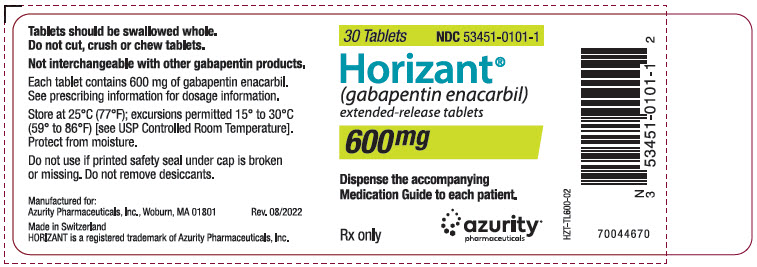
Horizant gabapentin enacarbil 600 mg Tablet, Extended Release, 30-count
🆔 Identity & classification
Where does this data come from?
🏷️ RxNorm drug class
This medicine belongs to the Gabapentinoids class.
Where does this data come from?
🏭 Manufacturer & labeler
Where does this data come from?
🩺 Clinical
Gabapentin capsules, tablets, and oral solution are used along with other medications to help control certain types of seizures in people who have epilepsy. Gabapentin capsules, tablets, and oral solution are also used to relieve the pain of postherpetic neuralgia (PHN; the burning, stabbing pain or aches that may last for months or years after an attack of shingles). Gabapentin extended-release tablets (Horizant) are used to treat restless legs syndrome (RLS; a condition that causes discomfort in the legs and a strong urge to move the legs, especially at night and when sitting or lying down)....
Read the full MedlinePlus article ↗- Gabapentin is mainly used for two things: managing nerve pain that lingers after a shingles infection (called postherpetic neuralgia) in adults, and helping control partial onset s...
- This is a really important question. Taking gabapentin together with opioids like morphine, hydrocodone, or oxycodone significantly raises the risk of serious breathing problems —...
- Can I take gabapentin with my opioid pain medication?
- The most common ones — especially in the first few weeks — are dizziness, drowsiness, and sometimes loss of balance or coordination. Swelling in the feet or hands is also fairly co...
Patient education
Supplement & herbal interactions
Some supplements/herbs that may interact with Gabapentin enacarbil — tap one for details:
Gabapentin enacarbil may be associated with lower levels of 1 nutrient — worth a chat with your pharmacist, not a cause for alarm.
Where does this data come from?
Ask a licensed pharmacist directly — free, answered by our team.
💊 What it looks like
Where does this data come from?
🧪 Inactive Ingredients / Excipients
Inactive ingredients, also called excipients, are components of the drug product other than the active ingredient. They may include fillers, dyes, coatings, preservatives, flavors, or other formulation ingredients.
💡 Tap an ingredient (hover on desktop) to see what it is and why it’s used.
-
UNII O7TSZ97GEP
A mineral compound that serves as a filler and binding agent in tablets and capsules. It adds bulk to the medicine and helps hold ingredients together during manufacturing.
-
UNII R8WTH25YS2
Glyceryl dibehenate is a wax-like substance made from behenate fatty acids and glycerol. It functions as a binder and release-control agent in tablets and capsules, helping hold ingredients together and regulate how quickly the medicine dissolves and releases in your body.
-
UNII 70097M6I30
Magnesium stearate is a salt made from magnesium and stearic acid, a fatty substance. It's used in tablets and capsules as a lubricant and glidant to help ingredients flow smoothly during manufacturing and prevent sticking.
-
UNII ETJ7Z6XBU4
Silicon dioxide is a naturally occurring mineral used as a glidant and anti-caking agent. It helps powder ingredients flow smoothly and prevents clumping during manufacturing and storage.
-
UNII 368GB5141J
A detergent and foaming agent derived from coconut or palm oil. In medications, it helps break down and mix oil and water-based ingredients, aids in tablet disintegration, and improves how the drug dissolves and spreads in the mouth or digestive system.
-
UNII 7SEV7J4R1U
A powder made from a naturally occurring mineral. In medicines, talc works as a glidant and anti-caking agent, helping tablets and capsules flow smoothly during manufacturing and preventing clumping.
6 inactive ingredients listed in the exact product block matched to this NDC.
Where does this data come from?
ingredient classCode="IACT" elements from the exact product block matched by this NDC. Label-section narrative from DailyMed / the openFDA label index is shown separately when available.Inactive ingredient FAQ
Are inactive ingredients the same for every manufacturer?
Why might an inactive ingredient be missing?
Can inactive ingredients matter?
💲 Pricing
A drug doesn't have one price. Each row is a different public payment system, and none is what you'd pay at the counter — that depends on your insurance. The ⓘ on each row explains what it measures.
| Price system | Per ea | Per package |
|---|---|---|
| Retail pharmacies payNADAC · weekly | $17.925 | $537.75 / 30 tablets |
| Medicaid paysCMS SDUD · 12 mo | $17.92 | $537.53 / 30 tablets |
| Medicare drug plans payPart D · Q2 2026 | $18.12 | $543.73 / 30 tablets |
Where does this data come from?
🔁 Therapeutic equivalents
| Product | Labeler | Pack | NADAC/unit | TE | Status | Price vs. this |
|---|---|---|---|---|---|---|
| Horizant 600 mgthis 53451-0101-01 | Azurity | 30 tablets | $17.925 | — | Availability likely | — |
Where does this data come from?
⏳ Availability & generic status
We did not find an FDA-approved generic match for this exact strength, form and route. Patent/protection dates below may affect future generic timing.
Why the date isn’t exact: Generic timing can change because patents may be challenged, settled, licensed, added, removed, or worked around with a narrower label — and FDA approval does not always mean a pharmacy can get the generic today.
🛈 What do these terms mean?
- Patent
- Legal protection listed in the Orange Book that may delay generic approval or launch. Issued by the U.S. Patent & Trademark Office.
- Substance patent
- Covers the active drug molecule itself — the hardest to design around. A generic generally can’t launch until it expires.
- Formulation (product) patent
- Covers a specific formulation or dosage form. A generic can sometimes work around it with a different formulation.
- Method-of-use patent
- A patent covering one specific approved use of the drug — not necessarily the whole molecule. A generic can sometimes launch with a “skinny label” that carves out the protected use and keeps the others.
- Skinny label
- A generic label that omits a still-patented use when the FDA allows it — letting a generic reach the market for the unprotected uses.
- Exclusivity
- FDA-granted marketing protection, separate from patents — e.g. 5-yr new chemical entity, 7-yr orphan drug, or a +6-month pediatric extension.
- Paragraph IV
- A generic applicant’s formal challenge to a listed patent. It can potentially lead to earlier generic entry, but often involves litigation or a settlement.
- RLD / RS
- Reference Listed Drug — the brand product the FDA uses as the reference for generic applications. Reference Standard — the product the FDA expects generics to compare against in bioequivalence testing.
- TE / AB rating
- FDA therapeutic-equivalence rating. An AB rating generally means the FDA considers a generic therapeutically equivalent to — and substitutable for — the brand.
- LOE (loss of exclusivity)
- The latest patent or exclusivity currently listed — the loss-of-exclusivity / latest-listed-protection date shown on this page. Paragraph-IV challenges and settlements can move the real date earlier; FDA approval and a manufacturer’s decision to market can move it later.
Built from the FDA Orange Book. The bars above are scaled to each protection’s expiry; the red LOE marker is the last one to lapse.
| Patent | Type | Use code | Expires |
|---|---|---|---|
| US 8114909 ↗ | Method of use | U-1231 | Apr 11, 2026 |
| US 8795725 ↗ | Method of use | U-1231 | Jun 10, 2029 |
| US 8795725 ↗ | Method of use | U-1231 | Jun 10, 2029 |
| US 8795725 ↗ | Method of use | U-1247 | Jun 10, 2029 |
| US 8114909 ↗ | Method of use | U-1231 | Apr 11, 2026 |
| US 8795725 ↗ | Method of use | U-1247 | Jun 10, 2029 |
| US 8026279 ↗ | Drug substance | — | Nov 10, 2026 |
| US 8026279 ↗ | Drug substance | — | Nov 10, 2026 |
Is there a generic version of HORIZANT ER 600 MG TABLET?
The FDA approved a generic — why can’t I get it at my pharmacy yet?
Why do different websites show different generic release dates?
What does “FDA listed” mean?
What does a patent or protection date mean here?
What does “current Orange Book estimate” mean?
Can a generic come out before the last patent expires?
Can a generic come out after the listed dates?
What is the difference between patents and exclusivity?
Why are there multiple patent dates?
Where does this data come from?
🗺️ Medicaid utilization & spend
💊 Medicaid utilization by pack size
📊 Medicare Part D spend CMS · PART D · 2026 (Q1)
🔬 Reported adverse events (FAERS)
Top reported reactions
Age at onset
Reporter sex
Serious outcomes
Where does this data come from?
📦 Packaging — all sizes for this product
| Package NDC | Description | Per unit | Per pack | Marketing start | Status |
|---|---|---|---|---|---|
| 53451-0101-01 You're viewing this | 30 TABLET, EXTENDED RELEASE in 1 BOTTLE, PLASTIC (53451-0101-1) | $17.92 / ea | $537.75 | 2013-05-01 | Active |
| 53451-0101-09 | 5 TABLET, EXTENDED RELEASE in 1 BOTTLE, PLASTIC (53451-0101-9) | — | — | 2013-05-01 | Active |
You're viewing the largest of 2 pack sizes for this product.
In Medicaid, this is the most-dispensed pack of this product — about 100% of fills over the last four reported quarters. See all packs ↓
Pack size FAQ
What quantity is in NDC 53451-0101-01?
What is the difference between NDC 53451-0101-01 and NDC 53451-0101-09?
What NDC number is used to bill for this package of Horizant gabapentin enacarbil 600 mg Tablet, Extended Release?
Prices are the latest CMS NADAC pharmacy acquisition cost per NDC; per-pack figures are per-unit × pack quantity, shown only when the pack is denominated in the same measure NADAC prices.
📄 Full prescribing information FDA SPL
🎯 Indications and Usage ▾
1 INDICATIONS AND USAGE HORIZANT is indicated for: treatment of moderate-to-severe primary Restless Legs Syndrome (RLS) in adults. ( 1.1 ) management of postherpetic neuralgia (PHN) in adults. ( 1.2 )
1.1Treatment of Restless Legs Syndrome HORIZANT ® is indicated for the treatment of moderate-to-severe primary Restless Legs Syndrome (RLS) in adults. HORIZANT is not recommended for patients who are required to sleep during the daytime and remain awake at night.
1.2Management of Postherpetic Neuralgia HORIZANT is indicated for the management of postherpetic neuralgia (PHN) in adults.
⏱️ Dosage and Administration ▾
2 DOSAGE AND ADMINISTRATION Instruct patients to swallow tablets whole and not to cut, crush, or chew tablets. Take with food. ( 2.1 ) RLS: 600 mg once daily taken at about 5 PM.
( 2.2 ) A dose of 1,200 mg once daily provided no additional benefit compared with the 600-mg dose, but caused an increase in adverse reactions. ( 2.2 ) If the dose is not taken at the recommended time, the next dose should be taken the following day as prescribed. ( 2.2 ) PHN: The starting dose is 600 mg in the morning for 3 days, then increase to 600 mg twice daily beginning on day 4.
( 2.3 ) A daily dose greater than 1,200 mg provided no additional benefit. ( 2.3 ) If the dose is not taken at the recommended time, skip this dose, and the next dose should be taken at the time of next scheduled dose. ( 2.3 ) Patients with renal impairment: Doses of HORIZANT must be adjusted in accordance with renal function.
(2.4)
2.1Dosage and Administration Overview Tablets should be swallowed whole and should not be cut, crushed, or chewed. Tablets should be taken with food. HORIZANT is not substitutable with other gabapentin products because of differing pharmacokinetic profiles [ see Warnings and Precautions (5.3) ].
2.2Recommended Dosage for Restless Legs Syndrome The recommended dosage for HORIZANT is 600 mg once daily at about 5 PM. A daily dose of 1,200 mg provided no additional benefit compared with the 600-mg dose, but caused an increase in adverse reactions [see Adverse Reactions (6.1) ] . If the dose is not taken at the recommended time, the next dose should be taken the following day as prescribed.
2.3Recommended Dosage for Postherpetic Neuralgia The recommended dosage of HORIZANT is 600 mg twice daily. HORIZANT should be initiated at a dose of 600 mg in the morning for 3 days of therapy, then increased to 600 mg twice daily (1,200 mg/day) on day four. In the 12-week principal efficacy study, additional benefit of using doses greater than 1,200 mg a day was not demonstrated, and these higher doses resulted in an increase in adverse reactions [see Adverse Reactions (6.1) ] .
If the dose is not taken at the recommended time, skip this dose, and the next dose should be taken at the time of the next scheduled dose.
2.4Recommended Dosage for Renal Impairment Dosing of HORIZANT is adjusted in accordance with renal function, as represented by creatinine clearance [see Clinical Pharmacology (12.3) ] . Target dose regimens are listed in Table 1 and Table 2. Table 1.
Dosage of HORIZANT for Patients With Restless Legs Syndrome in Accordance With Creatinine Clearance Creatinine Clearance (mL/min) Target Dose Regimen ≥60 600 mg per day 30 – 59 Start at 300 mg per day and increase to 600 mg as needed 15 – 29 300 mg per day <15 300 mg every other day <15 on hemodialysis Not recommended Table 2. Dosage of HORIZANT for Patients With Postherpetic Neuralgia in Accordance With Creatinine Clearance Creatinine Clearance (mL/min) Titration Maintenance Tapering ≥60 600 mg in AM for 3 days 600 mg twice daily 600 mg in AM for 1 week 30 – 59 300 mg in AM for 3 days 300 mg twice daily.
Increase to 600 mg twice daily as needed Based on tolerability and efficacy Reduce current maintenance dose to once daily in AM for 1 week 15 – 29 300 mg in AM on Day 1 and Day 3 300 mg in AM. Increase to 300 mg twice daily if needed If taking 300 mg twice daily, reduce to 300 mg once daily in AM for 1 week. If taking 300 mg once daily, no taper needed. <15 None 300 mg every other day in AM.
Increase to 300 mg once daily in AM if needed None <15 on hemodialysis None 300 mg following every dialysis. Increase to 600 mg following every dialysis if needed None In patients with stable renal function, CrCl can be estimated using the equation of Cockcroft and Gault: for males: CrCl = (140-age)(weight)/[(72)(SCr)] for females: CrCl = (0.85)(140-age)(weight)/[(72)(SCr)] where age is in years, weight is in kilograms, and SCr is serum creatinine in mg/dL.
💊 Dosage Forms and Strengths ▾
3 DOSAGE FORMS AND STRENGTHS HORIZANT Extended-Release Tablets, 300 mg, are white to off-white, oval-shaped tablets debossed with "GS TF7" and 600 mg, are white to off-white, oval-shaped tablets debossed with "GS LFG". Both the 300 mg and 600 mg tablets may contain occasional black/grey spots. Extended-Release Tablets: 300 mg and 600 mg. ( 3 )
⛔ Contraindications ▾
4 CONTRAINDICATIONS None. None. ( 4 )
⚠️ Warnings and Cautions ▾
5 WARNINGS AND PRECAUTIONS Driving impairment: Warn patients not to drive until they have gained sufficient experience with HORIZANT to assess whether it will impair their ability to drive. ( 5.1 ) Somnolence/sedation and dizziness: May impair the patient's ability to operate complex machinery. ( 5.2 ) HORIZANT is not substitutable with other gabapentin products.
( 5.3 ) Suicidal thoughts or behaviors: HORIZANT is a prodrug of gabapentin, an antiepileptic drug (AED). AEDs increase the risk of suicidal thoughts or behaviors. Monitor for suicidal thoughts or behaviors.
( 5.4 ) Abrupt or rapid discontinuation may increase the risk for seizures. Withdrawal symptoms, or suicidal behavior and ideation have been observed after discontinuation. ( 5.5 ) Respiratory depression: May occur with HORIZANT when used with concomitant central nervous system (CNS) depressants or in the setting of concurrent respiratory impairment.
Monitor patients and adjust dosage as appropriate ( 5.6 ).
5.1Effects on Driving HORIZANT may cause significant driving impairment [see Clinical Studies (14.3) ] . The duration of driving impairment after starting therapy with HORIZANT is unknown. Patients taking HORIZANT should not drive until they have gained sufficient experience to assess whether HORIZANT impairs their ability to drive.
However, prescribers and patients should be aware that patients' ability to assess their own driving competence, as well as their ability to assess the degree of somnolence caused by HORIZANT, can be imperfect. Whether the impairment is related to somnolence [see Warnings and Precautions (5.2) ] or other effects of HORIZANT is unknown.
5.2Somnolence/Sedation and Dizziness HORIZANT causes somnolence/sedation and dizziness (see Tables 4 and 5 ). Patients should be advised not to drive a car or operate other complex machinery until they have gained sufficient experience on HORIZANT to assess whether HORIZANT impairs their ability to perform these tasks. During the controlled trials in patients with RLS, somnolence/sedation was reported in 20% of patients treated with 600 mg of HORIZANT per day compared with 6% of patients receiving placebo.
In those patients treated with HORIZANT who reported somnolence, the somnolence persisted during treatment in about 30%. In the remaining patients, symptoms resolved within 3 to 4 weeks. Dizziness was reported in 13% of patients receiving 600 mg of HORIZANT per day compared with 4% of patients receiving placebo.
In those patients treated with HORIZANT who reported dizziness, symptoms persisted during treatment in about 20%. Somnolence/sedation led to withdrawal in 2% of patients receiving 600 mg of HORIZANT per day. Dizziness led to withdrawal in 1% of patients receiving 600 mg of HORIZANT per day.
The incidence of these adverse reactions was greater in the patients receiving 1,200 mg per day. During the 12-week, controlled study in patients with PHN, somnolence was reported in 10% of patients treated with 1,200 mg of HORIZANT per day compared with 8% of patients receiving placebo. Fatigue/asthenia was reported in 6% of patients treated with 1,200 mg of HORIZANT per day compared with 1% of patients receiving placebo.
In those patients treated with 1,200 mg of HORIZANT per day who reported somnolence (10%), the somnolence persisted during treatment in about 27%. In the remaining patients, symptoms resolved within 4 to 5 weeks. Dizziness was reported in 17% of patients receiving 1,200 mg of HORIZANT per day compared with 15% of patients receiving placebo.
In those patients treated with 1,200 mg of HORIZANT per day who reported dizziness, symptoms persisted during treatment in about 6%. Somnolence led to withdrawal in <1% of patients receiving 1,200 mg of HORIZANT per day compared with 2% of patients receiving placebo. Dizziness led to withdrawal in 2% of patients receiving 1,200 mg of HORIZANT per day compared with 3% of patients receiving placebo.
5.3 Lack of Substitutability With Gabapentin HORIZ…
🤒 Adverse Reactions ▾
6 ADVERSE REACTIONS The following clinically significant adverse reactions are described in more detail in the Warnings and Precautions section of the labeling: Effects on Driving [see Warnings and Precautions (5.1) ] Somnolence/Sedation and Dizziness [see Warnings and Precautions (5.2) ] Suicidal Behavior and Ideation [see Warnings and Precautions (5.4) ] Increased Risk of Seizures and Other Adverse Reactions with Abrupt or Rapid Discontinuation [see Warnings and Precautions (5.5) ] Respiratory Depression [see Warnings and Precautions (5.6) ] Drug Reaction With Eosinophilia and Systemic Symptoms (DRESS)/Multiorgan Hypersensitivity [see Warnings and Precautions (5.7) ] RLS: Most common adverse reactions (≥10% and at least 2 times the rate of placebo) were somnolence/sedation and dizziness.
( 6.1 ) PHN: Most common adverse reactions (≥10% and greater than placebo) were dizziness, somnolence, and headache. ( 6.1 ) To report SUSPECTED ADVERSE REACTIONS, contact Azurity Pharmaceuticals, Inc. at 1-800-461-7449 or FDA at 1-800-FDA-1088 or www.fda.gov/medwatch.
6.1Clinical Trials Experience Because clinical trials are conducted under widely varying conditions, adverse reaction rates observed in the clinical trials of a drug cannot be directly compared with rates in the clinical trials of another drug and may not reflect the rates observed in practice. In all controlled and uncontrolled trials across various patient populations, more than 2,300 patients have received HORIZANT orally in daily doses ranging from 600 to 3,600 mg. Restless Legs Syndrome The exposure to HORIZANT in 1,201 patients with RLS included 613 exposed for at least 6 months and 371 exposed for at least 1 year.
HORIZANT in the treatment of RLS was studied primarily in placebo-controlled trials (n = 642), and in long- term follow-up studies. The population with RLS ranged from 18 to 82 years of age, with 60% being female and 95% being Caucasian. The safety of HORIZANT in doses ranging from 600 to 2,400 mg has been evaluated in 515 patients with RLS in 3 double-blind, placebo-controlled, 12-week clinical trials.
The 600-mg dose was studied in 2 of the 3 studies. Eleven out of 163 (7%) patients treated with 600 mg of HORIZANT discontinued treatment due to adverse reactions compared with 10 of the 245 (4%) patients who received placebo. The most commonly observed adverse reactions (≥5% and at least 2 times the rate of placebo) in these trials for the 600-mg dose of HORIZANT were somnolence/sedation and dizziness (see Table 4 ).
Table 4 lists treatment-emergent adverse reactions that occurred in ≥2% of patients with RLS treated with HORIZANT and numerically greater than placebo. Table 4. Incidence of Adverse Reactions in 12-Week RLS Studies Reported in ≥2% of Patients Treated With 600 or 1,200 mg of HORIZANT and Numerically Greater Than Placebo Body System/Adverse Reaction Placebo a (N = 245) % HORIZANT 600 mg/day b (N = 163) % HORIZANT 1,200 mg/day c (N = 269) % Nervous system disorders Somnolence/sedation 6 20 27 Dizziness 4 13 22 Headache 11 12 15 Gastrointestinal disorders Nausea 5 6 7 Dry mouth 2 3 4 Flatulence <1 3 2 General disorders and administration site conditions Fatigue 4 6 7 Irritability 1 4 4 Feeling drunk 0 1 3 Feeling abnormal <1 <1 3 Peripheral edema 1 <1 3 Metabolism and nutritional disorders Weight increased 2 2 3 Increased appetite <1 2 2 Ear and labyrinth disorders Vertigo 0 1 3 Psychiatric disorders Depression <1 <1 3 Libido decreased <1 <1 2 a Placebo was a treatment arm in each of the 3 double-blind, placebo-controlled, 12-week clinical trials. b The 600-mg dose of HORIZANT was a treatment arm in 2 of the 3 double-blind, placebo- controlled, 12-week clinical trials. c The 1,200-mg dose of HORIZANT was a treatment arm in each of the 3 double-blind, placebo-controlled, 12-week clinical trials.
Adverse reactions reported in these three 12-week studies in <2% of patients treated with 600 mg of HORIZANT and numerically greater than placebo were balanc…
🔄 Drug Interactions ▾
7 DRUG INTERACTIONS Gabapentin enacarbil is released faster from HORIZANT Extended-Release tablets in the presence of alcohol. Consumption of alcohol is not recommended when taking HORIZANT [see Clinical Pharmacology (12.3) ] . Morphine: HORIZANT taken in conjunction with morphine causes increased somnolence/sedation, dizziness, and nausea when compared with either drug alone [see Clinical Pharmacology (12.3) ].
👥 Use in Specific Populations ▾
8 USE IN SPECIFIC POPULATIONS Pregnancy: Based on animal data, may cause fetal harm. ( 8.1 )
8.1Pregnancy Risk Summary There are no adequate data on the developmental risk associated with the use of HORIZANT in pregnant women. In nonclinical studies in rats and rabbits, administration of gabapentin enacarbil was developmentally toxic when administered to pregnant animals at doses and gabapentin exposures greater than those used clinically [see Data ] . Postmarketing data suggest that extended gabapentin use with opioids close to delivery may increase the risk of neonatal withdrawal versus opioids alone.
Although there is at least one report of neonatal withdrawal syndrome in an infant exposed to gabapentin alone during pregnancy, there are no comparative epidemiologic studies evaluating this association. Therefore, whether exposure to gabapentin alone late in pregnancy may cause withdrawal signs and symptoms is not known [see Clinical Considerations ]. In the US general population, the estimated background risk of major birth defects and miscarriage in clinically recognized pregnancies is 2 to 4% and 15 to 20%, respectively.
The background risk of major birth defects and miscarriage for the indicated population is unknown. Clinical Considerations Fetal/Neonatal Adverse Reactions Neonatal withdrawal syndrome has been reported in newborns exposed to gabapentin in utero for an extended period of time when also exposed to opioids close to delivery. Neonatal withdrawal signs and symptoms reported have included tachypnea, vomiting, diarrhea, hypertonia, irritability, sneezing, poor feeding, hyperactivity, abnormal sleep pattern, and tremor.
Reported signs and symptoms that may also be related to withdrawal include tongue thrusting, wandering eye movements while awake, back arching, and continuous extremity movements. Observe neonates exposed to HORIZANT and opioids for signs and symptoms of neonatal withdrawal and manage accordingly. Data Animal data When pregnant rats were administered gabapentin enacarbil (oral doses of 200, 1,000, or 5,000 mg/kg/day) throughout the period of organogenesis, embryofetal mortality was increased at the 2 highest doses and fetal body weights were decreased at the high dose.
The no-effect dose for embryofetal developmental toxicity in rats (200 mg/kg/day) represents approximately 2 times the gabapentin exposure associated with the maximum recommended human dose (MRHD) of 1,200 mg/day gabapentin enacarbil on an area under the curve (AUC) basis. When pregnant rabbits were administered gabapentin enacarbil (oral doses of 200, 500, or 2,500 mg/kg/day) throughout the period of organogenesis, embryofetal mortality was increased and fetal body weights were decreased at the high dose. The no-effect dose for embryofetal developmental toxicity in rabbits (500 mg/kg/day) represents approximately 9 times the gabapentin exposure associated with the MRHD of 1,200 mg/day gabapentin enacarbil on an AUC basis.
When female rats were administered gabapentin enacarbil (oral doses of 200, 1,000, or 5,000 mg/kg/day) throughout the pregnancy and lactation periods, offspring growth and survival were decreased at the two highest doses. The no-effect dose for pre- and post-natal developmental toxicity in rats is approximately 2 times the MRHD on an AUC basis. In reproductive and developmental studies of gabapentin, developmental toxicity was observed at all doses tested.
Increased incidences of hydroureter and/or hydronephrosis were observed in rat offspring following treatment of pregnant animals in studies of fertility and general reproductive performance, embryofetal development, and peri- and post-natal development. Overall, a no-effect dose was not established. In mice, treatment of pregnant animals with gabapentin during the period of organogenesis resulted in delayed fetal skeletal ossification at all but the lowest dose tested.
When pregnant rabbits were treated with gabapentin during the period of organogenesis, an in…
🤰 Pregnancy ▾
8.1Pregnancy Risk Summary There are no adequate data on the developmental risk associated with the use of HORIZANT in pregnant women. In nonclinical studies in rats and rabbits, administration of gabapentin enacarbil was developmentally toxic when administered to pregnant animals at doses and gabapentin exposures greater than those used clinically [see Data ] . Postmarketing data suggest that extended gabapentin use with opioids close to delivery may increase the risk of neonatal withdrawal versus opioids alone.
Although there is at least one report of neonatal withdrawal syndrome in an infant exposed to gabapentin alone during pregnancy, there are no comparative epidemiologic studies evaluating this association. Therefore, whether exposure to gabapentin alone late in pregnancy may cause withdrawal signs and symptoms is not known [see Clinical Considerations ]. In the US general population, the estimated background risk of major birth defects and miscarriage in clinically recognized pregnancies is 2 to 4% and 15 to 20%, respectively.
The background risk of major birth defects and miscarriage for the indicated population is unknown. Clinical Considerations Fetal/Neonatal Adverse Reactions Neonatal withdrawal syndrome has been reported in newborns exposed to gabapentin in utero for an extended period of time when also exposed to opioids close to delivery. Neonatal withdrawal signs and symptoms reported have included tachypnea, vomiting, diarrhea, hypertonia, irritability, sneezing, poor feeding, hyperactivity, abnormal sleep pattern, and tremor.
Reported signs and symptoms that may also be related to withdrawal include tongue thrusting, wandering eye movements while awake, back arching, and continuous extremity movements. Observe neonates exposed to HORIZANT and opioids for signs and symptoms of neonatal withdrawal and manage accordingly. Data Animal data When pregnant rats were administered gabapentin enacarbil (oral doses of 200, 1,000, or 5,000 mg/kg/day) throughout the period of organogenesis, embryofetal mortality was increased at the 2 highest doses and fetal body weights were decreased at the high dose.
The no-effect dose for embryofetal developmental toxicity in rats (200 mg/kg/day) represents approximately 2 times the gabapentin exposure associated with the maximum recommended human dose (MRHD) of 1,200 mg/day gabapentin enacarbil on an area under the curve (AUC) basis. When pregnant rabbits were administered gabapentin enacarbil (oral doses of 200, 500, or 2,500 mg/kg/day) throughout the period of organogenesis, embryofetal mortality was increased and fetal body weights were decreased at the high dose. The no-effect dose for embryofetal developmental toxicity in rabbits (500 mg/kg/day) represents approximately 9 times the gabapentin exposure associated with the MRHD of 1,200 mg/day gabapentin enacarbil on an AUC basis.
When female rats were administered gabapentin enacarbil (oral doses of 200, 1,000, or 5,000 mg/kg/day) throughout the pregnancy and lactation periods, offspring growth and survival were decreased at the two highest doses. The no-effect dose for pre- and post-natal developmental toxicity in rats is approximately 2 times the MRHD on an AUC basis. In reproductive and developmental studies of gabapentin, developmental toxicity was observed at all doses tested.
Increased incidences of hydroureter and/or hydronephrosis were observed in rat offspring following treatment of pregnant animals in studies of fertility and general reproductive performance, embryofetal development, and peri- and post-natal development. Overall, a no-effect dose was not established. In mice, treatment of pregnant animals with gabapentin during the period of organogenesis resulted in delayed fetal skeletal ossification at all but the lowest dose tested.
When pregnant rabbits were treated with gabapentin during the period of organogenesis, an increase in embryofetal mortality was observed at all doses of gabapentin tested. In a publishe…
🧒 Pediatric Use ▾
8.4Pediatric Use Safety and effectiveness in pediatric patients have not been studied.
🧓 Geriatric Use ▾
8.5Geriatric Use Of the 515 patients treated with HORIZANT in the 3 double-blind, placebo-controlled, 12-week clinical trials for RLS, 11% were 65 to 74 years of age and 1% were 75 years of age and older. Clinical trials of HORIZANT for the treatment of RLS did not include a sufficient number of patients 65 years and older to determine whether they respond differently from younger individuals. In the 12-week, double-blind, placebo-controlled study of HORIZANT for the management of PHN (n = 276 patients treated with HORIZANT), 37% were 65 to 74 years of age and 13% were 75 years of age and older.
The overall incidence of adverse events was comparable between the patients aged ≥18 to <65 years and ≥65 to <74 years. No overall differences in the safety and effectiveness were observed between these subjects and younger subjects, and other reported clinical experience has not identified differences in responses between the elderly and younger patients, but greater sensitivity of some older individuals cannot be ruled out. Gabapentin is known to be almost exclusively excreted by the kidney, and the risk of adverse reactions to this drug may be greater in patients with impaired renal function.
Because elderly patients are more likely to have decreased renal function, the frequency of dosing may need to be adjusted based on calculated creatinine clearance in these patients [see Dosage and Administration (2.4) ] .
🆘 Overdosage ▾
10 OVERDOSAGE
10.1Human Overdose Experience The incidence of central nervous system adverse reactions, particularly dizziness and somnolence/sedation, is increased with HORIZANT doses greater than 600 mg daily. Acute oral overdoses of gabapentin have been reported. Symptoms have included double vision, tremor, slurred speech, drowsiness, altered mental status, dizziness, lethargy, and diarrhea.
Fatal respiratory depression has been reported with gabapentin overdose, alone and in combination with other CNS depressants.
10.2Overdosage Management In the event of an overdose, the patient should be treated supportively with appropriate monitoring as necessary. Gabapentin derived from gabapentin enacarbil can be removed from plasma by hemodialysis. The mean percentage of gabapentin recovered following hemodialysis in patients with end-stage renal disease was 29% (expressed as a proportion of the gabapentin released from HORIZANT).
Further management should be as clinically indicated or as recommended by a poison control center.
🧬 Clinical Pharmacology ▾
12 CLINICAL PHARMACOLOGY
12.1Mechanism of Action Gabapentin enacarbil is a prodrug of gabapentin and, accordingly, its therapeutic effects in RLS and PHN are attributable to gabapentin. The precise mechanism by which gabapentin is efficacious in RLS and PHN is unknown. The mechanism of action by which gabapentin is efficacious in PHN is unknown but in animal models of analgesia, gabapentin prevents allodynia (pain-related behavior in response to a normally innocuous stimulus) and hyperalgesia (exaggerated response to painful stimuli).
Gabapentin prevents pain-related responses in several models of neuropathic pain in rats and mice (e.g., spinal nerve ligation models, spinal cord injury model, acute herpes zoster infection model). Gabapentin also decreases pain-related responses after peripheral inflammation (carrageenan footpad test, late phase of formalin test), but does not alter immediate pain-related behaviors (rat tail flick test, formalin footpad acute phase). The relevance of these models to human pain is not known.
Gabapentin is structurally related to the neurotransmitter gamma-aminobutyric acid (GABA) but has no effect on GABA binding, uptake, or degradation. Gabapentin enacarbil and gabapentin have been tested in radioligand binding assays, and neither exhibited affinity for a number of other common receptor, ion channel, or transporter proteins. In vitro studies have shown that gabapentin binds with high affinity to the α2δ subunit of voltage-activated calcium channels; however, the relationship of this binding to the therapeutic effects of gabapentin enacarbil in RLS and PHN is unknown.
12.2Pharmacodynamics Cardiac Electrophysiology At a dose of 6,000 mg, gabapentin enacarbil does not prolong QTc to a clinically relevant extent.
12.3Pharmacokinetics HORIZANT is an extended-release formulation of gabapentin enacarbil, a prodrug of gabapentin. HORIZANT provides approximately dose-proportional and extended exposure to gabapentin over the range 300 to 6,000 mg. HORIZANT and gabapentin are not substitutable because the same daily dose of each results in different plasma concentrations of gabapentin.
For subjects with PHN taking HORIZANT 600 mg twice daily, the estimated steady state mean C max was 5.35 µg/mL, mean AUC 24 was approximately 109 µg*hr/mL, mean C min was 3.63 µg/mL, and mean peak trough ratio was 1.5. Absorption The pathway for absorption of gabapentin enacarbil is believed to include active transport via a proton-linked monocarboxylate transporter, MCT-1. This transporter is expressed at high levels in the intestinal tract and is not saturated by administration of high doses of HORIZANT.
Mean bioavailability of gabapentin (based on urinary recovery of gabapentin) for HORIZANT in the fed state is about 75%. Bioavailability under fasting conditions has been estimated by gabapentin urinary recovery to be 42% to 65%. In a food effect study, the exposure of gabapentin increased by 24%, 34%, and 44% with low, moderate, and high fat meals, respectively.
The T max of gabapentin after administration of 600 mg of HORIZANT was 5.0 hours in fasted subjects and 7.3 hours in fed subjects. Steady state is reached in 2 days with daily administration. Distribution Plasma protein binding of gabapentin has been reported to be <3%.
The apparent volume of distribution of gabapentin in subjects receiving HORIZANT is 76 L. Metabolism After oral administration, gabapentin enacarbil undergoes extensive first-pass hydrolysis by non-specific carboxylesterases primarily in enterocytes and to a lesser extent in the liver, to form gabapentin, carbon dioxide, acetaldehyde, and isobutyric acid. Levels of gabapentin enacarbil in blood are low and transient (≤2% of corresponding gabapentin plasma levels).
Released gabapentin is not appreciably metabolized in humans. Neither gabapentin enacarbil nor gabapentin are substrates, inhibitors, or inducers of the major cytochrome P450 enzymes (CYP1A2, CYP2A6, CYP2B6, CYP2C8, CYP2C9, CYP2C19, C…
🧬 Mechanism of Action ▾
12.1Mechanism of Action Gabapentin enacarbil is a prodrug of gabapentin and, accordingly, its therapeutic effects in RLS and PHN are attributable to gabapentin. The precise mechanism by which gabapentin is efficacious in RLS and PHN is unknown. The mechanism of action by which gabapentin is efficacious in PHN is unknown but in animal models of analgesia, gabapentin prevents allodynia (pain-related behavior in response to a normally innocuous stimulus) and hyperalgesia (exaggerated response to painful stimuli).
Gabapentin prevents pain-related responses in several models of neuropathic pain in rats and mice (e.g., spinal nerve ligation models, spinal cord injury model, acute herpes zoster infection model). Gabapentin also decreases pain-related responses after peripheral inflammation (carrageenan footpad test, late phase of formalin test), but does not alter immediate pain-related behaviors (rat tail flick test, formalin footpad acute phase). The relevance of these models to human pain is not known.
Gabapentin is structurally related to the neurotransmitter gamma-aminobutyric acid (GABA) but has no effect on GABA binding, uptake, or degradation. Gabapentin enacarbil and gabapentin have been tested in radioligand binding assays, and neither exhibited affinity for a number of other common receptor, ion channel, or transporter proteins. In vitro studies have shown that gabapentin binds with high affinity to the α2δ subunit of voltage-activated calcium channels; however, the relationship of this binding to the therapeutic effects of gabapentin enacarbil in RLS and PHN is unknown.
📦 How Supplied / Storage and Handling ▾
16 HOW SUPPLIED/STORAGE AND HANDLING HORIZANT Extended-Release Tablets containing 300 mg of gabapentin enacarbil are white to off-white, with occasional black/grey spots, oval-shaped tablets debossed with "GS TF7". HORIZANT Extended-Release Tablets containing 600 mg of gabapentin enacarbil are white to off-white, with occasional black/grey spots, oval-shaped tablets debossed with "GS LFG". They are supplied as follows: 300 mg: NDC 53451-0103-1: Bottles of 30 600 mg: NDC 53451-0101-1: Bottles of 30 Store at 25°C (77°F); excursions permitted 15°C to 30°C (59°F to 86°F) [see USP Controlled Room Temperature] .
Protect from moisture. Do not remove desiccants.
📦 Storage and Handling ▾
Store at 25°C (77°F); excursions permitted 15°C to 30°C (59°F to 86°F) [see USP Controlled Room Temperature] . Protect from moisture. Do not remove desiccants.
📋 Description ▾
11 DESCRIPTION HORIZANT (gabapentin enacarbil) is a prodrug of gabapentin. Gabapentin enacarbil is described as (1-{[({(1 RS )-1-[(2-Methylpropanoyl)oxy]ethoxy}carbonyl)amino]methyl} cyclohexyl) acetic acid. It has a molecular formula of C 16 H 27 NO 6 and a molecular weight of 329.39.
It is a racemate and has the following structural formula: Gabapentin enacarbil is a white to off-white crystalline solid with a melting onset of approximately 64°C and a solubility of 0.5 mg/mL in water and 10.2 mg/mL in phosphate buffer (pH 6.3). HORIZANT is administered orally. Each HORIZANT Extended-Release Tablet contains 300 mg or 600 mg of gabapentin enacarbil and the following inactive ingredients: colloidal silicon dioxide, dibasic calcium phosphate dihydrate, glyceryl behenate, magnesium stearate, sodium lauryl sulfate, and talc.
Chemical Structure
💬 Information for Patients ▾
17 PATIENT COUNSELING INFORMATION Advise the patient to read the FDA-approved patient labeling (Medication Guide). Effects on Driving Patients should be told that HORIZANT may cause a significant driving impairment. Accordingly, they should be advised not to drive a car until they have gained sufficient experience on HORIZANT to assess whether HORIZANT impairs their ability to drive, although patients' ability to determine their level of impairment can be unreliable.
Patients should be told that it is not known how long this effect lasts [see Warnings and Precautions (5.1) ]. Somnolence/Sedation and Dizziness Patients should be told that HORIZANT can cause significant somnolence and dizziness. This typically resolves within several weeks of initiating treatment.
Accordingly, they should be told not to operate dangerous machinery until they have gained sufficient experience on HORIZANT to assess whether HORIZANT impairs their ability to operate dangerous machinery safely [see Warnings and Precautions (5.2) ]. Suicidal Behavior and Ideation Patients, their caregivers, and families should be counseled that HORIZANT may increase the risk of suicidal thoughts and behavior, and should be advised of the need to be alert for the emergence or worsening of symptoms of depression, any unusual changes in mood or behavior, or the emergence of suicidal thoughts, behavior, or thoughts about self-harm.
Instruct patients to report behaviors of concern immediately to healthcare providers [see Warnings and Precautions (5.4) ]. Also, inform patients who plan to or have discontinued HORIZANT that suicidal thoughts and behavior can appear even after the drug is stopped. Respiratory Depression Inform patients about the risk of respiratory depression.
Include information that the risk is greatest for those using concomitant CNS depressants (such as opioid analgesics), or those with concurrent respiratory impairment. Teach patients how to recognize respiratory depression and advise them to seek medical attention immediately if it occurs [see Warnings and Precautions (5.5) ] . Drug Reaction With Eosinophilia and Systemic Symptoms (DRESS)/Multiorgan Hypersensitivity Patients should be instructed that multiorgan hypersensitivity reactions may occur with HORIZANT.
Patients should contact their healthcare provider immediately if they experience any signs or symptoms of these conditions [see Warnings and Precautions (5.5) ] . Lack of Substitutability With Gabapentin Patients should be advised that doses of HORIZANT and other gabapentin products are not substitutable [see Warnings and Precautions (5.3) ]. Dosing Instructions [see Dosage and Administration ( 2.1 , 2.2 , 2.3 ) ] Instruct patients to take HORIZANT only as prescribed.
Instruct patients to swallow tablets whole and do not cut, crush, or chew tablets. Instruct patients to take HORIZANT with food. For Restless Legs Syndrome, 600 mg HORIZANT should be taken once daily at about 5 PM.
If the dose is not taken at the recommended time, the patient should take the next dose at about 5 PM the following day. For Postherpetic Neuralgia, the starting dose is 600 mg HORIZANT in the morning for 3 days. Starting on day 4, 600 mg HORIZANT should be taken twice daily.
If the dose is not taken at the recommended time, the next dose should be taken at the time of next scheduled dose. Instruct patients about how to discontinue HORIZANT. Alcohol Advise patients to avoid alcohol when taking HORIZANT [see Drug Interactions (7) , Clinical Pharmacology (12.3) ] .
Use in Pregnancy Instruct patients to notify their healthcare provider if they are pregnant or intend to become pregnant during therapy and to notify their healthcare provider if they are breast feeding or intend to breast feed during therapy [ see Use in Specific Populations ( 8.1 ) and ( 8.2 ) ].
💬 Medication Guide ▾
MEDICATION GUIDE HORIZANT ® (ho-ri' zant) (gabapentin enacarbil) Extended-Release Tablets Read this Medication Guide before you start taking HORIZANT and each time you get a refill. There may be new information. This information does not take the place of talking to your healthcare provider about your medical condition or treatment.
What is the most important information I should know about HORIZANT? HORIZANT can cause serious side effects: 1. Do not drive after taking your dose of HORIZANT until you know how HORIZANT affects you, including the morning after you take your dose.
Do not operate heavy machinery or do other dangerous activities until you know how HORIZANT affects you. HORIZANT can cause sleepiness, dizziness, slow thinking, and can affect your coordination. Ask your healthcare provider when it would be okay to do these activities.
2. HORIZANT may cause suicidal thoughts or actions in a very small number of people, about 1 in 500. This can happen while you take HORIZANT or after stopping HORIZANT.
Call a healthcare provider right away if you have any of these symptoms, especially if they are new, worse, or worry you: thoughts about suicide or dying attempt to commit suicide new or worse depression new or worse anxiety feeling agitated new or worse restlessness panic attacks new or worse trouble sleeping (insomnia) new or worse irritability acting aggressive, being angry, or violent acting on dangerous impulses an extreme increase in activity and talking (mania) other unusual changes in behavior or mood How can I watch for early symptoms of suicidal thoughts and actions?
Pay attention to any changes, especially sudden changes, in mood, behaviors, thoughts, or feelings. Keep all follow-up visits with your healthcare provider as scheduled. Call your healthcare provider between visits as needed, especially if you are worried about symptoms.
Do not stop HORIZANT without first talking to a healthcare provider. Suicidal thoughts or actions can be caused by things other than medicines. If you have suicidal thoughts or actions, your healthcare provider may check for other causes.
3. HORIZANT may cause a serious or life-threatening allergic reaction that may affect your skin or other parts of your body such as your liver or blood cells. You may or may not have rash with these types of reactions.
Call a healthcare provider right away if you have any of the following symptoms: skin rash hives fever swollen glands that do not go away swelling of your lips or tongue yellowing of your skin or eyes unusual bruising or bleeding severe fatigue or weakness unexpected, severe muscle pain frequent infections These symptoms may be the first signs of a serious reaction. A healthcare provider should examine you to decide if you should continue taking HORIZANT. 4.
Serious breathing problems . Serious breathing problems can occur when HORIZANT is taken with other medicines that can cause severe sleepiness or decreased awareness, or when it is taken by someone who already has breathing problems. Watch for increased sleepiness or decreased breathing when starting HORIZANT or when the dose is increased.
Get help right away if breathing problems occur. What is HORIZANT? HORIZANT is a prescription medicine used to treat adults with: moderate-to-severe primary Restless Legs Syndrome (RLS). pain from damaged nerves (postherpetic pain) that follows healing of shingles (a painful rash that comes after a herpes zoster infection).
HORIZANT is not for people with RLS who need to sleep during the daytime and need to stay awake at night. HORIZANT is not the same medicine as gabapentin (for example, NEURONTIN ® or GRALISE ® ) and should not be used in its place. It is not known if HORIZANT is safe and effective in children.
What should I tell my healthcare provider before taking HORIZANT? Before taking HORIZANT, tell your healthcare provider if you: have or have had kidney problems or are on hemodialysis. have or have had depression, mood problems, or sui…