
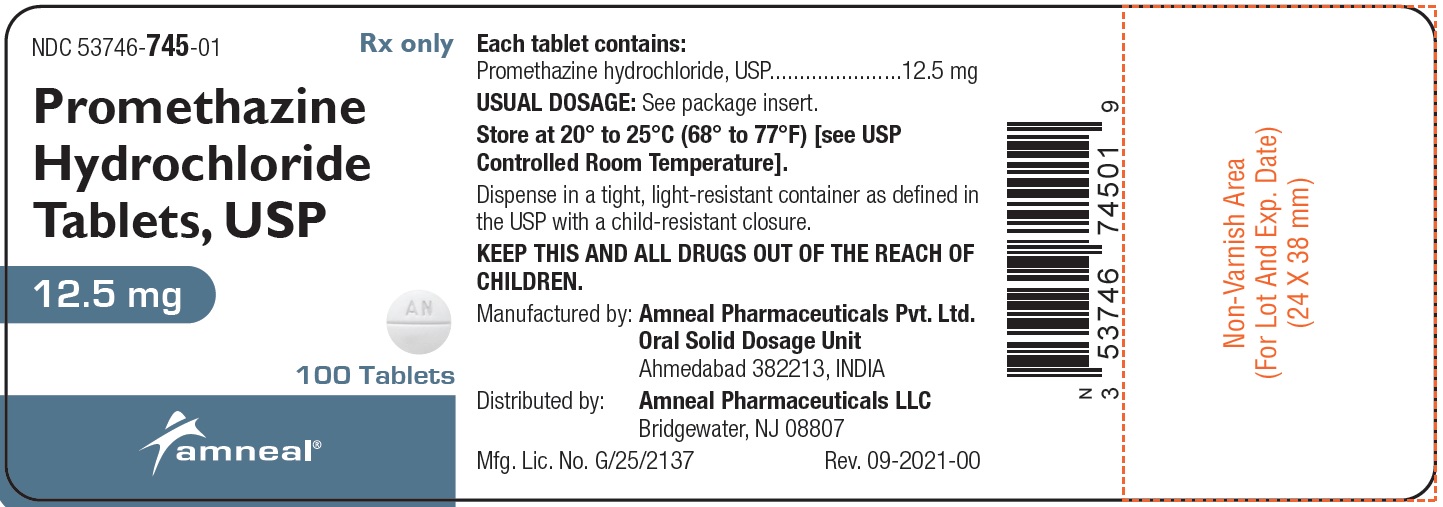
Promethazine Hydrochloride 25 mg Tablet, 1,000-count
🆔 Identity & classification
Where does this data come from?
🏷️ RxNorm drug class
This medicine belongs to the Phenothiazine class.
Where does this data come from?
🏭 Manufacturer & labeler
Where does this data come from?
🩺 Clinical
- Promethazine has several uses. It's most commonly used for allergy symptoms like hay fever, hives, and itchy or watery eyes. It's also used to prevent or treat nausea and vomiting...
- Yes — drowsiness is the most common and expected side effect. You should avoid driving, operating machinery, or doing anything that requires sharp focus until you know how it affec...
- Will promethazine make me really drowsy?
- Promethazine is strictly off-limits for children under 2 years old — it can slow or stop breathing, and there have been fatalities reported in this age group. For children 2 and ol...
Patient education
Supplement & herbal interactions
Where does this data come from?
Ask a licensed pharmacist directly — free, answered by our team.
💊 What it looks like
Where does this data come from?
🧪 Inactive Ingredients / Excipients
Inactive ingredients, also called excipients, are components of the drug product other than the active ingredient. They may include fillers, dyes, coatings, preservatives, flavors, or other formulation ingredients.
Where does this data come from?
IACT rows and label-wide narrative are kept separate; availability and product-level specificity depend on the submitted label.Inactive ingredient FAQ
Are inactive ingredients the same for every manufacturer?
Why might an inactive ingredient be missing?
Can inactive ingredients matter?
💲 Pricing
A drug doesn't have one price. Each row is a different public payment system, and none is what you'd pay at the counter — that depends on your insurance. The ⓘ on each row explains what it measures.
| Price system | Per ea | Per package |
|---|---|---|
| Retail pharmacies payNADAC · weekly | $0.046 | $45.50 / 1000 tablets |
| Medicaid paysCMS SDUD · 12 mo | $0.2563 | $256.30 / 1000 tablets |
| Medicare drug plans payPart D · Q2 2026 | $0.1075 | $107.50 / 1000 tablets |
| Medicare Part B allowsASP · Q0169 | No ASP payment limit on file for Q0169 this quarter. | |
Where does this data come from?
🧾 Billing & reimbursement
Where does this data come from?
🔁 Therapeutic equivalents
| Product | Labeler | Pack | NADAC/unit | TE | Status | Price vs. this |
|---|---|---|---|---|---|---|
| Promethazine Hydrochloride 25 mg 00591-5307-01 | Actavis | 100 tablets | $0.045 | — | Availability likely | — |
| Promethazine Hydrochloride 25 mg 00904-7304-61 | Major | 100 tablets | $0.045 | AB | Availability likely | — |
| Promethazine Hydrochloride 25 mg 10702-0003-01 | KVK-Tech, | 100 tablets | $0.045 | AB | Availability likely | — |
| Promethazine Hydrochloride 25 mgthis 53746-0521-10 | Amneal | 1000 tablets | $0.045 | AB | Availability likely | — |
| Promethazine Hydrochloride 25 mg 65162-0521-10 | Amneal | 100 tablets | $0.045 | AB | Availability likely | — |
| Promethazine Hydrochloride 25 mg 68001-0162-00 | BluePoint | 100 tablets | $0.045 | AB | Availability likely | — |
| Promethazine Hydrochloride 25 mg 68084-0155-01 | American | 100 tablets | $0.045 | AB | Availability likely | — |
| Promethazine Hydrochloride 25 mg 68382-0041-01 | Zydus | 100 tablets | $0.045 | AB | Availability likely | — |
| Promethazine Hydrochloride 25 mg 00615-8154-39 | NCS | 30 tablets | — | AB | FDA listed | — |
| Promethazine Hydrochloride 25 mg 43063-0405-01 | PD-Rx | 1 tablet | — | AB | FDA listed | — |
| Promethazine Hydrochloride 25 mg 43063-0874-01 | PD-Rx | 100 tablets | — | AB | FDA listed | — |
| Promethazine Hydrochloride 25 mg 50090-4452-00 | A-S | 5 tablets | — | AB | FDA listed | — |
| Promethazine Hydrochloride 25 mg 50090-4453-00 | A-S | 12 tablets | — | AB | FDA listed | — |
| Promethazine Hydrochloride 25 mg 50090-4608-00 | A-S | 90 tablets | — | AB | FDA listed | — |
| Promethazine Hydrochloride 25 mg 50090-4750-00 | A-S | 12 tablets | — | AB | FDA listed | — |
| Promethazine Hydrochloride 25 mg 50090-4811-00 | A-S | 5 tablets | — | AB | FDA listed | — |
| Promethazine Hydrochloride 25 mg 50090-4812-00 | A-S | 90 tablets | — | AB | FDA listed | — |
| Promethazine Hydrochloride 25 mg 50090-4813-00 | A-S | 12 tablets | — | AB | FDA listed | — |
| Promethazine Hydrochloride 25 mg 50090-4875-00 | A-S | 12 tablets | — | AB | FDA listed | — |
| Promethazine Hydrochloride 25 mg 51655-0085-20 | Northwind | 20 tablets | — | AB | FDA listed | — |
| Promethazine Hydrochloride 25 mg 51655-0140-52 | Northwind | 30 tablets | — | AB | FDA listed | — |
| Promethazine Hydrochloride 25 mg 51655-0462-27 | Northwind | 12 tablets | — | AB | FDA listed | — |
| Promethazine Hydrochloride 25 mg 51655-0758-20 | Northwind | 20 tablets | — | AB | FDA listed | — |
| Promethazine 25 mg 54348-0117-00 | PharmPak, | 1 tablet | — | AB | FDA listed | — |
| Promethazine Hydrochloride 25 mg 55154-3373-00 | Cardinal | 10 tablets | — | AB | FDA listed | — |
| Promethazine Hydrochloride 25 mg 63187-0829-10 | Proficient | 10 tablets | — | AB | FDA listed | — |
| Promethazine Hydrochloride 25 mg 65841-0041-01 | Zydus | 100 tablets | — | AB | FDA listed | — |
| Promethazine Hydrochloride 25 mg 68071-4424-01 | NuCare | 10 tablets | — | AB | FDA listed | — |
| Promethazine Hydrochloride 25 mg 68071-4544-02 | NuCare | 12 tablets | — | AB | FDA listed | — |
| Promethazine Hydrochloride 25 mg 68071-4686-01 | NuCare | 10 tablets | — | AB | FDA listed | — |
| Promethazine Hydrochloride 25 mg 68071-4737-03 | NuCare | 30 tablets | — | AB | FDA listed | — |
| Promethazine Hydrochloride 25 mg 68071-4809-02 | NuCare | 20 tablets | — | AB | FDA listed | — |
| Promethazine Hydrochloride 25 mg 68071-4865-04 | NuCare | 4 tablets | — | AB | FDA listed | — |
| Promethazine Hydrochloride 25 mg 68788-7886-01 | Preferred | 10 tablets | — | AB | FDA listed | — |
| Promethazine Hydrochloride 25 mg 70518-1306-01 | REMEDYREPACK | 6 tablets | — | AB | Discontinued | — |
| Promethazine Hydrochloride 25 mg 70518-4419-00 | REMEDYREPACK | 30 tablets | — | AB | FDA listed | — |
| Promethazine Hydrochloride 25 mg 71205-0126-10 | Proficient | 10 tablets | — | AB | FDA listed | — |
| Promethazine Hydrochloride 25 mg 71205-0658-10 | Proficient | 10 tablets | — | AB | FDA listed | — |
| Promethazine Hydrochloride 25 mg 71205-0805-15 | Proficient | 15 tablets | — | AB | FDA listed | — |
| Promethazine Hydrochloride 25 mg 71335-1139-00 | Bryant | 14 tablets | — | AB | FDA listed | — |
| Promethazine Hydrochloride 25 mg 71335-1359-00 | Bryant | 14 tablets | — | AB | Discontinued | — |
| Promethazine Hydrochloride 25 mg 72189-0176-10 | DIRECT | 10 tablets | — | AB | FDA listed | — |
| Promethazine Hydrochloride 25 mg 76420-0679-01 | Asclemed | 100 tablets | — | AB | FDA listed | — |
| Promethazine Hydrochloride 25 mg 80425-0265-01 | Advanced | 20 tablets | — | AB | FDA listed | — |
| Promethazine Hydrochloride 25 mg 85766-0109-00 | Sportpharm | 1000 tablets | — | AB | FDA listed | — |
| Promethazine Hydrochloride 25 mg 87063-0015-00 | ASCLEMED | 1000 tablets | — | AB | FDA listed | — |
| Promethazine Hydrochloride 25 mg 67046-1043-03 | Coupler | 30 tablets | — | AB | FDA listed | — |
| Promethazine Hydrochloride 25 mg 87441-0070-01 | Unit | 30 tablets | — | AB | FDA listed | — |
| Promethazine Hydrochloride 25 mg 82868-0115-20 | Northwind | 20 tablets | — | AB | FDA listed | — |
| Promethazine Hydrochloride 25 mg 67296-0198-04 | Redpharm | 10 tablets | — | AB | FDA listed | — |
Where does this data come from?
⏳ Availability & generic status
This product is an FDA-approved generic. Other versions of the same drug are listed under Therapeutic equivalents, least expensive first.
Where does this data come from?
🗺️ Medicaid utilization & spend
💊 Medicaid utilization by pack size
🔬 Reported adverse events (FAERS)
Top reported reactions
Reporter sex
Serious outcomes
Where does this data come from?
📦 Packaging — all sizes for this product
| Package NDC | Description | Per unit | Per pack | Marketing start | Status |
|---|---|---|---|---|---|
| 53746-0521-01 | 100 TABLET in 1 BOTTLE (53746-521-01) | $0.0455 / ea | $4.55 | 2022-06-22 | Active |
| 53746-0521-10 You're viewing this | 1000 TABLET in 1 BOTTLE (53746-521-10) | $0.0455 / ea | $45.48 | 2022-06-22 | Active |
You're viewing the largest of 2 pack sizes for this product.
This pack effectively ties for the lowest per-ea cost of the 2 priced pack sizes ($0.0455 NADAC).
This pack accounts for about 23% of this product's recent Medicaid fills; most go to the 100 tablets pack. See all packs ↓
Pack size FAQ
What quantity is in NDC 53746-0521-10?
What is the difference between NDC 53746-0521-10 and NDC 53746-0521-01?
What NDC number is used to bill for this package of Promethazine Hydrochloride 25 mg Tablet?
Prices are the latest CMS NADAC pharmacy acquisition cost per NDC; per-pack figures are per-unit × pack quantity, shown only when the pack is denominated in the same measure NADAC prices.
📄 Full prescribing information FDA SPL
🎯 Indications and Usage ▾
INDICATIONS AND USAGE Promethazine hydrochloride tablets are useful for: Perennial and seasonal allergic rhinitis. Vasomotor rhinitis. Allergic conjunctivitis due to inhalant allergens and foods.
Mild, uncomplicated allergic skin manifestations of urticaria and angioedema. Amelioration of allergic reactions to blood or plasma. Dermographism.
Anaphylactic reactions as adjunctive therapy to epinephrine and other standard measures after the acute manifestations have been controlled. Preoperative, postoperative and obstetric sedation. Prevention and control of nausea and vomiting associated with certain types of anesthesia and surgery.
Therapy adjunctive to meperidine or other analgesics for control of postoperative pain. Sedation in both children and adults as well as relief of apprehension and production of light sleep from which the patient can be easily aroused. Active and prophylactic treatment of motion sickness.
Antiemetic therapy in postoperative patients.
⏱️ Dosage and Administration ▾
DOSAGE AND ADMINISTRATION Promethazine hydrochloride tablets are contraindicated for children under 2 years of age (see WARNINGS: Black Box Warning and Use in Pediatric Patients ). Allergy The average oral dose is 25 mg taken before retiring; however, 12.5 mg may be taken before meals and on retiring, if necessary. Single 25 mg doses at bedtime or 6.25 mg to 12.5 mg taken three times daily will usually suffice.
After initiation of treatment, in children or adults, dosage should be adjusted to the smallest amount adequate to relieve symptoms. The administration of promethazine hydrochloride in 25 mg doses will control minor transfusion reactions of an allergic nature. Motion Sickness The average adult dose is 25 mg taken twice daily.
The initial dose should be taken one-half to one hour before anticipated travel and be repeated eight to twelve hours later if necessary. On succeeding days of travel, it is recommended that 25 mg be given on arising and again before the evening meal. For children, promethazine hydrochloride tablets, syrup, or rectal suppositories, 12.5 mg to 25 mg, twice daily, may be administered.
Nausea and Vomiting Antiemetics should not be used in vomiting of unknown etiology in children and adolescents (see WARNINGS: Use in Pediatric Patients ). The average effective dose of promethazine hydrochloride for the active therapy of nausea and vomiting in children or adults is 25 mg. When oral medication cannot be tolerated, the dose should be given parenterally or by rectal suppository.
12.5mg to 25 mg doses may be repeated, as necessary, at four- to six-hour intervals. For nausea and vomiting in children, the usual dose is 0.5 mg per pound of body weight, and the dose should be adjusted to the age and weight of the patient and the severity of the condition being treated. For prophylaxis of nausea and vomiting, as during surgery and the post-operative period, the average dose is 25 mg repeated at four- to six-hour intervals, as necessary.
Sedation This product relieves apprehension and induces a quiet sleep from which the patient can be easily aroused. Administration of 12.5 mg to 25 mg promethazine hydrochloride by the oral route or by rectal suppository at bedtime will provide sedation in children. Adults usually require 25 mg to 50 mg for nighttime, pre-surgical, or obstetrical sedation.
Pre- and Post-operative Use Promethazine hydrochloride in 12.5 mg to 25 mg doses for children and 50 mg doses for adults the night before surgery relieves apprehension and produces a quiet sleep. For pre-operative medication, children require doses of 0.5 mg per pound of body weight in combination with an appropriately reduced dose of narcotic or barbiturate and the appropriate dose of an atropine-like drug. Usual adult dosage is 50 mg promethazine hydrochloride with an appropriately reduced dose of narcotic or barbiturate and the required amount of a belladonna alkaloid.
Post-operative sedation and adjunctive use with analgesics may be obtained by the administration of 12.5 mg to 25 mg in children and 25 mg to 50 mg doses in adults. Promethazine hydrochloride tablets are contraindicated for children under 2 years of age.
⛔ Contraindications ▾
CONTRAINDICATIONS Promethazine hydrochloride tablets are contraindicated for use in pediatric patients less than two years of age. Promethazine is contraindicated in comatose state, and in individuals known to be hypersensitive or to have had an idiosyncratic reaction to promethazine or to other phenthiazines. Antihistamines are contraindicated for use in the treatment of lower respiratory tract symptoms including asthma.
⚠️ Warnings ▾
WARNINGS PROMETHAZINE HYDROCHLORIDE SHOULD NOT BE USED IN PEDIATRIC PATIENTS LESS THAN 2 YEARS OF AGE BECAUSE OF THE POTENTIAL FOR FATAL RESPIRATORY DEPRESSION. POST-MARKETING CASES OF RESPIRATORY DEPRESSION, INCLUDING FATALITIES, HAVE BEEN REPORTED WITH USE OF PROMETHAZINE HYDROCHLORIDE IN PEDIATRIC PATIENTS LESS THAN 2 YEARS OF AGE. A WIDE RANGE OF WEIGHT-BASED DOSES OF PROMETHAZINE HYDROCHLORIDE HAVE RESULTED IN RESPIRATORY DEPRESSION IN THESE PATIENTS.
CAUTION SHOULD BE EXERCISED WHEN ADMINISTERING PROMETHAZINE HYDROCHLORIDE TO PEDIATRIC PATIENTS 2 YEARS OF AGE AND OLDER. IT IS RECOMMENDED THAT THE LOWEST EFFECTIVE DOSE OF PROMETHAZINE HYDROCHLORIDE BE USED IN PEDIATRIC PATIENTS 2 YEARS OF AGE AND OLDER AND CONCOMITANT ADMINISTRATION OF OTHER DRUGS WITH RESPIRATORY DEPRESSANT EFFECTS BE AVOIDED. CNS Depression Promethazine hydrochloride tablets may impair the mental and/or physical abilities required for the performance of potentially hazardous tasks, such as driving a vehicle or operating machinery.
The impairment may be amplified by concomitant use of other central nervous system depressants such as alcohol, sedatives/hypnotics (including barbiturates), narcotics, narcotic analgesics, general anesthetics, tricyclic antidepressants, and tranquilizers; therefore such agents should either be eliminated or given in reduced dosage in the presence of promethazine hydrochloride (see PRECAUTIONS, Information for Patients and Drug Interactions ). Respiratory Depression Promethazine hydrochloride tablets may lead to potentially fatal respiratory depression.
Use of promethazine hydrochloride tablets in patients with compromised respiratory function (e.g., COPD, sleep apnea) should be avoided. Lower Seizure Threshold Promethazine hydrochloride tablets may lower seizure threshold. It should be used with caution in persons with seizure disorders or in persons who are using concomitant medications, such as narcotics or local anesthetics, which may also affect seizure threshold.
Bone-Marrow Depression Promethazine hydrochloride tablets, should be used with caution in patients with bone marrow depression. Leukopenia and agranulocytosis has been reported, usually when promethazine hydrochloride has been used in association with other known marrow-toxic agents. Neuroleptic Malignant Syndrome A potentially fatal symptom complex sometimes referred to as Neuroleptic Malignant Syndrome (NMS) has been reported in association with promethazine hydrochloride alone or in combination with antipsychotic drugs.
Clinical manifestations of NMS are hyperpyrexia, muscle rigidity, altered mental status and evidence of autonomic instability (irregular pulse or blood pressure, tachycardia, diaphoresis and cardiac dysrhythmias). The diagnostic evaluation of patients with this syndrome is complicated. In arriving at a diagnosis, it is important to identify cases where the clinical presentation includes both serious medical illness (e.g., pneumonia, systemic infection, etc.) and untreated or inadequately treated extrapyramidal signs and symptoms (EPS).
Other important consideration in the differential diagnosis include central anticholinergic toxicity, heat stroke, drug fever and primary central nervous system (CNS) pathology. The management of NMS should include 1) Immediate discontinuation of promethazine hydrochloride, antipsychotic drugs, if any, and other drugs not essential to concurrent therapy. 2) Intensive symptomatic treatment and medical monitoring.
3) Treatment of any concomitant serious medical problems for which specific treatments are available. There is no general agreement about specific pharmacological treatment regimens for uncomplicated NMS. Since reoccurrences of NMS have been reported with phenothiazines, the reintroduction of promethazine hydrochloride should be carefully considered.
Use in Pediatric Patients PROMETHAZINE HYDROCHLORIDE TABLETS ARE CONTRAINDICATED FOR USE IN PEDIATRIC PATIENTS LESS THAN TWO YEARS OF AGE. CAUTION SHOULD BE…
🤒 Adverse Reactions ▾
ADVERSE REACTIONS Central Nervous System Drowsiness is the most prominent CNS effect of this drug. Sedation, somnolence, blurred vision, dizziness; confusion, disorientation, and extrapyramidal symptoms such as oculogyric crisis, torticollis, and tongue protrusion; lassitude, tinnitus, incoordination, fatigue, euphoria, nervousness, diplopia, insomnia, tremors, convulsive seizures, excitation, catatonic like states, hysteria. Hallucinations have also been reported.
Cardiovascular Increased or decreased blood pressure, tachycardia, bradycardia, faintness. Dermatologic Dermatitis, photosensitivity, urticaria. Hematologic Leukopenia, thrombocytopenia, thrombocytopenic purpura, agranulocytosis.
Gastrointestinal Dry mouth, nausea, vomiting, jaundice. Respiratory Asthma, nasal stuffiness, respiratory depression (potentially fatal) and apnea (potentially fatal). (see WARNINGS, Respiratory Depression .) Other Angioneurotic edema.
Neuroleptic malignant syndrome (potentially fatal) has also been reported (see WARNINGS, Neuroleptic Malignant Syndrome ). Paradoxical Reactions: Hyperexcitability and abnormal movements have been reported in patients following a single administration of promethazine hydrochloride. Consideration should be given to the discontinuation of promethazine hydrochloride and to the use of other drugs if these reactions occur.
Respiratory depression, nightmares, delirium, and agitated behavior have also been reported in some of these patients.
🆘 Overdosage ▾
OVERDOSAGE Signs and symptoms of overdosage with promethazine hydrochloride range from mild depression of the central nervous system and cardiovascular system to profound hypotension, respiratory depression, unconsciousness, and sudden death. Other reported reactions include hyperreflexia, hypertonia, ataxia, athetosis, and extensor-plantar reflexes (Babinski reflex). Stimulation may be evident, especially in children and geriatric patients.
Convulsions may rarely occur. A paradoxical-type reaction has been reported in children receiving single doses of 75 mg to 125 mg orally, characterized by hyperexcitability and nightmares. Atropine-like signs and symptoms – dry mouth, fixed, dilated pupils, flushing, as well as gastrointestinal symptoms – may occur.
Treatment Treatment of overdosage is essentially symptomatic and supportive. Only in cases of extreme overdosage or individual sensitivity do vital signs including respiration, pulse, blood pressure, temperature, and EKG, need to be monitored. Activated charcoal orally or by lavage may be given, or sodium or magnesium sulfate orally as a cathartic.
Attention should be given to the reestablishment of adequate respiratory exchange through provision of a patent airway and institution of assisted or controlled ventilation. Diazepam may be used to control convulsions. Acidosis and electrolyte losses should be corrected.
Note that any depressant effects of promethazine hydrochloride are not reversed by naloxone. Avoid analeptics which may cause convulsions. The treatment of choice for resulting hypotension is administration of intravenous fluids, accompanied by repositioning if indicated.
In the event that vasopressors are considered for the management of severe hypotension which does not respond to intravenous fluids and repositioning, the administration of norepinephrine or phenylephrine should be considered. EPINEPHRINE SHOULD NOT BE USED, since its use in patients with partial adrenergic blockade may further lower the blood pressure. Extrapyramidal reactions may be treated with anticholinergic antiparkinsonian agents, diphenhydramine, or barbiturates.
Oxygen may also be administered. Limited experience with dialysis indicates that it is not helpful.
🧬 Clinical Pharmacology ▾
CLINICAL PHARMACOLOGY Promethazine is a phenothiazine derivative which differs structurally from the antipsychotic phenothiazines by the presence of a branched side chain and no ring substitution. It is thought that this configuration is responsible for its relative lack (1/10 that of chlorpromazine) of dopamine antagonist properties. Promethazine is an H 1 receptor blocking agent.
In addition to its antihistaminic action, it provides clinically useful sedative and antiemetic effects. Promethazine is well absorbed from the gastrointestinal tract. Clinical effects are apparent within 20 minutes after oral administration and generally last four to six hours, although they may persist as long as 12 hours.
Promethazine is metabolized by the liver to a variety of compounds; the sulfoxides of promethazine and N-demethylpromethazine are the predominant metabolites appearing in the urine.
📦 How Supplied / Storage and Handling ▾
HOW SUPPLIED Promethazine Hydrochloride Tablets, USP for oral administration are available as: Promethazine Hydrochloride Tablets USP, 12.5 mg are white to off-white, biconvex, round uncoated tablets, debossed with “AN” and bisect on one side and “745” on the other side are supplied as: Bottles of 100: NDC 53746-745-01 Promethazine Hydrochloride Tablets USP, 25 mg are white to off-white, flat-faced, beveled edge, round, uncoated tablets, debossed with “AN” above “521” with single line bisect separating them on one side and plain on the other side are supplied as: Bottles of 100: NDC 53746-521-01 Bottles of 1,000: NDC 53746-521-10 Promethazine Hydrochloride Tablets USP, 50 mg are pink color, biconvex, round tablets, debossed with “AN” above “522” on one side and plain on the other side are supplied as: Bottles of 100: NDC 53746-522-01 Store at 20° to 25°C (68° to 77°F) [see USP Controlled Room Temperature].
Dispense in a tight, light-resistant container as defined in the USP with a child-resistant closure. To report SUSPECTED ADVERSE REACTIONS, contact Amneal Pharmaceuticals at 1-877-835-5472 or FDA at 1-800-FDA-1088 or www.fda.gov/medwatch. Manufactured by: Amneal Pharmaceuticals Pvt.
Ltd. Oral Solid Dosage Unit Ahmedabad 382213, INDIA Distributed by: Amneal Pharmaceuticals LLC Bridgewater, NJ 08807 Rev. 09-2021-00
📋 Description ▾
DESCRIPTION Promethazine hydrochloride, a phenothiazine derivative, is designated chemically as (±)-10- [2-(Dimethylamino)propyl]phenothiazine monohydrochloride and has the following structural formula: Promethazine hydrochloride is a racemic compound; the molecular formula is C 17 H 20 N 2 S HCl and its molecular weight is 320.88 g/mol. Promethazine hydrochloride, USP occurs as a white to faint yellowish crystalline powder which slowly oxidizes and turns blue on prolonged exposure to air. It is freely soluble in water, in hot dehydrated alcohol, and in chloroform; practically insoluble in ether.
Each tablet for oral administration contains 12.5 mg, 25 mg or 50 mg promethazine hydrochloride, USP. The inactive ingredients include: lactose anhydrous, magnesium stearate, and microcrystalline cellulose. The 50 mg also contains D&C Red # 27 Lake.
1