
Flecainide Acetate 100 mg Tablet, 100-count — NDC 53746-642-01 (Billing 53746-0642-01)
This is a package of 100 tablets of Flecainide Acetate 100 mg Tablet from Amneal Pharmaceuticals of New York LLC, marketed since Dec 2009 and currently FDA-listed; retail pharmacies pay about $0.1713 per tablet (NADAC). It is the main listing for this product, which comes in 2 package sizes.
Identity & classification
Regulatory identifiers FDA, NLM and CMS codes for this package
Drug-database identifiers Medi-Span GPI and First Databank GCN / HICL / AHFS classification
- GSN (GCN sequence number): 000263
- GCN: 01580
- HICL (First Databank): 000082
- AHFS class code: 24:04.04.12
- RxCUI (RxNorm): 886662
Where does this data come from?
- FDA openFDA NDC Directory · synced Oct 1, 2026
- FDA label on DailyMed · label index refreshed Oct 1, 2026
- RxNorm (NLM RxNav) · catalog refreshed Oct 1, 2026
- Medi-Span GPI (licensed)
- First Databank (licensed) · refreshed Oct 1, 2026
RxNorm drug class
This medicine belongs to the Antiarrhythmic class.
Where does this data come from?
- RxClass (NLM) · catalog refreshed Oct 1, 2026
Clinical
Flecainide is used to prevent certain types of life-threatening irregular heartbeats. Flecainide is in a class of medications called antiarrhythmics. It works by slowing electrical signals in the heart to stabilize the heart rhythm.
Read the full MedlinePlus article ↗- It helps prevent certain fast heart rhythms, including PSVT and paroxysmal atrial fibrillation/flutter, in people without structural heart disease. It is also used to prevent life-...
- Take it by mouth exactly as prescribed, usually twice a day. Food and antacids don't change how well it's absorbed. Your doctor will raise the dose slowly, so don't change it on yo...
- Dizziness and vision changes like blurred vision are the most common. Some people also get shortness of breath, headache, nausea, tiredness, or palpitations. Call your doctor if th...
- Get emergency help for fainting, a very fast, pounding, or irregular heartbeat, or chest pain. Call your doctor for new swelling, worse shortness of breath, a very slow pulse, yell...
Patient education
Supplement & herbal interactions
Where does this data come from?
- MedlinePlus (NLM) · refreshed Oct 1, 2026
- FDA label on DailyMed · label index refreshed Oct 1, 2026
Ask a licensed pharmacist directly — free, answered by our team.
Pricing
A drug doesn't have one price. Each row is a different public payment system, and none is what you'd pay at the counter — that depends on your insurance. The ⓘ on each row explains what it measures.
| Price system | Per ea | Per package |
|---|---|---|
| Retail pharmacies payNADAC · weekly | $0.171 | $17.13 / 100 tablets |
| Medicaid paysCMS SDUD · 12 mo | $0.3038 | $30.38 / 100 tablets |
| Medicare drug plans payPart D · Q2 2026 | $0.2193 | $21.93 / 100 tablets |
Where does this data come from?
- CMS NADAC weekly file · file of Sep 30, 2026
- CMS ASP pricing files · refreshed Sep 20, 2026
- CMS Medicaid State Drug Utilization Data · through Q1 2026
- CMS Part D plan pricing files · refreshed Sep 24, 2026
- VA National Acquisition Center price file
Packaging — all sizes for this product
| Package NDC | Description | Per unit | Per pack | Marketing start | Marketing end | Status |
|---|---|---|---|---|---|---|
| 53746-0642-01 You're viewing this Main listing | 100 TABLET in 1 BOTTLE | $0.1713 / ea | $17.13 | 2009-12-01 | — | Active |
| 53746-0642-10 53746-642-10 | 1000 TABLET in 1 BOTTLE | — | — | 2009-12-01 | — | Active |
You're viewing the smallest of 2 pack sizes for this product.
In Medicaid, this is the most-dispensed pack of this product — about 100% of fills over the last four reported quarters. See all packs ↓
Pack size FAQ
What quantity is in this package?
How does this package differ from NDC 53746-0642-10?
What NDC number is used to bill for this package of Flecainide Acetate 100 mg Tablet?
Prices are the latest CMS NADAC pharmacy acquisition cost per NDC; per-pack figures are per-unit × pack quantity, shown only when the pack is denominated in the same measure NADAC prices.
Therapeutic equivalents
| Product | Labeler | Pack | NADAC/unit | TE | Status | Price vs. this |
|---|---|---|---|---|---|---|
| Flecainide Acetate 100 mg 00054-0011-20 | Hikma | 100 tablets | $0.171 | AB | Availability likely | — |
| Flecainide Acetate 100 mg 42806-0818-01 | Epic | 100 tablets | $0.171 | AB | Availability likely | — |
| Flecainide Acetate 100 mg 50268-0321-15 | AvPAK | 50 tablets | $0.171 | AB | Availability likely | — |
| Flecainide Acetate 100 mgthis 53746-0642-01 | Amneal | 100 tablets | $0.171 | AB | Availability likely | — |
| Flecainide Acetate 100 mg 57237-0064-01 | Rising | 100 tablets | $0.171 | AB | Availability likely | — |
| Flecainide Acetate 100 mg 62135-0661-60 | Chartwell | 60 tablets | $0.171 | — | Availability likely | — |
| Flecainide Acetate 100 mg 62559-0381-01 | ANI | 100 tablets | $0.171 | AB | Availability likely | — |
| Flecainide Acetate 100 mg 65862-0622-01 | Aurobindo | 100 tablets | $0.171 | — | Availability likely | — |
| Flecainide Acetate 100 mg 76385-0146-01 | UNICHEM | 100 tablets | $0.171 | AB | Availability likely | — |
| Flecainide Acetate 100 mg 65162-0642-10 | Amneal | 100 tablets | $0.180 | AB | FDA listed | +5% |
| Flecainide Acetate 100 mg 50090-2968-00 | A-S | 60 tablets | — | AB | FDA listed | — |
| Flecainide Acetate 100 mg 50090-7316-00 | A-S | 60 tablets | — | AB | Discontinued | — |
| Flecainide Acetate 100 mg 51407-0019-01 | Golden | 100 tablets | — | AB | FDA listed | — |
| Flecainide Acetate 100 mg 63629-1945-01 | Bryant | 100 tablets | — | AB | FDA listed | — |
| Flecainide Acetate 100 mg 63629-7982-01 | Bryant | 30 tablets | — | AB | FDA listed | — |
| Flecainide Acetate 100 mg 71335-2577-01 | Bryant | 30 tablets | — | AB | FDA listed | — |
| Flecainide Acetate 100 mg 71335-3063-01 | Bryant | 30 tablets | — | AB | FDA listed | — |
| Flecainide Acetate 100 mg 72162-1761-01 | Bryant | 100 tablets | — | AB | FDA listed | — |
| Flecainide Acetate 100 mg 72789-0383-01 | PD-Rx | 100 tablets | — | AB | FDA listed | — |
Where does this data come from?
- FDA openFDA NDC Directory · synced Oct 1, 2026
- FDA Orange Book · refreshed Sep 3, 2026
- CMS NADAC weekly file · file of Sep 30, 2026
Availability & generic status
This product is an FDA-approved generic. Other versions of the same drug are listed under Therapeutic equivalents, least expensive first.
Where does this data come from?
- FDA Orange Book · refreshed Sep 3, 2026
What it looks like
Where does this data come from?
- FDA label on DailyMed · label index refreshed Oct 1, 2026
Inactive Ingredients / Excipients
Inactive ingredients, also called excipients, are components of the drug product other than the active ingredient. They may include fillers, dyes, coatings, preservatives, flavors, or other formulation ingredients.
Where does this data come from?
IACT rows and label-wide narrative are kept separate; availability and product-level specificity depend on the submitted label.- FDA label on DailyMed · label index refreshed Oct 1, 2026
- FDA openFDA NDC Directory · synced Oct 1, 2026
Inactive ingredient FAQ
Are inactive ingredients the same for every manufacturer?
Why might an inactive ingredient be missing?
Can inactive ingredients matter?
Manufacturer & labeler
Where does this data come from?
- FDA openFDA NDC Directory · synced Oct 1, 2026
- Drugs@FDA
Full prescribing information FDA SPL
🎯 Indications and Usage ▾
INDICATIONS AND USAGE In patients without structural heart disease, flecainide is indicated for the prevention of - paroxysmal supraventricular tachycardias (PSVT), including atrioventricular nodal reentrant tachycardia, atrioventricular reentrant tachycardia and other supraventricular tachycardias of unspecified mechanism associated with disabling symptoms - paroxysmal atrial fibrillation/flutter (PAF) associated with disabling symptoms. Flecainide is also indicated for the prevention of - documented ventricular arrhythmias, such as sustained ventricular tachycardia ( sustained VT), that in the judgment of the physician, are life-threatening.
Use of flecainide for the treatment of sustained VT, like other antiarrhythmics, should be initiated in the hospital. The use of flecainide is not recommended in patients with less severe ventricular arrhythmias even if the patients are symptomatic. Because of the proarrhythmic effects of flecainide, its use should be reserved for patients in whom, in the opinion of the physician, the benefits of treatment outweigh the risks.
Flecainide should not be used in patients with recent myocardial infarction (see Boxed WARNINGS ). Use of flecainide in chronic atrial fibrillation has not been adequately studied and is not recommended (see Boxed WARNINGS ). As is the case for other antiarrhythmic agents, there is no evidence from controlled trials that the use of flecainide favorably affects survival or the incidence of sudden death.
⏱️ Dosage and Administration ▾
DOSAGE AND ADMINISTRATION For patients with sustained VT, no matter what their cardiac status, flecainide, like other antiarrhythmics, should be initiated in hospital with rhythm monitoring. Flecainide has a long half-life (12 to 27 hours in patients). Steady-state plasma levels, in patients with normal renal and hepatic function, may not be achieved until the patient has received 3 to 5 days of therapy at a given dose.
Therefore, increases in dosage should be made no more frequently than once every four days , since during the first 2 to 3 days of therapy the optimal effect of a given dose may not be achieved. For patients with PSVT and patients with PAF the recommended starting dose is 50 mg every 12 hours. Flecainide acetate doses may be increased in increments of 50 mg bid every four days until efficacy is achieved.
For PAF patients, a substantial increase in efficacy without a substantial increase in discontinuations for adverse experiences may be achieved by increasing the flecainide acetate dose from 50 to 100 mg bid. The maximum recommended dose for patients with paroxysmal supraventricular arrhythmias is 300 mg/day. For sustained VT the recommended starting dose is 100 mg every 12 hours.
This dose may be increased in increments of 50 mg bid every four days until efficacy is achieved. Most patients with sustained VT do not require more than 150 mg every 12 hours (300 mg/day), and the maximum dose recommended is 400 mg/day. In patients with sustained VT, use of higher initial doses and more rapid dosage adjustments have resulted in an increased incidence of proarrhythmic events and CHF, particularly during the first few days of dosing (see WARNINGS ).
Therefore, a loading dose is not recommended. Intravenous lidocaine has been used occasionally with flecainide while awaiting the therapeutic effect of flecainide. No adverse drug interactions were apparent.
However, no formal studies have been performed to demonstrate the usefulness of this regimen. An occasional patient not adequately controlled by (or intolerant to) a dose given at 12-hour intervals may be dosed at eight-hour intervals. Once adequate control of the arrhythmia has been achieved, it may be possible in some patients to reduce the dose as necessary to minimize side effects or effects on conduction.
In such patients, efficacy at the lower dose should be evaluated. Flecainide should be used cautiously in patients with a history of CHF or myocardial dysfunction (see WARNINGS ). Any use of flecainide in children should be directly supervised by a cardiologist skilled in the treatment of arrhythmias in children.
Because of the evolving nature of information in this area, specialized literature should be consulted. Under six months of age, the initial starting dose of flecainide acetate in children is approximately 50 mg/M 2 body surface area daily, divided into two or three equally spaced doses. Over six months of age, the initial starting dose may be increased to 100 mg/M 2 per day.
The maximum recommended dose is 200 mg/M 2 per day. This dose should not be exceeded. In some children on higher doses, despite previously low plasma levels, the level has increased rapidly to far above therapeutic values while taking the same dose.
Small changes in dose may also lead to disproportionate increases in plasma levels. Plasma trough (less than one hour pre-dose) flecainide levels and electrocardiograms should be obtained at presumed steady state (after at least five doses) either after initiation or change in flecainide dose, whether the dose was increased for lack of effectiveness, or increased growth of the patient. For the first year on therapy, whenever the patient is seen for reasons of clinical follow-up, it is suggested that a 12-lead electrocardiogram and plasma trough flecainide level are obtained.
The usual therapeutic level of flecainide in children is 200 to 500 ng/mL. In some cases, levels as high as 800 ng/mL may be required for control. In patients with s… [Excerpted — this section continues on DailyMed.]
⛔ Contraindications ▾
CONTRAINDICATIONS Flecainide is contraindicated in patients with preexisting second- or third degree AV block, or with right bundle branch block when associated with a left hemiblock (bifascicular block), unless a pacemaker is present to sustain the cardiac rhythm should complete heart block occur. Flecainide is also contraindicated in the presence of cardiogenic shock or known hypersensitivity to the drug.
⚠️ Warnings ▾
WARNINGS Mortality Flecainide was included in the National Heart Lung and Blood Institute’s Cardiac Arrhythmia Suppression Trial (CAST), a long-term, multi center, randomized, double-blind study in patients with asymptomatic non-life-threatening ventricular arrhythmias who had a myocardial infarction more than six days, but less than two years previously. An excessive mortality or non-fatal cardiac arrest rate was seen in patients treated with flecainide compared with that seen in a carefully matched placebo-treated group.
This rate was 16/315 (5.1%) for flecainide and 7/309 (2.3%) for the matched placebo. The average duration of treatment with flecainide in this study was 10 months. The applicability of the CAST results to other populations (e.g., those without recent myocardial infarction) is uncertain, but at present it is prudent to consider the risks of Class 1C agents (including flecainide), coupled with the lack of any evidence of improved survival, generally unacceptable in patients without life-threatening ventricular arrhythmias, even if the patients are experiencing unpleasant, but not life-threatening, symptoms or signs.
Ventricular Proarrhythmic Effects in Patients with Atrial Fibrillation/Flutter A review of the world literature revealed reports of 568 patients treated with oral flecainide for paroxysmal atrial fibrillation/flutter (PAF). Ventricular tachycardia was experienced in 0.4% (2/568) of these patients. Of 19 patients in the literature with chronic atrial fibrillation (CAF), 10.5% (2) experienced VT or VF.
FLECAINIDE IS NOT RECOMMENDED FOR USE IN PATIENTS WITH CHRONIC ATRIAL FIBRILLATION Case reports of ventricular proarrhythmic effects in patients treated with flecainide for atrial fibrillation/flutter have included increased PVCs, VT, ventricular fibrillation (VF) and death. As with other Class 1 agents, patients treated with flecainide for atrial flutter have been reported with 1:1 atrioventricular conduction due to slowing the atrial rate. A paradoxical increase in the ventricular rate also may occur in patients with atrial fibrillation who receive flecainide.
Concomitant negative chronotropic therapy such as digoxin or beta-blockers may lower the risk of this complication. PROARRHYTHMIC EFFECTS Flecainide, like other antiarrhythmic agents, can cause new or worsened supraventricular or ventricular arrhythmias. Ventricular proarrhythmic effects range from an increase in frequency of PVCs to the development of more severe ventricular tachycardia, e.g., tachycardia that is more sustained or more resistant to conversion to sinus rhythm, with potentially fatal consequences.
In studies of ventricular arrhythmia patients treated with flecainide, three-fourths of proarrhythmic events were new or worsened ventricular tachyarrhythmias, the remainder being increased frequency of PVCs or new supraventricular arrhythmias. In patients treated with flecainide for sustained ventricular tachycardia, 80% (51/64) of proarrhythmic events occurred within 14 days of the onset of therapy. In studies of 225 patients with supraventricular arrhythmia (108 with paroxysmal supraventricular tachycardia and 117 with paroxysmal atrial fibrillation), there were 9 (4%) proarrhythmic events, 8 of them in patients with paroxysmal atrial fibrillation.
Of the 9, 7 (including the one in a PSVT patient) were exacerbations of supraventricular arrhythmias (longer duration, more rapid rate, harder to reverse) while 2 were ventricular arrhythmias, including one fatal case of VT/VF and one wide complex VT (the patient showed inducible VT, however, after withdrawal of flecainide), both in patients with paroxysmal atrial fibrillation and known coronary artery disease. It is uncertain if flecainide’s risk of proarrhythmia is exaggerated in patients with chronic atrial fibrillation (CAF), high ventricular rate and/or exercise.
Wide complex tachycardia and ventricular fibrillation have been reported in two of 12 CAF patients undergoing maximal exer… [Excerpted — this section continues on DailyMed.]
🤒 Adverse Reactions ▾
ADVERSE REACTIONS In post-myocardial infarction patients with asymptomatic PVCs and nonsustained ventricular tachycardia, flecainide therapy was found to be associated with a 5.1% rate of death and non-fatal cardiac arrest, compared with a 2.3% rate in a matched placebo group (see WARNINGS ). Adverse effects reported for flecainide, described in detail in the WARNINGS section, were new or worsened arrhythmias which occurred in 1% of 108 patients with PSVT and in 7% of 117 patients with PAF; and new or exacerbated ventricular arrhythmias which occurred in 7% of 1330 patients with PVCs, non-sustained or sustained VT.
In patients treated with flecainide for sustained VT, 80% (51/64) of proarrhythmic events occurred within 14 days of the onset of therapy. 198 patients with sustained VT experienced a 13% incidence of new or exacerbated ventricular arrhythmias when dosage was initiated at 200 mg/day with slow upward titration, and did not exceed 300 mg/day in most patients. In some patients, flecainide treatment has been associated with episodes of unresuscitatable VT or ventricular fibrillation (cardiac arrest) (see WARNINGS ).
New or worsened CHF occurred in 6.3% of 1046 patients with PVCs, non-sustained or sustained VT. Of 297 patients with sustained VT, 9.1% experienced new or worsened CHF. New or worsened CHF was reported in 0.4% of 225 patients with supraventricular arrhythmias.
There have also been instances of second- (0.5%) or third-degree (0.4%) AV block. Patients have developed sinus bradycardia, sinus pause, or sinus arrest, about 1.2% altogether (see WARNINGS ). The frequency of most of these serious adverse events probably increases with higher trough plasma levels, especially when these trough levels exceed 1 mcg/mL.
There have been rare reports of isolated elevations of serum alkaline phosphatase and isolated elevations of serum transaminase levels. These elevations have been asymptomatic and no cause and effect relationship with flecainide has been established. In foreign postmarketing surveillance studies, there have been rare reports of hepatic dysfunction including reports of cholestasis and hepatic failure, and extremely rare reports of blood dyscrasias.
Although no cause and effect relationship has been established, it is advisable to discontinue flecainide in patients who develop unexplained jaundice or signs of hepatic dysfunction or blood dyscrasias in order to eliminate flecainide as the possible causative agent. Incidence figures for other adverse effects in patients with ventricular arrhythmias are based on a multicenter efficacy study, utilizing starting doses of 200 mg/day with gradual upward titration to 400 mg/day. Patients were treated for an average of 4.7 months, with some receiving up to 22 months of therapy.
In this trial, 5.4% of patients discontinued due to non-cardiac adverse effects. Table 1 Most Common Non-Cardiac Adverse Effects in Ventricular Arrhythmia Patients Treated with Flecainide in the Multicenter Study Adverse Effect Incidence All 429 Patients at Any Dose Incidence by Dose During Upward Titration 200 mg/Day (N=426) 300 mg/Day (N=293) 400 mg/Day (N=100) Dizziness * 18.9% 11% 10.6% 13% Visual Disturbances † 15.9% 5.4% 12.3% 18% Dyspnea 10.3% 5.2% 7.5% 4% Headache 9.6% 4.5% 6.1% 9% Nausea 8.9% 4.9% 4.8% 6% Fatigue 7.7% 4.5% 4.4% 3% Palpitation 6.1% 3.5% 2.4% 7% Chest Pain 5.4% 3.1% 3.8% 1% Asthenia 4.9% 2.6% 2% 4% Tremor 4.7% 2.4% 3.4% 2% Constipation 4.4% 2.8% 2.1% 1% Edema 3.5% 1.9% 1.4% 2% Abdominal Pain 3.3% 1.9% 2.4% 1% * Dizziness includes reports of dizziness, lightheadedness, faintness, unsteadiness, near syncope, etc. † Visual disturbance includes reports of blurred vision, difficulty in focusing, spots before eyes, etc.
The following additional adverse experiences, possibly related to flecainide therapy and occurring in 1% to less than 3% of patients, have been reported in acute and chronic studies: Body as a Whole - malaise, fever; Cardiovascular - tachycardia, sinus pause… [Excerpted — this section continues on DailyMed.]
🆘 Overdosage ▾
OVERDOSAGE No specific antidote has been identified for the treatment of flecainide overdosage. Overdoses ranging up to 8000 mg have been survived, with peak plasma flecainide concentrations as high as 5.3 mcg/mL. Untoward effects in these cases included nausea and vomiting, convulsions, hypotension, bradycardia, syncope, extreme widening of the QRS complex, widening of the QT interval, widening of the PR interval, ventricular tachycardia, AV nodal block, asystole, bundle branch block, cardiac failure and cardiac arrest.
The spectrum of events observed in fatal cases was much the same as that seen in the non-fatal cases. Death has resulted following ingestion of as little as 1000 mg; concomitant overdose of other drugs and/or alcohol in many instances undoubtedly contributed to the fatal outcome. Treatment of overdosage should be supportive and may include the following: removal of unabsorbed drug from the gastrointestinal tract, administration of inotropic agents or cardiac stimulants such as dopamine, dobutamine or isoproterenol; mechanically assisted respiration; circulatory assists such as intra-aortic balloon pumping; and transvenous pacing in the event of conduction block.
Because of the long plasma half-life of flecainide (12 to 27 hours in patients receiving usual doses), and the possibility of markedly non-linear elimination kinetics at very high doses, these supportive treatments may need to be continued for extended periods of time. Hemodialysis is not an effective means of removing flecainide from the body. Since flecainide elimination is much slower when urine is very alkaline (pH 8 or higher), theoretically, acidification of urine to promote drug excretion may be beneficial in overdose cases with very alkaline urine.
There is no evidence that acidification from normal urinary pH increases excretion.
🧬 Clinical Pharmacology ▾
CLINICAL PHARMACOLOGY Flecainide has local anesthetic activity and belongs to the membrane stabilizing (Class 1) group of antiarrhythmic agents; it has electrophysiologic effects characteristic of the IC class of antiarrhythmics. Electrophysiology In man, flecainide produces a dose-related decrease in intracardiac conduction in all parts of the heart with the greatest effect on the His-Purkinje system (H-V conduction). Effects upon atrioventricular (AV) nodal conduction time and intra-atrial conduction times, although present, are less pronounced than those on ventricular conduction velocity.
Significant effects on refractory periods were observed only in the ventricle. Sinus node recovery times (corrected) following pacing and spontaneous cycle lengths are somewhat increased. This latter effect may become significant in patients with sinus node dysfunction (see WARNINGS ).
Flecainide causes a dose-related and plasma-level related decrease in single and multiple PVCs and can suppress recurrence of ventricular tachycardia. In limited studies of patients with a history of ventricular tachycardia, flecainide has been successful 30% to 40% of the time in fully suppressing the inducibility of arrhythmias by programmed electrical stimulation. Based on PVC suppression, it appears that plasma levels of 0.2 to 1 mcg/mL may be needed to obtain the maximal therapeutic effect.
It is more difficult to assess the dose needed to suppress serious arrhythmias, but trough plasma levels in patients successfully treated for recurrent ventricular tachycardia were between 0.2 and 1 mcg/mL. Plasma levels above 0.7 to 1 mcg/mL are associated with a higher rate of cardiac adverse experiences such as conduction defects or bradycardia. The relation of plasma levels to proarrhythmic events is not established, but dose reduction in clinical trials of patients with ventricular tachycardia appears to have led to a reduced frequency and severity of such events.
Hemodynamics Flecainide does not usually alter heart rate, although bradycardia and tachycardia have been reported occasionally. In animals and isolated myocardium, a negative inotropic effect of flecainide has been demonstrated. Decreases in ejection fraction, consistent with a negative inotropic effect, have been observed after single administration of 200 to 250 mg of the drug in man; both increases and decreases in ejection fraction have been encountered during multidose therapy in patients at usual therapeutic doses (see WARNINGS ).
Metabolism in Humans Following oral administration, the absorption of flecainide is nearly complete. Peak plasma levels are attained at about three hours in most individuals (range, 1 to 6 hours). Flecainide does not undergo any consequential presystemic biotransformation (first-pass effect).
Food or antacid do not affect absorption. Milk, however, may inhibit absorption in infants. A reduction in flecainide dosage should be considered when milk is removed from the diet of infants.
The apparent plasma half-life averages about 20 hours and is quite variable (range, 12 to 27 hours) after multiple oral doses in patients with premature ventricular contractions (PVCs). With multiple dosing, plasma levels increase because of its long half-life with steady-state levels approached in 3 to 5 days; once at steady-state, no additional (or unexpected) accumulation of drug in plasma occurs during chronic therapy. Over the usual therapeutic range, data suggest that plasma levels in an individual are approximately proportional to dose, deviating upwards from linearity only slightly (about 10% to 15% per 100 mg on average).
In healthy subjects, about 30% of a single oral dose (range, 10% to 50%) is excreted in urine as unchanged drug. The two major urinary metabolites are meta-0-dealkylated flecainide (active, but about one-fifth as potent) and the meta-0-dealkylated lactam of flecainide (non-active metabolite). These two metabolites (primarily conjugated) account for most of the rem… [Excerpted — this section continues on DailyMed.]
📦 How Supplied / Storage and Handling ▾
HOW SUPPLIED Flecainide Acetate Tablets, USP are available as follows: 50 mg: White, round tablets debossed with “AN” above “641” on one side and plain on other side. Bottles of 100: NDC 53746-641-01 Bottles of 1000: NDC 53746-641-10 100 mg: White, round tablets debossed with “AN” above “642” with a single-line bisect separating them on one side and plain on other side. Bottles of 100: NDC 53746-642-01 Bottles of 1000: NDC 53746-642-10 150 mg: White, oval tablets debossed with “AN”, “643” with a single-line bisect separating them on one side and plain on other side.
Bottles of 100: NDC 53746-643-01 Bottles of 1000: NDC 53746-643-10 Store at 20° to 25°C (68° to 77°F) [see USP Controlled Room Temperature]. Store in a tight, light-resistant container. Manufactured by: Amneal Pharmaceuticals Pvt.
Ltd. Ahmedabad 382220, INDIA Distributed by: Amneal Pharmaceuticals LLC Bridgewater, NJ 08807 Rev. 09-2017-02
📋 Description ▾
DESCRIPTION Flecainide acetate is an antiarrhythmic drug available in tablets of 50, 100, or 150 mg for oral administration. Flecainide acetate is benzamide, N-(2-piperidinylmethyl)-2,5-bis(2,2,2-trifluoroethoxy)-, monoacetate. The structural formula is given below.
Molecular formula: C 17 H 20 F 6 N 2 O 3 •C 2 H 4 O 2 Molecular weight: 474.40 Flecainide acetate, USP is a white crystalline substance with a pK a of 9.3. It has an aqueous solubility of 48.4 mg/mL at 37°C. Flecainide acetate tablets, USP also contain the following inactive ingredients: croscarmellose sodium, microcrystalline cellulose and magnesium stearate.
1
⚠️ Precautions ▾
PRECAUTIONS Drug Interactions Flecainide has been administered to patients receiving digitalis preparations or beta-adrenergic blocking agents without adverse effects. During administration of multiple oral doses of flecainide to healthy subjects stabilized on a maintenance dose of digoxin , a 13% to 19% increase in plasma digoxin levels occurred at six hours postdose. In a study involving healthy subjects receiving flecainide and propranolol concurrently, plasma flecainide levels were increased about 20% and propranolol levels were increased about 30% compared to control values.
In this formal interaction study, flecainide and propranolol were each found to have negative inotropic effects; when the drugs were administered together, the effects were additive. The effects of concomitant administration of flecainide and propranolol on the PR interval were less than additive. In flecainide clinical trials, patients who were receiving beta blockers concurrently did not experience an increased incidence of side effects.
Nevertheless, the possibility of additive negative inotropic effects of beta blockers and flecainide should be recognized. Flecainide is not extensively bound to plasma proteins. In vitro studies with several drugs which may be administered concomitantly showed that the extent of flecainide binding to human plasma proteins is either unchanged or only slightly less.
Consequently, interactions with other drugs which are highly protein bound (e.g., anticoagulants ) would not be expected. Flecainide has been used in a large number of patients receiving diuretics without apparent interaction. Limited data in patients receiving known enzyme inducers ( phenytoin, phenobarbital, carbamazepine ) indicate only a 30% increase in the rate of flecainide elimination.
In healthy subjects receiving cimetidine (1 gm daily) for one week, plasma flecainide levels increased by about 30% and half-life increased by about 10%. When amiodarone is added to flecainide therapy, plasma flecainide levels may increase two-fold or more in some patients, if flecainide dosage is not reduced (see DOSAGE AND ADMINISTRATION ). Drugs that inhibit cytochrome P450IID6, such as quinidine , might increase the plasma concentrations of flecainide in patients that are on chronic flecainide therapy; especially if these patients are extensive metabolizers.
There has been little experience with the co-administration of flecainide and either disopyramide or verapamil . Because both of these drugs have negative inotropic properties and the effects of co-administration with flecainide are unknown, neither disopyramide nor verapamil should be administered concurrently with flecainide unless, in the judgment of the physician, the benefits of this combination outweigh the risks. There has been too little experience with the co-administration of flecainide with nifedipine or diltiazem to recommend concomitant use.
Carcinogenesis, Mutagenesis, Impairment of Fertility Long-term studies with flecainide in rats and mice at doses up to 60 mg/kg/day have not revealed any compound-related carcinogenic effects. Mutagenicity studies (Ames test, mouse lymphoma and in vivo cytogenetics) did not reveal any mutagenic effects. A rat reproduction study at doses up to 50 mg/kg/day (seven times the usual human dose) did not reveal any adverse effect on male or female fertility.
Pregnancy Pregnancy Category C. Flecainide has been shown to have teratogenic effects (club paws, sternebrae and vertebrae abnormalities, pale hearts with contracted ventricular septum) and an embryo-toxic effect (increased resorptions) in one breed of rabbit (New Zealand White) when given doses of 30 and 35 mg/kg/day, but not in another breed of rabbit (Dutch Belted) when given doses up to 30 mg/kg/day. No teratogenic effects were observed in rats and mice given doses up to 50 and 80 mg/kg/day, respectively; however, delayed sternebral and vertebral ossification was observed at the high dose in rats.
Because th… [Excerpted — this section continues on DailyMed.]
📄 Package Label / Principal Display Panel ▾
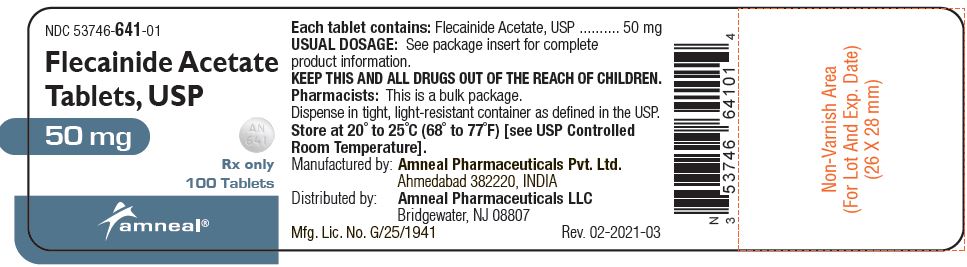
PACKAGE LABEL.PRINCIPAL DISPLAY PANEL 50 mg PRINCIPAL DISPLAY PANEL 1 PRINCIPAL DISPLAY PANEL 1