
divalproex sodium 250 mg Tablet, Delayed Release, 100-count — NDC 55111-530-01 (Billing 55111-0530-01)
This is a package of 100 tablets of divalproex sodium 250 mg Tablet, Delayed Release from Dr.Reddy's Laboratories Limited, marketed since Jul 2008 and currently FDA-listed. It is the main listing for this product, which comes in 4 package sizes.
Other active recalls for Divalproex Sodium (different manufacturers) — 1 · tap to view
Identity & classification
Regulatory identifiers FDA, NLM and CMS codes for this package
Drug-database identifiers Medi-Span GPI and First Databank GCN / HICL / AHFS classification
- GSN (GCN sequence number): 004539
- GCN: 17290
- GPI-14 (Medi-Span): 72500010100610
- HICL (First Databank): 001884
- AHFS class code: 28:12.28.00
- RxCUI (RxNorm): 1099625
Where does this data come from?
- FDA openFDA NDC Directory · synced Oct 1, 2026
- FDA label on DailyMed · label index refreshed Oct 1, 2026
- RxNorm (NLM RxNav) · catalog refreshed Oct 1, 2026
- Medi-Span GPI (licensed)
- First Databank (licensed) · refreshed Oct 1, 2026
RxNorm drug class
This medicine belongs to the Mood Stabilizer class.
Where does this data come from?
- RxClass (NLM) · catalog refreshed Oct 1, 2026
Clinical
Valproic acid is used to treat certain types of seizures. Valproic acid is also used to treat mania (episodes of frenzied, abnormally excited mood) in people with bipolar disorder (manic-depressive disorder; a disease that causes episodes of depression, episodes of mania, and other abnormal moods). It is also used to prevent migraine headaches, but not to relieve headaches that have already begun. Valproic acid is in a class of medications called anticonvulsants. It works by increasing the amount of a certain natural substance in the brain.
Read the full MedlinePlus article ↗- It treats seizures, manic episodes of bipolar disorder, and prevents migraines. Which uses apply depends on the product. Capsules are only for seizures. Ask me to check which one y...
- Swallow tablets whole and never crush or chew them. Extended-release tablets are once a day. Capsules can be swallowed whole or sprinkled on soft food and swallowed right away. Tak...
- For delayed-release tablets, take it as soon as you remember unless it is almost time for the next dose. Do not double up. Ask your prescriber if you take another form.
- Nausea, stomach upset, sleepiness, dizziness, tremor, headache and hair loss are common. Call your doctor if they bother you a lot. Call right away for severe stomach pain, vomitin...
Patient education
Supplement & herbal interactions
Some supplements/herbs that may interact with Divalproex Sodium — tap one for details:
Divalproex Sodium may be associated with lower levels of 1 nutrient — worth a chat with your pharmacist, not a cause for alarm.
Where does this data come from?
- MedlinePlus (NLM) · refreshed Oct 1, 2026
- FDA label on DailyMed · label index refreshed Oct 1, 2026
Ask a licensed pharmacist directly — free, answered by our team.
Pricing
A drug doesn't have one price. Each row is a different public payment system, and none is what you'd pay at the counter — that depends on your insurance. The ⓘ on each row explains what it measures.
| Price system | Per each | Per package |
|---|---|---|
| Retail pharmacies payNADAC · weekly | Not in the retail survey — common for institutional, discontinued, or low-volume packs. | |
| Medicaid paysCMS SDUD · 12 mo | No recent Medicaid claims on file for this NDC — rare and low-volume NDCs are suppressed in the public data. | |
| Medicare drug plans payPart D · Q2 2026 | $0.1520 | $15.20 / 100 tablets |
Where does this data come from?
- CMS NADAC weekly file
- CMS ASP pricing files · refreshed Sep 20, 2026
- CMS Medicaid State Drug Utilization Data · refreshed Oct 2, 2026
- CMS Part D plan pricing files · refreshed Sep 24, 2026
- VA National Acquisition Center price file
Packaging — all sizes for this product
| Package NDC | Description | Marketing start | Marketing end | Status |
|---|---|---|---|---|
| 55111-0530-01 You're viewing this Main listing | 100 TABLET, DELAYED RELEASE in 1 BOTTLE | 2008-07-29 | — | Active |
| 55111-0530-05 55111-530-05 | 500 TABLET, DELAYED RELEASE in 1 BOTTLE | 2008-07-29 | — | Active |
| 55111-0530-30 55111-530-30 | 30 TABLET, DELAYED RELEASE in 1 BOTTLE | 2008-07-29 | — | Active |
| 55111-0530-78 55111-530-78 | 10 BLISTER PACK in 1 CARTON / 10 TABLET, DELAYED RELEASE in 1 BLISTER PACK | 2008-07-29 | — | Active |
Pack size FAQ
What quantity is in this package?
How does this package differ from NDC 55111-0530-30?
What NDC number is used to bill for this package of divalproex sodium 250 mg Tablet, Delayed Release?
Therapeutic equivalents
| Product | Labeler | Pack | NADAC/unit | TE | Status | Price vs. this |
|---|---|---|---|---|---|---|
| Divalproex Sodium 250 mg 00832-7123-01 | Upsher-Smith | 1 tablet | $0.086 | AB | Availability likely | — |
| Divalproex Sodium 250 mg 00904-6860-61 | Major | 1 tablet | $0.086 | AB | Availability likely | — |
| Divalproex Sodium 250 mg 29300-0139-01 | Unichem | 100 tablets | $0.086 | AB | Availability likely | — |
| Divalproex Sodium 250 mg 57237-0047-01 | Rising | 100 tablets | $0.086 | AB | Availability likely | — |
| Divalproex Sodium 250 mg 60687-0868-01 | American | 1 tablet | $0.086 | AB | Availability likely | — |
| Divalproex Sodium 250 mg 68001-0473-00 | BluePoint | 100 tablets | $0.086 | AB | Availability likely | — |
| Divalproex Sodium 250 mg 68084-0776-01 | American | 1 tablet | $0.086 | AB | Discontinued | — |
| Depakote 250 mg 00074-7326-13 | AbbVie | 100 tablets | $4.046 | AB | Availability likely | — |
| divalproex sodium 250 mg 00615-8587-39 | NCS | 30 tablets | — | AB | FDA listed | — |
| Divalproex Sodium 250 mg 17856-0797-01 | ATLANTIC | 1 tablet | — | AB | FDA listed | — |
| Divalproex Sodium 250 mg 50090-1123-00 | A-S | 30 tablets | — | AB | FDA listed | — |
| Divalproex Sodium 250 mg 50090-2007-00 | A-S | 30 tablets | — | AB | FDA listed | — |
| divalproex sodium 250 mg 50090-7763-00 | A-S | 30 tablets | — | AB | FDA listed | — |
| Divalproex Sodium 250 mg 51655-0365-52 | Northwind | 30 tablets | — | AB | FDA listed | — |
| divalproex sodium 250 mgthis 55111-0530-01 | Dr.Reddy's | 100 tablets | — | AB | FDA listed | — |
| Divalproex Sodium 250 mg 55154-4154-00 | Cardinal | 1 tablet | — | AB | FDA listed | — |
| Divalproex Sodium 250 mg 55154-7145-00 | Cardinal | 1 tablet | — | AB | Discontinued | — |
| Divalproex Sodium 250 mg 60760-0698-60 | St. | 60 tablets | — | AB | FDA listed | — |
| Divalproex Sodium 250 mg 62756-0797-08 | Sun | 100 tablets | — | AB | FDA listed | — |
| Divalproex Sodium 250 mg 63187-0742-30 | Proficient | 30 tablets | — | AB | FDA listed | — |
| Divalproex Sodium 250 mg 65862-0402-01 | Aurobindo | 100 tablets | — | AB | FDA listed | — |
| Divalproex Sodium 250 mg 67046-1571-03 | Coupler | 30 tablets | — | AB | FDA listed | — |
| Divalproex Sodium 250 mg 68071-3553-06 | NuCare | 60 tablets | — | AB | FDA listed | — |
| divalproex sodium 250 mg 68788-4079-03 | Preferred | 30 tablets | — | AB | FDA listed | — |
| Divalproex Sodium 250 mg 68788-8609-03 | Preferred | 30 tablets | — | AB | FDA listed | — |
| divalproex sodium 250 mg 69452-0434-13 | Bionpharma | 30 tablets | — | AB | FDA listed | — |
| Divalproex Sodium 250 mg 70518-3055-00 | REMEDYREPACK | 30 tablets | — | AB | Discontinued | — |
| Divalproex Sodium 250 mg 70518-3431-00 | REMEDYREPACK | 60 tablets | — | AB | FDA listed | — |
| Divalproex Sodium 250 mg 71335-0008-01 | Bryant | 30 tablets | — | AB | FDA listed | — |
| Divalproex Sodium 250 mg 71335-2277-01 | Bryant | 30 tablets | — | AB | FDA listed | — |
| divalproex sodium 250 mg 71335-2783-01 | Bryant | 30 tablets | — | AB | FDA listed | — |
| Divalproex Sodium 250 mg 71335-2862-01 | Bryant | 100 tablets | — | AB | FDA listed | — |
| Divalproex Sodium 250 mg 71335-2885-01 | Bryant | 500 tablets | — | AB | FDA listed | — |
| Divalproex Sodium 250 mg 71610-0031-60 | Aphena | 90 tablets | — | AB | FDA listed | — |
| Divalproex Sodium 250 mg 72162-2316-01 | Bryant | 100 tablets | — | AB | FDA listed | — |
| Divalproex Sodium 250 mg 72162-2460-01 | Bryant | 100 tablets | — | AB | FDA listed | — |
| Divalproex Sodium D/R 250 mg 72189-0636-60 | Direct_Rx | 60 tablets | — | AB | FDA listed | — |
| Divalproex Sodium 250 mg 72789-0353-01 | PD-Rx | 100 tablets | — | AB | FDA listed | — |
| divalproex sodium 250 mg 82804-0233-30 | Proficient | 30 tablets | — | AB | FDA listed | — |
| Divalproex Sodium 250 mg 87441-0027-01 | Unit | 30 tablets | — | AB | FDA listed | — |
| Divalproex Sodium 250 mg 68180-0266-01 | Lupin | 100 tablets | — | — | Discontinued | — |
| divalproex sodium 250 mg 67046-1683-03 | Coupler | 30 tablets | — | AB | FDA listed | — |
Where does this data come from?
- FDA openFDA NDC Directory · synced Oct 1, 2026
- FDA Orange Book · refreshed Sep 3, 2026
- CMS NADAC weekly file
Availability & generic status
This product is an FDA-approved generic. Other versions of the same drug are listed under Therapeutic equivalents, least expensive first.
Where does this data come from?
- FDA Orange Book · refreshed Sep 3, 2026
What it looks like
Where does this data come from?
- FDA label on DailyMed · label index refreshed Oct 1, 2026
Inactive Ingredients / Excipients
Inactive ingredients, also called excipients, are components of the drug product other than the active ingredient. They may include fillers, dyes, coatings, preservatives, flavors, or other formulation ingredients.
💡 Tap an ingredient (hover on desktop) to see what it is and why it’s used.
-
UNII 1364PS73AF
Acetone is a clear, volatile liquid solvent. In medications, it helps dissolve or extract active ingredients during manufacturing and may be used in certain liquid formulations or coating processes.
-
UNII 8PJ61P6TS3
Butyl alcohol is a clear liquid organic solvent derived from petroleum or natural sources. In medicines, it helps dissolve active ingredients and serves as a solvent in liquid formulations and some topical products.
-
UNII OP1R32D61U
Microcrystalline cellulose is a purified form of cellulose, a natural fiber from plant sources. It acts as a binder and filler in tablets and capsules, helping hold ingredients together and give the medicine its shape and size.
-
UNII 5Z17386USF
A food-derived fat used as an emulsifier and stabilizer. It helps blend oil and water-based ingredients together and keeps the medicine's texture consistent throughout its shelf life.
-
UNII EX438O2MRT
Ferric oxide yellow is a naturally occurring iron compound used as a colorant in medications. It gives tablets, capsules, and other forms a yellow or golden hue for identification and appearance.
-
UNII XM0M87F357
A dark iron oxide compound that gives medicines their black or dark color. It's used as a colorant in tablets and capsules to help identify the product and make it visually distinctive.
-
UNII 3NXW29V3WO
Hypromellose is a plant-based thickener made from cellulose. It's used in medicines as a binder to hold ingredients together, a coating for tablets, and a thickener for liquids.
-
UNII ND2M416302
Isopropyl alcohol is a clear liquid solvent derived from petroleum. In medicines, it dissolves active ingredients and other components, helps the product flow smoothly, and aids in sterilization during manufacturing.
-
UNII 1DI56QDM62
A natural fatty substance from soybeans that helps mix oil and water-based ingredients together. It acts as an emulsifier and lubricant in medicines to improve texture and help the product break down properly in your body.
-
UNII 588X2YUY0A
Methylene chloride is a volatile organic solvent used in pharmaceutical manufacturing to dissolve and process active ingredients and other substances. It evaporates during production, helping create tablets, capsules, or coatings with uniform quality.
-
UNII FZ989GH94E
Povidone is a synthetic polymer made from a plastic-like material. It acts as a binder to hold tablet ingredients together and as a disintegrant to help the tablet break apart in your stomach so the medicine can be absorbed.
-
UNII 46N107B71O
Shellac is a natural resin secreted by the lac beetle. It's used as a coating on tablets and capsules to control how quickly the medicine dissolves and to improve appearance and stability.
-
UNII ETJ7Z6XBU4
Silicon dioxide is a naturally occurring mineral used as a glidant and anti-caking agent. It helps powder ingredients flow smoothly and prevents clumping during manufacturing and storage.
-
UNII O8232NY3SJ
A plant-based carbohydrate derived from corn kernels. It acts as a filler to add bulk, a binder to hold ingredients together, and a disintegrant to help the tablet break apart in your stomach for absorption.
-
UNII 7SEV7J4R1U
A powder made from a naturally occurring mineral. In medicines, talc works as a glidant and anti-caking agent, helping tablets and capsules flow smoothly during manufacturing and preventing clumping.
-
UNII 15FIX9V2JP
Titanium dioxide is a bright white mineral powder commonly used as a colorant and opacifying agent. It makes pills and tablets white or lighter in color and helps make coatings non-transparent.
-
UNII CHI530446X
Vanillin is a natural or synthetic aromatic compound that gives vanilla flavor. It's used in medicines as a flavoring agent to mask bitter tastes and improve how the medicine tastes.
17 inactive ingredients listed in the exact product block matched to this NDC.
Where does this data come from?
ingredient classCode="IACT" elements from the exact product block matched by this NDC. Label-section narrative from DailyMed / the openFDA label index is shown separately when available.- FDA label on DailyMed · label index refreshed Oct 1, 2026
- FDA openFDA NDC Directory · synced Oct 1, 2026
Inactive ingredient FAQ
Are inactive ingredients the same for every manufacturer?
Why might an inactive ingredient be missing?
Can inactive ingredients matter?
Manufacturer & labeler
Where does this data come from?
- FDA openFDA NDC Directory · synced Oct 1, 2026
- Drugs@FDA
Full prescribing information FDA SPL
🚨 Boxed Warning ▾
WARNING: LIFE THREATENING ADVERSE REACTIONS Hepatotoxicity Hepatic failure resulting in fatalities has occurred in patients receiving valproate and its derivatives. Children under the age of two years are at a considerably increased risk of developing fatal hepatotoxicity, especially those on multiple anticonvulsants, those with congenital metabolic disorders, those with severe seizure disorders accompanied by mental retardation, and those with organic brain disease. When divalproex sodium is used in this patient group, it should be used with extreme caution and as a sole agent.
The benefits of therapy should be weighed against the risks. The incidence of fatal hepatotoxicity decreases considerably in progressively older patient groups. These incidents usually have occurred during the first six months of treatment.
Serious or fatal hepatotoxicity may be preceded by non-specific symptoms such as malaise, weakness, lethargy, facial edema, anorexia, and vomiting. In patients with epilepsy, a loss of seizure control may also occur. Patients should be monitored closely for appearance of these symptoms.
Liver function tests should be performed prior to therapy and at frequent intervals thereafter, especially during the first six months [see Warnings and Precautions (5.1) ]. Fetal Risk Valproate can cause major congenital malformations, particularly neural tube defects (e.g., spina bifida). Valproate should not be administered to a woman of childbearing potential unless the drug is essential to the management of her medical condition.
This is especially important when valproate use is considered for a condition not usually associated with permanent injury or death (e.g., migraine). Women should use effective contraception while using valproate [see Warnings and Precautions ( 5.2 , 5.3 ) ]. A Medication Guide describing the risks of valproate is available for patients [see Patient Counseling Information (17) ].
Pancreatitis Cases of life-threatening pancreatitis have been reported in both children and adults receiving valproate. Some of the cases have been described as hemorrhagic with a rapid progression from initial symptoms to death. Cases have been reported shortly after initial use as well as after several years of use.
Patients and guardians should be warned that abdominal pain, nausea, vomiting, and/or anorexia can be symptoms of pancreatitis that require prompt medical evaluation. If pancreatitis is diagnosed, valproate should ordinarily be discontinued. Alternative treatment for the underlying medical condition should be initiated as clinically indicated [see Warnings and Precautions (5.4) ].
WARNINGS: LIFE THREATENING ADVERSE REACTIONS See full prescribing information for complete boxed warning. Hepatotoxicity, including fatalities, usually during the first 6 months of treatment. Children under the age of two years are at a considerably higher risk of fatal hepatotoxicity.
Monitor patients closely, and perform liver function tests prior to therapy and at frequent intervals thereafter (5.1) Fetal Risk, particularly neural tube defects and other major malformations ( 5.2 , 5.3 ) Pancreatitis, including fatal hemorrhagic cases (5.4)
🎯 Indications and Usage ▾
1 INDICATIONS AND USAGE Divalproex sodium delayed-release tablet is an anti-epileptic drug indicated for: Treatment of manic episodes associated with bipolar disorder (1.1) Monotherapy and adjunctive therapy of complex partial seizures and simple and complex absence seizures; adjunctive therapy in patients with multiple seizure types that include absence seizures (1.2) Prophylaxis of migraine headaches (1.3)
1.1Mania Divalproex sodium delayed-release tablet is a valproate and is indicated for the treatment of the manic episodes associated with bipolar disorder. A manic episode is a distinct period of abnormally and persistently elevated, expansive, or irritable mood. Typical symptoms of mania include pressure of speech, motor hyperactivity, reduced need for sleep, flight of ideas, grandiosity, poor judgment, aggressiveness, and possible hostility.
The efficacy of divalproex sodium delayed-release tablets was established in 3-week trials with patients meeting DSM-III-R criteria for bipolar disorder who were hospitalized for acute mania [see Clinical Studies (14.1) ]. The safety and effectiveness of divalproex sodium delayed-release tablets for long-term use in mania, i.e., more than 3 weeks, has not been systematically evaluated in controlled clinical trials. Therefore, healthcare providers who elect to use divalproex sodium delayed-release tablets for extended periods should continually reevaluate the long-term usefulness of the drug for the individual patient.
1.2Epilepsy Divalproex sodium delayed-release tablets are indicated as monotherapy and adjunctive therapy in the treatment of patients with complex partial seizures that occur either in isolation or in association with other types of seizures. Divalproex sodium delayed-release tablets are also indicated for use as sole and adjunctive therapy in the treatment of simple and complex absence seizures, and adjunctively in patients with multiple seizure types that include absence seizures. Simple absence is defined as very brief clouding of the sensorium or loss of consciousness accompanied by certain generalized epileptic discharges without other detectable clinical signs.
Complex absence is the term used when other signs are also present.
1.3Migraine Divalproex sodium delayed-release tablets are indicated for prophylaxis of migraine headaches. There is no evidence that divalproex sodium delayed-release tablets are useful in the acute treatment of migraine headaches. Because it may be a hazard to the fetus, divalproex sodium delayed-release tablets should be considered for women of childbearing potential only after this risk has been thoroughly discussed with the patient and weighed against the potential benefits of treatment [see Warnings and Precautions (5.2) and Patient Counseling Information (17.3) ].
⏱️ Dosage and Administration ▾
2 DOSAGE AND ADMINISTRATION Divalproex sodium delayed-release tablets are intended for oral administration. Divalproex sodium delayed-release tablets should be swallowed whole and should not be crushed or chewed. Patients should be informed to take divalproex sodium delayed-release tablets every day as prescribed.
If a dose is missed it should be taken as soon as possible, unless it is almost time for the next dose. If a dose is skipped, the patient should not double the next dose. Divalproex sodium delayed-release tablets are administered orally in divided doses.
Divalproex sodium delayed-release tablets should be swallowed whole and should not be crushed or chewed. ( 2.1 , 2.2 ) Mania: Initial dose is 750 mg daily increasing as rapidly as possible to achieve therapeutic response or desired plasma level (2.1) . The maximum recommended dosage is 60 mg/kg/day.
( 2.1 , 2.2 ) Complex Partial Seizures: Start at 10 to 15 mg/kg/day, increasing at 1 week intervals by 5 to 10 mg/kg/day to achieve optimal clinical response; if response is not satisfactory, check valproate plasma level; see full prescribing information for conversion to monotherapy (2.2) . The maximum recommended dosage is 60 mg/kg/day. ( 2.1 , 2.2 ) Absence Seizures: Start at 15 mg/kg/day, increasing at 1 week intervals by 5 to 10 mg/kg/day until seizure control or limiting side effects (2.2) .
The maximum recommended dosage is 60 mg/kg/day. ( 2.1 , 2.2 ) Migraine: The recommended starting dose is 250 mg twice daily, thereafter increasing to a maximum of 1000 mg/day as needed. (2.3)
2.1Mania Divalproex sodium delayed-release tablets are administered orally. The recommended initial dose is 750 mg daily in divided doses. The dose should be increased as rapidly as possible to achieve the lowest therapeutic dose which produces the desired clinical effect or the desired range of plasma concentrations.
In placebo-controlled clinical trials of acute mania, patients were dosed to a clinical response with a trough plasma concentration between 50 and 125 mcg/mL. Maximum concentrations were generally achieved within 14 days. The maximum recommended dosage is 60 mg/kg/day.
There is no body of evidence available from controlled trials to guide a clinician in the longer term management of a patient who improves during divalproex sodium delayed-release tablets treatment of an acute manic episode. While it is generally agreed that pharmacological treatment beyond an acute response in mania is desirable, both for maintenance of the initial response and for prevention of new manic episodes, there are no data to support the benefits of divalproex sodium delayed-release tablets in such longer-term treatment.
Although there are no efficacy data that specifically address longer-term antimanic treatment with divalproex sodium delayed-release tablets, the safety of divalproex sodium delayed-release tablets in long-term use is supported by data from record reviews involving approximately 360 patients treated with divalproex sodium delayed-release tablets for greater than 3 months.
2.2Epilepsy Divalproex sodium delayed-release tablets are administered orally. Divalproex sodium delayed-release tablets are indicated as monotherapy and adjunctive therapy in complex partial seizures in adults and pediatric patients down to the age of 10 years, and in simple and complex absence seizures. As the divalproex sodium delayed-release tablets dosage is titrated upward, concentrations of clonazepam, diazepam, ethosuximide, lamotrigine, tolbutamide, phenobarbital, carbamazepine, and/or phenytoin may be affected [see Drug Interactions (7.2) ].
Complex Partial Seizures For adults and children 10 years of age or older. Monotherapy (Initial Therapy) Divalproex sodium has not been systematically studied as initial therapy. Patients should initiate therapy at 10 to 15 mg/kg/day.
The dosage should be increased by 5 to 10 mg/kg/week to achieve optimal clinical response. Ordinarily, optimal clinical response is ach… [Excerpted — this section continues on DailyMed.]
💊 Dosage Forms and Strengths ▾
3 DOSAGE FORMS AND STRENGTHS Divalproex sodium delayed-release tablets USP, 125 mg are light brown to brown colored, modified capsule shaped, biconvex coated tablets printed “R529” on one side with black ink and plain on other side. Divalproex sodium delayed-release tablets USP, 250 mg are cream colored, modified capsule shaped, biconvex coated tablets printed “R530” on one side with black ink and plain on other side. Divalproex sodium delayed-release tablets USP, 500 mg are light pink colored, modified capsule shaped, biconvex coated tablets printed “R531” on one side with black ink and plain on other side.
Tablets: 125 mg, 250 mg and 500 mg (3)
⛔ Contraindications ▾
4 CONTRAINDICATIONS Divalproex sodium should not be administered to patients with hepatic disease or significant hepatic dysfunction [see Warnings and Precautions (5.1) ]. Divalproex sodium is contraindicated in patients with known hypersensitivity to the drug [see Warnings and Precautions (5.11) ]. Divalproex sodium is contraindicated in patients with known urea cycle disorders [see Warnings and Precautions (5.5) ].
Hepatic disease or significant hepatic dysfunction ( 4 , 5.1 ) Known hypersensitivity to the drug ( 4 , 5.11 ) Urea cycle disorders ( 4 , 5.5 )
⚠️ Warnings and Cautions ▾
5 WARNINGS AND PRECAUTIONS Hepatotoxicity; monitor liver function tests (5.1) Women of Childbearing Potential; weigh divalproex sodium benefits of use during pregnancy against risk to the fetus (5.2) Birth Defects; divalproex sodium can cause fetal harm when taken during pregnancy (5.3) Pancreatitis; divalproex sodium should ordinarily be discontinued (5.4) Suicidal behavior or ideation; Antiepileptic drugs, including divalproex sodium, increase the risk of suicidal thoughts or behavior (5.6) Thrombocytopenia; monitor platelet counts and coagulation tests (5.7) Hyperammonemia and hyperammonemic encephalopathy; measure ammonia level if unexplained lethargy and vomiting or changes in mental status, and also with concomitant topiramate use; consider discontinuation of valproate therapy (5.5 , 5.8 , 5.9 ) Hypothermia; Hypothermia has been reported during valproate therapy with or without associated hyperammonemia.
This adverse reaction can also occur in patients using concomitant topiramate (5.10) Multi-organ hypersensitivity reaction; discontinue divalproex sodium (5.11) Somnolence in the elderly can occur. Divalproex sodium dosage should be increased slowly and with regular monitoring for fluid and nutritional intake (5.13)
5.1Hepatotoxicity Hepatic failure resulting in fatalities has occurred in patients receiving valproate. These incidents usually have occurred during the first six months of treatment. Serious or fatal hepatotoxicity may be preceded by nonspecific symptoms such as malaise, weakness, lethargy, facial edema, anorexia, and vomiting.
In patients with epilepsy, a loss of seizure control may also occur. Patients should be monitored closely for appearance of these symptoms. Liver function tests should be performed prior to therapy and at frequent intervals thereafter, especially during the first six months.
However, healthcare providers should not rely totally on serum biochemistry since these tests may not be abnormal in all instances, but should also consider the results of careful interim medical history and physical examination. Caution should be observed when administering valproate products to patients with a prior history of hepatic disease. Patients on multiple anticonvulsants, children, those with congenital metabolic disorders, those with severe seizure disorders accompanied by mental retardation, and those with organic brain disease may be at particular risk.
Experience has indicated that children under the age of two years are at a considerably increased risk of developing fatal hepatotoxicity, especially those with the aforementioned conditions. When divalproex sodium is used in this patient group, it should be used with extreme caution and as a sole agent. The benefits of therapy should be weighed against the risks.
Above this age group, experience in epilepsy has indicated that the incidence of fatal hepatotoxicity decreases considerably in progressively older patient groups. The drug should be discontinued immediately in the presence of significant hepatic dysfunction, suspected or apparent. In some cases, hepatic dysfunction has progressed in spite of discontinuation of drug [see Boxed Warning and Contraindications (4 ) ].
5.2Use in Women of Childbearing Potential Because of the risk to the fetus of neural tube defects and other major congenital malformations, which may occur very early in pregnancy, valproate should not be administered to a woman of childbearing potential unless the drug is essential to the management of her medical condition. This is especially important when valproate use is considered for a condition not usually associated with permanent injury or death (e.g., migraine). Women should use effective contraception while using valproate.
Women who are planning a pregnancy should be counseled regarding the relative risks and benefits of valproate use during pregnancy, and alternative therapeutic options should be considered for these patients [see Boxed Warning and Use in Specific P… [Excerpted — this section continues on DailyMed.]
🤒 Adverse Reactions ▾
6 ADVERSE REACTIONS Because clinical studies are conducted under widely varying conditions, adverse reaction rates observed in the clinical studies of a drug cannot be directly compared to rates in the clinical studies of another drug and may not reflect the rates observed in practice. Most common adverse reactions (reported >5%) reported in patients are abdominal pain, accidental injury, alopecia, ambylopia/blurred vision, amnesia, anorexia, asthenia, ataxia, back pain, bronchitis, constipation, depression, diarrhea, diplopia, dizziness, dyspepsia, dyspnea, ecchymosis, emotional lability, fever, flu syndrome, headache, increased appetite, infection, insomnia, nausea, nervousness, nystagmus, peripheral edema, pharyngitis, rash, rhinitis, somnolence, thinking abnormal, thrombocytopenia, tinnitus, tremor, vomiting, weight gain, weight loss, ( 6.1 , 6.2 , 6.3 ).
To report SUSPECTED ADVERSE REACTIONS, contact Dr. Reddy’s Laboratories Inc., at 1-888-375-3784 or FDA at 1-800-FDA-1088 or www.fda.gov/medwatch
6.1Mania The incidence of treatment-emergent events has been ascertained based on combined data from two three week placebo-controlled clinical trials of divalproex sodium in the treatment of manic episodes associated with bipolar disorder. The adverse reactions were usually mild or moderate in intensity, but sometimes were serious enough to interrupt treatment. In clinical trials, the rates of premature termination due to intolerance were not statistically different between placebo, divalproex sodium, and lithium carbonate.
A total of 4%, 8% and 11% of patients discontinued therapy due to intolerance in the placebo, divalproex sodium, and lithium carbonate groups, respectively. Table 2 summarizes those adverse reactions reported for patients in these trials where the incidence rate in the divalproex sodium-treated group was greater than 5% and greater than the placebo incidence, or where the incidence in the divalproex sodium-treated group was statistically significantly greater than the placebo group. Vomiting was the only reaction that was reported by significantly (p ≤ 0.05) more patients receiving divalproex sodium compared to placebo.
Table 2. Adverse Reactions Reported by > 5% of Divalproex sodium-Treated Patients During Placebo-Controlled Trials of Acute Mania 1 Adverse Reaction Divalproex sodium (n = 89) Placebo (n = 97) Nausea 22% 15% Somnolence 19% 12% Dizziness 12% 4% Vomiting 12% 3% Accidental Injury 11% 5% Asthenia 10% 7% Abdominal pain 9% 8% Dyspepsia 9% 8% Rash 6% 3% 1. The following adverse reactions occurred at an equal or greater incidence for placebo than for Divalproex sodium: back pain, headache, constipation, diarrhea, tremor, and pharyngitis.
The following additional adverse reactions were reported by greater than 1% but not more than 5% of the 89 divalproex sodium-treated patients in controlled clinical trials: Body as a Whole: Chest pain, chills, chills and fever, fever, neck pain, neck rigidity. Cardiovascular System: Hypertension, hypotension, palpitations, postural hypotension, tachycardia, vasodilation. Digestive System: Anorexia, fecal incontinence, flatulence, gastroenteritis, glossitis, periodontal abscess.
Hemic and Lymphatic System: Ecchymosis. Metabolic and Nutritional Disorders: Edema, peripheral edema. Musculoskeletal System: Arthralgia, arthrosis, leg cramps, twitching.
Nervous System: Abnormal dreams, abnormal gait, agitation, ataxia, catatonic reaction, confusion, depression, diplopia, dysarthria, hallucinations, hypertonia, hypokinesia, insomnia, paresthesia, reflexes increased, tardive dyskinesia, thinking abnormalities, vertigo. Respiratory System: Dyspnea, rhinitis. Skin and Appendages: Alopecia, discoid lupus erythematosus, dry skin, furunculosis, maculopapular rash, seborrhea.
Special Senses: Amblyopia, conjunctivitis, deafness, dry eyes, ear pain, eye pain, tinnitus. Urogenital System: Dysmenorrhea, dysuria, urinary incontinence.
6.2Epilepsy Based on a placebo-controlled trial of… [Excerpted — this section continues on DailyMed.]
🔄 Drug Interactions ▾
7 DRUG INTERACTIONS Hepatic enzyme-inducing drugs (e.g., phenytoin, carbamazepine, primidone, phenobarbital, rifampin) can increase valproate clearance, while enzyme inhibitors (e.g., felbamate) can decrease valproate clearance. Therefore increased monitoring of valproate and concomitant drug concentrations and dose adjustment is indicated whenever enzyme-inducing or inhibiting drugs are introduced or withdrawn (7.1) Aspirin, carbapenem antibiotics: Monitoring of valproate concentrations are recommended (7.1) Co-administration of valproate can affect the pharmacokinetics of other drugs (e.g. diazepam, ethosuximide, lamotrigine, phenytoin) by inhibiting their metabolism or protein binding displacement (7.2) Dosage adjustment of amitryptyline/nortryptyline, warfarin, and zidovudine may be necessary if used concomitantly with divalproex sodium (7.2) Topiramate: Hyperammonemia and encephalopathy ( 5.9 , 7.3)
7.1Effects of Co-Administered Drugs on Valproate Clearance Drugs that affect the level of expression of hepatic enzymes, particularly those that elevate levels of glucuronosyltransferases, may increase the clearance of valproate. For example, phenytoin, carbamazepine, and phenobarbital (or primidone) can double the clearance of valproate. Thus, patients on monotherapy will generally have longer half-lives and higher concentrations than patients receiving polytherapy with antiepilepsy drugs.
In contrast, drugs that are inhibitors of cytochrome P450 isozymes, e.g., antidepressants, may be expected to have little effect on valproate clearance because cytochrome P450 microsomal mediated oxidation is a relatively minor secondary metabolic pathway compared to glucuronidation and beta-oxidation. Because of these changes in valproate clearance, monitoring of valproate and concomitant drug concentrations should be increased whenever enzyme inducing drugs are introduced or withdrawn. The following list provides information about the potential for an influence of several commonly prescribed medications on valproate pharmacokinetics.
The list is not exhaustive nor could it be, since new interactions are continuously being reported. Drugs for which a potentially important interaction has been observed Aspirin A study involving the co-administration of aspirin at antipyretic doses (11 to 16 mg/kg) with valproate to pediatric patients (n=6) revealed a decrease in protein binding and an inhibition of metabolism of valproate. Valproate free fraction was increased 4-fold in the presence of aspirin compared to valproate alone.
The β-oxidation pathway consisting of 2-E-valproic acid, 3-OH-valproic acid, and 3-keto valproic acid was decreased from 25% of total metabolites excreted on valproate alone to 8.3% in the presence of aspirin. Caution should be observed if valproate and aspirin are to be co-administered. Carbapenem antibiotics A clinically significant reduction in serum valproic acid concentration has been reported in patients receiving carbapenem antibiotics (for example, ertapenem, imipenem, meropenem; this is not a complete list) and may result in loss of seizure control.
The mechanism of this interaction in not well understood. Serum valproic acid concentrations should be monitored frequently after initiating carbapenem therapy. Alternative antibacterial or anticonvulsant therapy should be considered if serum valproic acid concentrations drop significantly or seizure control deteriorates [see Warnings and Precautions (5.12) ].
Felbamate A study involving the co-administration of 1,200 mg/day of felbamate with valproate to patients with epilepsy (n=10) revealed an increase in mean valproate peak concentration by 35% (from 86 to 115 mcg/mL) compared to valproate alone. Increasing the felbamate dose to 2,400 mg/day increased the mean valproate peak concentration to 133 mcg/mL (another 16% increase). A decrease in valproate dosage may be necessary when felbamate therapy is initiated.
Rifampin A study involving the administration of a sing… [Excerpted — this section continues on DailyMed.]
👥 Use in Specific Populations ▾
8 USE IN SPECIFIC POPULATIONS Pregnancy: divalproex sodium can cause congenital malformations including neural tube defects. Pregnancy registry available ( 5.2 , 8.1 ) Pediatric: Children under the age of two years are at considerably higher risk of fatal hepatotoxicity ( 5.1 , 8.4 ) Geriatric: reduce starting dose; increase dosage more slowly; monitor fluid and nutritional intake, and somnolence ( 5.13 , 8.5 )
8.1Pregnancy Pregnancy Category D: [see Warnings and Precautions (5.3) ]. Pregnancy Registry To collect information on the effects of in utero exposure to divalproex sodium, physicians should encourage pregnant patients taking divalproex sodium to enroll in the North American Antiepileptic Drug (NAAED) Pregnancy Registry. This can be done by calling toll free 1-888-233-2334, and must be done by the patients themselves.
Information on the registry can be found at the website, http://www.aedpregnancyregistry.org/ . Fetal Risk Summary All pregnancies have a background risk of birth defects (about 3%), pregnancy loss (about 15%), or other adverse outcomes regardless of drug exposure. Maternal valproate use during pregnancy for any indication increases the risk of congenital malformations, particularly neural tube defects, but also malformations involving other body systems (e.g., craniofacial defects, cardiovascular malformations).
The risk of major structural abnormalities is greatest during the first trimester; however, other serious developmental effects can occur with valproate use throughout pregnancy. The rate of congenital malformations among babies born to epileptic mothers who used valproate during pregnancy has been shown to be about four times higher than the rate among babies born to epileptic mothers who used other anti-seizure monotherapies. Several published epidemiological studies have indicated that children exposed to valproate in utero have lower cognitive test scores than children exposed to either another antiepileptic drug in utero or to no antiepileptic drugs in utero [see Warnings and Precautions (5.3) ].
In animal studies, offspring had structural malformations similar to those seen in humans and demonstrated behavioral deficits. Clinical Considerations Neural tube defects are the congenital malformation most strongly associated with maternal valproate use. The risk of spina bifida following in utero valproate exposure is generally estimated as 1 to 2%, compared to an estimated general population risk for spina bifida of about 0.06 to 0.07% (6 to 7 in 10,000 births).
To prevent major seizures, women with epilepsy should not discontinue divalproex sodium abruptly, as this can precipitate status epilepticus with resulting maternal and fetal hypoxia and threat to life. Even minor seizures may pose some hazard to the developing embryo or fetus. However, discontinuation of the drug may be considered prior to and during pregnancy in individual cases if the seizure disorder severity and frequency do not pose a serious threat to the patient.
Available prenatal diagnostic testing to detect neural tube and other defects should be offered to pregnant women using valproate. Evidence suggests that folic acid supplementation prior to conception and during the first trimester of pregnancy decreases the risk for congenital neural tube defects in the general population. It is not known whether the risk of neural tube defects in the offspring of women receiving valproate is reduced by folic acid supplementation.
Dietary folic acid supplementation both prior to conception and during pregnancy should be routinely recommended for patients using valproate. Patients taking valproate may develop clotting abnormalities [see Warnings and Precautions (5.7) ]. A patient who had low fibrinogen when taking multiple anticonvulsants including valproate gave birth to an infant with afibrinogenemia who subsequently died of hemorrhage.
If valproate is used in pregnancy, the clotting parameters should be monitored carefully. Patients… [Excerpted — this section continues on DailyMed.]
🤰 Pregnancy ▾
8.1Pregnancy Pregnancy Category D: [see Warnings and Precautions (5.3) ]. Pregnancy Registry To collect information on the effects of in utero exposure to divalproex sodium, physicians should encourage pregnant patients taking divalproex sodium to enroll in the North American Antiepileptic Drug (NAAED) Pregnancy Registry. This can be done by calling toll free 1-888-233-2334, and must be done by the patients themselves.
Information on the registry can be found at the website, http://www.aedpregnancyregistry.org/ . Fetal Risk Summary All pregnancies have a background risk of birth defects (about 3%), pregnancy loss (about 15%), or other adverse outcomes regardless of drug exposure. Maternal valproate use during pregnancy for any indication increases the risk of congenital malformations, particularly neural tube defects, but also malformations involving other body systems (e.g., craniofacial defects, cardiovascular malformations).
The risk of major structural abnormalities is greatest during the first trimester; however, other serious developmental effects can occur with valproate use throughout pregnancy. The rate of congenital malformations among babies born to epileptic mothers who used valproate during pregnancy has been shown to be about four times higher than the rate among babies born to epileptic mothers who used other anti-seizure monotherapies. Several published epidemiological studies have indicated that children exposed to valproate in utero have lower cognitive test scores than children exposed to either another antiepileptic drug in utero or to no antiepileptic drugs in utero [see Warnings and Precautions (5.3) ].
In animal studies, offspring had structural malformations similar to those seen in humans and demonstrated behavioral deficits. Clinical Considerations Neural tube defects are the congenital malformation most strongly associated with maternal valproate use. The risk of spina bifida following in utero valproate exposure is generally estimated as 1 to 2%, compared to an estimated general population risk for spina bifida of about 0.06 to 0.07% (6 to 7 in 10,000 births).
To prevent major seizures, women with epilepsy should not discontinue divalproex sodium abruptly, as this can precipitate status epilepticus with resulting maternal and fetal hypoxia and threat to life. Even minor seizures may pose some hazard to the developing embryo or fetus. However, discontinuation of the drug may be considered prior to and during pregnancy in individual cases if the seizure disorder severity and frequency do not pose a serious threat to the patient.
Available prenatal diagnostic testing to detect neural tube and other defects should be offered to pregnant women using valproate. Evidence suggests that folic acid supplementation prior to conception and during the first trimester of pregnancy decreases the risk for congenital neural tube defects in the general population. It is not known whether the risk of neural tube defects in the offspring of women receiving valproate is reduced by folic acid supplementation.
Dietary folic acid supplementation both prior to conception and during pregnancy should be routinely recommended for patients using valproate. Patients taking valproate may develop clotting abnormalities [see Warnings and Precautions (5.7) ]. A patient who had low fibrinogen when taking multiple anticonvulsants including valproate gave birth to an infant with afibrinogenemia who subsequently died of hemorrhage.
If valproate is used in pregnancy, the clotting parameters should be monitored carefully. Patients taking valproate may develop hepatic failure [see Boxed Warning , Warnings and Precautions (5.1) ]. Fatal cases of hepatic failure in infants exposed to valproate in utero have also been reported following maternal use of valproate during pregnancy.
Data Human There is an extensive body of evidence demonstrating that exposure to valproate in utero increases the risk of neural tube defects and other structural a… [Excerpted — this section continues on DailyMed.]
🧒 Pediatric Use ▾
8.4Pediatric Use Experience has indicated that pediatric patients under the age of two years are at a considerably increased risk of developing fatal hepatotoxicity, especially those with the aforementioned conditions [see Boxed Warning , Warning and Precautions (5.1) ]. When valproate is used in this patient group, it should be used with extreme caution and as a sole agent. The benefits of therapy should be weighed against the risks.
Above the age of 2 years, experience in epilepsy has indicated that the incidence of fatal hepatotoxicity decreases considerably in progressively older patient groups. Younger children, especially those receiving enzyme-inducing drugs, will require larger maintenance doses to attain targeted total and unbound valproate concentrations. Pediatric patients (i.e., between 3 months and 10 years) have 50% higher clearances expressed on weight (i.e., mL/min/kg) than do adults.
Over the age of 10 years, children have pharmacokinetic parameters that approximate those of adults. The variability in free fraction limits the clinical usefulness of monitoring total serum valproic acid concentrations. Interpretation of valproic acid concentrations in children should include consideration of factors that affect hepatic metabolism and protein binding.
Pediatric Clinical Trials Divalproex sodium was studied in seven pediatric clinical trials. Two of the pediatric studies were double-blinded placebo-controlled trials to evaluate the efficacy of divalproex sodium extended-release for the indications of mania (150 patients aged 10 to 17 years, 76 of whom were on divalproex sodium extended-release) and migraine (304 patients aged 12 to 17 years, 231 of whom were on divalproex sodium extended-release). Efficacy was not established for either the treatment of migraine or the treatment of mania.
The remaining five trials were long term safety studies. Two six-month pediatric studies were conducted to evaluate the long-term safety of divalproex sodium extended-release for the indication of mania (292 patients aged 10 to 17 years). Two twelve-month pediatric studies were conducted to evaluate the long-term safety of divalproex sodium extended-release for the indication of migraine (353 patients aged 12 to 17 years).
One twelve-month study was conducted to evaluate the safety of divalproex sodium sprinkle capsules in the indication of partial seizures (169 patients aged 3 to 10 years). The safety and tolerability of divalproex sodium in pediatric patients were shown to be comparable to those in adults [see Adverse Reactions (6) ]. Nonclinical Developmental Toxicology In studies of valproate in immature animals, toxic effects not observed in adult animals included retinal dysplasia in rats treated during the neonatal period (from postnatal day 4) and nephrotoxicity in rats treated during the neonatal and juvenile (from postnatal day 14) periods.
The no-effect dose for these findings was less than the maximum recommended human dose on a mg/m 2 basis.
🧓 Geriatric Use ▾
8.5Geriatric Use No patients above the age of 65 years were enrolled in double-blind prospective clinical trials of mania associated with bipolar illness. In a case review study of 583 patients, 72 patients (12%) were greater than 65 years of age. A higher percentage of patients above 65 years of age reported accidental injury, infection, pain, somnolence, and tremor.
Discontinuation of valproate was occasionally associated with the latter two events. It is not clear whether these events indicate additional risk or whether they result from preexisting medical illness and concomitant medication use among these patients. A study of elderly patients with dementia revealed drug related somnolence and discontinuation for somnolence [see Warnings and Precautions (5.13) ].
The starting dose should be reduced in these patients, and dosage reductions or discontinuation should be considered in patients with excessive somnolence [see Dosage and Administration (2.4) ]. There is insufficient information available to discern the safety and effectiveness of valproate for the prophylaxis of migraines in patients over 65.
🆘 Overdosage ▾
10 OVERDOSAGE Overdosage with valproate may result in somnolence, heart block, and deep coma. Fatalities have been reported; however patients have recovered from valproate levels as high as 2,120 mcg/mL. In overdose situations, the fraction of drug not bound to protein is high and hemodialysis or tandem hemodialysis plus hemoperfusion may result in significant removal of drug.
The benefit of gastric lavage or emesis will vary with the time since ingestion. General supportive measures should be applied with particular attention to the maintenance of adequate urinary output. Naloxone has been reported to reverse the CNS depressant effects of valproate overdosage.
Because naloxone could theoretically also reverse the antiepileptic effects of valproate, it should be used with caution in patients with epilepsy.
🧬 Clinical Pharmacology ▾
12 CLINICAL PHARMACOLOGY
12.1Mechanism of Action Divalproex sodium dissociates to the valproate ion in the gastrointestinal tract. The mechanisms by which valproate exerts its therapeutic effects have not been established. It has been suggested that its activity in epilepsy is related to increased brain concentrations of gamma-aminobutyric acid (GABA).
12.2Pharmacodynamics The relationship between plasma concentration and clinical response is not well documented. One contributing factor is the nonlinear, concentration dependent protein binding of valproate which affects the clearance of the drug. Thus, monitoring of total serum valproate cannot provide a reliable index of the bioactive valproate species.
For example, because the plasma protein binding of valproate is concentration dependent, the free fraction increases from approximately 10% at 40 mcg/mL to 18.5% at 130 mcg/mL. Higher than expected free fractions occur in the elderly, in hyperlipidemic patients, and in patients with hepatic and renal diseases. Epilepsy The therapeutic range in epilepsy is commonly considered to be 50 to 100 mcg/mL of total valproate, although some patients may be controlled with lower or higher plasma concentrations.
Mania In placebo-controlled clinical trials of acute mania, patients were dosed to clinical response with trough plasma concentrations between 50 and 125 mcg/mL [see Dosage and Administration (2.1) ].
12.3Pharmacokinetics Absorption/Bioavailability Equivalent oral doses of divalproex sodium products and valproic acid capsules deliver equivalent quantities of valproate ion systemically. Although the rate of valproate ion absorption may vary with the formulation administered (liquid, solid, or sprinkle), conditions of use (e.g., fasting or postprandial) and the method of administration (e.g., whether the contents of the capsule are sprinkled on food or the capsule is taken intact), these differences should be of minor clinical importance under the steady state conditions achieved in chronic use in the treatment of epilepsy.
However, it is possible that differences among the various valproate products in T max and C max could be important upon initiation of treatment. For example, in single dose studies, the effect of feeding had a greater influence on the rate of absorption of the tablet (increase in T max from 4 to 8 hours) than on the absorption of the sprinkle capsules (increase in T max from 3.3 to 4.8 hours). While the absorption rate from the G.I. tract and fluctuation in valproate plasma concentrations vary with dosing regimen and formulation, the efficacy of valproate as an anticonvulsant in chronic use is unlikely to be affected.
Experience employing dosing regimens from once-a-day to four-times-a-day, as well as studies in primate epilepsy models involving constant rate infusion, indicate that total daily systemic bioavailability (extent of absorption) is the primary determinant of seizure control and that differences in the ratios of plasma peak to trough concentrations between valproate formulations are inconsequential from a practical clinical standpoint. Whether or not rate of absorption influences the efficacy of valproate as an antimanic or antimigraine agent is unknown.
Co-administration of oral valproate products with food and substitution among the various divalproex sodium and valproic acid formulations should cause no clinical problems in the management of patients with epilepsy [see Dosage and Administration (2.2) ]. Nonetheless, any changes in dosage administration, or the addition or discontinuance of concomitant drugs should ordinarily be accompanied by close monitoring of clinical status and valproate plasma concentrations. Distribution Protein Binding The plasma protein binding of valproate is concentration dependent and the free fraction increases from approximately 10% at 40 mcg/mL to 18.5% at 130 mcg/mL.
Protein binding of valproate is reduced in the elderly, in patients with chronic hepatic diseases… [Excerpted — this section continues on DailyMed.]
🧬 Mechanism of Action ▾
12.1Mechanism of Action Divalproex sodium dissociates to the valproate ion in the gastrointestinal tract. The mechanisms by which valproate exerts its therapeutic effects have not been established. It has been suggested that its activity in epilepsy is related to increased brain concentrations of gamma-aminobutyric acid (GABA).
📦 How Supplied / Storage and Handling ▾
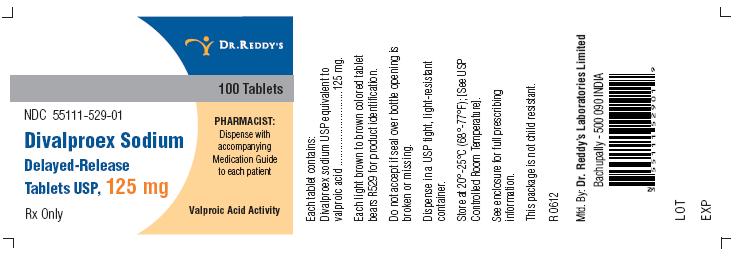
16 HOW SUPPLIED/STORAGE AND HANDLING Divalproex sodium delayed-release tablets USP, 125 mg are light brown to brown colored, modified capsule shaped, biconvex coated tablets printed “R529” on one side with black ink and plain on other side. They are supplied in bottles of 30’s, 100’s, 500’s and unit dose package of 100 (10 x 10). Bottles of 30 NDC 55111-529-30 Bottles of 100 NDC 55111-529-01 Bottles of 500 NDC 55111-529-05 Unit dose package of 100 (10 x 10) NDC 55111-529-78 Divalproex sodium delayed-release tablets USP, 250 mg are cream colored, modified capsule shaped, biconvex coated tablets printed “R530” on one side with black ink and plain on other side.
They are supplied in bottles of 30’s, 100’s, 500’s and unit dose package of 100 (10 x 10). Bottles of 30 NDC 55111-530-30 Bottles of 100 NDC 55111-530-01 Bottles of 500 NDC 55111-530-05 Unit dose package of 100 (10 x 10) NDC 55111-530-78 Divalproex sodium delayed-release tablets USP, 500 mg are light pink colored, modified capsule shaped, biconvex coated tablets printed “R531” on one side with black ink and plain on other side. They are supplied in bottles of 30’s, 100’s, 500’s and unit dose package of 100 (10 x 10).
Bottles of 30 NDC 55111-531-30 Bottles of 100 NDC 55111-531-01 Bottles of 500 NDC 55111-531-05 Unit dose package of 100 (10 x 10) NDC 55111-531-78 Recommended storage: Store divalproex sodium delayed-release tablets at 20°-25°C (68°-77°F); [see USP Controlled Room Temperature].
📋 Description ▾
11 DESCRIPTION Divalproex sodium USP is a stable co-ordination compound comprised of sodium valproate and valproic acid in a 1:1 molar relationship and formed during the partial neutralization of valproic acid with 0.5 equivalent of sodium hydroxide. Chemically it is designated as sodium hydrogen bis(2-propylpentanoate). Divalproex sodium USP has the following structure: Divalproex sodium USP occurs as a white to off white powder with a characteristic odor.
Divalproex sodium delayed-release tablets USP are for oral administration. Divalproex sodium delayed-release tablets USP are supplied in three dosage strengths containing divalproex sodium USP equivalent to 125 mg, 250 mg, or 500 mg of valproic acid. Inactive Ingredients Divalproex sodium delayed-release tablets USP, contain the following inactive ingredients: Acetone, diacetylated monoglycerides, hypromellose, hypromellose phthalate, isopropyl alcohol, methylene chloride, microcrystalline cellulose, povidone, pregelatinized starch, silicon dioxide, talc, titanium dioxide ,vanillin and opacode black as printing ink.
Opacode black contains shellac glaze, iron oxide black,n-butyl alcohol, industrial methylated spirit lecithin, antifoam DC 1510. In addition, individual tablets contain: 125 mg tablets: Ferric oxide (Iron oxide brown). 250 mg tablets: Ferric oxide (Iron oxide yellow).
500 mg tablets: Ferric oxide (Iron oxide red).
💬 Information for Patients ▾
17 PATIENT COUNSELING INFORMATION See FDA-Approved Medication Guide.
17.1Hepatotoxicity Patients and guardians should be warned that nausea, vomiting, abdominal pain, anorexia, diarrhea, asthenia, and/or jaundice can be symptoms of hepatotoxicity and, therefore, require further medical evaluation promptly [see Warnings and Precautions (5.1) ].
17.2Pancreatitis Patients and guardians should be warned that abdominal pain, nausea, vomiting, and/or anorexia can be symptoms of pancreatitis and, therefore, require further medical evaluation promptly [see Warnings and Precautions (5.4) ].
17.3Birth Defects and Neurobehavioral Development Adverse Effects Prescribers should inform pregnant women and women of childbearing potential that use of divalproex sodium during pregnancy increases the risk of birth defects and adverse effects on neurobehavioral development. Prescribers should advise women to use effective contraception while using valproate. When appropriate, prescribers should counsel these patients about alternative therapeutic options.
This is particularly important when valproate use is considered for a condition not usually associated with permanent injury or death (e.g. migraine). Patients should read the Medication Guide, which appears as the last section of the labeling [see Warnings and Precautions (5.3) and Use in Specific Populations (8.1) ]. Patients should be encouraged to enroll in the NAAED Pregnancy Registry if they become pregnant.
This registry is collecting information about the safety of antiepileptic drugs during pregnancy. To enroll, patients can call the toll free number 1-888-233-2334 [see Use in Specific Populations (8.1) ].
17.4Suicidal Thinking and Behavior Patients, their caregivers, and families should be counseled that AEDs, including divalproex sodium, may increase the risk of suicidal thoughts and behavior and should be advised of the need to be alert for the emergence or worsening of symptoms of depression, any unusual changes in mood or behavior, or the emergence of suicidal thoughts, behavior, or thoughts about self-harm. Behaviors of concern should be reported immediately to the healthcare providers [see Warnings and Precautions (5.6) ].
17.5Hyperammonemia Patients should be informed of the signs and symptoms associated with hyperammonemic encephalopathy and be told to inform the prescriber if any of these symptoms occur [see Warnings and Precautions ( 5.8 , 5.9 ) ].
17.6CNS depression Since valproate products may produce CNS depression, especially when combined with another CNS depressant (e.g., alcohol), patients should be advised not to engage in hazardous activities, such as driving an automobile or operating dangerous machinery, until it is known that they do not become drowsy from the drug.
17.7Multi-organ Hypersensitivity Reaction Patients should be instructed that a fever associated with other organ system involvement (rash, lymphadenopathy, etc.) may be drug-related and should be reported to the physician immediately [see Warnings and Precautions (5.11) ].
💬 Medication Guide ▾
MEDICATION GUIDE Divalproex Sodium Delayed-Release Tablets USP Read this Medication Guide before you start taking a divalproex sodium delayed-release tablet and each time you get a refill. There may be new information. This information does not take the place of talking to your healthcare provider about your medical condition or treatment.
What is the most important information I should know about divalproex sodium delayed-release tablets? Do not stop divalproex sodium delayed-release tablets without first talking to your healthcare provider. Stopping divalproex sodium delayed-release tablets suddenly can cause serious problems.
Divalproex sodium delayed-release tablets can cause serious side effects, including: 1. Serious liver damage that can cause death, especially in children younger than 2 years old. The risk of getting this serious liver damage is more likely to happen within the first 6 months of treatment.
Call your healthcare provider right away if you get any of the following symptoms: nausea or vomiting that does not go away loss of appetite pain on the right side of your stomach (abdomen) dark urine swelling of your face yellowing of your skin or the whites of your eyes In some cases, liver damage may continue despite stopping the drug. 2. Divalproex sodium delayed-release tablets may harm your unborn baby.
If you take divalproex sodium delayed-release tablets during pregnancy for any medical condition, your baby is at risk for serious birth defects. The most common birth defects with divalproex sodium delayed-release tablets affect the brain and spinal cord and are called spina bifida or neural tube defects. These defects occur in 1 to 2 out of every 100 babies born to mothers who use this medicine during pregnancy.
These defects can begin in the first month, even before you know you are pregnant. Other birth defects can happen. Birth defects may occur even in children born to women who are not taking any medicines and do not have other risk factors.
Taking folic acid supplements before getting pregnant and during early pregnancy can lower the chance of having a baby with a neural tube defect. If you take divalproex sodium delayed-release tablets during pregnancy for any medical condition, your child is at risk for having a lower IQ. There may be other medicines to treat your condition that have a lower chance of birth defects.
All women of childbearing age should talk to their healthcare provider about using other possible treatments instead of divalproex sodium delayed-release tablets. If the decision is made to use divalproex sodium delayed-release tablets, you should use effective birth control (contraception) unless you are planning to become pregnant. Tell your healthcare provider right away if you become pregnant while taking divalproex sodium delayed-release tablets.
You and your healthcare provider should decide if you will continue to take divalproex sodium delayed-release tablets while you are pregnant. Pregnancy Registry: If you become pregnant while taking divalproex sodium delayed-release tablets, talk to your healthcare provider about registering with the North American Antiepileptic Drug Pregnancy Registry. You can enroll in this registry by calling 1-888-233-2334.
The purpose of this registry is to collect information about the safety of antiepileptic drugs during pregnancy. 3. Inflammation of your pancreas that can cause death.
Call your healthcare provider right away if you have any of these symptoms: severe stomach pain that you may also feel in your back nausea or vomiting that does not go away 4. Like other antiepileptic drugs, divalproex sodium delayed-release tablets may cause suicidal thoughts or actions in a very small number of people, about 1 in 500. Call a healthcare provider right away if you have any of these symptoms, especially if they are new, worse, or worry you: thoughts about suicide or dying attempts to commit suicide new or worse depression new or worse anxiety feeling agitat… [Excerpted — this section continues on DailyMed.]
🍼 Nursing Mothers ▾
8.3Nursing Mothers Valproate is excreted in human milk. Caution should be exercised when valproate is administered to a nursing woman.
🧬 Pharmacokinetics ▾
12.3Pharmacokinetics Absorption/Bioavailability Equivalent oral doses of divalproex sodium products and valproic acid capsules deliver equivalent quantities of valproate ion systemically. Although the rate of valproate ion absorption may vary with the formulation administered (liquid, solid, or sprinkle), conditions of use (e.g., fasting or postprandial) and the method of administration (e.g., whether the contents of the capsule are sprinkled on food or the capsule is taken intact), these differences should be of minor clinical importance under the steady state conditions achieved in chronic use in the treatment of epilepsy.
However, it is possible that differences among the various valproate products in T max and C max could be important upon initiation of treatment. For example, in single dose studies, the effect of feeding had a greater influence on the rate of absorption of the tablet (increase in T max from 4 to 8 hours) than on the absorption of the sprinkle capsules (increase in T max from 3.3 to 4.8 hours). While the absorption rate from the G.I. tract and fluctuation in valproate plasma concentrations vary with dosing regimen and formulation, the efficacy of valproate as an anticonvulsant in chronic use is unlikely to be affected.
Experience employing dosing regimens from once-a-day to four-times-a-day, as well as studies in primate epilepsy models involving constant rate infusion, indicate that total daily systemic bioavailability (extent of absorption) is the primary determinant of seizure control and that differences in the ratios of plasma peak to trough concentrations between valproate formulations are inconsequential from a practical clinical standpoint. Whether or not rate of absorption influences the efficacy of valproate as an antimanic or antimigraine agent is unknown.
Co-administration of oral valproate products with food and substitution among the various divalproex sodium and valproic acid formulations should cause no clinical problems in the management of patients with epilepsy [see Dosage and Administration (2.2) ]. Nonetheless, any changes in dosage administration, or the addition or discontinuance of concomitant drugs should ordinarily be accompanied by close monitoring of clinical status and valproate plasma concentrations. Distribution Protein Binding The plasma protein binding of valproate is concentration dependent and the free fraction increases from approximately 10% at 40 mcg/mL to 18.5% at 130 mcg/mL.
Protein binding of valproate is reduced in the elderly, in patients with chronic hepatic diseases, in patients with renal impairment, and in the presence of other drugs (e.g., aspirin). Conversely, valproate may displace certain protein-bound drugs (e.g., phenytoin, carbamazepine, warfarin, and tolbutamide) [see Drug Interactions (7.2) for more detailed information on the pharmacokinetic interactions of valproate with other drugs]. CNS Distribution Valproate concentrations in cerebrospinal fluid (CSF) approximate unbound concentrations in plasma (about 10% of total concentration).
Metabolism Valproate is metabolized almost entirely by the liver. In adult patients on monotherapy, 30 to 50% of an administered dose appears in urine as a glucuronide conjugate. Mitochondrial β-oxidation is the other major metabolic pathway, typically accounting for over 40% of the dose.
Usually, less than 15 to 20% of the dose is eliminated by other oxidative mechanisms. Less than 3% of an administered dose is excreted unchanged in urine. The relationship between dose and total valproate concentration is nonlinear; concentration does not increase proportionally with the dose, but rather, increases to a lesser extent due to saturable plasma protein binding.
The kinetics of unbound drug are linear. Elimination Mean plasma clearance and volume of distribution for total valproate are
0.56L/hr/1.73 m 2 and 11 L/1.73 m 2 , respectively. Mean plasma clearance and volume of distribution for free valproate are
4.6L/hr/1.73… [Excerpted — this section continues on DailyMed.]
🧬 Pharmacodynamics ▾
12.2Pharmacodynamics The relationship between plasma concentration and clinical response is not well documented. One contributing factor is the nonlinear, concentration dependent protein binding of valproate which affects the clearance of the drug. Thus, monitoring of total serum valproate cannot provide a reliable index of the bioactive valproate species.
For example, because the plasma protein binding of valproate is concentration dependent, the free fraction increases from approximately 10% at 40 mcg/mL to 18.5% at 130 mcg/mL. Higher than expected free fractions occur in the elderly, in hyperlipidemic patients, and in patients with hepatic and renal diseases. Epilepsy The therapeutic range in epilepsy is commonly considered to be 50 to 100 mcg/mL of total valproate, although some patients may be controlled with lower or higher plasma concentrations.
Mania In placebo-controlled clinical trials of acute mania, patients were dosed to clinical response with trough plasma concentrations between 50 and 125 mcg/mL [see Dosage and Administration (2.1) ].
🔬 Clinical Studies ▾
14 CLINICAL STUDIES
14.1Mania The effectiveness of divalproex sodium for the treatment of acute mania was demonstrated in two 3-week, placebo controlled, parallel group studies. (1) Study 1: The first study enrolled adult patients who met DSM-III-R criteria for bipolar disorder and who were hospitalized for acute mania. In addition, they had a history of failing to respond to or not tolerating previous lithium carbonate treatment.
Divalproex sodium was initiated at a dose of 250 mg tid and adjusted to achieve serum valproate concentrations in a range of 50 to 100 mcg/mL by day 7. Mean divalproex sodium doses for completers in this study were 1,118, 1,525, and 2,402 mg/day at Days 7, 14, and 21, respectively. Patients were assessed on the Young Mania Rating Scale (YMRS; score ranges from 0 to 60), an augmented Brief Psychiatric Rating Scale (BPRS-A), and the Global Assessment Scale (GAS).
Baseline scores and change from baseline in the Week 3 endpoint (last-observation-carry-forward) analysis were as follows: Table 6. Study 1 YMRS Total Score Group Baseline 1 BL to Wk 3 2 Difference 3 Placebo 28.8 +
0.2Divalproex sodium 28.5 - 9.5
9.7BPRS-A Total Score Group Baseline 1 BL to Wk 3 2 Difference 3 Placebo 76.2 +
1.8Divalproex sodium 76.4 -17
18.8GAS Score Group Baseline 1 BL to Wk 3 2 Difference 3 Placebo 31.8 0 Divalproex sodium 30.3 + 18.1 18.1 1. Mean score at baseline 2. Change from baseline to Week 3 (LOCF) 3.
Difference in change from baseline to Week 3 endpoint (LOCF) between divalproex sodium and placebo Divalproex sodium was statistically significantly superior to placebo on all three measures of outcome. (2) Study 2: The second study enrolled adult patients who met Research Diagnostic Criteria for manic disorder and who were hospitalized for acute mania. Divalproex sodium was initiated at a dose of 250 mg tid and adjusted within a dose range of 750 to 2,500 mg/day to achieve serum valproate concentrations in a range of 40 to 150 mcg/mL.
Mean divalproex sodium doses for completers in this study were 1,116, 1,683, and 2,006 mg/day at Days 7, 14, and 21, respectively. Study 2 also included a lithium group for which lithium doses for completers were 1,312, 1,869, and 1,984 mg/day at Days 7, 14, and 21, respectively. Patients were assessed on the Manic Rating Scale (MRS; score ranges from 11 to 63), and the primary outcome measures were the total MRS score, and scores for two subscales of the MRS, i.e., the Manic Syndrome Scale (MSS) and the Behavior and Ideation Scale (BIS).
Baseline scores and change from baseline in the Week 3 endpoint (last-observation-carry-forward) analysis were as follows: Table 7. Study 2 MRS Total Score Group Baseline 1 BL to Day 21 2 Difference 3 Placebo 38.9 -
4.4Lithium 37.9 -10.5
6.1Divalproex sodium 38.1 - 9.5
5.1MSS Total Score Group Baseline 1 BL to Day 21 2 Difference 3 Placebo 18.9 -
2.5Lithium 18.5 - 6.2
3.7Divalproex sodium 18.9 - 6
3.5BIS Total Score Group Baseline 1 BL to Day 21 2 Difference 3 Placebo 16.4 -
1.4Lithium 16 - 3.8
2.4Divalproex sodium 15.7 - 3.2 1.8 1. Mean score at baseline 2. Change from baseline to Day 21 (LOCF) 3.
Difference in change from baseline to Day 21 endpoint (LOCF) between divalproex sodium and placebo and lithium and placebo Divalproex sodium was statistically significantly superior to placebo on all three measures of outcome. An exploratory analysis for age and gender effects on outcome did not suggest any differential responsiveness on the basis of age or gender. A comparison of the percentage of patients showing ≥ 30% reduction in the symptom score from baseline in each treatment group, separated by study, is shown in Figure 1. * p <
0.05 PBO = placebo, DVPX = Divalproex sodium
14.2Epilepsy The efficacy of valproate in reducing the incidence of complex partial seizures (CPS) that occur in isolation or in association with other seizure types was established in two controlled trials. In one multi-clinic, placebo-controlled study employing an add… [Excerpted — this section continues on DailyMed.]
🧪 Nonclinical Toxicology ▾
13 NONCLINICAL TOXICOLOGY
13.1Carcinogenesis, Mutagenesis, Impairment Of Fertility Carcinogenesis Valproate was administered orally to rats and mice at doses of 80 and 170 mg/kg/day (less than the maximum recommended human dose on a mg/m 2 basis) for two years. The primary findings were an increase in the incidence of subcutaneous fibrosarcomas in high-dose male rats receiving valproate and a dose-related trend for benign pulmonary adenomas in male mice receiving valproate. The significance of these findings for humans is unknown.
Mutagenesis Valproate was not mutagenic in an in vitro bacterial assay (Ames test), did not produce dominant lethal effects in mice, and did not increase chromosome aberration frequency in an in vivo cytogenetic study in rats. Increased frequencies of sister chromatid exchange (SCE) have been reported in a study of epileptic children taking valproate, but this association was not observed in another study conducted in adults. There is some evidence that increased SCE frequencies may be associated with epilepsy.
The biological significance of an increase in SCE frequency is not known. Fertility Chronic toxicity studies of valproate in juvenile and adult rats and dogs demonstrated reduced spermatogenesis and testicular atrophy at oral doses of 400 mg/kg/day or greater in rats (approximately equivalent to or greater than the maximum recommended human dose (MRHD) on a mg/m 2 basis) and 150 mg/kg/day or greater in dogs (approximately 1.4 times the MRHD or greater on a mg/m 2 basis). Fertility studies in rats have shown no effect on fertility at oral doses of valproate up to 350 mg/kg/day (approximately equal to the MRHD on a mg/m 2 basis) for 60 days.
The effect of valproate on testicular development and on sperm production and fertility in humans is unknown.
📄 Carcinogenesis, Mutagenesis, Impairment of Fertility ▾
13.1Carcinogenesis, Mutagenesis, Impairment Of Fertility Carcinogenesis Valproate was administered orally to rats and mice at doses of 80 and 170 mg/kg/day (less than the maximum recommended human dose on a mg/m 2 basis) for two years. The primary findings were an increase in the incidence of subcutaneous fibrosarcomas in high-dose male rats receiving valproate and a dose-related trend for benign pulmonary adenomas in male mice receiving valproate. The significance of these findings for humans is unknown.
Mutagenesis Valproate was not mutagenic in an in vitro bacterial assay (Ames test), did not produce dominant lethal effects in mice, and did not increase chromosome aberration frequency in an in vivo cytogenetic study in rats. Increased frequencies of sister chromatid exchange (SCE) have been reported in a study of epileptic children taking valproate, but this association was not observed in another study conducted in adults. There is some evidence that increased SCE frequencies may be associated with epilepsy.
The biological significance of an increase in SCE frequency is not known. Fertility Chronic toxicity studies of valproate in juvenile and adult rats and dogs demonstrated reduced spermatogenesis and testicular atrophy at oral doses of 400 mg/kg/day or greater in rats (approximately equivalent to or greater than the maximum recommended human dose (MRHD) on a mg/m 2 basis) and 150 mg/kg/day or greater in dogs (approximately 1.4 times the MRHD or greater on a mg/m 2 basis). Fertility studies in rats have shown no effect on fertility at oral doses of valproate up to 350 mg/kg/day (approximately equal to the MRHD on a mg/m 2 basis) for 60 days.
The effect of valproate on testicular development and on sperm production and fertility in humans is unknown.
📄 Recent Major Changes ▾
Warnings and Precautions, Use in Women of Childbearing Potential (5.2) 10/2011 Warnings and Precautions, Birth Defects (5.3) 10/2011
📄 Package Label / Principal Display Panel ▾
PACKAGE LABEL.PRINCIPAL DISPLAY PANEL SECTION Divalproex Sodium Delayed-Release Tablets USP, 125 mg - Container Label
Divalproex Sodium Delayed-Release Tablets USP, 125 mg - Carton Label
Divalproex Sodium Delayed-Release Tablets USP, 250 mg - Container Label
Divalproex Sodium Delayed-Release Tablets USP, 250 mg - Carton Label
Divalproex Sodium Delayed-Release Tablets USP, 500 mg - Container Label
Divalproex Sodium Delayed-Release Tablets USP, 500 mg - Carton Label
Medicare Part D spend CMS · PART D · 2026 (Q1)
About this NDC listing & data coverage
What data is (and isn’t) available for this NDC — tap to expand
| NDC identity (package / product / labeler codes) | ✓ Available |
| Labeler | ✓ Available |
| Product & package description | ✓ Available |
| Marketing category & status | ✓ Available |
| Active ingredient / dosage form / route | ✓ Available |
| FDA label (SPL via DailyMed) | ✓ Available |
| Package photos | ✓ Available |
| Inactive ingredients (structured) | ✓ Available |
| NADAC pharmacy acquisition price (CMS) | — Not published for this NDC CMS publishes NADAC only for NDCs reported in its retail-pharmacy survey. |
| Orange Book / therapeutic-equivalence data | ✓ Available |
| HCPCS J-code billing crosswalk | — Not published for this NDC Most self-administered / retail products have no J-code — that is normal. |
| Medicaid utilization (CMS SDUD) | — Not published for this NDC CMS reports utilization only for NDCs with Medicaid claims above its privacy threshold. |