
Phenytoin Sodium 50 mg/mL Injection — NDC 0641-0493-25 (Billing 00641-0493-25)
This is a package of Phenytoin Sodium 50 mg/mL Injection from Hikma Pharmaceuticals USA Inc., marketed since Jul 1975 and currently FDA-listed. It is this product's only package size.
NDC database record
One package, one record: these facts belong to NDC 0641-0493-25 alone.
- Record
- FDA NDC Directory package listing · Human prescription drug
- Code segments
- 0641 labeler · 0493 product · 25 package
- Package marketed since
- Jul 16, 1975
- Sample package
- No — commercial package
- Listing certified through
- Dec 31, 2026
- Barcode (UPC)
- 0306410493259
- FDA record last changed
- Oct 1, 2026
Identity & classification
Regulatory identifiers FDA, NLM and CMS codes for this package
Drug-database identifiers Medi-Span GPI and First Databank GCN / HICL / AHFS classification
- GSN (GCN sequence number): 004528
- GCN: 17200
- GPI-14 (Medi-Span): 72200030052005
- HICL (First Databank): 001878
- AHFS class code: 24:04.04.08
- RxCUI (RxNorm): 1670351
Where does this data come from?
- FDA openFDA NDC Directory · synced Oct 1, 2026
- FDA label on DailyMed · label index refreshed Oct 6, 2026
- RxNorm (NLM RxNav) · catalog refreshed Oct 1, 2026
- Medi-Span GPI (licensed)
- First Databank (licensed) · refreshed Oct 1, 2026
RxNorm drug class
This medicine belongs to the Anti-epileptic Agent class.
Where does this data come from?
- RxClass (NLM) · catalog refreshed Oct 1, 2026
Clinical
Phenytoin injection is used to treat primary generalized tonic-clonic seizures (formerly known as a grand mal seizure; seizure that involves the entire body) and to treat and prevent seizures that may begin during or after surgery to the brain or nervous system. Phenytoin injection may also be used to control certain types of seizures in people who cannot take oral phenytoin. Phenytoin is in a class of medications called anticonvulsants. It works by decreasing abnormal electrical activity in the brain.
Read the full MedlinePlus article ↗- Phenytoin injection is used when you need fast, reliable seizure control and taking a pill isn't possible — for example, during a seizure emergency or around the time of brain surg...
- Why am I getting phenytoin as an injection instead of a pill?
- The biggest concern during an IV infusion is the effect on your heart. If the drug goes in too fast, it can cause your blood pressure to drop dangerously or your heartbeat to becom...
- What are the most important side effects to watch for during the infusion?
Patient education
Supplement & herbal interactions
Phenytoin may be associated with lower levels of 13 nutrients — worth a chat with your pharmacist, not a cause for alarm.
Where does this data come from?
- MedlinePlus (NLM) · refreshed Oct 1, 2026
- FDA label on DailyMed · label index refreshed Oct 6, 2026
Ask a licensed pharmacist directly — free, answered by our team.
Pricing
A drug doesn't have one price. Each row is a different public payment system, and none is what you'd pay at the counter — that depends on your insurance. The ⓘ on each row explains what it measures.
| Price system | Per each | Per package |
|---|---|---|
| Retail pharmacies payNADAC · weekly | Not in the retail survey — common for institutional, discontinued, or low-volume packs. | |
| Medicaid paysCMS SDUD · 12 mo | No recent Medicaid claims on file for this NDC — rare and low-volume NDCs are suppressed in the public data. | |
| Medicare drug plans payPart D · quarterly | No Part D plan price is available for this NDC in our data. | |
| Medicare Part B allowsASP · J1165 | $0.545 / J1165 unit | — |
Where does this data come from?
- CMS NADAC weekly file
- CMS ASP pricing files · refreshed Sep 20, 2026
- CMS Medicaid State Drug Utilization Data · refreshed Oct 8, 2026
- CMS Part D plan pricing files · refreshed Sep 24, 2026
- VA National Acquisition Center price file
Billing & reimbursement
Where does this data come from?
- CMS ASP NDC-HCPCS crosswalk · refreshed Sep 22, 2026
- DMEPDAC NDC-HCPCS crosswalk
- openFDA NSDE billing units · refreshed Oct 7, 2026
Packaging — all sizes for this product
| Package NDC | Description | Marketing start | Marketing end | Status |
|---|---|---|---|---|
| 00641-0493-25 You're viewing this Main listing | 25 VIAL in 1 CARTON / 2 mL in 1 VIAL | 1975-07-16 | — | Active |
Therapeutic equivalents
| Product | Labeler | Pack | NADAC/unit | TE | Status | Price vs. this |
|---|---|---|---|---|---|---|
| Phenytoin Sodium 50 mg/mL 00404-9932-02 | Henry | 1 vial | — | AP | FDA listed | — |
| Phenytoin Sodium 50 mg/mLthis 00641-0493-25 | Hikma | 25 vials | — | AP | FDA listed | — |
| Phenytoin Sodium 50 mg/mL 00641-6138-25 | Hikma | 25 vials | — | AP | FDA listed | — |
| Phenytoin Sodium 50 mg/mL 42192-0614-03 | Acella | 25 vials | — | AP | FDA listed | — |
| Phenytoin Sodium 50 mg/mL 51662-1251-01 | HF | 2 ml | — | AP | FDA listed | — |
| Phenytoin Sodium 50 mg/mL 71872-7079-01 | Medical | 1 vial | — | AP | FDA listed | — |
| Phenytoin Sodium 50 mg/mL 84549-0093-25 | ProPharma | 2 ml | — | AP | FDA listed | — |
| Phenytoin Sodium 50 mg/mL 51662-1250-01 | HF | 5 ml | — | AP | FDA listed | — |
| Phenytoin Sodium 50 mg/mL 00641-2555-45 | Hikma | 25 vials | — | AP | FDA listed | — |
| Phenytoin Sodium 50 mg/mL 00404-9808-05 | Henry | 1 vial | — | AP | FDA listed | — |
| Phenytoin Sodium 50 mg/mL 00641-6139-25 | Hikma | 25 vials | — | AP | FDA listed | — |
Where does this data come from?
- FDA openFDA NDC Directory · synced Oct 1, 2026
- FDA Orange Book · refreshed Oct 3, 2026
- CMS NADAC weekly file
Availability & generic status
This product is an FDA-approved generic. Other versions of the same drug are listed under Therapeutic equivalents, least expensive first.
Where does this data come from?
- FDA Orange Book · refreshed Oct 3, 2026
Inactive Ingredients / Excipients
Inactive ingredients, also called excipients, are components of the drug product other than the active ingredient. They may include fillers, dyes, coatings, preservatives, flavors, or other formulation ingredients.
🧪 Avoiding an ingredient? See Phenytoin Injection inactive ingredients by manufacturer: every current product's list side by side, so you can ask your pharmacy for the version that does not list it.
💡 Tap an ingredient (hover on desktop) to see what it is and why it’s used.
-
0.1 mL / 1 mL
UNII 3K9958V90M
A liquid solvent derived from fermentation or chemical synthesis. In medicines, alcohol dissolves active ingredients, helps preserve the product, and improves how the body absorbs certain drugs.
-
0.4 mL / 1 mL
UNII 6DC9Q167V3
Propylene glycol is a clear liquid derived from petroleum or vegetable sources. It acts as a solvent, humectant, and preservative in medicines, helping dissolve active ingredients and maintain product stability.
-
UNII 55X04QC32I
A strong alkaline chemical used to adjust and maintain the pH balance of liquid medicines. It helps keep the medicine stable and ensures it stays effective during storage.
-
UNII 059QF0KO0R
Water is a liquid solvent that dissolves and mixes ingredients together in liquid medicines, syrups, and injections. It helps distribute the active drug evenly throughout the product.
4 inactive ingredients listed in the exact product block matched to this NDC.
Where does this data come from?
ingredient classCode="IACT" elements from the exact product block matched by this NDC. Label-section narrative from DailyMed / the openFDA label index is shown separately when available.- FDA label on DailyMed · label index refreshed Oct 6, 2026
- FDA openFDA NDC Directory · synced Oct 1, 2026
Inactive ingredient FAQ
Are inactive ingredients the same for every manufacturer?
Why might an inactive ingredient be missing?
Can inactive ingredients matter?
Manufacturer & labeler
More NDCs from Hikma Pharmaceuticals USA Inc. labeler code 00641
- Diphenhydramine Hydrochloride 50 mg/mL Injection NDC 0641-0376-25
- Heparin Sodium 1000 [USP'U]/mL Injection NDC 0641-0391-12
- Heparin Sodium 5000 [USP'U]/mL Injection NDC 0641-0400-12
- Heparin Sodium 10000 [USP'U]/mL Injection NDC 0641-0410-12
- Phenobarbital Sodium 65 mg/mL Injection NDC 0641-0476-25
- Phenobarbital Sodium 130 mg/mL Injection NDC 0641-0477-25
- Sodium Chloride 9 mg/mL Injection NDC 0641-0497-25
- Promethazine Hydrochloride 25 mg/mL Injection NDC 0641-0928-25
- Promethazine Hydrochloride 50 mg/mL Injection NDC 0641-0929-25
- Promethazine Hydrochloride 25 mg/mL Injection NDC 0641-0948-35
- Promethazine Hydrochloride 50 mg/mL Injection NDC 0641-0949-35
- Promethazine Hydrochloride 25 mg/mL Injection NDC 0641-0955-25
Where does this data come from?
- FDA openFDA NDC Directory · synced Oct 1, 2026
- Drugs@FDA
Full prescribing information FDA SPL
🚨 Boxed Warning ▾
WARNING: CARDIOVASCULAR RISK ASSOCIATED WITH RAPID INFUSION The rate of intravenous Phenytoin Sodium Injection administration should not exceed 50 mg per minute in adults and 1 to 3 mg/kg/min (or 50 mg per minute, whichever is slower) in pediatric patients because of the risk of severe hypotension and cardiac arrhythmias. Careful cardiac monitoring is needed during and after administering intravenous Phenytoin Sodium Injection. Although the risk of cardiovascular toxicity increases with infusion rates above the recommended infusion rate, these events have also been reported at or below the recommended infusion rate.
Reduction in rate of administration or discontinuation of dosing may be needed [see Dosage and Administration (2.1) and Warnings and Precautions (5.1) ] . W ARN ING: CARDIOVASCULAR RISK ASSOCIATED WITH RAPID INFUSION S ee full prescribing information for complete boxed warning . The rate of intravenous Phenytoin Sodium Injection administration should not exceed 50 mg per minute in adults and 1 to 3 mg/kg/min (or 50 mg per minute, whichever is slower) in pediatric patients because of the risk of severe hypotension and cardiac arrhythmias.
Careful cardiac monitoring is needed during and after administering intravenous Phenytoin Sodium Injection. Reduction in rate of administration or discontinuation of dosing may be needed ( 2.1 , 5.1 ).
🎯 Indications and Usage ▾
1 INDICATIONS AND USAGE Parenteral Phenytoin Sodium Injection is indicated for the treatment of generalized tonic-clonic status epilepticus, and prevention and treatment of seizures occurring during neurosurgery. Intravenous phenytoin can also be substituted, as short-term use, for oral phenytoin. Parenteral phenytoin should be used only when oral phenytoin administration is not possible [see Dosage and Administration (2.1, 2.3 ) and Warnings and Precautions (5.1) ] .
Parenteral Phenytoin Sodium Injection is indicated for the treatment of generalized tonic clonic status epilepticus and prevention and treatment of seizures occurring during neurosurgery. Intravenous phenytoin can also be substituted, as short-term use, for oral phenytoin. Parenteral phenytoin should be used only when oral phenytoin administration is not possible.
( 1 )
⏱️ Dosage and Administration ▾
2 DOSAGE AND ADMINISTRATION For Status Epilepticus and Non-emergent Loading Dose: Adult loading dose is 10 to 15 mg/kg at a rate not exceeding 50 mg/min. ( 2.2 ) Pediatric loading dose is 15 to 20 mg/kg at a rate not exceeding 1 to 3 mg/kg/min or 50 mg/min, whichever is slower. ( 2.8 ) Continuous monitoring of the electrocardiogram, blood pressure, and respiratory function is essential.
( 2.2 ) Maintenance Dosing: Initial loading dose should be followed by maintenance doses of oral or intravenous Phenytoin Sodium Injection every 6 to 8 hours. ( 2.2 , 2.3 ) Intramuscular Administration: Because of erratic absorption and local toxicity, Phenytoin Sodium Injection should ordinarily not be given intramuscularly. ( 2.2 , 2.3 )
2.1General Dosing Information Because of the increased risk of adverse cardiovascular reactions associated with rapid administration, intravenous administration should not exceed 50 mg per minute in adults. In pediatric patients, the drug should be administered at a rate not exceeding 1 to 3 mg/kg/min or 50 mg per minute, whichever is slower. As non-emergency therapy, Phenytoin Sodium Injection should be administered more slowly as either a loading dose or by intermittent infusion.
Because of the risks of cardiac and local toxicity associated with intravenous phenytoin, oral phenytoin should be used whenever possible. Because adverse cardiovascular reactions have occurred during and after infusions, careful cardiac monitoring is needed during and after the administration of intravenous Phenytoin Sodium Injection. Reduction in rate of administration or discontinuation of dosing may be needed.
Because of the risk of local toxicity, intravenous Phenytoin Sodium Injection should be administered directly into a large peripheral or central vein through a large-gauge catheter. Prior to the administration, the patency of the intravenous (IV) catheter should be tested with a flush of sterile saline. Each injection of parenteral Phenytoin Sodium Injection should then be followed by a flush of sterile saline through the same catheter to avoid local venous irritation due to the alkalinity of the solution.
Phenytoin Sodium Injection can be given diluted with normal saline. The addition of parenteral Phenytoin Sodium Injection to dextrose and dextrose-containing solutions should be avoided due to lack of solubility and resultant precipitation. Treatment with Phenytoin Sodium Injection can be initiated either with a loading dose or an infusion: Loading Dose: A loading dose of parenteral Phenytoin Sodium Injection should be injected slowly, not exceeding 50 mg per minute in adults and 1 to 3 mg/kg/min (or 50 mg per minute, whichever is slower) in pediatric patients.
Infusion: For infusion administration, parenteral Phenytoin Sodium Injection should be diluted in normal saline with the final concentration of phenytoin sodium in the solution no less than 5 mg/mL. Administration should commence immediately after the mixture has been prepared and must be completed within 1 to 4 hours (the infusion mixture should not be refrigerated). An in-line filter (0.22 to 0.55 microns) should be used.
Parenteral drug products should be inspected visually for particulate matter and discoloration prior to administration, whenever solution or container permit. The diluted infusion mixture (Phenytoin Sodium Injection plus normal saline) should not be refrigerated. If the undiluted parenteral Phenytoin Sodium Injection is refrigerated or frozen, a precipitate might form: this will dissolve again after the solution is allowed to stand at room temperature.
The product is still suitable for use. A faint yellow coloration may develop, however this has no effect on the potency of the solution. For single-dose only.
After opening, any unused product should be discarded. M onitoring Levels: Trough levels provide information about clinically effective serum level range and are obtained just prior to the patient’s next scheduled dose. Peak levels indica… [Excerpted — this section continues on DailyMed.]
💊 Dosage Forms and Strengths ▾
3 DOSAGE FORMS AND STRENGTHS Phenytoin Sodium Injection, USP: 50 mg phenytoin sodium per milliliter is available as: 2 mL (100 mg) Single Dose vials 5 mL (250 mg) Single Dose vials Injection: 50 mg phenytoin sodium per milliliter in: 2 mL and 5 mL single dose vials ( 3 )
⛔ Contraindications ▾
4 CONTRAINDICATIONS Phenytoin Sodium Injection is contraindicated in patients with: A history of hypersensitivity to phenytoin, its inactive ingredients, or other hydantoins [see Warnings and Precautions (5.5) ] . Sinus bradycardia, sino-atrial block, second and third degree A-V block, and Adams-Stokes syndrome because of the effect of parenteral phenytoin on ventricular automaticity. A history of prior acute hepatotoxicity attributable to phenytoin [see Warnings and Precautions (5.6) ].
Coadministration with delavirdine because of the potential for loss of virologic response and possible resistance to delavirdine or to the class of non-nucleoside reverse transcriptase inhibitors Hypersensitivity to phenytoin, its ingredients, or other hydantoins ( 4 ) Sinus bradycardia, sino-atrial block, second and third degree A-V block, and Adams-Stokes syndrome ( 4 ) A history of prior acute hepatotoxicity attributable to phenytoin ( 4 , 5.6 ) Coadministration with delavirdine ( 4 )
⚠️ Warnings and Cautions ▾
5 WARNINGS AND PRECAUTIONS Withdrawal Precipitated Seizure : May precipitate status epilepticus. Dose reductions or discontinuation should be done gradually. ( 5.2 ) Serious Dermatologic Reactions : Discontinue phenytoin at the first sign of a rash, unless the rash is clearly not drug-related.
If signs or symptoms suggest SJS/TEN, use of this drug should not be resumed and alternative therapy should be considered. ( 5.3 ) Drug Reaction with Eosinophilia and Systemic Symptoms (DRESS)/Multiorgan hypersensitivity : If signs or symptoms of hypersensitivity are present, evaluate the patient immediately. Discontinue if an alternative etiology cannot be established.
( 5.4 ) Hematopoietic Complications: If occurs, follow-up observation is indicated and an alternative antiepileptic treatment should be used. ( 5.7 )
5.1Cardiovascular Risk Associated with Rapid Infusion Rapid intravenous administration of Phenytoin Sodium Injection increases the risk of adverse cardiovascular reactions, including severe hypotension and cardiac arrhythmias. Cardiac arrhythmias have included bradycardia, heart block, ventricular tachycardia, and ventricular fibrillation which have resulted in asystole, cardiac arrest, and death. Severe complications are most commonly encountered in critically ill patients, elderly patients, and patients with hypotension and severe myocardial insufficiency.
However, cardiac events have also been reported in adults and children without underlying cardiac disease or comorbidities and at recommended doses and infusion rates. Intravenous administration should not exceed 50 mg per minute in adults. In pediatric patients, administer the drug at a rate not exceeding 1 to 3 mg/kg/min or 50 mg per minute, whichever is slower.
Although the risk of cardiovascular toxicity increases with infusion rates above the recommended infusion rate, these events have also been reported at or below the recommended infusion rate. As non-emergency therapy, Phenytoin Sodium Injection should be administered more slowly as either a loading dose or by intermittent infusion. Because of the risks of cardiac and local toxicity associated with intravenous phenytoin, oral phenytoin should be used whenever possible.
Because adverse cardiovascular reactions have occurred during and after infusions, careful cardiac and respiratory monitoring is needed during and after the administration of intravenous Phenytoin Sodium Injection. Reduction in rate of administration or discontinuation of dosing may be needed.
5.2Withdrawal Precipitated Seizure, Status Epilepticus Antiepileptic drugs should not be abruptly discontinued because of the possibility of increased seizure frequency, including status epilepticus. When, in the judgment of the clinician, the need for dosage reduction, discontinuation, or substitution of alternative antiepileptic medication arises, this should be done gradually. However, in the event of an allergic or hypersensitivity reaction, rapid substitution of alternative therapy may be necessary.
In this case, alternative therapy should be an antiepileptic drug not belonging to the hydantoin chemical class.
5.3Serious Dermatologic Reactions Serious and sometimes fatal dermatologic reactions, including toxic epidermal necrolysis (TEN) and Stevens-Johnson syndrome (SJS), have been reported with phenytoin treatment. The onset of symptoms is usually within 28 days, but can occur later. Phenytoin should be discontinued at the first sign of a rash, unless the rash is clearly not drug-related.
If signs or symptoms suggest SJS/TEN, use of this drug should not be resumed and alternative therapy should be considered. If a rash occurs, the patient should be evaluated for signs and symptoms of Drug Reaction with Eosinophilia and Systemic Symptoms (DRESS) [see Warnings and Precautions (5.4) ] . Studies in patients of Chinese ancestry have found a strong association between the risk of developing SJS/TEN and the presence of HLA-B*1502, an inherited allelic vari… [Excerpted — this section continues on DailyMed.]
🤒 Adverse Reactions ▾
6 ADVERSE REACTIONS The following serious adverse reactions are described elsewhere in the labeling: Cardiovascular Risk Associated with Rapid Infusion [see Warnings and Precautions (5.1) ] Withdrawal Precipitated Seizure, Status Epilepticus [see Warnings and Precautions (5.2) ] Serious Dermatologic Reactions [see Warnings and Precautions (5.3) ] Drug Reaction with Eosinophilia and Systemic Symptoms (DRESS)/Multiorgan Hypersensitivity [see W arnings and Precautions (5.4) ] Hypersensitivity [see Warnings and Precautions (5.5) ] Hepatic Injury [see Warnings and Precautions (5.6) ] Hematopoietic Complications [see Warnings and Precautions (5.7) ] Local toxicity (Including Purple Glove Syndrome) [see Warnings and Precautions (5.8) ] Exacerbation of Porphyria [see Warnings and Precautions (5.10) ] Teratogenicity and Other Harm to the Newborn [see Warnings and Precautions (5.11) ] Hyperglycemia [see Warnings and Precautions (5.12) ] The following adverse reactions associated with the use of Phenytoin Sodium Injection were identified in clinical studies or postmarketing reports.
Because these reactions are reported voluntarily from a population of uncertain size, it is not always possible to reliably estimate their frequency or establish a causal relationship to drug exposure. The most notable signs of toxicity associated with the intravenous use of this drug are cardiovascular collapse and/or CNS depression. Hypotension does occur when the drug is administered rapidly by the intravenous route.
The rate of administration is very important; it should not exceed 50 mg per minute in adults, and 1 to 3 mg/kg/min (or 50 mg per minute, whichever is slower) in pediatric patients [see Boxed Warning , Dosage and Administration (2.1), and Warnings and Precautions (5.1) ] . Body As a Whole: Allergic reactions in the form of rash and rarely more serious forms (see Skin and Appendages paragraph below) and DRESS [see Warnings and Precautions (5.4) ] have been observed. Anaphylaxis has also been reported.
There have also been reports of coarsening of facial features, systemic lupus erythematosus, periarteritis nodosa, and immunoglobulin abnormalities. Cardiovascular: Severe cardiovascular events and fatalities have been reported with atrial and ventricular conduction depression and ventricular fibrillation. Severe complications are most commonly encountered in elderly or critically ill patients [see Boxed Warning and Wa rnings and Precautions (5.1 )] .
Digestive System: Acute hepatic failure [see Warnings and Precautions (5.6) ] , toxic hepatitis, liver damage, nausea, vomiting, constipation, enlargement of the lips, and gingival hyperplasia. Hematologic and Lymphatic System: Hematopoietic complications, some fatal, have occasionally been reported in association with administration of phenytoin [see Warnings and Precautions (5.7) ] . These have included thrombocytopenia, leukopenia, granulocytopenia, agranulocytosis, and pancytopenia with or without bone marrow suppression.
While macrocytosis and megaloblastic anemia have occurred, these conditions usually respond to folic acid therapy. Lymphadenopathy, including benign lymph node hyperplasia, pseudolymphoma, lymphoma, and Hodgkin's Disease have been reported [see Warnings and Precautions (5.7) ]. Laboratory Test Abnormality: Phenytoin may decrease serum concentrations of thyroid hormone (T4 and T3), sometimes with an accompanying increase in thyroid-stimulating hormone (TSH), but usually in the absence of clinical hypothyroidism.
Phenytoin may also produce lower than normal values for dexamethasone or metyrapone tests. Phenytoin may also cause increased serum levels of glucose , alkaline phosphatase, and gamma glutamyl transpeptidase (GGT). Nervous System: The most common adverse reactions encountered with phenytoin therapy are nervous system reactions and are usually dose-related.
Reactions include nystagmus, ataxia, slurred speech, decreased coordination, somnolence, and mental confusion. Dizzin… [Excerpted — this section continues on DailyMed.]
🔄 Drug Interactions ▾
7 DRUG INTERACTIONS Phenytoin is extensively bound to plasma proteins and is prone to competitive displacement. Phenytoin is primarily metabolized by hepatic cytochrome P450 enzymes CYP2C9 and to a lesser extent by CYP2C19 and is particularly susceptible to inhibitory drug interactions because it is subject to saturable metabolism. Inhibition of metabolism may produce significant increases in circulating phenytoin concentrations and enhance the risk of drug toxicity.
Monitoring of phenytoin serum levels is recommended when a drug interaction is suspected. Phenytoin is a potent inducer of hepatic drug-metabolizing enzymes. Multiple drug interactions because of extensive plasma protein binding, saturable metabolism and potent induction of hepatic enzymes.
( 7.1 , 7.2 )
7.1Drugs That Affect Phenytoin Concentrations Table 1 includes commonly occurring drug interactions that affect phenytoin concentrations. However, this list is not intended to be inclusive or comprehensive. Individual prescribing information from relevant drugs should be consulted.
The addition or withdrawal of these agents in patients on phenytoin therapy may require an adjustment of the phenytoin dose to achieve optimal clinical outcome. Table 1: Drugs That Affect Phenytoin Concentrations Interacting Agent Examples Drugs that may increase phenytoin serum levels Antiepileptic drugs Ethosuximide, felbamate, oxcarbazepine, methsuximide, topiramate Azoles Fluconazole, ketoconazole, itraconazole, miconazole, voriconazole Antineoplastic agents Capecitabine, fluorouracil Antidepressants Fluoxetine, fluvoxamine, sertraline Gastric acid reducing agents H 2 antagonists (cimetidine), omeprazole Sulfonamides Sulfamethizole, sulfaphenazole, sulfadiazine, sulfamethoxazole trimethoprim Other Acute alcohol intake, amiodarone, chloramphenicol, chlordiazepoxide, disulfiram, estrogen, fluvastatin, isoniazid, methylphenidate, phenothiazines, salicylates, ticlopidine, tolbutamide, trazodone, warfarin Drugs that may decrease phenytoin serum levels Antineoplastic agents usually in combination Bleomycin, carboplatin, cisplatin, doxorubicin, methotrexate Antiviral agents Fosamprenavir, nelfinavir, ritonavir Antiepileptic drugs Carbamazepine, vigabatrin Other Chronic alcohol abuse, diazepam, diazoxide, folic acid, reserpine, rifampin, St.
John’s wort b , theophylline Drugs that may either increase or decrease phenytoin serum levels Antiepileptic drugs Phenobarbital, valproate sodium, valproic acid b The induction potency of St. John’s wort may vary widely based on preparation.
7.2Drugs Affected by Phenytoin Table 2 includes commonly occurring drug interactions affected by phenytoin. However, this list is not intended to be inclusive or comprehensive. Individual drug package inserts should be consulted.
The addition or withdrawal of phenytoin during concomitant therapy with these agents may require adjustment of the dose of these agents to achieve optimal clinical outcome. Table 2: Drugs Affected by Phenytoin Interacting Agent Examples Drugs whose efficacy is impaired by phenytoin Azoles Fluconazole, ketoconazole, itraconazole, posaconazole, voriconazole Antineoplastic agents Irinotecan, paclitaxel, teniposide Delavirdine Phenytoin can substantially reduce the concentrations of delavirdine. This can lead to loss of virologic response and possible resistance [see Contraindications (4) ].
Neuromuscular blocking agents Cisatracurium, pancuronium, rocuronium and vecuronium: resistance to the neuromuscular blocking action of the nondepolarizing neuromuscular blocking agents has occurred in patients chronically administered phenytoin. Whether or not phenytoin has the same effect on other non-depolarizing agents is unknown. Prevention or Management : Patients should be monitored closely for more rapid recovery from neuromuscular blockade than expected, and infusion rate requirements may be higher.
Warfarin Increased and decreased PT/INR responses have been reported when phenytoin is coadminist… [Excerpted — this section continues on DailyMed.]
👥 Use in Specific Populations ▾
8 USE IN SPECIFIC POPULATIONS Pregnancy: Prenatal exposure to phenytoin may increase the risks for congenital malformations and other adverse developmental outcomes. ( 5.11 , 8.1 ) Renal and/or Hepatic Impairment or Hypoalbuminemia: Monitor unbound phenytoin concentrations in these patients. ( 8.6 )
8.1Pregnancy P regnancy Exposure Registry There is a pregnancy exposure registry that monitors pregnancy outcomes in women exposed to antiepileptic drugs (AEDs), such as Phenytoin Sodium Injection, during pregnancy. Physicians are advised to recommend that pregnant patients taking phenytoin enroll in the North American Antiepileptic Drug (NAAED) Pregnancy Registry. This can be done by calling the toll free number 1-888-233-2334, and must be done by patients themselves.
Information on the registry can also be found at the website http://www.aedpregnancyregistry.org/ . Risk Summary In humans, prenatal exposure to phenytoin may increase the risks for congenital malformations and other adverse developmental outcomes. Prenatal phenytoin exposure is associated with an increased incidence of major malformations (including orofacial clefts and cardiac defects).
In addition, the fetal hydantoin syndrome a pattern of abnormalities including dysmorphic skull and facial features, nail and digit hypoplasia, growth abnormalities (including microcephaly), and cognitive deficits has been reported among children born to epileptic women who took phenytoin alone or in combination with other antiepileptic drugs during pregnancy [see Data ] . There have been several reported cases of malignancies, including neuroblastoma, in children whose mothers received phenytoin during pregnancy. Administration of phenytoin to pregnant animals resulted in an increased incidence of fetal malformations and other manifestations of developmental toxicity (including embryofetal death, growth impairment, and behavioral abnormalities) in multiple species at clinically relevant doses [see Data ].
In the U.S. general population, the estimated background risk of major birth defects and of miscarriage in clinically recognized pregnancies is 2 to 4% and 15 to 20%, respectively. The background risk of major birth defects and miscarriage for the indicated population is unknown. Clinical Considerations Disease-associated maternal risk An increase in seizure frequency may occur during pregnancy because of altered phenytoin pharmacokinetics.
Periodic measurement of serum phenytoin concentrations may be valuable in the management of pregnant women as a guide to appropriate adjustment of dosage [see Dosage and Administration (2.1 , 2.7) ] . However, postpartum restoration of the original dosage will probably be indicated. Fetal/Neonatal adverse reactions A potentially life-threatening bleeding disorder related to decreased levels of vitamin K-dependent clotting factors may occur in newborns exposed to phenytoin in utero .
This drug-induced condition can be prevented with vitamin K administration to the mother before delivery and to the neonate after birth. Data Human Data Meta-analyses using data from published observational studies and registries have estimated an approximately 2.4-fold increased risk for any major malformation in children with prenatal phenytoin exposure compared to controls. An increased risk of heart defects, facial clefts, and digital hypoplasia has been reported.
The fetal hydantion syndrome is a pattern of congenital anomalies including craniofacial anomalies, nail and digital hypoplasia, prenatal-onset growth deficiency, and neurodevelopmental deficiencies. Animal Data Administration of phenytoin to pregnant rats, rabbits, and mice during organogenesis resulted in embryofetal death, fetal malformations, and decreased fetal growth retardation. Malformations (including craniofacial, cardiovascular, neural, limb, and digit abnormalities) were observed in rats, rabbits, and mice at doses as low as 100, 75, and 12.5 mg/kg, respectively.
8.2Lactation Risk Summary… [Excerpted — this section continues on DailyMed.]
🤰 Pregnancy ▾
8.1Pregnancy P regnancy Exposure Registry There is a pregnancy exposure registry that monitors pregnancy outcomes in women exposed to antiepileptic drugs (AEDs), such as Phenytoin Sodium Injection, during pregnancy. Physicians are advised to recommend that pregnant patients taking phenytoin enroll in the North American Antiepileptic Drug (NAAED) Pregnancy Registry. This can be done by calling the toll free number 1-888-233-2334, and must be done by patients themselves.
Information on the registry can also be found at the website http://www.aedpregnancyregistry.org/ . Risk Summary In humans, prenatal exposure to phenytoin may increase the risks for congenital malformations and other adverse developmental outcomes. Prenatal phenytoin exposure is associated with an increased incidence of major malformations (including orofacial clefts and cardiac defects).
In addition, the fetal hydantoin syndrome a pattern of abnormalities including dysmorphic skull and facial features, nail and digit hypoplasia, growth abnormalities (including microcephaly), and cognitive deficits has been reported among children born to epileptic women who took phenytoin alone or in combination with other antiepileptic drugs during pregnancy [see Data ] . There have been several reported cases of malignancies, including neuroblastoma, in children whose mothers received phenytoin during pregnancy. Administration of phenytoin to pregnant animals resulted in an increased incidence of fetal malformations and other manifestations of developmental toxicity (including embryofetal death, growth impairment, and behavioral abnormalities) in multiple species at clinically relevant doses [see Data ].
In the U.S. general population, the estimated background risk of major birth defects and of miscarriage in clinically recognized pregnancies is 2 to 4% and 15 to 20%, respectively. The background risk of major birth defects and miscarriage for the indicated population is unknown. Clinical Considerations Disease-associated maternal risk An increase in seizure frequency may occur during pregnancy because of altered phenytoin pharmacokinetics.
Periodic measurement of serum phenytoin concentrations may be valuable in the management of pregnant women as a guide to appropriate adjustment of dosage [see Dosage and Administration (2.1 , 2.7) ] . However, postpartum restoration of the original dosage will probably be indicated. Fetal/Neonatal adverse reactions A potentially life-threatening bleeding disorder related to decreased levels of vitamin K-dependent clotting factors may occur in newborns exposed to phenytoin in utero .
This drug-induced condition can be prevented with vitamin K administration to the mother before delivery and to the neonate after birth. Data Human Data Meta-analyses using data from published observational studies and registries have estimated an approximately 2.4-fold increased risk for any major malformation in children with prenatal phenytoin exposure compared to controls. An increased risk of heart defects, facial clefts, and digital hypoplasia has been reported.
The fetal hydantion syndrome is a pattern of congenital anomalies including craniofacial anomalies, nail and digital hypoplasia, prenatal-onset growth deficiency, and neurodevelopmental deficiencies. Animal Data Administration of phenytoin to pregnant rats, rabbits, and mice during organogenesis resulted in embryofetal death, fetal malformations, and decreased fetal growth retardation. Malformations (including craniofacial, cardiovascular, neural, limb, and digit abnormalities) were observed in rats, rabbits, and mice at doses as low as 100, 75, and 12.5 mg/kg, respectively.
🧒 Pediatric Use ▾
8.4Pediatric Use A loading dose of 15 to 20 mg/kg of Phenytoin Sodium Injection intravenously will usually produce serum concentrations of phenytoin within the generally accepted serum total concentrations between 10 and 20 mcg/mL (unbound phenytoin concentrations of 1 to 2 mcg/mL). Because of the increased risk of adverse cardiovascular reactions associated with rapid administration Phenytoin Sodium Injection should be injected slowly intravenously at a rate not exceeding 1 to 3 mg/kg/min or 50 mg per minute, whichever is slower [see Dosage and Administration (2.8) and Warnings and Precautions (5.1) ].
🧓 Geriatric Use ▾
8.5Geriatric Use Phenytoin clearance tends to decrease with increasing age [see Clinical Pharmacology (12.3) ] . Lower or less frequent dosing may be required [see Dosage and Administration (2.6) ].
🆘 Overdosage ▾
10 OVERDOSAGE The lethal dose in pediatric patients is not known. The lethal dose in adults is estimated to be 2 to 5 grams. The initial symptoms are nystagmus, ataxia, and dysarthria.
Other signs are tremor, hyperreflexia, lethargy, slurred speech, blurred vision, nausea, and vomiting. The patient may become comatose and hypotensive. Death is caused by respiratory and circulatory depression.
There are marked variations among individuals with respect to phenytoin serum levels where toxicity may occur. Nystagmus, on lateral gaze, usually appears at 20 mcg/mL, ataxia at 30 mcg/mL, dysarthria and lethargy appear when the serum concentration is over 40 mcg/mL, but as high a concentration as 50 mcg/mL has been reported without evidence of toxicity. As much as 25 times the therapeutic dose has been taken to result in a serum concentration over 100 mcg/mL with complete recovery.
Irreversible cerebellar dysfunction and atrophy have been reported. Treatment: Treatment is nonspecific since there is no known antidote. The adequacy of the respiratory and circulatory systems should be carefully observed and appropriate supportive measures employed.
Hemodialysis can be considered since phenytoin is not completely bound to plasma proteins. Total exchange transfusion has been used in the treatment of severe intoxication in pediatric patients. In acute overdosage the possibility of other CNS depressants, including alcohol, should be borne in mind.
🧬 Clinical Pharmacology ▾
12 CLINICAL PHARMACOLOGY
12.1Mechanism of Action The precise mechanism by which phenytoin exerts its therapeutic effect has not been established but is thought to involve the voltage-dependent blockade of membrane sodium channels resulting in a reduction in sustained high-frequency neuronal discharges.
12.3Pharmacokinetics Absorption A fall in serum levels may occur when patients are changed from oral to intramuscular administration. The drop is caused by slower absorption, as compared to oral administration, because of the poor water solubility of phenytoin. Intravenous administration is the preferred route for producing rapid therapeutic serum levels.
Patients stabilized on a daily oral regimen of phenytoin experience a drop in peak blood levels to 50 to 60 percent of stable levels if crossed over to an equal dose administered intramuscularly. However, the intramuscular depot of poorly soluble material is eventually absorbed, as determined by urinary excretion of 5-(p-hydroxyphenyl)-5-phenylhydantoin (HPPH), the principal metabolite, as well as the total amount of drug eventually appearing in the blood. As phenytoin is highly protein bound, free phenytoin levels may be altered in patients whose protein binding characteristics differ from normal.
A short-term (one week) study indicates that patients do not experience the expected drop in blood levels when crossed over to the intramuscular route if the phenytoin IM dose is increased by 50 percent over the previously established oral dose. To avoid drug accumulation caused by absorption from the muscle depots, it is recommended that for the first week back on oral phenytoin, the dose be reduced to half of the original oral dose (one-third of the IM dose). Experience for periods greater than one week is lacking and blood level monitoring is recommended.
Therapeutic effect without clinical signs of toxicity occurs most often with serum total concentrations between 10 and 20 mcg/mL (unbound phenytoin concentrations of 1 to 2 mcg/mL). Distribution Phenytoin is extensively bound to plasma proteins and is prone to competitive displacement. Elimination The serum half-life in man after intravenous administration ranges from 10 to 15 hours.
Metabolism Phenytoin is metabolized by the hepatic cytochrome P450 enzymes CYP2C9 and to a lesser extent by CYP2C19. Excretion Most of the drug is excreted in the bile as inactive metabolites. Urinary excretion of phenytoin and its metabolites occurs partly by glomerular filtration but, more importantly, by tubular secretion.
Specific Populations Age: Geriatric Population: Phenytoin clearance tends to decrease with increasing age (20% less in patients over 70 years of age relative to that in patients 20 to 30 years of age). Since phenytoin clearance is decreased slightly in elderly patients, lower or less frequent dosing may be required [see Dosage and Administration (2.6) ]. S e x /Race: Gender and race have no significant impact on phenytoin pharmacokinetics.
Renal or Hepatic Impairment: Increased fraction of unbound phenytoin in patients with renal or hepatic disease, or in those with hypoalbuminemia has been reported. P regnancy: It has been reported in the literature that the plasma clearance of phenytoin generally increased during pregnancy, reached a peak in the third trimester and returned to the level of pre-pregnancy after few weeks or months of delivery. Drug Interaction Studies Phenytoin is primarily metabolized by the cytochrome P450 enzymes CYP2C9 and to a lesser extent by CYP2C19.
Phenytoin is a potent inducer of hepatic drug-metabolizing enzymes [see Drug Interactions (7.1, 7.2) ] .
12.5Pharmacogenomics CYP2C9 activity is decreased in individuals with genetic variants such as the CYP2C9*2 and CYP2C9*3 alleles. Carriers of variant alleles, resulting in intermediate (e.g., *1/*3, *2/*2) or poor metabolism (e.g., *2/*3, *3/*3) have decreased clearance of phenytoin. Other decreased or nonfunctional CYP2C9 alleles may also result in dec… [Excerpted — this section continues on DailyMed.]
🧬 Mechanism of Action ▾
12.1Mechanism of Action The precise mechanism by which phenytoin exerts its therapeutic effect has not been established but is thought to involve the voltage-dependent blockade of membrane sodium channels resulting in a reduction in sustained high-frequency neuronal discharges.
📦 How Supplied / Storage and Handling ▾
16 HOW SUPPLIED/STORAGE AND HANDLING
16.1How Supplied Phenytoin Sodium Injection, USP—50 mg/mL 2 mL (100 mg) Single Dose vials packaged in 25s (NDC 0641-0493-25) 5 mL (250 mg) Single Dose vials packaged in 10s (NDC 0641-2555-10)
16.2Storage and Handling For single-dose only. After opening, any unused product should be discarded. Store at 20° to 25°C (68° to 77°F), excursions permitted to 15° to 30°C (59° to 86°F) [See USP Controlled Room Temperature].
📋 Description ▾
11 DESCRIPTION Phenytoin Sodium Injection, USP is a sterile solution containing in each mL phenytoin sodium 50 mg, propylene glycol 0.4 mL and alcohol 0.1 mL in Water for Injection. pH 10.0-12.3; sodium hydroxide added, if needed, for pH adjustment. Phenytoin sodium is related to the barbiturates in chemical structure, but has a five-membered ring. The chemical name is sodium 5,5-diphenyl-2,4-imidazolidinedione represented by the following structural formula: C 15 H 11 N 2 NaO 2 MW 274.25 structure
💬 Information for Patients ▾
17 PATIENT COUNSELING INFORMATION W ithdrawal of Antiepileptic Drugs Advise patients not to discontinue use of phenytoin without consulting with their healthcare provider. Phenytoin should normally be gradually withdrawn to reduce the potential for increased seizure frequency and status epilepticus [see Warnings and Precautions (5.2) ] . P otential Signs of Drug Reaction with Eosinophilia and Systemic Symptoms (DRESS) and Other Systemic R eac tions Advise patients of the early toxic signs and symptoms of potential hematologic, dermatologic, hypersensitivity, or hepatic reactions.
These symptoms may include, but are not limited to, fever, sore throat, rash, ulcers in the mouth, easy bruising, lymphadenopathy, facial swelling, and petechial or purpuric hemorrhage, and in the case of liver reactions, anorexia, nausea/vomiting, or jaundice. Advise the patient that, because these signs and symptoms may signal a serious reaction, that they must report any occurrence immediately to a physician. In addition, advise the patient that these signs and symptoms should be reported even if mild or when occurring after extended use [see Warnings and Precautions (5.3, 5.4, 5.5, 5.6, 5.7) ] .
Effects of Alcohol Use and Other Drugs and Over-the-Counter Drug Interactions Caution patients against the use of other drugs or alcoholic beverages without first seeking their physician’s advice [see Warnings and Precautions (5.9) and Drug Interactions (7.1, 7.2) ] . Inform patients that certain over-the-counter medications (e.g., cimetidine and omeprazole), vitamins (e.g., folic acid), and herbal supplements (e.g., St. John’s wort) can alter their phenytoin levels.
Hyperglycemia Advise patients that phenytoin may cause an increase in blood glucose levels [see Warnings and Precautions ( 5.12) ] . Gingival Hyperplasia Advise patients of the importance of good dental hygiene in order to minimize the development of gingival hyperplasia and its complications. Neurologic Effects Counsel patients that phenytoin may cause dizziness, gait disturbance, decreased coordination and somnolence.
Advise patients taking phenytoin not to drive, operate complex machinery, or engage in other hazardous activities until they have become accustomed to any such effects associated with phenytoin. Use in Pregnancy Inform pregnant women and women of childbearing potential that use of phenytoin during pregnancy can cause fetal harm, including an increased risk for cleft lip and/or cleft palate (oral clefts), cardiac defects, dysmorphic skull and facial features, nail and digit hypoplasia, growth abnormalities (including microcephaly), and cognitive deficits.
When appropriate, counsel pregnant women and women of childbearing potential about alternative therapeutic options. Advise women of childbearing potential who are not planning a pregnancy to use effective contraception while using phenytoin, keeping in mind that there is a potential for decreased hormonal contraceptive efficacy [see Drug Interactions (7.2) ]. Instruct patients to notify their physician if they become pregnant or intend to become pregnant during therapy, and to notify their physician if they are breastfeeding or intend to breastfeed during therapy [see Use in Specific Populations (8.1, 8.2) ] .
Encourage patients to enroll in the North American Antiepileptic Drug (NAAED) Pregnancy Registry if they become pregnant. This registry is collecting information about the safety of antiepileptic drugs during pregnancy [see Use in Specific Populations (8.1) ] . Manufactured by: Hikma Pharmaceuticals USA Inc.
Berkeley Heights, NJ 07922 Revised December 2022 462-348-13
🧬 Pharmacokinetics ▾
12.3Pharmacokinetics Absorption A fall in serum levels may occur when patients are changed from oral to intramuscular administration. The drop is caused by slower absorption, as compared to oral administration, because of the poor water solubility of phenytoin. Intravenous administration is the preferred route for producing rapid therapeutic serum levels.
Patients stabilized on a daily oral regimen of phenytoin experience a drop in peak blood levels to 50 to 60 percent of stable levels if crossed over to an equal dose administered intramuscularly. However, the intramuscular depot of poorly soluble material is eventually absorbed, as determined by urinary excretion of 5-(p-hydroxyphenyl)-5-phenylhydantoin (HPPH), the principal metabolite, as well as the total amount of drug eventually appearing in the blood. As phenytoin is highly protein bound, free phenytoin levels may be altered in patients whose protein binding characteristics differ from normal.
A short-term (one week) study indicates that patients do not experience the expected drop in blood levels when crossed over to the intramuscular route if the phenytoin IM dose is increased by 50 percent over the previously established oral dose. To avoid drug accumulation caused by absorption from the muscle depots, it is recommended that for the first week back on oral phenytoin, the dose be reduced to half of the original oral dose (one-third of the IM dose). Experience for periods greater than one week is lacking and blood level monitoring is recommended.
Therapeutic effect without clinical signs of toxicity occurs most often with serum total concentrations between 10 and 20 mcg/mL (unbound phenytoin concentrations of 1 to 2 mcg/mL). Distribution Phenytoin is extensively bound to plasma proteins and is prone to competitive displacement. Elimination The serum half-life in man after intravenous administration ranges from 10 to 15 hours.
Metabolism Phenytoin is metabolized by the hepatic cytochrome P450 enzymes CYP2C9 and to a lesser extent by CYP2C19. Excretion Most of the drug is excreted in the bile as inactive metabolites. Urinary excretion of phenytoin and its metabolites occurs partly by glomerular filtration but, more importantly, by tubular secretion.
Specific Populations Age: Geriatric Population: Phenytoin clearance tends to decrease with increasing age (20% less in patients over 70 years of age relative to that in patients 20 to 30 years of age). Since phenytoin clearance is decreased slightly in elderly patients, lower or less frequent dosing may be required [see Dosage and Administration (2.6) ]. S e x /Race: Gender and race have no significant impact on phenytoin pharmacokinetics.
Renal or Hepatic Impairment: Increased fraction of unbound phenytoin in patients with renal or hepatic disease, or in those with hypoalbuminemia has been reported. P regnancy: It has been reported in the literature that the plasma clearance of phenytoin generally increased during pregnancy, reached a peak in the third trimester and returned to the level of pre-pregnancy after few weeks or months of delivery. Drug Interaction Studies Phenytoin is primarily metabolized by the cytochrome P450 enzymes CYP2C9 and to a lesser extent by CYP2C19.
Phenytoin is a potent inducer of hepatic drug-metabolizing enzymes [see Drug Interactions (7.1, 7.2) ] .
🧪 Nonclinical Toxicology ▾
13 NONCLINICAL TOXICOLOGY
13.1Carcinogenesis, Mutagenesis, Impairment of Fertility Carcinogenesis [see Warnings and Precautions (5.7) ] In carcinogenicity studies, phenytoin was administered in the diet to mice (10, 25, or 45 mg/kg/day) and rats (25, 50, or 100 mg/kg/day) for 2 years. The incidences of hepatocellular tumors were increased in male and female mice at the highest dose. No increases in tumor incidence were observed in rats.
The highest doses tested in these studies were associated with peak serum phenytoin levels below human therapeutic concentrations. In carcinogenicity studies reported in the literature, phenytoin was administered in the diet for 2 years at doses up to 600 ppm (approximately 90 mg/kg/day) to mice and up to 2400 ppm (approximately 120 mg/kg/day) to rats. The incidences of hepatocellular tumors were increased in female mice at all but the lowest dose tested.
No increases in tumor incidence were observed in rats. Mutagenesis Phenytoin was negative in the Ames test and in the in vitro clastogenicity assay in Chinese hamster ovary (CHO) cells. In studies reported in the literature, phenytoin was negative in the in vitro mouse lymphoma assay and the in vivo micronucleus assay in mouse.
Phenytoin was clastogenic in the in vitro sister chromatid exchange assay in CHO cells. Fe rtility Phenytoin has not been adequately assessed for effects on male or female fertility.
📄 Carcinogenesis, Mutagenesis, Impairment of Fertility ▾
13.1Carcinogenesis, Mutagenesis, Impairment of Fertility Carcinogenesis [see Warnings and Precautions (5.7) ] In carcinogenicity studies, phenytoin was administered in the diet to mice (10, 25, or 45 mg/kg/day) and rats (25, 50, or 100 mg/kg/day) for 2 years. The incidences of hepatocellular tumors were increased in male and female mice at the highest dose. No increases in tumor incidence were observed in rats.
The highest doses tested in these studies were associated with peak serum phenytoin levels below human therapeutic concentrations. In carcinogenicity studies reported in the literature, phenytoin was administered in the diet for 2 years at doses up to 600 ppm (approximately 90 mg/kg/day) to mice and up to 2400 ppm (approximately 120 mg/kg/day) to rats. The incidences of hepatocellular tumors were increased in female mice at all but the lowest dose tested.
No increases in tumor incidence were observed in rats. Mutagenesis Phenytoin was negative in the Ames test and in the in vitro clastogenicity assay in Chinese hamster ovary (CHO) cells. In studies reported in the literature, phenytoin was negative in the in vitro mouse lymphoma assay and the in vivo micronucleus assay in mouse.
Phenytoin was clastogenic in the in vitro sister chromatid exchange assay in CHO cells. Fe rtility Phenytoin has not been adequately assessed for effects on male or female fertility.
📄 Recent Major Changes ▾
RECENT MAJOR CHANGES Warnings and Precautions ( 5.3 ) 02/2021
📄 Package Label / Principal Display Panel ▾
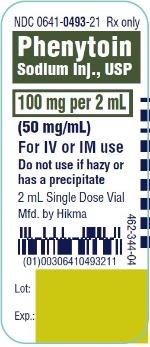
PRINCIPAL DISPLAY PANEL NDC 0641- 0493 -21 Rx only Phenytoin Sodium Inj., USP 100 mg per 2 mL (50 mg/mL) For IV or IM use Do not use if hazy or has a precipitate 2 mL Single Dose Vial NDC 0641- 0493 -25 Rx only Phenytoin Sodium Injection, USP 100 mg per 2 mL (50 mg/mL) For Intravenous or Intramuscular use 25 x 2 mL Single Dose Vials vial sp
PRINCIPAL DISPLAY PANEL NDC 0641- 2555 -41 Rx only Phenytoin Sodium Inj., USP 250 mg per 5 mL (50 mg/mL) For IV or IM use 5 mL Single Dose Vial NDC 0641- 2555 -10 Rx only Phenytoin Sodium Injection, USP 250 mg per 5 mL (50 mg/mL) For Intravenous or Intramuscular use 10 x 5 mL Single Dose Vials vial carton label
Medicare Part D spend CMS · PART D · 2026 (Q1)
About this NDC listing & data coverage
What data is (and isn’t) available for this NDC — tap to expand
| NDC identity (package / product / labeler codes) | ✓ Available |
| Labeler | ✓ Available |
| Product & package description | ✓ Available |
| Marketing category & status | ✓ Available |
| Active ingredient / dosage form / route | ✓ Available |
| FDA label (SPL via DailyMed) | ✓ Available |
| Package photos | ✓ Available |
| Inactive ingredients (structured) | ✓ Available |
| NADAC pharmacy acquisition price (CMS) | — Not published for this NDC CMS publishes NADAC only for NDCs reported in its retail-pharmacy survey. |
| Orange Book / therapeutic-equivalence data | ✓ Available |
| HCPCS J-code billing crosswalk | ✓ Available |
| Medicaid utilization (CMS SDUD) | — Not published for this NDC CMS reports utilization only for NDCs with Medicaid claims above its privacy threshold. |