
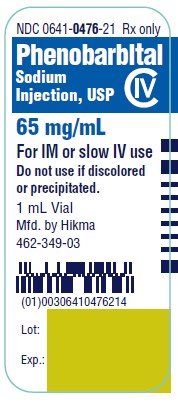
Phenobarbital Sodium 65 mg/mL Injection, 25 vials — NDC 0641-0476-25 (Billing 00641-0476-25)
This is a package of 25 vials of Phenobarbital Sodium 65 mg/mL Injection from Hikma Pharmaceuticals USA Inc., marketed since Jan 1971 and currently FDA-listed. It is this product's only package size.
NDC database record
One package, one record: these facts belong to NDC 0641-0476-25 alone.
- Record
- FDA NDC Directory package listing · Human prescription drug
- Code segments
- 0641 labeler · 0476 product · 25 package
- Package marketed since
- Jan 1, 1971
- Sample package
- No — commercial package
- Listing certified through
- Dec 31, 2026
- Barcode (UPC)
- 0306410477259
- Medicaid fills, this package
- 460 prescriptions in the last four reported quarters
- FDA record last changed
- Jul 24, 2026
Identity & classification
Regulatory identifiers FDA, NLM and CMS codes for this package
Drug-database identifiers Medi-Span GPI and First Databank GCN / HICL / AHFS classification
- GSN (GCN sequence number): 003581
- GCN: 12894
- GPI-14 (Medi-Span): 60100060102012
- HICL (First Databank): 001560
- AHFS class code: 28:12.04.00
- RxCUI (RxNorm): 198368
Where does this data come from?
- FDA openFDA NDC Directory · synced Oct 1, 2026
- FDA label on DailyMed · label index refreshed Oct 5, 2026
- RxNorm (NLM RxNav) · catalog refreshed Oct 1, 2026
- Medi-Span GPI (licensed)
- First Databank (licensed) · refreshed Oct 1, 2026
RxNorm drug class
This medicine belongs to the Barbiturates and derivatives class.
Where does this data come from?
- RxClass (NLM) · catalog refreshed Oct 1, 2026
Clinical
- It is used as a sedative and to control seizures. The tablets and oral solutions cover both. The injections have additional uses, such as short-term insomnia, sedation before surge...
- Please don't stop on your own. Phenobarbital can cause physical dependence, and stopping suddenly can lead to withdrawal problems like delirium and seizures. If you need to stop, y...
- No, this is a big one. Alcohol and other sedating drugs add to the drowsiness. Opioid pain medicines combined with phenobarbital can cause dangerously slow breathing, coma and deat...
- Is it safe to drink alcohol or take pain medicine with it?
Patient education
Supplement & herbal interactions
Phenobarbital may be associated with lower levels of 11 nutrients — worth a chat with your pharmacist, not a cause for alarm.
Where does this data come from?
- MedlinePlus (NLM) · refreshed Oct 1, 2026
- FDA label on DailyMed · label index refreshed Oct 5, 2026
Ask a licensed pharmacist directly — free, answered by our team.
Pricing
A drug doesn't have one price. Each row is a different public payment system, and none is what you'd pay at the counter — that depends on your insurance. The ⓘ on each row explains what it measures.
| Price system | Per each | Per package |
|---|---|---|
| Retail pharmacies payNADAC · weekly | Not in the retail survey — common for institutional, discontinued, or low-volume packs. | |
| Medicaid paysCMS SDUD · 12 mo | $21.89 | $547.17 / 25 vials |
| Medicare drug plans payPart D · quarterly | No Part D plan price is available for this NDC in our data. | |
| Medicare Part B allowsASP · J2560 | $24.769 / J2560 unit | — |
Where does this data come from?
- CMS NADAC weekly file
- CMS ASP pricing files · refreshed Sep 20, 2026
- CMS Medicaid State Drug Utilization Data · through Q1 2026
- CMS Part D plan pricing files · refreshed Sep 24, 2026
- VA National Acquisition Center price file
Billing & reimbursement
Where does this data come from?
- CMS ASP NDC-HCPCS crosswalk · refreshed Sep 22, 2026
- DMEPDAC NDC-HCPCS crosswalk
- openFDA NSDE billing units · refreshed Sep 7, 2026
Packaging — all sizes for this product
| Package NDC | Description | Marketing start | Marketing end | Status |
|---|---|---|---|---|
| 00641-0476-25 You're viewing this Main listing | 25 VIAL in 1 CARTON / 1 mL in 1 VIAL | 1971-01-01 | — | Active |
Therapeutic equivalents
| Product | Labeler | Pack | NADAC/unit | TE | Status | Price vs. this |
|---|---|---|---|---|---|---|
| Phenobarbital Sodium 65 mg/mLthis 00641-0476-25 | Hikma | 25 vials | — | — | FDA listed | — |
| Phenobarbital Sodium 65 mg/mL 42494-0441-25 | Cameron | 25 vials | — | — | FDA listed | — |
| Phenobarbital Sodium 65 mg/mL 54288-0136-10 | BPI | 10 vials | — | — | FDA listed | — |
| Phenobarbital Sodium 65 mg/mL 63629-1998-01 | Bryant | 25 vials | — | — | FDA listed | — |
| Phenobarbital Sodium 65 mg/mL 63629-2008-01 | Bryant | 3 vials | — | — | Discontinued | — |
| Phenobarbital Sodium 65 mg/mL 71335-3004-01 | Bryant | 25 vials | — | — | FDA listed | — |
| Phenobarbital Sodium 65 mg/mL 72162-1329-02 | Bryant | 25 vials | — | — | FDA listed | — |
| Phenobarbital Sodium 65 mg/mL 14789-0127-05 | Nexus | 10 vials | — | — | FDA listed | — |
Where does this data come from?
- FDA openFDA NDC Directory · synced Oct 1, 2026
- FDA Orange Book · refreshed Oct 3, 2026
- CMS NADAC weekly file
Availability & generic status
We did not find an FDA-approved generic match for this exact strength, form and route.
Where does this data come from?
- FDA Orange Book · refreshed Oct 3, 2026
Inactive Ingredients / Excipients
Inactive ingredients, also called excipients, are components of the drug product other than the active ingredient. They may include fillers, dyes, coatings, preservatives, flavors, or other formulation ingredients.
🧪 Avoiding an ingredient? See Phenobarbital inactive ingredients by manufacturer: every current product's list side by side, so you can ask your pharmacy for the version that does not list it.
💡 Tap an ingredient (hover on desktop) to see what it is and why it’s used.
-
0.1 mL / 1 mL
UNII 3K9958V90M
A liquid solvent derived from fermentation or chemical synthesis. In medicines, alcohol dissolves active ingredients, helps preserve the product, and improves how the body absorbs certain drugs.
-
0.015 mL / 1 mL
UNII LKG8494WBH
Benzyl alcohol is a clear liquid used as a preservative and solvent in medicines. It helps prevent bacterial and fungal growth and dissolves other ingredients to create uniform liquid formulations.
-
UNII QTT17582CB
A strong acid used to adjust and maintain the proper pH level in liquid medicines, ensuring stability and preventing breakdown of active ingredients.
-
0.678 mL / 1 mL
UNII 6DC9Q167V3
Propylene glycol is a clear liquid derived from petroleum or vegetable sources. It acts as a solvent, humectant, and preservative in medicines, helping dissolve active ingredients and maintain product stability.
-
UNII 059QF0KO0R
Water is a liquid solvent that dissolves and mixes ingredients together in liquid medicines, syrups, and injections. It helps distribute the active drug evenly throughout the product.
5 inactive ingredients listed in the exact product block matched to this NDC.
Where does this data come from?
ingredient classCode="IACT" elements from the exact product block matched by this NDC. Label-section narrative from DailyMed / the openFDA label index is shown separately when available.- FDA label on DailyMed · label index refreshed Oct 5, 2026
- FDA openFDA NDC Directory · synced Oct 1, 2026
Inactive ingredient FAQ
Are inactive ingredients the same for every manufacturer?
Why might an inactive ingredient be missing?
Can inactive ingredients matter?
Manufacturer & labeler
More NDCs from Hikma Pharmaceuticals USA Inc. labeler code 00641
- Dexamethasone Sodium Phosphate 10 mg/mL Injection NDC 0641-0367-25
- Diphenhydramine Hydrochloride 50 mg/mL Injection NDC 0641-0376-25
- Heparin Sodium 1000 [USP'U]/mL Injection NDC 0641-0391-12
- Heparin Sodium 5000 [USP'U]/mL Injection NDC 0641-0400-12
- Heparin Sodium 10000 [USP'U]/mL Injection NDC 0641-0410-12
- Phenobarbital Sodium 130 mg/mL Injection NDC 0641-0477-25
- Phenytoin Sodium 50 mg/mL Injection NDC 0641-0493-25
- Sodium Chloride 9 mg/mL Injection NDC 0641-0497-25
- Promethazine Hydrochloride 25 mg/mL Injection NDC 0641-0928-25
- Promethazine Hydrochloride 50 mg/mL Injection NDC 0641-0929-25
- Promethazine Hydrochloride 25 mg/mL Injection NDC 0641-0948-35
Where does this data come from?
- FDA openFDA NDC Directory · synced Oct 1, 2026
- Drugs@FDA
Full prescribing information FDA SPL
🎯 Indications and Usage ▾
INDICATIONS AND USAGE Parenteral Sedative. Sedation is obtainable within an hour, and in adequate dosage, the duration of action is more than six hours. Included in the more common conditions in which the sedative action of this class of drugs is desired are anxiety-tension states, hyperthyroidism, essential hypertension, nausea and vomiting of functional origin, motion sickness, acute labyrinthitis, pylorospasm in infants, chorea and cardiac failure.
Phenobarbital is also a useful adjunct in treatment of hemorrhage from the respiratory or gastrointestinal tract. Phenobarbital controls anxiety, decreases muscular activity and lessens nervous excitability in hyperthyroid patients. However, thyrotoxic individuals occasionally react poorly to barbiturates.
Hypnotic, for the short-term treatment of insomnia, since it appears to lose its effectiveness for sleep induction and sleep maintenance after 2 weeks (see CLINICAL PHARMACOLOGY ). Preanesthetic. Long-term anticonvulsant, (phenobarbital, mephobarbital and metharbital) for the treatment of generalized tonic-clonic and cortical focal seizures.
And, in the emergency control of certain acute convulsive episodes, e.g., those associated with status epilepticus, cholera, eclampsia, cerebral hemorrhage, meningitis, tetanus, and toxic reactions to strychnine or local anesthetics. Phenobarbital sodium may be administered intramuscularly or intravenously as an anticonvulsant for emergency use. When administered intravenously, it may require 15 or more minutes before reaching peak concentrations in the brain.
Therefore, injecting phenobarbital sodium until the convulsions stop may cause the brain level to exceed that required to control the convulsions and lead to severe barbiturate-induced depression. Phenobarbital is indicated in pediatric patients as an anticonvulsant and as a sedative, including its preoperative and postoperative use.
⏱️ Dosage and Administration ▾
DOSAGE AND ADMINISTRATION Dosages of barbiturates must be individualized with full knowledge of their particular characteristics and recommended rates of administration. Factors to consider are the patient’s age, weight and condition. Suggested doses of phenobarbital sodium for specific indications follow: Pediatric Dosage Recommended by the American Academy of Pediatrics (intended as a guide) Preoperative Sedation: 1 to 3 mg/kg IM or IV Anticonvulsion: 4 to 6 mg/kg/day for 7 to 10 days to blood level of 10 to 15 mcg/mL or 10 to 15 mg/kg/day IM or IV Status Epilepticus: 15 to 20 mg/kg over 10 to 15 minutes IV Adult Dosage (intended as a guide) Daytime Sedation: 30 to 120 mg daily in 2 to 3 divided doses IM or IV Bedtime Hypnosis: 100 to 320 mg IM or IV Preoperative Sedation: IM only — 100 to 200 mg 60 to 90 minutes before surgery Acute Convulsions: 20 to 320 mg IM or IV, repeated in 6 hours as necessary Parenteral routes should be used only when oral administration is impossible or impractical.
Intramuscular injection of the sodium salts of barbiturates should be made deeply into a large muscle and a volume of 5 mL should not be exceeded at any one site because of possible tissue irritation. Injection into or near peripheral nerves may result in permanent neurological deficit. After intramuscular injection of a hypnotic dose, the patient’s vital signs should be monitored.
Subcutaneous administration is not recommended (see CONTRAINDICATIONS ). Intravenous Administration Intravenous injection is restricted to conditions in which other routes are not feasible, either because the patient is unconscious (as in cerebral hemorrhage, eclampsia or status epilepticus), or because the patient resists (as in delirium) or because prompt action is imperative. Slow IV injection is essential, and patients should be carefully observed during administration.
This requires that blood pressure, respiration and cardiac function be maintained, vital signs be recorded and equipment for resuscitation and artificial ventilation be available. The rate of intravenous injection for adults should not exceed 60 mg/min for phenobarbital sodium. When given intravenously, do not use small veins, such as those on the dorsum of the hand or wrist.
Preference should be given to a larger vein to minimize the risk of irritation with the possibility of resultant thrombosis. Avoid administration into varicose veins because circulation there is retarded. Inadvertent injection into or adjacent to an artery has resulted in gangrene requiring amputation of an extremity or a portion thereof.
Careful technique, including aspiration, is necessary to avoid inadvertent intraarterial injection. (See below.) Treatment of Adverse Effects Due to Inadvertent Error in Administration Extravasation into subcutaneous tissues causes tissue irritation. This may vary from slight tenderness and redness to necrosis.
Recommended treatment includes the application of moist heat and the injection of 0.5% procaine solution into the affected area. Intraarterial injection of any barbiturate must be avoided. The accidental intraarterial injection of a small amount of the solution may cause spasm and severe pain along the course of the artery.
The injection should be terminated if the patient complains of pain or if other indications of accidental intraarterial injection occur, such as a white hand with cyanosed skin or patches of discolored skin and delayed onset of hypnosis. The consequences of intraarterial injection of phenobarbital can vary from transient pain to gangrene. It is not possible to formulate strict rules for management of such accidents.
The following procedures have been suggested: 1) release of the tourniquet or restrictive garments to permit dilution of injected drug, 2) relief of arterial spasm by injecting 10 mL of a 1% procaine solution into the artery and, if considered necessary, brachial plexus block, 3) prevention of thrombosis by early anticoagulant therapy and 4) sup… [Excerpted — this section continues on DailyMed.]
⛔ Contraindications ▾
CONTRAINDICATIONS Barbiturates are contraindicated in patients with known barbiturate sensitivity. Barbiturates are also contraindicated in patients with a history of manifest or latent porphyria, marked impairment of liver functions or with severe respiratory distress where dyspnea or obstruction is evident. Large doses are contraindicated in nephritic subjects.
Barbiturates should not be administered to persons with known previous addiction to the sedative-hypnotic group since ordinary doses may be ineffectual and may contribute to further addiction. Intraarterial administration is contraindicated. Its consequences vary from transient pain to gangrene.
Subcutaneous administration produces tissue irritation, ranging from tenderness and redness to necrosis and is not recommended. (See DOSAGE AND ADMINISTRATION, Treatment of Adverse Effects Due to Inadvertent Error in Administration .)
⚠️ Warnings ▾
WARNINGS Phenobarbital Sodium Injection contains the preservative benzyl alcohol and is not recommended for use in neonates. There have been reports of fatal ‘gasping syndrome’ in neonates (children less than one month of age) following the administration of intravenous solutions containing the preservative benzyl alcohol. Symptoms include a striking onset of gasping respiration, hypotension, bradycardia, and cardiovascular collapse.
Habit Forming Barbiturates may be habit forming. Tolerance and psychological and physical dependence may occur with continued use (see DRUG ABUSE AND DEPENDENCE and CLINICAL PHARMACOLOGY ). Patients who are psychologically dependent on barbiturates may increase the dosage or decrease the dosage interval without consulting a physician and may subsequently develop a physical dependence on barbiturates.
To minimize the possibility of overdosage or the development of dependence, the prescribing and dispensing of sedative-hypnotic barbiturates should be limited to the amount required for the interval until the next appointment. Abrupt cessation after prolonged use in the dependent person may result in withdrawal symptoms, including delirium, convulsions and possibly death. Barbiturates should be withdrawn gradually from any patient known to be taking excessive dosage over long periods of time (see DRUG ABUSE AND DEPENDENCE ).
Dermatologic Reactions Exfoliative dermatitis and Stevens-Johnson syndrome, possibly fatal, are rare hypersensitivity reactions to phenobarbital. Physicians should be alert to signs which may precede the onset of barbiturate-induced cutaneous lesions, and the drug should be discontinued whenever dermatological reactions occur. Intravenous Administration Too rapid administration may cause severe respiratory depression, apnea, laryngospasm, hypertension or vasodilation with fall in blood pressure.
When administered intravenously, it may require 15 or more minutes before reaching peak concentrations in the brain. Therefore, injecting phenobarbital sodium until the convulsions stop may cause brain levels to exceed that required to control the convulsions and lead to severe barbiturate-induced depression. Acute or Chronic Pain Caution should be exercised when barbiturates are administered to patients with acute or chronic pain, because paradoxical excitement could be induced or important symptoms could be masked.
However, the use of barbiturates as sedatives in the postoperative surgical period and as adjuncts to cancer chemotherapy is well established. Use in Pregnancy Barbiturates can cause fetal harm when administered to a pregnant woman. Retrospective, case-controlled studies have suggested a connection between the maternal consumption of barbiturates and a higher than expected incidence of fetal abnormalities.
Phenobarbital may cause major fetal malformations. Following oral or parenteral administration, barbiturates readily cross the placental barrier and are distributed throughout fetal tissues with highest concentrations found in the placenta, fetal liver and brain. Fetal blood levels approach maternal blood levels following parenteral administration.
Withdrawal symptoms occur in infants born to mothers who receive barbiturates throughout the last trimester of pregnancy (see DRUG ABUSE AND DEPENDENCE ). Phenobarbital should be used during pregnancy only when clearly indicated. If phenobarbital is used during pregnancy or if the patient becomes pregnant while taking the drug, the patient should be apprised of the potential hazard to the fetus.
Use in Children Phenobarbital has been reported to be associated with cognitive defects in children taking it for complicated febrile seizures. Synergistic Effects The concomitant use of alcohol or other CNS depressants may produce additive CNS depressant effects.
🤒 Adverse Reactions ▾
ADVERSE REACTIONS The following adverse reactions and their incidence were compiled from surveillance of thousands of hospitalized patients. Because such patients may be less aware of certain of the milder adverse effects of barbiturates, the incidence of these reactions may be somewhat higher in fully ambulatory patients. Nervous System Somnolence, agitation, confusion, hyperkinesia, ataxia, CNS depression, nightmares, nervousness, psychiatric disturbance, hallucinations, insomnia, anxiety, dizziness, thinking abnormality Respiratory System Hypoventilation, apnea Cardiovascular System Bradycardia, hypotension, syncope Digestive System Nausea, vomiting, constipation Dermatologic Reactions Exfoliative dermatitis, Stevens-Johnson syndrome, toxic epidermic necrolysis.
Other Reported Reactions Headache; injection site reactions; hypersensitivity reactions, including but not limited to angioedema and skin rashes; fever; liver damage and megaloblastic anemia following chronic phenobarbital use.
🔄 Drug Interactions ▾
Drug Interactions Most reports of clinically significant drug interactions occurring with the barbiturates have involved phenobarbital. However, the application of these data to other barbiturates appears valid and warrants serial blood level determinations of the relevant drugs when there are multiple therapies. Anticoagulants Phenobarbital lowers the plasma levels of dicumarol (bishydroxycoumarin) and causes a decrease in anticoagulant activity as measured by the prothrombin time.
Barbiturates can induce hepatic microsomal enzymes resulting in increased metabolism and decreased anticoagulant response of oral anticoagulants (e.g., warfarin, acenocoumarol, dicumarol and phenprocoumon). Patients stabilized on anticoagulant therapy may require dosage adjustments if barbiturates are added to or withdrawn from their dosage regimen. Corticosteroids Barbiturates appear to enhance the metabolism of exogenous corticosteroids probably through the induction of hepatic microsomal enzymes.
Patients stabilized on corticosteroid therapy may require dosage adjustments if barbiturates are added to or withdrawn from their dosage regimen. Griseofulvin Phenobarbital appears to interfere with the absorption of orally administered griseofulvin, thus decreasing its blood level. The effect of the resultant decreased blood levels of griseofulvin on therapeutic response has not been established.
However, it would be preferable to avoid concomitant administration of these drugs. Doxycycline Phenobarbital has been shown to shorten the half-life of doxycycline for as long as 2 weeks after barbiturate therapy is discontinued. This mechanism is probably through the induction of hepatic microsomal enzymes that metabolize the antibiotic.
If phenobarbital and doxycycline are administered concurrently, the clinical response to doxycycline should be monitored closely. Phenytoin, Sodium Valproate, Valproic Acid The effect of barbiturates on the metabolism of phenytoin appears to be variable. Some investigators report an accelerating effect, while others report no effect.
Because the effect of barbiturates on the metabolism of phenytoin is not predictable, phenytoin and barbiturate blood levels should be monitored more frequently if these drugs are given concurrently. Sodium valproate and valproic acid appear to decrease barbiturate metabolism; therefore, barbiturate blood levels should be monitored and appropriate dosage adjustments made as indicated. Central Nervous System Depressants The concomitant use of other central nervous system depressants, including other sedatives or hypnotics, antihistamines, tranquilizers or alcohol, may produce additive depressant effects.
Monoamine Oxidase Inhibitors (MAOIs) MAOIs prolong the effects of barbiturates probably because metabolism of the barbiturate is inhibited. Estradiol, Estrone, Progesterone and Other Steroidal Hormones Pretreatment with or concurrent administration of phenobarbital may decrease the effect of estradiol by increasing its metabolism. There have been reports of patients treated with antiepileptic drugs (e.g., phenobarbital) who became pregnant while taking oral contraceptives.
An alternate contraceptive method might be suggested to women taking phenobarbital.
🔄 Drug / Laboratory Test Interactions ▾
Drug/Laboratory Test Interactions Prolonged therapy with barbiturates should be accompanied by periodic laboratory evaluation of organ systems, including hematopoietic, renal and hepatic systems (see PRECAUTIONS, General and ADVERSE REACTIONS ).
🤰 Pregnancy ▾
Pregnancy Teratogenic Effects-Pregnancy Category D Phenobarbital may cause major fetal malformations. (See WARNINGS, Use in Pregnancy .) Nonteratogenic Effects Reports of infants suffering from long-term barbiturate exposure in utero included the acute withdrawal syndrome of seizures and hyperirritability from birth to a delayed onset of up to 14 days. (See DRUG ABUSE AND DEPENDENCE .)
🆘 Overdosage ▾
OVERDOSAGE The toxic dose of barbiturates varies considerably. Barbiturate intoxication may be confused with alcoholism, bromide intoxication and various neurological disorders. For sedation, therapeutic blood levels of phenobarbital range from 5-40 µg/mL; the lethal blood level is greater than 80 µg/mL and usually ranges from 100-200 µg/mL.
Acute overdosage with barbiturates is manifested by CNS and respiratory depression which may progress to Cheyne-Stokes respiration, areflexia, constriction of the pupils to a slight degree (though in severe poisoning, they may show paralytic dilation), oliguria, tachycardia, hypotension, lowered body temperature and coma. Typical shock syndrome (apnea, circulatory collapse, respiratory arrest and death) may occur. In extreme overdose, all electrical activity in the brain may cease, in which case a “flat” EEG normally equated with clinical death cannot be accepted.
This effect is fully reversible unless hypoxic damage occurs. Consideration should be given to the possibility of barbiturate intoxication even in situations that appear to involve trauma. Complications such as pneumonia, pulmonary edema, cardiac arrhythmias, congestive heart failure and renal failure may occur.
Uremia may increase CNS sensitivity to barbiturates if renal function is impaired. Differential diagnosis should include hypoglycemia, head trauma, cerebrovascular accidents, convulsive states and diabetic coma. To obtain up-to-date information about the treatment of overdosage, a good resource is your certified Regional Poison Control Center.
Telephone numbers of certified poison control centers are listed in the Physicians’ Desk Reference (PDR) . In managing overdosage, consider the possibility of multiple drug overdose, interaction among drugs and the unusual drug kinetics in your patient. Treatment of overdosage is mainly supportive and consists of the following: Maintenance of an adequate airway, with assisted respiration and oxygen administration as necessary.
Monitoring of vital signs and fluid balance. Fluid therapy and other standard treatment for shock, if needed. If renal function is normal, forced diuresis may aid in the elimination of the barbiturate.
Alkalinization of the urine increases renal excretion of phenobarbital. Although not recommended as a routine procedure, hemodialysis may be used in severe barbiturate intoxication or if the patient is anuric or in shock. Hemoperfusion through an anion-exchange resin or activated charcoal has been successful.
Peritoneal dialysis is significantly less effective in removing barbiturates. Patient should be rolled from side to side every 30 minutes. Antibiotics should be given if pneumonia is suspected.
Appropriate nursing care to prevent hypostatic pneumonia, decubiti, aspiration and other complications of patients with altered states of consciousness. The use of analeptic agents is not recommended.
🧬 Clinical Pharmacology ▾
CLINICAL PHARMACOLOGY Barbiturates are capable of producing all levels of CNS mood alteration from excitation to mild sedation, to hypnosis and deep coma. Overdosage can produce death. In high enough therapeutic doses, barbiturates induce anesthesia.
Barbiturates depress the sensory cortex, decrease motor activity, alter cerebellar function and produce drowsiness, sedation and hypnosis. Barbiturate-induced sleep differs from physiological sleep. Sleep laboratory studies have demonstrated that barbiturates reduce the amount of time spent in the rapid eye movement (REM) phase of sleep or dreaming stage.
Also, Stages III and IV sleep are decreased. Following abrupt cessation of barbiturates used regularly, patients may experience markedly increased dreaming, nightmares and/or insomnia. Therefore, withdrawal of a single therapeutic dose over 5 or 6 days has been recommended to lessen the REM rebound and disturbed sleep which contribute to drug withdrawal syndrome (for example, decrease the dose from 3 to 2 doses a day for 1 week).
In studies, secobarbital sodium and pentobarbital sodium have been found to lose most of their effectiveness for both inducing and maintaining sleep by the end of 2 weeks of continued drug administration even with the use of multiple doses. As with secobarbital sodium and pentobarbital sodium, other barbiturates might be expected to lose their effectiveness for inducing and maintaining sleep after about 2 weeks. The short-, intermediate- and, to a lesser degree, long-acting barbiturates have been widely prescribed for treating insomnia.
Although the clinical literature abounds with claims that the short-acting barbiturates are superior for producing sleep while the intermediate-acting compounds are more effective in maintaining sleep, controlled studies have failed to demonstrate these differential effects. Therefore, as sleep medications, the barbiturates are of limited value beyond short-term use. Barbiturates have little analgesic action at subanesthetic doses.
Rather, in subanesthetic doses these drugs may increase the reaction to painful stimuli. All barbiturates exhibit anticonvulsant activity in anesthetic doses. Barbiturates are respiratory depressants by virtue of their direct effect on the medullary respiratory center.
They diminish and, in high doses, may abolish the sensitivity of the respiratory center to its normal stimulus, carbon dioxide. The degree of respiratory depression is dependent upon dose. With hypnotic doses, respiratory depression produced by barbiturates is similar to that which occurs during physiologic sleep with slight decrease in blood pressure and heart rate.
Ordinary hypnotic doses of barbiturates have no significant effect on the cardiovascular system. The barbiturates tend to decrease the tonus of the gastrointestinal musculature. They have no direct injurious effect on the normal kidney.
Severe oliguria or anuria may occur in acute barbiturate poisoning, largely as a result of the marked hypotension. Hypnotic doses tend to reduce slightly the metabolic rate in man. Body temperature is reduced slightly, owing to lessened activity and to depression of the central temperature-regulatory mechanisms.
While anesthetic doses of all barbiturates exert an anticonvulsant effect, phenobarbital has a selective anticonvulsant activity independent of the degree of sedation produced. Phenobarbital limits the spread of seizures and raises the seizure threshold in grand mal (generalized tonic-clonic) epilepsy. Studies in laboratory animals have shown that barbiturates cause reduction in the tone and contractility of the uterus, ureters and urinary bladder.
However, concentrations of the drugs required to produce this effect in humans are not reached with sedative-hypnotic doses. Barbiturates do not impair normal hepatic function, but have been shown to induce liver microsomal enzymes, thus increasing and/or altering the metabolism of barbiturates and other drugs. (See PRECAUTIONS, Dru… [Excerpted — this section continues on DailyMed.]
📦 How Supplied / Storage and Handling ▾
HOW SUPPLIED Phenobarbital Sodium Injection, USP is available in the following: 65 mg/mL, 1 mL vials packaged in 25s (NDC 0641-0476-25) 130 mg/mL, 1 mL vials packaged in 25s (NDC 0641-0477-25) Storage Store at 20°-25°C (68°-77°F), excursions permitted to 15°-30°C (59°-86°F) [See USP Controlled Room Temperature]. Do not use if solution is discolored or contains a precipitate. To report SUSPECTED ADVERSE REACTIONS, contact Hikma Pharmaceuticals USA Inc. at 1-877-845-0689, or the FDA at 1-800-FDA-1088 or www.fda.gov/medwatch .
For Product Inquiry call 1-877-845-0689. Manufactured by: Hikma Pharmaceuticals USA Inc. Berkeley Heights, NJ 07922 Revised January 2020 462-353-02
📋 Description ▾
DESCRIPTION The barbiturates are nonselective central nervous system (CNS) depressants which are primarily used as sedative hypnotics and also anticonvulsants in subhypnotic doses. The barbiturates and their sodium salts are subject to control under the Federal Controlled Substances Act (CIV). Barbiturates are substituted pyrimidine derivatives in which the basic structure common to these drugs is barbituric acid, a substance which has no central nervous system activity.
CNS activity is obtained by substituting alkyl, alkenyl or aryl groups on the pyrimidine ring. Phenobarbital Sodium Injection, USP is a sterile solution for intramuscular or slow intravenous administration as a long-acting barbiturate. Each mL contains phenobarbital sodium either 65 mg or 130 mg, alcohol 0.1 mL, propylene glycol 0.678 mL and benzyl alcohol 0.015 mL in Water for Injection; hydrochloric acid added, if needed, for pH adjustment.
The pH range is 9.2-10.2. Chemically, phenobarbital sodium is 2,4,6(1 H ,3 H ,5 H )-Pyrimidinetrione,5-ethyl-5-phenyl-, monosodium salt and has the following structural formula: C 12 H 11 N 2 NaO 3 MW 254.22 The sodium salt of phenobarbital occurs as a white, slightly bitter powder, crystalline granules or flaky crystals; it is soluble in alcohol and practically insoluble in ether or chloroform. Structural formula
💬 Information for Patients ▾
Information for the Patient Practitioners should give the following information and instructions to patients receiving barbiturates: The use of barbiturates carries with it an associated risk of psychological and/or physical dependence. The patient should be warned against increasing the dose of the drug without consulting a physician. Barbiturates may impair mental and/or physical abilities required for the performance of potentially hazardous tasks (e.g., driving, operating machinery, etc.).
Alcohol should not be consumed while taking barbiturates. Concurrent use of the barbiturates with other CNS depressants (e.g., alcohol, narcotics, tranquilizers and antihistamines) may result in additional CNS depressant effects. If phenobarbital is used during pregnancy, the patient should be apprised of the potential hazard to the fetus (see WARNINGS ).
⚠️ Precautions ▾
PRECAUTIONS General Untoward reactions may occur in the presence of fever, hyperthyroidism, diabetes mellitus and severe anemia. In cases of great debility, severely impaired liver function, pulmonary or cardiac disease, status asthmaticus, shock or uremia, phenobarbital sodium should be used with extreme caution. Intramuscular injection should be confined to a total volume of 5 mL and made in a large muscle in order to avoid possible tissue irritation.
Barbiturates may be habit forming. Tolerance and psychological and physical dependence may occur with continued use (see DRUG ABUSE AND DEPENDENCE ). Barbiturates should be administered with caution, if at all, to patients who are mentally depressed, have suicidal tendencies or a history of drug abuse.
Elderly or debilitated patients may react to barbiturates with marked excitement, depression and confusion. In some persons, barbiturates repeatedly produce excitement rather than depression. In patients with hepatic damage, barbiturates should be administered with caution and initially in reduced doses.
Barbiturates should not be administered to patients showing the premonitory signs of hepatic coma. Parenteral solutions of barbiturates are highly alkaline. Therefore, extreme care should be taken to avoid perivascular extravasation or intraarterial injection.
Extravascular injection may cause local tissue damage with subsequent necrosis; consequences of intraarterial injection may vary from transient pain to gangrene of the limb. Any complaint of pain in the limb warrants stopping the injection. Information for the Patient Practitioners should give the following information and instructions to patients receiving barbiturates: The use of barbiturates carries with it an associated risk of psychological and/or physical dependence.
The patient should be warned against increasing the dose of the drug without consulting a physician. Barbiturates may impair mental and/or physical abilities required for the performance of potentially hazardous tasks (e.g., driving, operating machinery, etc.). Alcohol should not be consumed while taking barbiturates.
Concurrent use of the barbiturates with other CNS depressants (e.g., alcohol, narcotics, tranquilizers and antihistamines) may result in additional CNS depressant effects. If phenobarbital is used during pregnancy, the patient should be apprised of the potential hazard to the fetus (see WARNINGS ). Drug Interactions Most reports of clinically significant drug interactions occurring with the barbiturates have involved phenobarbital.
However, the application of these data to other barbiturates appears valid and warrants serial blood level determinations of the relevant drugs when there are multiple therapies. Anticoagulants Phenobarbital lowers the plasma levels of dicumarol (bishydroxycoumarin) and causes a decrease in anticoagulant activity as measured by the prothrombin time. Barbiturates can induce hepatic microsomal enzymes resulting in increased metabolism and decreased anticoagulant response of oral anticoagulants (e.g., warfarin, acenocoumarol, dicumarol and phenprocoumon).
Patients stabilized on anticoagulant therapy may require dosage adjustments if barbiturates are added to or withdrawn from their dosage regimen. Corticosteroids Barbiturates appear to enhance the metabolism of exogenous corticosteroids probably through the induction of hepatic microsomal enzymes. Patients stabilized on corticosteroid therapy may require dosage adjustments if barbiturates are added to or withdrawn from their dosage regimen.
Griseofulvin Phenobarbital appears to interfere with the absorption of orally administered griseofulvin, thus decreasing its blood level. The effect of the resultant decreased blood levels of griseofulvin on therapeutic response has not been established. However, it would be preferable to avoid concomitant administration of these drugs.
Doxycycline Phenobarbital has been shown to shorten the half-life of doxycycline for as long as… [Excerpted — this section continues on DailyMed.]
🔒 Drug Abuse and Dependence ▾
DRUG ABUSE AND DEPENDENCE Phenobarbital Sodium Injection is a Schedule IV controlled substance. Barbiturates may be habit forming. Tolerance and psychological dependence and physical dependence may occur especially following prolonged use of high doses of barbiturates.
As tolerance to barbiturates develops, the amount needed to maintain the same level of intoxication increases; tolerance to a fatal dosage, however, does not increase more than two-fold. As this occurs, the margin between an intoxicating dosage and fatal dosage becomes smaller. Symptoms of acute intoxication with barbiturates include unsteady gait, slurred speech and sustained nystagmus.
Mental signs of chronic intoxication include confusion, poor judgment, irritability, insomnia and somatic complaints. Symptoms of barbiturate dependence are similar to those of chronic alcoholism. If an individual appears to be intoxicated with alcohol to a degree that is radically disproportionate to the amount of alcohol in his or her blood, the use of barbiturates should be suspected.
The lethal dose of a barbiturate is far less if alcohol is also ingested. The symptoms of barbiturate withdrawal can be severe and may cause death. Minor withdrawal symptoms may appear 8 to 12 hours after the last dose of a barbiturate.
These symptoms usually appear in the following order: anxiety, muscle twitching, tremor of hands and fingers, progressive weakness, dizziness, distortion in visual perception, nausea, vomiting, insomnia and orthostatic hypotension. Major withdrawal symptoms (convulsions and delirium) may occur within 16 hours and last up to 5 days after abrupt cessation of these drugs. Intensity of withdrawal symptoms gradually declines over a period of approximately 15 days.
Individuals susceptible to barbiturate abuse and dependence include alcoholics and opiate abusers, as well as other sedative-hypnotic and amphetamine abusers. Drug dependence to barbiturates arises from repeated administration of a barbiturate or agent with barbiturate-like effect on a continuous basis, generally in amounts exceeding therapeutic dose levels. The characteristics of drug dependence to barbiturates include: (a) a strong desire or need to continue taking the drug, (b) a tendency to increase the dose, (c) a psychic dependence on the effects of the drug related to subjective and individual appreciation of those effects and (d) a physical dependence on the effects of the drug requiring its presence for maintenance of homeostasis and resulting in a definite, characteristic and self-limited abstinence syndrome when the drug is withdrawn.
Individuals subject to barbiturate abuse and dependence include alcoholics and opiate abusers as well as other sedative-hypnotics and amphetamine abusers. Treatment of barbiturate dependence consists of cautious and gradual withdrawal of the drug. Barbiturate-dependent patients can be withdrawn by using a number of different withdrawal regimens.
In all cases, withdrawal takes an extended period of time. One method involves substituting a 30 mg dose of phenobarbital for each 100 to 200 mg dose of barbiturate that the patient has been taking. The total daily amount of phenobarbital is then administered in 3 to 4 divided doses, not to exceed 600 mg daily.
Should signs of withdrawal occur on the first day of treatment, a loading dose of 100 to 200 mg of phenobarbital may be administered IM in addition to the oral dose. After stabilization on phenobarbital, the total daily dose is decreased by 30 mg a day as long as withdrawal is proceeding smoothly. If withdrawal symptoms appear, dosage is maintained at that level or increased slightly until symptoms disappear.
A modification of this regimen involves initiating treatment at the patient’s regular dosage level and decreasing the daily dosage by 10 percent if tolerated by the patient. The symptoms of withdrawal can be severe and may cause death. Minor withdrawal symptoms (e.g., anxiety, muscle twitching, tremors, nausea, et… [Excerpted — this section continues on DailyMed.]
📄 Package Label / Principal Display Panel ▾
PRINCIPAL DISPLAY PANEL NDC 0641- 0476 -21 Rx only Phenobarbital Sodium Injection, USP 65 mg/mL For IM or slow IV use Do not use if discolored or precipitated. 1 mL Vial NDC 0641- 0476 -25 Rx only Phenobarbital Sodium Injection, USP 65 mg/mL For IM or slow IV use Do not use if discolored or precipitated. 25 x 1 mL Vials 1 mL vial 25 x 1mL:
PRINCIPAL DISPLAY PANEL NDC 0641- 0477 -21 Rx only Phenobarbital Sodium Injection, USP 130 mg/mL For IM or slow IV use Do not use if discolored or precipitated. 1 mL Vial NDC 0641- 0477 -25 Rx only Phenobarbital Sodium Injection, USP 130 mg/mL For IM or slow IV use Do not use if discolored or precipitated. 25 x 1 mL Vials 1 mL vial 25 x 1mL vials
Medicaid utilization & spend
Medicare Part D spend CMS · PART D · 2025 (Q1-Q4)
About this NDC listing & data coverage
Listed without an FDA application
This product's marketing category indicates it is marketed without an approved FDA application (no NDA, ANDA, or BLA on file). Having an NDC does not by itself establish FDA approval — the NDC Directory is a listing system, not an approval decision. Approval-linked data such as Orange Book therapeutic-equivalence ratings therefore does not apply.
What data is (and isn’t) available for this NDC — tap to expand
| NDC identity (package / product / labeler codes) | ✓ Available |
| Labeler | ✓ Available |
| Product & package description | ✓ Available |
| Marketing category & status | ✓ Available |
| Active ingredient / dosage form / route | ✓ Available |
| FDA label (SPL via DailyMed) | ✓ Available |
| Package photos | ✓ Available |
| Inactive ingredients (structured) | ✓ Available |
| NADAC pharmacy acquisition price (CMS) | — Not published for this NDC CMS publishes NADAC only for NDCs reported in its retail-pharmacy survey. |
| Orange Book / therapeutic-equivalence data | — Not published for this NDC Applies only to products approved under an NDA/ANDA; many listings are out of scope. |
| HCPCS J-code billing crosswalk | ✓ Available |
| Medicaid utilization (CMS SDUD) | ✓ Available |