
ARANESP darbepoetin alfa 25 ug/.42mL Injection, Solution, 4 syringes — NDC 55513-057-04 (Billing 55513-0057-04)
This is a package of 4 syringes of ARANESP darbepoetin alfa 25 ug/.42mL Injection, Solution from Amgen, Inc, marketed since Aug 2006 and currently FDA-listed; retail pharmacies pay about $446.58 per mL (NADAC). It is this product's only package size.
NDC database record
One package, one record: these facts belong to NDC 55513-057-04 alone.
- Record
- FDA NDC Directory package listing · Human prescription drug
- Code segments
- 55513 labeler · 057 product · 04 package
- Package marketed since
- Aug 26, 2006
- Sample package
- No — commercial package
- Listing certified through
- Dec 31, 2027
- Barcode (UPC)
- 0355513006217
- Medicaid fills, this package
- 6,686 prescriptions in the last four reported quarters
- FDA record last changed
- Oct 1, 2026
Identity & classification
Regulatory identifiers FDA, NLM and CMS codes for this package
Drug-database identifiers Medi-Span GPI and First Databank GCN / HICL / AHFS classification
- GSN (GCN sequence number): 061270
- GCN: 97064
- HICL (First Databank): 022890
- AHFS class code: 20:04.00.00
- RxCUI (RxNorm): 349273
Where does this data come from?
- FDA openFDA NDC Directory · synced Oct 1, 2026
- FDA label on DailyMed · label index refreshed Oct 6, 2026
- RxNorm (NLM RxNav) · catalog refreshed Oct 1, 2026
- Medi-Span GPI (licensed)
- First Databank (licensed) · refreshed Oct 1, 2026
RxNorm drug class
This medicine belongs to the Erythropoiesis-stimulating Agent class.
Where does this data come from?
- RxClass (NLM) · catalog refreshed Oct 1, 2026
Clinical
- Aranesp helps your body make more red blood cells. If you have chronic kidney disease or if chemotherapy is suppressing your bone marrow, your body may not be making enough red blo...
- What exactly is Aranesp doing for me — why do I need it?
- Don't expect overnight results — it usually takes 2 to 6 weeks after starting Aranesp before hemoglobin levels begin to rise noticeably. Your doctor will check your blood counts re...
- How long will it take before I feel better or see results?
Patient education
Supplement & herbal interactions
Where does this data come from?
- MedlinePlus (NLM) · refreshed Oct 1, 2026
- FDA label on DailyMed · label index refreshed Oct 6, 2026
Ask a licensed pharmacist directly — free, answered by our team.
Pricing
A drug doesn't have one price. Each row is a different public payment system, and none is what you'd pay at the counter — that depends on your insurance. The ⓘ on each row explains what it measures.
| Price system | Per mL | Per package |
|---|---|---|
| Retail pharmacies payNADAC · weekly | $446.577 | $750.25 / 1.68 ml |
| Medicaid paysCMS SDUD · 12 mo | $309.50 | $519.96 / 1.68 ml |
| Medicare drug plans payPart D · Q2 2026 | $461.64 | $775.55 / 1.68 ml |
| Medicare Part B allowsASP · J0881 | $2.920 / J0881 unit | — |
Where does this data come from?
- CMS NADAC weekly file · file of Sep 30, 2026
- CMS ASP pricing files · refreshed Sep 20, 2026
- CMS Medicaid State Drug Utilization Data · through Q1 2026
- CMS Part D plan pricing files · refreshed Sep 24, 2026
- VA National Acquisition Center price file
Billing & reimbursement
Where does this data come from?
- CMS ASP NDC-HCPCS crosswalk · refreshed Sep 22, 2026
- DMEPDAC NDC-HCPCS crosswalk
- openFDA NSDE billing units · refreshed Sep 7, 2026
Packaging — all sizes for this product
| Package NDC | Description | Marketing start | Marketing end | Status |
|---|---|---|---|---|
| 55513-0057-04 You're viewing this Main listing | 1 BLISTER PACK in 1 PACKAGE / 4 SYRINGE in 1 BLISTER PACK / .42 mL in 1 SYRINGE | 2006-08-26 | — | Active |
Therapeutic equivalents
| Product | Labeler | Pack | NADAC/unit | TE | Status | Price vs. this |
|---|---|---|---|---|---|---|
| Aranesp 25 ug/.42mLthis 55513-0057-04 | Amgen, | 4 syringes | $446.577 | — | Availability likely | — |
Where does this data come from?
- FDA openFDA NDC Directory · synced Oct 1, 2026
- FDA Purple Book · refreshed Oct 5, 2026
- CMS NADAC weekly file · file of Sep 30, 2026
Availability & biosimilar status
Biologics have no small-molecule generics; biosimilar competition is tracked in the FDA Purple Book.
Where does this data come from?
- FDA Purple Book · refreshed Oct 5, 2026
Inactive Ingredients / Excipients
Inactive ingredients, also called excipients, are components of the drug product other than the active ingredient. They may include fillers, dyes, coatings, preservatives, flavors, or other formulation ingredients.
🧪 Avoiding an ingredient? See Darbepoetin Alfa Injection inactive ingredients by manufacturer: every current product's list side by side, so you can ask your pharmacy for the version that does not list it.
💡 Tap an ingredient (hover on desktop) to see what it is and why it’s used.
-
0.02 mg / 0.42 mL
UNII 6OZP39ZG8H
Polysorbate 80 is a synthetic emulsifier derived from sorbitol and oleic acid. It helps mix oil and water-based ingredients together in medications and improves how the product disperses in the body.
-
3.44 mg / 0.42 mL
UNII 451W47IQ8X
Sodium chloride is common table salt. It's used in medicines as a buffer to maintain proper pH, as a filler to add bulk, or to adjust the osmotic balance in liquid formulations.
-
0.28 mg / 0.42 mL
UNII 22ADO53M6F
A mineral salt derived from phosphoric acid, used as a buffer to maintain the pH balance of the medication and help stabilize the active ingredients.
-
0.89 mg / 0.42 mL
UNII 593YOG76RN
A salt made from sodium and phosphate that helps regulate acidity and maintain proper pH balance in the medicine. It also acts as a buffer to keep the product stable.
-
UNII 059QF0KO0R
Water is a liquid solvent that dissolves and mixes ingredients together in liquid medicines, syrups, and injections. It helps distribute the active drug evenly throughout the product.
5 inactive ingredients listed in the exact product block matched to this NDC.
Where does this data come from?
ingredient classCode="IACT" elements from the exact product block matched by this NDC. Label-section narrative from DailyMed / the openFDA label index is shown separately when available.- FDA label on DailyMed · label index refreshed Oct 6, 2026
- FDA openFDA NDC Directory · synced Oct 1, 2026
Inactive ingredient FAQ
Are inactive ingredients the same for every manufacturer?
Why might an inactive ingredient be missing?
Can inactive ingredients matter?
Manufacturer & labeler
More NDCs from Amgen, Inc labeler code 55513
- ARANESP darbepoetin alfa 60 ug/.3mL Injection, Solution NDC 55513-023-04
- ARANESP darbepoetin alfa 100 ug/.5mL Injection, Solution NDC 55513-025-04
- ARANESP darbepoetin alfa 150 ug/.3mL Injection, Solution NDC 55513-027-04
- ARANESP darbepoetin alfa 200 ug/.4mL Injection, Solution NDC 55513-028-01
- ARANESP darbepoetin alfa 500 ug/mL Injection, Solution NDC 55513-032-01
- PAVBLU aflibercept-ayyh 2 mg/.05mL Injection, Solution NDC 55513-056-01
- IMDELLTRA (AMG757) Tarlatamab-dlle Kit NDC 55513-059-01
- PAVBLU aflibercept-ayyh 2 mg/.05mL Injection, Solution NDC 55513-065-01
- Sensipar cinacalcet hydrochloride 30 mg Tablet, Coated NDC 55513-073-30
- Sensipar cinacalcet hydrochloride 60 mg Tablet, Coated NDC 55513-074-30
- Sensipar cinacalcet hydrochloride 90 mg Tablet, Coated NDC 55513-075-30
- IMDELLTRA (AMG757) Tarlatamab-dlle Kit NDC 55513-077-01
Where does this data come from?
- FDA openFDA NDC Directory · synced Oct 1, 2026
- Drugs@FDA
Full prescribing information FDA SPL
🚨 Boxed Warning ▾
WARNING: ESAs INCREASE THE RISK OF DEATH, MYOCARDIAL INFARCTION, STROKE, VENOUS THROMBOEMBOLISM, THROMBOSIS OF VASCULAR ACCESS AND TUMOR PROGRESSION OR RECURRENCE Chronic Kidney Disease: In controlled trials, patients experienced greater risks for death, serious adverse cardiovascular reactions, and stroke when administered erythropoiesis -stimulating agents (ESAs) to target a hemoglobin level of greater than 11 g/dL [ see Warnings and Precautions ( 5.1 )] . No trial has identified a hemoglobin target level, Aranesp dose, or dosing strategy that does not increase these risks [see Dosage and Administration ( 2.2 )] .
Use the lowest Aranesp dose sufficient to reduce the need for red blood cell (RBC) transfusions [see Warnings and Precautions ( 5.1 )] . Cancer: ESAs shortened overall survival and/or increased the risk of tumor progression or recurrence in clinical studies of patients with breast, non- small cell lung, head and neck, lymphoid, and cervical cancers [ see Warnings and Precautions ( 5.2 )] . To decrease these risks, as well as the risk of serious cardiovascular and thromboembolic reactions, use the lowest dose needed to avoid RBC transfusions [see Dosage and Administration ( 2.3 )] .
Use ESAs only for anemia from myelosuppressive chemotherapy [see Indications and Usage ( 1.2 )]. ESAs are not indicated for patients receiving myelosuppressive chemotherapy when the anticipated outcome is cure [see Indications and Usage ( 1.3 )]. Discontinue following the completion of a chemotherapy course [see Dosage and Administration ( 2.3 )] .
WARNING: ESAs INCREASE THE RISK OF DEATH, MYOCARDIAL INFARCTION, STROKE, VENOUS THROMBOEMBOLISM, THROMBOSIS OF VASCULAR ACCESS AND TUMOR PROGRESSION OR RECURRENCE See full prescribing information for complete boxed warning. Chronic Kidney Disease : In controlled trials, patients experienced greater risks for death, serious adverse cardiovascular reactions, and stroke when administered erythropoiesis - stimulating agents (ESAs) to target a hemoglobin level of greater than 11 g/dL ( 5.1 ). No trial has identified a hemoglobin target level, Aranesp dose, or dosing strategy that does not increase these risks ( 2.2 ) .
Use the lowest Aranesp dose sufficient to reduce the need for red blood cell (RBC) transfusions ( 5.1 ). Cancer : ESAs shortened overall survival and/or increased the risk of tumor progression or recurrence in clinical studies of patients with breast, non - small cell lung, head and neck, lymphoid, and cervical cancers ( 5.2 ) . Use the lowest dose to avoid RBC transfusions ( 2.3 ) .
Use ESAs only for anemia from myelosuppressive chemotherapy ( 1.2 ) . ESAs are not indicated for patients receiving myelosuppressive chemotherapy when the anticipated outcome is cure ( 1.3 ) . Discontinue following the completion of a chemotherapy course ( 2.3 ) .
🎯 Indications and Usage ▾
1 INDICATIONS AND USAGE Aranesp is an erythropoiesis-stimulating agent (ESA) indicated for the treatment of anemia due to: Chronic Kidney Disease (CKD) in patients on dialysis and patients not on dialysis ( 1.1 ). The effects of concomitant myelosuppressive chemotherapy, and upon initiation, there is a minimum of two additional months of planned chemotherapy ( 1.2 ). Limitations of Use Aranesp has not been shown to improve quality of life, fatigue, or patient well-being ( 1.3 ).
Aranesp is not indicated for use: In patients with cancer receiving hormonal agents, biologic products, or radiotherapy, unless also receiving concomitant myelosuppressive chemotherapy ( 1.3 ). In patients with cancer receiving myelosuppressive chemotherapy when the anticipated outcome is cure ( 1.3 ). In patients with cancer receiving myelosuppressive chemotherapy in whom the anemia can be managed by transfusion ( 1.3 ).
As a substitute for RBC transfusions in patients who require immediate correction of anemia ( 1.3 ).
1.1Anemia Due to Chronic Kidney Disease Aranesp is indicated for the treatment of anemia due to chronic kidney disease (CKD), including patients on dialysis and patients not on dialysis.
1.2Anemia Due to Chemotherapy in Patients with Cancer Aranesp is indicated for the treatment of anemia in patients with non-myeloid malignancies where anemia is due to the effect of concomitant myelosuppressive chemotherapy, and upon initiation, there is a minimum of two additional months of planned chemotherapy.
1.3Limitations of Use Aranesp has not been shown to improve quality of life, fatigue, or patient well-being. Aranesp is not indicated for use: • In patients with cancer receiving hormonal agents, biologic products, or radiotherapy, unless also receiving concomitant myelosuppressive chemotherapy. • In patients with cancer receiving myelosuppressive chemotherapy when the anticipated outcome is cure. • In patients with cancer receiving myelosuppressive chemotherapy in whom the anemia can be managed by transfusion. • As a substitute for RBC transfusions in patients who require immediate correction of anemia.
⏱️ Dosage and Administration ▾
2 DOSAGE AND ADMINISTRATION Recommended starting dose for patients with CKD on dialysis ( 2.2 ): - 0.45 mcg/kg intravenously or subcutaneously weekly, or - 0.75 mcg/kg intravenously or subcutaneously every 2 weeks - Intravenous route is recommended for patients on hemodialysis Recommended starting dose for patients with CKD not on dialysis ( 2.2 ): - 0.45 mcg/kg intravenously or subcutaneously at 4 week intervals Recommended starting dose for pediatric patients with CKD: - 0.45 mcg/kg intravenously or subcutaneously weekly - patients with CKD not on dialysis may also be initiated at 0.75 mcg/kg every 2 weeks Recommended starting dose for patients with cancer on chemotherapy ( 2.3 ): - 2.25 mcg/kg subcutaneously weekly, or - 500 mcg subcutaneously every 3 weeks
2.1Important Dosing Information Evaluation of Iron Stores and Nutritional Factors Evaluate the iron status in all patients before and during treatment. Administer supplemental iron therapy when serum ferritin is less than 100 mcg/L or when serum transferrin saturation is less than 20%. The majority of patients with CKD will require supplemental iron during the course of ESA therapy.
Monitoring of Response to Therapy Correct or exclude other causes of anemia (e.g., vitamin deficiency, metabolic or chronic inflammatory conditions, bleeding, etc.) before initiating Aranesp. Following initiation of therapy and after each dose adjustment, monitor hemoglobin weekly until the hemoglobin level is stable and sufficient to minimize the need for RBC transfusion.
2.2Patients with Chronic Kidney Disease In controlled trials, patients experienced greater risks for death, serious adverse cardiovascular reactions, and stroke when administered erythropoiesis-stimulating agents (ESAs) to target a hemoglobin level of greater than 11 g/dL. No trial has identified a hemoglobin target level, Aranesp dose, or dosing strategy that does not increase these risks. Individualize dosing and use the lowest dose of Aranesp sufficient to reduce the need for RBC transfusions [see Warnings and Precautions ( 5.1 )] .
Physicians and patients should weigh the possible benefits of decreasing transfusions against the increased risks of death and other serious cardiovascular adverse events [see Boxed Warning and Clinical Studies ( 14 ) ] . For all patients with CKD When initiating or adjusting therapy, monitor hemoglobin levels at least weekly until stable, then monitor at least monthly. When adjusting therapy consider hemoglobin rate of rise, rate of decline, ESA responsiveness and hemoglobin variability.
A single hemoglobin excursion may not require a dosing change. Do not increase the dose more frequently than once every 4 weeks. Decreases in dose can occur more frequently.
Avoid frequent dose adjustments. If the hemoglobin rises rapidly (e.g., more than 1 g/dL in any 2-week period), reduce the dose of Aranesp by 25% or more as needed to reduce rapid responses. For patients who do not respond adequately, if the hemoglobin has not increased by more than 1 g/dL after 4 weeks of therapy, increase the dose by 25%.
For patients who do not respond adequately over a 12-week escalation period, increasing the Aranesp dose further is unlikely to improve response and may increase risks. Use the lowest dose that will maintain a hemoglobin level sufficient to reduce the need for RBC transfusions. Evaluate other causes of anemia.
Discontinue Aranesp if responsiveness does not improve. For adult patients with CKD on dialysis : Initiate Aranesp treatment when the hemoglobin level is less than 10 g/dL. If the hemoglobin level approaches or exceeds 11 g/dL, reduce or interrupt the dose of Aranesp.
The recommended starting dose is 0.45 mcg/kg intravenously or subcutaneously as a weekly injection or 0.75 mcg/kg once every 2 weeks as appropriate. The intravenous route is recommended for patients on hemodialysis. For adult patients with CKD not on dialysis : Consider initiating Aranesp treatment only when the hemoglobin level… [Excerpted — this section continues on DailyMed.]
💊 Dosage Forms and Strengths ▾
3 DOSAGE FORMS AND STRENGTHS Aranesp is a clear, colorless solution available as: Single - dose vials Injection: 25 mcg, 40 mcg, 60 mcg, 100 mcg, and 200 mcg Single - dose prefilled syringes Injection: 10 mcg/0.4 mL, 25 mcg/0.42 mL, 40 mcg/0.4 mL, 60 mcg/0.3 mL, 100 mcg/0.5 mL, 150 mcg/0.3 mL, 200 mcg/0.4 mL, 300 mcg/0.6 mL, and 500 mcg/1 mL Single - dose vials Injection: 25 mcg, 40 mcg, 60 mcg, 100 mcg, and 200 mcg ( 3 ). Single - dose prefilled syringes Injection: 10 mcg/0.4 mL, 25 mcg/0.42 mL, 40 mcg/0.4 mL, 60 mcg/0.3 mL, 100 mcg/0.5 mL, 150 mcg/0.3 mL, 200 mcg/0.4 mL, 300 mcg/0.6 mL, and 500 mcg/1 mL ( 3 ).
⛔ Contraindications ▾
4 CONTRAINDICATIONS Aranesp is contraindicated in patients with: Uncontrolled hypertension [see Warnings and Precautions ( 5.3 )] . Pure red cell aplasia (PRCA) that begins after treatment with Aranesp or other erythropoietin protein drugs [see Warnings and Precautions ( 5.6 )] . Serious allergic reactions to Aranesp [see Warnings and Precautions ( 5.7 )] .
Uncontrolled hypertension ( 4 ) Pure red cell aplasia (PRCA) that begins after treatment with Aranesp or other erythropoietin protein drugs ( 4 ) Serious allergic reactions to Aranesp ( 4 )
⚠️ Warnings and Cautions ▾
5 WARNINGS AND PRECAUTIONS Increased Mortality, Myocardial Infarction, Stroke, and Thromboembolism: Using Aranesp to target a hemoglobin level of greater than 11 g/dL increases the risk of serious adverse cardiovascular reactions and has not been shown to provide additional benefit ( 5.1 and 14.1 ). Use caution in patients with coexistent cardiovascular disease and stroke ( 5.1 ). Increased Mortality and/or Increased Risk of Tumor Progression or Recurrence in Patients with Cancer ( 5.2 ).
Hypertension: Control hypertension prior to initiating and during treatment with Aranesp ( 5.3 ). Seizures: Aranesp increases the risk for seizures in patients with CKD ( 5.4 ). Increase monitoring of these patients for changes in seizure frequency or premonitory symptoms ( 5.4 ).
PRCA: If severe anemia and low reticulocyte count develop during Aranesp treatment, withhold Aranesp and evaluate for PRCA ( 5.6 ). Serious Allergic Reactions: Discontinue Aranesp and manage reactions ( 5.7 ). Severe Cutaneous Reactions: Discontinue Aranesp ( 5.8 ).
5.1Increased Mortality, Myocardial Infarction, Stroke, and Thromboembolism In controlled clinical trials of patients with CKD comparing higher hemoglobin targets (13 - 14 g/dL) to lower targets (9 - 11.3 g/dL), Aranesp and other ESAs increased the risk of death, myocardial infarction, stroke, congestive heart failure, thrombosis of hemodialysis vascular access, and other thromboembolic events in the higher target groups. Using Aranesp to target a hemoglobin level of greater than 11 g/dL increases the risk of serious adverse cardiovascular reactions and has not been shown to provide additional benefit [see Clinical Studies ( 14.1 )] .
Use caution in patients with coexistent cardiovascular disease and stroke [see Dosage and Administration ( 2.2 )] . Patients with CKD and an insufficient hemoglobin response to ESA therapy may be at even greater risk for cardiovascular reactions and mortality than other patients. A rate of hemoglobin rise of greater than 1 g/dL over 2 weeks may contribute to these risks.
In controlled clinical trials of patients with cancer, Aranesp and other ESAs increased the risks for death and serious adverse cardiovascular reactions. These adverse reactions included myocardial infarction and stroke. In controlled clinical trials, ESAs increased the risk of death in patients undergoing coronary artery bypass graft surgery (CABG) and the risk of deep venous thrombosis (DVT) in patients undergoing orthopedic procedures.
The design and overall results of the 3 large trials comparing higher and lower hemoglobin targets are shown in Table 3. Table 3. Randomized Controlled Trials Showing Adverse Cardiovascular Outcomes in Patients with CKD Normal Hematocrit Study (NHS) (N = 12 65 ) CHOIR (N = 1432) TREAT (N = 4038) Time Period of Trial 1993 to 1996 2003 to 2006 2004 to 2009 Population Adult patients with CKD on hemodialysis with coexisting CHF or CAD, hematocrit 30 ± 3% on epoetin alfa Adult patients with CKD not on dialysis with hemoglobin < 11 g/dL not previously administered epoetin alfa Adult patients with CKD not on dialysis with type II diabetes, hemoglobin ≤ 11 g/dL Hemoglobin Target; Higher vs.
Lower (g/dL) 14.0 vs. 10.0 13.5 vs. 11.3 13.0 vs. ≥
9.0Median (Q1, Q3) Achieved Hemoglobin level (g/dL) 12.6 (11.6, 13.3) vs. 10.3 (10.0, 10.7) 13.0 (12.2, 13.4) vs. 11.4 (11.1, 11.6) 12.5 (12.0, 12.8) vs.
10.6(9.9, 11.3) Primary Endpoint All-cause mortality or non-fatal MI All-cause mortality, MI, hospitalization for CHF, or stroke All-cause mortality, MI, myocardial ischemia, heart failure, and stroke Hazard Ratio or Relative Risk (95% CI) 1.28 (1.06 - 1.56) 1.34 (1.03 - 1.74) 1.05 (0.94 - 1.17) Adverse Outcome for Higher Target Group All-cause mortality All-cause mortality Stroke Hazard Ratio or Relative Risk (95% CI) 1.27 (1.04 - 1.54) 1.48 (0.97 - 2.27) 1.92 (1.38 - 2.68) Patients with Chronic Kidney Disease Normal Hematocrit Study (NHS): A prospective, randomized, open-label study of 12… [Excerpted — this section continues on DailyMed.]
🤒 Adverse Reactions ▾
6 ADVERSE REACTIONS The following clinically significant adverse reactions are discussed in greater detail in other sections of the label: Increased Mortality, Myocardial Infarction, Stroke, and Thromboembolism [see Warnings and Precautions ( 5.1 )] Increased Mortality and/or Increased Risk of Tumor Progression or Recurrence in Patients with Cancer [see Warnings and Precautions ( 5.2 )] Hypertension [see Warnings and Precautions ( 5.3 )] Seizures [see Warnings and Precautions ( 5.4 )] Pure Red Cell Aplasia [see Warnings and Precautions ( 5.6 )] Serious Allergic Reactions [see Warnings and Precautions ( 5.7 )] Severe Cutaneous Reactions [see Warnings and Precautions ( 5.8 )] Patients with CKD: Adverse reactions in ≥ 10% of Aranesp-treated patients in clinical studies were hypertension, dyspnea, peripheral edema, cough, and procedural hypotension ( 6.1 ).
Patients with Cancer Receiving Chemotherapy: Adverse reactions in ≥ 1% of Aranesp-treated patients in clinical studies were abdominal pain, edema, and thrombovascular events ( 6.1 ). To report SUSPECTED ADVERSE REACTIONS, contact Amgen Medical Information at 1-800-77-AMGEN (1-800-772-6436) or FDA at 1-800-FDA-1088 or www.fda.gov/medwatch.
6.1Clinical Trial Experience Because clinical trials are conducted under widely varying conditions, adverse reaction rates observed in the clinical trials of a drug cannot be directly compared to rates in the clinical trials of other drugs and may not reflect the rates observed in practice. Patients with Chronic Kidney Disease Adult Patients Adverse reactions were determined based on pooled data from 5 randomized, active-controlled studies of Aranesp with a total of 1357 patients (Aranesp 766, epoetin alfa 591). The median duration of exposure for patients receiving Aranesp was 340 days, with 580 patients exposed for greater than 6 months and 360 patients exposed for greater than 1 year.
The median (25 th , 75 th percentiles) weight-adjusted dose of Aranesp was 0.50 mcg/kg (0.32, 0.81). The median (range) age for patients administered Aranesp was 62 years (18 to 88). In the Aranesp group, 55% were male, 72% were white, 83% were receiving dialysis, and 17% were not receiving dialysis.
Table 5 lists adverse reactions occurring in ≥ 5% of patients treated with Aranesp. Table 5. Adverse Reactions Occurring in ≥ 5% of Patients with CKD Adverse Reaction Patients Treated w ith Aranesp (n = 766) Hypertension 31% Dyspnea 17% Peripheral edema 17% Cough 12% Procedural hypotension 10% Angina pectoris 8% Vascular access complications 8% Fluid overload 7% Rash/Erythema 5% Arteriovenous graft thrombosis 5% Rates of adverse reactions with Aranesp therapy were similar to those observed with other recombinant erythropoietins in these studies.
Pediatric Patients Adverse reactions were determined based on pooled data from 2 randomized, controlled trials [see Clinical Studies ( 14.1 )] . In one study, Aranesp was administered to 81 pediatric patients with CKD who had stable hemoglobin concentrations while previously receiving epoetin alfa. In a second study, Aranesp was administered to 114 anemic pediatric patients with CKD receiving or not receiving dialysis for initial treatment of anemia.
In these studies, the most frequently reported serious adverse reactions with Aranesp were hypertension and convulsions. The most commonly reported adverse reactions were hypertension, injection site pain, rash, and convulsions. Aranesp administration was discontinued because of injection site pain in 2 patients and hypertension in 3 patients.
Patients with Cancer Receiving Chemotherapy Adverse reactions were based on data from a randomized, double-blind, placebo-controlled study of Aranesp in 597 patients (Aranesp 301, placebo 296) with extensive stage small cell lung cancer (SCLC) receiving platinum-based chemotherapy. All patients were white, 64% were male, and the median age was 61 years (range: 28 to 82 years); 25% of the study population were from North America, Western… [Excerpted — this section continues on DailyMed.]
👥 Use in Specific Populations ▾
8 USE IN SPECIFIC POPULATIONS
8.1Pregnancy Risk Summary The limited available data on Aranesp use in pregnant women are insufficient to determine a drug-associated risk of major birth defects or miscarriage. In animal reproductive and developmental toxicity studies, Aranesp increased early post-implantation loss at doses approximating the clinical recommended starting doses [ see Data ] . Consider the benefits and risks of Aranesp for the mother and possible risks to the fetus when prescribing Aranesp to a pregnant woman.
The estimated background risk of major birth defects and miscarriage for the indicated population is unknown. All pregnancies have a background risk of birth defect, loss, or other adverse outcomes. In the U.S. general population, the estimated background risks of major birth defects and miscarriage in clinically recognized pregnancies is 2-4% and 15-20%, respectively.
Data Animal Data When Aranesp was administered intravenously during organogenesis to pregnant rats (gestational days 6 to 15) and rabbits (gestational days 6 to 18), there was no evidence of embryofetal toxicity or other adverse outcomes at the intravenous doses tested, up to 20 mcg/kg/day. This animal dose level of 20 mcg/kg/day is approximately 20-fold higher than the clinical recommended starting dose, depending on the patient’s treatment indication. Slightly reduced fetal weights were observed when rat and rabbit mothers received doses of 1 mcg/kg or more, causing exaggerated pharmacological effects in both the rat and rabbit dams.
This dose of 1 mcg/kg is near the clinical recommended starting dose. While no adverse effects on uterine implantation occurred in animals, in a rat fertility study, there was an increase in early post-implantation loss at doses equal to or greater than 0.5 mcg/kg, administered 3 times weekly. It is not clear whether the increased post-implantation loss reflects a drug effect on the uterine environment or on the conceptus.
No significant placental transfer of Aranesp was observed in rats; placental transfer was not evaluated in rabbits. In a peri/postnatal development study, pregnant female rats received Aranesp intravenously every other day from implantation (day 6) throughout pregnancy and lactation (day 23). The lowest dose tested, 0.5 mcg/kg, did not cause fetal toxicity; this dose is approximately equivalent to the clinical recommended starting dose.
At maternal doses of 2.5 mcg/kg and higher, pups had decreased fetal body weights, which correlated with a slight increase in the incidence of fetal deaths, as well as delayed eye opening and delayed preputial separation. The offspring (F1 generation) of the treated rats were observed postnatally; rats from the F1 generation reached maturity and were mated; no Aranesp related effects were apparent for their offspring (F2 generation fetuses).
8.2Lactation Risk Summary There is no information regarding the presence of Aranesp in human milk, the effects on the breastfed child, or the effects on milk production. The developmental and health benefits of breastfeeding should be considered along with the mother’s clinical need for Aranesp and any potential adverse effects on the breastfed child from Aranesp or from the underlying maternal condition.
8.4Pediatric Use Pediatric Patients with CKD The safety and effectiveness of Aranesp in pediatric patients with CKD receiving and not receiving dialysis have been established in the age groups 1 month to 16 years old. No data are available in pediatric patients less than 1 month old. Use of Aranesp in these age groups is supported by evidence from adequate and well-controlled studies of Aranesp in adults with additional data from a randomized trial evaluating two schedules (weekly and every 2 week dosing) in 114 pediatric patients 1 to 16 years of age receiving darbepoetin alfa, and an observational registry study in 319 pediatric patients < 1 to 16 years of age receiving darbepoetin alfa.
Aranesp safety and efficacy wer… [Excerpted — this section continues on DailyMed.]
🤰 Pregnancy ▾
8.1Pregnancy Risk Summary The limited available data on Aranesp use in pregnant women are insufficient to determine a drug-associated risk of major birth defects or miscarriage. In animal reproductive and developmental toxicity studies, Aranesp increased early post-implantation loss at doses approximating the clinical recommended starting doses [ see Data ] . Consider the benefits and risks of Aranesp for the mother and possible risks to the fetus when prescribing Aranesp to a pregnant woman.
The estimated background risk of major birth defects and miscarriage for the indicated population is unknown. All pregnancies have a background risk of birth defect, loss, or other adverse outcomes. In the U.S. general population, the estimated background risks of major birth defects and miscarriage in clinically recognized pregnancies is 2-4% and 15-20%, respectively.
Data Animal Data When Aranesp was administered intravenously during organogenesis to pregnant rats (gestational days 6 to 15) and rabbits (gestational days 6 to 18), there was no evidence of embryofetal toxicity or other adverse outcomes at the intravenous doses tested, up to 20 mcg/kg/day. This animal dose level of 20 mcg/kg/day is approximately 20-fold higher than the clinical recommended starting dose, depending on the patient’s treatment indication. Slightly reduced fetal weights were observed when rat and rabbit mothers received doses of 1 mcg/kg or more, causing exaggerated pharmacological effects in both the rat and rabbit dams.
This dose of 1 mcg/kg is near the clinical recommended starting dose. While no adverse effects on uterine implantation occurred in animals, in a rat fertility study, there was an increase in early post-implantation loss at doses equal to or greater than 0.5 mcg/kg, administered 3 times weekly. It is not clear whether the increased post-implantation loss reflects a drug effect on the uterine environment or on the conceptus.
No significant placental transfer of Aranesp was observed in rats; placental transfer was not evaluated in rabbits. In a peri/postnatal development study, pregnant female rats received Aranesp intravenously every other day from implantation (day 6) throughout pregnancy and lactation (day 23). The lowest dose tested, 0.5 mcg/kg, did not cause fetal toxicity; this dose is approximately equivalent to the clinical recommended starting dose.
At maternal doses of 2.5 mcg/kg and higher, pups had decreased fetal body weights, which correlated with a slight increase in the incidence of fetal deaths, as well as delayed eye opening and delayed preputial separation. The offspring (F1 generation) of the treated rats were observed postnatally; rats from the F1 generation reached maturity and were mated; no Aranesp related effects were apparent for their offspring (F2 generation fetuses).
🧒 Pediatric Use ▾
8.4Pediatric Use Pediatric Patients with CKD The safety and effectiveness of Aranesp in pediatric patients with CKD receiving and not receiving dialysis have been established in the age groups 1 month to 16 years old. No data are available in pediatric patients less than 1 month old. Use of Aranesp in these age groups is supported by evidence from adequate and well-controlled studies of Aranesp in adults with additional data from a randomized trial evaluating two schedules (weekly and every 2 week dosing) in 114 pediatric patients 1 to 16 years of age receiving darbepoetin alfa, and an observational registry study in 319 pediatric patients < 1 to 16 years of age receiving darbepoetin alfa.
Aranesp safety and efficacy were similar between adults and pediatric patients with CKD receiving and not receiving dialysis when Aranesp was used for initial treatment of anemia or patients were transitioned from treatment with epoetin alfa to Aranesp [see Adverse Reactions ( 6.1 ), Clinical Pharmacology ( 12.3 ) and Clinical Studies ( 14.1 )] . Pediatric Patients with Cancer The safety and efficacy of Aranesp in pediatric patients with cancer have not been established.
🧓 Geriatric Use ▾
8.5Geriatric Use Of the 1801 patients with CKD in clinical studies of Aranesp, 44% were age 65 and over, while 17% were age 75 and over. Of the 873 patients in clinical studies receiving Aranesp and concomitant cancer chemotherapy, 45% were age 65 and over, while 14% were age 75 and over. No differences in safety or efficacy were observed between older and younger patients.
🆘 Overdosage ▾
10 OVERDOSAGE Aranesp overdosage can cause hemoglobin levels above the desired level, which should be managed with discontinuation or reduction of Aranesp dosage and/or with phlebotomy, as clinically indicated [see Clinical Pharmacology ( 12.2 ) ] . Cases of severe hypertension have been observed following overdose with ESAs [see Warnings and Precautions ( 5.3 )] .
🧬 Clinical Pharmacology ▾
12 CLINICAL PHARMACOLOGY
12.1Mechanism of Action Aranesp stimulates erythropoiesis by the same mechanism as endogenous erythropoietin.
12.2Pharmacodynamics Increased hemoglobin levels are not generally observed until 2 to 6 weeks after initiating treatment with Aranesp.
12.3Pharmacokinetics Adult Patients with CKD The pharmacokinetics of Aranesp were studied in patients with CKD receiving or not receiving dialysis and patients with cancer receiving chemotherapy. Following intravenous administration of Aranesp to patients with CKD receiving dialysis, Aranesp serum concentration-time profiles were biphasic, with a distribution half-life of approximately 1.4 hours and a mean terminal half-life (t 1/2 ) of 21 hours. The t 1/2 of Aranesp was approximately 3-fold longer than that of epoetin alfa when administered intravenously.
Following subcutaneous administration of Aranesp to patients with CKD (receiving or not receiving dialysis), absorption was slow and C max occurred at 48 hours (range: 12 to 72 hours). In patients with CKD receiving dialysis, the average t 1/2 was 46 hours (range: 12 to 89 hours), and in patients with CKD not receiving dialysis, the average t 1/2 was 70 hours (range: 35 to 139 hours). Aranesp apparent clearance was approximately 1.4 times faster on average in patients receiving dialysis compared to patients not receiving dialysis.
The bioavailability of Aranesp in patients with CKD receiving dialysis after subcutaneous administration was 37% (range: 30% to 50%). Pediatric Patients with CKD Aranesp pharmacokinetics was evaluated in 12 pediatric patients (age 3 to 16 years) with CKD receiving or not receiving dialysis in one study (n = 12). In a phase 1 pharmacokinetic study, following a single intravenous or subcutaneous Aranesp dose, C max and t 1/2 were similar to those obtained in adult patients with CKD on dialysis.
Additionally, following a single subcutaneous dose, the average bioavailability was 54% (range: 32% to 70%), which was higher than that obtained in adult patients with CKD on dialysis. Adult Patients with Cancer Following the first subcutaneous dose of 6.75 mcg/kg (equivalent to 500 mcg for a 74 kg patient) in patients with cancer, the mean t 1/2 was 74 hours (range: 24 to 144 hours) and C max was observed at 71 hours (range: 28 to 120 hours). When administered on a once every 3 week schedule, 48-hour postdose Aranesp levels after the fourth dose were similar to those after the first dose.
Over the dose range of 0.45 to 4.5 mcg/kg Aranesp administered intravenously or subcutaneously on a once weekly schedule and 4.5 to 15 mcg/kg administered subcutaneously on a once every 3 week schedule, systemic exposure was approximately proportional to dose. No evidence of accumulation was observed beyond an expected less than 2-fold increase in blood levels when compared to the initial dose.
🧬 Mechanism of Action ▾
12.1Mechanism of Action Aranesp stimulates erythropoiesis by the same mechanism as endogenous erythropoietin.
📦 How Supplied / Storage and Handling ▾
16 HOW SUPPLIED/STORAGE AND HANDLING Store at 36°F to 46°F (2°C to 8°C). Do not freeze. Do not shake.
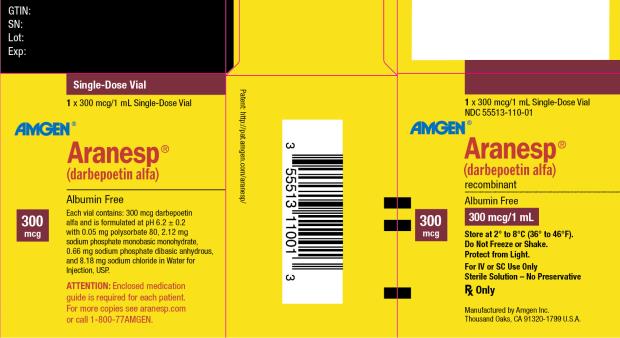
Protect from light; store Aranesp in the carton until use. Do not use Aranesp that has been shaken or frozen. Aranesp is a clear, colorless solution available in the following packages: Single - dose Vial 1 Vial/Pack, 4 Packs/Case 4 Vials/Pack, 10 Packs/Case 200 mcg/1 mL (NDC 55513-006-01) (NDC 55513-006-21) 25 mcg/1 mL (NDC 55513-002-04) 40 mcg/1 mL (NDC 55513-003-04) 60 mcg/1 mL (NDC 55513-004-04) 100 mcg/1 mL (NDC 55513-005-04) Single - dose Prefilled Syringe (SingleJect ® ) with a 27-gauge, ½-inch needle with an UltraSafe ® Needle Guard that is manually activated to cover the needle during disposal 1 Syringe/Pack, 4 Packs/Case 4 Syringes/Pack, 10 Packs/Case 200 mcg/0.4 mL (NDC 55513-028-01) 10 mcg/0.4 mL (NDC 55513-098-04) 300 mcg/0.6 mL (NDC 55513-111-01) 25 mcg/0.42 mL (NDC 55513-057-04) 500 mcg/1 mL (NDC 55513-032-01) 40 mcg/0.4 mL (NDC 55513-021-04) 60 mcg/0.3 mL (NDC 55513-023-04) 100 mcg/0.5 mL (NDC 55513-025-04) 150 mcg/0.3 mL (NDC 55513-027-04)
📋 Description ▾
11 DESCRIPTION Darbepoetin alfa is an erythropoiesis-stimulating protein that is produced in Chinese hamster ovary (CHO) cells by recombinant DNA technology. Darbepoetin alfa is a 165-amino acid protein that differs from recombinant human erythropoietin in containing 5 N-linked oligosaccharide chains, whereas recombinant human erythropoietin contains 3 chains. The 2 additional N-glycosylation sites result from amino acid substitutions in the erythropoietin peptide backbone.
The approximate molecular weight of darbepoetin alfa is 37,000 daltons. Aranesp (darbepoetin alfa) injection is formulated as a sterile, colorless, preservative-free solution containing polysorbate for intravenous or subcutaneous administration. Each 1 mL contains polysorbate 80 (0.05 mg), sodium chloride (8.18 mg), sodium phosphate dibasic anhydrous (0.66 mg), and sodium phosphate monobasic monohydrate (2.12 mg) in Water for Injection, USP (pH 6.2 ± 0.2).
💬 Information for Patients ▾
17 PATIENT COUNSELING INFORMATION Advise the patient to read the FDA-approved patient labeling ( Medication Guide and Instructions for Use ). Review the steps for direct patient administration with patients and caregivers. Training should aim to ensure that patients and caregivers can successfully perform all of the steps in the Instructions for Use of Aranesp prefilled syringe, including showing the patient or caregiver how to measure the required dose, particularly if a patient is on a dose other than the entire prefilled syringe.
If a patient or caregiver is not able to demonstrate that they can measure the dose and administer the product successfully, you should consider whether the patient is an appropriate candidate for self-administration of Aranesp or whether the patient would benefit from a different Aranesp presentation. Inform patients: Of the increased risks of mortality, serious cardiovascular reactions, thromboembolic reactions, stroke, and tumor progression [ see Warnings and Precautions ( 5.1 and 5.2 )] . To undergo regular blood pressure monitoring, adhere to prescribed anti-hypertensive regimen and follow recommended dietary restrictions.
To contact their healthcare provider for new-onset neurologic symptoms or change in seizure frequency. Of the need to have regular laboratory tests for hemoglobin. Instruct patients who self-administer Aranesp of the: Importance of following the Instructions for Use.
Dangers of reusing needles, syringes, or unused portions of single-dose vials. Proper disposal of used syringes, needles, and unused vials, and of the full container. Importance of informing healthcare provider if difficulty occurs when measuring or administering partial doses from the Aranesp prefilled syringe.
If difficulty occurs, use of other syringes or Aranesp vial may be considered. ARANESP ® (darbepoetin alfa) Manufactured by: Amgen Inc. One Amgen Center Drive Thousand Oaks, CA 91320-1799 U.S.A.
U.S. License Number 1080 Patent: http://pat.amgen.com/aranesp/ © 2001-2019, 2024 Amgen Inc. All rights reserved. *UltraSafe ® is a registered trademark of Safety Syringes, Inc.
1xxxxxx- v38
💬 Medication Guide ▾
MEDICATION GUIDE ARANESP ® (Air-uh-nesp) (darbepoetin alfa) Read this Medication Guide: before you start Aranesp. if you are told by your healthcare provider that there is new information about Aranesp. if you are told by your healthcare provider that you may inject Aranesp at home, read this Medication Guide each time you receive a new supply of medicine. This Medication Guide does not take the place of talking to your healthcare provider about your medical condition or your treatment. Talk with your healthcare provider regularly about the use of Aranesp and ask if there is new information about Aranesp.
What is the most important information I should know about Aranesp? Aranesp may cause serious side effects that can lead to death, including: For people with cancer : Your tumor may grow faster and you may die sooner if you choose to take Aranesp. Your healthcare provider will talk with you about these risks.
For all people who take Aranesp, including people with cancer or chronic kidney disease : Serious heart problems, such as heart attack or heart failure, and stroke. You may die sooner if you are treated with Aranesp to increase red blood cells (RBCs) to near the same level found in healthy people. Blood clots.
Blood clots may happen at any time while taking Aranesp. If you are receiving Aranesp for any reason and you are going to have surgery, talk to your healthcare provider about whether or not you need to take a blood thinner to lessen the chance of blood clots during or following surgery. Blood clots can form in blood vessels (veins), especially in your leg (deep venous thrombosis or DVT).
Pieces of a blood clot may travel to the lungs and block the blood circulation in the lungs (pulmonary embolus). Call your healthcare provider or get medical help right away if you have any of these symptoms: Chest pain Trouble breathing or shortness of breath Pain in your legs, with or without swelling A cool or pale arm or leg Sudden confusion, trouble speaking, or trouble understanding others' speech Sudden numbness or weakness in your face, arm, or leg, especially on one side of your body Sudden trouble seeing Sudden trouble walking, dizziness, loss of balance or coordination Loss of consciousness (fainting) Hemodialysis vascular access stops working See “ What are the possible side effects of Aranesp? ” below for more information.
If you decide to take Aranesp, your healthcare provider should prescribe the smallest dose of Aranesp that is necessary to reduce your chance of needing red blood cell transfusions. What is Aranesp? Aranesp is a prescription medicine used to treat anemia.
People with anemia have a lower-than-normal number of RBCs. Aranesp works like the human protein called erythropoietin to help your body make more RBCs. Aranesp is used to reduce or avoid the need for RBC transfusions.
Aranesp may be used to treat anemia if it is caused by: Chronic kidney disease (you may or may not be on dialysis). Chemotherapy that will be used for at least two months after starting Aranesp. If your hemoglobin level stays too high or if your hemoglobin goes up too quickly, this may lead to serious health problems which may result in death.
These serious health problems may happen if you take Aranesp, even if you do not have an increase in your hemoglobin level. Aranesp has not been proven to improve the quality of life, fatigue, or well-being. Aranesp should not be used for the treatment of anemia: If you have cancer and you will not be receiving chemotherapy that may cause anemia.
If you have a cancer that has a high chance of being cured. Talk with your healthcare provider about the kind of cancer you have. If your anemia caused by chemotherapy treatment can be managed by RBC transfusion.
In place of emergency treatment for anemia (RBC transfusions). It is not known if Aranesp is safe and effective in children who have cancer. Who should not take Aranesp?
Do not take Aranesp if you: Have cancer and have not been counseled by you… [Excerpted — this section continues on DailyMed.]
🧬 Pharmacokinetics ▾
12.3Pharmacokinetics Adult Patients with CKD The pharmacokinetics of Aranesp were studied in patients with CKD receiving or not receiving dialysis and patients with cancer receiving chemotherapy. Following intravenous administration of Aranesp to patients with CKD receiving dialysis, Aranesp serum concentration-time profiles were biphasic, with a distribution half-life of approximately 1.4 hours and a mean terminal half-life (t 1/2 ) of 21 hours. The t 1/2 of Aranesp was approximately 3-fold longer than that of epoetin alfa when administered intravenously.
Following subcutaneous administration of Aranesp to patients with CKD (receiving or not receiving dialysis), absorption was slow and C max occurred at 48 hours (range: 12 to 72 hours). In patients with CKD receiving dialysis, the average t 1/2 was 46 hours (range: 12 to 89 hours), and in patients with CKD not receiving dialysis, the average t 1/2 was 70 hours (range: 35 to 139 hours). Aranesp apparent clearance was approximately 1.4 times faster on average in patients receiving dialysis compared to patients not receiving dialysis.
The bioavailability of Aranesp in patients with CKD receiving dialysis after subcutaneous administration was 37% (range: 30% to 50%). Pediatric Patients with CKD Aranesp pharmacokinetics was evaluated in 12 pediatric patients (age 3 to 16 years) with CKD receiving or not receiving dialysis in one study (n = 12). In a phase 1 pharmacokinetic study, following a single intravenous or subcutaneous Aranesp dose, C max and t 1/2 were similar to those obtained in adult patients with CKD on dialysis.
Additionally, following a single subcutaneous dose, the average bioavailability was 54% (range: 32% to 70%), which was higher than that obtained in adult patients with CKD on dialysis. Adult Patients with Cancer Following the first subcutaneous dose of 6.75 mcg/kg (equivalent to 500 mcg for a 74 kg patient) in patients with cancer, the mean t 1/2 was 74 hours (range: 24 to 144 hours) and C max was observed at 71 hours (range: 28 to 120 hours). When administered on a once every 3 week schedule, 48-hour postdose Aranesp levels after the fourth dose were similar to those after the first dose.
Over the dose range of 0.45 to 4.5 mcg/kg Aranesp administered intravenously or subcutaneously on a once weekly schedule and 4.5 to 15 mcg/kg administered subcutaneously on a once every 3 week schedule, systemic exposure was approximately proportional to dose. No evidence of accumulation was observed beyond an expected less than 2-fold increase in blood levels when compared to the initial dose.
🧬 Pharmacodynamics ▾
12.2Pharmacodynamics Increased hemoglobin levels are not generally observed until 2 to 6 weeks after initiating treatment with Aranesp.
🔬 Clinical Studies ▾
14 CLINICAL STUDIES Clinical studies in the nephrology and chemotherapy-induced anemia clinical programs are designated with the prefixes “N” and “C”, respectively.
14.1Patients with Chronic Kidney Disease Patients with chronic kidney disease on dialysis: ESA effects on rates of transfusion In early clinical studies conducted in patients with CKD on dialysis, ESAs have been shown to reduce the use of RBC transfusions. These studies enrolled patients with mean baseline hemoglobin levels of approximately 7.5 g/dL and ESAs were generally titrated to achieve a hemoglobin level of approximately 12 g/dL. Fewer transfusions were given during the ESA treatment period when compared to a pre-treatment interval.
In the Normal Hematocrit Study, the yearly transfusion rate was 51.5% in the lower hemoglobin group (10 g/dL) and 32.4% in the higher hemoglobin group (14 g/dL). Patients with c hronic kidney disease not on dialysis : ESA effects on rates of transfusion In TREAT, a randomized, double-blind trial of 4038 patients with CKD and type 2 diabetes not on dialysis, a post-hoc analysis showed that the proportion of patients receiving RBC transfusions was lower in patients administered Aranesp to target a hemoglobin of 13 g/dL compared to the control arm in which Aranesp was administered intermittently if hemoglobin concentration decreased to less than 9 g/dL (15% versus 25%, respectively).
In CHOIR, a randomized open-label study of 1432 patients with CKD not on dialysis, use of an ESA to target a higher (13.5 g/dL) versus lower (11.3 g/dL) hemoglobin goal did not reduce the use of RBC transfusions. In each trial, no benefits occurred for the cardiovascular or end-stage renal disease outcomes. In each trial, the potential benefit of ESA therapy was offset by worse cardiovascular safety outcomes resulting in an unfavorable benefit-risk profile [ see Warnings and Precautions ( 5.1 )] .
ESA E ffects on quality of life Aranesp use has not been demonstrated in controlled clinical trials to improve quality of life, fatigue, or patient well-being. ESA E ffects on rates of death and other serious cardiac adverse events Three randomized outcome trials (Normal Hematocrit Study [NHS], Correction of Anemia with Epoetin Alfa in Chronic Kidney Disease [CHOIR], and Trial of Darbepoetin Alfa in Type 2 Diabetes and CKD [TREAT]) have been conducted in patients with CKD using Epogen/PROCRIT/Aranesp to target higher vs. lower hemoglobin levels.
Though these trials were designed to establish a cardiovascular or renal benefit of targeting higher hemoglobin levels, in all 3 studies, patients randomized to the higher hemoglobin target experienced worse cardiovascular outcomes and showed no reduction in progression to ESRD. In each trial, the potential benefit of ESA therapy was offset by worse cardiovascular safety outcomes resulting in an unfavorable benefit-risk profile [see Warnings and Precautions ( 5.1 )] . Other ESA trials Three studies (2 in adults and 1 in pediatric patients) evaluated the safety and efficacy of the de novo use of Aranesp for the correction of anemia in patients with CKD, and 3 studies (2 in adults and 1 in pediatric patients) assessed the ability of Aranesp to maintain hemoglobin concentrations in patients with CKD who had been receiving other recombinant erythropoietins.
De Novo Use of Aranesp Adult Patients Once Weekly Aranesp Starting Dose In 2 randomized, open-label studies, Aranesp or epoetin alfa was administered for the correction of anemia in patients with CKD who had not been receiving prior treatment with exogenous erythropoietin. Study N1 evaluated patients with CKD receiving dialysis; Study N2 evaluated patients not requiring dialysis. In both studies, the starting dose of Aranesp was 0.45 mcg/kg administered once weekly.
The starting dose of epoetin alfa was 50 Units/kg 3 times weekly in Study N1 and 50 Units/kg twice weekly in Study N2. When necessary, dosage adjustments were instituted to maintain hemoglobin in the study… [Excerpted — this section continues on DailyMed.]
🔒 Drug Abuse and Dependence ▾
9 DRUG ABUSE AND DEPENDENCE
9.1Controlled Substance Aranesp contains darbepoetin alfa, which is not a controlled substance.
9.2Abuse Abuse is the intentional, non-therapeutic use of a drug, even once, for its desirable psychological or physiological effects. Abuse of Aranesp may be seen in athletes for the effects on erythropoiesis. Abuse of drugs that increase erythropoiesis, such as Aranesp, by healthy persons may lead to life-threatening cardiovascular complications (e.g., stroke, myocardial infarction, or thromboembolism) [see Warnings and Precautions (5.1) ] .
In animal studies, darbepoetin alfa did not distribute to the CNS nor produce behavioral effects that are consistent with CNS activity.
🔒 Controlled Substance ▾
9.1Controlled Substance Aranesp contains darbepoetin alfa, which is not a controlled substance.
🧪 Nonclinical Toxicology ▾
13 NONCLINICAL TOXICOLOGY
13.1Carcinogenesis, Mutagenesis, Impairment of Fertility The carcinogenic potential of Aranesp has not been evaluated in long-term animal studies. In toxicity studies of approximately 6 months duration in rats and dogs, no tumorigenic or unexpected mitogenic responses were observed in any tissue type. Aranesp was not mutagenic or clastogenic under the conditions tested.
Aranesp was negative in the in vitro bacterial reverse mutation assay, the in vitro mammalian cell gene mutation assay (using CHO cells), and in the in vivo mouse erythrocyte micronucleus assay. Aranesp increased the incidence of post-implantation losses in rats. Male and female rats received intravenous doses prior to and during mating; then females were treated 3 times weekly during the first trimester of gestation (gestation days 1, 3, 5, and 7).
No effect on reproductive performance, fertility, or sperm assessment parameters were detected at any of the doses evaluated (up to 10 mcg/kg, administered 3 times weekly). The dose of 10 mcg/kg is more than 10-fold higher than the clinical recommended starting dose. An increase in post-implantation fetal loss was seen at doses equal to or greater than 0.5 mcg/kg, administered 3 times weekly.
The dose of 0.5 mcg/kg is approximately equivalent to the clinical recommended starting dose. Signs of exaggerated pharmacology were not observed in the mother receiving 0.5 mcg/kg or less, but were observed at 2.5 mcg/kg and higher.
📄 Carcinogenesis, Mutagenesis, Impairment of Fertility ▾
13.1Carcinogenesis, Mutagenesis, Impairment of Fertility The carcinogenic potential of Aranesp has not been evaluated in long-term animal studies. In toxicity studies of approximately 6 months duration in rats and dogs, no tumorigenic or unexpected mitogenic responses were observed in any tissue type. Aranesp was not mutagenic or clastogenic under the conditions tested.
Aranesp was negative in the in vitro bacterial reverse mutation assay, the in vitro mammalian cell gene mutation assay (using CHO cells), and in the in vivo mouse erythrocyte micronucleus assay. Aranesp increased the incidence of post-implantation losses in rats. Male and female rats received intravenous doses prior to and during mating; then females were treated 3 times weekly during the first trimester of gestation (gestation days 1, 3, 5, and 7).
No effect on reproductive performance, fertility, or sperm assessment parameters were detected at any of the doses evaluated (up to 10 mcg/kg, administered 3 times weekly). The dose of 10 mcg/kg is more than 10-fold higher than the clinical recommended starting dose. An increase in post-implantation fetal loss was seen at doses equal to or greater than 0.5 mcg/kg, administered 3 times weekly.
The dose of 0.5 mcg/kg is approximately equivalent to the clinical recommended starting dose. Signs of exaggerated pharmacology were not observed in the mother receiving 0.5 mcg/kg or less, but were observed at 2.5 mcg/kg and higher.
📖 Instructions for Use ▾
Instructions for Use ARANESP ® (Air-uh-nesp) (darbepoetin alfa) Single-Dose Vial Use these Instructions for Use if you or your caregiver has been trained to give Aranesp injections at home. Do not give yourself the injection unless you have received training from your healthcare provider. If you are not sure about giving the injection or if you have questions, ask your healthcare provider for help.
Before reading these Instructions for Use, read the Medication Guide that comes with Aranesp for the most important information you need to know. When you receive your Aranesp vial and syringes make sure that: The name Aranesp appears on the carton and vial label. The expiration date on the vial label has not passed.
Do not use a vial of Aranesp after the expiration date on the label. The dose strength of the Aranesp vial (number of micrograms [mcg] in the colored square on the package and on the vial label) is the same as your healthcare provider prescribed. The Aranesp liquid in the vial is clear and colorless.
Do not use Aranesp if the liquid in the vial looks discolored or cloudy, or if the liquid has lumps, flakes, or particles. The Aranesp vial has a color cap on the top of the vial. Do not use a vial of Aranesp if the color cap on the top of the vial has been removed or is missing.
Use only the type of disposable syringe and needle that your healthcare provider has prescribed. Do not shake Aranesp. Shaking could cause Aranesp not to work.
If you shake Aranesp, the solution in the vial may look foamy and should not be used. Do not freeze Aranesp. Do not use a vial of Aranesp that has been frozen.
Store Aranesp in the refrigerator between 36°F to 46°F (2°C to 8°C). Keep Aranesp away from light. Single-dose vials of Aranesp should be used only one time.
Throw the vial away after use even if there is medicine left in the vial. How should I prepare for an injection of Aranesp? Always keep an extra syringe and needle on hand.
Follow your healthcare provider’s instructions on how to measure your dose of Aranesp. This dose will be measured in milliliter (mL) or cc (1 mL is the same as 1 cc). Use a syringe that is marked in tenths of mL (for example, 0.2 mL or 0.2 cc).
Using the wrong syringe can lead to a mistake in your dose and you could inject too much or too little Aranesp. Only use disposable syringes and needles. Use the syringes and needles only one time and then throw them away as instructed by your healthcare provider.
Important: Follow these instructions exactly to help avoid infections. Preparing the dose: 1. Remove the vial of Aranesp from the refrigerator.
During this time, protect the solution from light. Keep the vial in its carton until you are ready to prepare the dose. Do not leave the vial in light.
2. Do not use a single-dose vial of Aranesp more than one time. 3.
Do not shake Aranesp . 4. Gather the other supplies you will need for your injection (vial, syringe, alcohol wipes, cotton ball, and a puncture-proof container for throwing away the syringe and needle).
See Figure 1. 5. Check the date on the Aranesp vial to be sure that the drug has not expired.
6. Wash your hands well with soap and water before preparing the medicine. See Figure 2.
7. Flip off the protective color cap on the top of the vial. Do not remove the grey rubber stopper.
Wipe the top of the grey rubber stopper with an alcohol wipe. See Figures 3 and 4. 8.
Check the package containing the syringe. If the package has been opened or damaged, do not use that syringe. Throw away the syringe in the puncture-proof disposable container.
If the syringe package is undamaged, open the package and remove the syringe. 9. Using a syringe and needle that has been recommended by your healthcare provider, carefully remove the needle cover.
See Figure 5. Then draw air into the syringe by pulling back on the plunger. The amount of air drawn into the syringe should be equal to the amount (mL or cc) of the Aranesp dose prescribed by your healthcare provider.
See Fi… [Excerpted — this section continues on DailyMed.]
📄 Package Label / Principal Display Panel ▾
PRINCIPAL DISPLAY PANEL - 10 mcg/0.4 mL Syringe Blister Pack Package Single-Dose Prefilled Syringes with 27 Gauge Needles 4 x 10 mcg/0.4 mL Prefilled Syringes NDC 55513-098-04 AMGEN 10 mcg Aranesp ® SingleJect ® (darbepoetin alfa) recombinant Albumin Free 10 mcg/0.4 mL For Intravenous or Subcutaneous Use Only Sterile Solution - No Preservative Store at 2° to 8°C (36° to 46°F). Do Not Freeze or Shake. Protect from Light.
This Product Contains Dry Natural Rubber. Do not re-use Keep out of sight and reach of children Rx Only U.S. License No.
1080 ©2014, 2016, and 2024 Amgen Inc. Manufactured by Amgen Inc. Thousand Oaks, CA 91320-1799 U.S.A.
PRINCIPAL DISPLAY PANEL - 10 mcg/0.4 mL Syringe Blister Pack Package
PRINCIPAL DISPLAY PANEL - 25 mcg/0.42 mL Syringe Blister Pack Package Single-Dose Prefilled Syringes with 27 Gauge Needles 4 x 25 mcg/0.42 mL Prefilled Syringes NDC 55513-057-04 AMGEN 25 mcg Aranesp ® SingleJect ® (darbepoetin alfa) recombinant Albumin Free 25 mcg/0.42 mL For Intravenous or Subcutaneous Use Only Sterile Solution - No Preservative Store at 2° to 8°C (36° to 46°F). Do Not Freeze or Shake. Protect from Light.
This Product Contains Dry Natural Rubber. Do not re-use Keep out of sight and reach of children Rx Only U.S. License No.
1080 ©2012, 2016, and 2024 Amgen Inc. Manufactured by Amgen Inc. Thousand Oaks, CA 91320-1799 U.S.A.
PRINCIPAL DISPLAY PANEL - 25 mcg/0.42 mL Syringe Blister Pack Package
PRINCIPAL DISPLAY PANEL - 40 mcg/0.4 mL Syringe Blister Pack Package Single-Dose Prefilled Syringes with 27 Gauge Needles 4 x 40 mcg/0.4 mL Prefilled Syringes NDC 55513-021-04 AMGEN 40 mcg Aranesp ® SingleJect ® (darbepoetin alfa) recombinant Albumin Free 40 mcg/0.4 mL For Intravenous or Subcutaneous Use Only Sterile Solution - No Preservative Store at 2° to 8°C (36° to 46°F). Do Not Freeze or Shake. Protect from Light.
This Product Contains Dry Natural Rubber. Do not re-use Keep out of sight and reach of children Rx Only U.S. License No.
1080 ©2012, 2016, and 2024 Amgen Inc. Manufactured by Amgen Inc. Thousand Oaks, CA 91320-1799 U.S.A.
PRINCIPAL DISPLAY PANEL - 40 mcg/0.4 mL Syringe Blister Pack Package
PRINCIPAL DISPLAY PANEL - 60 mcg/0.3 mL Syringe Blister Pack Package Single-Dose Prefilled Syringes with 27 Gauge Needles 4 x 60 mcg/0.3 mL Prefilled Syringes NDC 55513-023-04 AMGEN 60 mcg Aranesp ® SingleJect ® (darbepoetin alfa) recombinant Albumin Free 60 mcg/0.3 mL For Intravenous or Subcutaneous Use Only Sterile Solution - No Preservative Store at 2° to 8°C (36° to 46°F). Do Not Freeze or Shake. Protect from Light.
This Product Contains Dry Natural Rubber. Do not re-use Keep out of sight and reach of children Rx Only U.S. License No.
1080 ©2012, 2016, and 2024 Amgen Inc. Manufactured by Amgen Inc. Thousand Oaks, CA 91320-1799 U.S.A.
PRINCIPAL DISPLAY PANEL - 60 mcg/0.3 mL Syringe Blister Pack Package
PRINCIPAL DISPLAY PANEL - 100 mcg/0.5 mL Syringe Blister Pack Package Single-Dose Prefilled Syringes with 27 Gauge Needles 4 x 100 mcg/0.5 mL Prefilled Syringes NDC 55513-025-04 AMGEN 100 mcg Aranesp ® SingleJect ® (darbepoetin alfa) recombinant Albumin Free 100 mcg/0.5 mL For Intravenous or Subcutaneous Use Only Sterile Solution - No Preservative Store at 2° to 8°C (36° to 46°F). Do Not Freeze or Shake. Protect from Light.
This Product Contains Dry Natural Rubber. Do not re-use Keep out of sight and reach of children Rx Only U.S. License No.
1080 ©2012, 2016, and 2024 Amgen Inc. Manufactured by Amgen Inc. Thousand Oaks, CA 91320-1799 U.S.A.
PRINCIPAL DISPLAY PANEL - 100 mcg/0.5 mL Syringe Blister Pack Package
PRINCIPAL DISPLAY PANEL - 150 mcg/0.3 mL Syringe Blister Pack Package Single-Dose Prefilled Syringes with 27 Gauge Needles 4 x 150 mcg/0.3 mL Prefilled Syringes NDC 55513-027-04 AMGEN 150 mcg Aranesp ® SingleJect ® (darbepoetin alfa) recombinant Albumin Free 150 mcg/0.3 mL For Intravenous or Subcutaneous Use Only Sterile Solution - No Preservative Store at 2° to 8°C (36° to 46°F). Do Not Freeze or Shake. Pro… [Excerpted — this section continues on DailyMed.]