
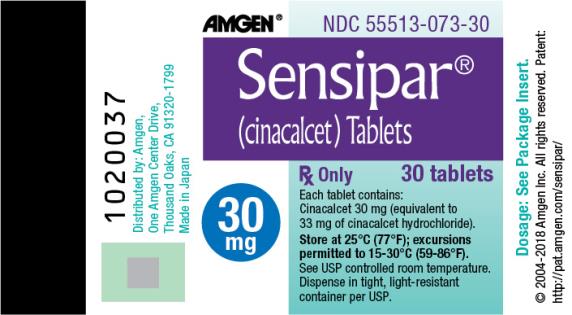
Sensipar cinacalcet hydrochloride 30 mg Tablet, Coated, 30-count — NDC 55513-073-30 (Billing 55513-0073-30)
This is a package of 30 tablets of Sensipar cinacalcet hydrochloride 30 mg Tablet, Coated from Amgen Inc, marketed since Apr 2004 and currently FDA-listed, this package's marketing is listed to end Dec 2027; retail pharmacies pay about $26.19 per tablet (NADAC). It is this product's only package size.
NDC database record
One package, one record: these facts belong to NDC 55513-073-30 alone.
- Record
- FDA NDC Directory package listing · Human prescription drug
- Code segments
- 55513 labeler · 073 product · 30 package
- Package marketed since
- Apr 4, 2004
- Package marketing ended
- Dec 31, 2027
- Sample package
- No — commercial package
- Billing quantity
- 30 EA per package
- Barcode (UPC-A, from the NDC)
- 3 5551307330 1
- Medicaid fills, this package
- 4,757 prescriptions in the last four reported quarters
- FDA record last changed
- Jul 24, 2026
Identity & classification
Regulatory identifiers FDA, NLM and CMS codes for this package
Drug-database identifiers Medi-Span GPI and First Databank GCN / HICL / AHFS classification
- GSN (GCN sequence number): 053762
- GCN: 21497
- GPI-14 (Medi-Span): 30905225100320
- HICL (First Databank): 025998
- AHFS class code: 68:24.04.00
- RxCUI (RxNorm): 432400
Where does this data come from?
- FDA openFDA NDC Directory · synced Oct 1, 2026
- FDA label on DailyMed · label index refreshed Oct 6, 2026
- RxNorm (NLM RxNav) · catalog refreshed Oct 1, 2026
- Medi-Span GPI (licensed)
- First Databank (licensed) · refreshed Oct 1, 2026
RxNorm drug class
This medicine belongs to the Calcium-sensing Receptor Agonist class.
Where does this data come from?
- RxClass (NLM) · catalog refreshed Oct 1, 2026
Clinical
Cinacalcet is used to treat hyperparathyroidism (a condition in which the body produces too much parathyroid hormone [a natural substance needed to control the amount of calcium in the blood] which can cause serious problems with the bones, heart, blood vessels, and lungs) in people with chronic kidney disease (condition in which the kidneys stop working slowly and gradually) who are being treated with dialysis. Cinacalcet is also used to treat high levels of calcium in the blood of patients who have parathyroid cancer (cancer of the glands in the neck that make parathyroid hormone). Cinacalce...
Read the full MedlinePlus article ↗- It lowers parathyroid hormone and blood calcium. It's used in adults with secondary hyperparathyroidism on dialysis, in parathyroid carcinoma, and in primary hyperparathyroidism wh...
- Take it by mouth with food or right after a meal. Swallow it whole. Don't chew, crush or split it. Your prescriber may change your amount based on blood tests, so keep your lab app...
- Nausea and vomiting are the most common, and taking it with food helps. Diarrhea, muscle aches, dizziness and headache can also happen. If nausea or vomiting is severe or won't sto...
- Call right away for tingling, muscle cramps or spasms, seizures, a racing or irregular heartbeat, or fainting. These can be signs of low calcium. Also call for black or bloody stoo...
Patient education
Supplement & herbal interactions
Where does this data come from?
- MedlinePlus (NLM) · refreshed Oct 1, 2026
- FDA label on DailyMed · label index refreshed Oct 6, 2026
Ask a licensed pharmacist directly — free, answered by our team.
Pricing
A drug doesn't have one price. Each row is a different public payment system, and none is what you'd pay at the counter — that depends on your insurance. The ⓘ on each row explains what it measures.
| Price system | Per ea | Per package |
|---|---|---|
| Retail pharmacies payNADAC · weekly | $26.189 | $785.66 / 30 tablets |
| Medicaid paysCMS SDUD · 12 mo | $67.71 | $2,031.34 / 30 tablets |
| Medicare drug plans payPart D · quarterly | No Part D plan price is available for this NDC in our data. | |
Where does this data come from?
- CMS NADAC weekly file · file of Nov 23, 2022
- CMS ASP pricing files · refreshed Sep 20, 2026
- CMS Medicaid State Drug Utilization Data · through Q1 2026
- CMS Part D plan pricing files · refreshed Sep 24, 2026
- VA National Acquisition Center price file
Packaging — all sizes for this product
| Package NDC | Description | Marketing start | Marketing end | Status |
|---|---|---|---|---|
| 55513-0073-30 You're viewing this Main listing | 30 TABLET, COATED in 1 BOTTLE, PLASTIC | 2004-04-04 | Dec 31, 2027 | Active |
Therapeutic equivalents
| Product | Labeler | Pack | NADAC/unit | TE | Status | Price vs. this |
|---|---|---|---|---|---|---|
| Cinacalcet 30 mg 47335-0379-83 | Sun | 30 tablets | $0.403 | — | FDA listed | save 98% |
| Cinacalcet 30 mg 16729-0440-10 | Accord | 30 tablets | $0.407 | AB | Availability likely | save 98% |
| Cinacalcet 30 mg 00904-7502-04 | Major | 1 tablet | $0.411 | AB | Availability likely | save 98% |
| Cinacalcet 30 mg 31722-0103-30 | Camber | 30 tablets | $0.411 | — | Availability likely | save 98% |
| Cinacalcet 30 mg 50268-0188-12 | AvPAK | 1 tablet | $0.411 | AB | Availability likely | save 98% |
| Cinacalcet 30 mg 60687-0516-21 | American | 1 tablet | $0.411 | AB | Availability likely | save 98% |
| Cinacalcet 30 mg 64380-0883-04 | Strides | 30 tablets | $0.411 | AB | Availability likely | save 98% |
| Cinacalcet 30 mg 69097-0410-02 | Cipla | 30 tablets | $0.411 | AB | Availability likely | save 98% |
| Cinacalcet 30 mg 76282-0674-30 | EXELAN | 30 tablets | $0.411 | AB | Availability likely | save 98% |
| Sensipar 30 mgthis 55513-0073-30 | Amgen | 30 tablets | $26.189 | — | FDA listed | — |
| Cinacalcet 30 mg 43598-0367-05 | Dr. | 500 tablets | — | AB | FDA listed | — |
| Cinacalcet 30 mg 63629-8763-01 | Bryant | 30 tablets | — | AB | FDA listed | — |
| Cinacalcet 30 mg 63629-9608-01 | Bryant | 30 tablets | — | AB | FDA listed | — |
| Cinacalcet Hydrochloride 30 mg 65162-0155-03 | Amneal | 30 tablets | — | — | FDA listed | — |
| Cinacalcet 30 mg 65862-0831-01 | Aurobindo | 100 tablets | — | AB | Discontinued | — |
| Cinacalcet 30 mg 67877-0503-01 | Ascend | 100 tablets | — | AB | FDA listed | — |
| Cinacalcet 30 mg 70518-4615-00 | REMEDYREPACK | 1 tablet | — | AB | FDA listed | — |
| Cinacalcet 30 mg 71335-2761-01 | Bryant | 30 tablets | — | AB | FDA listed | — |
| Cinacalcet 30 mg 72162-1843-03 | Bryant | 30 tablets | — | AB | FDA listed | — |
| Cinacalcet 30 mg 72865-0150-30 | XLCare | 30 tablets | — | — | FDA listed | — |
| Cinacalcet 30 mg 84386-0111-01 | Aurobindo | 100 tablets | — | AB | FDA listed | — |
Where does this data come from?
- FDA openFDA NDC Directory · synced Oct 1, 2026
- FDA Orange Book · refreshed Oct 3, 2026
- CMS NADAC weekly file · file of Nov 23, 2022
Availability & generic status
The FDA lists approved generic versions of this medicine, but that does not always mean a pharmacy can get one today. Patent rules, launch agreements, supply and pricing can affect when generics actually arrive.
Why the date isn’t exact: Generic timing can change because patents may be challenged, settled, licensed, added, removed, or worked around with a narrower label — and FDA approval does not always mean a pharmacy can get the generic today.
🛈 What do these terms mean?
- Patent
- Legal protection listed in the Orange Book that may delay generic approval or launch. Issued by the U.S. Patent & Trademark Office.
- Substance patent
- Covers the active drug molecule itself — the hardest to design around. A generic generally can’t launch until it expires.
- Formulation (product) patent
- Covers a specific formulation or dosage form. A generic can sometimes work around it with a different formulation.
- Method-of-use patent
- A patent covering one specific approved use of the drug — not necessarily the whole molecule. A generic can sometimes launch with a “skinny label” that carves out the protected use and keeps the others.
- Skinny label
- A generic label that omits a still-patented use when the FDA allows it — letting a generic reach the market for the unprotected uses.
- Exclusivity
- FDA-granted marketing protection, separate from patents — e.g. 5-yr new chemical entity, 7-yr orphan drug, or a +6-month pediatric extension.
- Paragraph IV
- A generic applicant’s formal challenge to a listed patent. It can potentially lead to earlier generic entry, but often involves litigation or a settlement.
- RLD / RS
- Reference Listed Drug — the brand product the FDA uses as the reference for generic applications. Reference Standard — the product the FDA expects generics to compare against in bioequivalence testing.
- TE / AB rating
- FDA therapeutic-equivalence rating. An AB rating generally means the FDA considers a generic therapeutically equivalent to — and substitutable for — the brand.
- LOE (loss of exclusivity)
- The latest patent or exclusivity currently listed — the loss-of-exclusivity / latest-listed-protection date shown on this page. Paragraph-IV challenges and settlements can move the real date earlier; FDA approval and a manufacturer’s decision to market can move it later.
Built from the FDA Orange Book. The bars above are scaled to each protection’s expiry; the red LOE marker is the last one to lapse.
| Patent | Type | Use code | Expires |
|---|---|---|---|
| US 7829595 ↗ | Method of use | U-1098 | Sep 22, 2026 |
| US 7829595 ↗ | Method of use | U-1098 | Sep 22, 2026 |
| US 7829595 ↗ | Method of use | U-1098 | Sep 22, 2026 |
| US 9375405 ↗ | Drug product | — | Sep 22, 2026 |
| US 9375405 ↗ | Drug product | — | Sep 22, 2026 |
| US 9375405 ↗ | Drug product | — | Sep 22, 2026 |
Is there a generic version of SENSIPAR 30 MG TABLET?
The FDA approved a generic — why can’t I get it at my pharmacy yet?
Why do different websites show different generic release dates?
What does “FDA listed” mean?
What does a patent or protection date mean here?
What does “current Orange Book estimate” mean?
Can a generic come out before the last patent expires?
Can a generic come out after the listed dates?
What is the difference between patents and exclusivity?
Why are there multiple patent dates?
Where does this data come from?
- FDA Orange Book · refreshed Oct 3, 2026
What it looks like
Where does this data come from?
- FDA label on DailyMed · label index refreshed Oct 6, 2026
Inactive Ingredients / Excipients
Inactive ingredients, also called excipients, are components of the drug product other than the active ingredient. They may include fillers, dyes, coatings, preservatives, flavors, or other formulation ingredients.
🧪 Avoiding an ingredient? See Cinacalcet inactive ingredients by manufacturer: every current product's list side by side, so you can ask your pharmacy for the version that does not list it.
💡 Tap an ingredient (hover on desktop) to see what it is and why it’s used.
-
UNII R12CBM0EIZ
A natural wax derived from a Brazilian palm tree, used as a coating and polish on tablets and capsules. It creates a smooth, shiny finish that protects the medicine and improves appearance.
-
UNII 2S7830E561
Crospovidone is a synthetic polymer derived from povidone. It acts as a disintegrant, helping the tablet or capsule break apart quickly in the stomach so the active ingredient can be absorbed.
-
UNII 70097M6I30
Magnesium stearate is a salt made from magnesium and stearic acid, a fatty substance. It's used in tablets and capsules as a lubricant and glidant to help ingredients flow smoothly during manufacturing and prevent sticking.
-
UNII OP1R32D61U
Microcrystalline cellulose is a purified form of cellulose, a natural fiber from plant sources. It acts as a binder and filler in tablets and capsules, helping hold ingredients together and give the medicine its shape and size.
-
UNII FZ989GH94E
Povidone is a synthetic polymer made from a plastic-like material. It acts as a binder to hold tablet ingredients together and as a disintegrant to help the tablet break apart in your stomach so the medicine can be absorbed.
-
UNII ETJ7Z6XBU4
Silicon dioxide is a naturally occurring mineral used as a glidant and anti-caking agent. It helps powder ingredients flow smoothly and prevents clumping during manufacturing and storage.
-
UNII O8232NY3SJ
A plant-based carbohydrate derived from corn kernels. It acts as a filler to add bulk, a binder to hold ingredients together, and a disintegrant to help the tablet break apart in your stomach for absorption.
7 inactive ingredients listed in the exact product block matched to this NDC.
Where does this data come from?
ingredient classCode="IACT" elements from the exact product block matched by this NDC. Label-section narrative from DailyMed / the openFDA label index is shown separately when available.- FDA label on DailyMed · label index refreshed Oct 6, 2026
- FDA openFDA NDC Directory · synced Oct 1, 2026
Inactive ingredient FAQ
Are inactive ingredients the same for every manufacturer?
Why might an inactive ingredient be missing?
Can inactive ingredients matter?
Manufacturer & labeler
More NDCs from Amgen Inc labeler code 55513
- ARANESP darbepoetin alfa 200 ug/.4mL Injection, Solution NDC 55513-028-01
- ARANESP darbepoetin alfa 500 ug/mL Injection, Solution NDC 55513-032-01
- PAVBLU aflibercept-ayyh 2 mg/.05mL Injection, Solution NDC 55513-056-01
- ARANESP darbepoetin alfa 25 ug/.42mL Injection, Solution NDC 55513-057-04
- IMDELLTRA (AMG757) Tarlatamab-dlle Kit NDC 55513-059-01
- PAVBLU aflibercept-ayyh 2 mg/.05mL Injection, Solution NDC 55513-065-01
- Sensipar cinacalcet hydrochloride 60 mg Tablet, Coated NDC 55513-074-30
- Sensipar cinacalcet hydrochloride 90 mg Tablet, Coated NDC 55513-075-30
- IMDELLTRA (AMG757) Tarlatamab-dlle Kit NDC 55513-077-01
- Imlygic talimogene laherparepvec 1000000 [PFU]/mL Injection, Suspension NDC 55513-078-01
- Imlygic talimogene laherparepvec 100000000 [PFU]/mL Injection, Suspension NDC 55513-079-01
- ARANESP darbepoetin alfa 10 ug/.4mL Injection, Solution NDC 55513-098-04
Where does this data come from?
- FDA openFDA NDC Directory · synced Oct 1, 2026
- Drugs@FDA
Full prescribing information FDA SPL
🎯 Indications and Usage ▾
1 INDICATIONS AND USAGE Sensipar is a positive modulator of the calcium sensing receptor indicated for: Secondary Hyperparathyroidism (HPT) in adult patients with chronic kidney disease (CKD) on dialysis. ( 1.1 ) Limitations of Use: Sensipar is not indicated for use in patients with CKD who are not on dialysis Hypercalcemia in adult patients with Parathyroid Carcinoma (PC). ( 1.2 ) Hypercalcemia in adult patients with primary HPT for whom parathyroidectomy would be indicated on the basis of serum calcium levels, but who are unable to undergo parathyroidectomy.
( 1.3 )
1.1Secondary Hyperparathyroidism Sensipar is indicated for the treatment of secondary hyperparathyroidism (HPT) in adult patients with chronic kidney disease (CKD) on dialysis [see Clinical Studies ( 14.1 )]. Limitations of Use: Sensipar is not indicated for use in patients with CKD who are not on dialysis because of an increased risk of hypocalcemia [see Warnings and Precautions ( 5.1 )] .
1.2Parathyroid Carcinoma Sensipar is indicated for the treatment of hypercalcemia in adult patients with Parathyroid Carcinoma [see Clinical Studies ( 14.2 )] .
1.3Primary Hyperparathyroidism Sensipar is indicated for the treatment of hypercalcemia in adult patients with primary HPT for whom parathyroidectomy would be indicated on the basis of serum calcium levels, but who are unable to undergo parathyroidectomy [see Clinical Studies ( 14.3 )] .
⏱️ Dosage and Administration ▾
2 DOSAGE AND ADMINISTRATION Sensipar tablets should be taken with food or shortly after a meal ( 2.1 ) Tablets should always be taken whole and not divided ( 2.1 ) Secondary HPT in patients with CKD on dialysis ( 2.2 ): ○ Starting dose is 30 mg once daily. ○ Titrate dose no more frequently than every 2 to 4 weeks through sequential doses of 30, 60, 90, 120, and 180 mg once daily as necessary to achieve targeted intact parathyroid hormone (iPTH) levels. ○ iPTH levels should be measured no earlier than 12 hours after most recent dose.
Hypercalcemia in patients with PC or hypercalcemia in patients with primary HPT ( 2.3 ): ○ Starting dose is 30 mg twice daily. ○ Titrate dose every 2 to 4 weeks through sequential doses of 30 mg twice daily, 60 mg twice daily, 90 mg twice daily, and 90 mg three or four times daily as necessary to normalize serum calcium levels. Once the maintenance dose has been established, monitor serum calcium approximately monthly for patients with secondary HPT and every 2 months for patients with PC or primary HPT ( 2.4 )
2.1Administration Sensipar should be taken with food or shortly after a meal. Sensipar tablets are administered orally and should always be taken whole and not chewed, crushed, or divided.
2.2Secondary Hyperparathyroidism in Patients with Chronic Kidney Disease on Dialysis The recommended starting oral dose of Sensipar is 30 mg once daily. Serum calcium and serum phosphorus should be measured within 1 week and intact parathyroid hormone (iPTH) should be measured 1 to 4 weeks after initiation or dose adjustment of Sensipar [see Dosage and Administration ( 2.3 )] . Sensipar should be titrated no more frequently than every 2 to 4 weeks through sequential doses of 30, 60, 90, 120, and 180 mg once daily to target iPTH levels of 150 to 300 pg/mL.
Serum iPTH levels should be assessed no earlier than 12 hours after dosing with Sensipar. Sensipar can be used alone or in combination with vitamin D sterols and/or phosphate binders. During dose titration, serum calcium levels should be monitored frequently and if levels decrease below the normal range, appropriate steps should be taken to increase serum calcium levels, such as by providing supplemental calcium, initiating or increasing the dose of calcium-based phosphate binder, initiating or increasing the dose of vitamin D sterols, or temporarily withholding treatment with Sensipar [see Dosage and Administration ( 2.4 ) and Warnings and Precautions ( 5.1 )] .
2.3Patients with Parathyroid Carcinoma and Primary Hyperparathyroidism The recommended starting oral dose of Sensipar is 30 mg twice daily. The dose of Sensipar should be titrated every 2 to 4 weeks through sequential doses of 30 mg twice daily, 60 mg twice daily, and 90 mg twice daily, and 90 mg 3 or 4 times daily as necessary to normalize serum calcium levels. Serum calcium should be measured within 1 week after initiation or dose adjustment of Sensipar [see Dosage and Administration ( 2.4 ) and Warnings and Precautions ( 5.1 )].
2.4Switching from Parsabiv (etelcalcetide) to Sensipar Discontinue etelcalcetide for at least 4 weeks prior to starting Sensipar. Ensure corrected serum calcium is at or above the lower limit of normal prior to Sensipar initiation [see Warnings and Precautions ( 5.1 )] . Initiate Sensipar treatment at a starting dose of 30 mg once daily.
2.5Monitoring for Hypocalcemia Once the maintenance dose has been established, serum calcium should be measured approximately monthly for patients with secondary hyperparathyroidism with CKD on dialysis, and every 2 months for patients with parathyroid carcinoma or primary hyperparathyroidism [see Dosage and Administration ( 2.2 , 2.3 )] . For secondary hyperparathyroidism patients with CKD on dialysis, if serum calcium falls below 8.4 mg/dL but remains above 7.5 mg/dL, or if symptoms of hypocalcemia occur, calcium-containing phosphate binders and/or vitamin D sterols can be used to raise serum calcium.
If serum calcium falls belo… [Excerpted — this section continues on DailyMed.]
💊 Dosage Forms and Strengths ▾
3 DOSAGE FORMS AND STRENGTHS Sensipar is available as film-coated tablets. Sensipar tablets are formulated as light-green, film-coated, oval-shaped tablets marked with “AMG” on one side and “30” or “60” or “90” on the opposite side of the 30 mg, 60 mg, or 90 mg strengths, respectively. Tablets: 30, 60, and 90 mg tablets ( 3 )
⛔ Contraindications ▾
4 CONTRAINDICATIONS Sensipar treatment initiation is contraindicated if serum calcium is less than the lower limit of the normal range [see Warnings and Precautions ( 5.1 )]. Sensipar treatment initiation is contraindicated if serum calcium is less than the lower limit of the normal range. ( 4 , 5.1 )
⚠️ Warnings and Cautions ▾
5 WARNINGS AND PRECAUTIONS Hypocalcemia : Life threatening events and fatal outcomes were reported. Hypocalcemia can prolong QT interval, lower the threshold for seizures, and cause hypotension, worsening heart failure, and/or arrhythmia. Monitor serum calcium carefully for the occurrence of hypocalcemia during treatment.
( 2.4 , 5.1 ) Upper Gastrointestinal (GI) Bleeding: Patients with risk factors for upper GI bleeding may be at increased risk. Monitor patients and promptly evaluate and treat any suspected GI bleeding. ( 5.2 ) Hypotension, Worsening Heart Failure and/or Arrhythmias : In postmarketing safety surveillance, isolated, idiosyncratic cases of hypotension, worsening heart failure, and/or arrhythmia have been reported in patients with impaired cardiac function.
( 5.3 ) Adynamic B one D isease : May develop if iPTH levels are suppressed below 100 pg/mL. ( 5.4 )
5.1Hypocalcemia Sensipar lowers serum calcium and can lead to hypocalcemia [see Adverse Reactions ( 6.1 )]. Significant lowering of serum calcium can cause paresthesias, myalgias, muscle spasms, tetany, seizures, QT interval prolongation and ventricular arrhythmia. Life threatening events and fatal outcomes associated with hypocalcemia have been reported in patients treated with Sensipar, including in pediatric patients.
The safety and effectiveness of Sensipar have not been established in pediatric patients [see Pediatric Use ( 8.4 )]. Sensipar is not indicated for patients with CKD not on dialysis [see I ndications and Usage ( 1 )] . In patients with secondary HPT and CKD not on dialysis, the long-term safety and efficacy of Sensipar have not been established.
Clinical studies indicate that Sensipar-treated patients with CKD not on dialysis have an increased risk for hypocalcemia compared with Sensipar-treated patients with CKD on dialysis, which may be due to lower baseline calcium levels. In a phase 3 study of 32 weeks duration and including 404 patients with CKD not on dialysis (302 cinacalcet, 102 placebo), in which the median dose for cinacalcet was 60 mg per day at the completion of the study, 80% of Sensipar-treated patients experienced at least one serum calcium value < 8.4 mg/dL compared with 5% of patients receiving placebo.
QT Interval Prolongation and V entricular A rr h ythmia Decreases in serum calcium can also prolong the QT interval, potentially resulting in ventricular arrhythmia. Cases of QT prolongation and ventricular arrhythmia have been reported in patients treated with Sensipar. Patients with congenital long QT syndrome, history of QT interval prolongation, family history of long QT syndrome or sudden cardiac death, and other conditions that predispose to QT interval prolongation and ventricular arrhythmia may be at increased risk for QT interval prolongation and ventricular arrhythmias if they develop hypocalcemia due to Sensipar.
Closely monitor corrected serum calcium and QT interval in patients at risk receiving Sensipar. Seizures In clinical studies, seizures (primarily generalized or tonic-clonic) were observed in 1.4% (43/3049) of Sensipar-treated patients and 0.7% (5/687) of placebo-treated patients. While the basis for the reported difference in seizure rate is not clear, the threshold for seizures is lowered by significant reductions in serum calcium levels.
Monitor serum calcium levels in patients with seizure disorders receiving Sensipar . Concurrent Administration with Other Calcium-Lowering Drug Products Concurrent administration of Sensipar with calcium-lowering drugs including other calcium-sensing receptor agonists could result in severe hypocalcemia. Closely monitor serum calcium in patients receiving Sensipar and concomitant therapies known to lower serum calcium levels.
Patient Education and Hypocalcemia Treatment Educate patients on the symptoms of hypocalcemia and advise them to contact a healthcare provider if they occur. If corrected serum calcium falls below the lower limit of normal or symptoms of hypocalcemi… [Excerpted — this section continues on DailyMed.]
🤒 Adverse Reactions ▾
6 ADVERSE REACTIONS The following adverse reactions are discussed in greater detail in other sections of labeling: Hypocalcemia [see Warnings and Precautions ( 5.1 )] Upper Gastrointestinal Bleeding [see Warnings and Precautions ( 5.2 )] Hypotension, Worsening Heart Failure and/or Arrhythmias [ see Warnings and Precautions ( 5.3 )] Adynamic Bone Disease [see Warnings and Precautions ( 5.4 )] The most common adverse reactions (i.e., ≥ 25%) associated with Sensipar were nausea and vomiting. ( 6 ) To report SUSPECTED ADVERSE REACTIONS, contact Amgen Medical Information at 1-800-77-AMGEN (1-800-772-6436) or FDA at 1-800-FDA-1088 or www.fda.gov/medwatch.
6.1Clinical Trials Experience Because clinical trials are conducted under widely varying conditions, adverse reaction rates observed in the clinical trials of a drug cannot be directly compared with rates in the clinical trials of another drug and may not reflect the rates observed in clinical practice. Secondary Hyperparathyroidism in Patients with Chronic Kidney Disease on Dialysis In three double-blind, placebo-controlled clinical trials, 1126 patients with CKD on dialysis received study drug (656 Sensipar, 470 placebo) for up to 6 months.
The most frequently reported adverse reactions are listed in Table 1. Seizures were observed in 1.4% (13/910) of Sensipar-treated patients and 0.7% (5/641) of placebo-treated patients across all completed placebo-controlled trials. Table 1.
Adverse Reactions with Frequency ≥ 5% in Patients on Dialysis in Short-Term Studies for up to 6 Months Placebo Sensipar (n = 470) (n = 656) Event*: (%) (%) Nausea 19 31 Vomiting 15 27 Diarrhea 20 21 Myalgia 14 15 Dizziness 8 10 Hypertension 5 7 Asthenia 4 7 Anorexia 4 6 Pain Chest, Non-Cardiac 4 6 Dialysis Access Site Infection 4 5 *Included are events that were reported at a greater incidence in the Sensipar group than in the placebo group. In a randomized, double-blind placebo-controlled study of 3883 patients with secondary HPT and CKD receiving dialysis in which patients were treated for up to 64 months (mean duration of treatment was 21 months in the Sensipar group), the most frequently reported adverse reactions (incidence of ≥ 5% in the Sensipar group and a difference ≥ 1% compared to placebo) are listed in Table 2.
Table 2. Frequency of Adverse Reactions in Dialysis Patients Treated for up to 64 Months in a Long-Term Study 1 Placebo (n = 1923) Sensipar (n = 1938) 3699 subject-years 4044 subject-years Percent of subjects reporting 90.9
93.2Adverse Reactions (%) Nausea 15.5
29.1Vomiting 13.7
25.6Diarrhea 18.7
20.5Dyspnea 11.5
13.4Cough 9.8
11.7Hypotension 10.5
11.6Headache 9.6
11.5Hypocalcemia 1.4
11.2Muscle spasms 9.2
11.1Abdominal pain 9.6
10.9Abdominal pain upper 6.3
8.2Hyperkalemia 6.1
8.1Upper respiratory tract infection 6.3
7.6Dyspepsia 4.6
7.4Dizziness 4.7
7.3Decreased appetite 3.5
5.9Asthenia 3.8
5.4Constipation 3.8 5.0 1 Adverse reactions that occurred in ≥ 5% frequency in the Sensipar group and a difference ≥ 1% compared to the placebo group (Safety Analysis Set). Crude incidence rate = 100 * Total number of subjects with event/ n n = Number of subjects receiving at least one dose of study drug. Additional adverse reaction rates from the long-term, randomized, double-blind placebo-controlled study for Sensipar versus placebo are as follows: seizure (2.5%, 1.6%), rash (2.2%, 1.9%), hypersensitivity reactions (9.4%, 8.3%).
Patients with Parathyroid Carcinoma and Primary Hyperparathyroidism The safety profile of Sensipar in these patient populations is generally consistent with that seen in patients with CKD on dialysis. Forty six patients were treated with Sensipar in a single-arm study, 29 with Parathyroid Carcinoma and 17 with intractable pHPT. Nine (20%) of the patients withdrew from the study due to adverse events.
The most frequent adverse reactions and the most frequent cause of withdrawal in these patient populations were nausea and vomiting. Severe or prolonged cases… [Excerpted — this section continues on DailyMed.]
🔄 Drug Interactions ▾
7 DRUG INTERACTIONS Co-administration with a strong CYP3A4 inhibitor may increase serum levels of cinacalcet. Dose adjustment and monitoring of iPTH serum phosphorus and serum calcium may be required. ( 7.1 ) Cinacalcet is a strong inhibitor of CYP2D6. Dose adjustments may be required for concomitant medications that are predominantly metabolized by CYP2D6. ( 7.2 )
7.1Strong CYP3A4 Inhibitors Cinacalcet is partially metabolized by CYP3A4. Dose adjustment of Sensipar may be required if a patient initiates or discontinues therapy with a strong CYP3A4 inhibitor (e.g., ketoconazole, itraconazole). The iPTH and serum calcium concentrations should be closely monitored in these patients [see Clinical Pharmacology ( 12.3 )] .
7.2CYP2D6 Substrates Cinacalcet is a strong inhibitor of CYP2D6. Dose adjustments may be required for concomitant medications that are predominantly metabolized by CYP2D6 (e.g., desipramine, metoprolol, and carvedilol) and particularly those with a narrow therapeutic index (e.g., flecainide and most tricyclic antidepressants) [see Clinical Pharmacology ( 12.3 )] .
👥 Use in Specific Populations ▾
8 USE IN SPECIFIC POPULATIONS Pediatric Use: A fatal outcome was reported in a pediatric clinical trial patient with severe hypocalcemia. Sensipar is not indicated for use in pediatric patients. ( 8.4 )
8.1Pregnancy Risk Summary Limited case reports of Sensipar use in pregnant women are insufficient to inform a drug associated risk of adverse developmental outcomes. In animal reproduction studies, when female rats were exposed to cinacalcet during the period of organogenesis through to weaning at 2-3 times the systemic drug levels (based on AUC) at the maximum recommended human dose (MRHD) of 180 mg/day, peripartum and early postnatal pup loss and reduced pup body weight gain were observed in the presence of maternal hypocalcemia [ see Data ] .
The estimated background risk of major birth defects and miscarriage for the indicated populations is unknown. In the U.S. general population, the estimated background risk of major birth defects and miscarriage in clinically recognized pregnancies is 2-4% and 15-20%, respectively. Data Animal Data In pregnant female rats given oral gavage doses of 2, 25, 50 mg/kg/day cinacalcet during gestation, no teratogenicity was observed at doses up to 50 mg/kg/day (exposure 4 times those resulting with a human oral dose of 180 mg/day based on AUC comparison).
Decreased fetal body weights were observed at all doses (less than 1 to 4 times a human oral dose of 180 mg/day based on AUC comparison) in conjunction with maternal toxicity (decreased food consumption and body weight gain). In pregnant female rabbits given oral gavage doses of 2, 12, 25 mg/kg/day cinacalcet during gestation, no adverse fetal effects were observed (exposures less than with a human oral dose of 180 mg/day based on AUC comparisons). Reductions in maternal food consumption and body weight gain were seen at doses of 12 and 25 mg/kg/day.
Cinacalcet has been shown to cross the placental barrier in rabbits. In pregnant rats given oral gavage doses of 5, 15, 25 mg/kg/day cinacalcet during gestation through lactation, no adverse fetal or pup (post-weaning) effects were observed at 5 mg/kg/day (exposures less than with a human therapeutic dose of 180 mg/day based on AUC comparisons). Higher doses of 15 and 25 mg/kg/day cinacalcet (exposures 2 to 3 times a human oral dose of 180 mg/day based on AUC comparisons) were accompanied by maternal signs of hypocalcemia (periparturient mortality and early postnatal pup loss), and reductions in postnatal maternal and pup body weight gain.
8.2Lactation Risk Summary There are no data regarding the presence of Sensipar in human milk or effects on the breastfed infant or on milk production. Studies in rats showed that cinacalcet was excreted in the milk. The developmental and health benefits of breastfeeding should be considered along with the mother’s clinical need for Sensipar and any potential adverse effects on the breastfed infant from Sensipar or from the underlying maternal condition.
8.4Pediatric Use The safety and efficacy of Sensipar have not been established in pediatric patients. The use of Sensipar for the treatment of secondary HPT in pediatric patients with CKD on dialysis was evaluated in two randomized, controlled studies (Pediatric Study 1 and Study 2) where 47 pediatric patients aged 6 years to less than 18 years received at least one dose of Sensipar and in one single-arm study (Pediatric Study 3) where 17 pediatric patients aged 28 days to less than 6 years received at least one dose of Sensipar.
Dosing with Sensipar in Pediatric Study 1 was stopped because of a fatality in a Sensipar-treated individual. The individual was noted to be severely hypocalcemic at the time of death. The cause of death was multifactorial and a contribution of Sensipar to the death could not be excluded [see Warnings and Precautions ( 5.1 )] .
Study 1 was terminated and changes to Sensipar dosing after the fatality were implemented in Pediatric Study 2 and Study 3 to minimize the risk of severe hyp… [Excerpted — this section continues on DailyMed.]
🤰 Pregnancy ▾
8.1Pregnancy Risk Summary Limited case reports of Sensipar use in pregnant women are insufficient to inform a drug associated risk of adverse developmental outcomes. In animal reproduction studies, when female rats were exposed to cinacalcet during the period of organogenesis through to weaning at 2-3 times the systemic drug levels (based on AUC) at the maximum recommended human dose (MRHD) of 180 mg/day, peripartum and early postnatal pup loss and reduced pup body weight gain were observed in the presence of maternal hypocalcemia [ see Data ] .
The estimated background risk of major birth defects and miscarriage for the indicated populations is unknown. In the U.S. general population, the estimated background risk of major birth defects and miscarriage in clinically recognized pregnancies is 2-4% and 15-20%, respectively. Data Animal Data In pregnant female rats given oral gavage doses of 2, 25, 50 mg/kg/day cinacalcet during gestation, no teratogenicity was observed at doses up to 50 mg/kg/day (exposure 4 times those resulting with a human oral dose of 180 mg/day based on AUC comparison).
Decreased fetal body weights were observed at all doses (less than 1 to 4 times a human oral dose of 180 mg/day based on AUC comparison) in conjunction with maternal toxicity (decreased food consumption and body weight gain). In pregnant female rabbits given oral gavage doses of 2, 12, 25 mg/kg/day cinacalcet during gestation, no adverse fetal effects were observed (exposures less than with a human oral dose of 180 mg/day based on AUC comparisons). Reductions in maternal food consumption and body weight gain were seen at doses of 12 and 25 mg/kg/day.
Cinacalcet has been shown to cross the placental barrier in rabbits. In pregnant rats given oral gavage doses of 5, 15, 25 mg/kg/day cinacalcet during gestation through lactation, no adverse fetal or pup (post-weaning) effects were observed at 5 mg/kg/day (exposures less than with a human therapeutic dose of 180 mg/day based on AUC comparisons). Higher doses of 15 and 25 mg/kg/day cinacalcet (exposures 2 to 3 times a human oral dose of 180 mg/day based on AUC comparisons) were accompanied by maternal signs of hypocalcemia (periparturient mortality and early postnatal pup loss), and reductions in postnatal maternal and pup body weight gain.
🧒 Pediatric Use ▾
8.4Pediatric Use The safety and efficacy of Sensipar have not been established in pediatric patients. The use of Sensipar for the treatment of secondary HPT in pediatric patients with CKD on dialysis was evaluated in two randomized, controlled studies (Pediatric Study 1 and Study 2) where 47 pediatric patients aged 6 years to less than 18 years received at least one dose of Sensipar and in one single-arm study (Pediatric Study 3) where 17 pediatric patients aged 28 days to less than 6 years received at least one dose of Sensipar.
Dosing with Sensipar in Pediatric Study 1 was stopped because of a fatality in a Sensipar-treated individual. The individual was noted to be severely hypocalcemic at the time of death. The cause of death was multifactorial and a contribution of Sensipar to the death could not be excluded [see Warnings and Precautions ( 5.1 )] .
Study 1 was terminated and changes to Sensipar dosing after the fatality were implemented in Pediatric Study 2 and Study 3 to minimize the risk of severe hypocalcemia. The data in Pediatric Studies 2 and 3 were insufficient to establish the safety and efficacy of Sensipar for the treatment of secondary HPT in pediatric patients with CKD on dialysis. In aggregate, the pediatric studies did not establish a safe and effective Sensipar dosing regimen for the pediatric population.
🧓 Geriatric Use ▾
8.5Geriatric Use Of the total number of subjects (n = 1136) in clinical studies of Sensipar, 26 percent were 65 and over, and 9 percent were 75 and over. No overall differences in the safety or effectiveness were observed between these subjects and younger subjects, and other reported clinical experience has not identified differences in responses between the elderly and younger subjects, but greater sensitivity of some older individuals cannot be ruled out [see Clinical Studies ( 14 ) and Clinical Pharmacology ( 12.3 )] .
🆘 Overdosage ▾
10 OVERDOSAGE Overdosage of Sensipar may lead to hypocalcemia. In the event of overdosage, patients should be monitored for signs and symptoms of hypocalcemia and appropriate measures taken to correct serum calcium levels [see Warnings and Precautions ( 5.1 )] . Since Sensipar is highly protein bound, hemodialysis is not an effective treatment for overdosage of Sensipar.
🧬 Clinical Pharmacology ▾
12 CLINICAL PHARMACOLOGY
12.1Mechanism of Action The calcium-sensing receptor on the surface of the chief cell of the parathyroid gland is the principal regulator of PTH synthesis and secretion. Cinacalcet, the active ingredient in Sensipar, is a calcimimetic agent that directly lowers PTH levels by increasing the sensitivity of the calcium-sensing receptor to activation by extracellular calcium. The reduction in PTH is associated with a concomitant decrease in serum calcium levels.
12.2Pharmacodynamics Reduction in iPTH levels correlated with the plasma cinacalcet concentrations in patients with CKD. The nadir in iPTH level occurs approximately 2 to 6 hours post dose, corresponding with the maximum plasma concentration (C max ) of cinacalcet. After steady-state cinacalcet concentrations are reached (which occurs within 7 days of dose change), serum calcium concentrations remain constant over the dosing interval in patients with CKD.
Reductions in PTH are associated with a decrease in bone turnover and bone fibrosis in patients with CKD on dialysis and uncontrolled secondary HPT.
12.3Pharmacokinetics Absorption and Distribution After oral administration of cinacalcet, C max is achieved in approximately 2 to 6 hours. Cinacalcet C max and AUC (0 - inf inite ) were increased by 82% and 68%, respectively, following administration with a high-fat meal compared with fasting in healthy volunteers. The C max and AUC (0 - inf inite ) of cinacalcet were increased by 65% and 50%, respectively, when cinacalcet was administered with a low-fat meal compared with fasting.
After absorption, cinacalcet concentrations decline in a biphasic fashion with an initial half-life of approximately 6 hours and terminal half-life of 30 to 40 hours. Steady-state drug levels are achieved within 7 days, and the mean accumulation ratio is approximately 2 with once daily oral administration. The median accumulation ratio is approximately 2 to 5 with twice daily oral administration.
The AUC and C max of cinacalcet increase proportionally over the dose range of 30 to 180 mg once daily. The pharmacokinetic profile of cinacalcet does not change over time with once daily dosing of 30 to 180 mg. The volume of distribution is approximately 1000 L, indicating extensive distribution.
Cinacalcet is approximately 93% to 97% bound to plasma protein(s). The ratio of blood cinacalcet concentration to plasma cinacalcet concentration is 0.80 at a blood cinacalcet concentration of 10 ng/mL. Metabolism and Excretion Cinacalcet is metabolized by multiple enzymes, primarily CYP3A4, CYP2D6, and CYP1A2.
After administration of a 75 mg radiolabeled dose to healthy volunteers, cinacalcet was metabolized via: 1) oxidative N-dealkylation to hydrocinnamic acid and hydroxy-hydrocinnamic acid, which are further metabolized via β-oxidation and glycine conjugation; the oxidative N-dealkylation process also generates metabolites that contain the naphthalene ring; and 2) oxidation of the naphthalene ring on the parent drug forming dihydrodiols, which are further conjugated with glucuronic acid. The plasma concentrations of the major circulating metabolites, including the cinnamic acid derivatives and glucuronidated dihydrodiols, markedly exceed the parent drug concentrations.
The hydrocinnamic acid metabolite and glucuronide conjugates have minimal or no calcimimetic activity. Renal excretion of metabolites was the primary route of elimination of radioactivity. Approximately 80% of the dose was recovered in the urine and 15% in the feces.
Specific Populations Age: Geriatric P opulation The pharmacokinetic profile of cinacalcet in geriatric patients (age ≥ 65 years, n = 12) is similar to that for patients who are < 65 years of age (n = 268) [see Use in Specific Populations ( 8.5 )] . Hepatic Impairment The disposition of a 50 mg Sensipar single dose was compared between patients with hepatic impairment and patients with normal hepatic function. Cinacalcet exposure (AUC (0 - inf inite ) ) w… [Excerpted — this section continues on DailyMed.]
🧬 Mechanism of Action ▾
12.1Mechanism of Action The calcium-sensing receptor on the surface of the chief cell of the parathyroid gland is the principal regulator of PTH synthesis and secretion. Cinacalcet, the active ingredient in Sensipar, is a calcimimetic agent that directly lowers PTH levels by increasing the sensitivity of the calcium-sensing receptor to activation by extracellular calcium. The reduction in PTH is associated with a concomitant decrease in serum calcium levels.
📦 How Supplied / Storage and Handling ▾
16 HOW SUPPLIED/STORAGE AND HANDLING Sensipar 30 mg tablets are formulated as light-green, film-coated, oval-shaped tablets marked with “AMG” on one side and “30” on the opposite side, packaged in bottles of 30 tablets. (NDC 55513-073-30) Sensipar 60 mg tablets are formulated as light-green, film-coated, oval-shaped tablets marked with “AMG” on one side and “60” on the opposite side, packaged in bottles of 30 tablets. (NDC 55513-074-30) Sensipar 90 mg tablets are formulated as light-green, film-coated, oval-shaped tablets marked with “AMG” on one side and “90” on the opposite side, packaged in bottles of 30 tablets.
(NDC 55513-075-30) Storage Store at 25°C (77°F); excursions permitted from 15°C to 30°C (59°F to 86°F). [See USP controlled room temperature].
📋 Description ▾
11 DESCRIPTION Sensipar tablets contain the hydrochloride salt of the active ingredient cinacalcet, a positive modulator of the calcium sensing receptor . The empirical formula for cinacalcet is C 22 H 22 F 3 N•HCl with a molecular weight of 393.9 g/mol (hydrochloride salt) and 357.4 g/mol (free base). It has one chiral center having an R-absolute configuration.
The R-enantiomer is the more potent enantiomer and has been shown to be responsible for pharmacodynamic activity. The hydrochloride salt of cinacalcet is a white to off-white, crystalline solid that is soluble in methanol or 95% ethanol and slightly soluble in water. The hydrochloride salt of cinacalcet is described chemically as N-[1-(R)-(-)-(1-naphthyl)ethyl]-3-[3-(trifluoromethyl)phenyl]-1-aminopropane hydrochloride and has the following structural formula: Sensipar tablets are formulated as light-green, film-coated, oval-shaped tablets for oral administration in strengths of 30 mg, 60 mg, and 90 mg of cinacalcet as the free base equivalent (33 mg, 66 mg, and 99 mg as the hydrochloride salt, respectively).
Inactive Ingredients The following are the inactive ingredients in Sensipar tablets: pre-gelatinized starch, microcrystalline cellulose, povidone, crospovidone, colloidal silicon dioxide and magnesium stearate. Tablets are coated with color (Opadry ® II green), clear film coat (Opadry ® clear), and carnauba wax. structural formula
💬 Information for Patients ▾
17 PATIENT COUNSELING INFORMATION Hypocalcemia: Advise patients to report symptoms of hypocalcemia, including paresthesias, myalgias, muscle spasms, and seizures, to their healthcare provider [see Warnings and Precautions ( 5.1 )] . Upper Gastrointestinal Bleeding: Advise patients to report any symptoms of upper gastrointestinal bleeding to their health care provider [see Warnings and Precautions ( 5.2 )] . Heart Failure: Advise patients with heart failure that use of Sensipar may worsen their heart failure and additional monitoring may be required [see Warnings and Precautions ( 5.3 )] .
Advise patients to report nausea and vomiting to their health care provider [see Adverse Reactions ( 6.1 )] . Advise patients to take Sensipar with food or shortly after a meal and to take the tablets whole and not divide them [see Dosage and Administration ( 2.1 )] . Inform patients of the importance of regular blood tests, in order to monitor the safety and efficacy of Sensipar therapy.
Sensipar ® (cinacalcet) Tablets Manufactured by: Amgen Inc. One Amgen Center Drive Thousand Oaks, California 91320-1799 Patent: http://pat.amgen.com/sensipar/ © 2004-2019 Amgen Inc. All rights reserved. www.sensipar.com 1-800-77-AMGEN (1-800-772-6436) 1xxxxxx – v14
🧬 Pharmacokinetics ▾
12.3Pharmacokinetics Absorption and Distribution After oral administration of cinacalcet, C max is achieved in approximately 2 to 6 hours. Cinacalcet C max and AUC (0 - inf inite ) were increased by 82% and 68%, respectively, following administration with a high-fat meal compared with fasting in healthy volunteers. The C max and AUC (0 - inf inite ) of cinacalcet were increased by 65% and 50%, respectively, when cinacalcet was administered with a low-fat meal compared with fasting.
After absorption, cinacalcet concentrations decline in a biphasic fashion with an initial half-life of approximately 6 hours and terminal half-life of 30 to 40 hours. Steady-state drug levels are achieved within 7 days, and the mean accumulation ratio is approximately 2 with once daily oral administration. The median accumulation ratio is approximately 2 to 5 with twice daily oral administration.
The AUC and C max of cinacalcet increase proportionally over the dose range of 30 to 180 mg once daily. The pharmacokinetic profile of cinacalcet does not change over time with once daily dosing of 30 to 180 mg. The volume of distribution is approximately 1000 L, indicating extensive distribution.
Cinacalcet is approximately 93% to 97% bound to plasma protein(s). The ratio of blood cinacalcet concentration to plasma cinacalcet concentration is 0.80 at a blood cinacalcet concentration of 10 ng/mL. Metabolism and Excretion Cinacalcet is metabolized by multiple enzymes, primarily CYP3A4, CYP2D6, and CYP1A2.
After administration of a 75 mg radiolabeled dose to healthy volunteers, cinacalcet was metabolized via: 1) oxidative N-dealkylation to hydrocinnamic acid and hydroxy-hydrocinnamic acid, which are further metabolized via β-oxidation and glycine conjugation; the oxidative N-dealkylation process also generates metabolites that contain the naphthalene ring; and 2) oxidation of the naphthalene ring on the parent drug forming dihydrodiols, which are further conjugated with glucuronic acid. The plasma concentrations of the major circulating metabolites, including the cinnamic acid derivatives and glucuronidated dihydrodiols, markedly exceed the parent drug concentrations.
The hydrocinnamic acid metabolite and glucuronide conjugates have minimal or no calcimimetic activity. Renal excretion of metabolites was the primary route of elimination of radioactivity. Approximately 80% of the dose was recovered in the urine and 15% in the feces.
Specific Populations Age: Geriatric P opulation The pharmacokinetic profile of cinacalcet in geriatric patients (age ≥ 65 years, n = 12) is similar to that for patients who are < 65 years of age (n = 268) [see Use in Specific Populations ( 8.5 )] . Hepatic Impairment The disposition of a 50 mg Sensipar single dose was compared between patients with hepatic impairment and patients with normal hepatic function. Cinacalcet exposure (AUC (0 - inf inite ) ) was comparable between healthy volunteers and patients with mild hepatic impairment.
However, in patients with moderate and severe hepatic impairment (as indicated by the Child-Pugh method), cinacalcet exposures (AUC (0 - inf inite ) ) were 2.4 and 4.2 fold higher, respectively, than that in healthy volunteers. The mean half-life of cinacalcet increased from 49 hours in healthy volunteers to 65 hours and 84 hours in patients with moderate and severe hepatic impairment, respectively. Protein binding of cinacalcet is not affected by impaired hepatic function [see Use in Specific Populations ( 8.7 )].
Renal Impairment The pharmacokinetic profile of a 75 mg Sensipar single dose in patients with mild, moderate, and severe renal impairment, and those on hemodialysis or peritoneal dialysis is comparable with that in healthy volunteers [see Use in Specific Populations ( 8.6 )] . Drug Interactions In vitro studies indicate that cinacalcet is a strong inhibitor of CYP2D6, but not an inhibitor of CYP1A2, CYP2C9, CYP2C19, and CYP3A4. In vitro induction studies indicate that cinacalcet is not an… [Excerpted — this section continues on DailyMed.]
🧬 Pharmacodynamics ▾
12.2Pharmacodynamics Reduction in iPTH levels correlated with the plasma cinacalcet concentrations in patients with CKD. The nadir in iPTH level occurs approximately 2 to 6 hours post dose, corresponding with the maximum plasma concentration (C max ) of cinacalcet. After steady-state cinacalcet concentrations are reached (which occurs within 7 days of dose change), serum calcium concentrations remain constant over the dosing interval in patients with CKD.
Reductions in PTH are associated with a decrease in bone turnover and bone fibrosis in patients with CKD on dialysis and uncontrolled secondary HPT.
🔬 Clinical Studies ▾
14 CLINICAL STUDIES Figure 1. Mean (SE) iPTH Values (Pooled Phase 3 Studies) Figure 2. Mean (SE) Ca x P Values (Pooled Phase 3 Studies) Figure 3. Serum Calcium Values in Patients With Parathyroid Carcinoma Receiving Sensipar at Baseline, Titration, and Maintenance Phase Figure 4. Mean Serum Calcium (SE) at Baseline, End of Titration, and Scheduled Maintenance Visits (Patients with Severe intractable primary HPT)
14.1Secondary Hyperparathyroidism in Patients with Chronic Kidney Disease on Dialysis Three 6-month, multicenter, randomized, double-blind, placebo-controlled clinical studies of similar design were conducted in patients with CKD on dialysis. A total of 665 patients were randomized to Sensipar and 471 patients to placebo. The mean age of the patients was 54 years, 62% were male, and 52% were Caucasian.
The average baseline iPTH level by the Nichols IRMA was 712 pg/mL, with 26% of the patients having a baseline iPTH level > 800 pg/mL. The mean baseline Ca x P product was 61 mg 2 /dL 2 . The average duration of dialysis prior to study enrollment was 67 months.
Ninety-six percent of patients were on hemodialysis and 4% on peritoneal dialysis. At study entry, 66% of the patients were receiving vitamin D sterols and 93% were receiving phosphate binders. Sensipar (or placebo) was initiated at a dose of 30 mg once daily and titrated every 3 or 4 weeks to a maximum dose of 180 mg once daily to achieve an iPTH of ≤ 250 pg/mL.
The dose was not increased if a patient had any of the following: iPTH ≤ 200 pg/mL, serum calcium < 7.8 mg/dL, or any symptoms of hypocalcemia. If a patient experienced symptoms of hypocalcemia or had a serum calcium < 8.4 mg/dL, calcium supplements and/or calcium-based phosphate binders could be increased. If these measures were insufficient, the vitamin D dose could be increased.
Approximately 70% of patients in the Sensipar arm and 80% of the patients in the placebo arm completed the 6-month studies. In the primary efficacy analysis, 40% of the patients on Sensipar and 5% of placebo-treated patients achieved an iPTH ≤ 250 pg/mL (p < 0.001) (Table 7, Figure 1). These studies showed that Sensipar reduced iPTH while lowering Ca x P, calcium, and phosphorus levels (Table 7, Figure 2).
The median dose of Sensipar at the completion of the studies was 90 mg. Patients with milder disease typically required lower doses. Similar results were observed when either the iPTH or biointact PTH (biPTH) assay was used to measure PTH levels in CKD patients on dialysis; treatment with cinacalcet did not alter the relationship between iPTH and biPTH.
Table 7. Effects of Sensipar on iPTH, Ca x P, Serum Calcium, and Serum Phosphorus in 6-month Phase 3 Studies (Patients on Dialysis) Study 1 Study 2 Study 3 Placebo Sensipar Placebo Sensipar Placebo Sensipar (n = 205) (n = 205) (n = 165) (n = 166) (n = 101) (n = 294) iPTH Baseline (pg/mL): Median Mean (SD) 535 651 (398) 537 636 (341) 556 630 (317) 547 652 (372) 670 832 (486) 703 848 (685) Evaluation Phase (pg/mL) 563 275 592 238 737 339 Median Percent Change +3.8 -48.3 +8.4 -54.1 +2.3 -48.2 Patients Achieving Primary Endpoint (iPTH ≤ 250 pg/mL) (%) a 4% 41%** 7% 46%** 6% 35%** Patients Achieving ≥ 30% Reduction in iPTH (%) a 11% 61% 12% 68% 10% 59% Patients Achieving iPTH ≤ 250 pg/mL and Ca x P < 55 mg 2 /dL 2 (%) 1% 32% 5% 35% 5% 28% Ca x P Baseline (mg 2 /dL 2 ) 62 61 61 61 61 59 Evaluation Phase (mg 2 /dL 2 ) 59 52 59 47 57 48 Median Percent Change -2.0 -14.9 -3.1 -19.7 -4.8 -15.7 Calcium Baseline (mg/dL) 9.8 9.8 9.9 10.0 9.9
9.8Evaluation Phase (mg/dL) 9.9 9.1 9.9 9.1 10.0
9.1Median Percent Change +0.5 -5.5 +0.1 -7.4 +0.3 -6.0 Phosphorus Baseline (mg/dL) 6.3 6.1 6.1 6.0 6.1
6.0Evaluation Phase (mg/dL) 6.0 5.6 5.9 5.1 5.6
5.3Median Percent Change -1.0 -9.0 -2.4 -12.4 -5.6 -8.6 ** p < 0.001 compared with placebo; p-values presented for primary endpoint only. a iPTH value based on averaging over the evaluation phase (defined as weeks 13 to 26 in studies 1 and 2 and weeks 1… [Excerpted — this section continues on DailyMed.]
🧪 Nonclinical Toxicology ▾
13 NONCLINICAL TOXICOLOGY
13.1Carcinogenesis, Mutagenesis, Impairment of Fertility Carcinogenicity Standard lifetime dietary carcinogenicity bioassays were conducted in mice and rats. Mice were given cinacalcet at dietary doses of 15, 50, and 125 mg/kg/day in males and 30, 70, and 200 mg/kg/day in females (exposures up to 2 times those resulting with a human oral dose of 180 mg/day based on AUC comparison). Rats were given dietary doses of 5, 15, and 35 mg/kg/day in males and 5, 20, and 35 mg/kg/day in females (exposures up to 2 times those resulting with a human oral dose of 180 mg/day based on AUC comparison).
No increased incidence of tumors was observed following treatment with cinacalcet. Mutagenicity Cinacalcet was not genotoxic in the Ames bacterial mutagenicity assay, nor in the Chinese Hamster Ovary (CHO) cell HGPRT forward mutation assay and CHO cell chromosomal aberration assay, with and without metabolic activation, nor in the in vivo mouse micronucleus assay. Impairment of Fertility Female rats were given oral gavage doses of 5, 25, and 75 mg/kg/day cinacalcet beginning 2 weeks before mating and continuing through gestation day 7.
Male rats were given oral doses 4 weeks prior to mating, during mating (3 weeks) and 2 weeks postmating. No effects were observed in male or female fertility at 5 and 25 mg/kg/day (exposures up to 3 times those resulting with a human oral dose of 180 mg/day based on AUC comparison). At 75 mg/kg/day, there were slight adverse effects (slight decreases in body weight and food consumption) in males and females.
📄 Carcinogenesis, Mutagenesis, Impairment of Fertility ▾
13.1Carcinogenesis, Mutagenesis, Impairment of Fertility Carcinogenicity Standard lifetime dietary carcinogenicity bioassays were conducted in mice and rats. Mice were given cinacalcet at dietary doses of 15, 50, and 125 mg/kg/day in males and 30, 70, and 200 mg/kg/day in females (exposures up to 2 times those resulting with a human oral dose of 180 mg/day based on AUC comparison). Rats were given dietary doses of 5, 15, and 35 mg/kg/day in males and 5, 20, and 35 mg/kg/day in females (exposures up to 2 times those resulting with a human oral dose of 180 mg/day based on AUC comparison).
No increased incidence of tumors was observed following treatment with cinacalcet. Mutagenicity Cinacalcet was not genotoxic in the Ames bacterial mutagenicity assay, nor in the Chinese Hamster Ovary (CHO) cell HGPRT forward mutation assay and CHO cell chromosomal aberration assay, with and without metabolic activation, nor in the in vivo mouse micronucleus assay. Impairment of Fertility Female rats were given oral gavage doses of 5, 25, and 75 mg/kg/day cinacalcet beginning 2 weeks before mating and continuing through gestation day 7.
Male rats were given oral doses 4 weeks prior to mating, during mating (3 weeks) and 2 weeks postmating. No effects were observed in male or female fertility at 5 and 25 mg/kg/day (exposures up to 3 times those resulting with a human oral dose of 180 mg/day based on AUC comparison). At 75 mg/kg/day, there were slight adverse effects (slight decreases in body weight and food consumption) in males and females.
📄 Package Label / Principal Display Panel ▾
PRINCIPAL DISPLAY PANEL AMGEN ® NDC 55513-073-30 Sensipar ® (cinacalcet) Tablets Rx Only 30 tablets 30 mg Each tablet contains: Cinacalcet 30 mg (equivalent to 33 mg of cinacalcet hydrochloride). Store at 25°C (77°F); excursions permitted to 15-30°C (59-86°F). See USP controlled room temperature.
Dispense in tight, light-resistant container per USP. Dosage : See Package Insert. © 2004-2018 Amgen Inc. All rights reserved.
Patent : http://pat.amgen.com/sensipar/ Distributed by : Amgen, One Amgen Center Drive, Thousand Oaks, CA 91320-1799 Made in Japan PRINCIPAL DISPLAY PANEL AMGEN® NDC 55513-073-30 Sensipar® (cinacalcet ) Tablets Rx Only 30 tablets 30 mg Each tablet contains : Cinacalcet 30 mg (equivalent to 33 mg of cinacalcet hydrochloride). Store at 25°C (77°F); excursions permitted to 15-30°C (59-86°F). See USP controlled room temperature.
Dispense in tight, light-resistant container per USP. Dosage : See Package Insert. © 2004-2018 Amgen Inc. All rights reserved.
Patent : http://pat.amgen.com/sensipar/ Distributed by : Amgen, One Amgen Center Drive, Thousand Oaks, CA 91320-1799 Made in Japan
PRINCIPAL DISPLAY PANEL AMGEN ® NDC 55513-074-30 Sensipar ® (cinacalcet) Tablets Rx Only 30 tablets 60 mg Each tablet contains: Cinacalcet 60 mg (equivalent to 66 mg of cinacalcet hydrochloride). Store at 25°C (77°F); excursions permitted to 15-30°C (59-86°F). See USP controlled room temperature.
Dispense in tight, light-resistant container per USP. Dosage : See Package Insert. © 2004-2018 Amgen Inc. All rights reserved.
Patent : http://pat.amgen.com/sensipar/ Distributed by : Amgen, One Amgen Center Drive, Thousand Oaks, CA 91320-1799 Made in Japan PRINCIPAL DISPLAY PANEL AMGEN® NDC 55513-074-30 Sensipar® (cinacalcet ) Tablets Rx Only 30 tablets 60 mg Each tablet contains : Cinacalcet 60 mg (equivalent to 66 mg of cinacalcet hydrochloride). Store at 25°C (77°F); excursions permitted to 15-30°C (59-86°F). See USP controlled room temperature.
Dispense in tight, light-resistant container per USP. Dosage : See Package Insert. © 2004-2018 Amgen Inc. All rights reserved.
Patent : http://pat.amgen.com/sensipar/ Distributed by : Amgen, One Amgen Center Drive, Thousand Oaks, CA 91320-1799 Made in Japan
PRINCIPAL DISPLAY PANEL AMGEN ® NDC 55513-075-30 Sensipar ® (cinacalcet) Tablets Rx Only 30 tablets 90 mg Each tablet contains: Cinacalcet 90 mg (equivalent to 99 mg of cinacalcet hydrochloride). Store at 25°C (77°F); excursions permitted to 15-30°C (59-86°F). See USP controlled room temperature.
Dispense in tight, light-resistant container per USP. Dosage : See Package Insert. © 2004-2018 Amgen Inc. All rights reserved.
Patent : http://pat.amgen.com/sensipar/ Distributed by : Amgen, One Amgen Center Drive, Thousand Oaks, CA 91320-1799 Made in Japan PRINCIPAL DISPLAY PANEL AMGEN® NDC 55513-075-30 Sensipar® (cinacalcet ) Tablets Rx Only 30 tablets 90 mg Each tablet contains : Cinacalcet 90 mg (equivalent to 99 mg of cinacalcet hydrochloride). Store at 25°C (77°F); excursions permitted to 15-30°C (59-86°F). See USP controlled room temperature.
Dispense in tight, light-resistant container per USP. Dosage : See Package Insert. © 2004-2018 Amgen Inc. All rights reserved.
Patent : http://pat.amgen.com/sensipar/ Distributed by : Amgen, One Amgen Center Drive, Thousand Oaks, CA 91320-1799 Made in Japan