
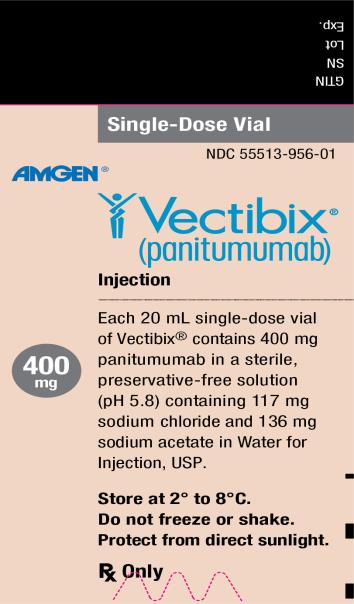
Vectibix panitumumab 400 mg/20mL Solution — NDC 55513-956-21 (Billing 55513-0956-21)
This is a package of Vectibix panitumumab 400 mg/20mL Solution from Amgen, Inc, marketed since Oct 2006 and currently FDA-listed.
NDC database record
One package, one record: these facts belong to NDC 55513-956-21 alone.
- Record
- FDA NDC Directory package listing · Human prescription drug
- Code segments
- 55513 labeler · 956 product · 21 package
- Package marketed since
- Oct 1, 2025
- Sample package
- No — commercial package
- Listing certified through
- Dec 31, 2027
- Barcode (UPC-A, from the NDC)
- 3 5551395621 5
- FDA record last changed
- Jul 24, 2026
Identity & classification
Regulatory identifiers FDA, NLM and CMS codes for this package
Drug-database identifiers Medi-Span GPI and First Databank GCN / HICL / AHFS classification
- GSN (GCN sequence number): 064359
- GCN: 13639
- GPI-14 (Medi-Span): 21360070002035
- HICL (First Databank): 034054
- AHFS class code: 10:00.00.00
- RxCUI (RxNorm): 1657703
Where does this data come from?
- FDA openFDA NDC Directory · synced Oct 8, 2026
- FDA label on DailyMed · label index refreshed Oct 6, 2026
- RxNorm (NLM RxNav) · catalog refreshed Oct 1, 2026
- Medi-Span GPI (licensed)
- First Databank (licensed) · refreshed Oct 8, 2026
RxNorm drug class
This medicine belongs to the Epidermal Growth Factor Receptor Antagonist class.
Where does this data come from?
- RxClass (NLM) · catalog refreshed Oct 1, 2026
Clinical
- That's a really important question. Vectibix only works — and is only safe — in colorectal cancers with specific genetic profiles. If your tumor has certain RAS mutations (other th...
- Why did my doctor order genetic testing before starting this treatment?
- Almost everyone on Vectibix develops some kind of skin reaction — usually an acne-like rash, redness, dry or cracking skin, or nail tenderness. These usually start within the first...
- What should I expect my skin to look like during treatment?
Patient education
Supplement & herbal interactions
Some supplements/herbs that may interact with Panitumumab — tap one for details:
Panitumumab may be associated with lower levels of 1 nutrient — worth a chat with your pharmacist, not a cause for alarm.
Where does this data come from?
- MedlinePlus (NLM) · refreshed Oct 1, 2026
- FDA label on DailyMed · label index refreshed Oct 6, 2026
Ask a licensed pharmacist directly — free, answered by our team.
Pricing
A drug doesn't have one price. Each row is a different public payment system, and none is what you'd pay at the counter — that depends on your insurance. The ⓘ on each row explains what it measures.
| Price system | Per mL | Per package |
|---|---|---|
| Retail pharmacies payNADAC · weekly | Not in the retail survey — common for institutional, discontinued, or low-volume packs. | |
| Medicaid paysCMS SDUD · 12 mo | No recent Medicaid claims on file for this NDC — rare and low-volume NDCs are suppressed in the public data. | |
| Medicare drug plans payPart D · quarterly | No Part D plan price is available for this NDC in our data. | |
| Medicare Part B allowsASP · J9303 | $182.189 / J9303 unit | — |
Where does this data come from?
- CMS NADAC weekly file
- CMS ASP pricing files · refreshed Sep 20, 2026
- CMS Medicaid State Drug Utilization Data · refreshed Oct 8, 2026
- CMS Part D plan pricing files · refreshed Sep 24, 2026
- VA National Acquisition Center price file
Billing & reimbursement
Where does this data come from?
- CMS ASP NDC-HCPCS crosswalk · refreshed Sep 22, 2026
- DMEPDAC NDC-HCPCS crosswalk
- openFDA NSDE billing units · refreshed Oct 7, 2026
Packaging — all sizes for this product
| Package NDC | Description | Marketing start | Marketing end | Status |
|---|---|---|---|---|
| 55513-0956-01 55513-956-01 Main listing | 1 VIAL, SINGLE-DOSE in 1 CARTON / 20 mL in 1 VIAL, SINGLE-DOSE | 2006-10-10 | — | Active |
| 55513-0956-21 You're viewing this | 1 VIAL, SINGLE-DOSE in 1 CARTON / 20 mL in 1 VIAL, SINGLE-DOSE | 2025-10-01 | — | Active |
This pack shows little to no recent Medicaid volume — a different pack size carries most fills. See all packs ↓
Pack size FAQ
What quantity is in this package?
What NDC number is used to bill for this package of Vectibix panitumumab 400 mg/20mL Solution?
Therapeutic equivalents
| Product | Labeler | Pack | NADAC/unit | TE | Status | Price vs. this |
|---|---|---|---|---|---|---|
| Vectibix 400 mg/20mLthis 55513-0956-21 | Amgen, | 1 vial | — | — | FDA listed | — |
Where does this data come from?
- FDA openFDA NDC Directory · synced Oct 8, 2026
- FDA Purple Book · refreshed Oct 5, 2026
- CMS NADAC weekly file
Availability & biosimilar status
Biologics have no small-molecule generics; biosimilar competition is tracked in the FDA Purple Book.
Where does this data come from?
- FDA Purple Book · refreshed Oct 5, 2026
Inactive Ingredients / Excipients
Inactive ingredients, also called excipients, are components of the drug product other than the active ingredient. They may include fillers, dyes, coatings, preservatives, flavors, or other formulation ingredients.
🧪 Avoiding an ingredient? See Panitumumab Injection inactive ingredients by manufacturer: every current product's list side by side, so you can ask your pharmacy for the version that does not list it.
💡 Tap an ingredient (hover on desktop) to see what it is and why it’s used.
-
136 mg / 20 mL
UNII 4550K0SC9B
Sodium acetate is a salt derived from acetic acid. It acts as a buffer to help maintain the medicine's pH stability and may serve as a preservative or solubilizer in liquid formulations.
-
117 mg / 20 mL
UNII 451W47IQ8X
Sodium chloride is common table salt. It's used in medicines as a buffer to maintain proper pH, as a filler to add bulk, or to adjust the osmotic balance in liquid formulations.
-
UNII 059QF0KO0R
Water is a liquid solvent that dissolves and mixes ingredients together in liquid medicines, syrups, and injections. It helps distribute the active drug evenly throughout the product.
3 inactive ingredients listed in the exact product block matched to this NDC.
Where does this data come from?
ingredient classCode="IACT" elements from the exact product block matched by this NDC. Label-section narrative from DailyMed / the openFDA label index is shown separately when available.- FDA label on DailyMed · label index refreshed Oct 6, 2026
- FDA openFDA NDC Directory · synced Oct 8, 2026
Inactive ingredient FAQ
Are inactive ingredients the same for every manufacturer?
Why might an inactive ingredient be missing?
Can inactive ingredients matter?
Manufacturer & labeler
More NDCs from Amgen, Inc labeler code 55513
- AIMOVIG erenumab-aooe 70 mg/mL Injection NDC 55513-841-00
- AIMOVIG erenumab-aooe 140 mg/mL Injection, Solution NDC 55513-842-01
- AIMOVIG erenumab-aooe 140 mg/mL Injection, Solution NDC 55513-843-00
- Evenity romosozumab-aqqg 105 mg/1.17mL Injection, Solution NDC 55513-880-02
- NEUPOGEN Filgrastim 300 ug/.5mL Injection, Solution NDC 55513-924-10
- Vectibix panitumumab 100 mg/5mL Solution NDC 55513-954-01
- Otezla apremilast Kit NDC 55513-996-95
- Evenity romosozumab-aqqg 105 mg/1.17mL Injection, Solution NDC 55513-998-02
Where does this data come from?
- FDA openFDA NDC Directory · synced Oct 8, 2026
- Drugs@FDA
Full prescribing information FDA SPL
🚨 Boxed Warning ▾
WARNING: DERMATOLOGIC TOXICITY Dermatologic Toxicity: Dermatologic toxicities occurred in 90% of patients and were severe (NCI-CTC Grade 3 and higher) in 15% of patients receiving Vectibix monotherapy [see Dosage and Administration (2.3) , Warnings and Precautions (5.1) and Adverse Reactions (6.1) ] . WARNING: DERMATOLOGIC TOXICITY See full prescribing information for complete boxed warning . Dermatologic toxicities were reported in 90% of patients and were severe in 15% of patients receiving monotherapy.
( 2.3 , 5.1 , 6.1 )
🎯 Indications and Usage ▾
1 INDICATIONS AND USAGE Vectibix is an epidermal growth factor receptor (EGFR) antagonist indicated for the treatment of: Adult patients with wild-type RAS (defined as wild-type in both KRAS and NRAS as determined by an FDA-approved test) Metastatic Colorectal Cancer (mCRC)*: In combination with FOLFOX for first-line treatment. ( 1 , 14.2 ) As monotherapy following disease progression after prior treatment with fluoropyrimidine, oxaliplatin, and irinotecan-containing chemotherapy. ( 1 , 14.1 ) KRAS G12C-mutated Metastatic Colorectal Cancer (mCRC)* In combination with sotorasib, for the treatment of adult patients with KRAS G12C- mutated mCRC, as determined by an FDA-approved test, who have received prior treatment with fluoropyrimidine-, oxaliplatin-, and irinotecan-based chemotherapy.
( 1 ) *Limitations of Use: Vectibix is not indicated for the treatment of patients with RAS -mutant mCRC unless used in combination with sotorasib in KRAS G12C-mutated mCRC. Vectibix is not indicated for the treatment of patients with mCRC for whom RAS mutation status is unknown ( 1 , 2.1 , 5.2 , 12.1 , 14.3 ). Metastatic Colorectal Cancer (mCRC) RAS Wild-Type mCRC Vectibix is indicated for the treatment of adult patients with wild-type RAS (defined as wild-type in both KRAS and NRAS as determined by an FDA-approved test) metastatic colorectal cancer (mCRC) [see Dosage and Administration (2.1) ] : As first-line therapy in combination with FOLFOX [see Clinical Studies (14.2) ] .
As monotherapy following disease progression after prior treatment with fluoropyrimidine-, oxaliplatin-, and irinotecan-containing chemotherapy [see Clinical Studies (14.1) ] . KRAS G12C -mutated mCRC Vectibix, in combination with sotorasib, is indicated for the treatment of adult patients with KRAS G12C- mutated mCRC, as determined by an FDA-approved test, who have received prior treatment with fluoropyrimidine-, oxaliplatin-, and irinotecan-based chemotherapy [see Dosage and Administration (2.1) and Clinical Studies (14.4) ] .
Limitations of Use : Vectibix is not indicated for the treatment of patients with RAS -mutant mCRC unless used in combination with sotorasib in KRAS G12C-mutated mCRC. Vectibix is not indicated for the treatment of patients with mCRC for whom RAS mutation status is unknown [see Dosage and Administration (2.1) , Warnings and Precautions (5.2) , Clinical Pharmacology (12.1) and Clinical Studies (14.3) ] .
⏱️ Dosage and Administration ▾
2 DOSAGE AND ADMINISTRATION RAS Wild-Type mCRC: Administer 6 mg/kg every 14 days as an intravenous infusion over 60 minutes (≤ 1000 mg) or 90 minutes (> 1000 mg). ( 2 ) KRAS G12C -mutated mCRC: Administer 6 mg/kg every 14 days as an intravenous infusion over 60 minutes (≤ 1000 mg) or 90 minutes (> 1000 mg) in combination with sotorasib. ( 2 )
2.1Patient Selection RAS Wild-Type mCRC Prior to initiation of treatment with Vectibix as monotherapy, assess RAS mutational status in colorectal tumors and confirm the absence of a RAS mutation in exon 2 (codons 12 and 13), exon 3 (codons 59 and 61), and exon 4 (codons 117 and 146) of both KRAS and NRAS . KRAS G12C-mutated mCRC Prior to initiation of treatment with Vectibix in combination with sotorasib, confirm the presence of the KRAS G12C mutation using an FDA-approved test. Information on FDA-approved tests for the detection of RAS mutations in patients with mCRC is available at: http://www.fda.gov/CompanionDiagnostics.
2.2Recommended Dosage RAS Wild-Type mCRC The recommended dosage of Vectibix is 6 mg/kg, administered as an intravenous infusion every 14 days until disease progression or unacceptable toxicity [see Dosage and Administration (2.4) ] . Appropriate medical resources for the treatment of severe infusion reactions should be available during Vectibix infusions [see Warnings and Precautions (5.4) ] . KRAS G12C -mutated mCRC Administer the first sotorasib dose prior to the first Vectibix infusion.
The recommended dosage for Vectibix in combination with sotorasib is 6 mg/kg, administered as an intravenous infusion every 14 days until disease progression, unacceptable toxicity, or until sotorasib is withheld or discontinued [see Dosage and Administration (2.3 , 2.4) ] . Refer to the sotorasib full prescribing information for recommended sotorasib dosing information. Appropriate medical resources for the treatment of severe infusion reactions should be available during Vectibix infusions [see Warnings and Precautions (5.4) ] .
2.3Dose Modifications Dose Modifications for Vectibix in Combination with Sotorasib When Vectibix is administered in combination with sotorasib, if treatment with sotorasib is temporarily withheld or permanently discontinued, temporarily withhold or permanently discontinue Vectibix, respectively [see Clinical Studies (14.4) ] . Refer to the sotorasib full prescribing information for dose modifications for adverse reactions associated with the use of sotorasib. Dose Modifications for Specific Adverse Reactions Associated with the Use of Vectibix Infusion Reactions [see Warnings and Precautions (5.4) and Adverse Reactions (6.1 , 6.2) ] Reduce infusion rate by 50% in patients experiencing a mild or moderate (Grade 1 or 2) infusion reaction for the duration of that infusion.
Terminate the infusion in patients experiencing severe infusion reactions. Depending on the severity and/or persistence of the reaction, permanently discontinue Vectibix. Dermatologic Toxicity [see Boxed Warning , Warnings and Precautions (5.1) and Adverse Reactions (6.1 , 6.2) ] Upon first occurrence of a Grade 3 (NCI-CTC/CTCAE) dermatologic reaction, withhold 1 to 2 doses of Vectibix.
If the reaction improves to < Grade 3, reinitiate Vectibix at the original dose. Upon the second occurrence of a Grade 3 (NCI-CTC/CTCAE) dermatologic reaction, withhold 1 to 2 doses of Vectibix. If the reaction improves to < Grade 3, reinitiate Vectibix at 80% of the original dose.
Upon the third occurrence of a Grade 3 (NCI-CTC/CTCAE) dermatologic reaction, withhold 1 to 2 doses of Vectibix. If the reaction improves to < Grade 3, reinitiate Vectibix at 60% of the original dose. Upon the fourth occurrence of a Grade 3 (NCI-CTC/CTCAE) dermatologic reaction, permanently discontinue Vectibix.
Permanently discontinue Vectibix following the occurrence of a Grade 4 dermatologic reaction or for a Grade 3 (NCI-CTC/CTCAE) dermatologic reaction that does not recover after withholding 1 or 2 doses.
2.4Preparation… [Excerpted — this section continues on DailyMed.]
💊 Dosage Forms and Strengths ▾
3 DOSAGE FORMS AND STRENGTHS Injection: 100 mg/5 mL (20 mg/mL) colorless solution in single-dose vial. Injection: 400 mg/20 mL (20 mg/mL) colorless solution in single-dose vial. Injection: 100 mg/5 mL (20 mg/mL) and 400 mg/20 mL (20 mg/mL) in single-dose vials. ( 3 )
⛔ Contraindications ▾
4 CONTRAINDICATIONS None. None
⚠️ Warnings and Cautions ▾
5 WARNINGS AND PRECAUTIONS Dermatologic and Soft Tissue Toxicity: Monitor for dermatologic and soft tissue toxicities. Reduce dose for recurrent Grade 3 toxicity and withhold or discontinue Vectibix for severe or life-threatening complications. Limit sun exposure.
( 2.3 , 5.1 , 5.7 ) Increased tumor progression, increased mortality, or lack of benefit in patients with RAS -mutant mCRC, receiving Vectibix monotherapy or in combination with oxaliplatin-based chemotherapy. ( 2.1 , 5.2 ) Electrolyte Depletion/Monitoring: Monitor electrolytes and institute appropriate treatment. ( 5.3 ) Infusion Reactions: Reduce infusion rate by 50% for mild to moderate reactions; terminate the infusion for severe infusion reactions.
( 2.3 , 5.4 ) Pulmonary Fibrosis/Interstitial Lung Disease (ILD): Permanently discontinue Vectibix in patients developing ILD. ( 5.6 ) Ocular Toxicities: Monitor for keratitis, ulcerative keratitis, or corneal perforation. Interrupt or discontinue Vectibix for acute or worsening keratitis, ulcerative keratitis, or corneal perforation.
( 5.8 ) Embryo-fetal Toxicity: Can cause fetal harm. Advise females of reproductive potential of the potential risk to the fetus and to use effective contraception during treatment with Vectibix and for 2 months after the last dose. ( 5.10 , 8.1 , 8.3 )
5.1Dermatologic and Soft Tissue Toxicity Vectibix can cause dermatologic toxicity, which may be severe. Clinical manifestations included, but were not limited to, acneiform dermatitis, pruritis, erythema, rash, skin exfoliation, paronychia, dry skin, and skin fissures. Among 229 patients who received Vectibix as monotherapy, dermatologic toxicity occurred in 90% including Grade 3 (15%).
Among 585 patients who received Vectibix in combination with FOLFOX, dermatologic toxicity occurred in 96% including Grade 4 (1%) and Grade 3 (32%). In 126 patients receiving Vectibix in combination with sotorasib across clinical studies, dermatologic toxicities occurred in 94%, including Grade 3 (16%) of patients. Monitor patients who develop dermatologic or soft tissue toxicities while receiving Vectibix for the development of inflammatory or infectious sequelae.
Life-threatening and fatal infectious complications including necrotizing fasciitis, abscesses, and sepsis have been observed in patients treated with Vectibix. Life-threatening and fatal bullous mucocutaneous disease with blisters, erosions, and skin sloughing has also been observed in patients treated with Vectibix. It could not be determined whether these mucocutaneous adverse reactions were directly related to EGFR inhibition or to idiosyncratic immune-related effects (e.g., Stevens-Johnson syndrome or toxic epidermal necrolysis).
Withhold or discontinue Vectibix for dermatologic or soft tissue toxicity associated with severe or life-threatening inflammatory or infectious complications [see Boxed Warning and Adverse Reactions (6.1 , 6.2) ] . Dose modifications for Vectibix concerning dermatologic toxicity are provided [see Dosage and Administration (2.3) ] .
5.2Increased Tumor Progression, Increased Mortality, or Lack of Benefit in Patients with RAS- Mutant mCRC Receiving Vectibix Monotherapy or in Combination with Oxaliplatin-based Chemotherapy Vectibix monotherapy or in combination with oxaliplatin-based chemotherapy is not indicated for the treatment of patients with colorectal cancer that harbor somatic RAS mutations in exon 2 (codons 12 and 13), exon 3 (codons 59 and 61), and exon 4 (codons 117 and 146) of either KRAS or NRAS and hereafter is referred to as " RAS " [see Indications and Usage (1) , Dosage and Administration (2.1) , Clinical Pharmacology (12.1) and Clinical Studies (14.3) ] .
Retrospective subset analyses across several randomized clinical trials were conducted to investigate the role of RAS mutations on the clinical effects of anti-EGFR-directed monoclonal antibodies (panitumumab or cetuximab). Anti-EGFR antibodies in patients with tumors containing RAS mutations resul… [Excerpted — this section continues on DailyMed.]
🤒 Adverse Reactions ▾
6 ADVERSE REACTIONS The following adverse reactions are discussed in greater detail in other sections of the label: Dermatologic and Soft Tissue Toxicity [see Boxed Warning , Dosage and Administration (2.3) and Warnings and Precautions (5.1) ] Increased Tumor Progression, Increased Mortality, or Lack of Benefit in Patients with RAS -Mutant mCRC Receiving Vectibix Monotherapy or in Combination with Oxaliplatin-based Chemotherapy [see Indications and Usage (1) and Warnings and Precautions (5.2) ] Electrolyte Depletion/Monitoring [see Warnings and Precautions (5.3) ] Infusion Reactions [see Dosage and Administration (2.3) and Warnings and Precautions (5.4) ] Acute Renal Failure [see Warnings and Precautions (5.5) ] Pulmonary Fibrosis/Interstitial Lung Disease (ILD) [see Warnings and Precautions (5.6) ] Photosensitivity [see Warnings and Precautions (5.7) ] Ocular Toxicities [see Warnings and Precautions (5.8) ] Increased Mortality and Toxicity with Vectibix in combination with Bevacizumab and Chemotherapy [see Warnings and Precautions (5.9) ] Most common adverse reactions (≥ 20%) of Vectibix as monotherapy are skin rash with variable presentations, paronychia, fatigue, nausea, and diarrhea.
( 6.1 ) Most common adverse reactions (≥ 20%) in clinical trials of Vectibix in combination with FOLFOX chemotherapy are diarrhea, stomatitis, mucosal inflammation, asthenia, paronychia, anorexia, hypomagnesemia, hypokalemia, rash, acneiform dermatitis, pruritus, and dry skin. ( 6.1 ) Most common adverse reactions (≥ 20%) in clinical trials of Vectibix in combination with sotorasib are rash, dry skin, diarrhea, stomatitis, fatigue and musculoskeletal pain. The most common Grade 3 or 4 laboratory abnormalities in ≥ 2 patients (4.3%) were decreased magnesium, decreased potassium, decreased corrected calcium, and increased potassium.
( 6.1 ) To report SUSPECTED ADVERSE REACTIONS, contact Amgen Inc. at 1-800-77-AMGEN (1-800-772-6436) or FDA at 1-800-FDA-1088 or www.fda.gov/medwatch .
6.1Clinical Trials Experience Because clinical trials are conducted under widely varying conditions, adverse reaction rates in the clinical trials of a drug cannot be directly compared to rates in clinical trials of another drug and may not reflect the rates observed in practice. The data described in WARNINGS AND PRECAUTIONS reflect exposure to Vectibix in four clinical trials in which patients received Vectibix: Study 20020408, an open-label, multinational, randomized, controlled, monotherapy clinical trial (N = 463) evaluating Vectibix with best supportive care (BSC) versus BSC alone in patients with EGFR-expressing mCRC; Study 20050203, a randomized, controlled trial (N = 1183) in patients with wild-type KRAS mCRC that evaluated Vectibix in combination with FOLFOX chemotherapy versus FOLFOX chemotherapy alone; CodeBreaK 300, a randomized controlled trial (N = 160) evaluating Vectibix in combination with sotorasib versus the investigator's choice of standard of care (trifluridine/tipiracil or regorafenib) in patients with KRAS G12C -mutated mCRC; and CodeBreak 101, an open-label, non-randomized trial evaluating sotorasib as a monotherapy and in combination with other drugs in patients with KRAS G12C-mutated advanced solid tumors, including patients with KRAS G12C-mutated mCRC who received Vectibix in combination with sotorasib (N = 79).
Safety data for Study 20050203 are limited to 656 patients with wild-type KRAS mCRC. The safety profile of Vectibix in patients with wild-type RAS mCRC is similar with that seen in patients with wild-type KRAS mCRC. Safety data for CodeBreaK 300 are limited to 47 patients who received Vectibix in combination with sotorasib 960 mg.
Vectibix Monotherapy In Study 20020408, the most common adverse reactions (≥ 20%) with Vectibix were skin rash with variable presentations, paronychia, fatigue, nausea, and diarrhea. The most common (> 5%) serious adverse reactions in the Vectibix arm were general physical health deterioration and intesti… [Excerpted — this section continues on DailyMed.]
👥 Use in Specific Populations ▾
8 USE IN SPECIFIC POPULATIONS Lactation: Advise women not to breastfeed. ( 8.2 )
8.1Pregnancy Risk Summary Based on data from animal studies and its mechanism of action, Vectibix can cause fetal harm when administered to pregnant women [see Clinical Pharmacology (12.1) ] . Limited available data on the use of Vectibix in pregnant women are not sufficient to inform a risk of adverse pregnancy-related outcomes. Vectibix is a human IgG monoclonal antibody and may be transferred across the placenta during pregnancy.
Reproduction studies in cynomolgus monkeys treated with 1.25 to 5 times the recommended human dose of panitumumab resulted in significant embryolethality and abortions; however, no other evidence of teratogenesis was noted in offspring [see Data ] . Advise pregnant women of the potential risk to the fetus. In the U.S. general population, the estimated background risk of major birth defects and miscarriage in clinically recognized pregnancies is 2-4% and 15-20%, respectively.
Data Animal Data Based on animal models, EGFR is involved in prenatal development and may be essential for normal organogenesis, proliferation, and differentiation in the developing embryo. Pregnant cynomolgus monkeys were treated weekly with panitumumab during the period of organogenesis (gestation day [GD] 20-50). While no panitumumab was detected in serum of neonates from panitumumab-treated dams, anti-panitumumab antibody titers were present in 14 of 27 offspring delivered at GD 100.
There were no fetal malformations or other evidence of teratogenesis noted in the offspring; however, significant increases in embryolethality and abortions occurred at doses of approximately 1.25 to 5 times the recommended human dose (based on body weight).
8.2Lactation Risk Summary There are no data on the presence of panitumumab in human milk or the effects of panitumumab on the breastfed infant or on milk production. Human IgG is present in human milk, but published data suggest that breast milk antibodies do not enter the neonatal and infant circulation in substantial amounts. Because of the potential for serious adverse reactions in breastfed infants from Vectibix, advise women not to breastfeed during treatment with Vectibix and for 2 months after the last dose.
8.3Females and Males of Reproductive Potential Contraception Females Vectibix can cause fetal harm when administered to a pregnant woman [see Use in Specific Populations (8.1) ] . Advise females of reproductive potential to use effective contraception during treatment with Vectibix and for 2 months after the last dose of Vectibix. Infertility Females Based on results from animal fertility studies conducted in female cynomolgus monkeys, Vectibix may reduce fertility in females of reproductive potential.
The effects in animal studies were reversible [see Nonclinical Toxicology (13.1) ] .
8.4Pediatric Use The safety and effectiveness of Vectibix have not been established in pediatric patients. The pharmacokinetics of panitumumab at doses ranging from 2.5 mg/kg intravenous weekly, 6 mg/kg intravenous every 2 weeks, or 9 mg/kg intravenous every 3 weeks were evaluated in 28 pediatric patients. Panitumumab exposures were comparable in adult and adolescent patients of 12 to 17 years of age.
Limited data suggested that pediatric patients of 2 to < 12 years of age had lower panitumumab exposure and higher clearance than that in adolescent patients following 6 mg/kg intravenous administration of Vectibix. There was no evidence of an anti-tumor treatment effect in these patients.
8.5Geriatric Use Of the 737 patients who received Vectibix monotherapy for recurrent or refractory mCRC [see Clinical Studies (14.1) ], 36% were 65 and over while 8% were 75 and over. No overall differences in safety or efficacy were observed in elderly patients (≥ 65 years of age) treated with Vectibix monotherapy. Of the 322 patients who received Vectibix plus FOLFOX, for wild-type KRAS -mutated mCRC [see Clinical Studies (14.2)… [Excerpted — this section continues on DailyMed.]
🤰 Pregnancy ▾
8.1Pregnancy Risk Summary Based on data from animal studies and its mechanism of action, Vectibix can cause fetal harm when administered to pregnant women [see Clinical Pharmacology (12.1) ] . Limited available data on the use of Vectibix in pregnant women are not sufficient to inform a risk of adverse pregnancy-related outcomes. Vectibix is a human IgG monoclonal antibody and may be transferred across the placenta during pregnancy.
Reproduction studies in cynomolgus monkeys treated with 1.25 to 5 times the recommended human dose of panitumumab resulted in significant embryolethality and abortions; however, no other evidence of teratogenesis was noted in offspring [see Data ] . Advise pregnant women of the potential risk to the fetus. In the U.S. general population, the estimated background risk of major birth defects and miscarriage in clinically recognized pregnancies is 2-4% and 15-20%, respectively.
Data Animal Data Based on animal models, EGFR is involved in prenatal development and may be essential for normal organogenesis, proliferation, and differentiation in the developing embryo. Pregnant cynomolgus monkeys were treated weekly with panitumumab during the period of organogenesis (gestation day [GD] 20-50). While no panitumumab was detected in serum of neonates from panitumumab-treated dams, anti-panitumumab antibody titers were present in 14 of 27 offspring delivered at GD 100.
There were no fetal malformations or other evidence of teratogenesis noted in the offspring; however, significant increases in embryolethality and abortions occurred at doses of approximately 1.25 to 5 times the recommended human dose (based on body weight).
🧒 Pediatric Use ▾
8.4Pediatric Use The safety and effectiveness of Vectibix have not been established in pediatric patients. The pharmacokinetics of panitumumab at doses ranging from 2.5 mg/kg intravenous weekly, 6 mg/kg intravenous every 2 weeks, or 9 mg/kg intravenous every 3 weeks were evaluated in 28 pediatric patients. Panitumumab exposures were comparable in adult and adolescent patients of 12 to 17 years of age.
Limited data suggested that pediatric patients of 2 to < 12 years of age had lower panitumumab exposure and higher clearance than that in adolescent patients following 6 mg/kg intravenous administration of Vectibix. There was no evidence of an anti-tumor treatment effect in these patients.
🧓 Geriatric Use ▾
8.5Geriatric Use Of the 737 patients who received Vectibix monotherapy for recurrent or refractory mCRC [see Clinical Studies (14.1) ], 36% were 65 and over while 8% were 75 and over. No overall differences in safety or efficacy were observed in elderly patients (≥ 65 years of age) treated with Vectibix monotherapy. Of the 322 patients who received Vectibix plus FOLFOX, for wild-type KRAS -mutated mCRC [see Clinical Studies (14.2) ], 128 (40%) were 65 and over while 8% were 75 and over.
Patients older than 65 years of age experienced an increased incidence of serious adverse events (52% vs 36%) and an increased incidence of serious diarrhea (15% vs 5%) as compared to younger patients. In a pooled analysis of 132 patients who received Vectibix in combination with sotorasib 960 mg for KRAS G12C-mutated mCRC, 30% were 65 and over while 9% were 75 and over. No overall differences in safety or efficacy were observed in elderly patients (≥ 65 years of age) compared to younger patients treated with Vectibix in combination with sotorasib.
🆘 Overdosage ▾
10 OVERDOSAGE Doses up to approximately twice the recommended therapeutic dose (12 mg/kg) resulted in adverse reactions of skin toxicity, diarrhea, dehydration, and fatigue.
🧬 Clinical Pharmacology ▾
12 CLINICAL PHARMACOLOGY
12.1Mechanism of Action The EGFR is a transmembrane glycoprotein that is a member of a subfamily of type I receptor tyrosine kinases, including EGFR, HER2, HER3, and HER4. EGFR is constitutively expressed in normal epithelial tissues, including the skin and hair follicle. EGFR is overexpressed in certain human cancers, including colon and rectum cancers.
Interaction of EGFR with its normal ligands (e.g., EGF, transforming growth factor-alpha) leads to phosphorylation and activation of a series of intracellular proteins, which in turn regulate transcription of genes involved with cellular growth and survival, motility, and proliferation. KRAS (Kirsten rat sarcoma 2 viral oncogene homologue) and NRAS (Neuroblastoma RAS viral oncogene homologue) are highly related members of the RAS oncogene family. Signal transduction through the EGFR can result in activation of the wild-type KRAS and NRAS proteins; however, in cells with activating RAS somatic mutations, the RAS -mutant proteins are continuously active and appear independent of EGFR regulation.
Panitumumab binds specifically to EGFR on both normal and tumor cells, and competitively inhibits the binding of ligands for EGFR. Nonclinical studies show that binding of panitumumab to the EGFR prevents ligand-induced receptor autophosphorylation and activation of receptor-associated kinases, resulting in inhibition of cell growth, induction of apoptosis, decreased proinflammatory cytokine and vascular growth factor production, and internalization of the EGFR. In vitro assays and in vivo animal studies demonstrate that panitumumab inhibits the growth and survival of selected human tumor cell lines expressing EGFR.
In the setting of KRAS G12C-mutant CRC, EGFR activation has been identified as a mechanism of resistance to KRAS G12C inhibition. In a murine patient-derived colorectal tumor xenograft model, the combination of panitumumab and sotorasib, a KRAS G12C inhibitor, had increased antitumor activity compared to either panitumumab or sotorasib alone.
12.3Pharmacokinetics Panitumumab administered as a monotherapy exhibits nonlinear pharmacokinetics. Following single-dose administrations of panitumumab as 1-hour infusions, the area under the concentration-time curve (AUC) increased in a greater than dose-proportional manner, and clearance (CL) of panitumumab decreased from 30.6 to 4.6 mL/day/kg as the dose increased from 0.75 to 9 mg/kg. However, at doses above 2 mg/kg, the AUC of panitumumab increased in an approximately dose-proportional manner.
Following the recommended dose regimen (6 mg/kg given once every 2 weeks as a 1-hour infusion), panitumumab concentrations reached steady-state levels by the third infusion with mean (± SD) peak and trough concentrations of 213 ± 59 and 39 ± 14 mcg/mL, respectively. The mean (± SD) AUC 0-tau and CL were 1306 ± 374 mcg•day/mL and 4.9 ± 1.4 mL/kg/day, respectively. The elimination half-life was approximately 7.5 days (range: 3.6 to 10.9 days).
No clinically significant differences in the pharmacokinetics of panitumumab were observed based on age (21 to 88 years), sex, race (White, Black, and Asian), mild or moderate renal impairment (CrCL 30 to 89 mL/min), mild or moderate hepatic impairment (total bilirubin ≤ 3 × ULN and any AST), and EGFR membrane-staining intensity (1+, 2+, and 3+) in tumor cells.
12.6Immunogenicity The observed incidence of anti-drug antibodies is highly dependent on the sensitivity and specificity of the assay. Differences in assay methods preclude meaningful comparisons of the incidence of anti-drug antibodies in the studies described below with the incidence of anti-drug antibodies in other studies, including those of Vectibix or of other panitumumab products. During the 23-week treatment period of Vectibix as a monotherapy in Studies 20080763, 20020408, 20030194 and other clinical trials , the incidence of anti-panitumumab antibodies was 5.2% (74/1417).
Of the 74 patients who tested positive… [Excerpted — this section continues on DailyMed.]
🧬 Mechanism of Action ▾
12.1Mechanism of Action The EGFR is a transmembrane glycoprotein that is a member of a subfamily of type I receptor tyrosine kinases, including EGFR, HER2, HER3, and HER4. EGFR is constitutively expressed in normal epithelial tissues, including the skin and hair follicle. EGFR is overexpressed in certain human cancers, including colon and rectum cancers.
Interaction of EGFR with its normal ligands (e.g., EGF, transforming growth factor-alpha) leads to phosphorylation and activation of a series of intracellular proteins, which in turn regulate transcription of genes involved with cellular growth and survival, motility, and proliferation. KRAS (Kirsten rat sarcoma 2 viral oncogene homologue) and NRAS (Neuroblastoma RAS viral oncogene homologue) are highly related members of the RAS oncogene family. Signal transduction through the EGFR can result in activation of the wild-type KRAS and NRAS proteins; however, in cells with activating RAS somatic mutations, the RAS -mutant proteins are continuously active and appear independent of EGFR regulation.
Panitumumab binds specifically to EGFR on both normal and tumor cells, and competitively inhibits the binding of ligands for EGFR. Nonclinical studies show that binding of panitumumab to the EGFR prevents ligand-induced receptor autophosphorylation and activation of receptor-associated kinases, resulting in inhibition of cell growth, induction of apoptosis, decreased proinflammatory cytokine and vascular growth factor production, and internalization of the EGFR. In vitro assays and in vivo animal studies demonstrate that panitumumab inhibits the growth and survival of selected human tumor cell lines expressing EGFR.
In the setting of KRAS G12C-mutant CRC, EGFR activation has been identified as a mechanism of resistance to KRAS G12C inhibition. In a murine patient-derived colorectal tumor xenograft model, the combination of panitumumab and sotorasib, a KRAS G12C inhibitor, had increased antitumor activity compared to either panitumumab or sotorasib alone.
📦 How Supplied / Storage and Handling ▾
16 HOW SUPPLIED/STORAGE AND HANDLING Vectibix is supplied as a sterile, colorless, preservative-free solution containing 20 mg/mL panitumumab in a single-dose vial. Vectibix is provided as one vial per carton. Each 5 mL single-dose vial contains 100 mg of panitumumab in 5 mL (20 mg/mL) (NDC 55513-954-01, NDC 55513-954-21).
Each 20 mL single-dose vial contains 400 mg of panitumumab in 20 mL (20 mg/mL) (NDC 55513-956-01, NDC 55513-956-21). Store vials in the original carton under refrigeration at 2° to 8°C (36° to 46°F) until time of use. Protect from direct sunlight.
Do not freeze or shake. Discard any unused portion remaining in the vial.
📦 Storage and Handling ▾
Store vials in the original carton under refrigeration at 2° to 8°C (36° to 46°F) until time of use. Protect from direct sunlight. Do not freeze or shake. Discard any unused portion remaining in the vial.
📋 Description ▾
11 DESCRIPTION Panitumumab is an epidermal growth factor receptor (EGFR) antagonist for intravenous use. Panitumumab is a human IgG2 kappa monoclonal antibody with an approximate molecular weight of 147 kDa that is produced in genetically engineered mammalian (Chinese hamster ovary) cells. Vectibix (panitumumab) Injection for intravenous use is a sterile, colorless solution with a pH range of 5.6 to 6.0, which may contain a small amount of visible translucent-to-white, amorphous, proteinaceous particles.
Each single-dose 5 mL vial contains 100 mg of panitumumab, 34 mg sodium acetate, 29 mg sodium chloride, and Water for Injection, USP. Each single-dose 20 mL vial contains 400 mg of panitumumab, 136 mg sodium acetate, 117 mg sodium chloride, and Water for Injection, USP.
💬 Information for Patients ▾
17 PATIENT COUNSELING INFORMATION Discuss the following with patients prior to treatment with Vectibix: Skin and eye disorders: Advise patients to contact a healthcare professional if they experience skin or ocular/visual changes [see Boxed Warning , Dosage and Administration (2.3) , Warnings and Precautions (5.1 , 5.8) and Adverse Reactions (6.1 , 6.2) ] . Electrolyte monitoring: Inform patients of the need for periodic monitoring of electrolytes [see Warnings and Precautions (5.3) ] . Dehydration: Advise patients of the increased risk of diarrhea and dehydration which may lead to acute renal failure and electrolyte depletion when Vectibix is administered in combination with chemotherapy [see Warnings and Precautions (5.5) ] .
Infusion reactions: Advise patients of the risk of infusion reactions [see Dosage and Administration (2.3) , Warnings and Precautions (5.4) and Adverse Reactions (6.1 , 6.2) ] . Respiratory: Advise patients to contact a healthcare professional if they experience persistent or recurrent coughing, wheezing, dyspnea, or new-onset facial swelling [see Warnings and Precautions (5.6) and Adverse Reactions (6.1) ] . Embryo-fetal Toxicity: Advise pregnant women and females of reproductive potential that Vectibix can result in fetal harm.
Advise females of reproductive potential to use effective contraception during treatment with Vectibix, and for at least 2 months after the last dose and to inform their healthcare provider of a known or suspected pregnancy [see Warnings and Precautions (5.10) and Use in Specific Populations (8.1 , 8.3) ] . Lactation: Advise women not to breastfeed during treatment with Vectibix and for 2 months after the last dose [see Use in Specific Populations (8.2) ] . Infertility: Advise females of reproductive potential of the potential for reduced fertility from Vectibix [see Use in Specific Populations (8.3) ] .
Sun exposure: Advise patients to limit sun exposure (use sunscreen, wear hats) while receiving Vectibix and for 2 months after the last dose of Vectibix therapy [see Warnings and Precautions (5.7) ] . Vectibix in Combination with Sotorasib: Advise patients taking Vectibix in combination with sotorasib: to take the first dose of sotorasib prior to the first Vectibix infusion [see Dosage and Administration (2.2) ] . stop taking Vectibix whenever sotorasib is withheld or discontinued [see Dosage and Administration (2.3) ].
🧬 Pharmacokinetics ▾
12.3Pharmacokinetics Panitumumab administered as a monotherapy exhibits nonlinear pharmacokinetics. Following single-dose administrations of panitumumab as 1-hour infusions, the area under the concentration-time curve (AUC) increased in a greater than dose-proportional manner, and clearance (CL) of panitumumab decreased from 30.6 to 4.6 mL/day/kg as the dose increased from 0.75 to 9 mg/kg. However, at doses above 2 mg/kg, the AUC of panitumumab increased in an approximately dose-proportional manner.
Following the recommended dose regimen (6 mg/kg given once every 2 weeks as a 1-hour infusion), panitumumab concentrations reached steady-state levels by the third infusion with mean (± SD) peak and trough concentrations of 213 ± 59 and 39 ± 14 mcg/mL, respectively. The mean (± SD) AUC 0-tau and CL were 1306 ± 374 mcg•day/mL and 4.9 ± 1.4 mL/kg/day, respectively. The elimination half-life was approximately 7.5 days (range: 3.6 to 10.9 days).
No clinically significant differences in the pharmacokinetics of panitumumab were observed based on age (21 to 88 years), sex, race (White, Black, and Asian), mild or moderate renal impairment (CrCL 30 to 89 mL/min), mild or moderate hepatic impairment (total bilirubin ≤ 3 × ULN and any AST), and EGFR membrane-staining intensity (1+, 2+, and 3+) in tumor cells.
🔬 Clinical Studies ▾
14 CLINICAL STUDIES
14.1Recurrent or Refractory mCRC The safety and efficacy of Vectibix was demonstrated in Study 20020408, an open-label, multinational, randomized, controlled trial of 463 patients with EGFR-expressing, metastatic carcinoma of the colon or rectum, in Study 20080763, an open-label, multicenter, multinational, randomized trial of 1010 patients with wild-type KRAS mCRC, and in Study 20100007, an open-label, multicenter, multinational, randomized trial of 377 patients with wild-type KRAS mCRC. Study 20020408 (NCT00113763) Patients in Study 20020408 were required to have progressed on or following treatment with a regimen(s) containing a fluoropyrimidine, oxaliplatin, and irinotecan; progression was confirmed by an independent review committee (IRC) masked to treatment assignment for 76% of the patients.
Patients were randomized (1:1) to receive panitumumab at a dose of 6 mg/kg given once every 2 weeks plus BSC (N = 231) or BSC alone (N = 232) until investigator-determined disease progression. Randomization was stratified based on Eastern Cooperative Oncology Group (ECOG) performance status (PS) (0 and 1 vs 2) and geographic region (Western Europe, Eastern/Central Europe, or other). Upon investigator-determined disease progression, patients in the BSC-alone arm were eligible to receive panitumumab and were followed until disease progression was confirmed by the IRC.
Based upon IRC determination of disease progression, a statistically significant prolongation in progression free survival (PFS) was observed in patients receiving panitumumab compared to those receiving BSC alone. The mean PFS was 96 days in the panitumumab arm and 60 days in the BSC-alone arm. The study results were analyzed in the wild-type KRAS subgroup where KRAS status was retrospectively determined using archived paraffin-embedded tumor tissue.
KRAS mutation status was determined in 427 patients (92%); of these, 243 (57%) had no detectable KRAS mutations in either codons 12 or 13. The hazard ratio for PFS in patients with wild-type KRAS mCRC was 0.45 (95% CI: 0.34-0.59) favoring the panitumumab arm. The response rate was 17% for the panitumumab arm and 0% for BSC.
There were no differences in OS; 77% of patients in the BSC arm received panitumumab at the time of disease progression. Study 20080763 (NCT01001377) Study 20080763 was an open-label, multicenter, multinational, randomized (1:1) clinical trial, stratified by region (North America, Western Europe, and Australia versus rest of the world) and ECOG PS (0 and 1 vs 2) in patients with wild-type KRAS mCRC. A total of 1010 patients who received prior treatment with irinotecan, oxaliplatin, and a thymidylate synthase inhibitor were randomized to receive Vectibix 6 mg/kg intravenously over 60 minutes every 14 days or cetuximab 400 mg/m 2 intravenously over 120 minutes on day 1 followed by 250 mg/m 2 intravenously over 60 minutes every 7 days.
The trial excluded patients with clinically significant cardiac disease and interstitial lung disease. The major efficacy analysis tested whether the OS of Vectibix was noninferior to cetuximab. Data for investigator-assessed PFS and objective response rate (ORR) were also collected.
The criteria for noninferiority was for Vectibix to retain at least 50% of the OS benefit of cetuximab based on an OS hazard ratio of 0.55 from the NCIC CTG CO.17 study relative to BSC. In Study 20080763, 37% of patients were women, 52% were white, 45% were Asian, and 1.3% were Hispanic or Latino. Thirty-one percent of patients were enrolled at sites in North America, Western Europe, or Australia.
ECOG performance was 0 in 32% of patients, 1 in 60% of patients, and 2 in 8% of patients. Median age was 61 years. More patients (62%) had colon cancer than rectal cancer (38%).
Most patients (74%) had not received prior bevacizumab. The key efficacy analysis for Study 20080763 demonstrated that Vectibix was statistically significantly noninferior to cetuximab for OS. The efficacy r… [Excerpted — this section continues on DailyMed.]
🧪 Nonclinical Toxicology ▾
13 NONCLINICAL TOXICOLOGY
13.1Carcinogenesis, Mutagenesis, Impairment of Fertility No carcinogenicity or mutagenicity studies of panitumumab have been conducted. It is not known if panitumumab can impair fertility in humans. Prolonged menstrual cycles and/or amenorrhea occurred in normally cycling, female cynomolgus monkeys treated weekly with 1.25 to 5 times the recommended human dose of panitumumab (based on body weight).
Menstrual cycle irregularities in panitumumab-treated female monkeys were accompanied by both a decrease and delay in peak progesterone and 17β-estradiol levels. Normal menstrual cycling resumed in most animals after discontinuation of panitumumab treatment. A no-effect level for menstrual cycle irregularities and serum hormone levels was not identified.
The effects of panitumumab on male fertility have not been studied; however, no adverse effects were observed microscopically in reproductive organs from male cynomolgus monkeys treated for 26 weeks with panitumumab at doses of up to approximately 5-fold the recommended human dose (based on body weight).
📄 Carcinogenesis, Mutagenesis, Impairment of Fertility ▾
13.1Carcinogenesis, Mutagenesis, Impairment of Fertility No carcinogenicity or mutagenicity studies of panitumumab have been conducted. It is not known if panitumumab can impair fertility in humans. Prolonged menstrual cycles and/or amenorrhea occurred in normally cycling, female cynomolgus monkeys treated weekly with 1.25 to 5 times the recommended human dose of panitumumab (based on body weight).
Menstrual cycle irregularities in panitumumab-treated female monkeys were accompanied by both a decrease and delay in peak progesterone and 17β-estradiol levels. Normal menstrual cycling resumed in most animals after discontinuation of panitumumab treatment. A no-effect level for menstrual cycle irregularities and serum hormone levels was not identified.
The effects of panitumumab on male fertility have not been studied; however, no adverse effects were observed microscopically in reproductive organs from male cynomolgus monkeys treated for 26 weeks with panitumumab at doses of up to approximately 5-fold the recommended human dose (based on body weight).
📄 Recent Major Changes ▾
Indications and Usage ( 1 ) 01/2025 Dosage and Administration ( 2.1 , 2.2 , 2.3 ) 01/2025 Warnings and Precautions ( 5.1 , 5.2 , 5.3 , 5.5 , 5.6 , 5.8 ) 01/2025
📄 Package Label / Principal Display Panel ▾
PRINCIPAL DISPLAY PANEL Single-Dose Vial NDC 55513-954-01 AMGEN ® Vectibix ® (panitumumab) Injection 100 mg Each 5 mL single-dose vial of Vectibix ® contains 100 mg panitumumab in a sterile, preservative-free solution (pH 5.8) containing 29 mg sodium chloride and 34 mg sodium acetate in Water for Injection, USP. Store at 2° to 8°C. Do not freeze or shake.
Protect from direct sunlight. Rx Only PRINCIPAL DISPLAY PANEL Single-Dose Vial NDC 55513-954-01 AMGEN® Vectibix® (panitumumab) Injection 100 mg Each 5 mL single-dose vial of Vectibix® contains 100 mg panitumumab in a sterile, preservative-free solution (pH 5.8) containing 29 mg sodium chloride and 34 mg sodium acetate in Water for Injection, USP. Store at 2° to 8°C.
Do not freeze or shake. Protect from direct sunlight. Rx Only
PRINCIPAL DISPLAY PANEL Single-Dose Vial NDC55513-956-01 AMGEN ® Vectibix ® (panitumumab) Injection 400 mg Each 20 mL single-dose vial of Vectibix ® contains 400 mg panitumumab in a sterile, preservative-free solution (pH 5.8) containing 117 mg sodium chloride and 136 mg sodium acetate in Water for Injection, USP. Store at 2° to 8°C. Do not freeze or shake.
Protect from direct sunlight. Rx Only PRINCIPAL DISPLAY PANEL Single-Dose Vial NDC55513-956-01 AMGEN® Vectibix® (panitumumab) Injection 400 mg Each 20 mL single-dose vial of Vectibix® contains 400 mg panitumumab in a sterile, preservative-free solution (pH 5.8) containing 117 mg sodium chloride and 136 mg sodium acetate in Water for Injection, USP. Store at 2° to 8°C.
Do not freeze or shake. Protect from direct sunlight. Rx Only
Medicaid utilization by pack size
Medicare Part D spend CMS · PART D · 2026 (Q1)
About this NDC listing & data coverage
What data is (and isn’t) available for this NDC — tap to expand
| NDC identity (package / product / labeler codes) | ✓ Available |
| Labeler | ✓ Available |
| Product & package description | ✓ Available |
| Marketing category & status | ✓ Available |
| Active ingredient / dosage form / route | ✓ Available |
| FDA label (SPL via DailyMed) | ✓ Available |
| Package photos | ✓ Available |
| Inactive ingredients (structured) | ✓ Available |
| NADAC pharmacy acquisition price (CMS) | — Not published for this NDC CMS publishes NADAC only for NDCs reported in its retail-pharmacy survey. |
| Orange Book / therapeutic-equivalence data | — Not published for this NDC Applies only to products approved under an NDA/ANDA; many listings are out of scope. |
| HCPCS J-code billing crosswalk | ✓ Available |
| Medicaid utilization (CMS SDUD) | — Not published for this NDC CMS reports utilization only for NDCs with Medicaid claims above its privacy threshold. |