
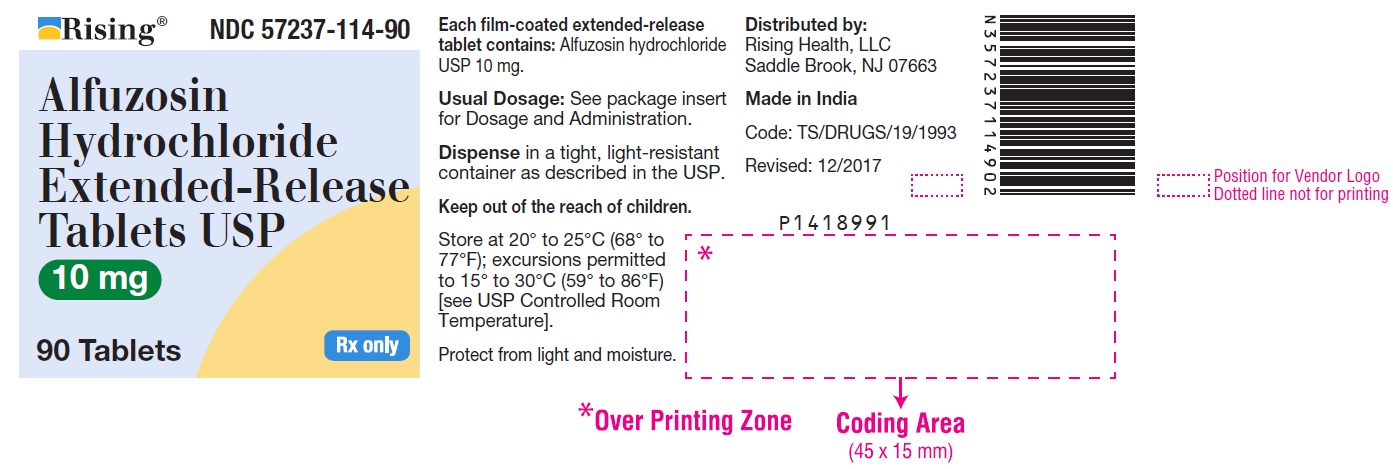
Alfuzosin Hydrochloride 10 mg Tablet, Film Coated, Extended Release, 90-count — NDC 57237-114-90 (Billing 57237-0114-90)
This is a package of 90 tablets of Alfuzosin Hydrochloride 10 mg Tablet, Film Coated, Extended Release from Rising Pharma Holdings, Inc., marketed since Aug 2012 and currently FDA-listed; retail pharmacies pay about $0.1051 per tablet (NADAC). It is the main listing for this product, which comes in 3 package sizes.
NDC database record
One package, one record: these facts belong to NDC 57237-114-90 alone.
- Record
- FDA NDC Directory package listing · Human prescription drug
- Code segments
- 57237 labeler · 114 product · 90 package
- Package marketed since
- Aug 30, 2012
- Sample package
- No — commercial package
- Listing certified through
- Dec 31, 2027
- Billing quantity
- 90 EA per package
- Barcode (UPC-A, from the NDC)
- 3 5723711490 2
- Medicaid fills, this package
- 55,359 prescriptions in the last four reported quarters
- FDA record last changed
- Jul 24, 2026
Identity & classification
Regulatory identifiers FDA, NLM and CMS codes for this package
Drug-database identifiers Medi-Span GPI and First Databank GCN / HICL / AHFS classification
- GSN (GCN sequence number): 045052
- GCN: 92024
- GPI-14 (Medi-Span): 56852010107530
- HICL (First Databank): 010802
- AHFS class code: 12:16.04.12
- RxCUI (RxNorm): 861132
Where does this data come from?
- FDA openFDA NDC Directory · synced Oct 8, 2026
- FDA label on DailyMed · label index refreshed Oct 8, 2026
- RxNorm (NLM RxNav) · catalog refreshed Oct 1, 2026
- Medi-Span GPI (licensed)
- First Databank (licensed) · refreshed Oct 8, 2026
RxNorm drug class
This medicine belongs to the alpha-Adrenergic Blocker class.
Where does this data come from?
- RxClass (NLM) · catalog refreshed Oct 1, 2026
Clinical
Alfuzosin is used to treat benign prostatic hyperplasia (BPH; enlarged prostate that can cause difficulty urinating, painful urination or increased urinary frequency or urgency). Alfuzosin is in a class of medications called alpha blockers. It works by relaxing the muscles in the prostate and bladder so that urine can flow more easily.
Read the full MedlinePlus article ↗- It treats the urinary symptoms of an enlarged prostate, called benign prostatic hyperplasia (BPH). It relaxes muscle in the prostate and bladder neck so urine flows more easily. It...
- Take it by mouth once a day, with food, and with the same meal each day. Swallow it whole. Do not chew or crush it. Taking it on an empty stomach cuts absorption by about half.
- The most common ones are dizziness, headache, tiredness and cold-like symptoms. Some people have stomach upset or erectile problems. Stand up slowly, since it can lower your blood...
- Call if you faint, or have swelling of the face or throat, hives, yellowing of the skin or eyes, chest pain or a racing heartbeat. An erection that will not go away needs urgent ca...
Patient education
Supplement & herbal interactions
Where does this data come from?
- MedlinePlus (NLM) · refreshed Oct 8, 2026
- FDA label on DailyMed · label index refreshed Oct 8, 2026
Ask a licensed pharmacist directly — free, answered by our team.
Pricing
A drug doesn't have one price. Each row is a different public payment system, and none is what you'd pay at the counter — that depends on your insurance. The ⓘ on each row explains what it measures.
| Price system | Per ea | Per package |
|---|---|---|
| Retail pharmacies payNADAC · weekly | $0.105 | $9.46 / 90 tablets |
| Medicaid paysCMS SDUD · 12 mo | $0.2858 | $25.72 / 90 tablets |
| Medicare drug plans payPart D · Q2 2026 | $0.3752 | $33.77 / 90 tablets |
Where does this data come from?
- CMS NADAC weekly file · file of Oct 7, 2026
- CMS ASP pricing files · refreshed Sep 20, 2026
- CMS Medicaid State Drug Utilization Data · through Q1 2026
- CMS Part D plan pricing files · refreshed Sep 24, 2026
- VA National Acquisition Center price file
Packaging — all sizes for this product
| Package NDC | Description | Per unit | Per pack | Marketing start | Marketing end | Status |
|---|---|---|---|---|---|---|
| 57237-0114-01 57237-114-01 | 100 TABLET, FILM COATED, EXTENDED RELEASE in 1 BOTTLE | — | — | 2012-08-30 | — | Active |
| 57237-0114-05 57237-114-05 | 500 TABLET, FILM COATED, EXTENDED RELEASE in 1 BOTTLE | — | — | 2012-08-30 | — | Active |
| 57237-0114-90 You're viewing this Main listing | 90 TABLET, FILM COATED, EXTENDED RELEASE in 1 BOTTLE | $0.1051 / ea | $9.46 | 2012-08-30 | — | Active |
You're viewing the smallest of 3 pack sizes for this product.
In Medicaid, this is the most-dispensed pack of this product — about 100% of fills over the last four reported quarters. See all packs ↓
Pack size FAQ
What quantity is in this package?
How does this package differ from NDC 57237-0114-01?
What NDC number is used to bill for this package of Alfuzosin Hydrochloride 10 mg Tablet, Film Coated, Extended Release?
Prices are the latest CMS NADAC pharmacy acquisition cost per NDC; per-pack figures are per-unit × pack quantity, shown only when the pack is denominated in the same measure NADAC prices.
Therapeutic equivalents
| Product | Labeler | Pack | NADAC/unit | TE | Status | Price vs. this |
|---|---|---|---|---|---|---|
| Alfuzosin hydrochloride 10 mg 29300-0155-01 | Unichem | 100 tablets | $0.105 | AB | Availability likely | — |
| Alfuzosin Hydrochloride 10 mgthis 57237-0114-90 | Rising | 90 tablets | $0.105 | AB | Availability likely | — |
| Alfuzosin Hydrochloride 10 mg 60505-2850-09 | Apotex | 90 tablets | $0.105 | AB | Availability likely | — |
| Alfuzosin hydrochloride 10 mg 76282-0302-01 | Exelan | 100 tablets | $0.105 | AB | Availability likely | — |
| Alfuzosin hydrochloride 10 mg 43353-0945-16 | Aphena | 6000 tablets | — | AB | FDA listed | — |
| Alfuzosin Hydrochloride 10 mg 47335-0956-08 | Sun | 100 tablets | — | — | FDA listed | — |
| Alfuzosin Hydrochloride 10 mg 51655-0087-52 | Northwind | 30 tablets | — | AB | FDA listed | — |
| Alfuzosin Hydrochloride 10 mg 51655-0432-52 | Northwind | 30 tablets | — | — | FDA listed | — |
| Alfuzosin hydrochloride 10 mg 51655-0967-52 | Northwind | 30 tablets | — | AB | FDA listed | — |
| Uroxatral 10 mg 59212-0200-10 | Advanz | 100 tablets | — | AB | FDA listed | — |
| Alfuzosin hydrochloride 10 mg 63629-9155-01 | Bryant | 30 tablets | — | AB | FDA listed | — |
| Alfuzosin Hydrochloride 10 mg 65862-0249-01 | Aurobindo | 100 tablets | — | AB | FDA listed | — |
| Alfuzosin Hydrochloride extended release 10 mg 69097-0844-02 | Cipla | 30 tablets | — | AB | FDA listed | — |
| Alfuzosin Hydrochloride 10 mg 71335-2146-01 | Bryant | 30 tablets | — | — | FDA listed | — |
| Alfuzosin Hydrochloride 10 mg 71335-2578-01 | Bryant | 30 tablets | — | AB | FDA listed | — |
| Alfuzosin Hydrochloride 10 mg 72162-1449-09 | Bryant | 90 tablets | — | — | FDA listed | — |
| Alfuzosin Hydrochloride 10 mg 84386-0153-01 | Aurobindo | 100 tablets | — | AB | FDA listed | — |
Where does this data come from?
- FDA openFDA NDC Directory · synced Oct 8, 2026
- FDA Orange Book · refreshed Oct 3, 2026
- CMS NADAC weekly file · file of Oct 7, 2026
Availability & generic status
This product is an FDA-approved generic. Other versions of the same drug are listed under Therapeutic equivalents, least expensive first.
Where does this data come from?
- FDA Orange Book · refreshed Oct 3, 2026
Inactive Ingredients / Excipients
Inactive ingredients, also called excipients, are components of the drug product other than the active ingredient. They may include fillers, dyes, coatings, preservatives, flavors, or other formulation ingredients.
🧪 Avoiding an ingredient? See Alfuzosin inactive ingredients by manufacturer: every current product's list side by side, so you can ask your pharmacy for the version that does not list it.
💡 Tap an ingredient (hover on desktop) to see what it is and why it’s used.
-
UNII L11K75P92J
A mineral salt made from calcium and phosphate. It acts as a filler and binder in tablets to add bulk and help hold the medicine together in solid form.
-
UNII Z135WT9208
Carbomer is a synthetic polymer that forms a thick, gel-like consistency. It's used in medicines as a thickener and stabilizer to improve texture and keep ingredients evenly mixed throughout the product.
-
UNII Z82Y2C65EA
Hydrogenated cottonseed oil is a solid fat made by adding hydrogen to cottonseed oil. It's used in medicines as a binder and lubricant to help hold ingredients together and make tablets easier to compress and release.
-
UNII B1QE5P712K
Hypromellose 2208 is a plant-derived thickening agent that dissolves in water. It's used as a binder to help hold tablet ingredients together and as a coating on pills to control how quickly the medicine releases in your body.
-
UNII R75537T0T4
Hypromellose 2910 is a plant-derived thickening agent made from cellulose. It serves as a binder that holds tablet ingredients together, a film-coating for pills, and a viscosity controller in liquids.
-
UNII 70097M6I30
Magnesium stearate is a salt made from magnesium and stearic acid, a fatty substance. It's used in tablets and capsules as a lubricant and glidant to help ingredients flow smoothly during manufacturing and prevent sticking.
-
UNII U725QWY32X
Povidone K30 is a synthetic polymer made from petroleum. It acts as a binder to hold tablet ingredients together and as a disintegrant to help the tablet break apart in the stomach so the medicine can be absorbed.
-
UNII 6DC9Q167V3
Propylene glycol is a clear liquid derived from petroleum or vegetable sources. It acts as a solvent, humectant, and preservative in medicines, helping dissolve active ingredients and maintain product stability.
-
UNII ETJ7Z6XBU4
Silicon dioxide is a naturally occurring mineral used as a glidant and anti-caking agent. It helps powder ingredients flow smoothly and prevents clumping during manufacturing and storage.
-
UNII 15FIX9V2JP
Titanium dioxide is a bright white mineral powder commonly used as a colorant and opacifying agent. It makes pills and tablets white or lighter in color and helps make coatings non-transparent.
10 inactive ingredients listed in the exact product block matched to this NDC.
Where does this data come from?
ingredient classCode="IACT" elements from the exact product block matched by this NDC. Label-section narrative from DailyMed / the openFDA label index is shown separately when available.- FDA label on DailyMed · label index refreshed Oct 8, 2026
- FDA openFDA NDC Directory · synced Oct 8, 2026
Inactive ingredient FAQ
Are inactive ingredients the same for every manufacturer?
Why might an inactive ingredient be missing?
Can inactive ingredients matter?
Manufacturer & labeler
More NDCs from Rising Pharma Holdings, Inc. labeler code 57237
- Metoprolol Tartrate 50 mg Tablet, Film Coated NDC 57237-101-01
- Metoprolol Tartrate 100 mg Tablet, Film Coated NDC 57237-102-01
- Divalproex Sodium 125 mg Tablet, Delayed Release NDC 57237-106-01
- Felodipine 2.5 mg Tablet, Film Coated, Extended Release NDC 57237-108-01
- Felodipine 5 mg Tablet, Film Coated, Extended Release NDC 57237-109-01
- Felodipine 10 mg Tablet, Film Coated, Extended Release NDC 57237-110-01
- Torsemide 5 mg Tablet NDC 57237-138-01
- Torsemide 10 mg Tablet NDC 57237-139-01
- Torsemide 20 mg Tablet NDC 57237-140-01
- Torsemide 100 mg Tablet NDC 57237-141-01
- Amlodipine and Benazepril Hydrochloride 2.5 mg; 10 mg Capsule NDC 57237-142-01
- Amlodipine and Benazepril Hydrochloride 5 mg; 10 mg Capsule NDC 57237-143-01
Where does this data come from?
- FDA openFDA NDC Directory · synced Oct 8, 2026
- Drugs@FDA
Full prescribing information FDA SPL
🎯 Indications and Usage ▾
1 INDICATIONS AND USAGE Alfuzosin hydrochloride extended-release tablets are indicated for the treatment of signs and symptoms of benign prostatic hyperplasia. Alfuzosin hydrochloride extended-release tablets are an alpha adrenergic antagonist, indicated for the treatment of signs and symptoms of benign prostatic hyperplasia. (1) Important Limitations of Use: Alfuzosin hydrochloride extended-release tablets are not indicated for treatment of hypertension.
(1.1) Alfuzosin hydrochloride extended-release tablets are not indicated for use in the pediatric population. (1.1 , 8.4 , 12.3 )
1.1Important Limitations of Use Alfuzosin hydrochloride extended-release tablets are not indicated for the treatment of hypertension. Alfuzosin hydrochloride extended-release tablets are not indicated for use in the pediatric population.
⏱️ Dosage and Administration ▾
2 DOSAGE AND ADMINISTRATION The recommended dosage is one 10 mg alfuzosin hydrochloride extended-release tablet once daily. The extent of absorption of alfuzosin is 50% lower under fasting conditions. Therefore, alfuzosin hydrochloride extended-release tablets should be taken with food and with the same meal each day.
The tablets should not be chewed or crushed. 10 mg once daily with food and with the same meal each day. (2) Tablets should not be chewed or crushed (2 , 12.3)
💊 Dosage Forms and Strengths ▾
3 DOSAGE FORMS AND STRENGTHS Alfuzosin hydrochloride extended-release tablets USP 10 mg are white to off-white, round, biconvex, film-coated tablets, debossed with ‘X’ on one side and ‘23’ on other side. Extended-release tablet: 10 mg (3)
⛔ Contraindications ▾
4 CONTRAINDICATIONS Alfuzosin hydrochloride extended-release tablets are contraindicated for use: in patients with moderate or severe hepatic impairment (Childs-Pugh categories B and C), since alfuzosin blood levels are increased in these patients [see Use in Specific Populations (8.7) and Clinical Pharmacology (12.3) ] . with potent CYP3A4 inhibitors such as ketoconazole, itraconazole, and ritonavir, since alfuzosin blood levels are increased [see Drug Interactions (7.1) and Clinical Pharmacology (12.3) ] . in patients with known hypersensitivity, such as urticaria and angioedema, to alfuzosin hydrochloride or any component of alfuzosin hydrochloride extended-release tablets [see Adverse Reactions (6.2) ] Moderate or severe hepatic impairment (4 , 8.7 , 12.3) Co-administration with potent CYP3A4 inhibitors (e.g., ketoconazole, itraconazole, ritonavir) (4 , 5.4 , 7.1 , 12.3) Known hypersensitivity (e.g., urticaria or angioedema) to alfuzosin or any of the ingredients (4 , 6.2)
⚠️ Warnings and Cautions ▾
5 WARNINGS AND PRECAUTIONS Postural hypotension/syncope: Care should be taken in patients with symptomatic hypotension or who have had a hypotensive response to other medications or are concomitantly treated with antihypertensive medication or nitrates (5.1) Use with caution in patients with severe renal impairment (creatinine clearance <30 mL/min) (5.2 , 8.6 , 12.3) Use with caution in patients with mild hepatic impairment (5.3 , 8.7 , 12.3) Should not be used in combination with other alpha adrenergic antagonists (5.4 , 7.2) Prostate carcinoma should be ruled out prior to treatment (5.5) Intraoperative Floppy Iris Syndrome (IFIS) during cataract surgery may require modifications to the surgical technique (5.6) Discontinue alfuzosin hydrochloride extended-release tablets if symptoms of angina pectoris appear or worsen (5.8) Use with caution in patients with a history of QT prolongation or who are taking medications which prolong the QT interval (5.9 , 12.2)
5.1Postural Hypotension Postural hypotension with or without symptoms (e.g., dizziness) may develop within a few hours following administration of alfuzosin hydrochloride extended-release tablets. As with other alpha adrenergic antagonists, there is a potential for syncope. Patients should be warned of the possible occurrence of such events and should avoid situations where injury could result should syncope occur.
There may be an increased risk of hypotension/postural hypotension and syncope when taking alfuzosin hydrochloride extended-release tablets concomitantly with anti-hypertensive medication and nitrates. Care should be taken when alfuzosin hydrochloride extended-release tablets are administered to patients with symptomatic hypotension or patients who have had a hypotensive response to other medications.
5.2Patients with Renal Impairment Caution should be exercised when alfuzosin hydrochloride extended-release tablets are administered in patients with severe renal impairment (creatinine clearance < 30 mL/min) [see Use in Specific Populations (8.6) and Clinical Pharmacology (12.3) ] .
5.3Patients with Hepatic Impairment Alfuzosin hydrochloride extended-release tablets are contraindicated for use in patients with moderate or severe hepatic impairment [see Contraindications (4) , Use in Specific Populations (8.7) and Clinical Pharmacology (12.3) ]. Although the pharmacokinetics of alfuzosin hydrochloride extended-release tablets have not been studied in patients with mild hepatic impairment, caution should be exercised when alfuzosin hydrochloride extended-release tablets are administered to such patients [see Use in Specific Populations (8.7) and Clinical Pharmacology (12.3) ] .
5.4Drug-Drug Interactions Potent CYP3A4 Inhibitors: Alfuzosin hydrochloride extended-release tablets are contraindicated for use with potent CYP3A4 inhibitors (e.g., ketoconazole, itraconazole, ritonavir) since alfuzosin blood levels are increased [see Contraindications (4) , Drug Interactions (7.1) and Clinical Pharmacology (12.3) ]. Other alpha adrenergic antagonists: Alfuzosin hydrochloride extended-release tablets are an alpha adrenergic antagonist and should not be used in combination with other alpha adrenergic antagonist [see Drug Interactions (7.2) ].
Phosphodiesterase-5 (PDE5) Inhibitors: PDE5-inhibitors are also vasodilators. Caution is advised for concomitant use of PDE5-inhibitors and alfuzosin hydrochloride extended-release tablets, as this combination can potentially cause symptomatic hypotension [see Drug Interactions (7.4) ].
5.5Prostatic Carcinoma Carcinoma of the prostate and benign prostatic hyperplasia (BPH) cause many of the same symptoms. These two diseases frequently coexist. Therefore, patients thought to have BPH should be examined to rule out the presence of carcinoma of the prostate prior to starting treatment with alfuzosin hydrochloride extended-release tablets.
5.6Intraoperative Floppy Iris Syndrome (IFIS) IFIS has been observed during cataract surgery in s… [Excerpted — this section continues on DailyMed.]
🤒 Adverse Reactions ▾
6 ADVERSE REACTIONS Most common adverse reactions in clinical studies (incidence ≥2% and at a higher incidence than placebo): dizziness, upper respiratory tract infection, headache, fatigue. (6.1) To report SUSPECTED ADVERSE REACTIONS, contact Rising Pharma Holdings, Inc. at 1-844-874-7464 or FDA at 1-800-FDA-1088 or www.fda.gov/medwatch.
6.1Clinical Trials Experience Because clinical trials are conducted under widely varying conditions, adverse reaction rates observed in the clinical trials of a drug cannot be directly compared to rates in the clinical trials of another drug and may not reflect the rates observed in clinical practice. The incidence of adverse reactions has been ascertained from 3 placebo-controlled clinical trials involving 1,608 men where daily doses of 10 and 15 mg alfuzosin were evaluated. In these 3 trials, 473 men received alfuzosin hydrochloride extended-release tablets 10 mg.
In these trials, 4% of patients taking alfuzosin hydrochloride extended-release tablets 10 mg withdrew from the trial due to adverse reactions, compared with 3% in the placebo group. Table 1 summarizes adverse reactions that occurred in ≥2% of patients receiving alfuzosin hydrochloride extended-release tablets, and at a higher incidence than that of the placebo group. In general, the adverse reactions seen in long-term use were similar in type and frequency to the events described below for the 3-month trials.
Table 1 — Adverse Reactions Occurring in ≥2% of Alfuzosin Hydrochloride Extended-Release Tablets-Treated Patients and More Frequently than with Placebo in 3-Month Placebo-Controlled Clinical Trials Adverse Reaction Placebo (n=678) Alfuzosin Hydrochloride Extended-Release Tablets (n=473) Dizziness 19 (2.8%) 27 (5.7%) Upper respiratory tract infection 4 (0.6%) 14 (3%) Headache 12 (1.8%) 14 (3%) Fatigue 12 (1.8%) 13 (2.7%) The following adverse reactions, reported by between 1% and 2% of patients receiving alfuzosin hydrochloride extended-release tablets and occurring more frequently than with placebo, are listed alphabetically by body system and by decreasing frequency within body system: Body as a whole: pain Gastrointestinal system: abdominal pain, dyspepsia, constipation, nausea Reproductive system: impotence Respiratory system: bronchitis, sinusitis, pharyngitis Signs and Symptoms of Orthostasis in Clinical Trials: The adverse reactions related to orthostasis that occurred in the double-blind phase 3 trials with alfuzosin 10 mg are summarized in Table 2.
Approximately 20% to 30% of patients in these trials were taking antihypertensive medication. Table 2 — Number (%) of Patients with Symptoms Possibly Associated with Orthostasis in 3-Month Placebo-Controlled Clinical Trials Symptoms Placebo (n=678) Alfuzosin Hydrochloride Extended-Release Tablets (n=473) Dizziness 19 (2.8%) 27 (5.7%) Hypotension or postural hypotension 0 2 (0.4%) Syncope 0 1 (0.2%) Testing for blood pressure changes or orthostatic hypotension was conducted in three controlled studies. Decreased systolic blood pressure (≤90 mm Hg, with a decrease ≥20 mm Hg from baseline) was observed in none of the 674 placebo patients and 1 (0.2%) of the 469 alfuzosin hydrochloride extended-release tablets patients.
Decreased diastolic blood pressure (≤50 mm Hg, with a decrease ≥15 mm Hg from baseline) was observed in 3 (0.4%) of the placebo patients and in 4 (0.9%) of the alfuzosin hydrochloride extended-release tablets patients. A positive orthostatic test (decrease in systolic blood pressure of ≥20 mm Hg upon standing from the supine position) was seen in 52 (7.7%) of placebo patients and in 31 (6.6%) of the alfuzosin hydrochloride extended-release tablets patients.
6.2Post-Marketing Experience The following adverse reactions have been identified during post approval use of alfuzosin hydrochloride extended-release tablets. Because these reactions are reported voluntarily from a population of uncertain size, it is not always possible to reliably estimate their frequenc… [Excerpted — this section continues on DailyMed.]
🔄 Drug Interactions ▾
7 DRUG INTERACTIONS Concomitant use of PDE5 inhibitors with alpha adrenergic antagonists, including alfuzosin hydrochloride extended-release tablets, can potentially cause symptomatic hypotension (5.4 , 7.4)
7.1CYP3A4 Inhibitors Alfuzosin hydrochloride extended-release tablets are contraindicated for use with potent CYP3A4 inhibitors such as ketoconazole, itraconazole, or ritonavir, since alfuzosin blood levels are increased [see Contraindications (4) , Warnings and Precautions (5.4) and Clinical Pharmacology (12.3) ] .
7.2Alpha Adrenergic Antagonists The pharmacokinetic and pharmacodynamic interactions between alfuzosin hydrochloride extended-release tablets and other alpha adrenergic antagonists have not been determined. However, interactions may be expected, and alfuzosin hydrochloride extended-release tablets should not be used in combination with other alpha adrenergic antagonists [see Warnings and Precautions (5.4) ] .
7.3Antihypertensive Medication and Nitrates There may be an increased risk of hypotension/postural hypotension and syncope when taking alfuzosin hydrochloride extended-release tablets concomitantly with anti-hypertensive medication and nitrates [see Warnings and Precautions (5.1) ] .
7.4PDE5 Inhibitors Caution is advised when alpha adrenergic antagonists, including alfuzosin hydrochloride extended-release tablets, are coadministered with PDE5 inhibitors. Alpha adrenergic antagonists and PDE5 inhibitors are both vasodilators that can lower blood pressure. Concomitant use of these two drug classes can potentially cause symptomatic hypotension [see Warnings and Precautions (5.4) ] .
👥 Use in Specific Populations ▾
8 USE IN SPECIFIC POPULATIONS
8.1Pregnancy Risk Summary Alfuzosin hydrochloride extended-release tablets are not indicated for use in women. There are no adequate data on the developmental risk associated with use of alfuzosin hydrochloride extended-release tablets in pregnant women. Based on findings from animal studies, alfuzosin administered during the period of organogenesis was not teratogenic, embryotoxic or fetotoxic at up to 1200 times the MRHD of 10 mg via AUC in rats and 3 times in rabbits, via body surface area.
In the U.S. general population, the estimated background risk of major birth defects and of miscarriage in clinically recognized pregnancy is 2 to 4% and 15 to 20%, respectively. Data Animal data Alfuzosin was not teratogenic, embryotoxic or fetotoxic in rats at plasma exposure levels (based on AUC of unbound drug) up to 1200 times (maternal oral dose of 250 mg/kg/day) the maximum recommended human dose (MRHD) of 10 mg. In rabbits administered up to 3 times the MRHD (based on body surface area) (maternal oral dose of 100 mg/kg/day) no embryofetal toxicity or teratogenicity was observed.
Gestation was slightly prolonged in rats at exposure levels (based on AUC of unbound drug) approximately 12 times (greater than 5 mg/kg/day oral maternal dose) the MRHD, but difficulties with parturition were not observed.
8.2Lactation Risk Summary Alfuzosin hydrochloride extended-release tablets are not indicated for use in women. There are no data on the presence of alfuzosin hydrochloride in human milk, the effect on the breastfed child, or effect on milk production.
8.4Pediatric Use Alfuzosin hydrochloride extended-release tablets are not indicated for use in the pediatric population. Efficacy of alfuzosin hydrochloride was not demonstrated in a randomized, double-blind, placebo-controlled, efficacy and safety trial conducted in 172 patients ages 2 to 16 years with elevated detrusor leak point pressure (LPP≥40 cm H 2 O) of neurologic origin treated with alfuzosin hydrochloride using pediatric formulations. The trial included a 12-week efficacy phase followed by a 40-week safety extension period.
No statistically significant difference in the proportion of patients achieving a detrusor leak point pressure of <40 cm H 2 O was observed between the alfuzosin and placebo groups. During the placebo-controlled trial, the adverse reactions reported in ≥2% of patients treated with alfuzosin and at a higher incidence than in the placebo group were: pyrexia, headache, respiratory tract infection, cough, epistaxis and diarrhea. The adverse reactions reported for the whole 12-month trial period, which included the open-label extension, were similar in type and frequency to the reactions observed during the 12-week period.
Alfuzosin hydrochloride was not studied in patients below the age of 2.
8.5Geriatric Use Of the total number of subjects in clinical studies of alfuzosin hydrochloride extended-release tablets, 48% were 65 years of age and over, whereas 11% were 75 and over. No overall differences in safety or effectiveness were observed between these subjects and younger subjects, but greater sensitivity of some older individuals cannot be ruled out [see Clinical Pharmacology (12.3) ]
8.6Renal Impairment Systemic exposure was increased by approximately 50% in pharmacokinetic studies of patients with mild, moderate, and severe renal impairment [see Clinical Pharmacology (12.3) ] . In phase 3 studies, the safety profile of patients with mild (n=172) or moderate (n=56) renal impairment was similar to the patients with normal renal function in those studies. Safety data are available in only a limited number of patients (n=6) with creatinine clearance below 30 mL/min; therefore, caution should be exercised when alfuzosin hydrochloride extended-release tablets are administered in patients with severe renal impairment [see Warnings and Precautions (5.2) ] .
8.7Hepatic Impairment The pharmacokinetics of alfuzosin hydrochloride extend… [Excerpted — this section continues on DailyMed.]
🤰 Pregnancy ▾
8.1Pregnancy Risk Summary Alfuzosin hydrochloride extended-release tablets are not indicated for use in women. There are no adequate data on the developmental risk associated with use of alfuzosin hydrochloride extended-release tablets in pregnant women. Based on findings from animal studies, alfuzosin administered during the period of organogenesis was not teratogenic, embryotoxic or fetotoxic at up to 1200 times the MRHD of 10 mg via AUC in rats and 3 times in rabbits, via body surface area.
In the U.S. general population, the estimated background risk of major birth defects and of miscarriage in clinically recognized pregnancy is 2 to 4% and 15 to 20%, respectively. Data Animal data Alfuzosin was not teratogenic, embryotoxic or fetotoxic in rats at plasma exposure levels (based on AUC of unbound drug) up to 1200 times (maternal oral dose of 250 mg/kg/day) the maximum recommended human dose (MRHD) of 10 mg. In rabbits administered up to 3 times the MRHD (based on body surface area) (maternal oral dose of 100 mg/kg/day) no embryofetal toxicity or teratogenicity was observed.
Gestation was slightly prolonged in rats at exposure levels (based on AUC of unbound drug) approximately 12 times (greater than 5 mg/kg/day oral maternal dose) the MRHD, but difficulties with parturition were not observed.
🧒 Pediatric Use ▾
8.4Pediatric Use Alfuzosin hydrochloride extended-release tablets are not indicated for use in the pediatric population. Efficacy of alfuzosin hydrochloride was not demonstrated in a randomized, double-blind, placebo-controlled, efficacy and safety trial conducted in 172 patients ages 2 to 16 years with elevated detrusor leak point pressure (LPP≥40 cm H 2 O) of neurologic origin treated with alfuzosin hydrochloride using pediatric formulations. The trial included a 12-week efficacy phase followed by a 40-week safety extension period.
No statistically significant difference in the proportion of patients achieving a detrusor leak point pressure of <40 cm H 2 O was observed between the alfuzosin and placebo groups. During the placebo-controlled trial, the adverse reactions reported in ≥2% of patients treated with alfuzosin and at a higher incidence than in the placebo group were: pyrexia, headache, respiratory tract infection, cough, epistaxis and diarrhea. The adverse reactions reported for the whole 12-month trial period, which included the open-label extension, were similar in type and frequency to the reactions observed during the 12-week period.
Alfuzosin hydrochloride was not studied in patients below the age of 2.
🧓 Geriatric Use ▾
8.5Geriatric Use Of the total number of subjects in clinical studies of alfuzosin hydrochloride extended-release tablets, 48% were 65 years of age and over, whereas 11% were 75 and over. No overall differences in safety or effectiveness were observed between these subjects and younger subjects, but greater sensitivity of some older individuals cannot be ruled out [see Clinical Pharmacology (12.3) ]
🆘 Overdosage ▾
10 OVERDOSAGE Should overdose of alfuzosin hydrochloride extended-release tablets lead to hypotension, support of the cardiovascular system is of first importance. Restoration of blood pressure and normalization of heart rate may be accomplished by keeping the patient in the supine position. If this measure is inadequate, then the administration of intravenous fluids should be considered.
If necessary, vasopressors should then be used, and the renal function should be monitored and supported as needed. Alfuzosin is 82% to 90% protein bound; therefore, dialysis may not be of benefit.
🧬 Clinical Pharmacology ▾
12 CLINICAL PHARMACOLOGY
12.1Mechanism of Action Alfuzosin is a selective antagonist of post-synaptic alpha 1 -adrenoreceptors, which are located in the prostate, bladder base, bladder neck, prostatic capsule, and prostatic urethra.
12.2Pharmacodynamics Alfuzosin exhibits selectivity for alpha adrenergic receptors in the lower urinary tract. Blockade of these adrenoreceptors can cause smooth muscle in the bladder neck and prostate to relax, resulting in an improvement in urine flow and a reduction in symptoms of BPH. Cardiac Electrophysiology The effect of 10 mg and 40 mg alfuzosin on QT interval was evaluated in a double-blind, randomized, placebo and active-controlled (moxifloxacin 400 mg), 4-way crossover single dose study in 45 healthy white male subjects aged 19 to 45 years.
The QT interval was measured at the time of peak alfuzosin plasma concentrations. The 40 mg dose of alfuzosin was chosen because this dose achieves higher blood levels than those achieved with the co-administration of alfuzosin hydrochloride extended-release tablets and ketoconazole 400 mg. Table 3 summarizes the effect on uncorrected QT and mean corrected QT interval (QTc) with different methods of correction (Fridericia, population-specific and subject-specific correction methods) at the time of peak alfuzosin plasma concentrations.
No single one of these correction methodologies is known to be more valid. The mean change of heart rate associated with a 10 mg dose of alfuzosin in this study was 5.2 beats/minute and 5.8 beats/minute with 40 mg alfuzosin. The change in heart rate with moxifloxacin was 2.8 beats/minute.
Table 3. Mean QT and QTc changes in msec (95% CI) from baseline at T max (relative to placebo) with different methodologies to correct for effect of heart rate. *Active control Drug/Dose QT Fridericia method Population- specific method Subject- specific method Alfuzosin 10 mg -5.8 (-10.2, -1.4) 4.9 (0.9, 8.8) 1.8 (-1.4, 5) 1.8 (-1.3, 5) Alfuzosin 40 mg -4.2 (-8.5, 0.2) 7.7 (1.9, 13.5) 4.2 (-0.6, 9) 4.3 (-0.5, 9.2) Moxifloxacin* 400 mg 6.9 (2.3, 11.5) 12.7 (8.6, 16.8) 11 (7, 15) 11.1 (7.2, 15) The QT effect appeared greater for 40 mg compared to 10 mg alfuzosin.
The effect of the highest alfuzosin dose (four times the therapeutic dose) studied did not appear as large as that of the active control moxifloxacin at its therapeutic dose. This study, however, was not designed to make direct statistical comparisons between the drugs or the dose levels. There has been no signal of Torsade de Pointes in the extensive post-marketing experience with alfuzosin outside the United States.
A separate post-marketing QT study evaluated the effect of the co-administration of 10 mg alfuzosin with a drug of similar QT effect size. In this study, the mean placebo-subtracted QTcF increase of alfuzosin 10 mg alone was 1.9 msec (upperbound 95% CI, 5.5 msec). The concomitant administration of the two drugs showed an increased QT effect when compared with either drug alone.
This QTcF increase [5.9 msec (UB 95% CI, 9.4 msec)] was not more than additive. Although this study was not designed to make direct statistical comparisons between drugs, the QT increase with both drugs given together appeared to be lower than the QTcF increase seen with the positive control moxifloxacin 400 mg [10.2 msec (UB 95% CI, 13.8 msec)]. The clinical impact of these QTc changes is unknown.
12.3Pharmacokinetics The pharmacokinetics of alfuzosin hydrochloride extended-release tablets have been evaluated in adult healthy male volunteers after single and/or multiple administration with daily doses ranging from 7.5 mg to 30 mg, and in patients with BPH at doses from 7.5 mg to 15 mg. Absorption The absolute bioavailability of alfuzosin hydrochloride extended-release tablets 10 mg under fed conditions is 49%. Following multiple dosing of 10 mg alfuzosin hydrochloride extended-release tablets under fed conditions, the time to maximum concentration is 8 hours.
C max and AUC 0-24 are 13.6 (… [Excerpted — this section continues on DailyMed.]
🧬 Mechanism of Action ▾
12.1Mechanism of Action Alfuzosin is a selective antagonist of post-synaptic alpha 1 -adrenoreceptors, which are located in the prostate, bladder base, bladder neck, prostatic capsule, and prostatic urethra.
📦 How Supplied / Storage and Handling ▾
16 HOW SUPPLIED/STORAGE AND HANDLING Alfuzosin Hydrochloride Extended-Release Tablets USP, 10 mg are white to off-white, round, biconvex, film-coated tablets, debossed with ‘X’ on one side and ‘23’ on other side. Bottles of 90 NDC 57237-114-90 Bottles of 100 NDC 57237-114-01 Bottles of 500 NDC 57237-114-05 Store at 20° to 25°C (68° to 77°F); excursions permitted to 15° to 30°C (59° to 86°F) [see USP Controlled Room Temperature]. Dispense in a tight, light-resistant container as described in the USP.
Protect from light and moisture. Keep alfuzosin hydrochloride extended-release tablets out of reach of children.
📋 Description ▾
11 DESCRIPTION Each alfuzosin hydrochloride extended-release tablet USP contains 10 mg alfuzosin hydrochloride USP as the active ingredient. Alfuzosin hydrochloride USP is a white to off-white crystalline powder that melts at approximately 240°C. It is freely soluble in water, sparingly soluble in alcohol, and practically insoluble in dichloromethane.
Alfuzosin hydrochloride is (R,S)-N-[3-[(4-amino-6,7-dimethoxy-2-quinazolinyl) methylamino] propyl] tetrahydro-2-furancarboxamide hydrochloride. The molecular formula of alfuzosin hydrochloride is C 19 H 27 N 5 O 4 •HCl. The molecular weight of alfuzosin hydrochloride is 425.9.
Its structural formula is: The tablet also contains the following inactive ingredients: carbomer, colloidal silicon dioxide, dibasic calcium phosphate anhydrous, hydrogenated vegetable oil, hypromellose, magnesium stearate, povidone, propylene glycol, and titanium dioxide. Meets USP Dissolution Test 5. Chemical Structure
💬 Information for Patients ▾
17 PATIENT COUNSELING INFORMATION See FDA-approved patient labeling .
17.1Hypotension/Syncope Patients should be told about the possible occurrence of symptoms related to postural hypotension, such as dizziness, when beginning alfuzosin hydrochloride extended-release tablets, and they should be cautioned about driving, operating machinery, or performing hazardous tasks during this period. This is important for those with low blood pressure or who are taking antihypertensive medications or nitrates [see Warnings and Precautions (5.1) ] .
17.2Intraoperative Floppy Iris Syndrome Patients should be instructed to tell their ophthalmologist about their use of alfuzosin hydrochloride extended-release tablets before cataract surgery or other procedures involving the eyes, even if the patient is no longer taking alfuzosin hydrochloride extended-release tablets [see Warnings and Precautions (5.6) ] .
17.3Priapism Patients should be advised about the possibility of priapism resulting from treatment with alfuzosin hydrochloride extended-release tablets and medications in the same class. Although this reaction is extremely rare, but if not brought to immediate medical attention, can lead to permanent erectile dysfunction (impotence) [see Warnings and Precautions (5.7) ] .
17.4Instructions of Use Alfuzosin hydrochloride extended-release tablets should be taken with food and with the same meal each day. Patients should be advised not to crush or chew alfuzosin hydrochloride extended-release tablets. The full text of the patient information is reprinted at the end of this document. Distributed by: Rising Pharma Holdings, Inc. East Brunswick, NJ 08816 Made in India Code: TS/DRUGS/19/1993 Revised: 12/2025
🧬 Pharmacokinetics ▾
12.3Pharmacokinetics The pharmacokinetics of alfuzosin hydrochloride extended-release tablets have been evaluated in adult healthy male volunteers after single and/or multiple administration with daily doses ranging from 7.5 mg to 30 mg, and in patients with BPH at doses from 7.5 mg to 15 mg. Absorption The absolute bioavailability of alfuzosin hydrochloride extended-release tablets 10 mg under fed conditions is 49%. Following multiple dosing of 10 mg alfuzosin hydrochloride extended-release tablets under fed conditions, the time to maximum concentration is 8 hours.
C max and AUC 0-24 are 13.6 (SD = 5.6) ng/mL and 194 (SD = 75) ng•h/mL, respectively. Alfuzosin hydrochloride extended-release tablets exhibit linear kinetics following single and multiple dosing up to 30 mg. Steady-state plasma levels are reached with the second dose of alfuzosin hydrochloride extended-release tablets administration.
Steady-state alfuzosin plasma concentrations are 1.2- to 1.6-fold higher than those observed after a single administration. Effect of Food As illustrated in Figure 1, the extent of absorption is 50% lower under fasting conditions. Therefore, alfuzosin hydrochloride extended-release tablets should be taken with food and with the same meal each day [see Dosage and Administration (2) ] .
Distribution The volume of distribution following intravenous administration in healthy male middle-aged volunteers was
3.2L/kg. Results of in vitro studies indicate that alfuzosin is moderately bound to human plasma proteins (82% to 90%), with linear binding over a wide concentration range (5 to 5,000 ng/mL). Metabolism Alfuzosin undergoes extensive metabolism by the liver, with only 11% of the administered dose excreted unchanged in the urine.
Alfuzosin is metabolized by three metabolic pathways: oxidation, O-demethylation, and N-dealkylation. The metabolites are not pharmacologically active. CYP3A4 is the principal hepatic enzyme isoform involved in its metabolism.
Excretion Following oral administration of 14 C-labeled alfuzosin solution, the recovery of radioactivity after 7 days (expressed as a percentage of the administered dose) was 69% in feces and 24% in urine. Following oral administration of alfuzosin hydrochloride extended-release tablets 10 mg, the apparent elimination half-life is 10 hours. Specific Populations Geriatric Use: In a pharmacokinetic assessment during phase 3 clinical studies in patients with BPH, there was no relationship between peak plasma concentrations of alfuzosin and age.
However, trough levels were positively correlated with age. The concentrations in subjects ≥75 years of age were approximately 35% greater than in those below 65 years of age. Renal Impairment: The Pharmacokinetic profiles of alfuzosin hydrochloride extended-release tablets 10 mg in subjects with normal renal function (CL CR >80 mL/min), mild impairment (CL CR 60 to 80 mL/min), moderate impairment (CL CR 30 to 59 mL/min), and severe impairment (CL CR <30 mL/min) were compared.
These clearances were calculated by the Cockcroft-Gault formula. Relative to subjects with normal renal function, the mean C max and AUC values were increased by approximately 50% in patients with mild, moderate, or severe renal impairment [see Warnings and Precautions (5.2) and Use in Specific Populations (8.6) ] . Hepatic Impairment: The pharmacokinetics of alfuzosin hydrochloride extended-release tablets have not been studied in patients with mild hepatic impairment.
In patients with moderate or severe hepatic insufficiency (Child-Pugh categories B and C), the plasma apparent clearance (CL/F) was reduced to approximately one-third to one-fourth that observed in healthy subjects. This reduction in clearance results in three to four-fold higher plasma concentrations of alfuzosin in these patients compared to healthy subjects. Therefore, alfuzosin hydrochloride extended-release tablets are contraindicated in patients with moderate to severe hepatic impairment [see Contraindicat… [Excerpted — this section continues on DailyMed.]
🧬 Pharmacodynamics ▾
12.2Pharmacodynamics Alfuzosin exhibits selectivity for alpha adrenergic receptors in the lower urinary tract. Blockade of these adrenoreceptors can cause smooth muscle in the bladder neck and prostate to relax, resulting in an improvement in urine flow and a reduction in symptoms of BPH. Cardiac Electrophysiology The effect of 10 mg and 40 mg alfuzosin on QT interval was evaluated in a double-blind, randomized, placebo and active-controlled (moxifloxacin 400 mg), 4-way crossover single dose study in 45 healthy white male subjects aged 19 to 45 years.
The QT interval was measured at the time of peak alfuzosin plasma concentrations. The 40 mg dose of alfuzosin was chosen because this dose achieves higher blood levels than those achieved with the co-administration of alfuzosin hydrochloride extended-release tablets and ketoconazole 400 mg. Table 3 summarizes the effect on uncorrected QT and mean corrected QT interval (QTc) with different methods of correction (Fridericia, population-specific and subject-specific correction methods) at the time of peak alfuzosin plasma concentrations.
No single one of these correction methodologies is known to be more valid. The mean change of heart rate associated with a 10 mg dose of alfuzosin in this study was 5.2 beats/minute and 5.8 beats/minute with 40 mg alfuzosin. The change in heart rate with moxifloxacin was 2.8 beats/minute.
Table 3. Mean QT and QTc changes in msec (95% CI) from baseline at T max (relative to placebo) with different methodologies to correct for effect of heart rate. *Active control Drug/Dose QT Fridericia method Population- specific method Subject- specific method Alfuzosin 10 mg -5.8 (-10.2, -1.4) 4.9 (0.9, 8.8) 1.8 (-1.4, 5) 1.8 (-1.3, 5) Alfuzosin 40 mg -4.2 (-8.5, 0.2) 7.7 (1.9, 13.5) 4.2 (-0.6, 9) 4.3 (-0.5, 9.2) Moxifloxacin* 400 mg 6.9 (2.3, 11.5) 12.7 (8.6, 16.8) 11 (7, 15) 11.1 (7.2, 15) The QT effect appeared greater for 40 mg compared to 10 mg alfuzosin.
The effect of the highest alfuzosin dose (four times the therapeutic dose) studied did not appear as large as that of the active control moxifloxacin at its therapeutic dose. This study, however, was not designed to make direct statistical comparisons between the drugs or the dose levels. There has been no signal of Torsade de Pointes in the extensive post-marketing experience with alfuzosin outside the United States.
A separate post-marketing QT study evaluated the effect of the co-administration of 10 mg alfuzosin with a drug of similar QT effect size. In this study, the mean placebo-subtracted QTcF increase of alfuzosin 10 mg alone was 1.9 msec (upperbound 95% CI, 5.5 msec). The concomitant administration of the two drugs showed an increased QT effect when compared with either drug alone.
This QTcF increase [5.9 msec (UB 95% CI, 9.4 msec)] was not more than additive. Although this study was not designed to make direct statistical comparisons between drugs, the QT increase with both drugs given together appeared to be lower than the QTcF increase seen with the positive control moxifloxacin 400 mg [10.2 msec (UB 95% CI, 13.8 msec)]. The clinical impact of these QTc changes is unknown.
🔬 Clinical Studies ▾
14 CLINICAL STUDIES Three randomized placebo-controlled, double-blind, parallel-arm, 12-week trials were conducted with the 10 mg daily dose of alfuzosin. In these three trials, 1,608 patients [mean age 64.2 years, range 49 to 92 years; Caucasian (96.1%), Black (1.6%), Asian (1.1%), Other (1.2%)] were randomized and 473 patients received alfuzosin hydrochloride extended-release tablets 10 mg daily. Table 4 provides the results of the three trials that evaluated the 10 mg dose.
There were two primary efficacy variables in these three studies. The International Prostate Symptom Score (IPSS, or AUA Symptom Score) consists of seven questions that assess the severity of both irritative (frequency, urgency, nocturia) and obstructive (incomplete emptying, stopping and starting, weak stream, and pushing or straining) symptoms, with possible scores ranging from 0 to 35 with higher numerical scores on the IPSS total symptom score representing greater severity of symptoms. The second efficacy variable was peak urinary flow rate.
The peak flow rate was measured just prior to the next dose in study 2 and on average at 16 hours post-dosing in trials 1 and 3. There was a statistically significant reduction from baseline to last assessment (Week 12) in the IPSS total symptom score versus placebo in all three studies, indicating a reduction in symptom severity (Table 5 and Figures 2, 3, and 4). Table 4 — Mean Change (SD) from Baseline to week 12 in International Prostate Symptom Score in Three Randomized, Controlled, Double Blind Trials a Difference between baseline and week 12.
Symptom Score Trial 1 Trial 2 Trial 3 Placebo (n=167) Alfuzosin Hydrochloride Extended- Release Tablets 10 mg (n=170) Placebo (n=152) Alfuzosin Hydrochloride Extended- Release Tablets 10 mg (n=137) Placebo (n=150) Alfuzosin Hydrochloride Extended- Release Tablets 10 mg (n=151) Total symptom score Baseline 18.2 (6.4) 18.2 (6.3) 17.7 (4.1) 17.3 (3.5) 17.7 (5) 18 (5.4) Changeª -1.6 (5.8) -3.6 (4.8) -4.9 (5.9) -6.9 (4.9) -4.6 (5.8) -6.5 (5.2) p-value 0.001 0.002 0.007 Peak urinary flow rate was increased statistically significantly from baseline to last assessment (Week 12) versus placebo in trials 1 and 2 (Table 5 and Figures 5, 6, and 7).
Table 5 — Mean (SD) Change from Baseline to Week 12 in Peak Urine Flow Rate (mL/sec) in Three Randomized, Controlled, Double-Blind Trials ªDifference between baseline and week 12. Trial 1 Trial 2 Trial 3 Placebo (n=167) Alfuzosin Hydrochloride Extended- Release Tablets 10 mg (n=170) Placebo (n=147) Alfuzosin Hydrochloride Extended- Release Tablets 10 mg (n=136) Placebo (n=150) Alfuzosin Hydrochloride Extended- Release Tablets 10 mg (n=151) Mean Peak flow rate Baseline 10.2 (4) 9.9 (3.9) 9.2 (2) 9.4 (1.9) 9.3 (2.6) 9.5 (3) Changeª 0.2 (3.5) 1.7 (4.2) 1.4 (3.2) 2.3 (3.6) 0.9 (3) 1.5 (3.3) p-value 0.0004 0.03
0.22Mean total IPSS decreased at the first scheduled observation at Day 28 and mean peak flow rate increased starting at the first scheduled observation at Day 14 in trials 2 and 3 and Day 28 in trial 1. Figure 2 — Mean Change from Baseline in IPSS Total Symptom Score: Trial 1 fig fig Figure 5 — Mean Change from Baseline in Peak Urine Flow Rate (mL/s): Trial 1 Figure 6 — Mean Change from Baseline in Peak Urine Flow Rate (mL/s): Trial 2 Figure 7 — Mean Change from Baseline in Peak Urine Flow Rate (mL/s): Trial 3
🧪 Nonclinical Toxicology ▾
13 NONCLINICAL TOXICOLOGY
13.1Carcinogenesis, Mutagenesis, Impairment of Fertility There was no evidence of a drug-related increase in the incidence of tumors in mice following dietary administration of 100 mg/kg/day alfuzosin for 98 weeks (13 and 15 times the maximum recommended human dose [MRHD] of 10 mg based on AUC of unbound drug), in females and males, respectively. The highest dose tested in female mice may not have constituted a maximally tolerated dose. Likewise, there was no evidence of a drug-related increase in the incidence of tumors in rats following dietary administration of 100 mg/kg/day alfuzosin for 104 weeks (53 and 37 times the MRHD in females and males, respectively).
Alfuzosin showed no evidence of mutagenic effect in the Ames and mouse lymphoma assays, and was free of any clastogenic effects in the Chinese hamster ovary cell and in vivo mouse micronucleus assays. Alfuzosin treatment did not induce DNA repair in a human cell line. There was no evidence of reproductive organ toxicity when male rats were administered oral doses of several hundred times (250 mg/kg/day for 26 weeks) the MRHD of alfuzosin.
No impairment of fertility was observed following oral (gavage) administration to male rats at doses of up to 125 mg/kg/day for 70 days. Estrous cycling was inhibited in rats and dogs at approximately 12 and 18 times the MRHD respectively (doses of 25 mg/kg and 20 mg/kg, respectively), but did not result in impaired fertility in female rats.
📄 Carcinogenesis, Mutagenesis, Impairment of Fertility ▾
13.1Carcinogenesis, Mutagenesis, Impairment of Fertility There was no evidence of a drug-related increase in the incidence of tumors in mice following dietary administration of 100 mg/kg/day alfuzosin for 98 weeks (13 and 15 times the maximum recommended human dose [MRHD] of 10 mg based on AUC of unbound drug), in females and males, respectively. The highest dose tested in female mice may not have constituted a maximally tolerated dose. Likewise, there was no evidence of a drug-related increase in the incidence of tumors in rats following dietary administration of 100 mg/kg/day alfuzosin for 104 weeks (53 and 37 times the MRHD in females and males, respectively).
Alfuzosin showed no evidence of mutagenic effect in the Ames and mouse lymphoma assays, and was free of any clastogenic effects in the Chinese hamster ovary cell and in vivo mouse micronucleus assays. Alfuzosin treatment did not induce DNA repair in a human cell line. There was no evidence of reproductive organ toxicity when male rats were administered oral doses of several hundred times (250 mg/kg/day for 26 weeks) the MRHD of alfuzosin.
No impairment of fertility was observed following oral (gavage) administration to male rats at doses of up to 125 mg/kg/day for 70 days. Estrous cycling was inhibited in rats and dogs at approximately 12 and 18 times the MRHD respectively (doses of 25 mg/kg and 20 mg/kg, respectively), but did not result in impaired fertility in female rats.
📄 Patient Package Insert ▾
PATIENT INFORMATION Alfuzosin Hydrochloride Extended-Release T ablets USP (al fue' zoe sin hye" droe klor' ide) Read the Patient Information that comes with alfuzosin hydrochloride extended-release tablets before you start using them and each time you get a refill. There may be new information. This leaflet does not take the place of talking with your doctor about your condition or your treatment.
You and your doctor should talk about all your medicines, including alfuzosin hydrochloride extended-release tablets, now and at your regular checkups. What is the most important information I should know about alfuzosin hydrochloride extended-release tablets? Alfuzosin hydrochloride extended-release tablets can cause serious side effects, including a sudden drop in blood pressure, especially when you start treatment.
This may cause you to faint, or to feel dizzy or lightheaded. Your risk of having this problem may be increased if you take alfuzosin hydrochloride extended-release tablets with certain other medicine that lowers blood pressure: medicines for high blood pressure a nitrate medicine for angina Ask your doctor if you are not sure if you are taking one of these medicines. Do not drive, operate machinery, or do any dangerous activities until you know how alfuzosin hydrochloride extended-release tablets affect you.
This is especially important if you already have a problem with low blood pressure or take medicines to treat high blood pressure. If you begin to feel dizzy or lightheaded, lie down with your legs and feet up. If your symptoms do not improve call your doctor.
See the section “ What are the possible side effects of alfuzosin hydrochloride extended-release tablets?” for more information about side effects. What are alfuzosin hydrochloride extended-release tablets? Alfuzosin hydrochloride extended-release tablets are a prescription medicine that is called an “alpha-blocker”.
Alfuzosin hydrochloride extended-release tablets are used in adult men to treat the symptoms of benign prostatic hyperplasia (BPH). Alfuzosin hydrochloride extended-release tablets may help to relax the muscles in the prostate and the bladder which may lessen the symptoms of BPH and improve urine flow. Before prescribing alfuzosin hydrochloride extended-release tablets, your doctor may examine your prostate gland and do a blood test called a prostate specific antigen (PSA) test to check for prostate cancer.
Prostate cancer and BPH can cause the same symptoms. Prostate cancer needs a different treatment. Alfuzosin hydrochloride extended-release tablets are not for use in women or children.
Some medicines called “alpha-blockers” are used to treat high blood pressure. Alfuzosin hydrochloride extended-release tablets are not for the treatment of high blood pressure. Who should not take alfuzosin hydrochloride extended-release tablets?
Do not take alfuzosin hydrochloride extended-release tablets if you: have certain liver problems take antifungal medicines like ketoconazole or itraconazole (Sporanox) take anti-HIV medicines like ritonavir (Norvir, Kaletra) are allergic to alfuzosin hydrochloride or any of the ingredients in alfuzosin hydrochloride extended-release tablets. See the end of this leaflet for a complete list of ingredients in alfuzosin hydrochloride extended-release tablets. Before taking alfuzosin hydrochloride extended-release tablets, tell your doctor if you: have liver problems have kidney problems have had low blood pressure, especially after taking another medicine.
Signs of low blood pressure are fainting, dizziness, and lightheadedness. have a heart problem called angina or any family members have a rare heart condition known as congenital prolongation of the QT interval. Tell your doctor about all the medicines you take , including prescription and non-prescription medicines, vitamins and herbal supplements. Some of your other medicines may affect the way alfuzosin hydrochloride extended-release tablets work and cause serious side… [Excerpted — this section continues on DailyMed.]
📄 Package Label / Principal Display Panel ▾
PACKAGE LABEL-PRINCIPAL DISPLAY PANEL - 10 mg (90 Tablets Bottle) Rising® NDC 57237-114-90 PHARMACEUTICALS Alfuzosin Hydrochloride Extended-Release Tablets USP 10 mg 90 Tablets Rx only PACKAGE LABEL-PRINCIPAL DISPLAY PANEL - 10 mg (30 Tablets Bottle)