
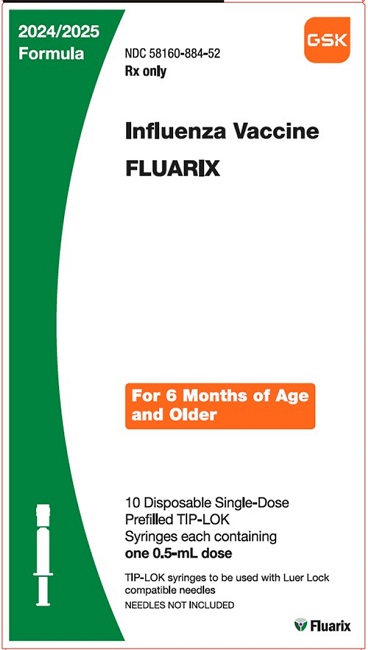
NDC 58160-0725-52: FLUARIX 2026/2027 influenza virus vaccine 15 ug/.5mL; 15 ug/.5mL Suspension, Carton of 10 Syringes
This is a package of 10 syringes of FLUARIX 2026/2027 influenza virus vaccine 15 ug/.5mL; 15 ug/.5mL Suspension from GlaxoSmithKline Biologicals SA, first listed with the FDA Jul 2026 and currently FDA-listed, this package's marketing is listed to end Jun 2027. It is this product's only package size.
NDC database record
One package, one record: these facts belong to NDC 58160-725-52 alone.
- Record
- FDA NDC Directory package listing · Vaccine
- Code segments
- 58160 labeler · 725 product · 52 package
- Package marketed since
- Jul 1, 2026
- Package marketing ended
- Jun 30, 2027
- Sample package
- No — commercial package
- Barcode (UPC-A, from the NDC)
- 3 5816072552 4
- FDA record last changed
- Nov 19, 2026
Identity & classification
Regulatory identifiers FDA, NLM and CMS codes for this package
Drug-database identifiers Medi-Span GPI and First Databank GCN / HICL / AHFS classification
- GSN (GCN sequence number): 088850
- GCN: 59026
- HICL (First Databank): 051266
Where does this data come from?
- FDA openFDA NDC Directory · synced Nov 19, 2026
- FDA label on DailyMed · label index refreshed Nov 21, 2026
- RxNorm (NLM RxNav) · catalog refreshed Nov 19, 2026
- Medi-Span GPI (licensed)
- First Databank (licensed) · refreshed Nov 19, 2026
Clinical
Why get vaccinated? Influenza vaccine, inactivated or recombinant may prevent influenza illness (flu) that may occur with infection due to the influenza virus. Flu is a contagious disease that spreads around the United States every year, usually between October and May. Anyone can get the flu, but it is more dangerous for some people. Flu can cause fever and chills, sore throat, muscle aches, fatigue, cough, headache, and runny or stuffy nose. Flu can cause other complications such as sinus infections and pneumonia and can lead to hospitalization and death. Influenza vaccine, inactivated or r...
Read the full MedlinePlus article ↗Patient education
Supplement & herbal interactions
Where does this data come from?
- MedlinePlus (NLM) · refreshed Nov 19, 2026
- FDA label on DailyMed · label index refreshed Nov 21, 2026
Ask a licensed pharmacist directly — free, answered by our team.
Pricing
A drug doesn't have one price. Each row is a different public payment system, and none is what you'd pay at the counter — that depends on your insurance. The ⓘ on each row explains what it measures.
| Price system | Per mL | Per package |
|---|---|---|
| Retail pharmacies payNADAC · weekly | Not in the retail survey — common for institutional, discontinued, or low-volume packs. | |
| Medicaid paysCMS SDUD · 12 mo | No recent Medicaid claims on file for this NDC — rare and low-volume NDCs are suppressed in the public data. | |
| Medicare drug plans payPart D · quarterly | No Part D plan price is available for this NDC in our data. | |
Where does this data come from?
- CMS NADAC weekly file
- CMS ASP pricing files · refreshed Nov 20, 2026
- CMS Medicaid State Drug Utilization Data · refreshed Nov 19, 2026
- CMS Part D plan pricing files · refreshed Oct 24, 2026
- VA National Acquisition Center price file
Packaging — all sizes for this product
| Package NDC | Description | Marketing start | Marketing end | Status |
|---|---|---|---|---|
| 58160-0725-52 You're viewing this Main listing | 10 SYRINGE in 1 CARTON / .5 mL in 1 SYRINGE Inner NDC 58160-725-41 · each syringe (.5 mL) | 2026-07-01 | Jun 30, 2027 | Active |
Therapeutic equivalents
| Product | Labeler | Pack | NADAC/unit | TE | Status | Price vs. this |
|---|---|---|---|---|---|---|
| Fluarix 2026/2027 15 ug/.5mL; 15 ug/.5mLthis 58160-0725-52 | GlaxoSmithKline | 10 syringes | — | — | FDA listed | — |
Where does this data come from?
- FDA openFDA NDC Directory · synced Nov 19, 2026
- FDA Purple Book · refreshed Nov 5, 2026
- CMS NADAC weekly file
Availability & biosimilar status
Biologics have no small-molecule generics; biosimilar competition is tracked in the FDA Purple Book.
Where does this data come from?
- FDA Purple Book · refreshed Nov 5, 2026
Inactive Ingredients / Excipients
Inactive ingredients, also called excipients, are components of the drug product other than the active ingredient. They may include fillers, dyes, coatings, preservatives, flavors, or other formulation ingredients.
💡 Tap an ingredient (hover on desktop) to see what it is and why it’s used.
-
UNII LU4B53JYVE
A form of vitamin E derived from natural sources, used as an antioxidant to prevent oils and fats in the medicine from breaking down and losing effectiveness during storage.
-
UNII 02F3473H9O
A mineral salt used in medications as a source of magnesium. It helps bind ingredients together, improve texture, and maintain the product's stability during storage.
-
UNII 7JPC6Y25QS
A synthetic nonionic surfactant, a type of cleaning agent used in pharmaceutical formulations. It functions as an emulsifier and solubilizer, helping mix water and oil-based ingredients and improving how the medicine dissolves and spreads in the body.
-
UNII 6OZP39ZG8H
Polysorbate 80 is a synthetic emulsifier derived from sorbitol and oleic acid. It helps mix oil and water-based ingredients together in medications and improves how the product disperses in the body.
-
UNII 660YQ98I10
Potassium chloride is a mineral salt used in medicines as a buffer and to help maintain the proper pH balance and stability of the formulation during storage and use.
-
UNII 451W47IQ8X
Sodium chloride is common table salt. It's used in medicines as a buffer to maintain proper pH, as a filler to add bulk, or to adjust the osmotic balance in liquid formulations.
6 inactive ingredients listed in the exact product block matched to this NDC.
Where does this data come from?
ingredient classCode="IACT" elements from the exact product block matched by this NDC. Label-section narrative from DailyMed / the openFDA label index is shown separately when available.- FDA label on DailyMed · label index refreshed Nov 21, 2026
- FDA openFDA NDC Directory · synced Nov 19, 2026
Inactive ingredient FAQ
Are inactive ingredients the same for every manufacturer?
Why might an inactive ingredient be missing?
Can inactive ingredients matter?
Manufacturer & labeler
More NDCs from GlaxoSmithKline Biologicals SA labeler code 58160
- Hiberix Haemophilus b Conjugate Vaccine (Tetanus Toxoid Conjugate) Kit NDC 58160-726-15
- Rotarix Rotavirus Vaccine, Live, Oral 1000 [CCID_50]/mL Solution NDC 58160-740-21
- Arepanrix Influenza A H5 Monovalent Vaccine Kit NDC 58160-742-25
- PENMENVY Meningococcal (Groups A, B, C, W and Y) Kit NDC 58160-757-15
- INFANRIX Diphtheria and Tetanus Toxoids and Acellular Pertussis Vaccine Adsorbed 10 [iU]/.5mL; 25 [iU]/.5mL; 25 ug/.5mL Suspension NDC 58160-810-52
- PEDIARIX Diphtheria and Tetanus Toxoids and Acellular Pertussis Adsorbed, Hepatitis B (Recombinant) and Inactivated Poliovirus Vaccine Combined 25 [iU]/.5mL; 10 [iU]/.5mL; 25 ug/.5mL Injection, Suspension NDC 58160-811-52
Where does this data come from?
- FDA openFDA NDC Directory · synced Nov 19, 2026
- Drugs@FDA
Full FDA label FDA SPL
🎯 Indications and Usage ▾
1 INDICATIONS AND USAGE FLUARIX is indicated for active immunization for the prevention of disease caused by influenza A subtype viruses and type B virus contained in the vaccine [see Description ( 11 )] . FLUARIX is approved for use in persons aged 6 months and older. FLUARIX is a vaccine indicated for active immunization for the prevention of disease caused by influenza A subtype viruses and type B virus contained in the vaccine.
FLUARIX is approved for use in persons aged 6 months and older. ( 1 )
⏱️ Dosage and Administration ▾
2 DOSAGE AND ADMINISTRATION For intramuscular use. For intramuscular use. ( 2 ) a One dose or 2 doses (0.5 mL each) depending on vaccination history as per the annual Advisory Committee on Immunization Practices (ACIP) recommendation on prevention and control of seasonal influenza with vaccines.
If 2 doses, administer each 0.5‑mL dose at least 4 weeks apart. ( 2.1 ) Age Vaccination Status Dose and Schedule 6 months through 8 years Not previously vaccinated with influenza vaccine Two doses (0.5 mL each) at least 4 weeks apart ( 2.1 ) Vaccinated with influenza vaccine in a previous season One or 2 doses a (0.5 mL each) ( 2.1 ) 9 years and older Not applicable One 0.5‑mL dose ( 2.1 )
2.1Dosage and Schedule The dose and schedule for FLUARIX are presented in Table 1 . Table 1. FLUARIX: Dosing a One dose or 2 doses (0.5 mL each) depending on vaccination history as per the annual Advisory Committee on Immunization Practices (ACIP) recommendation on prevention and control of seasonal influenza with vaccines.
If 2 doses, administer each 0.5‑mL dose at least 4 weeks apart. Age Vaccination Status Dose and Schedule 6 months through 8 years Not previously vaccinated with influenza vaccine Two doses (0.5 mL each) at least 4 weeks apart Vaccinated with influenza vaccine in a previous season One or 2 doses a (0.5 mL each) 9 years and older Not applicable One 0.5‑mL dose
2.2Administration Instructions Shake well before administration. Parenteral drug products should be inspected visually for particulate matter and discoloration prior to administration, whenever solution and container permit. If either of these conditions exists, the vaccine should not be administered. Attach a sterile needle to the prefilled syringe and administer intramuscularly.
💊 Dosage Forms and Strengths ▾
3 DOSAGE FORMS AND STRENGTHS FLUARIX is an injectable suspension. A single dose is 0.5 mL. FLUARIX is an injectable suspension. A single dose is 0.5 mL. ( 3 )
⛔ Contraindications ▾
4 CONTRAINDICATIONS Do not administer FLUARIX to anyone with a history of severe allergic reactions (e.g., anaphylaxis) to any component of the vaccine, including egg protein, or following a previous administration of any influenza vaccine [see Description ( 11 )] . Do not administer FLUARIX to anyone with a history of severe allergic reactions (e.g., anaphylaxis) to any component of the vaccine, including egg protein, or following a previous dose of any influenza vaccine. ( 4 , 11 )
⚠️ Warnings and Cautions ▾
5 WARNINGS AND PRECAUTIONS • Appropriate medical treatment must be immediately available to manage potential anaphylactic reactions following administration of FLUARIX. ( 5.1 ) • If Guillain-Barré syndrome has occurred within 6 weeks of receipt of a prior influenza vaccine, the decision to give FLUARIX should be based on careful consideration of potential benefits and risks. ( 5.2 ) • Syncope (fainting) can occur in association with administration of injectable vaccines, including FLUARIX.
Procedures should be in place to avoid injury from fainting. ( 5.3 ) • In two separate postmarketing observational studies, an increased risk of febrile seizures was observed during the first day following vaccination with standard dose trivalent (2024‑2025) and quadrivalent (2023‑2024) influenza vaccines in children 6 months through 4 years of age. ( 5.4 , 6.2 )
5.1Preventing and Managing Allergic Vaccine Reactions Appropriate medical treatment must be immediately available to manage potential anaphylactic reactions following administration of FLUARIX.
5.2Guillain-Barré Syndrome If Guillain‑Barré syndrome (GBS) has occurred within 6 weeks of receipt of a prior influenza vaccine, the decision to give FLUARIX should be based on careful consideration of the potential benefits and risks. The 1976 swine influenza vaccine was associated with an increased frequency of GBS. Evidence for a causal relation of GBS with subsequent vaccines prepared from other influenza viruses is inconclusive.
If influenza vaccine does pose a risk, it is probably slightly more than 1 additional case/1 million persons vaccinated.
5.3Syncope Syncope (fainting) may occur in association with administration of injectable vaccines, including FLUARIX. Procedures should be in place to avoid injury from fainting.
5.4Febrile Seizures In two postmarketing observational studies, an increased risk of febrile seizures was observed in the first day following vaccination among children 6 months through 4 years of age [see Adverse Reactions ( 6.2 )].
5.5Altered Immunocompetence If FLUARIX is administered to immunosuppressed persons, including individuals receiving immunosuppressive therapy, the immune response may be lower than in immunocompetent persons.
5.6Limitations of Vaccine Effectiveness Vaccination with FLUARIX may not protect all susceptible individuals.
🤒 Adverse Reactions ▾
6 ADVERSE REACTIONS The safety experience with FLUARIX QUADRIVALENT is relevant to FLUARIX because both vaccines are manufactured using the same process and have overlapping compositions. In adults who received FLUARIX in a randomized, placebo-controlled study, the most common (≥10%) solicited local adverse reactions were pain (55%) and redness (18%). The most common systemic adverse reactions were muscle aches (23%), fatigue (20%), and headache (19%).
In children aged 5 through 17 years who received FLUARIX, the most common (≥10%) solicited local adverse reactions were pain (56%), redness (18%), and swelling (14%). The most common systemic adverse reactions were muscle aches (29%), fatigue (20%), and headache (15%). In children aged 3 through 4 years who received FLUARIX, the most common (≥10%) solicited local adverse reactions were pain (35%), redness (23%), and swelling (14%).
The most common systemic adverse reactions were irritability (21%), loss of appetite (13%), and drowsiness (13%). In children aged 6 through 35 months who received FLUARIX QUADRIVALENT, the most common (≥10%) solicited local adverse reactions were pain (17%) and redness (13%). The most common (≥10%) systemic adverse reactions were irritability (16%), loss of appetite (14%), and drowsiness (13%). • In adults who received FLUARIX, the most common (≥10%) solicited local adverse reactions were pain (55%) and redness (18%); the most common systemic adverse reactions were muscle aches (23%), fatigue (20%), and headache (19%).
( 6.1 ) • In children aged 5 through 17 years who received FLUARIX, the most common (≥10%) solicited local adverse reactions were pain (56%), redness (18%), and swelling (14%); the most common systemic adverse reactions were muscle aches (29%), fatigue (20%), and headache (15%). ( 6.1 ) • In children aged 3 through 4 years who received FLUARIX, the most common (≥10%) solicited local adverse reactions were pain (35%), redness (23%), and swelling (14%); the most common systemic adverse reactions were irritability (21%), loss of appetite (13%), and drowsiness (13%).
( 6.1 ) • In children aged 6 through 35 months who received FLUARIX QUADRIVALENT, the most common (≥10%) solicited local adverse reactions were pain (17%) and redness (13%); the most common systemic adverse reactions were irritability (16%), loss of appetite (14%), and drowsiness (13%). ( 6.1 ) To report SUSPECTED ADVERSE REACTIONS, contact GlaxoSmithKline at 1-888-825-5249 or VAERS at 1-800-822-7967 or www.vaers.hhs.gov .
6.1Clinical Trials Experience Because clinical trials are conducted under widely varying conditions, adverse reaction rates observed in the clinical trials of a vaccine cannot be directly compared with rates in the clinical trials of another vaccine and may not reflect the rates observed in practice. There is the possibility that broad use of FLUARIX could reveal adverse reactions not observed in clinical trials. FLUARIX has been administered to 10,317 individuals aged 18 through 64 years and 606 individuals aged 65 years and older in 4 clinical trials and to 1,698 individuals aged 3 through 17 years in 1 clinical trial.
FLUARIX QUADRIVALENT has been administered to 6,006 individuals aged 6 through 35 months in 1 clinical trial. Individuals Aged 18 Years and Older Trial 1 (NCT00100399) was a randomized, double-blind, placebo-controlled trial that evaluated a total of 952 subjects: FLUARIX (N = 760) and placebo (N = 192). The population was aged 18 through 64 years (mean: 39.1), 54% were female and 80% were white.
Solicited adverse reactions were collected for 4 days (day of vaccination and the next 3 days) ( Table 2 ). Unsolicited events that occurred within 21 days of vaccination (Day 0 to 20) were recorded using diary cards supplemented by spontaneous reports and a medical history as reported by subjects. Table 2.
FLUARIX: Incidence of Solicited Local and Systemic Adverse Reactions within 4 Days a of Vaccination in Adults Aged 18 through 64 Years b (Total… [Excerpted — this section continues on DailyMed.]
👥 Use in Specific Populations ▾
8 USE IN SPECIFIC POPULATIONS • Geriatric Use: Antibody responses were lower in geriatric subjects who received FLUARIX than in younger subjects. ( 8.5 )
8.1Pregnancy Risk Summary All pregnancies have a risk of birth defect, loss, or other adverse outcomes. In the U.S. general population, the estimated background risk of major birth defects and miscarriage in clinically recognized pregnancies is 2% to 4% and 15% to 20%, respectively. Available data from a pregnancy registry do not suggest an increased risk of major birth defects and miscarriage in individuals who received FLUARIX (see Data ) .
Data from women vaccinated with FLUARIX QUADRIVALENT are applicable to FLUARIX because both vaccines are manufactured using the same process and have overlapping compositions. A developmental toxicity study was performed in female rats administered FLUARIX prior to mating and during gestation. The dose was 0.1 mL on each of 5 occasions (a single human dose is 0.5 mL).
The study revealed no evidence of impaired female fertility or harm to the fetus due to FLUARIX (see Data ) . Clinical Considerations Disease-Associated Maternal and/or Embryo/Fetal Risk: Pregnant women infected with seasonal influenza are at increased risk of severe illness associated with influenza infection compared with non-pregnant women. Pregnant women with influenza may be at increased risk for adverse pregnancy outcomes, including preterm labor and delivery.
Data Human Data: A pregnancy exposure registry (2014 to 2019) included 437 prospective reports of exposure to FLUARIX QUADRIVALENT or FLUARIX, in the United States. After excluding pregnancies lost to follow-up (n = 322), those with an unknown outcome (n = 5), and those ongoing at time of last contact (n = 26), there were 84 pregnancies with exposure within 28 days prior to conception or during pregnancy and with known outcomes which included 1 spontaneous abortion, 1 stillbirth and 3 major birth defects. Among the 84 reports with known pregnancy outcomes, 17 individuals were exposed to FLUARIX QUADRIVALENT in the first trimester with 1 spontaneous abortion with no apparent birth defect and 1 stillbirth with no apparent birth defect reported; 34 individuals were exposed to FLUARIX QUADRIVALENT in the second trimester with 3 major birth defects reported; 21 individuals were exposed to FLUARIX QUADRIVALENT in the third trimester with no major birth defects reported; and 12 individuals were exposed to FLUARIX QUADRIVALENT at an unknown time in pregnancy with no major birth defects reported.
Animal Data: In a developmental toxicity study, the effect of FLUARIX on embryo-fetal and pre-weaning development was evaluated in pregnant rats. Animals were administered FLUARIX by intramuscular injection once prior to gestation, and during the period of organogenesis (gestation Days 6, 8, 11, and 15), 0.1 mL/rat/occasion. No adverse effects on mating, female fertility, pregnancy, parturition, lactation parameters, and embryo-fetal or pre-weaning development were observed.
There were no vaccine-related fetal malformations or other evidence of teratogenesis.
8.2Lactation Risk Summary It is not known whether FLUARIX is excreted in human milk. Data are not available to assess the effects of FLUARIX on the breastfed infant or on milk production/excretion. The developmental and health benefits of breastfeeding should be considered along with the mother’s clinical need for FLUARIX and any potential adverse effects on the breastfed child from FLUARIX or from the underlying maternal condition.
For preventive vaccines, the underlying maternal condition is susceptibility to disease prevented by the vaccine.
8.4Pediatric Use Safety and effectiveness of FLUARIX in children younger than 6 months have not been established.
8.5Geriatric Use A randomized, single‑blind, active‑controlled trial evaluated immunological non‑inferiority in a cohort of subjects aged 65 years and older who received FLUARIX (N = 606) or another U.S.‑licensed triv… [Excerpted — this section continues on DailyMed.]
🤰 Pregnancy ▾
8.1Pregnancy Risk Summary All pregnancies have a risk of birth defect, loss, or other adverse outcomes. In the U.S. general population, the estimated background risk of major birth defects and miscarriage in clinically recognized pregnancies is 2% to 4% and 15% to 20%, respectively. Available data from a pregnancy registry do not suggest an increased risk of major birth defects and miscarriage in individuals who received FLUARIX (see Data ) .
Data from women vaccinated with FLUARIX QUADRIVALENT are applicable to FLUARIX because both vaccines are manufactured using the same process and have overlapping compositions. A developmental toxicity study was performed in female rats administered FLUARIX prior to mating and during gestation. The dose was 0.1 mL on each of 5 occasions (a single human dose is 0.5 mL).
The study revealed no evidence of impaired female fertility or harm to the fetus due to FLUARIX (see Data ) . Clinical Considerations Disease-Associated Maternal and/or Embryo/Fetal Risk: Pregnant women infected with seasonal influenza are at increased risk of severe illness associated with influenza infection compared with non-pregnant women. Pregnant women with influenza may be at increased risk for adverse pregnancy outcomes, including preterm labor and delivery.
Data Human Data: A pregnancy exposure registry (2014 to 2019) included 437 prospective reports of exposure to FLUARIX QUADRIVALENT or FLUARIX, in the United States. After excluding pregnancies lost to follow-up (n = 322), those with an unknown outcome (n = 5), and those ongoing at time of last contact (n = 26), there were 84 pregnancies with exposure within 28 days prior to conception or during pregnancy and with known outcomes which included 1 spontaneous abortion, 1 stillbirth and 3 major birth defects. Among the 84 reports with known pregnancy outcomes, 17 individuals were exposed to FLUARIX QUADRIVALENT in the first trimester with 1 spontaneous abortion with no apparent birth defect and 1 stillbirth with no apparent birth defect reported; 34 individuals were exposed to FLUARIX QUADRIVALENT in the second trimester with 3 major birth defects reported; 21 individuals were exposed to FLUARIX QUADRIVALENT in the third trimester with no major birth defects reported; and 12 individuals were exposed to FLUARIX QUADRIVALENT at an unknown time in pregnancy with no major birth defects reported.
Animal Data: In a developmental toxicity study, the effect of FLUARIX on embryo-fetal and pre-weaning development was evaluated in pregnant rats. Animals were administered FLUARIX by intramuscular injection once prior to gestation, and during the period of organogenesis (gestation Days 6, 8, 11, and 15), 0.1 mL/rat/occasion. No adverse effects on mating, female fertility, pregnancy, parturition, lactation parameters, and embryo-fetal or pre-weaning development were observed.
There were no vaccine-related fetal malformations or other evidence of teratogenesis.
🧒 Pediatric Use ▾
8.4Pediatric Use Safety and effectiveness of FLUARIX in children younger than 6 months have not been established.
🧓 Geriatric Use ▾
8.5Geriatric Use A randomized, single‑blind, active‑controlled trial evaluated immunological non‑inferiority in a cohort of subjects aged 65 years and older who received FLUARIX (N = 606) or another U.S.‑licensed trivalent, inactivated influenza vaccine (N = 604) (Sanofi Pasteur SA). In subjects receiving FLUARIX or the comparator vaccine, geometric mean antibody titers (GMTs) postvaccination were lower in geriatric subjects than in younger subjects (aged 18 through 64 years). FLUARIX was non‑inferior to the comparator vaccine for each of the 3 influenza strains based on mean antibody titers and seroconversion rates [see Clinical Studies ( 14.2 )].
Solicited local and general adverse events were similar for FLUARIX and the comparator vaccine among geriatric subjects ( Table 3 ). For both vaccines, the frequency of solicited events in subjects aged 65 years and older was lower than in younger subjects ( Table 3 ) [see Adverse Reactions ( 6.1 )].
🧬 Clinical Pharmacology ▾
12 CLINICAL PHARMACOLOGY
12.1Mechanism of Action Specific levels of hemagglutination‑inhibition (HI) antibody titer postvaccination with inactivated influenza virus vaccines have not been correlated with protection from influenza illness but the HI antibody titers have been used as a measure of vaccine activity. In some human challenge trials, HI antibody titers of ≥1:40 have been associated with protection from influenza illness in up to 50% of subjects. 2,3 Antibody against one influenza virus type or subtype confers little or no protection against another virus.
Furthermore, antibody to one antigenic variant of influenza virus might not protect against a new antigenic variant of the same type or subtype. Frequent development of antigenic variants through antigenic drift is the virological basis for seasonal epidemics and the reason for the usual replacement of one or more new strains in each year’s influenza vaccine.
🧬 Mechanism of Action ▾
12.1Mechanism of Action Specific levels of hemagglutination‑inhibition (HI) antibody titer postvaccination with inactivated influenza virus vaccines have not been correlated with protection from influenza illness but the HI antibody titers have been used as a measure of vaccine activity. In some human challenge trials, HI antibody titers of ≥1:40 have been associated with protection from influenza illness in up to 50% of subjects. 2,3 Antibody against one influenza virus type or subtype confers little or no protection against another virus.
Furthermore, antibody to one antigenic variant of influenza virus might not protect against a new antigenic variant of the same type or subtype. Frequent development of antigenic variants through antigenic drift is the virological basis for seasonal epidemics and the reason for the usual replacement of one or more new strains in each year’s influenza vaccine.
📦 How Supplied / Storage and Handling ▾
16 HOW SUPPLIED/STORAGE AND HANDLING FLUARIX is supplied in 0.5‑mL single‑dose, disposable, prefilled TIP‑LOK syringes (Luer Lock syringes) packaged without needles. TIP‑LOK syringes are to be used with Luer Lock compatible needles. The tip cap and rubber plunger stopper of the prefilled syringe are not made with natural rubber latex.
NDC 58160-725-41 Syringe in Package of 10: NDC 58160-725-52 Store refrigerated between 2º and 8ºC (36º and 46ºF). Do not freeze. Discard if the vaccine has been frozen.
Store in the original package to protect from light.
📋 Description ▾
11 DESCRIPTION FLUARIX, Influenza Vaccine, is a sterile colorless and slightly opalescent injectable suspension for intramuscular use. FLUARIX is a vaccine prepared from influenza viruses propagated in embryonated chicken eggs. Each of the influenza viruses is produced and purified separately.
After harvesting the virus‑containing fluids, each influenza virus is concentrated and purified by zonal centrifugation using a linear sucrose density gradient solution containing detergent to disrupt the viruses. Following dilution, the vaccine is further purified by diafiltration. Each influenza virus solution is inactivated by the consecutive effects of sodium deoxycholate and formaldehyde leading to the production of a “split virus.” Each split inactivated virus is then suspended in sodium phosphate‑buffered isotonic sodium chloride solution.
The vaccine is formulated from the 3 split inactivated virus solutions. FLUARIX is formulated to contain 45 micrograms (mcg) hemagglutinin (HA) per 0.5‑mL dose, in the recommended ratio of 15 mcg HA of each of the following 3 strains: A/Switzerland/6849/2025 IVR‑278 (an A/Missouri/11/2025 pdm09-like virus) (H1N1), A/Michigan/105/2025 SAN-049A (an A/Darwin/1454/2025‑like virus) (H3N2), and B/Tokyo/EIS13‑175/2025 (B‑Victoria lineage). These three influenza virus strains are recommended by FDA for the 2026‑2027 influenza season.
FLUARIX is formulated without preservatives. FLUARIX does not contain thimerosal. Each 0.5‑mL dose also contains octoxinol‑10 (TRITON X‑100) ≤0.085 mg, α‑tocopheryl hydrogen succinate ≤0.1 mg, and polysorbate 80 (Tween 80) ≤0.415 mg.
Each dose may also contain residual amounts of hydrocortisone ≤0.0015 mcg, gentamicin sulfate ≤0.15 mcg, ovalbumin ≤0.05 mcg, formaldehyde ≤5 mcg, and sodium deoxycholate ≤50 mcg from the manufacturing process. The tip cap and rubber plunger stopper of the prefilled syringe are not made with natural rubber latex.
💬 Information for Patients ▾
17 PATIENT COUNSELING INFORMATION Provide the following information to the vaccine recipient or guardian: • Inform of the potential benefits and risks of immunization with FLUARIX. • Educate regarding potential side effects, emphasizing that: (1) FLUARIX contains non‑infectious killed viruses and cannot cause influenza and (2) FLUARIX is intended to provide protection against illness due to influenza viruses only, and cannot provide protection against all respiratory illness. • Give the Vaccine Information Statements, which are required by the National Childhood Vaccine Injury Act of 1986 to be given prior to each immunization.
These materials are available free of charge at the Centers for Disease Control and Prevention (CDC) website ( www.cdc.gov/vaccines ). • Instruct that annual revaccination is recommended. FLUARIX, TIP-LOK, and HAVRIX are registered trademarks of the GSK group of companies. The other brands listed are trademarks of their respective owners and are not trademarks of the GSK group of companies.
The makers of these brands are not affiliated with and do not endorse the GSK group of companies or its products. Manufactured by GlaxoSmithKline Biologicals , Dresden, Germany, a branch of SmithKline Beecham Pharma GmbH & Co. KG , Munich, Germany Licensed by GlaxoSmithKline Biologicals, Rixensart, Belgium, US License 1617 Distributed by GlaxoSmithKline, Durham, NC 27701 ©2026 the GSK group of companies or its licensor.
FLX:24PI
🔬 Clinical Studies ▾
14 CLINICAL STUDIES
14.1Efficacy against Influenza Efficacy Trial in Adults The efficacy of FLUARIX was evaluated in Trial 3, a randomized, double‑blind, placebo‑controlled trial conducted in 2 European countries during the 2006-2007 influenza season. Efficacy of FLUARIX, containing A/New Caledonia/20/1999 (H1N1), A/Wisconsin/67/2005 (H3N2), and B/Malaysia/2506/2004 influenza strains, was defined as the prevention of culture‑confirmed influenza A and/or B cases, for vaccine antigenically matched strains, compared with placebo. Healthy subjects aged 18 through 64 years (mean: 39.9 years) were randomized (2:1) to receive FLUARIX (N = 5,103) or placebo (N = 2,549) and monitored for influenza‑like illnesses (ILI) starting 2 weeks postvaccination and lasting for approximately 7 months.
In the overall population, 60% of subjects were female and 99.9% were white. Culture‑confirmed influenza was assessed by active and passive surveillance of ILI. Influenza‑like illness was defined as at least one general symptom (fever ≥100°F and/or myalgia) and at least one respiratory symptom (cough and/or sore throat).
After an episode of ILI, nose and throat swab samples were collected for analysis; attack rates and vaccine efficacy were calculated ( Table 6 ). Table 6. FLUARIX: Attack Rates and Vaccine Efficacy against Culture-Confirmed Influenza A and/or B in Adults Aged 18 through 64 Years a (Total Vaccinated Cohort) a Trial 3: NCT00363870. b There were no vaccine matched culture-confirmed cases of A/New Caledonia/20/1999 (H1N1) or B/Malaysia/2506/2004 influenza strains with FLUARIX or placebo. c Vaccine efficacy for FLUARIX exceeded a predefined threshold of 35% for the lower limit of the 2‑sided 95% CI. d Of the 22 additional cases, 18 were unmatched and 4 were untyped; 15 of the 22 cases were A (H3N2) (11 cases with FLUARIX and 4 cases with placebo).
Attack Rates (n/N) Vaccine Efficacy N n % % Lower Limit Upper Limit Antigenically Matched Strains b FLUARIX 5,103 49 1.0 66.9 c 51.9
77.4Placebo 2,549 74 2.9 – – – All Culture-Confirmed Influenza (Matched, Unmatched, and Untyped) d FLUARIX 5,103 63 1.2 61.6 c 46.0
72.8Placebo 2,549 82 3.2 – – – In a post-hoc, exploratory analysis by age, vaccine efficacy (against culture-confirmed influenza A and/or B cases, for vaccine antigenically matched strains) in subjects aged 18 through 49 years was 73.4% (95% CI: 59.3, 82.8) [number of influenza cases: FLUARIX (n = 35/3,602) and placebo (n = 66/1,810)]. In subjects aged 50 through 64 years, vaccine efficacy was 13.8% (95% CI: ‑137.0, 66.3) [number of influenza cases: FLUARIX (n = 14/1,501) and placebo (n = 8/739)]. As the trial lacked statistical power to evaluate efficacy within age subgroups, the clinical significance of these results is unknown.
Efficacy Trial in Children The efficacy of FLUARIX QUADRIVALENT was evaluated in Trial 5, a randomized, observer‑blind, non-influenza vaccine-controlled trial conducted in 13 countries in Asia, Europe, and Central America during the 2011-2012 and 2012-2013 Northern Hemisphere influenza seasons, and from 2012 to 2014 during influenza seasons in subtropical countries. Healthy subjects aged 6 through 35 months (mean age: 22 months) were randomized (1:1) to receive FLUARIX QUADRIVALENT (n = 6,006) or a non-influenza control vaccine (n = 6,012).
In the overall population, 51% were male; 27% were white, 45% were Asian, and 28% were of other racial/ethnic groups. Children aged 12 months and older with no history of influenza vaccination and children younger than 12 months received 2 doses of FLUARIX QUADRIVALENT or the Non-Influenza Active Comparator vaccine approximately 28 days apart. Children aged 12 months and older with a history of influenza vaccination received 1 dose.
Data for FLUARIX QUADRIVALENT are relevant to FLUARIX because both vaccines are manufactured using the same process and have overlapping compositions. The influenza virus strain composition of FLUARIX QUADRIVALENT administered in each of the… [Excerpted — this section continues on DailyMed.]
🧪 Nonclinical Toxicology ▾
13 NONCLINICAL TOXICOLOGY
13.1Carcinogenesis, Mutagenesis, Impairment of Fertility FLUARIX has not been evaluated for carcinogenic or mutagenic potential or for impairment of fertility in males.
📄 Carcinogenesis, Mutagenesis, Impairment of Fertility ▾
13.1Carcinogenesis, Mutagenesis, Impairment of Fertility FLUARIX has not been evaluated for carcinogenic or mutagenic potential or for impairment of fertility in males.
📚 References ▾
15 REFERENCES 1. Lloyd PC, Acharya G, Zhao H, et al. Safety monitoring of health outcomes following influenza vaccination during the 2023–2024 season among U.S.
Commercially-insured individuals aged 6 months through 64 years: Self-controlled case series analyses. Vaccine. 2025;63:127614.
2. Hannoun C, Megas F, Piercy J. Immunogenicity and protective efficacy of influenza vaccination.
Virus Res. 2004;103:133-138. 3.
Hobson D, Curry RL, Beare AS, et al. The role of serum haemagglutination-inhibiting antibody in protection against challenge infection with influenza A2 and B viruses. J Hyg Camb.
1972;70:767-777.
📄 Recent Major Changes ▾
Warnings and Precautions, Febrile Seizures ( 5.4 ) 3/2026
📄 Package Label / Principal Display Panel ▾
PRINCIPAL DISPLAY PANEL NDC 58160-725-52 FLUARIX Influenza Vaccine 2026/2027 Formula Rx only GSK For 6 Months of Age and Older 10 Disposable Single-Dose Prefilled TIP-LOK Syringes each containing one 0.5-mL dose TIP-LOK syringes to be used with Luer Lock compatible needles NEEDLES NOT INCLUDED Fluarix Made in Germany ©2026 GSK group of companies or its licensor. Rev. 4/26 527298 Fluarix Trivalent 2026-2027 10 dose carton
About this NDC listing & data coverage
What data is (and isn’t) available for this NDC — tap to expand
| NDC identity (package / product / labeler codes) | ✓ Available |
| Labeler | ✓ Available |
| Product & package description | ✓ Available |
| Marketing category & status | ✓ Available |
| Active ingredient / dosage form / route | ✓ Available |
| FDA label (SPL via DailyMed) | ✓ Available |
| Package photos | ✓ Available |
| Inactive ingredients (structured) | ✓ Available |
| NADAC pharmacy acquisition price (CMS) | — Not published for this NDC CMS publishes NADAC only for NDCs reported in its retail-pharmacy survey. |
| Orange Book / therapeutic-equivalence data | — Not published for this NDC Applies only to products approved under an NDA/ANDA; many listings are out of scope. |
| HCPCS J-code billing crosswalk | — Not published for this NDC Most self-administered / retail products have no J-code — that is normal. |
| Medicaid utilization (CMS SDUD) | — Not published for this NDC CMS reports utilization only for NDCs with Medicaid claims above its privacy threshold. |