
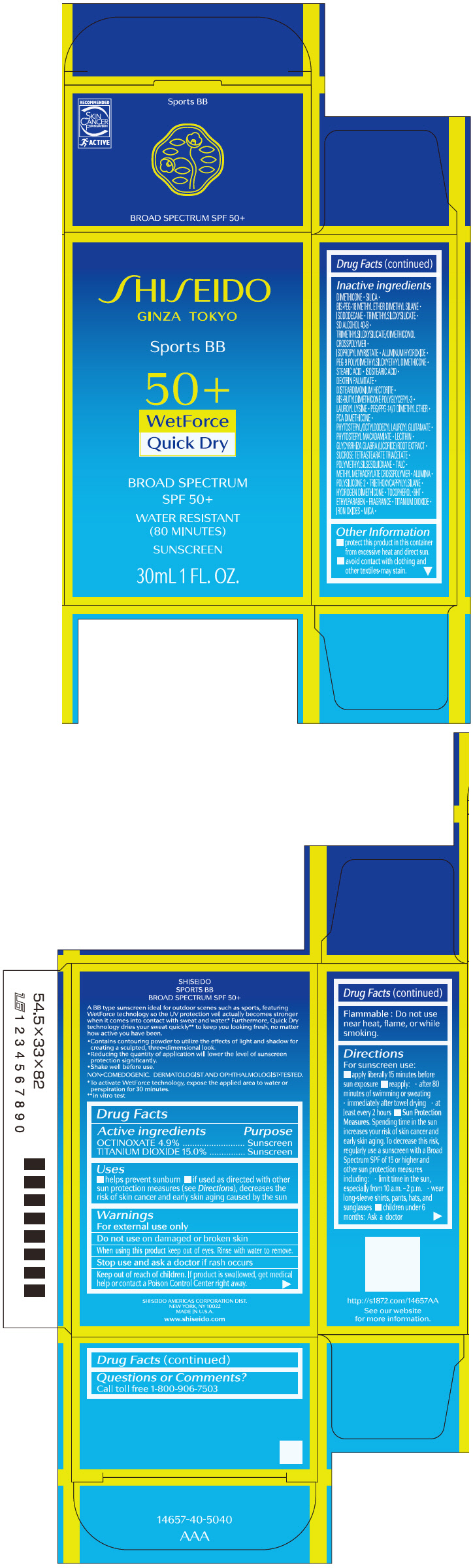
SHISEIDO SPORTS BB DARK OCTINOXATE and TITANIUM DIOXIDE 1.81545 g/30mL; 5.5575 g/30mL Emulsion
🆔 Identity & classification
Where does this data come from?
🏭 Manufacturer & labeler
Where does this data come from?
🩺 Clinical
This is a sunscreen emulsion (lotion) applied to the skin. It contains two active ingredients that function as ultraviolet (UV) filters: octinoxate, an organic UV absorber, and titanium dioxide, a mineral UV reflectant. Together, these ingredients are typically used to help protect skin from sun exposure. This product is an over-the-counter monograph drug, meaning it follows FDA's established safety and effectiveness standards for sunscreen products.
Patient education
Supplement & herbal interactions
Where does this data come from?
Ask a licensed pharmacist directly — free, answered by our team.
🧪 Inactive Ingredients / Excipients
Inactive ingredients, also called excipients, are components of the drug product other than the active ingredient. They may include fillers, dyes, coatings, preservatives, flavors, or other formulation ingredients.
💡 Tap an ingredient (hover on desktop) to see what it is and why it’s used.
-
UNII H4N855PNZ1
Alpha-tocopherol is a form of vitamin E, a fat-soluble antioxidant derived from natural or synthetic sources. In medicines, it prevents oils and fats from breaking down and becoming rancid, protecting the product's stability and shelf life.
-
UNII 3K9958V90M
A liquid solvent derived from fermentation or chemical synthesis. In medicines, alcohol dissolves active ingredients, helps preserve the product, and improves how the body absorbs certain drugs.
-
UNII 5QB0T2IUN0
Aluminum hydroxide is a white powder mineral compound used as an antacid ingredient in some formulations. It works as a buffer and pH regulator to help neutralize stomach acid in the medicine.
-
UNII LMI26O6933
Alumina is a white powder form of aluminum oxide. It's used as a filler to add bulk to tablets and capsules, and sometimes as a thickening or anti-caking agent in powdered formulations.
-
UNII OEB4R3WW9C
A silicone-based emulsifier and anti-foaming agent derived from polyethylene glycol. It helps prevent foam formation during manufacturing and aids in blending oil and water components in liquid formulations.
-
UNII 1P9D0Z171K
BHT is a synthetic antioxidant that prevents fats and oils in medicines from breaking down and becoming rancid. It helps keep the product stable and effective during storage.
-
UNII 89B2BSF9I3
A synthetic compound made by chemically combining corn dextrin (a starch derivative) with palmitic acid. It acts as a binder and flow agent, helping hold tablet ingredients together and improve powder handling during manufacturing.
-
UNII 92RU3N3Y1O
Dimethicone is a silicone-based oil that acts as an anti-foaming agent and lubricant in medicines. It reduces gas bubbles in liquid formulations and helps coat and protect the stomach lining when ingested.
-
UNII X687XDK09L
A clay mineral processed to carry positive charges, used as a thickener and suspending agent in liquid medicines. It helps keep solid particles evenly distributed throughout the product.
-
UNII 14255EXE39
Ethylparaben is a preservative, a chemical that stops bacteria and mold from growing in the medicine. It keeps the product safe and effective throughout its shelf life.
-
UNII 1K09F3G675
Ferric oxide red is an inorganic iron compound used as a colorant in medicines. It gives tablets, capsules, or other dosage forms a red or reddish tint for identification and appearance.
-
UNII EX438O2MRT
Ferric oxide yellow is a naturally occurring iron compound used as a colorant in medications. It gives tablets, capsules, and other forms a yellow or golden hue for identification and appearance.
-
UNII XM0M87F357
A dark iron oxide compound that gives medicines their black or dark color. It's used as a colorant in tablets and capsules to help identify the product and make it visually distinctive.
-
UNII 2788Z9758H
A plant extract from licorice root used as a sweetener, flavoring agent, and natural emulsifier in medicines. It helps improve taste and may aid in keeping ingredients evenly mixed throughout the product.
-
UNII 4QGR4P2YOI
A silicone-based lubricant that reduces friction between tablet particles and manufacturing equipment. It helps tablets flow smoothly during production and prevents them from sticking together or to machinery.
-
UNII A8289P68Y2
Isododecane is a lightweight liquid hydrocarbon used as a solvent and spreadability agent in topical formulations. It helps dissolve active ingredients and makes the product easier to apply and absorb into the skin.
-
UNII 0RE8K4LNJS
Isopropyl myristate is an oily liquid made from coconut or palm oil. It's used in medicines as an emollient and penetration enhancer to help the medicine absorb through skin or improve spreadability in topical products.
-
UNII X33R8U0062
Isostearic acid is a fatty acid derived from vegetable oils. It acts as an emulsifier and lubricant in medicines, helping blend ingredients together and reducing friction during tablet or capsule manufacturing.
-
UNII 113171Q70B
Lauroyl lysine is a compound made by combining an amino acid (lysine) with a fatty acid (lauric acid). It works as a glidant and lubricant to help powder particles flow smoothly during manufacturing and tablet compression.
-
UNII EG97988M5Q
A synthetic plastic polymer that forms a three-dimensional network. It's used as a coating on tablets and capsules to control how fast the medicine releases into the body, or as a binder to hold pill ingredients together.
-
UNII V8A1AW0880
Mica is a naturally occurring mineral that's ground into fine powder. It's used in medicines as a colorant and anti-caking agent to improve appearance and prevent clumping in tablets or powders.
-
UNII TYP81E471F
A silicone-based lubricant and anti-foaming agent derived from dimethicone, a synthetic polymer. It helps reduce friction during tablet or capsule manufacturing and prevents excessive foam in liquid formulations.
-
UNII 6DNW9T7YT2
A synthetic liquid polymer made from ethylene and propylene compounds. It acts as a solvent and humectant to help dissolve active ingredients and maintain moisture in the formulation.
-
UNII 233VSF903M
A plant-derived oil compound used as an emollient and skin-conditioning agent. It helps soften the product texture and improve how the medicine spreads on or absorbs into the skin.
-
UNII 65954KGO9Q
A plant-derived emulsifier made from phytosterols and fatty acids. It helps mix oil and water-based ingredients together and improves texture and spreadability in topical formulations.
-
UNII 59Z907ZB69
A synthetic silicone polymer used as a glidant and anti-caking agent. It reduces friction between particles, helping powders and tablets flow smoothly during manufacturing and use.
-
UNII ETJ7Z6XBU4
Silicon dioxide is a naturally occurring mineral used as a glidant and anti-caking agent. It helps powder ingredients flow smoothly and prevents clumping during manufacturing and storage.
-
UNII 4ELV7Z65AP
Stearic acid is a fatty acid derived from plant or animal sources. It acts as a binder and lubricant in tablets and capsules, helping them hold together and flow smoothly during manufacturing.
-
UNII 1K7LBQ045N
A synthetic compound made by combining sugar with fatty acids and acetic acid. It works as an emulsifier and stabilizer to help mix oil and water-based ingredients and keep the medicine uniform throughout its shelf life.
-
UNII 7SEV7J4R1U
A powder made from a naturally occurring mineral. In medicines, talc works as a glidant and anti-caking agent, helping tablets and capsules flow smoothly during manufacturing and preventing clumping.
-
UNII LDC331P08E
A silicone-based compound that acts as a glidant and flow agent in solid medications. It reduces friction between powder particles, helping the medicine flow smoothly during manufacturing and tablet compression.
-
UNII 5041RX63GN
A synthetic silicon-based polymer used as a glidant and anti-caking agent. It helps powder particles flow smoothly and prevents clumping during manufacturing and storage.
32 inactive ingredients listed in the exact product block matched to this NDC.
Label-section wording can be broader than the structured product block and may mention additional formulation ingredients.
Where does this data come from?
ingredient classCode="IACT" elements from the exact product block matched by this NDC. Label-section narrative from DailyMed / the openFDA label index is shown separately when available.Inactive ingredient FAQ
Are inactive ingredients the same for every manufacturer?
Why might an inactive ingredient be missing?
Can inactive ingredients matter?
💲 Pricing
A drug doesn't have one price. Each row is a different public payment system, and none is what you'd pay at the counter — that depends on your insurance. The ⓘ on each row explains what it measures.
| Price system | Per mL | Per package |
|---|---|---|
| Retail pharmacies payNADAC · weekly | Not in the retail survey — common for institutional, discontinued, or low-volume packs. | |
| Medicaid paysCMS SDUD · 12 mo | No recent Medicaid claims on file for this NDC — rare and low-volume NDCs are suppressed in the public data. | |
| Medicare drug plans payPart D · quarterly | No Part D plan price is available for this NDC in our data. | |
Where does this data come from?
🔁 Therapeutic equivalents
| Product | Labeler | Pack | NADAC/unit | TE | Status | Price vs. this |
|---|---|---|---|---|---|---|
| Shiseido Sports Bb Dark 1.81545 g/30mL; 5.5575 g/30mLthis 58411-0536-10 | SHISEIDO | 1 bottle | — | — | FDA listed | — |
Where does this data come from?
⏳ Availability & generic status
We did not find an FDA-approved generic match for this exact strength, form and route.
Where does this data come from?
📦 Packaging — all sizes for this product
| Package NDC | Description | Marketing start | Status |
|---|---|---|---|
| 58411-0536-10 You're viewing this | 1 BOTTLE in 1 CARTON (58411-536-10) / 30 mL in 1 BOTTLE | 2019-03-01 | Active |
🧭 About this NDC listing & data coverage
What data is (and isn’t) available for this NDC — tap to expand
| NDC identity (package / product / labeler codes) | ✓ Available |
| Labeler | ✓ Available |
| Product & package description | ✓ Available |
| Marketing category & status | ✓ Available |
| Active ingredient / dosage form / route | ✓ Available |
| FDA label (SPL via DailyMed) | ✓ Available |
| Package photos | ✓ Available |
| Inactive ingredients (structured) | ✓ Available |
| NADAC pharmacy acquisition price (CMS) | — Not published for this NDC CMS publishes NADAC only for NDCs reported in its retail-pharmacy survey. |
| Orange Book / therapeutic-equivalence data | — Not published for this NDC Applies only to products approved under an NDA/ANDA; many listings are out of scope. |
| HCPCS J-code billing crosswalk | — Not published for this NDC Most self-administered / retail products have no J-code — that is normal. |
| Medicaid utilization (CMS SDUD) | — Not published for this NDC CMS reports utilization only for NDCs with Medicaid claims above its privacy threshold. |
Questions about this listing
Is this NDC FDA-approved?
Why is there no price listed?
Is the NDC printed on the package the same as the 11-digit billing NDC?
What do the three segments of this NDC mean?
Is this package still being marketed?
Who lists this product with the FDA?
Do I need a prescription for this product?
Where does this data come from?
📄 FDA label — Drug Facts FDA SPL
🎯 Indications and Usage ▾
Uses helps prevent sunburn if used as directed with other sun protection measures (see Directions ), decreases the risk of skin cancer and early skin aging caused by the sun
⏱️ Dosage and Administration ▾
Directions apply liberally 15 minutes before sun exposure reply after 80 minutes after swimming and sweating immediately after towel drying at least every 2 hours Sun Protection Measures . Spending time in the sun increases your risk of skin cancer and early skin aging. To decrease this risk, regularly use a sunscreen with a Broad Spectrum SPF of 15 or higher and other un protection measures including: limit time in the sun, especially from 10 a.m. – 2 p.m. wear long-sleeve shirts, pants, hats, and sunglasses children under 6 months: Ask a doctor
⚠️ Warnings ▾
Warnings For external use only Do not use on damaged or broken skin When using this product keep out of eyes. Rinse with water to remove. Stop use and ask a doctor if rash occurs. Keep out of reach of children. If product is swallowed, get medical help or contact a Poison Control Center right away. Flammable : Do not use near heat, flame, or while smoking.
📦 Storage and Handling ▾
Other information Protect this product in this container from excessive heat and direct sun. Avoid contact with clothing and other textiles may stain.
🧪 Active Ingredient ▾
Active ingredients Purpose OCTINOXATE 4.9% Sunscreen TITANIUM DIOXIDE 15% Sunscreen
🧪 Inactive Ingredients ▾
Inactive Ingredients DIMETHICONE▪SILICA▪BIS-PEG-18 METHYL ETHER DIMETHYL SILANE▪ISODODECANE▪TRIMETHYLSILOXYSILICATE▪SD ALCOHOL 40-B▪TRIMETHYLSILOXYSILICATE/DIMETHICONOL CROSSPOLYMER▪ISOPROPYL MYRISTATE▪ALUMINUM HYDROXIDE▪PEG-9 POLYDIMETHYLSILOXYETHYL DIMETHICONE▪STEARIC ACID▪ISOSTEARIC ACID▪DEXTRIN PALMITATE▪DISTEARDIMONIUM HECTORITE▪BIS-BUTYLDIMETHICONE POLYGLYCERYL-3▪LAUROYL LYSINE▪PEG/PPG-14/7 DIMETHYL ETHER▪PCA DIMETHICONE▪PHYTOSTERYL/OCTYLDODECYL LAUROYL GLUTAMATE▪PHYTOSTERYL MACADAMIATE▪LECITHIN▪GLYCYRRHIZA GLABRA (LICORICE) ROOT EXTRACT▪SUCROSE TETRASTEARATE TRIACETATE▪POLYMETHYLSILSESQUIOXANE▪TALC▪METHYL METHACRYLATE CROSSPOLYMER▪ALUMINA▪POLYSILICONE-2▪TRIETHOXYCAPRYLYLSILANE▪HYDROGEN DIMETHICONE▪TOCOPHEROL▪BHT▪ETHYLPARABEN▪FRAGRANCE▪TITANIUM DIOXIDE▪IRON OXIDES▪MICA▪
🎯 Purpose ▾
Active ingredients Purpose OCTINOXATE 4.9% Sunscreen TITANIUM DIOXIDE 15% Sunscreen