Therapeutic class — broad (HIC1)Respiratory System
HIC2 codeB3
Therapeutic class — intermediate (HIC2)Drugs Affecting Primarily The Trachea And Bronchi
HIC3 codeB3T
Therapeutic class — specific (HIC3)Non-Opioid Antitussive And Expectorant Combination
AHFS code48:08.00.00
AHFS classAntitussives
FDB label nameGUAIFENESIN-DM 100-10 MG/5 ML
FDB brand nameGuaifenesin-Dextromethorphan
Legend statusO — Over-the-counter (OTC) drug or device
Why two NDCs?
The FDA registers this code as 58657-504-08 — a 5-3-2 layout, and that's what's printed on the package and shown on DailyMed. For insurance claims, every NDC is standardized to a uniform 11-digit 5-4-2 format by adding a zero to the product segment → 58657-0504-08. Same drug, same package — only the format differs.
Where does this data come from?
Identifiers from the FDA openFDA NDC Directory and Structured Product Labeling; RxCUI from RxNorm (NLM); GPI from Medi-Span; GCN / HIC / AHFS / legend from First Databank.
🏷️RxNorm drug class
This medicine belongs to the Uncompetitive N-methyl-D-aspartate Receptor Antagonist class.
Drug family (ATC)Other antidepressants, Opium alkaloids and derivatives
How it worksUncompetitive NMDA Receptor Antagonists, Sigma-1 Receptor Agonists
Where does this data come from?
Therapeutic classes from RxNorm RxClass (U.S. National Library of Medicine) — Established Pharmacologic Class (FDA), ATC drug family (WHO) and mechanism of action, matched by this product’s RxCUI.
The labeler markets the product; the application holder owns the FDA approval. They’re often the same company but can differ (e.g. a repackager or an authorized generic). A mailing address / phone appears here when the manufacturer includes it in the product’s FDA label (not all do).
Where does this data come from?
Labeler, application holder and registered establishment from the FDA openFDA NDC Directory and Drugs@FDA; address/contact from the product’s FDA label.
🩺 Clinical
Label name GUAIFENESIN-DM 100-10 MG/5 MLIngredient Guaifenesin/Dextromethorphan
📗 Our plain-language guide HelloPharmacist
The two ingredients tackle your symptoms from different angles. Guaifenesin is an expectorant — it helps thin and loosen the mucus in your chest so you can cough it up more easily....
What exactly does this combination do — why are two ingredients needed?
It depends on which antidepressant you're taking. If it's a type called an MAOI — which includes certain older antidepressants and some medications for Parkinson's disease — you sh...
Plain-language summary from MedlinePlus (U.S. National Library of Medicine); supplement & herbal interactions and nutrient depletion data from the Natural Medicines database; our full guide is HelloPharmacist editorial content.
💬 Questions about Guaifenesin and Dextromethorphan Hydrobromide?
Ask a licensed pharmacist directly — free, answered by our team.
Inactive ingredients, also called excipients, are components of the drug product
other than the active ingredient. They may include fillers, dyes, coatings, preservatives, flavors,
or other formulation ingredients.
💡 Tap an ingredient (hover on desktop) to see what it is and why it’s used.
UNII XF417D3PSL
Anhydrous citric acid is a sour, crystalline powder derived from citric acid with water removed. In medicines, it acts as a buffer to control pH, adds tartness to improve taste, and helps tablets disintegrate.
UNII IY9XDZ35W2
Dextrose is a simple sugar derived from corn or other sources. It serves as a filler and sweetener in medicines to add bulk, improve taste, and help stabilize the medication's form.
UNII WZB9127XOA
A synthetic red dye used to color medications and make them easier to identify. It serves as a colorant in tablets, capsules, and liquid formulations.
UNII PDC6A3C0OX
Glycerin is a clear, thick liquid derived from plant oils or fats. It acts as a humectant to retain moisture, a sweetener, and a solvent in medications.
UNII XY6UN3QB6S
A sweetener made from corn starch that contains fructose and glucose. It sweetens the medicine to improve taste and may help preserve the product.
UNII L7T10EIP3A
A cooling compound from mint plants used as a flavoring agent and to create a fresh sensation in medicines. It helps mask bitter tastes and improve how the product feels in the mouth.
UNII SB8ZUX40TY
Saccharin sodium is an artificial sweetener made from saccharin salt. It's added to medicines to improve taste, especially in liquid formulations for children or bitter drugs.
UNII OJ245FE5EU
Sodium benzoate is a salt derived from benzoic acid, a preservative. It's added to medicines to prevent growth of bacteria, fungi, and other microorganisms that could spoil the product.
8 inactive ingredients listed in the exact product block matched to this NDC.
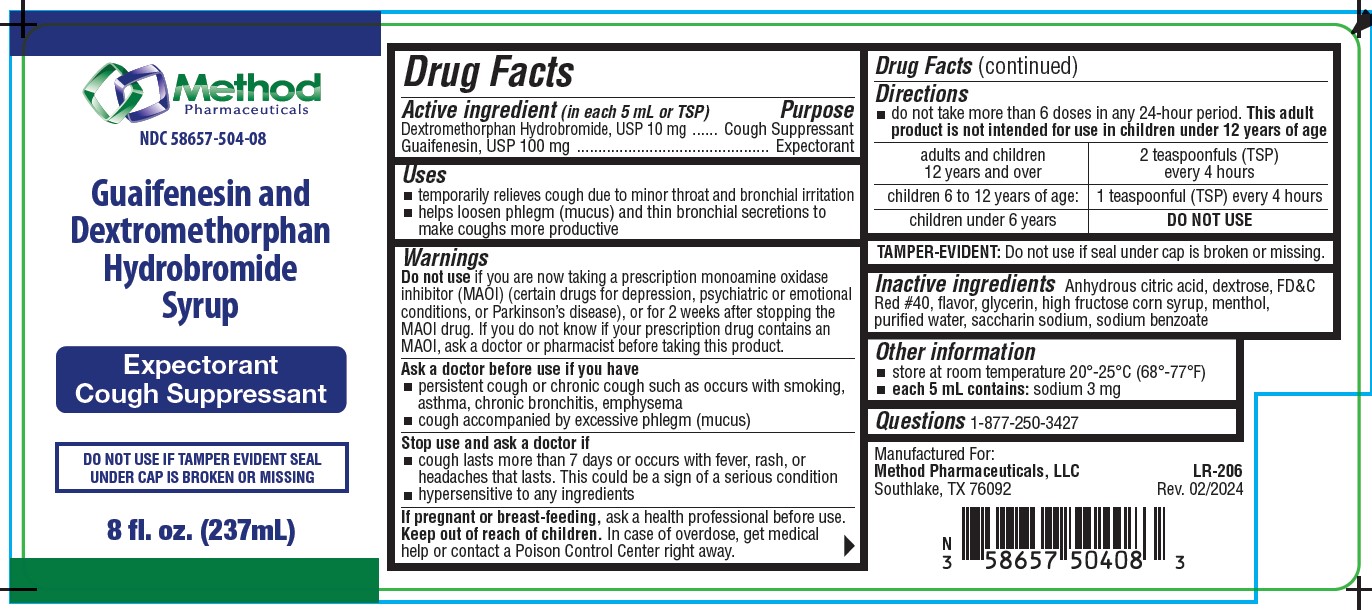
The official label also statesAnhydrous citric acid, dextrose, FD&C Red #40, flavor, gylcerin, high fructose corn syrup, menthol, purified water, saccharin sodium, sodium benzoate
Label-section wording can be broader than the structured product block and may mention additional formulation ingredients.
Where does this data come from?
Data sourced from official FDA Structured Product Labeling (SPL) via DailyMed — ingredient classCode="IACT" elements from the exact product block matched by this NDC. Label-section narrative from DailyMed / the openFDA label index is shown separately when available.
Inactive ingredient FAQ
Are inactive ingredients the same for every manufacturer?
No. Inactive ingredients can differ by manufacturer, dosage form, strength, and package / product version.
Why might an inactive ingredient be missing?
Some SPLs do not provide a complete structured inactive-ingredient list, and older or unusual labels may only include the information in narrative text.
Can inactive ingredients matter?
Yes. They can matter for allergies, intolerances, dyes, gluten / lactose concerns, preservatives, and formulation differences — but confirm with a pharmacist or the manufacturer when it’s clinically important.
💲 Pricing
A drug doesn't have one price. Each row is a different public payment system, and none is what you'd pay at the counter — that depends on your insurance. The ⓘ on each row explains what it measures.
Price system
Per mL
Per package
Retail pharmacies payNADAC · weekly
$0.024
$5.69 / 237 ml
Medicaid paysCMS SDUD · 12 mo
$0.0430
$10.19 / 237 ml
Medicare drug plans payPart D · quarterly
No Part D plan price is available for this NDC in our data.
NADAC price history (per mL) — tap or hover for the price & month
▼ Down 2% over the last 6 months.
Where does this data come from?
NADAC (National Average Drug Acquisition Cost) is the CMS weekly pharmacy-acquisition-cost survey — what pharmacies pay. ASP (Average Sales Price) is the CMS Medicare Part B drug-payment file, published quarterly. Medicaid pays is computed by us from CMS State Drug Utilization Data (total reimbursed ÷ units, trailing 12 months) — gross of rebates and inclusive of dispensing fees, so it reflects what Medicaid paid, not an acquisition cost. Medicare drug plans pay is the median negotiated point-of-sale unit cost across plans listing this NDC in the CMS quarterly Prescription Drug Plan pricing files, before rebates. The VA pays is the federal contract price (FSS, and the statutory Big 4 ceiling where listed) from the VA National Acquisition Center pharmaceutical price file. All are free public government data; each measures a different payer, so the figures are not directly comparable.
About this product: other versions of the same ingredient, strength and form are listed above, least expensive first, with FDA equivalence ratings where available.
Where does this data come from?
Equivalents are other NDCs of the same ingredient, form and route from the openFDA NDC Directory, ranked least-expensive-first by NADAC. Therapeutic-equivalence (AB) ratings come from the FDA Orange Book; biologics use the FDA Purple Book for biosimilar & interchangeable status.
⏳ Availability & generic status
🏛️
2024
On the market since
Apr 2024
📍
2026
Currently FDA-listed
2 years listed
🔒
·
No generic listed yet
brand only
ℹ️No FDA-approved generic found
We did not find an FDA-approved generic match for this exact strength, form and route.
Where does this data come from?
Patents and exclusivity from the FDA Orange Book (small-molecule drugs), refreshed from public FDA data. Generic launch timing is an estimate, not a guarantee.
🗺️ Medicaid utilization & spend
📍 This exact package only: Medicaid data is reported per full 11-digit NDC — labeler, product and pack size — so every number here is for 58657-0504-08, not the drug overall. Other pack sizes report separately.
💊 Pharmacy benefit only: These are Medicaid outpatient pharmacy claims, billed by NDC. They exclude the medical benefit — clinic- or hospital-administered drugs billed under HCPCS J-codes — so drugs used mostly that way (e.g. Avastin, Lucentis, Keytruda) can look low or missing here. That’s expected, not an error.
📅 Q1 2025 – Q1 2026 · 5 quarters of data
ⓘ The newest quarter is usually incomplete when first published; states restate recent quarters in later CMS releases, so the latest figures typically revise upward. State coverage-policy changes can also shift quarter-to-quarter totals.
Prescriptions last 4 qtrs
58.4K
Units reimbursed last 4 qtrs
11.9M
Gross reimbursed last 4 qtrs
$510K
Avg / prescription
$8.74
Avg / unit
$0.0430
Latest quarter Q1 2026
22.9KRx
Medicaid pays / mL
$0.0430
gross reimbursed
vs
NADAC / mL
$0.0240
acquisition cost
=
Spread
+$0.0190
+79% vs cost
What Medicaid paid per mL (before rebates; includes the pharmacy’s dispensing fee) compared with NADAC — the average price pharmacies pay to buy the drug. A positive spread means Medicaid reimbursed more than the purchase price, before manufacturer rebates.
Fee-for-service vs managed care ⓘ
52% FFS48% MCO
Fee-for-service · 30,592 Rx Managed care · 27,771 Rx
State Medicaid map
Units reimbursed · per 100k residents
21927,029
gray = no data reported ⓘ
Colors are per 100,000 residents, so big states don’t automatically dominate. Tap or hover a state for its actual totals.
Tap or hover a state
…for its Medicaid breakdown
Prescriptions—
Units—
Reimbursed—
🏆 Top states by units · per 100k residents
1Hawaii27,029 /100k
2Arizona10,432 /100k
3Missouri8,842 /100k
4California8,794 /100k
5Wisconsin8,753 /100k
6Washington6,922 /100k
7Arkansas6,786 /100k
8Pennsylvania5,839 /100k
National units — by quarter
💵 About the dollar figures: “reimbursed” is what Medicaid paid pharmacies before confidential manufacturer rebates, so the program’s real net cost is lower than these numbers. Fee-for-service and managed-care claims are combined unless split above. Source: CMS State Drug Utilization Data; per-100k rates use 2023 Census population estimates.
🔬 Reported adverse events (FAERS)
Read carefully: FAERS reports are voluntary and unverified. Counts are not incidence, do not establish causation, are subject to reporting bias, and cannot be used to compare one drug to another. Shown for signal context only. Reports for Guaifenesin and Dextromethorphan Hydrobromide — the ingredient across all brands.
Top reported reactions
Dizziness865
Diarrhoea641
Accidental Overdose543
Nausea515
Overdose390
Somnolence299
Headache293
Age at onset
Child3
Adolescent2
Adult160
Elderly169
Reporter sex
Male · 34%
Female · 66%
Unknown · 0%
Serious outcomes
Hospitalization586
Death95
Life-threatening44
Disabling29
Reports over time (by year) — tap or hover for the count & year
Most recent year is provisional (FAERS lags ~3 months).
Where does this data come from?
Adverse-event reports from the FDA Adverse Event Reporting System (FAERS) via openFDA. FAERS reports are voluntary and unverified — counts are not incidence and don’t establish causation.
📦 Packaging — all sizes for this product
Package NDC
Description
Marketing start
Status
58657-0504-08 You're viewing this
237 mL in 1 BOTTLE, PLASTIC (58657-504-08)
2024-04-01
Active
📄 FDA label — Drug Facts FDA SPL
The complete FDA label for this product — the official Drug Facts labeling, verbatim, section by section. Jump with a chip, search within the label, or expand everything.
Uses temporarily relieves cough due to minor throat and bronchial irritation helps loosen phlegm (mucus) and thin bronchial secretions to make coughs more productive
⏱️Dosage and Administration60 words▾
Directions do not take more than 6 doses in any 24-hour period. This adult product is not intended for use in children under 12 years of age adults and children 12 years and over 2 teaspoonfuls (TSP) every 4 hours children 6 to 12 years of age 1 teaspoonful (TSP) every 4 hours children under 6 years DO NOT USE
⚠️Warnings56 words▾
Warnings Do not use if you are now taking a prescription monoamine oxidase inhibitor (MAOI) (certain drugs for depression, psychiatric or emotional conditions, or Parkinson's disease), or for 2 weeks after stopping the MAOI drug. If you do not know if your prescription drug contains an MAOI, ask a doctor or pharmacist before taking this product.
For educational and professional reference only — not medical advice. Pricing reflects published
NADAC and CMS ASP (free public data) and may differ from your acquisition cost; always verify before billing or dispensing.