
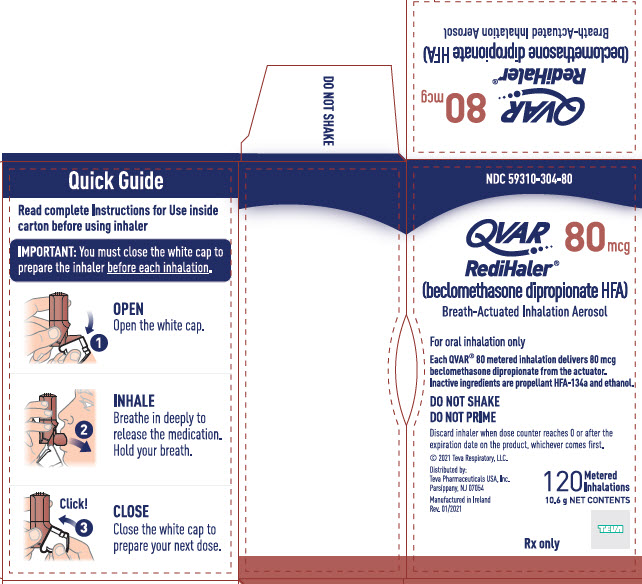
QVAR REDIHALER Beclomethasone Dipropionate HFA 40 ug Aerosol, Metered
🆔 Identity & classification
Where does this data come from?
🏭 Manufacturer & labeler
Where does this data come from?
🩺 Clinical
Beclomethasone is used to prevent difficulty breathing, chest tightness, wheezing, and coughing caused by asthma in adults and children 5 years of age and older. It belongs to a class of medications called corticosteroids. It works by decreasing swelling and irritation in the airways to allow for easier breathing.
Read the full MedlinePlus article ↗- Great question, and it's one of the most important things to understand. Qvar Redihaler works by reducing the ongoing inflammation in your airways every single day, so your asthma...
- My doctor says this isn't a rescue inhaler — so what exactly does it do?
- When you inhale a corticosteroid, a small amount can settle in your mouth and throat. That residue can cause a yeast infection called oral candidiasis — you'd notice white patches...
- Why do I need to rinse my mouth after using the inhaler?
Patient education
Supplement & herbal interactions
Where does this data come from?
Ask a licensed pharmacist directly — free, answered by our team.
🧪 Inactive Ingredients / Excipients
Inactive ingredients, also called excipients, are components of the drug product other than the active ingredient. They may include fillers, dyes, coatings, preservatives, flavors, or other formulation ingredients.
💡 Tap an ingredient (hover on desktop) to see what it is and why it’s used.
-
UNII 3K9958V90M
A liquid solvent derived from fermentation or chemical synthesis. In medicines, alcohol dissolves active ingredients, helps preserve the product, and improves how the body absorbs certain drugs.
-
UNII DH9E53K1Y8
A synthetic fluorinated hydrocarbon used primarily as a propellant or aerosol dispersant in pressurized inhaler formulations to help deliver medication to the lungs.
2 inactive ingredients listed in the exact product block matched to this NDC.
Where does this data come from?
ingredient classCode="IACT" elements from the exact product block matched by this NDC. Label-section narrative from DailyMed / the openFDA label index is shown separately when available.Inactive ingredient FAQ
Are inactive ingredients the same for every manufacturer?
Why might an inactive ingredient be missing?
Can inactive ingredients matter?
💲 Pricing
A drug doesn't have one price. Each row is a different public payment system, and none is what you'd pay at the counter — that depends on your insurance. The ⓘ on each row explains what it measures.
| Price system | Per g | Per package |
|---|---|---|
| Retail pharmacies payNADAC · weekly | $20.564 | — |
| Medicaid paysCMS SDUD · 12 mo | $20.47 | — |
| Medicare drug plans payPart D · Q2 2026 | $21.93 | — |
Where does this data come from?
🔁 Therapeutic equivalents
| Product | Labeler | Pack | NADAC/unit | TE | Status | Price vs. this |
|---|---|---|---|---|---|---|
| Qvar Redihaler 40 ugthis 59310-0302-40 | Teva | 1 inhaler | $20.564 | — | Availability likely | — |
| Qvar Redihaler 40 ug 50090-3458-00 | A-S | 1 inhaler | — | — | FDA listed | — |
| Qvar Redihaler 40 ug 50090-5031-00 | A-S | 1 inhaler | — | — | FDA listed | — |
Where does this data come from?
⏳ Availability & generic status
The FDA lists approved generic versions of this medicine, but that does not always mean a pharmacy can get one today. Patent rules, launch agreements, supply and pricing can affect when generics actually arrive.
Why the date isn’t exact: Generic timing can change because patents may be challenged, settled, licensed, added, removed, or worked around with a narrower label — and FDA approval does not always mean a pharmacy can get the generic today.
🛈 What do these terms mean?
- Patent
- Legal protection listed in the Orange Book that may delay generic approval or launch. Issued by the U.S. Patent & Trademark Office.
- Substance patent
- Covers the active drug molecule itself — the hardest to design around. A generic generally can’t launch until it expires.
- Formulation (product) patent
- Covers a specific formulation or dosage form. A generic can sometimes work around it with a different formulation.
- Method-of-use patent
- A patent covering one specific approved use of the drug — not necessarily the whole molecule. A generic can sometimes launch with a “skinny label” that carves out the protected use and keeps the others.
- Skinny label
- A generic label that omits a still-patented use when the FDA allows it — letting a generic reach the market for the unprotected uses.
- Exclusivity
- FDA-granted marketing protection, separate from patents — e.g. 5-yr new chemical entity, 7-yr orphan drug, or a +6-month pediatric extension.
- Paragraph IV
- A generic applicant’s formal challenge to a listed patent. It can potentially lead to earlier generic entry, but often involves litigation or a settlement.
- RLD / RS
- Reference Listed Drug — the brand product the FDA uses as the reference for generic applications. Reference Standard — the product the FDA expects generics to compare against in bioequivalence testing.
- TE / AB rating
- FDA therapeutic-equivalence rating. An AB rating generally means the FDA considers a generic therapeutically equivalent to — and substitutable for — the brand.
- LOE (loss of exclusivity)
- The latest patent or exclusivity currently listed — the loss-of-exclusivity / latest-listed-protection date shown on this page. Paragraph-IV challenges and settlements can move the real date earlier; FDA approval and a manufacturer’s decision to market can move it later.
Built from the FDA Orange Book. The bars above are scaled to each protection’s expiry; the red LOE marker is the last one to lapse.
| Patent | Type | Use code | Expires |
|---|---|---|---|
| US 11395889 ↗ delist req. | Drug product | — | May 18, 2031 |
| US 12296089 ↗ | Drug product | — | Jan 26, 2038 |
| US 10022510 ↗ delist req. | Drug product | — | May 18, 2031 |
| US 11957832 ↗ | Drug product | — | May 5, 2041 |
| US 10695512 ↗ delist req. | Drug product | — | May 18, 2031 |
| US 8132712 ↗ delist req. | Drug product | — | Sep 7, 2028 |
| US 10022509 ↗ delist req. | Drug product | — | May 18, 2031 |
| US 8931476 ↗ | Drug product | — | Jul 17, 2031 |
| US 10561808 ↗ delist req. | Drug product | — | Jan 1, 2032 |
| US 10086156 ↗ delist req. | Drug product | — | May 18, 2031 |
| US 11793953 ↗ | Drug product | — | Jan 26, 2038 |
| US 10792447 ↗ | Drug product | — | Jan 25, 2039 |
| US 11395888 ↗ | Drug product | — | Jan 26, 2038 |
| US 10022509 ↗ delist req. | Drug product | — | May 18, 2031 |
| US 11865247 ↗ delist req. | Drug product | — | Jan 26, 2038 |
| US 11957832 ↗ | Drug product | — | May 5, 2041 |
| US 11395889 ↗ delist req. | Drug product | — | May 18, 2031 |
| US 10022510 ↗ delist req. | Drug product | — | May 18, 2031 |
| US 10792447 ↗ | Drug product | — | Jan 25, 2039 |
| US 11896759 ↗ delist req. | Drug product | — | Jan 26, 2038 |
| US 10086156 ↗ delist req. | Drug product | — | May 18, 2031 |
| US 10695512 ↗ delist req. | Drug product | — | May 18, 2031 |
| US 11559637 ↗ | Drug product | — | Jul 21, 2039 |
| US 11583643 ↗ | Drug product | — | Aug 19, 2041 |
| US 11395888 ↗ | Drug product | — | Jan 26, 2038 |
| US 11559637 ↗ | Drug product | — | Jul 21, 2039 |
| US 10561808 ↗ delist req. | Drug product | — | Jan 1, 2032 |
| US 11583643 ↗ | Drug product | — | Aug 19, 2041 |
| US 11793953 ↗ | Drug product | — | Jan 26, 2038 |
| US 8132712 ↗ delist req. | Drug product | — | Sep 7, 2028 |
| US 8931476 ↗ | Drug product | — | Jul 17, 2031 |
| US 12296089 ↗ | Drug product | — | Jan 26, 2038 |
Is there a generic version of QVAR REDIHALER 40 MCG?
The FDA approved a generic — why can’t I get it at my pharmacy yet?
Why do different websites show different generic release dates?
What does “FDA listed” mean?
What does a patent or protection date mean here?
What does “current Orange Book estimate” mean?
Can a generic come out before the last patent expires?
Can a generic come out after the listed dates?
What is the difference between patents and exclusivity?
Why are there multiple patent dates?
Where does this data come from?
🗺️ Medicaid utilization & spend
💊 Medicaid utilization by pack size
📊 Medicare Part D spend CMS · PART D · 2026 (Q1)
🔬 Reported adverse events (FAERS)
Top reported reactions
Age at onset
Reporter sex
Serious outcomes
Where does this data come from?
📦 Packaging — all sizes for this product
| Package NDC | Description | Per unit | Per pack | Marketing start | Status |
|---|---|---|---|---|---|
| 59310-0302-40 You're viewing this | 1 INHALER in 1 CARTON (59310-302-40) / 1 CANISTER in 1 INHALER / 120 AEROSOL, METERED in 1 CANISTER | $20.56 / g | — | 2018-02-15 | Active |
| 59310-0302-41 | 1 INHALER in 1 CARTON (59310-302-41) / 1 CANISTER in 1 INHALER / 120 AEROSOL, METERED in 1 CANISTER | — | — | 2018-02-15 | Active |
In Medicaid, this is the most-dispensed pack of this product — about 100% of fills over the last four reported quarters. See all packs ↓
Pack size FAQ
What quantity is in NDC 59310-0302-40?
What NDC number is used to bill for this package of QVAR REDIHALER Beclomethasone Dipropionate HFA 40 ug Aerosol, Metered?
Prices are the latest CMS NADAC pharmacy acquisition cost per NDC; per-pack figures are per-unit × pack quantity, shown only when the pack is denominated in the same measure NADAC prices.
📄 Full prescribing information FDA SPL
🎯 Indications and Usage ▾
1 INDICATIONS AND USAGE QVAR REDIHALER is indicated in the maintenance treatment of asthma as prophylactic therapy in adults and pediatric patients 4 years of age and older. Limitations of Use: QVAR REDIHALER is not indicated for the relief of acute bronchospasm. QVAR REDIHALER is a corticosteroid indicated for maintenance treatment of asthma as prophylactic therapy in adults and pediatric patients 4 years of age and older.
( 1 ) Limitations of Use : Not indicated for the relief of acute bronchospasm. ( 1 )
⏱️ Dosage and Administration ▾
2 DOSAGE AND ADMINISTRATION For oral inhalation only. ( 2.1 ) Starting dosage is based on prior asthma therapy and disease severity. ( 2.2 ) Treatment of asthma in patients 4 to 11 years of age: 40 mcg or 80 mcg twice daily.
( 2.2 ) Treatment of asthma in patients 12 years of age and older: 40 mcg, 80 mcg, 160 mcg, or 320 mcg twice daily ( 2.2 ) Discard QVAR REDIHALER inhaler when the dose counter displays 0 or after the expiration date on the product, whichever comes first. ( 2.1 ) Do not use a spacer or volume holding chamber ( 2.1 )
2.1General Overview Administration Administer QVAR REDIHALER by oral inhalation. After inhalation, rinse mouth with water without swallowing to help reduce the risk of oropharyngeal candidiasis. Consistent dose delivery is achieved, whether using the 40‑ or 80‑mcg strengths, due to proportionality of the 2 products (i.e., 2 actuations of 40‑mcg strength should provide a dose comparable to 1 actuation of the 80‑mcg strength).
Inhaler Instructions Patients should be instructed on the proper use of their inhaler. Do not use QVAR REDIHALER with a spacer or volume holding chamber. Shaking the inhaler prior to use is not necessary.
Do not shake the inhaler with the cap open to avoid possible actuation of the device. Priming QVAR REDIHALER does not require priming. Cleaning Keep the inhaler clean and dry at all times.
Never wash or put any part of the inhaler in water. Wipe the mouthpiece weekly with a clean, dry cloth or tissue. Dose Counter QVAR REDIHALER has a dose counter attached to the actuator.
When the patient receives the inhaler, the number 120 will be displayed. The dose counter will count down each time a spray is released. When the dose counter reaches 20, the color of the numbers will change to red to remind the patient to contact their pharmacist for a refill of medication or consult their physician for a prescription refill.
When the dose counter reaches 0, the background will change to solid red. Discard QVAR REDIHALER inhaler when the dose counter displays 0 or after the expiration date on the product, whichever comes first [see Patient Counseling Information ( 17 )] .
2.2Recommended Dosage Adults and Adolescents 12 years of age and older The recommended starting dosage for patients 12 years of age and older who are not on an inhaled corticosteroid is 40 to 80 mcg twice daily by oral inhalation, approximately 12 hours apart. The starting dosage is based on previous asthma therapy and disease severity, including consideration of the patients’ current control of asthma symptoms and risk of future exacerbation. For patients switching to QVAR REDIHALER from another inhaled corticosteroid product, select the appropriate starting dosage strength of QVAR REDIHALER based on the strength of the previous inhaled corticosteroid product and disease severity: 40, 80, 160 or 320 mcg twice daily.
For patients who do not respond adequately to the initial dosage after 2 weeks of therapy, increasing the dosage may provide additional asthma control. The maximum recommended dosage for patients 12 years of age and older is 320 mcg twice daily. Pediatric Patients 4 to 11 years The recommended starting dosage for patients aged 4 to 11 years of age is 40 mcg twice daily by oral inhalation, approximately 12 hours apart.
The starting dosage is based on previous asthma therapy and disease severity, including consideration of the patients’ current control of asthma symptoms and risk of future exacerbation. For patients who do not respond adequately to QVAR REDIHALER 40 mcg after 2 weeks of therapy, increasing the dosage to QVAR REDIHALER 80 mcg twice daily may provide additional asthma control. The maximum recommended dosage for patients 4 to 11 years of age is 80 mcg twice daily.
General Dosing Recommendations The onset and degree of symptom relief will vary in individual patients. Improvement in asthma symptoms can occur within 24 hours of the beginning of treatment and should be expected within the first or…
💊 Dosage Forms and Strengths ▾
3 DOSAGE FORMS AND STRENGTHS Inhalation aerosol: a pressurized, breath‑actuated, metered-dose aerosol with a dose counter in 2 strengths 40 mcg in an aluminum canister contained within a beige plastic actuator and a hinged white cap 80 mcg in an aluminum canister contained within a maroon plastic actuator and a hinged white cap Inhalation aerosol: 40 mcg or 80 mcg per breath actuation. ( 3 )
⛔ Contraindications ▾
4 CONTRAINDICATIONS QVAR REDIHALER is contraindicated in: the primary treatment of status asthmaticus or other acute episodes of asthma where intensive measures are required [see Warnings and Precautions ( 5.2 )] . in patients with known hypersensitivity to beclomethasone dipropionate or any of the ingredients in QVAR REDIHALER [see Warnings and Precautions ( 5.6 )] . Primary treatment of status asthmaticus or other acute episodes of asthma where intensive measures are required. ( 4 ) Hypersensitivity to any of the ingredients of QVAR REDIHALER.
( 4 )
⚠️ Warnings and Cautions ▾
5 WARNINGS AND PRECAUTIONS Oropharyngeal candidiasis: Candida albicans infection of the mouth and throat may occur. Monitor patients periodically for signs of adverse effects on the oral cavity. Advise patients to rinse the mouth with water without swallowing after inhalation to help reduce the risk.
( 5.1 ) Deterioration of asthma and acute episodes: Do not use QVAR REDIHALER for relief of acute symptoms. Patients require immediate re-evaluation during rapidly deteriorating asthma. ( 5.2 ) Transferring patients from systemic corticosteroids: Risk of impaired adrenal function when transferring from oral steroids.
Taper patients slowly from systemic corticosteroids if transferring to QVAR REDIHALER. ( 5.3 ) Immunosuppression: Potential worsening of existing tuberculosis, fungal, bacterial, viral, or parasitic infection; or ocular herpes simplex infections. More serious or even fatal course of chickenpox or measles can occur in susceptible patients.
Use with caution in patients with these infections because of the potential for worsening of these infections. ( 5.4 ) Paradoxical bronchospasm: Bronchospasm, with an immediate increase in wheezing, may occur after dosing. Treat bronchospasm immediately with inhaled, short-acting bronchodilator and discontinue QVAR REDIHALER.
( 5.5 ) Hypersensitivity reactions: Hypersensitivity reactions, such as urticaria, angioedema, rash, and bronchospasm may occur. Discontinue QVAR REDIHALER if such reactions occur. ( 5.6 ) Hypercorticism and adrenal suppression: May occur with very high dosages or at the regular dosage in susceptible individuals.
If such changes occur, discontinue QVAR REDIHALER slowly. ( 5.7 ) Effects on growth: Monitor growth of pediatric patients. ( 5.8 ) Decreases in bone mineral density: Monitor patients with major risk factors for decreased bone mineral content.
( 5.9 ) Glaucoma and cataracts: Monitor patients with change in vision or with a history of increased intraocular pressure, blurred vision, glaucoma, and/or cataracts closely. ( 5.10 )
5.1Oropharyngeal Candidiasis Localized infections with Candida albicans have occurred in the mouth and pharynx in some patients receiving QVAR REDIHALER. If oropharyngeal candidiasis develops, it should be treated with appropriate local or systemic (i.e., oral) antifungal therapy while still continuing with QVAR REDIHALER therapy, but at times therapy with QVAR REDIHALER may need to be temporarily interrupted under close medical supervision. After inhalation, the patient should rinse his/her mouth with water without swallowing to help reduce the risk of oropharyngeal candidiasis.
5.2Deterioration of Asthma and Acute Episodes QVAR REDIHALER is not indicated for the relief of acute symptoms, i.e., as rescue therapy for the treatment of acute episodes of bronchospasm. An inhaled, short‑acting beta 2 ‑agonist, not QVAR REDIHALER, should be used to relieve acute symptoms such as shortness of breath. Instruct patients to contact their physician immediately if episodes of asthma that are not responsive to bronchodilators occur during the course of treatment with QVAR REDIHALER.
During such episodes, patients may require therapy with oral corticosteroids.
5.3Transferring Patients from Systemic Corticosteroid Therapy HPA Suppression/Adrenal Insufficiency Particular care is needed in patients who are transferred from systemically active corticosteroids to QVAR REDIHALER because deaths due to adrenal insufficiency have occurred in asthmatic patients during and after transfer from systemic corticosteroids to less systemically available inhaled corticosteroids. After withdrawal from systemic corticosteroids, a number of months are required for recovery of hypothalamic‑pituitary‑adrenal (HPA) function.
Patients who have been previously maintained on 20 mg or more per day of prednisone (or its equivalent) may be most susceptible, particularly when their systemic corticosteroids have been almost completely withdrawn. During this period of HPA sup…
🤒 Adverse Reactions ▾
6 ADVERSE REACTIONS The following clinically significant adverse reactions are described elsewhere in the labeling: Oropharyngeal candidiasis [see Warnings and Precautions ( 5.1 )] Immunosuppression and risk of infections [see Warnings and Precautions ( 5.4 )] Hypercorticism and adrenal suppression [see Warnings and Precautions ( 5.7 )] Reduction in bone mineral density [see Warnings and Precautions ( 5.9 )] Growth effects [see Warnings and Precautions ( 5.8 ) and Use in Specific Populations ( 8.4 )] Glaucoma and cataracts [see Warnings and Precautions ( 5.10 )] Most common adverse reactions (incidence > 3% and > placebo) include oral candidiasis, upper respiratory tract infection, nasopharyngitis, allergic rhinitis, oropharyngeal pain and sinusitis.
( 6.1 ) To report SUSPECTED ADVERSE REACTIONS, contact Teva Pharmaceuticals at 1-888-483-8279 or FDA at 1-800-FDA-1088 or www.fda.gov/medwatch.
6.1Clinical Trials Experience A total of 1858 subjects participated in the QVAR REDIHALER clinical development program. Because clinical trials are conducted under widely varying conditions, adverse reaction rates observed in the clinical trials of a drug cannot be directly compared to rates in the clinical trials of another drug and may not reflect the rates observed in practice. Adults and Adolescent Patients 12 years of Age and Older: The adverse reaction information presented in Table 1 is derived from 3 double-blind, placebo-controlled clinical trials in which 1230 patients (751 female and 479 male adults previously treated with as‑needed bronchodilators and/or inhaled corticosteroids) were treated with QVAR REDIHALER (doses of 40, 80, 160, or 320 mcg twice daily) or QVAR (beclomethasone dipropionate HFA) Inhalation Aerosol (QVAR MDI; doses of 160 or 320 mcg twice daily) or placebo.
In considering these data, difference in average duration of exposure and clinical trial design should be taken into account. Table 1: Adverse Reactions Experienced by at Least 3% of Adult and Adolescent Patients in the QVAR REDIHALER or QVAR MDI Groups and Greater Than Placebo by Treatment and Daily Dose Preferred Term Number (%) of patients QVAR REDIHALER QVAR MDI Placebo 80 mcg N=90 160 mcg N=92 320 mcg N=214 640 mcg N=211 320 mcg N=212 640 mcg N=107 N=304 Oral Candidiasis 0 2 (2) 7 (3) 15 (7) 6 (3) 9 (8) 1 (<1) Upper Respiratory Tract Infection 3 (3) 3 (3) 9 (4) 6 (3) 17 (8) 4 (4) 6 (2) Nasopharyngitis 4 (4) 2 (2) 3 (1) 3 (1) 6 (3) 4 (4) 4 (1) Oropharyngeal Pain 2 (2) 2 (2) 1 (<1) 3 (1) 6 (3) 4 (4) 2 (<1) Viral Upper Respiratory Tract Infection 3 (3) 0 1 (<1) 3 (1) 4 (2) 2 (<1) 4 (1) Sinusitis 3 (3) 0 1 (<1) 2 (<1) 1 (<1) 1 (<1) 2 (<1) Rhinitis Allergic 0 3 (3) 0 2 (<1) 0 1 (<1) 0 *QVAR MDI=QVAR Inhalation Aerosol Other adverse reactions that occurred in clinical trials using QVAR REDIHALER with an incidence of 1% to 3% and which occurred at a greater incidence than placebo were back pain, headache, pain, nausea and cough.
Pediatric Patients 4 to 11 Years of Age: The adverse reaction information presented in Table 2 concerning QVAR REDIHALER and QVAR MDI is derived from one 12‑week placebo-controlled study in pediatric patients 4 to 11 years of age with persistent asthma. Table 2: Adverse Reactions Experienced by at Least 3% of Patients 4 to 11 Years of Age in the QVAR REDIHALER or QVAR MDI Groups and Greater Than Placebo by Treatment and Daily Dose Preferred Term Number (%) of patients QVAR REDIHALER QVAR MDI Placebo 80 mcg N=126 160 mcg N=125 80 mcg N=125 160 mcg N=125 N=127 Upper Respiratory Tract Infection 3 (2.4) 1 (0.8) 6 (4.8) 5 (4.0) 5 (3.9) Nasopharyngitis 5 (4.0) 11 (8.8) 6 (4.8) 6 (4.8) 4 (3.1) Viral Upper Respiratory Tract Infection 5 (4.0) 5 (4.0) 3 (2.4) 1 (0.8) 4 (3.1) Pharyngitis 4 (3.2) 4 (3.2) 4 (3.2) 4 (3.2) 2 (1.6) Cough 1 (0.8) 3 (2.4) 9 (7.2) 6 (4.8) 4 (3.1) Vomiting 2 (1.6) 2 (1.6) 4 (3.2) 0 2 (1.6) Headache 2 (1.6) 5 (4.0) 0 4 (3.2) 5 (3.9) Pyrexia 1 (0.8) 4 (3.2) 4 (3.2) 3 (2.4) 3 (2.4) *QVAR MDI=QVAR Inhalation Aerosol Other…
👥 Use in Specific Populations ▾
8 USE IN SPECIFIC POPULATIONS
8.1Pregnancy Risk Summary There are no adequate and well‑controlled studies with QVAR REDIHALER or beclomethasone dipropionate in pregnant women. There are clinical considerations with the use of inhaled corticosteroids (ICS), including beclomethasone dipropionate, in pregnant women [see Clinical Considerations] . Also, no published studies, including studies of large birth registries, have to date related the use of ICS to any increases in congenital malformations or other adverse perinatal outcomes.
Thus, available human data do not establish the presence or absence of drug‑associated risk to the fetus. In animal reproduction studies, beclomethasone dipropionate resulted in adverse developmental effects in mice and rabbits at subcutaneous doses equal to or greater than approximately 0.75 times the maximum recommended human daily inhalation dose (MRHDID) in adults (0.64 mg/day) [see Data] . In rats exposed to beclomethasone dipropionate by inhalation, dose‑related gross injury to the fetal adrenal glands was observed at doses greater than 180 times the MRHDID, but there was no evidence of external or skeletal malformations or embryolethality at inhalation doses of up to 440 times the MRHDID.
The estimated background risk of major birth defects and miscarriage for the indicated population(s) are unknown. In the US general population, the estimated risk of major birth defects and miscarriage in clinically recognized pregnancies is 2‑4% and 15‑20%, respectively. Clinical Considerations Disease-Associated Maternal and/or Embryo/Fetal Risk The risk of complications to the mother and developing fetus from inadequate control of asthma must be balanced against the risks from exposure to beclomethasone dipropionate.
In women with poorly or moderately controlled asthma, evidence demonstrates that there is an increased risk of preeclampsia in the mother and prematurity, low birth weight, and small for gestational age for the neonate. The level of asthma control should be closely monitored in pregnant women and treatment adjusted to maintain optimal control. Labor or Delivery There are no specific human data regarding any adverse effects of inhaled beclomethasone dipropionate on labor and delivery.
Data Animal Data In an embryofetal development study in pregnant rats, beclomethasone dipropionate administration during organogenesis from gestation days 6 to 15 at inhaled doses 180 times the MRHDID in adults and higher (on a mg/m 2 basis at maternal doses of 11.5 and 28.3 mg/kg/day) produced dose‑dependent gross injury (characterized by red foci) of the adrenal glands in fetuses. There were no findings in the adrenal glands of rat fetuses at an inhaled dose that was 40 times the MRHDID in adults (on a mg/m 2 basis at a maternal dose of 2.4 mg/kg/day).
There was no evidence of external or skeletal malformations or embryolethality in rat at inhaled doses up to 440 times the MRHDID (on a mg/m 2 basis at maternal doses up to 28.3 mg/kg/day). In an embryofetal development study in pregnant mice, beclomethasone dipropionate administration from gestation days 1 to 18 at subcutaneous doses equal to and greater than 0.75 times the MRHDID in adults (on a mg/m 2 basis at maternal doses of 0.1 mg/kg/day and higher) produced adverse developmental effects (increased incidence of cleft palate).
A no-effect dose in mice was not identified. In a second embryofetal development study in pregnant mice, beclomethasone dipropionate administration from gestation days 1 to 13 at subcutaneous doses equal to and greater than 2.3 times the MRHDID in adults (on a mg/m 2 basis at a maternal dose of 0.3 mg/kg/day) produced embryolethal effects (increased fetal resorptions) and decreased pup survival. In an embryofetal development study in pregnant rabbits, beclomethasone dipropionate administration during organogenesis from gestation days 7 to 16 at subcutaneous doses equal to and greater than 0.75 times the MRHDID in adults (on a mg/m 2 b…
🧬 Clinical Pharmacology ▾
12 CLINICAL PHARMACOLOGY
12.1Mechanism of Action Beclomethasone dipropionate is a corticosteroid demonstrating potent anti‑inflammatory activity. The precise mechanism of corticosteroid action on asthma is not known. Corticosteroids have been shown to have multiple anti‑inflammatory effects, inhibiting both inflammatory cells (e.g., mast cells, eosinophils, basophils, lymphocytes, macrophages, and neutrophils) and release of inflammatory mediators (e.g., histamine, eicosanoids, leukotrienes, and cytokines).
These anti‑inflammatory actions of corticosteroids contribute to their efficacy in asthma. Beclomethasone dipropionate is a prodrug that is rapidly activated by hydrolysis to the active monoester, 17‑monopropionate (17‑BMP). Beclomethasone‑17‑monopropionate has been shown in vitro to exhibit a binding affinity for the human glucocorticoid receptor which is approximately 13 times that of dexamethasone, 6 times that of triamcinolone acetonide, 1.5 times that of budesonide and 25 times that of beclomethasone dipropionate.
The clinical significance of these findings is unknown. Studies in patients with asthma have shown a favorable ratio between topical anti‑inflammatory activity and systemic corticosteroid effects with recommended doses of QVAR REDIHALER.
12.2Pharmacodynamics HPA Axis Effects The effects of QVAR MDI on the hypothalamic‑pituitary‑adrenal (HPA) axis were studied in 40 corticosteroid-naive patients. QVAR MDI, at doses of 80, 160, or 320 mcg twice daily, was compared with placebo and 336 mcg twice daily of CFC‑BDP. Active treatment groups showed an expected dose‑related reduction in 24‑hour urinary-free cortisol (a sensitive marker of adrenal production of cortisol).
Patients treated with the highest dose recommended of QVAR MDI (320 mcg twice daily) had a 37.3% reduction in 24‑hour urinary‑free cortisol compared to a reduction of 47.3% produced by treatment with 336 mcg twice daily of CFC‑BDP. There was a 12.2% reduction in 24‑hour urinary‑free cortisol seen in the group of patients that received 80 mcg twice daily of QVAR MDI and a 24.6% reduction in the group of patients that received 160 mcg twice daily. An open label study of 354 asthma patients given QVAR MDI at recommended doses for one year assessed the effect of treatment with this product on the HPA axis (as measured by both morning and stimulated plasma cortisol).
Less than 1% of patients treated for one year with this product had an abnormal response (peak less than 18 mcg/dL) to a short-cosyntropin test.
12.3Pharmacokinetics Beclomethasone dipropionate undergoes rapid and extensive conversion to beclomethasone‑17‑monopropionate (17‑BMP) during absorption. The pharmacokinetics of beclomethasone dipropionate and 17‑BMP were studied in subjects given single doses. Absorption The mean peak plasma concentration (C max ) of BDP was 6635 pg/mL at 2 minutes after inhalation of 320 mcg using QVAR REDIHALER (4 inhalations of the 80 mcg/inhalation strength).
The mean peak plasma concentration of the major and most active metabolite, 17-BMP, was 1464 pg/mL at 10 minutes after inhalation of 320 mcg of QVAR REDIHALER. Distribution The in vitro protein binding for 17‑BMP was reported to be 94‑96% over the concentration range of 1000 to 5000 pg/mL. Protein binding was constant over the concentration range evaluated.
There is no evidence of tissue storage of beclomethasone dipropionate or its metabolites. Elimination The major route of elimination of inhaled beclomethasone dipropionate appears to be via hydrolysis. More than 90% of inhaled beclomethasone dipropionate is found as 17‑BMP in the systemic circulation.
The mean terminal half‑life of 17‑BMP is approximately 4 hours for QVAR REDIHALER. Metabolism Three major metabolites are formed via esterases: beclomethasone‑17‑monopropionate (17‑BMP) beclomethasone‑21‑monopropionate (21‑BMP) beclomethasone (BOH) Lung slices metabolize beclomethasone dipropionate rapidly to 17‑BMP and more slowly to BOH. 17‑BMP is the m…
📦 How Supplied / Storage and Handling ▾
16 HOW SUPPLIED/STORAGE AND HANDLING How Supplied QVAR REDIHALER (beclomethasone dipropionate HFA) inhalation aerosol: 40 mcg is supplied in a box of one 10.6‑g canister containing 120 actuations which is enclosed within a sealed beige plastic actuator with a dose counter and hinged white cap, and Patient Information and Instructions for Use; box of one; 120 Actuations – NDC 59310-302-40 80 mcg is supplied in a box of one 10.6‑g canister containing 120 actuations which is enclosed within a sealed maroon plastic actuator with a dose counter and hinged white dust cap, and Patient Information and Instructions for Use; box of one; 120 Actuations – NDC 59310-304-80 The correct amount of medication in each inhalation cannot be assured after 120 actuations from the 10.6‑g canister even though the canister is not completely empty.
Patients should be informed to discard the QVAR REDIHALER when the dose counter displays 0 or after the expiration date on the product, whichever comes first. Storage and Handling Store at 25ºC (77ºF). Excursions between 15ºC and 30ºC (59ºF and 86ºF) are permitted (see USP Controlled Room Temperature).
For optimal results, QVAR REDIHALER should be at room temperature when used. Contents under pressure. Do not use or store near heat or open flame.
Exposure to temperatures above 49ºC (120ºF) may cause bursting. Never throw QVAR REDIHALER into fire or incinerator. Keep out of reach of children.
📋 Description ▾
11 DESCRIPTION The active component of QVAR REDIHALER 40 mcg Inhalation Aerosol and QVAR REDIHALER 80 mcg Inhalation Aerosol is beclomethasone dipropionate, USP, a corticosteroid having the chemical name 9-chloro-11ß,17,21-trihydroxy-16ß-methylpregna-1,4-diene-3,20-dione 17,21-dipropionate. Beclomethasone dipropionate is a diester of beclomethasone, a synthetic corticosteroid chemically related to dexamethasone. Beclomethasone differs from dexamethasone in having a chlorine at the 9‑alpha carbon in place of a fluorine, and in having a 16‑beta-methyl group instead of a 16‑alpha-methyl group.
Beclomethasone dipropionate is a white to creamy white, odorless powder with a molecular formula of C 28 H 37 ClO 7 and a molecular weight of 521.1. Its chemical structure is: QVAR REDIHALER is a pressurized, breath‑actuated, metered‑dose aerosol with a dose counter intended for oral inhalation only. Each unit consists of a sealed breath‑actuated inhaler device enclosing a canister containing a solution of beclomethasone dipropionate in propellant HFA‑134a (1,1,1,2 tetrafluoroethane) and ethanol (0.85 g).
QVAR REDIHALER 40 mcg delivers 40 mcg of beclomethasone dipropionate from the actuator mouthpiece and 50 mcg from the canister valve. QVAR REDIHALER 80 mcg delivers 80 mcg of beclomethasone dipropionate from the actuator mouthpiece and 100 mcg from the canister valve. Both products deliver 50 microliters (59 milligrams) of solution formulation as an aerosol from the canister valve with each actuation.
The 40‑mcg canisters and the 80‑mcg canisters provide 120 inhalations each. Since the QVAR REDIHALER canister is fitted with a primeless valve, no priming actuations are required before use. For both products, an actuation was always triggered by a 20 L/min inspiratory flow rate. structure
💬 Information for Patients ▾
17 PATIENT COUNSELING INFORMATION Advise the patient to read the FDA‑Approved Patient Labeling (Patient Information and Instructions for Use). Patients should be given the following information: Oropharyngeal Candidiasis Inform patients that localized infections with Candida albicans occurred in the mouth and pharynx in some patients. If oropharyngeal candidiasis develops, treat it with appropriate local or systemic (i.e., oral) antifungal therapy while still continuing therapy with QVAR REDIHALER, but at times therapy with QVAR REDIHALER may need to be temporarily interrupted under close medical supervision.
Rinsing the mouth with water without swallowing after inhalation is advised to help reduce the risk of thrush. Status Asthmaticus and Acute Asthma Symptoms Inform patients that QVAR REDIHALER is not a bronchodilator and is not intended for use as rescue medicine for acute asthma exacerbations. Advise patients to treat acute asthma symptoms with an inhaled, short‑acting beta 2 ‑agonist such as albuterol.
Instruct the patient to contact their physicians immediately if there is deterioration of their asthma. Immunosuppression and Risk of Infections Warn patients who are on immunosuppressant doses of corticosteroids to avoid exposure to chickenpox or measles and, if exposed, to consult their physicians without delay. Inform patients of potential worsening of existing tuberculosis; fungal, bacterial, viral, or parasitic infections; or ocular herpes simplex.
Hypercorticism and Adrenal Suppression Advise patients that QVAR REDIHALER may cause systemic corticosteroid effects of hypercorticism and adrenal suppression. Additionally, instruct patients that deaths due to adrenal insufficiency have occurred during and after transfer from systemic corticosteroids. Patients should taper slowly from systemic corticosteroids if transferring to QVAR REDIHALER.
Immediate Hypersensitivity Reactions Advise patients that immediate hypersensitivity reactions (e.g., urticaria, angioedema, rash, bronchospasm, and hypotension), including anaphylaxis, may occur after administration of QVAR REDIHALER. Patients should discontinue QVAR REDIHALER if such reactions occur and contact their healthcare provider or get emergency medical help. Reduction in Bone Mineral Density Advise patients who are at an increased risk for decreased BMD that the use of corticosteroids may pose an additional risk.
Reduced Growth Velocity Inform patients that orally inhaled corticosteroids, including QVAR REDIHALER, may cause a reduction in growth velocity when administered to pediatric patients. Physicians should closely follow the growth of adolescents taking corticosteroids by any route. Ocular Effects Long-term use of inhaled corticosteroids may increase the risk of some eye problems (cataracts, glaucoma or blurred vision); consider regular eye examinations.
Pregnancy Inform patients who are pregnant or nursing that they should contact their physician about the use of QVAR REDIHALER. Use Daily for Best Effect Patients should use QVAR REDIHALER at regular intervals as directed. Advise patients, if they miss a dose, to take their next dose at the same time they normally do.
Individual patients will experience a variable time to onset and degree of symptom relief and the full benefit may not be achieved until treatment has been administered for 1 to 2 weeks or longer. Patients should not increase the prescribed dosage but should contact their physicians if symptoms do not improve or if the condition worsens. Instruct patients to not stop use of QVAR REDIHALER abruptly.
Patients should contact their physicians immediately if they discontinue use of QVAR REDIHALER. Caring for and Storing the Inhaler Instruct patients to clean the mouthpiece of QVAR REDIHALER weekly with a clean, dry tissue or cloth. Instruct patients not to wash or put any part of QVAR REDIHALER in water.
Patient should replace QVAR REDIHALER if washed or placed in water. Instruct patients to store the inhale…