
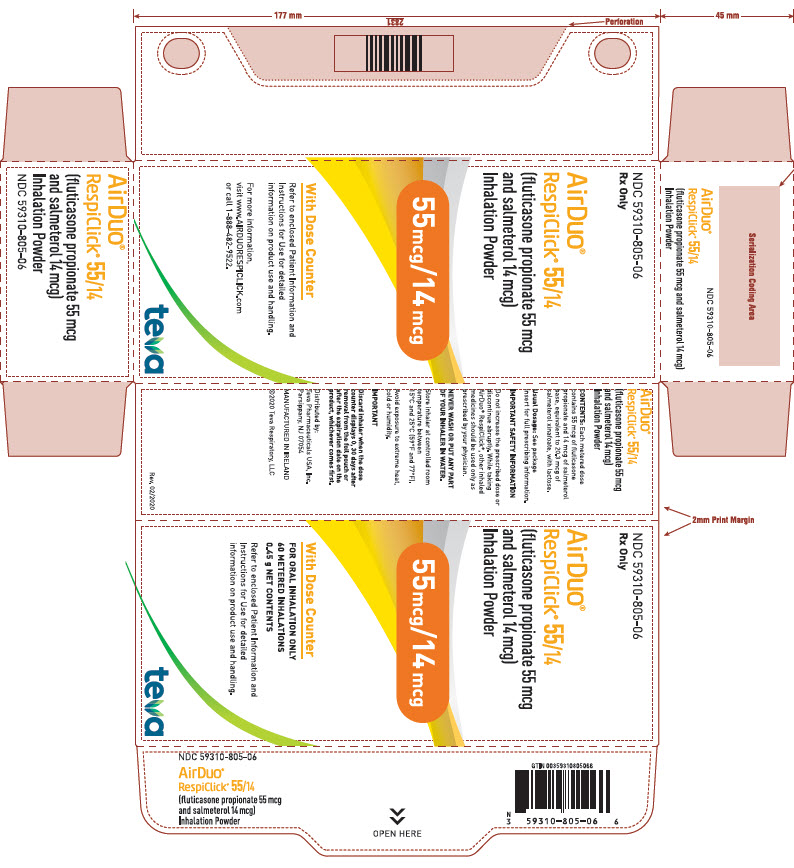
AirDuo RespiClick Fluticasone Propionate and Salmeterol 55 ug; 14 ug Powder, Metered — NDC 59310-805-08 (Billing 59310-0805-08)
This is a package of AirDuo RespiClick Fluticasone Propionate and Salmeterol 55 ug; 14 ug Powder, Metered from Teva Respiratory, LLC, no longer marketed (first marketed Apr 2017), no longer in the FDA NDC Directory.
NDC database record
One package, one record: these facts belong to NDC 59310-805-08 alone.
- Record
- FDA NDC Directory package listing · Human prescription drug
- Code segments
- 59310 labeler · 805 product · 08 package
- Listing certified through
- Dec 31, 2027
- Barcode (UPC-A, from the NDC)
- 3 5931080508 0
- FDA record last changed
- Oct 8, 2026
Identity & classification
Regulatory identifiers FDA, NLM and CMS codes for this package
Where does this data come from?
- FDA openFDA NDC Directory · synced Oct 8, 2026
- FDA label on DailyMed · label index refreshed Oct 8, 2026
- RxNorm (NLM RxNav) · catalog refreshed Oct 1, 2026
- Medi-Span GPI (licensed)
- First Databank (licensed) · refreshed Oct 8, 2026
Clinical
- It's a twice-daily controller for asthma in people 4 and older. The inhalation powder is also used for COPD maintenance. It's not for sudden attacks, so keep your rescue inhaler cl...
- Take one inhalation twice a day, about 12 hours apart, and don't take extra. Rinse your mouth with water afterward and spit it out. That helps prevent a yeast infection in your mou...
- Use your short-acting rescue inhaler, not extra doses of this one. If you need the rescue inhaler more and more, call your doctor, since that can mean your asthma is getting worse.
- What if I feel short of breath between doses?
Patient education
Supplement & herbal interactions
Where does this data come from?
- MedlinePlus (NLM) · refreshed Oct 8, 2026
- FDA label on DailyMed · label index refreshed Oct 8, 2026
Ask a licensed pharmacist directly — free, answered by our team.
Pricing
A drug doesn't have one price. Each row is a different public payment system, and none is what you'd pay at the counter — that depends on your insurance. The ⓘ on each row explains what it measures.
| Price system | Per g | Per package |
|---|---|---|
| Retail pharmacies payNADAC · weekly | Not in the retail survey — common for institutional, discontinued, or low-volume packs. | |
| Medicaid paysCMS SDUD · 12 mo | No recent Medicaid claims on file for this NDC — rare and low-volume NDCs are suppressed in the public data. | |
| Medicare drug plans payPart D · quarterly | No Part D plan price is available for this NDC in our data. | |
Where does this data come from?
- CMS NADAC weekly file
- CMS ASP pricing files · refreshed Sep 20, 2026
- CMS Medicaid State Drug Utilization Data · refreshed Oct 8, 2026
- CMS Part D plan pricing files · refreshed Sep 24, 2026
- VA National Acquisition Center price file
Packaging — all sizes for this product
| Package NDC | Description | Marketing start | Marketing end | Status |
|---|---|---|---|---|
| 59310-0805-06 59310-805-06 Main listing | 1 POUCH in 1 CARTON / 1 INHALER in 1 POUCH / 60 POWDER, METERED in 1 INHALER | 2017-04-24 | — | Active |
| 59310-0805-08 You're viewing this | 1 POUCH in 1 CARTON / 1 INHALER in 1 POUCH / 60 POWDER, METERED in 1 INHALER | 2017-04-12 | — | Discontinued by firm |
Pack size FAQ
What quantity is in this package?
What NDC number is used to bill for this package of AirDuo RespiClick Fluticasone Propionate and Salmeterol 55 ug; 14 ug Powder, Metered?
Therapeutic equivalents
| Product | Labeler | Pack | NADAC/unit | TE | Status | Price vs. this |
|---|---|---|---|---|---|---|
| Fluticasone Propionate and Salmeterol 55 ug/1; 14 ug 00093-3607-82 | Teva | 1 pouch | $114.849 | — | Availability likely | — |
| Fluticasone Propionate and Salmeterol 55 ug/1; 14 ug 50090-3272-00 | A-S | 1 pouch | — | — | FDA listed | — |
| AirDuo RespiClick 55 ug/1; 14 ugthis 59310-0805-08 | Teva | 1 pouch | — | — | Discontinued | — |
| Fluticasone Propionate and Salmeterol 55 ug/1; 14 ug 63629-8811-01 | Bryant | 1 pouch | — | — | FDA listed | — |
Where does this data come from?
- FDA openFDA NDC Directory · synced Oct 8, 2026
- FDA Orange Book · refreshed Oct 3, 2026
- CMS NADAC weekly file
Availability & generic status
FDA-approved generic versions are listed, and recent pricing/market data suggests they may be available — see Therapeutic equivalents.
Why the date isn’t exact: Generic timing can change because patents may be challenged, settled, licensed, added, removed, or worked around with a narrower label — and FDA approval does not always mean a pharmacy can get the generic today.
🛈 What do these terms mean?
- Patent
- Legal protection listed in the Orange Book that may delay generic approval or launch. Issued by the U.S. Patent & Trademark Office.
- Substance patent
- Covers the active drug molecule itself — the hardest to design around. A generic generally can’t launch until it expires.
- Formulation (product) patent
- Covers a specific formulation or dosage form. A generic can sometimes work around it with a different formulation.
- Method-of-use patent
- A patent covering one specific approved use of the drug — not necessarily the whole molecule. A generic can sometimes launch with a “skinny label” that carves out the protected use and keeps the others.
- Skinny label
- A generic label that omits a still-patented use when the FDA allows it — letting a generic reach the market for the unprotected uses.
- Exclusivity
- FDA-granted marketing protection, separate from patents — e.g. 5-yr new chemical entity, 7-yr orphan drug, or a +6-month pediatric extension.
- Paragraph IV
- A generic applicant’s formal challenge to a listed patent. It can potentially lead to earlier generic entry, but often involves litigation or a settlement.
- RLD / RS
- Reference Listed Drug — the brand product the FDA uses as the reference for generic applications. Reference Standard — the product the FDA expects generics to compare against in bioequivalence testing.
- TE / AB rating
- FDA therapeutic-equivalence rating. An AB rating generally means the FDA considers a generic therapeutically equivalent to — and substitutable for — the brand.
- LOE (loss of exclusivity)
- The latest patent or exclusivity currently listed — the loss-of-exclusivity / latest-listed-protection date shown on this page. Paragraph-IV challenges and settlements can move the real date earlier; FDA approval and a manufacturer’s decision to market can move it later.
Built from the FDA Orange Book. The bars above are scaled to each protection’s expiry; the red LOE marker is the last one to lapse.
| Patent | Type | Use code | Expires |
|---|---|---|---|
| US 9066957 ↗ | Method of use | U-645 | Oct 6, 2034 |
| US 9415008 ↗ | Method of use | U-645 | Oct 6, 2034 |
| US 9066957 ↗ | Method of use | U-645 | Oct 6, 2034 |
| US 9066957 ↗ | Method of use | U-645 | Oct 6, 2034 |
| US 9066957 ↗ | Method of use | U-645 | Oct 6, 2034 |
| US 9415008 ↗ | Method of use | U-645 | Oct 6, 2034 |
| US 9066957 ↗ | Method of use | U-645 | Oct 6, 2034 |
| US 9066957 ↗ | Method of use | U-645 | Oct 6, 2034 |
| US 11969544 ↗ | Drug product | — | Aug 20, 2039 |
| US 10195375 ↗ | Drug product | — | Feb 14, 2031 |
| US 11344685 ↗ | Drug product | — | Sep 26, 2039 |
| US 11173259 ↗ | Drug product | — | Jul 6, 2040 |
| US 11173259 ↗ | Drug product | — | Jul 6, 2040 |
| US 10195375 ↗ | Drug product | — | Feb 14, 2031 |
| US 10195375 ↗ | Drug product | — | Feb 14, 2031 |
| US 11969544 ↗ | Drug product | — | Aug 20, 2039 |
| US 10195375 ↗ | Drug product | — | Feb 14, 2031 |
| US 11969544 ↗ | Drug product | — | Aug 20, 2039 |
| US 10918816 ↗ | Drug product | — | Dec 14, 2035 |
| US 11969544 ↗ | Drug product | — | Aug 20, 2039 |
| US 11969544 ↗ | Drug product | — | Aug 20, 2039 |
| US 10195375 ↗ | Drug product | — | Feb 14, 2031 |
| US 10918816 ↗ | Drug product | — | Dec 14, 2035 |
| US 11344685 ↗ | Drug product | — | Sep 26, 2039 |
| US 11344685 ↗ | Drug product | — | Sep 26, 2039 |
| US 11173259 ↗ | Drug product | — | Jul 6, 2040 |
| US 10918816 ↗ | Drug product | — | Dec 14, 2035 |
| US 11969544 ↗ | Drug product | — | Aug 20, 2039 |
| US 10195375 ↗ | Drug product | — | Feb 14, 2031 |
| US 9415008*PED ↗ | Drug product | — | Apr 6, 2035 |
| US 9066957*PED ↗ | Drug product | — | Apr 6, 2035 |
| US 9066957*PED ↗ | Drug product | — | Apr 6, 2035 |
| US 9066957*PED ↗ | Drug product | — | Apr 6, 2035 |
| US 10195375*PED ↗ | Drug product | — | Aug 14, 2031 |
| US 10195375*PED ↗ | Drug product | — | Aug 14, 2031 |
| US 10195375*PED ↗ | Drug product | — | Aug 14, 2031 |
| US 11173259*PED ↗ | Drug product | — | Jan 6, 2041 |
| US 11173259*PED ↗ | Drug product | — | Jan 6, 2041 |
| US 11173259*PED ↗ | Drug product | — | Jan 6, 2041 |
| US 11344685*PED ↗ | Drug product | — | Mar 26, 2040 |
| US 11344685*PED ↗ | Drug product | — | Mar 26, 2040 |
| US 11344685*PED ↗ | Drug product | — | Mar 26, 2040 |
| US 9415008*PED ↗ | Drug product | — | Apr 6, 2035 |
| US 9066957*PED ↗ | Drug product | — | Apr 6, 2035 |
| US 9066957*PED ↗ | Drug product | — | Apr 6, 2035 |
| US 9066957*PED ↗ | Drug product | — | Apr 6, 2035 |
| US 10195375*PED ↗ | Drug product | — | Aug 14, 2031 |
| US 10195375*PED ↗ | Drug product | — | Aug 14, 2031 |
| US 10195375*PED ↗ | Drug product | — | Aug 14, 2031 |
| US 11969544*PED ↗ | Drug product | — | Feb 20, 2040 |
| US 11969544*PED ↗ | Drug product | — | Feb 20, 2040 |
| US 11969544*PED ↗ | Drug product | — | Feb 20, 2040 |
| US 11969544*PED ↗ | Drug product | — | Feb 20, 2040 |
| US 11969544*PED ↗ | Drug product | — | Feb 20, 2040 |
| US 11969544*PED ↗ | Drug product | — | Feb 20, 2040 |
| US 10918816*PED ↗ | Drug product | — | Jun 14, 2036 |
| US 10918816*PED ↗ | Drug product | — | Jun 14, 2036 |
| US 10918816*PED ↗ | Drug product | — | Jun 14, 2036 |
Is there a generic version of this drug?
The FDA approved a generic — why can’t I get it at my pharmacy yet?
Why do different websites show different generic release dates?
What does “FDA listed” mean?
What does a patent or protection date mean here?
What does “current Orange Book estimate” mean?
Can a generic come out before the last patent expires?
Can a generic come out after the listed dates?
What is the difference between patents and exclusivity?
Why are there multiple patent dates?
Where does this data come from?
- FDA Orange Book · refreshed Oct 3, 2026
Inactive Ingredients / Excipients
Inactive ingredients, also called excipients, are components of the drug product other than the active ingredient. They may include fillers, dyes, coatings, preservatives, flavors, or other formulation ingredients.
🧪 Avoiding an ingredient? See Fluticasone and Salmeterol Oral Inhalation inactive ingredients by manufacturer: every current product's list side by side, so you can ask your pharmacy for the version that does not list it.
Where does this data come from?
IACT rows and label-wide narrative are kept separate; availability and product-level specificity depend on the submitted label.- FDA label on DailyMed · label index refreshed Oct 8, 2026
- FDA openFDA NDC Directory · synced Oct 8, 2026
Inactive ingredient FAQ
Are inactive ingredients the same for every manufacturer?
Why might an inactive ingredient be missing?
Can inactive ingredients matter?
Manufacturer & labeler
More NDCs from Teva Respiratory, LLC labeler code 59310
- QVAR REDIHALER Beclomethasone Dipropionate HFA 40 ug Aerosol, Metered NDC 59310-302-40
- QVAR REDIHALER Beclomethasone Dipropionate HFA 80 ug Aerosol, Metered NDC 59310-304-80
- QNASL Beclomethasone Dipropionate 40 ug Aerosol, Metered NDC 59310-406-06
- QNASL Beclomethasone dipropionate 80 ug Aerosol, Metered NDC 59310-410-12
- ProAir RespiClick Albuterol Sulfate 90 ug Powder, Metered NDC 59310-580-20
- CINQAIR Reslizumab 10 mg/mL Injection, Solution, Concentrate NDC 59310-610-31
- AirDuo RespiClick Fluticasone Propionate and Salmeterol 113 ug; 14 ug Powder, Metered NDC 59310-812-06
- AirDuo RespiClick Fluticasone Propionate and Salmeterol 232 ug; 14 ug Powder, Metered NDC 59310-822-06
Where does this data come from?
- FDA openFDA NDC Directory · synced Oct 8, 2026
- Drugs@FDA
Full prescribing information FDA SPL
🎯 Indications and Usage ▾
1 INDICATIONS AND USAGE AIRDUO ® RESPICLICK ® is indicated for the treatment of asthma in adult and pediatric patients aged 12 years and older. AIRDUO RESPICLICK should be used for patients not adequately controlled on a long term asthma control medication such as an inhaled corticosteroid or whose disease warrants initiation of treatment with both an inhaled corticosteroid and long acting beta 2 -adrenergic agonist (LABA). Limitations of Use : AIRDUO RESPICLICK is not indicated for the relief of acute bronchospasm.
AIRDUO RESPICLICK is a combination of fluticasone propionate, a corticosteroid, and salmeterol, a long-acting beta 2 -adrenergic agonist (LABA), indicated for treatment of asthma in adult and pediatric patients aged 12 years and older. AIRDUO RESPICLICK should be used for patients not adequately controlled on a long term asthma control medication such as an inhaled corticosteroid or whose disease warrants initiation of treatment with both an inhaled corticosteroid and long acting beta 2 -adrenergic agonist (LABA). ( 1 ) Limitations of Use : Not indicated for the relief of acute bronchospasm.
( 1 )
⏱️ Dosage and Administration ▾
2 DOSAGE AND ADMINISTRATION For oral inhalation only. ( 2.1 ) Starting dosage is based on prior asthma therapy and disease severity. ( 2.2 ) 1 inhalation of AIRDUO RESPICLICK 55 mcg/14 mcg, 113 mcg/14 mcg or 232 mcg/14 mcg twice daily. ( 2.2 ) Do not use with a spacer or volume holding chamber. ( 2.2 )
2.1Administration Instructions AIRDUO RESPICLICK is for oral inhalation and does not require priming. Do not use AIRDUO RESPICLICK with a spacer or volume holding chamber. Do not use more than two times every 24 hours.
More frequent administration or a greater number of daily inhalations (more than one inhalation twice daily) is not recommended as some patients are more likely to experience adverse reactions with higher salmeterol dosages. Avoid the concomitant use of other long acting beta 2 -adrenergic agonist (LABAs) [see Warnings and Precautions ( 5.3 , 5.11 )]. If asthma symptoms arise in the period between doses, an inhaled, short-acting beta 2 -agonist should be taken for immediate relief.
2.2Recommended Dosage Administer 1 inhalation of AIRDUO RESPICLICK twice daily by oral inhalation (approximately 12 hours apart at the same time every day). Rinse the mouth with water without swallowing after each inhalation. Dosage Selection The recommended starting dosage for AIRDUO RESPICLICK is based on asthma severity and current inhaled corticosteroid use and strength.
Patients not taking inhaled corticosteroids (ICS) (with less severe asthma): 1 inhalation of 55 mcg/14 mcg AIRDUO RESPICLICK dose strength (55 mcg of fluticasone propionate and 14 mcg of salmeterol), twice daily by oral inhalation. Patients with greater asthma severity, use the higher dose strengths: 1 inhalation of 113 mcg/14 mcg AIRDUO RESPICLICK (113 mcg of fluticasone propionate and 14 mcg of salmeterol) twice daily; or 1 inhalation of 232 mcg/14 mcg AIRDUO RESPICLICK (232 mcg of fluticasone propionate and 14 mcg of salmeterol) twice daily Patients switching to AIRDUO RESPICLICK from another inhaled corticosteroid or combination product: 1 inhalation of low (55 mcg/14 mcg), medium (113 mcg/14 mcg) or high (232 mcg/14 mcg) AIRDUO RESPICLICK twice daily by oral inhalation based on the strength of the previous inhaled corticosteroid product, or the strength of the inhaled corticosteroid from a combination product, and disease severity.
The maximum recommended dosage of AIRDUO RESPICLICK is 232 mcg/14 mcg twice daily. General Dosing Information Improvement in asthma control following AIRDUO RESPICLICK administration can occur within 15 minutes of beginning treatment; although maximum benefit may not be achieved for 1 week or longer after starting treatment. Individual patients will experience a variable time to onset and degree of symptom relief.
For patients who do not respond adequately to the starting dose of AIRDUO RESPICLICK after 2 weeks of therapy, consider increasing the strength (replace with higher strength) to possibly provide additional improvement in asthma control. If a previously effective dosage regimen fails to provide adequate improvement in asthma control, re-evaluate the therapeutic regimen, including patient compliance and inhaler technique, and consider additional therapeutic options (e.g., increasing the dose of AIRDUO RESPICLICK with a higher strength, adding additional controller therapies).
After asthma stability has been achieved, it is desirable to titrate to the lowest effective dosage to reduce the risk of adverse reactions.
2.3Storing and Cleaning the Inhaler Keep the inhaler in a cool dry place. Routine maintenance is not required. If the mouthpiece needs cleaning, gently wipe the mouthpiece with a dry cloth or tissue as needed. Never wash or put any part of the inhaler in water.
2.4Dose Counter The AIRDUO RESPICLICK inhaler has a dose counter: The number 60 is displayed (prior to use). The dose counter will count down each time the mouthpiece is opened and closed [see Patient Counseling Information ( 17 )].
2.1Administration In… [Excerpted — this section continues on DailyMed.]
💊 Dosage Forms and Strengths ▾
3 DOSAGE FORMS AND STRENGTHS Inhalation powder: an inhalation-driven, multidose dry powder inhaler (MDPI) for oral inhalation that meters 55 mcg, 113 mcg, or 232 mcg of fluticasone propionate with 14 mcg of salmeterol from the device reservoir and delivers 49 mcg, 100 mcg, or 202 mcg of fluticasone propionate with 12.75 mcg of salmeterol, respectively, from the mouthpiece per actuation. The AIRDUO RESPICLICK is a white inhaler with a yellow cap, and is provided in a sealed foil pouch with desiccant [see How Supplied/Storage and Handling ( 16 )].
Inhalation powder: 55 mcg/14 mcg, 113 mcg/14 mcg, or 232 mcg/14 mcg of fluticasone propionate/salmeterol in each actuation. ( 3 )
⛔ Contraindications ▾
4 CONTRAINDICATIONS AIRDUO RESPICLICK is contraindicated in: the primary treatment of status asthmaticus or other acute episodes of asthma where intensive measures are required [see Warnings and Precautions ( 5.2 )] . patients with known severe hypersensitivity to milk proteins or who have demonstrated hypersensitivity to fluticasone propionate or any of the excipients [see Warnings and Precautions ( 5.10 ) and Description ( 11 )]. Primary treatment of status asthmaticus or acute episodes of asthma requiring intensive measures.
( 4 ) Severe hypersensitivity to milk proteins or any ingredients of AIRDUO RESPICLICK. ( 4 )
⚠️ Warnings and Cautions ▾
5 WARNINGS AND PRECAUTIONS LABA monotherapy increases the risk of serious asthma-related events. ( 5.1 ) Deterioration of asthma and acute episodes: Do not use for relief of acute symptoms. Patients require immediate re-evaluation during rapidly deteriorating asthma.
( 5.2 ) Do not use in combination with an additional medicine containing LABA because of risk of overdose. ( 5.3 ) Localized infections: Candida albicans infection of the mouth and pharynx may occur. Monitor patients periodically.
Advise the patient to rinse his/her mouth with water without swallowing after inhalation to help reduce the risk. ( 5.4 ) Immunosuppression: Potential worsening of existing tuberculosis, fungal, bacterial, viral, parasitic infection, or ocular herpes simplex. Use with caution in patients with these infections.
More serious or even fatal course of chickenpox or measles can occur in susceptible patients. ( 5.5 ) Transferring patients from systemic corticosteroids: Risk of impaired adrenal function when transferring from systemic corticosteroids. Taper patients slowly from systemic corticosteroids if transferring to AIRDUO RESPICLICK.
( 5.6 ) Hypercorticism and adrenal suppression: May occur with very high dosages or at the regular dosage in susceptible individuals. If such changes occur, discontinue AIRDUO RESPICLICK slowly. ( 5.7 ) Paradoxical bronchospasm: Discontinue AIRDUO RESPICLICK and institute alternative therapy if paradoxical bronchospasm occurs.
( 5.9 ) Use with caution in patients with cardiovascular or central nervous system disorders because of beta adrenergic stimulation. ( 5.11 ) Decreases in bone mineral density: Monitor patients with major risk factors for decreased bone mineral content. ( 5.12 ) Monitor growth of pediatric patients.
( 5.13 ) Close monitoring for glaucoma and cataracts is warranted. ( 5.14 ) Be alert to eosinophilic conditions, hypokalemia, and hyperglycemia. ( 5.15 , 5.17 ) Use with caution in patients with convulsive disorders, thyrotoxicosis, diabetes mellitus, and ketoacidosis.
( 5.16 )
5.1Serious Asthma-Related Events – Hospitalizations, Intubations, Deat h Use of LABA as monotherapy [without inhaled corticosteroids (ICS)] for asthma is associated with an increased risk of asthma-related death [see Salmeterol Multicenter Asthma Research Trial (SMART)] . Available data from controlled clinical trials also suggest that use of LABA as monotherapy increases the risk of asthma-related hospitalization in pediatric and adolescent patients. These findings are considered a class effect of LABA monotherapy.
When LABA are used in fixed-dose combination with ICS, data from large clinical trials do not show a significant increase in the risk of serious asthma-related events (hospitalizations, intubations, death) compared with ICS alone [see Serious Asthma-Related Events with Inhaled Corticosteroid/Long-acting Beta 2 -adrenergic Agonists] . Serious Asthma-Related Events with Inhaled Corticosteroid/Long-acting Beta 2 -adrenergic Agonists Four large, 26-week, randomized, blinded, active-controlled clinical safety trials were conducted to evaluate the risk of serious asthma-related events when LABA were used in fixed-dose combination with ICS compared with ICS alone in subjects with asthma.
Three (3) trials included adult and adolescent subjects aged 12 years and older: 1 trial compared budesonide/formoterol to budesonide, 1 trial compared fluticasone propionate/salmeterol inhalation powder to fluticasone propionate inhalation powder, and 1 trial compared mometasone furoate/formoterol to mometasone furoate. The fourth trial included pediatric subjects aged 4 to 11 years and compared fluticasone propionate/salmeterol inhalation powder to fluticasone propionate inhalation powder. The primary safety endpoint for all 4 trials was serious asthma-related events (hospitalizations, intubations, death).
A blinded adjudication committee determined whether events were asthma-related. The 3 adult and adolescent trials were desi… [Excerpted — this section continues on DailyMed.]
🤒 Adverse Reactions ▾
6 ADVERSE REACTIONS The following clinically significant adverse reactions are described elsewhere in the labeling: Serious asthma-related events – hospitalizations, intubations, death [see Warnings and Precautions ( 5.1 )] Oropharyngeal candidiasis [see Warnings and Precautions ( 5.4 )] Immunosuppression and risk of infections [see Warnings and Precautions ( 5.5 )] Hypercorticism and adrenal suppression [see Warnings and Precautions ( 5.7 )] Cardiovascular and central nervous system effects [see Warnings and Precautions ( 5.11 )] Reduction in bone mineral density [see Warnings and Precautions ( 5.12 )] Growth effects in pediatrics [see Warnings and Precautions ( 5.13 )] Glaucoma and cataracts [see Warnings and Precautions ( 5.14 )] Most common adverse reactions (greater than or equal to 3%): nasopharyngitis, oral candidiasis, headache, cough and back pain.
( 6.1 ) To report SUSPECTED ADVERSE REACTIONS, contact Teva Pharmaceuticals at 1-888-483-8279 or FDA at 1-800-FDA-1088 or www.fda.gov/medwatch .
6.1Clinical Trials Experience in Asthma Because clinical trials are conducted under widely varying conditions, adverse reaction rates observed in the clinical trials of a drug cannot be directly compared to rates in the clinical trials of another drug and may not reflect the rates observed in practice. In two placebo-controlled, 12-week, clinical studies (Trials 1 and 2) [see Clinical Studies ( 14 )] , a total of 1,364 adolescent and adult patients with persistent symptomatic asthma despite ICS or ICS/LABA therapy were treated twice daily with either placebo; fluticasone propionate MDPI 55 mcg, 113 mcg, or 232 mcg (ARMONAIR RESPICLICK, hereafter referred to as fluticasone propionate MDPI); or AIRDUO RESPICLICK 55 mcg/14 mcg, 113 mcg/14 mcg, or 232 mcg/14 mcg.
Sixty percent of patients were female and 80% of patients were white. The average duration of exposure was 82 to 84 days in the fluticasone propionate MDPI and AIRDUO RESPICLICK treatment groups compared with 75 days in the placebo group. Table 2 displays the incidence of most common adverse reactions in pooled Trials 1 and 2.
Table 2: Adverse Reactions with ≥3% Incidence with AIRDUO RESPICLICK, and More Common than Placebo in Subjects with Asthma (Trials 1 and 2) Adverse Reaction Fluticasone Propionate MDPI55 mcg (n=129)% Fluticasone Propionate MDPI113 mcg (n=274)% Fluticasone Propionate MDPI232 mcg (n=146)% AIRDUO RESPICLICK 55 mcg/14 mcg (n=128)% AIRDUO RESPICLICK 113 mcg/14 mcg (n=269)% AIRDUO RESPICLICK 232 mcg/14 mcg (n=145)% Placebo (n=273)% Nasopharyngitis 5.4 5.8 4.8 8.6 4.8 6.9
4.4Oral candidiasis* 3.1 2.9 4.8 1.6 2.2 3.4
0.7Headache 1.6 7.3 4.8 5.5 4.8 2.8
4.4Cough 1.6 1.8 3.4 2.3 3.7 0.7
2.6Back pain 0 1.5 1.4 3.1 0.7 0 1.8 *Oral candidiasis includes oropharyngeal candidiasis, oral fungal infection, and oropharyngitis fungal Other adverse reactions not previously listed (and occurring in <3% of patients and in three or more patients on AIRDUO RESPICLICK) that were reported more frequently by patients with asthma treated with AIRDUO RESPICLICK compared with patients treated with placebo include the following: Sinusitis, oropharyngeal pain, pharyngitis, dizziness, influenza, rhinitis allergic, respiratory tract infection, rhinitis, nasal congestion, abdominal pain upper, myalgia, pain in extremity, dyspepsia, laceration, dermatitis contact, and palpitations.
Long Term Safety Study: This was a 26-week, open labeled study of 674 patients previously treated with ICS who were treated twice daily with fluticasone propionate MDPI 113 mcg or 232 mcg; AIRDUO RESPICLICK 113 mcg/14 mcg or 232 mcg/14 mcg; fluticasone propionate inhalation aerosol 110 mcg or 220 mcg; fluticasone propionate and salmeterol inhalation powder (250 mcg/50 mcg), or fluticasone propionate and salmeterol inhalation powder (500 mcg/50 mcg). The types of adverse reactions were similar to those reported above in placebo-controlled studies.
6.2Postmarketing Experience In addition to adverse reactions… [Excerpted — this section continues on DailyMed.]
🔄 Drug Interactions ▾
7 DRUG INTERACTIONS AIRDUO RESPICLICK has been used concomitantly with other drugs, including short‑acting beta 2 ‑agonists, and intranasal corticosteroids, commonly used in patients with asthma without adverse drug reactions [see Clinical Pharmacology ( 12.2 )] . No formal drug interaction trials have been performed with AIRDUO RESPICLICK. Avoid strong cytochrome P450 3A4 inhibitors (e.g., ritonavir, ketoconazole): May increase risk of systemic corticosteroid and cardiovascular effects.
( 7.1 ) Monoamine oxidase inhibitors and tricyclic antidepressants: Use with extreme caution. May potentiate effect of salmeterol on vascular system. ( 7.2 ) Beta‑blockers: Use with caution.
May block bronchodilatory effects of beta‑agonists and produce severe bronchospasm. ( 7.3 ) Diuretics: Use with caution. Electrocardiographic changes and/or hypokalemia associated with non‑potassium‑sparing diuretics may worsen with concomitant beta‑agonists.
( 7.4 )
7.1Inhibitors of Cytochrome P450 3A4 Fluticasone propionate and salmeterol, the individual components of AIRDUO RESPICLICK, are substrates of CYP3A4. The use of strong CYP3A4 inhibitors (e.g., ritonavir, atazanavir, clarithromycin, indinavir, itraconazole, nefazodone, nelfinavir, saquinavir, ketoconazole, telithromycin) with AIRDUO RESPICLICK is not recommended because increased systemic corticosteroid and increased cardiovascular adverse effects may occur. Ritonavir : Fluticasone Propionate: A drug interaction trial with fluticasone propionate aqueous nasal spray in healthy subjects has shown that ritonavir (a strong CYP3A4 inhibitor) can significantly increase plasma fluticasone propionate exposure, resulting in significantly reduced serum cortisol concentrations [see Clinical Pharmacology ( 12.3 )] .
During postmarketing use, there have been reports of clinically significant drug interactions in patients receiving fluticasone propionate and ritonavir, resulting in systemic corticosteroid effects including Cushing’s syndrome and adrenal suppression. Ketoconazole : Fluticasone Propionate: Coadministration of orally inhaled fluticasone propionate (1,000 mcg) and ketoconazole (200 mg once daily) resulted in a 1.9‑fold increase in plasma fluticasone propionate exposure and a 45% decrease in plasma cortisol area under the curve (AUC) but had no effect on urinary excretion of cortisol.
Salmeterol: In a drug interaction trial in 20 healthy subjects, coadministration of inhaled salmeterol (50 mcg twice daily) and oral ketoconazole (400 mg once daily) for 7 days resulted in greater systemic exposure to salmeterol (AUC increased 16‑fold and C max increased 1.4‑fold). Three (3) subjects were withdrawn due to beta 2 ‑agonist side effects (2 with prolonged QTc and 1 with palpitations and sinus tachycardia). Although there was no statistical effect on the mean QTc, coadministration of salmeterol and ketoconazole was associated with more frequent increases in QTc duration compared with salmeterol and placebo administration [see Clinical Pharmacology ( 12.3 )] .
7.2Monoamine Oxidase Inhibitors and Tricyclic Antidepressants AIRDUO RESPICLICK should be administered with extreme caution to patients being treated with monoamine oxidase inhibitors or tricyclic antidepressants, or within 2 weeks of discontinuation of such agents, because the action of salmeterol, a component of AIRDUO RESPICLICK, on the vascular system may be potentiated by these agents.
7.3Beta-Adrenergic Receptor Blocking Agents Beta‑blockers not only block the pulmonary effect of beta‑agonists, such as salmeterol, a component of AIRDUO RESPICLICK, but may also produce severe bronchospasm in patients with asthma. Therefore, patients with asthma should not normally be treated with beta‑blockers. However, under certain circumstances, there may be no acceptable alternatives to the use of beta‑adrenergic blocking agents for these patients; cardioselective beta‑blockers could be considered, although they should be administered with caution.
7.4N… [Excerpted — this section continues on DailyMed.]
👥 Use in Specific Populations ▾
8 USE IN SPECIFIC POPULATIONS Hepatic impairment: Monitor for systemic corticosteroid effects. ( 8.6 )
8.1Pregnancy Risk Summary There are no randomized clinical studies of AIRDUO RESPICLICK or individual monoproducts, fluticasone propionate and salmeterol, in pregnant women. There are clinical considerations with the use of AIRDUO RESPICLICK in pregnant women [see Clinical Considerations] . Animal reproduction studies are available with the combination of fluticasone propionate and salmeterol as well as individual components.
In animals, teratogenicity characteristic of corticosteroids, decreased fetal body weight and/or skeletal variations, in rats, mice, and rabbits were observed with subcutaneously administered maternal toxic doses of fluticasone propionate less than the maximum recommended human daily inhaled dose (MRHDID) on a mcg/m 2 basis [see Data] . However, fluticasone propionate administered via inhalation to rats decreased fetal body weight, but did not induce teratogenicity at a maternal toxic dose less than the MRHDID on a mcg/m 2 basis [see Data] .
Experience with oral corticosteroids suggests that rodents are more prone to teratogenic effects from corticosteroids than humans. Oral administration of salmeterol to pregnant rabbits caused teratogenicity characteristic of beta-adrenoceptor stimulation at maternal doses approximately 700 times the MRHDID on a mcg/m 2 basis. These adverse effects generally occurred at large multiples of the MRHDID when salmeterol was administered by the oral route to achieve high systemic exposures.
No such effects occurred at an oral salmeterol dose approximately 420 times the MRHDID [see Data] . The estimated risk of major birth defects and miscarriage for the indicated population is unknown. In the U.S. general population, the estimated risk of major birth defects and miscarriage in clinically recognized pregnancies is 2% to 4% and 15% to 20%, respectively.
Clinical Considerations Disease‑Associated Maternal and/or Embryo/Fetal Risk In women with poorly or moderately controlled asthma, there is an increased risk of several perinatal adverse outcomes such as preeclampsia in the mother and prematurity, low birth weight, and small for gestational age in the neonate. Pregnant women with asthma should be closely monitored and medication adjusted as necessary to maintain optimal asthma control. Data Animal Data Fluticasone Propionate and Salmeterol: In an embryo/fetal development study with pregnant rats that received the combination of subcutaneous administration of fluticasone propionate and oral administration of salmeterol at doses of 0/1000, 30/0, 10/100, 30/1000, and 100/10,000 mcg/kg/day (as fluticasone propionate/salmeterol) during the period of organogenesis, findings were generally consistent with the individual monoproducts and there was no exacerbation of expected fetal effects.
Omphalocele, increased embryo/fetal deaths, decreased body weight, and skeletal variations were observed in rat fetuses, in the presence of maternal toxicity, when combining fluticasone propionate at a dose approximately 2 times the MRHDID (on a mcg/m 2 basis at a maternal subcutaneous dose of 100 mcg/kg/day) and a dose of salmeterol at approximately 3500 times the MRHDID (on a mcg/m 2 basis at a maternal oral dose of 10,000 mcg/kg/day). The rat no observed adverse effect level (NOAEL) was observed when combining fluticasone propionate at a dose 0.6 times the MRHDID (on a mcg/m 2 basis at a maternal subcutaneous dose of 30 mcg/kg/day) and a dose of salmeterol at approximately 350 times the MRHDID (on a mcg/m 2 basis at a maternal oral dose of 1000 mcg/kg/day).
In an embryo/fetal development study with pregnant mice that received the combination of subcutaneous administration of fluticasone propionate and oral administration of salmeterol at doses of 0/1400, 40/0, 10/200, 40/1400, or 150/10,000 mcg/kg/day (as fluticasone propionate/salmeterol) during the period of organogenesis, findings were genera… [Excerpted — this section continues on DailyMed.]
🤰 Pregnancy ▾
8.1Pregnancy Risk Summary There are no randomized clinical studies of AIRDUO RESPICLICK or individual monoproducts, fluticasone propionate and salmeterol, in pregnant women. There are clinical considerations with the use of AIRDUO RESPICLICK in pregnant women [see Clinical Considerations] . Animal reproduction studies are available with the combination of fluticasone propionate and salmeterol as well as individual components.
In animals, teratogenicity characteristic of corticosteroids, decreased fetal body weight and/or skeletal variations, in rats, mice, and rabbits were observed with subcutaneously administered maternal toxic doses of fluticasone propionate less than the maximum recommended human daily inhaled dose (MRHDID) on a mcg/m 2 basis [see Data] . However, fluticasone propionate administered via inhalation to rats decreased fetal body weight, but did not induce teratogenicity at a maternal toxic dose less than the MRHDID on a mcg/m 2 basis [see Data] .
Experience with oral corticosteroids suggests that rodents are more prone to teratogenic effects from corticosteroids than humans. Oral administration of salmeterol to pregnant rabbits caused teratogenicity characteristic of beta-adrenoceptor stimulation at maternal doses approximately 700 times the MRHDID on a mcg/m 2 basis. These adverse effects generally occurred at large multiples of the MRHDID when salmeterol was administered by the oral route to achieve high systemic exposures.
No such effects occurred at an oral salmeterol dose approximately 420 times the MRHDID [see Data] . The estimated risk of major birth defects and miscarriage for the indicated population is unknown. In the U.S. general population, the estimated risk of major birth defects and miscarriage in clinically recognized pregnancies is 2% to 4% and 15% to 20%, respectively.
Clinical Considerations Disease‑Associated Maternal and/or Embryo/Fetal Risk In women with poorly or moderately controlled asthma, there is an increased risk of several perinatal adverse outcomes such as preeclampsia in the mother and prematurity, low birth weight, and small for gestational age in the neonate. Pregnant women with asthma should be closely monitored and medication adjusted as necessary to maintain optimal asthma control. Data Animal Data Fluticasone Propionate and Salmeterol: In an embryo/fetal development study with pregnant rats that received the combination of subcutaneous administration of fluticasone propionate and oral administration of salmeterol at doses of 0/1000, 30/0, 10/100, 30/1000, and 100/10,000 mcg/kg/day (as fluticasone propionate/salmeterol) during the period of organogenesis, findings were generally consistent with the individual monoproducts and there was no exacerbation of expected fetal effects.
Omphalocele, increased embryo/fetal deaths, decreased body weight, and skeletal variations were observed in rat fetuses, in the presence of maternal toxicity, when combining fluticasone propionate at a dose approximately 2 times the MRHDID (on a mcg/m 2 basis at a maternal subcutaneous dose of 100 mcg/kg/day) and a dose of salmeterol at approximately 3500 times the MRHDID (on a mcg/m 2 basis at a maternal oral dose of 10,000 mcg/kg/day). The rat no observed adverse effect level (NOAEL) was observed when combining fluticasone propionate at a dose 0.6 times the MRHDID (on a mcg/m 2 basis at a maternal subcutaneous dose of 30 mcg/kg/day) and a dose of salmeterol at approximately 350 times the MRHDID (on a mcg/m 2 basis at a maternal oral dose of 1000 mcg/kg/day).
In an embryo/fetal development study with pregnant mice that received the combination of subcutaneous administration of fluticasone propionate and oral administration of salmeterol at doses of 0/1400, 40/0, 10/200, 40/1400, or 150/10,000 mcg/kg/day (as fluticasone propionate/salmeterol) during the period of organogenesis, findings were generally consistent with the individual monoproducts and there was no exacerbation of expected fetal effects… [Excerpted — this section continues on DailyMed.]
🧒 Pediatric Use ▾
8.4Pediatric Use The safety and effectiveness of AIRDUO RESPICLICK have been established for the treatment of asthma in pediatric patients aged 12 years and older whose asthma (1) is inadequately controlled on a long term asthma control medication or (2) warrants initiation of treatment with both an ICS and a LABA. Use of AIRDUO RESPICLICK in pediatric patients aged 12 to 17 years for this indication is supported by evidence from two adequate and well-controlled trials in pediatric patients 12 years old and older with persistent symptomatic asthma despite ICS or ICS/LABA therapy (Trials 1 and 2) [see Clinical Studies ( 14 )].
In these trials, 58 adolescents received AIRDUO RESPICLICK one inhalation twice daily. The safety and effectiveness of AIRDUO RESPICLICK have not been established in pediatric patients younger than 12 years of age for the treatment of asthma. Effectiveness was not demonstrated in one adequate and well-controlled study conducted in 211 patients aged 4 to 11 years with persistent asthma on a stable asthma regimen who were treated with AIRDUO RESPICLICK 55 mcg/14 mcg one inhalation twice daily.
Effect on Growth Inhaled corticosteroids, including fluticasone propionate, a component of AIRDUO RESPICLICK, may cause a reduction in growth velocity in adolescents [see Warning and Precautions ( 5.13 )] . The growth of pediatric patients receiving ICS, including AIRDUO RESPICLICK, should be monitored. If an adolescent on any corticosteroid appears to have growth suppression, the possibility that he/she is particularly sensitive to this effect of corticosteroids should be considered.
In such patients, the potential growth effects of prolonged ICS treatment should be weighed against the clinical benefits obtained. To minimize the systemic effects of ICS, including AIRDUO RESPICLICK, each patient should be titrated to the lowest strength that effectively controls his/her asthma [see Dosage and Administration ( 2 )].
🧓 Geriatric Use ▾
8.5Geriatric Use No overall differences in safety or effectiveness were observed in data collected in 54 subjects aged 65 years and older versus younger subjects who were treated with AIRDUO RESPICLICK in placebo-controlled Phase 2 and 3 asthma studies.
🆘 Overdosage ▾
10 OVERDOSAGE AIRDUO RESPICLICK contains both fluticasone propionate and salmeterol; therefore, the risks associated with overdosage for the individual components described below apply to AIRDUO RESPICLICK. Treatment of overdosage consists of discontinuation of AIRDUO RESPICLICK together with institution of appropriate symptomatic and/or supportive therapy. The judicious use of a cardioselective beta‑receptor blocker may be considered, bearing in mind that such medication can produce bronchospasm.
Cardiac monitoring is recommended in cases of overdosage. Fluticasone propionate Chronic overdosage of fluticasone propionate may result in signs/symptoms of hypercorticism [see Warnings and Precautions ( 5.7 )] . Salmeterol The expected signs and symptoms with overdosage of salmeterol are those of excessive beta‑adrenergic stimulation and/or occurrence or exaggeration of any of the signs and symptoms of beta‑adrenergic stimulation (e.g., seizures, angina, hypertension or hypotension, tachycardia with rates up to 200 beats/min, arrhythmias, nervousness, headache, tremor, muscle cramps, dry mouth, palpitation, nausea, dizziness, fatigue, malaise, insomnia, hyperglycemia, hypokalemia, metabolic acidosis).
Overdosage with salmeterol can lead to clinically significant prolongation of the QTc interval, which can produce ventricular arrhythmias. As with all inhaled sympathomimetic medicines, cardiac arrest and even death may be associated with an overdose of salmeterol.
🧬 Clinical Pharmacology ▾
12 CLINICAL PHARMACOLOGY
12.1Mechanism of Action AIRDUO RESPICLICK : AIRDUO RESPICLICK contains both fluticasone propionate and salmeterol. The mechanisms of action described below for the individual components apply to AIRDUO RESPICLICK. These drugs represent 2 different classes of medications (a synthetic corticosteroid and a LABA) that have different effects on clinical, physiologic, and inflammatory indices.
Fluticasone Propionate : Fluticasone propionate is a synthetic trifluorinated corticosteroid with anti-inflammatory activity. Fluticasone propionate has been shown in vitro to exhibit a binding affinity for the human glucocorticoid receptor that is 18 times that of dexamethasone, almost twice that of beclomethasone-17-monopropionate (BMP), the active metabolite of beclomethasone dipropionate, and over 3 times that of budesonide. Data from the McKenzie vasoconstrictor assay in humans are consistent with these results.
The clinical significance of these findings is unknown. Inflammation is an important component in the pathogenesis of asthma. Corticosteroids have been shown to have a wide range of actions on multiple cell types (e.g., mast cells, eosinophils, neutrophils, macrophages, and lymphocytes) and mediators (e.g., histamine, eicosanoids, leukotrienes, and cytokines) involved in inflammation.
These anti-inflammatory actions of corticosteroids contribute to their efficacy in the treatment of asthma. Salmeterol : Salmeterol is a selective LABA. In vitro studies show salmeterol to be at least 50 times more selective for beta 2 ‑adrenoceptors than albuterol.
Although beta 2 ‑adrenoceptors are the predominant adrenergic receptors in bronchial smooth muscle and beta 1 ‑adrenoceptors are the predominant receptors in the heart, there are also beta 2 ‑adrenoceptors in the human heart comprising 10% to 50% of the total beta‑adrenoceptors. The precise function of these receptors has not been established, but their presence raises the possibility that even selective beta 2 ‑agonists may have cardiac effects. The pharmacologic effects of beta 2 ‑adrenoceptor agonist drugs, including salmeterol, are at least in part attributable to stimulation of intracellular adenyl cyclase, the enzyme that catalyzes the conversion of adenosine triphosphate (ATP) to cyclic-3′,5′-adenosine monophosphate (cyclic AMP).
Increased cyclic AMP levels cause relaxation of bronchial smooth muscle and inhibition of release of mediators of immediate hypersensitivity from cells, especially from mast cells. In vitro tests show that salmeterol is a potent and long‑lasting inhibitor of the release of mast cell mediators, such as histamine, leukotrienes, and prostaglandin D 2 , from human lung. Salmeterol inhibits histamine‑induced plasma protein extravasation and inhibits platelet‑activating factor‑induced eosinophil accumulation in the lungs of guinea pigs when administered by the inhaled route.
In humans, single doses of salmeterol administered via inhalation aerosol attenuate allergen‑induced bronchial hyperresponsiveness.
12.2Pharmacodynamics Hypothalamic Pituitary Adrenal Axis Effects (HPA) There are no HPA data from controlled trials of the AIRDUO RESPICLICK in healthy subjects or subjects with asthma. Cardiovascular Effects and Effects on Potassium and Glucose AIRDUO RESPICLICK in Healthy Subjects There were no clinical trials conducted with AIRDUO RESPICLICK that assessed cardiovascular (CV) effects in healthy subjects. Other Fluticasone Propionate and Salmeterol Dry Powder Inhaler (DPI) Products in Healthy Subjects Since systemic pharmacodynamic effects of salmeterol are not normally seen at the maximum approved salmeterol dosage, higher doses were used to produce measurable effects.
Four trials were conducted with healthy adult subjects to assess CV effects: Single‑dose crossover trial using 2 inhalations of fluticasone propionate and salmeterol DPI (500 mcg/50 mcg) (two times the maximum approved salmeterol dosage for that DPI per dosing interval… [Excerpted — this section continues on DailyMed.]
🧬 Mechanism of Action ▾
12.1Mechanism of Action AIRDUO RESPICLICK : AIRDUO RESPICLICK contains both fluticasone propionate and salmeterol. The mechanisms of action described below for the individual components apply to AIRDUO RESPICLICK. These drugs represent 2 different classes of medications (a synthetic corticosteroid and a LABA) that have different effects on clinical, physiologic, and inflammatory indices.
Fluticasone Propionate : Fluticasone propionate is a synthetic trifluorinated corticosteroid with anti-inflammatory activity. Fluticasone propionate has been shown in vitro to exhibit a binding affinity for the human glucocorticoid receptor that is 18 times that of dexamethasone, almost twice that of beclomethasone-17-monopropionate (BMP), the active metabolite of beclomethasone dipropionate, and over 3 times that of budesonide. Data from the McKenzie vasoconstrictor assay in humans are consistent with these results.
The clinical significance of these findings is unknown. Inflammation is an important component in the pathogenesis of asthma. Corticosteroids have been shown to have a wide range of actions on multiple cell types (e.g., mast cells, eosinophils, neutrophils, macrophages, and lymphocytes) and mediators (e.g., histamine, eicosanoids, leukotrienes, and cytokines) involved in inflammation.
These anti-inflammatory actions of corticosteroids contribute to their efficacy in the treatment of asthma. Salmeterol : Salmeterol is a selective LABA. In vitro studies show salmeterol to be at least 50 times more selective for beta 2 ‑adrenoceptors than albuterol.
Although beta 2 ‑adrenoceptors are the predominant adrenergic receptors in bronchial smooth muscle and beta 1 ‑adrenoceptors are the predominant receptors in the heart, there are also beta 2 ‑adrenoceptors in the human heart comprising 10% to 50% of the total beta‑adrenoceptors. The precise function of these receptors has not been established, but their presence raises the possibility that even selective beta 2 ‑agonists may have cardiac effects. The pharmacologic effects of beta 2 ‑adrenoceptor agonist drugs, including salmeterol, are at least in part attributable to stimulation of intracellular adenyl cyclase, the enzyme that catalyzes the conversion of adenosine triphosphate (ATP) to cyclic-3′,5′-adenosine monophosphate (cyclic AMP).
Increased cyclic AMP levels cause relaxation of bronchial smooth muscle and inhibition of release of mediators of immediate hypersensitivity from cells, especially from mast cells. In vitro tests show that salmeterol is a potent and long‑lasting inhibitor of the release of mast cell mediators, such as histamine, leukotrienes, and prostaglandin D 2 , from human lung. Salmeterol inhibits histamine‑induced plasma protein extravasation and inhibits platelet‑activating factor‑induced eosinophil accumulation in the lungs of guinea pigs when administered by the inhaled route.
In humans, single doses of salmeterol administered via inhalation aerosol attenuate allergen‑induced bronchial hyperresponsiveness.
📦 How Supplied / Storage and Handling ▾
16 HOW SUPPLIED/STORAGE AND HANDLING How Supplied AIRDUO RESPICLICK inhalation powder: a multidose, dry-powder inhaler (MDPI) each inhaler is white, has a yellow cap and is packaged individually in a foil pouch with a dessicant, each pouch is packed in a carton each inhaler contains 0.45 grams of the formulation and provides 60 actuations available in 3 strengths STRENGTH NDC CODE AIRDUO RESPICLICK 55 mcg/14 mcg (low) NDC 59310-805-06 AIRDUO RESPICLICK 113 mcg/14 mcg (medium) NDC 59310-812-06 AIRDUO RESPICLICK 232 mcg/14 mcg (high) NDC 59310-822-06 Each AIRDUO RESPICLICK inhaler has a dose counter attached to the actuator.
Patients should never try to alter the numbers for the dose counter. Discard the inhaler when the counter displays 0, 30 days after opening the foil pouch or after the expiration date on the product, whichever comes first. The labeled amount of medication in each actuation cannot be assured after the counter displays 0, even though the inhaler is not completely empty and will continue to operate [see Patient Counseling Information (17 )] .
Storage and Handling Store at room temperature (between 15ºC and 25ºC; 59ºF and 77ºF) in a dry place; excursions permitted from 59º F to 86º F (15ºC to 30ºC). Avoid exposure to extreme heat, cold, or humidity. Store AIRDUO RESPICLICK inside the unopened moisture‑protective foil pouch until initial use.
Discard AIRDUO RESPICLICK 30 days after opening the foil pouch or when the counter reads 0, whichever comes first. The inhaler is not reusable. Do not attempt to take the inhaler apart.
📋 Description ▾
11 DESCRIPTION AIRDUO RESPICLICK 55 mcg/14 mcg, AIRDUO RESPICLICK 113 mcg/14 mcg and AIRDUO RESPICLICK 232 mcg/14 mcg are combinations of fluticasone propionate and salmeterol. Fluticasone Propionate One active component of AIRDUO RESPICLICK is fluticasone propionate, a corticosteroid having the chemical name S -(fluoromethyl) 6α,9-difluoro-11ß,17-dihydroxy-16α-methyl-3-oxoandrosta-1,4-diene-17ß-carbothioate, 17-propionate, and the following chemical structure: Fluticasone propionate is a white powder with a molecular weight of 500.6, and the empirical formula is C 25 H 31 F 3 O 5 S.
It is practically insoluble in water, freely soluble in dimethyl sulfoxide and dimethylformamide, and slightly soluble in methanol and 95% ethanol. Salmeterol Xinafoate The other active component of AIRDUO RESPICLICK is salmeterol xinafoate, a beta 2 –adrenergic bronchodilator. Salmeterol xinafoate is the racemic form of the 1‑hydroxy‑2‑naphthoic acid salt of salmeterol.
It has the chemical name 4-hydroxy-α -[[[6-(4-phenylbutoxy)hexyl]amino]methyl]-1,3-benzenedimethanol, 1-hydroxy-2-naphthalenecarboxylate and the following chemical structure: Salmeterol xinafoate is a white powder with a molecular weight of 603.8, and the empirical formula is C 25 H 37 NO 4 •C 11 H 8 O 3 . It is freely soluble in methanol; slightly soluble in ethanol, chloroform, and isopropanol; and sparingly soluble in water. AIRDUO RESPICLICK AIRDUO RESPICLICK is a multidose dry powder inhaler (MDPI) for oral inhalation only.
It contains fluticasone propionate, salmeterol xinafoate, and lactose monohydrate (which may contain milk proteins). The opening of the mouthpiece cover meters 5.5 mg of the formulation from the device reservoir, which contains 55 mcg, 113 mcg, or 232 mcg of fluticasone propionate, and 14 mcg of salmeterol base (equivalent to 20.3 mcg of salmeterol xinafoate). Patient inhalation through the mouthpiece causes the deagglomeration and aerosolization of the drug particles as the formulation moves through the cyclone component of the device.
This is followed by dispersion into the airstream. Under standardized in vitro test conditions, the AIRDUO RESPICLICK inhaler delivers 49 mcg, 100 mcg, or 202 mcg of fluticasone propionate and 12.75 mcg of salmeterol base (equivalent to 18.5 mcg of salmeterol xinafoate), with lactose from the mouthpiece when tested at a flow rate of 85 L/min for 1.4 seconds. The amount of drug delivered to the lung will depend on patient factors such as inspiratory flow profiles.
In adult subjects (N=50, aged 18 to 45 years) with asthma, mean peak inspiratory flow (PIF) through the AIRDUO RESPICLICK inhaler was 108.28 L/min (range: 70.37 to 129.24 L/min). In adolescent subjects (N=50, aged 12 to 17 years) with asthma, mean peak inspiratory flow (PIF) through the AIRDUO RESPICLICK inhaler was 106.72 L/min (range: 73.64 to 125.51 L/min). FP chem structure Salmeterol chem structure
💬 Patient Medication Information ▾
PATIENT INFORMATION AIRDUO ® RESPICLICK ® (ayr´ due oh res-pē-klik) (fluticasone propionate and salmeterol) inhalation powder 55 mcg/14 mcg AIRDUO ® RESPICLICK ® (ayr´ due oh res-pē-klik) (fluticasone propionate and salmeterol) inhalation powder 113 mcg/14 mcg AIRDUO ® RESPICLICK ® (ayr´ due oh res-pē-klik) (fluticasone propionate and salmeterol) inhalation powder 232 mcg/14 mcg for oral inhalation use What is AIRDUO RESPICLICK? AIRDUO RESPICLICK combines the inhaled corticosteroid (ICS) medicine fluticasone propionate and the LABA medicine salmeterol.
ICS medicines such as fluticasone propionate help to decrease inflammation in the lungs. Inflammation in the lungs can lead to breathing problems. LABA medicines such as salmeterol help the muscles around the airways in your lungs stay relaxed to prevent symptoms, such as wheezing, cough, chest tightness, and shortness of breath.
These symptoms can happen when the muscles around the airways tighten. This makes it hard to breathe. AIRDUO RESPICLICK is a prescription medicine used to control symptoms of asthma and to prevent symptoms such as wheezing in people 12 years of age and older.
AIRDUO RESPICLICK contains salmeterol. LABA medicines such as salmeterol when used alone increase the risk of hospitalizations and death from asthma problems. AIRDUO RESPICLICK contains an ICS and a LABA.
When an ICS and LABA are used together, there is not a significant increased risk in hospitalizations and death from asthma problems. AIRDUO RESPICLICK is not for people 12 years of age and older with asthma who are well controlled with an asthma control medicine, such as a low or medium dose of an inhaled corticosteroid medicine. AIRDUO RESPICLICK is for people 12 years of age and older with asthma who need both an ICS and LABA medicine.
AIRDUO RESPICLICK is not used to relieve sudden breathing problems and will not replace a rescue inhaler. It is not known if AIRDUO RESPICLICK is safe and effective in children younger than 12 years of age. Do not use AIRDUO RESPICLICK: to treat sudden, severe symptoms of asthma. if you have a severe allergy to milk proteins.
Ask your healthcare provider if you are not sure. if you are allergic to fluticasone propionate or any of the inactive ingredients in AIRDUO RESPICLICK. See the end of this leaflet for a complete list of ingredients in AIRDUO RESPICLICK. Tell your healthcare provider about all of your medical conditions, including if you: have heart problems. have high blood pressure. have seizures. have thyroid problems. have diabetes. have liver problems. have weak bones (osteoporosis). have an immune system problem. have eye problems, such as glaucoma or cataracts. are allergic to milk proteins. have any type of viral, bacterial, fungal, or parasitic infection. are exposed to chickenpox or measles. are pregnant or plan to become pregnant.
It is not known if AIRDUO RESPICLICK may harm your unborn baby. are breastfeeding. It is not known if the medicines in AIRDUO RESPICLICK pass into your breast milk and if they can harm your baby. Tell your healthcare provider about all the medicines you take, including prescription and over-the-counter medicines, vitamins, and herbal supplements.
AIRDUO RESPICLICK and certain other medicines may interact with each other. This may cause serious side effects. Especially, tell your healthcare provider if you take antifungal or anti-HIV medicines.
How should I use AIRDUO RESPICLICK? Read the step-by-step instructions for using AIRDUO RESPICLICK at the end of this Patient Information leaflet. AIRDUO RESPICLICK is for oral inhalation only.
Rinse your mouth with water without swallowing after each dose of AIRDUO RESPICLICK. AIRDUO RESPICLICK comes in 3 different strengths. Your healthcare provider prescribed the strength that is best for you.
Use AIRDUO RESPICLICK exactly as your healthcare provider tells you to use it. Do not use AIRDUO RESPICLICK more often than prescribed. Use 1 inhalation of AIRDUO RESPICLICK 2 times each d… [Excerpted — this section continues on DailyMed.]
🧬 Pharmacokinetics ▾
12.3Pharmacokinetics Absorption Fluticasone Propionate: AIRDUO RESPICLICK acts locally in the lung; therefore, plasma levels may not predict therapeutic effect. Trials using oral dosing of labeled and unlabeled drug have demonstrated that the oral systemic bioavailability of fluticasone propionate was negligible (<1%), primarily due to incomplete absorption and presystemic metabolism in the gut and liver. In contrast, the majority of the fluticasone propionate delivered to the lung was systemically absorbed.
After administration of 232 mcg/14 mcg AIRDUO RESPICLICK to patients aged 12 years and older with persistent asthma in a clinical trial, the mean C max value of fluticasone propionate was 66 pg/mL with a median t max value of approximately 2 hours. Salmeterol: After administration of 232 mcg/14 mcg AIRDUO RESPICLICK to patients aged 12 years and older with persistent asthma, the mean C max values of salmeterol was 60 pg/mL. The median t max was 5 minutes.
Distribution Fluticasone Propionate: Following intravenous administration, the initial disposition phase for fluticasone propionate was rapid and consistent with its high lipid solubility and tissue binding. The volume of distribution averaged
4.2L/kg. The percentage of fluticasone propionate bound to human plasma proteins averages 99%. Fluticasone propionate is weakly and reversibly bound to erythrocytes and is not significantly bound to human transcortin.
Salmeterol: Volume of distribution data are not available for salmeterol. The percentage of salmeterol bound to human plasma proteins averages 96% in vitro over the concentration range of 8 to 7,722 ng of salmeterol base per milliliter, much higher concentrations than those achieved following therapeutic doses of salmeterol. Elimination Fluticasone Propionate: Following intravenous dosing, fluticasone propionate showed polyexponential kinetics and had a terminal elimination half-life of approximately 7.8 hours.
Terminal half-life estimates of fluticasone propionate following oral inhalation administration of AIRDUO RESPICLICK were approximately 10.8 hours. Metabolism The total clearance of fluticasone propionate is high (average, 1,093 mL/minute), with renal clearance accounting for less than 0.02% of the total. The only circulating metabolite detected in humans is the 17β carboxylic acid derivative of fluticasone propionate, which is formed through the CYP3A4 pathway.
This metabolite has less affinity (approximately 1/2,000) than the parent drug for the glucocorticoid receptor of human lung cytosol in vitro and negligible pharmacological activity in animal studies. Other metabolites detected in vitro using cultured human hepatoma cells have not been detected in humans. Excretion Less than 5% of a radiolabeled oral dose was excreted in the urine as metabolites, with the remainder excreted in the feces as parent drug and metabolites.
Salmeterol : Terminal half-life estimates for salmeterol for AIRDUO RESPICLICK were approximately 12.6 hours. The xinafoate moiety has no apparent pharmacologic activity. The xinafoate moiety is highly protein bound (greater than 99%) and has a long elimination half-life of 11 days.
Metabolism Salmeterol base is extensively metabolized by hydroxylation. An in vitro study using human liver microsomes showed that salmeterol is extensively metabolized to α hydroxysalmeterol (aliphatic oxidation) by CYP3A4. Ketoconazole, a strong inhibitor of CYP3A4, essentially completely inhibited the formation of α hydroxysalmeterol in vitro.
Excretion In 2 healthy adult subjects who received 1 mg of radiolabeled salmeterol (as salmeterol xinafoate) orally, approximately 25% and 60% of the radiolabeled salmeterol was eliminated in urine and feces, respectively, over a period of 7 days. Specific Populations A population pharmacokinetic analysis was performed for fluticasone propionate and salmeterol utilizing data from 9 controlled clinical trials that included 350 subjects with asthma aged 4 to 77 years wh… [Excerpted — this section continues on DailyMed.]
🧬 Pharmacodynamics ▾
12.2Pharmacodynamics Hypothalamic Pituitary Adrenal Axis Effects (HPA) There are no HPA data from controlled trials of the AIRDUO RESPICLICK in healthy subjects or subjects with asthma. Cardiovascular Effects and Effects on Potassium and Glucose AIRDUO RESPICLICK in Healthy Subjects There were no clinical trials conducted with AIRDUO RESPICLICK that assessed cardiovascular (CV) effects in healthy subjects. Other Fluticasone Propionate and Salmeterol Dry Powder Inhaler (DPI) Products in Healthy Subjects Since systemic pharmacodynamic effects of salmeterol are not normally seen at the maximum approved salmeterol dosage, higher doses were used to produce measurable effects.
Four trials were conducted with healthy adult subjects to assess CV effects: Single‑dose crossover trial using 2 inhalations of fluticasone propionate and salmeterol DPI (500 mcg/50 mcg) (two times the maximum approved salmeterol dosage for that DPI per dosing interval), fluticasone propionate DPI 500 mcg and salmeterol DPI 50 mcg given concurrently, or fluticasone propionate DPI 500 mcg given alone, Cumulative dose trial using 50 to 400 mcg of salmeterol DPI (1 time to 8 times the maximum approved salmeterol dosage per dosing interval for that DPI, respectively) given alone, or fluticasone propionate and salmeterol DPI (500 mcg/50 mcg), Repeat‑dose trial for 11 days using 2 inhalations twice daily of fluticasone propionate and salmeterol DPI (250 mcg/50 mcg) (two times the maximum approved salmeterol dosage for that DPI per dosing interval), fluticasone propionate DPI 250 mcg, or salmeterol DPI 50 mcg, and Single-dose trial using 5 inhalations of fluticasone propionate and salmeterol DPI (100 mcg/50 mcg) (five times the maximum approved salmeterol dosage for that DPI per dosing interval), fluticasone propionate DPI 100 mcg alone, or placebo.
In these trials, no significant differences were observed in the pharmacodynamic effects of salmeterol (pulse rate, blood pressure, QTc interval, potassium, and glucose) whether the salmeterol was given as fluticasone propionate and salmeterol DPI, concurrently with fluticasone propionate from separate inhalers, or as salmeterol alone. The systemic pharmacodynamic effects of salmeterol were not altered by the presence of fluticasone propionate in the fluticasone propionate and salmeterol DPI product. Other Salmeterol Products in Subjects with Asthma: Inhaled salmeterol, like other beta‑adrenergic agonist drugs, can produce dose‑related CV effects and effects on blood glucose and/or serum potassium [see Warnings and Precautions ( 5.11 , 5.17 )] .
The CV effects (heart rate, blood pressure) associated with salmeterol inhalation aerosol occurred with similar frequency, and are of similar type and severity, as those noted following albuterol administration. The effects of rising inhaled doses of salmeterol and standard inhaled doses of albuterol were studied in volunteers and in subjects with asthma. Salmeterol doses up to 84 mcg administered as inhalation aerosol resulted in heart rate increases of 3 to 16 beats/minute, about the same as albuterol dosed at 180 mcg by inhalation aerosol (4 to 10 beats/minute).
Adult and adolescent subjects receiving 50 mcg doses of salmeterol MDPI (N=60) underwent continuous electrocardiographic monitoring during two 12‑hour periods after the first dose and after 1 month of therapy, and no clinically significant dysrhythmias were noted. Concomitant Use of AIRDUO RESPICLICK With Other Respiratory Medications: Short-Acting Beta 2 ‑Agonists: In clinical trials in subjects with asthma, the mean daily need for albuterol by 166 adult and adolescent subjects aged 12 years and older using another fluticasone propionate/salmeterol DPI product was approximately 1.3 inhalations/day and ranged from 0 to 9 inhalations/day (0 to about 4.5 times the maximum approved salmeterol dosage for that DPI per dosing interval).
Five percent (5%) of subjects using another fluticasone propionate/salmeterol DPI product… [Excerpted — this section continues on DailyMed.]
🔬 Clinical Studies ▾
14 CLINICAL STUDIES The safety and efficacy of AIRDUO RESPICLICK were evaluated in 3004 patients with asthma. The development program included 2 confirmatory trials of 12 weeks duration, a 26 week safety trial and three dose-ranging trials. The efficacy of AIRDUO RESPICLICK is based primarily on the dose-ranging trials and the confirmatory trials described below.
14.1Dose-Ranging Studies in Patients with Asthma Six doses of fluticasone propionate ranging from 16 mcg to 434 mcg (expressed as metered doses) administered twice daily via MDPI were evaluated in 2 randomized, double-blind, placebo-controlled 12 week trials in patients with asthma. Trial 201 was conducted in patients whose asthma was uncontrolled at baseline and had been treated by short-acting beta 2 -agonist alone or in combination with non-corticosteroid asthma medication. Low dose inhaled corticosteroids (ICS)-treated patients may have been included after a minimum of 2 weeks washout.
This trial contained an open-label active comparator fluticasone propionate inhalation powder 100 mcg administered twice daily. Trial 202 was conducted in patients whose asthma was uncontrolled at baseline and had been treated with high dose ICS with or without a LABA. This study contained an open-label active comparator fluticasone propionate inhalation powder 250 mcg twice daily.
The trials were dose-ranging trials of fluticasone propionate MDPI not designed to provide comparative effectiveness data and should not be interpreted as evidence of superiority/inferiority to fluticasone propionate inhalation powder. The metered doses for fluticasone MDPI (16, 28, 59, 118, 225, 434 mcg) used in Trial 201 and Trial 202 (see Figure 1) are slightly different from the metered doses for the comparator products (fluticasone inhalation powder) and the Phase 3 investigational products which are the basis of the proposed commercial labeled claim (55, 113, 232 mcg for fluticasone).
The changes in doses between Phase 2 and 3 resulted from optimization of the manufacturing process. Figure 1: Baseline Adjusted Least Square Mean Change in Trough Morning FEV 1 (L) over 12 weeks (FAS) a FAS = full analysis set; a Trials were not designed to provide comparative effectiveness data and should not be interpreted as superiority/inferiority to fluticasone propionate inhalation powder The efficacy and safety of four doses of salmeterol xinafoate were evaluated in a double blind, 6-period crossover study compared with single dose fluticasone propionate MDPI and open label fluticasone propionate/salmeterol 100 mcg/50 mcg dry powder inhaler (DPI) as comparator in patients with persistent asthma.
The trials were dose-ranging trials of the salmeterol component of AIRDUO RESPICLICK and not designed to provide comparative effectiveness data and should not be interpreted as evidence of superiority/inferiority to fluticasone propionate/salmeterol inhalation powder. The salmeterol doses studied were 6.8 mcg, 13.2 mcg, 26.8 mcg and 57.4 mcg in combination with fluticasone propionate 118 mcg delivered by MDPI (expressed as metered dose). The metered doses for salmeterol (6.8, 13.2, 26.8, 57.4 mcg) used in this study are slightly different from the metered doses for the comparator products (fluticasone/salmeterol inhalation powder) and the Phase 3 investigational products which are the basis of the proposed commercial labeled claim (55, 113, 232 mcg for fluticasone and 14 mcg for salmeterol).
The phase 3 and commercial products were optimized to better match the strengths to the comparators. Plasma for pharmacokinetic characterization was obtained at each dosing period. Fluticasone propionate/salmeterol xinafoate MDPI 118 mcg/13.2 mcg had similar clinical efficacy with lower systemic exposure when compared to the 50 mcg of salmeterol in fluticasone propionate/salmeterol 100 mcg/50 mcg dry powder inhaler (Figure 2).
Figure 2: Mean Baseline Adjusted FEV 1 (mL) over 12 Hours (FAS) a FS MDPI = fluticasone propionate/salmeter… [Excerpted — this section continues on DailyMed.]
🧪 Nonclinical Toxicology ▾
13 NONCLINICAL TOXICOLOGY
13.1Carcinogenesis, Mutagenesis, Impairment of Fertility Fluticasone propionate: Fluticasone propionate demonstrated no tumorigenic potential in mice at oral doses up to 1000 mcg/kg (approximately 10 times the MRHDID for adults on a mcg/m 2 basis) for 78 weeks or in rats at inhalation doses up to 57 mcg/kg (approximately equivalent to the MRHDID for adults on a mcg/m 2 basis) for 104 weeks. Fluticasone propionate did not induce gene mutation in prokaryotic or eukaryotic cells in vitro. No significant clastogenic effect was seen in cultured human peripheral lymphocytes in vitro or in the in vivo mouse micronucleus test.
Fertility and reproductive performance were unaffected in male and female rats at subcutaneous doses up to 50 mcg/kg (approximately equivalent to the MRHDID for adults on a mcg/m 2 basis). Salmeterol : In an 18‑month carcinogenicity study in CD‑mice, salmeterol at oral doses of 1400 mcg/kg and above (approximately 240 times the MRHDID on a mcg/m 2 basis) caused a dose‑related increase in the incidence of smooth muscle hyperplasia, cystic glandular hyperplasia, leiomyomas of the uterus, and ovarian cysts. No tumors were seen at 200 mcg/kg (approximately 35 times the MRHDID on a mcg/m 2 basis).
In a 24 month oral and inhalation carcinogenicity study in Sprague Dawley rats, salmeterol caused a dose related increase in the incidence of mesovarian leiomyomas and ovarian cysts at doses of 680 mcg/kg and above (approximately 240 times the MRHDID on a mcg/m 2 basis). No tumors were seen at 210 mcg/kg (approximately 75 times the MRHDID on a mcg/m 2 basis). These findings in rodents are similar to those reported previously for other beta adrenergic agonist drugs.
The relevance of these findings to human use is unknown. Salmeterol produced no detectable or reproducible increases in microbial and mammalian gene mutation in vitro. No clastogenic activity occurred in vitro in human lymphocytes or in vivo in a rat micronucleus test.
Fertility and reproductive performance were unaffected in male and female rats at oral doses up to 2000 mcg/kg (approximately 690 times the MRHDID for adults on a mcg/m 2 basis).
13.2Animal Toxicology and/or Pharmacology Studies in laboratory animals (minipigs, rodents, and dogs) have demonstrated the occurrence of cardiac arrhythmias and sudden death (with histologic evidence of myocardial necrosis) when beta‑agonists and methylxanthines are administered concurrently. The clinical relevance of these findings is unknown.
📄 Carcinogenesis, Mutagenesis, Impairment of Fertility ▾
13.1Carcinogenesis, Mutagenesis, Impairment of Fertility Fluticasone propionate: Fluticasone propionate demonstrated no tumorigenic potential in mice at oral doses up to 1000 mcg/kg (approximately 10 times the MRHDID for adults on a mcg/m 2 basis) for 78 weeks or in rats at inhalation doses up to 57 mcg/kg (approximately equivalent to the MRHDID for adults on a mcg/m 2 basis) for 104 weeks. Fluticasone propionate did not induce gene mutation in prokaryotic or eukaryotic cells in vitro. No significant clastogenic effect was seen in cultured human peripheral lymphocytes in vitro or in the in vivo mouse micronucleus test.
Fertility and reproductive performance were unaffected in male and female rats at subcutaneous doses up to 50 mcg/kg (approximately equivalent to the MRHDID for adults on a mcg/m 2 basis). Salmeterol : In an 18‑month carcinogenicity study in CD‑mice, salmeterol at oral doses of 1400 mcg/kg and above (approximately 240 times the MRHDID on a mcg/m 2 basis) caused a dose‑related increase in the incidence of smooth muscle hyperplasia, cystic glandular hyperplasia, leiomyomas of the uterus, and ovarian cysts. No tumors were seen at 200 mcg/kg (approximately 35 times the MRHDID on a mcg/m 2 basis).
In a 24 month oral and inhalation carcinogenicity study in Sprague Dawley rats, salmeterol caused a dose related increase in the incidence of mesovarian leiomyomas and ovarian cysts at doses of 680 mcg/kg and above (approximately 240 times the MRHDID on a mcg/m 2 basis). No tumors were seen at 210 mcg/kg (approximately 75 times the MRHDID on a mcg/m 2 basis). These findings in rodents are similar to those reported previously for other beta adrenergic agonist drugs.
The relevance of these findings to human use is unknown. Salmeterol produced no detectable or reproducible increases in microbial and mammalian gene mutation in vitro. No clastogenic activity occurred in vitro in human lymphocytes or in vivo in a rat micronucleus test.
Fertility and reproductive performance were unaffected in male and female rats at oral doses up to 2000 mcg/kg (approximately 690 times the MRHDID for adults on a mcg/m 2 basis).
📖 Instructions for Use ▾
INSTRUCTIONS FOR USE AIRDUO ® RESPICLICK ® (ayr´due oh res-pē-klik) (fluticasone propionate and salmeterol) inhalation powder 55 mcg/14 mcg AIRDUO ® RESPICLICK ® (ayr´due oh res-pē-klik) (fluticasone propionate and salmeterol) inhalation powder 113 mcg/14 mcg AIRDUO ® RESPICLICK ® (ayr´due oh res-pē-klik) (fluticasone propionate and salmeterol) inhalation powder 232 mcg/14 mcg for oral inhalation use Your AIRDUO RESPICLICK Inhaler When you are ready to use AIRDUO RESPICLICK for the first time, remove the AIRDUO RESPICLICK inhaler from the foil pouch.
There are 2 main parts of your AIRDUO RESPICLICK inhaler including the: white inhaler with the mouthpiece. See Figure A. yellow cap that covers the mouthpiece of the inhaler. See Figure A.
There is a dose counter in the back of the inhaler with a viewing window that shows you how many doses of medicine you have left. See Figure A. Figure A Your AIRDUO RESPICLICK inhaler contains 60 doses (inhalations).
See Figure B. The dose counter shows the number of doses left in your inhaler. When there are 20 doses left, the color of the numbers on the dose counter will change to red and you should refill your prescription or ask your healthcare provider for another prescription.
When the dose counter displays ‘0’ your inhaler is empty and you should stop using the inhaler and throw it away. See Figure B. Figure B Important: Always close the cap after each inhalation so your inhaler will be ready for you to take your next dose .
Do not open the cap unless you are ready for your next dose. You will hear a “click” sound when the cap is opened all the way. If you do not hear the “click” sound the inhaler may not be activated to give you a dose of medicine.
AIRDUO RESPICLICK does not have an activation button or medicine canister. When you open the cap, a dose of AIRDUO RESPICLICK will be activated for delivery of the medicine. Do not use a spacer or volume holding chamber with AIRDUO RESPICLICK.
AIRDUO RESPICLICK does not need priming. Using your AIRDUO RESPICLICK inhaler: Important: Make sure the cap is closed before you start using your inhaler. Step 1.
Open Figure C Hold the inhaler upright and open the yellow cap all the way until it “clicks”. See Figure C. Each time you open the yellow cap and it “clicks”, 1 dose of AIRDUO RESPICLICK is ready to be inhaled.
Remember: For the correct use of AIRDUO RESPICLICK, hold the inhaler upright as you open the yellow cap. See Figure D. Do not hold the inhaler in any other way as you open the yellow cap.
Do not open the yellow cap until you are ready to take a dose of AIRDUO RESPICLICK. Figure D Step 2. Inhale Figure E Before you inhale, breathe out (exhale) through your mouth and push as much air from your lungs as you can.
See Figure E. Do not exhale into the inhaler mouthpiece. Figure F Put the mouthpiece in your mouth and close your lips tightly around it.
See Figure F. Figure G Do not block the vent above the mouthpiece with your lips or fingers. See Figure G.
Breathe in quickly and deeply through your mouth to deliver the dose of medicine to your lungs. Remove the inhaler from your mouth. Hold your breath for about 10 seconds or for as long as you comfortably can.
Your AIRDUO RESPICLICK inhaler delivers your dose of medicine as a very fine powder that you may or may not taste or feel. Do not take an extra dose from the inhaler even if you do not taste or feel the medicine. Step 3.
Close Figure H Close the yellow cap firmly over the mouthpiece . See Figure H. Make sure you close the yellow cap after each inhalation so that the inhaler will be ready for your next dose.
Rinse your mouth with water without swallowing after each inhalation. How should I store AIRDUO RESPICLICK? Store AIRDUO RESPICLICK at room temperature between 59ºF and 77ºF (15ºC and 25ºC).
Avoid exposure to extreme heat, cold, or humidity. Store AIRDUO RESPICLICK in the unopened foil pouch and only open when ready for use. Keep the yellow cap on the inhaler closed during storage.
Ke… [Excerpted — this section continues on DailyMed.]
📄 Package Label / Principal Display Panel ▾
Package/Label Display Panel TEVA NDC 59310-805-06 Rx Only AirDuo® RespiClick® 55/14 (fluticasone propionate 55 mcg and salmeterol 14 mcg) Inhalation Powder 55 mcg/14 mcg With Dose Counter FOR ORAL INHALATION ONLY 60 METERED INHALATIONS 0.45 g NET CONTENTS Refer to enclosed Medication Guide and Instructions for Use for detailed information on product use and handling. ATTENTION: Dispense with enclosed Medication Guide. PC5496 AirDuo Respi 55_14 Rev 02/2020
Package/Label Display Panel TEVA NDC 59310-812-06 Rx Only AirDuo® RespiClick® 113/14 (fluticasone propionate 113 mcg and salmeterol 14 mcg) Inhalation Powder 113 mcg/14 mcg With Dose Counter FOR ORAL INHALATION ONLY 60 METERED INHALATIONS 0.45 g NET CONTENTS Refer to enclosed Medication Guide and Instructions for Use for detailed information on product use and handling. ATTENTION: Dispense with enclosed Medication Guide. PC5497 AirDuo Respi 113_14 mcg Rev 02/2020
Package/Label Display Panel TEVA NDC 59310-822-06 Rx Only AirDuo® RespiClick® 232/14 (fluticasone propionate 232 mcg and salmeterol 14 mcg) Inhalation Powder 232 mcg/14 mcg With Dose Counter FOR ORAL INHALATION ONLY 60 METERED INHALATIONS 0.45 g NET CONTENTS Refer to enclosed Medication Guide and Instructions for Use for detailed information on product use and handling. ATTENTION: Dispense with enclosed Medication Guide. PC5498 AirDuo Respi 232_14 mcg Rev 02/2020
Medicaid utilization by pack size
Medicare Part D spend CMS · PART D · 2025 (Q1-Q4)
Reported adverse events (FAERS)
Top reported reactions
Age at onset
Reporter sex
Serious outcomes
Where does this data come from?
About this NDC listing & data coverage
What data is (and isn’t) available for this NDC — tap to expand
| NDC identity (package / product / labeler codes) | ✓ Available |
| Labeler | ✓ Available |
| Product & package description | ✓ Available |
| Marketing category & status | ✓ Available |
| Active ingredient / dosage form / route | ✓ Available |
| FDA label (SPL via DailyMed) | ✓ Available |
| Package photos | ✓ Available |
| Inactive ingredients (structured) | — Not published for this NDC The labeler did not submit a structured excipient list, or no SPL is available. |
| NADAC pharmacy acquisition price (CMS) | — Not published for this NDC CMS publishes NADAC only for NDCs reported in its retail-pharmacy survey. |
| Orange Book / therapeutic-equivalence data | ✓ Available |
| HCPCS J-code billing crosswalk | — Not published for this NDC Most self-administered / retail products have no J-code — that is normal. |
| Medicaid utilization (CMS SDUD) | — Not published for this NDC CMS reports utilization only for NDCs with Medicaid claims above its privacy threshold. |