
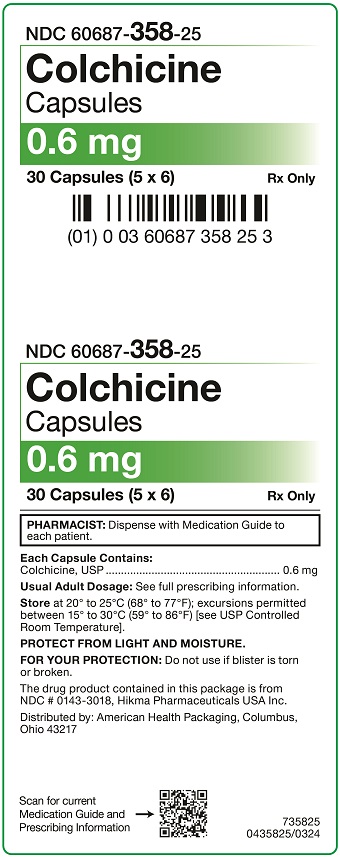
Colchicine .6 mg Capsule, 30-count — NDC 60687-358-25 (Billing 60687-0358-25)
This is a package of 30 capsules of Colchicine .6 mg Capsule from American Health Packaging, marketed since Apr 2018 and currently FDA-listed; retail pharmacies pay about $1.75 per capsule (NADAC). It is this product's only package size.
NDC database record
One package, one record: these facts belong to NDC 60687-358-25 alone.
- Record
- FDA NDC Directory package listing · Human prescription drug
- Code segments
- 60687 labeler · 358 product · 25 package
- Package marketed since
- Apr 4, 2018
- Sample package
- No — commercial package
- Listing certified through
- Dec 31, 2026
- Billing quantity
- 30 EA per package
- Barcode (UPC-A, from the NDC)
- 3 6068735825 3
- FDA record last changed
- Jul 24, 2026
Identity & classification
Regulatory identifiers FDA, NLM and CMS codes for this package
Drug-database identifiers Medi-Span GPI and First Databank GCN / HICL / AHFS classification
- GSN (GCN sequence number): 072896
- GCN: 37202
- GPI-14 (Medi-Span): 68000020000120
- HICL (First Databank): 003717
- AHFS class code: 24:44.00.00
- RxCUI (RxNorm): 1550940
Where does this data come from?
- FDA openFDA NDC Directory · synced Oct 1, 2026
- FDA label on DailyMed · label index refreshed Oct 6, 2026
- RxNorm (NLM RxNav) · catalog refreshed Oct 1, 2026
- Medi-Span GPI (licensed)
- First Databank (licensed) · refreshed Oct 1, 2026
RxNorm drug class
This medicine belongs to the Alkaloid class.
Where does this data come from?
- RxClass (NLM) · catalog refreshed Oct 1, 2026
Clinical
Colchicine is used to prevent gout attacks (sudden, severe pain in one or more joints caused by abnormally high levels of a substance called uric acid in the blood) in adults. Colchicine is also used to relieve the pain of gout attacks when they occur. Colchicine is also used to treat familial Mediterranean fever (FMF; an inborn condition that causes episodes of fever, pain, and swelling of the stomach area, lungs, and joints) in adults and children 4 years of age and older. Colchicine (Lodoco®) is used to reduce the risk of heart attack, stroke, cardiovascular death, and needing certain ty...
Read the full MedlinePlus article ↗- It depends on the product. Most colchicine products — tablets, capsules, and the liquid Gloperba — are used to prevent gout flares in adults. Colcrys tablets and generic colchicine...
- Diarrhea is the most common side effect and it's a real nuisance for many people. Colchicine affects the lining of the gut, and nausea, cramping, and loose stools often come with i...
- Why does colchicine cause so much diarrhea?
- This is one of the most important questions you can ask. Colchicine has some serious drug interactions that have caused deaths — not just discomfort. Certain antibiotics (like clar...
Patient education
Supplement & herbal interactions
Some supplements/herbs that may interact with Colchicine — tap one for details:
Colchicine may be associated with lower levels of 2 nutrients — worth a chat with your pharmacist, not a cause for alarm.
Where does this data come from?
- MedlinePlus (NLM) · refreshed Oct 1, 2026
- FDA label on DailyMed · label index refreshed Oct 6, 2026
Ask a licensed pharmacist directly — free, answered by our team.
Pricing
A drug doesn't have one price. Each row is a different public payment system, and none is what you'd pay at the counter — that depends on your insurance. The ⓘ on each row explains what it measures.
| Price system | Per ea | Per package |
|---|---|---|
| Retail pharmacies payNADAC · weekly | $1.753 | $52.58 / 30 capsule |
| Medicaid paysCMS SDUD · 12 mo | No recent Medicaid claims on file for this NDC — rare and low-volume NDCs are suppressed in the public data. | |
| Medicare drug plans payPart D · Q2 2026 | $3.22 | $96.58 / 30 capsule |
Where does this data come from?
- CMS NADAC weekly file · file of Sep 30, 2026
- CMS ASP pricing files · refreshed Sep 20, 2026
- CMS Medicaid State Drug Utilization Data · refreshed Oct 7, 2026
- CMS Part D plan pricing files · refreshed Sep 24, 2026
- VA National Acquisition Center price file
Packaging — all sizes for this product
| Package NDC | Description | Marketing start | Marketing end | Status |
|---|---|---|---|---|
| 60687-0358-25 You're viewing this Main listing | 30 BLISTER PACK in 1 BOX, UNIT-DOSE / 1 CAPSULE in 1 BLISTER PACK | 2018-03-14 | — | Active |
Therapeutic equivalents
| Product | Labeler | Pack | NADAC/unit | TE | Status | Price vs. this |
|---|---|---|---|---|---|---|
| Colchicine .6 mg 00143-3018-01 | Hikma | 100 capsules | $1.753 | AB | Availability likely | — |
| Colchicine .6 mg 00254-0460-01 | Par | 100 capsules | $1.753 | AB | Availability likely | — |
| Colchicine .6 mg 00904-6732-04 | Major | 30 capsules | $1.753 | AB | Availability likely | — |
| Colchicine .6 mg 31722-0099-01 | Camber | 100 capsules | $1.753 | AB | Availability likely | — |
| Colchicine .6 mg 42571-0341-01 | Micro | 100 capsules | $1.753 | AB | Availability likely | — |
| Colchicine .6 mg 59651-0446-01 | Aurobindo | 100 capsules | $1.753 | — | Availability likely | — |
| Colchicine .6 mgthis 60687-0358-25 | American | 30 capsules | $1.753 | AB | Availability likely | — |
| Colchicine .6 mg 70010-0001-01 | Granules | 100 capsules | $1.753 | AB | Availability likely | — |
| Mitigare .6 mg 59467-0318-01 | Hikma | 100 capsules | $6.029 | AB | Availability likely | +244% |
| Colchicine .6 mg 50090-3465-00 | A-S | 4 capsules | — | AB | FDA listed | — |
| Colchicine .6 mg 67046-0889-03 | Coupler | 30 capsules | — | AB | FDA listed | — |
| Colchicine .6 mg 67046-1634-03 | Coupler | 30 capsules | — | AB | FDA listed | — |
| Colchicine .6 mg 71335-2703-01 | Bryant | 30 capsules | — | AB | FDA listed | — |
Where does this data come from?
- FDA openFDA NDC Directory · synced Oct 1, 2026
- FDA Orange Book · refreshed Oct 3, 2026
- CMS NADAC weekly file · file of Sep 30, 2026
Availability & generic status
FDA-approved generic versions are listed, and recent pricing/market data suggests they may be available — see Therapeutic equivalents.
Why the date isn’t exact: Generic timing can change because patents may be challenged, settled, licensed, added, removed, or worked around with a narrower label — and FDA approval does not always mean a pharmacy can get the generic today.
🛈 What do these terms mean?
- Patent
- Legal protection listed in the Orange Book that may delay generic approval or launch. Issued by the U.S. Patent & Trademark Office.
- Substance patent
- Covers the active drug molecule itself — the hardest to design around. A generic generally can’t launch until it expires.
- Formulation (product) patent
- Covers a specific formulation or dosage form. A generic can sometimes work around it with a different formulation.
- Method-of-use patent
- A patent covering one specific approved use of the drug — not necessarily the whole molecule. A generic can sometimes launch with a “skinny label” that carves out the protected use and keeps the others.
- Skinny label
- A generic label that omits a still-patented use when the FDA allows it — letting a generic reach the market for the unprotected uses.
- Exclusivity
- FDA-granted marketing protection, separate from patents — e.g. 5-yr new chemical entity, 7-yr orphan drug, or a +6-month pediatric extension.
- Paragraph IV
- A generic applicant’s formal challenge to a listed patent. It can potentially lead to earlier generic entry, but often involves litigation or a settlement.
- RLD / RS
- Reference Listed Drug — the brand product the FDA uses as the reference for generic applications. Reference Standard — the product the FDA expects generics to compare against in bioequivalence testing.
- TE / AB rating
- FDA therapeutic-equivalence rating. An AB rating generally means the FDA considers a generic therapeutically equivalent to — and substitutable for — the brand.
- LOE (loss of exclusivity)
- The latest patent or exclusivity currently listed — the loss-of-exclusivity / latest-listed-protection date shown on this page. Paragraph-IV challenges and settlements can move the real date earlier; FDA approval and a manufacturer’s decision to market can move it later.
Built from the FDA Orange Book. The bars above are scaled to each protection’s expiry; the red LOE marker is the last one to lapse.
| Patent | Type | Use code | Expires |
|---|---|---|---|
| US 9555029 ↗ | Method of use | U-1020 | Aug 22, 2033 |
| US 9789108 ↗ | Method of use | U-1020 | Aug 22, 2033 |
| US 9675613 ↗ | Method of use | U-1020 | Aug 22, 2033 |
| US 8927607 ↗ | Method of use | U-1020 | Aug 22, 2033 |
| US 9399036 ↗ | Method of use | U-1020 | Aug 22, 2033 |
Is there a generic version of COLCHICINE 0.6 MG CAPSULE?
The FDA approved a generic — why can’t I get it at my pharmacy yet?
Why do different websites show different generic release dates?
What does “FDA listed” mean?
What does a patent or protection date mean here?
What does “current Orange Book estimate” mean?
Can a generic come out before the last patent expires?
Can a generic come out after the listed dates?
What is the difference between patents and exclusivity?
Why are there multiple patent dates?
Where does this data come from?
- FDA Orange Book · refreshed Oct 3, 2026
What it looks like
Where does this data come from?
- FDA label on DailyMed · label index refreshed Oct 6, 2026
Inactive Ingredients / Excipients
Inactive ingredients, also called excipients, are components of the drug product other than the active ingredient. They may include fillers, dyes, coatings, preservatives, flavors, or other formulation ingredients.
🧪 Avoiding an ingredient? See Colchicine inactive ingredients by manufacturer: every current product's list side by side, so you can ask your pharmacy for the version that does not list it.
💡 Tap an ingredient (hover on desktop) to see what it is and why it’s used.
-
UNII 3SY5LH9PMK
Anhydrous lactose is a milk sugar with no water content. It acts as a filler and binder in tablets and capsules, adding bulk and helping ingredients stick together.
-
UNII H3R47K3TBD
FD&C Blue No. 1 is a synthetic blue dye approved for use in foods and medicines. It serves as a colorant to give the medication its distinctive appearance and help with product identification.
-
UNII PN2ZH5LOQY
A synthetic red dye approved by the FDA for use in foods, medicines, and cosmetics. It serves as a colorant to make tablets, capsules, and liquids visually distinctive for product identification.
-
UNII 2G86QN327L
Gelatin is a protein derived from animal collagen, commonly used in medicines as a gelling agent and capsule material. It helps create soft or hard capsule shells that hold and release medication, and can also thicken liquid formulations.
-
UNII 70097M6I30
Magnesium stearate is a salt made from magnesium and stearic acid, a fatty substance. It's used in tablets and capsules as a lubricant and glidant to help ingredients flow smoothly during manufacturing and prevent sticking.
-
UNII OP1R32D61U
Microcrystalline cellulose is a purified form of cellulose, a natural fiber from plant sources. It acts as a binder and filler in tablets and capsules, helping hold ingredients together and give the medicine its shape and size.
-
UNII ETJ7Z6XBU4
Silicon dioxide is a naturally occurring mineral used as a glidant and anti-caking agent. It helps powder ingredients flow smoothly and prevents clumping during manufacturing and storage.
-
UNII 5856J3G2A2
A starch-based powder made from potatoes and processed with sodium. It acts as a disintegrant, helping the tablet or capsule break apart quickly in the stomach so the medicine can be absorbed.
-
UNII 15FIX9V2JP
Titanium dioxide is a bright white mineral powder commonly used as a colorant and opacifying agent. It makes pills and tablets white or lighter in color and helps make coatings non-transparent.
-
UNII 059QF0KO0R
Water is a liquid solvent that dissolves and mixes ingredients together in liquid medicines, syrups, and injections. It helps distribute the active drug evenly throughout the product.
10 inactive ingredients listed in the exact product block matched to this NDC.
Where does this data come from?
ingredient classCode="IACT" elements from the exact product block matched by this NDC. Label-section narrative from DailyMed / the openFDA label index is shown separately when available.- FDA label on DailyMed · label index refreshed Oct 6, 2026
- FDA openFDA NDC Directory · synced Oct 1, 2026
Inactive ingredient FAQ
Are inactive ingredients the same for every manufacturer?
Why might an inactive ingredient be missing?
Can inactive ingredients matter?
Manufacturer & labeler
More NDCs from American Health Packaging labeler code 60687
- Quetiapine fumarate 50 mg Tablet NDC 60687-338-01
- Bupropion Hydrochloride 75 mg Tablet, Film Coated NDC 60687-340-01
- Doxycycline 100 mg Tablet, Film Coated NDC 60687-344-25
- Calcitriol .25 ug Capsule NDC 60687-345-01
- Quetiapine fumarate 100 mg Tablet NDC 60687-349-01
- Bupropion Hydrochloride 100 mg Tablet, Film Coated NDC 60687-351-01
- Quetiapine fumarate 200 mg Tablet NDC 60687-360-01
- Dicyclomine Hydrochloride 10 mg Capsule NDC 60687-369-01
- Quetiapine fumarate 300 mg Tablet NDC 60687-371-01
- Ezetimibe 10 mg Tablet NDC 60687-373-21
- Alprazolam .25 mg Tablet NDC 60687-377-01
- Dicyclomine Hydrochloride 20 mg Tablet NDC 60687-380-01
Where does this data come from?
- FDA openFDA NDC Directory · synced Oct 1, 2026
- Drugs@FDA
Full prescribing information FDA SPL
🎯 Indications and Usage ▾
1 INDICATIONS AND USAGE Colchicine capsules are indicated for prophylaxis of gout flares in adults. Limitations of Use: The safety and effectiveness of colchicine capsules for acute treatment of gout flares during prophylaxis has not been studied. Colchicine capsules are not an analgesic medication and should not be used to treat pain from other causes.
Colchicine capsules are an alkaloid indicated for prophylaxis of gout flares in adults ( 1 ). Limitations of Use: The safety and effectiveness of colchicine capsules for acute treatment of gout flares during prophylaxis has not been studied. Colchicine capsules are not an analgesic medication and should not be used to treat pain from other causes
⏱️ Dosage and Administration ▾
2 DOSAGE AND ADMINISTRATION The recommended dosage is 0.6 mg (one capsule) once or twice daily ( 2 ). Maximum dose 1.2 mg/day. Colchicine capsules are administered orally, without regard to meals ( 2 ).
2.1Recommended Dosage for Gout Prophylaxis For prophylaxis of gout flares, the recommended dosage of colchicine capsules is 0.6 mg once or twice daily. The maximum dosage is 1.2 mg per day. Colchicine capsules are administered orally, without regard to meals.
💊 Dosage Forms and Strengths ▾
3 DOSAGE FORMS AND STRENGTHS 0.6 mg capsules – No. 4 Dark Blue/Light Blue Hard Gelatin Capsules printed “West-ward 118” in white ink. 0.6 mg capsules ( 3 ).
⛔ Contraindications ▾
4 CONTRAINDICATIONS Patients with renal or hepatic impairment should not be given colchicine capsules with drugs that inhibit both P-glycoprotein and CYP3A4 inhibitors [see Drug Interactions (7) ]. Combining these dual inhibitors with colchicine in patients with renal or hepatic impairment has resulted in life-threatening or fatal colchicine toxicity. Patients with both renal and hepatic impairment should not be given colchicine capsules.
Patients with renal or hepatic impairment should not be given colchicine capsules in conjunction with drugs that inhibit both P-gp and CYP3A4 ( 4 ). Patients with both renal and hepatic impairment should not be given colchicine capsules ( 4 ).
⚠️ Warnings and Cautions ▾
5 WARNINGS AND PRECAUTIONS Fatal overdoses have been reported with colchicine in adults and children. Keep colchicine capsules out of the reach of children ( 5.1 , 10 ). Blood dyscrasias : Myelosuppression, leukopenia, granulocytopenia, thrombocytopenia, and aplastic anemia have been reported ( 5.2 ).
Monitor for toxicity and if present consider temporary interruption or discontinuation of colchicine ( 5.2 , 5.3 , 5.4 , 6 , 10 ). Drug interaction with dual P-gp and CYP3A4 inhibitors : Co-administration of colchicine with dual P-gp and CYP3A4 inhibitors has resulted in life-threatening interactions and death ( 5.3 , 7 ). Neuromuscular toxicity : Myotoxicity including rhabdomyolysis may occur, especially in combination with other drugs known to cause this effect.
Consider temporary interruption or discontinuation of colchicine capsules ( 5.4 , 7 ).
5.1Fatal Overdose Fatal overdoses, both accidental and intentional, have been reported in adults and children who have ingested colchicine [see Overdosage (10) ]. Colchicine capsules should be kept out of the reach of children.
5.2Blood Dyscrasias Myelosuppression, leukopenia, granulocytopenia, thrombocytopenia, pancytopenia, and aplastic anemia have been reported with colchicine used in therapeutic doses.
5.3Interactions with CYP3A4 and P-gp Inhibitors Because colchicine is a substrate for both the CYP3A4 metabolizing enzyme and the P-glycoprotein efflux transporter, inhibition of either of these pathways may lead to colchicine-related toxicity. Inhibition of both CYP3A4 and P-gp by dual inhibitors such as clarithromycin has been reported to produce life-threatening or fatal colchicine toxicity due to significant increases in systemic colchicine levels. Therefore, concomitant use of colchicine capsules and inhibitors of CYP3A4 or P-glycoprotein should be avoided [see Drug Interactions (7) ].
If avoidance is not possible, reduced daily dose should be considered and the patient should be monitored closely for colchicine toxicity. Use of colchicine capsules in conjunction with drugs that inhibit both P-gp and CYP3A4 is contraindicated in patients with renal or hepatic impairment [see Contraindications (4) ].
5.4Neuromuscular Toxicity Neuromuscular toxicity and rhabdomyolysis have been reported from chronic treatment with colchicine in therapeutic doses, especially in combination with other drugs known to cause this effect. Patients with impaired renal function and elderly patients (even those with normal renal and hepatic function) are at increased risk. Once colchicine treatment is ceased, the symptoms generally resolve within 1 week to several months.
🤒 Adverse Reactions ▾
6 ADVERSE REACTIONS Gastrointestinal disorders are the most common adverse reactions with colchicine. They are often the first signs of toxicity and may indicate that the colchicine dosage needs to be reduced or therapy stopped. These include diarrhea, nausea, vomiting, and abdominal pain.
Colchicine has been reported to cause neuromuscular toxicity, which may present as muscle pain or weakness [see Warnings and Precautions (5.4) ]. Toxic manifestations associated with colchicine include myelosuppression, disseminated intravascular coagulation, and injury to cells in the renal, hepatic, circulatory, and central nervous system. These most often occur with excessive accumulation or overdosage [see Overdosage (10) ].
The following reactions have been reported with colchicine. These have been generally reversible by interrupting treatment or lowering the dose of colchicine: Digestive : abdominal cramping, abdominal pain, diarrhea, lactose intolerance, nausea, vomiting Neurological : sensory motor neuropathy Dermatological : alopecia, maculopapular rash, purpura, rash Hematological : leukopenia, granulocytopenia, thrombocytopenia, pancytopenia, aplastic anemia Hepatobiliary : elevated AST, elevated ALT Musculoskeletal : myopathy, elevated CPK, myotonia, muscle weakness, muscle pain, rhabdomyolysis Reproductive : azoospermia, oligospermia The most commonly reported adverse reactions with colchicine are gastrointestinal symptoms, including diarrhea, nausea, vomiting, and abdominal pain ( 6 ).
To report SUSPECTED ADVERSE REACTIONS, contact Hikma Pharmaceuticals USA Inc. at 1-800-962-8364 or FDA at 1-800-FDA-1088 or www.fda.gov/medwatch .
🔄 Drug Interactions ▾
7 DRUG INTERACTIONS Colchicine is a substrate of the efflux transporter P-glycoprotein (P-gp), and the CYP3A4 metabolizing enzyme. Fatal drug interactions have been reported when colchicine is administered with clarithromycin, a dual inhibitor of CYP3A4 and P-glycoprotein. Toxicities have also been reported when colchicine is administered with inhibitors of CYP3A4 that may not be potent inhibitors of P-gp (e.g., grapefruit juice, erythromycin, verapamil), or inhibitors of P-gp that may not be potent inhibitors of CYP3A4 (e.g., cyclosporine).
Patients with renal or hepatic impairment should not be given colchicine capsules with drugs that inhibit both P-glycoprotein and CYP3A4 [see Contraindications (4) ]. Combining these dual inhibitors with colchicine capsules in patients with renal and hepatic impairment has resulted in life-threatening or fatal colchicine toxicity. Physicians should ensure that patients are suitable candidates for treatment with colchicine capsules and remain alert for signs and symptoms of toxic reactions associated with increased colchicine exposure due to drug interactions.
Signs and symptoms of colchicine toxicity should be evaluated promptly and, if toxicity is suspected, colchicine capsules should be discontinued immediately. Co-administration of P-gp or CYP3A4 inhibitors or inhibitors of both P-gp and CYP3A4 (e.g., clarithromycin or cyclosporine) have been reported to lead to colchicine toxicity. The potential for drug-drug interactions must be considered prior to and during therapy.
Concomitant use of colchicine capsules and inhibitors of CYP3A4 or P-gp should be avoided if possible. If co-administration of colchicine capsules and an inhibitor of CYP3A4 or P-gp is necessary, the dose of colchicine capsules should be reduced and the patient should be monitored carefully for colchicine toxicity ( 7 , 12.3 ).
7.1CYP3A4 The concomitant use of colchicine capsules and CYP3A4 inhibitors (e.g., clarithromycin, ketoconazole, grapefruit juice, erythromycin, verapamil, etc.) should be avoided due to the potential for serious and life-threatening toxicity [see Warnings and Precautions (5.3) and Clinical Pharmacology (12) ] . If co-administration of colchicine capsules and a CYP3A4 inhibitor is necessary, the dose of colchicine capsules should be adjusted by either reducing the daily dose or reducing the dose frequency, and the patient should be monitored carefully for colchicine toxicity [see Clinical Pharmacology (12) ].
7.2P-glycoprotein The concomitant use of colchicine capsules and inhibitors of P-glycoprotein (e.g. clarithromycin, ketoconazole, cyclosporine, etc.) should be avoided due to the potential for serious and life-threatening toxicity [see Warnings and Precautions (5.3) and Clinical Pharmacology (12) ] . If co-administration of colchicine capsules and a P-gp inhibitor is necessary, the dose of colchicine capsules should be adjusted by either reducing the daily dose or reducing the dose frequency, and the patient should be monitored carefully for colchicine toxicity [see Clinical Pharmacology (12) ] .
7.3HMG-CoA Reductase Inhibitors and Fibrates Some drugs such as HMG-CoA reductase inhibitors and fibrates may increase the risk of myopathy when combined with colchicine capsules. Complaints of muscle pain or weakness could be an indication to check serum creatinine kinase levels for signs of myopathy.
7.4Drug-Drug Interaction Studies Four pharmacokinetic studies evaluated the effects of co-administration of voriconazole (200 mg BID), fluconazole (200 mg QD), cimetidine (800 mg BID), and propafenone (225 mg BID) on systemic levels of colchicine. Colchicine can be administered with these drugs at the tested doses without a need for dose adjustment. However, these results should not be extrapolated to other co-administered drugs [see Drug Interactions (7.1 , 7.2 ) and Pharmacokinetics (12.3) ].
👥 Use in Specific Populations ▾
8 USE IN SPECIFIC POPULATIONS In the presence of renal or hepatic impairment, patients should be monitored closely and dose adjustment should be considered as necessary ( 8.6 , 8.7 ). Pregnancy: Use only if the potential benefit justifies the potential risk to the fetus ( 8.1 ). Lactation: Caution should be exercised when administered to a breastfeeding woman ( 8.2 ).
Females and Males of Reproductive Potential: Advise males that colchicine capsules may rarely and transiently impair fertility ( 8.3 ) Geriatric Use: The recommended dosage of colchicine should be based on renal/hepatic function ( 8.5 ).
8.1Pregnancy Risk Summary : Available data from published literature on colchicine use in pregnancy over several decades have not identified any drug associated risks for major birth defects, miscarriage, or other adverse maternal or fetal outcomes (see Data). Colchicine crosses the human placenta. Although animal reproductive and developmental studies were not conducted with colchicine capsules, published animal reproduction and development studies indicate that colchicine causes embryofetal toxicity, teratogenicity, and altered postnatal development at exposures within or above the clinical therapeutic range.
The background risk of major birth defects and miscarriage for the indicated population is unknown. All pregnancies have a background risk of birth defect, loss or other adverse outcomes. In the U.S. general population, the estimated background risk of major birth defects and miscarriage in clinically recognized pregnancies is 2 to 4% and 15 to 20%, respectively.
Data : Human Data: Available data from published observational studies, case series, and case reports over several decades do not suggest an increased risk for major birth defects or miscarriage in pregnant women with rheumatic diseases (such as rheumatoid arthritis, Behcet’s disease, or Familial Mediterranean Fever (FMF)) treated with colchicine at therapeutic doses during pregnancy. Limitations of these data include the lack of randomization and inability to control for confounders such as underlying maternal disease and maternal use of concomitant medications.
8.2Lactation Risk Summary : Colchicine is present in human milk (see Data). Adverse events in breastfed infants have not been reported in the published literature after administration of colchicine to lactating women. There are no data on the effects of colchicine on milk production.
The developmental and health benefits of breastfeeding should be considered along with the mother’s clinical need for colchicine capsules and any potential adverse effects on the breastfed child from colchicine or from the underlying maternal condition. Data : Human data: Limited published data from case reports and a small lactation study demonstrate that colchicine is present in breastmilk. A systematic review of literature reported no adverse effects in 149 breastfed children.
In a prospective observational cohort study, no gastrointestinal or other symptoms were reported in 38 colchicine-exposed breastfed infants.
8.3Females and Males of Reproductive Potential Infertility : Case reports and epidemiology studies in human male subjects on colchicine therapy indicated that infertility from colchicine is rare and may be reversible.
8.4Pediatric Use Gout is rare in pediatric patients; the safety and effectiveness of colchicine capsules in pediatric patients has not been evaluated in controlled studies.
8.5Geriatric Use Because of the increased incidence of decreased renal function in the elderly population, and the higher incidence of other co-morbid conditions in the elderly population requiring the use of other medications, reducing the dosage of colchicine when elderly patients are treated with colchicine should be carefully considered.
8.6Renal Impairment No dedicated pharmacokinetic study has been conducted using colchicine capsules in patients with varying degrees of renal impairment. Colchicine is known to be excr… [Excerpted — this section continues on DailyMed.]
🤰 Pregnancy ▾
8.1Pregnancy Risk Summary : Available data from published literature on colchicine use in pregnancy over several decades have not identified any drug associated risks for major birth defects, miscarriage, or other adverse maternal or fetal outcomes (see Data). Colchicine crosses the human placenta. Although animal reproductive and developmental studies were not conducted with colchicine capsules, published animal reproduction and development studies indicate that colchicine causes embryofetal toxicity, teratogenicity, and altered postnatal development at exposures within or above the clinical therapeutic range.
The background risk of major birth defects and miscarriage for the indicated population is unknown. All pregnancies have a background risk of birth defect, loss or other adverse outcomes. In the U.S. general population, the estimated background risk of major birth defects and miscarriage in clinically recognized pregnancies is 2 to 4% and 15 to 20%, respectively.
Data : Human Data: Available data from published observational studies, case series, and case reports over several decades do not suggest an increased risk for major birth defects or miscarriage in pregnant women with rheumatic diseases (such as rheumatoid arthritis, Behcet’s disease, or Familial Mediterranean Fever (FMF)) treated with colchicine at therapeutic doses during pregnancy. Limitations of these data include the lack of randomization and inability to control for confounders such as underlying maternal disease and maternal use of concomitant medications.
🧒 Pediatric Use ▾
8.4Pediatric Use Gout is rare in pediatric patients; the safety and effectiveness of colchicine capsules in pediatric patients has not been evaluated in controlled studies.
🧓 Geriatric Use ▾
8.5Geriatric Use Because of the increased incidence of decreased renal function in the elderly population, and the higher incidence of other co-morbid conditions in the elderly population requiring the use of other medications, reducing the dosage of colchicine when elderly patients are treated with colchicine should be carefully considered.
🆘 Overdosage ▾
10 OVERDOSAGE The dose of colchicine that would induce significant toxicity for an individual is unknown. Fatalities have been reported in patients after ingesting a dose as low as 7 mg over a 4-day period, while other patients have reportedly survived after ingesting more than 60 mg. A review of 150 patients who overdosed on colchicine found that those who ingested less than 0.5 mg/kg survived and tended to have milder adverse reactions, such as gastrointestinal symptoms, whereas those who ingested from 0.5 to 0.8 mg/kg had more severe adverse reactions, including myelosuppression.
There was 100% mortality among patients who ingested more than 0.8 mg/kg. The first stage of acute colchicine toxicity typically begins within 24 hours of ingestion and includes gastrointestinal symptoms such as abdominal pain, nausea, vomiting, diarrhea, and significant fluid loss, leading to volume depletion. Peripheral leukocytosis may also be seen.
Life-threatening complications occur during the second stage, which occurs 24 to 72 hours after drug administration, attributed to multi-organ failure and its associated consequences. Death usually results from respiratory depression and cardiovascular collapse. If the patient survives, recovery of multi-organ injury may be accompanied by rebound leukocytosis and alopecia starting about 1 week after the initial ingestion.
Treatment of colchicine overdose should begin with gastric lavage and measures to prevent shock. Otherwise, treatment is symptomatic and supportive. No specific antidote is known.
Colchicine is not effectively removed by hemodialysis [see Pharmacokinetics (12.3) ].
🧬 Clinical Pharmacology ▾
12 CLINICAL PHARMACOLOGY
12.1Mechanism of Action Colchicine’s effectiveness as a treatment for gout has been postulated to be due to its ability to block neutrophil-mediated inflammatory responses induced by monosodium urate crystals in synovial fluid. Colchicine disrupts the polymerization of β-tubulin into microtubules, thereby preventing the activation, degranulation, and migration of neutrophils to sites of inflammation. Colchicine also interferes with the inflammasome complex found in neutrophils and monocytes that mediates interleukin-1β (IL-1β) activation.
12.3Pharmacokinetics Absorption: In healthy adults, colchicine capsules when given orally reached a mean C max of 3 ng/mL in 1.3 h (range 0.7 to 2.5 h) after 0.6 mg single dose administration. Absolute bioavailability is reported to be approximately 45%. Administration with food has no effect on the rate or extent of colchicine absorption.
Colchicine is not effectively removed by hemodialysis. Distribution: Colchicine has a mean apparent volume of distribution in healthy young volunteers of approximately 5 to 8 L/kg. Colchicine binding to serum protein is about 39%, primarily to albumin.
Colchicine crosses the placenta and distributes into breast milk [see Pregnancy (8.1) and Lactation (8.2) ] . Metabolism: A published in vitro human liver microsome study showed that about 16% of colchicine is metabolized to 2-O-demethylcolchicine and 3-O-demethylcolchicine (2- and 3-DMC, respectively) by CYP3A4. Glucuronidation is also believed to be a metabolic pathway for colchicine.
Excretion: In a published study in healthy volunteers, 40 to 65% of the total absorbed dose of colchicine (1 mg administered orally) was recovered unchanged in urine. Enterohepatic recirculation and biliary excretion are also believed to play a role in colchicine elimination. Colchicine is a substrate of P-gp and P-gp efflux is postulated to play an important role in colchicine disposition.
Elimination half-life in humans was found to be 31 h (range 21.7 to 49.9 h). Special Populations: There is no difference between men and women in the pharmacokinetic disposition of colchicine. Pediatric Patients: Pharmacokinetics of colchicine was not evaluated in pediatric patients.
Elderly : Pharmacokinetics of colchicine have not been determined in elderly patients. A published report described the pharmacokinetics of 1 mg oral colchicine tablet in four elderly women compared to six young healthy males. The mean age of the four elderly women was 83 years (range 75 to 93), mean weight was 47 kg (38 to 61 kg) and mean creatinine clearance was 46 mL/min (range 25 to 75 mL/min).
Mean peak plasma levels and AUC of colchicine were two times higher in elderly subjects compared to young healthy males. It is possible that the higher exposure in the elderly subjects was due to decreased renal function. Renal impairment : Pharmacokinetics of colchicine in patients with mild and moderate renal impairment is not known.
A published report described the disposition of colchicine (1 mg) in young adult men and women patients who had end-stage renal disease requiring dialysis compared to patients with normal renal function. Patients with end-stage renal disease had 75% lower colchicine clearance (0.17 vs.
0.73L/hr/kg) and prolonged plasma elimination half-life (18.8 hrs vs. 4.4 hrs) as compared to subjects with normal renal function [see Renal Impairment (8.6) ] . Hepatic impairment : Published reports on the pharmacokinetics of intravenous colchicine in patients with severe chronic liver disease, as well as those with alcoholic or primary biliary cirrhosis, and normal renal function suggest wide inter-patient variability.
In some subjects with mild to moderate cirrhosis, the clearance of colchicine is significantly reduced and plasma half-life prolonged compared to healthy subjects. In subjects with primary biliary cirrhosis, no consistent trends were noted [see Hepatic Impairment (8.7) ] . No pharmacokinetic data are availabl… [Excerpted — this section continues on DailyMed.]
🧬 Mechanism of Action ▾
12.1Mechanism of Action Colchicine’s effectiveness as a treatment for gout has been postulated to be due to its ability to block neutrophil-mediated inflammatory responses induced by monosodium urate crystals in synovial fluid. Colchicine disrupts the polymerization of β-tubulin into microtubules, thereby preventing the activation, degranulation, and migration of neutrophils to sites of inflammation. Colchicine also interferes with the inflammasome complex found in neutrophils and monocytes that mediates interleukin-1β (IL-1β) activation.
📦 How Supplied / Storage and Handling ▾
16 HOW SUPPLIED/STORAGE AND HANDLING
16.1How Supplied Colchicine capsules, 0.6 mg are No. 4 Dark Blue/Light Blue Hard Gelatin Capsules printed “West-ward 118” in white ink. Unit dose packages of 30 (5 x 6) NDC 60687-358-25
16.2Storage Store at 20°C to 25°C (68°F to 77°F). [See USP Controlled Room Temperature]. Protect from light and moisture. FOR YOUR PROTECTION: Do not use if blister is torn or broken.
📋 Description ▾
11 DESCRIPTION Colchicine is an alkaloid obtained from the plant colchicum autumnale . The chemical name for colchicine is (S) -N- (5,6,7,9- tetrahydro-1,2,3,10-tetramethoxy-9 oxobenzol[a]heptalen-7-yl) acetamide. The structural formula is represented below: Colchicine consists of pale yellow scales or powder; it darkens on exposure to light.
Colchicine is soluble in water, freely soluble in alcohol, and slightly soluble in ether. Colchicine capsules are supplied for oral administration. Each capsule contains 0.6 mg colchicine, USP and the following inactive ingredients: colloidal silicon dioxide, lactose anhydrous, magnesium stearate, microcrystalline cellulose, and sodium starch glycolate.
The capsule shell contains gelatin, purified water, titanium dioxide, erythrosine, Brilliant Blue FCF, and may contain D&C Red No. 28, FD&C Red No. 40 and Quinoline Yellow.
Structural Formula Image
💬 Information for Patients ▾
17 PATIENT COUNSELING INFORMATION Advise the patient to read the FDA-approved patient labeling ( Medication Guide ). Dosing Instructions : If a dose of colchicine capsules is missed, advise the patient to take the dose as soon as possible and then return to the normal dosing schedule. However, if a dose is skipped, the patient should not double the next dose.
Fatal Overdose: Advise the patient that fatal overdoses, both accidental and intentional, have been reported in adults and children who have ingested colchicine. Colchicine capsules should be kept out of the reach of children. Blood Dyscrasias: Advise patients that bone marrow depression with agranulocytosis, aplastic anemia, and thrombocytopenia may occur with colchicine capsules.
Drug and Food Interactions: Advise patients that many drugs or other substances may interact with colchicine capsules and some interactions could be fatal. Therefore, patients should report to their healthcare provider all of the current medications they are taking, and check with their healthcare provider before starting any new medications, including short-term medications such as antibiotics. Patients should also be advised to report the use of non-prescription medication or herbal products.
Grapefruit and grapefruit juice may also interact and should not be consumed during treatment with colchicine capsules. Neuromuscular Toxicity: Advise patients that muscle pain or weakness, tingling or numbness in fingers or toes may occur with colchicine capsules alone or when it is used with certain other drugs. Patients developing any of these signs or symptoms must discontinue colchicine capsules and seek medical evaluation immediately.
Infertility: Advise males of reproductive potential that colchicine capsules may rarely and transiently impair fertility [see Use in Specific Populations (8.3) ]. PACKAGING INFORMATION American Health Packaging unit dose blisters (see How Supplied section) contain drug product from Hikma Pharmaceuticals USA Inc. as follows: (0.6 mg / 30 UD) NDC 60687-358-25 packaged from NDC 0143-3018 Distributed by: American Health Packaging Columbus, OH 43217 8435825/0425F
💬 Medication Guide ▾
Medication Guide 8435825/0425F Colchicine (kol’ chi seen) Capsules What is the most important information I should know about colchicine capsules? Colchicine capsules can cause serious side effects or death if levels of colchicine are too high in your body. Taking certain medicines with colchicine capsules can cause your level of colchicine to be too high, especially if you have kidney or liver problems.
Tell your healthcare provider about all your medical conditions, including if you have kidney or liver problems. Your dose of colchicine capsules may need to be changed. Even medicines that you take for a short period of time, such as antibiotics, can interact with colchicine capsules and cause serious side effects or death.
What are colchicine capsules? Colchicine capsules are a prescription medication used to prevent gout flares in adults. It is not known if colchicine capsules are safe and effective for the treatment of: acute gout flares Colchicine capsules are not a pain medicine and it should not be taken to treat pain related to other conditions unless specifically for those conditions.
It is not known if colchicine capsules are safe and effective in children. Who should not take colchicine capsules? Do not take colchicine capsules if you have liver and kidney problems and you take certain other medicines.
Serious side effects, including death, have been reported in these people even when taken as directed. See “What is the most important information I should know about colchicine capsules?” What should I tell my healthcare provider before taking colchicine capsules? Before you take colchicine capsules, tell your healthcare provider: about all of your medical conditions if you have kidney or liver problems if you are pregnant or plan to become pregnant.
It is not known if colchicine capsules can harm your unborn baby. Talk to your healthcare provider if you are pregnant or plan to become pregnant. if you are breastfeeding or plan to breastfeed. Colchicine can pass into your breast milk and may harm your baby.
Talk to your healthcare provider about the best way to feed your baby if you take colchicine capsules. if you are a male with a female partner who can become pregnant. Receiving treatment with colchicine capsules maybe related to infertility in some men that is reversible whentreatment is stopped. Tell your healthcare provider about all the medicines you take, including prescription, over-the-counter medicines, vitamins, or herbal supplements.
Using colchicine capsules with certain other medicines can affect each other causing serious side effects and/or death. Do not take colchicine capsules with other medicines unless your healthcare provider tells you to. Know the medicines you take.
Keep a list of your medicines with you to show your healthcare provider and pharmacist each time you get a new medicine. Especially tell your healthcare provider if you take: medicines that may affect how your liver works (CYP3A4 inhibitors) cyclosporine (Neoral, Gengraf, Sandimmune) cholesterol lowering medicines antibiotics Ask your healthcare provider or pharmacist if you are not sure if you take any of the medicines listed above. This is not a complete list of all the medicines that can affect colchicine capsules.
How should I take colchicine capsules? Take colchicine capsules exactly as your healthcare provider tells you to take it. Colchicine capsules can be taken with or without food.
If you take too much colchicine capsules, call your healthcare provider or go to the nearest hospital emergency room right away. Do not stop taking colchicine capsules unless your healthcare provider tells you to. If you miss a dose of colchicine capsules, take it as soon as you remember.
If it is almost time for your next dose, skip the missed dose. Take the next dose at your regular time. Do not take 2 doses at the same time.
If you have a gout flare while taking colchicine capsules, tell your healthcare provider. What should I avoid while tak… [Excerpted — this section continues on DailyMed.]
🧬 Pharmacokinetics ▾
12.3Pharmacokinetics Absorption: In healthy adults, colchicine capsules when given orally reached a mean C max of 3 ng/mL in 1.3 h (range 0.7 to 2.5 h) after 0.6 mg single dose administration. Absolute bioavailability is reported to be approximately 45%. Administration with food has no effect on the rate or extent of colchicine absorption.
Colchicine is not effectively removed by hemodialysis. Distribution: Colchicine has a mean apparent volume of distribution in healthy young volunteers of approximately 5 to 8 L/kg. Colchicine binding to serum protein is about 39%, primarily to albumin.
Colchicine crosses the placenta and distributes into breast milk [see Pregnancy (8.1) and Lactation (8.2) ] . Metabolism: A published in vitro human liver microsome study showed that about 16% of colchicine is metabolized to 2-O-demethylcolchicine and 3-O-demethylcolchicine (2- and 3-DMC, respectively) by CYP3A4. Glucuronidation is also believed to be a metabolic pathway for colchicine.
Excretion: In a published study in healthy volunteers, 40 to 65% of the total absorbed dose of colchicine (1 mg administered orally) was recovered unchanged in urine. Enterohepatic recirculation and biliary excretion are also believed to play a role in colchicine elimination. Colchicine is a substrate of P-gp and P-gp efflux is postulated to play an important role in colchicine disposition.
Elimination half-life in humans was found to be 31 h (range 21.7 to 49.9 h). Special Populations: There is no difference between men and women in the pharmacokinetic disposition of colchicine. Pediatric Patients: Pharmacokinetics of colchicine was not evaluated in pediatric patients.
Elderly : Pharmacokinetics of colchicine have not been determined in elderly patients. A published report described the pharmacokinetics of 1 mg oral colchicine tablet in four elderly women compared to six young healthy males. The mean age of the four elderly women was 83 years (range 75 to 93), mean weight was 47 kg (38 to 61 kg) and mean creatinine clearance was 46 mL/min (range 25 to 75 mL/min).
Mean peak plasma levels and AUC of colchicine were two times higher in elderly subjects compared to young healthy males. It is possible that the higher exposure in the elderly subjects was due to decreased renal function. Renal impairment : Pharmacokinetics of colchicine in patients with mild and moderate renal impairment is not known.
A published report described the disposition of colchicine (1 mg) in young adult men and women patients who had end-stage renal disease requiring dialysis compared to patients with normal renal function. Patients with end-stage renal disease had 75% lower colchicine clearance (0.17 vs.
0.73L/hr/kg) and prolonged plasma elimination half-life (18.8 hrs vs. 4.4 hrs) as compared to subjects with normal renal function [see Renal Impairment (8.6) ] . Hepatic impairment : Published reports on the pharmacokinetics of intravenous colchicine in patients with severe chronic liver disease, as well as those with alcoholic or primary biliary cirrhosis, and normal renal function suggest wide inter-patient variability.
In some subjects with mild to moderate cirrhosis, the clearance of colchicine is significantly reduced and plasma half-life prolonged compared to healthy subjects. In subjects with primary biliary cirrhosis, no consistent trends were noted [see Hepatic Impairment (8.7) ] . No pharmacokinetic data are available for patients with severe hepatic impairment (Child-Pugh C).
Drug Interactions: Pharmacokinetic studies evaluating changes in systemic levels of colchicine when co-administered with CYP3A4 inhibitors in healthy volunteers have been conducted with colchicine capsules. While voriconazole 200 mg BID for 5 days (considered a strong CYP3A4 inhibitor) and cimetidine 800 mg BID for 5 days (considered a weak CYP3A4 inhibitor) did not cause any changes in colchicine systemic levels, fluconazole 200 mg QD for 4 days with a 400 mg loading dose (considered a moderate CYP3A4 i… [Excerpted — this section continues on DailyMed.]
🔬 Clinical Studies ▾
14 CLINICAL STUDIES The evidence for the efficacy of colchicine in patients with chronic gout is derived from the published literature. Two randomized clinical trials assessed the efficacy of colchicine 0.6 mg twice a day for the prophylaxis of gout flares in patients with gout initiating treatment with urate lowering therapy. In both trials, treatment with colchicine decreased the frequency of gout flares.
🔒 Drug Abuse and Dependence ▾
9 DRUG ABUSE AND DEPENDENCE Tolerance, abuse, or dependence from colchicine has not been reported.
🧪 Nonclinical Toxicology ▾
13 NONCLINICAL TOXICOLOGY
13.1Carcinogenesis, Mutagenesis, Impairment of Fertility Carcinogenesis Carcinogenicity studies of colchicine have not been conducted. Due to the potential for colchicine to produce aneuploid cells (cells with an unequal number of chromosomes), colchicine presents a theoretical increased risk of malignancy. Mutagenesis Published studies demonstrated that colchicine was negative for mutagenicity in the bacterial reverse mutation assay.
However, in vitro chromosomal aberration assays demonstrated the formation of micronuclei following colchicine treatment. Because published studies demonstrated that colchicine induces aneuploidy through the process of mitotic nondisjunction without structural DNA changes, colchicine is not considered clastogenic, although micronuclei are formed. Impairment of Fertility There were no studies of the effects of colchicine capsules on fertility.
However, published nonclinical studies have demonstrated that colchicine-induced disruption of microtubule formation affects meiosis and mitosis. Published reproductive studies with colchicine reported abnormal sperm morphology and reduced sperm counts in males, and interference with sperm penetration, second meiotic division, and normal cleavage in females. Case reports and epidemiology studies in human male subjects on colchicine therapy indicate that infertility from colchicine is rare.
A case report indicated that azoospermia was reversed when therapy was stopped. Case reports and epidemiology studies in female subjects on colchicine therapy have not established a clear relationship between colchicine use and female infertility.
📄 Carcinogenesis, Mutagenesis, Impairment of Fertility ▾
13.1Carcinogenesis, Mutagenesis, Impairment of Fertility Carcinogenesis Carcinogenicity studies of colchicine have not been conducted. Due to the potential for colchicine to produce aneuploid cells (cells with an unequal number of chromosomes), colchicine presents a theoretical increased risk of malignancy. Mutagenesis Published studies demonstrated that colchicine was negative for mutagenicity in the bacterial reverse mutation assay.
However, in vitro chromosomal aberration assays demonstrated the formation of micronuclei following colchicine treatment. Because published studies demonstrated that colchicine induces aneuploidy through the process of mitotic nondisjunction without structural DNA changes, colchicine is not considered clastogenic, although micronuclei are formed. Impairment of Fertility There were no studies of the effects of colchicine capsules on fertility.
However, published nonclinical studies have demonstrated that colchicine-induced disruption of microtubule formation affects meiosis and mitosis. Published reproductive studies with colchicine reported abnormal sperm morphology and reduced sperm counts in males, and interference with sperm penetration, second meiotic division, and normal cleavage in females. Case reports and epidemiology studies in human male subjects on colchicine therapy indicate that infertility from colchicine is rare.
A case report indicated that azoospermia was reversed when therapy was stopped. Case reports and epidemiology studies in female subjects on colchicine therapy have not established a clear relationship between colchicine use and female infertility.
📄 Package Label / Principal Display Panel ▾
Package/Label Display Panel – Carton – 0.6 mg NDC 60687- 358 -25 Colchicine Capsules 0.6 mg 30 Capsules (5 x 6) Rx Only PHARMACIST: Dispense with Medication Guide to each patient. Each Capsule Contains: Colchicine, USP............................................................0.6 mg Usual Adult Dosage: See package full prescribing information. Store at 20° to 25°C (68° to 77°F); excursions permitted between 15° to 30°C (59° to 86°F) [see USP Controlled Room Temperature].
PROTECT FROM LIGHT AND MOISTURE. FOR YOUR PROTECTION: Do not use if blister is torn or broken. The drug product contained in this package is from NDC # 0143-3018, Hikma Pharmaceuticals USA Inc.
Distributed by: American Health Packaging, Columbus, Ohio 43217 735825 0435825/0324 0.6 mg Colchicine Capsules Carton.jpg
Package/Label Display Panel – Blister – 0.6 mg Colchicine Capsule 0.6 mg 0.6 mg Colchicine Capsule Blister.jpg