
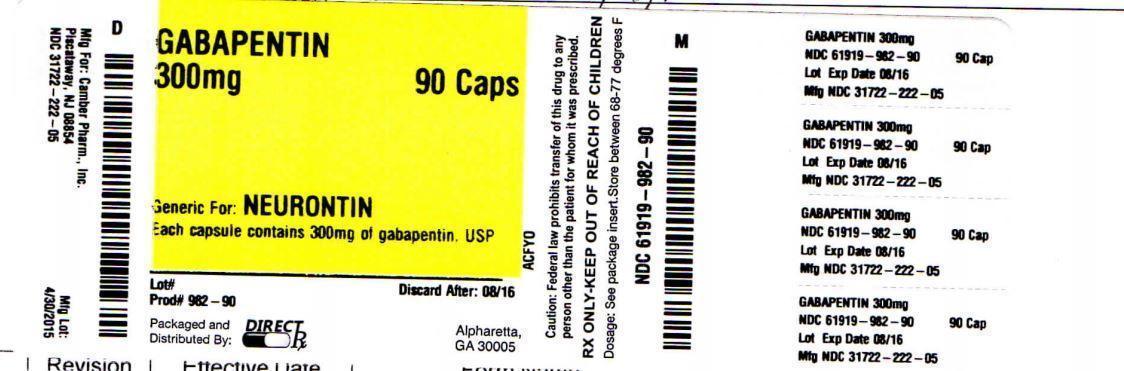
GABAPENTIN 300 mg Capsule, 30-count
Other active recalls for Gabapentin (different manufacturers) — 6 · tap to view
🆔 Identity & classification
Where does this data come from?
🏷️ RxNorm drug class
This medicine belongs to the Gabapentinoids class.
Where does this data come from?
🏭 Manufacturer & labeler
Where does this data come from?
🩺 Clinical
- Gabapentin is mainly used for two things: managing nerve pain that lingers after a shingles infection (called postherpetic neuralgia) in adults, and helping control partial onset s...
- This is a really important question. Taking gabapentin together with opioids like morphine, hydrocodone, or oxycodone significantly raises the risk of serious breathing problems —...
- Can I take gabapentin with my opioid pain medication?
- The most common ones — especially in the first few weeks — are dizziness, drowsiness, and sometimes loss of balance or coordination. Swelling in the feet or hands is also fairly co...
Patient education
Supplement & herbal interactions
Some supplements/herbs that may interact with Gabapentin — tap one for details:
Gabapentin may be associated with lower levels of 1 nutrient — worth a chat with your pharmacist, not a cause for alarm.
Where does this data come from?
Ask a licensed pharmacist directly — free, answered by our team.
💊 What it looks like
Where does this data come from?
🧪 Inactive Ingredients / Excipients
Inactive ingredients, also called excipients, are components of the drug product other than the active ingredient. They may include fillers, dyes, coatings, preservatives, flavors, or other formulation ingredients.
Where does this data come from?
IACT rows and label-wide narrative are kept separate; availability and product-level specificity depend on the submitted label.Inactive ingredient FAQ
Are inactive ingredients the same for every manufacturer?
Why might an inactive ingredient be missing?
Can inactive ingredients matter?
💲 Pricing
A drug doesn't have one price. Each row is a different public payment system, and none is what you'd pay at the counter — that depends on your insurance. The ⓘ on each row explains what it measures.
| Price system | Per each | Per package |
|---|---|---|
| Retail pharmacies payNADAC · weekly | Not in the retail survey — common for institutional, discontinued, or low-volume packs. | |
| Medicaid paysCMS SDUD · 12 mo | No recent Medicaid claims on file for this NDC — rare and low-volume NDCs are suppressed in the public data. | |
| Medicare drug plans payPart D · Q2 2026 | $0.1402 | $4.21 / 30 capsules |
Where does this data come from?
🔁 Therapeutic equivalents
| Product | Labeler | Pack | NADAC/unit | TE | Status | Price vs. this |
|---|---|---|---|---|---|---|
| Gabapentin 300 mg 63739-0903-10 | McKesson | 100 capsules | $0.030 | AB | Availability likely | — |
| Gabapentin 300 mg 00480-3495-01 | Teva | 100 capsules | $0.031 | AB | Availability likely | — |
| Gabapentin 300 mg 00904-6666-61 | Major | 100 capsules | $0.031 | AB | Availability likely | — |
| gabapentin 300 mg 16571-0868-01 | Rising | 100 capsules | $0.031 | AB | Availability likely | — |
| Gabapentin 300 mg 16714-0662-01 | NorthStar | 100 capsules | $0.031 | AB | Availability likely | — |
| Gabapentin 300 mg 23155-0867-01 | Heritage | 100 capsules | $0.031 | AB | Availability likely | — |
| Gabapentin 300 mg 31722-0149-01 | Camber | 100 capsules | $0.031 | AB | Availability likely | — |
| Gabapentin 300 mg 42385-0973-01 | Laurus | 100 capsules | $0.031 | AB | Availability likely | — |
| Gabapentin 300 mg 45963-0556-11 | Actavis | 100 capsules | $0.031 | AB | Availability likely | — |
| Gabapentin 300 mg 49483-0606-01 | TIME | 100 capsules | $0.031 | AB | Availability likely | — |
| Gabapentin 300 mg 50228-0180-01 | ScieGen | 100 capsules | $0.031 | AB | Availability likely | — |
| Relgaabi 300 mg 58657-0233-01 | Method | 100 capsules | $0.031 | AB | Availability likely | — |
| Gabapentin 300 mg 60687-0591-01 | American | 100 capsules | $0.031 | AB | Availability likely | — |
| Gabapentin 300 mg 64380-0754-01 | Strides | 100 capsules | $0.031 | AB | Availability likely | — |
| Gabapentin 300 mg 65862-0199-01 | Aurobindo | 100 capsules | $0.031 | — | Availability likely | — |
| Gabapentin 300 mg 67877-0223-01 | Ascend | 100 capsules | $0.031 | AB | Availability likely | — |
| Gabapentin 300 mg 69292-0641-01 | Amici | 100 capsules | $0.031 | AB | Availability likely | — |
| Gabapentin 300 mg 69367-0132-06 | Westminster | 500 capsules | $0.031 | AB | Availability likely | — |
| Gabapentin 300 mg 69367-0344-05 | Westminster | 500 capsules | $0.031 | AB | Availability likely | — |
| Gabapentin 300 mg 70010-0927-01 | Granules | 100 capsules | $0.031 | AB | Availability likely | — |
| Gabapentin 300 mg 71093-0121-04 | ACI | 100 capsules | $0.031 | AB | Discontinued | — |
| Gabapentin 300 mg 83301-0004-01 | Mullan | 100 capsules | $0.031 | AB | Availability likely | — |
| Gabapentin 300 mg 70010-0109-01 | Granules | 100 capsules | $0.034 | AB | Discontinued | — |
| Gabapentin 300 mg 64380-0868-06 | Strides | 100 capsules | $0.041 | AB | FDA listed | — |
| Gabapentin 300 mg 69097-0943-07 | Cipla | 100 capsules | $0.041 | AB | FDA listed | — |
| Neurontin 300 mg 00071-0805-24 | Parke-Davis | 100 capsules | $7.371 | AB | Availability likely | — |
| Neurontin 300 mg 58151-0282-01 | Viatris | 100 capsules | $7.371 | AB | Availability likely | — |
| Gabapentin 300 mg 00904-7614-61 | Major | 100 capsules | — | AB | FDA listed | — |
| Gabapentin 300 mg 25000-0104-03 | MARKSANS | 30 capsules | — | AB | FDA listed | — |
| Gabapentin 300 mg 42582-0115-10 | Bi-Coastal | 100 capsules | — | AB | FDA listed | — |
| Gabapentin 300 mg 42806-0510-01 | Epic | 100 capsules | — | AB | FDA listed | — |
| Gabapentin 300 mg 43063-0673-30 | PD-Rx | 30 capsules | — | AB | FDA listed | — |
| Gabapentin 300 mg 43353-0075-30 | Aphena | 30 capsules | — | AB | FDA listed | — |
| Gabapentin 300 mg 43547-0480-10 | Solco | 100 capsules | — | AB | FDA listed | — |
| Gabapentin 300 mg 45865-0194-30 | Medsource | 30 capsules | — | AB | FDA listed | — |
| Gabapentin 300 mg 50090-0896-00 | A-S | 100 capsules | — | AB | FDA listed | — |
| Gabapentin 300 mg 50090-4893-00 | A-S | 90 capsules | — | AB | FDA listed | — |
| Gabapentin 300 mg 50090-6718-00 | A-S | 90 capsules | — | AB | FDA listed | — |
| Gabapentin 300 mg 50090-7420-00 | A-S | 100 capsules | — | AB | FDA listed | — |
| Gabapentin 300 mg 50090-7421-00 | A-S | 90 capsules | — | AB | FDA listed | — |
| Gabapentin 300 mg 50090-7674-00 | A-S | 100 capsules | — | AB | FDA listed | — |
| Gabapentin 300 mg 50090-7675-00 | A-S | 90 capsules | — | AB | FDA listed | — |
| Gabapentin 300 mg 51407-0048-10 | Golden | 1000 capsules | — | AB | Discontinued | — |
| Gabapentin 300 mg 53746-0102-01 | Amneal | 100 capsules | — | AB | FDA listed | — |
| Gabapentin 300 mg 55154-7992-00 | Cardinal | 10 capsules | — | AB | FDA listed | — |
| Gabapentin 300 mg 55154-8195-00 | Cardinal | 10 capsules | — | AB | FDA listed | — |
| Gabapentin 300 mg 55700-0949-01 | Quality | 120 capsules | — | AB | FDA listed | — |
| Gabapentin 300 mg 58118-1102-08 | Clinical | 30 capsules | — | AB | FDA listed | — |
| Gaba 300-EZS 59088-0725-00 | PureTek | 100 capsules | — | — | FDA listed | — |
| Gabapentin 300 mg 60760-0674-30 | St. | 30 capsules | — | AB | FDA listed | — |
| Gabapentin 300 mg 60760-0741-60 | St. | 60 capsules | — | AB | FDA listed | — |
| Gabapentin 300 mg 60760-0814-60 | St | 60 capsules | — | AB | FDA listed | — |
| Gabapentin 300 mgthis 61919-0640-30 | DIRECT | 30 capsules | — | AB | FDA listed | — |
| gabapentin 300 mg 62756-0138-01 | Sun | 50 capsules | — | — | FDA listed | — |
| Gabapentin 300 mg 63187-0810-00 | Proficient | 100 capsules | — | AB | FDA listed | — |
| Gabapentin 300 mg 63187-0988-00 | Proficient | 100 capsules | — | AB | FDA listed | — |
| Gabapentin 300 mg 63629-7306-01 | Bryant | 90 capsules | — | AB | FDA listed | — |
| Gabapentin 300 mg 63629-8486-01 | Bryant | 500 capsules | — | AB | FDA listed | — |
| Gabapentin 300 mg 63629-8487-01 | Bryant | 100 capsules | — | AB | FDA listed | — |
| Gabapentin 300 mg 65162-0102-03 | Amneal | 30 capsules | — | AB | FDA listed | — |
| Gabapentin 300 mg 67046-1284-03 | Coupler | 30 capsules | — | AB | FDA listed | — |
| Gabapentin 300 mg 67046-1429-03 | Coupler | 30 capsules | — | AB | FDA listed | — |
| Gabapentin 300 mg 68071-2366-01 | NuCare | 100 capsules | — | AB | FDA listed | — |
| Gabapentin 300 mg 68071-2876-09 | NuCare | 90 capsules | — | AB | FDA listed | — |
| Gabapentin 300 mg 68071-3527-03 | NuCare | 30 capsules | — | AB | FDA listed | — |
| Gabapentin 300 mg 68071-4784-01 | NuCare | 100 capsules | — | AB | FDA listed | — |
| Gabapentin 300 mg 68071-5193-03 | NuCare | 30 capsules | — | AB | FDA listed | — |
| Gabapentin 300 mg 68788-7024-01 | Preferred | 100 capsules | — | AB | FDA listed | — |
| Gabapentin 300 mg 68788-7848-00 | Preferred | 100 capsules | — | AB | FDA listed | — |
| Gabapentin 300 mg 68788-8712-00 | Preferred | 100 capsules | — | AB | FDA listed | — |
| Gabapentin 300 mg 69434-0043-03 | Zhejiang | 500 capsules | — | AB | FDA listed | — |
| Gabapentin 300 mg 70518-0293-00 | REMEDYREPACK | 90 capsules | — | AB | FDA listed | — |
| Gabapentin 300 mg 70518-1760-04 | REMEDYREPACK | 30 capsules | — | AB | FDA listed | — |
| Gabapentin 300 mg 70518-2970-00 | REMEDYREPACK | 30 capsules | — | AB | Discontinued | — |
| Gabapentin 300 mg 70518-3329-00 | REMEDYREPACK | 100 capsules | — | AB | FDA listed | — |
| Gabapentin 300 mg 70518-4411-00 | REMEDYREPACK | 90 capsules | — | AB | FDA listed | — |
| Gabapentin 300 mg 71205-0295-15 | Proficient | 15 capsules | — | AB | FDA listed | — |
| Gabapentin 300 mg 71205-0532-14 | Proficient | 14 capsules | — | AB | FDA listed | — |
| Gabapentin 300 mg 71205-0766-30 | Proficient | 30 capsules | — | AB | FDA listed | — |
| Gabapentin 300 mg 71205-0929-00 | Proficient | 100 capsules | — | AB | FDA listed | — |
| Gabapentin 300 mg 71335-0220-00 | Bryant | 20 capsules | — | AB | Discontinued | — |
| Gabapentin 300 mg 71335-0993-01 | Bryant | 90 capsules | — | AB | FDA listed | — |
| Gabapentin 300 mg 71335-1093-01 | Bryant | 90 capsules | — | AB | FDA listed | — |
| Gabapentin 300 mg 71335-1197-00 | Bryant | 20 capsules | — | AB | FDA listed | — |
| Gabapentin 300 mg 71335-1269-01 | Bryant | 90 capsules | — | AB | FDA listed | — |
| Gabapentin 300 mg 71335-1348-00 | Bryant | 20 capsules | — | AB | FDA listed | — |
| Gabapentin 300 mg 71335-1453-00 | Bryant | 20 capsules | — | AB | Discontinued | — |
| Gabapentin 300 mg 71335-1454-01 | Bryant | 90 capsules | — | AB | FDA listed | — |
| Gabapentin 300 mg 71335-1490-00 | Bryant | 20 capsules | — | AB | FDA listed | — |
| Gabapentin 300 mg 71335-1997-00 | Bryant | 20 capsules | — | AB | FDA listed | — |
| Gabapentin 300 mg 71335-2004-01 | Bryant | 90 capsules | — | AB | FDA listed | — |
| Gabapentin 300 mg 71335-2280-01 | Bryant | 1000 capsules | — | AB | FDA listed | — |
| Gabapentin 300 mg 71335-2521-00 | Bryant | 20 capsules | — | AB | FDA listed | — |
| Gabapentin 300 mg 71335-2699-00 | Bryant | 20 capsules | — | AB | FDA listed | — |
| Gabapentin 300 mg 71335-2748-01 | Bryant | 90 capsules | — | AB | FDA listed | — |
| Gabapentin 300 mg 71335-3109-01 | Bryant | 500 capsules | — | AB | FDA listed | — |
| Gabapentin 300 mg 71610-0088-53 | Aphena | 60 capsules | — | AB | FDA listed | — |
| Gabapentin 300 mg 71610-0143-60 | Aphena | 90 capsules | — | AB | FDA listed | — |
| Gabapentin 300 mg 71610-0146-30 | Aphena | 30 capsules | — | AB | FDA listed | — |
| Gabapentin 300 mg 71610-0185-30 | Aphena | 30 capsules | — | AB | FDA listed | — |
| Gabapentin 300 mg 71610-0188-30 | Aphena | 30 capsules | — | AB | FDA listed | — |
| Gabapentin 300 mg 71610-0211-60 | Aphena | 90 capsules | — | AB | FDA listed | — |
| Gabapentin 300 mg 71610-0753-70 | Aphena | 120 capsules | — | AB | FDA listed | — |
| Gabapentin 300 mg 72162-1533-01 | Bryant | 100 capsules | — | AB | FDA listed | — |
| Gabapentin 300 mg 72162-1813-01 | Bryant | 100 capsules | — | AB | FDA listed | — |
| Gabapentin 300 mg 72162-2139-01 | Bryant | 100 capsules | — | AB | FDA listed | — |
| Gabapentin 300 mg 72189-0392-30 | Direct_Rx | 30 capsules | — | AB | FDA listed | — |
| Gabapentin 300 mg 72189-0610-30 | Direct_Rx | 30 capsules | — | AB | FDA listed | — |
| Gabapentin 300 mg 72737-0006-01 | STALLION | 30 capsules | — | AB | FDA listed | — |
| Gabapentin 300 mg 72789-0055-30 | PD-Rx | 30 capsules | — | AB | FDA listed | — |
| Gabapentin 300 mg 72865-0253-05 | XLCare | 500 capsules | — | AB | FDA listed | — |
| Gabapentin 300 mg 76282-0627-01 | Exelan | 100 capsules | — | AB | FDA listed | — |
| Gabapentin 300 mg 76420-0015-24 | Asclemed | 240 capsules | — | AB | FDA listed | — |
| Gabapentin 300 mg 76420-0020-24 | Asclemed | 240 capsules | — | AB | FDA listed | — |
| Gabapentin 300 mg 76420-0047-12 | Asclemed | 120 capsules | — | AB | FDA listed | — |
| Gabapentin 300 mg 76420-0617-10 | Asclemed | 100 capsules | — | AB | FDA listed | — |
| Gabapentin 300 mg 76420-0789-01 | Asclemed | 100 capsules | — | AB | FDA listed | — |
| Gabapentin 300 mg 76420-0869-01 | Asclemed | 100 capsules | — | AB | FDA listed | — |
| Gabapentin 300 mg 80425-0031-01 | ADVANCED | 30 capsules | — | AB | FDA listed | — |
| Gabapentin 300 mg 80425-0032-01 | Advanced | 30 capsules | — | AB | FDA listed | — |
| Gabapentin 300 mg 80425-0033-01 | Advanced | 30 capsules | — | AB | FDA listed | — |
| Gabapentin 300 mg 80425-0079-01 | Advanced | 30 capsules | — | AB | FDA listed | — |
| Gabapentin 300 mg 80425-0182-01 | Advanced | 30 capsules | — | AB | FDA listed | — |
| Gabapentin 300 mg 80425-0196-01 | Advanced | 30 capsules | — | AB | FDA listed | — |
| Gabapentin 300 mg 82619-0143-01 | Creekwood | 100 capsules | — | AB | FDA listed | — |
| Gabapentin 300 mg 82804-0206-90 | Proficient | 90 capsules | — | AB | FDA listed | — |
| Gabapentin 300 mg 82804-0217-30 | Proficient | 30 capsules | — | AB | FDA listed | — |
| Gabapentin 300 mg 82868-0051-30 | Northwind | 30 capsules | — | AB | FDA listed | — |
| gabapentin 300 mg 82868-0073-30 | Northwind | 30 capsules | — | AB | FDA listed | — |
| Gabapentin 300 mg 85509-2180-01 | PHOENIX | 100 capsules | — | AB | FDA listed | — |
| Gabapentin 300 mg 87441-0035-01 | Unit | 30 capsules | — | AB | FDA listed | — |
| Gabapentin 300 mg 85534-0056-00 | HAWAII | 30 capsules | — | AB | FDA listed | — |
| Gabapentin 300 mg 85534-0007-00 | HAWAII | 30 capsules | — | AB | FDA listed | — |
| Gabapentin 300 mg 70518-2911-00 | REMEDYREPACK | 100 capsules | — | AB | Discontinued | — |
| Gabapentin 300 mg 60760-0940-60 | St. | 60 capsules | — | AB | FDA listed | — |
| gabapentin 300 mg 67046-1644-03 | Coupler | 30 capsules | — | AB | FDA listed | — |
| Gabapentin 300 mg 82868-0109-30 | Northwind | 30 capsules | — | AB | FDA listed | — |
| Gabapentin 300 mg 67296-2299-04 | Redpharm | 21 capsules | — | AB | FDA listed | — |
| gabapentin 300 mg 68071-5317-01 | NuCare | 100 capsules | — | AB | FDA listed | — |
| Gabapentin 300 mg 55154-0580-00 | Cardinal | 10 capsules | — | AB | FDA listed | — |
| Gabapentin 300 mg 70518-4746-00 | REMEDYREPACK | 30 capsules | — | AB | FDA listed | — |
Where does this data come from?
⏳ Availability & generic status
This product is an FDA-approved generic. Other versions of the same drug are listed under Therapeutic equivalents, least expensive first.
Where does this data come from?
📊 Medicare Part D spend CMS · PART D · 2026 (Q1)
🔬 Reported adverse events (FAERS)
Top reported reactions
Reporter sex
Serious outcomes
Where does this data come from?
📦 Packaging — all sizes for this product
| Package NDC | Description | Marketing start | Status |
|---|---|---|---|
| 61919-0640-30 You're viewing this | 30 CAPSULE in 1 BOTTLE (61919-640-30) | 2019-04-09 | Active |
| 61919-0640-72 | 120 CAPSULE in 1 BOTTLE (61919-640-72) | 2019-08-08 | Inactivated by FDA |
| 61919-0640-60 | 60 CAPSULE in 1 BOTTLE (61919-640-60) | 2019-08-08 | Inactivated by FDA |
| 61919-0640-82 | 180 CAPSULE in 1 BOTTLE (61919-640-82) | 2019-08-19 | Inactivated by FDA |
| 61919-0640-90 | 90 CAPSULE in 1 BOTTLE (61919-640-90) | 2019-08-19 | Inactivated by FDA |
You're viewing the smallest of 5 pack sizes for this product.
Pack size FAQ
What quantity is in NDC 61919-0640-30?
What is the difference between NDC 61919-0640-30 and NDC 61919-0640-60?
What NDC number is used to bill for this package of GABAPENTIN 300 mg Capsule?
🧭 About this NDC listing & data coverage
What data is (and isn’t) available for this NDC — tap to expand
| NDC identity (package / product / labeler codes) | ✓ Available |
| Labeler | ✓ Available |
| Product & package description | ✓ Available |
| Marketing category & status | ✓ Available |
| Active ingredient / dosage form / route | ✓ Available |
| FDA label (SPL via DailyMed) | ✓ Available |
| Package photos | ✓ Available |
| Inactive ingredients (structured) | — Not published for this NDC The labeler did not submit a structured excipient list, or no SPL is available. |
| NADAC pharmacy acquisition price (CMS) | — Not published for this NDC CMS publishes NADAC only for NDCs reported in its retail-pharmacy survey. |
| Orange Book / therapeutic-equivalence data | ✓ Available |
| HCPCS J-code billing crosswalk | — Not published for this NDC Most self-administered / retail products have no J-code — that is normal. |
| Medicaid utilization (CMS SDUD) | — Not published for this NDC CMS reports utilization only for NDCs with Medicaid claims above its privacy threshold. |
Questions about this listing
Why is there no price listed?
Is the NDC printed on the package the same as the 11-digit billing NDC?
What do the three segments of this NDC mean?
Is this package still being marketed?
Does this product come in other package sizes?
Who lists this product with the FDA?
Do I need a prescription for this product?
Where does this data come from?
📄 Full prescribing information FDA SPL
🎯 Indications and Usage ▾
INDICATIONS & USAGE SECTION Postherpetic Neuralgia Gabapentin is indicated for the management of postherpetic neuralgia in adults. Epilepsy Gabapentin is indicated as adjunctive therapy in the treatment of partial seizures with and without secondary generalization in patients over 12 years of age with epilepsy. Gabapentin is also indicated as adjunctive therapy in the treatment of partial seizures in pediatric patients age 3 – 12 years.
⏱️ Dosage and Administration ▾
DOSAGE & ADMINISTRATION SECTION Gabapentin Capsules, USP are given orally with or without food. If gabapentin dose is reduced, discontinued or substituted with an alternative medication, this should be done gradually over a minimum of 1 week (a longer period may be needed at the discretion of the prescriber). Postherpetic Neuralgia In adults with postherpetic neuralgia, gabapentin therapy may be initiated as a single 300-mg dose on Day 1, 600 mg/day on Day 2 (divided BID), and 900 mg/day on Day 3 (divided TID).
The dose can subsequently be titrated up as needed for pain relief to a daily dose of 1800 mg (divided TID). In clinical studies, efficacy was demonstrated over a range of doses from 1800 mg/day to 3600 mg/day with comparable effects across the dose range. Additional benefit of using doses greater than 1800 mg/day was not demonstrated.
Epilepsy Gabapentin is recommended for add-on therapy in patients 3 years of age and older. Effectiveness in pediatric patients below the age of 3 years has not been established. Patients >12 years of age: The effective dose of gabapentin is 900 to 1800 mg/day and given in divided doses (three times a day) using 300 or 400 mg capsules, or 600 or 800 mg tablets.
The starting dose is 300 mg three times a day. If necessary, the dose may be increased using 300 or 400 mg capsules, or 600 or 800 mg tablets three times a day up to 1800 mg/day. Dosages up to 2400 mg/day have been well tolerated in long-term clinical studies.
Doses of 3600 mg/day have also been administered to a small number of patients for a relatively short duration, and have been well tolerated. The maximum time between doses in the TID schedule should not exceed 12 hours. Pediatric Patients Age 3–12 years: The starting dose should range from 10-15 mg/kg/day in 3 divided doses, and the effective dose reached by upward titration over a period of approximately 3 days.
The effective dose of gabapentin in patients 5 years of age and older is 25–35 mg/kg/day and given in divided doses (three times a day). The effective dose in pediatric patients ages 3 and 4 years is 40 mg/kg/day and given in divided doses (three times a day) (see CLINICAL PHARMACOLOGY, Pediatrics .) Gabapentin may be administered as the oral solution, capsule, or tablet, or using combinations of these formulations. Dosages up to 50 mg/kg/day have been well-tolerated in a long-term clinical study.
The maximum time interval between doses should not exceed 12 hours. It is not necessary to monitor gabapentin plasma concentrations to optimize gabapentin therapy. Further, because there are no significant pharmacokinetic interactions among gabapentin and other commonly used antiepileptic drugs, the addition of gabapentin does not alter the plasma levels of these drugs appreciably.
If gabapentin is discontinued and/or an alternate anticonvulsant medication is added to the therapy, this should be done gradually over a minimum of 1 week. Dosage in Renal Impairment Creatinine clearance is difficult to measure in outpatients. In patients with stable renal function, creatinine clearance (CCr) can be reasonably well estimated using the equation of Cockcroft and Gault: for females CCr=(0.
85)( 140-age)(weight)/[(72)(SCr)] for males CCr=(140-age)(weight)/[(72)(SCr)] where age is in years, weight is in kilograms and SCr is serum creatinine in mg/dL. Dosage adjustment in patients ≥ 12 years of age with compromised renal function or undergoing hemodialysis is recommended as follows (see dosing recommendations above for effective doses in each indication). TABLE 6.
Gabapentin Dosage Based on Renal Function Renal Function Creatinine Clearance (mL/min) Total Daily Dose Range (mg/day) Dose Regimen (mg) a For patients with creatinine clearance <15 mL/min, reduce daily dose in proportion to creatinine clearance (e.g., patients with a creatinine clearance of 7.5 mL/min should receive one-half the daily dose that patients with a creatinine clearance of 15 mL/min receive). b Patients on hemod…
⛔ Contraindications ▾
CONTRAINDICATIONS SECTION Gabapentin is contraindicated in patients who have demonstrated hypersensitivity to the drug or its ingredients.
⚠️ Warnings ▾
WARNINGS SECTION Suicidal Behavior and Ideation Antiepileptic drugs (AEDs), including gabapentin, increase the risk of suicidal thoughts or behavior in patients taking these drugs for any indication. Patients treated with any AED for any indication should be monitored for the emergence or worsening of depression, suicidal thoughts or behavior, and/or any unusual changes in mood or behavior. Pooled analyses of 199 placebo-controlled clinical trials (mono- and adjunctive therapy) of 11 different AEDs showed that patients randomized to one of the AEDs had approximately twice the risk (adjusted Relative Risk 1.8, 95% CI:1.2, 2.7) of suicidal thinking or behavior compared to patients randomized to placebo.
In these trials, which had a median treatment duration of 12 weeks, the estimated incidence rate of suicidal behavior or ideation among 27,863 AED-treated patients was 0.43%, compared to 0.24% among 16,029 placebo-treated patients, representing an increase of approximately one case of suicidal thinking or behavior for every 530 patients treated. There were four suicides in drug-treated patients in the trials and none in placebo-treated patients, but the number is too small to allow any conclusion about drug effect on suicide.
The increased risk of suicidal thoughts or behavior with AEDs was observed as early as one week after starting drug treatment with AEDs and persisted for the duration of treatment assessed. Because most trials included in the analysis did not extend beyond 24 weeks, the risk of suicidal thoughts or behavior beyond 24 weeks could not be assessed. The risk of suicidal thoughts or behavior was generally consistent among drugs in the data analyzed.
The finding of increased risk with AEDs of varying mechanisms of action and across a range of indications suggests that the risk applies to all AEDs used for any indication. The risk did not vary substantially by age (5-100 years) in the clinical trials analyzed. Table 2 shows absolute and relative risk by indication for all evaluated AEDs.
Table 2 Risk by indication for antiepileptic drugs in the pooled analysis Indication Placebo Patients with Events Per 1000 Patients Drug Patients With events per 1000 patients Relative Risk: Incidence of Events in Drug Patients /Incidence in Placebo Patients Risk Difference: Additional Drug Patients with Events Per 1000 Patients Epilepsy 1.0 3.4 3.5
2.4Psychiatric 5.7 8.5 1.5
2.9Other 1.0 1.8 1.9
0.9Total 2.4 4.3 1.8
1.9The relative risk for suicidal thoughts or behavior was higher in clinical trials for epilepsy than in clinical trials for psychiatric or other conditions, but the absolute risk differences were similar for the epilepsy and psychiatric indications. Anyone considering prescribing gabapentin or any other AED must balance the risk of suicidal thoughts or behavior with the risk of untreated illness. Epilepsy and many other illnesses for which AEDs are prescribed are themselves associated with morbidity and mortality and an increased risk of suicidal thoughts and behavior.
Should suicidal thoughts and behavior emerge during treatment, the prescriber needs to consider whether the emergence of these symptoms in any given patient may be related to the illness being treated. Patients, their caregivers, and families should be informed that AEDs increase the risk of suicidal thoughts and behavior and should be advised of the need to be alert for the emergence or worsening of the signs and symptoms of depression, any unusual changes in mood or behavior, or the emergence of suicidal thoughts, behavior, or thoughts about self-harm.
Behaviors of concern should be reported immediately to healthcare providers. Neuropsychiatric Adverse Events—Pediatric Patients 3-12 years of age Gabapentin use in pediatric patients with epilepsy 3–12 years of age is associated with the occurrence of central nervous system related adverse events. The most significant of these can be classified into the following categories: 1) emotional lability (…
🤒 Adverse Reactions ▾
ADVERSE REACTIONS SECTION Postherptic Neuralgia The most commonly observed adverse events associated with the use of gabapentin in adults, not seen at an equivalent frequency among placebo-treated patients, were dizziness, somnolence, and peripheral edema. In the 2 controlled studies in postherpetic neuralgia, 16% of the 336 patients who received gabapentin and 9% of the 227 patients who received placebo discontinued treatment because of an adverse event. The adverse events that most frequently led to withdrawal in gabapentin-treated patients were dizziness, somnolence, and nausea.
Incidence in Controlled Clinical Trials Table 3 lists treatment-emergent signs and symptoms that occurred in at least 1% of gabapentin treated patients with postherpetic neuralgia participating in placebo-controlled trials and that were numerically more frequent in the gabapentin group than in the placebo group. Adverse events were usually mild to moderate in intensity. TABLE 3.
Treatment-Emergent Adverse Event Incidence in Controlled Trials in Postherpetic Neuralgia (Events in at least 1% of gabapentin -Treated Patients and Numerically More Frequent Than in the Placebo Group) Body System/ Gabapentin Placebo Preferred Term N=336 N=227 % % a Reported as blurred vision Body as a Whole Asthenia 5.7
4.8Infection 5.1
3.5Headache 3.3
3.1Accidental injury 3.3
1.3Abdominal pain 2.7
2.6Digestive System Diarrhea 5.7
3.1Dry mouth 4.8
1.3Constipation 3.9
1.8Nausea 3.9
3.1Vomiting 3.3
1.8Flatulence 2.1
1.8Metabolic and Nutritional Disorders Peripheral edema 8.3
2.2Weight gain 1.8
0.0Hyperglycemia 1.2
0.4Nervous System Dizziness 28.0
7.5Somnolence 21.4
5.3Ataxia 3.3
0.0Thinking abnormal 2.7
0.0Abnormal gait 1.5
0.0Incoordination 1.5
0.0Amnesia 1.2
0.9Hypesthesia 1.2
0.9Respiratory System Pharyngitis 1.2
0.4Skin and Appendages Rash 1.2
0.9Special Senses Amblyopiaa 2.7
0.9Conjunctivitis 1.2
0.0Diplopia 1.2
0.0Otitis media 1.2
0.0Other events in more than 1% of patients but equally or more frequent in the placebo group included pain, tremor, neuralgia, back pain, dyspepsia, dyspnea, and flu syndrome. There were no clinically important differences between men and women in the types and incidence of adverse events. Because there were few patients whose race was reported as other than white, there are insufficient data to support a statement regarding the distribution of adverse events by race.
Epilepsy The most commonly observed adverse events associated with the use of gabapentin in combination with other antiepileptic drugs in patients >12 years of age, not seen at an equivalent frequency among placebo-treated patients, were somnolence, dizziness, ataxia, fatigue, and nystagmus. The most commonly observed adverse events reported with the use of gabapentin in combination with other antiepileptic drugs in pediatric patients 3 to 12 years of age, not seen at an equal frequency among placebo-treated patients, were viral infection, fever, nausea and/or vomiting, somnolence, and hostility (see WARNINGS, Neuropsychiatric Adverse Events ).
Approximately 7% of the 2074 patients >12 years of age and approximately 7% of the 449 pediatric patients 3 to 12 years of age who received gabapentin in premarketing clinical trials discontinued treatment because of an adverse event. The adverse events most commonly associated with withdrawal in patients >12 years of age were somnolence (1.2%), ataxia (0.8%), fatigue (0.6%), nausea and/or vomiting (0.6%), and dizziness (0.6%). The adverse events most commonly associated with withdrawal in pediatric patients were emotional lability (1.6%), hostility (1.3%), and hyperkinesias (1.1%).
Incidence in Controlled Clinical Trials Table 4 lists treatment-emergent signs and symptoms that occurred in at least 1% of gabapentin treated patients >12 years of age with epilepsy participating in placebo-controlled trials and were numerically more common in the gabapentin group. In these studies, either gabapentin or placebo was…
🆘 Overdosage ▾
OVERDOSAGE SECTION A lethal dose of gabapentin was not identified in mice and rats receiving single oral doses as high as 8000 mg/kg. Signs of acute toxicity in animals included ataxia, labored breathing, ptosis, sedation, hypoactivity, or excitation. Acute oral overdoses of gabapentin up to 49 grams have been reported.
In these cases, double vision, slurred speech, drowsiness, lethargy and diarrhea were observed. All patients recovered with supportive care. Gabapentin can be removed by hemodialysis.
Although hemodialysis has not been performed in the few overdose cases reported, it may be indicated by the patient’s clinical state or in patients with significant renal impairment.
🧬 Clinical Pharmacology ▾
CLINICAL PHARMACOLOGY SECTION Mechanism of Action: The mechanism by which gabapentin exerts its analgesic action is unknown, but in animal models of analgesia, gabapentin prevents allodynia (pain-related behavior in response to a normally innocuous stimulus) and hyperalgesia (exaggerated response to painful stimuli). In particular, gabapentin prevents pain-related responses in several models of neuropathic pain in rats or mice (e.g. spinal nerve ligation models, streptozocin-induced diabetes model, spinal cord injury model, acute herpes zoster infection model).
Gabapentin also decreases pain-related responses after peripheral inflammation (carrageenan footpad test, late phase of formalin test). Gabapentin did not alter immediate pain-related behaviors (rat tail flick test, formalin footpad acute phase, acetic acid abdominal constriction test, footpad heat irradiation test). The relevance of these models to human pain is not known.
The mechanism by which gabapentin exerts its anticonvulsant action is unknown, but in animal test systems designed to detect anticonvulsant activity, gabapentin prevents seizures as do other marketed anticonvulsants. Gabapentin exhibits antiseizure activity in mice and rats in both the maximal electroshock and pentylenetetrazole seizure models and other preclinical models (e.g., strains with genetic epilepsy, etc.). The relevance of these models to human epilepsy is not known.
Gabapentin is structurally related to the neurotransmitter GABA (gamma-aminobutyric acid) but it does not modify GABAA or GABAB radioligand binding, it is not converted metabolically into GABA or a GABA agonist, and it is not an inhibitor of GABA uptake or degradation. Gabapentin was tested in radioligand binding assays at concentrations up to 100 µM and did not exhibit affinity for a number of other common receptor sites, including benzodiazepine, glutamate, N-methyl-D-aspartate (NMDA), quisqualate, kainate, strychnine-insensitive or strychnine-sensitive glycine, alpha 1, alpha 2, or beta adrenergic, adenosine A1 or A2, cholinergic muscarinic or nicotinic, dopamine D1 or D2, histamine H1, serotonin S1 or S2, opiate mu, delta or kappa, cannabinoid 1, voltage-sensitive calcium channel sites labeled with nitrendipine or diltiazem, or at voltage-sensitive sodium channel sites labeled with batrachotoxinin A 20-alpha-benzoate.
Furthermore, gabapentin did not alter the cellular uptake of dopamine, noradrenaline, or serotonin. In vitro studies with radiolabeled gabapentin have revealed a gabapentin binding site in areas of rat brain including neocortex and hippocampus. A high-affinity binding protein in animal brain tissue has been identified as an auxiliary subunit of voltage-activated calcium channels.
However, functional correlates of gabapentin binding, if any, remain to be elucidated. Pharmacokinetics and Drug Metabolism All pharmacological actions following gabapentin administration are due to the activity of the parent compound; gabapentin is not appreciably metabolized in humans. Oral Bioavailability: Gabapentin bioavailability is not dose proportional; i.e., as dose is increased, bioavailability decreases.
Bioavailability of gabapentin is approximately 60%, 47%, 34%, 33%, and 27% following 900, 1200, 2400, 3600, and 4800 mg/day given in 3 divided doses, respectively. Food has only a slight effect on the rate and extent of absorption of gabapentin (14% increase in AUC and Cmax). Distribution: Less than 3% of gabapentin circulates bound to plasma protein.
The apparent volume of distribution of gabapentin after 150 mg intravenous administration is 58±6 L (Mean ±SD). In patients with epilepsy, steady-state predose (Cmin) concentrations of gabapentin in cerebrospinal fluid were approximately 20% of the corresponding plasma concentrations. Elimination: Gabapentin is eliminated from the systemic circulation by renal excretion as unchanged drug.
Gabapentin is not appreciably metabolized in humans. Gabapentin elimination half-life is…
📋 Description ▾
DESCRIPTION SECTION Gabapentin Capsules, USP are supplied as imprinted hard gelatin capsules containing 100 mg, 300 mg and 400 mg of gabapentin, USP. The inactive ingredients are mannitol, pre-gelatinized starch and talc. The 100 mg capsule shell contains titanium dioxide.
The 300 mg capsule contains FD&C Red 40, D&C Yellow 10 and titanium dioxide. The 400 mg capsule shell contains FD&C Red 40, D&C Yellow 10 and titanium dioxide. Gabapentin, USP is described as 1-(aminomethyl) cyclohexaneacetic acid with a molecular formula of C9H17NO2 and a molecular weight of 171.24.
The structural formula of gabapentin is: Gabapentin, USP is a white to off-white crystalline solid with a pKa1 of 3.7 and a pKa2 of 10.7. It is freely soluble in water and both basic and acidic aqueous solutions. The log of the partition coefficient (n-octanol/0.05M phosphate buffer) at pH 7.4 is –1.25. image description
💬 Medication Guide ▾
Gabapentin Capsules, USP are supplied as follows: 100 mg : Hard Gelatin Capsules size "3" with White Opaque Cap and White Opaque Body imprinted with 100 mg and IG321, filled with White to Off-white powder; supplied in bottles of 100's count (NDC 31722-221-01) and 500's count (NDC 31722-221-05). 300 mg : Hard Gelatin Capsules size "1" with Yellow Opaque Cap and Yellow Opaque Body imprinted with 300 mg and IG322, filled with White to Off-white powder; supplied in bottles of 100's count (NDC 31722-222-01) and 500's count (NDC 31722-222-05).
400 mg : Hard Gelatin Capsules size "0" with Orange Opaque Cap and Orange Opaque Body imprinted with 400 mg and IG323, filled with White to Off-white powder; supplied in bottles of 100's count (NDC 31722-223-01) and 500's count (NDC 31722-223-05). Store at 20°-25°C (68°-7JOF). [See USP controlled room temperature.] Rx only Manufactured by: InvaGen Pharmaceuticals, Inc. Hauppauge, NY 11788 Manufactured for: Camber Pharmaceuticals, Inc.
Piscataway, NJ 08854 Rev: 01/10 Barcode 323-01-2010