
Phenytoin Sodium 100 mg Capsule, 120-count — NDC 61919-815-72 (Billing 61919-0815-72)
This is a package of 120 capsules of Phenytoin Sodium 100 mg Capsule from DIRECT RX, marketed since Jan 2014 and currently FDA-listed.
NDC database record
One package, one record: these facts belong to NDC 61919-815-72 alone.
- Record
- FDA NDC Directory package listing · Human prescription drug
- Code segments
- 61919 labeler · 815 product · 72 package
- Package marketed since
- Jan 1, 2014
- Sample package
- No — commercial package
- Listing certified through
- Dec 31, 2027
- Billing quantity
- 120 EA per package
- Barcode (UPC-A, from the NDC)
- 3 6191981572 8
- FDA record last changed
- Oct 8, 2026
Identity & classification
Regulatory identifiers FDA, NLM and CMS codes for this package
Drug-database identifiers Medi-Span GPI and First Databank GCN / HICL / AHFS classification
- GSN (GCN sequence number): 004521
- GCN: 17700
- GPI-14 (Medi-Span): 72200030200110
- HICL (First Databank): 001877
- AHFS class code: 24:04.04.08
- RxCUI (RxNorm): 855671
Where does this data come from?
- FDA openFDA NDC Directory · synced Oct 8, 2026
- FDA label on DailyMed · label index refreshed Oct 6, 2026
- RxNorm (NLM RxNav) · catalog refreshed Oct 1, 2026
- Medi-Span GPI (licensed)
- First Databank (licensed) · refreshed Oct 8, 2026
RxNorm drug class
This medicine belongs to the Anti-epileptic Agent class.
Where does this data come from?
- RxClass (NLM) · catalog refreshed Oct 1, 2026
Clinical
- It treats seizures. Depending on the product, that includes grand mal seizures, temporal lobe or complex partial seizures, and seizures during or after brain surgery. The injection...
- No. Stopping suddenly can trigger a dangerous, prolonged seizure. If you need to reduce or stop it, your prescriber will do it gradually.
- The most common are unsteadiness, eye movements, slurred speech, sleepiness and confusion. These are often dose-related, so tell your doctor if they appear. Call right away for a r...
- Yes. Phenytoin interacts with many drugs, including antacids, antifungals, warfarin, blood thinners and birth control. Tell me or your doctor about everything you take, including S...
Patient education
Supplement & herbal interactions
Phenytoin may be associated with lower levels of 13 nutrients — worth a chat with your pharmacist, not a cause for alarm.
Where does this data come from?
- MedlinePlus (NLM) · refreshed Oct 1, 2026
- FDA label on DailyMed · label index refreshed Oct 6, 2026
Ask a licensed pharmacist directly — free, answered by our team.
Pricing
A drug doesn't have one price. Each row is a different public payment system, and none is what you'd pay at the counter — that depends on your insurance. The ⓘ on each row explains what it measures.
| Price system | Per each | Per package |
|---|---|---|
| Retail pharmacies payNADAC · weekly | Not in the retail survey — common for institutional, discontinued, or low-volume packs. | |
| Medicaid paysCMS SDUD · 12 mo | No recent Medicaid claims on file for this NDC — rare and low-volume NDCs are suppressed in the public data. | |
| Medicare drug plans payPart D · Q2 2026 | $0.2087 | $25.04 / 120 capsules |
Where does this data come from?
- CMS NADAC weekly file
- CMS ASP pricing files · refreshed Sep 20, 2026
- CMS Medicaid State Drug Utilization Data · refreshed Oct 8, 2026
- CMS Part D plan pricing files · refreshed Sep 24, 2026
- VA National Acquisition Center price file
Packaging — all sizes for this product
| Package NDC | Description | Marketing start | Marketing end | Status |
|---|---|---|---|---|
| 61919-0815-30 61919-815-30 Main listing | 30 CAPSULE in 1 BOTTLE | 2014-01-01 | — | Active |
| 61919-0815-71 61919-815-71 | 100 CAPSULE in 1 BOTTLE | 2014-01-01 | — | Active |
| 61919-0815-72 You're viewing this | 120 CAPSULE in 1 BOTTLE | 2014-01-01 | — | Active |
You're viewing the largest of 3 pack sizes for this product.
Pack size FAQ
What quantity is in this package?
How does this package differ from NDC 61919-0815-30?
What NDC number is used to bill for this package of Phenytoin Sodium 100 mg Capsule?
Therapeutic equivalents
| Product | Labeler | Pack | NADAC/unit | TE | Status | Price vs. this |
|---|---|---|---|---|---|---|
| Phenytoin Sodium 100 mg 00904-7416-61 | Major | 1 capsule | $0.145 | AB | Availability likely | — |
| Phenytoin Sodium 100 mg 50268-0719-13 | AvPAK | 1 capsule | $0.145 | AB | Availability likely | — |
| Extended Phenytoin Sodium 100 mg 60687-0841-01 | American | 100 capsules | $0.145 | AB | Availability likely | — |
| Phenytoin Sodium 100 mg 65862-0692-01 | Aurobindo | 100 capsules | $0.145 | — | Availability likely | — |
| Dilantin 100 mg 58151-0110-01 | Viatris | 100 capsules | $1.739 | AB | Availability likely | — |
| Extended Phenytoin Sodium 100 mg 00615-8556-39 | NCS | 30 capsules | — | AB | FDA listed | — |
| Phenytoin Sodium 100 mg 29300-0379-01 | Unichem | 100 capsules | — | — | FDA listed | — |
| Phenytoin Sodium 100 mg 50090-3539-00 | A-S | 100 capsules | — | AB | FDA listed | — |
| Phenytoin Sodium 100 mg 50090-5700-00 | A-S | 100 capsules | — | AB | FDA listed | — |
| Phenytoin Sodium 100 mg 51407-0982-01 | Golden | 100 capsules | — | AB | FDA listed | — |
| Phenytoin Sodium 100 mg 51672-4111-00 | Sun | 10 capsules | — | AB | Discontinued | — |
| Phenytoin Sodium 100 mgthis 61919-0815-72 | DIRECT | 120 capsules | — | AB | FDA listed | — |
| Extended Phenytoin Sodium 100 mg 65162-0212-03 | Amneal | 30 capsules | — | AB | FDA listed | — |
| Phenytoin Sodium 100 mg 67046-0585-03 | Coupler | 30 capsules | — | AB | FDA listed | — |
| Phenytoin Sodium 100 mg 70518-0107-00 | REMEDYREPACK | 30 capsules | — | AB | FDA listed | — |
| Extended Phenytoin Sodium 100 mg 70518-2227-00 | REMEDYREPACK | 30 capsules | — | AB | Discontinued | — |
| Phenytoin Sodium 100 mg 70518-2293-01 | REMEDYREPACK | 1 capsule | — | AB | FDA listed | — |
| Phenytoin Sodium 100 mg 71610-0869-92 | Aphena | 270 capsules | — | AB | FDA listed | — |
| Phenytoin Sodium 100 mg 71610-0934-92 | Aphena | 270 capsules | — | AB | FDA listed | — |
| Phenytoin Sodium 100 mg 72162-1646-00 | Bryant | 1000 capsules | — | AB | Discontinued | — |
| Extended Phenytoin Sodium 100 mg 72162-2514-00 | Bryant | 1000 capsules | — | AB | FDA listed | — |
| Phenytoin Sodium 100 mg 82804-0269-72 | Proficient | 120 capsules | — | AB | FDA listed | — |
Where does this data come from?
- FDA openFDA NDC Directory · synced Oct 8, 2026
- FDA Orange Book · refreshed Oct 3, 2026
- CMS NADAC weekly file
Availability & generic status
This product is an FDA-approved generic. Other versions of the same drug are listed under Therapeutic equivalents, least expensive first.
Where does this data come from?
- FDA Orange Book · refreshed Oct 3, 2026
What it looks like
Where does this data come from?
- FDA label on DailyMed · label index refreshed Oct 6, 2026
Inactive Ingredients / Excipients
Inactive ingredients, also called excipients, are components of the drug product other than the active ingredient. They may include fillers, dyes, coatings, preservatives, flavors, or other formulation ingredients.
🧪 Avoiding an ingredient? See Phenytoin inactive ingredients by manufacturer: every current product's list side by side, so you can ask your pharmacy for the version that does not list it.
Where does this data come from?
IACT rows and label-wide narrative are kept separate; availability and product-level specificity depend on the submitted label.- FDA label on DailyMed · label index refreshed Oct 6, 2026
- FDA openFDA NDC Directory · synced Oct 8, 2026
Inactive ingredient FAQ
Are inactive ingredients the same for every manufacturer?
Why might an inactive ingredient be missing?
Can inactive ingredients matter?
Manufacturer & labeler
More NDCs from DIRECT RX labeler code 61919
- Vitamin D 1.25 mg Capsule, Liquid Filled NDC 61919-702-04
- Tamsulosin Hydrochloride .4 mg Capsule NDC 61919-703-30
- Pravastatin Sodium 40 mg Tablet NDC 61919-708-30
- Zolpidem Tartrate 5 mg Tablet NDC 61919-751-10
- Metoprolol Succinate ER 25 mg Tablet, Extended Release NDC 61919-754-30
- Tizandine 2 mg Tablet NDC 61919-811-15
- Tramadol HCl ER 100 mg Tablet, Extended Release NDC 61919-818-30
- Dexamethasone 1.5 mg Tablet NDC 61919-827-15
- Metaxalone 800 mg Tablet NDC 61919-832-30
- Nitrofurantoin Macrocrystals 100 mg Capsule NDC 61919-842-14
- Oxycodone and Acetaminophen 10 mg; 325 mg Tablet NDC 61919-871-30
- Carisoprodol 350 mg Tablet NDC 61919-878-60
Where does this data come from?
- FDA openFDA NDC Directory · synced Oct 8, 2026
- Drugs@FDA
Full prescribing information FDA SPL
🎯 Indications and Usage ▾
INDICATIONS & USAGE SECTION Extended phenytoin sodium capsules, USP are indicated for the control of generalized tonic-clonic (grand mal) and complex partial (psychomotor, temporal lobe) seizures and prevention and treatment of seizures occurring during or following neurosurgery. Phenytoin serum level determinations may be necessary for optimal dosage adjustments (see DOSAGE AND ADMINISTRATION and CLINICAL PHARMACOLOGY sections).
⏱️ Dosage and Administration ▾
DOSAGE & ADMINISTRATION SECTION Serum concentrations should be monitored in changing from extended phenytoin sodium capsules, USP to Prompt Phenytoin Sodium Capsules, USP, and from the sodium salt to the free acid form. Extended phenytoin sodium capsules, USP are formulated with the sodium salt of phenytoin. Because there is approximately an 8% increase in drug content with the free acid form over that of the sodium salt, dosage adjustments and serum level monitoring may be necessary when switching from a product formulated with the free acid to a product formulated with the sodium salt and vice versa.
General: Dosage should be individualized to provide maximum benefit. In some cases, serum blood level determinations may be necessary for optimal dosage adjustments—the clinically effective serum level is usually 10 to 20 mcg/mL. With recommended dosage, a period of seven to ten days may be required to achieve steady-state blood levels with phenytoin and changes in dosage (increase or decrease) should not be carried out at intervals shorter than seven to ten days.
Adult Dosage: Divided daily dosage: Patients who have received no previous treatment may be started on one 100-mg extended phenytoin sodium capsule, USP three times daily and the dosage then adjusted to suit individual requirements. For most adults, the satisfactory maintenance dosage will be one capsule three to four times a day. An increase up to two capsules three times a day may be made, if necessary.
Once-a-day dosage: In adults, if seizure control is established with divided doses of three 100-mg extended phenytoin sodium capsules, USP daily, once-a-day dosage with 300 mg of extended phenytoin sodium capsules, USP may be considered. Studies comparing divided doses of 300 mg with a single daily dose of this quantity indicated absorption, peak plasma levels, biologic half-life, difference between peak and minimum values, and urinary recovery were equivalent. Once-a-day dosage offers a convenience to the individual patient or to nursing personnel for institutionalized patients and is intended to be used only for patients requiring this amount of drug daily.
A major problem in motivating noncompliant patients may also be lessened when the patient can take this drug once a day. However, patients should be cautioned not to miss a dose, inadvertently. Only extended phenytoin sodium capsules, USP are recommended for once-a-day dosing.
Inherent differences in dissolution characteristics and resultant absorption rates of phenytoin due to different manufacturing procedures and/or dosage forms preclude such recommendation for other phenytoin products. When a change in the dosage form or brand is prescribed, careful monitoring of phenytoin serum levels should be carried out. Loading dose: Some authorities have advocated use of an oral loading dose of phenytoin in adults who require rapid steady-state serum levels and where intravenous administration is not desirable.
This dosing regimen should be reserved for patients in a clinic or hospital setting where phenytoin serum levels can be closely monitored. Patients with a history of renal or liver disease should not receive the oral loading regimen. Initially, one gram of extended phenytoin sodium capsules, USP is divided into three doses (400 mg, 300 mg, 300 mg) and administered at two-hour intervals.
Normal maintenance dosage is then instituted 24 hours after the loading dose, with frequent serum level determinations. Dosing in Special Populations Patients with Renal or Hepatic Disease: Due to an increased fraction of unbound phenytoin in patients with renal or hepatic disease, or in those with hypoalbuminemia, the interpretation of total phenytoin plasma concentrations should be made with caution. Unbound phenytoin concentrations may be more useful in these patient populations.
Elderly Patients: Phenytoin clearance is decreased slightly in elderly patients and lower or less frequent dosing may be required. Pediatric: Initiall… [Excerpted — this section continues on DailyMed.]
⛔ Contraindications ▾
CONTRAINDICATIONS SECTION Phenytoin, USP is contraindicated in those patients with a history of hypersensitivity to phenytoin, USP, its inactive ingredients, or other hydantoins. Coadministration of extended phenytoin sodium is contraindicated with delavirdine due to potential for loss of virologic response and possible resistance to delavirdine or to the class of non-nucleoside reverse transcriptase inhibitors.
⚠️ Warnings ▾
WARNINGS SECTION Effects of Abrupt Withdrawal Abrupt withdrawal of phenytoin in epileptic patients may precipitate status epilepticus. When, in the judgment of the clinician, the need for dosage reduction, discontinuation, or substitution of alternative antiepileptic medication arises, this should be done gradually. In the event of an allergic or hypersensitivity reaction, more rapid substitution of alternative therapy may be necessary.
In this case, alternative therapy should be an antiepileptic drug not belonging to the hydantoin chemical class. Suicidal Behavior and Ideation Antiepileptic drugs (AEDs), including extended phenytoin sodium, increase the risk of suicidal thoughts or behavior in patients taking these drugs for any indication. Patients treated with any AED for any indication should be monitored for the emergence or worsening of depression, suicidal thoughts or behavior and/or any unusual changes in mood or behavior.
Pooled analyses of 199 placebo-controlled clinical trials (mono- and adjunctive therapy) of 11 different AEDs showed that patients randomized to one of the AEDs had approximately twice the risk (adjusted Relative Risk 1.8, 95% CI:1.2, 2.7) of suicidal thinking or behavior compared to patients randomized to placebo. In these trials, which had a median treatment duration of 12 weeks, the estimated incidence rate of suicidal behavior or ideation among 27,863 AED-treated patients was 0.43%, compared to 0.24% among 16,029 placebo-treated patients, representing an increase of approximately one case of suicidal thinking or behavior for every 530 patients treated.
There were four suicides in drug-treated patients in the trials and none in placebo-treated patients, but the number is too small to allow any conclusion about drug effect on suicide. The increased risk of suicidal thoughts or behavior with AEDs was observed as early as one week after starting drug treatment with AEDs and persisted for the duration of treatment assessed. Because most trials included in the analysis did not extend beyond 24 weeks, the risk of suicidal thoughts or behavior beyond 24 weeks could not be assessed.
The risk of suicidal thoughts or behavior was generally consistent among drugs in the data analyzed. The finding of increased risk with AEDs of varying mechanisms of action and across a range of indications suggests that the risk applies to all AEDs used for any indication. The risk did not vary substantially by age (5 to 100 years) in the clinical trials analyzed.
Table 1 shows absolute and relative risk by indication for all evaluated AEDs. Table 1 Risk by Indication for Antiepileptic Drugs in the Pooled Analysis Indication Placebo Patients with Events Per 1000 Patients Drug Patients with Events Per 1000 Patients RelativeRisk: Incidence of Events inDrug Patients/Incidence in Placebo Patients Risk Difference:Additional DrugPatients with Events Per1000 Patients Epilepsy 1 3.4 3.5
2.4Psychiatric 5.7 8.5 1.5
2.9Other 1 1.8 1.9
0.9Total 2.4 4.3 1.8
1.9The relative risk for suicidal thoughts or behavior was higher in clinical trials for epilepsy than in clinical trials for psychiatric or other conditions, but the absolute risk differences were similar for the epilepsy and psychiatric indications. Anyone considering prescribing extended phenytoin sodium or any other AED must balance the risk of suicidal thoughts or behavior with the risk of untreated illness. Epilepsy and many other illnesses for which AEDs are prescribed are themselves associated with morbidity and mortality and an increased risk of suicidal thoughts and behavior.
Should suicidal thoughts and behavior emerge during treatment, the prescriber needs to consider whether the emergence of these symptoms in any given patient may be related to the illness being treated. Patients, their caregivers, and families should be informed that AEDs increase the risk of suicidal thoughts and behavior and should be advised of the need to be alert for the emergence or worsening of… [Excerpted — this section continues on DailyMed.]
🤒 Adverse Reactions ▾
ADVERSE REACTIONS SECTION Body as a Whole: Allergic reactions in the form of rash and rarely more serious forms (see Skin and Appendages paragraph below) and DRESS (see WARNINGS ) have been observed. Anaphylaxis has also been reported. There have also been reports of coarsening of facial features, systemic lupus erythematosus, periarteritis nodosa and immunoglobulin abnormalities.
Nervous System: The most common manifestations adverse reactions encountered with phenytoin therapy are referable to this nervous system reactions and are usually dose-related. These Reactions include nystagmus, ataxia, slurred speech, decreased coordination, somnolence and mental confusion. Dizziness, vertigo, insomnia, transient nervousness, motor twitchings, paresthesias and headaches have also been observed.
There have also been rare reports of phenytoin induced dyskinesias, including chorea, dystonia, tremor and asterixis, similar to those induced by phenothiazine and other neuroleptic drugs. A predominantly sensory peripheral polyneuropathy has been observed in patients receiving long-term phenytoin therapy. Digestive System: Acute hepatic failure, toxic hepatitis, liver damage, Nnausea, vomiting, constipation, enlargement of the lips,and gingival hyperplasia, toxic hepatitis and liver damage.
Skin and Appendages: Dermatological manifestations sometimes accompanied by fever have included scarlatiniform or morbilliform rashes. A morbilliform rash (measles-like) is the most common; other types of dermatitis are seen more rarely. Other more serious forms which may be fatal have included bullous, exfoliative or purpuric dermatitis, Stevens-Johnson syndrome and toxic epidermal necrolysis (see WARNINGS section).
There have also been reports of hypertrichosis. Hematologic and Lymphatic System: Hematopoietic complications, some fatal, have occasionally been reported in association with administration of phenytoin. These have included thrombocytopenia, leukopenia, granulocytopenia, agranulocytosis and pancytopenia with or without bone marrow suppression.
While macrocytosis and megaloblastic anemia have occurred, these conditions usually respond to folic acid therapy. Lymphadenopathy including benign lymph node hyperplasia, pseudolymphoma, lymphoma and Hodgkin’s disease have been reported (see WARNINGS section). Special Senses: Altered taste sensation including metallic taste.
Urogenital: Peyronie’s disease.
🆘 Overdosage ▾
OVERDOSAGE SECTION The lethal dose in pediatric patients is not known. The lethal dose in adults is estimated to be 2 to 5 grams. The initial symptoms are nystagmus, ataxia and dysarthria.
Other signs are tremor, hyperreflexia, lethargy, slurred speech, nausea, vomiting. The patient may become comatose and hypotensive. Death is due to respiratory and circulatory depression.
There are marked variations among individuals with respect to phenytoin plasma levels where toxicity may occur. Nystagmus, on lateral gaze, usually appears at 20 mcg/mL, ataxia at 30 mcg/mL; dysarthria and lethargy appear when the plasma concentration is over 40 mcg/mL, but as high a concentration as 50 mcg/mL has been reported without evidence of toxicity. As much as 25 times the therapeutic dose has been taken to result in a serum concentration over 100 mcg/mL with complete recovery.
Treatment: Treatment is nonspecific since there is no known antidote. The adequacy of the respiratory and circulatory systems should be carefully observed and appropriate supportive measures employed. Hemodialysis can be considered since phenytoin is not completely bound to plasma proteins.
Total exchange transfusion has been used in the treatment of severe intoxication in pediatric patients. In acute overdosage, the possibility of other CNS depressants, including alcohol, should be borne in mind.
🧬 Clinical Pharmacology ▾
CLINICAL PHARMACOLOGY SECTION Mechanism of Action Phenytoin is an antiepileptic drug which can be useful in the treatment of epilepsy. The primary site of action appears to be the motor cortex where spread of seizure activity is inhibited. Possibly by promoting sodium efflux from neurons, phenytoin tends to stabilize the threshold against hyperexcitability caused by excessive stimulation or environmental changes capable of reducing membrane sodium gradient.
This includes the reduction of post tetanic potentiation at synapses. Loss of post tetanic potentiation prevents cortical seizure foci from detonating adjacent cortical areas. Phenytoin reduces the maximal activity of brain stem centers responsible for the tonic phase of tonic-clonic (grand mal) seizures.
Pharmacokinetics and Drug Metabolism The plasma half-life in man after oral administration of phenytoin averages 22 hours, with a range of 7 to 42 hours. Steady-state therapeutic levels are achieved at least 7 to 10 days (5 to 7 half-lives) after initiation of therapy with recommended doses of 300 mg/day. When serum level determinations are necessary, they should be obtained at least 5 to 7 half-lives after treatment initiation, dosage change, or addition or subtraction of another drug to the regimen so that equilibrium or steady-state will have been achieved.
Trough levels provide information about clinically effective serum level range and confirm patient compliance and are obtained just prior to the patient’s next scheduled dose. Peak levels indicate an individual’s threshold for emergence of dose-related side effects and are obtained at the time of expected peak concentration. For extended phenytoin sodium capsules, peak serum levels occur 4 to 12 hours after administration.
Optimum control without clinical signs of toxicity occurs more often with serum levels between 10 and 20 mcg/mL, although some mild cases of tonic-clonic (grand mal) epilepsy may be controlled with lower serum levels of phenytoin. In most patients maintained at a steady dosage, stable phenytoin serum levels are achieved. There may be wide interpatient variability in phenytoin serum levels with equivalent dosages.
Patients with unusually low levels may be noncompliant or hypermetabolizers of phenytoin. Unusually high levels result from liver disease, variant CYP2C9 and CYP2C19 alleles, or drug interactions which result in metabolic interference. The patient with large variations in phenytoin plasma levels, despite standard doses, presents a difficult clinical problem.
Serum level determinations in such patients may be particularly helpful. As phenytoin is highly protein bound, free phenytoin levels may be altered in patients whose protein binding characteristics differ from normal. Most of the drug is excreted in the bile as inactive metabolites which are then reabsorbed from the intestinal tract and excreted in the urine.
Urinary excretion of phenytoin and its metabolites occurs partly with glomerular filtration but more importantly by tubular secretion. Because phenytoin is hydroxylated in the liver by an enzyme system which is saturable at high plasma levels, small incremental doses may increase the half-life and produce very substantial increases in serum levels, when these are in the upper range. The steady-state level may be disproportionately increased, with resultant intoxication, from an increase in dosage of 10% or more.
Special Populations Patients with Renal or Hepatic Disease: Due to an increased fraction of unbound phenytoin in patients with renal or hepatic disease, or in those with hypoalbuminemia, the interpretation of total phenytoin plasma concentrations should be made with caution (see DOSAGE AND ADMINISTRATION). Unbound phenytoin concentrations may be more useful in these patient populations. Age: Phenytoin clearance tends to decrease with increasing age (20% less in patients over 70 years of age relative to that in patients 20 to 30 years of age).
Phenytoin dosing requirements… [Excerpted — this section continues on DailyMed.]
📦 How Supplied / Storage and Handling ▾
HOW SUPPLIED SECTION Extended Phenytoin Sodium Capsules, USP 100 mg are supplied as white opaque / light lavender opaque, hard gelatin capsules imprinted with "IP 212" on both cap and body. They are available as follows: Bottles of 30: NDC 65162-212-03 Bottles of 100: NDC 65162-212-10 Bottles of 500: NDC 65162-212-50 Bottles of 1000: NDC 65162-212-11 Store at 20° to 25°C (68° to 77°F) [See USP Controlled Room Temperature]. Preserve in tight, light-resistant containers.
Protect from moisture. Rx only
📋 Description ▾
DESCRIPTION SECTION Phenytoin sodium, USP is related to the barbiturates in chemical structure, but has a five-membered ring. The chemical name is sodium 5,5-diphenyl-2,4-imidazolidinedione, having the following structural formula: [6184a1b4-figure-01] Each extended phenytoin sodium capsule, USP contains 100 mg phenytoin sodium, USP. Each capsule also contains the following inactive ingredients: D&C Red #28, D&C Red #33, FD&C Blue #1, gelatin, hydroxypropyl cellulose, mannitol, magnesium stearate, talc and titanium dioxide.
Product in vivo performance is characterized by a slow and extended rate of absorption with peak blood concentrations expected in 4 to 12 hours as contrasted to Prompt Phenytoin Sodium Capsules, USP with a rapid rate of absorption with peak blood concentration expected in 1½ to 3 hours.
💬 Medication Guide ▾
SPL MEDGUIDE SECTION Extended Phenytoin (FEN-i-toyn) Sodium Capsules Read this Medication Guide before you start taking extended phenytoin sodium capsules and each time you get a refill. There may be new information. This information does not take the place of talking to your healthcare provider about your medical condition or treatment.
If you have any questions about extended phenytoin sodium capsules, ask your healthcare provider or pharmacist. What is the most important information I should know about extendedphenytoin sodium capsules? Do not stop taking extended phenytoin sodium capsules without first talking to your healthcare provider.
Stopping extended phenytoin sodium capsules suddenly can cause serious problems. Extended phenytoin sodium capsules can cause serious side effects including: 1. Like other antiepileptic drugs, extended phenytoin sodium capsules may cause suicidal thoughts or actions in a very small number of people, about 1 in 500.
Call a healthcare provider right away if you have any of these symptoms, especially if they are new, worse, or worry you: thoughts about suicide or dying attempts to commit suicide new or worse depression new or worse anxiety feeling agitated or restless panic attacks trouble sleeping (insomnia) new or worse irritability acting aggressive, being angry, or violent acting on dangerous impulses an extreme increase in activity and talking (mania) other unusual changes in behavior or mood How can I watch for early symptoms of suicidal thoughts and actions?
Pay attention to any changes, especially sudden changes, in mood, behaviors, thoughts, or feelings. Keep all follow-up visits with your healthcare provider as scheduled. Call your healthcare provider between visits as needed, especially if you are worried about symptoms.
Do not stop taking extended phenytoin sodium capsules without first talking to a healthcare provider. Stopping extended phenytoin sodium capsules suddenly can cause serious problems. Stopping a seizure medicine suddenly in a patient who has epilepsy can cause seizures that will not stop (status epilepticus).
Suicidal thoughts or actions can be caused by things other than medicines. If you have suicidal thoughts or actions, your healthcare provider may check for other causes. 2.
Extended phenytoin sodium capsules may harm your unborn baby. If you take extended phenytoin sodium capsules during pregnancy, your baby is at risk for serious birth defects. Birth defects may occur even in children born to women who are not taking any medicines and do not have other risk factors.
If you take extended phenytoin sodium capsules during pregnancy, your baby is also at risk for bleeding problems right after birth. Your healthcare provider may give you and your baby medicine to prevent this. All women of child-bearing age should talk to their healthcare provider about using other possible treatments instead of extended phenytoin sodium capsules.
If the decision is made to use extended phenytoin sodium capsules, you should use effective birth control (contraception) unless you are planning to become pregnant. Tell your healthcare provider right away if you become pregnant while taking extended phenytoin sodium capsules. You and your healthcare provider should decide if you will take extended phenytoin sodium capsules while you are pregnant.
Pregnancy Registry: If you become pregnant while taking extended phenytoin sodium capsules, talk to your healthcare provider about registering with the North American Antiepileptic Drug Pregnancy Registry. You can enroll in this registry by calling 1-888-233-2334. The purpose of this registry is to collect information about the safety of antiepileptic drugs during pregnancy.
3. Swollen glands (lymph nodes) 4. Allergic reactions or serious problems which may affect organs and other parts of your body like the liver or blood cells.
You may or may not have a rash with these types of reactions. Symptoms can include any of the following: swelling o… [Excerpted — this section continues on DailyMed.]
⚠️ Precautions ▾
PRECAUTIONS SECTION General: The liver is the chief site of biotransformation of phenytoin; patients with impaired liver function, elderly patients, or those who are gravely ill may show early signs of toxicity. A small percentage of individuals who have been treated with phenytoin have been shown to metabolize the drug slowly. Slow metabolism may be due to limited enzyme availability and lack of induction; it appears to be genetically determined.
If early signs of dose-related CNS toxicity develop, plasma levels should be checked immediately. Hyperglycemia, resulting from the drug’s inhibitory effects on insulin release, has been reported. Phenytoin may also raise the serum glucose level in diabetic patients.
Phenytoin is not indicated for seizures due to hypoglycemic or other metabolic causes. Appropriate diagnostic procedures should be performed as indicated. Phenytoin is not effective for absence (petit mal) seizures.
If tonic-clonic (grand mal) and absence (petit mal) seizures are present, combined drug therapy is needed. Serum levels of phenytoin sustained above the optimal range may produce confusional states referred to as “delirium,” “psychosis,” or “encephalopathy,” or rarely irreversible cerebellar dysfunction. Accordingly, at the first sign of acute toxicity, plasma levels are recommended.
Dose reduction of phenytoin therapy is indicated if plasma levels are excessive; if symptoms persist, termination is recommended. (See WARNINGS section.) Information for Patients Inform patients of the availability of a Medication Guide, and instruct them to read the Medication Guide prior to taking extended phenytoin sodium. Instruct patients to take extended phenytoin sodium only as prescribed.
Patients taking phenytoin should be advised of the importance of adhering strictly to the prescribed dosage regimen, and of informing the physician of any clinical condition in which it is not possible to take the drug orally as prescribed, e.g., surgery, etc. Patients should be made aware of the early toxic signs and symptoms of potential hematologic, dermatologic, hypersensitivity, or hepatic reactions. These symptoms may include, but are not limited to, fever, sore throat, rash, ulcers in the mouth, easy bruising, lymphadenopathy and petechial or purpuric hemorrhage, and in the case of liver reactions, anorexia, nausea/vomiting, or jaundice.
The patient should be advised that, because these signs and symptoms may signal a serious reaction, that they must report any occurrence immediately to a physician. In addition, the patient should be advised that these signs and symptoms should be reported even if mild or when occurring after extended use. Patients should also be cautioned on the use of other drugs or alcoholic beverages without first seeking the physician’s advice.
The importance of good dental hygiene should be stressed in order to minimize the development of gingival hyperplasia and its complications. Patients, their caregivers, and families should be counseled that AEDs, including extended phenytoin sodium, may increase the risk of suicidal thoughts and behavior and should be advised of the need to be alert for the emergence or worsening of symptoms of depression, any unusual changes in mood or behavior, or the emergence of suicidal thoughts, behavior, or thoughts about self-harm.
Behaviors of concern should be reported immediately to healthcare providers. Patients should be encouraged to enroll in the North American Antiepileptic Drug (NAAED) Pregnancy Registry if they become pregnant. This registry is collecting information about the safety of antiepileptic drugs during pregnancy.
To enroll, patients can call the toll free number 1-888-233-2334 (see PRECAUTIONS: Pregnancy section). Do not use capsules which are discolored. Laboratory Tests: Phenytoin serum level determinations may be necessary to achieve optimal dosage adjustments.
Phenytoin doses are usually selected to attain therapeutic plasma total phenytoin concentratio… [Excerpted — this section continues on DailyMed.]
📄 Package Label / Principal Display Panel ▾
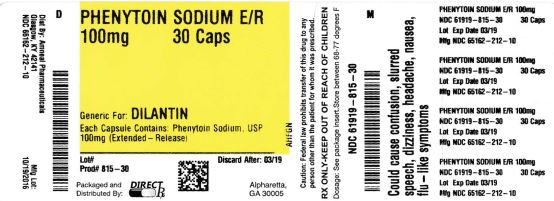
PACKAGE LABEL.PRINCIPAL DISPLAY PANEL 815
Medicare Part D spend CMS · PART D · 2026 (Q1)
About this NDC listing & data coverage
What data is (and isn’t) available for this NDC — tap to expand
| NDC identity (package / product / labeler codes) | ✓ Available |
| Labeler | ✓ Available |
| Product & package description | ✓ Available |
| Marketing category & status | ✓ Available |
| Active ingredient / dosage form / route | ✓ Available |
| FDA label (SPL via DailyMed) | ✓ Available |
| Package photos | ✓ Available |
| Inactive ingredients (structured) | — Not published for this NDC The labeler did not submit a structured excipient list, or no SPL is available. |
| NADAC pharmacy acquisition price (CMS) | — Not published for this NDC CMS publishes NADAC only for NDCs reported in its retail-pharmacy survey. |
| Orange Book / therapeutic-equivalence data | ✓ Available |
| HCPCS J-code billing crosswalk | — Not published for this NDC Most self-administered / retail products have no J-code — that is normal. |
| Medicaid utilization (CMS SDUD) | — Not published for this NDC CMS reports utilization only for NDCs with Medicaid claims above its privacy threshold. |