
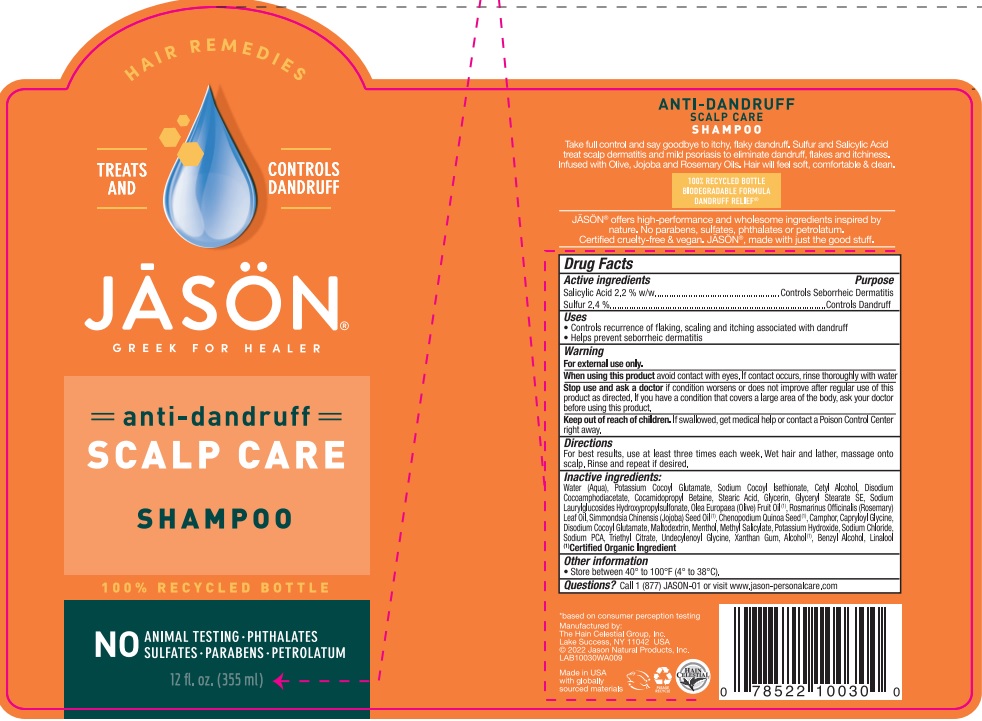
J1003005 Jason Dandruff Relief Sulfur, Salicylic Acid 2.4 g/100g; 2.2 g/100g Shampoo, 355 g
🆔 Identity & classification
Where does this data come from?
🏷️ RxNorm drug class
This medicine belongs to the Preparations containing sulfur class.
Where does this data come from?
🏭 Manufacturer & labeler
Where does this data come from?
🩺 Clinical
This is an over-the-counter shampoo containing salicylic acid and sulfur, marketed under FDA's OTC monograph rules for dandruff and scalp care products. Salicylic acid is typically used to help soften and loosen flaky, scaly skin on the scalp, while sulfur is commonly included in dandruff shampoos for similar keratolytic effects. Together, these ingredients are meant to be applied topically during shampooing to address dandruff symptoms and related scalp conditions.
Patient education
Supplement & herbal interactions
Where does this data come from?
Ask a licensed pharmacist directly — free, answered by our team.
🧪 Inactive Ingredients / Excipients
Inactive ingredients, also called excipients, are components of the drug product other than the active ingredient. They may include fillers, dyes, coatings, preservatives, flavors, or other formulation ingredients.
💡 Tap an ingredient (hover on desktop) to see what it is and why it’s used.
-
UNII 3K9958V90M
A liquid solvent derived from fermentation or chemical synthesis. In medicines, alcohol dissolves active ingredients, helps preserve the product, and improves how the body absorbs certain drugs.
-
UNII LKG8494WBH
Benzyl alcohol is a clear liquid used as a preservative and solvent in medicines. It helps prevent bacterial and fungal growth and dissolves other ingredients to create uniform liquid formulations.
-
UNII N20HL7Q941
Camphor is a waxy, aromatic substance derived from camphor tree wood or made synthetically. In medicines, it typically serves as a preservative, flavoring agent, or mild skin irritant in topical products.
-
UNII 8TY5YO42NJ
Capryloyl glycine is a mild, skin-conditioning ingredient made from a natural fatty acid and the amino acid glycine. In medicines, it acts as a surfactant and preservative booster, helping the product spread evenly and resist contamination.
-
UNII 936JST6JCN
Cetyl alcohol is a waxy, fatty substance derived from plant or animal sources. It acts as an emulsifier and thickener in medicines, helping blend oil and water components and giving products a smooth, creamy texture.
-
UNII OO4K72NZ2X
A plant-derived powder from quinoa seeds, used as a filler and binding agent to give the tablet or capsule structure and help hold its ingredients together during manufacturing and storage.
-
UNII 5OCF3O11KX
A plant-derived surfactant made from coconut oil. It helps mix oil and water ingredients together in the formulation and can improve how the medicine spreads or feels on the skin.
-
UNII 18L9G3U51M
A gentle cleansing agent derived from coconut oil. It acts as a surfactant and emulsifier, helping mix oil and water-based ingredients together and improve how the product spreads or cleanses on skin.
-
UNII MBK0CP8F5A
Disodium cocoyl glutamate is a mild cleanser derived from coconut oil and amino acids. It acts as a surfactant and emulsifier in medicines, helping to mix oil and water-based ingredients together and improve how the product spreads or absorbs.
-
UNII PDC6A3C0OX
Glycerin is a clear, thick liquid derived from plant oils or fats. It acts as a humectant to retain moisture, a sweetener, and a solvent in medications.
-
UNII FCZ5MH785I
A waxy substance made from glycerin and stearic acid. It works as an emulsifier to help mix oil and water ingredients together, and as a thickener to give the medicine its proper texture and consistency.
-
UNII 724GKU717M
Jojoba oil is a natural liquid wax extracted from jojoba plant seeds. It's used in medicines as an emollient and lubricant to soften and smooth the product, and sometimes as a carrier or penetration enhancer.
-
UNII D81QY6I88E
Linalool is a natural fragrant oil found in plants like lavender and citrus. It's used in medicines as a flavoring agent and to mask unpleasant tastes or smells.
-
UNII 7CVR7L4A2D
A starch-derived carbohydrate produced by breaking down corn, potato, or tapioca starch. It functions as a filler and binder to give the medicine bulk and texture, and sometimes as a mild sweetener or texture enhancer in powders and tablets.
-
UNII L7T10EIP3A
A cooling compound from mint plants used as a flavoring agent and to create a fresh sensation in medicines. It helps mask bitter tastes and improve how the product feels in the mouth.
-
UNII LAV5U5022Y
Methyl salicylate is a naturally derived liquid compound commonly found in wintergreen plants. In medicines, it's used as a flavoring agent and penetrating solvent to help distribute active ingredients evenly throughout topical products.
-
UNII 6UYK2W1W1E
A natural oil extracted from olives. It acts as an emollient and lubricant in formulations, helping to soften ingredients and improve how the medicine spreads or flows.
-
UNII IR5T90R7LZ
A plant-derived cleaning agent made from coconut oil and amino acids. It acts as an emulsifier and surfactant to help mix oil and water-based ingredients together in the formulation.
-
UNII WZH3C48M4T
Potassium hydroxide is a strong alkaline chemical used in medicines to adjust and maintain the pH level of liquid formulations, helping keep the product stable and the active ingredients effective.
-
UNII 8LGU7VM393
Rosemary leaf oil is a natural aromatic oil extracted from rosemary plants. It's used in medicines as a flavoring agent and preservative to help protect the product from spoilage.
-
UNII 451W47IQ8X
Sodium chloride is common table salt. It's used in medicines as a buffer to maintain proper pH, as a filler to add bulk, or to adjust the osmotic balance in liquid formulations.
-
UNII 518XTE8493
A gentle cleanser derived from coconut oil, sodium cocoyl isethionate serves as a surfactant and foaming agent in topical products. It helps the medicine spread evenly on skin and creates lather.
-
UNII Z6GFR7R72Y
A plant-derived cleaning agent used as a surfactant and emulsifier. It helps mix water and oil-based ingredients together and improves how the medicine spreads or is absorbed.
-
UNII 469OTG57A2
Sodium pyrrolidone carboxylate is a synthetic polymer derived from pyrrolidone chemistry. It functions as a solubilizer and binder in medications, helping dissolve poorly water-soluble drugs and hold tablet ingredients together.
-
UNII 4ELV7Z65AP
Stearic acid is a fatty acid derived from plant or animal sources. It acts as a binder and lubricant in tablets and capsules, helping them hold together and flow smoothly during manufacturing.
-
UNII 8Z96QXD6UM
Triethyl citrate is a clear liquid derived from citric acid. It acts as a plasticizer and solvent in tablet coatings and film formulations, helping the coating remain flexible and adhere properly to the medicine.
-
UNII 4D20464K2J
A synthetic compound derived from undecylenic acid combined with the amino acid glycine. It functions as a preservative and antimicrobial agent to help prevent contamination and extend the product's shelf life.
-
UNII 059QF0KO0R
Water is a liquid solvent that dissolves and mixes ingredients together in liquid medicines, syrups, and injections. It helps distribute the active drug evenly throughout the product.
-
UNII TTV12P4NEE
Xanthan gum is a thickening and stabilizing ingredient made from fermented corn or other sugars. It's added to medicines to improve texture, prevent separation of liquids and solids, and help the product stay consistent.
29 inactive ingredients listed in the exact product block matched to this NDC.
Label-section wording can be broader than the structured product block and may mention additional formulation ingredients.
Where does this data come from?
ingredient classCode="IACT" elements from the exact product block matched by this NDC. Label-section narrative from DailyMed / the openFDA label index is shown separately when available.Inactive ingredient FAQ
Are inactive ingredients the same for every manufacturer?
Why might an inactive ingredient be missing?
Can inactive ingredients matter?
💲 Pricing
A drug doesn't have one price. Each row is a different public payment system, and none is what you'd pay at the counter — that depends on your insurance. The ⓘ on each row explains what it measures.
| Price system | Per g | Per package |
|---|---|---|
| Retail pharmacies payNADAC · weekly | Not in the retail survey — common for institutional, discontinued, or low-volume packs. | |
| Medicaid paysCMS SDUD · 12 mo | No recent Medicaid claims on file for this NDC — rare and low-volume NDCs are suppressed in the public data. | |
| Medicare drug plans payPart D · quarterly | No Part D plan price is available for this NDC in our data. | |
Where does this data come from?
🔁 Therapeutic equivalents
| Product | Labeler | Pack | NADAC/unit | TE | Status | Price vs. this |
|---|---|---|---|---|---|---|
| J1003005 Jason Dandruff Relief 2.4 g/100g; 2.2 g/100gthis 61995-0030-08 | The | 355 g | — | — | FDA listed | — |
Where does this data come from?
⏳ Availability & generic status
We did not find an FDA-approved generic match for this exact strength, form and route.
Where does this data come from?
🔬 Reported adverse events (FAERS)
Top reported reactions
Reporter sex
Where does this data come from?
📦 Packaging — all sizes for this product
| Package NDC | Description | Marketing start | Status |
|---|---|---|---|
| 61995-0030-08 You're viewing this | 355 g in 1 BOTTLE (61995-0030-8) | 2017-11-27 | Active |
🧭 About this NDC listing & data coverage
What data is (and isn’t) available for this NDC — tap to expand
| NDC identity (package / product / labeler codes) | ✓ Available |
| Labeler | ✓ Available |
| Product & package description | ✓ Available |
| Marketing category & status | ✓ Available |
| Active ingredient / dosage form / route | ✓ Available |
| FDA label (SPL via DailyMed) | ✓ Available |
| Package photos | ✓ Available |
| Inactive ingredients (structured) | ✓ Available |
| NADAC pharmacy acquisition price (CMS) | — Not published for this NDC CMS publishes NADAC only for NDCs reported in its retail-pharmacy survey. |
| Orange Book / therapeutic-equivalence data | — Not published for this NDC Applies only to products approved under an NDA/ANDA; many listings are out of scope. |
| HCPCS J-code billing crosswalk | — Not published for this NDC Most self-administered / retail products have no J-code — that is normal. |
| Medicaid utilization (CMS SDUD) | — Not published for this NDC CMS reports utilization only for NDCs with Medicaid claims above its privacy threshold. |
Questions about this listing
Is this NDC FDA-approved?
Why is there no price listed?
Is the NDC printed on the package the same as the 11-digit billing NDC?
What do the three segments of this NDC mean?
Is this package still being marketed?
Who lists this product with the FDA?
Do I need a prescription for this product?
Where does this data come from?
📄 FDA label — Drug Facts FDA SPL
🎯 Indications and Usage ▾
Controls recurrence of flaking, scaling and itching associated with dandruff Helps prevent seborrheic dermatitis
⏱️ Dosage and Administration ▾
For best results, use at least three times each week. Wet hair and lather,massage into scalp. Rinse and repeat if desired.
⚠️ Warnings ▾
For external use only . Avoid contact with eyes.Rinse eyes throughly with water in case contact occurs.Discontinue use and consult your physician if irritation develops.
🧪 Active Ingredient ▾
Sulfur 2.4% Salicylic Acid 2.2%
🧪 Inactive Ingredients ▾
Water (Aqua), Potassium Cocoyl Glutamate, Sodium Cocoyl Isethionate, Cetyl Alcohol, Disodium Cocoamphodiacetate, Cocamidopropyl Betaine, Stearic Acid, Glycerin, Glyceryl Stearate SE, Sodium Laurylglucosides Hydroxypropylsulfonate, Olea Europaea (Olive) Fruit Oil (1), Rosmarinus Officinalis (Rosemary) Leaf Oil, Simmondsia Chinensis (Jojoba) Seed Oil (1), Chenopodium Quinoa Seed (1), Camphor, Capryloyl Glycine, Disodium Cocoyl Glutamate, Maltodextrin, Menthol, Methyl Salicylate, Potassium Hydroxide, Sodium Chloride, Sodium PCA, Triethyl Citrate, Undecylenoyl Glycine, Xanthan Gum, Alcohol (1), Benzyl Alcohol, Linalool (1) Certified Organic Ingredients
🎯 Purpose ▾
Sulfur Controls Dandruff Salicylic Acid Controls Seborrheic Dermatitis