
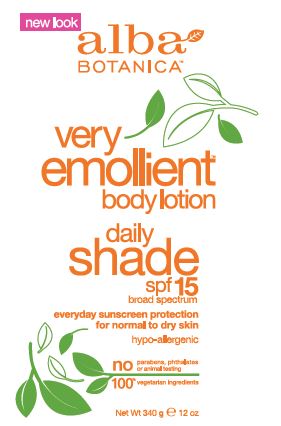
Very Emollient Body Daily Shade SPF15 Avobenzone, Homosalate, Octisalate, Octocrylene 7.5 g/100g; 5 g/100g; 3 g/100g; 2 g/100g Lotion, 340 g — NDC 61995-0371-1 (Billing 61995-0371-01)
This is a package of 340 g of Very Emollient Body Daily Shade SPF15 Avobenzone, Homosalate, Octisalate, Octocrylene 7.5 g/100g; 5 g/100g; 3 g/100g; 2 g/100g Lotion from The Hain Celestial Group, marketed since Jul 2019 and currently FDA-listed. It is this product's only package size.
NDC database record
One package, one record: these facts belong to NDC 61995-0371-1 alone.
- Record
- FDA NDC Directory package listing · Human OTC drug
- Code segments
- 61995 labeler · 0371 product · 1 package
- Package marketed since
- Jul 1, 2019
- Sample package
- No — commercial package
- Listing certified through
- Dec 31, 2026
- Barcode (UPC-A, from the NDC)
- 3 6199503711 3
- FDA record last changed
- Aug 27, 2026
Identity & classification
Regulatory identifiers FDA, NLM and CMS codes for this package
Where does this data come from?
- FDA openFDA NDC Directory · synced Oct 8, 2026
- FDA label on DailyMed · label index refreshed Oct 8, 2026
- RxNorm (NLM RxNav) · catalog refreshed Oct 1, 2026
- Medi-Span GPI (licensed)
- First Databank (licensed) · refreshed Oct 8, 2026
Clinical
This is a topical lotion sunscreen product marketed as an over-the-counter monograph drug. It contains four UV-filtering agents (avobenzone, homosalate, octisalate, and octocrylene) that are typically used together to absorb and scatter ultraviolet radiation from the sun. The product is formulated to provide broad-spectrum sun protection with an SPF of 15 and is intended for daily application to the skin as a moisturizing lotion.
Patient education
Supplement & herbal interactions
Where does this data come from?
- MedlinePlus (NLM) · refreshed Oct 8, 2026
- FDA label on DailyMed · label index refreshed Oct 8, 2026
Ask a licensed pharmacist directly — free, answered by our team.
Pricing
A drug doesn't have one price. Each row is a different public payment system, and none is what you'd pay at the counter — that depends on your insurance. The ⓘ on each row explains what it measures.
| Price system | Per g | Per package |
|---|---|---|
| Retail pharmacies payNADAC · weekly | Not in the retail survey — common for institutional, discontinued, or low-volume packs. | |
| Medicaid paysCMS SDUD · 12 mo | No recent Medicaid claims on file for this NDC — rare and low-volume NDCs are suppressed in the public data. | |
| Medicare drug plans payPart D · quarterly | No Part D plan price is available for this NDC in our data. | |
Where does this data come from?
- CMS NADAC weekly file
- CMS ASP pricing files · refreshed Sep 20, 2026
- CMS Medicaid State Drug Utilization Data · refreshed Oct 8, 2026
- CMS Part D plan pricing files · refreshed Sep 24, 2026
- VA National Acquisition Center price file
Packaging — all sizes for this product
| Package NDC | Description | Marketing start | Marketing end | Status |
|---|---|---|---|---|
| 61995-0371-01 You're viewing this Main listing | 340 g in 1 BOTTLE, PUMP | 2019-07-01 | — | Active |
Therapeutic equivalents
| Product | Labeler | Pack | NADAC/unit | TE | Status | Price vs. this |
|---|---|---|---|---|---|---|
| Very Emollient Body Daily Shade SPF15 7.5 g/100g; 5 g/100g; 3 g/100g; 2 g/100gthis 61995-0371-01 | The | 340 g | — | — | FDA listed | — |
Where does this data come from?
- FDA openFDA NDC Directory · synced Oct 8, 2026
- FDA Orange Book · refreshed Oct 3, 2026
- CMS NADAC weekly file
Availability & generic status
We did not find an FDA-approved generic match for this exact strength, form and route.
Where does this data come from?
- FDA Orange Book · refreshed Oct 3, 2026
What it looks like
Where does this data come from?
- FDA label on DailyMed · label index refreshed Oct 8, 2026
Inactive Ingredients / Excipients
Inactive ingredients, also called excipients, are components of the drug product other than the active ingredient. They may include fillers, dyes, coatings, preservatives, flavors, or other formulation ingredients.
💡 Tap an ingredient (hover on desktop) to see what it is and why it’s used.
-
UNII WC51CA3418
A fragrance compound derived from cinnamon, used as a flavoring and scent agent in medicines to improve taste and aroma.
-
UNII E9947QRR9O
A synthetic fragrance compound used as a flavoring or scent ingredient. It helps mask unpleasant tastes or odors in medicines to make them easier to take.
-
UNII 3K9958V90M
A liquid solvent derived from fermentation or chemical synthesis. In medicines, alcohol dissolves active ingredients, helps preserve the product, and improves how the body absorbs certain drugs.
-
UNII 344S277G0Z
Allantoin is a naturally derived compound that helps soften and soothe skin. In medicines, it works as a skin-conditioning agent and may help support wound healing and reduce irritation in topical formulations.
-
UNII ZY81Z83H0X
Aloe vera leaf is a plant extract derived from the aloe plant. It is used in medicines as a natural moisturizer and skin-soothing agent in topical formulations.
-
UNII PQ6CK8PD0R
Ascorbic acid, also known as vitamin C, is a white crystalline powder. It serves as an antioxidant to prevent degradation of other ingredients and may also function as a preservative in the formulation.
-
UNII 6VNO72PFC1
A natural oil extracted from avocado fruit. It's used in medicines as an emollient and carrier to help dissolve or deliver active ingredients and improve how the product feels on skin or mucous membranes.
-
UNII LKG8494WBH
Benzyl alcohol is a clear liquid used as a preservative and solvent in medicines. It helps prevent bacterial and fungal growth and dissolves other ingredients to create uniform liquid formulations.
-
UNII WAO5MNK9TU
Benzyl salicylate is a fragrant chemical compound used as a flavor and scent ingredient in medicines. It helps mask unpleasant tastes or odors in liquid or oral formulations.
-
UNII T7540GJV69
A synthetic fragrance compound used as a flavor or scent ingredient in medicines. It helps mask unpleasant tastes or odors in the formulation to make the medication more palatable.
-
UNII 936JST6JCN
Cetyl alcohol is a waxy, fatty substance derived from plant or animal sources. It acts as an emulsifier and thickener in medicines, helping blend oil and water components and giving products a smooth, creamy texture.
-
UNII A4VZ22K1WT
Coumarin is a fragrant organic compound derived from plants or made synthetically. It adds pleasant flavor and aroma to medicines and is used as a flavoring agent in some formulations.
-
UNII YY7C30VXJT
A natural plant extract from cucumber that adds flavor and freshness to medicines. It may also serve as a moisturizing agent or mild preservative in topical or oral formulations.
-
UNII 2KAG279R6R
Dehydroacetic acid is a synthetic preservative that prevents mold, yeast, and bacterial growth in medicines. It extends shelf life by protecting the product from spoilage during storage and use.
-
UNII RO266O364U
Dimethicone is a silicone-based lubricant and anti-foaming agent. It reduces friction between particles and prevents foam formation in liquid or semi-solid medicines, helping with smooth mixing and texture.
-
UNII VB06AV5US8
Echinacea angustifolia is a plant extract used as a natural flavoring or coloring agent in some medicines. It may also help preserve the product's stability or serve as a filler ingredient.
-
UNII L837108USY
Geraniol is a natural fragrant compound found in plants like roses and lemons. It's used in medicines as a flavoring agent and to improve the taste or aroma of the product.
-
UNII PDC6A3C0OX
Glycerin is a clear, thick liquid derived from plant oils or fats. It acts as a humectant to retain moisture, a sweetener, and a solvent in medications.
-
UNII FCZ5MH785I
A waxy substance made from glycerin and stearic acid. It works as an emulsifier to help mix oil and water ingredients together, and as a thickener to give the medicine its proper texture and consistency.
-
UNII 0WT12SX38S
Glycolic acid is an alpha-hydroxy acid derived from sugar cane that helps dissolve and remove dead skin cells. In topical medicines, it works as an exfoliant and pH adjuster to improve skin penetration and product effectiveness.
-
UNII 930MLC8XGG
A plant oil extracted from grape seeds, used as an emollient and solvent in medicines. It helps dissolve active ingredients and improve the texture and absorption of topical or liquid formulations.
-
UNII W2ZU1RY8B0
A plant extract from green tea leaves. It's used as an antioxidant ingredient to help preserve the medicine and maintain its stability during storage.
-
UNII FM8D1RE2VP
A plant-based oil that has been chemically hardened to stay solid at room temperature. It works as a binder and lubricant to hold tablet ingredients together and help them release properly during digestion.
-
UNII QUE43B9Z2Q
A synthetic fragrance compound used to add scent to medicines. It serves as a flavoring or aromatic agent to improve the taste or smell of the product.
-
UNII 724GKU717M
Jojoba oil is a natural liquid wax extracted from jojoba plant seeds. It's used in medicines as an emollient and lubricant to soften and smooth the product, and sometimes as a carrier or penetration enhancer.
-
UNII 33X04XA5AT
Lactic acid is a naturally occurring organic acid derived from milk or plant sources. It lowers and maintains pH in formulations, helps preserve the product, and can enhance ingredient stability and absorption.
-
UNII 51217XIL5L
A plant material derived from lavender flowers, used as a natural flavor and fragrance agent in medicines to improve taste and aroma.
-
UNII 1DI56QDM62
A natural fatty substance from soybeans that helps mix oil and water-based ingredients together. It acts as an emulsifier and lubricant in medicines to improve texture and help the product break down properly in your body.
-
UNII 9MC3I34447
A natural oil extracted from citrus peel, used as a flavoring agent and solvent to improve taste and help dissolve or distribute other ingredients in the medicine.
-
UNII D81QY6I88E
Linalool is a natural fragrant oil found in plants like lavender and citrus. It's used in medicines as a flavoring agent and to mask unpleasant tastes or smells.
-
UNII G0R4UBI2ZZ
Matricaria chamomilla, commonly known as chamomile, is a plant extract used in medicines as a flavoring agent and natural fragrance component. It may also provide mild soothing properties to the formulation.
-
UNII WV9CM0O67Z
Panthenol is a humectant and skin-conditioning agent derived from pantothenic acid. It's added to medicines to help retain moisture and soothe skin irritation.
-
UNII HIE492ZZ3T
Phenoxyethanol is a synthetic preservative and antimicrobial agent used to prevent bacterial and fungal growth in medicines and cosmetic products, extending shelf life and maintaining product safety.
-
UNII CAL22UVI4M
A synthetic emulsifier derived from sorbitol and fatty acids. It helps mix oil and water-based ingredients together and improves the texture and stability of the medicine.
-
UNII WZH3C48M4T
Potassium hydroxide is a strong alkaline chemical used in medicines to adjust and maintain the pH level of liquid formulations, helping keep the product stable and the active ingredients effective.
-
UNII 1VPU26JZZ4
Potassium sorbate is a salt derived from sorbic acid, a naturally occurring preservative. It prevents growth of mold, yeast, and some bacteria, extending the medicine's shelf life.
-
UNII 65UEH262IS
Safflower oil is a plant-based oil extracted from safflower seeds. It's used in medicines as a solvent and carrier to help dissolve or suspend active ingredients, and sometimes as an emollient to improve texture.
-
UNII QX10HYY4QV
Sesame oil is a plant-derived oil from sesame seeds. It's used in medicines as a solvent or carrier to dissolve or suspend active ingredients, helping them mix evenly throughout the formulation.
-
UNII K49155WL9Y
Shea butter is a fat extracted from shea tree nuts. It's used in medicines as an emollient and lubricant to soften the product, improve texture, and help ingredients blend smoothly together.
-
UNII OJ245FE5EU
Sodium benzoate is a salt derived from benzoic acid, a preservative. It's added to medicines to prevent growth of bacteria, fungi, and other microorganisms that could spoil the product.
-
UNII 059QF0KO0R
Water is a liquid solvent that dissolves and mixes ingredients together in liquid medicines, syrups, and injections. It helps distribute the active drug evenly throughout the product.
-
UNII TTV12P4NEE
Xanthan gum is a thickening and stabilizing ingredient made from fermented corn or other sugars. It's added to medicines to improve texture, prevent separation of liquids and solids, and help the product stay consistent.
42 inactive ingredients listed in the exact product block matched to this NDC.
Label-section wording can be broader than the structured product block and may mention additional formulation ingredients.
Where does this data come from?
ingredient classCode="IACT" elements from the exact product block matched by this NDC. Label-section narrative from DailyMed / the openFDA label index is shown separately when available.- FDA label on DailyMed · label index refreshed Oct 8, 2026
- FDA openFDA NDC Directory · synced Oct 8, 2026
Inactive ingredient FAQ
Are inactive ingredients the same for every manufacturer?
Why might an inactive ingredient be missing?
Can inactive ingredients matter?
Manufacturer & labeler
More NDCs from The Hain Celestial Group labeler code 61995
- Jason Dandruff Relief Treatment 2 in 1 Zinc Pyrithione 1 g/100g Shampoo NDC 61995-0029-2
- J1003005 Jason Dandruff Relief Sulfur, Salicylic Acid 2.4 g/100g; 2.2 g/100g Shampoo NDC 61995-0030-8
- Alba Botanica Kids SPF 50 Tropical Fruit Avobenzone, Homosalate, Octisalate, Octocrylene 7.6 g/100mL; 4.9 g/100mL; 2.9 g/100mL; 14.7 g/100mL Spray NDC 61995-0387-1
- Alba Botanica Sport SPF 50 Sunscreen Avobenzone, Homosalate, Octisalate, Octocrylene 7.6 g/100mL; 4.9 g/100mL; 2.9 g/100mL; 14.7 g/100mL Spray NDC 61995-0388-1
- Alba Botanica Hawaiian SPF 50 Coconut Avobenzone, Homosalate, Octisalate, Octocrylene 7.6 g/100mL; 4.9 g/100mL; 2.9 g/100mL; 14.7 g/100mL Spray NDC 61995-0389-1
- Avalon Organics Antidandruff Salicylic Acid 2 g/414g Shampoo NDC 61995-1606-8
- Avalon Organics Antidandruff Conditioner Salicylic Acid 2 g/397g Rinse NDC 61995-1607-8
- Alba Botanica Sheer Mineral SPF30 Zinc Oxide 24.1 g/100g Lotion NDC 61995-2033-1
Where does this data come from?
- FDA openFDA NDC Directory · synced Oct 8, 2026
- Drugs@FDA
FDA label — Drug Facts FDA SPL
🎯 Indications and Usage ▾
For sunscreen use, apply liberally 15 minutes before sun exposure. Reapply at least every 2 hours. Use water resistant sunscreen when swimming or sweating.
Children under 6 months: ask a doctor. Sun Protection Measures: Spending time in the sun increases your risk of skin cancer and early skin aging. To decrease risk, regularly use a sunscreen with Broad Spectrum SPF 15 or higher and other protective measures, including: limit time in sun, especially 10am-2pm, and wear long-sleeved shirts, pants, hats and sunglasses.
⏱️ Dosage and Administration ▾
For sunscreen use, apply liberally 15 minutes before sun exposure. Reapply at least every 2 hours. Use water resistant sunscreen when swimming or sweating. Children under 6 months: ask a doctor.
⚠️ Warnings ▾
For external use only. Do not use on damaged or broken skin. When using this product, keep out of eyes. Rinse with water to remove. Stop use and ask a doctor if skin rash occurs.
🧪 Active Ingredient ▾
Avobenzone 2.5% Homosalate 7.5% Octisalate 5.0% Octocrylene 3.0%
🧪 Inactive Ingredients ▾
Water (Aqua), Glycerin, Glyceryl Stearate SE, Carthamus Tinctorius (Safflower) Seed Oil, Cetyl Alcohol, Dimethicone, Cetearyl Alcohol, Sesamum Indicum (Sesame) Seed Oil, Butyrospermum Parkii (Shea) Butter, Persea Gratissima (Avocado) Oil, Simmondsia Chinensis (Jojoba) Seed Oil (1), Vitis Vinifera (Grape) Seed Oil, Aloe Barbadensis Leaf Juice (1), Camellia Sinensis Leaf Extract (1), Chamomilla Recutita (Matricaria) Flower Extract (1), Cucumis Sativus (Cucumber) Fruit Extract, Echinacea Angustifolia Extract (1), Lavandula Angustifolia (Lavender) Flower/Leaf/Stem Extract (1), Ascorbic Acid, Panthenol, Tocopheryl Acetate, Allantoin, Citric Acid, Glycolic Acid, Lactic Acid, Lecithin, Polysorbate 60, Potassium Hydroxide, Xanthan Gum, Alcohol (1), Benzoic Acid, Dehydroacetic Acid, Phenoxyethanol, Potassium Sorbate, Sodium Benzoate, Amyl Cinnamal, Benzyl Alcohol, Benzyl Salicylate, Butylphenyl Methylpropional, Coumarin, Geraniol, Hexyl Cinnamal, Limonene, Linalool, Fragrance (Parfum)
🎯 Purpose ▾
Sunscreen
📄 Keep Out of Reach of Children ▾
Keep out of reach of children. If swallowed, get medical help or contact a Poison Control Center right away.
📄 Package Label / Principal Display Panel ▾
PDP
Reported adverse events (FAERS)
Top reported reactions
Age at onset
Reporter sex
Serious outcomes
Where does this data come from?
About this NDC listing & data coverage
What data is (and isn’t) available for this NDC — tap to expand
| NDC identity (package / product / labeler codes) | ✓ Available |
| Labeler | ✓ Available |
| Product & package description | ✓ Available |
| Marketing category & status | ✓ Available |
| Active ingredient / dosage form / route | ✓ Available |
| FDA label (SPL via DailyMed) | ✓ Available |
| Package photos | ✓ Available |
| Inactive ingredients (structured) | ✓ Available |
| NADAC pharmacy acquisition price (CMS) | — Not published for this NDC CMS publishes NADAC only for NDCs reported in its retail-pharmacy survey. |
| Orange Book / therapeutic-equivalence data | — Not published for this NDC Applies only to products approved under an NDA/ANDA; many listings are out of scope. |
| HCPCS J-code billing crosswalk | — Not published for this NDC Most self-administered / retail products have no J-code — that is normal. |
| Medicaid utilization (CMS SDUD) | — Not published for this NDC CMS reports utilization only for NDCs with Medicaid claims above its privacy threshold. |