
Risperidone 1 mg Tablet, Film Coated, 60-count — NDC 62135-602-60 (Billing 62135-0602-60)
This is a package of 60 tablets of Risperidone 1 mg Tablet, Film Coated from Chartwell RX, LLC, marketed since May 2011 and currently FDA-listed; retail pharmacies pay about $0.0366 per tablet (NADAC). It is this product's only package size.
NDC database record
One package, one record: these facts belong to NDC 62135-602-60 alone.
- Record
- FDA NDC Directory package listing · Human prescription drug
- Code segments
- 62135 labeler · 602 product · 60 package
- Package marketed since
- Dec 29, 2023
- Sample package
- No — commercial package
- Listing certified through
- Dec 31, 2026
- Billing quantity
- 60 EA per package
- Barcode (UPC)
- 0362135605605, 0362135601607, 0362135604608, 0362135603601 +2 more
- FDA record last changed
- Jul 24, 2026
Identity & classification
Regulatory identifiers FDA, NLM and CMS codes for this package
Drug-database identifiers Medi-Span GPI and First Databank GCN / HICL / AHFS classification
- GSN (GCN sequence number): 021154
- GCN: 16136
- GPI-14 (Medi-Span): 59070070000310
- HICL (First Databank): 008721
- AHFS class code: 28:16.08.04
- RxCUI (RxNorm): 312828
Where does this data come from?
- FDA openFDA NDC Directory · synced Oct 1, 2026
- FDA label on DailyMed · label index refreshed Oct 5, 2026
- RxNorm (NLM RxNav) · catalog refreshed Oct 1, 2026
- Medi-Span GPI (licensed)
- First Databank (licensed) · refreshed Oct 1, 2026
RxNorm drug class
This medicine belongs to the Atypical Antipsychotic class.
Where does this data come from?
- RxClass (NLM) · catalog refreshed Oct 1, 2026
Clinical
Risperidone is used to treat schizophrenia (a mental illness that affects how a person thinks, feels and behaves), bipolar disorder (a disease that causes depression, mania, and other abnormal moods), and irritability symptoms (aggression, temper tantrums, mood changes) in those with autistic disorder (a developmental problem that affects how individuals communicate, learn and behave). Risperidone is in a class of medications called atypical antipsychotics. It works by changing the activity of certain natural substances in the brain.
Read the full MedlinePlus article ↗- It treats schizophrenia and bipolar I disorder. The oral forms also treat irritability linked to autistic disorder in children and adolescents. Which condition applies depends on t...
- Oral risperidone can be taken with or without food, because food doesn't change how well it's absorbed. Take it as your prescriber directed. The injections are given by a healthcar...
- Common ones include sleepiness, dizziness, restlessness, tremor, stiffness, nausea, constipation, dry mouth and weight gain. Tell your prescriber if they bother you. Don't stop on...
- Call for fever with muscle stiffness or confusion, uncontrolled movements, stroke symptoms, seizures, signs of high blood sugar like extreme thirst, or a painful erection that won'...
Patient education
Supplement & herbal interactions
Some supplements/herbs that may interact with Risperidone — tap one for details:
Where does this data come from?
- MedlinePlus (NLM) · refreshed Oct 1, 2026
- FDA label on DailyMed · label index refreshed Oct 5, 2026
Ask a licensed pharmacist directly — free, answered by our team.
Pricing
A drug doesn't have one price. Each row is a different public payment system, and none is what you'd pay at the counter — that depends on your insurance. The ⓘ on each row explains what it measures.
| Price system | Per ea | Per package |
|---|---|---|
| Retail pharmacies payNADAC · weekly | $0.037 | $2.20 / 60 tablets |
| Medicaid paysCMS SDUD · 12 mo | No recent Medicaid claims on file for this NDC — rare and low-volume NDCs are suppressed in the public data. | |
| Medicare drug plans payPart D · Q2 2026 | $0.1324 | $7.94 / 60 tablets |
Where does this data come from?
- CMS NADAC weekly file · file of Sep 30, 2026
- CMS ASP pricing files · refreshed Sep 20, 2026
- CMS Medicaid State Drug Utilization Data · refreshed Oct 5, 2026
- CMS Part D plan pricing files · refreshed Sep 24, 2026
- VA National Acquisition Center price file
Packaging — all sizes for this product
| Package NDC | Description | Marketing start | Marketing end | Status |
|---|---|---|---|---|
| 62135-0602-60 You're viewing this Main listing | 60 TABLET, FILM COATED in 1 BOTTLE | 2023-12-29 | — | Active |
Therapeutic equivalents
| Product | Labeler | Pack | NADAC/unit | TE | Status | Price vs. this |
|---|---|---|---|---|---|---|
| risperidone 1 mg 00904-7362-61 | Major | 1 tablet | $0.037 | AB | Availability likely | — |
| Risperidone 1 mg 27241-0001-06 | Ajanta | 60 tablets | $0.037 | AB | Availability likely | — |
| Risperidone 1 mg 43547-0341-06 | Solco | 60 tablets | $0.037 | AB | Availability likely | — |
| Risperidone 1 mgthis 62135-0602-60 | Chartwell | 60 tablets | $0.037 | AB | Availability likely | — |
| Risperidone 1 mg 68084-0272-01 | American | 1 tablet | $0.037 | AB | Availability likely | — |
| Risperidone 1 mg 69367-0370-05 | Westminster | 500 tablets | $0.037 | AB | Availability likely | — |
| Risperdal 1 mg 50458-0300-01 | Janssen | 100 tablets | $4.691 | AB | Availability likely | +12713% |
| Risperidone 1 mg 00615-8198-05 | NCS | 15 tablets | — | AB | FDA listed | — |
| Risperidone 1 mg 13668-0037-01 | Torrent | 100 tablets | — | AB | FDA listed | — |
| Risperidone 1 mg 42291-0910-60 | AvKARE | 60 tablets | — | AB | Discontinued | — |
| Risperidone 1 mg 42291-0976-50 | AvKARE | 500 tablets | — | AB | FDA listed | — |
| Risperidone 1 mg 43063-0254-30 | PD-Rx | 30 tablets | — | AB | FDA listed | — |
| Risperidone 1 mg 43063-0908-07 | PD-Rx | 7 tablets | — | AB | FDA listed | — |
| Risperidone 1 mg 50090-3341-00 | A-S | 30 tablets | — | AB | FDA listed | — |
| risperidone 1 mg 55154-2634-00 | Cardinal | 1 tablet | — | AB | FDA listed | — |
| Risperidone 1 mg 59746-0223-05 | Jubilant | 500 tablets | — | AB | FDA listed | — |
| Risperidone 1 mg 63187-0264-30 | Proficient | 30 tablets | — | AB | FDA listed | — |
| risperidone 1 mg 65841-0667-01 | Zydus | 100 tablets | — | AB | FDA listed | — |
| Risperidone 1 mg 67046-0635-03 | Coupler | 30 tablets | — | AB | FDA listed | — |
| Risperidone 1 mg 68071-3873-03 | NuCare | 30 tablets | — | AB | FDA listed | — |
| risperidone 1 mg 68382-0114-01 | Zydus | 100 tablets | — | AB | FDA listed | — |
| Risperidone 1 mg 69238-2110-05 | Amneal | 500 tablets | — | AB | FDA listed | — |
| Risperidone 1 mg 70518-0364-00 | REMEDYREPACK | 30 tablets | — | AB | FDA listed | — |
| Risperidone 1 mg 70518-3883-00 | REMEDYREPACK | 30 tablets | — | AB | FDA listed | — |
| Risperidone 1 mg 71335-0626-01 | Bryant | 60 tablets | — | AB | Discontinued | — |
| Risperidone 1 mg 84677-0004-05 | Golden | 500 tablets | — | AB | FDA listed | — |
Where does this data come from?
- FDA openFDA NDC Directory · synced Oct 1, 2026
- FDA Orange Book · refreshed Oct 3, 2026
- CMS NADAC weekly file · file of Sep 30, 2026
Availability & generic status
This product is an FDA-approved generic. Other versions of the same drug are listed under Therapeutic equivalents, least expensive first.
Where does this data come from?
- FDA Orange Book · refreshed Oct 3, 2026
What it looks like
Where does this data come from?
- FDA label on DailyMed · label index refreshed Oct 5, 2026
Inactive Ingredients / Excipients
Inactive ingredients, also called excipients, are components of the drug product other than the active ingredient. They may include fillers, dyes, coatings, preservatives, flavors, or other formulation ingredients.
🧪 Avoiding an ingredient? See Risperidone inactive ingredients by manufacturer: every current product's list side by side, so you can ask your pharmacy for the version that does not list it.
💡 Tap an ingredient (hover on desktop) to see what it is and why it’s used.
-
UNII 3NXW29V3WO
Hypromellose is a plant-based thickener made from cellulose. It's used in medicines as a binder to hold ingredients together, a coating for tablets, and a thickener for liquids.
-
UNII EWQ57Q8I5X
Lactose monohydrate is a natural sugar derived from milk. It serves as a filler and binder in tablets and capsules, helping create the proper size, texture, and consistency of the medicine.
-
UNII 70097M6I30
Magnesium stearate is a salt made from magnesium and stearic acid, a fatty substance. It's used in tablets and capsules as a lubricant and glidant to help ingredients flow smoothly during manufacturing and prevent sticking.
-
UNII OP1R32D61U
Microcrystalline cellulose is a purified form of cellulose, a natural fiber from plant sources. It acts as a binder and filler in tablets and capsules, helping hold ingredients together and give the medicine its shape and size.
-
UNII 3WJQ0SDW1A
Polyethylene glycol is a synthetic liquid or solid polymer used in medicines as a solvent, lubricant, and humectant. It helps dissolve active ingredients, reduces friction during manufacturing, and retains moisture in the final product.
-
UNII H8AV0SQX4D
A modified starch derived from potato or corn starch. It absorbs water quickly and helps tablets or capsules break apart and dissolve in the stomach, acting as a disintegrant to ensure the medicine releases its active ingredients properly.
-
UNII O8232NY3SJ
A plant-based carbohydrate derived from corn kernels. It acts as a filler to add bulk, a binder to hold ingredients together, and a disintegrant to help the tablet break apart in your stomach for absorption.
-
UNII 15FIX9V2JP
Titanium dioxide is a bright white mineral powder commonly used as a colorant and opacifying agent. It makes pills and tablets white or lighter in color and helps make coatings non-transparent.
8 inactive ingredients listed in the exact product block matched to this NDC.
Where does this data come from?
ingredient classCode="IACT" elements from the exact product block matched by this NDC. Label-section narrative from DailyMed / the openFDA label index is shown separately when available.- FDA label on DailyMed · label index refreshed Oct 5, 2026
- FDA openFDA NDC Directory · synced Oct 1, 2026
Inactive ingredient FAQ
Are inactive ingredients the same for every manufacturer?
Why might an inactive ingredient be missing?
Can inactive ingredients matter?
Manufacturer & labeler
More NDCs from Chartwell RX, LLC labeler code 62135
- Desipramine Hydrochloride 50 mg Tablet NDC 62135-595-12
- Desipramine Hydrochloride 75 mg Tablet NDC 62135-597-12
- Desipramine Hydrochloride 100 mg Tablet NDC 62135-598-30
- Desipramine Hydrochloride 150 mg Tablet NDC 62135-599-30
- Risperidone .25 mg Tablet, Film Coated NDC 62135-600-60
- Risperidone .5 mg Tablet, Film Coated NDC 62135-601-60
- Risperidone 2 mg Tablet, Film Coated NDC 62135-603-60
- Risperidone 3 mg Tablet, Film Coated NDC 62135-604-60
- Risperidone 4 mg Tablet, Film Coated NDC 62135-605-60
- Propylthiouracil 50 mg Tablet NDC 62135-606-90
- Acetazolamide 125 mg Tablet NDC 62135-607-12
- Acetazolamide 250 mg Tablet NDC 62135-608-12
Where does this data come from?
- FDA openFDA NDC Directory · synced Oct 1, 2026
- Drugs@FDA
Full prescribing information FDA SPL
🚨 Boxed Warning ▾
WARNING: INCREASED MORTALITY IN ELDERLY PATIENTS WITH DEMENTIA-RELATED PSYCHOSIS Elderly patients with dementia-related psychosis treated with antipsychotic drugs are at an increased risk of death. Risperidone is not approved for the treatment of patients with dementia-related psychosis. [See Warnings and Precautions (5.1) ] WARNING: INCREASED MORTALITY IN ELDERLY PATIENTS WITH DEMENTIA-RELATED PSYCHOSIS See full prescribing information for complete boxed warning. Elderly patients with dementia-related psychosis treated with antipsychotic drugs are at an increased risk of death.
Risperidone is not approved for use in patients with dementia-related psychosis. ( 5.1 )
🎯 Indications and Usage ▾
1 INDICATIONS AND USAGE Risperidone is an atypical antipsychotic indicated for: Treatment of schizophrenia ( 1.1 ) As monotherapy or adjunctive therapy with lithium or valproate, for the treatment of acute manic or mixed episodes associated with Bipolar I Disorder ( 1.2 ) Treatment of irritability associated with autistic disorder ( 1.3 )
1.1Schizophrenia Risperidone is indicated for the treatment of schizophrenia. Efficacy was established in 4 short-term trials in adults, 2 short-term trials in adolescents (ages 13 to 17 years), and one long-term maintenance trial in adults [see Clinical Studies (14.1) ] .
1.2Bipolar Mania Monotherapy Risperidone is indicated for the treatment of acute manic or mixed episodes associated with Bipolar I Disorder. Efficacy was established in 2 short-term trials in adults and one short-term trial in children and adolescents (ages 10 to 17 years) [see Clinical Studies (14.2) ] . Adjunctive Therapy Risperidone adjunctive therapy with lithium or valproate is indicated for the treatment of acute manic or mixed episodes associated with Bipolar I Disorder.
Efficacy was established in one short-term trial in adults [see Clinical Studies (14.3) ] .
1.3Irritability Associated with Autistic Disorder Risperidone is indicated for the treatment of irritability associated with autistic disorder, including symptoms of aggression towards others, deliberate self-injuriousness, temper tantrums, and quickly changing moods. Efficacy was established in 3 short-term trials in children and adolescents (ages 5 to 17 years) [see Clinical Studies (14.4) ] .
⏱️ Dosage and Administration ▾
2 DOSAGE AND ADMINISTRATION Table 1. Recommended Daily Dosage by Indication Initial Dose Titration (Increments) Target Dose Effective Dose Range Schizophrenia: adults ( 2.1 ) 2 mg 1 to 2 mg 4 to 8 mg 4 to 16 mg Schizophrenia: adolescents ( 2.2 ) 0.5 mg 0.5 to 1 mg 3 mg 1 to 6 mg Bipolar mania: adults ( 2.2 ) 2 to 3 mg 1 mg 1 to 6 mg 1 to 6 mg Bipolar mania: children and adolescents ( 2.2 ) 0.5 mg 0.5 to 1 mg 1 to 2.5 mg 1 to 6 mg Irritability in autistic disorder ( 2.3 ) 0.25 mg Can increase to 0.5 mg by Day 4: (body weight less than 20 kg) 0.5 mg Can increase to 1 mg by Day 4: (body weight greater than or equal to 20 kg) After Day 4, at intervals of greater than 2 weeks: 0.25 mg (body weight less than 20 kg) 0.5 mg (body weight greater than or equal to 20 kg) 0.5 mg: (body weight less than 20 kg) 1 mg: (body weight greater than or equal to 20 kg) 0.5 to 3 mg Severe Renal and Hepatic Impairment in Adults: use a lower starting dose of 0.5 mg twice daily.
May increase to dosages above 1.5 mg twice daily at intervals of one week or longer. Recommended daily dosage: Initial Dose Target Dose Effective Dose Range Schizophrenia: adults ( 2.1 ) 2 mg 4 to 8 mg 4 to 16 mg Schizophrenia: adolescents ( 2.1 ) 0.5 mg 3 mg 1 to 6 mg Bipolar mania: adults ( 2.2 ) 2 to 3 mg 1 to 6 mg 1 to 6 mg Bipolar mania: in children and adolescents ( 2.2 ) 0.5 mg 1 to 2.5 mg 1 to 6 mg Irritability associated with autistic disorder ( 2.3 ) 0.25 mg (Weight less than 20 kg) 0.5 mg (Weight greater than or equal to 20 kg) 0.5 mg (less than 20 kg) 1 mg (greater than or equal to 20 kg) 0.5 to 3 mg Severe Renal or Hepatic Impairment in Adults: Use a lower starting dose of 0.5 mg twice daily.
May increase to dosages above 1.5 mg twice daily at intervals of at least one week. ( 2.4 )
2.1Schizophrenia Adults Usual Initial Dose Risperidone can be administered once or twice daily. Initial dosing is 2 mg per day. May increase the dose at intervals of 24 hours or greater, in increments of 1 to 2 mg per day, as tolerated, to a recommended dose of 4 to 8 mg per day.
In some patients, slower titration may be appropriate. Efficacy has been demonstrated in a range of 4 mg to 16 mg per day. However, doses above 6 mg per day for twice daily dosing were not demonstrated to be more efficacious than lower doses, were associated with more extrapyramidal symptoms and other adverse effects, and are generally not recommended.
In a single study supporting once-daily dosing, the efficacy results were generally stronger for 8 mg than for 4 mg. The safety of doses above 16 mg per day has not been evaluated in clinical trials [see Clinical Studies (14.1) ] . Adolescents The initial dose is 0.5 mg once daily, administered as a single-daily dose in the morning or evening.
The dose may be adjusted at intervals of 24 hours or greater, in increments of 0.5 mg or 1 mg per day, as tolerated, to a recommended dose of 3 mg per day. Although efficacy has been demonstrated in studies of adolescent patients with schizophrenia at doses between 1 mg to 6 mg per day, no additional benefit was observed above 3 mg per day, and higher doses were associated with more adverse events. Doses higher than 6 mg per day have not been studied.
Patients experiencing persistent somnolence may benefit from administering half the daily dose twice daily. Maintenance Therapy While it is unknown how long a patient with schizophrenia should remain on risperidone, the effectiveness of risperidone 2 mg per day to 8 mg per day at delaying relapse was demonstrated in a controlled trial in adult patients who had been clinically stable for at least 4 weeks and were then followed for a period of 1 to 2 years [see Clinical Studies (14.1) ] . Both adult and adolescent patients who respond acutely should generally be maintained on their effective dose beyond the acute episode.
Patients should be periodically reassessed to determine the need for maintenance treatment. Reinitiation of Treatment in Patients Previously Discontinued Alth… [Excerpted — this section continues on DailyMed.]
💊 Dosage Forms and Strengths ▾
3 DOSAGE FORMS AND STRENGTHS Risperidone Tablets, USP are available in the following strengths and colors: 0.25 mg (light orange), 0.5 mg (orange), 1 mg (white), 2 mg (white), 3 mg (white), and 4 mg (white). The 0.25 mg and 0.5 mg tablets are round, and the 1 mg, 2 mg, 3 mg, and 4 mg tablets are circular. All are biconvex film coated tablets, debossed with “CE” on one side and 128, 129, 130, 131, 132 and 133, respectively, on the other side.
Tablets: 0.25 mg, 0.5 mg, 1 mg, 2 mg, 3 mg, and 4 mg ( 3 )
⛔ Contraindications ▾
4 CONTRAINDICATIONS Risperidone is contraindicated in patients with a known hypersensitivity to either risperidone or paliperidone, or to any of the excipients in the risperidone formulation. Hypersensitivity reactions, including anaphylactic reactions and angioedema, have been reported in patients treated with risperidone and in patients treated with paliperidone. Paliperidone is a metabolite of risperidone.
Known hypersensitivity to risperidone, paliperidone, or to any excipients in risperidone. ( 4 )
⚠️ Warnings and Cautions ▾
5. WARNINGS AND PRECAUTIONS Cerebrovascular events, including stroke, in elderly patients with dementia-related psychosis: risperidone is not approved for use in patients with dementia-related psychosis. ( 5.2 ) Neuroleptic Malignant Syndrome: Manage with immediate discontinuation of risperidone and close monitoring.
( 5.3 ) Tardive dyskinesia: Consider discontinuing risperidone if clinically indicated. ( 5.4 ) Metabolic Changes: Atypical antipsychotic drugs have been associated with metabolic changes that may increase cardiovascular/cerebrovascular risk. These metabolic changes include hyperglycemia, dyslipidemia, and weight gain.
( 5.5 ) Hyperglycemia and Diabetes Mellitus: Monitor patients for symptoms of hyperglycemia including polydipsia, polyuria, polyphagia, and weakness. Monitor glucose regularly in patients with diabetes or at risk for diabetes. ( 5.5 ) Dyslipidemia: Undesirable alterations have been observed in patients treated with atypical antipsychotics.
( 5.5 ) Weight Gain: Significant weight gain has been reported. Monitor weight gain. ( 5.5 ) Hyperprolactinemia: Prolactin elevations occur and persist during chronic administration.
( 5.6 ) Orthostatic hypotension: For patients at risk, consider a lower starting dose and slower titration. ( 5.7 ) Leukopenia, Neutropenia, and Agranulocytosis: Perform complete blood counts in patients with a history of clinically significant low white blood cell count (WBC). Consider discontinuing risperidone if a clinically significant decline in WBC occurs in the absence of other causative factors.
( 5.9 ) Potential for cognitive and motor impairment: Use caution when operating machinery. ( 5.10 ) Seizures: Use cautiously in patients with a history of seizures or with conditions that lower the seizure threshold. ( 5.11 )
5.1Increased Mortality in Elderly Patients with Dementia-Related Psychosis Elderly patients with dementia-related psychosis treated with antipsychotic drugs are at an increased risk of death. Analyses of 17 placebo-controlled trials (modal duration of 10 weeks), largely in patients taking atypical antipsychotic drugs, revealed a risk of death in drug-treated patients of between 1.6 to 1.7 times the risk of death in placebo-treated patients. Over the course of a typical 10-week controlled trial, the rate of death in drug-treated patients was about 4.5%, compared to a rate of about 2.6% in the placebo group.
Although the causes of death were varied, most of the deaths appeared to be either cardiovascular (e.g., heart failure, sudden death) or infectious (e.g., pneumonia) in nature. Observational studies suggest that, similar to atypical antipsychotic drugs, treatment with conventional antipsychotic drugs may increase mortality. The extent to which the findings of increased mortality in observational studies may be attributed to the antipsychotic drug as opposed to some characteristic(s) of the patients is not clear.
In two of four placebo-controlled trials in elderly patients with dementia-related psychosis, a higher incidence of mortality was observed in patients treated with furosemide plus risperidone when compared to patients treated with risperidone alone or with placebo plus furosemide. No pathological mechanism has been identified to explain this finding, and no consistent pattern for cause of death was observed. Risperidone is not approved for the treatment of dementia-related psychosis [see Boxed Warning ] .
5.2Cerebrovascular Adverse Reactions, Including Stroke, in Elderly Patients with Dementia-Related Psychosis Cerebrovascular adverse reactions (e.g., stroke, transient ischemic attack), including fatalities, were reported in patients (mean age 85 years; range 73 to 97) in trials of risperidone in elderly patients with dementia-related psychosis. In placebo-controlled trials, there was a significantly higher incidence of cerebrovascular adverse events in patients treated with risperidone compared to patients treated with placebo.
Risperidone is not app… [Excerpted — this section continues on DailyMed.]
🤒 Adverse Reactions ▾
6. ADVERSE REACTIONS The following are discussed in more detail in other sections of the labeling: Increased mortality in elderly patients with dementia-related psychosis [see Boxed Warning and Warnings and Precautions (5.1) ] Cerebrovascular adverse events, including stroke, in elderly patients with dementia-related psychosis [see Warnings and Precautions (5.2) ] Neuroleptic malignant syndrome [see Warnings and Precautions (5.3) ] Tardive dyskinesia [see Warnings and Precautions (5.4) ] Metabolic Changes (Hyperglycemia and diabetes mellitus, Dyslipidemia, and Weight Gain) [see Warnings and Precautions (5.5) ] Hyperprolactinemia [see Warnings and Precautions (5.6) ] Orthostatic hypotension [see Warnings and Precautions (5.7) ] Falls [see Warnings and Precautions (5.8) ] Leukopenia, neutropenia, and agranulocytosis [see Warnings and Precautions (5.9) ] Potential for cognitive and motor impairment [see Warnings and Precautions (5.10) ] Seizures [see Warnings and Precautions (5.11) ] Dysphagia [see Warnings and Precautions (5.12) ] Priapism [see Warnings and Precautions (5.13) ] Disruption of body temperature regulation [see Warnings and Precautions (5.14) ] The most common adverse reactions in clinical trials (greater than 5% and twice placebo) were parkinsonism, akathisia, dystonia, tremor, sedation, dizziness, anxiety, blurred vision, nausea, vomiting, upper abdominal pain, stomach discomfort, dyspepsia, diarrhea, salivary hypersecretion, constipation, dry mouth, increased appetite, increased weight, fatigue, rash, nasal congestion, upper respiratory tract infection, nasopharyngitis, and pharyngolaryngeal pain.
The most common adverse reactions that were associated with discontinuation from clinical trials (causing discontinuation in greater than 1% of adults and/or greater than 2% of pediatrics) were nausea, somnolence, sedation, vomiting, dizziness, and akathisia [see Adverse Reactions , Discontinuations Due to Adverse Reactions (6.1) ] . The data described in this section are derived from a clinical trial database consisting of 9,803 adult and pediatric patients exposed to one or more doses of risperidone for the treatment of schizophrenia, bipolar mania, autistic disorder, and other psychiatric disorders in pediatrics and elderly patients with dementia.
Of these 9,803 patients, 2,687 were patients who received risperidone while participating in double-blind, placebo-controlled trials. The conditions and duration of treatment with risperidone varied greatly and included (in overlapping categories) double-blind, fixed- and flexible-dose, placebo- or active-controlled studies and open-label phases of studies, inpatients and outpatients, and short-term (up to 12 weeks) and longer-term (up to 3 years) exposures. Safety was assessed by collecting adverse events and performing physical examinations, vital signs, body weights, laboratory analyses, and ECGs.
The most common adverse reactions in clinical trials (greater than or equal to 5% and twice placebo) were parkinsonism, akathisia, dystonia, tremor, sedation, dizziness, anxiety, blurred vision, nausea, vomiting, upper abdominal pain, stomach discomfort, dyspepsia, diarrhea, salivary hypersecretion, constipation, dry mouth, increased appetite, increased weight, fatigue, rash, nasal congestion, upper respiratory tract infection, nasopharyngitis, and pharyngolaryngeal pain. ( 6 ) To report SUSPECTED ADVERSE REACTIONS, contact Chartwell RX, LLC at 1-845-232-1683 or FDA at 1-800-FDA-1088 or www.fda.gov/medwatch .
6.1Clinical Trials Experience Because clinical trials are conducted under widely varying conditions, adverse reaction rates observed in the clinical trials of a drug cannot be directly compared to rates in the clinical trials of another drug and may not reflect the rates observed in clinical practice. Commonly-Observed Adverse Reactions in Double-Blind, Placebo-Controlled Clinical Trials – Schizophrenia Adult Patients with Schizophrenia Table 8 lists the adverse reactions… [Excerpted — this section continues on DailyMed.]
🔄 Drug Interactions ▾
7. DRUG INTERACTIONS Carbamazepine and other enzyme inducers decrease plasma concentrations of risperidone. Increase the risperidone dose up to double the patient’s usual dose. Titrate slowly. ( 7.1 ) Fluoxetine, paroxetine, and other CYP 2D6 enzyme inhibitors increase plasma concentrations of risperidone. Reduce the initial dose. Do not exceed a final dose of 8 mg per day of risperidone. ( 7.1 )
7.1Pharmacokinetic-related Interactions The dose of risperidone should be adjusted when used in combination with CYP2D6 enzyme inhibitors (e.g., fluoxetine, and paroxetine) and enzyme inducers (e.g., carbamazepine) [see Table 18 and Dosage and Administration (2.5) ] . Dose adjustment is not recommended for risperidone when co-administered with ranitidine, cimetidine, amitriptyline, or erythromycin [see Table 18]. Table 18.
Summary of Effect of Coadministered Drugs on Exposure to Active Moiety (Risperidone + 9-Hydroxy-Risperidone) in Healthy Subjects or Patients with Schizophrenia Coadministered Drug Dosing Schedule Effect on Active Moiety (Risperidone + 9-Hydroxy-Risperidone (Ratio*) Risperidone Dose Recommendation Coadministered Drug Risperidone AUC C max Enzyme (CYP2D6) Inhibitors Fluoxetine 20 mg/day 2 or 3 mg twice daily 1.4
1.5Re-evaluate dosing. Do not exceed 8 mg/day Paroxetine 10 mg/day 4 mg/day 1.3 - Re-evaluate dosing. Do not exceed 8 mg/day 20 mg/day 4 mg/day 1.6 - 40 mg/day 4 mg/day 1.8 - Enzyme (CYP3A/ PgP inducers) Inducers Carbamazepine 573 ± 168 mg/day 3 mg twice daily 0.51
0.55Titrate dose upwards. Do not exceed twice the patient’s usual dose Enzyme (CYP3A) Inhibitors Ranitidine 150 mg twice daily 1 mg single dose 1.2
1.4Dose adjustment not needed Cimetidine 400 mg twice daily 1 mg single dose 1.1
1.3Dose adjustment not needed Erythromycin 500 mg four times daily 1 mg single dose 1.1
0.94Dose adjustment not needed Other Drugs Amitriptyline 50 mg twice daily 3 mg twice daily 1.2
1.1Dose adjustment not needed *Change relative to reference Effect of Risperidone on Other Drugs Lithium Repeated oral doses of risperidone (3 mg twice daily) did not affect the exposure (AUC) or peak plasma concentrations (C max ) of lithium (n=13). Dose adjustment for lithium is not recommended. Valproate Repeated oral doses of risperidone (4 mg once daily) did not affect the pre-dose or average plasma concentrations and exposure (AUC) of valproate (1,000 mg/day in three divided doses) compared to placebo (n=21).
However, there was a 20% increase in valproate peak plasma concentration (C max ) after concomitant administration of risperidone. Dose adjustment for valproate is not recommended. Digoxin Risperidone (0.25 mg twice daily) did not show a clinically relevant effect on the pharmacokinetics of digoxin.
Dose adjustment for digoxin is not recommended.
7.2Pharmacodynamic-related Interactions Centrally Acting Drugs and Alcohol Given the primary CNS effects of risperidone, caution should be used when risperidone is taken in combination with other centrally acting drugs and alcohol. Drugs with Hypotensive Effects Because of its potential for inducing hypotension, risperidone may enhance the hypotensive effects of other therapeutic agents with this potential. Levodopa and Dopamine Agonists Risperidone may antagonize the effects of levodopa and dopamine agonists.
Methylphenidate Concomitant use with methylphenidate, when there is change in dosage of either medication, may increase the risk of extrapyramidal symptoms (EPS). Monitor for symptoms of EPS with concomitant use of risperidone and methylphenidate [See Adverse Reactions (6.2) ]. Clozapine Chronic administration of clozapine with risperidone may decrease the clearance of risperidone.
👥 Use in Specific Populations ▾
8. USE IN SPECIFIC POPULATIONS Pregnancy: May cause extrapyramidal and/or withdrawal symptoms in neonates with third trimester exposure. ( 8.1 )
8.1Pregnancy Pregnancy Exposure Registry There is a pregnancy exposure registry that monitors pregnancy outcomes in women exposed to atypical antipsychotics, including risperidone, during pregnancy. Healthcare providers are encouraged to register patients by contacting the National Pregnancy Registry for Atypical Antipsychotics at 1-866-961-2388 or online at http://womensmentalhealth.org/clinical-and-research-programs/pregnancyregistry/. Risk Summary Neonates exposed to antipsychotic drugs during the third trimester of pregnancy are at risk for extrapyramidal and/or withdrawal symptoms following delivery (see Clinical Considerations ) .
Overall, available data from published epidemiologic studies of pregnant women exposed to risperidone have not established a drug-associated risk of major birth defects, miscarriage, or adverse maternal or fetal outcomes (see Data ) . There are risks to the mother associated with untreated schizophrenia or bipolar I disorder and with exposure to antipsychotics, including risperidone, during pregnancy (see Clinical Considerations ) . Oral administration of risperidone to pregnant mice caused cleft palate at doses 3 to 4 times the maximum recommended human dose (MRHD) with maternal toxicity observed at 4-times MRHD based on mg/m 2 body surface area.
Risperidone was not teratogenic in rats or rabbits at doses up to 6-times the MRHD based on mg/m 2 body surface area. Increased still births and decreased birth weight occurred after oral risperidone administration to pregnant rats at 1.5-times the MRHD based on mg/m 2 body surface area. Learning was impaired in offspring of rats when the dams were dosed at 0.6-times the MRHD and offspring mortality increased at doses 0.1 to 3 times the MRHD based on mg/m 2 body surface area.
The estimated background risk of major birth defects and miscarriage for the indicated population is unknown. All pregnancies have a background risk of birth defect, loss, or other adverse outcomes. In the U.S. general population, the estimated background risk of major birth defects and miscarriage in clinically recognized pregnancies is 2 to 4% and 15 to 20%, respectively.
Clinical Considerations Disease-associated maternal and/or embryo/fetal risk There is a risk to the mother from untreated schizophrenia or bipolar I disorder, including increased risk of relapse, hospitalization, and suicide. Schizophrenia and bipolar I disorder are associated with increased adverse perinatal outcomes, including preterm birth. It is not known if this is a direct result of the illness or other comorbid factors.
Fetal/Neonatal Adverse Reactions Extrapyramidal and/or withdrawal symptoms, including agitation, hypertonia, hypotonia, tremor, somnolence, respiratory distress, and feeding disorder have been reported in neonates who were exposed to antipsychotic drugs, including risperidone, during the third trimester of pregnancy. These symptoms have varied in severity. Monitor neonates for extrapyramidal and/or withdrawal symptoms and manage symptoms appropriately.
Some neonates recovered within hours or days without specific treatment; others required prolonged hospitalization. Data Human Data Published data from observational studies, birth registries, and case reports on the use of atypical antipsychotics during pregnancy do not report a clear association with antipsychotics and major birth defects. A prospective observational study including 6 women treated with risperidone demonstrated placental passage of risperidone.
A retrospective cohort study from a Medicaid database of 9,258 women exposed to antipsychotics during pregnancy did not indicate an overall increased risk for major birth defects. There was a small increase in the risk of major birth defects (RR=1.26, 95% CI 1.02–1.56) and of cardiac malformations (RR=1.26, 95% CI 0.88–1.81) in a subgrou… [Excerpted — this section continues on DailyMed.]
🆘 Overdosage ▾
10. OVERDOSAGE
10.1Human Experience Premarketing experience included eight reports of acute risperidone overdosage with estimated doses ranging from 20 to 300 mg and no fatalities. In general, reported signs and symptoms were those resulting from an exaggeration of the drug's known pharmacological effects, i.e., drowsiness and sedation, tachycardia and hypotension, and extrapyramidal symptoms. One case, involving an estimated overdose of 240 mg, was associated with hyponatremia, hypokalemia, prolonged QT, and widened QRS.
Another case, involving an estimated overdose of 36 mg, was associated with a seizure. Postmarketing experience includes reports of acute risperidone overdosage, with estimated doses of up to 360 mg. In general, the most frequently reported signs and symptoms are those resulting from an exaggeration of the drug's known pharmacological effects, i.e., drowsiness, sedation, tachycardia, hypotension, and extrapyramidal symptoms.
Other adverse reactions reported since market introduction related to risperidone overdose include prolonged QT interval and convulsions. Torsade de pointes has been reported in association with combined overdose of risperidone and paroxetine.
10.2Management of Overdosage For the most up to date information on the management of risperidone overdosage, contact a certified poison control center (1-800-222-1222 or www.poison.org). Provide supportive care including close medical supervision and monitoring. Treatment should consist of general measures employed in the management of overdosage with any drug.
Consider the possibility of multiple drug overdosage. Ensure an adequate airway, oxygenation, and ventilation. Monitor cardiac rhythm and vital signs.
Use supportive and symptomatic measures. There is no specific antidote to risperidone.
🧬 Clinical Pharmacology ▾
12. CLINICAL PHARMACOLOGY
12.1Mechanism of Action The mechanism of action of risperidone in schizophrenia is unclear. The drug's therapeutic activity in schizophrenia could be mediated through a combination of dopamine Type 2 (D 2 ) and serotonin Type 2 (5HT 2 ) receptor antagonism. The clinical effect from risperidone results from the combined concentrations of risperidone and its major metabolite, 9-hydroxyrisperidone (paliperidone) [see Clinical Pharmacology (12.3) ] .
Antagonism at receptors other than D 2 and 5HT 2 may explain some of the other effects of risperidone [see Clinical Pharmacology (12.1) ] .
12.2Pharmacodynamics Risperidone is a monoaminergic antagonist with high affinity (Ki of 0.12 to 7.3 nM) for the serotonin Type 2 (5HT 2 ), dopamine Type 2 (D 2 ), α 1 and α 2 adrenergic, and H 1 histaminergic receptors. Risperidone showed low to moderate affinity (Ki of 47 to 253 nM) for the serotonin 5HT 1C , 5HT 1D , and 5HT 1A receptors, weak affinity (Ki of 620 to 800 nM) for the dopamine D 1 and haloperidol-sensitive sigma site, and no affinity (when tested at concentrations greater than 10 -5 M) for cholinergic muscarinic or β 1 and β 2 adrenergic receptors.
12.3Pharmacokinetics Absorption Risperidone is well absorbed. The absolute oral bioavailability of risperidone is 70% (CV=25%). The relative oral bioavailability of risperidone from a tablet is 94% (CV=10%) when compared to a solution.
Pharmacokinetic studies showed that risperidone orally disintegrating tablets and risperidone oral solution are bioequivalent to risperidone tablets. Plasma concentrations of risperidone, its major metabolite, 9-hydroxyrisperidone, and risperidone plus 9-hydroxyrisperidone are dose proportional over the dosing range of 1 to 16 mg daily (0.5 to 8 mg twice daily). Following oral administration of solution or tablet, mean peak plasma concentrations of risperidone occurred at about 1 hour.
Peak concentrations of 9-hydroxyrisperidone occurred at about 3 hours in extensive metabolizers, and 17 hours in poor metabolizers. Steady-state concentrations of risperidone are reached in 1 day in extensive metabolizers and would be expected to reach steady-state in about 5 days in poor metabolizers. Steady-state concentrations of 9-hydroxyrisperidone are reached in 5 to 6 days (measured in extensive metabolizers).
Food Effect Food does not affect either the rate or extent of absorption of risperidone. Thus, risperidone can be given with or without meals. Distribution Risperidone is rapidly distributed.
The volume of distribution is 1 to 2 L/kg. In plasma, risperidone is bound to albumin and α 1 -acid glycoprotein. The plasma protein binding of risperidone is approximately 90%, and that of its major metabolite, 9-hydroxyrisperidone, is 77%.
Neither risperidone nor 9-hydroxyrisperidone displaces each other from plasma binding sites. High therapeutic concentrations of sulfamethazine (100 mcg/mL), warfarin (10 mcg/mL), and carbamazepine (10 mcg/mL) caused only a slight increase in the free fraction of risperidone at 10 ng/mL and 9-hydroxyrisperidone at 50 ng/mL, changes of unknown clinical significance. Elimination Metabolism Risperidone is extensively metabolized in the liver.
The main metabolic pathway is through hydroxylation of risperidone to 9-hydroxyrisperidone by the enzyme, CYP 2D6. A minor metabolic pathway is through N -dealkylation. The main metabolite, 9-hydroxyrisperidone, has similar pharmacological activity as risperidone.
Consequently, the clinical effect of the drug results from the combined concentrations of risperidone plus 9-hydroxyrisperidone. CYP 2D6, also called debrisoquin hydroxylase, is the enzyme responsible for metabolism of many neuroleptics, antidepressants, antiarrhythmics, and other drugs. CYP 2D6 is subject to genetic polymorphism (about 6%-8% of Caucasians, and a very low percentage of Asians, have little or no activity and are “poor metabolizers”) and to inhibition by a variety of substrates and some non-substra… [Excerpted — this section continues on DailyMed.]
📦 How Supplied / Storage and Handling ▾
16 HOW SUPPLIED/STORAGE AND HANDLING
16.1How Supplied Risperidone Tablets, USP 0.25 mg are available as light orange, round, biconvex film coated tablets, debossed with “ CE ” on one side and “ 128 ” on other side, packaged as follows: Bottles of 60: (NDC - 62135-600-60) Risperidone Tablets, USP 0.5 mg are available as orange, round, biconvex film coated tablets, debossed with “ CE ” on one side and “ 129 ” on other side, packaged as follows: Bottles of 60: (NDC- 62135-601-60) Risperidone Tablets, USP 1 mg are available as white color, circular, biconvex film coated tablets, debossed with “ CE ” on one side and “ 130 ” on other side, packaged as follows: Bottles of 60: (NDC- 62135-602-60) Risperidone Tablets, USP 2 mg are available as white color, circular, biconvex film coated tablets, debossed with “ CE ” on one side and “ 131 ” on other side, packaged as follows: Bottles of 60: (NDC- 62135-603-60) Risperidone Tablets, USP 3 mg are available as white color, circular, biconvex film coated tablets, debossed with “ CE ” on one side and “ 132 ” on other side, packaged as follows: Bottles of 60: (NDC- 62135-604-60) Risperidone Tablets, USP 4 mg are available as white color, circular, biconvex film coated tablets, debossed with “ CE ” on one side and “ 133 ” on other side, packaged as follows: Bottles of 60: (NDC- 62135-605-60)
16.2Storage and Handling PHARMACIST: Dispense in a tight, light-resistant container as defined in the USP. Use child-resistant closure (as required). Store at 20º to 25ºC (68º to 77ºF) [See USP Controlled Room Temperature]. PROTECT FROM LIGHT AND MOISTURE KEEP THIS AND ALL MEDICATIONS OUT OF THE REACH OF CHILDREN.
📋 Description ▾
11. DESCRIPTION Risperidone Tablets, USP contains risperidone, an atypical antipsychotic belonging to the chemical class of benzisoxazole derivatives. The chemical designation is 3-[2-[4-(6-fluoro-1,2-benzisoxazol-3-yl)-1-piperidinyl]ethyl]-6,7,8,9-tetrahydro-2-methyl-4H-pyrido[1,2-a]pyrimidin-4-one.
Its molecular formula is C 23 H 27 FN 4 O 2 and its molecular weight is 410.49. The structural formula is: Risperidone is a white to slightly beige powder. It is practically insoluble in water, freely soluble in methylene chloride, and soluble in methanol and
0.1N HCl. Risperidone Tablets, USP are available in 0.25 mg (light orange), 0.5 mg (orange), 1 mg (white), 2 mg (white), 3 mg (white), and 4 mg (white) strengths. Each tablet for oral administration contains the following inactive ingredients: corn starch, hypromellose, lactose monohydrate, magnesium stearate, microcrystalline cellulose, polyethylene glycol, sodium starch glycolate and titanium dioxide.
In addition the 0.25 mg and 0.5 mg also contain FD&C yellow #6. image description
💬 Information for Patients ▾
17 PATIENT COUNSELING INFORMATION Physicians are advised to discuss the following issues with patients for whom they prescribe risperidone. Neuroleptic Malignant Syndrome (NMS) Counsel patients about a potentially fatal adverse reaction, Neuroleptic Malignant Syndrome (NMS), that has been reported in association with administration of antipsychotic drugs. Advise patients, family members, or caregivers to contact the healthcare provider or report to the emergency room if they experience signs and symptoms of NMS, including hyperpyrexia, muscle rigidity, altered mental status including delirium, and evidence of autonomic instability (irregular pulse or blood pressure, tachycardia, diaphoresis, and cardiac dysrhythmia) [see Warnings and Precautions (5.3) ].
Tardive Dyskinesia Counsel patients on the signs and symptoms of tardive dyskinesia and to contact their healthcare provider if these abnormal movements occur [see Warnings and Precautions (5.4) ]. Metabolic Changes Educate patients about the risk of metabolic changes, how to recognize symptoms of hyperglycemia and diabetes mellitus, and the need for specific monitoring, including blood glucose, lipids, and weight [see Warnings and Precautions (5.5) ]. Orthostatic Hypotension Educate patients about the risk of orthostatic hypotension and syncope, particularly at the time of initiating treatment, re-initiating treatment, or increasing the dose [see Warnings and Precautions (5.7) ].
Leukopenia/Neutropenia Advise patients with a pre-existing low WBC or a history of drug induced leukopenia/neutropenia they should have their CBC monitored while taking risperidone [see Warnings and Precautions (5.9) ]. Hyperprolactinemia Counsel patients on signs and symptoms of hyperprolactinemia that may be associated with chronic use of risperidone. Advise them to seek medical attention if they experience any of the following: amenorrhea or galactorrhea in females, erectile dysfunction or gynecomastia in males. [see Warnings and Precautions (5.6) ].
Interference with Cognitive and Motor Performance Caution patients about performing activities requiring mental alertness, such as operating hazardous machinery, or operating a motor vehicle until they are reasonably certain that risperidone therapy does not affect them adversely [see Warnings and Precautions (5.10) ]. Priapism Advise patients of the possibility of painful or prolonged penile erections (priapism). Instruct the patient to seek immediate medical attention in the event of priapism [see Warnings and Precautions (5.13) ].
Heat Exposure and Dehydration Counsel patients regarding appropriate care in avoiding overheating and dehydration [see Warnings and Precautions (5.14) ]. Concomitant Medication Advise patients to inform their healthcare providers if they are taking, or plan to take any prescription or over-the-counter drugs, as there is a potential for interactions [see Drug Interactions (7) ] . Alcohol Advise patients to avoid alcohol while taking risperidone [see Drug Interactions (7.2) ] .
Pregnancy Advise patients to notify their healthcare provider if they become pregnant or intend to become pregnant during treatment with risperidone. Advise patients that risperidone may cause extrapyramidal and/or withdrawal symptoms in a neonate. Advise patients that there is a pregnancy registry that monitors pregnancy outcomes in women exposed to risperidone during pregnancy [see Use in Specific Populations (8.1) ] .
Lactation Advise breastfeeding women using risperidone to monitor infants for somnolence, failure to thrive, jitteriness, and extrapyramidal symptoms (tremors and abnormal muscle movements) and to seek medical care if they notice these signs [see Use in Specific Populations (8.2) ] . Infertility Advise females of reproductive potential that risperidone may impair fertility due to an increase in serum prolactin levels. The effects on fertility are reversible [see Use in Specific Populations (8.3) ] .
Manufactured for: Chartwell RX, LL… [Excerpted — this section continues on DailyMed.]
🔬 Clinical Studies ▾
14. CLINICAL STUDIES
14.1Schizophrenia Adults Short-Term Efficacy The efficacy of risperidone in the treatment of schizophrenia was established in four short-term (4- to 8-week) controlled trials of psychotic inpatients who met DSM-III-R criteria for schizophrenia. Several instruments were used for assessing psychiatric signs and symptoms in these studies, among them the Brief Psychiatric Rating Scale (BPRS), a multi-item inventory of general psychopathology traditionally used to evaluate the effects of drug treatment in schizophrenia.
The BPRS psychosis cluster (conceptual disorganization, hallucinatory behavior, suspiciousness, and unusual thought content) is considered a particularly useful subset for assessing actively psychotic schizophrenic patients. A second traditional assessment, the Clinical Global Impression (CGI), reflects the impression of a skilled observer, fully familiar with the manifestations of schizophrenia, about the overall clinical state of the patient. In addition, the Positive and Negative Syndrome Scale (PANSS) and the Scale for Assessing Negative Symptoms (SANS) were employed.
The results of the trials follow: (1) In a 6-week, placebo-controlled trial (n=160) involving titration of risperidone in doses up to 10 mg/day (twice-daily schedule), risperidone was generally superior to placebo on the BPRS total score, on the BPRS psychosis cluster, and marginally superior to placebo on the SANS. (2) In an 8-week, placebo-controlled trial (n=513) involving 4 fixed doses of risperidone (2 mg/day, 6 mg/day, 10 mg/day, and 16 mg/day, on a twice-daily schedule), all 4 risperidone groups were generally superior to placebo on the BPRS total score, BPRS psychosis cluster, and CGI severity score; the 3 highest risperidone dose groups were generally superior to placebo on the PANSS negative subscale.
The most consistently positive responses on all measures were seen for the 6 mg dose group, and there was no suggestion of increased benefit from larger doses. (3) In an 8-week, dose comparison trial (n=1,356) involving 5 fixed doses of risperidone (1 mg/day, 4 mg/day, 8 mg/day, 12 mg/day, and 16 mg/day, on a twice-daily schedule), the four highest risperidone dose groups were generally superior to the 1 mg risperidone dose group on BPRS total score, BPRS psychosis cluster, and CGI severity score. None of the dose groups were superior to the 1 mg group on the PANSS negative subscale.
The most consistently positive responses were seen for the 4 mg dose group. (4) In a 4-week, placebo-controlled dose comparison trial (n=246) involving 2 fixed doses of risperidone (4 and 8 mg/day on a once-daily schedule), both risperidone dose groups were generally superior to placebo on several PANSS measures, including a response measure (greater than 20% reduction in PANSS total score), PANSS total score, and the BPRS psychosis cluster (derived from PANSS). The results were generally stronger for the 8 mg than for the 4 mg dose group.
Long-Term Efficacy In a longer-term trial, 365 adult outpatients predominantly meeting DSM-IV criteria for schizophrenia and who had been clinically stable for at least 4 weeks on an antipsychotic medication were randomized to risperidone (2 to 8 mg/day) or to an active comparator, for 1 to 2 years of observation for relapse. Patients receiving risperidone experienced a significantly longer time to relapse over this time period compared to those receiving the active comparator. Pediatrics The efficacy of risperidone in the treatment of schizophrenia in adolescents aged 13 to 17 years was demonstrated in two short-term (6 and 8 weeks), double-blind controlled trials.
All patients met DSM-IV diagnostic criteria for schizophrenia and were experiencing an acute episode at time of enrollment. In the first trial (study #1), patients were randomized into one of three treatment groups: risperidone 1 to 3 mg/day (n = 55, mean modal dose = 2.6 mg), risperidone 4-6 mg/day (n = 51, mean modal dose = 5.3 mg), or place… [Excerpted — this section continues on DailyMed.]
🔒 Drug Abuse and Dependence ▾
9. DRUG ABUSE AND DEPENDENCE
9.1Controlled Substance Risperidone is not a controlled substance.
9.2Abuse Risperidone has not been systematically studied in animals or humans for its potential for abuse. While the clinical trials did not reveal any tendency for any drug-seeking behavior, these observations were not systematic and it is not possible to predict on the basis of this limited experience the extent to which a CNS-active drug will be misused, diverted, and/or abused once marketed. Consequently, patients should be evaluated carefully for a history of drug abuse, and such patients should be observed closely for signs of risperidone misuse or abuse (e.g., development of tolerance, increases in dose, drug-seeking behavior).
9.3Dependence Risperidone has not been systematically studied in animals or humans for its potential for tolerance or physical dependence.
🧪 Nonclinical Toxicology ▾
13. NONCLINICAL TOXICOLOGY
13.1Carcinogenesis, Mutagenesis, Impairment of Fertility Carcinogenesis Risperidone was administered in the diet at doses of 0.63, 2.5, and 10 mg/kg for 18 months to mice and for 25 months to rats. These doses are equivalent to approximately 0.2, 0.75, and 3 times (mice) and 0.4, 1.5, and 6 times (rats) the MRHD of 16 mg/day, based on mg/m 2 body surface area. A maximum tolerated dose was not achieved in male mice.
There were statistically significant increases in pituitary gland adenomas, endocrine pancreas adenomas, and mammary gland adenocarcinomas. The table below summarizes the multiples of the human dose on a mg/m 2 (mg/kg) basis at which these tumors occurred. Multiples of Maximum Human Dose in mg/m 2 (mg/kg) Tumor Type Species Sex Lowest Effect Level Highest No-Effect Level Pituitary adenomas mouse female 0.75 (9.4) 0.2 (2.4) Endocrine pancreas adenomas rat male 1.5 (9.4) 0.4 (2.4) Mammary gland adenocarcinomas mouse female 0.2 (2.4) none rat female 0.4 (2.4) none rat male 6.0 (37.5) 1.5 (9.4) Mammary gland neoplasm, Total rat male 1.5 (9.4) 0.4 (2.4) Antipsychotic drugs have been shown to chronically elevate prolactin levels in rodents.
Serum prolactin levels were not measured during the risperidone carcinogenicity studies; however, measurements during subchronic toxicity studies showed that risperidone elevated serum prolactin levels 5-6 fold in mice and rats at the same doses used in the carcinogenicity studies. An increase in mammary, pituitary, and endocrine pancreas neoplasms has been found in rodents after chronic administration of other antipsychotic drugs and is considered to be prolactin-mediated. The relevance for human risk of the findings of prolactin-mediated endocrine tumors in rodents is unclear [see Warnings and Precautions (5.6) ] .
Mutagenesis No evidence of mutagenic or clastogenic potential for risperidone was found in the in vitro tests of Ames gene mutation, the mouse lymphoma assay, rat hepatocyte DNA-repair assay, the chromosomal aberration test in human lymphocytes, Chinese hamster ovary cells, or in the in vivo oral micronucleus test in mice and the sex-linked recessive lethal test in Drosophila . Impairment of Fertility Oral risperidone (0.16 to 5 mg/kg) impaired mating, but not fertility, in rat reproductive studies at doses 0.1 to 3 times the MRHD of 16 mg/day based on mg/m 2 body surface area.
The effect appeared to be in females, since impaired mating behavior was not noted in the male fertility study. In a subchronic study in Beagle dogs in which risperidone was administered orally at doses of 0.31 to 5 mg/kg, sperm motility and concentration were decreased at doses 0.6 to 10 times the MRHD based on mg/m 2 body surface area. Dose-related decreases were also noted in serum testosterone at the same doses.
Serum testosterone and sperm parameters partially recovered, but remained decreased after treatment was discontinued. A no-effect dose could not be determined in either rat or dog.
📄 Package Label / Principal Display Panel ▾
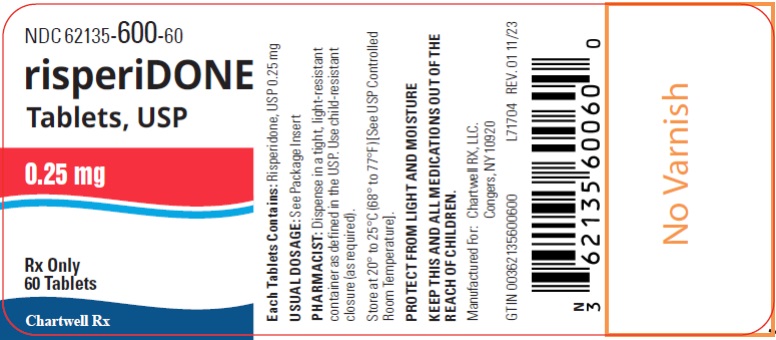
PACKAGE LABEL.PRINCIPAL DISPLAY PANEL risperiDONE Tablets, USP 0.25 mg - NDC 62135-600-60 - 60's Bottle Label risperiDONE Tablets, USP 0.5 mg - NDC 62135-601-60 - 60's Bottle Label risperiDONE Tablets, USP 1 mg - NDC 62135-602-60 - 60's Bottle Label risperiDONE Tablets, USP 2 mg - NDC 62135-603-60 - 60's Bottle Label risperiDONE Tablets, USP 3 mg - NDC 62135-604-60 - 60's Bottle Label risperiDONE Tablets, USP 4 mg - NDC 62135-605-60 - 60's Bottle Label image description image description image description image description image description image description