
Methylprednisolone 4 mg Tablet, 21-count — NDC 62135-760-21 (Billing 62135-0760-21)
This is a package of 21 tablets of Methylprednisolone 4 mg Tablet from Chartwell RX, LLC, marketed since Feb 2019 and currently FDA-listed; retail pharmacies pay about $0.1211 per tablet (NADAC).
NDC database record
One package, one record: these facts belong to NDC 62135-760-21 alone.
- Record
- FDA NDC Directory package listing · Human prescription drug
- Code segments
- 62135 labeler · 760 product · 21 package
- Package marketed since
- May 14, 2024
- Sample package
- No — commercial package
- Listing certified through
- Dec 31, 2026
- Billing quantity
- 21 EA per package
- Barcode (UPC)
- 0362135763268, 0362135760212, 0362135761264, 0362135762506 +2 more
- FDA record last changed
- Jul 24, 2026
Other active recalls for Methylprednisolone (different manufacturers) — 1 · tap to view
Identity & classification
Regulatory identifiers FDA, NLM and CMS codes for this package
Drug-database identifiers Medi-Span GPI and First Databank GCN / HICL / AHFS classification
- GSN (GCN sequence number): 006741
- GCN: 27056
- GPI-14 (Medi-Span): 22100030000310
- HICL (First Databank): 002877
- AHFS class code: 68:04.00.00
- RxCUI (RxNorm): 197969
Where does this data come from?
- FDA openFDA NDC Directory · synced Oct 1, 2026
- FDA label on DailyMed · label index refreshed Oct 6, 2026
- RxNorm (NLM RxNav) · catalog refreshed Oct 1, 2026
- Medi-Span GPI (licensed)
- First Databank (licensed) · refreshed Oct 1, 2026
RxNorm drug class
This medicine belongs to the Corticosteroid class.
Where does this data come from?
- RxClass (NLM) · catalog refreshed Oct 1, 2026
Clinical
- It is a steroid that calms inflammation and allergic reactions. Depending on the product, it is used for allergic conditions, skin diseases, adrenal gland problems, and (as tablets...
- Take the tablets by mouth exactly as your prescriber directs. The dose depends on your condition and how you respond. Your prescriber may lower it step by step. Injections are give...
- Steroids can increase appetite and weight, cause fluid retention, trouble sleeping, mood swings, acne, thin skin, and slower wound healing. Call your doctor if you notice signs of...
- If you have taken it for a long time, do not stop suddenly. Steroids can suppress your body’s own steroid production, so your prescriber will lower the dose gradually.
Patient education
Supplement & herbal interactions
Some supplements/herbs that may interact with Methylprednisolone — tap one for details:
Methylprednisolone may be associated with lower levels of 9 nutrients — worth a chat with your pharmacist, not a cause for alarm.
Where does this data come from?
- MedlinePlus (NLM) · refreshed Oct 1, 2026
- FDA label on DailyMed · label index refreshed Oct 6, 2026
Ask a licensed pharmacist directly — free, answered by our team.
Pricing
A drug doesn't have one price. Each row is a different public payment system, and none is what you'd pay at the counter — that depends on your insurance. The ⓘ on each row explains what it measures.
| Price system | Per ea | Per package |
|---|---|---|
| Retail pharmacies payNADAC · weekly | $0.121 | $2.54 / 21 tablets |
| Medicaid paysCMS SDUD · 12 mo | No recent Medicaid claims on file for this NDC — rare and low-volume NDCs are suppressed in the public data. | |
| Medicare drug plans payPart D · Q2 2026 | $0.3466 | $7.28 / 21 tablets |
| Medicare Part B allowsASP · J7509 | $0.160 / J7509 unit | — |
Where does this data come from?
- CMS NADAC weekly file · file of Sep 30, 2026
- CMS ASP pricing files · refreshed Sep 20, 2026
- CMS Medicaid State Drug Utilization Data · refreshed Oct 6, 2026
- CMS Part D plan pricing files · refreshed Sep 24, 2026
- VA National Acquisition Center price file
Billing & reimbursement
Where does this data come from?
- CMS ASP NDC-HCPCS crosswalk · refreshed Sep 22, 2026
- DMEPDAC NDC-HCPCS crosswalk
- openFDA NSDE billing units · refreshed Sep 7, 2026
Packaging — all sizes for this product
| Package NDC | Description | Per unit | Per pack | Marketing start | Marketing end | Status |
|---|---|---|---|---|---|---|
| 62135-0760-01 62135-760-01 Main listing | 100 TABLET in 1 BOTTLE | $0.1211 / ea | $12.11 | 2024-05-14 | — | Active |
| 62135-0760-21 You're viewing this | 21 TABLET in 1 BOTTLE | $0.1211 / ea | $2.54 | 2024-05-14 | — | Active |
You're viewing the smallest of 2 pack sizes for this product.
This pack effectively ties for the lowest per-ea cost of the 2 priced pack sizes ($0.1211 NADAC).
Pack size FAQ
What quantity is in this package?
How does this package differ from NDC 62135-0760-01?
What NDC number is used to bill for this package of Methylprednisolone 4 mg Tablet?
Prices are the latest CMS NADAC pharmacy acquisition cost per NDC; per-pack figures are per-unit × pack quantity, shown only when the pack is denominated in the same measure NADAC prices.
Therapeutic equivalents
| Product | Labeler | Pack | NADAC/unit | TE | Status | Price vs. this |
|---|---|---|---|---|---|---|
| methylprednisolone 4 mg 00904-6914-61 | Major | 100 tablets | $0.121 | AB | Availability likely | — |
| Methylprednisolone 4 mgthis 62135-0760-21 | Chartwell | 21 tablets | $0.121 | — | Availability likely | — |
| Methylprednisolone 4 mg 68084-0149-01 | American | 100 tablets | $0.121 | AB | Availability likely | — |
| methylprednisolone 4 mg 68382-0916-01 | Zydus | 100 tablets | $0.121 | AB | Availability likely | — |
| Methylprednisolone 4 mg 42806-0400-01 | Epic | 100 tablets | $0.124 | AB | Availability likely | +2% |
| MethylPREDNISolone 4 mg 00603-4593-15 | Par | 21 tablets | $0.136 | AB | Availability likely | +12% |
| Methylprednisolone 4 mg 59762-4440-02 | Mylan | 21 tablets | $0.136 | AB | Availability likely | +12% |
| methylprednisolone 4 mg 68001-0624-01 | BluePoint | 21 tablets | $0.136 | AB | Availability likely | +12% |
| Medrol 4 mg 00009-0056-02 | Pharmacia | 100 tablets | $0.245 | AB | Availability likely | +103% |
| MethylPREDNISolone 4 mg 55289-0649-30 | PD-Rx | 30 tablets | — | AB | FDA listed | — |
| Methylprednisolone 4 mg 57582-0101-01 | Tianjin | 100 tablets | — | AB | FDA listed | — |
| MethylPREDNISolone 4 mg 63629-2218-01 | Bryant | 100 tablets | — | AB | FDA listed | — |
| Methylprednisolone 4 mg 68071-2370-01 | NuCare | 21 tablets | — | AB | FDA listed | — |
| Methylprednisolone 4 mg 68071-5221-01 | NuCare | 21 tablets | — | AB | FDA listed | — |
| Methylprednisolone 4 mg 69306-0400-21 | Doc | 21 tablets | — | AB | FDA listed | — |
| methylprednisolone 4 mg 70771-1348-01 | Zydus | 100 tablets | — | AB | FDA listed | — |
| MethylPREDNISolone 4 mg 72162-1161-01 | Bryant | 100 tablets | — | AB | FDA listed | — |
| methylprednisolone 4 mg 82804-0007-21 | Proficient | 21 tablets | — | AB | FDA listed | — |
| Methylprednisolone 4 mg 85509-1400-02 | PHOENIX | 21 tablets | — | AB | FDA listed | — |
| Methylprednisolone 4 mg 85766-0037-01 | Sportpharm | 100 tablets | — | AB | FDA listed | — |
| Methylprednisolone 4 mg 71205-0453-21 | Proficient | 21 tablets | — | AB | FDA listed | — |
| Methylprednisolone 4 mg 76420-0041-21 | Asclemed | 21 tablets | — | AB | FDA listed | — |
| Methylprednisolone 4 mg 76420-0193-21 | Asclemed | 21 tablets | — | AB | FDA listed | — |
| Methylprednisolone 4 mg 63187-0160-21 | Proficient | 21 tablets | — | AB | FDA listed | — |
| MethylPREDNISolone 4 mg 63629-2226-01 | Bryant | 21 tablets | — | AB | FDA listed | — |
| Methylprednisolone 4 mg 80425-0230-01 | Advanced | 21 tablets | — | AB | FDA listed | — |
| methylprednisolone 4 mg 50090-3811-00 | A-S | 21 tablets | — | AB | FDA listed | — |
| Methylprednisolone 4 mg 80425-0231-01 | Advanced | 21 tablets | — | AB | FDA listed | — |
| Methylprednisolone 4 mg 80425-0255-01 | Advanced | 21 tablets | — | AB | FDA listed | — |
| Methylprednisolone 4 mg 50090-3094-00 | A-S | 21 tablets | — | AB | FDA listed | — |
| Methylprednisolone 4 mg 72189-0264-21 | Direct_Rx | 21 tablets | — | AB | FDA listed | — |
| Methylprednisolone 4 mg 68788-7833-02 | Preferred | 21 tablets | — | AB | FDA listed | — |
| Methylprednisolone 4 mg 70518-2864-00 | REMEDYREPACK | 21 tablets | — | AB | FDA listed | — |
| Methylprednisolone 4 mg 60760-0961-21 | St. | 21 tablets | — | AB | FDA listed | — |
| Methylprednisolone 4 mg 70518-4213-00 | REMEDYREPACK | 21 tablets | — | AB | FDA listed | — |
| Methylprednisolone 4 mg 85534-0035-00 | HAWAII | 21 tablets | — | AB | FDA listed | — |
Where does this data come from?
- FDA openFDA NDC Directory · synced Oct 1, 2026
- FDA Orange Book · refreshed Oct 3, 2026
- CMS NADAC weekly file · file of Sep 30, 2026
Availability & generic status
This product is an FDA-approved generic. Other versions of the same drug are listed under Therapeutic equivalents, least expensive first.
Where does this data come from?
- FDA Orange Book · refreshed Oct 3, 2026
What it looks like
Where does this data come from?
- FDA label on DailyMed · label index refreshed Oct 6, 2026
Inactive Ingredients / Excipients
Inactive ingredients, also called excipients, are components of the drug product other than the active ingredient. They may include fillers, dyes, coatings, preservatives, flavors, or other formulation ingredients.
🧪 Avoiding an ingredient? See Methylprednisolone inactive ingredients by manufacturer: every current product's list side by side, so you can ask your pharmacy for the version that does not list it.
Where does this data come from?
IACT rows and label-wide narrative are kept separate; availability and product-level specificity depend on the submitted label.- FDA label on DailyMed · label index refreshed Oct 6, 2026
- FDA openFDA NDC Directory · synced Oct 1, 2026
Inactive ingredient FAQ
Are inactive ingredients the same for every manufacturer?
Why might an inactive ingredient be missing?
Can inactive ingredients matter?
Manufacturer & labeler
More NDCs from Chartwell RX, LLC labeler code 62135
- Furosemide 40 mg Tablet NDC 62135-754-90
- Bethanechol Chloride 5 mg Tablet NDC 62135-755-90
- Bethanechol Chloride 10 mg Tablet NDC 62135-756-12
- Bethanechol Chloride 25 mg Tablet NDC 62135-757-12
- Bethanechol Chloride 50 mg Tablet NDC 62135-758-12
- Methylprednisolone 2 mg Tablet NDC 62135-759-30
- Methylprednisolone 8 mg Tablet NDC 62135-761-26
- Methylprednisolone 16 mg Tablet NDC 62135-762-50
- Methylprednisolone 32 mg Tablet NDC 62135-763-26
- Clindamycin Hydrochloride 75 mg Capsule NDC 62135-764-01
- Clindamycin Hydrochloride 150 mg Capsule NDC 62135-765-01
- Clindamycin Hydrochloride 300 mg Capsule NDC 62135-766-01
Where does this data come from?
- FDA openFDA NDC Directory · synced Oct 1, 2026
- Drugs@FDA
Full prescribing information FDA SPL
🎯 Indications and Usage ▾
INDICATIONS AND USAGE Methylprednisolone tablets are indicated in the following conditions: 1. Endocrine Disorders Primary or secondary adrenocortical insufficiency (hydrocortisone or cortisone is the first choice; synthetic analogs may be used in conjunction with mineralocorticoids where applicable; in infancy mineralocorticoid supplementation is of particular importance). Congenital adrenal hyperplasia Nonsuppurative thyroiditis Hypercalcemia associated with cancer 2.
Rheumatic Disorders As adjunctive therapy for short-term administration (to tide the patient over an acute episode or exacerbation) in: Rheumatoid arthritis, including juvenile rheumatoid arthritis (selected cases may require low-dose maintenance therapy) Ankylosing spondylitis Acute and subacute bursitis Synovitis of osteoarthritis Acute nonspecific tenosynovitis Post-traumatic osteoarthritis Psoriatic arthritis Epicondylitis Acute gouty arthritis 3. Collagen Diseases During an exacerbation or as maintenance therapy in selected cases of: Systemic lupus erythematosus Systemic dermatomyositis (polymyositis) Acute rheumatic carditis 4.
Dermatologic Diseases Bullous dermatitis herpetiformis Severe erythema multiforme (Stevens-Johnson syndrome) Severe seborrheic dermatitis Exfoliative dermatitis Mycosis fungoides Pemphigus Severe psoriasis 5. Allergic States Control of severe or incapacitating allergic conditions intractable to adequate trials of conventional treatment: Seasonal or perennial allergic rhinitis Drug hypersensitivity reactions Serum sickness Contact dermatitis Bronchial asthma Atopic dermatitis 6. Ophthalmic Diseases Severe acute and chronic allergic and inflammatory processes involving the eye and its adnexa such as: Allergic corneal marginal ulcers Herpes zoster ophthalmicus Anterior segment inflammation Diffuse posterior uveitis and choroiditis Sympathetic ophthalmia Keratitis Optic neuritis Allergic conjunctivitis Chorioretinitis Iritis and iridocyclitis 7.
Respiratory Diseases Symptomatic sarcoidosis Berylliosis Loeffler’s syndrome not manageable by other means Fulminating or disseminated pulmonary tuberculosis when used concurrently with appropriate antituberculous chemotherapy Aspiration pneumonitis 8. Hematologic Disorders Idiopathic thrombocytopenic purpura in adults Secondary thrombocytopenia in adults Acquired (autoimmune) hemolytic anemia Erythroblastopenia (RBC anemia) Congenital (erythroid) hypoplastic anemia 9. Neoplastic Diseases For palliative management of: Leukemias and lymphomas in adults Acute leukemia of childhood 10.
Edematous States To induce a diuresis or remission of proteinuria in the nephrotic syndrome, without uremia, of the idiopathic type or that due to lupus erythematosus. 11. Gastrointestinal Diseases To tide the patient over a critical period of the disease in: Ulcerative colitis Regional enteritis 12.
Nervous System Acute exacerbations of multiple sclerosis 13. Miscellaneous Tuberculous meningitis with subarachnoid block or impending block when used concurrently with appropriate antituberculous chemotherapy. Trichinosis with neurologic or myocardial involvement.
⏱️ Dosage and Administration ▾
DOSAGE AND ADMINISTRATION The initial dosage of methylprednisolone tablets may vary from 4 mg to 48 mg of methylprednisolone per day depending on the specific disease entity being treated. In situations of less severity lower doses will generally suffice while in selected patients higher initial doses may be required. The initial dosage should be maintained or adjusted until a satisfactory response is noted.
If after a reasonable period of time there is a lack of satisfactory clinical response, methylprednisolone tablets should be discontinued and the patient transferred to other appropriate therapy. IT SHOULD BE EMPHASIZED THAT DOSAGE REQUIREMENTS ARE VARIABLE AND MUST BE INDIVIDUALIZED ON THE BASIS OF THE DISEASE UNDER TREATMENT AND THE RESPONSE OF THE PATIENT. After a favorable response is noted, the proper maintenance dosage should be determined by decreasing the initial drug dosage in small decrements at appropriate time intervals until the lowest dosage which will maintain an adequate clinical response is reached.
It should be kept in mind that constant monitoring is needed in regard to drug dosage. Included in the situations which may make dosage adjustments necessary are changes in clinical status secondary to remissions or exacerbations in the disease process, the patient’s individual drug responsiveness, and the effect of patient exposure to stressful situations not directly related to the disease entity under treatment; in this latter situation it may be necessary to increase the dosage of methylprednisolone tablets for a period of time consistent with the patient’s condition.
If after long-term therapy the drug is to be stopped, it is recommended that it be withdrawn gradually rather than abruptly. Multiple Sclerosis: In treatment of acute exacerbations of multiple sclerosis daily doses of 200 mg of prednisolone for a week followed by 80 mg every other day for 1 month have been shown to be effective (4 mg of methylprednisolone is equivalent to 5 mg of prednisolone). ADT ® (Alternate Day Therapy): Alternate day therapy is a corticosteroid dosing regimen in which twice the usual daily dose of corticoid is administered every other morning.
The purpose of this mode of therapy is to provide the patient requiring long-term pharmacologic dose treatment with the beneficial effects of corticoids while minimizing certain undesirable effects, including pituitary-adrenal suppression, the Cushingoid state, corticoid withdrawal symptoms, and growth suppression in children. The rationale for this treatment schedule is based on two major premises: (a) the anti-inflammatory or therapeutic effect of corticoids persists longer than their physical presence and metabolic effects and (b) administration of the corticosteroid every other morning allows for reestablishment of more nearly normal hypothalamic-pituitary-adrenal (HPA) activity on the off-steroid day.
A brief review of the HPA physiology may be helpful in understanding this rationale. Acting primarily through the hypothalamus a fall in free cortisol stimulates the pituitary gland to produce increasing amounts of corticotropin (ACTH) while a rise in free cortisol inhibits ACTH secretion. Normally the HPA system is characterized by diurnal (circadian) rhythm.
Serum levels of ACTH rise from a low point about 10 pm to a peak level about 6 am. Increasing levels of ACTH stimulate adrenal cortical activity resulting in a rise in plasma cortisol with maximal levels occurring between 2 am and 8 am. This rise in cortisol dampens ACTH production and in turn adrenal cortical activity.
There is a gradual fall in plasma corticoids during the day with lowest levels occurring about midnight. The diurnal rhythm of the HPA axis is lost in Cushing's disease, a syndrome of adrenal cortical hyperfunction characterized by obesity with centripetal fat distribution, thinning of the skin with easy bruisability, muscle wasting with weakness, hypertension, latent diabetes, osteoporosis, electrolyte imbal… [Excerpted — this section continues on DailyMed.]
⛔ Contraindications ▾
CONTRAINDICATIONS Systemic fungal infections and known hypersensitivity to components.
⚠️ Warnings ▾
WARNINGS In patients on corticosteroid therapy subjected to unusual stress, increased dosage of rapidly acting corticosteroids before, during, and after the stressful situation is indicated. Immunosuppression and Increased Risk of Infection Corticosteroids, including Methylprednisolone tablets, suppress the immune system and increase the risk of infection with any pathogen, including viral, bacterial, fungal, protozoan, or helminthic pathogens. Corticosteroids can: Reduce resistance to new infections Exacerbate existing infections Increase the risk of disseminated infections Increase the risk of reactivation or exacerbation of latent infections Mask some signs of infection Corticosteroid-associated infections can be mild but can be severe and at times fatal.
The rate of infectious complications increases with increasing corticosteroid dosages. Monitor for the development of infection and consider methylprednisolone tablets withdrawal or dosage reduction as needed. Tuberculosis If methylprednisolone tablets is used to treat a condition in patients with latent tuberculosis or tuberculin reactivity, reactivation of tuberculosis may occur.
Closely monitor such patients for reactivation. During prolonged methylprednisolone tablets therapy, patients with latent tuberculosis or tuberculin reactivity should receive chemoprophylaxis. Varicella Zoster and Measles Viral Infections Varicella and measles can have a serious or even fatal course in non-immune patients taking corticosteroids, including methylprednisolone tablets.
In corticosteroid-treated patients who have not had these diseases or are non-immune, particular care should be taken to avoid exposure to varicella and measles: If a methylprednisolone tablet-treated patient is exposed to varicella, prophylaxis with varicella zoster immune globulin may be indicated. If varicella develops, treatment with antiviral agents may be considered. If a methylprednisolone tablet-treated patient is exposed to measles, prophylaxis with immunoglobulin may be indicated.
Hepatitis B Virus Reactivation Hepatitis B virus reactivation can occur in patients who are hepatitis B carriers treated with immunosuppressive dosages of corticosteroids, including methylprednisolone tablets. Reactivation can also occur infrequently in corticosteroid-treated patients who appear to have resolved hepatitis B infection. Screen patients for hepatitis B infection before initiating immunosuppressive (e.g., prolonged) treatment with methylprednisolone tablets.
For patients who show evidence of hepatitis B infection, recommend consultation with physicians with expertise in managing hepatitis B regarding monitoring and consideration for hepatitis B antiviral therapy. Fungal Infections Corticosteroids, including methylprednisolone tablets, may exacerbate systemic fungal infections; therefore, avoid methylprednisolone tablets use in the presence of such infections unless methylprednisolone tablets is needed to control drug reactions. For patients on chronic methylprednisolone tablets therapy who develop systemic fungal infections, methylprednisolone tablets withdrawal or dosage reduction is recommended.
Amebiasis Corticosteroids, including methylprednisolone tablets, may activate latent amebiasis. Therefore, it is recommended that latent amebiasis or active amebiasis be ruled out before initiating methylprednisolone tablets in patients who have spent time in the tropics or patients with unexplained diarrhea. Strongyloides Infestation Corticosteroids, including methylprednisolone tablets, should be used with great care in patients with known or suspected Strongyloides (threadworm) infestation.
In such patients, corticosteroid-induced immunosuppression may lead to Strongyloides hyperinfection and dissemination with widespread larval migration, often accompanied by severe enterocolitis and potentially fatal gram-negative septicemia. Cerebral Malaria Avoid corticosteroids, including methylprednisolone tablets, in patients with… [Excerpted — this section continues on DailyMed.]
🤒 Adverse Reactions ▾
ADVERSE REACTIONS Fluid and Electrolyte Disturbances Sodium retention Congestive heart failure in susceptible patients Hypertension Fluid retention Potassium loss Hypokalemic alkalosis Musculoskeletal Muscle weakness Loss of muscle mass Steroid myopathy Osteoporosis Tendon rupture, particularly of the Achilles tendon Vertebral compression fractures Aseptic necrosis of femoral and humeral heads Pathologic fracture of long bones Gastrointestinal Peptic ulcer with possible perforation and hemorrhage Pancreatitis Abdominal distention Ulcerative esophagitis Increases in alanine transaminase (ALT, SGPT), aspartate transaminase (AST, SGOT), and alkaline phosphatase have been observed following corticosteroid treatment.
These changes are usually small, not associated with any clinical syndrome and are reversible upon discontinuation. Dermatologic Impaired wound healing Petechiae and ecchymoses May suppress reactions to skin tests Thin fragile skin Facial erythema Increased sweating Neurological Increased intracranial pressure with papilledema (pseudo-tumor cerebri) usually after treatment Convulsions Vertigo Headache Endocrine Development of Cushingoid state Suppression of growth in children Secondary adrenocortical and pituitary unresponsiveness, particularly in times of stress, as in trauma, surgery or illness Menstrual irregularities Decreased carbohydrate tolerance Manifestations of latent diabetes mellitus Increased requirements of insulin or oral hypoglycemic agents in diabetics Ophthalmic Posterior subcapsular cataracts Increased intraocular pressure Glaucoma Exophthalmos Metabolic Negative nitrogen balance due to protein catabolism The following additional reactions have been reported following oral as well as parenteral therapy: Urticaria and other allergic, anaphylactic or hypersensitivity reactions.
🔄 Drug Interactions ▾
DRUG INTERACTIONS The pharmacokinetic interactions listed below are potentially clinically important. Mutual inhibition of metabolism occurs with concurrent use of cyclosporin and methylprednisolone; therefore, it is possible that adverse events associated with the individual use of either drug may be more apt to occur. Convulsions have been reported with concurrent use of methylprednisolone and cyclosporin.
Drugs that induce hepatic enzymes such as phenobarbital, phenytoin and rifampin may increase the clearance of methylprednisolone and may require increases in methylprednisolone dose to achieve the desired response. Drugs such as troleandomycin and ketoconazole may inhibit the metabolism of methylprednisolone and thus decrease its clearance. Therefore, the dose of methylprednisolone should be titrated to avoid steroid toxicity.
Methylprednisolone may increase the clearance of chronic high dose aspirin. This could lead to decreased salicylate serum levels or increase the risk of salicylate toxicity when methylprednisolone is withdrawn. Aspirin should be used cautiously in conjunction with corticosteroids in patients suffering from hypoprothrombinemia.
The effect of methylprednisolone on oral anticoagulants is variable. There are reports of enhanced as well as diminished effects of anticoagulant when given concurrently with corticosteroids. Therefore, coagulation indices should be monitored to maintain the desired anticoagulant effect.
Information for the Patient Persons who are on immunosuppressant doses of corticosteroids should be warned to avoid exposure to chickenpox or measles. Patients should also be advised that if they are exposed, medical advice should be sought without delay.
📦 How Supplied / Storage and Handling ▾
HOW SUPPLIED Methylprednisolone Tablets, USP are available in the following strengths and package sizes: 2 mg (White to off white, elliptical shaped tablets debossed with ‘CE 187’ on one side and crossed score line on the other side) Bottles of 30 Tablets NDC 62135-759-30 4 mg (White to off white, elliptical shaped tablets debossed with ‘CE 188’ on one side and crossed score line on the other side) Bottles of 21 Tablets NDC 62135-760-21 Bottle of 100 Tablets NDC 62135-760-01 8 mg (White to off white, elliptical shaped tablets debossed with ‘CE 189’ on one side and single score line on the other side) Bottles of 25 Tablets NDC 62135-761-26 16 mg (White to off white, elliptical shaped tablets debossed with ‘CE 190’ on one side and crossed score line on the other side) Bottles of 50 Tablets NDC 62135-762-50 32 mg (White to off white, elliptical shaped tablets debossed with ‘CE 191’ on one side and single score line on the other side.) Bottles of 25 Tablets NDC 62135-763-26 Store at controlled room temperature 20° to 25°C (68° to 77°F) [see USP].
📋 Description ▾
DESCRIPTION Methylprednisolone Tablets, USP contain Methylprednisolone, USP which is a glucocorticoid. Glucocorticoids are adrenocortical steroids, both naturally occurring and synthetic, which are readily absorbed from the gastrointestinal tract. Methylprednisolone, USP occurs as a white to practically white, odorless, crystalline powder.
It is sparingly soluble in alcohol, in dioxane, and in methanol, slightly soluble in acetone, and in chloroform, and very slightly soluble in ether. It is practically insoluble in water. The chemical name for Methylprednisolone, USP is pregna-1,4-diene-3,20-dione, 11,17,21-trihydroxy-6-methyl-, (6α,11β)-and the molecular weight is 374.48.
The structural formula is represented below: Each Methylprednisolone Tablets, USP for oral administration contains 2 mg, 4 mg, 8 mg, 16 mg or 32 mg of Methylprednisolone, USP. In addition, each tablet contains the inactive ingredients colloidal silicon dioxide, hypromellose, lactose monohydrate, magnesium stearate, microcrystalline cellulose, sodium starch glycolate. ACTIONS Naturally occurring glucocorticoids (hydrocortisone and cortisone), which also have salt-retaining properties, are used as replacement therapy in adrenocortical deficiency states.
Their synthetic analogs are primarily used for their potent anti-inflammatory effects in disorders of many organ systems. Glucocorticoids cause profound and varied metabolic effects. In addition, they modify the body’s immune responses to diverse stimuli. image description
⚠️ Precautions ▾
PRECAUTIONS General Precautions Drug-induced secondary adrenocortical insufficiency may be minimized by gradual reduction of dosage. This type of relative insufficiency may persist for months after discontinuation of therapy; therefore, in any situation of stress occurring during that period, hormone therapy should be reinstituted. Since mineralocorticoid secretion may be impaired, salt and/or a mineralocorticoid should be administered concurrently.
There is an enhanced effect of corticosteroids on patients with hypothyroidism and in those with cirrhosis. Corticosteroids should be used cautiously in patients with ocular herpes simplex because of possible corneal perforation. The lowest possible dose of corticosteroid should be used to control the condition under treatment, and when reduction in dosage is possible, the reduction should be gradual.
Psychic derangements may appear when corticosteroids are used, ranging from euphoria, insomnia, mood swings, personality changes, and severe depression, to frank psychotic manifestations. Also, existing emotional instability or psychotic tendencies may be aggravated by corticosteroids. Caution is required in patients with systemic sclerosis because an increased incidence of scleroderma renal crisis has been observed with corticosteroids, including methylprednisolone.
Steroids should be used with caution in nonspecific ulcerative colitis, if there is a probability of impending perforation, abscess or other pyogenic infection; diverticulitis; fresh intestinal anastomoses; active or latent peptic ulcer; renal insufficiency; hypertension; osteoporosis; and myasthenia gravis. Growth and development of infants and children on prolonged corticosteroid therapy should be carefully observed. Although controlled clinical trials have shown corticosteroids to be effective in speeding the resolution of acute exacerbations of multiple sclerosis, they do not show that corticosteroids affect the ultimate outcome or natural history of the disease.
The studies do show that relatively high doses of corticosteroids are necessary to demonstrate a significant effect. (See DOSAGE AND ADMINISTRATION .) Since complications of treatment with glucocorticoids are dependent on the size of the dose and the duration of treatment, a risk/benefit decision must be made in each individual case as to dose and duration of treatment and as to whether daily or intermittent therapy should be used. In post marketing experience, tumor lysis syndrome (TLS) has been reported in patients with malignancies, including hematological malignancies and solid tumors, following the use of systemic corticosteroids alone or in combination with other chemotherapeutic agents.
Patients at high risk of TLS, such as patients with tumors that have a high proliferative rate, high tumor burden and high sensitivity to cytotoxic agents, should be monitored closely and appropriate precautions should be taken.
📚 References ▾
REFERENCES 1 Fekety R. Infections associated with corticosteroids and immunosuppressive therapy. In: Gorbach SL, Bartlett JG, Blacklow NR, eds. Infectious Diseases . Philadelphia: WBSaunders Company 1992:1050–1. 2 Stuck AE, Minder CE, Frey FJ. Risk of infectious complications in patients taking glucocorticoids. Rev Infect Dis 1989:11(6):954–63. Manufactured for: Chartwell RX, LLC. Congers, NY 10920 L72104 Rev. 09/2024
📄 Package Label / Principal Display Panel ▾
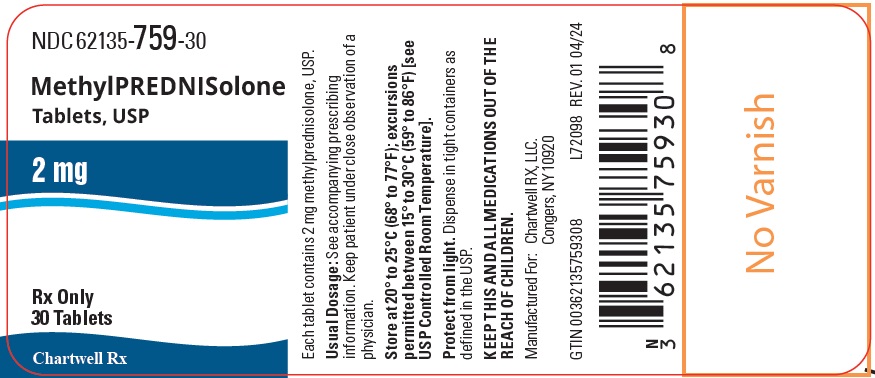
PRINCIPAL DISPLAY PANEL MethylPREDNISolone Tablets, USP 2 mg - NDC 62135-759-30 - 30s Bottle Label MethylPREDNISolone Tablets, USP 4 mg - NDC 62135-760-21 - 21s Bottle Label MethylPREDNISolone Tablets, USP 4 mg - NDC 62135-760-01- 100s Bottle Label MethylPREDNISolone Tablets, USP 8 mg - NDC 62135-761-26 - 25s Bottle Label MethylPREDNISolone Tablets, USP 16 mg - NDC 62135-762-50 - 50s Bottle Label MethylPREDNISolone Tablets, USP 32 mg - NDC 62135-763-26 - 25s Bottle Label image description image description image description image description image description image description