
Temazepam 7.5 mg Capsule, 100-count — NDC 62332-379-31 (Billing 62332-0379-31)
This is a package of 100 capsules of Temazepam 7.5 mg Capsule from Alembic Pharmaceuticals Inc., marketed since Nov 2018 and currently FDA-listed; retail pharmacies pay about $0.8337 per capsule (NADAC). It is the main listing for this product, which comes in 2 package sizes.
NDC database record
One package, one record: these facts belong to NDC 62332-379-31 alone.
- Record
- FDA NDC Directory package listing · Human prescription drug
- Code segments
- 62332 labeler · 379 product · 31 package
- Package marketed since
- Nov 27, 2018
- Sample package
- No — commercial package
- Listing certified through
- Dec 31, 2026
- Billing quantity
- 100 EA per package
- Barcode (UPC)
- 0362332380305
- Medicaid fills, this package
- 1,850 prescriptions in the last four reported quarters
- FDA record last changed
- Jul 24, 2026
Identity & classification
Regulatory identifiers FDA, NLM and CMS codes for this package
Drug-database identifiers Medi-Span GPI and First Databank GCN / HICL / AHFS classification
- GSN (GCN sequence number): 019182
- GCN: 13845
- GPI-14 (Medi-Span): 60201030000103
- HICL (First Databank): 001592
- AHFS class code: 28:24.08.00
- RxCUI (RxNorm): 198241
Where does this data come from?
- FDA openFDA NDC Directory · synced Oct 8, 2026
- FDA label on DailyMed · label index refreshed Oct 8, 2026
- RxNorm (NLM RxNav) · catalog refreshed Oct 1, 2026
- Medi-Span GPI (licensed)
- First Databank (licensed) · refreshed Oct 8, 2026
RxNorm drug class
This medicine belongs to the Benzodiazepine class.
Where does this data come from?
- RxClass (NLM) · catalog refreshed Oct 1, 2026
Clinical
Temazepam is used to treat insomnia (difficulty falling asleep or staying asleep). Temazepam is in a class of medications called benzodiazepines. It works by slowing activity in the brain to allow sleep.
Read the full MedlinePlus article ↗- It treats short-term insomnia, meaning trouble falling or staying asleep. It's generally meant for just 7 to 10 days. If your sleep isn't better by then, talk with your doctor, sin...
- Take it by mouth as a capsule right before bed, exactly as prescribed. Don't take more than directed. If you've been on it for a while, don't stop suddenly. Your prescriber should...
- The most common are drowsiness, headache, tiredness, dizziness, low energy, nervousness and nausea. Most are mild and short-lived. Call your doctor for unusual behavior, memory gap...
- Avoid alcohol. It adds to the sedation and raises the risk of sleep-driving. Tell me about any opioids or other sedating medicines, because combining them can slow breathing danger...
Patient education
Supplement & herbal interactions
Some supplements/herbs that may interact with Temazepam — tap one for details:
Where does this data come from?
- MedlinePlus (NLM) · refreshed Oct 8, 2026
- FDA label on DailyMed · label index refreshed Oct 8, 2026
Ask a licensed pharmacist directly — free, answered by our team.
Pricing
A drug doesn't have one price. Each row is a different public payment system, and none is what you'd pay at the counter — that depends on your insurance. The ⓘ on each row explains what it measures.
| Price system | Per ea | Per package |
|---|---|---|
| Retail pharmacies payNADAC · weekly | $0.834 | $83.37 / 100 capsules |
| Medicaid paysCMS SDUD · 12 mo | $1.24 | $124.34 / 100 capsules |
Where does this data come from?
- CMS NADAC weekly file · file of Oct 7, 2026
- CMS ASP pricing files · refreshed Sep 20, 2026
- CMS Medicaid State Drug Utilization Data · through Q4 2025
- CMS Part D plan pricing files · refreshed Sep 24, 2026
- VA National Acquisition Center price file
Packaging — all sizes for this product
| Package NDC | Description | Per unit | Per pack | Marketing start | Marketing end | Status |
|---|---|---|---|---|---|---|
| 62332-0379-30 62332-379-30 | 30 CAPSULE in 1 BOTTLE | — | — | 2018-11-27 | — | Active |
| 62332-0379-31 You're viewing this Main listing | 100 CAPSULE in 1 BOTTLE | $0.8337 / ea | $83.37 | 2018-11-27 | — | Active |
You're viewing the largest of 2 pack sizes for this product.
In Medicaid, this is the most-dispensed pack of this product — about 100% of fills over the last four reported quarters. See all packs ↓
Pack size FAQ
What quantity is in this package?
How does this package differ from NDC 62332-0379-30?
What NDC number is used to bill for this package of Temazepam 7.5 mg Capsule?
Prices are the latest CMS NADAC pharmacy acquisition cost per NDC; per-pack figures are per-unit × pack quantity, shown only when the pack is denominated in the same measure NADAC prices.
Therapeutic equivalents
| Product | Labeler | Pack | NADAC/unit | TE | Status | Price vs. this |
|---|---|---|---|---|---|---|
| Temazepam 7.5 mg 00406-9960-01 | SpecGx | 100 capsules | $0.834 | AB | Availability likely | — |
| Temazepam 7.5 mg 00904-6436-04 | Major | 30 capsules | $0.834 | AB | Availability likely | — |
| Temazepam 7.5 mg 43547-0611-10 | Solco | 100 capsules | $0.834 | AB | Availability likely | — |
| Temazepam 7.5 mgthis 62332-0379-31 | Alembic | 100 capsules | $0.834 | AB | Availability likely | — |
| temazepam 7.5 mg 67877-0148-01 | Ascend | 100 capsules | $0.834 | AB | Availability likely | — |
| Temazepam 7.5 mg 68084-0549-21 | American | 30 capsules | $0.834 | AB | Availability likely | — |
| Restoril 7.5 mg 00406-9915-01 | SpecGx | 100 capsules | — | AB | FDA listed | — |
| Temazepam 7.5 mg 43353-0152-30 | Aphena | 30 capsules | — | AB | Discontinued | — |
| Temazepam 7.5 mg 46708-0379-30 | Alembic | 30 capsules | — | AB | FDA listed | — |
| temazepam 7.5 mg 63629-8601-01 | Bryant | 100 capsules | — | AB | FDA listed | — |
| Temazepam 7.5 mg 65162-0583-03 | Amneal | 30 capsules | — | AB | FDA listed | — |
| Temazepam 7.5 mg 71610-0004-30 | Aphena | 30 capsules | — | AB | FDA listed | — |
| temazepam 7.5 mg 72162-1826-01 | Bryant | 100 capsules | — | AB | FDA listed | — |
| temazepam 7.5 mg 76420-0472-01 | Asclemed | 100 capsules | — | AB | FDA listed | — |
Where does this data come from?
- FDA openFDA NDC Directory · synced Oct 8, 2026
- FDA Orange Book · refreshed Oct 3, 2026
- CMS NADAC weekly file · file of Oct 7, 2026
Availability & generic status
This product is an FDA-approved generic. Other versions of the same drug are listed under Therapeutic equivalents, least expensive first.
Where does this data come from?
- FDA Orange Book · refreshed Oct 3, 2026
What it looks like
Where does this data come from?
- FDA label on DailyMed · label index refreshed Oct 8, 2026
Inactive Ingredients / Excipients
Inactive ingredients, also called excipients, are components of the drug product other than the active ingredient. They may include fillers, dyes, coatings, preservatives, flavors, or other formulation ingredients.
🧪 Avoiding an ingredient? See Temazepam inactive ingredients by manufacturer: every current product's list side by side, so you can ask your pharmacy for the version that does not list it.
💡 Tap an ingredient (hover on desktop) to see what it is and why it’s used.
-
UNII M28OL1HH48
Croscarmellose sodium is a plant-based substance derived from cellulose. It acts as a disintegrant, helping tablets and capsules break down quickly in the digestive system so the medicine can be absorbed.
-
UNII 767IP0Y5NH
A synthetic red colorant used to give medicines their color. It helps patients identify their medication and makes the product visually appealing.
-
UNII H3R47K3TBD
FD&C Blue No. 1 is a synthetic blue dye approved for use in foods and medicines. It serves as a colorant to give the medication its distinctive appearance and help with product identification.
-
UNII WZB9127XOA
A synthetic red dye used to color medications and make them easier to identify. It serves as a colorant in tablets, capsules, and liquid formulations.
-
UNII XM0M87F357
A dark iron oxide compound that gives medicines their black or dark color. It's used as a colorant in tablets and capsules to help identify the product and make it visually distinctive.
-
UNII 2G86QN327L
Gelatin is a protein derived from animal collagen, commonly used in medicines as a gelling agent and capsule material. It helps create soft or hard capsule shells that hold and release medication, and can also thicken liquid formulations.
-
UNII EWQ57Q8I5X
Lactose monohydrate is a natural sugar derived from milk. It serves as a filler and binder in tablets and capsules, helping create the proper size, texture, and consistency of the medicine.
-
UNII 70097M6I30
Magnesium stearate is a salt made from magnesium and stearic acid, a fatty substance. It's used in tablets and capsules as a lubricant and glidant to help ingredients flow smoothly during manufacturing and prevent sticking.
-
UNII OP1R32D61U
Microcrystalline cellulose is a purified form of cellulose, a natural fiber from plant sources. It acts as a binder and filler in tablets and capsules, helping hold ingredients together and give the medicine its shape and size.
-
UNII WZH3C48M4T
Potassium hydroxide is a strong alkaline chemical used in medicines to adjust and maintain the pH level of liquid formulations, helping keep the product stable and the active ingredients effective.
-
UNII 6DC9Q167V3
Propylene glycol is a clear liquid derived from petroleum or vegetable sources. It acts as a solvent, humectant, and preservative in medicines, helping dissolve active ingredients and maintain product stability.
-
UNII 46N107B71O
Shellac is a natural resin secreted by the lac beetle. It's used as a coating on tablets and capsules to control how quickly the medicine dissolves and to improve appearance and stability.
-
UNII 368GB5141J
A detergent and foaming agent derived from coconut or palm oil. In medications, it helps break down and mix oil and water-based ingredients, aids in tablet disintegration, and improves how the drug dissolves and spreads in the mouth or digestive system.
-
UNII 15FIX9V2JP
Titanium dioxide is a bright white mineral powder commonly used as a colorant and opacifying agent. It makes pills and tablets white or lighter in color and helps make coatings non-transparent.
14 inactive ingredients listed in the exact product block matched to this NDC.
Where does this data come from?
ingredient classCode="IACT" elements from the exact product block matched by this NDC. Label-section narrative from DailyMed / the openFDA label index is shown separately when available.- FDA label on DailyMed · label index refreshed Oct 8, 2026
- FDA openFDA NDC Directory · synced Oct 8, 2026
Inactive ingredient FAQ
Are inactive ingredients the same for every manufacturer?
Why might an inactive ingredient be missing?
Can inactive ingredients matter?
Manufacturer & labeler
More NDCs from Alembic Pharmaceuticals Inc. labeler code 62332
- Clonazepam .125 mg Tablet, Orally Disintegrating NDC 62332-364-06
- Clonazepam .25 mg Tablet, Orally Disintegrating NDC 62332-365-06
- Clonazepam .5 mg Tablet, Orally Disintegrating NDC 62332-366-06
- Clonazepam 1 mg Tablet, Orally Disintegrating NDC 62332-367-06
- Clonazepam 2 mg Tablet, Orally Disintegrating NDC 62332-368-06
- Macitentan 10 mg Tablet, Film Coated NDC 62332-373-30
- Temazepam 15 mg Capsule NDC 62332-380-30
- Temazepam 22.5 mg Capsule NDC 62332-381-30
- Temazepam 30 mg Capsule NDC 62332-382-30
- Modafinil 100 mg Tablet NDC 62332-385-10
- Modafinil 200 mg Tablet NDC 62332-386-10
- Doxycycline Hyclate 75 mg Tablet, Film Coated NDC 62332-387-60
Where does this data come from?
- FDA openFDA NDC Directory · synced Oct 8, 2026
- Drugs@FDA
Full prescribing information FDA SPL
🚨 Boxed Warning ▾
WARNING: RISKS FROM CONCOMITANT USE WITH OPIOIDS; ABUSE, MISUSE, AND ADDICTION; and DEPENDENCE AND WITHDRAWAL REACTIONS Concomitant use of benzodiazepines and opioids may result in profound sedation, respiratory depression, coma, and death. Reserve concomitant prescribing of these drugs in patients for whom alternative treatment options are inadequate. Limit dosages and durations to the minimum required.
Follow patients for signs and symptoms of respiratory depression and sedation ( see WARNINGS and PRECAUTIONS) . The use of benzodiazepines, including temazepam capsules, exposes users to risks of abuse, misuse, and addiction, which can lead to overdose or death. Abuse and misuse of benzodiazepines commonly involve concomitant use of other medications, alcohol, and/or illicit substances, which is associated with an increased frequency of serious adverse outcomes.
Before prescribing temazepam capsules and throughout treatment, assess each patient’s risk for abuse, misuse, and addiction ( see WARNINGS). The continued use of benzodiazepines, including temazepam capsules, may lead to clinically significant physical dependence. The risks of dependence and withdrawal increase with longer treatment duration and higher daily dose.
Abrupt discontinuation or rapid dosage reduction of temazepam capsules after continued use may precipitate acute withdrawal reactions, which can be life-threatening. To reduce the risk of withdrawal reactions, use a gradual taper to discontinue temazepam capsules or reduce the dosage ( see DOSAGE AND ADMINISTRATION and WARNINGS).
🎯 Indications and Usage ▾
INDICATIONS AND USAGE Temazepam capsules are indicated for the short-term treatment of insomnia (generally 7 to 10 days). For patients with short-term insomnia, instructions in the prescription should indicate that Temazepam capsules should be used for short periods of time (7 to 10 days). The clinical trials performed in support of efficacy were 2 weeks in duration with the final formal assessment of sleep latency performed at the end of treatment.
⏱️ Dosage and Administration ▾
DOSAGE AND ADMINISTRATION While the recommended usual adult dose is 15 mg before retiring, 7.5 mg may be sufficient for some patients, and others may need 30 mg. In transient insomnia, a 7.5 mg dose may be sufficient to improve sleep latency. In elderly or debilitated patients, it is recommended that therapy be initiated with 7.5 mg until individual responses are determined.
Discontinuation or Dosage Reduction of Temazepam Capsules To reduce the risk of withdrawal reactions, use a gradual taper to discontinue temazepam capsules or reduce the dosage. If a patient develops withdrawal reactions, consider pausing the taper or increasing the dosage to the previous tapered dosage level. Subsequently decrease the dosage more slowly ( see WARNINGS, Dependence and Withdrawal Reactions and DRUG ABUSE AND DEPENDENCE: Dependence ).
⚠️ Warnings ▾
WARNINGS Risks from Concomitant Use with Opioids Concomitant use of benzodiazepines, including temazepam capsules, and opioids may result in profound sedation, respiratory depression, coma, and death. Because of these risks, reserve concomitant prescribing of these drugs in patients for whom alternative treatment options are inadequate. Observational studies have demonstrated that concomitant use of opioid analgesics and benzodiazepines increases the risk of drug-related mortality compared to use of opioids alone.
If a decision is made to prescribe temazepam capsules concomitantly with opioids, prescribe the lowest effective dosages and minimum durations of concomitant use, and follow patients closely for signs and symptoms of respiratory depression and sedation. In patients already receiving an opioid analgesic, prescribe a lower initial dose of temazepam capsules than indicated in the absence of an opioid and titrate based on clinical response. If an opioid is initiated in a patient already taking temazepam capsules, prescribe a lower initial dose of the opioid and titrate based upon clinical response.
Advise both patients and caregivers about the risks of respiratory depression and sedation when temazepam capsules are used with opioids. Advise patients not to drive or operate heavy machinery until the effects of concomitant use with the opioid have been determined ( see PRECAUTIONS, Drug Interactions ). Abuse, Misuse, and Addiction The use of benzodiazepines, including temazepam capsules, exposes users to the risks of abuse, misuse, and addiction, which can lead to overdose or death.
Abuse and misuse of benzodiazepines often (but not always) involve the use of doses greater than the maximum recommended dosage and commonly involve concomitant use of other medications, alcohol, and/or illicit substances, which is associated with an increased frequency of serious adverse outcomes, including respiratory depression, overdose, or death ( see DRUG ABUSE AND DEPENDENCE, Abuse ). Before prescribing temazepam capsules and throughout treatment, assess each patient’s risk for abuse, misuse, and addiction (e.g., using a standardized screening tool).
Use of temazepam capsules, particularly in patients at elevated risk, necessitates counseling about the risks and proper use of temazepam capsules along with monitoring for signs and symptoms of abuse, misuse, and addiction. Prescribe the lowest effective dosage; avoid or minimize concomitant use of CNS depressants and other substances associated with abuse, misuse, and addiction (e.g., opioid analgesics, stimulants); and advise patients on the proper disposal of unused drug. If a substance use disorder is suspected, evaluate the patient and institute (or refer them for) early treatment, as appropriate.
Dependence and Withdrawal Reactions To reduce the risk of withdrawal reactions, use a gradual taper to discontinue temazepam capsules or reduce the dosage (a patient-specific plan should be used to taper the dose) ( see DOSAGE AND ADMINISTRATION, Discontinuation or Dosage Reduction of Temazepam Capsules ). Patients at an increased risk of withdrawal adverse reactions after benzodiazepine discontinuation or rapid dosage reduction include those who take higher dosages, and those who have had longer durations of use. Acute Withdrawal Reactions The continued use of benzodiazepines, including temazepam capsules, may lead to clinically significant physical dependence.
Abrupt discontinuation or rapid dosage reduction of temazepam capsules after continued use, or administration of flumazenil (a benzodiazepine antagonist) may precipitate acute withdrawal reactions, which can be life-threatening (e.g., seizures) ( see DRUG ABUSE AND DEPENDENCE, Dependence ) . Protracted Withdrawal Syndrome In some cases, benzodiazepine users have developed a protracted withdrawal syndrome with withdrawal symptoms lasting weeks to more than 12 months ( see DRUG ABUSE AND DEPENDENCE, Dependence ). Sleep disturbance may b… [Excerpted — this section continues on DailyMed.]
🤒 Adverse Reactions ▾
ADVERSE REACTIONS During controlled clinical studies in which 1076 patients received temazepam capsules at bedtime, the drug was well tolerated. Side effects were usually mild and transient. Adverse reactions occurring in 1% or more of patients are presented in the following table: Temazepam Capsules % Incidence (n=1076) Placebo %Incidence (n=783) Drowsiness 9.1
5.6Headache 8.5
9.1Fatigue 4.8
4.7Nervousness 4.6
8.2Lethargy 4.5
3.4Dizziness 4.5
3.3Nausea 3.1
3.8Hangover 2.5
1.1 Anxiety 2
1.5Depression 1.7
1.8Dry Mouth 1.7
2.2Diarrhea 1.7
1.1Abdominal Discomfort 1.5
1.9Euphoria 1.5
0.4Weakness 1.4
0.9Confusion 1.3
0.5Blurred Vision 1.3
1.3Nightmares 1.2
1.7Vertigo 1.2
0.8The following adverse events have been reported less frequently (0.5% to 0.9%): Central Nervous System – anorexia, ataxia, equilibrium loss, tremor, increased dreaming Cardiovascular – dyspnea, palpitations Gastrointestinal – vomiting Musculoskeletal – backache Special Senses – hyperhidrosis, burning eyes Amnesia, hallucinations, horizontal nystagmus, and paradoxical reactions including restlessness, overstimulation and agitation were rare (less than 0.5%).
🔄 Drug Interactions ▾
Drug Interactions The concomitant use of benzodiazepines and opioids increases the risk of respiratory depression because of actions at different receptor sites in the CNS that control respiration. Benzodiazepines interact at GABAA sites and opioids interact primarily at mu receptors. When benzodiazepines and opioids are combined, the potential for benzodiazepines to significantly worsen opioid-related respiratory depression exists.
Limit dosage and duration of concomitant use of benzodiazepines and opioids, and monitor patients closely for respiratory depression and sedation. The benzodiazepines, including temazepam, produce additive CNS-depressant effects when co-administered with other CNS depressants such as alcohol, barbiturates, antipsychotics, sedative/hypnotics, anxiolytics, antidepressants, narcotic analgesics, sedative antihistamines, anticonvulsants, and anesthetics. The pharmacokinetic profile of temazepam does not appear to be altered by orally administered cimetidine dosed according to labeling.
🤰 Pregnancy ▾
Pregnancy Pregnancy Exposure Registry There is a pregnancy registry that monitors pregnancy outcomes in women exposed to psychiatric medications, including temazepam capsules, during pregnancy. Healthcare providers are encouraged to register patients by calling the National Pregnancy Registry for Psychiatric Medications at 1-866-961-2388 or visiting online at https://womensmentalhealth.org/pregnancyregistry/. Risk Summary Neonates born to mothers using benzodiazepines late in pregnancy have been reported to experience symptoms of sedation and/or neonatal withdrawal (see WARNINGS, Neonatal Sedation and Withdrawal Syndrome and Clinical Considerations ).
Available data from published observational studies of pregnant women exposed to benzodiazepines do not report a clear association with benzodiazepines and major birth defects ( see Data ). The background risk of major birth defects and miscarriage for the indicated population is unknown. All pregnancies have a background risk of birth defect, loss, or other adverse outcomes.
In the U.S. general population, the estimated risk of major birth defects and of miscarriage in clinically recognized pregnancies is 2% to 4% and 15% to 20%, respectively. Clinical Considerations Fetal/Neonatal Adverse Reactions Benzodiazepines cross the placenta and may produce respiratory depression, hypotonia and sedation in neonates. Monitor neonates exposed to temazepam capsules during pregnancy or labor for signs of sedation, respiratory depression, hypotonia, and feeding problems.
Monitor neonates exposed to temazepam capsules during pregnancy for signs of withdrawal. Manage these neonates accordingly (see WARNINGS, Neonatal Sedation and Withdrawal Syndrome ). Data Human Data Published data from observational studies on the use of benzodiazepines during pregnancy do not report a clear association with benzodiazepines and major birth defects.
Although early studies reported an increased risk of congenital malformations with diazepam and chlordiazepoxide, there was no consistent pattern noted. In addition, the majority of more recent case-control and cohort studies of benzodiazepine use during pregnancy, which were adjusted for confounding exposures to alcohol, tobacco and other medications, have not confirmed these findings. Animal Data Reproduction studies in animals with temazepam were performed in rats and rabbits.
In a perinatal-postnatal study in rats, oral doses of 60 mg/kg/day resulted in increasing nursling mortality. Teratology studies in rats demonstrated increased fetal resorptions at doses of 30 and 120 mg/kg in one study and increased occurrence of rudimentary ribs, which are considered skeletal variants, in a second study at doses of 240 mg/kg or higher. In rabbits, occasional abnormalities such as exencephaly and fusion or asymmetry of ribs were reported without dose relationship.
Although these abnormalities were not found in the concurrent control group, they have been reported to occur randomly in historical controls. At doses of 40 mg/kg or higher, there was an increased incidence of the 13th rib variant when compared to the incidence in concurrent and historical controls.
🧒 Pediatric Use ▾
Pediatric Use Safety and effectiveness in pediatric patients have not been established.
🧓 Geriatric Use ▾
Geriatric Use Clinical studies of temazepam capsules did not include sufficient numbers of subjects aged 65 and over to determine whether they respond differently from younger subjects. Other reported clinical experience has not identified differences in response between the elderly and younger patients. In general, dose selection for an elderly patient should be cautious, usually starting at the low end of the dosing range, reflecting the greater frequency of decreased hepatic, renal, or cardiac function, and of concomitant disease or other drug therapy commonly observed in this population.
Temazepam capsule 7.5 mg is recommended as the initial dosage for patients aged 65 and over since the risk of the development of oversedation, dizziness, confusion, ataxia and/or falls increases substantially with larger doses of benzodiazepines in elderly and debilitated patients.
🆘 Overdosage ▾
OVERDOSAGE Overdosage of benzodiazepines is characterized by central nervous system depression ranging from drowsiness to coma. In mild to moderate cases, symptoms can include drowsiness, confusion, dysarthria, lethargy, hypnotic state, diminished reflexes, ataxia, and hypotonia. Rarely, paradoxical or disinhibitory reactions (including agitation, irritability, impulsivity, violent behavior, confusion, restlessness, excitement, and talkativeness) may occur.
In severe overdosage cases, patients may develop respiratory depression and coma. Overdosage of benzodiazepines in combination with other CNS depressants (including alcohol and opioids) may be fatal ( see WARNINGS, Abuse, Misuse, and Addiction ). Markedly abnormal (lowered or elevated) blood pressure, heart rate, or respiratory rate raise the concern that additional drugs and/or alcohol are involved in the overdosage.
In managing benzodiazepine overdosage, employ general supportive measures, including intravenous fluids and airway management. Flumazenil, a specific benzodiazepine receptor antagonist indicated for the complete or partial reversal of the sedative effects of benzodiazepines in the management of benzodiazepine overdosage, can lead to withdrawal and adverse reactions, including seizures, particularly in the context of mixed overdosage with drugs that increase seizure risk (e.g., tricyclic and tetracyclic antidepressants) and in patients with long-term benzodiazepine use and physical dependency.
The risk of withdrawal seizures with flumazenil use may be increased in patients with epilepsy. Flumazenil is contraindicated in patients who have received a benzodiazepine for control of a potentially life-threatening condition (e.g., status epilepticus). If the decision is made to use flumazenil, it should be used as an adjunct to, not as a substitute for, supportive management of benzodiazepine overdosage.
See the flumazenil injection Prescribing Information. Consider contacting the Poison Help line (1-800-222-12222) or a medical toxicologist for additional overdosage management recommendations.
🧬 Clinical Pharmacology ▾
CLINICAL PHARMACOLOGY Pharmacokinetics In a single and multiple dose absorption, distribution, metabolism, and excretion (ADME) study, using 3 H labeled drug, temazepam capsules was well absorbed and found to have minimal (8%) first pass metabolism. There were no active metabolites formed and the only significant metabolite present in blood was the O-conjugate. The unchanged drug was 96% bound to plasma proteins.
The blood level decline of the parent drug was biphasic with the short half-life ranging from 0.4 to 0.6 hours and the terminal half-life from 3.5 to 18.4 hours (mean 8.8 hours), depending on the study population and method of determination. Metabolites were formed with a half-life of 10 hours and excreted with a half-life of approximately 2 hours. Thus, formation of the major metabolite is the rate limiting step in the biodisposition of temazepam.
There is no accumulation of metabolites. A dose-proportional relationship has been established for the area under the plasma concentration/time curve over the 15 to 30 mg dose range. Temazepam was completely metabolized through conjugation prior to excretion; 80% to 90% of the dose appeared in the urine.
The major metabolite was the O-conjugate of temazepam (90%); the O-conjugate of N-desmethyl temazepam was a minor metabolite (7%). Bioavailability, Induction, and Plasma Levels Following ingestion of a 30 mg temazepam capsule, measurable plasma concentrations were achieved 10 to 20 minutes after dosing with peak plasma levels ranging from 666 to 982 ng/mL (mean 865 ng/mL) occurring approximately 1.2 to 1.6 hours (mean 1.5 hours) after dosing. In a 7 day study, in which subjects were given a 30 mg temazepam capsule 1 hour before retiring, steady-state (as measured by the attainment of maximal trough concentrations) was achieved by the third dose.
Mean plasma levels of temazepam (for days 2 to 7) were 260±210 ng/mL at 9 hours and 75±80 ng/mL at 24 hours after dosing. A slight trend toward declining 24 hour plasma levels was seen after day 4 in the study, however, the 24 hour plasma levels were quite variable. At a dose of 30 mg once-a-day for 8 weeks, no evidence of enzyme induction was found in man.
Elimination Rate of Benzodiazepine Hypnotics and Profile of Common Untoward Effects The type and duration of hypnotic effects and the profile of unwanted effects during administration of benzodiazepine hypnotics may be influenced by the biologic half-life of the administered drug and for some hypnotics, the half-life of any active metabolites formed. Benzodiazepine hypnotics have a spectrum of half-lives from short (<4 hours) to long (>20 hours). When half-lives are long, drug (and for some drugs their active metabolites) may accumulate during periods of nightly administration and be associated with impairments of cognitive and/or motor performance during waking hours; the possibility of interaction with other psychoactive drugs or alcohol will be enhanced.
In contrast, if half-lives are shorter, drug (and, where appropriate, its active metabolites) will be cleared before the next dose is ingested, and carry-over effects related to excessive sedation or CNS depression should be minimal or absent. However, during nightly use for an extended period, pharmacodynamic tolerance or adaptation to some effects of benzodiazepine hypnotics may develop. If the drug has a short elimination half-life, it is possible that a relative deficiency of the drug, or, if appropriate, its active metabolites (i.e., in relationship to the receptor site) may occur at some point in the interval between each night’s use.
This sequence of events may account for 2 clinical findings reported to occur after several weeks of nightly use of rapidly eliminated benzodiazepine hypnotics, namely, increased wakefulness during the last third of the night, and the appearance of increased signs of daytime anxiety. Controlled Trials Supporting Efficacy Temazepam capsules improved sleep parameters in clinical studies. Resi… [Excerpted — this section continues on DailyMed.]
📦 How Supplied / Storage and Handling ▾
HOW SUPPLIED Temazepam Capsules, USP 7.5 mg Opaque blue cap / Opaque pink body, size 3, hard gelatin capsules imprinted with “A222” on body in black ink, filled with white to off white powder. NDC 62332-379-30 Bottle of 30 capsules NDC 62332-379-31 Bottle of 100 capsules 15 mg Maroon cap / Opaque pink body, size 3, hard gelatin capsules imprinted with “A223” on body in black ink, filled with white to off white powder. NDC 62332-380-30 Bottle of 30 capsules NDC 62332-380-90 Bottle of 90 capsules NDC 62332-380-31 Bottle of 100 capsules NDC 62332-380-71 Bottle of 500 capsules 22.5 mg Opaque blue cap / Opaque blue body, size 3, hard gelatin capsules imprinted with “A224” on body in black ink, filled with white to off white powder.
NDC 62332-381-30 Bottle of 30 capsules 30 mg Maroon cap / Opaque blue body, size 3, hard gelatin capsules imprinted with “A225” on body in black ink, filled with white to off white powder. NDC 62332-382-30 Bottle of 30 capsules NDC 62332-382-90 Bottle of 90 capsules NDC 62332-382-31 Bottle of 100 capsules NDC 62332-382-71 Bottle of 500 capsules Dispense in a well-closed, light-resistant container with a child-resistant closure. Storage: Store at 25°C (77°F); excursions permitted to 15° to 30°C (59° to 86°F) [see USP Controlled Room Temperature].
Medication Guide available at http://www.alembicusa.com/medicationguide.aspx or call 1-866-210-9797. Manufactured by: Alembic Pharmaceuticals Limited (Formulation Division), Panelav 389350, Gujarat, India Manufactured for: Alembic Pharmaceuticals, Inc. Bedminster, NJ 07921, USA Revised: 02/2023
📋 Description ▾
DESCRIPTION Temazepam, USP is a benzodiazepine hypnotic agent. The chemical name is 7-chloro-1, 3-dihydro-3-hydroxy-1-methyl-5-phenyl-2H-1, 4-benzodiazepin-2-one, and the structural formula is: C 16 H 13 ClN 2 O 2 MW = 300.7 Temazepam, USP is a white or almost white crystalline powder, freely slightly soluble in methanol and methylene chloride. Temazepam Capsules USP, 7.5 mg, 15 mg, 22.5 mg, and 30 mg, are for oral administration.
7.5mg, 15 mg, 22.5 mg, and 30 mg Capsules Active Ingredient: temazepam USP 7.5 mg Capsules Inactive Ingredients: lactose monohydrate, croscarmellose sodium, microcrystalline cellulose, sodium lauryl sulphate, magnesium stearate, FD&C Blue 1, D&C Red 28, FD&C Red 40, titanium dioxide, gelatin. 15 mg Capsules Inactive Ingredients: lactose monohydrate, croscarmellose sodium, microcrystalline cellulose, sodium lauryl sulphate, magnesium stearate, FD&C Blue 1, FD&C Red 40, titanium dioxide, gelatin. 22.5 mg Capsules Inactive Ingredients: lactose monohydrate, croscarmellose sodium, microcrystalline cellulose, sodium lauryl sulphate, magnesium stearate, FD&C Blue 1, D&C Red 28, titanium dioxide, gelatin.
30 mg Capsules Inactive Ingredients: lactose monohydrate, croscarmellose sodium, microcrystalline cellulose, sodium lauryl sulphate, magnesium stearate, FD&C Blue 1, FD&C Red 40, D&C Red 28, gelatin, titanium dioxide. The printing ink contains shellac, propylene glycol, potassium hydroxide and iron oxide black. temazepam
💬 Information for Patients ▾
Information for Patients Advise the patient to read the FDA approved patient labeling (Medication Guide). Risks from Concomitant Use with Opioids Advise both patients and caregivers about the risks of potentially fatal respiratory depression and sedation when temazepam capsules are used with opioids and not to use such drugs concomitantly unless supervised by a healthcare provider. Advise patients not to drive or operate heavy machinery until the effects of concomitant use with the opioid have been determined ( see WARNINGS, Risks from Concomitant Use with Opioids and PRECAUTIONS, Drug Interactions ).
Abuse, Misuse, and Addiction Inform patients that the use of temazepam capsules, even at recommended dosages, exposes users to risks of abuse, misuse, and addiction, which can lead to overdose and death, especially when used in combination with other medications (e.g., opioid analgesics), alcohol, and/or illicit substances. Inform patients about the signs and symptoms of benzodiazepine abuse, misuse, and addiction; to seek medical help if they develop these signs and/or symptoms; and on the proper disposal of unused drug ( see WARNINGS, Abuse, Misuse, and Addiction and DRUG ABUSE AND DEPENDENCE ).
Withdrawal Reactions Inform patients that the continued use of temazepam capsules may lead to clinically significant physical dependence and that abrupt discontinuation or rapid dosage reduction of temazepam capsules may precipitate acute withdrawal reactions, which can be life-threatening. Inform patients that in some cases, patients taking benzodiazepines have developed a protracted withdrawal syndrome with withdrawal symptoms lasting weeks to more than 12 months. Instruct patients that discontinuation or dosage reduction of temazepam capsules may require a slow taper ( see WARNINGS, Dependence and Withdrawal Reactions and DRUG ABUSE AND DEPENDENCE ). “Sleep-Driving” and Other Complex Behaviors There have been reports of people getting out of bed after taking a sedative-hypnotic and driving their cars while not fully awake, often with no memory of the event.
If a patient experiences such an episode, it should be reported to his or her doctor immediately, since “sleep-driving” can be dangerous. This behavior is more likely to occur when temazepam capsules are taken with alcohol or other central nervous system depressants ( see WARNINGS ). Other complex behaviors (e.g., preparing and eating food, making phone calls, or having sex) have been reported in patients who are not fully awake after taking a sedative-hypnotic.
As with “sleep-driving”, patients usually do not remember these events. Advise patients that increased drowsiness and decreased consciousness may increase the risk of falls in some patients. Pregnancy Advise pregnant females that use of temazepam capsules late in pregnancy can result in sedation (respiratory depression, lethargy, hypotonia) and/or withdrawal symptoms (hyperreflexia, irritability, restlessness, tremors, inconsolable crying, and feeding difficulties) in newborns (see Warnings, Neonatal Sedation and Withdrawal Syndrome and Precautions, Pregnancy).
Instruct patients to inform their healthcare provider if they are pregnant. Advise patients that there is a pregnancy exposure registry that monitors pregnancy outcomes in women exposed to temazepam capsules during pregnancy (see Precautions, Pregnancy). Nursing Instruct patients to notify their healthcare provider if they are breastfeeding or intend to breastfeed.
Instruct breastfeeding patients using temazepam capsules to monitor infants for excessive sedation, poor feeding and poor weight gain, and to seek medical attention if they notice these signs (see Precautions, Nursing Mothers).
💬 Medication Guide ▾
MEDICATION GUIDE Temazepam (tem az e pam) Capsules, USP C-IV What is the most important information I should know about temazepam capsules? • Temazepam capsule is a benzodiazepine medicine. Taking benzodiazepines with opioid medicines, alcohol, or other central nervous system (CNS) depressants (including street drugs) can cause severe drowsiness, breathing problems (respiratory depression), coma and death. Get emergency help right away if any of the following happens: o shallow or slowed breathing o breathing stops (which may lead to the heart stopping) o excessive sleepiness (sedation) Do not drive or operate heavy machinery until you know how taking temazepam capsules and opioids affects you. o Risk of abuse, misuse, and addiction.
There is a risk of abuse, misuse, and addiction with benzodiazepines including temazepam capsules which can lead to overdose and serious side effects including coma and death. o Serious side effects including coma and death have happened in people who have abused or misused benzodiazepines, including temazepam capsules. These serious side effects may also include delirium, paranoia, suicidal thoughts or actions, seizures, and difficulty breathing. Call your healthcare provider or go to the nearest hospital emergency room right away if you get any of these serious side effects. o You can develop an addiction even if you take temazepam capsules as prescribed by your healthcare provider o Take temazepam capsules exactly as your healthcare provider prescribed. o Do not share your temazepam capsules with other people. o Keep temazepam capsules in a safe place and away from children. • Physical dependence and withdrawal reactions.
Temazepam capsules can cause physical dependence and withdrawal reactions. o Do not suddenly stop taking temazepam capsules. Stopping temazepam capsules suddenly can cause serious and life-threatening side effects, including, unusual movements, responses, or expressions, seizures, sudden and severe mental or nervous system changes, depression, seeing or hearing things that others do not see or hear, an extreme increase in activity or talking, losing touch with reality, and suicidal thoughts or actions. Call your healthcare provider or go to the nearest hospital emergency room right away if you get any of these symptoms. o Some people who suddenly stop benzodiazepines have symptoms that can last for several weeks to more than 12 months, including, anxiety, trouble remembering, learning, or concentrating, depression, problems sleeping, feeling like insects are crawling under your skin, weakness, shaking, muscle twitching, burning or prickling feeling in your hands, arms, legs or feet, and ringing in your ears. o Physical dependence is not the same as drug addiction.
Your healthcare provider can tell you more about the differences between physical dependence and drug addiction. o Do not take more temazepam capsules than prescribed or take temazepam capsules for longer than prescribed. • After taking temazepam capsules, you may get up out of bed while not being fully awake and do an activity that you do not know you are doing. The next morning, you may not remember that you did anything during the night. You have a higher chance for doing these activities if you drink alcohol or take other medicines that make you sleepy with temazepam capsules.
Reported activities include: o driving a car (“sleep-driving”) o making and eating food o talking on the phone o having sex o sleep-walking Call your healthcare provider right away if you find out that you have done any of the above activities after taking temazepam capsules. What is temazepam capsule? • Temazepam capsule is a prescription sleep medicine. Temazepam capsule is used in adults for the short-term (usually 7 to 10 days) treatment of a sleep problem called insomnia.
Symptoms of insomnia include trouble falling asleep and waking up often during the night. • Temazepam capsule is a federal controlled substance (C-IV) because it cont… [Excerpted — this section continues on DailyMed.]
⚠️ Precautions ▾
PRECAUTIONS General Since the risk of the development of oversedation, dizziness, confusion, and/or ataxia increases substantially with larger doses of benzodiazepines in elderly and debilitated patients, 7.5 mg of temazepam capsules are recommended as the initial dosage for such patients. Temazepam capsules should be administered with caution in severely depressed patients or those in whom there is any evidence of latent depression; it should be recognized that suicidal tendencies may be present and protective measures may be necessary.
The usual precautions should be observed in patients with impaired renal or hepatic function and in patients with chronic pulmonary insufficiency. If temazepam capsules are to be combined with other drugs having known hypnotic properties or CNS-depressant effects, consideration should be given to potential additive effects. The possibility of a synergistic effect exists with the co-administration of temazepam capsules and diphenhydramine.
One case of stillbirth at term has been reported 8 hours after a pregnant patient received temazepam capsules and diphenhydramine. A cause and effect relationship has not yet been determined ( see CONTRAINDICATIONS ). Information for Patients Advise the patient to read the FDA approved patient labeling (Medication Guide).
Risks from Concomitant Use with Opioids Advise both patients and caregivers about the risks of potentially fatal respiratory depression and sedation when temazepam capsules are used with opioids and not to use such drugs concomitantly unless supervised by a healthcare provider. Advise patients not to drive or operate heavy machinery until the effects of concomitant use with the opioid have been determined ( see WARNINGS, Risks from Concomitant Use with Opioids and PRECAUTIONS, Drug Interactions ). Abuse, Misuse, and Addiction Inform patients that the use of temazepam capsules, even at recommended dosages, exposes users to risks of abuse, misuse, and addiction, which can lead to overdose and death, especially when used in combination with other medications (e.g., opioid analgesics), alcohol, and/or illicit substances.
Inform patients about the signs and symptoms of benzodiazepine abuse, misuse, and addiction; to seek medical help if they develop these signs and/or symptoms; and on the proper disposal of unused drug ( see WARNINGS, Abuse, Misuse, and Addiction and DRUG ABUSE AND DEPENDENCE ). Withdrawal Reactions Inform patients that the continued use of temazepam capsules may lead to clinically significant physical dependence and that abrupt discontinuation or rapid dosage reduction of temazepam capsules may precipitate acute withdrawal reactions, which can be life-threatening.
Inform patients that in some cases, patients taking benzodiazepines have developed a protracted withdrawal syndrome with withdrawal symptoms lasting weeks to more than 12 months. Instruct patients that discontinuation or dosage reduction of temazepam capsules may require a slow taper ( see WARNINGS, Dependence and Withdrawal Reactions and DRUG ABUSE AND DEPENDENCE ). “Sleep-Driving” and Other Complex Behaviors There have been reports of people getting out of bed after taking a sedative-hypnotic and driving their cars while not fully awake, often with no memory of the event.
If a patient experiences such an episode, it should be reported to his or her doctor immediately, since “sleep-driving” can be dangerous. This behavior is more likely to occur when temazepam capsules are taken with alcohol or other central nervous system depressants ( see WARNINGS ). Other complex behaviors (e.g., preparing and eating food, making phone calls, or having sex) have been reported in patients who are not fully awake after taking a sedative-hypnotic.
As with “sleep-driving”, patients usually do not remember these events. Advise patients that increased drowsiness and decreased consciousness may increase the risk of falls in some patients. Pregnancy Advise pregnant females that use of tema… [Excerpted — this section continues on DailyMed.]
🍼 Nursing Mothers ▾
Nursing Mothers Risk Summary Temazepam is present in breast milk. There are reports of sedation, poor feeding and poor weight gain in infants exposed to benzodiazepines through breast milk. The effects of temazepam on milk production are unknown.
The developmental and health benefits of breastfeeding should be considered along with the mother’s clinical need for temazepam capsules and any potential adverse effects on the breastfed infant from temazepam capsules or from the underlying maternal condition. Clinical Considerations Infants exposed to temazepam through breast milk should be monitored for sedation, poor feeding and poor weight gain.
🔒 Drug Abuse and Dependence ▾
DRUG ABUSE AND DEPENDENCE Controlled Substance Temazepam capsule contains temazepam, a Schedule IV controlled substance. Abuse Temazepam capsule is a benzodiazepine and a CNS depressant with a potential for abuse and addiction. Abuse is the intentional, non-therapeutic use of a drug, even once, for its desirable psychological or physiological effects.
Misuse is the intentional use, for therapeutic purposes, of a drug by an individual in a way other than prescribed by a healthcare provider or for whom it was not prescribed. Drug addiction is a cluster of behavioral, cognitive, and physiological phenomena that may include a strong desire to take the drug, difficulties in controlling drug use (e.g., continuing drug use despite harmful consequences, giving a higher priority to drug use than other activities and obligations), and possible tolerance or physical dependence.
Even taking benzodiazepines as prescribed may put patients at risk for abuse and misuse of their medication. Abuse and misuse of benzodiazepines may lead to addiction. Abuse and misuse of benzodiazepines often (but not always) involve the use of doses greater than the maximum recommended dosage and commonly involve concomitant use of other medications, alcohol, and/or illicit substances, which is associated with an increased frequency of serious adverse outcomes, including respiratory depression, overdose, or death.
Benzodiazepines are often sought by individuals who abuse drugs and other substances, and by individuals with addictive disorders ( see WARNINGS, Abuse, Misuse, and Addiction ). The following adverse reactions have occurred with benzodiazepine abuse and/or misuse: abdominal pain, amnesia, anorexia, anxiety, aggression, ataxia, blurred vision, confusion, depression, disinhibition, disorientation, dizziness, euphoria, impaired concentration and memory, indigestion, irritability, muscle pain, slurred speech, tremors, and vertigo.
The following severe adverse reactions have occurred with benzodiazepine abuse and/or misuse: delirium, paranoia, suicidal ideation and behavior, seizures, coma, breathing difficulty, and death. Death is more often associated with polysubstance use (especially benzodiazepines with other CNS depressants such as opioids and alcohol). Dependence Physical Dependence Temazepam capsules may produce physical dependence from continued therapy.
Physical dependence is a state that develops as a result of physiological adaptation in response to repeated drug use, manifested by withdrawal signs and symptoms after abrupt discontinuation or a significant dose reduction of a drug. Abrupt discontinuation or rapid dosage reduction of benzodiazepines or administration of flumazenil, a benzodiazepine antagonist, may precipitate acute withdrawal reactions, including seizures, which can be life-threatening. Patients at an increased risk of withdrawal adverse reactions after benzodiazepine discontinuation or rapid dosage reduction include those who take higher dosages (i.e., higher and/or more frequent doses) and those who have had longer durations of use ( see WARNINGS, Dependence and Withdrawal Reactions ).
To reduce the risk of withdrawal reactions, use a gradual taper to discontinue temazepam capsules or reduce the dosage ( see DOSAGE and ADMINISTRATION, Discontinuation or Dosage Reduction of temazepam capsules and WARNINGS, Dependence and Withdrawal Reactions ). . Acute Withdrawal Signs and Symptoms Acute withdrawal signs and symptoms associated with benzodiazepines have included abnormal involuntary movements, anxiety, blurred vision, depersonalization, depression, derealization, dizziness, fatigue, gastrointestinal adverse reactions (e.g., nausea, vomiting, diarrhea, weight loss, decreased appetite), headache, hyperacusis, hypertension, irritability, insomnia, memory impairment, muscle pain and stiffness, panic attacks, photophobia, restlessness, tachycardia, and tremor.
More severe acute withdrawal signs and symptoms, including life-threatenin… [Excerpted — this section continues on DailyMed.]
📄 Carcinogenesis, Mutagenesis, Impairment of Fertility ▾
Carcinogenesis, Mutagenesis, Impairment of Fertility Carcinogenicity studies were conducted in rats at dietary temazepam doses up to 160 mg/kg/day for 24 months and in mice at dietary doses of 160 mg/kg/day for 18 months. No evidence of carcinogenicity was observed although hyperplastic liver nodules were observed in female mice exposed to the highest dose. The clinical significance of this finding is not known.
Fertility in male and female rats was not adversely affected by temazepam capsules. No mutagenicity tests have been done with temazepam.
📄 Package Label / Principal Display Panel ▾
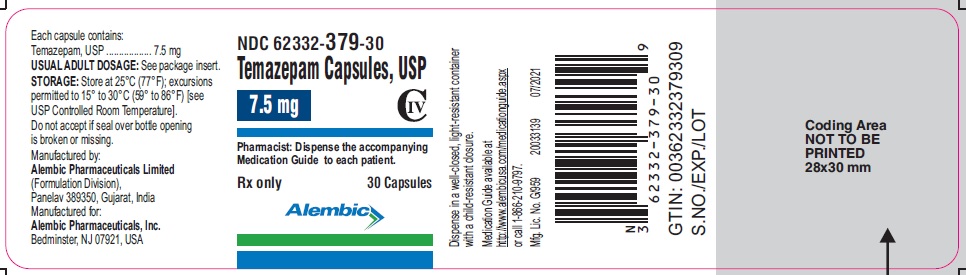
PACKAGE LABEL.PRINCIPAL DISPLAY PANEL - 7.5 mg NDC 62332-379-30 Temazepam Capsules, USP 7.5 mg CIV Pharmacist: Dispense the accompanying Medication Guide to each patient. Rx only 30 Capsules Alembic temazepam-7-5-mg
PACKAGE LABEL.PRINCIPAL DISPLAY PANEL - 15 mg NDC 62332-380-30 Temazepam Capsules, USP 15 mg CIV Pharmacist: Dispense the accompanying Medication Guide to each patient. Rx only 30 Capsules Alembic temazepam-15-mg
PACKAGE LABEL.PRINCIPAL DISPLAY PANEL - 22.5 mg NDC 62332-381-30 Temazepam Capsules, USP 22.5 mg CIV Pharmacist: Dispense the accompanying Medication Guide to each patient. Rx only 30 Capsules Alembic temazepam-22-5-mg
PACKAGE LABEL.PRINCIPAL DISPLAY PANEL - 30 mg NDC 62332-382-30 Temazepam Capsules, USP 30 mg CIV Pharmacist: Dispense the accompanying Medication Guide to each patient. Rx only 30 Capsules Alembic temazepam-30-mg