
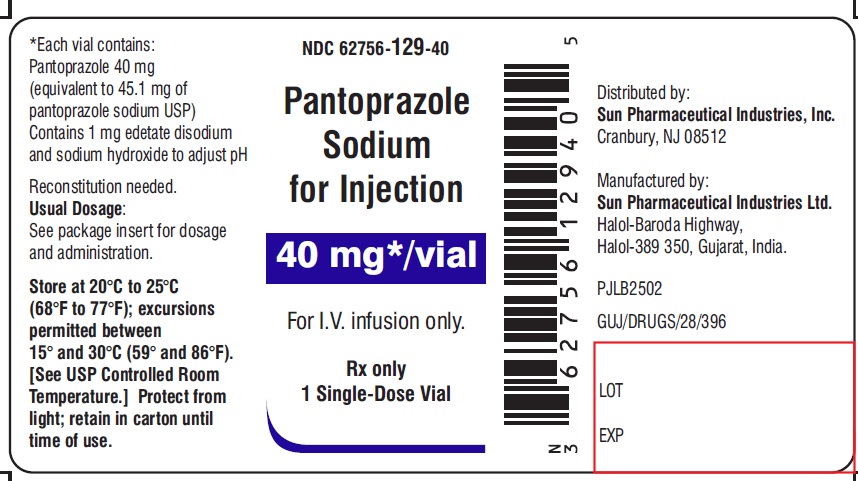
PANTOPRAZOLE SODIUM 40 mg/10mL Injection, Powder, Lyophilized, For Solution — NDC 62756-129-40 (Billing 62756-0129-40)
This is a package of PANTOPRAZOLE SODIUM 40 mg/10mL Injection, Powder, Lyophilized, For Solution from Sun Pharmaceutical Industries, Inc., marketed since Sep 2019 and currently FDA-listed.
NDC database record
One package, one record: these facts belong to NDC 62756-129-40 alone.
- Record
- FDA NDC Directory package listing · Human prescription drug
- Code segments
- 62756 labeler · 129 product · 40 package
- Package marketed since
- Sep 1, 2019
- Sample package
- No — commercial package
- Listing certified through
- Dec 31, 2026
- Barcode (UPC)
- 0362756129405
- FDA record last changed
- Jul 24, 2026
Identity & classification
Regulatory identifiers FDA, NLM and CMS codes for this package
Drug-database identifiers Medi-Span GPI and First Databank GCN / HICL / AHFS classification
- GSN (GCN sequence number): 047635
- GCN: 13025
- GPI-14 (Medi-Span): 49270070102120
- HICL (First Databank): 022008
- AHFS class code: 56:28.36.00
- RxCUI (RxNorm): 283669
Where does this data come from?
- FDA openFDA NDC Directory · synced Oct 8, 2026
- FDA label on DailyMed · label index refreshed Oct 6, 2026
- RxNorm (NLM RxNav) · catalog refreshed Oct 1, 2026
- Medi-Span GPI (licensed)
- First Databank (licensed) · refreshed Oct 8, 2026
RxNorm drug class
This medicine belongs to the Proton Pump Inhibitor class.
Where does this data come from?
- RxClass (NLM) · catalog refreshed Oct 1, 2026
Clinical
Pantoprazole injection is used to treat gastroesophageal reflux disease (GERD; a condition where stomach acid flows back into the esophagus (tube between the stomach and throat)) treat conditions where the stomach produces too much acid, such as Zollinger-Ellison syndrome Pantoprazole is in a class of medications called proton-pump inhibitors. It works by decreasing the amount of acid made in the stomach.
Read the full MedlinePlus article ↗- It lowers stomach acid. It is used to heal and keep healed the irritation of the esophagus caused by GERD, and to treat conditions where the stomach makes too much acid, like Zolli...
- Tablets can be taken with or without meals. If you use the granule suspension, take it about 30 minutes before a meal. Follow your prescriber’s schedule and the directions on your...
- The most common are headache, diarrhea, nausea, belly pain, gas, and dizziness. Call your doctor for a severe rash, diarrhea that will not clear up, muscle spasms or an irregular h...
- Some people need it long term, but your prescriber should use the lowest dose for the shortest time that works. Long-term use has been linked to fractures, low vitamin B-12, low ma...
Patient education
Supplement & herbal interactions
Pantoprazole may be associated with lower levels of 9 nutrients — worth a chat with your pharmacist, not a cause for alarm.
Where does this data come from?
- MedlinePlus (NLM) · refreshed Oct 1, 2026
- FDA label on DailyMed · label index refreshed Oct 6, 2026
Ask a licensed pharmacist directly — free, answered by our team.
Pricing
A drug doesn't have one price. Each row is a different public payment system, and none is what you'd pay at the counter — that depends on your insurance. The ⓘ on each row explains what it measures.
| Price system | Per mL | Per package |
|---|---|---|
| Retail pharmacies payNADAC · weekly | Not in the retail survey — common for institutional, discontinued, or low-volume packs. | |
| Medicaid paysCMS SDUD · 12 mo | No recent Medicaid claims on file for this NDC — rare and low-volume NDCs are suppressed in the public data. | |
| Medicare drug plans payPart D · quarterly | No Part D plan price is available for this NDC in our data. | |
| Medicare Part B allowsASP · J2470 | No ASP payment limit on file for J2470 this quarter. | |
Where does this data come from?
- CMS NADAC weekly file
- CMS ASP pricing files · refreshed Sep 20, 2026
- CMS Medicaid State Drug Utilization Data · refreshed Oct 8, 2026
- CMS Part D plan pricing files · refreshed Sep 24, 2026
- VA National Acquisition Center price file
Billing & reimbursement
Where does this data come from?
- CMS ASP NDC-HCPCS crosswalk · refreshed Sep 22, 2026
- DMEPDAC NDC-HCPCS crosswalk
- openFDA NSDE billing units · refreshed Oct 7, 2026
Packaging — all sizes for this product
| Package NDC | Description | Marketing start | Marketing end | Status |
|---|---|---|---|---|
| 62756-0129-40 You're viewing this | 1 VIAL in 1 CARTON / 10 mL in 1 VIAL | 2019-09-01 | — | Active |
| 62756-0129-44 62756-129-44 Main listing | 10 VIAL in 1 CARTON / 10 mL in 1 VIAL | 2019-09-01 | — | Active |
| 62756-0129-45 62756-129-45 | 25 CARTON in 1 PACKAGE / 1 VIAL in 1 CARTON / 10 mL in 1 VIAL | 2019-09-01 | — | Active |
This pack shows little to no recent Medicaid volume — a different pack size carries most fills. See all packs ↓
Pack size FAQ
What quantity is in this package?
What NDC number is used to bill for this package of PANTOPRAZOLE SODIUM 40 mg/10mL Injection, Powder, Lyophilized, For Solution?
Therapeutic equivalents
| Product | Labeler | Pack | NADAC/unit | TE | Status | Price vs. this |
|---|---|---|---|---|---|---|
| Pantoprazole Sodium 40 mg 00143-9284-10 | Hikma | 10 vials | $2.374 | AP | Availability likely | — |
| Pantoprazole Sodium 40 mg 00143-9300-10 | Hikma | 10 vials | $2.374 | AP | Availability likely | — |
| Pantoprazole Sodium 40 mg/10mL 25021-0751-10 | Sagent | 10 vials | $2.374 | AP | Availability likely | — |
| pantoprazole sodium 40 mg 31722-0204-10 | Camber | 10 vials | $2.374 | AP | Availability likely | — |
| Pantoprazole Sodium 40 mg 55150-0202-10 | Eugia | 10 vials | $2.374 | AP | Availability likely | — |
| Pantoprazole Sodium I.v. 40 mg/10mL 66794-0258-41 | Piramal | 1 vial | $2.374 | AP | Availability likely | — |
| Pantoprazole sodium 40 mg/10mL 70095-0024-02 | Sun | 1 vial | $2.374 | AP | Availability likely | — |
| Pantoprazole Sodium 40 mg/10mL 71288-0600-11 | Meitheal | 10 vials | $2.374 | AP | Availability likely | — |
| Pantoprazole Sodium 40 mg/10mL 72603-0128-10 | Northstar | 10 vials | $2.374 | AP | Availability likely | — |
| Protonix I.V. 40 mg/10mL 00008-0923-51 | Wyeth | 1 vial | — | AP | FDA listed | — |
| Protonix I.V. 40 mg/10mL 00008-4001-10 | Wyeth | 1 vial | — | AP | FDA listed | — |
| Pantoprazole Sodium I.v. 40 mg/10mL 00781-3480-95 | Sandoz | 10 vials | — | AP | FDA listed | — |
| Pantoprazole Sodium 40 mg/10mL 46708-0071-01 | Alembic | 1 vial | — | AP | FDA listed | — |
| Protonix I.V. 40 mg/10mL 55154-4225-05 | Cardinal | 5 vials | — | AP | FDA listed | — |
| Protonix I.V. 40 mg/10mL 55154-4236-05 | Cardinal | 5 vials | — | AP | FDA listed | — |
| Pantoprazole Sodium 40 mg 55154-7477-05 | Cardinal | 5 vials | — | AP | FDA listed | — |
| Pantoprazole Sodium 40 mg 55154-8336-05 | Cardinal | 5 vials | — | AP | FDA listed | — |
| Pantoprazole Sodium 40 mg/10mL 62332-0071-01 | Alembic | 1 vial | — | AP | FDA listed | — |
| Pantoprazole Sodium 40 mg/10mLthis 62756-0129-40 | Sun | 1 vial | — | — | FDA listed | — |
| Pantoprazole Sodium 40 mg/10mL 65219-0385-10 | Fresenius | 10 vials | — | AP | FDA listed | — |
| Pantoprazole sodium 40 mg/10mL 68083-0493-01 | Gland | 1 vial | — | AP | FDA listed | — |
| Pantoprazole sodium 40 mg/10mL 71839-0122-01 | BE | 1 vial | — | AP | FDA listed | — |
| Pantoprazole Sodium 40 mg/10mL 72205-0180-07 | Novadoz | 10 vials | — | AP | FDA listed | — |
| Pantoprazole Sodium 40 mg 72572-0553-10 | Civica, | 10 vials | — | AP | FDA listed | — |
| Pantoprazole Sodium 40 mg/10mL 73043-0020-01 | Devatis | 1 vial | — | AP | FDA listed | — |
Where does this data come from?
- FDA openFDA NDC Directory · synced Oct 8, 2026
- FDA Orange Book · refreshed Oct 3, 2026
- CMS NADAC weekly file
Availability & generic status
This product is an FDA-approved generic. Other versions of the same drug are listed under Therapeutic equivalents, least expensive first.
Where does this data come from?
- FDA Orange Book · refreshed Oct 3, 2026
Inactive Ingredients / Excipients
Inactive ingredients, also called excipients, are components of the drug product other than the active ingredient. They may include fillers, dyes, coatings, preservatives, flavors, or other formulation ingredients.
🧪 Avoiding an ingredient? See Pantoprazole inactive ingredients by manufacturer: every current product's list side by side, so you can ask your pharmacy for the version that does not list it.
💡 Tap an ingredient (hover on desktop) to see what it is and why it’s used.
-
1 mg / 10 mL
UNII 7FLD91C86K
Edetate disodium is a chemical compound that binds and removes certain metal ions. In medicines, it acts as a preservative and stabilizer by preventing metals like calcium from interfering with the product's shelf life and consistency.
-
UNII 55X04QC32I
A strong alkaline chemical used to adjust and maintain the pH balance of liquid medicines. It helps keep the medicine stable and ensures it stays effective during storage.
2 inactive ingredients listed in the exact product block matched to this NDC.
Where does this data come from?
ingredient classCode="IACT" elements from the exact product block matched by this NDC. Label-section narrative from DailyMed / the openFDA label index is shown separately when available.- FDA label on DailyMed · label index refreshed Oct 6, 2026
- FDA openFDA NDC Directory · synced Oct 8, 2026
Inactive ingredient FAQ
Are inactive ingredients the same for every manufacturer?
Why might an inactive ingredient be missing?
Can inactive ingredients matter?
Manufacturer & labeler
More NDCs from Sun Pharmaceutical Industries, Inc. labeler code 62756
- Carboplatin 1 kg/kg Powder NDC 62756-121-12
- Carvedilol 25 kg/25kg Powder NDC 62756-122-16
- Topiramate 25 kg/25kg Powder NDC 62756-123-11
- Bupropion Hydrochloride 25 kg/25kg Powder NDC 62756-125-11
- Amifostine 5 kg/5kg Powder NDC 62756-127-11
- Pantoprazole Sodium 25 kg/25kg Powder NDC 62756-128-14
- ondansetron hydrochloride 4 mg Tablet, Film Coated NDC 62756-130-01
- ondansetron hydrochloride 8 mg Tablet, Film Coated NDC 62756-131-01
- Rivastigmine Tartrate 10 kg/10kg Powder NDC 62756-136-11
- gabapentin 100 mg Capsule NDC 62756-137-01
- gabapentin 300 mg Capsule NDC 62756-138-01
- gabapentin 400 mg Capsule NDC 62756-139-01
Where does this data come from?
- FDA openFDA NDC Directory · synced Oct 8, 2026
- Drugs@FDA
Full prescribing information FDA SPL
🎯 Indications and Usage ▾
1 INDICATIONS AND USAGE Pantoprazole sodium for injection is indicated for treatment of: gastroesophageal reflux disease (GERD) and a history of erosive esophagitis (EE) for up to 10 days in adults. pathological hypersecretory conditions including Zollinger-Ellison (ZE) Syndrome in adults. Limitations of Use The safety and effectiveness of pantoprazole sodium for injection for the treatment of upper gastrointestinal bleeding have not been established in adult or pediatric patients. Pediatric use information is approved for Pfizer Inc.'s PROTONIX ® I.V.
(pantoprazole sodium) for Injection. However, due to Pfizer Inc.'s marketing exclusivity rights, this drug product is not labeled with that information. Pantoprazole sodium is a proton pump inhibitor (PPI) indicated for treatment of: gastroesophageal reflux disease (GERD) and a history of erosive esophagitis (EE) for up to 10 days in adults.
(1) pathological hypersecretion conditions including Zollinger-Ellison (ZE) Syndrome in adults. (1) Limitations of Use The safety and effectiveness of pantoprazole sodium for injection for the treatment of upper gastrointestinal bleeding have not been established in adult or pediatric patients. (1)
⏱️ Dosage and Administration ▾
2 DOSAGE AND ADMINISTRATION GERD and a History of EE Adults: The recommended dosage is 40 mg once daily by intravenous injection (over at least 2 minutes) or intravenous infusion (for 15 minutes) for up to 10 days. (2.1) Discontinue as soon as the patient is able to receive oral treatment. Switch to an appropriate oral medication within 10 days of starting pantoprazole sodium for injection.
(2.1) Pathological Hypersecretion Conditions, Including ZE Syndrome The recommended adult dosage is 80 mg every 12 hours by intravenous injection (over at least 2 minutes) or intravenous infusion (for 15 minutes). (2.2) For information on how to adjust dosing for individual patient needs, see the full prescribing information. (2.2) When switching between intravenous to oral formulations of gastric acid inhibitors, consider the pharmacodynamic action of the drugs to ensure continuity of acid suppression.
(2.2) Preparation and Administration Instructions See full prescribing information for preparation and administration instructions by indication. (2.3, 2.4)
2.1Recommended Dosage for GERD Associated with a History of EE Adult Patients The recommended adult dosage of pantoprazole sodium for injection is 40 mg once daily by intravenous injection (over at least 2 minutes) or intravenous infusion (for 15 minutes) for up to 10 days. Discontinue pantoprazole sodium for injection as soon as the patient is able to tolerate oral treatment. Switch to an appropriate oral medication within 10 days of starting pantoprazole sodium for injection.
Pediatric use information is approved for Pfizer Inc.'s PROTONIX ® I.V. (pantoprazole sodium) for Injection. However, due to Pfizer Inc.'s marketing exclusivity rights, this drug product is not labeled with that information.
2.2Recommended Dosage for Pathological Hypersecretion Including Zollinger-Ellison Syndrome The recommended adult dosage of pantoprazole sodium for injection is 80 mg every 12 hours by intravenous injection (over at least 2 minutes) or intravenous infusion (for 15 minutes). Adjust the frequency of dosing to individual patient needs based on acid output measurements. In those patients who need a higher dosage, 80 mg intravenously every 8 hours is expected to maintain acid output below 10 mEq/h.
When switching between intravenous to oral formulations of gastric acid inhibitors, consider the pharmacodynamic action of the drugs to ensure continuity of acid suppression.
2.3Preparation and Administration Instructions for GERD Associated with a History of EE 15-Minute Intravenous Infusion for Pediatric or Adult Patients 1 Reconstitute each vial of pantoprazole sodium for injection with 10 mL of 0.9% Sodium Chloride Injection. 2 Dilute the resulting solution to a final concentration as described below: Adult patients: Further dilute with 100 mL 5% Dextrose Injection or 0.9% Sodium Chloride Injection to a final concentration of approximately 0.4 mg/mL. 3 Inspect the diluted pantoprazole sodium for injection solution visually for particulate matter and discoloration prior to and during administration.
4 Withdraw the dose of the diluted pantoprazole sodium for injection solution for a adult dose. 6 Infuse intravenously over a period of approximately 15 minutes through a dedicated line or through a Y-site [see Dosage and Administration (2.5)]. 7 Flush the intravenous line before and after administration of pantoprazole sodium for injection with either 5% Dextrose Injection or 0.9% Sodium Chloride Injection.
Storage a. Store the reconstituted solution may be up to 6 hours at room temperature up to 30°C (86°F) prior to further dilution. b. Store the diluted solution at room temperature up to 30°C (86°F) and must be used within 24 hours from the time of initial reconstitution. c.
Do not freeze the reconstituted or diluted solution. 2-Minute Intravenous Injection for Adult Patients 1 Reconstitute each vial of pantoprazole sodium for injection with 10 mL of 0.9% Sodium Chloride Injection, to a final concentr… [Excerpted — this section continues on DailyMed.]
💊 Dosage Forms and Strengths ▾
3 DOSAGE FORMS AND STRENGTHS For Injection: 40 mg of pantoprazole white to off white colored lyophilized powder or cake in a single-dose vial for reconstitution or dilution. For Injection: 40 mg pantoprazole white to off white colored lyophilized powder or cake in single-dose vial for reconstitution or dilution. (3)
⛔ Contraindications ▾
4 CONTRAINDICATIONS Pantoprazole sodium for injection is contraindicated in patients with known hypersensitivity reactions including anaphylaxis to the formulation or any substituted benzimidazole. Hypersensitivity reactions may include anaphylaxis, anaphylactic shock, angioedema, bronchospasm, acute tubulointerstitial nephritis, and urticaria [see Warnings and Precautions (5.2, 5.4) and Adverse Reactions (6)] . Proton pump inhibitors (PPIs), including pantoprazole sodium for injection, are contraindicated in patients receiving rilpivirine-containing products [see Drug Interactions (7)].
Known hypersensitivity to any component of the formulation or to substituted benzimidazoles. (4) Patients receiving rilpivirine-containing products. (4, 7)
⚠️ Warnings and Cautions ▾
5 WARNINGS AND PRECAUTIONS G astric Malignancy : In adults, symptomatic response to therapy with pantoprazole sodium for injection does not preclude the presence of gastric malignancy. Consider additional follow-up and diagnostic testing. (5.1) I n jection Site Reactions : Thrombophlebitis is associated with the administration of pantoprazole sodium for injection.
Assess the patient and remove the catheter if clinically indicated. (5.2) P o tential Exacerbation of Zinc Deficiency : Consider zinc supplementation in patients who are prone to zinc deficiency. Caution should be used when other EDTA containing products are also coadministered intravenously.
(5.3) A cute Tubulointerstitial Nephritis : Discontinue treatment and evaluate patients. (5.4) Clostridioides difficile - A ss o ciated Diarrhea : PPI therapy may be associated with increased risk. (5.5) Bone Fracture : Long -term and multiple daily dose PPI therapy may be associated with an increased risk for osteoporosis-related fractures of the hip, wrist, or spine.
(5.6) Severe Cutaneous Adverse Reactions : Discontinue at the first signs or symptoms of severe cutaneous adverse reactions or other signs of hypersensitivity and consider further evaluation. (5.7) Cutaneous and Systemic Lupus Erythematosus : Mostly cutaneous; new onset or exacerbation of existing disease; discontinue treatment and refer to specialist for evaluation. (5.8) H e p atic Effects : Elevations of transaminases observed.
(5.9) H y p o m agnesemia and Mineral Metabolism : Reported rarely with prolonged treatment with PPIs. (5.10) Fundic Gland Polyps: Risk increases with long-term use, especially beyond one year. Use the shortest duration of therapy.
(5.11)
5.1Presence of Gastric Malignancy In adults, symptomatic response to therapy with pantoprazole sodium for injection does not preclude the presence of gastric malignancy. Consider additional follow-up and diagnostic testing in adult patients who have a suboptimal response or an early symptomatic relapse after completing treatment with a PPI. In older patients, also consider an endoscopy.
5.2Injection Site Reactions Thrombophlebitis was associated with the administration of pantoprazole sodium for injection. Assess the patient and remove the catheter if clinically indicated.
5.3Potential for Exacerbation of Zinc Deficiency Pantoprazole sodium for injection contains edetate disodium (the salt form of EDTA), a chelator of metal ions including zinc. Therefore, zinc supplementation should be considered in patients treated with pantoprazole sodium for injection who are prone to zinc deficiency. Caution should be used when other EDTA containing products are also coadministered intravenously [see Dosage and Administration (2.5)].
5.4Acute Tubulointerstitial Nephritis Acute tubulointerstitial nephritis (TIN) has been observed in patients taking PPIs and may occur at any point during PPI therapy. Patients may present with varying signs and symptoms from symptomatic hypersensitivity reactions to non-specific symptoms of decreased renal function (e.g., malaise, nausea, anorexia). In reported case series, some patients were diagnosed on biopsy and in the absence of extra-renal manifestations (e.g., fever, rash or arthralgia).
Discontinue pantoprazole sodium for injection and evaluate patients with suspected acute TIN [see Contraindications (4)].
5.5Clostridioides difficile -Associated Diarrhea Published observational studies suggest that PPI therapy like pantoprazole sodium for injection may be associated with an increased risk of Clostridioides difficile associated diarrhea, especially in hospitalized patients. This diagnosis should be considered for diarrhea that does not improve [see Adverse Reactions (6.2)]. Patients should use the lowest dose and shortest duration of PPI therapy appropriate to the condition being treated.
5.6Bone Fracture Several published observational studies suggest that PPI therapy may be associated with an increased risk for osteoporo… [Excerpted — this section continues on DailyMed.]
🤒 Adverse Reactions ▾
6 ADVERSE REACTIONS The following serious adverse reactions are described below and elsewhere in labeling: Injection Site Reactions [see Warnings and Precautions (5.2)] Potential for Exacerbation of Zinc Deficiency [see Warnings and Precautions (5.3)] Acute Tubulointerstitial Nephritis [see Warnings and Precautions (5.4)] Clostridioides difficile -Associated Diarrhea [see Warnings and Precautions (5.5)] Bone Fracture [see Warnings and Precautions (5.6)] Severe Cutaneous Adverse Reactions [see Warnings and Precautions (5.7)] Cutaneous and Systemic Lupus Erythematosus [see Warnings and Precautions (5.8)] Hepatic Effects [see Warnings and Precautions (5.9)] Hypomagnesemia and Mineral Metabolism [see Warnings and Precautions (5.10)] Fundic Gland Polyps [see Warnings and Precautions (5.11)] Most common adverse reactions (>2%) are: headache, diarrhea, nausea, abdominal pain, vomiting, flatulence, dizziness, and arthralgia.
(6.1) To report SUSPECTED ADVERSE REACTIONS, contact Sun Pharmaceutical Industries, Inc. at 1-800-818-4555 or FDA at 1-800-FDA-1088 or www.fda.gov/medwatch.
6.1Clinical Trials Experience Because clinical trials are conducted under widely varying conditions, adverse reaction rates observed in the clinical trials of a drug cannot be directly compared to rates in the clinical trials of another drug and may not reflect the rates observed in clinical practice. Gastroesophageal Reflux Disease (GERD) Adults Safety in nine randomized comparative US clinical trials in patients with GERD included 1,473 patients on oral pantoprazole (20 mg or 40 mg), 299 patients on an H 2 -receptor antagonist, 46 patients on another PPI, and 82 patients on placebo.
The most frequently occurring adverse reactions are listed in Table 2. The number of patients treated in comparative studies with pantoprazole sodium for injection is limited; however, the adverse reactions seen were similar to those seen in the oral studies. Thrombophlebitis was the only new adverse reaction identified with pantoprazole sodium for injection.
Table 2: Adverse Reactions Reported in Clinical Trials of Adult Patients with GERD at a Frequency of > 2% Oral Pantoprazole Sodium (n=1,473) % Comparators (n=345) % Placebo (n=82) % Headache 12.2 12.8
8.5Diarrhea 8.8 9.6
4.9Nausea 7 5.2
9.8Abdominal pain 6.2 4.1
6.1Vomiting 4.3 3.5
2.4Flatulence 3.9 2.9
3.7Dizziness 3 2.9
1.2Arthralgia 2.8 1.4
1.2Additional adverse reactions that were reported for oral pantoprazole sodium in US clinical trials with a frequency of ≤2% are listed below by body system: Body as a Whole : allergic reaction, fever, photosensitivity reaction, facial edema, thrombophlebitis (intravenous only) Gastrointestinal : constipation, dry mouth, hepatitis Hematologic : leukopenia (reported in ex-US clinical trials only), thrombocytopenia Metabolic/Nutritional : elevated CPK (creatine phosphokinase), generalized edema, elevated triglycerides, liver function tests abnormal Musculoskeletal : myalgia Nervous : depression, vertigo Skin and Appendages : urticaria, rash, pruritus Special Senses : blurred vision Zollinger-Ellison (ZE) Syndrome In clinical studies of ZE Syndrome, adverse reactions reported in 35 patients administered pantoprazole sodium for injection doses of 80 mg to 240 mg per day for up to 2 years were similar to those reported in adult patients with GERD.
Pediatric use information is approved for Pfizer Inc.'s PROTONIX ® I.V. (pantoprazole sodium) for Injection. However, due to Pfizer Inc.'s marketing exclusivity rights, this drug product is not labeled with that information.
6.2Postmarketing Experience The following adverse reactions have been identified during postapproval use of pantoprazole sodium products. Because these reactions are reported voluntarily from a population of uncertain size, it is not always possible to reliably estimate their frequency or establish a causal relationship to drug exposure. These adverse reactions are listed below by body system: Ge neral disorders and… [Excerpted — this section continues on DailyMed.]
🔄 Drug Interactions ▾
7 DRUG INTERACTIONS Table 3 includes drugs with clinically important drug interactions and interaction with diagnostics when administered concomitantly with pantoprazole sodium for injection and instructions for preventing or managing them. Consult the labeling of concomitantly used drugs to obtain further information about interactions with PPIs. Table 3: Clinically Relevant Interactions Affecting Drugs Coadministered with Pantoprazole Sodium for Injection and Interaction with Diagnostics Antiretrovirals Clinical Impact: The effect of PPIs on antiretroviral drugs is variable.
The clinical importance and the mechanisms behind these interactions are not always known. Decreased exposure of some antiretroviral drugs (e.g., rilpivirine atazanavir, and nelfinavir) when used concomitantly with pantoprazole may reduce antiviral effect and promote the development of drug resistance. Increased exposure of other antiretroviral drugs (e.g., saquinavir) when used concomitantly with pantoprazole may increase toxicity of the antiretroviral drugs.
There are other antiretroviral drugs which do not result in clinically relevant interactions with pantoprazole. Intervention: Rilpivirine -containing products: Concomitant use with pantoprazole sodium for injection is contraindicated [see Contraindications (4)] . See prescribing information.
Atazanavir: See prescribing information for atazanavir for dosing information. Nelfinavir: Avoid concomitant use with pantoprazole sodium for injection See prescribing information for nelfinavir. Saquinavir: See the prescribing information for saquinavir and monitor for potential saquinavir toxicities.
Other antiretrovirals: See prescribing information. Warfarin Clinical Impact: Increased INR and prothrombin time in patients receiving PPIs, including pantoprazole, and warfarin concomitantly. Increases in INR and prothrombin time may lead to abnormal bleeding and even death.
Intervention: Monitor INR and prothrombin time. Dose adjustment of warfarin may be needed to maintain target INR range. See prescribing information for warfarin.
Clopidogrel Clinical Impact: Concomitant administration of pantoprazole and clopidogrel in healthy subjects had no clinically important effect on exposure to the active metabolite of clopidogrel or clopidogrel-induced platelet inhibition [see Clinical Pharmacology (12.3)]. Intervention: No dose adjustment of clopidogrel is necessary when administered with an approved dose of pantoprazole sodium for injection. Methotrexate Clinical Impact: Concomitant use of PPIs with methotrexate (primarily at high dose) may elevate and prolong serum concentrations of methotrexate and/or its metabolite hydroxymethotrexate, possibly leading to methotrexate toxicities.
No formal drug interaction studies of high-dose methotrexate with PPIs have been conducted [see Warnings and Precautions (5.14)]. Intervention: A temporary withdrawal of pantoprazole sodium for injection may be considered in some patients receiving high-dose methotrexate. Drugs Dependent on Gastric pH for Absorption (e.g., iron salts, erlotinib, dasatinib, nilotinib, mycophenolate mofetil, ketoconazole/itraconazole) Clinical Impact: Pantoprazole can reduce the absorption of other drugs due to its effect on reducing intragastric acidity.
Intervention: Mycophenolate mofetil (MMF): Coadministration of pantoprazole sodium in healthy subjects and in transplant patients receiving MMF has been reported to reduce the exposure to the active metabolite, mycophenolic acid (MPA), possibly due to a decrease in MMF solubility at an increased gastric pH [see Clinical Pharmacology (12.3)]. The clinical relevance of reduced MPA exposure on organ rejection has not been established in transplant patients receiving pantoprazole sodium for injection and MMF. Use pantoprazole sodium for injection with caution in transplant patients receiving MMF.
See the prescribing information for other drugs dependent on gastric pH for absorption. Interactions with Investi… [Excerpted — this section continues on DailyMed.]
👥 Use in Specific Populations ▾
8 USE IN SPECIFIC POPULATIONS Pregnancy : Based on animal data, may cause fetal harm. (8.1) Pediatric use information is approved for Pfizer Inc.'s PROTONIX ® I.V. (pantoprazole sodium) for Injection. However, due to Pfizer Inc.'s marketing exclusivity rights, this drug product is not labeled with that information.
8.1Pregnancy Risk Summary Available data from published observational studies did not demonstrate an association of major malformations or other adverse pregnancy outcomes with pantoprazole. In animal reproduction studies, no evidence of adverse development outcomes was observed with pantoprazole sodium. Reproduction studies have been performed in rats at intravenous doses up to 20 mg/kg/day (4 times the recommended human dose) and rabbits at intravenous doses up to 15 mg/kg/day (6 times the recommended human dose) with administration of pantoprazole during organogenesis in pregnant animals and have revealed no evidence of harm to the fetus due to pantoprazole in this study (see Data) .
A pre-and post-natal development toxicity study in rats with additional endpoints to evaluate the effect on bone development was performed with pantoprazole sodium. Oral pantoprazole doses of 5 mg/kg/day, 15 mg/kg/day, and 30 mg/kg/day (approximately 1, 3, and 6 times the human dose of 40 mg/day) were administered to pregnant females from gestation day (GD) 6 through lactation day (LD) 21. Changes in bone morphology were observed in pups exposed to pantoprazole in utero and through milk during the period of lactation as well as by oral dosing from postnatal day (PND) 4 through PND 21 [see Use in Specific Populations (8.4)] .
There were no drug-related findings in maternal animals . Advise pregnant women of the potential risk of fetal harm. The estimated background risk of major birth defects and miscarriage for the indicated population is unknown.
All pregnancies have a background risk of birth defect, loss or other adverse outcomes. In the U.S. general population, the estimated background risk of major birth defects and miscarriage in the clinically recognized pregnancies is 2% to 4% and 15% to 20%, respectively. Data Human Data Available data from published observational studies failed to demonstrate an association of adverse pregnancy-related outcomes and pantoprazole use.
Methodological limitations of these observational studies cannot definitely establish or exclude any drug-associated risk during pregnancy. In a prospective study by the European Network of Teratology Information Services, outcomes from a group of 53 pregnant women administered median daily doses of 40 mg pantoprazole were compared to a control group of 868 pregnant women who did not take any proton pump inhibitors (PPIs). There was no difference in the rate of major malformations between women exposed to PPIs and the control group, corresponding to a Relative Risk (RR)=0.55, [95% Confidence Interval (CI) 0.08-3.95].
In a population-based retrospective cohort study covering all live births in Denmark from 1996 to 2008, there was no significant increase in major birth defects during analysis of first trimester exposure to pantoprazole in 549 live births. A meta-analysis that compared 1,530 pregnant women exposed to PPIs in at least the first trimester with 133,410 unexposed pregnant women showed no significant increases in risk for congenital malformations or spontaneous abortion with exposure to PPIs (for major malformations OR=1.12 ([95% CI 0.86-1.45] and for spontaneous abortions OR=1.29 [95% CI 0.84-1.97]).
Animal Data Reproduction studies have been performed in rats at intravenous pantoprazole doses up to 20 mg/kg/day (4 times the recommended human dose based on body surface area) and rabbits at intravenous doses up to 15 mg/kg/day (6 times the recommended human dose based on body surface area) with administration of pantoprazole sodium during organogenesis in pregnant animals and have revealed no evidence of impaired fertility or harm to the fetus due to p… [Excerpted — this section continues on DailyMed.]
🤰 Pregnancy ▾
8.1Pregnancy Risk Summary Available data from published observational studies did not demonstrate an association of major malformations or other adverse pregnancy outcomes with pantoprazole. In animal reproduction studies, no evidence of adverse development outcomes was observed with pantoprazole sodium. Reproduction studies have been performed in rats at intravenous doses up to 20 mg/kg/day (4 times the recommended human dose) and rabbits at intravenous doses up to 15 mg/kg/day (6 times the recommended human dose) with administration of pantoprazole during organogenesis in pregnant animals and have revealed no evidence of harm to the fetus due to pantoprazole in this study (see Data) .
A pre-and post-natal development toxicity study in rats with additional endpoints to evaluate the effect on bone development was performed with pantoprazole sodium. Oral pantoprazole doses of 5 mg/kg/day, 15 mg/kg/day, and 30 mg/kg/day (approximately 1, 3, and 6 times the human dose of 40 mg/day) were administered to pregnant females from gestation day (GD) 6 through lactation day (LD) 21. Changes in bone morphology were observed in pups exposed to pantoprazole in utero and through milk during the period of lactation as well as by oral dosing from postnatal day (PND) 4 through PND 21 [see Use in Specific Populations (8.4)] .
There were no drug-related findings in maternal animals . Advise pregnant women of the potential risk of fetal harm. The estimated background risk of major birth defects and miscarriage for the indicated population is unknown.
All pregnancies have a background risk of birth defect, loss or other adverse outcomes. In the U.S. general population, the estimated background risk of major birth defects and miscarriage in the clinically recognized pregnancies is 2% to 4% and 15% to 20%, respectively. Data Human Data Available data from published observational studies failed to demonstrate an association of adverse pregnancy-related outcomes and pantoprazole use.
Methodological limitations of these observational studies cannot definitely establish or exclude any drug-associated risk during pregnancy. In a prospective study by the European Network of Teratology Information Services, outcomes from a group of 53 pregnant women administered median daily doses of 40 mg pantoprazole were compared to a control group of 868 pregnant women who did not take any proton pump inhibitors (PPIs). There was no difference in the rate of major malformations between women exposed to PPIs and the control group, corresponding to a Relative Risk (RR)=0.55, [95% Confidence Interval (CI) 0.08-3.95].
In a population-based retrospective cohort study covering all live births in Denmark from 1996 to 2008, there was no significant increase in major birth defects during analysis of first trimester exposure to pantoprazole in 549 live births. A meta-analysis that compared 1,530 pregnant women exposed to PPIs in at least the first trimester with 133,410 unexposed pregnant women showed no significant increases in risk for congenital malformations or spontaneous abortion with exposure to PPIs (for major malformations OR=1.12 ([95% CI 0.86-1.45] and for spontaneous abortions OR=1.29 [95% CI 0.84-1.97]).
Animal Data Reproduction studies have been performed in rats at intravenous pantoprazole doses up to 20 mg/kg/day (4 times the recommended human dose based on body surface area) and rabbits at intravenous doses up to 15 mg/kg/day (6 times the recommended human dose based on body surface area) with administration of pantoprazole sodium during organogenesis in pregnant animals and have revealed no evidence of impaired fertility or harm to the fetus due to pantoprazole. A pre- and post-natal development toxicity study in rats with additional endpoints to evaluate the effect on bone development was performed with pantoprazole sodium.
Oral pantoprazole doses of 5 mg/kg/day, 15 mg/kg/day, and 30 mg/kg/day (approximately 1, 3, and 6 times the human dose of 40 mg/day on a b… [Excerpted — this section continues on DailyMed.]
🧒 Pediatric Use ▾
8.4Pediatric Use The safety and effectiveness of pantoprazole sodium for injection have not been established in patients less than 3 months of age for the treatment of GERD and a history of EE. The safety and effectiveness of pantoprazole sodium for injection have not been established in pediatric patients for the treatment of pathological hypersecretory conditions including ZE syndrome. A nimal Toxicity Data In neonatal/juvenile animals (rats and dogs) toxicities were similar to those observed in adult animals, including gastric alterations, decreases in red cell mass, increases in lipids, enzyme induction and hepatocellular hypertrophy.
An increased incidence of eosinophilic chief cells in adult and neonatal/juvenile rats, and atrophy of chief cells in adult rats and in neonatal/juvenile dogs, was observed in the fundic mucosa of stomachs in repeated-dose studies. Full to partial recovery of these effects were noted in animals of both age groups following a recovery period. Pediatric use information is approved for Pfizer Inc.'s PROTONIX ® I.V.
(pantoprazole sodium) for Injection. However, due to Pfizer Inc.'s marketing exclusivity rights, this drug product is not labeled with that information.
🧓 Geriatric Use ▾
8.5Geriatric Use Of 286 patients in clinical studies of intravenous pantoprazole sodium in patients with GERD and a history of EE, 86 (43%) were 65 years of age and over. No overall differences in safety or effectiveness were observed between these geriatric and younger adult patients, and other reported clinical experience with oral pantoprazole sodium has not identified differences in responses between geriatric and younger adult patients, but greater sensitivity of some older individuals cannot be ruled out. No clinically meaningful differences in the pharmacokinetics of pantoprazole were observed in geriatric subjects compared to younger adult subjects [see Clinical Pharmacology (12.3)] .
🆘 Overdosage ▾
10 OVERDOSAGE Experience in patients taking very high doses of pantoprazole (greater than 240 mg) is limited. Adverse reactions seen in spontaneous reports of overdose generally reflect the known safety profile of pantoprazole. Pantoprazole is not removed by hemodialysis.
In case of overdose, treatment should be symptomatic and supportive. Single intravenous doses of pantoprazole at 378, 230, and 266 mg/kg (38, 46, and 177 times the recommended human dose based on body surface area) were lethal to mice, rats and dogs, respectively. The symptoms of acute toxicity were hypoactivity, ataxia, hunched sitting, limb-splay, lateral position, segregation, absence of ear reflex, and tremor.
🧬 Clinical Pharmacology ▾
12 CLINICAL PHARMACOLOGY
12.1Mechanism of Action Pantoprazole is a PPI that suppresses the final step in gastric acid production by covalently binding to the (H + , K + )-ATPase enzyme system at the secretory surface of the gastric parietal cell. This effect leads to inhibition of both basal and stimulated gastric acid secretion irrespective of the stimulus. The binding to the (H + , K + )-ATPase results in a duration of antisecretory effect that persists longer than 24 hours for all doses tested (20 mg to 120 mg).
12.2Pharmacodynamics Antisecretory Activity The magnitude and time course for inhibition of pentagastrin-stimulated acid output (PSAO) by single doses (20 mg to 120 mg) of pantoprazole sodium for injection were assessed in a single-dose, open-label, placebo-controlled, dose-response study. The results of this study are shown in Table 4. Healthy subjects received a continuous infusion for 25 hours of pentagastrin (PG) at 1 mcg/kg/h, a dose known to produce submaximal gastric acid secretion.
The placebo group showed a sustained, continuous acid output for 25 hours, validating the reliability of the testing model. Pantoprazole sodium for injection had an onset of antisecretory activity within 15 to 30 minutes of administration. Doses of 20 mg to 80 mg of pantoprazole sodium for injection substantially reduced the 24-hour cumulative PSAO in a dose-dependent manner, despite a short plasma elimination half-life.
Complete suppression of PSAO was achieved with 80 mg within approximately 2 hours and no further significant suppression was seen with 120 mg. The duration of action of pantoprazole sodium for injection was 24 hours. Table 4: Gastric Acid Output (mEq/hr, Mean ± SD) and Percent Inhibition a (Mean ± SD) of Pentagastrin-Stimulated Acid Output Over 24 Hours Following a Single Dose of Pantoprazole Sodium for Injection b in Healthy Subjects Treatment Dose -----2 hours----- ----4 hours---- ----12 hours---- ----24 hours---- Acid Output % Inhibition Acid Output % Inhibition Acid Output % Inhibition Acid Output % Inhibition 0 mg (Placebo, n=4) 39 ± 21 NA 26 ± 14 NA 32 ± 20 NA 38 ± 24 NA 20 mg (n=4 to 6) 13 ±18 47 ± 27 6 ± 8 83 ± 21 20 ± 20 54 ± 44 30 ± 23 45 ± 43 40 mg (n=8) 5 ± 5 82 ± 11 4 ± 4 90 ± 11 11 ± 10 81 ± 13 16 ± 12 52 ± 36 80 mg (n=8) 0.1 ± 0.2 96 ± 6 0.3 ± 0.4 99 ± 1 2 ± 2 90 ± 7 7 ± 4 63 ± 18 a: Compared to individual subject baseline prior to treatment with pantoprazole sodium for injection b: Inhibition of gastric acid output and the percent inhibition of stimulated acid output in response to pantoprazole sodium for injection may be higher after repeated doses.
NA = not applicable. In one study of gastric pH in healthy subjects, pantoprazole was administered orally (40 mg enteric coated tablets) or pantoprazole sodium for injection (40 mg) once daily for 5 days and pH was measured for 24 hours following the fifth dose. The outcome measure was median percent of time that pH was ≥4 and the results were similar for intravenous and oral medications; however, the clinical significance of this parameter is unknown.
Serum Gastrin Effects Serum gastrin concentrations were assessed in two placebo-controlled studies. In a 5-day study of oral pantoprazole with 40 mg and 60 mg doses in healthy subjects, following the last dose on day 5, median 24-hour serum gastrin concentrations were elevated by 3- to 4-fold compared to placebo in both 40 mg and 60 mg dose groups. However, by 24 hours following the last dose, median serum gastrin concentrations for both groups returned to normal levels.
In another placebo-controlled, 7-day study of 40 mg intravenous or oral pantoprazole in patients with GERD and a history of EE, the mean serum gastrin concentration increased approximately 50% from baseline and as compared with placebo, but remained within the normal range. During 6 days of repeated administration of pantoprazole sodium for injection in patients with ZE Syndrome, consistent changes of serum gastrin concentrations from… [Excerpted — this section continues on DailyMed.]
🧬 Mechanism of Action ▾
12.1Mechanism of Action Pantoprazole is a PPI that suppresses the final step in gastric acid production by covalently binding to the (H + , K + )-ATPase enzyme system at the secretory surface of the gastric parietal cell. This effect leads to inhibition of both basal and stimulated gastric acid secretion irrespective of the stimulus. The binding to the (H + , K + )-ATPase results in a duration of antisecretory effect that persists longer than 24 hours for all doses tested (20 mg to 120 mg).
📦 How Supplied / Storage and Handling ▾
16 HOW SUPPLIED/STORAGE AND HANDLING Pantoprazole sodium for injection is supplied as a white to off white colored lyophilized powder or cake containing 40 mg of pantoprazole in a single-dose vial for reconstitution and dilution. Pantoprazole sodium for injection is available as follows: NDC 62756-129-40 – Package of 1 carton. 1 carton contains 1 vial of pantoprazole sodium for injection (1 vial contains 40 mg pantoprazole).
NDC 62756-129-44 – Package of 1 carton. 1 carton contains 10 vials of pantoprazole sodium for injection (each vial containing 40 mg pantoprazole). NDC 62756-129-45 – Package of 25 cartons.
Each carton (NDC 62756-129-40) contains 1 vial of pantoprazole sodium for injection (each vial containing 40 mg pantoprazole). Storage and Handling Store pantoprazole sodium for injection at 20° to 25°C (68° to 77°F); excursions permitted between 15° and 30°C (59° and 86°F) [ see USP Controlled Room Temperature ]. Protect from light.
📋 Description ▾
11 DESCRIPTION The active ingredient in pantoprazole sodium for injection, a PPI, is a substituted benzimidazole, sodium 5-(difluoromethoxy)-2-[[(3,4-dimethoxy-2-pyridinyl)methyl] sulfinyl]-1 H -benzimidazole sesquihydrate, a compound that inhibits gastric acid secretion. Its molecular formula is C 16 H 14 F 2 N 3 NaO 4 S•1.5H 2 O, with a molecular weight of 432.37. The structural formula is: Pantoprazole sodium, USP is a white to off-white crystalline powder and is racemic.
Pantoprazole has weakly basic and acidic properties. Pantoprazole sodium is freely soluble in water, very slightly soluble in phosphate buffer at pH 7.4, and practically insoluble in n-hexane. The reconstituted solution of pantoprazole sodium for injection is in the pH range of 9.0 to 10.5.
Pantoprazole sodium for injection is supplied for intravenous administration as a white to off white colored lyophilized powder or cake in a single-dose clear glass vial fitted with a rubber stopper and crimp seal. Each vial contains 40 mg pantoprazole (equivalent to 45.1 mg of pantoprazole sodium), edetate disodium (1 mg), and sodium hydroxide to adjust pH. spl-pantoprazole-for-injection-chemical-structure
💬 Information for Patients ▾
17 PATIENT COUNSELING INFORMATION A dverse Reactions Advise patients to report to their healthcare provider if they experience any signs or symptoms consistent with: Injection Site Reactions [see Warnings and Precautions (5.2)] Potential for Exacerbation of Zinc Deficiency [see Warnings and Precautions (5.3)] Acute Tubulointerstitial Nephritis [see Contraindications (4) and Warnings and Precautions (5.4)] Clostridioides difficile- Associated Diarrhea [see Warnings and Precautions (5.5)] Bone Fracture [see Warnings and Precautions (5.6)] Severe Cutaneous Adverse Reactions [see Warnings and Precautions (5.7)] Cutaneous and Systemic Lupus Erythematosus [see Warnings and Precautions (5.8)] Hepatic Effects [see Warnings and Precautions (5.9)] Hypomagnesemia and Mineral Metabolism [see Warnings and Precautions (5.10)] Drug Interactions Advise patients to report to their healthcare provider before they start treatment with any of the following: rilpivirine-containing products [Contraindications (4)] high dose methotrexate [Warnings and Precautions (5.14)].
Pregnancy Advise a pregnant woman of the potential risk to a fetus. Advise females of reproductive potential to inform their healthcare provider of a known or suspected pregnancy [see Use in Specific Populations (8.1)] . For more information, call 1-800-818-4555.
Distributed by: Sun Pharmaceutical Industries, Inc. Cranbury, NJ 08512 Manufactured by: Sun Pharmaceutical Ind. Ltd.
Halol-Baroda Highway, Halol-389 350, Gujarat, India. Revised. 02/2025
🧬 Pharmacokinetics ▾
12.3Pharmacokinetics Pantoprazole peak serum concentration (C max ) and area under the serum concentration-time curve (AUC) increase in a manner proportional to intravenous doses from 10 mg to 80 mg. Pantoprazole does not accumulate and its pharmacokinetics are unaltered with multiple daily dosing. Following the administration of pantoprazole sodium for injection, the serum concentration of pantoprazole declines biexponentially with a terminal elimination half-life of approximately one hour.
In CYP2C19 extensive metabolizers [see Clinical Pharmacology (12.5)] with normal liver function receiving a 40 mg dose of pantoprazole sodium for injection by constant rate over 15 minutes, the peak concentration (C max ) is 5.52 ±1.42 mcg/mL and the total area under the plasma concentration versus time curve (AUC) is 5.4 ±1.5 mcg hr/mL. The total clearance is 7.6 to 14 L/h. Distribution The apparent volume of distribution of pantoprazole is approximately 11 to
23.6L, distributing mainly in extracellular fluid. The serum protein binding of pantoprazole is about 98%, primarily to albumin. Elimination Metabolism Pantoprazole is extensively metabolized in the liver through the cytochrome P450 (CYP) system.
Pantoprazole metabolism is independent of the route of administration (intravenous or oral). The main metabolic pathway is demethylation, by CYP2C19, with subsequent sulfation; other metabolic pathways include oxidation by CYP3A4. There is no evidence that any of the pantoprazole metabolites have significant pharmacologic activity.
CYP2C19 displays a known genetic polymorphism due to its deficiency in some sub-populations (e.g., 3% of Whites and African-Americans and 17 to 23% of Asians). Although these sub-populations of slow pantoprazole metabolizers have elimination half-life values from 3.5 to 10 hours, they still have minimal accumulation (23% or less) with once daily dosing. Excretion After administration of a single intravenous dose of 14 C-labeled pantoprazole sodium to healthy, extensive CYP2C19 metabolizers, approximately 71% of the dose was excreted in the urine with 18% excreted in the feces through biliary excretion.
There was no renal excretion of unchanged pantoprazole. Specific Populations Geriatric Patients After repeated intravenous administration in elderly subjects (65 to 76 years of age), the AUC and elimination half-life values of pantoprazole were similar to those observed in younger subjects. Male and Female Patients After oral administration there was a modest increase in the AUC and C max of pantoprazole in women compared to men.
However, weight-normalized clearance values are similar in women and men. Patients with Renal Impairment In patients with severe renal impairment, pharmacokinetic parameters for pantoprazole were similar to those of healthy subjects. Patients with Hepatic Impairment In patients with mild to severe hepatic impairment (Child-Pugh Class A to C), maximum pantoprazole concentrations increased only slightly (1.5-fold) relative to healthy subjects when pantoprazole sodium was administered orally.
Although serum half-life values increased to 7 to 9 hours and AUC values increased by 5- to 7-fold in hepatic-impaired patients, these increases were no greater than those observed in CYP2C19 poor metabolizers, where no dosage adjustment is warranted. These pharmacokinetic changes in hepatic-impaired patients result in minimal drug accumulation following once daily, multiple-dose administration. Oral pantoprazole doses higher than 40 mg per day have not been studied in hepatically impaired patients.
Drug Interaction Studies Effect of Other Drugs on Pantoprazole Pantoprazole is metabolized mainly by CYP2C19 and to minor extents by CYPs 3A4, 2D6 and 2C9. In in vivo drug-drug interaction studies with CYP2C19 substrates (diazepam [also a CYP3A4 substrate] and phenytoin [also a CYP3A4 inducer]), nifedipine, midazolam, and clarithromycin (CYP3A4 substrates), metoprolol (a CYP2D6 substrate), diclofenac, napr… [Excerpted — this section continues on DailyMed.]
🧬 Pharmacodynamics ▾
12.2Pharmacodynamics Antisecretory Activity The magnitude and time course for inhibition of pentagastrin-stimulated acid output (PSAO) by single doses (20 mg to 120 mg) of pantoprazole sodium for injection were assessed in a single-dose, open-label, placebo-controlled, dose-response study. The results of this study are shown in Table 4. Healthy subjects received a continuous infusion for 25 hours of pentagastrin (PG) at 1 mcg/kg/h, a dose known to produce submaximal gastric acid secretion.
The placebo group showed a sustained, continuous acid output for 25 hours, validating the reliability of the testing model. Pantoprazole sodium for injection had an onset of antisecretory activity within 15 to 30 minutes of administration. Doses of 20 mg to 80 mg of pantoprazole sodium for injection substantially reduced the 24-hour cumulative PSAO in a dose-dependent manner, despite a short plasma elimination half-life.
Complete suppression of PSAO was achieved with 80 mg within approximately 2 hours and no further significant suppression was seen with 120 mg. The duration of action of pantoprazole sodium for injection was 24 hours. Table 4: Gastric Acid Output (mEq/hr, Mean ± SD) and Percent Inhibition a (Mean ± SD) of Pentagastrin-Stimulated Acid Output Over 24 Hours Following a Single Dose of Pantoprazole Sodium for Injection b in Healthy Subjects Treatment Dose -----2 hours----- ----4 hours---- ----12 hours---- ----24 hours---- Acid Output % Inhibition Acid Output % Inhibition Acid Output % Inhibition Acid Output % Inhibition 0 mg (Placebo, n=4) 39 ± 21 NA 26 ± 14 NA 32 ± 20 NA 38 ± 24 NA 20 mg (n=4 to 6) 13 ±18 47 ± 27 6 ± 8 83 ± 21 20 ± 20 54 ± 44 30 ± 23 45 ± 43 40 mg (n=8) 5 ± 5 82 ± 11 4 ± 4 90 ± 11 11 ± 10 81 ± 13 16 ± 12 52 ± 36 80 mg (n=8) 0.1 ± 0.2 96 ± 6 0.3 ± 0.4 99 ± 1 2 ± 2 90 ± 7 7 ± 4 63 ± 18 a: Compared to individual subject baseline prior to treatment with pantoprazole sodium for injection b: Inhibition of gastric acid output and the percent inhibition of stimulated acid output in response to pantoprazole sodium for injection may be higher after repeated doses.
NA = not applicable. In one study of gastric pH in healthy subjects, pantoprazole was administered orally (40 mg enteric coated tablets) or pantoprazole sodium for injection (40 mg) once daily for 5 days and pH was measured for 24 hours following the fifth dose. The outcome measure was median percent of time that pH was ≥4 and the results were similar for intravenous and oral medications; however, the clinical significance of this parameter is unknown.
Serum Gastrin Effects Serum gastrin concentrations were assessed in two placebo-controlled studies. In a 5-day study of oral pantoprazole with 40 mg and 60 mg doses in healthy subjects, following the last dose on day 5, median 24-hour serum gastrin concentrations were elevated by 3- to 4-fold compared to placebo in both 40 mg and 60 mg dose groups. However, by 24 hours following the last dose, median serum gastrin concentrations for both groups returned to normal levels.
In another placebo-controlled, 7-day study of 40 mg intravenous or oral pantoprazole in patients with GERD and a history of EE, the mean serum gastrin concentration increased approximately 50% from baseline and as compared with placebo, but remained within the normal range. During 6 days of repeated administration of pantoprazole sodium for injection in patients with ZE Syndrome, consistent changes of serum gastrin concentrations from baseline were not observed. Enterochromaffin-Like (ECL) Cell Effects There are no data available on the effects of intravenous pantoprazole sodium on ECL cells.
In a nonclinical study in Sprague-Dawley rats, lifetime exposure (24 months) to oral pantoprazole at doses of 0.5 to 200 mg/kg/day resulted in dose-related increases in gastric ECL-cell proliferation and gastric neuroendocrine (NE)-cell tumors. Gastric NE-cell tumors in rats may result from chronic elevation of serum gastrin concentrations. The high density o… [Excerpted — this section continues on DailyMed.]
🔬 Clinical Studies ▾
14 CLINICAL STUDIES
14.1Gastroesophageal Reflux Disease (GERD) Associated with a History of Erosive Esophagitis (EE) A multicenter, double-blind, two-period placebo-controlled study was conducted to assess the ability of pantoprazole sodium for injection to maintain gastric acid suppression in patients switched from pantoprazole sodium delayed-release tablets to pantoprazole sodium for injection. GERD patients (n=65, 26 to 64 years; 35 female; 9 Black, 11 Hispanic, 44 White, 1 other) with a history of EE were randomized to receive either 20 mg or 40 mg of oral pantoprazole once per day for 10 days (period 1), and then were switched in period 2 to either daily pantoprazole sodium for injection or placebo for 7 days, matching their respective dose level from period 1.
Patients were administered all test medication with a light meal. Maximum acid output (MAO) and basal acid output (BAO) were determined 24 hours following the last day of oral medication (day 10), the first day (day 1) of intravenous administration and the last day of intravenous administration (day 7). MAO was estimated from a 1 hour continuous collection of gastric contents following subcutaneous injection of 6 mcg/kg of pentagastrin.
This study demonstrated that, after 10 days of repeated oral administration followed by 7 days of intravenous administration, the oral and intravenous dosage forms of pantoprazole 40 mg are similar in their ability to suppress MAO and BAO in patients with GERD and a history of EE (see Table 5). Also, patients on oral pantoprazole who were switched to intravenous placebo experienced a significant increase in acid output within 48 hours of their last oral dose (see Table 5). However, at 48 hours after their last oral dose, patients treated with pantoprazole sodium for injection had a significantly lower mean basal acid output (see Table 5) than those treated with placebo.
Table 5: Antisecretory Effects (mEq/h) of 40 mg Pantoprazole Sodium for Injection and 40 mg Pantoprazole Sodium Delayed-Release Tablets in GERD Patients with a History of EE Parameter Pantoprazole Sodium Delayed-Release Tablets DAY 10 Pantoprazole Sodium for Injection DAY 7 Intravenous Placebo DAY 7 Mean maximum acid output 6.49 n=30 6.62 n=23 29.19* n=7 Mean basal acid output 0.8 n=30 0.53 n=23 4.14* n=7 * p<0.0001 Significantly different from pantoprazole sodium for injection. To evaluate the effectiveness of pantoprazole sodium for injection as an initial treatment to suppress gastric acid secretion, two studies were conducted.
Study 1 was a multicenter, double-blind, placebo-controlled, study of the pharmacodynamic effects of pantoprazole sodium for injection and pantoprazole sodium delayed-release tablets. Patients with GERD and a history of EE (n=78, 20 to 67 years; 39 females; 7 Black, 19 Hispanic, 52 White) were randomized to receive either 40 mg pantoprazole sodium for injection; 40 mg pantoprazole sodium delayed-release tablets, or placebo once daily for 7 days. Following an overnight fast, test medication was administered and patients were given a light meal within 15 minutes.
MAO and BAO were determined 24 hours following the last day of study medication. MAO was estimated from a 1 hour continuous collection of gastric contents following subcutaneous injection of 6 mcg/kg of pentagastrin to stimulate acid secretion. This study demonstrated that, after treatment for 7 days, patients treated with pantoprazole sodium for injection had a significantly lower MAO and BAO than those treated with placebo (p<0.001), and results were comparable to those of patients treated with pantoprazole sodium delayed-release tablets (see Table 6).
Table 6: Antisecretory Effects (mEq/h) of Initial Treatment with 40 mg Pantoprazole Sodium for Injection and 40 mg Pantoprazole Sodium Delayed-Release Tablets in GERD Patients with a History of EE Parameter Pantoprazole Sodium for Injection DAY 7 Pantoprazole Sodium Delayed-Release Tablets DAY 7 Placebo DAY 7 Maximum acid output (me… [Excerpted — this section continues on DailyMed.]
🧪 Nonclinical Toxicology ▾
13 NONCLINICAL TOXICOLOGY
13.1Carcinogenesis, Mutagenesis, Impairment of Fertility In a 24-month carcinogenicity study, Sprague-Dawley rats were treated orally with pantoprazole doses of 0.5 to 200 mg/kg/day, about 0.1 to 40 times the exposure on a body surface area basis of a 50-kg person dosed at 40 mg/day. In the gastric fundus, treatment with 0.5 to 200 mg/kg/day produced enterochromaffin-like (ECL) cell hyperplasia and benign and malignant neuroendocrine cell tumors in a dose-related manner. In the forestomach, treatment with 50 and 200 mg/kg/day (about 10 and 40 times the recommended human dose on a body surface area basis) produced benign squamous cell papillomas and malignant squamous cell carcinomas.
Rare gastrointestinal tumors associated with pantoprazole treatment included an adenocarcinoma of the duodenum with 50 mg/kg/day and benign polyps and adenocarcinomas of the gastric fundus with 200 mg/kg/day. In the liver, treatment with 0.5 to 200 mg/kg/day produced dose-related increases in the incidences of hepatocellular adenomas and carcinomas. In the thyroid gland, treatment with 200 mg/kg/day produced increased incidences of follicular cell adenomas and carcinomas for both male and female rats.
In a 24-month carcinogenicity study, Fischer 344 rats were treated orally with pantoprazole doses of 5 to 50 mg/kg/day, approximately 1 to 10 times the recommended human dose based on body surface area. In the gastric fundus, treatment with 5 to 50 mg/kg/day produced enterochromaffin-like (ECL) cell hyperplasia and benign and malignant neuroendocrine cell tumors. Dose selection for this study may not have been adequate to comprehensively evaluate the carcinogenic potential of pantoprazole.
In a 24-month carcinogenicity study, B6C3F1 mice were treated orally with pantoprazole doses of 5 to 150 mg/kg/day, 0.5 to 15 times the recommended human dose based on body surface area. In the liver, treatment with 150 mg/kg/day produced increased incidences of hepatocellular adenomas and carcinomas in female mice. Treatment with 5 to 150 mg/kg/day also produced gastric fundic ECL cell hyperplasia.
A 26-week p53 +/- transgenic mouse carcinogenicity study was not positive. Pantoprazole was positive in the in vitro human lymphocyte chromosomal aberration assays, in one of two mouse micronucleus tests for clastogenic effects, and in the in vitro Chinese hamster ovarian cell/HGPRT forward mutation assay for mutagenic effects. Equivocal results were observed in the in vivo rat liver DNA covalent binding assay.
Pantoprazole was negative in the in vitro Ames mutation assay, the in vitro unscheduled DNA synthesis (UDS) assay with rat hepatocytes, the in vitro AS52/GPT mammalian cell-forward gene mutation assay, the in vitro thymidine kinase mutation test with mouse lymphoma L5178Y cells, and the in vivo rat bone marrow cell chromosomal aberration assay. There were no effects on fertility or reproductive performance when pantoprazole was given at oral doses up to 500 mg/kg/day in male rats (98 times the recommended human dose based on body surface area) and 450 mg/kg/day in female rats (88 times the recommended human dose based on body surface area).
📄 Carcinogenesis, Mutagenesis, Impairment of Fertility ▾
13.1Carcinogenesis, Mutagenesis, Impairment of Fertility In a 24-month carcinogenicity study, Sprague-Dawley rats were treated orally with pantoprazole doses of 0.5 to 200 mg/kg/day, about 0.1 to 40 times the exposure on a body surface area basis of a 50-kg person dosed at 40 mg/day. In the gastric fundus, treatment with 0.5 to 200 mg/kg/day produced enterochromaffin-like (ECL) cell hyperplasia and benign and malignant neuroendocrine cell tumors in a dose-related manner. In the forestomach, treatment with 50 and 200 mg/kg/day (about 10 and 40 times the recommended human dose on a body surface area basis) produced benign squamous cell papillomas and malignant squamous cell carcinomas.
Rare gastrointestinal tumors associated with pantoprazole treatment included an adenocarcinoma of the duodenum with 50 mg/kg/day and benign polyps and adenocarcinomas of the gastric fundus with 200 mg/kg/day. In the liver, treatment with 0.5 to 200 mg/kg/day produced dose-related increases in the incidences of hepatocellular adenomas and carcinomas. In the thyroid gland, treatment with 200 mg/kg/day produced increased incidences of follicular cell adenomas and carcinomas for both male and female rats.
In a 24-month carcinogenicity study, Fischer 344 rats were treated orally with pantoprazole doses of 5 to 50 mg/kg/day, approximately 1 to 10 times the recommended human dose based on body surface area. In the gastric fundus, treatment with 5 to 50 mg/kg/day produced enterochromaffin-like (ECL) cell hyperplasia and benign and malignant neuroendocrine cell tumors. Dose selection for this study may not have been adequate to comprehensively evaluate the carcinogenic potential of pantoprazole.
In a 24-month carcinogenicity study, B6C3F1 mice were treated orally with pantoprazole doses of 5 to 150 mg/kg/day, 0.5 to 15 times the recommended human dose based on body surface area. In the liver, treatment with 150 mg/kg/day produced increased incidences of hepatocellular adenomas and carcinomas in female mice. Treatment with 5 to 150 mg/kg/day also produced gastric fundic ECL cell hyperplasia.
A 26-week p53 +/- transgenic mouse carcinogenicity study was not positive. Pantoprazole was positive in the in vitro human lymphocyte chromosomal aberration assays, in one of two mouse micronucleus tests for clastogenic effects, and in the in vitro Chinese hamster ovarian cell/HGPRT forward mutation assay for mutagenic effects. Equivocal results were observed in the in vivo rat liver DNA covalent binding assay.
Pantoprazole was negative in the in vitro Ames mutation assay, the in vitro unscheduled DNA synthesis (UDS) assay with rat hepatocytes, the in vitro AS52/GPT mammalian cell-forward gene mutation assay, the in vitro thymidine kinase mutation test with mouse lymphoma L5178Y cells, and the in vivo rat bone marrow cell chromosomal aberration assay. There were no effects on fertility or reproductive performance when pantoprazole was given at oral doses up to 500 mg/kg/day in male rats (98 times the recommended human dose based on body surface area) and 450 mg/kg/day in female rats (88 times the recommended human dose based on body surface area).
📄 Recent Major Changes ▾
Indications and Usage (1) 8/2024 Dosage and Administration (2.1, 2.3) 8/2024 Warnings and Precautions (5.2, 5.5) 8/2024
📄 Package Label / Principal Display Panel ▾
PACKAGE LABEL.PRINCIPAL DISPLAY PANEL-Vial NDC 62756-129-40 Pantoprazole Sodium for Injection 40 mg*/vial For I.V. infusion only. Rx only 1 Single-Dose Vial spl-pantoprazole-for-injection-label
PACKAGE LABEL.PRINCIPAL DISPLAY PANEL-Show Box NDC 62756-129-40 Pantoprazole Sodium for Injection 40 mg*/vial For intravenous infusion only. Contains 1 mg edetate disodium No filter required Rx only 1 Single-Dose Vial SUN PHARMA spl-pantoprazole-for-injection-showbox
Medicaid utilization by pack size
Medicare Part D spend CMS · PART D · 2026 (Q1)
About this NDC listing & data coverage
What data is (and isn’t) available for this NDC — tap to expand
| NDC identity (package / product / labeler codes) | ✓ Available |
| Labeler | ✓ Available |
| Product & package description | ✓ Available |
| Marketing category & status | ✓ Available |
| Active ingredient / dosage form / route | ✓ Available |
| FDA label (SPL via DailyMed) | ✓ Available |
| Package photos | ✓ Available |
| Inactive ingredients (structured) | ✓ Available |
| NADAC pharmacy acquisition price (CMS) | — Not published for this NDC CMS publishes NADAC only for NDCs reported in its retail-pharmacy survey. |
| Orange Book / therapeutic-equivalence data | — Not published for this NDC Applies only to products approved under an NDA/ANDA; many listings are out of scope. |
| HCPCS J-code billing crosswalk | ✓ Available |
| Medicaid utilization (CMS SDUD) | — Not published for this NDC CMS reports utilization only for NDCs with Medicaid claims above its privacy threshold. |