
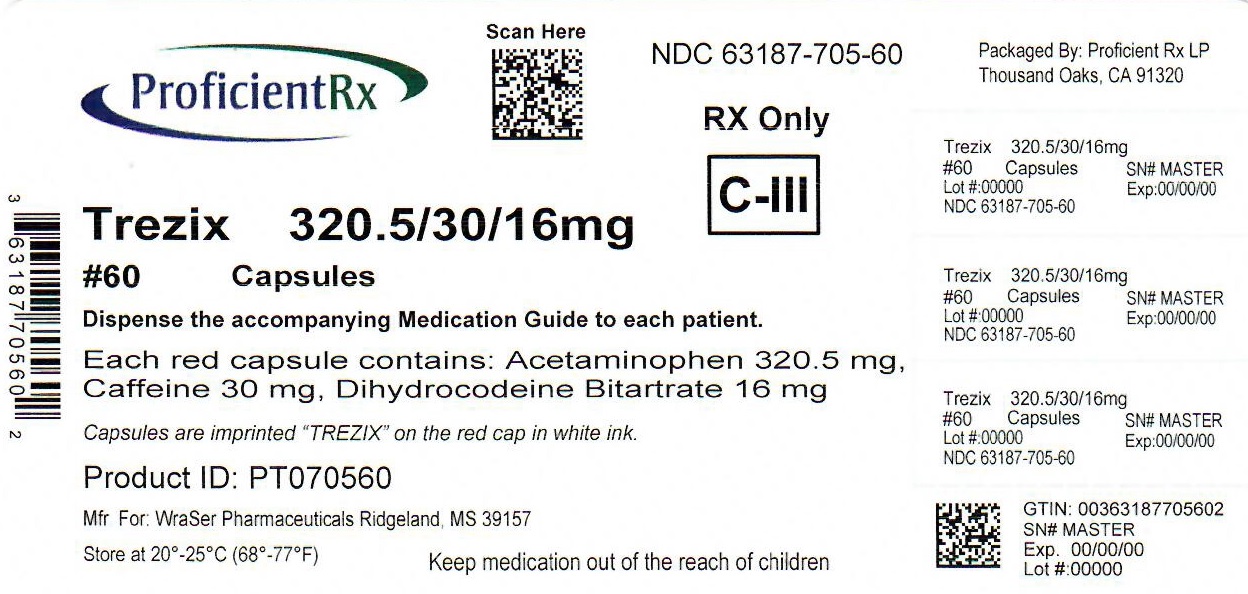
Trezix acetaminophen, caffeine, dihydrocodeine bitartrate 320.5 mg; 30 mg; 16 mg Capsule, 90-count — NDC 63187-705-90 (Billing 63187-0705-90)
This is a package of 90 capsules of Trezix acetaminophen, caffeine, dihydrocodeine bitartrate 320.5 mg; 30 mg; 16 mg Capsule from Proficient Rx LP, marketed since Dec 2014 and currently FDA-listed.
NDC database record
One package, one record: these facts belong to NDC 63187-705-90 alone.
- Record
- FDA NDC Directory package listing · Human prescription drug
- Code segments
- 63187 labeler · 705 product · 90 package
- Package marketed since
- Jun 1, 2016
- Sample package
- No — commercial package
- Listing certified through
- Dec 31, 2027
- Barcode (UPC)
- 0363187705602
- FDA record last changed
- Oct 8, 2026
Identity & classification
Regulatory identifiers FDA, NLM and CMS codes for this package
Drug-database identifiers Medi-Span GPI and First Databank GCN / HICL / AHFS classification
- GSN (GCN sequence number): 073169
- GCN: 37532
- GPI-14 (Medi-Span): 65991303050115
- HICL (First Databank): 001739
- AHFS class code: 28:08.08.00
- RxCUI (RxNorm): 1190201
Where does this data come from?
- FDA openFDA NDC Directory · synced Oct 8, 2026
- FDA label on DailyMed · label index refreshed Oct 8, 2026
- RxNorm (NLM RxNav) · catalog refreshed Oct 1, 2026
- Medi-Span GPI (licensed)
- First Databank (licensed) · refreshed Oct 8, 2026
RxNorm drug class
This medicine belongs to the Anilides class.
Where does this data come from?
- RxClass (NLM) · catalog refreshed Oct 1, 2026
Clinical
Patient education
Supplement & herbal interactions
Acetaminophen, Caffeine, Dihydrocodeine may be associated with lower levels of 2 nutrients — worth a chat with your pharmacist, not a cause for alarm.
Where does this data come from?
- MedlinePlus (NLM) · refreshed Oct 8, 2026
- FDA label on DailyMed · label index refreshed Oct 8, 2026
Ask a licensed pharmacist directly — free, answered by our team.
Pricing
A drug doesn't have one price. Each row is a different public payment system, and none is what you'd pay at the counter — that depends on your insurance. The ⓘ on each row explains what it measures.
| Price system | Per each | Per package |
|---|---|---|
| Retail pharmacies payNADAC · weekly | Not in the retail survey — common for institutional, discontinued, or low-volume packs. | |
| Medicaid paysCMS SDUD · 12 mo | No recent Medicaid claims on file for this NDC — rare and low-volume NDCs are suppressed in the public data. | |
| Medicare drug plans payPart D · quarterly | No Part D plan price is available for this NDC in our data. | |
Where does this data come from?
- CMS NADAC weekly file
- CMS ASP pricing files · refreshed Sep 20, 2026
- CMS Medicaid State Drug Utilization Data · refreshed Oct 8, 2026
- CMS Part D plan pricing files · refreshed Sep 24, 2026
- VA National Acquisition Center price file
Packaging — all sizes for this product
| Package NDC | Description | Marketing start | Marketing end | Status |
|---|---|---|---|---|
| 63187-0705-00 63187-705-00 Main listing | 100 CAPSULE in 1 BOTTLE | 2016-06-01 | — | Active |
| 63187-0705-30 63187-705-30 | 30 CAPSULE in 1 BOTTLE | 2016-06-01 | — | Active |
| 63187-0705-60 63187-705-60 | 60 CAPSULE in 1 BOTTLE | 2016-06-01 | — | Active |
| 63187-0705-72 63187-705-72 | 120 CAPSULE in 1 BOTTLE | 2018-08-01 | — | Active |
| 63187-0705-90 You're viewing this | 90 CAPSULE in 1 BOTTLE | 2016-06-01 | — | Active |
You're viewing one of 5 pack sizes for this product.
Pack size FAQ
What quantity is in this package?
How does this package differ from NDC 63187-0705-30?
What NDC number is used to bill for this package of Trezix acetaminophen, caffeine, dihydrocodeine bitartrate 320.5 mg; 30 mg; 16 mg Capsule?
Therapeutic equivalents
| Product | Labeler | Pack | NADAC/unit | TE | Status | Price vs. this |
|---|---|---|---|---|---|---|
| Trezix 320.5 mg/1; 30 mg/1; 16 mgthis 63187-0705-90 | Proficient | 90 capsules | — | — | FDA listed | — |
Where does this data come from?
- FDA openFDA NDC Directory · synced Oct 8, 2026
- FDA Orange Book · refreshed Oct 3, 2026
- CMS NADAC weekly file
Availability & generic status
This product is an FDA-approved generic. Other versions of the same drug are listed under Therapeutic equivalents, least expensive first.
Where does this data come from?
- FDA Orange Book · refreshed Oct 3, 2026
What it looks like
Where does this data come from?
- FDA label on DailyMed · label index refreshed Oct 8, 2026
Inactive Ingredients / Excipients
Inactive ingredients, also called excipients, are components of the drug product other than the active ingredient. They may include fillers, dyes, coatings, preservatives, flavors, or other formulation ingredients.
💡 Tap an ingredient (hover on desktop) to see what it is and why it’s used.
-
UNII 2S7830E561
Crospovidone is a synthetic polymer derived from povidone. It acts as a disintegrant, helping the tablet or capsule break apart quickly in the stomach so the active ingredient can be absorbed.
-
UNII 68401960MK
Crospovidone is a synthetic polymer made from polyvinylpyrrolidone. It acts as a disintegrant, helping tablets break apart quickly in the stomach so the medicine dissolves and absorbs into the body.
-
UNII WZB9127XOA
A synthetic red dye used to color medications and make them easier to identify. It serves as a colorant in tablets, capsules, and liquid formulations.
-
UNII 2G86QN327L
Gelatin is a protein derived from animal collagen, commonly used in medicines as a gelling agent and capsule material. It helps create soft or hard capsule shells that hold and release medication, and can also thicken liquid formulations.
-
UNII 70097M6I30
Magnesium stearate is a salt made from magnesium and stearic acid, a fatty substance. It's used in tablets and capsules as a lubricant and glidant to help ingredients flow smoothly during manufacturing and prevent sticking.
-
UNII O8232NY3SJ
A plant-based carbohydrate derived from corn kernels. It acts as a filler to add bulk, a binder to hold ingredients together, and a disintegrant to help the tablet break apart in your stomach for absorption.
-
UNII 4ELV7Z65AP
Stearic acid is a fatty acid derived from plant or animal sources. It acts as a binder and lubricant in tablets and capsules, helping them hold together and flow smoothly during manufacturing.
7 inactive ingredients listed in the exact product block matched to this NDC.
Where does this data come from?
ingredient classCode="IACT" elements from the exact product block matched by this NDC. Label-section narrative from DailyMed / the openFDA label index is shown separately when available.- FDA label on DailyMed · label index refreshed Oct 8, 2026
- FDA openFDA NDC Directory · synced Oct 8, 2026
Inactive ingredient FAQ
Are inactive ingredients the same for every manufacturer?
Why might an inactive ingredient be missing?
Can inactive ingredients matter?
Manufacturer & labeler
More NDCs from Proficient Rx LP labeler code 63187
- Valsartan and Hydrochlorothiazide 320 mg; 25 mg Tablet, Film Coated NDC 63187-694-30
- Sulfamethoxazole and Trimethoprim 800 mg; 160 mg Tablet NDC 63187-695-06
- Topiramate 100 mg Tablet NDC 63187-696-30
- Glimepiride 1 mg Tablet NDC 63187-698-30
- Duloxetine Delayed-Release Duloxetine Hydrochloride 30 mg Capsule, Delayed Release Pellets NDC 63187-702-30
- Nystatin 100000 [USP'U]/g Cream NDC 63187-703-15
- Zolpidem Tartrate 5 mg Tablet, Film Coated NDC 63187-707-15
- Losartan Potassium 100 mg Tablet, Film Coated NDC 63187-708-30
- Ondansetron Hydrochloride 8 mg Tablet, Film Coated NDC 63187-709-06
- Atenolol 50 mg Tablet NDC 63187-710-30
- doxycycline 100 mg Capsule NDC 63187-712-14
- Bupropion Hydrochloride 150 mg Tablet, Film Coated, Extended Release NDC 63187-713-30
Where does this data come from?
- FDA openFDA NDC Directory · synced Oct 8, 2026
- Drugs@FDA
Full prescribing information FDA SPL
🚨 Boxed Warning ▾
WARNING: Death Related to Ultra-Rapid Metabolism of Codeine to Morphine Respiratory depression and death have occurred in children who received codeine following tonsillectomy and/or adenoidectomy and had evidence of being ultra-rapid metabolizers of codeine due to a CYP2D6 polymorphism. Hepatotoxicity Acetaminophen has been associated with cases of acute liver failure, at times resulting in liver transplant and death. Most of the cases of liver injury are associated with the use of acetaminophen at doses that exceed 4000 milligrams per day, and often involve more than one acetaminophen containing product.
🎯 Indications and Usage ▾
INDICATIONS AND USAGE: TREZIX™ (acetaminophen, caffeine, and dihydrocodeine bitartrate) capsulesare indicated for the relief of moderate to moderately severe pain.
⏱️ Dosage and Administration ▾
DOSAGE AND ADMINISTRATION: The usual adult dosage is two (2) TREZIX™ (acetaminophen, caffeine, and dihydrocodeine bitartrate) capsules orally every four (4) hours, as needed. Dosage should be adjusted according to the severity of the pain and the response of the patient. No more than two (2) capsules should be taken in a 4-hour period. No more than five (5) doses, or ten (10) capsules should be taken in a 24-hour period.
⛔ Contraindications ▾
CONTRAINDICATIONS: Dihydrocodeine-containing products are contraindicated for postoperative pain management in children who have undergone tonsillectomy and/or adenoidectomy. This combination product is contraindicated in patients with hypersensitivity to dihydrocodeine, codeine, acetaminophen, caffeine, or any of the inactive components listed above, or any situation where opioids are contraindicated including significant respiratory depression (in unmonitored settings or in the absence of resuscitative equipment), acute or severe bronchial asthma or hypercapnia, and paralytic ileus.
⚠️ Warnings ▾
WARNINGS: Hepatotoxicity : Acetaminophen has been associated with cases of acute liver failure, at times resulting in liver transplant and death. Most of the cases of liver injury are associated with the use of acetaminophen at doses that exceed 4000 milligrams per day, and often involve more than one acetaminophen containing product. The excessive intake of acetaminophen may be intentional to cause self-harm or unintentional as patients attempt to obtain more pain relief or unknowingly take other acetaminophen-containing products.
The risk of acute liver failure is higher in individuals with underlying liver disease and in individuals who ingest alcohol while taking acetaminophen. Instruct patients to look for acetaminophen or APAP on package labels and not to use more than one product that contains acetaminophen. Instruct patients to seek medical attention immediately upon ingestion of more than 4000 milligrams of acetaminophen per day, even if they feel well.
Serious Skin Reactions Rarely, acetaminophen may cause serious skin reactions such as acute generalized exanthematous pustulosis (AGEP), Stevens-Johnson Syndrome (SJS), and toxic epidermal necrolysis (TEN), which can be fatal. Patients should be informed about the signs of serious skin reactions, and use of the drug should be discontinued at the first appearance of skin rash or any other sign of hypersensitivity. Death Related to Ultra-Rapid Metabolism of Codeine to Morphine: Respiratory depression and death have occurred in children who received codeine in the postoperative period following tonsillectomy and/or adenoidectomy and had evidence of being ultra-rapid metabolizers of codeine (i.e., multiple copies of the gene for cytochrome P450 isoenzyme 2D6 or high morphine concentrations).
Deaths have also occurred in nursing infants who were exposed to high levels of morphine in breast milk because their mothers were ultra-rapid metabolizers of codeine [see Error! Hyperlink reference not valid. ]. Some individuals may be ultra-rapid metabolizers because of a specific CYP2D6 genotype (gene duplications denoted as *1/*1xN or *1/*2xN).
The prevalence of this CYP2D6 phenotype varies widely and has been estimated at 0.5 to 1% in Chinese and Japanese, 0.5 to 1% in Hispanics, 1 to 10% in Caucasians, 3% in African Americans, and 16 to 28% in North Africans, Ethiopians, and Arabs. Data are not available for other ethnic groups. These individuals convert dihydrocodeine into its active metabolite, dihydromorphine, more rapidly and completely than other people.
This rapid conversion results in higher than expected serum dihydromorphine levels. Even at labeled dosage regimens, individuals who are ultra-rapid metabolizers may have life-threatening or fatal respiratory depression or experience signs of overdose (such as extreme sleepiness, confusion, or shallow breathing) [see Overdosage ]. Children with obstructive sleep apnea who are treated with codeine for post-tonsillectomy and/or adenoidectomy pain may be particularly sensitive to the respiratory depressant effects of codeine that has been rapidly metabolized to morphine.
Dihydrocodeine-containing products are contraindicated for post-operative pain management in all pediatric patients undergoing tonsillectomy and/or adenoidectomy [see Contraindications ]. When prescribing dihydrocodeine-containing products, healthcare providers should choose the lowest effective dose for the shortest period of time and inform patients and caregivers about these risks and the signs of morphine overdose [see Overdosage ]. Hypersensitivity/Anaphylaxis: There have been post-marketing reports of hypersensitivity and anaphylaxis associated with use of acetaminophen.
Clinical signs included swelling of the face, mouth, and throat, respiratory distress, urticarial, rash, pruritus, and vomiting. There were infrequent reports of life-threatening anaphylaxis requiring emergency medical attention. Instruct patients to discontinue TREZIX™ immediately and se… [Excerpted — this section continues on DailyMed.]
🤒 Adverse Reactions ▾
ADVERSE REACTIONS: Dihydrocodeine: The most frequently observed adverse reactions include light-headedness, dizziness, drowsiness, headache, fatigue, sedation, sweating, nausea, vomiting, constipation, pruritus, and skin reactions. With the exception of constipation, tolerance develops to most of these effects. Other reactions that have been observed with dihydrocodeine or other opioids include respiratory depression, orthostatic hypotension, cough suppression, confusion, diarrhea, miosis, abdominal pain, dry mouth, indigestion, anorexia, spasm of biliary tract, and urinary retention.
Physical and psychological dependence are possibilities. Hypersensitivity reactions (including anaphylactoid reactions), hallucinations, vivid dreams, granulomatous interstitial nephritis, severe narcosis and acute renal failure have been reported rarely during dihydrocodeine administration. Acetaminophen: Acetaminophen in therapeutic doses rarely causes adverse reactions.
The most serious adverse reaction is hepatoxicity from overdosage (see OVERDOSAGE ). Thrombocytopenia, leukopenia, pancytopenia, neutropenia, thrombocytopenic purpura, and agranulocytosis have been reported in patients receiving acetaminophen or p-aminophenol derivatives. Hypersensitivity reactions including urticarial or erythematous skin reactions, laryngeal edema, angioedema, or anaphylactoid reactions are rare.
Caffeine: Adverse reactions associated with caffeine use include anxiety, anxiety neurosis, excitement, headaches, insomnia, irritability, lightheadedness, restlessness, tenseness, tremor, extrasystoles, palpitations, tachycardia, diarrhea, nausea, stomach pain, vomiting, diuresis, urticaria, scintillating scotoma, and tinnitus.
🔄 Drug Interactions ▾
Drug Interactions: Dihydrocodeine with Other Central Nervous System Depressants: Patients receiving other opioid analgesics, sedatives or hypnotics, muscle relaxants, general anesthetics, centrally acting anti-emetics, phenothiazines or other tranquilizers, or alcohol concomitantly with this combination product may exhibit additive depressant effects on the central nervous system. When such combined therapy is contemplated, the dose of one or both agents should be reduced. Dihydrocodeine with Monoamine Oxidase Inhibitors: Dihydrocodeine, like all opioid analgesics, interacts with monoamine oxidase inhibitors causing central nervous system excitation and hypertension.
Dihydrocodeine with Mixed Agonist/Antagonist Opioid Analgesics: Agonist/antagonist analgesics (i.e., pentazocine, nalbuphine, butorphanol and buprenorphine) may reduce the analgesic effect of this combination product. Acetaminophen Drug Interactions: Chronic and excessive consumption of alcohol may increase the hepatotoxic risk of acetaminophen. The potential for hepatotoxicity with acetaminophen also may be increased in patients receiving anticonvulsants that induce hepatic microsomal enzymes (including phenytoin, barbiturates, and carbamazepine) or isoniazide.
Chronic ingestion of large doses of acetaminophen may slightly potentiate the effects of warfarin- and indandione- derivative anticoagulants. Severe hypothermia is possible in patients receiving acetaminophen concomitantly with phenothiazines. Caffeine Drug Interactions: Caffeine may enhance the cardiac inotropic effects of beta-adrenergic stimulating agents.
Co-administration of caffeine and disulfiram may lead to a substantial decrease in caffeine clearance. Caffeine may increase the metabolism of other drugs such as phenobarbital and aspirin. Caffeine accumulation may occur when products or foods containing caffeine are consumed concomitantly with quinolones such as ciprofloxacin.
🤰 Pregnancy ▾
Pregnancy: Teratogenic Effects – Pregnancy Category C . Animal reproduction studies have not been conducted with TREZIX™ (acetaminophen, caffeine, and dihydrocodeine bitartrate) capsules. It is also not known whether this combination product can cause fetal harm when administered to pregnant women or can affect reproduction capacity in males and females.
This combination product should be given to pregnant women only if clearly needed, especially during the first trimester.
🧒 Pediatric Use ▾
Pediatric Use: Safety and effectiveness of TREZIX™ (acetaminophen, caffeine, and dihydrocodeine bitartrate) capsules in pediatric patients have not been established. Respiratory depression and death have occurred in children with obstructive sleep apnea who received codeine in the post-operative period following tonsillectomy and/or adenoidectomy and had evidence of being ultra-rapid metabolizers of codeine (i.e., multiple copies of the gene for cytochrome P450 isoenzyme CYP2D6 or high morphine concentrations). These children may be particularly sensitive to the respiratory depressant effects of codeine that has been rapidly metabolized to morphine.
Dihydrocodeine-containing products are contraindicated for post-operative pain management in all pediatric patients undergoing tonsillectomy and/or adenoidectomy [see CONTRAINDICATIONS ].
🧓 Geriatric Use ▾
Geriatric Use: TREZIX™ (acetaminophen, caffeine, and dihydrocodeine bitartrate) capsules should be given with caution to the elderly.
🆘 Overdosage ▾
OVERDOSAGE: Following an acute overdosage with TREZIX™ (acetaminophen, caffeine, and dihydrocodeine bitartrate) capsules, toxicity may result from the dihydrocodeine or the acetaminophen. Toxicity due to the caffeine component is less likely, due to the relatively small amounts in this formulation. An overdose is a potentially lethal polydrug overdose situation, and consultation with a regional Poison Control Center is recommended.
A listing of the poison control centers can be found in standard references such as the Physician's Desk Reference®. Signs and Symptoms: Toxicity from dihydrocodeine poisoning include the opioid triad of: pinpoint pupils, respiratory depression, and loss of consciousness. Convulsions, cardiovascular collapse, and death may occur.
A single case of acute rhabdomyolysis associated with an overdose of dihydrocodeine has been reported. In acetaminophen overdosage: dose-dependent potentially fatal hepatic necrosis is the most serious adverse effect. Renal tubular necrosis, hypoglycemic coma, and coagulation defects may also occur.
Early symptoms following a potentially hepatotoxic overdose may include: nausea, vomiting, diaphoresis, and general malaise. Clinical and laboratory evidence of hepatic toxicity may not be apparent until 48 to 72 hours post ingestion. Acute caffeine poisoning may cause insomnia, restlessness, tremor, delirium, tachycardia, and extrasystoles.
Because overdose information on this combination product is limited, it is unclear which of the signs and symptoms of toxicity would manifest in any particular overdose situation. Treatment A single or multiple drug overdose with TREZIX™ (acetaminophen, caffeine, and dihydrocodeine bitartrate) capsules is a potentially lethal polydrug overdose, and consultation with a regional Poison Control Center is recommended. Immediate treatment includes support of cardiorespiratory function and measures to reduce drug absorption.
Oxygen, intravenous fluids, and vasopressors, and other supportive measures should be employed as indicated. Assisted or controlled ventilation should also be considered. For respiratory depression due to overdosage or unusual sensitivity to dihydrocodeine, parenteral naloxone is a specific and effective antagonist.
Gastric decontamination with activated charcoal should be administered just prior to N-acetylcysteine (NAC) to decrease systemic absorption if acetaminophen ingestion is known or suspected to have occurred within a few hours of presentation. Serum acetaminophen levels should be obtained immediately if the patient presents 4 hours or more after ingestion to assess potential risk of hepatotoxicity; acetaminophen levels drawn less than 4 hours post-ingestion may be misleading. To obtain the best possible outcome, NAC should be administered as soon as possible where impending or evolving liver injury is suspected.
Intravenous NAC may be administered when circumstances preclude oral administration. Vigorous supportive therapy is required in severe intoxication. Procedures to limit the continuing absorption of the drug must be readily performed since the hepatic injury is dose dependent and occurs early in the course of intoxication.
🧬 Clinical Pharmacology ▾
CLINICAL PHARMACOLOGY: TREZIX™ capsules contain dihydrocodeine which is a semi-synthetic narcotic analgesic related to codeine, with multiple actions qualitatively similar to those of codeine; the most prominent of these involve the central nervous system and organs with smooth muscle components. The principal action of therapeutic value is analgesia. This combination product also contains acetaminophen, a non-opiate, non-salicylate analgesic and antipyretic.
This combination product contains caffeine as an analgesic adjuvant. Caffeine is also a CNS and cardiovascular stimulant.
📦 How Supplied / Storage and Handling ▾
HOW SUPPLIED: TREZIX™ capsules, containing acetaminophen 320.5 mg, caffeine 30 mg and dihydrocodeine bitartrate 16 mg, are supplied in bottles of 30(NDC #63187-705-30), 60(NDC #63187-705-60), 90(NDC #63187-705-90), 100 (NDC #63187-705-00) and 120 capsules (NDC #63187-705-72) Capsules are imprinted “TREZIX” on the red cap in white ink. Store at 20°C to 25°C (68°F to 77°F). [see USP Controlled Room Temperature]. Dispense in a tight, light-resistant container with a child-resistant closure.
Protect from moisture. Rx Only Manufactured for: WraSer Pharmaceuticals LLC Ridgeland, MS 39157 Repackaged by: Proficient Rx LP Thousand Oaks, CA 91320 13001 Rev. May 2014 Physician’s Desk Reference® is the registered trademark of Thomson Healthcare, Inc.
📋 Description ▾
DESCRIPTION: TREZIX™ capsules are supplied in capsule form for oral administration. Each red capsule contains: Acetaminophen...........................................320.5 mg Caffeine ..........................................................30 mg Dihydrocodeine bitartrate ...............................16 mg Acetaminophen (4'-hydroxyacetanilide), a slightly bitter, white, odorless, crystalline powder, is a non-opiate, non-salicylate analgesic and antipyretic. It has the following structural formula: Caffeine (1,3,7-trimethylxanthine), a bitter, white crystalline powder or white glistening needles, is a central nervous system stimulant.
It has the following structural formula: Dihydrocodeine Bitartrate (4,5 _-epoxy-3-methoxy-17-methylmorphinan-6 _-ol (+)-tartrate), an odorless, fine white powder is an opioid analgesic. It has the following structural formula: In addition, each capsule contains the following inactive ingredients: crospovidone, magnesium stearate, povidone, pregelatinized starch, stearic acid. The capsule is composed of FD&C Red #40, and gelatin.
Imprinting ink is composed of ammonium hydroxide, isopropyl alcohol, n-butyl alcohol, pharmaceutical glaze (modified) in SD-45, propylene glycol, simethicone, and titanium dioxide. Acetaminophen - Chemical Structure Caffeine - Chemical Structure Dihydrocodeine Bitartrate - Chemical Structure
💬 Information for Patients ▾
Information for Patients Patients receiving TREZIX™ (acetaminophen, caffeine, and dihydrocodeine bitartrate) capsules should be given the following information: 1. Do not take TREZIX™ if you are allergic to any of its ingredients. 2.
If you develop signs of allergy such as a rash or difficulty breathing stop taking TREZIX™ and contact your healthcare provider immediately. 3. Do not take more than 4000 milligrams of acetaminophen per day.
Call your doctor if you took more than the recommended dose. 4. Patients should be advised that TREZIX™ capsules may impair the mental or physical abilities required for the performance of potentially hazardous tasks such as driving a car or operating machinery.
5. Patients should be advised to report adverse experiences occurring during therapy. 6.
Patients should be advised not to adjust the dose of TREZIX™ capsules without consulting the prescribing professional. 7. Patients should not combine TREZIX™ capsules with alcohol or other central nervous system depressants (sleep aids, tranquilizers) except by the orders of the prescribing physician, because additive effects may occur.
8. Women of childbearing potential who become, or are planning to become, pregnant should be advised to consult their physician regarding the effects of analgesics and other drug use during pregnancy on themselves and their unborn child. 9.
Patients should be advised that TREZIX™ capsules are a potential drug of abuse. They should protect it from theft, and it should never be given to anyone other than the individual for whom it was prescribed. Advise patients that some people have a genetic variation that results in dihydrocodeine changing into dihydromorphine more rapidly and completely than other people.
Most people are unaware of whether they are an ultra-rapid dihydrocodeine metabolizer or not. These higher-than-normal levels of dihydromorphine in the blood may lead to life-threatening or fatal respiratory depression or signs of overdose such as extreme sleepiness, confusion, or shallow breathing. Children with this genetic variation who were prescribed codeine after tonsillectomy and/or adenoidectomy for obstructive sleep apnea may be at greatest risk based on reports of several deaths in this population due to respiratory depression.
Dihydrocodeine-containing products are contraindicated in all children who undergo tonsillectomy and/or adenoidectomy. Advise caregivers of children receiving dihydrocodeine-containing products for other reasons to monitor for signs of respiratory depression. Advise patients that nursing mothers taking dihydrocodeine can also have higher dihydromorphine levels in their breast milk if they are ultra-rapid metabolizers.
These higher levels of dihydromorphine in breast milk may lead to life-threatening or fatal side effects in nursing babies. Advise nursing mothers to watch for signs of dihydromorphine toxicity in their infants including increased sleepiness (more than usual), difficulty breastfeeding, breathing difficulties, or limpness. Instruct nursing mothers to talk to the baby’s doctor immediately if they notice these signs and, if they cannot reach the doctor right away, to take the baby to an emergency room or call 911 (or local emergency services).
⚠️ Precautions ▾
PRECAUTIONS: General: Selection of patients for treatment with TREZIX™ (acetaminophen, caffeine, and dihydrocodeine bitartrate) capsules should be governed by the same principles that apply to the use of similar opioid/non-opioid fixed combination analgesics. As with any such opioid analgesic, the dosing regimen should be adjusted for each patient (See DOSAGE AND ADMINISTRATION ). This combination product should be used with caution in elderly or debilitated patients or those with any of the following conditions: acute alcoholism; adrenocortical insufficiency (e.g., Addison's disease); asthma; central nervous system depression or coma; chronic obstructive pulmonary disease; decreased respiratory reserve (including emphysema, severe obesity, cor pulmonale, or kyphoscoliosis); delirium tremens; head injury; hypotension; increased intracranial pressure; myxedema or hypothyroidism; prostatic hypertrophy or urethral stricture; and toxic psychosis.
The benefits and risks of using opioids in patients taking monoamine oxidase inhibitors and in those with a history of drug abuse should be carefully considered. The administration of an analgesic containing an opioid may obscure the diagnosis or clinical course in patients with acute abdominal conditions. This combination product may aggravate convulsions in patients with convulsive disorders and, like all opioids, may induce or aggravate seizures in some clinical settings.
Acetaminophen is relatively non-toxic at therapeutic doses, but should be used with caution in patients with severe renal or hepatic disease. Care should be observed when using large doses of acetaminophen in malnourished patients or those with a history of chronic alcohol abuse because they may be more susceptible to hepatic damage similar to that observed with toxic overdosage. Caffeine in high doses may produce central nervous system and cardiovascular stimulation and gastrointestinal irritation.
Drug Interactions: Dihydrocodeine with Other Central Nervous System Depressants: Patients receiving other opioid analgesics, sedatives or hypnotics, muscle relaxants, general anesthetics, centrally acting anti-emetics, phenothiazines or other tranquilizers, or alcohol concomitantly with this combination product may exhibit additive depressant effects on the central nervous system. When such combined therapy is contemplated, the dose of one or both agents should be reduced. Dihydrocodeine with Monoamine Oxidase Inhibitors: Dihydrocodeine, like all opioid analgesics, interacts with monoamine oxidase inhibitors causing central nervous system excitation and hypertension.
Dihydrocodeine with Mixed Agonist/Antagonist Opioid Analgesics: Agonist/antagonist analgesics (i.e., pentazocine, nalbuphine, butorphanol and buprenorphine) may reduce the analgesic effect of this combination product. Acetaminophen Drug Interactions: Chronic and excessive consumption of alcohol may increase the hepatotoxic risk of acetaminophen. The potential for hepatotoxicity with acetaminophen also may be increased in patients receiving anticonvulsants that induce hepatic microsomal enzymes (including phenytoin, barbiturates, and carbamazepine) or isoniazide.
Chronic ingestion of large doses of acetaminophen may slightly potentiate the effects of warfarin- and indandione- derivative anticoagulants. Severe hypothermia is possible in patients receiving acetaminophen concomitantly with phenothiazines. Caffeine Drug Interactions: Caffeine may enhance the cardiac inotropic effects of beta-adrenergic stimulating agents.
Co-administration of caffeine and disulfiram may lead to a substantial decrease in caffeine clearance. Caffeine may increase the metabolism of other drugs such as phenobarbital and aspirin. Caffeine accumulation may occur when products or foods containing caffeine are consumed concomitantly with quinolones such as ciprofloxacin.
Information for Patients Patients receiving TREZIX™ (acetaminophen, caffeine, and dihydrocodeine bitartrate) capsules sh… [Excerpted — this section continues on DailyMed.]
🍼 Nursing Mothers ▾
Nursing Mothers: Dihydrocodeine bitartrate is secreted into human milk. In women with normal dihydrocodeine metabolism (normal CYP2D6 activity), the amount of dihydrocodeine secreted into human milk is low and dose-dependent. However, some women are ultra-rapid metabolizers of dihydrocodeine.
These women achieve higher-than-expected serum levels of dihydrocodeine’s active metabolite, dihydromorphine, leading to higher-than-expected levels of dihydromorphine in breast milk and potentially dangerously high serum dihydromorphine levels in their breastfed infants. Therefore, maternal use of dihydrocodeine can potentially lead to serious adverse reactions, including death, in nursing infants. The risk of infant exposure to dihydrocodeine and morphine through breast milk should be weighed against the benefits of breastfeeding for both the mother and baby.
Caution should be exercised when dihydrocodeine is administered to a nursing woman. If a dihydrocodeine containing product is selected, the lowest dose should be prescribed for the shortest period of time to achieve the desired clinical effect. Mothers using dihydrocodeine should be informed about when to seek immediate medical care and how to identify the signs and symptoms of neonatal toxicity, such as drowsiness or sedation, difficulty breastfeeding, breathing difficulties, and decreased tone, in their baby.
Nursing mothers who are ultra-rapid metabolizers may also experience overdose symptoms such as extreme sleepiness, confusion or shallow breathing. Prescribers should closely monitor mother-infant pairs and notify treating pediatricians about the use of dihydrocodeine-containing products during breastfeeding (See Warnings ). Acetaminophen and caffeine are also excreted in breast milk in small amounts.
Because of the potential for serious adverse reactions in nursing infants from this combination product, a decision should be made whether to discontinue nursing or to discontinue the drug, taking into account the importance of the drug to the mother.
🔒 Drug Abuse and Dependence ▾
DRUG ABUSE AND DEPENDENCE: This combination product is subject to the provisions of the Controlled Substance Act and has been placed in Schedule III. Dihydrocodeine can produce drug dependence of the codeine type and therefore has the potential of being abused. Like other opioid analgesics, dihydrocodeine may produce subjected effects other than analgesia (e.g., euphoria, relaxation), which may contribute to abuse by some patients.
Psychological dependence, physical dependence, and tolerance may develop upon repeated administration of dihydrocodeine, and it should be prescribed and administered with the same degree of caution appropriate to the use of other oral opioid analgesic medications. Symptoms of dihydrocodeine withdrawal consist of irritability, restlessness, insomnia, diaphoresis, anxiety and palpitations. Prolonged, high intake of caffeine may produce tolerance and habituation.
Physical signs of withdrawal, such as headaches, irritation, nervousness, anxiety, and dizziness may occur upon abrupt discontinuation.
📄 Package Label / Principal Display Panel ▾
Trezix 100 Count Bottle NDC 63187-705-60 TREZIX TM CIII (acetaminophen, caffeine and dihydrocodeine bitartrate capsules 320.5mg/30mg/16mg) Rx ONLY 60 CAPSULES DESCRIPTION: Each red capsule contains: Acetaminophen .................................. 320.5 mg Caffeine ................................................... 30 mg Dihydrocodeine Bitartrate .......................
16 mg USUAL DOSAGE: See package insert for full prescribing information. WARNING: Keep this and all medications out of the reach of children. PHARMACIST: Dispense in a tight, light-resistant container with a child-resistant closure.
Store at 20° to 25°C (68° to 77°F) [see USP Controlled Room Temperature]. Protect from moisture. Manufactured for: WraSer Pharmaceuticals Ridgeland, MS 39157 www.wraser.com Repackaged by: Proficient Rx LP Thousand Oaks, CA 91320 13001 Rev.
5/14 WraSer PHARMACEUTICALS 63187-705-60
About this NDC listing & data coverage
What data is (and isn’t) available for this NDC — tap to expand
| NDC identity (package / product / labeler codes) | ✓ Available |
| Labeler | ✓ Available |
| Product & package description | ✓ Available |
| Marketing category & status | ✓ Available |
| Active ingredient / dosage form / route | ✓ Available |
| FDA label (SPL via DailyMed) | ✓ Available |
| Package photos | ✓ Available |
| Inactive ingredients (structured) | ✓ Available |
| NADAC pharmacy acquisition price (CMS) | — Not published for this NDC CMS publishes NADAC only for NDCs reported in its retail-pharmacy survey. |
| Orange Book / therapeutic-equivalence data | — Not published for this NDC Applies only to products approved under an NDA/ANDA; many listings are out of scope. |
| HCPCS J-code billing crosswalk | — Not published for this NDC Most self-administered / retail products have no J-code — that is normal. |
| Medicaid utilization (CMS SDUD) | — Not published for this NDC CMS reports utilization only for NDCs with Medicaid claims above its privacy threshold. |