
Orphenadrine Citrate 100 mg Tablet, Extended Release, 45-count — NDC 63629-1564-7 (Billing 63629-1564-07)
This is a package of 45 tablets of Orphenadrine Citrate 100 mg Tablet, Extended Release from Bryant Ranch Prepack, marketed since Jun 1998 and currently FDA-listed.
NDC database record
One package, one record: these facts belong to NDC 63629-1564-7 alone.
- Record
- FDA NDC Directory package listing · Human prescription drug
- Code segments
- 63629 labeler · 1564 product · 7 package
- Package marketed since
- Sep 22, 2006
- Sample package
- No — commercial package
- Listing certified through
- Dec 31, 2026
- Billing quantity
- 45 EA per package
- Barcode (UPC-A, from the NDC)
- 3 6362915647 4
- FDA record last changed
- Jul 24, 2026
Identity & classification
Regulatory identifiers FDA, NLM and CMS codes for this package
Drug-database identifiers Medi-Span GPI and First Databank GCN / HICL / AHFS classification
- GSN (GCN sequence number): 004595
- GCN: 17670
- GPI-14 (Medi-Span): 75100080107410
- HICL (First Databank): 001906
- AHFS class code: 12:20.10.00
- RxCUI (RxNorm): 994521
Where does this data come from?
- FDA openFDA NDC Directory · synced Oct 1, 2026
- FDA label on DailyMed · label index refreshed Oct 6, 2026
- RxNorm (NLM RxNav) · catalog refreshed Oct 1, 2026
- Medi-Span GPI (licensed)
- First Databank (licensed) · refreshed Oct 1, 2026
RxNorm drug class
This medicine belongs to the Muscle Relaxant class.
Where does this data come from?
- RxClass (NLM) · catalog refreshed Oct 1, 2026
Clinical
Orphenadrine is used with rest, physical therapy, and other measures to relieve pain and discomfort caused by strains, sprains, and other muscle injuries. Orphenadrine is in a class of medications called skeletal muscle relaxants. It works by changing the way the body senses muscle pain.
Read the full MedlinePlus article ↗- It's a common assumption, but orphenadrine actually doesn't directly relax tense muscles. Researchers believe its benefit comes from pain-relieving properties — so it helps you fee...
- What exactly does orphenadrine do — does it just relax my muscles?
- Take one extended-release tablet in the morning and one in the evening — that's twice a day. Try to stick to the same times each day. If you're unsure whether to take it with food...
- How should I take the extended-release tablet?
Patient education
Supplement & herbal interactions
Where does this data come from?
- MedlinePlus (NLM) · refreshed Oct 1, 2026
- FDA label on DailyMed · label index refreshed Oct 6, 2026
Ask a licensed pharmacist directly — free, answered by our team.
Pricing
A drug doesn't have one price. Each row is a different public payment system, and none is what you'd pay at the counter — that depends on your insurance. The ⓘ on each row explains what it measures.
| Price system | Per each | Per package |
|---|---|---|
| Retail pharmacies payNADAC · weekly | Not in the retail survey — common for institutional, discontinued, or low-volume packs. | |
| Medicaid paysCMS SDUD · 12 mo | No recent Medicaid claims on file for this NDC — rare and low-volume NDCs are suppressed in the public data. | |
| Medicare drug plans payPart D · Q2 2026 | $0.7752 | $34.88 / 45 tablets |
Where does this data come from?
- CMS NADAC weekly file
- CMS ASP pricing files · refreshed Sep 20, 2026
- CMS Medicaid State Drug Utilization Data · refreshed Oct 6, 2026
- CMS Part D plan pricing files · refreshed Sep 24, 2026
- VA National Acquisition Center price file
Packaging — all sizes for this product
| Package NDC | Description | Marketing start | Marketing end | Status |
|---|---|---|---|---|
| 63629-1564-00 63629-1564-0 Main listing | 56 TABLET, EXTENDED RELEASE in 1 BOTTLE | 2006-09-22 | — | Active |
| 63629-1564-01 63629-1564-1 | 20 TABLET, EXTENDED RELEASE in 1 BOTTLE | 2006-09-22 | — | Active |
| 63629-1564-02 63629-1564-2 | 60 TABLET, EXTENDED RELEASE in 1 BOTTLE | 2006-09-22 | — | Active |
| 63629-1564-03 63629-1564-3 | 100 TABLET, EXTENDED RELEASE in 1 BOTTLE | 2006-09-22 | — | Active |
| 63629-1564-04 63629-1564-4 | 90 TABLET, EXTENDED RELEASE in 1 BOTTLE | 2006-09-22 | — | Active |
| 63629-1564-05 63629-1564-5 | 30 TABLET, EXTENDED RELEASE in 1 BOTTLE | 2006-09-22 | — | Active |
| 63629-1564-06 63629-1564-6 | 28 TABLET, EXTENDED RELEASE in 1 BOTTLE | 2006-09-22 | — | Active |
| 63629-1564-07 You're viewing this | 45 TABLET, EXTENDED RELEASE in 1 BOTTLE | 2006-09-22 | — | Active |
| 63629-1564-08 63629-1564-8 | 14 TABLET, EXTENDED RELEASE in 1 BOTTLE | 2006-09-22 | — | Active |
| 63629-1564-09 63629-1564-9 | 120 TABLET, EXTENDED RELEASE in 1 BOTTLE | 2006-09-22 | — | Active |
You're viewing one of 10 pack sizes for this product.
Pack size FAQ
What quantity is in this package?
How does this package differ from NDC 63629-1564-08?
What NDC number is used to bill for this package of Orphenadrine Citrate 100 mg Tablet, Extended Release?
Therapeutic equivalents
| Product | Labeler | Pack | NADAC/unit | TE | Status | Price vs. this |
|---|---|---|---|---|---|---|
| Orphenadrine Citrate 100 mg 00185-0022-01 | Sandoz | 100 tablets | $0.454 | AB | Availability likely | — |
| Orphenadrine Citrate 100 mg 43386-0480-24 | Lupin | 100 tablets | $0.454 | AB | Availability likely | — |
| Orphenadrine Citrate 100 mg 43063-0407-14 | PD-Rx | 14 tablets | — | AB | FDA listed | — |
| Orphenadrine Citrate 100 mg 49999-0046-14 | Lake | 14 tablets | — | AB | Discontinued | — |
| Orphenadrine Citrate 100 mg 50090-0169-00 | A-S | 20 tablets | — | AB | FDA listed | — |
| Orphenadrine Citrate 100 mg 60760-0810-30 | St. | 30 tablets | — | AB | FDA listed | — |
| Orphenadrine Citrate 100 mg 63187-0122-20 | Proficient | 20 tablets | — | AB | FDA listed | — |
| Orphenadrine Citrate 100 mg 63187-0632-30 | Proficient | 30 tablets | — | AB | FDA listed | — |
| Orphenadrine Citrate 100 mgthis 63629-1564-07 | Bryant | 45 tablets | — | AB | FDA listed | — |
| Orphenadrine Citrate 100 mg 66267-0158-20 | NuCare | 20 tablets | — | AB | FDA listed | — |
| Orphenadrine Citrate 100 mg 67296-1077-01 | RedPharm | 10 tablets | — | AB | FDA listed | — |
| Orphenadrine Citrate 100 mg 68788-9138-01 | Preferred | 100 tablets | — | AB | FDA listed | — |
| Orphenadrine Citrate 100 mg 70518-4506-00 | REMEDYREPACK | 14 tablets | — | AB | FDA listed | — |
| Orphenadrine Citrate 100 mg 72162-2020-01 | Bryant | 100 tablets | — | AB | FDA listed | — |
| Orphenadrine Citrate ER 100 mg 80425-0117-01 | Advanced | 30 tablets | — | AB | FDA listed | — |
| Orphenadrine Citrate 100 mg 80425-0340-01 | Advanced | 30 tablets | — | AB | FDA listed | — |
| Orphenadrine Citrate 100 mg 82868-0040-14 | Northwind | 14 tablets | — | AB | FDA listed | — |
Where does this data come from?
- FDA openFDA NDC Directory · synced Oct 1, 2026
- FDA Orange Book · refreshed Oct 3, 2026
- CMS NADAC weekly file
Availability & generic status
This product is an FDA-approved generic. Other versions of the same drug are listed under Therapeutic equivalents, least expensive first.
Where does this data come from?
- FDA Orange Book · refreshed Oct 3, 2026
What it looks like
Where does this data come from?
- FDA label on DailyMed · label index refreshed Oct 6, 2026
Inactive Ingredients / Excipients
Inactive ingredients, also called excipients, are components of the drug product other than the active ingredient. They may include fillers, dyes, coatings, preservatives, flavors, or other formulation ingredients.
🧪 Avoiding an ingredient? See Orphenadrine inactive ingredients by manufacturer: every current product's list side by side, so you can ask your pharmacy for the version that does not list it.
💡 Tap an ingredient (hover on desktop) to see what it is and why it’s used.
-
UNII 3NXW29V3WO
Hypromellose is a plant-based thickener made from cellulose. It's used in medicines as a binder to hold ingredients together, a coating for tablets, and a thickener for liquids.
-
UNII EWQ57Q8I5X
Lactose monohydrate is a natural sugar derived from milk. It serves as a filler and binder in tablets and capsules, helping create the proper size, texture, and consistency of the medicine.
-
UNII 70097M6I30
Magnesium stearate is a salt made from magnesium and stearic acid, a fatty substance. It's used in tablets and capsules as a lubricant and glidant to help ingredients flow smoothly during manufacturing and prevent sticking.
3 inactive ingredients listed in the exact product block matched to this NDC.
Where does this data come from?
ingredient classCode="IACT" elements from the exact product block matched by this NDC. Label-section narrative from DailyMed / the openFDA label index is shown separately when available.- FDA label on DailyMed · label index refreshed Oct 6, 2026
- FDA openFDA NDC Directory · synced Oct 1, 2026
Inactive ingredient FAQ
Are inactive ingredients the same for every manufacturer?
Why might an inactive ingredient be missing?
Can inactive ingredients matter?
Manufacturer & labeler
More NDCs from Bryant Ranch Prepack labeler code 63629
- Lovastatin 20 mg Tablet NDC 63629-1464-1
- Ibuprofen 200 mg Tablet, Film Coated NDC 63629-1467-0
- Ibuprofen 400 mg Tablet NDC 63629-1468-1
- Ibuprofen 800 mg Tablet NDC 63629-1470-0
- Extra Strength Pain Relief Acetaminophen 500 mg Tablet NDC 63629-1516-0
- Diazepam 5 mg Tablet NDC 63629-1523-0
- Finasteride 5 mg Tablet, Film Coated NDC 63629-1585-1
- Chlorzoxazone 500 mg Tablet NDC 63629-1586-1
- Promethazine Hydrochloride 12.5 mg Tablet NDC 63629-1591-0
- Prednisone 5 mg Tablet NDC 63629-1605-0
- Fluoxetine 10 mg Capsule NDC 63629-1609-1
- Fluoxetine 20 mg Capsule NDC 63629-1610-1
Where does this data come from?
- FDA openFDA NDC Directory · synced Oct 1, 2026
- Drugs@FDA
Full prescribing information FDA SPL
🎯 Indications and Usage ▾
INDICATIONS AND USAGE Orphenadrine citrate extended-release tablets are indicated as an adjunct to rest, physical therapy, and other measures for the relief of discomfort associated with acute painful musculoskeletal conditions.
⏱️ Dosage and Administration ▾
DOSAGE AND ADMINISTRATION Adults Two tablets per day; one in the morning and one in the evening.
⛔ Contraindications ▾
CONTRAINDICATIONS Orphenadrine citrate extended-release tablets are contraindicated in patients with glaucoma, pyloric or duodenal obstruction, stenosing peptic ulcers, prostatic hypertrophy or obstruction of the bladder neck, cardio-spasm (mega-esophagus) and myasthenia gravis. Orphenadrine citrate tablets are contraindicated in patients who have demonstrated a previous hypersensitivity to the drug.
⚠️ Warnings ▾
WARNINGS Some patients may experience transient episodes of light-headedness, dizziness or syncope. Orphenadrine may impair the ability of the patient to engage in potentially hazardous activities such as operating machinery or driving a motor vehicle; ambulatory patients should therefore be cautioned accordingly.
🤒 Adverse Reactions ▾
ADVERSE REACTIONS Adverse reactions of orphenadrine are mainly due to the mild anticholinergic action of orphenadrine, and are usually associated with higher dosage. Dryness of the mouth is usually the first adverse effect to appear. When the daily dose is increased, possible adverse effects include: tachycardia, palpitation, urinary hesitancy or retention, blurred vision, dilatation of pupils, increased ocular tension, weakness, nausea, vomiting, headache, dizziness, constipation, drowsiness, hypersensitivity reactions, pruritus, hallucinations, agitation, tremor, gastric irritation, and rarely urticaria and other dermatoses.
Infrequently, an elderly patient may experience some degree of mental confusion. These adverse reactions can usually be eliminated by reduction in dosage. Very rare cases of aplastic anemia associated with the use of orphenadrine tablets have been reported.
No causal relationship has been established.
🤰 Pregnancy ▾
Pregnancy Pregnancy Category C Animal reproduction studies have not been conducted with orphenadrine. It is also not known whether orphenadrine can cause fetal harm when administered to a pregnant woman or can affect reproduction capacity. Orphenadrine should be given to a pregnant woman only if clearly needed.
🧒 Pediatric Use ▾
Pediatric Use Safety and effectiveness in pediatric patients have not been established.
🆘 Overdosage ▾
OVERDOSAGE Orphenadrine is toxic when overdosed and typically induces anticholinergic effects. In a review of orphenadrine toxicity, the minimum lethal dose was found to be 2 to 3 grams for adults; however, the range of toxicity is variable and unpredictable. Treatment for orphenadrine overdose is evacuation of stomach contents (when necessary), charcoal at repeated doses, intensive monitoring, and appropriate supportive treatment of any emergent anticholinergic effects.
🧬 Clinical Pharmacology ▾
CLINICAL PHARMACOLOGY The mode of therapeutic action has not been clearly identified, but may be related to its analgesic properties. Orphenadrine citrate does not directly relax tense muscles in man. Orphenadrine citrate also possesses anti-cholinergic actions.
📦 How Supplied / Storage and Handling ▾
HOW SUPPLIED Orphenadrine citrate extended-release tablets 100 mg are round, white to off-white tablets, debossed NL4 on one side and plain on the other side and are supplied as: Product: 63629-1564 NDC: 63629-1564-0 56 TABLET, EXTENDED RELEASE in a BOTTLE NDC: 63629-1564-8 14 TABLET, EXTENDED RELEASE in a BOTTLE NDC: 63629-1564-1 20 TABLET, EXTENDED RELEASE in a BOTTLE NDC: 63629-1564-6 28 TABLET, EXTENDED RELEASE in a BOTTLE NDC: 63629-1564-5 30 TABLET, EXTENDED RELEASE in a BOTTLE NDC: 63629-1564-7 45 TABLET, EXTENDED RELEASE in a BOTTLE NDC: 63629-1564-2 60 TABLET, EXTENDED RELEASE in a BOTTLE NDC: 63629-1564-4 90 TABLET, EXTENDED RELEASE in a BOTTLE NDC: 63629-1564-3 100 TABLET, EXTENDED RELEASE in a BOTTLE NDC: 63629-1564-9 120 TABLET, EXTENDED RELEASE in a BOTTLE Store at 20°-25°C (68°-77°F) [see USP Controlled Room Temperature].
Dispense in a tight, light-resistant container. Repackaged/Relabeled by: Bryant Ranch Prepack, Inc. Burbank, CA 91504
📋 Description ▾
DESCRIPTION Orphenadrine citrate is the citrate salt of orphenadrine. It occurs as a white, crystalline powder having a bitter taste. It is practically odorless; sparingly soluble in water, slightly soluble in alcohol.
The chemical name of orphenadrine citrate is (±) -N,N -Dimethyl-2-[( o -methyl-α-phenylbenzyl)oxy]ethylamine citrate (1:1) having molecular formula C 18 H 23 NO•C 6 H 8 O 7 and molecular weight of 461.51. It has the following structural formula: Each tablet for oral administration contains 100 mg orphenadrine citrate. Each Orphenadrine citrate extended- release tablet contains the following inactive ingredients: hydroxypropyl methylcellulose, lactose monohydrate and magnesium stearate.
Image
⚠️ Precautions ▾
PRECAUTIONS Confusion, anxiety and tremors have been reported in few patients receiving propoxyphene and orphenadrine concomitantly. As these symptoms may be simply due to an additive effect, reduction of dosage and/or discontinuation of one or both agents is recommended in such cases. Orphenadrine citrate should be used with caution in patients with tachycardia, cardiac decompensation, coronary insufficiency, cardiac arrhythmias.
Safety of continuous long-term therapy with orphenadrine has not been established. Therefore, if orphenadrine is prescribed for prolonged use, periodic monitoring of blood, urine and liver function values is recommended. Pregnancy Pregnancy Category C Animal reproduction studies have not been conducted with orphenadrine.
It is also not known whether orphenadrine can cause fetal harm when administered to a pregnant woman or can affect reproduction capacity. Orphenadrine should be given to a pregnant woman only if clearly needed. Pediatric Use Safety and effectiveness in pediatric patients have not been established.
🔒 Drug Abuse and Dependence ▾
DRUG ABUSE AND DEPENDENCE Orphenadrine has been chronically abused for its euphoric effects. The mood elevating effects may occur at therapeutic doses of orphenadrine.
📄 Package Label / Principal Display Panel ▾
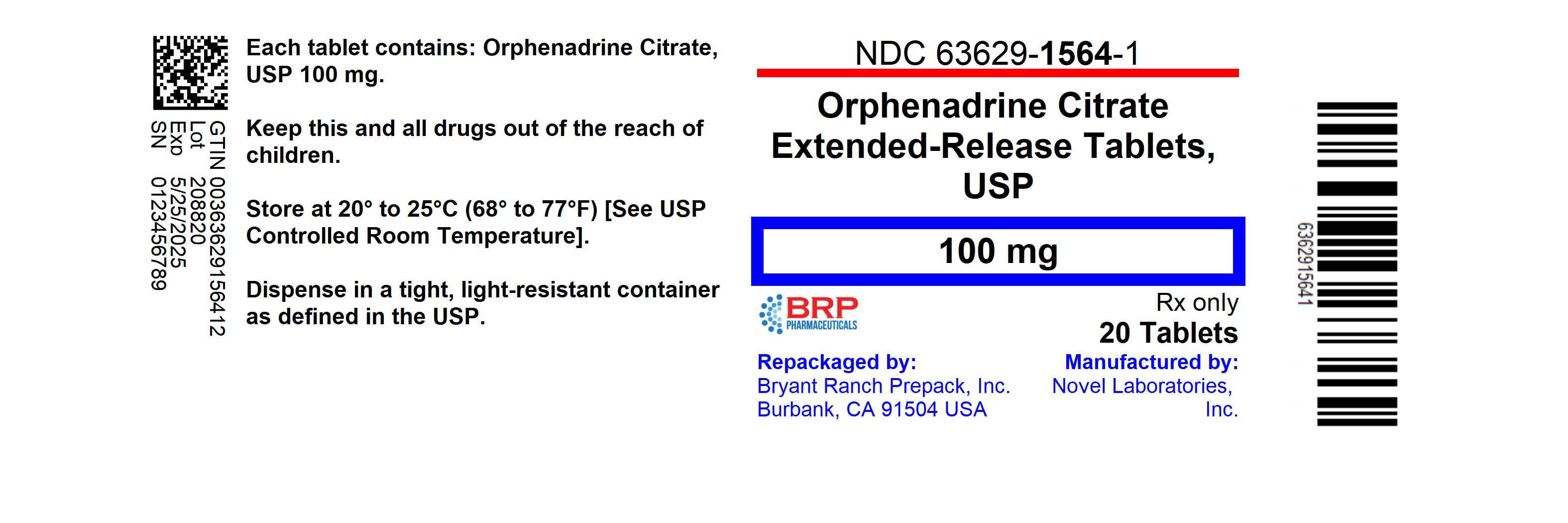
Orphenadrine Citrate 100mg ER Tablet Label Image
Medicare Part D spend CMS · PART D · 2026 (Q1)
About this NDC listing & data coverage
What data is (and isn’t) available for this NDC — tap to expand
| NDC identity (package / product / labeler codes) | ✓ Available |
| Labeler | ✓ Available |
| Product & package description | ✓ Available |
| Marketing category & status | ✓ Available |
| Active ingredient / dosage form / route | ✓ Available |
| FDA label (SPL via DailyMed) | ✓ Available |
| Package photos | ✓ Available |
| Inactive ingredients (structured) | ✓ Available |
| NADAC pharmacy acquisition price (CMS) | — Not published for this NDC CMS publishes NADAC only for NDCs reported in its retail-pharmacy survey. |
| Orange Book / therapeutic-equivalence data | ✓ Available |
| HCPCS J-code billing crosswalk | — Not published for this NDC Most self-administered / retail products have no J-code — that is normal. |
| Medicaid utilization (CMS SDUD) | — Not published for this NDC CMS reports utilization only for NDCs with Medicaid claims above its privacy threshold. |