
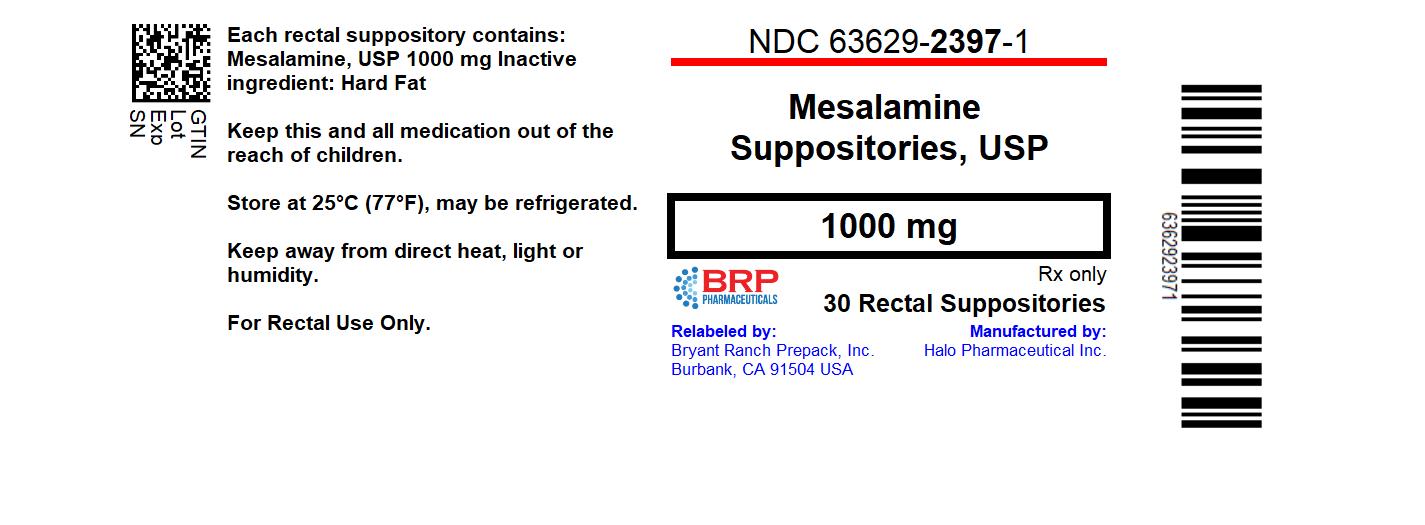
Mesalamine 1000 mg Suppository, 30 suppositories — NDC 63629-2397-1 (Billing 63629-2397-01)
This is a package of 30 suppositories of Mesalamine 1000 mg Suppository from Bryant Ranch Prepack, marketed since Jun 2019 and currently FDA-listed. It is this product's only package size.
NDC database record
One package, one record: these facts belong to NDC 63629-2397-1 alone.
- Record
- FDA NDC Directory package listing · Human prescription drug
- Code segments
- 63629 labeler · 2397 product · 1 package
- Package marketed since
- May 4, 2021
- Sample package
- No — commercial package
- Listing certified through
- Dec 31, 2026
- Billing quantity
- 30 EA per package
- Barcode (UPC-A, from the NDC)
- 3 6362923971 9
- FDA record last changed
- Jul 24, 2026
Other active recalls for Mesalamine (different manufacturers) — 1 · tap to view
Identity & classification
Regulatory identifiers FDA, NLM and CMS codes for this package
Drug-database identifiers Medi-Span GPI and First Databank GCN / HICL / AHFS classification
- GSN (GCN sequence number): 021776
- GCN: 48490
- GPI-14 (Medi-Span): 52500030005240
- HICL (First Databank): 001848
- AHFS class code: 56:36.00.00
- RxCUI (RxNorm): 248420
Where does this data come from?
- FDA openFDA NDC Directory · synced Oct 1, 2026
- FDA label on DailyMed · label index refreshed Oct 3, 2026
- RxNorm (NLM RxNav) · catalog refreshed Oct 1, 2026
- Medi-Span GPI (licensed)
- First Databank (licensed) · refreshed Oct 1, 2026
RxNorm drug class
This medicine belongs to the Aminosalicylate class.
Where does this data come from?
- RxClass (NLM) · catalog refreshed Oct 1, 2026
Clinical
Rectal mesalamine is used to treat ulcerative colitis (a condition which causes swelling and sores in the lining of the colon [large intestine] and rectum), proctitis (swelling in the rectum), and proctosigmoiditis (swelling in the rectum and sigmoid colon [last section of the colon]). Rectal mesalamine is in a class of medications called anti-inflammatory agents. It works by stopping the body from producing a certain substance that may cause inflammation.
Read the full MedlinePlus article ↗- It treats ulcerative colitis and, in rectal forms, inflammation in the lower bowel such as proctitis. Some products are for flares, some for keeping remission, and some for both. Y...
- It depends on your product. Tablets and most capsules are swallowed whole. Rectal forms are usually used at bedtime. Drink plenty of fluids, and follow your label for food and timi...
- Headache, gas, belly pain and diarrhea are the common ones. Call your doctor if you get severe cramping with bloody diarrhea, fever or rash, since that could be a reaction to the d...
- Yes. Your kidney function should be checked before starting and periodically after. If you take azathioprine or 6-mercaptopurine, or are 65 or older, blood counts should be monitor...
Patient education
Supplement & herbal interactions
Some supplements/herbs that may interact with Mesalamine — tap one for details:
Where does this data come from?
- MedlinePlus (NLM) · refreshed Oct 1, 2026
- FDA label on DailyMed · label index refreshed Oct 3, 2026
Ask a licensed pharmacist directly — free, answered by our team.
Pricing
A drug doesn't have one price. Each row is a different public payment system, and none is what you'd pay at the counter — that depends on your insurance. The ⓘ on each row explains what it measures.
| Price system | Per each | Per package |
|---|---|---|
| Retail pharmacies payNADAC · weekly | Not in the retail survey — common for institutional, discontinued, or low-volume packs. | |
| Medicaid paysCMS SDUD · 12 mo | No recent Medicaid claims on file for this NDC — rare and low-volume NDCs are suppressed in the public data. | |
| Medicare drug plans payPart D · Q2 2026 | $3.04 | $91.21 / 30 suppositories |
Where does this data come from?
- CMS NADAC weekly file
- CMS ASP pricing files · refreshed Sep 20, 2026
- CMS Medicaid State Drug Utilization Data · refreshed Oct 4, 2026
- CMS Part D plan pricing files · refreshed Sep 24, 2026
- VA National Acquisition Center price file
Packaging — all sizes for this product
| Package NDC | Description | Marketing start | Marketing end | Status |
|---|---|---|---|---|
| 63629-2397-01 You're viewing this Main listing | 5 PACKAGE in 1 CARTON / 6 SUPPOSITORY in 1 PACKAGE | 2021-05-04 | — | Active |
Therapeutic equivalents
| Product | Labeler | Pack | NADAC/unit | TE | Status | Price vs. this |
|---|---|---|---|---|---|---|
| Mesalamine 1000 mg 00472-1915-30 | Actavis | 30 suppositories | $1.284 | AB | Availability likely | — |
| Mesalamine 1000 mg 16571-0246-03 | Rising | 30 suppositories | $1.284 | AB | Availability likely | — |
| Mesalamine 1000 mg 16714-0245-30 | Northstar | 30 suppositories | $1.284 | AB | Availability likely | — |
| Mesalamine 1000 mg 31722-0005-30 | Camber | 30 suppositories | $1.284 | AB | Availability likely | — |
| Mesalamine 1000 mg 64980-0282-03 | Rising | 30 suppositories | $1.284 | AB | Availability likely | — |
| Mesalamine Rectal 1000 mg 69918-0560-30 | Amring | 30 suppositories | $1.284 | AB | Availability likely | — |
| Mesalamine 1000 mg 70710-1302-07 | Zydus | 30 suppositories | $1.284 | AB | Availability likely | — |
| Canasa 1000 mg 58914-0501-33 | Allergan, | 3 suppositories | — | AB | FDA listed | — |
| Mesalamine 1000 mgthis 63629-2397-01 | Bryant | 30 suppositories | — | AB | FDA listed | — |
| Mesalamine 1000 mg 70771-1513-07 | Zydus | 30 suppositories | — | AB | FDA listed | — |
| Mesalamine 1000 mg 72162-1804-01 | Bryant | 30 suppositories | — | AB | FDA listed | — |
Where does this data come from?
- FDA openFDA NDC Directory · synced Oct 1, 2026
- FDA Orange Book · refreshed Oct 3, 2026
- CMS NADAC weekly file
Availability & generic status
This product is an FDA-approved generic. Other versions of the same drug are listed under Therapeutic equivalents, least expensive first.
Where does this data come from?
- FDA Orange Book · refreshed Oct 3, 2026
What it looks like
Where does this data come from?
- FDA label on DailyMed · label index refreshed Oct 3, 2026
Inactive Ingredients / Excipients
Inactive ingredients, also called excipients, are components of the drug product other than the active ingredient. They may include fillers, dyes, coatings, preservatives, flavors, or other formulation ingredients.
💡 Tap an ingredient (hover on desktop) to see what it is and why it’s used.
-
UNII 8334LX7S21
A solid fat derived from animal or vegetable sources, used as a coating agent and lubricant to help pills slide smoothly during manufacturing and protect the medicine from moisture and air.
1 inactive ingredient listed in the exact product block matched to this NDC.
Where does this data come from?
ingredient classCode="IACT" elements from the exact product block matched by this NDC. Label-section narrative from DailyMed / the openFDA label index is shown separately when available.- FDA label on DailyMed · label index refreshed Oct 3, 2026
- FDA openFDA NDC Directory · synced Oct 1, 2026
Inactive ingredient FAQ
Are inactive ingredients the same for every manufacturer?
Why might an inactive ingredient be missing?
Can inactive ingredients matter?
Manufacturer & labeler
More NDCs from Bryant Ranch Prepack labeler code 63629
- Phentermine hydrochloride 37.5 mg Capsule NDC 63629-2387-1
- Phentermine hydrochloride 37.5 mg Tablet NDC 63629-2388-1
- Phentermine hydrochloride 37.5 mg Tablet NDC 63629-2389-1
- Sodium Polystyrene Sulfonate 4.1 meq/g Powder, For Suspension NDC 63629-2390-1
- CLINDAMYCIN PALMITATE HYDROCHLORIDE (Pediatric) 75 mg/5mL Granule, For Solution NDC 63629-2391-1
- Proctozone-Hc hydrocortisone 2.5% 25 mg/g Cream NDC 63629-2396-1
- Phenobarbital 20 mg/5mL Liquid NDC 63629-2399-1
- Phenobarbital 16.2 mg Tablet NDC 63629-2400-1
- Phenobarbital 16.2 mg Tablet NDC 63629-2401-1
- Phenobarbital 64.8 mg Tablet NDC 63629-2402-1
- Phenobarbital 64.8 mg Tablet NDC 63629-2403-1
- Phenobarbital 97.2 mg Tablet NDC 63629-2404-1
Where does this data come from?
- FDA openFDA NDC Directory · synced Oct 1, 2026
- Drugs@FDA
Full prescribing information FDA SPL
🎯 Indications and Usage ▾
1 INDICATIONS AND USAGE Mesalamine suppositories are indicated in adults for the treatment of mildly to moderately active ulcerative proctitis. Mesalamine suppositories are an aminosalicylate indicated in adults for the treatment of mildly to moderately active ulcerative proctitis.
⏱️ Dosage and Administration ▾
2 DOSAGE AND ADMINISTRATION Dosage The recommended dosage of mesalamine suppositories in adults is 1000 mg administered rectally once daily at bedtime for 3 to 6 weeks depending on symptoms and sigmoidoscopic findings. Safety and effectiveness of mesalamine suppositories beyond 6 weeks have not been established. Administration Instructions : • Evaluate renal function prior to initiation of mesalamine suppositories therapy and periodically while on therapy. • Do not cut or break the suppository. • Retain the suppository for one to three hours or longer, if possible. • If a dose of mesalamine suppositories is missed, administer as soon as possible, unless it is almost time for next dose.
Do not use two mesalamine suppositories at the same time to make up for a missed dose. • Mesalamine suppositories will cause staining of direct contact surfaces, including but not limited to fabrics, flooring, painted surfaces, marble, granite, vinyl, and enamel. Keep mesalamine suppositories away from these surfaces to prevent staining. Dosage The recommended adult dosage is 1000 mg administered rectally once daily at bedtime for 3 to 6 weeks.
Safety and effectiveness beyond 6 weeks have not been established.( 2 ) Administration Instructions: • Evaluate renal function prior to initiation of mesalamine suppositories and periodically while on therapy ( 2.1 , 5.1 ) • Do not cut or break the suppository. • Retain the suppository for one to three hours or longer, if possible. • Mesalamine suppositories will cause staining of direct contact surfaces, including but not limited to fabrics, flooring, painted surfaces, marble, granite, vinyl, and enamel. Keep MESALAMINE SUPPOSITORIES away from these surfaces to prevent staining.
💊 Dosage Forms and Strengths ▾
3 DOSAGE FORMS AND STRENGTHS Mesalamine suppositories: 1000 mg mesalamine in a bullet shaped, light tan to grey suppository. Suppository: 1000 mg
⛔ Contraindications ▾
4 CONTRAINDICATIONS Mesalamine suppositories are contraindicated in patients with known or suspected hypersensitivity to salicylates or aminosalicylates or to any ingredients in the suppository vehicle [ see Warnings and Precautions (5.3), Adverse Reactions (6.2) , and Description (11 )]. Known or suspected hypersensitivity to salicylates or aminosalicylates or to any or to any ingredients in the formulation. ( 4 , 5 .3 )
⚠️ Warnings and Cautions ▾
5 WARNINGS AND PRECAUTIONS • Renal Impairment : Evaluate the risks and benefits in patients with known renal impairment or taking nephrotoxic drugs; monitor renal function (5.1 , 7.1 , 8.6 ) • Mesalamine-Induced Acute Intolerance Syndrome : Symptoms may be difficult to distinguish from an exacerbation of ulcerative colitis; monitor for worsening symptoms; discontinue treatment if acute intolerance syndrome is suspected. (5.2) • Hypersensitivity Reactions, including Myocarditis and Pericarditis: Evaluate patients immediately and discontinue if a hypersensitivity reaction is suspected.
( 5.3 ) • Hepatic Failure: Evaluate the risks and benefits in patients with known liver impairment. (5.4) • Interaction with Laboratory Test for Urinary Normetanephrine : Spuriously elevated test results may occur with liquid chromatography with electrochemical detection in patients receiving MESALAMINE SUPPOSITORIES; use alternative, selective assay for normetanephrine. ( 5.5 , 7.3 )
5.1Renal Impairment Renal impairment, including minimal change nephropathy, acute and chronic interstitial nephritis, and renal failure, has been reported in patients given products such as mesalamine suppositories that contain mesalamine or are converted to mesalamine [ see Adverse Reactions (6.2) ] . Evaluate renal function prior to initiation of mesalamine suppositories therapy and periodically while on therapy. Evaluate the risks and benefits of using mesalamine suppositories in patients with known renal impairment or a history of renal disease or taking concomitant nephrotoxic drugs.
In animal studies, the kidney was the principal organ for toxicity [ see Drug Interactions (7.1) , Use in Specific Populations (8.6) and Nonclinical Toxicology (13.2) ] .
5.2Mesalamine-Induced Acute Intolerance Syndrome Mesalamine has been associated with an acute intolerance syndrome that may be difficult to distinguish from an exacerbation of ulcerative colitis. Although the exact frequency of occurrence has not been determined, it has occurred in 3% of patients in controlled clinical trials of mesalamine or sulfasalazine. Symptoms include cramping, acute abdominal pain and bloody diarrhea, and sometimes fever, headache, and rash.
Monitor patients for worsening of these symptoms while on treatment. If acute intolerance syndrome is suspected, promptly discontinue treatment with mesalamine suppositories.
5.3Hypersensitivity Reactions Hypersensitivity reactions have been reported in patients taking sulfasalazine. Some patients may have a similar reaction to mesalamine suppositories or to other compounds that contain or are converted to mesalamine. As with sulfasalazine, mesalamine-induced hypersensitivity reactions may present as internal organ involvement, including myocarditis, pericarditis, nephritis, hepatitis, pneumonitis and hematologic abnormalities.
Evaluate patients immediately if signs or symptoms of a hypersensitivity reaction are present. Discontinue mesalamine suppositories if an alternative etiology for the signs and symptoms cannot be established.
5.4Hepatic Failure There have been reports of hepatic failure in patients with pre-existing liver disease who have been administered other products containing mesalamine. Evaluate the risks and benefits of using mesalamine suppositories in patients with known liver impairment.
5.5Interaction with Laboratory Test for Urinary Normetanephrine Use of mesalamine may lead to spuriously elevated test results when measuring urinary normetanephrine by liquid chromatography with electrochemical detection, because of the similarity in the chromatograms of normetanephrine and mesalamine's main metabolite, N-acetylaminosalicylic acid. Consider an alternative, selective assay for normetanephrine.
🤒 Adverse Reactions ▾
6 ADVERSE REACTIONS The most serious adverse reactions seen in mesalamine suppositories clinical trials or with other products that contain or are metabolized to mesalamine are: • Renal Impairment [ see Warnings and Precautions (5.1) ] • Mesalamine-Induced Acute Intolerance Syndrome [ see Warnings and Precautions (5.2) ] • Hypersensitivity Reactions [ see Warnings and Precautions (5.3) ] • Hepatic Failure [ see Warnings and Precautions (5.4) ] The most common adverse reactions (≥ 1%) are: dizziness, rectal pain, fever, rash, acne and colitis.
(6.1) To report SUSPECTED ADVERSE REACTIONS, contact Rising Pharmaceuticals, Inc. at 1-866-562-4597 or FDA at 1-800-FDA-1088 or www.fda.gov/medwatch.
6.1Clinical Trials Experience Because clinical trials are conducted under widely varying conditions, adverse reaction rates observed in the clinical trials of a drug cannot be directly compared to rates in the clinical trials of another drug and may not reflect the rates observed in practice. The most common adverse reactions in adult patients with mildly to moderately active ulcerative proctitis in double-blind, placebo-controlled trials are summarized in the Table 1 below. Table 1: Adverse Reactions Occurring In More Than 1% of Mesalamine Suppository Treated Patients (Comparison to Placebo) Symptom Mesalamine (n = 177) Placebo (n = 84) N % N % Dizziness 5 3 2
2.4Rectal Pain 3 1.8 0 0 Fever 2 1.2 0 0 Rash 2 1.2 0 0 Acne 2 1.2 0 0 Colitis 2 1.2 0 0 In a multicenter, open-label, randomized, parallel group study in 99 patients comparing the mesalamine 1000 mg suppository administered nightly to that of the mesalamine 500 mg suppository twice daily. The most common adverse reactions in both groups were headache (14%), flatulence (5%), abdominal pain (5%), diarrhea (3%), and nausea (3%). Three (3) patients discontinued medication because of an adverse reaction; one of these adverse reactions (headache) was deemed possibly related to study medication.
The recommended dosage of mesalamine suppositories is 1000 mg administered rectally once daily at bedtime [ see Dosage and Administration (2) ] .
6.2Postmarketing Experience In addition to the adverse reactions reported above in clinical trials involving mesalamine suppositories, the adverse reactions listed below have been identified during post-approval use of mesalamine suppositories and other mesalamine-containing products. Because these reactions are reported voluntarily from a population of uncertain size, it is not always possible to reliably estimate their frequency or establish a causal relationship to drug exposure. • Body as a Whole: drug fever, fatigue, lupus-like syndrome, medication residue • Cardiac Disorders : myocarditis, pericarditis, pericardial effusion [ see Warnings and Precautions (5.3) ] • Endocrine: Nephrogenic diabetes insipidus • Eye disorders: eye swelling • Gastrointestinal Disorders: abdominal cramps, abdominal distension, anal pruritus, anorectal discomfort, constipation, feces discolored, flatulence, frequent bowel movements, gastrointestinal bleeding, mucus stools, nausea, painful defecation, pancreatitis, proctalgia, rectal discharge, rectal tenesmus, stomach discomfort, vomiting • Hepatic Disorders : cholestatic jaundice, hepatitis, jaundice, Kawasaki-like syndrome including changes in liver enzymes, liver necrosis, liver failure • Hematologic Disorders: agranulocytosis, aplastic anemia, thrombocytopenia • Neurological/Psychiatric Disorders : Guillain-Barre syndrome, peripheral neuropathy, transverse myelitis, intracranial hypertension • Renal Disorders: interstitial nephritis, renal failure, minimal change nephropathy [ see Warnings and Precautions (5.1) ] • Respiratory, Thoracic and Mediastinal Disorders : hypersensitivity pneumonitis (including allergic alveolitis, eosinophilic pneumonitis, interstitial pneumonitis) • Skin and Subcutaneous Tissue Disorder : alopecia, erythema, erythema nodosum, pruritus, psoriasis, pyoderma gangrenosum, urticaria • Urogenital… [Excerpted — this section continues on DailyMed.]
🔄 Drug Interactions ▾
7 DRUG INTERACTIONS • Nephrotoxic Agents including NSAIDs : Increased risk of nephrotoxicity; monitor for changes in renal function and mesalamine-related adverse reactions. ( 7.1 ) • Azathioprine or 6-Mercaptopurine : Increased risk of blood disorders; monitor complete blood cell counts and platelet counts. ( 7.2)
7.1Nephrotoxic Agents, Including Non-Steroidal Anti-Inflammatory Drugs The concurrent use of mesalamine with known nephrotoxic agents, including nonsteroidal anti-inflammatory drugs (NSAIDs) may increase the risk of nephrotoxicity. Monitor patients taking nephrotoxic drugs for changes in renal function and mesalamine-related adverse reactions [ see Warnings and Precautions (5.1)].
7.2Azathioprine or 6-Mercaptopurine The concurrent use of mesalamine with azathioprine or 6-mercaptopurine may increase the risk for blood disorders. If concomitant use of mesalamine suppositories and azathioprine or 6-mercaptopurine cannot be avoided, monitor blood tests, including complete blood cell counts and platelet counts.
7.3Urinary Normetanephrine Measurements Use of mesalamine may lead to spuriously elevated test results when measuring urinary normetanephrine by liquid chromatography with electrochemical detection, because of the similarity in the chromatograms of normetanephrine and mesalamine's main metabolite, N-acetylaminosalicylic acid. Consider an alternative, selective assay for normetanephrine [ see Warnings and Precautions (5.5) ].
👥 Use in Specific Populations ▾
8 USE IN SPECIFIC POPULATIONS • Geriatric Patients: Increased risk of blood dyscrasias; monitor complete blood cell counts and platelet counts. (8.5)
8.1Pregnancy Risk Summary Limited published data on mesalamine use in pregnant women are insufficient to inform a drug-associated risk. No evidence of teratogenicity was observed in rats or rabbits when treated during gestation with orally administered mesalamine at doses greater than the recommended human intra-rectal dose [ see Data ]. The estimated background risk of major birth defects and miscarriage for the indicated populations is unknown.
Adverse outcomes in pregnancy occur regardless of the health of the mother or the use of medications. In the U.S. general population, the estimated background risk of major birth defects and miscarriage in clinically recognized pregnancies is 2 to 4% and 15 to 20%, respectively. Data Animal Data Reproduction studies have been performed in rats at oral doses up to 320 mg/kg/day (about 1.7 times the recommended human intra-rectal dose of mesalamine suppositories, based on body surface area) and in rabbits at oral doses up to 495 mg/kg/day (about 5.4 times the recommended human intra-rectal dose of mesalamine suppositories, based on body surface area) following administration during the period of organogenesis, and have revealed no evidence of impaired fertility or harm to the fetus due to mesalamine.
8.2Lactation Risk Summary Mesalamine and its N-acetyl metabolite are present in human milk in undetectable to small amounts [see Data] . There are limited reports of diarrhea in breastfed infants. There is no information on the effects of the drug on milk production.
The lack of clinical data during lactation precludes a clear determination of the risk of mesalamine suppositories to an infant during lactation; therefore, the developmental and health benefits of breastfeeding should be considered along with the mother's clinical need for mesalamine suppositories and any potential adverse effects on the breastfed child from mesalamine suppositories or from the underlying maternal conditions. Clinical Considerations Monitor breastfed infants for diarrhea. Data In published lactation studies, maternal mesalamine doses from various oral and rectal formulations and products ranged from 500 mg to 3 g daily.
The concentration of mesalamine in milk ranged from non-detectable to 0.11 mg/L. The concentration of the N-acetyl-5-aminosalicylic acid metabolite ranged from 5 to 18.1 mg/L. Based on these concentrations, estimated infant daily dosages for an exclusively breastfed infant are 0 to 0.017 mg/kg/day of mesalamine and 0.75 to 2.72 mg/kg/day of N-acetyl-5- aminosalicylic acid.
8.4Pediatric Use The safety and effectiveness of mesalamine suppositories in pediatric patients for the treatment of mildly to moderately active ulcerative proctitis have not been established. Information describing a clinical study in which efficacy was not demonstrated in pediatric patients ages 5 to 17 years is approved for Forest Laboratories, LLC’s CANASA (mesalamine) rectal suppositories. However, due to Forest Laboratories, LLC’s marketing exclusivity rights, this drug product is not labeled with that pediatric information.
8.5Geriatric Use Clinical trials of mesalamine suppositories did not include sufficient numbers of patients aged 65 and over to determine whether they respond differently from younger patients. Systemic exposures are increased in elderly subjects [ See Clinical Pharmacology (12.3) ] . Reports from uncontrolled clinical studies and postmarketing reporting systems suggested a higher incidence of blood dyscrasias (i.e., agranulocytosis, neutropenia and pancytopenia) in patients receiving mesalamine-containing products such as mesalamine suppositories who were 65 years or older compared to younger patients.
Monitor complete blood cell counts and platelet counts in elderly patients during treatment with mesalamine suppositories. In general, the greater… [Excerpted — this section continues on DailyMed.]
🤰 Pregnancy ▾
8.1Pregnancy Risk Summary Limited published data on mesalamine use in pregnant women are insufficient to inform a drug-associated risk. No evidence of teratogenicity was observed in rats or rabbits when treated during gestation with orally administered mesalamine at doses greater than the recommended human intra-rectal dose [ see Data ]. The estimated background risk of major birth defects and miscarriage for the indicated populations is unknown.
Adverse outcomes in pregnancy occur regardless of the health of the mother or the use of medications. In the U.S. general population, the estimated background risk of major birth defects and miscarriage in clinically recognized pregnancies is 2 to 4% and 15 to 20%, respectively. Data Animal Data Reproduction studies have been performed in rats at oral doses up to 320 mg/kg/day (about 1.7 times the recommended human intra-rectal dose of mesalamine suppositories, based on body surface area) and in rabbits at oral doses up to 495 mg/kg/day (about 5.4 times the recommended human intra-rectal dose of mesalamine suppositories, based on body surface area) following administration during the period of organogenesis, and have revealed no evidence of impaired fertility or harm to the fetus due to mesalamine.
🧒 Pediatric Use ▾
8.4Pediatric Use The safety and effectiveness of mesalamine suppositories in pediatric patients for the treatment of mildly to moderately active ulcerative proctitis have not been established. Information describing a clinical study in which efficacy was not demonstrated in pediatric patients ages 5 to 17 years is approved for Forest Laboratories, LLC’s CANASA (mesalamine) rectal suppositories. However, due to Forest Laboratories, LLC’s marketing exclusivity rights, this drug product is not labeled with that pediatric information.
🧓 Geriatric Use ▾
8.5Geriatric Use Clinical trials of mesalamine suppositories did not include sufficient numbers of patients aged 65 and over to determine whether they respond differently from younger patients. Systemic exposures are increased in elderly subjects [ See Clinical Pharmacology (12.3) ] . Reports from uncontrolled clinical studies and postmarketing reporting systems suggested a higher incidence of blood dyscrasias (i.e., agranulocytosis, neutropenia and pancytopenia) in patients receiving mesalamine-containing products such as mesalamine suppositories who were 65 years or older compared to younger patients.
Monitor complete blood cell counts and platelet counts in elderly patients during treatment with mesalamine suppositories. In general, the greater frequency of decreased hepatic, renal, or cardiac function, and of concurrent disease or other drug therapy in elderly patients should be considered when prescribing mesalamine suppositories [ see Use in Specific Populations (8.6) ].
🆘 Overdosage ▾
10 OVERDOSAGE There have been no documented reports of serious toxicity in man resulting from massive overdosing with mesalamine suppository. Under ordinary circumstances, mesalamine absorption from the colon is limited.
🧬 Clinical Pharmacology ▾
12 CLINICAL PHARMACOLOGY
12.1Mechanism of Action The mechanism of action of mesalamine is not fully understood, but appears to be topical rather than systemic. Although the pathology of inflammatory bowel disease is uncertain, both prostaglandins and leukotrienes have been implicated as mediators of mucosal injury and inflammation.
12.3Pharmacokinetics Absorption Mesalamine (5-ASA) administered as a rectal suppository is variably absorbed. In patients with ulcerative colitis treated with mesalamine 500 mg rectal suppositories, administered once every eight hours for six days, the mean mesalamine peak plasma concentration (C max ) was 353 ng/mL (CV=55%) following the initial dose and 361 ng/mL (CV=67%) at steady state. The mean minimum steady state plasma concentration (C min ) was 89 ng/mL (CV=89%).
Absorbed mesalamine does not accumulate in the plasma. Distribution Mesalamine administered as a rectal suppository distributes in rectal tissue to some extent. Elimination In patients with ulcerative proctitis treated with mesalamine 500 mg as a rectal suppository every 8 hours for 6 days, the mean elimination half-life was 5 hours (CV=73%) for 5-ASA and 5 hours (CV=63%) for N-acetyl-5-ASA, the active metabolite, following the initial dose.
At steady state, the mean elimination half-life was 7 hours for both 5-ASA and N-acetyl-5-ASA (CV=102% for 5-ASA and 82% for N-acetyl-5-ASA). Metabolism The absorbed mesalamine is extensively metabolized, mainly to N-acetyl-5-ASA in the liver and in the gut mucosal wall. In patients with ulcerative colitis treated with one mesalamine 500 mg rectal suppository every eight hours for six days, the peak concentration (C max ) of N-acetyl-5-ASA ranged from 467 ng/mL to 1399 ng/mL following the initial dose and from 193 ng/mL to 1304 ng/mL at steady state.
Excretion Mesalamine is eliminated from plasma mainly by urinary excretion, predominantly as N-acetyl-5-ASA. In patients with ulcerative proctitis treated with mesalamine 500 mg as a rectal suppository every 8 hours for 6 days, 12% or less of the dose was eliminated in urine as unchanged 5-ASA and 8% to 77% was eliminated as N-acetyl-5-ASA following the initial dose. At steady state, 11% or less of the dose was eliminated in the urine as unchanged 5-ASA and 3% to 35% was eliminated as N-acetyl-5-ASA.
🧬 Mechanism of Action ▾
12.1Mechanism of Action The mechanism of action of mesalamine is not fully understood, but appears to be topical rather than systemic. Although the pathology of inflammatory bowel disease is uncertain, both prostaglandins and leukotrienes have been implicated as mediators of mucosal injury and inflammation.
📦 How Supplied / Storage and Handling ▾
16 HOW SUPPLIED/STORAGE AND HANDLING Mesalamine suppositories 1000 mg for rectal administration are available as bullet shaped, light tan to grey suppositories containing 1000 mg mesalamine supplied in boxes of 30 plastic wrapped suppositories (NDC: 63629-2397-1). Store below 25ºC (77ºF), may be refrigerated. Keep away from direct heat, light or humidity.
📋 Description ▾
11 DESCRIPTION The active ingredient in mesalamine suppositories 1000 mg for rectal use is mesalamine, also known as mesalazine or 5-aminosalicylic acid (5-ASA). Chemically, mesalamine is 5-amino-2-hydroxybenzoic acid, and is classified as an anti-inflammatory drug. Each mesalamine suppository contains 1000 mg of mesalamine (USP) in a base of Hard Fat, NF.
The empirical formula is C 7 H 7 NO 3 , representing a molecular weight of 153.14. The structural formula is:
🧬 Pharmacokinetics ▾
12.3Pharmacokinetics Absorption Mesalamine (5-ASA) administered as a rectal suppository is variably absorbed. In patients with ulcerative colitis treated with mesalamine 500 mg rectal suppositories, administered once every eight hours for six days, the mean mesalamine peak plasma concentration (C max ) was 353 ng/mL (CV=55%) following the initial dose and 361 ng/mL (CV=67%) at steady state. The mean minimum steady state plasma concentration (C min ) was 89 ng/mL (CV=89%).
Absorbed mesalamine does not accumulate in the plasma. Distribution Mesalamine administered as a rectal suppository distributes in rectal tissue to some extent. Elimination In patients with ulcerative proctitis treated with mesalamine 500 mg as a rectal suppository every 8 hours for 6 days, the mean elimination half-life was 5 hours (CV=73%) for 5-ASA and 5 hours (CV=63%) for N-acetyl-5-ASA, the active metabolite, following the initial dose.
At steady state, the mean elimination half-life was 7 hours for both 5-ASA and N-acetyl-5-ASA (CV=102% for 5-ASA and 82% for N-acetyl-5-ASA). Metabolism The absorbed mesalamine is extensively metabolized, mainly to N-acetyl-5-ASA in the liver and in the gut mucosal wall. In patients with ulcerative colitis treated with one mesalamine 500 mg rectal suppository every eight hours for six days, the peak concentration (C max ) of N-acetyl-5-ASA ranged from 467 ng/mL to 1399 ng/mL following the initial dose and from 193 ng/mL to 1304 ng/mL at steady state.
Excretion Mesalamine is eliminated from plasma mainly by urinary excretion, predominantly as N-acetyl-5-ASA. In patients with ulcerative proctitis treated with mesalamine 500 mg as a rectal suppository every 8 hours for 6 days, 12% or less of the dose was eliminated in urine as unchanged 5-ASA and 8% to 77% was eliminated as N-acetyl-5-ASA following the initial dose. At steady state, 11% or less of the dose was eliminated in the urine as unchanged 5-ASA and 3% to 35% was eliminated as N-acetyl-5-ASA.
🔬 Clinical Studies ▾
14 CLINICAL STUDIES Two double-blind, placebo-controlled, multicenter trials of mesalamine suppositories were conducted in North America in adult patients with mildly to moderately active ulcerative proctitis. The regimen in Study 1 was a 500 mg mesalamine suppository administered rectally three times daily and in Study 2 was a 500 mg mesalamine suppository administered rectally twice daily. In both trials, patients had an average extent of proctitis (upper disease boundary) of approximately 10 cm and approximately 80% of patients had multiple prior episodes of proctitis.
A total of 173 patients were evaluated (Study 1, N=79; Study 2, N=94), of which 89 patients received mesalamine, and 84 patients received placebo. The mean age of patients was 39 years (range 17 to 73 years), 60% were female, and 97% were white. The primary measures of efficacy were clinical disease activity index (DAI) and histologic evaluations in both trials.
The DAI is a composite index reflecting rectal bleeding, stool frequency, mucosal appearance at endoscopy, and a physician's global assessment of disease. Patients were evaluated clinically and sigmoidoscopically after 3 and 6 weeks of treatment. Compared to placebo, mesalamine suppositories were statistically (p<0.01) superior to placebo in both trials with respect to improvement in stool frequency, rectal bleeding, mucosal appearance, disease severity, and overall disease activity after 3 and 6 weeks of treatment.
The effectiveness of mesalamine suppositories was statistically significant irrespective of sex, extent of proctitis, duration of current episode, or duration of disease. An additional multicenter, open-label, randomized, parallel group study in 99 patients diagnosed with mildly to moderately ulcerative proctitis compared 1000 mg mesalamine suppositories administered rectally once daily at bedtime (N=35) to 500 mg mesalamine suppository administered rectally twice daily, in the morning and at bedtime (N=46), for 6 weeks.
The primary measures of efficacy included the clinical disease activity index (DAI) and histologic evaluations. Patients were evaluated clinically and sigmoidoscopically at 3 and 6 weeks of treatment. The efficacy at 6 weeks was not different between the treatment groups.
Both were effective in the treatment of ulcerative proctitis and resulted in a significant decrease at 6 weeks in DAI: in the mesalamine 500 mg twice daily group, the mean DAI value decreased from 6.6 to 1.6, and in the 1000 mg at bedtime group, the mean DAI value decreased from 6.2 to 1.3, which represents a decrease of greater than 75% in both groups. After 6 weeks of treatment, a DAI score of less than 3 was achieved in 78% of patients in the mesalamine 500 mg twice daily group and 86% of patients in the mesalamine suppositories 1000 mg once daily group.
The recommended dosage of mesalamine suppositories is 1000 mg administered rectally once daily at bedtime [ see Dosage and Administration (2) ].
🧪 Nonclinical Toxicology ▾
13 NONCLINICAL TOXICOLOGY
13.1Carcinogenesis, Mutagenesis, Impairment of Fertility Mesalamine caused no increase in the incidence of neoplastic lesions over controls in a two-year study of Wistar rats fed up to 320 mg/kg/day of mesalamine admixed with diet (about 1.7 times the recommended human intra-rectal dose of mesalamine suppositories, based on body surface area). Mesalamine was not mutagenic in the Ames test, the mouse lymphoma cell (TK +/- ) forward mutation test, or the mouse micronucleus test. No effects on fertility or reproductive performance of the male and female rats were observed at oral mesalamine doses up to 320 mg/kg/day (about 1.7 times the recommended human intra-rectal dose of mesalamine suppositories, based on body surface area).
13.2Animal Toxicology and/or Pharmacology Toxicology studies of mesalamine were conducted in rats, mice, rabbits and dogs, and the kidney was the main target organ of toxicity. In rats, adverse renal effects were observed at a single oral dose of 600 mg/kg (about 3.2 times the recommended human intra-rectal dose of mesalamine suppositories, based on body surface area) and at intravenous doses of >214 mg/kg (about 1.2 times the recommended human intra- rectal dose of mesalamine suppositories, based on body surface area).
In a 13-week oral gavage toxicity study in rats, papillary necrosis and/or multifocal tubular injury were observed in males receiving 160 mg/kg (about 0.86 times the recommended human intra-rectal dose of mesalamine suppositories, based on body surface area) and in both males and females at 640 mg/kg (about 3.5 times the recommended human intra-rectal dose of mesalamine suppositories, based on body surface area). In a combined 52-week toxicity and 127-week carcinogenicity study in rats, degeneration of the kidneys and hyalinization of basement membranes and Bowman's capsule were observed at oral doses of 100 mg/kg/day (about 0.54 times the recommended human intra- rectal dose of mesalamine suppositories, based on body surface area) and above.
In a 14-day rectal toxicity study of mesalamine suppositories in rabbits, intra-rectal doses up to 800 mg/kg (about 8.6 times the recommended human intra-rectal dose of mesalamine suppositories, based on body surface area) was not associated with any adverse effects. In a six-month oral toxicity study in dogs, doses of 80 mg/kg (about 1.4 times the recommended human intra-rectal dose of mesalamine suppositories, based on body surface area) and higher caused renal pathology similar to that described for the rat. In a rectal toxicity study of mesalamine suppositories in dogs, a dose of 166.6 mg/kg (about 3 times the recommended human intra-rectal dose of mesalamine suppositories, based on body surface area) produced chronic nephritis and pyelitis.
In the 12-month eye toxicity study in dogs, keratoconjunctivitis sicca (KCS) occurred at oral doses of 40 mg/kg (about 0.72 times the recommended human intra-rectal dose of mesalamine suppositories, based on body surface area) and above.
📄 Carcinogenesis, Mutagenesis, Impairment of Fertility ▾
13.1Carcinogenesis, Mutagenesis, Impairment of Fertility Mesalamine caused no increase in the incidence of neoplastic lesions over controls in a two-year study of Wistar rats fed up to 320 mg/kg/day of mesalamine admixed with diet (about 1.7 times the recommended human intra-rectal dose of mesalamine suppositories, based on body surface area). Mesalamine was not mutagenic in the Ames test, the mouse lymphoma cell (TK +/- ) forward mutation test, or the mouse micronucleus test. No effects on fertility or reproductive performance of the male and female rats were observed at oral mesalamine doses up to 320 mg/kg/day (about 1.7 times the recommended human intra-rectal dose of mesalamine suppositories, based on body surface area).
📄 Patient Package Insert ▾
.
📄 Package Label / Principal Display Panel ▾
Mesalamine 1000 mg Suppository, #30 Label
Medicare Part D spend CMS · PART D · 2026 (Q1)
About this NDC listing & data coverage
What data is (and isn’t) available for this NDC — tap to expand
| NDC identity (package / product / labeler codes) | ✓ Available |
| Labeler | ✓ Available |
| Product & package description | ✓ Available |
| Marketing category & status | ✓ Available |
| Active ingredient / dosage form / route | ✓ Available |
| FDA label (SPL via DailyMed) | ✓ Available |
| Package photos | ✓ Available |
| Inactive ingredients (structured) | ✓ Available |
| NADAC pharmacy acquisition price (CMS) | — Not published for this NDC CMS publishes NADAC only for NDCs reported in its retail-pharmacy survey. |
| Orange Book / therapeutic-equivalence data | ✓ Available |
| HCPCS J-code billing crosswalk | — Not published for this NDC Most self-administered / retail products have no J-code — that is normal. |
| Medicaid utilization (CMS SDUD) | — Not published for this NDC CMS reports utilization only for NDCs with Medicaid claims above its privacy threshold. |