
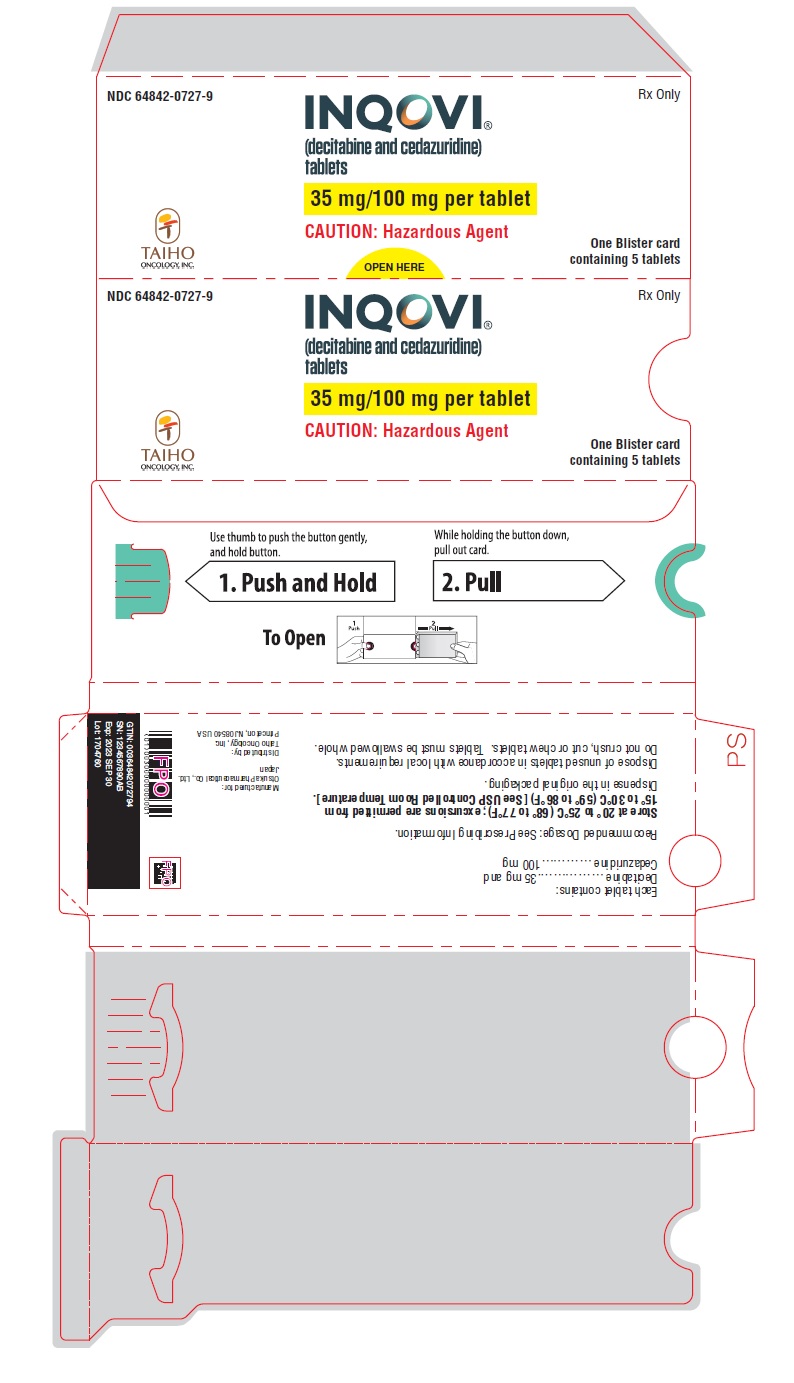
INQOVI CEDAZURIDINE and DECITABINE 100 mg; 35 mg Tablet, Film Coated, 5-count
🆔 Identity & classification
Where does this data come from?
🏷️ RxNorm drug class
This medicine belongs to the Nucleoside Metabolic Inhibitor class.
Where does this data come from?
🏭 Manufacturer & labeler
Where does this data come from?
🩺 Clinical
Decitabine and cedazuridine is used to treat certain types of myelodysplastic syndrome (MDS; conditions in which the bone marrow produces blood cells that are misshapen and does not produce enough healthy blood cells), chronic myelomonocytic leukemia (CMML; rare type of blood cancer that starts in the bone marrow) and acute myeloid leukemia (AML; fast-growing cancer or blood and bone marrow). Decitabine is in a class of medications called hypomethylation agents. It works by helping the bone marrow produce normal blood cells and by killing abnormal cells in the bone marrow. Cedazuridine is in a...
Read the full MedlinePlus article ↗- Inqovi targets blood cancers that start in the bone marrow. In MDS and CMML, your bone marrow isn't making enough healthy blood cells — the cancer cells have silenced the genes tha...
- What exactly is Inqovi treating in my body?
- Yes, it really does matter — this isn't just a formality. A high-fat meal can cut the amount of decitabine your body actually absorbs by roughly half. That means eating before your...
- Why do I have to take it on an empty stomach? Does it really matter?
Patient education
Supplement & herbal interactions
Where does this data come from?
Ask a licensed pharmacist directly — free, answered by our team.
💊 What it looks like
Where does this data come from?
🧪 Inactive Ingredients / Excipients
Inactive ingredients, also called excipients, are components of the drug product other than the active ingredient. They may include fillers, dyes, coatings, preservatives, flavors, or other formulation ingredients.
💡 Tap an ingredient (hover on desktop) to see what it is and why it’s used.
-
UNII M28OL1HH48
Croscarmellose sodium is a plant-based substance derived from cellulose. It acts as a disintegrant, helping tablets and capsules break down quickly in the digestive system so the medicine can be absorbed.
-
UNII 1K09F3G675
Ferric oxide red is an inorganic iron compound used as a colorant in medicines. It gives tablets, capsules, or other dosage forms a red or reddish tint for identification and appearance.
-
UNII 3NXW29V3WO
Hypromellose is a plant-based thickener made from cellulose. It's used in medicines as a binder to hold ingredients together, a coating for tablets, and a thickener for liquids.
-
UNII EWQ57Q8I5X
Lactose monohydrate is a natural sugar derived from milk. It serves as a filler and binder in tablets and capsules, helping create the proper size, texture, and consistency of the medicine.
-
UNII 70097M6I30
Magnesium stearate is a salt made from magnesium and stearic acid, a fatty substance. It's used in tablets and capsules as a lubricant and glidant to help ingredients flow smoothly during manufacturing and prevent sticking.
-
UNII 3WJQ0SDW1A
Polyethylene glycol is a synthetic liquid or solid polymer used in medicines as a solvent, lubricant, and humectant. It helps dissolve active ingredients, reduces friction during manufacturing, and retains moisture in the final product.
-
UNII 532B59J990
Polyvinyl alcohol is a synthetic polymer made from plant-derived materials. It's used as a binder to hold ingredients together, a film-former in coatings, and a thickener in liquid formulations.
-
UNII ETJ7Z6XBU4
Silicon dioxide is a naturally occurring mineral used as a glidant and anti-caking agent. It helps powder ingredients flow smoothly and prevents clumping during manufacturing and storage.
-
UNII 7SEV7J4R1U
A powder made from a naturally occurring mineral. In medicines, talc works as a glidant and anti-caking agent, helping tablets and capsules flow smoothly during manufacturing and preventing clumping.
-
UNII 15FIX9V2JP
Titanium dioxide is a bright white mineral powder commonly used as a colorant and opacifying agent. It makes pills and tablets white or lighter in color and helps make coatings non-transparent.
10 inactive ingredients listed in the exact product block matched to this NDC.
Where does this data come from?
ingredient classCode="IACT" elements from the exact product block matched by this NDC. Label-section narrative from DailyMed / the openFDA label index is shown separately when available.Inactive ingredient FAQ
Are inactive ingredients the same for every manufacturer?
Why might an inactive ingredient be missing?
Can inactive ingredients matter?
💲 Pricing
A drug doesn't have one price. Each row is a different public payment system, and none is what you'd pay at the counter — that depends on your insurance. The ⓘ on each row explains what it measures.
| Price system | Per each | Per package |
|---|---|---|
| Retail pharmacies payNADAC · weekly | Not in the retail survey — common for institutional, discontinued, or low-volume packs. | |
| Medicaid paysCMS SDUD · 12 mo | $1,869.95 | $9,349.76 / 5 tablets |
| Medicare drug plans payPart D · Q2 2026 | $1,718.21 | $8,591.04 / 5 tablets |
Where does this data come from?
🔁 Therapeutic equivalents
| Product | Labeler | Pack | NADAC/unit | TE | Status | Price vs. this |
|---|---|---|---|---|---|---|
| Inqovi 100 mg/1; 35 mgthis 64842-0727-09 | Taiho | 5 tablets | — | — | FDA listed | — |
Where does this data come from?
⏳ Availability & generic status
We did not find an FDA-approved generic match for this exact strength, form and route. Patent/protection dates below may affect future generic timing.
Why the date isn’t exact: Generic timing can change because patents may be challenged, settled, licensed, added, removed, or worked around with a narrower label — and FDA approval does not always mean a pharmacy can get the generic today.
🛈 What do these terms mean?
- Patent
- Legal protection listed in the Orange Book that may delay generic approval or launch. Issued by the U.S. Patent & Trademark Office.
- Substance patent
- Covers the active drug molecule itself — the hardest to design around. A generic generally can’t launch until it expires.
- Formulation (product) patent
- Covers a specific formulation or dosage form. A generic can sometimes work around it with a different formulation.
- Method-of-use patent
- A patent covering one specific approved use of the drug — not necessarily the whole molecule. A generic can sometimes launch with a “skinny label” that carves out the protected use and keeps the others.
- Skinny label
- A generic label that omits a still-patented use when the FDA allows it — letting a generic reach the market for the unprotected uses.
- Exclusivity
- FDA-granted marketing protection, separate from patents — e.g. 5-yr new chemical entity, 7-yr orphan drug, or a +6-month pediatric extension.
- Paragraph IV
- A generic applicant’s formal challenge to a listed patent. It can potentially lead to earlier generic entry, but often involves litigation or a settlement.
- RLD / RS
- Reference Listed Drug — the brand product the FDA uses as the reference for generic applications. Reference Standard — the product the FDA expects generics to compare against in bioequivalence testing.
- TE / AB rating
- FDA therapeutic-equivalence rating. An AB rating generally means the FDA considers a generic therapeutically equivalent to — and substitutable for — the brand.
- LOE (loss of exclusivity)
- The latest patent or exclusivity currently listed — the loss-of-exclusivity / latest-listed-protection date shown on this page. Paragraph-IV challenges and settlements can move the real date earlier; FDA approval and a manufacturer’s decision to market can move it later.
Built from the FDA Orange Book. The bars above are scaled to each protection’s expiry; the red LOE marker is the last one to lapse.
| Patent | Type | Use code | Expires |
|---|---|---|---|
| US 12239653 ↗ | Method of use | U-2865 | Feb 24, 2041 |
| US 12239653 ↗ | Method of use | U-2866 | Feb 24, 2041 |
| US 8618075 ↗ | Method of use | U-2864 | Oct 16, 2028 |
| US 8618075 ↗ | Method of use | U-2867 | Oct 16, 2028 |
| US 8268800 ↗ | Drug substance | U-2866 | Aug 22, 2030 |
| US 8268800 ↗ | Drug substance | U-2865 | Aug 22, 2030 |
| US 8268800 ↗ | Drug substance | U-2864 | Aug 22, 2030 |
| US 8268800 ↗ | Drug substance | U-2867 | Aug 22, 2030 |
| US 12195496 ↗ | Drug product | — | Oct 7, 2040 |
| US 11963971 ↗ | Drug product | — | Feb 24, 2041 |
| US 9567363 ↗ | Drug substance | — | Oct 16, 2028 |
| Code | What it grants | Expires |
|---|---|---|
| I-990 | New indication (3-year) | May 13, 2029 |
| ODE-316 | Orphan Drug Exclusivity (7-year) | Jul 7, 2027 |
Is there a generic version of INQOVI 35 MG-100 MG TABLET?
The FDA approved a generic — why can’t I get it at my pharmacy yet?
Why do different websites show different generic release dates?
What does “FDA listed” mean?
What does a patent or protection date mean here?
What does “current Orange Book estimate” mean?
Can a generic come out before the last patent expires?
Can a generic come out after the listed dates?
What is the difference between patents and exclusivity?
Why are there multiple patent dates?
Where does this data come from?
🗺️ Medicaid utilization & spend
📊 Medicare Part D spend CMS · PART D · 2026 (Q1)
📦 Packaging — all sizes for this product
| Package NDC | Description | Marketing start | Status |
|---|---|---|---|
| 64842-0727-09 You're viewing this | 1 BLISTER PACK in 1 CARTON (64842-0727-9) / 5 TABLET, FILM COATED in 1 BLISTER PACK | 2020-08-25 | Active |
🧭 About this NDC listing & data coverage
What data is (and isn’t) available for this NDC — tap to expand
| NDC identity (package / product / labeler codes) | ✓ Available |
| Labeler | ✓ Available |
| Product & package description | ✓ Available |
| Marketing category & status | ✓ Available |
| Active ingredient / dosage form / route | ✓ Available |
| FDA label (SPL via DailyMed) | ✓ Available |
| Package photos | ✓ Available |
| Inactive ingredients (structured) | ✓ Available |
| NADAC pharmacy acquisition price (CMS) | — Not published for this NDC CMS publishes NADAC only for NDCs reported in its retail-pharmacy survey. |
| Orange Book / therapeutic-equivalence data | ✓ Available |
| HCPCS J-code billing crosswalk | — Not published for this NDC Most self-administered / retail products have no J-code — that is normal. |
| Medicaid utilization (CMS SDUD) | ✓ Available |
Questions about this listing
Why is there no price listed?
Is the NDC printed on the package the same as the 11-digit billing NDC?
What do the three segments of this NDC mean?
Is this package still being marketed?
Who lists this product with the FDA?
Do I need a prescription for this product?
Where does this data come from?
📄 Full prescribing information FDA SPL
🎯 Indications and Usage ▾
1 INDICATIONS AND USAGE INQOVI is a combination of decitabine, a nucleoside metabolic inhibitor, and cedazuridine, a cytidine deaminase inhibitor, indicated: For treatment of adult patients with myelodysplastic syndromes (MDS), including previously treated and untreated, de novo and secondary MDS with the following French-American-British subtypes (refractory anemia, refractory anemia with ringed sideroblasts, refractory anemia with excess blasts, and chronic myelomonocytic leukemia [CMML]) and intermediate-1, intermediate-2, and high-risk International Prognostic Scoring System groups.
( 1.1 ) In combination with venetoclax for the treatment of newly diagnosed acute myeloid leukemia (AML) in adults 75 years or older, or who have comorbidities that preclude use of intensive induction chemotherapy. ( 1.2 )
1.1Myelodysplastic Syndromes or Chronic Myelomonocytic Leukemia INQOVI is indicated for treatment of adult patients with myelodysplastic syndromes (MDS), including previously treated and untreated, de novo and secondary MDS with the following French-American-British subtypes (refractory anemia, refractory anemia with ringed sideroblasts, refractory anemia with excess blasts, and chronic myelomonocytic leukemia [CMML]) and intermediate-1, intermediate-2, and high-risk International Prognostic Scoring System groups.
1.2Acute Myeloid Leukemia INQOVI is indicated in combination with venetoclax for the treatment of newly diagnosed acute myeloid leukemia (AML) in adults 75 years or older, or who have comorbidities that preclude use of intensive induction chemotherapy.
⏱️ Dosage and Administration ▾
2 DOSAGE AND ADMINISTRATION The recommended dosage of INQOVI is 1 tablet (35 mg decitabine and 100 mg cedazuridine) taken orally once daily on Days 1 through 5 of each 28-day cycle. ( 2.2 ) Take INQOVI on an empty stomach. ( 2.2 )
2.1Important Administration Information Do NOT substitute INQOVI for an intravenous decitabine product within a cycle. Consider administering antiemetics prior to each dose to minimize nausea and vomiting [see Adverse Reactions (6.1) ]. Take INQOVI on an empty stomach at least 2 hours before or 2 hours after eating.
When INQOVI is given in combination with venetoclax, advise patients to take INQOVI 2 hours before or 2 hours after venetoclax. Refer to the venetoclax Prescribing Information for recommended dosage and administration.
2.2Recommended Dosage INQOVI Monotherapy for MDS or CMML The recommended dosage of INQOVI is 1 tablet (containing 35 mg decitabine and 100 mg cedazuridine) orally once daily on Days 1 through 5 of each 28-day cycle for a minimum of 4 cycles until disease progression or unacceptable toxicity. A complete or partial response may take longer than 4 cycles. INQOVI in Combination with Venetoclax for AML The recommended dosage of INQOVI in combination with venetoclax is 1 tablet (containing 35 mg decitabine and 100 mg cedazuridine) orally once daily on Days 1 through 5 of each 28-day cycle until disease progression or unacceptable toxicity.
Match Day 1 of INQOVI dosing with Day 1 of venetoclax dosing for each 28-day cycle.
2.3Administration Instruct patients of the following: Take INQOVI at approximately the same time each day. Swallow tablets whole. Do not cut, crush, or chew tablets.
Take one tablet a day for 5 days in each cycle. If the patient misses a dose within 12 hours of the time it is usually taken, instruct patients to take the missed dose as soon as possible and then to resume the normal daily dosing schedule. Extend the dosing period by one day for every missed dose to complete 5 daily doses for each cycle.
Do not take an additional dose if vomiting occurs after INQOVI administration but continue with the next schedule dose. INQOVI is a hazardous drug. Follow applicable special handling and disposal procedures.
1
2.4Monitoring and Dosage Modifications for Adverse Reactions INQOVI Monotherapy for MDS or CMML Hematologic Adverse Reactions Obtain complete blood cell counts prior to initiating INQOVI and before each cycle. Delay the next cycle if absolute neutrophil count (ANC) is less than 1,000/µL and platelets are less than 50,000/µL in the absence of active disease. Monitor complete blood cell counts until ANC is 1,000/µL or greater and platelets are 50,000/µL or greater [see Warnings and Precautions (5.1) ] .
If hematologic recovery occurs (ANC at least 1,000/µL and platelets at least 50,000/µL) within 2 weeks of achieving remission, continue INQOVI at the same dose. If hematologic recovery does not occur (ANC at least 1,000/µL and platelets at least 50,000/µL) within 2 weeks of achieving remission, Delay INQOVI for up to 2 additional weeks AND Resume at a reduced dose by administering INQOVI on Days 1 through 4. Consider further dose reductions in the order listed in Table 1 if myelosuppression persists after a dose reduction.
Maintain or increase dose in subsequent cycles as clinically indicated. Table 1: Recommended INQOVI Dose Reductions for Myelosuppression (Monotherapy for MDS or CMML) Dose Reduction Dosage First 1 tablet orally once daily on Days 1 through 4 Second 1 tablet orally once daily on Days 1 through 3 Third 1 tablet orally once daily on Days 1, 3 and 5 Manage persistent severe neutropenia and febrile neutropenia with supportive treatment [see Warnings and Precautions (5.1) ]. Non-Hematologic Adverse Reactions Delay the next cycle for the following non-hematologic adverse reactions and resume at the same or reduced dose upon resolution: Serum creatinine 2 mg/dL or greater Serum bilirubin 2 times upper limit of normal (ULN) or greater Aspartate ami…
💊 Dosage Forms and Strengths ▾
3 DOSAGE FORMS AND STRENGTHS INQOVI tablets contain 35 mg decitabine and 100 mg cedazuridine. The tablets are biconvex, oval-shaped, film-coated, red and debossed with “H35” on one side. Tablets: 35 mg decitabine and 100 mg cedazuridine. ( 3 )
⛔ Contraindications ▾
4 CONTRAINDICATIONS None. None. ( 4 )
⚠️ Warnings and Cautions ▾
5 WARNINGS AND PRECAUTIONS Myelosuppression : Severe myelosuppression, including fatal adverse reactions and infectious complications can occur. Obtain complete blood cell counts prior to initiation of INQOVI, prior to each cycle, and as clinically indicated to monitor for response and toxicity. Delay the next cycle and resume at the same or reduced dose as recommended.
( 2.3 , 5.1 ) Embryo-Fetal Toxicity : Can cause fetal harm. Advise patients of reproductive potential of the potential risk to a fetus and to use effective contraception. ( 5.2 , 8.1 , 8.3 )
5.1Myelosuppression INQOVI Monotherapy for MDS or CMML In patients with MDS or CMML, INQOVI can cause severe myelosuppression, including fatal adverse reactions. Based on laboratory values, new or worsening thrombocytopenia occurred in 82% of patients, with Grade 3 or 4 occurring in 76%. Neutropenia occurred in 73% of patients, with Grade 3 or 4 occurring in 71%.
Anemia occurred in 71% of patients, with Grade 3 or 4 occurring in 55%. Febrile neutropenia occurred in 33% of patients, with Grade 3 or 4 occurring in 32%. Thrombocytopenia, neutropenia, anemia, and febrile neutropenia are the most frequent cause of INQOVI dose reduction or interruption, occurring in 36% of patients.
Permanent discontinuation due to myelosuppression (febrile neutropenia) occurred in 1% of patients. Myelosuppression and worsening neutropenia may occur more frequently in the first or second treatment cycles and may not necessarily indicate progression of underlying MDS. Fatal and serious infectious complications can occur with INQOVI.
Pneumonia occurred in 21% of patients, with Grade 3 or 4 occurring in 15%. Sepsis occurred in 14% of patients, with Grade 3 or 4 occurring in 11%. Fatal pneumonia occurred in 1% of patients, fatal sepsis in 1%, and fatal septic shock in 1% [see Adverse Reactions (6.1) ] .
Obtain complete blood cell counts prior to initiation of INQOVI, prior to each cycle, and as clinically indicated to monitor response and toxicity. Administer growth factors and anti-infective therapies for treatment or prophylaxis as appropriate. Delay the next cycle and resume at the same or reduced dose as recommended [see Dosage and Administration (2.4) ] .
INQOVI in Combination with Venetoclax for AML In patients with AML, INQOVI can cause severe myelosuppression, including fatal adverse reactions, when given in combination with venetoclax. Based on laboratory values in Study ASTX727-07 Phase 2 new or worsening thrombocytopenia occurred in 70% of patients, with Grade 3 or 4 occurring in 69%. Neutropenia occurred in 48% of patients, with Grade 3 or 4 occurring in 48%.
Anemia occurred in 54% of patients, with Grade 3 or 4 occurring in 50%. Febrile neutropenia occurred in 52% of patients, with Grade 3 or 4 occurring in 52%. Thrombocytopenia, neutropenia, anemia, and febrile neutropenia were a frequent cause of INQOVI and/or venetoclax dose reduction or interruption.
Dose reductions of INQOVI due to neutropenia and thrombocytopenia occurred in 4% and 1% of patients, respectively. Dose interruptions of INQOVI due to neutropenia, febrile neutropenia, thrombocytopenia, and anemia occurred in 40%, 11%, 8%, and 2% of patients, respectively. Fatal and serious infectious complications can occur during treatment with INQOVI and venetoclax.
Pneumonia occurred in 25% of patients, with Grade 3 or 4 occurring in 20%. Sepsis occurred in 28% of patients with Grade 3 or 4 occurring in 18%. Fatal pneumonia occurred in 2% of patients and fatal sepsis in 8% [see Adverse Reactions (6.1) ] .
Obtain complete blood cell counts prior to initiation of INQOVI with venetoclax, prior to each cycle, and as clinically indicated to monitor response and toxicity. Administer growth factors and anti-infective therapies for treatment or prophylaxis as appropriate. Delay the next cycle and resume at the same or reduced dose as recommended [see Dosage and Administration (2.4) ] .
5.2 Embryo-Fetal Toxicity Based on findings from human…
🤒 Adverse Reactions ▾
6 ADVERSE REACTIONS The following clinically significant adverse reactions are described elsewhere in the labeling: Myelosuppression [see Warnings and Precautions (5.1) ] In MDS or CMML, the most common adverse reactions (incidence ≥ 20%) are fatigue, constipation, hemorrhage, myalgia, mucositis, arthralgia, nausea, dyspnea, diarrhea, rash, dizziness, febrile neutropenia, edema, headache, cough, decreased appetite, upper respiratory tract infection, pneumonia, and transaminase increased. The most common Grade 3 or 4 laboratory abnormalities (≥ 50%) were leukocytes decreased, platelet count decreased, neutrophil count decreased, and hemoglobin decreased.
( 6.1 ) In AML in combination with venetoclax, the most common adverse reactions (incidence ≥ 20%) are neutropenia, febrile neutropenia, thrombocytopenia, hemorrhage, anemia, infection (bacterial/viral), diarrhea, fatigue, mucositis, constipation, arthralgia, dyspnea, decreased appetite, edema, nausea, white blood cell count decreased, sepsis, pneumonia, rash, transaminitis, myalgia, arrhythmia, and abdominal pain. The most common Grade 3 or 4 laboratory abnormalities (≥ 50%) were leukocytes decreased, lymphocytes decreased, platelets decreased, and hemoglobin decreased.
( 6.1 ) To report SUSPECTED ADVERSE REACTIONS, contact Taiho Oncology, Inc. at 1-844-878-2446 or FDA at 1-800-FDA-1088 or www.fda.gov/medwatch .
6.1Clinical Trials Experience Because clinical trials are conducted under widely variable conditions, adverse event rates observed in clinical trials of a drug cannot be directly compared with rates of clinical trials of another drug and may not reflect the rates observed in practice. INQOVI Monotherapy for MDS or CMML The safety of INQOVI was evaluated in a pooled safety population that includes patients enrolled in Study ASTX727-01-B and Study ASTX727-02 [see Clinical Studies (14.1) ]. Patients were randomized to receive INQOVI (35 mg decitabine and 100 mg cedazuridine) orally once daily on Days 1 through 5 in Cycle 1 and decitabine 20 mg/m 2 intravenously on Days 1 through 5 in Cycle 2, or the reverse sequence, and then INQOVI (35 mg decitabine and 100 mg cedazuridine) orally once daily on Days 1 through 5 of each 28-day cycle in Cycles 3 and beyond.
Patients were allowed to have one prior cycle of decitabine or azacitidine and there was no limit for body weight or surface area. Among the patients who received INQOVI, 61% of patients were exposed for 6 months or longer and 24% were exposed to INQOVI for greater than 1 year. Serious adverse reactions occurred in 68% of patients who received INQOVI.
Serious adverse reactions in > 5% of patients included febrile neutropenia (30%), pneumonia (14%), and sepsis (13%). Fatal adverse reactions occurred in 6% of patients. These included sepsis (1%), septic shock (1%), pneumonia (1%), respiratory failure (1%), and one case each of cerebral hemorrhage and sudden death.
Permanent discontinuation due to an adverse reaction occurred in 5% of patients who received INQOVI. The most frequent adverse reactions resulting in permanent discontinuation were febrile neutropenia (1%) and pneumonia (1%). Dose interruptions due to an adverse reaction occurred in 41% of patients who received INQOVI.
Adverse reactions requiring dosage interruptions in > 5% of patients who received INQOVI included neutropenia (18%), febrile neutropenia (8%), thrombocytopenia (6%), and anemia (5%). Dose reductions due to an adverse reaction occurred in 19% of patients who received INQOVI. Adverse reactions requiring dosage reductions in >2% of patients who received INQOVI included neutropenia (12%), anemia (3%), and thrombocytopenia (3%).
The most common adverse reactions (≥20%) were fatigue, constipation, hemorrhage, myalgia, mucositis, arthralgia, nausea, dyspnea, diarrhea, rash, dizziness, febrile neutropenia, edema, headache, cough, decreased appetite, upper respiratory tract infection, pneumonia, and transaminase increased. The most common Grade 3 or 4 lab…
🔄 Drug Interactions ▾
7 DRUG INTERACTIONS Drugs Metabolized by Cytidine Deaminase : Avoid coadministration with INQOVI. ( 7 )
7.1Effects of INQOVI on Other Drugs Drugs Metabolized by Cytidine Deaminase Cedazuridine is an inhibitor of the cytidine deaminase (CDA) enzyme. Coadministration of INQOVI with drugs that are metabolized by CDA may result in increased systemic exposure with potential for increased toxicity of these drugs [see Clinical Pharmacology (12.3) ] . Avoid coadministration of INQOVI with drugs that are metabolized by CDA.
👥 Use in Specific Populations ▾
8 USE IN SPECIFIC POPULATIONS Lactation : Advise not to breastfeed. ( 8.2 ) Infertility : Can impair fertility. ( 8.3 )
8.1Pregnancy Risk Summary Based on findings from human data, animal studies, and its mechanism of action [see Clinical Pharmacology (12.1) ] , INQOVI can cause fetal harm when administered to a pregnant woman. A single published case report of intravenous decitabine use throughout the first trimester during pregnancy describes adverse developmental outcomes, including major birth defects (structural abnormalities). In animal reproduction studies, intravenous administration of decitabine to pregnant mice and rats during organogenesis at doses approximately 7% of the recommended human dose on a body surface area (mg/m 2 ) basis caused adverse developmental outcomes, including increased embryo-fetal mortality, alterations to growth, and structural abnormalities (see Data ) .
Advise pregnant women of the potential risk to a fetus. The estimated background risk of major birth defects and miscarriage for the indicated population is unknown. All pregnancies have a background risk of birth defect, loss, or other adverse outcomes.
In the U.S. general population, the estimated background risk of major birth defects and miscarriage in clinically recognized pregnancies is 2% to 4% and 15% to 20%, respectively. Data Human Data There are no available data on INQOVI use in pregnant women. A single published case report of intravenous decitabine pregnancy exposure in a 39-year-old woman with a hematologic malignancy described multiple structural abnormalities after 6 cycles of therapy in the 18 th week of gestation.
These abnormalities included holoprosencephaly, absence of nasal bone, mid-facial deformity, cleft lip and palate, polydactyly, and rocker-bottom feet. The pregnancy was terminated. Animal Data No reproductive or developmental toxicity studies have been conducted with INQOVI or cedazuridine.
In utero exposure to decitabine causes temporal-related defects in the rat and/or mouse, which include growth suppression, exencephaly, defective skull bones, rib/sternabrae defects, phocomelia, digit defects, micrognathia, gastroschisis, and micromelia. Decitabine inhibits proliferation and increases apoptosis of neural progenitor cells of the fetal central nervous system (CNS) and induces palatal clefting in the developing murine fetus. Studies in mice have also shown that decitabine administration during osteoblastogenesis (Day 10 of gestation) induces bone loss in offspring.
In mice exposed to single intraperitoneal decitabine injections (0, 0.9 and 3.0 mg/m 2 , approximately 2% and 7% of the recommended daily clinical dose, respectively) over gestation Days 8, 9, 10, or 11, no maternal toxicity was observed, but reduced fetal survival was observed after treatment at 3 mg/m 2 and decreased fetal weight was observed at both dose levels. The 3 mg/m 2 dose elicited characteristic fetal defects for each treatment day, including supernumerary ribs (both dose levels), fused vertebrae and ribs, cleft palate, vertebral defects, hind-limb defects, and digital defects of fore- and hind-limbs.
In rats given a single intraperitoneal injection of 2.4, 3.6, or 6 mg/m 2 decitabine (approximately 5, 8, or 13% the daily recommended clinical dose, respectively) on gestation Days 9-12, no maternal toxicity was observed. No live fetuses were seen at any dose when decitabine was injected on gestation Day 9. A significant decrease in fetal survival and reduced fetal weight at doses greater than 3.6 mg/m 2 was seen when decitabine was given on gestation Day 10.
Increased incidences of vertebral and rib anomalies were seen at all dose levels, and induction of exophthalmia, exencephaly, and cleft palate were observed at 6.0 mg/m 2 . Increased incidence of foredigit defects was seen in fetuses at doses greater than 3.6 mg/m 2 . Reduced size and ossification of long bones of the fore-limb and hind-limb were noted at 6 mg/m 2 .
The effect of decita…
🤰 Pregnancy ▾
7.1Effects of INQOVI on Other Drugs Drugs Metabolized by Cytidine Deaminase Cedazuridine is an inhibitor of the cytidine deaminase (CDA) enzyme. Coadministration of INQOVI with drugs that are metabolized by CDA may result in increased systemic exposure with potential for increased toxicity of these drugs [see Clinical Pharmacology (12.3) ] . Avoid coadministration of INQOVI with drugs that are metabolized by CDA.
8.1Pregnancy Risk Summary Based on findings from human data, animal studies, and its mechanism of action [see Clinical Pharmacology (12.1) ] , INQOVI can cause fetal harm when administered to a pregnant woman. A single published case report of intravenous decitabine use throughout the first trimester during pregnancy describes adverse developmental outcomes, including major birth defects (structural abnormalities). In animal reproduction studies, intravenous administration of decitabine to pregnant mice and rats during organogenesis at doses approximately 7% of the recommended human dose on a body surface area (mg/m 2 ) basis caused adverse developmental outcomes, including increased embryo-fetal mortality, alterations to growth, and structural abnormalities (see Data ) .
Advise pregnant women of the potential risk to a fetus. The estimated background risk of major birth defects and miscarriage for the indicated population is unknown. All pregnancies have a background risk of birth defect, loss, or other adverse outcomes.
In the U.S. general population, the estimated background risk of major birth defects and miscarriage in clinically recognized pregnancies is 2% to 4% and 15% to 20%, respectively. Data Human Data There are no available data on INQOVI use in pregnant women. A single published case report of intravenous decitabine pregnancy exposure in a 39-year-old woman with a hematologic malignancy described multiple structural abnormalities after 6 cycles of therapy in the 18 th week of gestation.
These abnormalities included holoprosencephaly, absence of nasal bone, mid-facial deformity, cleft lip and palate, polydactyly, and rocker-bottom feet. The pregnancy was terminated. Animal Data No reproductive or developmental toxicity studies have been conducted with INQOVI or cedazuridine.
In utero exposure to decitabine causes temporal-related defects in the rat and/or mouse, which include growth suppression, exencephaly, defective skull bones, rib/sternabrae defects, phocomelia, digit defects, micrognathia, gastroschisis, and micromelia. Decitabine inhibits proliferation and increases apoptosis of neural progenitor cells of the fetal central nervous system (CNS) and induces palatal clefting in the developing murine fetus. Studies in mice have also shown that decitabine administration during osteoblastogenesis (Day 10 of gestation) induces bone loss in offspring.
In mice exposed to single intraperitoneal decitabine injections (0, 0.9 and 3.0 mg/m 2 , approximately 2% and 7% of the recommended daily clinical dose, respectively) over gestation Days 8, 9, 10, or 11, no maternal toxicity was observed, but reduced fetal survival was observed after treatment at 3 mg/m 2 and decreased fetal weight was observed at both dose levels. The 3 mg/m 2 dose elicited characteristic fetal defects for each treatment day, including supernumerary ribs (both dose levels), fused vertebrae and ribs, cleft palate, vertebral defects, hind-limb defects, and digital defects of fore- and hind-limbs.
In rats given a single intraperitoneal injection of 2.4, 3.6, or 6 mg/m 2 decitabine (approximately 5, 8, or 13% the daily recommended clinical dose, respectively) on gestation Days 9-12, no maternal toxicity was observed. No live fetuses were seen at any dose when decitabine was injected on gestation Day 9. A significant decrease in fetal survival and reduced fetal weight at doses greater than 3.6 mg/m 2 was seen when decitabine was given on gestation Day 10.
Increased incidences of vertebral and rib anomalies were seen at all dose levels, and indu…
🧒 Pediatric Use ▾
8.4Pediatric Use The safety and effectiveness of INQOVI have not been established in pediatric patients.
🧓 Geriatric Use ▾
8.5Geriatric Use Myelodysplastic Syndromes/Chronic Myelomonocytic Leukemia Of the 208 patients in clinical studies who received INQOVI, 75% were age 65 years and older, while 36% were age 75 years and older. No overall differences in safety or effectiveness were observed between patients age 65 years and older, 75 years and older, and younger patients. Acute Myeloid Leukemia Of the 159 patients in the clinical study who received INQOVI in combination with venetoclax, 30% were age under 75 years old, while 70% were age 75 years and older.
No overall differences in safety or effectiveness were observed in patients under 75 years of age versus 75 years and older.
🧬 Clinical Pharmacology ▾
12 CLINICAL PHARMACOLOGY
12.1Mechanism of Action Decitabine is a nucleoside metabolic inhibitor that is believed to exert its effects after phosphorylation and direct incorporation into DNA and inhibition of DNA methyltransferase, causing hypomethylation of DNA and cellular differentiation and/or apoptosis. Decitabine inhibits DNA methylation in vitro, which is achieved at concentrations that do not cause major suppression of DNA synthesis. Decitabine-induced hypomethylation in cancer cells may restore normal function to genes that are critical for the control of cellular differentiation and proliferation.
In rapidly dividing cells, the cytotoxicity of decitabine may also be attributed to the formation of covalent adducts between DNA methyltransferase and decitabine incorporated into DNA. Non-proliferating cells are relatively insensitive to decitabine. Cytidine deaminase (CDA) is an enzyme that catalyzes the degradation of cytidine, including the cytidine analog decitabine.
High levels of CDA in the gastrointestinal tract and liver degrade decitabine and limit its oral bioavailability. Cedazuridine is a CDA inhibitor. Administration of cedazuridine with decitabine increases systemic exposure of decitabine.
12.2Pharmacodynamics Decitabine induced hypomethylation both in vitro and in vivo. In patients administered the recommended dosage of INQOVI, the maximum change from baseline in the long interspersed nucleotide elements-1 (LINE-1) demethylation was observed at Day 8, with less than complete recovery of LINE-1 methylation to baseline at the end of the treatment cycle. Exposure-Response Relationships Based on the exposure-response analyses, a relationship between an increase in 5-day cumulative daily decitabine exposure and a greater likelihood of some adverse reactions (e.g., any grade neutropenias, thrombocytopenia) was observed in clinical studies.
Cardiac Electrophysiology At exposures twice the exposure from the maximum recommended dose, cedazuridine does not prolong the QTc interval to any clinically relevant extent.
12.3Pharmacokinetics The pharmacokinetics of decitabine and cedazuridine were characterized following administration of INQOVI in patients with MDS / CMML and AML are shown in Table 7 . Approximately dose-proportional increases in peak concentrations (C max ) and AUC over the dosing interval were observed for decitabine following administration of oral decitabine at 20 mg to 40 mg once daily (0.6 to 1.1 times the recommended dose) in combination with 100 mg oral cedazuridine, and for cedazuridine following administration of oral cedazuridine at 40 to 100 mg once daily (0.4 to 1.0 times the recommended dose) in combination with 20 mg oral decitabine.
Following administration of the recommended dosage, the geometric mean ratio (GMR) of decitabine area under the curve (AUC) following the first dose of INQOVI compared to that of intravenous decitabine on Day 1 was 60% (90% confidence intervals (CI): 55, 65) [see Dosage and Administration (2.1) ] . The GMR of decitabine AUC following 5 consecutive once daily doses of INQOVI compared to that of intravenous decitabine on Day 5 was 106% (90% CI: 98, 114) and the GMR of the 5-day cumulative decitabine AUC following 5 consecutive once daily doses of INQOVI compared to that of intravenous decitabine was 99% (90% CI: 93, 106).
Table 7: Pharmacokinetics of the Components of INQOVI at Recommended Dosage Mean (%CV), unless otherwise specified Parameter Decitabine Cedazuridine Abbreviations: C max = maximum plasma concentration; AUC 0-24h =area under the plasma concentration-time curve from time zero to 24 hours; CV=coefficient of variation; T max = Time to maximum concentration; V/F=apparent volume of distribution; CL/F=apparent clearance General Information With the recommended dosage of INQOVI for 5 consecutive days: 5-day cumulative AUC, ng.hr/mL 851 (50%) -- Day 1 AUC, ng·hr/mL 103 (55%) 2950 (49%) Steady state AUC, ng·hr/mL 178 (53%) 3291 (45%) Time to steady stat…
🧬 Mechanism of Action ▾
12.1Mechanism of Action Decitabine is a nucleoside metabolic inhibitor that is believed to exert its effects after phosphorylation and direct incorporation into DNA and inhibition of DNA methyltransferase, causing hypomethylation of DNA and cellular differentiation and/or apoptosis. Decitabine inhibits DNA methylation in vitro, which is achieved at concentrations that do not cause major suppression of DNA synthesis. Decitabine-induced hypomethylation in cancer cells may restore normal function to genes that are critical for the control of cellular differentiation and proliferation.
In rapidly dividing cells, the cytotoxicity of decitabine may also be attributed to the formation of covalent adducts between DNA methyltransferase and decitabine incorporated into DNA. Non-proliferating cells are relatively insensitive to decitabine. Cytidine deaminase (CDA) is an enzyme that catalyzes the degradation of cytidine, including the cytidine analog decitabine.
High levels of CDA in the gastrointestinal tract and liver degrade decitabine and limit its oral bioavailability. Cedazuridine is a CDA inhibitor. Administration of cedazuridine with decitabine increases systemic exposure of decitabine.
📦 How Supplied / Storage and Handling ▾
16 HOW SUPPLIED/STORAGE AND HANDLING How Supplied INQOVI tablets are biconvex, oval-shaped, film-coated, red, and debossed with “H35” on one side. The tablets are packaged in blisters and supplied as follows: NDC: 64842-0727-9; 5 tablets in one blister card in a child-resistant carton
📦 Storage and Handling ▾
Storage and Handling Store at 20°C to 25°C (68°F to 77°F); excursions permitted from 15°C to 30°C (59°F to 86°F) [see USP Controlled Room Temperature]. Dispense medication in the original packaging. INQOVI is a hazardous drug. Follow applicable special handling and disposal procedures. 1
📋 Description ▾
11 DESCRIPTION Decitabine Decitabine is a nucleoside metabolic inhibitor. Decitabine is a white to off-white solid with the molecular formula of C 8 H 12 N 4 O 4 and a molecular weight of 228.21 daltons. Its international union of pure and applied chemistry (IUPAC) chemical name is 4-amino-1-[(2 R ,4 S ,5 R )-4-hydroxy-5-(hydroxymethyl)oxolan-2-yl]-1,3,5-triazin-2(1 H )-one and it has the following structural formula: Cedazuridine Cedazuridine is a cytidine deaminase inhibitor.
Cedazuridine is a white to off-white solid with the molecular formula of C 9 H 14 F 2 N 2 O 5 and a molecular weight of 268.21 daltons. Its IUPAC chemical name is (4 R )-1-[(2 R ,4 R ,5 R )-3,3-difluoro-4-hydroxy-5-(hydroxymethyl)oxolan-2-yl]-4-hydroxy-1,3-diazinan-2-one and it has the following structural formula: INQOVI INQOVI (decitabine and cedazuridine) tablets, for oral use contain 35 mg decitabine and 100 mg cedazuridine. The tablets are biconvex, oval-shaped, film-coated, red and debossed with “H35” on one side.
Each film-coated tablet contains the following inactive ingredients: lactose monohydrate, hypromellose, croscarmellose sodium, colloidal silicon dioxide, and magnesium stearate. The film coating material contains polyvinyl alcohol, titanium dioxide, polyethylene glycol, talc, and iron oxide red. Chemical Structure Chemical Structure
💬 Information for Patients ▾
17 PATIENT COUNSELING INFORMATION Advise the patient to read the FDA-approved patient labeling ( Patient Information ). Myelosuppression Advise patients of the risk of myelosuppression and to report any symptoms of fever, infection, anemia, or bleeding to their healthcare provider as soon as possible. Advise patients for the need for laboratory monitoring [see Warnings and Precautions (5.1) ].
Embryo-Fetal Toxicity Advise patients of the potential risk to a fetus. Advise females of reproductive potential to inform their healthcare provider of a known or suspected pregnancy [see Warnings and Precautions (5.2) , Use in Specific Populations (8.1) ]. Advise females of reproductive potential to use effective contraception during treatment with INQOVI and for 6 months after the last dose [see Use in Specific Populations (8.3) ].
Advise males with female partners of reproductive potential to use effective contraception during treatment with INQOVI and for 3 months after the last dose [see Use in Specific Populations (8.3) , Nonclinical Toxicology (13.1) ]. Lactation Advise women not to breastfeed during treatment with INQOVI and for 2 weeks after the last dose [see Use in Specific Populations (8.2) ] . Infertility Advise males of reproductive potential that INQOVI may impair fertility [see Use in Specific Populations (8.3) ].
Administration Advise patients to take INQOVI at approximately the same time each day on an empty stomach at least 2 hours before or 2 hours after eating. Advise patients on what to do when a dose is missed or vomited [see Dosage and Administration (2.1 and 2.3) ] . For patients with AML taking INQOVI in combination with venetoclax, instruct patients to avoid taking INQOVI with food and to not take INQOVI at the same time as venetoclax.
Separate dosing of INQOVI and venetoclax by at least 2 hours [see Dosage and Administration (2.1) ] .