
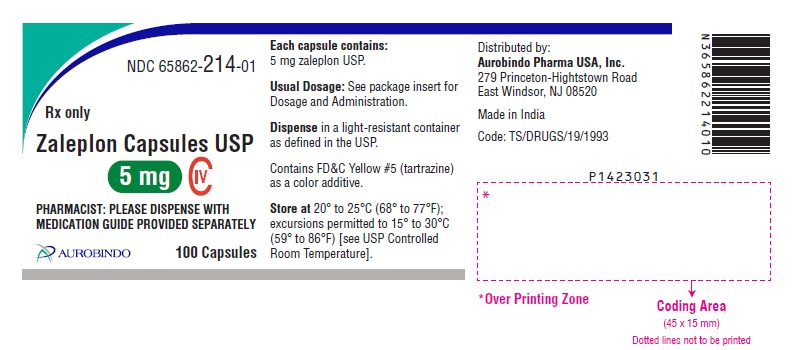
Zaleplon 5 mg Capsule, 100-count — NDC 65862-214-01 (Billing 65862-0214-01)
This is a package of 100 capsules of Zaleplon 5 mg Capsule from Aurobindo Pharma Limited, marketed since Jun 2008 and currently FDA-listed; retail pharmacies pay about $0.1568 per capsule (NADAC). It is the main listing for this product, which comes in 3 package sizes.
NDC database record
One package, one record: these facts belong to NDC 65862-214-01 alone.
- Record
- FDA NDC Directory package listing · Human prescription drug
- Code segments
- 65862 labeler · 214 product · 01 package
- Listing certified through
- Dec 31, 2026
- Billing quantity
- 100 EA per package
- Barcode (UPC-A, from the NDC)
- 3 6586221401 0
- Medicaid fills, this package
- 1,535 prescriptions in the last four reported quarters
- FDA record last changed
- Jul 24, 2026
Identity & classification
Regulatory identifiers FDA, NLM and CMS codes for this package
Drug-database identifiers Medi-Span GPI and First Databank GCN / HICL / AHFS classification
- GSN (GCN sequence number): 042993
- GCN: 92713
- GPI-14 (Medi-Span): 60204070000120
- HICL (First Databank): 020347
- AHFS class code: 28:24.44.00
- RxCUI (RxNorm): 313761
Where does this data come from?
- FDA openFDA NDC Directory · synced Oct 1, 2026
- FDA label on DailyMed · label index refreshed Oct 6, 2026
- RxNorm (NLM RxNav) · catalog refreshed Oct 1, 2026
- Medi-Span GPI (licensed)
- First Databank (licensed) · refreshed Oct 1, 2026
RxNorm drug class
This medicine belongs to the gamma-Aminobutyric Acid A Receptor Agonist class.
Where does this data come from?
- RxClass (NLM) · catalog refreshed Oct 1, 2026
Clinical
Zaleplon is used on a short-term basis to treat insomnia (difficulty falling asleep). Zaleplon does not help you to stay asleep longer or decrease the number of times that you awaken during the night. Zaleplon is in a class of medications called hypnotics. It works by slowing activity in the brain to allow sleep.
Read the full MedlinePlus article ↗- Zaleplon is for short-term treatment of insomnia. It helps you fall asleep faster. It hasn't been shown to make you sleep longer overall or wake up less often.
- Take the capsule by mouth right before bed, or after you're in bed and having trouble falling asleep. Only take it if you can get a full 7 to 8 hours of sleep. Try not to take it w...
- The most common ones are headache, dizziness, sleepiness, nausea, weakness and stomach pain. Some people notice memory problems or tingling. Let me know if any of these bother you...
- Stop it right away if you sleep-walk, sleep-drive, or do things like cook or make calls without remembering. Also get help for swelling of the tongue or throat, trouble breathing,...
Patient education
Supplement & herbal interactions
Some supplements/herbs that may interact with Zaleplon — tap one for details:
Where does this data come from?
- MedlinePlus (NLM) · refreshed Oct 1, 2026
- FDA label on DailyMed · label index refreshed Oct 6, 2026
Ask a licensed pharmacist directly — free, answered by our team.
Pricing
A drug doesn't have one price. Each row is a different public payment system, and none is what you'd pay at the counter — that depends on your insurance. The ⓘ on each row explains what it measures.
| Price system | Per ea | Per package |
|---|---|---|
| Retail pharmacies payNADAC · weekly | $0.157 | $15.68 / 100 capsules |
| Medicaid paysCMS SDUD · 12 mo | $0.3632 | $36.32 / 100 capsules |
| Medicare drug plans payPart D · Q2 2026 | $0.3373 | $33.73 / 100 capsules |
Where does this data come from?
- CMS NADAC weekly file · file of Sep 30, 2026
- CMS ASP pricing files · refreshed Sep 20, 2026
- CMS Medicaid State Drug Utilization Data · through Q4 2025
- CMS Part D plan pricing files · refreshed Sep 24, 2026
- VA National Acquisition Center price file
Packaging — all sizes for this product
| Package NDC | Description | Per unit | Per pack | Marketing start | Marketing end | Status |
|---|---|---|---|---|---|---|
| 65862-0214-01 You're viewing this Main listing | 100 CAPSULE in 1 BOTTLE | $0.1568 / ea | $15.68 | 2008-06-06 | — | Active |
| 65862-0214-05 65862-214-05 | 500 CAPSULE in 1 BOTTLE | — | — | 2008-06-06 | — | Active |
| 65862-0214-26 65862-214-26 | 2500 CAPSULE in 1 BAG | — | — | — | — | Active |
You're viewing the smallest of 3 pack sizes for this product.
In Medicaid, this is the most-dispensed pack of this product — about 100% of fills over the last four reported quarters. See all packs ↓
Pack size FAQ
What quantity is in this package?
How does this package differ from NDC 65862-0214-05?
What NDC number is used to bill for this package of Zaleplon 5 mg Capsule?
Prices are the latest CMS NADAC pharmacy acquisition cost per NDC; per-pack figures are per-unit × pack quantity, shown only when the pack is denominated in the same measure NADAC prices.
Therapeutic equivalents
| Product | Labeler | Pack | NADAC/unit | TE | Status | Price vs. this |
|---|---|---|---|---|---|---|
| Zaleplon 5 mg 00054-0084-25 | Hikma | 100 capsules | $0.157 | AB | Availability likely | — |
| zaleplon 5 mg 29300-0131-01 | Unichem | 100 capsules | $0.157 | AB | Availability likely | — |
| Zaleplon 5 mg 57237-0239-01 | Rising | 100 capsules | $0.157 | AB | Availability likely | — |
| Zaleplon 5 mgthis 65862-0214-01 | Aurobindo | 100 capsules | $0.157 | AB | Availability likely | — |
| Zaleplon 5 mg 69452-0364-20 | Bionpharma | 100 capsules | $0.157 | AB | Availability likely | — |
| Zaleplon 5 mg 43063-0505-30 | PD-Rx | 30 capsules | — | AB | FDA listed | — |
| zaleplon 5 mg 71335-0236-01 | Bryant | 30 capsules | — | AB | FDA listed | — |
Where does this data come from?
- FDA openFDA NDC Directory · synced Oct 1, 2026
- FDA Orange Book · refreshed Oct 3, 2026
- CMS NADAC weekly file · file of Sep 30, 2026
Availability & generic status
This product is an FDA-approved generic. Other versions of the same drug are listed under Therapeutic equivalents, least expensive first.
Where does this data come from?
- FDA Orange Book · refreshed Oct 3, 2026
What it looks like
Where does this data come from?
- FDA label on DailyMed · label index refreshed Oct 6, 2026
Inactive Ingredients / Excipients
Inactive ingredients, also called excipients, are components of the drug product other than the active ingredient. They may include fillers, dyes, coatings, preservatives, flavors, or other formulation ingredients.
🧪 Avoiding an ingredient? See Zaleplon inactive ingredients by manufacturer: every current product's list side by side, so you can ask your pharmacy for the version that does not list it.
💡 Tap an ingredient (hover on desktop) to see what it is and why it’s used.
-
UNII H3R47K3TBD
FD&C Blue No. 1 is a synthetic blue dye approved for use in foods and medicines. It serves as a colorant to give the medication its distinctive appearance and help with product identification.
-
UNII 3P3ONR6O1S
A synthetic green dye approved by the FDA for use in medicines and foods. It serves as a colorant to make the pill or liquid visually distinctive and help with product identification.
-
UNII I753WB2F1M
FD&C Yellow No. 5 is a synthetic yellow colorant approved by the FDA. It is added to medicines to make pills, tablets, or liquids visually distinct and easier to identify.
-
UNII XM0M87F357
A dark iron oxide compound that gives medicines their black or dark color. It's used as a colorant in tablets and capsules to help identify the product and make it visually distinctive.
-
UNII 2G86QN327L
Gelatin is a protein derived from animal collagen, commonly used in medicines as a gelling agent and capsule material. It helps create soft or hard capsule shells that hold and release medication, and can also thicken liquid formulations.
-
UNII EWQ57Q8I5X
Lactose monohydrate is a natural sugar derived from milk. It serves as a filler and binder in tablets and capsules, helping create the proper size, texture, and consistency of the medicine.
-
UNII OP1R32D61U
Microcrystalline cellulose is a purified form of cellulose, a natural fiber from plant sources. It acts as a binder and filler in tablets and capsules, helping hold ingredients together and give the medicine its shape and size.
-
UNII 46N107B71O
Shellac is a natural resin secreted by the lac beetle. It's used as a coating on tablets and capsules to control how quickly the medicine dissolves and to improve appearance and stability.
-
UNII ETJ7Z6XBU4
Silicon dioxide is a naturally occurring mineral used as a glidant and anti-caking agent. It helps powder ingredients flow smoothly and prevents clumping during manufacturing and storage.
-
UNII 368GB5141J
A detergent and foaming agent derived from coconut or palm oil. In medications, it helps break down and mix oil and water-based ingredients, aids in tablet disintegration, and improves how the drug dissolves and spreads in the mouth or digestive system.
-
UNII O8232NY3SJ
A plant-based carbohydrate derived from corn kernels. It acts as a filler to add bulk, a binder to hold ingredients together, and a disintegrant to help the tablet break apart in your stomach for absorption.
-
UNII 4ELV7Z65AP
Stearic acid is a fatty acid derived from plant or animal sources. It acts as a binder and lubricant in tablets and capsules, helping them hold together and flow smoothly during manufacturing.
-
UNII 15FIX9V2JP
Titanium dioxide is a bright white mineral powder commonly used as a colorant and opacifying agent. It makes pills and tablets white or lighter in color and helps make coatings non-transparent.
13 inactive ingredients listed in the exact product block matched to this NDC.
Where does this data come from?
ingredient classCode="IACT" elements from the exact product block matched by this NDC. Label-section narrative from DailyMed / the openFDA label index is shown separately when available.- FDA label on DailyMed · label index refreshed Oct 6, 2026
- FDA openFDA NDC Directory · synced Oct 1, 2026
Inactive ingredient FAQ
Are inactive ingredients the same for every manufacturer?
Why might an inactive ingredient be missing?
Can inactive ingredients matter?
Manufacturer & labeler
More NDCs from Aurobindo Pharma Limited labeler code 65862
- Ribavirin 200 mg Tablet, Film Coated NDC 65862-207-05
- Ondansetron 4 mg/5mL Solution NDC 65862-208-04
- Minocycline Hydrochloride 50 mg Capsule NDC 65862-209-01
- Minocycline Hydrochloride 75 mg Capsule NDC 65862-210-01
- Minocycline Hydrochloride 100 mg Capsule NDC 65862-211-05
- Cephapirin Benzathine 50 kg/50kg Powder NDC 65862-212-37
- Zaleplon 10 mg Capsule NDC 65862-215-01
- Cefdinir 125 mg/5mL Powder, For Suspension NDC 65862-218-01
- Cefdinir 250 mg/5mL Powder, For Suspension NDC 65862-219-01
- Metformin Hydrochloride 50 kg/50kg Powder NDC 65862-220-37
- Simvastatin 50 kg/50kg Powder NDC 65862-221-37
- Sertraline Hydrochloride 50 kg/50kg Powder NDC 65862-222-37
Where does this data come from?
- FDA openFDA NDC Directory · synced Oct 1, 2026
- Drugs@FDA
Full prescribing information FDA SPL
🚨 Boxed Warning ▾
WARNING: COMPLEX SLEEP BEHAVIORS Complex sleep behaviors including sleep-walking, sleep-driving, and engaging in other activities while not fully awake may occur following use of zaleplon . Some of these events may result in serious injuries, including death. Discontinue zaleplon immediately if a patient experiences a complex sleep behavior (see CONTRAINDICATIONS and Complex Sleep Behaviors under WARNINGS ) .
Zaleplon is a federally controlled substance (C-IV) because it can be abused or lead to dependence. Keep zaleplon in a safe place to prevent misuse and abuse. Selling or giving away zaleplon may harm others, and is against the law. Tell your doctor if you have ever abused or been dependent on alcohol, prescription medicines or street drugs.
🎯 Indications and Usage ▾
INDICATIONS AND USAGE Zaleplon capsules are indicated for the short-term treatment of insomnia. Zaleplon capsules have been shown to decrease the time to sleep onset for up to 30 days in controlled clinical studies (see Clinical Trials under CLINICAL PHARMACOLOGY ). They have not been shown to increase total sleep time or decrease the number of awakenings.
The clinical trials performed in support of efficacy ranged from a single night to 5 weeks in duration. The final formal assessments of sleep latency were performed at the end of treatment.
⏱️ Dosage and Administration ▾
DOSAGE AND ADMINISTRATION The dose of zaleplon should be individualized. The recommended dose of zaleplon for most nonelderly adults is 10 mg. For certain low weight individuals, 5 mg may be a sufficient dose.
Although the risk of certain adverse events associated with the use of zaleplon appears to be dose dependent, the 20 mg dose has been shown to be adequately tolerated and may be considered for the occasional patient who does not benefit from a trial of a lower dose. Doses above 20 mg have not been adequately evaluated and are not recommended. Zaleplon should be taken immediately before bedtime or after the patient has gone to bed and has experienced difficulty falling asleep (see PRECAUTIONS ).
Taking zaleplon with or immediately after a heavy, high-fat meal results in slower absorption and would be expected to reduce the effect of zaleplon on sleep latency (see Pharmacokinetics under CLINICAL PHARMACOLOGY ). Special Populations Elderly patients and debilitated patients appear to be more sensitive to the effects of hypnotics, and respond to 5 mg of zaleplon. The recommended dose for these patients is therefore 5 mg.
Doses over 10 mg are not recommended. Hepatic insufficiency Patients with mild to moderate hepatic impairment should be treated with zaleplon 5 mg because clearance is reduced in this population. Zaleplon is not recommended for use in patients with severe hepatic impairment.
Renal insufficiency No dose adjustment is necessary in patients with mild to moderate renal impairment. Zaleplon has not been adequately studied in patients with severe renal impairment. An initial dose of 5 mg should be given to patients concomitantly taking cimetidine because zaleplon clearance is reduced in this population (see Drug Interactions under PRECAUTIONS ).
⛔ Contraindications ▾
CONTRAINDICATIONS Zaleplon capsules are contraindicated in patients: who have experienced complex sleep behaviors after taking zaleplon capsules (see WARNINGS ). with hypersensitivity to zaleplon or any excipients in the formulation (see PRECAUTIONS ) .
⚠️ Warnings ▾
WARNINGS Complex Sleep Behaviors Complex sleep behaviors including sleep-walking, sleep-driving, and engaging in other activities while not fully awake may occur following the first or any subsequent use of zaleplon. Patients can be seriously injured or injure others during complex sleep behaviors. Such injuries may result in a fatal outcome.
Other complex sleep behaviors (e.g., preparing and eating food, making phone calls, or having sex) have also been reported. Patients usually do not remember these events. Post-marketing reports have shown that complex sleep behaviors may occur with zaleplon alone at recommended dosages, with or without the concomitant use of alcohol or other central nervous system (CNS) depressants.
CNS-Depressant Effects and Next-Day Impairment Zaleplon, like other hypnotics, has CNS-depressant effects. Because of the rapid onset of action, zaleplon should only be ingested immediately prior to going to bed or after the patient has gone to bed and has experienced difficulty falling asleep . Coadministration with other CNS depressants (e.g., benzodiazepines, opioids, tricyclic antidepressants, alcohol) increases the risk of CNS depression.
Dosage adjustments of zaleplon and of other concomitant CNS depressants may be necessary when zaleplon is administered with such agents because of the potentially additive effects. The use of zaleplon with other sedative-hypnotics at bedtime or the middle of the night is not recommended (see DOSAGE AND ADMINISTRATION ). The risk of next-day psychomotor impairment, including impaired driving, is increased if zaleplon is taken with less than a full night of sleep remaining (7 to 8 hours); if a higher than the recommended dose is taken; if coadministered with other CNS depressants or alcohol; or if coadministered with other drugs that increase the blood levels of zaleplon.
Patients should be warned against driving and other activities requiring complete mental alertness if zaleplon is taken in these circumstances (see DOSAGE AND ADMINISTRATION and Clinical Trials under CLINICAL PHARMACOLOGY ). Vehicle drivers and machine operators should be warned that, as with other hypnotics, there may be a possible risk of adverse reactions including drowsiness, prolonged reaction time, dizziness, sleepiness, blurred/double vision, reduced alertness, and impaired driving the morning after therapy. In order to minimize this risk a full night of sleep (7 to 8 hours) is recommended.
Because zaleplon can cause drowsiness and a decreased level of consciousness, patients, particularly the elderly, are at higher risk of falls. Need to Evaluate for Co-morbid Diagnoses Because sleep disturbances may be the presenting manifestation of a physical and/or psychiatric disorder, symptomatic treatment of insomnia should be initiated only after a careful evaluation of the patient. The failure of insomnia to remit after 7 to 10 days of treatment may indicate the presence of a primary psychiatric and/or medical illness that should be evaluated.
Worsening of insomnia or the emergence of new thinking or behavior abnormalities may be the consequence of an unrecognized psychiatric or physical disorder. Such findings have emerged during the course of treatment with sedative/hypnotic drugs, including zaleplon. Because some of the important adverse effects of zaleplon appear to be dose-related, it is important to use the lowest possible effective dose, especially in the elderly (see DOSAGE AND ADMINISTRATION ).
Severe Anaphylactic and Anaphylactoid Reactions Rare cases of angioedema involving the tongue, glottis or larynx have been reported in patients after taking the first or subsequent doses of sedative-hypnotics, including zaleplon. Some patients have had additional symptoms such as dyspnea, throat closing, or nausea and vomiting that suggest anaphylaxis. Some patients have required medical therapy in the emergency department.
If angioedema involves the tongue, glottis or larynx, airway obstruction may occur… [Excerpted — this section continues on DailyMed.]
🤒 Adverse Reactions ▾
ADVERSE REACTIONS The premarketing development program for zaleplon included zaleplon exposures in patients and/or normal subjects from 2 different groups of studies: approximately 900 normal subjects in clinical pharmacology/pharmacokinetic studies; and approximately 2,900 exposures from patients in placebo-controlled clinical effectiveness studies, corresponding to approximately 450 patient exposure years. The conditions and duration of treatment with zaleplon varied greatly and included (in overlapping categories) open-label and double-blind phases of studies, inpatients and outpatients, and short-term or longer-term exposure.
Adverse reactions were assessed by collecting adverse events, results of physical examinations, vital signs, weights, laboratory analyses, and ECGs. Adverse events during exposure were obtained primarily by general inquiry and recorded by clinical investigators using terminology of their own choosing. Consequently, it is not possible to provide a meaningful estimate of the proportion of individuals experiencing adverse events without first grouping similar types of events into a smaller number of standardized event categories.
In the tables and tabulations that follow, COSTART terminology has been used to classify reported adverse events. The stated frequencies of adverse events represent the proportion of individuals who experienced, at least once, a treatment-emergent adverse event of the type listed. An event was considered treatment-emergent if it occurred for the first time or worsened while receiving therapy following baseline evaluation.
Adverse Findings Observed in Short-Term, Placebo-Controlled Trials Adverse Events Associated With Discontinuation of Treatment In premarketing placebo-controlled, parallel-group phase 2 and phase 3 clinical trials, 3.1% of 744 patients who received placebo and 3.7% of 2,149 patients who received zaleplon discontinued treatment because of an adverse clinical event. This difference was not statistically significant. No event that resulted in discontinuation occurred at a rate of ≥ 1%.
Adverse Events Occurring at an Incidence of 1% or More Among Zaleplon 20 mg-Treated Patients Table 1 enumerates the incidence of treatment-emergent adverse events for a pool of three 28-night and one 35-night placebo-controlled studies of zaleplon at doses of 5 mg or 10 mg and 20 mg. The table includes only those events that occurred in 1% or more of patients treated with zaleplon 20 mg and that had a higher incidence in patients treated with zaleplon 20 mg than in placebo-treated patients. The prescriber should be aware that these figures cannot be used to predict the incidence of adverse events in the course of usual medical practice where patient characteristics and other factors differ from those which prevailed in the clinical trials.
Similarly, the cited frequencies cannot be compared with figures obtained from other clinical investigations involving different treatments, uses, and investigators. The cited figures, however, do provide the prescribing physician with some basis for estimating the relative contribution of drug and non-drug factors to the adverse event incidence rate in the population studied. Table 1 Incidence (%) of Treatment-Emergent Adverse Events in Long-Term (28 and 35 Nights) Placebo-Controlled Clinical Trials of Zaleplon a Body System Preferred Term Placebo (n = 344) Zaleplon 5 mg or 10 mg (n = 569) Zaleplon 20 mg (n = 297) a) Events for which the incidence for zaleplon 20 mg-treated patients was at least 1% and greater than the incidence among placebo-treated patients.
Incidence greater than 1% has been rounded to the nearest whole number. Body as a whole Abdominal pain 3 6 6 Asthenia 5 5 7 Headache 35 30 42 Malaise <1 <1 2 Photosensitivity reaction <1 <1 1 Digestive system Anorexia <1 <1 2 Colitis 0 0 1 Nausea 7 6 8 Metabolic and nutritional Peripheral edema <1 <1 1 Nervous system Amnesia 1 2 4 Confusion <1 <1 1 Depersonalization <1 <1 2 Dizziness 7 7 9… [Excerpted — this section continues on DailyMed.]
🔄 Drug Interactions ▾
Drug Interactions As with all drugs, the potential exists for interaction with other drugs by a variety of mechanisms. CNS-Active Drugs Ethanol Zaleplon 10 mg potentiated the CNS-impairing effects of ethanol 0.75 g/kg on balance testing and reaction time for 1 hour after ethanol administration and on the digit symbol substitution test (DSST), symbol copying test, and the variability component of the divided attention test for 2.5 hours after ethanol administration. The potentiation resulted from a CNS pharmacodynamic interaction; zaleplon did not affect the pharmacokinetics of ethanol.
Imipramine Coadministration of single doses of zaleplon 20 mg and imipramine 75 mg produced additive effects on decreased alertness and impaired psychomotor performance for 2 to 4 hours after administration. The interaction was pharmacodynamic with no alteration of the pharmacokinetics of either drug. Paroxetine Coadministration of a single dose of zaleplon 20 mg and paroxetine 20 mg daily for 7 days did not produce any interaction on psychomotor performance.
Additionally, paroxetine did not alter the pharmacokinetics of zaleplon, reflecting the absence of a role of CYP2D6 in zaleplon’s metabolism. Thioridazine Coadministration of single doses of zaleplon 20 mg and thioridazine 50 mg produced additive effects on decreased alertness and impaired psychomotor performance for 2 to 4 hours after administration. The interaction was pharmacodynamic with no alteration of the pharmacokinetics of either drug.
Venlafaxine Coadministration of a single dose of zaleplon 10 mg and multiple doses of venlafaxine ER (extended release) 150 mg did not result in any significant changes in the pharmacokinetics of either zaleplon or venlafaxine. In addition, there was no pharmacodynamic interaction as a result of coadministration of zaleplon and venlafaxine ER. Promethazine Coadministration of a single dose of zaleplon and promethazine (10 and 25 mg, respectively) resulted in a 15% decrease in maximal plasma concentrations of zaleplon, but no change in the area under the plasma concentration-time curve.
However, the pharmacodynamics of coadministration of zaleplon and promethazine have not been evaluated. Caution should be exercised when these 2 agents are coadministered. Drugs That Induce CYP3A4 Rifampin CYP3A4 is ordinarily a minor metabolizing enzyme of zaleplon.
Multiple-dose administration of the potent CYP3A4 inducer rifampin (600 mg every 24 hours, q24h, for 14 days), however, reduced zaleplon C max and AUC by approximately 80%. The coadministration of a potent CYP3A4 enzyme inducer, although not posing a safety concern, thus could lead to ineffectiveness of zaleplon. An alternative non-CYP3A4 substrate hypnotic agent may be considered in patients taking CYP3A4 inducers such as rifampin, phenytoin, carbamazepine, and phenobarbital.
Drugs That Inhibit CYP3A4 CYP3A4 is a minor metabolic pathway for the elimination of zaleplon because the sum of desethylzaleplon (formed via CYP3A4 in vitro ) and its metabolites, 5-oxo-desethylzaleplon and 5-oxo-desethylzaleplon glucuronide, account for only 9% of the urinary recovery of a zaleplon dose. Coadministration of single, oral doses of zaleplon with erythromycin (10 mg and 800 mg respectively), a strong, selective CYP3A4 inhibitor, produced a 34% increase in zaleplon’s maximal plasma concentrations and a 20% increase in the area under the plasma concentration-time curve.
The magnitude of interaction with multiple doses of erythromycin is unknown. Other strong selective CYP3A4 inhibitors such as ketoconazole can also be expected to increase the exposure of zaleplon. A routine dosage adjustment of zaleplon is not considered necessary.
Drugs That Inhibit Aldehyde Oxidase The aldehyde oxidase enzyme system is less well studied than the cytochrome P450 enzyme system. Diphenhydramine: Diphenhydramine is reported to be a weak inhibitor of aldehyde oxidase in rat liver, but its inhibitory effects in human liver are not known. Th… [Excerpted — this section continues on DailyMed.]
🤰 Pregnancy ▾
Pregnancy In embryofetal development studies in rats and rabbits, oral administration of up to 100 mg/kg/day and 50 mg/kg/day, respectively, to pregnant animals throughout organogenesis produced no evidence of teratogenicity. These doses are equivalent to 49 (rat) and 48 (rabbit) times the maximum recommended human dose (MRHD) of 20 mg on a mg/m 2 basis. In rats, pre- and postnatal growth was reduced in the offspring of dams receiving 100 mg/kg/day.
This dose was also maternally toxic, as evidenced by clinical signs and decreased maternal body weight gain during gestation. The no-effect dose for rat offspring growth reduction was 10 mg/kg (a dose equivalent to 5 times the MRHD of 20 mg on a mg/m 2 basis). No adverse effects on embryofetal development were observed in rabbits at the doses examined.
In a pre- and postnatal development study in rats, increased stillbirth and postnatal mortality, and decreased growth and physical development, were observed in the offspring of females treated with doses of 7 mg/kg/day or greater during the latter part of gestation and throughout lactation. There was no evidence of maternal toxicity at this dose. The no-effect dose for offspring development was 1 mg/kg/day (a dose equivalent to 0.5 times the MRHD of 20 mg on a mg/m 2 basis).
When the adverse effects on offspring viability and growth were examined in a cross-fostering study, they appeared to result from both in utero and lactational exposure to the drug. There are no studies of zaleplon in pregnant women; therefore, zaleplon capsules are not recommended for use in women during pregnancy.
🧒 Pediatric Use ▾
Pediatric Use The safety and effectiveness of zaleplon in pediatric patients have not been established.
🧓 Geriatric Use ▾
Geriatric Use A total of 628 patients in double-blind, placebo-controlled, parallel-group clinical trials who received zaleplon were at least 65 years of age; of these, 311 received 5 mg and 317 received 10 mg. In both sleep laboratory and outpatient studies, elderly patients with insomnia responded to a 5 mg dose with a reduced sleep latency, and thus 5 mg is the recommended dose in this population. During short-term treatment (14 night studies) of elderly patients with zaleplon, no adverse event with a frequency of at least 1% occurred at a significantly higher rate with either 5 mg or 10 mg zaleplon than with placebo.
🆘 Overdosage ▾
OVERDOSAGE Signs and Symptoms Signs and symptoms of overdose effects of CNS depressants can be expected to present as exaggerations of the pharmacological effects noted in preclinical testing. Overdose is usually manifested by degrees of central nervous system depression ranging from drowsiness to coma. In mild cases, symptoms include drowsiness, mental confusion, and lethargy; in more serious cases, symptoms may include ataxia, hypotonia, hypotension, respiratory depression, rarely coma, and very rarely death.
Loss of consciousness, in addition to signs and symptoms consistent with CNS depressants as described above, have been reported following zaleplon overdose. Individuals have fully recovered from zaleplon overdoses of greater than 200 mg (10 times the maximum recommended dose of zaleplon). Rare instances of fatal outcomes following overdose with zaleplon, most often associated with overdose of additional CNS depressants, have been reported.
Recommended Treatment General symptomatic and supportive measures should be used along with immediate gastric lavage where appropriate. Intravenous fluids should be administered as needed. Animal studies suggest that flumazenil is an antagonist to zaleplon.
However, there is no pre-marketing clinical experience with the use of flumazenil as an antidote to a zaleplon overdose. As in all cases of drug overdose, respiration, pulse, blood pressure, and other appropriate signs should be monitored and general supportive measures employed. Hypotension and CNS depression should be monitored and treated by appropriate medical intervention.
Poison Control Center As with the management of all overdosage, the possibility of multiple drug ingestion should be considered. The physician may wish to consider contacting a poison control center for up-to-date information on the management of hypnotic drug product overdosage.
🧬 Clinical Pharmacology ▾
CLINICAL PHARMACOLOGY Pharmacodynamics and Mechanism of Action While zaleplon is a hypnotic agent with a chemical structure unrelated to benzodiazepines, barbiturates, or other drugs with known hypnotic properties, it interacts with the gamma-aminobutyric acid-benzodiazepine (GABA-BZ) receptor complex. Subunit modulation of the GABA-BZ receptor chloride channel macromolecular complex is hypothesized to be responsible for some of the pharmacological properties of benzodiazepines, which include sedative, anxiolytic, muscle relaxant, and anticonvulsive effects in animal models.
Other nonclinical studies have also shown that zaleplon binds selectively to the brain omega-1 receptor situated on the alpha subunit of the GABA A /chloride ion channel receptor complex and potentiates t-butyl-bicyclophosphorothionate (TBPS) binding. Studies of binding of zaleplon to recombinant GABA A receptors (α 1 β 1 γ 2 [omega-1] and α 2 β 1 γ 2 [omega-2]) have shown that zaleplon has a low affinity for these receptors, with preferential binding to the omega-1 receptor. Pharmacokinetics The pharmacokinetics of zaleplon have been investigated in more than 500 healthy subjects (young and elderly), nursing mothers, and patients with hepatic disease or renal disease.
In healthy subjects, the pharmacokinetic profile has been examined after single doses of up to 60 mg and once-daily administration at 15 mg and 30 mg for 10 days. Zaleplon was rapidly absorbed with a time to peak concentration (t max ) of approximately 1 hour and a terminal-phase elimination half-life (t 1/2 ) of approximately 1 hour. Zaleplon does not accumulate with once-daily administration and its pharmacokinetics are dose proportional in the therapeutic range.
Absorption Zaleplon is rapidly and almost completely absorbed following oral administration. Peak plasma concentrations are attained within approximately 1 hour after oral administration. Although zaleplon is well absorbed, its absolute bioavailability is approximately 30% because it undergoes significant presystemic metabolism.
Distribution Zaleplon is a lipophilic compound with a volume of distribution of approximately
1.4L/kg following intravenous (IV) administration, indicating substantial distribution into extravascular tissues. The in vitro plasma protein binding is approximately 60% ± 15% and is independent of zaleplon concentration over the range of 10 ng/mL to 1000 ng/mL. This suggests that zaleplon disposition should not be sensitive to alterations in protein binding.
The blood to plasma ratio for zaleplon is approximately 1, indicating that zaleplon is uniformly distributed throughout the blood with no extensive distribution into red blood cells. Metabolism After oral administration, zaleplon is extensively metabolized, with less than 1% of the dose excreted unchanged in urine. Zaleplon is primarily metabolized by aldehyde oxidase to form 5-oxo-zaleplon.
Zaleplon is metabolized to a lesser extent by cytochrome P450 (CYP) 3A4 to form desethylzaleplon, which is quickly converted, presumably by aldehyde oxidase, to 5-oxo-desethylzaleplon. These oxidative metabolites are then converted to glucuronides and eliminated in urine. All of zaleplon’s metabolites are pharmacologically inactive.
Elimination After either oral or IV administration, zaleplon is rapidly eliminated with a mean t ½ of approximately 1 hour. The oral-dose plasma clearance of zaleplon is about 3 L/h/kg and the IV zaleplon plasma clearance is approximately 1 L/h/kg. Assuming normal hepatic blood flow and negligible renal clearance of zaleplon, the estimated hepatic extraction ratio of zaleplon is approximately 0.7, indicating that zaleplon is subject to high first-pass metabolism.
After administration of a radiolabeled dose of zaleplon, 70% of the administered dose is recovered in urine within 48 hours (71% recovered within 6 days), almost all as zaleplon metabolites and their glucuronides. An additional 17% is recovered in feces within 6 days, most as 5-oxo… [Excerpted — this section continues on DailyMed.]
📦 How Supplied / Storage and Handling ▾
HOW SUPPLIED Zaleplon Capsules USP, 5 mg are Opaque green/opaque pale green colored, size ‘4’ hard gelatin capsule filled with white to off-white powder and imprinted with ‘E19’ on opaque green cap and ‘5 mg’ on opaque pale green body with black ink. Bottles of 100 NDC 65862-214-01 Bottles of 500 NDC 65862-214-05 Zaleplon Capsules USP, 10 mg are Opaque green/opaque light green colored, size ‘4’ hard gelatin capsule filled with white to off-white powder and imprinted with ‘E20’ on opaque green cap and ‘10 mg’ on opaque light green body with black ink.
Bottles of 100 NDC 65862-215-01 Bottles of 500 NDC 65862-215-05 Store at 20° to 25°C (68° to 77°F); excursions permitted to 15° to 30°C (59° to 86°F) [See USP Controlled Room Temperature]. Dispense in a light-resistant container as defined in the USP. Dispense with Medication Guide available at: www.aurobindousa.com/medication-guides Distributed by: Aurobindo Pharma USA, Inc.
279 Princeton-Hightstown Road East Windsor, NJ 08520 Manufactured by: Aurobindo Pharma Limited Hyderabad-500 032, India Revised: 10/2021
📋 Description ▾
DESCRIPTION Zaleplon is a nonbenzodiazepine hypnotic from the pyrazolopyrimidine class. The chemical name of zaleplon is N-[3-(3-cyanopyrazolo[1,5-a]pyrimidin-7-yl)phenyl]-N-ethylacetamide. Its molecular formula is C 17 H 15 N 5 O, and its molecular weight is 305.34.
The structural formula is shown below. Zaleplon USP is a white to light pale yellow, crystalline powder that is practically insoluble in water and sparingly soluble in alcohol or propylene glycol. Its partition coefficient in octanol/water is constant (log PC = 1.23) over the pH range of 1 to 7.
Zaleplon capsules USP contain zaleplon USP as the active ingredient. Inactive ingredients consist of microcrystalline cellulose, lactose monohydrate, pregelatinized starch (maize), sodium lauryl sulfate, colloidal silicon dioxide, and stearic acid. The empty hard gelatin capsule shells contain FD&C Blue #1, FD&C Green #3, FD&C Yellow #5, titanium dioxide, and gelatin.
The capsules are printed with edible ink containing black iron oxide and shellac. Meets the USP Dissolution Test - 2. Chemical Structure
💬 Information for Patients ▾
Information for Patients A patient Medication Guide is also available for zaleplon. The prescriber or health professional should instruct patients, their families, and their caregivers to read the Medication Guide and should assist them in understanding its contents. Patients should be given the opportunity to discuss the contents of the Medication Guide and to obtain answers to any questions that they may have.
Instruct patients and their families that zaleplon may cause complex sleep behaviors, including sleep-walking, sleep-driving, preparing and eating food, making phone calls, or having sex while not being fully awake. Serious injuries and death have occurred during complex sleep behavior episodes. Tell patients to discontinue zaleplon and notify their healthcare provider immediately if they develop any of these symptoms (see BOXED WARNING and WARNINGS ).
Advise patients that increased drowsiness and decreased consciousness may increase the risk of falls in some patients (see WARNINGS ).
💬 Medication Guide ▾
MEDICATION GUIDE Zaleplon Capsules USP CIV (zal' e plon) Rx only Read this Medication Guide before you start taking zaleplon and each time you get a refill. There may be new information. This Medication Guide does not take the place of talking to your doctor about your medical condition or treatment.
You and your doctor should talk about zaleplon when you start taking it and at regular checkups. What is the most important information I should know about zaleplon? Zaleplon may cause serious side effects including complex sleep behaviors that may cause serious injury and death.
After taking zaleplon, you may get up out of bed while not being fully awake and do an activity that you do not know you are doing (complex sleep behaviors). The next morning, you may not remember that you did anything during the night. These activities may occur with zaleplon whether or not you drink alcohol or take other medicines that make you sleepy.
Reported activities include: driving a car ("sleep-driving") making and eating food talking on the phone having sex sleep-walking Important: 1. Take zaleplon exactly as prescribed Do not take more zaleplon than prescribed. Take zaleplon right before you get in bed, not sooner.
2. Do not take zaleplon if you: have ever experienced a complex sleep behavior (such as driving a car, making and eating food, talking on the phone or having sex while not fully awake) after taking zaleplon drink alcohol take other medicines that can make you sleepy. Talk to your doctor about all of your medicines.
Your doctor will tell you if you can take zaleplon with your other medicines cannot get a full night’s sleep 3. Stop taking zaleplon and call your doctor right away if you find out that you have done any of the above activities after taking zaleplon. What is zaleplon?
Zaleplon is a sedative-hypnotic (sleep) medicine. Zaleplon is used in adults for the short-term treatment of the symptom of trouble falling asleep from insomnia. Zaleplon does not treat other symptoms of insomnia which include waking up too early in the morning and waking up often during the night.
Zaleplon is not for children. Zaleplon is a federally controlled substance (C-IV) because it can be abused or lead to dependence. Keep zaleplon in a safe place to prevent misuse and abuse.
Selling or giving away zaleplon may harm others, and is against the law. Tell your doctor if you have ever abused or been dependent on alcohol, prescription medicines or street drugs. Who should not take zaleplon?
Do not take zaleplon capsules if you are allergic to anything in them. See the end of this Medication Guide for a complete list of ingredients in zaleplon capsules. Zaleplon may not be right for you.
Before starting zaleplon, tell your doctor about all of your health conditions, including if you: have a history of depression, mental illness, or suicidal thoughts have a history of drug or alcohol abuse or addiction have kidney or liver disease have a lung disease or breathing problems are pregnant, planning to become pregnant, or breastfeeding Tell your doctor about all of the medicines you take including prescription and nonprescription medicines, vitamins and herbal supplements. Medicines can interact, sometimes causing side effects.
Do not take zaleplon with other medicines that can make you sleepy. Know the medicines you take. Keep a list of your medicines with you to show your doctor and pharmacist each time you get a new medicine.
How should I take zaleplon? Take zaleplon exactly as prescribed. Do not take more zaleplon than prescribed for you.
Take zaleplon right before you get into bed. Or you can take zaleplon after you have been in bed and have trouble falling asleep. Do not take zaleplon with or right after a meal.
Do not take zaleplon unless you are able to get a full night’s sleep before you must be active again. Call your healthcare provider if your insomnia worsens or is not better within 7 to 10 days. This may mean that there is another condition causing… [Excerpted — this section continues on DailyMed.]
⚠️ Precautions ▾
PRECAUTIONS General Timing of Drug Administration Zaleplon should be taken immediately before bedtime or after the patient has gone to bed and has experienced difficulty falling asleep. As with all sedative/hypnotics, taking zaleplon while still up and about may result in short-term memory impairment, hallucinations, impaired coordination, dizziness, and lightheadedness. Use in the Elderly and/or Debilitated Patients Impaired motor and/or cognitive performance after repeated exposure or unusual sensitivity to sedative/hypnotic drugs is a concern in the treatment of elderly and/or debilitated patients.
A dose of 5 mg is recommended for elderly patients to decrease the possibility of side effects (see DOSAGE AND ADMINISTRATION ). Elderly and/or debilitated patients should be monitored closely. Use in Patients with Concomitant Illness Clinical experience with zaleplon in patients with concomitant systemic illness is limited.
Zaleplon should be used with caution in patients with diseases or conditions that could affect metabolism or hemodynamic responses. Although preliminary studies did not reveal respiratory depressant effects at hypnotic doses of zaleplon in normal subjects, caution should be observed if zaleplon is prescribed to patients with compromised respiratory function, because sedative/hypnotics have the capacity to depress respiratory drive. Controlled trials of acute administration of zaleplon 10 mg in patients with mild to moderate chronic obstructive pulmonary disease or moderate obstructive sleep apnea showed no evidence of alterations in blood gases or apnea/hypopnea index, respectively.
However, patients with compromised respiration due to preexisting illness should be monitored carefully. The dose of zaleplon should be reduced to 5 mg in patients with mild to moderate hepatic impairment (see DOSAGE AND ADMINISTRATION ). It is not recommended for use in patients with severe hepatic impairment.
No dose adjustment is necessary in patients with mild to moderate renal impairment. Zaleplon has not been adequately studied in patients with severe renal impairment. Use in Patients with Depression In primarily depressed patients treated with sedative-hypnotics, worsening of depression, including suicidal thoughts and actions (including completed suicides), have been reported.
As with other sedative/hypnotic drugs, zaleplon should be administered with caution to patients exhibiting signs or symptoms of depression. Suicidal tendencies may be present in such patients and protective measures may be required. Intentional overdosage is more common in this group of patients (see OVERDOSAGE ); therefore, the least amount of drug that is feasible should be prescribed for the patient at any one time.
Allergic-Type Reactions FD&C Yellow # 5 This product contains FD&C Yellow #5 (tartrazine) which may cause allergic-type reactions (including bronchial asthma) in certain susceptible persons. Although the overall incidence of FD&C Yellow #5 (tartrazine) sensitivity in the general population is low, it is frequently seen in patients who also have aspirin hypersensitivity. Information for Patients A patient Medication Guide is also available for zaleplon.
The prescriber or health professional should instruct patients, their families, and their caregivers to read the Medication Guide and should assist them in understanding its contents. Patients should be given the opportunity to discuss the contents of the Medication Guide and to obtain answers to any questions that they may have. Instruct patients and their families that zaleplon may cause complex sleep behaviors, including sleep-walking, sleep-driving, preparing and eating food, making phone calls, or having sex while not being fully awake.
Serious injuries and death have occurred during complex sleep behavior episodes. Tell patients to discontinue zaleplon and notify their healthcare provider immediately if they develop any of these symptoms (see BOXED WARNING and WARNINGS ). Advise pa… [Excerpted — this section continues on DailyMed.]
🍼 Nursing Mothers ▾
Nursing Mothers A study in lactating mothers indicated that the clearance and half-life of zaleplon is similar to that in young normal subjects. A small amount of zaleplon is excreted in breast milk, with the highest excreted amount occurring during a feeding at approximately 1 hour after zaleplon administration. Since the small amount of the drug from breast milk may result in potentially important concentrations in infants, and because the effects of zaleplon on a nursing infant are not known, it is recommended that nursing mothers not take zaleplon.
🧬 Pharmacokinetics ▾
Pharmacokinetics The pharmacokinetics of zaleplon have been investigated in more than 500 healthy subjects (young and elderly), nursing mothers, and patients with hepatic disease or renal disease. In healthy subjects, the pharmacokinetic profile has been examined after single doses of up to 60 mg and once-daily administration at 15 mg and 30 mg for 10 days. Zaleplon was rapidly absorbed with a time to peak concentration (t max ) of approximately 1 hour and a terminal-phase elimination half-life (t 1/2 ) of approximately 1 hour.
Zaleplon does not accumulate with once-daily administration and its pharmacokinetics are dose proportional in the therapeutic range. Absorption Zaleplon is rapidly and almost completely absorbed following oral administration. Peak plasma concentrations are attained within approximately 1 hour after oral administration.
Although zaleplon is well absorbed, its absolute bioavailability is approximately 30% because it undergoes significant presystemic metabolism. Distribution Zaleplon is a lipophilic compound with a volume of distribution of approximately
1.4L/kg following intravenous (IV) administration, indicating substantial distribution into extravascular tissues. The in vitro plasma protein binding is approximately 60% ± 15% and is independent of zaleplon concentration over the range of 10 ng/mL to 1000 ng/mL. This suggests that zaleplon disposition should not be sensitive to alterations in protein binding.
The blood to plasma ratio for zaleplon is approximately 1, indicating that zaleplon is uniformly distributed throughout the blood with no extensive distribution into red blood cells. Metabolism After oral administration, zaleplon is extensively metabolized, with less than 1% of the dose excreted unchanged in urine. Zaleplon is primarily metabolized by aldehyde oxidase to form 5-oxo-zaleplon.
Zaleplon is metabolized to a lesser extent by cytochrome P450 (CYP) 3A4 to form desethylzaleplon, which is quickly converted, presumably by aldehyde oxidase, to 5-oxo-desethylzaleplon. These oxidative metabolites are then converted to glucuronides and eliminated in urine. All of zaleplon’s metabolites are pharmacologically inactive.
Elimination After either oral or IV administration, zaleplon is rapidly eliminated with a mean t ½ of approximately 1 hour. The oral-dose plasma clearance of zaleplon is about 3 L/h/kg and the IV zaleplon plasma clearance is approximately 1 L/h/kg. Assuming normal hepatic blood flow and negligible renal clearance of zaleplon, the estimated hepatic extraction ratio of zaleplon is approximately 0.7, indicating that zaleplon is subject to high first-pass metabolism.
After administration of a radiolabeled dose of zaleplon, 70% of the administered dose is recovered in urine within 48 hours (71% recovered within 6 days), almost all as zaleplon metabolites and their glucuronides. An additional 17% is recovered in feces within 6 days, most as 5-oxo-zaleplon. Effect of Food In healthy adults a high-fat/heavy meal prolonged the absorption of zaleplon compared to the fasted state, delaying t max by approximately 2 hours and reducing C max by approximately 35%.
Zaleplon AUC and elimination half-life were not significantly affected. These results suggest that the effects of zaleplon on sleep onset may be reduced if it is taken with or immediately after a high-fat/heavy meal. Special Populations Age The pharmacokinetics of zaleplon have been investigated in three studies with elderly men and women ranging in age from 65 to 85 years.
The pharmacokinetics of zaleplon in elderly subjects, including those over 75 years of age, are not significantly different from those in young healthy subjects. Gender There is no significant difference in the pharmacokinetics of zaleplon in men and women. Race The pharmacokinetics of zaleplon have been studied in Japanese subjects as representative of Asian populations.
For this group, C max and AUC were increased 37% and 64%, respectively. This finding can likely b… [Excerpted — this section continues on DailyMed.]
🔒 Drug Abuse and Dependence ▾
DRUG ABUSE AND DEPENDENCE Controlled Substance Class Zaleplon is classified as a Schedule IV controlled substance by federal regulation. Abuse, Dependence, and Tolerance Abuse and addiction are separate and distinct from physical dependence and tolerance. Abuse is characterized by misuse of the drug for non-medical purposes, often in combination with other psychoactive substances.
Physical dependence is a state of adaption that is manifested by a specific withdrawal syndrome that can be produced by abrupt cessation, rapid dose reduction, decreasing blood level of the drug and/or administration of an antagonist. Tolerance is a state of adaptation in which exposure to a drug induces changes that result in a diminution of one or more of the drug’s effects over time. Tolerance may occur to both the desired and undesired effects of drugs and may develop at different rates for different effects.
Addiction is a primary, chronic, neurobiological disease with genetic, psychosocial, and environmental factors influencing its development and manifestations. It is characterized by behaviors that include one or more of the following: impaired control over drug use, compulsive use, continued use despite harm, and craving. Drug addiction is a treatable disease, utilizing a multidisciplinary approach, but relapse is common.
Abuse Two studies assessed the abuse liability of zaleplon at doses of 25 mg, 50 mg, and 75 mg in subjects with known histories of sedative drug abuse. The results of these studies indicate that zaleplon has an abuse potential similar to benzodiazepine and benzodiazepine-like hypnotics. Dependence The potential for developing physical dependence on zaleplon and a subsequent withdrawal syndrome was assessed in controlled studies of 14-, 28-, and 35-night durations and in open-label studies of 6- and 12-month durations by examining for the emergence of rebound insomnia following drug discontinuation.
Some patients (mostly those treated with 20 mg) experienced a mild rebound insomnia on the first night following withdrawal that appeared to be resolved by the second night. The use of the Benzodiazepine Withdrawal Symptom Questionnaire and examination of any other withdrawal-emergent events did not detect any other evidence for a withdrawal syndrome following abrupt discontinuation of zaleplon therapy in pre-marketing studies. However, available data cannot provide a reliable estimate of the incidence of dependence during treatment at recommended doses of zaleplon.
Other sedative/hypnotics have been associated with various signs and symptoms following abrupt discontinuation, ranging from mild dysphoria and insomnia to a withdrawal syndrome that may include abdominal and muscle cramps, vomiting, sweating, tremors, and convulsions. Seizures have been observed in two patients, one of which had a prior seizure, in clinical trials with zaleplon. Seizures and death have been seen following the withdrawal of zaleplon from animals at doses many times higher than those proposed for human use.
Because individuals with a history of addiction to, or abuse of, drugs or alcohol are at risk of habituation and dependence, they should be under careful surveillance when receiving zaleplon or any other hypnotic. Tolerance Possible tolerance to the hypnotic effects of zaleplon 10 mg and 20 mg was assessed by evaluating time to sleep onset for zaleplon compared with placebo in two 28-night placebo-controlled studies and latency to persistent sleep in one 35-night placebo-controlled study where tolerance was evaluated on nights 29 and 30.
No development of tolerance to zaleplon was observed for time to sleep onset over 4 weeks.
📄 Carcinogenesis, Mutagenesis, Impairment of Fertility ▾
Carcinogenesis, Mutagenesis, Impairment of Fertility Carcinogenesis Lifetime carcinogenicity studies of zaleplon were conducted in mice and rats. Mice received doses of 25 mg/kg/day, 50 mg/kg/day, 100 mg/kg/day, and 200 mg/kg/day in the diet for two years. These doses are equivalent to 6 to 49 times the maximum recommended human dose (MRHD) of 20 mg on a mg/m 2 basis.
There was a significant increase in the incidence of hepatocellular adenomas in female mice in the high dose group. Rats received doses of 1 mg/kg/day, 10 mg/kg/day, and 20 mg/kg/day in the diet for two years. These doses are equivalent to 0.5 to 10 times the maximum recommended human dose (MRHD) of 20 mg on a mg/m 2 basis.
Zaleplon was not carcinogenic in rats. Mutagenesis Zaleplon was clastogenic, both in the presence and absence of metabolic activation, causing structural and numerical aberrations (polyploidy and endoreduplication), when tested for chromosomal aberrations in the in vitro Chinese hamster ovary cell assay. In the in vitro human lymphocyte assay, zaleplon caused numerical, but not structural, aberrations only in the presence of metabolic activation at the highest concentrations tested.
In other in vitro assays, zaleplon was not mutagenic in the Ames bacterial gene mutation assay or the Chinese hamster ovary HGPRT gene mutation assay. Zaleplon was not clastogenic in two in vivo assays, the mouse bone marrow micronucleus assay and the rat bone marrow chromosomal aberration assay, and did not cause DNA damage in the rat hepatocyte unscheduled DNA synthesis assay. Impairment of Fertility In a fertility and reproductive performance study in rats, mortality and decreased fertility were associated with administration of an oral dose of zaleplon of 100 mg/kg/day to males and females prior to and during mating.
This dose is equivalent to 49 times the maximum recommended human dose (MRHD) of 20 mg on a mg/m 2 basis. Follow-up studies indicated that impaired fertility was due to an effect on the female.
📄 Package Label / Principal Display Panel ▾
PACKAGE LABEL-PRINCIPAL DISPLAY PANEL - 5 mg (100 Capsules Bottle) NDC 65862-214-01 Rx only Zaleplon Capsules USP 5 mg CIV PHARMACIST: PLEASE DISPENSE WITH MEDICATION GUIDE PROVIDED SEPARATELY AUROBINDO 100 Capsules PACKAGE LABEL-PRINCIPAL DISPLAY PANEL - 5 mg (100 Capsules Bottle)
PACKAGE LABEL-PRINCIPAL DISPLAY PANEL - 10 mg (100 Capsules Bottle) NDC 65862-215-01 Rx only Zaleplon Capsule s USP 10 mg CIV PHARMACIST: PLEASE DISPENSE WITH MEDICATION GUIDE PROVIDED SEPARATELY AUROBINDO 100 Capsules PACKAGE LABEL-PRINCIPAL DISPLAY PANEL - 10 mg (100 Capsules Bottle)