
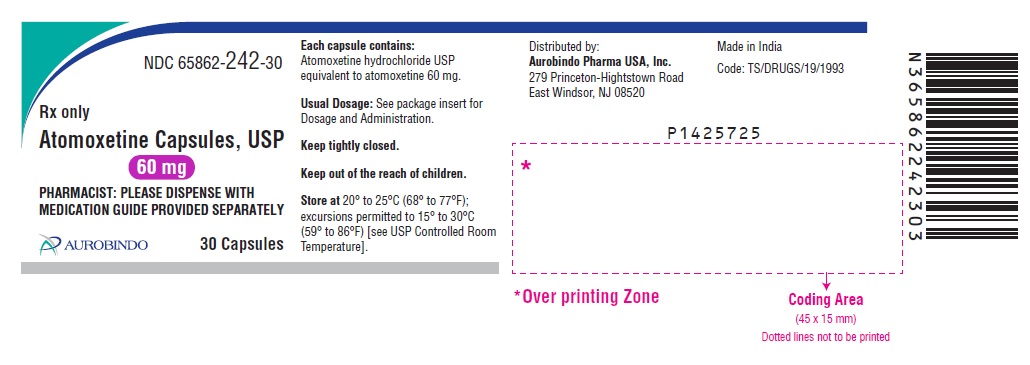
Atomoxetine 60 mg Capsule, 30-count — NDC 65862-242-30 (Billing 65862-0242-30)
This is a package of 30 capsules of Atomoxetine 60 mg Capsule from Aurobindo Pharma Limited, marketed since May 2017 and currently FDA-listed.
NDC database record
One package, one record: these facts belong to NDC 65862-242-30 alone.
- Record
- FDA NDC Directory package listing · Human prescription drug
- Code segments
- 65862 labeler · 242 product · 30 package
- Listing certified through
- Dec 31, 2026
- Barcode (UPC)
- 0365862239303, 0365862238306, 0365862240309, 0365862242303 +1 more
- FDA record last changed
- Sep 10, 2026
Other active recalls for Atomoxetine (different manufacturers) — 6 · tap to view
Identity & classification
Regulatory identifiers FDA, NLM and CMS codes for this package
- RxCUI (RxNorm): 349591
Where does this data come from?
- FDA openFDA NDC Directory · synced Oct 8, 2026
- FDA label on DailyMed · label index refreshed Oct 8, 2026
- RxNorm (NLM RxNav) · catalog refreshed Oct 8, 2026
- Medi-Span GPI (licensed)
- First Databank (licensed) · refreshed Oct 8, 2026
RxNorm drug class
This medicine belongs to the Norepinephrine Reuptake Inhibitor class.
Where does this data come from?
- RxClass (NLM) · catalog refreshed Oct 8, 2026
Clinical
Atomoxetine is used as part of a total treatment program to increase the ability to pay attention and decrease impulsiveness and hyperactivity in children and adults with ADHD. Atomoxetine is in a class of medications called selective norepinephrine reuptake inhibitors. It works by increasing the levels of norepinephrine, a natural substance in the brain that is needed to control behavior.
Read the full MedlinePlus article ↗- It treats ADHD in adults and in children 6 and older. It's not a stimulant, and it works best as part of a full plan that can include behavioral, educational and social support.
- Take it by mouth once a day in the morning, or split into two doses in the morning and late afternoon or early evening, as your prescriber directs. Food doesn't matter. Swallow cap...
- In children, the most common are nausea, vomiting, tiredness, stomach pain, sleepiness and lower appetite. Adults more often notice dry mouth, constipation, dizziness, lower appeti...
- Atomoxetine carries a boxed warning for suicidal thoughts in children and teens, mostly early in treatment. Watch daily for agitation, irritability, anxiety, aggression, panic or u...
Patient education
Supplement & herbal interactions
Some supplements/herbs that may interact with Atomoxetine — tap one for details:
Where does this data come from?
- MedlinePlus (NLM) · refreshed Oct 8, 2026
- FDA label on DailyMed · label index refreshed Oct 8, 2026
Ask a licensed pharmacist directly — free, answered by our team.
Pricing
A drug doesn't have one price. Each row is a different public payment system, and none is what you'd pay at the counter — that depends on your insurance. The ⓘ on each row explains what it measures.
| Price system | Per each | Per package |
|---|---|---|
| Retail pharmacies payNADAC · weekly | Not in the retail survey — common for institutional, discontinued, or low-volume packs. | |
| Medicaid paysCMS SDUD · 12 mo | No recent Medicaid claims on file for this NDC — rare and low-volume NDCs are suppressed in the public data. | |
| Medicare drug plans payPart D · Q2 2026 | $0.8079 | $24.24 / 30 capsules |
Where does this data come from?
- CMS NADAC weekly file
- CMS ASP pricing files · refreshed Sep 20, 2026
- CMS Medicaid State Drug Utilization Data · refreshed Oct 9, 2026
- CMS Part D plan pricing files · refreshed Sep 24, 2026
- VA National Acquisition Center price file
Packaging — all sizes for this product
| Package NDC | Description | Marketing start | Marketing end | Status |
|---|---|---|---|---|
| 65862-0242-30 You're viewing this | 30 CAPSULE in 1 BOTTLE | 2017-05-30 | — | Active |
| 65862-0242-99 65862-242-99 | 1000 CAPSULE in 1 BOTTLE | 2017-05-30 | — | Active |
| 65862-0242-22 65862-242-22 Main listing | 2000 CAPSULE in 1 BAG | — | — | Active |
You're viewing the smallest of 3 pack sizes for this product.
Pack size FAQ
What quantity is in this package?
How does this package differ from NDC 65862-0242-99?
What NDC number is used to bill for this package of Atomoxetine 60 mg Capsule?
Therapeutic equivalents
| Product | Labeler | Pack | NADAC/unit | TE | Status | Price vs. this |
|---|---|---|---|---|---|---|
| Atomoxetine 60 mg 00093-3546-56 | Teva | 30 capsules | $0.509 | AB | Availability likely | — |
| atomoxetine 60 mg 16714-0759-01 | Northstar | 30 capsules | $0.509 | AB | Availability likely | — |
| Atomoxetine 60 mg 31722-0718-30 | Camber | 30 capsules | $0.509 | AB | Availability likely | — |
| Atomoxetine Hydrochloride 60 mg 50268-0059-13 | AvPAK | 30 capsules | $0.509 | AB | Availability likely | — |
| Atomoxetine Hydrochloride 60 mg 60505-2834-03 | Apotex | 30 capsules | $0.509 | AB | Availability likely | — |
| Atomoxetine 60 mg 64380-0476-01 | Strides | 30 capsules | $0.509 | AB | Availability likely | — |
| Atomoxetine 60 mg 64980-0377-03 | Rising | 30 capsules | $0.509 | AB | Availability likely | — |
| Atomoxetine 60 mg 72603-0439-01 | NorthStar | 30 capsules | $0.509 | AB | Availability likely | — |
| Strattera 60 mg 00002-3239-30 | Eli | 30 capsules | $13.658 | — | Availability likely | — |
| Atomoxetine 60 mg 42291-0068-30 | AvKARE | 30 capsules | — | AB | FDA listed | — |
| Atomoxetine 60 mg 50090-6254-00 | A-S | 30 capsules | — | AB | FDA listed | — |
| Atomoxetine 60 mg 50090-6444-00 | A-S | 30 capsules | — | AB | FDA listed | — |
| atomoxetine 60 mg 50090-7397-00 | A-S | 30 capsules | — | AB | FDA listed | — |
| Atomoxetine Hydrochloride 60 mg 51407-0104-30 | Golden | 30 capsules | — | AB | FDA listed | — |
| Atomoxetine 60 mg 55111-0522-05 | Dr. | 500 capsules | — | AB | FDA listed | — |
| Atomoxetine 60 mg 63629-9428-01 | Bryant | 30 capsules | — | AB | FDA listed | — |
| Atomoxetine 60 mgthis 65862-0242-30 | Aurobindo | 30 capsules | — | AB | FDA listed | — |
| atomoxetine 60 mg 68462-0269-23 | Glenmark | 2000 capsules | — | AB | FDA listed | — |
| atomoxetine 60 mg 71335-2361-01 | Bryant | 30 capsules | — | AB | FDA listed | — |
| Atomoxetine 60 mg 71335-9702-01 | Bryant | 30 capsules | — | AB | FDA listed | — |
| Atomoxetine 60 mg 72162-2545-03 | Bryant | 30 capsules | — | AB | FDA listed | — |
| Atomoxetine 60 mg 82619-0119-01 | Creekwood | 30 capsules | — | AB | FDA listed | — |
Where does this data come from?
- FDA openFDA NDC Directory · synced Oct 8, 2026
- FDA Orange Book · refreshed Oct 3, 2026
- CMS NADAC weekly file
Availability & generic status
This product is an FDA-approved generic. Other versions of the same drug are listed under Therapeutic equivalents, least expensive first.
Where does this data come from?
- FDA Orange Book · refreshed Oct 3, 2026
What it looks like
Where does this data come from?
- FDA label on DailyMed · label index refreshed Oct 8, 2026
Inactive Ingredients / Excipients
Inactive ingredients, also called excipients, are components of the drug product other than the active ingredient. They may include fillers, dyes, coatings, preservatives, flavors, or other formulation ingredients.
🧪 Avoiding an ingredient? See Atomoxetine inactive ingredients by manufacturer: every current product's list side by side, so you can ask your pharmacy for the version that does not list it.
💡 Tap an ingredient (hover on desktop) to see what it is and why it’s used.
-
UNII 92RU3N3Y1O
Dimethicone is a silicone-based oil that acts as an anti-foaming agent and lubricant in medicines. It reduces gas bubbles in liquid formulations and helps coat and protect the stomach lining when ingested.
-
UNII L06K8R7DQK
A synthetic blue dye approved by the FDA for use in medications and foods. It serves as a colorant to make pills and liquids visually distinct and easier to identify.
-
UNII EX438O2MRT
Ferric oxide yellow is a naturally occurring iron compound used as a colorant in medications. It gives tablets, capsules, and other forms a yellow or golden hue for identification and appearance.
-
UNII XM0M87F357
A dark iron oxide compound that gives medicines their black or dark color. It's used as a colorant in tablets and capsules to help identify the product and make it visually distinctive.
-
UNII 2G86QN327L
Gelatin is a protein derived from animal collagen, commonly used in medicines as a gelling agent and capsule material. It helps create soft or hard capsule shells that hold and release medication, and can also thicken liquid formulations.
-
UNII 46N107B71O
Shellac is a natural resin secreted by the lac beetle. It's used as a coating on tablets and capsules to control how quickly the medicine dissolves and to improve appearance and stability.
-
UNII ETJ7Z6XBU4
Silicon dioxide is a naturally occurring mineral used as a glidant and anti-caking agent. It helps powder ingredients flow smoothly and prevents clumping during manufacturing and storage.
-
UNII 368GB5141J
A detergent and foaming agent derived from coconut or palm oil. In medications, it helps break down and mix oil and water-based ingredients, aids in tablet disintegration, and improves how the drug dissolves and spreads in the mouth or digestive system.
-
UNII O8232NY3SJ
A plant-based carbohydrate derived from corn kernels. It acts as a filler to add bulk, a binder to hold ingredients together, and a disintegrant to help the tablet break apart in your stomach for absorption.
-
UNII 15FIX9V2JP
Titanium dioxide is a bright white mineral powder commonly used as a colorant and opacifying agent. It makes pills and tablets white or lighter in color and helps make coatings non-transparent.
10 inactive ingredients listed in the exact product block matched to this NDC.
Where does this data come from?
ingredient classCode="IACT" elements from the exact product block matched by this NDC. Label-section narrative from DailyMed / the openFDA label index is shown separately when available.- FDA label on DailyMed · label index refreshed Oct 8, 2026
- FDA openFDA NDC Directory · synced Oct 8, 2026
Inactive ingredient FAQ
Are inactive ingredients the same for every manufacturer?
Why might an inactive ingredient be missing?
Can inactive ingredients matter?
Manufacturer & labeler
More NDCs from Aurobindo Pharma Limited labeler code 65862
- Lamotrigine 200 mg Tablet NDC 65862-230-01
- Ibandronate Sodium 150 mg Tablet, Film Coated NDC 65862-237-03
- Atomoxetine 10 mg Capsule NDC 65862-238-22
- Atomoxetine 18 mg Capsule NDC 65862-239-22
- Atomoxetine 25 mg Capsule NDC 65862-240-22
- Atomoxetine 40 mg Capsule NDC 65862-241-26
- Atomoxetine 80 mg Capsule NDC 65862-243-05
- Atomoxetine 100 mg Capsule NDC 65862-244-05
- Levetiracetam 250 mg Tablet, Film Coated NDC 65862-245-05
- Levetiracetam 500 mg Tablet, Film Coated NDC 65862-246-05
- Levetiracetam 750 mg Tablet, Film Coated NDC 65862-247-05
- Escitalopram Oxalate 5 mg/5mL Solution NDC 65862-248-24
Where does this data come from?
- FDA openFDA NDC Directory · synced Oct 8, 2026
- Drugs@FDA
Full prescribing information FDA SPL
🚨 Boxed Warning ▾
WARNING: SUICIDAL THOUGHTS AND BEHAVIORS IN PEDIATRIC PATIENTS 6 YEARS OF AGE AND OLDER All atomoxetine-treated pediatric patients 6 years of age or older should be monitored and observed closely for suicidal thoughts and behavior, clinical worsening, or unusual changes in behavior, especially during the initial months of therapy or at times of dosage changes. Families and caregivers should be advised of the need for close observation and communication with the health care provider. Consider stopping atomoxetine in patients who experience emergent suicidal thoughts and behavior [see Warnings and Precautions (5.1) ].
Atomoxetine increased the risk of suicidal ideation in pediatric patients aged 6 years of age and older with attention-deficit/hyperactivity disorder (ADHD) in short-term studies. WARNING: SUICIDAL THOUGHTS AND BEHAVIORS IN PEDIATRIC PATIENTS 6 YEARS OF AGE AND OLDER See full prescribing information for complete boxed warning. All atomoxetine-treated pediatric patients 6 years of age or older should be monitored and observed closely for suicidal thoughts and behavior, clinical worsening, or unusual changes in behavior, especially during the initial months of therapy or at times of dosage changes ( 5.1 ) Consider stopping atomoxetine in patients who experience emergent suicidal thoughts and behavior ( 5.1 ) Atomoxetine increased the risk of suicidal ideation in pediatric patients aged 6 years of age and older with attention-deficit/hyperactivity disorder (ADHD) in short-term studies ( 5.1 )
🎯 Indications and Usage ▾
1 INDICATIONS AND USAGE Atomoxetine capsules are indicated for the treatment of attention-deficit/hyperactivity disorder (ADHD) in adults and pediatric patients 6 years of age and older. Atomoxetine capsules are indicated as an integral part of a total treatment program for ADHD that may include other measures (psychological, educational, social) for patients with ADHD. Atomoxetine capsules are a selective norepinephrine reuptake inhibitor (SNRI) indicated for the treatment of ADHD in adults and pediatric patients 6 years of age and older.
( 1 )
⏱️ Dosage and Administration ▾
2 DOSAGE AND ADMINISTRATION Prior to initiating treatment with atomoxetine capsules, screen patients for a personal or family history of bipolar disorder, mania, or hypomania. ( 2.1 , 5.6 ) See table below for the recommended atomoxetine capsules dosage. ( 2.3 ) Age and Body Weight Starting Dosage Target Dosage 1 Maximum Total Daily Dose 1 Pediatrics who weigh less than 70 kg 0.5 mg/kg/day 1.2 mg/kg/day 1.4 mg/kg/day or 100 mg/day (whichever is less) Pediatrics who weigh 70 kg or more and adults 40 mg/day 80 mg/day 100 mg/day 1 Administer either as once daily dosage in the morning or as evenly divided twice daily dosage in the morning and late afternoon/early evening.
For the recommended dosage in patients with hepatic impairment, see Full Prescribing Information. ( 2.4 ) For the recommended dosage with concomitant use of a strong CYP2D6 inhibitor or in CYP2D6 poor metabolizers, see Full Prescribing Information. ( 2.5 )
2.1Recommendations Prior to Initiating Atomoxetine Capsules Treatment Prior to initiating treatment with atomoxetine capsules, screen patients for a personal or family history of bipolar disorder, mania, or hypomania [see Warnings and Precautions (5.6) ].
2.2Administration Instructions Atomoxetine capsules may be taken with or without food. Take atomoxetine capsules whole; do not open the capsules.
2.3Recommended Dosage Table 1 includes the recommended atomoxetine capsules dosage in adult patients and pediatric patients 6 years of age and older for acute treatment of ADHD. Table 1: Recommended Dosage of Atomoxetine Capsules for Acute Treatment of ADHD Age and Body Weight Starting Dosage Titration Interval Target Dosage Maximum Dosage Pediatric patients who weigh less than 70 kg 0.5 mg/kg/day Minimum of 3 days 1.2 mg/kg/day a,b 1.4 mg/kg/day or 100 mg/day, whichever is less a Pediatric patients who weigh 70 kg or more and adult patients 40 mg/day Minimum of 3 days 80 mg/day a 100 mg/day a,c a Administer either as once daily dosage in the morning or as evenly divided twice daily dosage in the morning and late afternoon/early evening. b No additional benefit has been demonstrated with atomoxetine capsule dosages higher than 1.2 mg/kg/day [see Clinical Studies (14) ] . c If a patient has not achieved an optimal response at 80 mg/day after 2 to 4 additional weeks, may increase the dosage to a maximum of 100 mg/day.
There is no data that supports increased effectiveness at a dosage higher than 100 mg/day [see Clinical Studies (14) ] . The health care provider who elects to use atomoxetine capsules for extended periods should periodically reevaluate the long-term usefulness of atomoxetine capsules for the individual patient.
2.4Recommended Dosage in Patients with Hepatic Impairment For patients aged 6 years of age or older with: Severe hepatic impairment (HI) (Child-Pugh Class C), the recommended initial and target atomoxetine capsules dosage is 25% of recommended dosage in patients with normal hepatic function [see Use in Specific Populations (8.6) and Clinical Pharmacology (12.3) ] . Moderate HI (Child-Pugh Class B), the recommended initial and target atomoxetine capsules dosage is 50% of the recommended dosage in patients with normal hepatic function [see Use in Specific Populations (8.6) and Clinical Pharmacology (12.3) ] .
Mild HI (Child-Pugh Class A), the recommended initial and target atomoxetine capsules dosage is the same as those with normal hepatic function.
2.5Recommended Dosage with Concomitant Use of Strong CYP2D6 Inhibitors or in CYP2D6 Poor Metabolizers Consider genetic testing to determine the patient’s CYP2D6 metabolizer status. In patients taking a concomitant strong CYP2D6 inhibitor or who are CYP2D6 poor metabolizers, a longer titration interval of 4 weeks is recommended, if ADHD symptoms fail to improve and the initial atomoxetine capsules dosage is well tolerated. The recommended starting, target, and maximum atomoxetine capsule dosages are the same as outlined in Table 1 [ see Dosage and A… [Excerpted — this section continues on DailyMed.]
💊 Dosage Forms and Strengths ▾
3 DOSAGE FORMS AND STRENGTHS Capsules: 10 mg of atomoxetine (off-white opaque/off-white opaque) 18 mg of atomoxetine (golden opaque/off-white opaque) 25 mg of atomoxetine (blue opaque/off-white opaque) 40 mg of atomoxetine (blue opaque/blue opaque) 60 mg of atomoxetine (blue opaque/golden opaque) 80 mg of atomoxetine (brown opaque/off-white opaque) 100 mg of atomoxetine (brown opaque/brown opaque) Capsules: contain 10 mg, 18 mg, 25 mg, 40 mg, 60 mg, 80 mg, or 100 mg of atomoxetine. ( 3 , 11 , 16 )
⛔ Contraindications ▾
4 CONTRAINDICATIONS Atomoxetine capsules are contraindicated in patients: With known hypersensitivity reaction to atomoxetine or other constituents of atomoxetine capsules. Hypersensitivity reactions included anaphylaxis, angioneurotic edema, urticaria, and rash [see Warnings and Precautions (5.8) ] . Taking, or within 14 days of stopping, a monoamine oxidase inhibitor (MAOI) [see Drug Interactions (7) ] .
With narrow angle glaucoma. In clinical trials, atomoxetine capsules use was associated with an increased risk of mydriasis. With pheochromocytoma or a history of pheochromocytoma.
Serious reactions, including elevated blood pressure and tachyarrhythmia, have been reported in patients with pheochromocytoma or a history of pheochromocytoma who received atomoxetine capsules. With severe cardiac or vascular disorders whose condition would be expected to deteriorate if they had a clinically important increase in blood pressure or heart rate (e.g., 15 to 20 mm Hg in blood pressure or 20 beats per minute in heart rate) [ see Warnings and Precautions (5.4) ]. Contraindicated in patients ( 4 ): With known hypersensitivity to atomoxetine or other constituents of atomoxetine capsules Taking or within 14 days of stopping, a monoamine oxidase inhibitor (MAOI) With narrow angle glaucoma With pheochromocytoma or history of pheochromocytoma With severe cardiac or vascular disorders whose condition would be expected to deteriorate with clinically important increases in blood pressure or heart rate
⚠️ Warnings and Cautions ▾
5 WARNINGS AND PRECAUTIONS Severe Liver Injury: Atomoxetine should be discontinued and not restarted in patients with jaundice or laboratory evidence of liver injury. ( 5.2 ) Serious Cardiovascular Reactions: Prior to atomoxetine treatment, patients should have a careful history and physical exam to assess for presence of cardiovascular (CV) disease. Atomoxetine generally should not be used in pediatric patients with known serious cardiac abnormalities, cardiomyopathy, serious arrhythmias.
Consideration should be given to not using atomoxetine in adults with clinically significant cardiac abnormalities. Patients who develop symptoms suggestive of cardiac disease during atomoxetine treatment should stop atomoxetine and undergo a prompt cardiac evaluation. ( 5.3 ) Increase in Blood Pressure and Heart Rate: Heart rate and blood pressure should be measured at baseline, following atomoxetine dosage increase, and periodically while on therapy.
( 5.4 ) New Psychotic or Manic Symptoms and Activation of Mania: If psychotic or manic symptoms occur, consider discontinuing atomoxetine. ( 5.5 ) Aggressive Behavior or Hostility: Monitor for the appearance or worsening of aggressive behavior or hostility. ( 5.7 ) Effects on Urine Outflow: Urinary retention or hesitancy may occur.
( 5.9 ) Priapism: Prompt medical attention is required in the event of suspected priapism. ( 5.10 ) Effect on Growth in Pediatric Patients : Closely monitor growth (e.g., weight, height) in pediatric patients. ( 5.11 )
5.1Suicidal Thoughts and Behaviors in Pediatric Patients 6 Years of Age and Older All atomoxetine-treated pediatric patients should be monitored and observed closely for clinical worsening, suicidal thoughts and behavior, and unusual changes in behavior, especially during the initial few months of atomoxetine therapy, or at times of dosage changes, either increases or decreases. Families and caregivers of atomoxetine-treated pediatric patients should be alerted about the need to monitor patients daily for the emergence of agitation, irritability, unusual changes in behavior, and mental health-related symptoms, as well as the emergence of suicidal thoughts and behavior, and to report such symptoms immediately to a health care provider.
Consider changing the therapeutic regimen, including stopping atomoxetine, in patients who experience emergent suicidality or symptoms that might be precursors to emerging suicidal thoughts and behavior, especially if these symptoms are severe or abrupt in onset, or were not part of the patient’s presenting symptoms. Atomoxetine increased the risk of suicidal ideation in pediatric patients 6 years and older with ADHD in pooled placebo-controlled short-term studies (6 to 18 weeks). In 12 studies (11 studies in patients with ADHD and 1 study in another population) with over 2,200 pediatric patients, the mean incidence of suicidal ideation in atomoxetine-treated pediatric patients was 0.4% (5/1,357) (including one patient with a suicide attempt) compared to 0% (0/851) in placebo-treated pediatric patients.
No suicides occurred in these studies. All the suicidal ideations occurred in pediatric patients 6 to 12 years of age, and all occurred during the first month of atomoxetine treatment. It is unknown whether the risk of suicidal ideation in pediatric patients extends to longer-term use.
A similar analysis in adult patients treated with atomoxetine for ADHD did not reveal an increased risk of suicidal ideation or behavior. The following psychiatric symptoms have been reported with atomoxetine: anxiety, agitation, panic attacks, insomnia, irritability, hostility, aggressiveness, impulsivity, akathisia (psychomotor restlessness), hypomania and mania. Although a causal link between the emergence of such symptoms and the emergence of suicidal impulses has not been established, there is a concern that such symptoms may represent precursors to emerging suicidality.
5.2Severe Liver Injury Atomoxetine should be discontinued and n… [Excerpted — this section continues on DailyMed.]
🤒 Adverse Reactions ▾
6 ADVERSE REACTIONS Most common adverse reactions (≥5% and at least twice the incidence of placebo patients): Pediatric Clinical Studies: Nausea, vomiting, fatigue, decreased appetite, abdominal pain, and somnolence. ( 6.1 ) Adult Clinical Studies: Constipation, dry mouth, nausea, decreased appetite, dizziness, erectile dysfunction, and urinary hesitation. (6.1) Patients should be instructed to use caution when driving a car or operating hazardous machinery (because of somnolence) until they are reasonably certain that their performance is not affected by atomoxetine.
( 6.1 ) To report SUSPECTED ADVERSE REACTIONS, contact Aurobindo Pharma USA, Inc. at 1-866-850-2876 or FDA at 1-800-FDA-1088 or www.fda.gov/medwatch.
6.1Clinical Trials Experience Because clinical trials are conducted under widely varying conditions, adverse reaction rates observed in the clinical trials of a drug cannot be directly compared to rates in the clinical trials of another drug and may not reflect the rates observed in practice. Atomoxetine was administered to 5,382 pediatric patients 6 years of age and older in clinical ADHD studies (Studies 1, 2, 3, 4, and 5) [see Clinical Studies (14.1) ] and 1,007 adults in clinical ADHD studies (Studies 6 and 7) [see Clinical Studies (14.2) ] .
In the ADHD clinical trials, 2,529 pediatric patients were treated for over 6 months which included 1,625 pediatric patients who were treated for longer than 1 year. Adverse Reactions in the Clinical Trials of Pediatric Patients 6 Years of Age and Older with ADHD Discontinuation of Treatment Due to Adverse Reactions in the Clinical Studies of Pediatric Patients 6 Years of Age and Older: In the acute placebo-controlled studies of pediatric patients 6 years of age and older with ADHD, 3% (48/1,613) of atomoxetine-treated pediatric patients and 1.4% (13/945) of placebo-treated pediatric patients discontinued due to an adverse reaction.
Among atomoxetine-treated patients, irritability (0.3%, N=5); somnolence (0.3%, N=5); aggression (0.2%, N=4); nausea (0.2%, N=4); vomiting (0.2%, N=4); abdominal pain (0.2%, N=4); constipation (0.1%, N=2); fatigue (0.1%, N=2); feeling abnormal (0.1%, N=2); and headache (0.1%, N=2) were the reasons for discontinuation reported by more than one patient. For all studies, (including open-label and long-term studies), 6% of atomoxetine-treated pediatric patients who were other CYP2D6 metabolizer types (ultrarapid, normal, and intermediate) and 11% of those who were CYP2D6 poor metabolizers discontinued due to an adverse reaction.
Common Adverse Reactions in the Clinical Studies of Pediatric Patients 6 Years of Age and Older: Common adverse reactions (incidence of 2% or greater in atomoxetine-treated patients and with a higher incidence in atomoxetine-treated patients compared to placebo-treated patients) in pediatric patients 6 years of age and older with ADHD are listed in Table 2. The most commonly observed adverse reactions in atomoxetine-treated patients (incidence of ≥5% and ≥ twice the incidence in placebo-treated patients), for either twice daily or once daily dosing were: nausea, vomiting, fatigue, decreased appetite, abdominal pain, and somnolence ( see Tables 2 and 3).
Table 2: Common Adverse Reactions a in Acute Studies (up to 18 weeks) in Pediatric Patients 6 Years and Older with ADHD Adverse Reaction Atomoxetine (N=1,597) Placebo (N=934) Headache 19% 15% Abdominal pain b 18% 10% Decreased appetite 16% 4% Somnolence c 11% 4% Vomiting 11% 6% Nausea 10% 5% Fatigue 8% 3% Irritability 6% 3% Dizziness 5% 2% Decreased weight 3% 0% Anorexia 3% 1% Rash 2% 1% a Adverse reactions reported by at least 2% of atomoxetine-treated patients and greater than placebo-treated patients. b Abdominal pain includes the terms: upper abdominal pain, and epigastric discomfort. c Somnolence includes the term sedation.
Adverse reaction in the atomoxetine-treated patients who received twice daily, and once daily dosing are shown in Table 3 (adverse reactions based o… [Excerpted — this section continues on DailyMed.]
🔄 Drug Interactions ▾
7 DRUG INTERACTIONS See Table 8 for clinically significant drug interactions with atomoxetine and other drugs. Table 8: Clinically Significant Drug Interactions with Atomoxetine Capsules and Other Drugs Monoamine Oxidase Inhibitors (MAOIs) Prevention or Management Atomoxetine is contraindicated in patients taking MAOIs, including MAOIs such as linezolid or intravenous methylene blue, or in patients who stopped an MAOI within 14 days. Mechanism and Clinical Effect(s) As with other drugs affecting brain monoamine concentrations, there have been reports of serious, sometimes fatal reactions (hyperthermia, rigidity, myoclonus, autonomic instability with fluctuations of vital signs, extreme agitation progressing to delirium/coma) with concomitant use of atomoxetine and an MAOI.
Some cases presented with features resembling neuroleptic malignant syndrome. Strong CYP2D6 Inhibitors Prevention or Management With concomitant use of atomoxetine and a strong CYP2D6 inhibitor, increase the titration interval [see Dosage and Administration (2.5) and Clinical Pharmacology (12.3) ]. Mechanism and Clinical Effect(s) Atomoxetine is a CYP2D6 substrate.
The concomitant use of atomoxetine and a strong CYP2D6 inhibitor increases atomoxetine exposure [see Clinical Pharmacology (12.3) ] . Antihypertensive Drugs Prevention or Management Increase the frequency of monitoring blood pressure and adjust atomoxetine dosage as clinically appropriate. Mechanism and Clinical Effect(s) Because of increased risk of increased blood pressure, atomoxetine should be used cautiously with antihypertensive drugs, other drugs that increase blood pressure or pressor drugs (e.g., dopamine, dobutamine).
Albuterol or Other Beta2 Agonists Prevention or Management Increase the frequency of monitoring blood pressure and heart rate and adjust atomoxetine dosage as clinically appropriate. Mechanism and Clinical Effect(s) Systemically administered albuterol (e.g., oral) can be potentiated by atomoxetine, resulting in increases in heart rate and blood pressure. [see Clinical Pharmacology (12.3) ]. Monoamine Oxidase Inhibitors: Concomitant use contraindicated.
( 4 , 7 ) Strong CYP2D6 Inhibitors: With concomitant use of atomoxetine and strong CYP2D6 inhibitors, increase the titration intervals. ( 7 ) Antihypertensives: Increase the frequency of monitoring blood pressure and adjust atomoxetine dosage as clinically appropriate. ( 7 ) Albuterol (or other beta2 agonists): Increase the frequency of monitoring blood pressure and heart rate.
( 7 )
👥 Use in Specific Populations ▾
8 USE IN SPECIFIC POPULATIONS Hepatic Impairment: Increased exposure (AUC) to atomoxetine in subjects with moderate (Child-Pugh Class B) (2-fold increase) and severe (Child-Pugh Class C) (4-fold increase) compared to subjects with normal liver function. ( 8.6 and 12.3 ) Use in Genomic Subgroups: CYP2D6 poor metabolizers have higher systemic exposures which may increase the risks of atomoxetine-related adverse reactions compared to other CYP2D6 metabolizer types (ultrarapid, normal, and intermediate) ( 8.7 )
8.1Pregnancy Risk Summary Available published studies with atomoxetine use in pregnant women are insufficient to establish a drug-associated risk of major birth defects, miscarriage or adverse maternal or fetal outcomes. Some animal reproduction studies of atomoxetine had adverse developmental outcomes. One of 3 studies in pregnant rabbits dosed during organogenesis resulted in decreased live fetuses and an increase in early resorptions, as well as slight increases in the incidences of atypical origin of carotid artery and absent subclavian artery.
These effects were observed at plasma levels (AUC) 3 times and 0.4 times the human plasma levels in other CYP2D6 metabolizer types (ultrarapid, normal, and intermediate) and poor metabolizers receiving the maximum recommended human dose (MRHD), respectively. In rats dosed prior to mating and during organogenesis a decrease in fetal weight (female only) and an increase in the incidence of incomplete ossification of the vertebral arch in fetuses were observed at a dose approximately 5 times the MRHD on a mg/m 2 basis.
In one of 2 studies in which rats were dosed prior to mating through the periods of organogenesis and lactation, decreased pup weight and decreased pup survival were observed at doses corresponding to 5 to 6 times the MRHD on a mg/m 2 basis. No adverse fetal effects were seen in pregnant rats dosed during the organogenesis period (see Data) . The estimated background risk of major birth defects and miscarriage for the indicated population is unknown.
All pregnancies have a background risk of birth defect, loss, or other adverse outcomes. In the U.S. general population, the estimated background risk of major birth defects and miscarriage in clinically recognized pregnancies is 2 to 4% and 15 to 20%, respectively. Data Animal Data: Pregnant rabbits were treated with up to 100 mg/kg/day of atomoxetine by gavage throughout the period of organogenesis.
At this dose, in 1 of 3 studies, a decrease in live fetuses and an increase in early resorptions was observed. Slight increases in the incidences of atypical origin of carotid artery and absent subclavian artery were observed. These findings were observed at doses that caused slight maternal toxicity.
The no-effect dose for these findings was 30 mg/kg/day. The 100 mg/kg dose is approximately 23 times the MRHD on a mg/m 2 basis; plasma levels (AUC) of atomoxetine at this dose in rabbits are estimated to be 3.3 times (other CYP2D6 metabolizer types) or 0.4 times (CYP2D6 poor metabolizers) those in humans receiving the MRHD. Rats were treated with up to approximately 50 mg/kg/day of atomoxetine (approximately 6 times the MRHD on a mg/m 2 basis) in the diet from 2 weeks (females) or 10 weeks (males) prior to mating through the periods of organogenesis and lactation.
In 1 of 2 studies, decreases in pup weight and pup survival were observed. The decreased pup survival was also seen at 25 mg/kg (but not at 13 mg/kg). In a study in which rats were treated with atomoxetine in the diet from 2 weeks (females) or 10 weeks (males) prior to mating throughout the period of organogenesis, a decrease in fetal weight (female only) and an increase in the incidence of incomplete ossification of the vertebral arch in fetuses were observed at 40 mg/kg/day (approximately 5 times the MRHD on a mg/m 2 basis) but not at 20 mg/kg/day.
No adverse fetal effects were seen when pregnant rats were treated with up to 150 mg/kg/day (approximately 17 times… [Excerpted — this section continues on DailyMed.]
🤰 Pregnancy ▾
8.1Pregnancy Risk Summary Available published studies with atomoxetine use in pregnant women are insufficient to establish a drug-associated risk of major birth defects, miscarriage or adverse maternal or fetal outcomes. Some animal reproduction studies of atomoxetine had adverse developmental outcomes. One of 3 studies in pregnant rabbits dosed during organogenesis resulted in decreased live fetuses and an increase in early resorptions, as well as slight increases in the incidences of atypical origin of carotid artery and absent subclavian artery.
These effects were observed at plasma levels (AUC) 3 times and 0.4 times the human plasma levels in other CYP2D6 metabolizer types (ultrarapid, normal, and intermediate) and poor metabolizers receiving the maximum recommended human dose (MRHD), respectively. In rats dosed prior to mating and during organogenesis a decrease in fetal weight (female only) and an increase in the incidence of incomplete ossification of the vertebral arch in fetuses were observed at a dose approximately 5 times the MRHD on a mg/m 2 basis.
In one of 2 studies in which rats were dosed prior to mating through the periods of organogenesis and lactation, decreased pup weight and decreased pup survival were observed at doses corresponding to 5 to 6 times the MRHD on a mg/m 2 basis. No adverse fetal effects were seen in pregnant rats dosed during the organogenesis period (see Data) . The estimated background risk of major birth defects and miscarriage for the indicated population is unknown.
All pregnancies have a background risk of birth defect, loss, or other adverse outcomes. In the U.S. general population, the estimated background risk of major birth defects and miscarriage in clinically recognized pregnancies is 2 to 4% and 15 to 20%, respectively. Data Animal Data: Pregnant rabbits were treated with up to 100 mg/kg/day of atomoxetine by gavage throughout the period of organogenesis.
At this dose, in 1 of 3 studies, a decrease in live fetuses and an increase in early resorptions was observed. Slight increases in the incidences of atypical origin of carotid artery and absent subclavian artery were observed. These findings were observed at doses that caused slight maternal toxicity.
The no-effect dose for these findings was 30 mg/kg/day. The 100 mg/kg dose is approximately 23 times the MRHD on a mg/m 2 basis; plasma levels (AUC) of atomoxetine at this dose in rabbits are estimated to be 3.3 times (other CYP2D6 metabolizer types) or 0.4 times (CYP2D6 poor metabolizers) those in humans receiving the MRHD. Rats were treated with up to approximately 50 mg/kg/day of atomoxetine (approximately 6 times the MRHD on a mg/m 2 basis) in the diet from 2 weeks (females) or 10 weeks (males) prior to mating through the periods of organogenesis and lactation.
In 1 of 2 studies, decreases in pup weight and pup survival were observed. The decreased pup survival was also seen at 25 mg/kg (but not at 13 mg/kg). In a study in which rats were treated with atomoxetine in the diet from 2 weeks (females) or 10 weeks (males) prior to mating throughout the period of organogenesis, a decrease in fetal weight (female only) and an increase in the incidence of incomplete ossification of the vertebral arch in fetuses were observed at 40 mg/kg/day (approximately 5 times the MRHD on a mg/m 2 basis) but not at 20 mg/kg/day.
No adverse fetal effects were seen when pregnant rats were treated with up to 150 mg/kg/day (approximately 17 times the MRHD on a mg/m 2 basis) by gavage throughout the period of organogenesis.
🧒 Pediatric Use ▾
8.4Pediatric Use The safety and effectiveness of atomoxetine for the treatment of ADHD have been established in pediatric patients 6 years of age and older. Anyone considering the use of atomoxetine in a pediatric patient should balance the potential risks with the clinical need [see Boxed Warning and Warnings and Precautions (5.1 , 5.3 , 5.4 , 5.10) ] . The atomoxetine pharmacokinetics in pediatric patients 6 years of age and older were similar to those in adults.
The safety and effectiveness of atomoxetine in pediatric patients less than 6 years of age have not been established. Juvenile Toxicity Animal Data A study was conducted in young rats to evaluate the effects of atomoxetine on growth and neurobehavioral and sexual development. Rats were treated with 1, 10, or 50 mg/kg/day (approximately 0.2, 2, and 8 times, respectively, the maximum human dose on a mg/m 2 basis) of atomoxetine given by gavage from the early postnatal period (Day 10 of age) through adulthood.
Slight delays in onset of vaginal patency (all doses) and preputial separation (10 and 50 mg/kg), slight decreases in epididymal weight and sperm number (10 and 50 mg/kg), and a slight decrease in corpora lutea (50 mg/kg) were seen, but there were no effects on fertility or reproductive performance. A slight delay in onset of incisor eruption was seen at 50 mg/kg. A slight increase in motor activity was seen on Day 15 (males at 10 and 50 mg/kg and females at 50 mg/kg) and on Day 30 (females at 50 mg/kg) but not on Day 60 of age.
There were no effects on learning and memory tests. The significance of these findings to humans is unknown.
🧓 Geriatric Use ▾
8.5Geriatric Use The safety, efficacy and pharmacokinetics of atomoxetine in geriatric patients have not been evaluated. Clinical studies of atomoxetine did not include sufficient numbers of patients 65 years of age and older to determine whether they respond differently from younger adult patients.
🆘 Overdosage ▾
10 OVERDOSAGE During postmarketing use, there have been fatalities reported involving a mixed ingestion overdose of atomoxetine and at least one other drug. There have been no reports of death involving overdose of atomoxetine alone, including intentional overdoses at amounts up to 1,400 mg (14 times the maximum recommended dosage). The most commonly reported symptoms with acute and chronic overdoses of atomoxetine were gastrointestinal symptoms, somnolence, dizziness, tremor, and abnormal behavior.
Hyperactivity and agitation have also been reported. Signs and symptoms consistent with mild to moderate sympathetic nervous system activation (e.g., tachycardia, blood pressure increased, mydriasis, dry mouth) have also been observed. Most events were mild to moderate.
In some cases of overdose involving atomoxetine, seizures have been reported. Less commonly, there have been reports of QT prolongation and mental changes, including disorientation and hallucinations [see Clinical Pharmacology (12.2) ] . If an overdose occurs, consider contacting the Poison Help line (1-800-222-1222) or a medical toxicologist for additional overdose management recommendations.
Because atomoxetine is highly protein-bound, dialysis is not likely to be useful in the treatment of atomoxetine overdose.
🧬 Clinical Pharmacology ▾
12 CLINICAL PHARMACOLOGY
12.1Mechanism of Action The precise mechanism by which atomoxetine produces its therapeutic effects in ADHD is unknown, but is thought to be related to selective inhibition of the pre-synaptic norepinephrine transporter, as determined in ex vivo uptake and neurotransmitter depletion studies.
12.2Pharmacodynamics An exposure-response analysis of atomoxetine (0.5, 1.2 or 1.8 mg/kg/day) or placebo demonstrated atomoxetine exposure correlates with efficacy as measured by the ADHD Rating Scale-IV-Parent Version: Investigator administered and scored. The exposure-efficacy relationship was similar to that observed between atomoxetine dosage and efficacy with median atomoxetine exposures at the two highest doses resulting in near maximal changes from baseline [see Clinical Studies (14.2) ] . Cardiac Electrophysiology The effect of atomoxetine on QTc interval prolongation was evaluated in a randomized, double-blinded, positive-(moxifloxacin 400 mg) and placebo-controlled, cross-over study in healthy male CYP2D6 poor metabolizers.
A total of 120 healthy subjects were administered atomoxetine (20 mg and 60 mg) twice daily for 7 days. No large changes in QTc interval (i.e., increases >60 msec from baseline, absolute QTc >480 msec) were observed in the study. However, small changes in QTc interval cannot be excluded from this study, because the study failed to demonstrate assay sensitivity.
There was a slight increase in QTc interval with increased atomoxetine concentration. Pharmacodynamic Drug Interaction Studies Consumption of ethanol with atomoxetine did not change the intoxicating effects of ethanol. Concomitant use of atomoxetine with methylphenidate did not increase cardiovascular effects beyond those seen with methylphenidate alone.
Albuterol 600 mcg given intravenously over 2 hours (albuterol is not approved for intravenous use) induced heart rate and blood pressure increases; these effects were potentiated when co-administered with atomoxetine (60 mg twice daily for 5 days), particularly initially [see Drug Interactions (7) ].
12.3Pharmacokinetics Pharmacokinetic parameters for atomoxetine and its metabolites in CYP2D6 poor metabolizers and other CYP2D6 metabolizer types (ultrarapid, normal, and intermediate) are presented in Table 9. Table 9: Atomoxetine and Metabolite Pharmacokinetics in Adult CYP2D6 Poor Metabolizers and Other CYP2D6 Metabolizer Types Parameter Other CYP2D6 Metabolizer Types a CYP2D6 Poor Metabolizers b Absorption Dose proportionality 10 to 120 mg Accumulation 1.1-fold 3.3-fold Absolute bioavailability 63% 94% T max median 1 hour 2.5 hour Effect of Food AUC: Unchanged; C max : Decreased 37%; T max : Delayed 3 hours Distribution Protein Binding 98% Volume of distribution
0.85L/kg Elimination Atomoxetine half-life 5.2 hours 21.6 hours Atomoxetine apparent oral clearance
0.35 L/hr/kg
0.03L/hr/kg 4-Hydroxyatomoxetine half-life 6 to 8 hours -- N-Desmethylatomoxetine half-life 6 to 8 hours 34 to 40 hours Metabolism Primary metabolic pathways CYP2D6 Other CYP enzymes 4-Hydroxyatomoxetine c concentration 1% of atomoxetine 0.1% of atomoxetine d N-Desmethylatomoxetine e concentration 5% of atomoxetine 45% of atomoxetine Excretion Urine Greater than 80% of the administered dose excreted as 4-hydroxyatomoxetine-O-glucuronide; Less than 3% as unchanged drug Feces Less than 17% of the administered dose Abbreviations : C max,ss = maximum atomoxetine plasma concentration at steady state; T max = time to peak concentration a In this analysis, other CYP2D6 metabolizer types were defined as individuals who were not CYP2D6 poor metabolizers and included CYP2D6 ultrarapid, normal, and intermediate metabolizers. b CYP2D6 poor metabolizers were defined as individuals with two nonfunctional alleles (e.g., CYP2D6*3/*4, CYP2D6*5/*5 ), and as a result no CYP2D6 enzyme activity. c Primarily formed by CYP2D6.The major oxidative metabolite formed, regardless of CYP2D6 metabolizer type, and is further glucuroni… [Excerpted — this section continues on DailyMed.]
🧬 Mechanism of Action ▾
12.1Mechanism of Action The precise mechanism by which atomoxetine produces its therapeutic effects in ADHD is unknown, but is thought to be related to selective inhibition of the pre-synaptic norepinephrine transporter, as determined in ex vivo uptake and neurotransmitter depletion studies.
📦 How Supplied / Storage and Handling ▾
16 HOW SUPPLIED/STORAGE AND HANDLING
16.1How Supplied Atomoxetine capsules USP, 10 mg* are off-white opaque/off-white opaque, size ‘5’ hard gelatin capsule filled with white to off-white powder and imprinted with ‘F’ on off-white opaque cap & ‘41’ on off-white opaque body with black ink. Bottles of 30 NDC 65862-238-30 Bottles of 2,000 NDC 65862-238-22 Atomoxetine capsules USP, 18 mg* are golden opaque/off-white opaque, size ‘4’ hard gelatin capsule filled with white to off-white powder and imprinted with ‘F’ on golden opaque cap & '42’ on off-white opaque body with black ink.
Bottles of 30 NDC 65862-239-30 Bottles of 2,000 NDC 65862-239-22 Atomoxetine capsules USP, 25 mg* are blue opaque/off-white opaque, size ‘4’ hard gelatin capsule filled with white to off-white powder and imprinted with ‘F’ on blue opaque cap & ‘43’ on off-white opaque body with black ink. Bottles of 30 NDC 65862-240-30 Bottles of 2,000 NDC 65862-240-22 Atomoxetine capsules USP, 40 mg* are blue opaque/blue opaque, size ‘2’ hard gelatin capsule filled with white to off-white powder and imprinted with ‘F’ on blue opaque cap & ‘45’ on blue opaque body with black ink.
Bottles of 30 NDC 65862-241-30 Bottles of 1,000 NDC 65862-241-99 Atomoxetine capsules USP, 60 mg* are blue opaque/golden opaque, size ‘1’ hard gelatin capsule filled with white to off-white powder and imprinted with ‘F’ on blue opaque cap & ‘46’ on golden opaque body with black ink. Bottles of 30 NDC 65862-242-30 Bottles of 1,000 NDC 65862-242-99 Atomoxetine capsules USP, 80 mg* are brown opaque/off-white opaque, size ‘0’ hard gelatin capsule filled with white to off-white powder and imprinted with ‘F’ on brown opaque cap & ‘47’ on off-white opaque body with black ink.
Bottles of 30 NDC 65862-243-30 Bottles of 500 NDC 65862-243-05 Atomoxetine capsules USP, 100 mg* are brown opaque/brown opaque, size ‘0EL’ hard gelatin capsule filled with white to off-white powder and imprinted with ‘Y’ on brown opaque cap & ‘04’ on brown opaque body with black ink. Bottles of 30 NDC 65862-244-30 Bottles of 500 NDC 65862-244-05 * Atomoxetine base equivalent.
16.2Storage and Handling Store at 20º to 25ºC (68º to 77ºF); excursions permitted to 15º to 30ºC (59º to 86ºF) [see USP Controlled Room Temperature].
📋 Description ▾
11 DESCRIPTION Atomoxetine is a selective norepinephrine reuptake inhibitor. Atomoxetine hydrochloride is the R (-) isomer as determined by x-ray diffraction and its chemical designation is (-)- N -Methyl-3-phenyl-3-( o -tolyloxy)-propylamine hydrochloride and its molecular formula is C 17 H 21 NO•HCl, which corresponds to a molecular weight of 291.82. The chemical structure is: Atomoxetine hydrochloride USP is a white to practically white solid, which has a solubility of 27.8 mg/mL in water.
Atomoxetine capsules USP are for oral administration only. Each atomoxetine capsule USP contains 10 mg, 18 mg, 25 mg, 40 mg, 60 mg, 80 mg, or 100 mg of atomoxetine (equivalent to 11.428 mg, 20.570 mg, 28.569 mg, 45.711 mg, 68.567 mg, 91.422 mg and 114.278 mg of atomoxetine hydrochloride, respectively). The capsules also contain the following inactive ingredients: pregelatinized starch and simethicone emulsion.
The empty hard gelatin capsule shells contain gelatin, titanium dioxide, and sodium lauryl sulfate. In addition, the 18 mg contains iron oxide yellow, 25 mg and 40 mg contains FD&C Blue No 2, 60 mg contains FD&C Blue No 2 and iron oxide yellow, 80 mg and 100 mg contain iron oxide red and iron oxide yellow. The capsules are printed with edible ink containing black iron oxide and shellac. chemical structure
💬 Information for Patients ▾
17 PATIENT COUNSELING INFORMATION Advise the patient to read the FDA-approved patient labeling ( Medication Guide ). Suicide Risk Patients, their families, and their caregivers should be alerted about the need to monitor patients daily for the emergence of anxiety, agitation, panic attacks, insomnia, irritability, hostility, aggressiveness, impulsivity, akathisia (psychomotor restlessness), hypomania, mania, other unusual changes in behavior, depression, and suicidal ideation, especially early during atomoxetine capsules treatment and when the dosage is adjusted.
Such symptoms should be reported to the patient’s health care provider immediately [see Warnings and Precautions (5.1) ] . Severe Liver Injury Patients initiating atomoxetine capsules should be cautioned that severe liver injury may develop. Patients should be instructed to contact their healthcare provider immediately should they develop pruritus, dark urine, jaundice, right upper quadrant tenderness, or unexplained “flu-like” symptoms [see Warnings and Precautions (5.2) ] .
Serious Cardiovascular Reactions Patients who develop symptoms such as exertional chest pain, unexplained syncope, or other symptoms suggestive of cardiac disease during atomoxetine capsules treatment should stop atomoxetine capsules and contact a health care provider [see Warnings and Precautions (5.3) ] . Increased Blood Pressure or Heart Rate Atomoxetine capsules can increase blood pressure and heart rate [see Warnings and Precautions (5.4) ]. Emergence of New Psychotic or Manic Symptoms and Activation of Mania Instruct patients and their caregivers to look for signs of activation of mania/hypomania and psychosis [see Warnings and Precautions (5.5) ] .
Aggression or Hostility Instruct patients and their caregivers to contact their healthcare provider as soon as possible should they notice an increase in aggression or hostility [see Warnings and Precautions (5.7) ] . Priapism The parents or guardians of pediatric patients taking atomoxetine capsules and adult patients taking atomoxetine capsules should be instructed that priapism requires prompt medical attention [see Warnings and Precautions (5.10) ] . Ocular Irritant Atomoxetine capsules are an ocular irritant.
Atomoxetine capsules are not intended to be opened. In the event of capsule content coming in contact with the eye, the affected eye should be flushed immediately with water, and medical advice obtained. Hands and any potentially contaminated surfaces should be washed as soon as possible.
Drug-Drug Interactions Patients should be instructed to consult a healthcare provider if they are taking or plan to take any prescription or over-the-counter drugs, dietary supplements, or herbal remedies [see Drug Interactions (7) ] . Sexual Dysfunction Advise patients that atomoxetine capsules may impair sexual function. Advise patients if they experience sexual dysfunction, they should contact their health care provider [see Adverse Reactions (6.1) ].
Food Patients may take atomoxetine with or without food. Missed Dose If patients miss a dose, they should be instructed to take it as soon as possible but should not take more than the prescribed total daily amount of atomoxetine capsules in any 24-hour period. Somnolence The incidence of somnolence was higher in atomoxetine capsules-treated patients than placebo-treated patients [ see Adverse Reactions (6.1) ].
Patients should be instructed to use caution when driving a car or operating hazardous machinery until they are reasonably certain that their performance is not affected by atomoxetine capsules. Dispense with Medication Guide available at: www.aurobindousa.com/medication-guides. Distributed by: Aurobindo Pharma USA, Inc.
279 Princeton-Hightstown Road East Windsor, NJ 08520 Manufactured by: Aurobindo Pharma Limited Hyderabad-500 032, India Revised: 08/2026 Dispense with Medication Guide available at: www.aurobindousa.com/medication-guides.
💬 Medication Guide ▾
MEDICATION GUIDE Atomoxetine (a'' toe mox' e teen) capsules, USP for oral use What is the most important information I should know about atomoxetine capsules? Atomoxetine capsules can cause serious side effects, including: • Suicidal thoughts and actions in children 6 years of age and older. Atomoxetine capsules can increase the risk of suicidal thoughts and actions in children ages 6 and older with attention deficit hyperactivity disorder (ADHD), especially within the first few months of treatment or when the dose is changed.
How can I watch for and try to prevent suicidal thoughts and actions? Pay close attention to, and tell your healthcare provider right away about, any changes, especially sudden changes, in mood, behavior, actions, thoughts, or feelings, or suicidal thoughts or actions. This is very important when atomoxetine capsules is started or when the dose is changed.
Keep all follow-up visits with the healthcare provider as scheduled. Tell your healthcare provider about symptoms between visits as needed, especially if you have concerns. Tell your healthcare provider right away if any of the following symptoms develop during treatment, especially if they are new, worse, or worry you: anxiety feeling agitated or restless panic attacks trouble sleeping irritability hostility or being angry or violent acting aggressive impulsivity suicide attempts extreme increase in activity or talking (mania) depression thoughts about suicide or dying other unusual changes in mood or behavior unusual decrease in activity (hypomania) restlessness or feeling like you have to move See “What are the possible side effects of atomoxetine capsules?” for more information about side effects.
What are atomoxetine capsules? Atomoxetine capsules are a prescription medicine used to treat ADHD in adults and children 6 years of age and older. Atomoxetine capsules may help increase attention and decrease impulsiveness and hyperactivity in people with ADHD.
Atomoxetine capsules should be used as a part of a total treatment program for ADHD that may include counseling or other therapies. It is not known if atomoxetine capsules is safe and effective in children less than 6 years old. Who should not take atomoxetine capsules?
Do not take atomoxetine capsules if you or your child: are allergic to atomoxetine or any of the ingredients in atomoxetine capsules. See the end of this Medication Guide for a complete list of ingredients in atomoxetine capsules. are taking or have stopped taking within the past 14 days a medicine called a monoamine oxidase inhibitor (MAOI). have an eye problem called narrow angle glaucoma. have or had a rare tumor called pheochromocytoma. have severe heart or blood vessel problems that could get worse if your blood pressure or heart rate increases.
Before taking atomoxetine capsules, tell your healthcare provider about all medical conditions, including if you or your child: have, or have a family history of, suicide thoughts or attempts, bipolar disorder, depression, mania, or hypomania. have liver problems. have, or have a family history of, heart problems, heart defects, irregular heartbeat, or sudden death. have high blood pressure or low blood pressure. have problems urinating such as trouble starting urination, weak stream, or not fully emptying the bladder. have glaucoma. are pregnant or plan to become pregnant.
It is not known if atomoxetine capsules will harm the unborn baby. Tell your healthcare provider right away if you or your child become pregnant or plan to become pregnant during treatment with atomoxetine capsules. are breastfeeding or plan to breastfeed. It is not known if atomoxetine passes into the breast milk.
Talk to your healthcare provider about the best way to feed the baby during treatment with atomoxetine capsules. Tell your healthcare provider about all the medicines that you or your child take, including prescription and over-the-counter medicines, vitamins, and herbal supplements. Atomoxetine capsules… [Excerpted — this section continues on DailyMed.]
🧬 Pharmacokinetics ▾
12.3Pharmacokinetics Pharmacokinetic parameters for atomoxetine and its metabolites in CYP2D6 poor metabolizers and other CYP2D6 metabolizer types (ultrarapid, normal, and intermediate) are presented in Table 9. Table 9: Atomoxetine and Metabolite Pharmacokinetics in Adult CYP2D6 Poor Metabolizers and Other CYP2D6 Metabolizer Types Parameter Other CYP2D6 Metabolizer Types a CYP2D6 Poor Metabolizers b Absorption Dose proportionality 10 to 120 mg Accumulation 1.1-fold 3.3-fold Absolute bioavailability 63% 94% T max median 1 hour 2.5 hour Effect of Food AUC: Unchanged; C max : Decreased 37%; T max : Delayed 3 hours Distribution Protein Binding 98% Volume of distribution
0.85L/kg Elimination Atomoxetine half-life 5.2 hours 21.6 hours Atomoxetine apparent oral clearance
0.35 L/hr/kg
0.03L/hr/kg 4-Hydroxyatomoxetine half-life 6 to 8 hours -- N-Desmethylatomoxetine half-life 6 to 8 hours 34 to 40 hours Metabolism Primary metabolic pathways CYP2D6 Other CYP enzymes 4-Hydroxyatomoxetine c concentration 1% of atomoxetine 0.1% of atomoxetine d N-Desmethylatomoxetine e concentration 5% of atomoxetine 45% of atomoxetine Excretion Urine Greater than 80% of the administered dose excreted as 4-hydroxyatomoxetine-O-glucuronide; Less than 3% as unchanged drug Feces Less than 17% of the administered dose Abbreviations : C max,ss = maximum atomoxetine plasma concentration at steady state; T max = time to peak concentration a In this analysis, other CYP2D6 metabolizer types were defined as individuals who were not CYP2D6 poor metabolizers and included CYP2D6 ultrarapid, normal, and intermediate metabolizers. b CYP2D6 poor metabolizers were defined as individuals with two nonfunctional alleles (e.g., CYP2D6*3/*4, CYP2D6*5/*5 ), and as a result no CYP2D6 enzyme activity. c Primarily formed by CYP2D6.The major oxidative metabolite formed, regardless of CYP2D6 metabolizer type, and is further glucuronidated.
4-Hydroxyatomoxetine is equipotent to atomoxetine as an inhibitor of the norepinephrine transporter. d 4-hydroxyatomoxetine is formed at a slower rate by several other cytochrome P450 enzymes. e Formed by CYP2C19 and other cytochrome P450 enzymes but has substantially (20-fold) less pharmacological activity compared with atomoxetine. Specific Populations Hepatic Impairment: Atomoxetine exposure (AUC) was increased in subjects with moderate (Child-Pugh Class B) (2-fold increase) and severe (Child-Pugh Class C) (4-fold increase) hepatic impairment compared to subjects with normal hepatic function in other CYP2D6 metabolizer types (ultrarapid, normal, and intermediate) [see Dosage and Administration (2.4) and Use in Specific Populations (8.6) ].
Renal Impairment: Patients with severe renal impairment (end stage renal disease requiring hemodialysis) had higher systemic atomoxetine exposure (about a 65% increase) than patients with normal renal function (CrCl ≥ 90 ml/minute) in other CYP2D6 metabolizer types (ultrarapid, normal, and intermediate), but there was no difference when exposure was corrected for mg/kg dose. Thus, the differences in exposure were not clinically significant. Pediatric Patients: The pharmacokinetics of atomoxetine were evaluated in more than 400 pediatric patients in clinical studies, primarily using population pharmacokinetic modeling.
Single-dose and steady-state individual pharmacokinetic data were also obtained in pediatric patients and adults. When atomoxetine doses were normalized to a mg/kg basis, similar half- life, C max , and AUC values were observed in pediatric patients and adults. Clearance and volume of distribution after adjustment for body weight were also similar.
Sex: Sex did not influence atomoxetine disposition. Ethnic Origin: Ethnic origin did not influence atomoxetine disposition. Drug Interaction Studies Clinical Studies: Strong CYP2D6 Inhibitors : Concomitant use of atomoxetine (20 mg BID for 5 days) with paroxetine (20 mg QD for 17 days), a known inhibitor of CYP2D6, in subjects who were not CYP2D6 p… [Excerpted — this section continues on DailyMed.]
🧬 Pharmacodynamics ▾
12.2Pharmacodynamics An exposure-response analysis of atomoxetine (0.5, 1.2 or 1.8 mg/kg/day) or placebo demonstrated atomoxetine exposure correlates with efficacy as measured by the ADHD Rating Scale-IV-Parent Version: Investigator administered and scored. The exposure-efficacy relationship was similar to that observed between atomoxetine dosage and efficacy with median atomoxetine exposures at the two highest doses resulting in near maximal changes from baseline [see Clinical Studies (14.2) ] . Cardiac Electrophysiology The effect of atomoxetine on QTc interval prolongation was evaluated in a randomized, double-blinded, positive-(moxifloxacin 400 mg) and placebo-controlled, cross-over study in healthy male CYP2D6 poor metabolizers.
A total of 120 healthy subjects were administered atomoxetine (20 mg and 60 mg) twice daily for 7 days. No large changes in QTc interval (i.e., increases >60 msec from baseline, absolute QTc >480 msec) were observed in the study. However, small changes in QTc interval cannot be excluded from this study, because the study failed to demonstrate assay sensitivity.
There was a slight increase in QTc interval with increased atomoxetine concentration. Pharmacodynamic Drug Interaction Studies Consumption of ethanol with atomoxetine did not change the intoxicating effects of ethanol. Concomitant use of atomoxetine with methylphenidate did not increase cardiovascular effects beyond those seen with methylphenidate alone.
Albuterol 600 mcg given intravenously over 2 hours (albuterol is not approved for intravenous use) induced heart rate and blood pressure increases; these effects were potentiated when co-administered with atomoxetine (60 mg twice daily for 5 days), particularly initially [see Drug Interactions (7) ].
🔬 Clinical Studies ▾
14 CLINICAL STUDIES
14.1ADHD Studies in Pediatric Patients 6 Years of Age and Older Acute Studies in Pediatric Patients 6 Years of Age and Older with ADHD: The effectiveness of atomoxetine in the treatment of ADHD was established in four randomized, double-blind, placebo-controlled studies of pediatric patients 6 to 18 years of age (Studies 1, 2, 3, and 4). In these studies, approximately one-third of the patients met DSM-IV criteria for inattentive subtype and two-thirds met criteria for both inattentive and hyperactive/impulsive subtypes.
In these studies, signs and symptoms of ADHD were evaluated with the investigator administered and scored ADHD Rating Scale-IV-Parent Version (ADHDRS) total score including hyperactive/impulsive and inattentive subscales by comparing the mean change from baseline to endpoint in the atomoxetine and placebo groups using an intent-to-treat (ITT) analysis (the primary endpoint). Each item on the ADHDRS maps directly to one symptom criterion for ADHD in the DSM-IV. In Study 1, an 8-week randomized, double-blind, placebo-controlled, dose-response, acute treatment study, pediatric patients 8 to 18 years of age (N=297) received either a fixed dosage of atomoxetine (0.25, 0.6, or 0.9 mg/kg twice daily (in the early morning and late afternoon/early evening) or placebo.
Improvements in ADHD symptoms were statistically significantly superior in patients treated with either of the two higher atomoxetine dosages compared with patients treated with placebo as measured on the ADHDRS scale. The 0.9 mg/kg twice daily atomoxetine dosage did not provide any additional benefit over that observed with the 0.6 mg/kg twice daily atomoxetine dosage. The 0.25 mg/kg twice daily atomoxetine dosage group was not superior to the placebo group.
In Study 2, a 6-week randomized, double-blind, placebo-controlled, acute treatment study, pediatric patients 6 to 16 years of age (N=171) received either atomoxetine or placebo. Atomoxetine was administered as a once daily dose in the early morning and titrated on a weight-adjusted basis according to clinical response, up to a maximum dosage of 1.5 mg/kg once daily. The mean final dosage of atomoxetine was approximately 1.3 mg/kg once daily.
ADHD symptoms were statistically significantly improved in the atomoxetine group compared to the placebo group, as measured on the ADHDRS scale. Study 2 showed that atomoxetine was effective when administered once daily in the morning. In two identically designed, 9-week, acute, double-blind, placebo-controlled studies, pediatric patients 7 to 13 years of age (Study 3, N=147; Study 4, N=144) were randomized to receive atomoxetine, methylphenidate, or placebo.
In Studies 3 and 4, atomoxetine was administered twice daily (in the early morning and late afternoon, after school) and titrated on a weight-adjusted basis according to clinical response up to the maximum recommended atomoxetine dosage of 1 mg/kg twice daily. The mean final dosage of atomoxetine in Studies 3 and 4 was approximately 0.8 mg/kg twice daily. In Studies 3 and 4, ADHD symptoms statistically significantly improved more in the atomoxetine group than the placebo group, as measured on the ADHDRS scale.
Examination of population subsets based on sex and age (<12 and 12 to 17 years of age) in these studies did not reveal any differences in response. There were not sufficient numbers of patients in racial or ethnic groups to determine if there were differences in responses in these subgroups. Maintenance Study in Pediatric Patients 6 Years of Age and Older with ADHD The effectiveness of atomoxetine in the maintenance treatment of ADHD in pediatric patients 6 years of age and older was established in an outpatient randomized withdrawal study of pediatric patients 6-15 years of age (Study 5).
In this study, patients who met DSM-IV criteria for ADHD, and showed continuous response for about 4 weeks during an initial 10-week open-label treatment phase with atomoxetine (1.2 to 1.8 mg/kg/… [Excerpted — this section continues on DailyMed.]
🔒 Drug Abuse and Dependence ▾
9 DRUG ABUSE AND DEPENDENCE
9.1Controlled Substance Atomoxetine contains atomoxetine which is not a controlled substance.
9.2Abuse In a randomized, double-blind, placebo-controlled, abuse-potential study in adults that compared effects of atomoxetine and placebo, atomoxetine was not associated with stimulant or euphoriant properties. Clinical study data in over 2,000 adults and pediatric patients with ADHD and over 1,200 adults with depression (atomoxetine is not indicated for the treatment of depression) showed only isolated incidents of inappropriate atomoxetine self-administration. Drug discrimination studies in rats and monkeys showed inconsistent stimulus generalization between atomoxetine and cocaine.
9.3Dependence After atomoxetine discontinuation, there was no evidence of symptom rebound or adverse reactions suggesting a atomoxetine-discontinuation or withdrawal syndrome.
🔒 Controlled Substance ▾
9.1Controlled Substance Atomoxetine contains atomoxetine which is not a controlled substance.
🧪 Nonclinical Toxicology ▾
13 NONCLINICAL TOXICOLOGY
13.1Carcinogenesis, Mutagenesis, Impairment of Fertility Carcinogenesis — Atomoxetine hydrochloride was not carcinogenic in rats and mice when given in the diet for 2 years at time-weighted average doses up to 47 and 458 mg/kg/day, respectively. The highest dose used in rats is approximately 8 and 5 times the maximum recommended human dose (MRHD) in children and adults, respectively, on a mg/m 2 basis. Plasma levels (AUC) of atomoxetine at this dose in rats are estimated to be 1.8 times (other CYP2D6 metabolizer types) or 0.2 times (CYP2D6 poor metabolizers) those in humans receiving the maximum human dose.
The highest dose used in mice is approximately 39 and 26 times the MRHD in children and adults, respectively, on a mg/m 2 basis. Mutagenesis — Atomoxetine hydrochloride was negative in a battery of genotoxicity studies that included a reverse point mutation assay (Ames Test), an in vitro mouse lymphoma assay, a chromosomal aberration test in Chinese hamster ovary cells, an unscheduled DNA synthesis test in rat hepatocytes, and an in vivo micronucleus test in mice. However, there was a slight increase in the percentage of Chinese hamster ovary cells with diplochromosomes, suggesting endoreduplication (numerical aberration).
The metabolite N-desmethylatomoxetine hydrochloride was negative in the Ames Test, mouse lymphoma assay, and unscheduled DNA synthesis test. Impairment of Fertility — Atomoxetine hydrochloride did not impair fertility in rats when given in the diet at doses of up to 57 mg/kg/day, which is approximately 6 times the MRHD on a mg/m 2 basis.
📄 Carcinogenesis, Mutagenesis, Impairment of Fertility ▾
13.1Carcinogenesis, Mutagenesis, Impairment of Fertility Carcinogenesis — Atomoxetine hydrochloride was not carcinogenic in rats and mice when given in the diet for 2 years at time-weighted average doses up to 47 and 458 mg/kg/day, respectively. The highest dose used in rats is approximately 8 and 5 times the maximum recommended human dose (MRHD) in children and adults, respectively, on a mg/m 2 basis. Plasma levels (AUC) of atomoxetine at this dose in rats are estimated to be 1.8 times (other CYP2D6 metabolizer types) or 0.2 times (CYP2D6 poor metabolizers) those in humans receiving the maximum human dose.
The highest dose used in mice is approximately 39 and 26 times the MRHD in children and adults, respectively, on a mg/m 2 basis. Mutagenesis — Atomoxetine hydrochloride was negative in a battery of genotoxicity studies that included a reverse point mutation assay (Ames Test), an in vitro mouse lymphoma assay, a chromosomal aberration test in Chinese hamster ovary cells, an unscheduled DNA synthesis test in rat hepatocytes, and an in vivo micronucleus test in mice. However, there was a slight increase in the percentage of Chinese hamster ovary cells with diplochromosomes, suggesting endoreduplication (numerical aberration).
The metabolite N-desmethylatomoxetine hydrochloride was negative in the Ames Test, mouse lymphoma assay, and unscheduled DNA synthesis test. Impairment of Fertility — Atomoxetine hydrochloride did not impair fertility in rats when given in the diet at doses of up to 57 mg/kg/day, which is approximately 6 times the MRHD on a mg/m 2 basis.
📄 Package Label / Principal Display Panel ▾
PACKAGE LABEL-PRINCIPAL DISPLAY PANEL - 10 mg (30 Capsules Bottle) NDC 65862-238-30 Atomoxetine Capsules, USP 1 0 mg PHARMACIST: PLEASE DISPENSE WITH MEDICATION GUIDE PROVIDED SEPARATELY Rx only 30 Capsules AUROBINDO PACKAGE LABEL-PRINCIPAL DISPLAY PANEL - 10 mg (30 Capsules Bottle)
PACKAGE LABEL-PRINCIPAL DISPLAY PANEL - 18 mg (30 Capsules Bottle) NDC 65862-239-30 Atomoxetine Capsules, USP 18 mg PHARMACIST: PLEASE DISPENSE WITH MEDICATION GUIDE PROVIDED SEPARATELY Rx only 30 Capsules AUROBINDO PACKAGE LABEL-PRINCIPAL DISPLAY PANEL - 18 mg (30 Capsules Bottle)
PACKAGE LABEL-PRINCIPAL DISPLAY PANEL - 25 mg (30 Capsules Bottle) NDC 65862-240-30 Atomoxetine Capsules, USP 25 mg PHARMACIST: PLEASE DISPENSE WITH MEDICATION GUIDE PROVIDED SEPARATELY Rx only 30 Capsules AUROBINDO PACKAGE LABEL-PRINCIPAL DISPLAY PANEL - 25 mg (30 Capsules Bottle)
PACKAGE LABEL-PRINCIPAL DISPLAY PANEL - 40 mg (30 Capsules Bottle) NDC 65862-241-30 Atomoxetine Capsules, USP 40 mg PHARMACIST: PLEASE DISPENSE WITH MEDICATION GUIDE PROVIDED SEPARATELY Rx only 30 Capsules AUROBINDO PACKAGE LABEL-PRINCIPAL DISPLAY PANEL - 40 mg (30 Capsules Bottle)
PACKAGE LABEL-PRINCIPAL DISPLAY PANEL - 60 mg (30 Capsules Bottle) NDC 65862-242-30 Atomoxetine Capsules, USP 60 mg PHARMACIST: PLEASE DISPENSE WITH MEDICATION GUIDE PROVIDED SEPARATELY Rx only 30 Capsules AUROBINDO PACKAGE LABEL-PRINCIPAL DISPLAY PANEL - 60 mg (30 Capsules Bottle)
PACKAGE LABEL-PRINCIPAL DISPLAY PANEL - 80 mg (30 Capsules Bottle) NDC 65862-243-30 Atomoxetine Capsules, USP 80 mg PHARMACIST: PLEASE DISPENSE WITH MEDICATION GUIDE PROVIDED SEPARATELY Rx only 30 Capsules AUROBINDO PACKAGE LABEL-PRINCIPAL DISPLAY PANEL - 80 mg (30 Capsules Bottle)
PACKAGE LABEL-PRINCIPAL DISPLAY PANEL - 100 mg (30 Capsules Bottle) NDC 65862-244-30 Atomoxetine Capsules, USP 100 mg PHARMACIST: PLEASE DISPENSE WITH MEDICATION GUIDE PROVIDED SEPARATELY Rx only 30 Capsules AUROBINDO PACKAGE LABEL-PRINCIPAL DISPLAY PANEL - 100 mg (30 Capsules Bottle)
About this NDC listing & data coverage
What data is (and isn’t) available for this NDC — tap to expand
| NDC identity (package / product / labeler codes) | ✓ Available |
| Labeler | ✓ Available |
| Product & package description | ✓ Available |
| Marketing category & status | ✓ Available |
| Active ingredient / dosage form / route | ✓ Available |
| FDA label (SPL via DailyMed) | ✓ Available |
| Package photos | ✓ Available |
| Inactive ingredients (structured) | ✓ Available |
| NADAC pharmacy acquisition price (CMS) | — Not published for this NDC CMS publishes NADAC only for NDCs reported in its retail-pharmacy survey. |
| Orange Book / therapeutic-equivalence data | ✓ Available |
| HCPCS J-code billing crosswalk | — Not published for this NDC Most self-administered / retail products have no J-code — that is normal. |
| Medicaid utilization (CMS SDUD) | — Not published for this NDC CMS reports utilization only for NDCs with Medicaid claims above its privacy threshold. |