
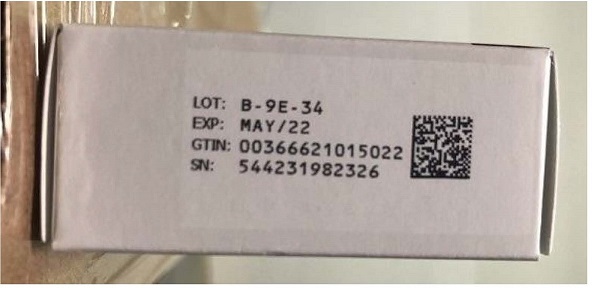
ANASCORP centruroides (scorpion) immune F(ab)2 (equine) 7 mg/mL Injection, Powder, Lyophilized, For Solution
🆔 Identity & classification
Where does this data come from?
🏭 Manufacturer & labeler
Where does this data come from?
🩺 Clinical
Patient education
Supplement & herbal interactions
Where does this data come from?
Ask a licensed pharmacist directly — free, answered by our team.
🧪 Inactive Ingredients / Excipients
Inactive ingredients, also called excipients, are components of the drug product other than the active ingredient. They may include fillers, dyes, coatings, preservatives, flavors, or other formulation ingredients.
Where does this data come from?
IACT rows and label-wide narrative are kept separate; availability and product-level specificity depend on the submitted label.Inactive ingredient FAQ
Are inactive ingredients the same for every manufacturer?
Why might an inactive ingredient be missing?
Can inactive ingredients matter?
💲 Pricing
A drug doesn't have one price. Each row is a different public payment system, and none is what you'd pay at the counter — that depends on your insurance. The ⓘ on each row explains what it measures.
| Price system | Per mL | Per package |
|---|---|---|
| Retail pharmacies payNADAC · weekly | Not in the retail survey — common for institutional, discontinued, or low-volume packs. | |
| Medicaid paysCMS SDUD · 12 mo | No recent Medicaid claims on file for this NDC — rare and low-volume NDCs are suppressed in the public data. | |
| Medicare drug plans payPart D · quarterly | No Part D plan price is available for this NDC in our data. | |
Where does this data come from?
🔁 Therapeutic equivalents
| Product | Labeler | Pack | NADAC/unit | TE | Status | Price vs. this |
|---|---|---|---|---|---|---|
| Anascorp 7 mg/mLthis 66621-0150-02 | Rare | 1 vial | — | — | FDA listed | — |
Where does this data come from?
⏳ Availability & biosimilar status
Biologics have no small-molecule generics; biosimilar competition is tracked in the FDA Purple Book.
Why the date isn’t exact: Biosimilar timing can change because patents may be challenged, settled, licensed, added or removed, and litigation can move the real date earlier or later.
🛈 What do these terms mean?
- Biologic patent
- A patent the reference product’s maker has publicly listed. A biosimilar generally can’t launch until these expire — unless they’re invalidated or resolved in a settlement.
- Reference-product exclusivity
- A flat 12 years of FDA market protection from the biologic’s first licensure (the BPCIA). No biosimilar can be licensed before it ends, regardless of patents.
- Interchangeable exclusivity
- The first interchangeable biosimilar can earn a period as the only interchangeable version (pharmacists can substitute it without the prescriber).
- Earliest biosimilar (LOE)
- The latest of all the dates above — the soonest a biosimilar can realistically reach the market. Litigation and settlements can move it earlier.
Biologics have no small-molecule “generics” — competition comes from FDA-licensed biosimilars, tracked in the FDA Purple Book.
| Code | What it grants | Expires |
|---|---|---|
| RefProduct | Reference-product exclusivity (12-year, BPCIA) — no biosimilar can be licensed before this date | Aug 3, 2023 |
Is there a biosimilar for ANASCORP VIAL?
Why do different websites show different biosimilar dates?
Can a biosimilar launch before the last patent expires?
What does “current Purple Book estimate” mean?
What does “FDA listed” mean?
What does a patent or protection date mean here?
Where does this data come from?
📦 Packaging — all sizes for this product
| Package NDC | Description | Marketing start | Status |
|---|---|---|---|
| 66621-0150-02 You're viewing this | 1 VIAL in 1 CARTON (66621-0150-2) / 10 mL in 1 VIAL (66621-0150-1) | 2011-08-03 | Active |
🧭 About this NDC listing & data coverage
What data is (and isn’t) available for this NDC — tap to expand
| NDC identity (package / product / labeler codes) | ✓ Available |
| Labeler | ✓ Available |
| Product & package description | ✓ Available |
| Marketing category & status | ✓ Available |
| Active ingredient / dosage form / route | ✓ Available |
| FDA label (SPL via DailyMed) | ✓ Available |
| Package photos | ✓ Available |
| Inactive ingredients (structured) | — Not published for this NDC The labeler did not submit a structured excipient list, or no SPL is available. |
| NADAC pharmacy acquisition price (CMS) | — Not published for this NDC CMS publishes NADAC only for NDCs reported in its retail-pharmacy survey. |
| Orange Book / therapeutic-equivalence data | ✓ Available |
| HCPCS J-code billing crosswalk | — Not published for this NDC Most self-administered / retail products have no J-code — that is normal. |
| Medicaid utilization (CMS SDUD) | — Not published for this NDC CMS reports utilization only for NDCs with Medicaid claims above its privacy threshold. |
Questions about this listing
Why is there no price listed?
Is the NDC printed on the package the same as the 11-digit billing NDC?
What do the three segments of this NDC mean?
Is this package still being marketed?
Who lists this product with the FDA?
Where does this data come from?
📄 Full FDA label FDA SPL
🎯 Indications and Usage ▾
1 INDICATIONS AND USAGE Anascorp is an antivenin indicated for the treatment of clinical signs of scorpion envenomation. ( 1 ) Anascorp® [Centruroides (Scorpion) Immune F(ab') 2 (Equine) Injection] is an equine-derived antivenom indicated for treatment of patients with clinical signs of scorpion envenomation.
⏱️ Dosage and Administration ▾
2 DOSAGE AND ADMINISTRATION Intravenous use only. Initial Dose 3 vials Reconstitute each vial with 5 milliliters of sterile normal saline. Combine and further dilute to a total of 50 milliliters.
Infuse intravenously over 10 minutes. Additional dose (s) As needed Administer one vial at a time at 30-60 minute intervals. Combine and further dilute to a total of 50 milliliters with sterile normal saline.
Infuse intravenously over 10 minutes. Initiate treatment with Anascorp as soon as possible after scorpion sting in patients who develop clinically important signs of scorpion envenomation, including but not limited to loss of muscle control, roving or abnormal eye movements, slurred speech, respiratory distress, excessive salivation, frothing at the mouth, vomiting.( 2 ) Close patient monitoring is necessary.( 2 ) For Intravenous use only. Initiate treatment with Anascorp as soon as possible after scorpion sting in patients who develop clinically important signs of scorpion envenomation, including but not limited to loss of muscle control, roving or abnormal eye movements, slurred speech, respiratory distress, excessive salivation, frothing at the mouth and vomiting.( 2 ) Initial Dose: 3 vials The initial dose of Anascorp is 3 vials.
Reconstitute the contents of each vial with 5 milliliters of sterile normal saline and mix by continuous gentle swirling. Combine the contents of the reconstituted vials promptly and further dilute to a total volume of 50 milliliters with sterile normal saline. Inspect the solution visually for particulate matter and discoloration prior to administration.
Do not use if turbid. Infuse intravenously over 10 minutes. Monitor patient closely during and up to 60 minutes following the completion of infusion to determine if clinically important signs of envenomation have resolved.
Discard partially used vials. Initial Dose: 3 vials Additional doses may be used if needed. Infuse one vial at a time at intervals of 30 to 60 minutes.
Reconstitute the contents with 5 milliliters of sterile normal saline and mix by continuous gentle swirling. Further dilute to a total volume of 50 milliliters with sterile normal saline. Inspect the solution visually for particulate matter or discoloration prior to administration.
Infuse intravenously over 10 minutes. Monitor patient closely during and up to 60 minutes following the completion of infusion to determine if clinically important signs of envenomation have resolved. Discard partially used vials.
💊 Dosage Forms and Strengths ▾
3 DOSAGE FORMS AND STRENGTHS Each vial contains a sterile, lyophilized preparation containing not more than 120 milligrams total protein and not less than 150 LD 50 (mouse) neutralizing units.( 3 ) Each vial of Anascorp contains a sterile, lyophilized preparation containing not more than 120 milligrams total protein and not less than 150 LD 50 (mouse) neutralizing units.
⛔ Contraindications ▾
4 CONTRAINDICATIONS None None.
⚠️ Warnings and Cautions ▾
5 WARNINGS AND PRECAUTIONS Severe hypersensitivity reactions, including anaphylaxis, are possible with Anascorp. Prepare for monitoring and management of allergic reactions, particularly in patients with a history of hypersensitivity to equine (horse) proteins or patients who have received previous therapy with antivenoms containing scorpion or equine proteins.( 5.1 ) Delayed allergic reactions (serum sickness) may occur following treatment with Anascorp. Patient monitoring with follow-up visit is recommended.( 5.2 ) Anascorp is made from equine plasma and may contain infectious agents, e.g. viruses.( 5.3 ) Localized reactions and generalized myalgias have been reported with the use of cresol as an injectable excipient.( 5.4 )
5.1Hypersensitivity Reactions Severe hypersensitivity reactions, including anaphylaxis, may occur with Anascorp. Close patient monitoring for hypersensitivity reactions and readiness with intravenous therapy using epinephrine, corticosteroids, and diphenhydramine hydrochloride is recommended during the infusion of Anascorp. If an anaphylactic reaction occurs during the infusion, terminate administration at once and administer appropriate emergency medical care.
Patients with known allergies to horse protein are particularly at risk for an anaphylactic reaction. Patients who have had previous therapy with Anascorp or another equine antivenom/antitoxin may have become sensitized to equine protein and be at risk for a severe hypersensitivity reaction.
5.2Delayed Allergic Reactions (Serum Sickness) Monitor patients with follow-up visit(s) for signs and symptoms of delayed allergic reactions or serum sickness (e.g., rash, fever, myalgia, arthralgia), and treat appropriately if necessary. Eight out of 1,534 (0.5%) patients in the clinical trials exhibited symptoms suggestive of serum sickness. ( 6.1 )
5.3Transmissible Infectious Agents Anascorp is made from equine (horse) plasma, it may therefore carry a risk of transmitting infectious agents, e.g., viruses.
5.4Reaction to Cresol Trace amounts of cresol from the manufacturing process are contained in Anascorp. Localized reactions and generalized myalgias have been reported with the use of cresol as an injectable excipient.
🤒 Adverse Reactions ▾
6 ADVERSE REACTIONS The most common adverse reactions observed in ≥ 2% of patients in the clinical studies for Anascorp were: vomiting, pyrexia, rash, nausea and pruritus.( 6 ) To report SUSPECTED ADVERSE REACTIONS, contact Rare Disease Therapeutics, Inc., at 1 877-851-1902, or FDA at 1-800-FDA-1088 or www.fda.gov/medwatch. The most common adverse reactions observed in ≥ 2% of patients in the clinical studies for Anascorp were: vomiting, pyrexia, rash, nausea and pruritus.
6.1Clinical Trials Experience Because clinical trials are conducted under widely varying conditions, adverse reaction rates observed in the clinical trials of a drug cannot be directly compared to rates in the clinical trials of another drug and may not reflect the rates observed in clinical practice. A total of 1534 patients were treated with Anascorp, ranging from less than one month to 90 years old. The patient population was comprised of 802 males and 732 females.
Patients were monitored for signs and symptoms of adverse reactions, including acute hypersensitivity reactions and serum sickness. Follow-up telephone interviews were conducted at 24 hours, 7 days, and 14 days after treatment to assess symptoms suggestive of ongoing venom effect, serum sickness, and any other adverse reactions. Table 1 shows the adverse reactions occurring in patients across all clinical trials for Anascorp.
Twenty-seven percent (421/1534) of patients receiving Anascorp reported at least one adverse reaction. Table 1: Adverse Reactions Reported in ≥ 1% of Patients ADVERSE REACTIONS Anascorp [N=1534] n(%) Vomiting 72 (4.7) Pyrexia 63 (4.1) Rash 41 (2.7) Nausea 32 (2.1) Pruritus 31 (2.0) Headache 29 (1.9) Rhinorrhoea 28 (1.8) Myalgia 25 (1.6) Fatigue 24 (1.6) Cough 22 (1.4) Diarrhea 20 (1.3) Lethargy 17 (1.1) No patients died or discontinued study participation for severe adverse reactions. Eight patients were considered to have serum sickness (Type III hypersensitivity); no patient manifested the full serum sickness syndrome.
Three patients were treated with systemic corticosteroids and five others received either no treatment or symptomatic therapy. 34 patients experienced a total of 39 severe adverse reactions such as respiratory distress, aspiration, hypoxia, ataxia, pneumonia, and eye swelling. It is not clear whether these adverse reactions were related to Anascorp envenomation or a combination of both.
6.2Postmarketing Experience The following adverse reactions have been identified during post approval use of Anascorp. Because these reactions are reported voluntarily from a population of uncertain size, it is not always possible to reliably estimate their frequency or establish a causal relationship to drug exposure. Chest tightness, palpitations, rash and pruritus.
🔄 Drug Interactions ▾
7 DRUG INTERACTIONS No drug interaction studies have been conducted with Anascorp.
👥 Use in Specific Populations ▾
8 USE IN SPECIFIC POPULATIONS Pregnancy: No human or animal data. Use only if clearly needed.( 8.1 ) See Section 17 for PATIENT COUNSELING INFORMATION
8.1Pregnancy Pregnancy Category C: Animal reproduction studies have not been conducted with Anascorp. It is also not known whether Anascorp can cause fetal harm when administered to a pregnant woman or can affect reproduction capacity. Anascorp should be given to a pregnant woman only if clearly needed.
8.3Nursing Mothers It is not known whether Anascorp is excreted in human breast milk. Because many drugs are excreted in human milk, caution should be exercised when Anascorp is administered to a nursing woman.
8.4Pediatric Use Seventy-eight percent of the patients enrolled in the clinical studies were pediatrics subjects(1204/1534), with ages ranging from less than one month to 18.7 years of age. Patient age groups were as follows: < 2 years of age, 29%, 2 to 5 years, 37%, 5 to 18 years, 34%. The efficacy and safety of Anascorp is comparable in pediatric and adult patients.
8.5Geriatric Use Specific studies in elderly patients have not been conducted, Anascorp was administered to 77 patients over the age of 65 years with comparable efficacy and safety to the overall patient population.
🧬 Clinical Pharmacology ▾
12 CLINICAL PHARMACOLOGY
12.1Mechanism of Action Anascorp is a venom-specific F(ab') 2 fragments of immunoglobulin G (IgG) that bind and neutralize venom toxins, facilitating redistribution away from target tissues and elimination from the body. 1
12.3Pharmacokinetics Eight clinically healthy volunteers (6 males and 2 females, age: 17 to 26 years) received a bolus intravenous dose of 47.5 mg of Centruroides (Scorpion) Immune F(ab’) 2 , (Equine) Injection. Blood samples were collected till 504 hours (21 days) and pharmacokinetic parameters were estimated by non-compartmental analysis which are summarized in Table 2. Table 2.
Pharmacokinetic parameters of scorpion antivenom Parameters Mean ± sd AUC (0-∞) (µg•hr/mL) 706 ± 352 Clearance (mL/hr) 83.5 ±
38.4Half-life (hrs) 159 ± 57 V ss (liters) 13.6 ± 5.4
🧬 Mechanism of Action ▾
12.1Mechanism of Action Anascorp is a venom-specific F(ab') 2 fragments of immunoglobulin G (IgG) that bind and neutralize venom toxins, facilitating redistribution away from target tissues and elimination from the body. 1
📦 How Supplied / Storage and Handling ▾
16 HOW SUPPLIED/STORAGE AND HANDLING Anascorp is supplied as a sterile lyophilized preparation in a single-use vial. When reconstituted, each vial contains not more than 24 milligrams per milliliter of protein, and not less than 150 mouse LD 50 neutralizing units. Each box contains 1 vial of Anascorp.
NDC 66621-0150-1 Store at room temperature (up to 25 ºC (77 ºF)). Brief temperature excursions are permitted up to 40 ºC (104ºF). DO NOT FREEZE.
Discard partially used vials.
📋 Description ▾
11 DESCRIPTION Anascorp [Centruroides (Scorpion) Immune F(ab') 2 (Equine) Injection] is a sterile nonpyrogenic, lyophilized, polyvalent preparation of equine immune globulin F(ab') 2 fragments, manufactured from plasma of horses immunized with with venom of C. noxius , C.l. limpidus , C.l. tecomanus , and C.s.suffusus . The product is obtained by pepsin digestion of horse plasma to remove the F c portion of immune globulin, followed by fractionation and purification steps. The F(ab') 2 content is not less than 85%, F(ab) content is not more than 7%, and the product contains less than 5% intact immunoglobulin.
Each vial of Anascorp contains 45-80 milligrams of sodium chloride, 4.3 - 38.3 milligrams of sucrose, and 6.6-94.9 milligrams of glycine as stabilizers. Trace amounts of pepsin, cresol (< 0.41 mg/vial), borates (< 1 mg/vial) and Sulfates (< 1.7 mg/vial) may be present from the manufacturing process. Each vial contains no more than 120 milligrams of protein and will be neutralize at least 150 LD 50 of Centruroides scorpion venom in a mouse neutralization assay.
The manufacturing procedures that contribute to the reduction of risk of viral transmission include pepsin digestion, ammonium sulfate precipitation/heat treatment and nanofiltration.