
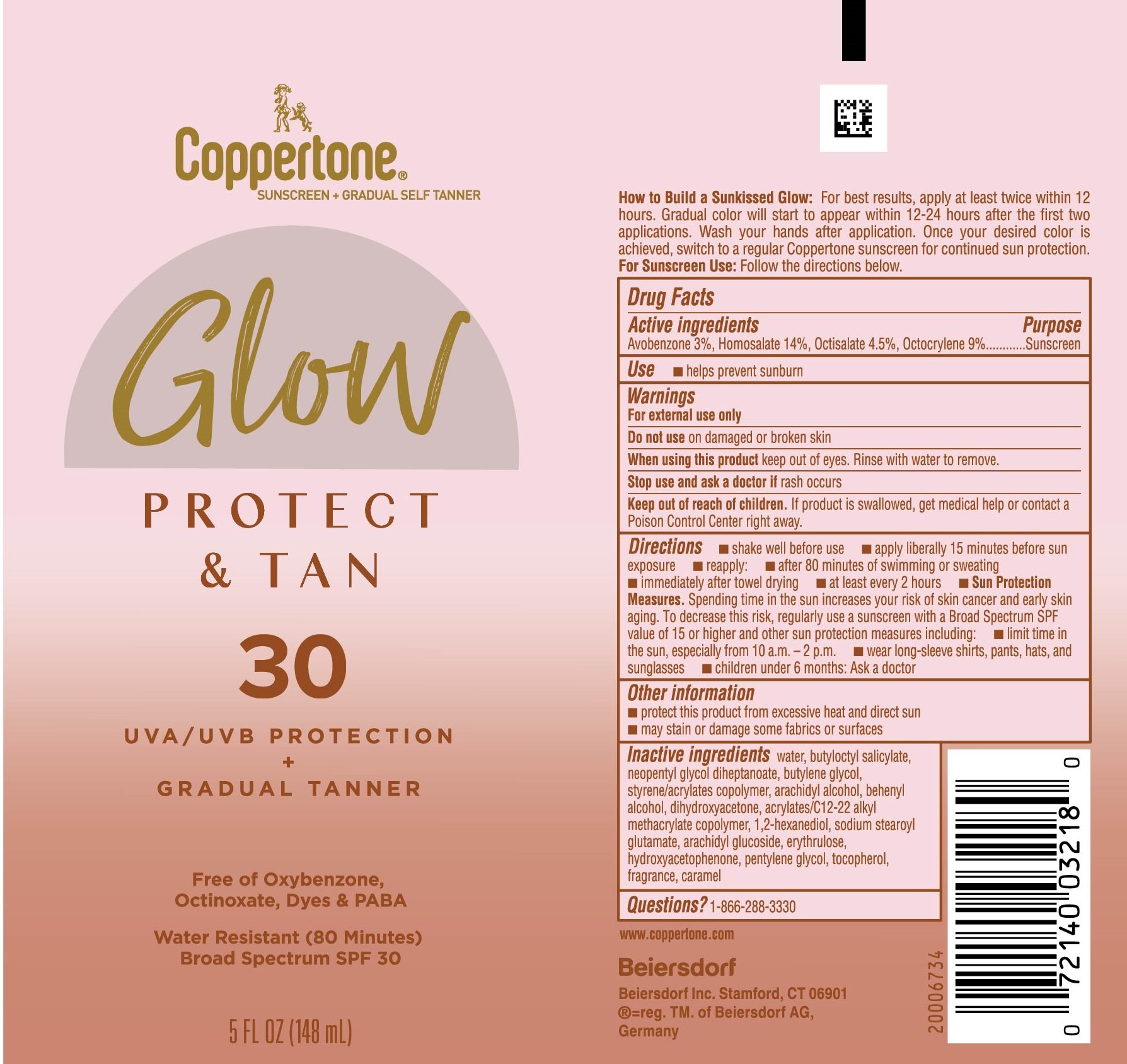
Coppertone Protect and Tan SPF 30 Avobenzone 3%, Homosalate 14%, Octisalate 4.5%, Octocrylene 9% 3 g/100g; 9 g/100g; 4.5 g/100g; 14 g/100g Lotion, 148 g — NDC 66800-0082-1 (Billing 66800-0082-01)
This is a package of 148 g of Coppertone Protect and Tan SPF 30 Avobenzone 3%, Homosalate 14%, Octisalate 4.5%, Octocrylene 9% 3 g/100g; 9 g/100g; 4.5 g/100g; 14 g/100g Lotion from Beiersdorf Inc, marketed since Nov 2021 and currently FDA-listed. It is this product's only package size.
NDC database record
One package, one record: these facts belong to NDC 66800-0082-1 alone.
- Record
- FDA NDC Directory package listing · Human OTC drug
- Code segments
- 66800 labeler · 0082 product · 1 package
- Package marketed since
- Nov 2, 2021
- Sample package
- No — commercial package
- Listing certified through
- Dec 31, 2026
- Barcode (UPC)
- 0072140032180
- FDA record last changed
- Aug 27, 2026
Identity & classification
Regulatory identifiers FDA, NLM and CMS codes for this package
Where does this data come from?
- FDA openFDA NDC Directory · synced Oct 1, 2026
- FDA label on DailyMed · label index refreshed Oct 6, 2026
- RxNorm (NLM RxNav) · catalog refreshed Oct 1, 2026
- Medi-Span GPI (licensed)
- First Databank (licensed) · refreshed Oct 1, 2026
Clinical
Coppertone Protect and Tan SPF 30 is a topical lotion sunscreen marketed as an over-the-counter monograph product. It contains four UV-filtering ingredients: avobenzone, homosalate, octisalate, and octocrylene, which are commonly used to absorb ultraviolet light and help reduce sun exposure to the skin. This lotion is typically applied to the skin surface before sun exposure as part of a sun protection routine.
Patient education
Supplement & herbal interactions
Where does this data come from?
- MedlinePlus (NLM) · refreshed Oct 1, 2026
- FDA label on DailyMed · label index refreshed Oct 6, 2026
Ask a licensed pharmacist directly — free, answered by our team.
Pricing
A drug doesn't have one price. Each row is a different public payment system, and none is what you'd pay at the counter — that depends on your insurance. The ⓘ on each row explains what it measures.
| Price system | Per g | Per package |
|---|---|---|
| Retail pharmacies payNADAC · weekly | Not in the retail survey — common for institutional, discontinued, or low-volume packs. | |
| Medicaid paysCMS SDUD · 12 mo | No recent Medicaid claims on file for this NDC — rare and low-volume NDCs are suppressed in the public data. | |
| Medicare drug plans payPart D · quarterly | No Part D plan price is available for this NDC in our data. | |
Where does this data come from?
- CMS NADAC weekly file
- CMS ASP pricing files · refreshed Sep 20, 2026
- CMS Medicaid State Drug Utilization Data · refreshed Oct 6, 2026
- CMS Part D plan pricing files · refreshed Sep 24, 2026
- VA National Acquisition Center price file
Packaging — all sizes for this product
| Package NDC | Description | Marketing start | Marketing end | Status |
|---|---|---|---|---|
| 66800-0082-01 You're viewing this Main listing | 148 g in 1 BOTTLE, PLASTIC | 2021-11-02 | — | Active |
Therapeutic equivalents
| Product | Labeler | Pack | NADAC/unit | TE | Status | Price vs. this |
|---|---|---|---|---|---|---|
| Coppertone Protect and Tan SPF 30 3 g/100g; 9 g/100g; 4.5 g/100g; 14 g/100gthis 66800-0082-01 | Beiersdorf | 148 g | — | — | FDA listed | — |
Where does this data come from?
- FDA openFDA NDC Directory · synced Oct 1, 2026
- FDA Orange Book · refreshed Oct 3, 2026
- CMS NADAC weekly file
Availability & generic status
We did not find an FDA-approved generic match for this exact strength, form and route.
Where does this data come from?
- FDA Orange Book · refreshed Oct 3, 2026
What it looks like
Where does this data come from?
- FDA label on DailyMed · label index refreshed Oct 6, 2026
Inactive Ingredients / Excipients
Inactive ingredients, also called excipients, are components of the drug product other than the active ingredient. They may include fillers, dyes, coatings, preservatives, flavors, or other formulation ingredients.
💡 Tap an ingredient (hover on desktop) to see what it is and why it’s used.
-
UNII TR046Y3K1G
A liquid alcohol derived from petroleum or plant sources. It acts as a solvent and humectant in medicines, helping dissolve active ingredients and retain moisture in the formulation.
-
UNII G2IG50653Z
A synthetic polymer used as a film-coating agent. It forms a protective layer around tablets or capsules to control how and where the medicine dissolves in the digestive system.
-
UNII 1QR1QRA9BU
A fatty alcohol derived from peanut oil or made synthetically. It serves as an emollient and thickener in creams and ointments, helping create smooth texture and improve product consistency.
-
UNII 6JVW35JOOJ
Arachidyl glucoside is a plant-derived emulsifier and skin-conditioning agent made from arachidyl alcohol and glucose. It helps mix oil and water-based ingredients together in formulations and improves product texture and spreadability.
-
UNII 3XUS85K0RA
Butylene glycol is a clear liquid derived from petroleum or plants that acts as a humectant, solvent, and preservative booster in medicines. It helps keep formulations stable, dissolve active ingredients, and maintain moisture in topical products.
-
UNII 2EH13UN8D3
A synthetic compound used as a solvent and penetration enhancer in topical formulations. It helps dissolve active ingredients and allows them to penetrate the skin more effectively.
-
UNII T9D99G2B1R
Caramel is a brown coloring substance made by heating sugar. It's added to medicines to give them color and sometimes a slight sweet taste without affecting how the drug works.
-
UNII O10DDW6JOO
A colorless organic compound used as a coloring agent in medicines. It produces a brown pigment when it reacts with proteins in the skin or on tablet surfaces, creating visual distinction or cosmetic effect in pharmaceutical products.
-
UNII 9G1OE216XY
Docosanol is a waxy, fatty alcohol derived from plant sources. It acts as an emollient and thickener in topical medicines, helping to soften the skin and improve product texture and stability.
-
UNII OU4GI2R2WB
A blend of fragrance compounds that adds a fresh citrus and floral scent to the medicine. Fragrances mask unpleasant tastes or odors to make the product more pleasant to use.
-
UNII G1L3HT4CMH
A synthetic compound used in medicines as a preservative and antimicrobial agent. It helps prevent bacterial and fungal growth, extending the product's shelf life.
-
UNII WKK1W5B83O
A naturally derived sugar alcohol used as a colorant and humectant in medicines. It absorbs and retains moisture while providing a mild brown tint to tablets or capsules.
-
UNII 5LKW3C543X
A synthetic oily liquid derived from neopentyl glycol and heptanoic acid. It serves as an emollient and solvent in formulations, helping to dissolve or suspend active ingredients and improve the texture and spreadability of topical products.
-
UNII 50C1307PZG
Pentylene glycol is a humectant and preservative helper derived from petroleum or plant sources. It draws moisture into the product and helps prevent bacterial growth, keeping medicines stable during storage.
-
UNII 65A9F4P024
A synthetic compound derived from the amino acid glutamate and stearic acid. It acts as an emulsifier and surfactant to help mix oil and water-based ingredients, keeping the medicine uniform throughout.
-
UNII 5Z4DPO246A
A synthetic plastic polymer made from styrene and acrylamide monomers. It acts as a film-former and binder in tablets and capsules, helping hold ingredients together and control how quickly the medicine dissolves and releases in your body.
-
UNII R0ZB2556P8
Tocopherol is a form of vitamin E derived from plant oils. It acts as an antioxidant in medicines to prevent oils and fats from breaking down and spoiling during storage.
-
UNII 059QF0KO0R
Water is a liquid solvent that dissolves and mixes ingredients together in liquid medicines, syrups, and injections. It helps distribute the active drug evenly throughout the product.
18 inactive ingredients listed in the exact product block matched to this NDC.
Label-section wording can be broader than the structured product block and may mention additional formulation ingredients.
Where does this data come from?
ingredient classCode="IACT" elements from the exact product block matched by this NDC. Label-section narrative from DailyMed / the openFDA label index is shown separately when available.- FDA label on DailyMed · label index refreshed Oct 6, 2026
- FDA openFDA NDC Directory · synced Oct 1, 2026
Inactive ingredient FAQ
Are inactive ingredients the same for every manufacturer?
Why might an inactive ingredient be missing?
Can inactive ingredients matter?
Manufacturer & labeler
More NDCs from Beiersdorf Inc labeler code 66800
- Coppertone Sport Mineral Sunscreen SPF 50 Zinc oxide 240.8 mg/mL Lotion NDC 66800-0002-5
- Coppertone Glow Suncreen SPF 30 Avobenzone, Homosalate, Octisalate, Octocrylene 80 mg/g; 30 mg/g; 90 mg/g; 45 mg/g Aerosol, Spray NDC 66800-0003-5
- Coppertone Glow Sunscreen SPF 50 Avobenzone 3%, Homosalate 9%, Octisalate 4.5%, Octocrylene 9% 90 mg/g; 30 mg/g; 90 mg/g; 45 mg/g Aerosol, Spray NDC 66800-0004-5
- Coppertone Complete Sunscreen SPF 30 Avobenzone 3%, Homosalate 9%, Octisalate 4.5%, Octocrylene 8% 3 g/100g; 8 g/100g; 4.5 g/100g; 9 g/100g Lotion NDC 66800-0026-7
- Coppertone Complete Sunscreen SPF 50 Avobenzone 3%, Homosalate 9%, Octisalate 4.5%, Octocrylene 9% 3 g/100g; 9 g/100g; 9 g/100g; 4.5 g/100g Lotion NDC 66800-0030-7
- Coppertone Protect and Tan Sunscreen SPF 45 Avobenzone 3%, Homosalate 15%, Octisalate 5%, Octocrylene 10% 100 g/100g; 5 g/100g; 3 g/100g; 15 g/100g Lotion NDC 66800-0079-1
- Coppertone Complete Sunscreen SPF 30 Avobenzone 2%, Homosalate 8%, Octisalate 4.5%, Octocrylene 7% 2 g/100g; 7 g/100g; 8 g/100g; 4.5 g/100g Spray NDC 66800-0092-5
- Coppertone Complete Sunscreen SPF 50 Avobenzone 3%, Homosalate 10%, Octisalate 5%, Octocrylene 5% 10 g/100g; 5 g/100g; 5 g/100g; 3 g/100g Spray NDC 66800-0096-5
- Coppertone Complete Sunscreen SPF 30 Avobenzone 2%, Homosalate 8%, Octisalate 4.5%, Octocrylene 7% 4.5 g/100g; 2 g/100g; 8 g/100g; 7 g/100g Aerosol, Spray NDC 66800-0100-5
- Coppertone Complete Sunscreen SPF 50 Avobenzone 3%, Homosalate 10%, Octisalate 5%, Octocrylene 5% 10 g/100g; 3 g/100g; 5 g/100g; 5 g/100g Aerosol, Spray NDC 66800-0104-5
- Eucerin Advanced Hydration Ultra-Light Face Sunscreen SPF 50 Avobenzene 3%, Homosalate 10%, Octisalate 5%, Octocrylene 10% 10 g/100g; 10 g/100g; 3 g/100g; 5 g/100g Lotion NDC 66800-0375-1
- Eucerin Advanced Hydration Sunscreen SPF 30 (To Deliver) Avobenzone 3%, Homosalate 7%, Octisalate 4.5%, Octocrylene 8% 7 g/100g; 4.5 g/100g; 8 g/100g; 3 g/100g Aerosol, Spray NDC 66800-0376-6
Where does this data come from?
- FDA openFDA NDC Directory · synced Oct 1, 2026
- Drugs@FDA
FDA label — Drug Facts FDA SPL
🎯 Indications and Usage ▾
Use ■ helps prevent sunburn
⏱️ Dosage and Administration ▾
Directions ■ shake well before use ■ apply liberally 15 minutes before sun exposure ■ reapply: ■ after 80 minutes of swimming or sweating ■ immediately after towel drying ■ at least every 2 hours ■ Sun Protection Measures . Spending time in the sun increases your risk of skin cancer and early skin aging. To decrease this risk, regularly use a sunscreen with a Broad Spectrum SPF value of 15 or higher and other sun protection measures including: ■ limit time in the sun, especially from 10 a.m. – 2 p.m. ■ wear long-sleeve shirts, pants, hats, and sunglasses ■ children under 6 months: Ask a doctor
⚠️ Warnings ▾
Warnings For external use only
🧪 Active Ingredient ▾
Active ingredients Avobenzone 3%, Homosalate 14%, Octisalate 4.5%, Octocrylene 9%
🧪 Inactive Ingredients ▾
Inactive ingredients water, butyloctyl salicylate, neopentyl glycol diheptanoate, butylene glycol, styrene/acrylates copolymer, arachidyl alcohol, behenyl alcohol, dihydroxyacetone, acrylates/C12-22 alkyl methacrylate copolymer, 1,2-hexanediol, sodium stearoyl glutamate, arachidyl glucoside, erythrulose, hydroxyacetophenone, pentylene glycol, tocopherol, fragrance, caramel
🎯 Purpose ▾
Purpose Sunscreen
📄 Do Not Use ▾
Do not use on damaged or broken skin
📄 When Using This Product ▾
When using this product keep out of eyes. Rinse with water to remove.
📄 Stop Use and Ask a Doctor If ▾
Stop use and ask a doctor if rash occurs
📄 Keep Out of Reach of Children ▾
Keep out of reach of children. If product is swallowed, get medical help or contact a Poison Control Center right away.
📄 Questions or Comments ▾
Questions? 1-866-288-3330
📄 Package Label / Principal Display Panel ▾
Coppertone® Sunscreen + Self Tanner Glow Protect & Tan 30 UVA/UVB Protection + Gradual Tanner Free of Oxybenzone, Octinoxate, Dyes & PABA Water Resistant (80 Minutes) Broad Spectrum SPF 30 5 FL OZ (148 mL) Glow
About this NDC listing & data coverage
What data is (and isn’t) available for this NDC — tap to expand
| NDC identity (package / product / labeler codes) | ✓ Available |
| Labeler | ✓ Available |
| Product & package description | ✓ Available |
| Marketing category & status | ✓ Available |
| Active ingredient / dosage form / route | ✓ Available |
| FDA label (SPL via DailyMed) | ✓ Available |
| Package photos | ✓ Available |
| Inactive ingredients (structured) | ✓ Available |
| NADAC pharmacy acquisition price (CMS) | — Not published for this NDC CMS publishes NADAC only for NDCs reported in its retail-pharmacy survey. |
| Orange Book / therapeutic-equivalence data | — Not published for this NDC Applies only to products approved under an NDA/ANDA; many listings are out of scope. |
| HCPCS J-code billing crosswalk | — Not published for this NDC Most self-administered / retail products have no J-code — that is normal. |
| Medicaid utilization (CMS SDUD) | — Not published for this NDC CMS reports utilization only for NDCs with Medicaid claims above its privacy threshold. |