
Coppertone Sport Sunscreen SPF 50 Avobenzone 3%, Homosalate 10%, Octisalate 5%, Octocrylene 5% 10 g/100g; 3 g/100g; 5 g/100g; 5 g/100g Aerosol, Spray, 196 g — NDC 66800-2350-6 (Billing 66800-2350-06)
This is a package of 196 g of Coppertone Sport Sunscreen SPF 50 Avobenzone 3%, Homosalate 10%, Octisalate 5%, Octocrylene 5% 10 g/100g; 3 g/100g; 5 g/100g; 5 g/100g Aerosol, Spray from Beiersdorf Inc, marketed since Mar 2020 and currently FDA-listed.
NDC database record
One package, one record: these facts belong to NDC 66800-2350-6 alone.
- Record
- FDA NDC Directory package listing · Human OTC drug
- Code segments
- 66800 labeler · 2350 product · 6 package
- Package marketed since
- Mar 2, 2020
- Sample package
- No — commercial package
- Listing certified through
- Dec 31, 2026
- Barcode (UPC-A, from the NDC)
- 3 6680023506 7
- FDA record last changed
- Aug 27, 2026
Identity & classification
Regulatory identifiers FDA, NLM and CMS codes for this package
Where does this data come from?
- FDA openFDA NDC Directory · synced Oct 1, 2026
- FDA label on DailyMed · label index refreshed Oct 6, 2026
- RxNorm (NLM RxNav) · catalog refreshed Oct 1, 2026
- Medi-Span GPI (licensed)
- First Databank (licensed) · refreshed Oct 1, 2026
Clinical
Coppertone Sport Sunscreen SPF 50 is an aerosol spray sunscreen applied to the skin. It contains four ultraviolet (UV) filters: avobenzone, homosalate, octisalate, and octocrylene. These ingredients are commonly used together in sunscreen products to absorb and scatter UVA and UVB radiation from the sun. This is an over-the-counter monograph product, meaning it is marketed under FDA's established category rules for sunscreen ingredients and concentrations.
Patient education
Supplement & herbal interactions
Where does this data come from?
- MedlinePlus (NLM) · refreshed Oct 1, 2026
- FDA label on DailyMed · label index refreshed Oct 6, 2026
Ask a licensed pharmacist directly — free, answered by our team.
Pricing
A drug doesn't have one price. Each row is a different public payment system, and none is what you'd pay at the counter — that depends on your insurance. The ⓘ on each row explains what it measures.
| Price system | Per mL | Per package |
|---|---|---|
| Retail pharmacies payNADAC · weekly | Not in the retail survey — common for institutional, discontinued, or low-volume packs. | |
| Medicaid paysCMS SDUD · 12 mo | No recent Medicaid claims on file for this NDC — rare and low-volume NDCs are suppressed in the public data. | |
| Medicare drug plans payPart D · quarterly | No Part D plan price is available for this NDC in our data. | |
Where does this data come from?
- CMS NADAC weekly file
- CMS ASP pricing files · refreshed Sep 20, 2026
- CMS Medicaid State Drug Utilization Data · refreshed Oct 6, 2026
- CMS Part D plan pricing files · refreshed Sep 24, 2026
- VA National Acquisition Center price file
Packaging — all sizes for this product
| Package NDC | Description | Marketing start | Marketing end | Status |
|---|---|---|---|---|
| 66800-2350-05 66800-2350-5 Main listing | 156 g in 1 CAN | 2020-03-02 | — | Active |
| 66800-2350-06 You're viewing this | 196 g in 1 CAN | 2020-03-02 | — | Active |
| 66800-2350-07 66800-2350-7 | 208 g in 1 CAN | 2020-03-02 | — | Active |
| 66800-2350-08 66800-2350-8 | 235 g in 1 CAN | 2020-03-02 | — | Active |
You're viewing one of 4 pack sizes for this product.
Pack size FAQ
What quantity is in this package?
How does this package differ from NDC 66800-2350-05?
What NDC number is used to bill for this package of Coppertone Sport Sunscreen SPF 50 Avobenzone 3%, Homosalate 10%, Octisalate 5%, Octocrylene 5% 10 g/100g; 3 g/100g; 5 g/100g; 5 g/100g Aerosol, Spray?
Therapeutic equivalents
| Product | Labeler | Pack | NADAC/unit | TE | Status | Price vs. this |
|---|---|---|---|---|---|---|
| Coppertone Sport Sunscreen SPF 50 10 g/100g; 3 g/100g; 5 g/100g; 5 g/100gthis 66800-2350-06 | Beiersdorf | 196 g | — | — | FDA listed | — |
| Coppertone Complete Sunscreen SPF 50 10 g/100g; 3 g/100g; 5 g/100g; 5 g/100g 66800-0104-05 | Beiersdorf | 156 g | — | — | FDA listed | — |
Where does this data come from?
- FDA openFDA NDC Directory · synced Oct 1, 2026
- FDA Orange Book · refreshed Oct 3, 2026
- CMS NADAC weekly file
Availability & generic status
We did not find an FDA-approved generic match for this exact strength, form and route.
Where does this data come from?
- FDA Orange Book · refreshed Oct 3, 2026
What it looks like
Where does this data come from?
- FDA label on DailyMed · label index refreshed Oct 6, 2026
Inactive Ingredients / Excipients
Inactive ingredients, also called excipients, are components of the drug product other than the active ingredient. They may include fillers, dyes, coatings, preservatives, flavors, or other formulation ingredients.
💡 Tap an ingredient (hover on desktop) to see what it is and why it’s used.
-
UNII JU3XHR8VWK
A synthetic plastic polymer used as a film-coating agent. It forms a protective layer around tablets or capsules to control how and where the medicine dissolves in your digestive system.
-
UNII 3K9958V90M
A liquid solvent derived from fermentation or chemical synthesis. In medicines, alcohol dissolves active ingredients, helps preserve the product, and improves how the body absorbs certain drugs.
-
UNII QN83US2B0N
Ascorbyl palmitate is a fat-soluble form of vitamin C used as an antioxidant in medicines. It prevents oils and fats in the product from breaking down and becoming less stable over time.
-
UNII 92RU3N3Y1O
Dimethicone is a silicone-based oil that acts as an anti-foaming agent and lubricant in medicines. It reduces gas bubbles in liquid formulations and helps coat and protect the stomach lining when ingested.
-
UNII R66Z4YW3X0
A plant-derived or synthetic aromatic ingredient that adds pleasant smell to the medicine. Fragrances mask unpleasant tastes or odors in oral medications to make them easier to take.
-
UNII BXR49TP611
Isobutane is a liquefied gas used as a propellant in aerosol inhalers and sprays. It helps push the medicine out of the container so you can breathe or spray it as directed.
-
UNII 5LKW3C543X
A synthetic oily liquid derived from neopentyl glycol and heptanoic acid. It serves as an emollient and solvent in formulations, helping to dissolve or suspend active ingredients and improve the texture and spreadability of topical products.
-
UNII 0841698D2F
A synthetic polymer used as a film-coating agent to protect tablets and capsules. It helps control how quickly the medicine dissolves and improves the appearance of the finished product.
8 inactive ingredients listed in the exact product block matched to this NDC.
Label-section wording can be broader than the structured product block and may mention additional formulation ingredients.
Where does this data come from?
ingredient classCode="IACT" elements from the exact product block matched by this NDC. Label-section narrative from DailyMed / the openFDA label index is shown separately when available.- FDA label on DailyMed · label index refreshed Oct 6, 2026
- FDA openFDA NDC Directory · synced Oct 1, 2026
Inactive ingredient FAQ
Are inactive ingredients the same for every manufacturer?
Why might an inactive ingredient be missing?
Can inactive ingredients matter?
Manufacturer & labeler
More NDCs from Beiersdorf Inc labeler code 66800
- Eucerin Tinted Age Defense Suncreen SPF 50 Avobenzone 3%, Homosalate 10%, Octisalate 5%, Octocrylene 10% 5 g/100g; 3 g/100g; 10 g/100g; 10 g/100g Lotion NDC 66800-0381-3
- Eucerin Sensitive Mineral SPF 50 Sunscreen Zinc Oxide 24 g/100g Lotion NDC 66800-1000-1
- Coppertone Every Tone Sunscreen SPF 50 Avobenzone 3%, Homosalate 9%, Octisalate 4.5%, Octocrylene 9% 3 g/100g; 9 g/100g; 9 g/100g; 4.5 g/100g Lotion NDC 66800-1093-7
- Coppertone EveryTone Face Sunscreen SPF 55 Avobenzone 3%, Homosalate 15%, Octisalate 5%, Octocrylene 10% 15 g/100g; 10 g/100g; 5 g/100g; 3 g/100g Lotion NDC 66800-1094-2
- Eucerin Advanced Hydration SPF 50 Sunscreen Avobenzone, Homosalate, Octisalate, Octocrylene 9 g/100g; 4.5 g/100g; 3 g/100g; 9 g/100g Lotion NDC 66800-2000-1
- Coppertone Sport Sunscreen SPF 15 Avobenzone 2%, Octisalate 4.5%, Octocrylene 7% 4.5 g/100g; 7 g/100g; 2 g/100g Aerosol, Spray NDC 66800-2074-5
- Coppertone Sport Sunscreen SPF 30 Avobenzone 2%, Homosalate 8%, Octisalate 4.5%, Octocrylene 7% 2 g/100g; 8 g/100g; 4.5 g/100g; 7 g/100g Aerosol, Spray NDC 66800-2351-5
- Coppertone Sport Sunscreen SPF 70 Avobenzone 3%, Homosalate 15%, Octisalate 5%, Octocrylene 10%, Oxybenzone 6% 15 g/100g; 5 g/100g; 10 g/100g; 6 g/100g; 3 g/100g Aerosol NDC 66800-2391-5
- Coppertone Kids Tear Free Mineral Sunscreen SPF 50 Octinoxate 7.5%, Octisalate 5%, Zinc Oxide 14.5% 14.5 g/100g; 5 g/100g; 7.5 g/100g Lotion NDC 66800-2450-8
- Coppertone Sport Sunscreen SPF 70 Avobenzone 3%, Homosalate 13%, Octisalate 5%, Octocrylene 10%, Oxybenzone 6% 13 g/100g; 5 g/100g; 6 g/100g; 3 g/100g; 10 g/100g Lotion NDC 66800-2461-7
- Coppertone Kids Sunscreen SPF 70 Avobenzone 3%, Homosalate 13%, Octisalate 5%, Octocrylene 10%, Oxybenzone 6% 6 g/100g; 3 g/100g; 13 g/100g; 5 g/100g; 10 g/100g Lotion NDC 66800-2462-7
- Coppertone Sport Sunscreen SPF 100 Avobenzone 3%, Homosalate 15%, Octisalate 5%, Octocrylene 10%, Oxybenzone 6% 6 g/100g; 5 g/100g; 3 g/100g; 15 g/100g; 10 g/100g Lotion NDC 66800-2465-3
Where does this data come from?
- FDA openFDA NDC Directory · synced Oct 1, 2026
- Drugs@FDA
FDA label — Drug Facts FDA SPL
🎯 Indications and Usage ▾
Uses ■ helps prevent sunburn ■ if used as directed with other sun protection measures (see Directions), decreases the risk of skin cancer and early skin aging caused by the sun
⏱️ Dosage and Administration ▾
Directions ■ shake well before each use ■ spray liberally and spread evenly by hand 15 minutes before sun exposure ■ hold container 4 to 6 inches from the skin to apply ■ do not spray directly into face. Spray on hands then apply to face. ■ do not apply in windy conditions ■ use in a well-ventilated area ■ reapply: ■ after 80 minutes of swimming or sweating ■ immediately after towel drying ■ at least every 2 hours ■ Sun Protection Measures. Spending time in the sun increases your risk of skin cancer and early skin aging.
To decrease this risk, regularly use a sunscreen with a Broad Spectrum SPF value of 15 or higher and other sun protection measures including: ■ limit time in the sun, especially from 10 a.m. – 2 p.m. ■ wear long-sleeve shirts, pants, hats, and sunglasses ■ children under 6 months: Ask a doctor
⚠️ Warnings ▾
Warnings For external use only Flammable: Do not use near heat, flame, or while smoking
🧪 Active Ingredient ▾
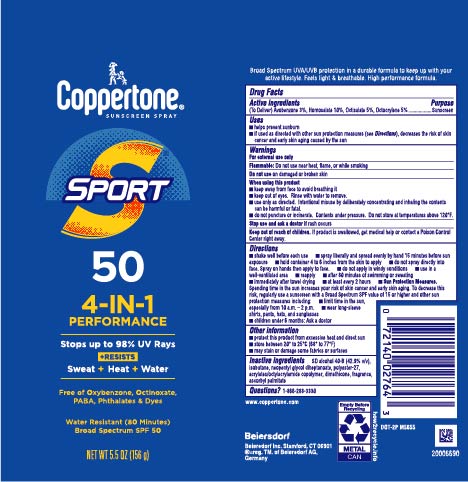
Active ingredients ( To Deliver) Avobenzone 3%, Homosalate 10%, Octisalate 5%, Octocrylene 5%
🧪 Inactive Ingredients ▾
Inactive ingredients SD alcohol 40-B (42.9% v/v), isobutane, neopentyl glycol diheptanoate, polyester-27, acrylates/octylacrylamide copolymer, dimethicone, fragrance, ascorbyl palmitate
🎯 Purpose ▾
Purpose Sunscreen
📄 Do Not Use ▾
Do not use on damaged or broken skin
📄 When Using This Product ▾
When using this product ■ keep away from face to avoid breathing it ■ keep out of eyes. Rinse with water to remove. ■ use only as directed. Intentional misuse by deliberately concentrating and inhaling the contents can be harmful or fatal. ■ do not puncture or incinerate. Contents under pressure. Do not store at temperatures above 120°F.
📄 Stop Use and Ask a Doctor If ▾
Stop use and ask a doctor if rash occurs
📄 Keep Out of Reach of Children ▾
Keep out of reach of children. If product is swallowed, get medical help or contact a Poison Control Center right away.
📄 Questions or Comments ▾
Questions? 1-866-288-3330
📄 Package Label / Principal Display Panel ▾
Coppertone® Sunscreen Spray Sport 50 4-in-1 Performance Stops up to 98% UV Rays +Resists Sweat + Heat + Water Free of Oxybenzone, Octinoxate, PABA, Phthalates & Dyes Water Resistant (80 Minutes) Broad Spectrum SPF 30 NET WT
5.5 OZ (156 g) Sport Spray SPF 50
About this NDC listing & data coverage
What data is (and isn’t) available for this NDC — tap to expand
| NDC identity (package / product / labeler codes) | ✓ Available |
| Labeler | ✓ Available |
| Product & package description | ✓ Available |
| Marketing category & status | ✓ Available |
| Active ingredient / dosage form / route | ✓ Available |
| FDA label (SPL via DailyMed) | ✓ Available |
| Package photos | ✓ Available |
| Inactive ingredients (structured) | ✓ Available |
| NADAC pharmacy acquisition price (CMS) | — Not published for this NDC CMS publishes NADAC only for NDCs reported in its retail-pharmacy survey. |
| Orange Book / therapeutic-equivalence data | — Not published for this NDC Applies only to products approved under an NDA/ANDA; many listings are out of scope. |
| HCPCS J-code billing crosswalk | — Not published for this NDC Most self-administered / retail products have no J-code — that is normal. |
| Medicaid utilization (CMS SDUD) | — Not published for this NDC CMS reports utilization only for NDCs with Medicaid claims above its privacy threshold. |