
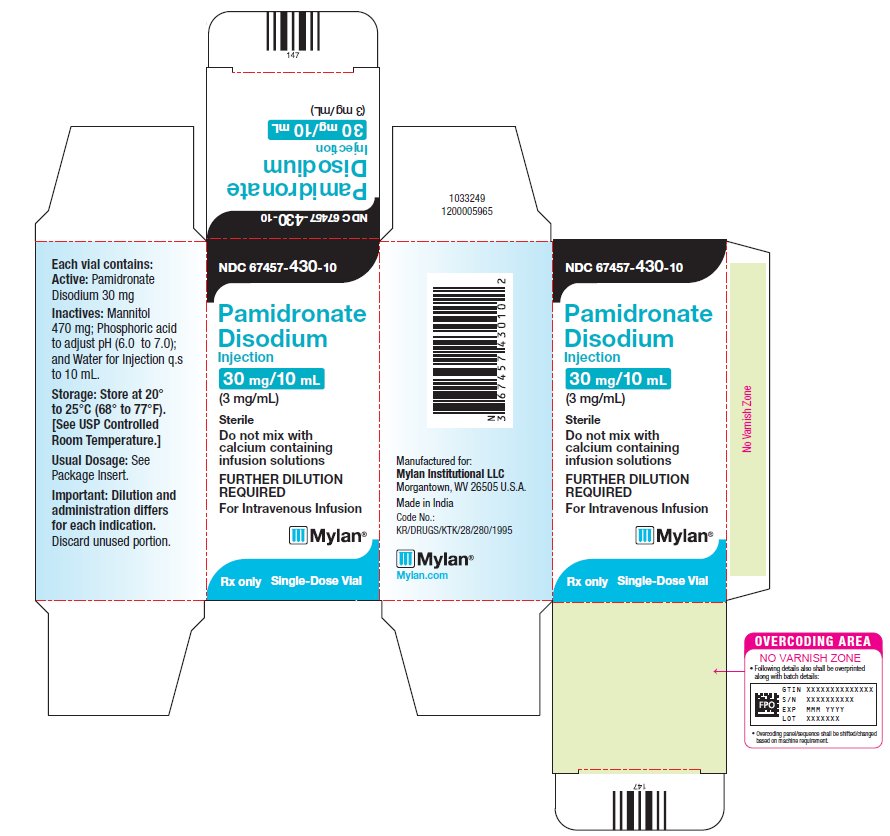
Pamidronate Disodium 3 mg/mL Injection — NDC 67457-430-10 (Billing 67457-0430-10)
This is a package of Pamidronate Disodium 3 mg/mL Injection from Mylan Institutional LLC, marketed since May 2011 and currently FDA-listed. It is this product's only package size.
NDC database record
One package, one record: these facts belong to NDC 67457-430-10 alone.
- Record
- FDA NDC Directory package listing · Human prescription drug
- Code segments
- 67457 labeler · 430 product · 10 package
- Package marketed since
- May 10, 2011
- Sample package
- No — commercial package
- Listing certified through
- Dec 31, 2027
- Barcode (UPC-A, from the NDC)
- 3 6745743010 2
- Medicaid fills, this package
- 137 prescriptions in the last four reported quarters
- FDA record last changed
- Jul 24, 2026
Identity & classification
Regulatory identifiers FDA, NLM and CMS codes for this package
Drug-database identifiers Medi-Span GPI and First Databank GCN / HICL / AHFS classification
- GSN (GCN sequence number): 047039
- GCN: 85997
- GPI-14 (Medi-Span): 30042060102006
- HICL (First Databank): 006250
- AHFS class code: 92:24.00.00
- RxCUI (RxNorm): 1737449
Where does this data come from?
- FDA openFDA NDC Directory · synced Oct 1, 2026
- FDA label on DailyMed · label index refreshed Oct 6, 2026
- RxNorm (NLM RxNav) · catalog refreshed Oct 1, 2026
- Medi-Span GPI (licensed)
- First Databank (licensed) · refreshed Oct 1, 2026
RxNorm drug class
This medicine belongs to the Bisphosphonate class.
Where does this data come from?
- RxClass (NLM) · catalog refreshed Oct 1, 2026
Clinical
- It treats high blood calcium caused by cancer and Paget’s disease of bone. It is also used with cancer treatment for bone damage from breast cancer or multiple myeloma.
- It is given as a slow IV infusion by a healthcare professional. Timing depends on your condition, and your team will set the schedule.
- A mild fever for a day or two is common. Nausea, tiredness, bone or muscle aches, and IV site soreness can also happen. Many may be related to the underlying illness.
- Pamidronate can affect your kidneys and mineral levels, so these are checked. A dental exam helps lower the risk of jaw bone problems. Avoid invasive dental work if possible during...
Patient education
Supplement & herbal interactions
Where does this data come from?
- MedlinePlus (NLM) · refreshed Oct 1, 2026
- FDA label on DailyMed · label index refreshed Oct 6, 2026
Ask a licensed pharmacist directly — free, answered by our team.
Pricing
A drug doesn't have one price. Each row is a different public payment system, and none is what you'd pay at the counter — that depends on your insurance. The ⓘ on each row explains what it measures.
| Price system | Per each | Per package |
|---|---|---|
| Retail pharmacies payNADAC · weekly | Not in the retail survey — common for institutional, discontinued, or low-volume packs. | |
| Medicaid paysCMS SDUD · 12 mo | $1.20 | $1.20 / 1 vial |
| Medicare drug plans payPart D · quarterly | No Part D plan price is available for this NDC in our data. | |
| Medicare Part B allowsASP · J2430 | $12.025 / J2430 unit | — |
Where does this data come from?
- CMS NADAC weekly file
- CMS ASP pricing files · refreshed Sep 20, 2026
- CMS Medicaid State Drug Utilization Data · through Q1 2026
- CMS Part D plan pricing files · refreshed Sep 24, 2026
- VA National Acquisition Center price file
Billing & reimbursement
Where does this data come from?
- CMS ASP NDC-HCPCS crosswalk · refreshed Sep 22, 2026
- DMEPDAC NDC-HCPCS crosswalk
- openFDA NSDE billing units · refreshed Oct 7, 2026
Packaging — all sizes for this product
| Package NDC | Description | Marketing start | Marketing end | Status |
|---|---|---|---|---|
| 67457-0430-10 You're viewing this Main listing | 1 VIAL in 1 CARTON / 10 mL in 1 VIAL | 2008-11-01 | — | Active |
Therapeutic equivalents
| Product | Labeler | Pack | NADAC/unit | TE | Status | Price vs. this |
|---|---|---|---|---|---|---|
| Pamidronate Disodium 3 mg/mL 61703-0324-18 | Hospira, | 1 vial | — | AP | FDA listed | — |
| Pamidronate Disodium 3 mg/mLthis 67457-0430-10 | Mylan | 1 vial | — | AP2 | FDA listed | — |
Where does this data come from?
- FDA openFDA NDC Directory · synced Oct 1, 2026
- FDA Orange Book · refreshed Oct 3, 2026
- CMS NADAC weekly file
Availability & generic status
This product is an FDA-approved generic. Other versions of the same drug are listed under Therapeutic equivalents, least expensive first.
Where does this data come from?
- FDA Orange Book · refreshed Oct 3, 2026
Inactive Ingredients / Excipients
Inactive ingredients, also called excipients, are components of the drug product other than the active ingredient. They may include fillers, dyes, coatings, preservatives, flavors, or other formulation ingredients.
🧪 Avoiding an ingredient? See Pamidronate Injection inactive ingredients by manufacturer: every current product's list side by side, so you can ask your pharmacy for the version that does not list it.
💡 Tap an ingredient (hover on desktop) to see what it is and why it’s used.
-
UNII 3OWL53L36A
A natural sugar alcohol derived from seaweed or synthesized in the lab. It's used as a filler to add bulk, a sweetener in sugar-free formulas, and a disintegrant to help tablets break apart in the stomach.
-
UNII E4GA8884NN
Phosphoric acid is a weak mineral acid used in medicines as a buffer and pH adjuster. It helps stabilize the product and control its acidity level.
-
UNII 059QF0KO0R
Water is a liquid solvent that dissolves and mixes ingredients together in liquid medicines, syrups, and injections. It helps distribute the active drug evenly throughout the product.
3 inactive ingredients listed in the exact product block matched to this NDC.
Where does this data come from?
ingredient classCode="IACT" elements from the exact product block matched by this NDC. Label-section narrative from DailyMed / the openFDA label index is shown separately when available.- FDA label on DailyMed · label index refreshed Oct 6, 2026
- FDA openFDA NDC Directory · synced Oct 1, 2026
Inactive ingredient FAQ
Are inactive ingredients the same for every manufacturer?
Why might an inactive ingredient be missing?
Can inactive ingredients matter?
Manufacturer & labeler
More NDCs from Mylan Institutional LLC labeler code 67457
- Dexamethasone Sodium Phosphate 10 mg/mL Injection, Solution NDC 67457-420-10
- Dexamethasone Sodium Phosphate 4 mg/mL Injection, Solution NDC 67457-421-30
- Dexamethasone Sodium Phosphate 4 mg/mL Injection, Solution NDC 67457-422-54
- Dexamethasone Sodium Phosphate 4 mg/mL Injection, Solution NDC 67457-423-12
- HALOPERIDOL LACTATE 5 mg/mL Injection, Solution NDC 67457-426-12
- Tobramycin 40 mg/mL Injection NDC 67457-428-30
- Famotidine 10 mg/mL Injection NDC 67457-433-22
- Doxorubicin Hydrochloride 2 mg/mL Injection, Powder, Lyophilized, For Solution NDC 67457-436-50
- Doxycycline 100 mg/10mL Injection, Powder, Lyophilized, For Solution NDC 67457-437-10
- VECURONIUM BROMIDE 1 mg/mL Injection, Powder, Lyophilized, For Solution NDC 67457-438-10
- Oxaliplatin 5 mg/mL Injection, Solution NDC 67457-442-20
- Rifampin 600 mg/10mL Injection, Powder, Lyophilized, For Solution NDC 67457-445-60
Where does this data come from?
- FDA openFDA NDC Directory · synced Oct 1, 2026
- Drugs@FDA
Full prescribing information FDA SPL
🎯 Indications and Usage ▾
1 INDICATIONS AND USAGE Pamidronate disodium is a bisphosphonate indicated for the treatment of: • moderate or severe hypercalcemia associated with malignancy, with or without bone metastases ( 1.1 ) • patients with moderate to severe Paget’s disease of bone ( 1.2 ) • osteolytic bone metastases of breast cancer or osteolytic lesions of multiple myeloma, in conjunction with standard antineoplastic therapy ( 1.3 ) Limitations of use Safety and efficacy of pamidronate disodium in the treatment of hypercalcemia associated with hyperparathyroidism or with other non-tumor-related conditions have not been established.
( 1.4 )
1.1Hypercalcemia of Malignancy Pamidronate disodium is indicated for the treatment of moderate or severe hypercalcemia associated with malignancy, with or without bone metastases.
1.2Paget’s Disease Pamidronate disodium is indicated for the treatment of patients with moderate to severe Paget’s disease of bone.
1.3Osteolytic Bone Metastases of Breast Cancer and Osteolytic Lesions of Multiple Myeloma Pamidronate disodium is indicated in conjunction with standard antineoplastic therapy, for the treatment of osteolytic bone metastases of breast cancer and osteolytic lesions of multiple myeloma [see Clinical Studies (14.3) ] .
1.4Limitations of Use The safety and efficacy of pamidronate disodium in the treatment of hypercalcemia associated with hyperparathyroidism or with other non-tumor-related conditions has not been established.
⏱️ Dosage and Administration ▾
2 DOSAGE AND ADMINISTRATION • Hypercalcemia of malignancy: 60 mg to 90 mg pamidronate disodium as a single dose infused over 2 hours to 24 hours for moderate hypercalcemia, or 90 mg as a single dose infused over 2 hours to 24 hours for severe hypercalcemia. If warranted, retreat after a minimum of 7 days. ( 2.1 ) • Paget’s disease of bone: 30 mg pamidronate disodium daily as a 4-hour infusion on 3 consecutive days.
( 2.2 ) • Osteolytic Bone Metastases of Breast Cancer: 90 mg pamidronate disodium as a 2-hour infusion every 3 to 4 weeks. Retreat after recovery of renal function. ( 2.3 ) • Osteolytic Bone Lesions of Multiple Myeloma: 90 mg pamidronate disodium as a 4-hour infusion once every four weeks.
Retreat after recovery of renal function. ( 2.3 ) • Administer through a separate infusion line. Do not allow pamidronate disodium infusion to come in contact with any calcium or divalent cation-containing solutions.
( 2.6 )
2.1Hypercalcemia of Malignancy Vigorous saline hydration, should be initiated promptly along with pamidronate therapy and if possible the urine output should be about 2 L/day throughout treatment [see Warnings and Precautions (5.2) ] . Patients who receive pamidronate disodium should have serum creatinine assessed prior to each treatment [see Warnings and Precautions (5.1) ] . Treatment should be withheld for renal deterioration.
Moderate Hypercalcemia The recommended dose of pamidronate disodium in moderate hypercalcemia (corrected serum calcium* of approximately 12 mg/dL to 13.5 mg/dL) is 60 mg to 90 mg given as a single-dose, intravenous infusion over 2 hours to 24 hours. Longer infusions (i.e., greater than 2 hours) may reduce the risk for renal toxicity, particularly in patients with preexisting renal impairment. Severe Hypercalcemia The recommended dose of pamidronate disodium in severe hypercalcemia (corrected serum calcium* > 13.5 mg/dL) is 90 mg given as a single-dose, intravenous infusion over 2 to 24 hours.
Longer infusions (i.e., greater than 2 hours) may reduce the risk for renal toxicity, particularly in patients with preexisting renal insufficiency/impairment. *Albumin-corrected serum calcium = serum calcium, mg/dL + 0.8 (4.0-serum albumin, g/dL). Retreatment Retreatment with pamidronate disodium in patients who show complete or partial response initially may be carried out if serum calcium does not return to normal or remain normal after initial treatment. A minimum of 7 days between treatments is recommended to allow for full response to the initial dose.
The dose and manner of retreatment is identical to that of the initial therapy.
2.2Paget’s Disease The recommended dose of pamidronate disodium in patients with moderate to severe Paget’s disease of bone is 30 mg daily, administered as a 4-hour infusion on 3 consecutive days for a total dose of 90 mg. When clinically indicated, patients should be retreated at the dose of initial therapy.
2.3Osteolytic Bone Metastases of Breast Cancer and Osteolytic Lesions of Multiple Myeloma Osteolytic Bone Metastases of Breast Cancer The recommended dose of pamidronate disodium in patients with osteolytic bone metastases is 90 mg administered over a 2-hour infusion given every 3 to 4 weeks. In a clinical study, renal deterioration was defined as follows: • With normal baseline creatinine, an increase of 0.5 mg/dL. • With abnormal baseline creatinine, an increase of 1 mg/dL. In this clinical study, pamidronate disodium treatment was resumed only when the creatinine returned to within 10% of the baseline value.
The optimal duration of therapy is not known; however, in two breast cancer studies, final analyses performed after 24 months of therapy demonstrated overall benefits [see Clinical Studies (14.3) ] . Osteolytic Bone Lesions of Multiple Myeloma The recommended dose of pamidronate disodium in patients with osteolytic bone lesions of multiple myeloma is 90 mg administered as a 4-hour infusion administered every four weeks. Patients with marked Bence-Jo… [Excerpted — this section continues on DailyMed.]
💊 Dosage Forms and Strengths ▾
3 DOSAGE FORMS AND STRENGTHS Injection: 30 mg/10 mL (3 mg/mL) and 90 mg/10 mL (9 mg/mL) solution in single-dose vials • Injection: 30 mg/10 mL (3 mg/mL) and 90 mg/10 mL (9 mg/mL) solution in single-dose vials ( 3 )
⛔ Contraindications ▾
4 CONTRAINDICATIONS Pamidronate disodium is contraindicated in patients with hypersensitivity to pamidronate disodium, other bisphosphonates, or mannitol. Reactions to pamidronate disodium injection and to mannitol have included anaphylaxis. Hypersensitivity to pamidronate, other bisphosphonates, or mannitol ( 4 )
⚠️ Warnings and Cautions ▾
5 WARNINGS AND PRECAUTIONS • Renal failure: Do not exceed single doses of 90 mg pamidronate disodium. Assess renal function before each treatment. In patients with bone metastases with severe renal impairment, use of pamidronate disodium is not recommended.
( 5.1 ) • Embryo-Fetal Toxicity: Can cause fetal harm. Advise females of reproductive potential of the potential risk to a fetus and to use effective contraception. ( 5.2 , 8.1 , 8.3 ) • Electrolyte disorders (e.g., hypophosphatemia, hypokalemia, hypomagnesemia, hypocalcemia): Monitor phosphorus, potassium, magnesium, calcium and vitamin D and adequately supplement as appropriate.
( 5.3 ) • Osteonecrosis of the jaw: Perform preventive dental procedures prior to initiating pamidronate disodium. Avoid invasive procedures if possible in patients receiving pamidronate disodium. ( 5.4 ) • Atypical fractures of the femur can occur after minimal or no trauma.
Evaluate patients with thigh or groin pain for possible fracture. ( 5.5 )
5.1Deterioration in Renal Function, Use in Patients with Renal Impairment Bisphosphonates, such as pamidronate disodium, have been associated with renal toxicity, including focal segmental glomerulosclerosis. This toxicity has been manifested as nephritic syndrome, deterioration of renal function, and renal failure. Renal failure has been reported in patients after a single dose of pamidronate disodium.
Some patients had gradual improvement in renal status after pamidronate disodium was discontinued. Do not administer single doses of pamidronate disodium in excess of 90 mg due to the risk of clinically significant deterioration in renal function, [see Dosage and Administration (2.5) ] . Assess serum creatinine prior to each treatment.
Withhold treatment until renal function returns to baseline in patients who show evidence of deterioration in renal function. Do not administer pamidronate in patients with severe renal impairment for the treatment of bone metastases [see Dosage and Administration (2.1 , 2.2 , 2.3) ] .
5.2Embryo-Fetal Toxicity Based on findings in animals and its mechanism of action, pamidronate disodium can cause fetal harm when administered to a pregnant woman [see Clinical Pharmacology (12.1) ] . In reproductive studies, administration of pamidronate to pregnant rats and rabbits at doses equivalent to 0.6 to 8.3 times the highest human recommended dose resulted in maternal toxicity and embryo-fetal effects. Bisphosphonates, such as pamidronate disodium, are incorporated into the bone matrix, from where they are gradually released over periods of weeks to years.
There may be a risk of fetal harm (e.g., skeletal and other abnormalities) if a woman becomes pregnant after completing a course of bisphosphonate therapy. Advise pregnant women and females of reproductive potential of the potential risk to a fetus. Advise females of reproductive potential to use effective contraception during and after pamidronate disodium treatment [see Use in Specific Populations (8.1 , 8.3) ] .
5.3Electrolyte Disorders Cases of asymptomatic hypophosphatemia (12%), hypokalemia (7%), hypomagnesemia (11%), and hypocalcemia (5% to 17%), were reported in pamidronate disodium-treated patients. Cases of symptomatic hypocalcemia (including tetany) have been reported in association with pamidronate disodium therapy. Monitor serum levels of calcium, phosphate, magnesium, and potassium, following initiation of therapy with pamidronate disodium.
If hypocalcemia occurs, short-term calcium therapy may be necessary. In the absence of hypercalcemia, supplement with oral calcium and vitamin D in order to minimize the risk of hypocalcemia.
5.4Osteonecrosis of the Jaw Osteonecrosis of the jaw (ONJ) has been reported predominantly in cancer patients treated with intravenous bisphosphonates, including pamidronate disodium. Many of these patients were also receiving chemotherapy and corticosteroids, which may be risk factors for ONJ. Postmarketing experience and the literature… [Excerpted — this section continues on DailyMed.]
🤒 Adverse Reactions ▾
6 ADVERSE REACTIONS The following adverse reactions are described, or described in greater detail, in other sections: - Deterioration in renal function [see Warnings and Precautions (5.1) ] - Electrolyte disorders [see Warnings and Precautions (5.3) ] - Osteonecrosis of the jaw [see Warnings and Precautions (5.4) ] - Atypical fractures of the femur [see Warnings and Precautions (5.5) ] Most common adverse reactions per indication: • Hypercalcemia of malignancy (≥ 15%): Fever, nausea, infusion site reactions, hypocalcemia, hypophosphatemia ( 6.1 ) • Paget’s disease (≥ 10%): Temperature increase, hypertension, arthrosis, bone pain, headache ( 6.1 ) • Osteolytic bone metastases of breast cancer or osteolytic lesions of multiple myeloma (≥ 30%): Skeletal pain, nausea, anemia, fever, fatigue, vomiting, dyspnea ( 6.1 ) To report SUSPECTED ADVERSE REACTIONS, contact Mylan at 1-877-446-3679 (1-877-4-INFO-RX) or FDA at 1-800-FDA-1088 or www.fda.gov/medwatch.
6.1Clinical Trials Experience Because clinical trials are conducted under widely varying conditions, adverse reaction rates observed in the clinical trials of a drug cannot be directly compared to rates in the clinical trials of another drug and may not reflect the rates observed in practice. Hypercalcemia of Malignancy Transient elevation of temperature by at least 1°C was noted 24 to 48 hours after administration of pamidronate disodium in 34% of patients in clinical trials. Local soft-tissue reactions (redness, swelling or induration and pain on palpation) at the site of catheter insertion were observed, most commonly in patients treated with 90 mg of pamidronate disodium.
Symptomatic treatment resulted in resolution in all patients. Cases of uveitis, iritis, scleritis, and episcleritis have been reported, including one case of scleritis and one case of uveitis upon separate rechallenges. Five of 231 patients (2%) who received pamidronate disodium while enrolled on controlled clinical trials for management of hypercalcemia were reported to have seizures, including two patients with pre-existing seizure disorders.
One patient on the control (saline arm) also had a seizure. At least 15% of patients treated with pamidronate disodium for hypercalcemia of malignancy experienced the following adverse reactions during a clinical trial: General: Fluid overload, generalized pain Cardiovascular: Hypertension Gastrointestinal: Abdominal pain, anorexia, constipation, nausea, vomiting Genitourinary: Urinary tract infection Musculoskeletal: Bone pain Laboratory abnormality: Anemia, hypokalemia, hypomagnesemia, hypophosphatemia Table 1 lists the adverse reactions reported during comparative, controlled trials.
Table 1: Adverse Reactions Reported in Three U.S. Controlled Clinical Trials Percent of Patients Pamidronate Disodium Etidronate Disodium Saline 60 mg over 4 hr 60 mg over 24 hr 90 mg over 24 hr 7.5 mg/kg x 3 days n = 23 n = 73 n = 17 n = 35 n = 23 General Edema 0 1 0 0 0 Fatigue 0 0 12 0 0 Fever 26 19 18 9 0 Infusion-site reaction 0 4 18 0 0 Moniliasis 0 0 6 0 0 Gastrointestinal Abdominal pain 0 1 0 0 0 Anorexia 4 1 12 0 0 Constipation 4 0 6 3 0 Diarrhea 0 1 0 0 0 Dyspepsia 4 0 0 0 0 Gastrointestinal hemorrhage 0 0 6 0 0 Nausea 4 0 18 6 0 Stomatitis 0 1 0 3 0 Vomiting 4 0 0 0 0 Respiratory Rales 0 0 6 0 0 Rhinitis 0 0 6 0 0 Upper respiratory infection 0 3 0 0 0 CNS Insomnia 0 1 0 0 0 Psychosis 4 0 0 0 0 Somnolence 0 1 6 0 0 Cardiovascular Atrial fibrillation 0 0 6 0 4 Atrial flutter 0 1 0 0 0 Cardiac failure 0 1 0 0 0 Hypertension 0 0 6 0 4 Syncope 0 0 6 0 0 Tachycardia 0 0 6 0 4 Endocrine Hypothyroidism 0 0 6 0 0 Hemic and Lymphatic Anemia 0 0 6 0 0 Leukopenia 4 0 0 0 0 Neutropenia 0 1 0 0 0 Thrombocytopenia 0 1 0 0 0 Musculoskeletal Myalgia 0 1 0 0 0 Urogenital Uremia 4 0 0 0 0 Laboratory Abnormalities Hypocalcemia 0 1 12 0 0 Hypokalemia 4 4 18 0 0 Hypomagnesemia 4 10 12 3 4 Hypophosphatemia 0 9 18 3 0 Paget’s Disease Adverse reactions that occurred in at least 5% of patients with Pa… [Excerpted — this section continues on DailyMed.]
🔄 Drug Interactions ▾
7 DRUG INTERACTIONS • Nephrotoxic drugs: Use with caution. ( 7.1 ) • Thalidomide: Increased risk of renal dysfunction in patients with multiple myeloma. ( 7.2 )
7.1Nephrotoxic Drugs Caution is indicated when pamidronate disodium is used with other potentially nephrotoxic drugs.
7.2Thalidomide In multiple myeloma patients, the risk of renal deterioration may be increased when pamidronate disodium is used in combination with thalidomide.
7.3Loop Diuretics Concomitant administration of a loop diuretic had no effect on the calcium-lowering action of pamidronate disodium.
👥 Use in Specific Populations ▾
8 USE IN SPECIFIC POPULATIONS • Lactation: Advise not to breastfeed. ( 8.2 ) • Infertility: May impair fertility. ( 8.3 )
8.1Pregnancy Risk Summary Based on findings from animal studies and its mechanism of action [see Clinical Pharmacology (12.1) ] , pamidronate disodium can cause fetal harm when administered to a pregnant woman. Available data from case reports with pamidronate disodium use in pregnant women are insufficient to inform a drug-associated risk. Administration of pamidronate to pregnant rats and rabbits resulted in maternal toxicity and embryo-fetal effects (see Data ) .
Bisphosphonates, such as pamidronate disodium, are incorporated into the bone matrix, from where they are gradually released over periods of weeks to years. There may be a risk of fetal harm (e.g., skeletal and other abnormalities) if a woman becomes pregnant after completing a course of bisphosphonate therapy. Advise pregnant women and females of reproductive potential of the potential risk to a fetus.
In the U.S. general population, the estimated background risk of major birth defects and miscarriage in clinically recognized pregnancies is 2% to 4% and 15% to 20%, respectively. Data Animal Data In animal reproduction studies, intravenous administration of pamidronate to pregnant rats and rabbits during the period of organogenesis resulted in maternal toxicity and embryo-fetal effects at doses of 0.6 to 8.3 times the highest recommended human dose for a single intravenous infusion.
8.2Lactation Risk Summary There are limited data on the presence of pamidronate or its metabolites in human milk, its effects on a breastfed child, or its effects on milk production. Pamidronate disodium binds to bone long term and may be released over periods of weeks to years. Because of the potential for serious adverse reactions in a breastfed child, advise lactating women not to breastfeed during and after pamidronate disodium treatment.
8.3Females and Males of Reproductive Potential Pamidronate disodium can cause fetal harm when administered to a pregnant woman [see Use in Specific Populations (8.1) ]. Pregnancy Testing Verify pregnancy status of females of reproductive potential prior to initiation of pamidronate disodium. Contraception Females Pamidronate disodium binds to bone long term and may be released over periods of weeks to years.
Advise females of reproductive potential to use effective contraception during and after pamidronate disodium treatment. Infertility Based on animal studies, pamidronate disodium may impair fertility in males and females of reproductive potential [see Nonclinical Toxicology (13.1) ].
8.4Pediatric Use Safety and effectiveness of pamidronate disodium in pediatric patients have not been established.
8.5Geriatric Use Of the total number of subjects in clinical studies of pamidronate disodium, approximately 20% were 65 and over, while approximately 15% were 75 and over. No overall differences in safety or effectiveness were observed between these subjects and younger subjects, and other reported clinical experience has not identified differences in responses between the elderly and younger patients, but greater sensitivity of some older individuals cannot be ruled out. In general, dose selection for an elderly patient should be cautious, usually starting at the low end of the dosing range, reflecting the greater frequency of decreased hepatic, renal, or cardiac function, and of concomitant disease or other drug therapy.
8.6Patients with Renal Impairment The renal clearance of pamidronate was reduced in patients with reduced creatinine clearance. Because pamidronate disodium is administered on a monthly basis, drug accumulation is not expected. No changes in pamidronate disodium dosing regimen are recommended for patients with mild to moderate renal impairment (creatinine clearance > 30 mL/min).
Limited pharmacokinetic data exist in patients with creatinine clearance < 30 mL/min [see Warnings and Precautions (5.1) and Clinic… [Excerpted — this section continues on DailyMed.]
🤰 Pregnancy ▾
8.1Pregnancy Risk Summary Based on findings from animal studies and its mechanism of action [see Clinical Pharmacology (12.1) ] , pamidronate disodium can cause fetal harm when administered to a pregnant woman. Available data from case reports with pamidronate disodium use in pregnant women are insufficient to inform a drug-associated risk. Administration of pamidronate to pregnant rats and rabbits resulted in maternal toxicity and embryo-fetal effects (see Data ) .
Bisphosphonates, such as pamidronate disodium, are incorporated into the bone matrix, from where they are gradually released over periods of weeks to years. There may be a risk of fetal harm (e.g., skeletal and other abnormalities) if a woman becomes pregnant after completing a course of bisphosphonate therapy. Advise pregnant women and females of reproductive potential of the potential risk to a fetus.
In the U.S. general population, the estimated background risk of major birth defects and miscarriage in clinically recognized pregnancies is 2% to 4% and 15% to 20%, respectively. Data Animal Data In animal reproduction studies, intravenous administration of pamidronate to pregnant rats and rabbits during the period of organogenesis resulted in maternal toxicity and embryo-fetal effects at doses of 0.6 to 8.3 times the highest recommended human dose for a single intravenous infusion.
🧒 Pediatric Use ▾
8.4Pediatric Use Safety and effectiveness of pamidronate disodium in pediatric patients have not been established.
🧓 Geriatric Use ▾
8.5Geriatric Use Of the total number of subjects in clinical studies of pamidronate disodium, approximately 20% were 65 and over, while approximately 15% were 75 and over. No overall differences in safety or effectiveness were observed between these subjects and younger subjects, and other reported clinical experience has not identified differences in responses between the elderly and younger patients, but greater sensitivity of some older individuals cannot be ruled out. In general, dose selection for an elderly patient should be cautious, usually starting at the low end of the dosing range, reflecting the greater frequency of decreased hepatic, renal, or cardiac function, and of concomitant disease or other drug therapy.
🆘 Overdosage ▾
10 OVERDOSAGE Cases of drug overdose have been reported in hypercalcemia patients treated with total doses of 225 mg to 300 mg pamidronate disodium given over 2.5 to 4 days. All patients survived, but all developed hypocalcemia that required intravenous and/or oral administration of calcium. If overdosage occurs, treat symptomatic hypocalcemia patients with short-term intravenous calcium.
Single doses of pamidronate disodium should not exceed 90 mg, and the duration of the intravenous infusion should be no less than 2 hours [see Dosage and Administration (2.5) and Warnings and Precautions (5.1) ] . In addition, one obese woman (95 kg) who was treated with 285 mg of pamidronate disodium/day for 3 days experienced high fever (39.5°C), hypotension (from 170/90 mmHg to 90/60 mmHg), and transient taste perversion, occurring about 6 hours after the first infusion. Fever and hypotension reversed with steroid therapy.
🧬 Clinical Pharmacology ▾
12 CLINICAL PHARMACOLOGY
12.1Mechanism of Action The principal pharmacologic action of pamidronate disodium is inhibition of bone resorption. Although the mechanism of antiresorptive action is not completely understood, several factors are thought to contribute to this action. Pamidronate disodium adsorbs to calcium phosphate (hydroxyapatite) crystals in bone and may block dissolution of this mineral component of bone.
In vitro , pamidronate disodium inhibited osteoclast activity. In animal studies, pamidronate disodium inhibited bone resorption, but did not inhibit bone formation and mineralization. In animal tumor models, pamidronate disodium inhibited the increased osteoclast activity induced by tumors.
12.2Pharmacodynamics Serum phosphate levels have been noted to decrease after administration of pamidronate disodium, presumably because of decreased release of phosphate from bone and increased renal excretion as parathyroid hormone levels, which are usually suppressed in hypercalcemia associated with malignancy, return toward normal. Phosphate therapy was administered in 30% of the patients in response to a decrease in serum phosphate levels. Phosphate levels usually returned toward normal within 7 to 10 days.
Urinary calcium/creatinine and urinary hydroxyproline/creatinine ratios decrease and usually return to within or below normal after treatment with pamidronate disodium. These changes occur within the first week after treatment, as do decreases in serum calcium levels, and are consistent with an antiresorptive pharmacologic action.
12.3Pharmacokinetics Table 3 shows maximum concentration, percent of dose excreted in urine, total clearance, and renal clearance of pamidronate after an intravenous infusion of 30, 60, or 90 mg of pamidronate disodium over 4 hours and 90 mg of pamidronate disodium over 24 hours in cancer patients (n = 24) who had minimal or no bony involvement. Table 3: Mean (Standard Deviation, CV%) Pamidronate Pharmacokinetic Parameters in Cancer Patients (n = 6 for each group) Dose (infusion rate) Maximum Concentration (mcg/mL) Percent of dose excreted in urine Total Clearance (mL/min) Renal Clearance (mL/min) 30 mg (4 hrs) 0.73 (0.14, 19.1%) 43.9 (14.0, 31.9%) 136 (44, 32.4%) 58 (27, 46.5%) 60 mg (4 hrs) 1.44 (0.57, 39.6%) 47.4 (47.4, 54.4%) 88 (56, 63.6%) 42 (28, 66.7%) 90 mg (4 hrs) 2.61 (0.74, 28.3%) 45.3 (25.8, 56.9%) 103 (37, 35.9%) 44 (16, 36.4%) 90 mg (24 hrs) 1.38 (1.97, 142.7%) 47.5 (10.2, 21.5%) 101 (58, 57.4%) 52 (42, 80.8%) Distribution The body retention of pamidronate was 54 ± 16% (mean ± standard deviation) of the dose over 120 hours.
Metabolism Pamidronate is not metabolized. Elimination The elimination half-life is 28 ± 7 hours (mean ± standard deviation). Total and renal clearances of pamidronate were 107 ± 50 mL/min and 49 ± 28 mL/min, respectively.
The rate of elimination from bone has not been determined. After administration of 30, 60, and 90 mg of pamidronate disodium over 4 hours, and 90 mg of pamidronate disodium over 24 hours, 46 ± 16% (mean ± standard deviation) of the drug was excreted unchanged in the urine within 120 hours. Cumulative urinary excretion was linearly related to dose.
Specific Populations Renal Impairment The pharmacokinetics of pamidronate were studied in cancer patients (n = 19) with normal and varying degrees of renal impairment. Each patient received a single 90 mg dose of pamidronate disodium infused over 4 hours. Renal clearance correlated with creatinine clearance (see Figure 1).
Because pamidronate disodium is administered on a monthly basis, drug accumulation is not expected. Figure 1: Pamidronate renal clearance as a function of creatinine clearance in patients with normal and impaired renal function. The lines are the mean prediction line and 95% confidence intervals.
Figure 1 Hepatic Impairment The pharmacokinetics of pamidronate were studied in male cancer patients at risk for bone metastases with normal hepatic function (n = 6) and mild to mo… [Excerpted — this section continues on DailyMed.]
🧬 Mechanism of Action ▾
12.1Mechanism of Action The principal pharmacologic action of pamidronate disodium is inhibition of bone resorption. Although the mechanism of antiresorptive action is not completely understood, several factors are thought to contribute to this action. Pamidronate disodium adsorbs to calcium phosphate (hydroxyapatite) crystals in bone and may block dissolution of this mineral component of bone.
In vitro , pamidronate disodium inhibited osteoclast activity. In animal studies, pamidronate disodium inhibited bone resorption, but did not inhibit bone formation and mineralization. In animal tumor models, pamidronate disodium inhibited the increased osteoclast activity induced by tumors.
📦 How Supplied / Storage and Handling ▾
16 HOW SUPPLIED/STORAGE AND HANDLING Pamidronate Disodium Injection is available as follows: 30 mg/10 mL (3 mg/mL) single-dose vial as a clear-colorless solution containing 30 mg of pamidronate disodium and 470 mg of mannitol in 10 mL water for injection. NDC 67457-430-10 Carton of 1 single-dose vial 90 mg/10 mL (9 mg/mL) single-dose vial as a clear-colorless solution containing 90 mg of pamidronate disodium and 375 mg of mannitol in 10 mL water for injection. NDC 67457-446-10 Carton of 1 single-dose vial Storage: Store at 20°C to 25°C (68°F to 77°F) [See USP Controlled Room Temperature].
📋 Description ▾
11 DESCRIPTION Pamidronate Disodium Injection is a bisphosphonate available in 30 mg and 90 mg vials for intravenous administration. Each mL of the 30 mg/10 mL vial contains 3 mg pamidronate disodium, 47 mg mannitol; water for injection, q.s.; and phosphoric acid to adjust pH 6.0 to 7.0. Each mL of the 90 mg/10 mL vial contains, 9 mg pamidronate disodium, 37.5 mg mannitol; water for injection, q.s.; and phosphoric acid to adjust pH 6.0 to 7.0.
The pH of a 1% solution of pamidronate disodium in distilled water is approximately 8.3. Pamidronate disodium, a member of the group of chemical compounds known as bisphosphonates, is an analog of pyrophosphate. Pamidronate disodium is designated chemically as phosphonic acid (3-amino-1-hydroxypropylidene) bis-, disodium salt, and its structural formula is: Pamidronate disodium is a white powder.
It is soluble in water and in 2N sodium hydroxide, sparingly soluble in 0.1N hydrochloric acid and in 0.1N acetic acid, and practically insoluble in organic solvents. Its molecular formula is C 3 H 9 NO 7 P 2 Na 2 and its molecular weight is 279.1 (calculated as the anhydrous form). structural formula
💬 Information for Patients ▾
17 PATIENT COUNSELING INFORMATION • Advise pregnant women and females of reproductive potential of the potential risk to a fetus and to inform their healthcare provider of a known or suspected pregnancy [see Warnings and Precautions (5.2) , Use in Specific Populations (8.1) ] . Advise females of reproductive potential to use effective contraception during and after pamidronate disodium treatment [see Use in Specific Populations (8.3) ] . • Advise women not to breastfeed during and after pamidronate disodium treatment [see Use in Specific Populations (8.2) ] . • Advise males and females of reproductive potential that pamidronate may impair fertility [see Use in Specific Populations (8.3) ] . • Inform patients that the risk of osteonecrosis of the jaw is increased in patients undergoing invasive dental procedures.
Advise patients to avoid such procedures, if possible, and to maintain good dental hygiene and routine dental care [see Warnings and Precautions (5.4) ]. • Inform patients that atypical femur fractures have occurred in patients taking bisphosphonates. Advise patients to report any thigh or groin pain [see Warnings and Precautions (5.5) ]. Manufactured for: Mylan Institutional LLC Morgantown, WV 26505 U.S.A.
Manufactured by: OneSource Specialty Pharma Limited (Sterile Product Division) Bengaluru 560076, India 50107390 1200013667 Revised: 12/2025
🧬 Pharmacokinetics ▾
12.3Pharmacokinetics Table 3 shows maximum concentration, percent of dose excreted in urine, total clearance, and renal clearance of pamidronate after an intravenous infusion of 30, 60, or 90 mg of pamidronate disodium over 4 hours and 90 mg of pamidronate disodium over 24 hours in cancer patients (n = 24) who had minimal or no bony involvement. Table 3: Mean (Standard Deviation, CV%) Pamidronate Pharmacokinetic Parameters in Cancer Patients (n = 6 for each group) Dose (infusion rate) Maximum Concentration (mcg/mL) Percent of dose excreted in urine Total Clearance (mL/min) Renal Clearance (mL/min) 30 mg (4 hrs) 0.73 (0.14, 19.1%) 43.9 (14.0, 31.9%) 136 (44, 32.4%) 58 (27, 46.5%) 60 mg (4 hrs) 1.44 (0.57, 39.6%) 47.4 (47.4, 54.4%) 88 (56, 63.6%) 42 (28, 66.7%) 90 mg (4 hrs) 2.61 (0.74, 28.3%) 45.3 (25.8, 56.9%) 103 (37, 35.9%) 44 (16, 36.4%) 90 mg (24 hrs) 1.38 (1.97, 142.7%) 47.5 (10.2, 21.5%) 101 (58, 57.4%) 52 (42, 80.8%) Distribution The body retention of pamidronate was 54 ± 16% (mean ± standard deviation) of the dose over 120 hours.
Metabolism Pamidronate is not metabolized. Elimination The elimination half-life is 28 ± 7 hours (mean ± standard deviation). Total and renal clearances of pamidronate were 107 ± 50 mL/min and 49 ± 28 mL/min, respectively.
The rate of elimination from bone has not been determined. After administration of 30, 60, and 90 mg of pamidronate disodium over 4 hours, and 90 mg of pamidronate disodium over 24 hours, 46 ± 16% (mean ± standard deviation) of the drug was excreted unchanged in the urine within 120 hours. Cumulative urinary excretion was linearly related to dose.
Specific Populations Renal Impairment The pharmacokinetics of pamidronate were studied in cancer patients (n = 19) with normal and varying degrees of renal impairment. Each patient received a single 90 mg dose of pamidronate disodium infused over 4 hours. Renal clearance correlated with creatinine clearance (see Figure 1).
Because pamidronate disodium is administered on a monthly basis, drug accumulation is not expected. Figure 1: Pamidronate renal clearance as a function of creatinine clearance in patients with normal and impaired renal function. The lines are the mean prediction line and 95% confidence intervals.
Figure 1 Hepatic Impairment The pharmacokinetics of pamidronate were studied in male cancer patients at risk for bone metastases with normal hepatic function (n = 6) and mild to moderate hepatic dysfunction (n = 7). Each patient received a single 90 mg dose of pamidronate disodium infused over 4 hours. Although there was a difference in the pharmacokinetics between patients with normal and impaired hepatic function, the difference was not considered clinically relevant.
Patients with hepatic impairment exhibited higher mean AUC (53% increase) and C max (29% increase), and decreased plasma clearance (33% decrease) values. Because pamidronate disodium is administered on a monthly basis, drug accumulation is not expected.
🧬 Pharmacodynamics ▾
12.2Pharmacodynamics Serum phosphate levels have been noted to decrease after administration of pamidronate disodium, presumably because of decreased release of phosphate from bone and increased renal excretion as parathyroid hormone levels, which are usually suppressed in hypercalcemia associated with malignancy, return toward normal. Phosphate therapy was administered in 30% of the patients in response to a decrease in serum phosphate levels. Phosphate levels usually returned toward normal within 7 to 10 days.
Urinary calcium/creatinine and urinary hydroxyproline/creatinine ratios decrease and usually return to within or below normal after treatment with pamidronate disodium. These changes occur within the first week after treatment, as do decreases in serum calcium levels, and are consistent with an antiresorptive pharmacologic action.
🔬 Clinical Studies ▾
14 CLINICAL STUDIES
14.1Hypercalcemia of Malignancy In one double-blind clinical trial, 52 patients who had hypercalcemia of malignancy received 30 mg, 60 mg, or 90 mg of pamidronate disodium as a single 24-hour intravenous infusion if their corrected serum calcium levels were ≥ 12 mg/dL after 48-hours of saline hydration (See Table 4). Table 4: Comparison of Calcium Normalization Following a 24-hour Infusion of Pamidronate Disodium Pamidronate Disodium 30 mg 60 mg 90 mg Mean Baseline Corrected Serum Calcium (after 48 hours saline hydration) 13.8 mg/dL 13.8 mg/dL 13.3 mg/dL % Patients with Normalized Serum Calcium (N = 52) Day 7 41% 61% 100% Day 14 ---- 33% 53% In a second double-blind, controlled clinical trial, 65 cancer patients who had corrected serum calcium levels of ≥ 12 mg/dL after at least 24-hours of saline hydration were randomized to receive either 60 mg of pamidronate disodium as a single 24-hour intravenous infusion or 7.5 mg/kg of etidronate disodium as a 2-hour intravenous infusion daily for 3 days.
Results are shown in Table 5. Table 5: Calcium Levels, Percentage of Patients with Response over Time, and Median Duration of Response Pamidronate Disodium 60 mg/24-hours (N = 30) Etidronate Disodium 7.5 mg/kg/2-hours (N = 35) P-value Mean Corrected Serum Calcium Level Baseline 14.6 mg/dL 13.8 mg/dL At Day 7 10.4 mg/dL 11.2 mg/dL % Patients with Normalized Serum Calcium Level or > 15% from Baseline At Day 7 97% 65% P <
0.01At Day 14 43% 18% Median Duration of Response 7 days 5 days In a third multicenter, randomized, parallel, double-blind trial, 69 patients with cancer, who had a corrected serum calcium level of ≥ 12 mg/dL after 24 hours of saline hydration, received 60 mg of pamidronate disodium as a 4-or 24-hour infusion or a saline control (Table 6). Table 6: Comparison of Pamidronate Disodium 4-hour, 24-hours Infusion with Saline Control Pamidronate Disodium 60 mg/4 hours Pamidronate Disodium 60 mg/24 hours Saline Control Baseline Corrected Serum Calcium 14.2 mg/dL 13.7 mg/dL 13.7 mg/dL % Patients with Normalized Serum Calcium (N = 69) At Day 7 78% 61% 22% At Day 14 39% 26% --- Median Duration of Complete Response Days 4
6.5In all three trials, similar response rates were observed with pamidronate disodium treatment regardless of the presence or absence of bone metastases. Concomitant administration of furosemide did not affect response rates. Thirty-two patients who had recurrent or refractory hypercalcemia of malignancy were given a second course of 60 mg of pamidronate disodium over a 4-or 24-hour period.
Of these, 41% showed a complete response and 16% showed a partial response to the retreatment, and these responders had about a 3 mg/dL fall in mean-corrected serum calcium levels 7 days after retreatment. In a fourth multicenter, randomized, double-blind trial, 103 patients with cancer and hypercalcemia (corrected serum calcium ≥ 12 mg/dL) received 90 mg of pamidronate disodium as a 2-hour infusion. The mean baseline corrected serum calcium was 14 mg/dL.
Patients were not required to receive IV hydration prior to drug administration, but all subjects did receive at least 500 mL of IV saline hydration concomitantly with the pamidronate infusion. By day 10 after drug infusion, 70% of patients had normal corrected serum calcium levels (< 10.8 mg/dL).
14.2Paget’s Disease In a double-blind clinical trial, 64 patients with moderate to severe Paget’s disease of bone received 5 mg, 15 mg, or 30 mg of pamidronate disodium as a single 4-hour infusion daily on 3 consecutive days, for total doses of 15 mg, 45 mg, and 90 mg of pamidronate disodium. For the 15 mg, 45 mg, and 90 mg groups, mean baseline serum alkaline phosphatase levels were 1409 U/L, 983 U/L, and 1085 U/L, and mean baseline urine hydroxyproline/creatinine ratios were 0.25, 0.19, and 0.19, respectively. The effects of pamidronate disodium on serum alkaline phosphatase (SAP) and urine hydroxyproline/creatinine ratios (UOHP/C) are summarized in Table 7… [Excerpted — this section continues on DailyMed.]
🧪 Nonclinical Toxicology ▾
13 NONCLINICAL TOXICOLOGY
13.1Carcinogenesis, Mutagenesis, Impairment of Fertility In a 104-week carcinogenicity study with daily oral administration of pamidronate in rats, there was a positive dose-response relationship for benign adrenal pheochromocytoma. The lowest daily dose associated with adrenal pheochromocytoma resulted in systemic exposures that were similar to the systemic exposure achieved in patients at the intended clinical dose. Adrenal pheochromocytoma also was observed in low numbers in the control animals and is considered a relatively common spontaneous neoplasm in the rat.
Pamidronate given daily by oral administration was not carcinogenic in an 80 week study in mice. Pamidronate was not genotoxic in the Ames bacterial mutagenicity assay, nucleus-anomaly test, sister-chromatid-exchange study, and point-mutation test. Pamidronate was not genotoxic in the in vivo rat micronucleus assay.
In rats, decreased fertility occurred in first-generation offspring of parents who had received 150 mg/kg of pamidronate orally; however, this occurred only when animals were mated with members of the same dose group.
13.2Animal Toxicology and/or Pharmacology After intravenous administration of radiolabeled pamidronate in rats, approximately 50% to 60% of the compound was rapidly adsorbed by bone and slowly eliminated from the body by the kidneys. In rats given 10 mg/kg bolus injections of radiolabeled pamidronate disodium, approximately 30% of the compound was found in the liver shortly after administration and was then redistributed to bone or eliminated by the kidneys over 24 to 48 hours. Studies in rats injected with radiolabeled pamidronate disodium showed that the compound was rapidly cleared from the circulation and taken up mainly by bones, liver, spleen, teeth, and tracheal cartilage.
Radioactivity was eliminated from most soft tissues within 1 to 4 days; was detectable in liver and spleen for 1 and 3 months, respectively; and remained high in bones, trachea, and teeth for 6 months after dosing. Bone uptake occurred preferentially in areas of high bone turnover. The terminal phase of elimination half-life in bone was estimated to be approximately 300 days.
📄 Carcinogenesis, Mutagenesis, Impairment of Fertility ▾
13.1Carcinogenesis, Mutagenesis, Impairment of Fertility In a 104-week carcinogenicity study with daily oral administration of pamidronate in rats, there was a positive dose-response relationship for benign adrenal pheochromocytoma. The lowest daily dose associated with adrenal pheochromocytoma resulted in systemic exposures that were similar to the systemic exposure achieved in patients at the intended clinical dose. Adrenal pheochromocytoma also was observed in low numbers in the control animals and is considered a relatively common spontaneous neoplasm in the rat.
Pamidronate given daily by oral administration was not carcinogenic in an 80 week study in mice. Pamidronate was not genotoxic in the Ames bacterial mutagenicity assay, nucleus-anomaly test, sister-chromatid-exchange study, and point-mutation test. Pamidronate was not genotoxic in the in vivo rat micronucleus assay.
In rats, decreased fertility occurred in first-generation offspring of parents who had received 150 mg/kg of pamidronate orally; however, this occurred only when animals were mated with members of the same dose group.
📄 Recent Major Changes ▾
Warnings and Precautions ( 5.2 ) 05/2025
📄 Package Label / Principal Display Panel ▾
PRINCIPAL DISPLAY PANEL – 3 mg/mL NDC 67457-430-10 Pamidronate Disodium Injection 30 mg/10 mL (3 mg/mL) Sterile Do not mix with calcium containing infusion solution FURTHER DILUTION REQUIRED For Intravenous Infusion Mylan Rx only Single-Dose Vial Each vial contains: Active: Pamidronate Disodium 30 mg Inactives: Mannitol 470 mg; Phosphoric acid to adjust pH (6.0 to 7.0); and Water for Injection q.s to 10 mL. Storage: Store at 20° to 25°C (68° to 77°F). [See USP Controlled Room Temperature.] Usual Dosage: See Package Insert.
Important: Dilution and administration differs for each indication. Discard unused portion. Manufactured for: Mylan Institutional LLC Morgantown, WV 26505 U.S.A.
Made in India Code No.: KR/DRUGS/KTK/28/280/1995 Mylan.com Carton Label 3 mg/mL
PRINCIPAL DISPLAY PANEL – 9 mg/mL NDC 67457-446-10 Pamidronate Disodium Injection 90 mg/10 mL (9 mg/mL) Sterile Do not mix with calcium containing infusion solution FURTHER DILUTION REQUIRED For Intravenous Infusion Mylan Rx only Single-Dose Vial Each vial contains: Active: Pamidronate Disodium 90 mg Inactives: Mannitol 375 mg; Phosphoric acid to adjust pH (6.0 to 7.0); and Water for Injection q.s to 10 mL. Storage: Store at 20° to 25°C (68° to 77°F). [See USP Controlled Room Temperature.] Usual Dosage: See Package Insert.
Important: Dilution and administration differs for each indication. Discard unused portion. Manufactured for: Mylan Institutional LLC Morgantown, WV 26505 U.S.A.
Made in India Code No.: KR/DRUGS/KTK/28/280/1995 Mylan.com Carton Label 9 mg/mL
Medicaid utilization & spend
Medicare Part D spend CMS · PART D · 2026 (Q1)
Reported adverse events (FAERS)
Top reported reactions
Age at onset
Reporter sex
Serious outcomes
Where does this data come from?
About this NDC listing & data coverage
What data is (and isn’t) available for this NDC — tap to expand
| NDC identity (package / product / labeler codes) | ✓ Available |
| Labeler | ✓ Available |
| Product & package description | ✓ Available |
| Marketing category & status | ✓ Available |
| Active ingredient / dosage form / route | ✓ Available |
| FDA label (SPL via DailyMed) | ✓ Available |
| Package photos | ✓ Available |
| Inactive ingredients (structured) | ✓ Available |
| NADAC pharmacy acquisition price (CMS) | — Not published for this NDC CMS publishes NADAC only for NDCs reported in its retail-pharmacy survey. |
| Orange Book / therapeutic-equivalence data | ✓ Available |
| HCPCS J-code billing crosswalk | ✓ Available |
| Medicaid utilization (CMS SDUD) | ✓ Available |