
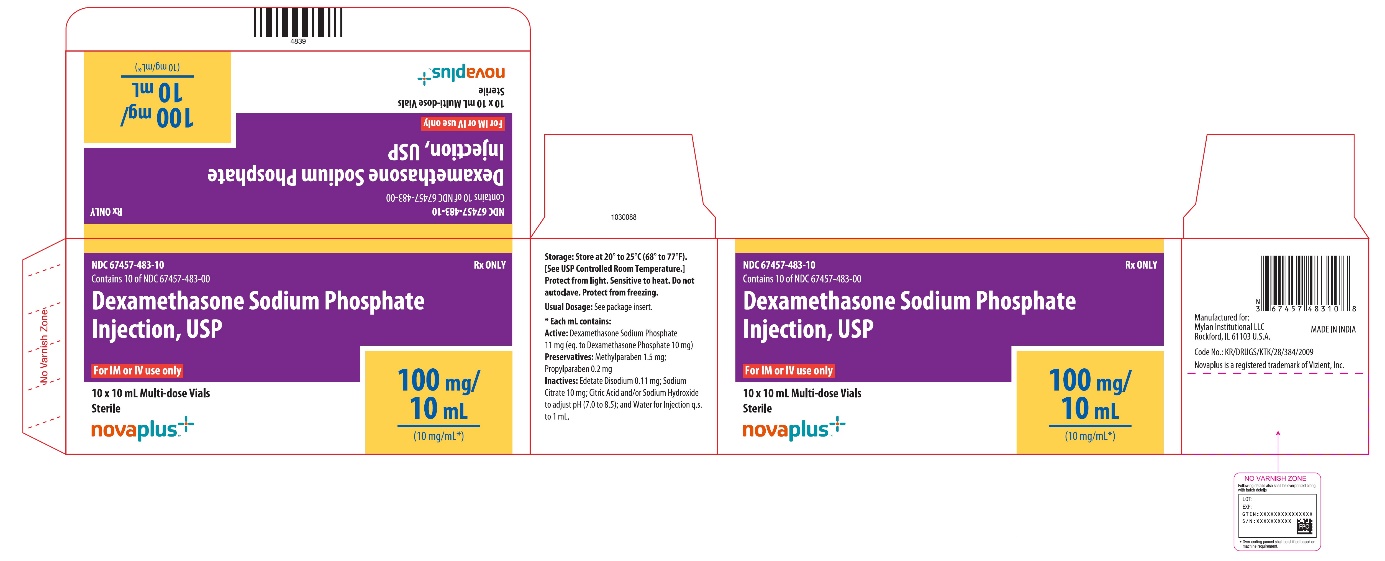
Dexamethasone Sodium Phosphate 10 mg/mL Injection, Solution — NDC 67457-483-10 (Billing 67457-0483-10)
This is a package of Dexamethasone Sodium Phosphate 10 mg/mL Injection, Solution from Mylan Institutional LLC, marketed since Apr 2020 and currently FDA-listed; retail pharmacies pay about $0.5104 per mL (NADAC). It is this product's only package size.
NDC database record
One package, one record: these facts belong to NDC 67457-483-10 alone.
- Record
- FDA NDC Directory package listing · Human prescription drug
- Code segments
- 67457 labeler · 483 product · 10 package
- Package marketed since
- Apr 15, 2020
- Sample package
- No — commercial package
- Listing certified through
- Dec 31, 2027
- Barcode (UPC-A, from the NDC)
- 3 6745748310 8
- Medicaid fills, this package
- 1,710 prescriptions in the last four reported quarters
- FDA record last changed
- Jul 24, 2026
Other active recalls for Dexamethasone Sodium Phosphate (different manufacturers) — 2 · tap to view
Identity & classification
Regulatory identifiers FDA, NLM and CMS codes for this package
Drug-database identifiers Medi-Span GPI and First Databank GCN / HICL / AHFS classification
- GSN (GCN sequence number): 006776
- GCN: 27350
- GPI-14 (Medi-Span): 22100020202060
- HICL (First Databank): 002888
- AHFS class code: 52:08.08.00
- RxCUI (RxNorm): 309696
Where does this data come from?
- FDA openFDA NDC Directory · synced Oct 1, 2026
- FDA label on DailyMed · label index refreshed Oct 5, 2026
- RxNorm (NLM RxNav) · catalog refreshed Oct 1, 2026
- Medi-Span GPI (licensed)
- First Databank (licensed) · refreshed Oct 1, 2026
RxNorm drug class
This medicine belongs to the Corticosteroid class.
Where does this data come from?
- RxClass (NLM) · catalog refreshed Oct 1, 2026
Clinical
- It's a steroid that calms inflammation and immune overreaction. Depending on the product, it treats allergic conditions, skin diseases, hormone disorders and eye conditions. Hemady...
- Follow your prescription label exactly. Tablets and liquid are swallowed, and your prescriber sets the amount based on your condition. Please don't stop suddenly after long use, be...
- Increased appetite, weight gain, trouble sleeping, mood swings, nausea and fluid retention are common. Call your doctor for signs of infection, black stools, vision changes, or sev...
- Some medicines interact with it, including certain antifungals, blood thinners, diabetes medicines, aspirin or NSAIDs, and estrogen products. Check with me before adding anything n...
Patient education
Supplement & herbal interactions
Dexamethasone may be associated with lower levels of 8 nutrients — worth a chat with your pharmacist, not a cause for alarm.
Where does this data come from?
- MedlinePlus (NLM) · refreshed Oct 1, 2026
- FDA label on DailyMed · label index refreshed Oct 5, 2026
Ask a licensed pharmacist directly — free, answered by our team.
Pricing
A drug doesn't have one price. Each row is a different public payment system, and none is what you'd pay at the counter — that depends on your insurance. The ⓘ on each row explains what it measures.
| Price system | Per mL | Per package |
|---|---|---|
| Retail pharmacies payNADAC · weekly | $0.510 | $51.04 / 100 ml |
| Medicaid paysCMS SDUD · 12 mo | $13.65 | $1,364.56 / 100 ml |
| Medicare drug plans payPart D · quarterly | No Part D plan price is available for this NDC in our data. | |
| Medicare Part B allowsASP · J1100 | $0.085 / J1100 unit | — |
Where does this data come from?
- CMS NADAC weekly file · file of Sep 30, 2026
- CMS ASP pricing files · refreshed Sep 20, 2026
- CMS Medicaid State Drug Utilization Data · through Q4 2025
- CMS Part D plan pricing files · refreshed Sep 24, 2026
- VA National Acquisition Center price file
Billing & reimbursement
Where does this data come from?
- CMS ASP NDC-HCPCS crosswalk · refreshed Sep 22, 2026
- DMEPDAC NDC-HCPCS crosswalk
- openFDA NSDE billing units · refreshed Sep 7, 2026
Packaging — all sizes for this product
| Package NDC | Description | Marketing start | Marketing end | Status |
|---|---|---|---|---|
| 67457-0483-10 You're viewing this Main listing | 10 VIAL in 1 CARTON / 10 mL in 1 VIAL | 2020-04-15 | — | Active |
Therapeutic equivalents
| Product | Labeler | Pack | NADAC/unit | TE | Status | Price vs. this |
|---|---|---|---|---|---|---|
| Dexamethasone Sodium Phosphate 10 mg/mL 63323-0516-10 | Fresenius | 10 vials | $0.510 | AP | Availability likely | — |
| Dexamethasone Sodium Phosphate 10 mg/mL 67457-0420-10 | Mylan | 10 vials | $0.510 | AP | Availability likely | — |
| Dexamethasone Sodium Phosphate 10 mg/mLthis 67457-0483-10 | Mylan | 10 vials | $0.510 | AP | Availability likely | — |
| Dexamethasone Sodium Phosphate 10 mg/mL 70069-0025-10 | Somerset | 10 vials | $0.510 | AP | Availability likely | — |
| Dexamethasone Sodium Phosphate 10 mg/mL 55150-0304-25 | Eugia | 25 vials | $1.157 | AP | Availability likely | +127% |
| Dexamethasone Sodium Phosphate 10 mg/mL 72485-0118-25 | Armas | 25 vials | $1.157 | AP | Availability likely | +127% |
| Dexamethasone Sodium Phosphate 10 mg/mL 63323-0506-16 | Fresenius | 25 vials | $1.157 | AP | Availability likely | +127% |
| Dexamethasone Sodium Phosphate 10 mg/mL 70069-0021-25 | Somerset | 25 vials | $1.157 | AP | Availability likely | +127% |
| Dexamethasone Sodium Phosphate 10 mg/mL 00641-0367-25 | Hikma | 25 vials | $1.236 | AP | Availability likely | +142% |
| Dexamethasone Sodium Phosphate 10 mg/mL 72572-0122-25 | Civica, | 25 vials | $1.236 | AP | Availability likely | +142% |
| Dexamethasone Sodium Phosphate 10 mg/mL 00404-9842-10 | Henry | 1 vial | — | AP | FDA listed | — |
| Dexamethasone Sodium Phosphate 10 mg/mL 51662-1343-01 | HF | 1 ml | — | AP | FDA listed | — |
| Dexamethasone Sodium Phosphate 10 mg/mL 51662-1391-01 | HF | 10 ml | — | AP | FDA listed | — |
| Dexamethasone Sodium Phosphate 100 mg/10mL 51662-1541-01 | HF | 10 ml | — | — | FDA listed | — |
| Dexamethasone Sodium Phosphate 100 mg/10mL 55150-0305-10 | Eugia | 10 vials | — | — | FDA listed | — |
| Dexamethasone Sodium Phosphate 10 mg/mL 55154-5118-05 | Cardinal | 5 vials | — | AP | FDA listed | — |
| Dexamethasone Sodium Phosphate 10 mg/mL 70518-0532-01 | REMEDYREPACK | 25 vials | — | AP | FDA listed | — |
| Dexamethasone Sodium Phosphate 10 mg/mL 71872-7090-01 | Medical | 1 vial | — | AP | FDA listed | — |
| Dexamethasone Sodium Phosphate 10 mg/mL 71872-7205-01 | Medical | 1 vial | — | AP | FDA listed | — |
| Dexamethasone Sodium Phosphate 100 mg/10mL 71872-7239-01 | Medical | 1 vial | — | — | FDA listed | — |
| Dexamethasone Sodium Phosphate 10 mg/mL 76420-0399-10 | Asclemed | 10 vials | — | AP | FDA listed | — |
| Dmt Suik 10 mg/mL 76420-0270-01 | Asclemed | 1 vial | — | — | FDA listed | — |
| Dexamethasone Sodium Phosphate 10 mg/mL 71872-7091-01 | Medical | 1 vial | — | AP | FDA listed | — |
| Dexamethasone Sodium Phosphate 10 mg/mL 76045-0212-10 | Fresenius | 1 syringe | — | AP | FDA listed | — |
| Dmt Suik 10 mg/mL 80425-0556-01 | Advanced | 1 vial | — | — | FDA listed | — |
| Dexamethasone sodium phosphate 10 mg/mL 42571-0432-79 | Micro | 25 vials | — | AP | FDA listed | — |
| Dexamethasone Sodium Phosphate 10 mg/mL 80425-0261-01 | Advanced | 25 vials | — | AP | FDA listed | — |
| Dexamethasone Sodium Phosphate 10 mg/mL 70121-1399-05 | Amneal | 25 vials | — | AP | FDA listed | — |
| Dexamethasone Sodium Phosphate 10 mg/mL 85766-0186-25 | Sportpharm | 25 vials | — | AP | FDA listed | — |
| Dexamethasone Sodium Phosphate 10 mg/mL 76045-0109-10 | Fresenius | 1 syringe | — | AP | FDA listed | — |
| Dexamethasone Sodium Phosphate 10 mg/mL 85766-0071-01 | Sportpharm | 1 ml | — | AP | FDA listed | — |
| Dexamethasone Sodium Phosphate 10 mg/mL 50090-3541-00 | A-S | 25 vials | — | AP | FDA listed | — |
| Dexamethasone Sodium Phosphate 10 mg/mL 85766-0214-10 | Sportpharm | 10 vials | — | AP | FDA listed | — |
Where does this data come from?
- FDA openFDA NDC Directory · synced Oct 1, 2026
- FDA Orange Book · refreshed Oct 3, 2026
- CMS NADAC weekly file · file of Sep 30, 2026
Availability & generic status
This product is an FDA-approved generic. Other versions of the same drug are listed under Therapeutic equivalents, least expensive first.
Where does this data come from?
- FDA Orange Book · refreshed Oct 3, 2026
Inactive Ingredients / Excipients
Inactive ingredients, also called excipients, are components of the drug product other than the active ingredient. They may include fillers, dyes, coatings, preservatives, flavors, or other formulation ingredients.
🧪 Avoiding an ingredient? See Dexamethasone inactive ingredients by manufacturer: every current product's list side by side, so you can ask your pharmacy for the version that does not list it.
Where does this data come from?
IACT rows and label-wide narrative are kept separate; availability and product-level specificity depend on the submitted label.- FDA label on DailyMed · label index refreshed Oct 5, 2026
- FDA openFDA NDC Directory · synced Oct 1, 2026
Inactive ingredient FAQ
Are inactive ingredients the same for every manufacturer?
Why might an inactive ingredient be missing?
Can inactive ingredients matter?
Manufacturer & labeler
More NDCs from Mylan Institutional LLC labeler code 67457
- Pamidronate Disodium 9 mg/mL Injection NDC 67457-446-10
- Famotidine 10 mg/mL Injection NDC 67457-448-43
- Famotidine 10 mg/mL Injection NDC 67457-457-20
- Oxaliplatin 5 mg/mL Injection, Solution NDC 67457-469-10
- Tobramycin 40 mg/mL Injection NDC 67457-473-22
- VECURONIUM BROMIDE 1 mg/mL Injection, Powder, Lyophilized, For Solution NDC 67457-475-20
- Dexamethasone Sodium Phosphate 4 mg/mL Injection, Solution NDC 67457-484-30
- LEUCOVORIN CALCIUM 100 mg/10mL Injection, Powder, Lyophilized, For Suspension NDC 67457-528-10
- LEUCOVORIN CALCIUM 200 mg/20mL Injection, Powder, Lyophilized, For Suspension NDC 67457-529-20
- LEUCOVORIN CALCIUM 350 mg/17.5mL Injection, Powder, Lyophilized, For Suspension NDC 67457-530-35
- Docetaxel 10 mg/mL Injection, Solution NDC 67457-531-02
- Docetaxel 10 mg/mL Injection, Solution NDC 67457-532-08
Where does this data come from?
- FDA openFDA NDC Directory · synced Oct 1, 2026
- Drugs@FDA
Full prescribing information FDA SPL
🎯 Indications and Usage ▾
INDICATIONS AND USAGE A. By intravenous or intramuscular injection when oral therapy is not feasible: 1. Endocrine disorders: Primary or secondary adrenocortical insufficiency (hydrocortisone or cortisone is the drug of choice; synthetic analogs may be used in conjunction with mineralocorticoids where applicable; in infancy, mineralocorticoid supplementation is of particular importance).
Acute adrenocortical insufficiency (hydrocortisone or cortisone is the drug of choice; mineralocorticoid supplementation may be necessary, particularly when synthetic analogs are used). Preoperatively, and in the event of serious trauma or illness, in patients with known adrenal insufficiency or when adrenocortical reserve is doubtful. Shock unresponsive to conventional therapy if adrenocortical insufficiency exists or is suspected.
Congenital adrenal hyperplasia. Nonsuppurative thyroiditis. Hypercalcemia associated with cancer.
2. Rheumatic Disorders: As adjunctive therapy for short-term administration (to tide the patient over an acute episode or exacerbation) in: Post-traumatic osteoarthritis. Synovitis of osteoarthritis.
Rheumatoid arthritis, including juvenile rheumatoid arthritis (selected cases may require low-dose maintenance therapy). Acute and subacute bursitis. Epicondylitis.
Acute nonspecific tenosynovitis. Acute gouty arthritis. Psoriatic arthritis.
Ankylosing spondylitis. 3. Collagen Diseases: During an exacerbation or as maintenance therapy in selected cases of: Systemic lupus erythematosus.
Acute rheumatic carditis. 4. Dermatologic Diseases: Pemphigus.
Severe erythema multiforme. (Stevens-Johnson Syndrome) Exfoliative dermatitis. Bullous dermatitis herpetiformis.
Severe seborrheic dermatitis. Severe psoriasis. Mycosis fungoides.
5. Allergic States: Control of severe or incapacitating allergic conditions intractable to adequate trials of conventional treatment in: Bronchial asthma. Contact dermatitis.
Atopic dermatitis. Serum sickness. Seasonal or perennial allergic rhinitis.
Drug hypersensitivity reactions. Urticarial transfusion reactions. Acute noninfectious laryngeal edema (epinephrine is the drug of first choice).
6. Ophthalmic Diseases: Severe acute and chronic allergic and inflammatory processes involving the eye, such as: Herpes zoster ophthalmicus. Iritis, iridocyclitis.
Chorioretinitis. Diffuse posterior uveitis and choroiditis. Optic neuritis.
Sympathetic ophthalmia. Anterior segment inflammation. Allergic conjunctivitis.
Keratitis. Allergic corneal marginal ulcers. 7.
Gastrointestinal Diseases: To tide the patient over a critical period of the disease in: Ulcerative colitis (systemic therapy). Regional enteritis (systemic therapy). 8.
Respiratory Diseases: Symptomatic sarcoidosis. Berylliosis. Fulminating or disseminated pulmonary tuberculosis when used concurrently with appropriate antituberculous chemotherapy.
Loeffler's syndrome not manageable by other means. Aspiration pneumonitis. 9.
Hematologic Disorders: Acquired (autoimmune) hemolytic anemia. Idiopathic thrombocytopenic purpura in adults (IV only; IM administration is contraindicated). Secondary thrombocytopenia in adults.
Erythroblastopenia (RBC anemia). Congenital (erythroid) hypoplastic anemia. 10.
Neoplastic Diseases: For palliative management of: Leukemias and lymphomas in adults. Acute leukemia of childhood. 11.
Edematous States: To induce diuresis or remission of proteinuria in the nephrotic syndrome, without uremia, of the idiopathic type or that due to lupus erythematosus. 12. Miscellaneous: Tuberculosis meningitis with subarachnoid block or impending block when used concurrently with appropriate antituberculous chemotherapy.
Trichinosis with neurologic or myocardial involvement. 13. Diagnostic testing of adrenocortical hyperfunction.
14. Cerebral Edema associated with primary or metastatic brain tumor, craniotomy, or head injury. Use in cerebral edema is not a substitute for careful neurosurgical evaluation and definitive management such as neurosur… [Excerpted — this section continues on DailyMed.]
⏱️ Dosage and Administration ▾
DOSAGE AND ADMINISTRATION Dexamethasone sodium phosphate injection, USP 4 mg/mL is for intravenous, intramuscular, intra-articular, intralesional and soft tissue injection. Dexamethasone sodium phosphate injection, USP 10 mg/mL is for intravenous or intramuscular use only. Dexamethasone sodium phosphate injection, USP can be given directly from the vial, or it can be added to sodium chloride injection or dextrose injection and administered by intravenous drip.
Solutions used for intravenous administration or further dilution of this product should be preservative-free when used in the neonate, especially the premature infant. When it is mixed with an infusion solution, sterile precautions should be observed. Since infusion solutions generally do not contain preservatives, mixtures should be used within 24 hours.
DOSAGE REQUIREMENTS ARE VARIABLE AND MUST BE INDIVIDUALIZED ON THE BASIS OF THE DISEASE AND THE RESPONSE OF THE PATIENT. A. Intravenous and Intramuscular Injection: The initial dosage of dexamethasone sodium phosphate injection varies from 0.5 to 9 mg a day depending on the disease being treated.
In less severe diseases doses lower than 0.5 mg may suffice, while in severe diseases doses higher than 9 mg may be required. The initial dosage should be maintained or adjusted until the patient's response is satisfactory. If a satisfactory clinical response does not occur after a reasonable period of time, discontinue dexamethasone sodium phosphate injection and transfer the patient to other therapy.
After a favorable initial response, the proper maintenance dosage should be determined by decreasing the initial dosage in small amounts to the lowest dosage that maintains an adequate clinical response. Patients should be observed closely for signs that might require dosage adjustment, including changes in clinical status resulting from remissions or exacerbations of the disease, individual drug responsiveness, and the effect of stress (e.g., surgery, infection, trauma). During stress it may be necessary to increase dosage temporarily.
If the drug is to be stopped after more than a few days of treatment, it usually should be withdrawn gradually. When the intravenous route of administration is used, dosage usually should be the same as the oral dosage. In certain overwhelming, acute, life-threatening situations, however, administration in dosages exceeding the usual dosages may be justified and may be in multiples of the oral dosages.
The slower rate of absorption by intramuscular administration should be recognized. Shock There is a tendency in current medical practice to use high (pharmacologic) doses of corticosteroids for the treatment of unresponsive shock. The following dosages of dexamethasone sodium phosphate injection have been suggested by various authors: Author* Dosage Cavanagh1 3 mg/kg of body weight per 24 hours by constant intravenous infusion after an initial intravenous injection of 20 mg Dietzman2 2 to 6 mg/kg of body weight as a single intravenous injection Frank3 40 mg initially followed by repeat intravenous injection every 4 to 6 hours while shock persists Oaks4 40 mg initially followed by repeat intravenous injection every 2 to 6 hours while shock persists Schumer5 1 mg/kg of body weight as a single intravenous injection Administration of high dose corticosteroid therapy should be continued only until the patient's condition has stabilized and usually not longer than 48 to 72 hours.
Although adverse reactions associated with high dose, short term corticosteroid therapy are uncommon, peptic ulceration may occur. Cerebral Edema Dexamethasone sodium phosphate injection is generally administered initially in a dosage of 10 mg intravenously followed by four mg every six hours intramuscularly until the symptoms of cerebral edema subside. Response is usually noted within 12 to 24 hours and dosage may be reduced after two to four days and gradually discontinued over a period of five to seven days.
For palliative m… [Excerpted — this section continues on DailyMed.]
⛔ Contraindications ▾
CONTRAINDICATIONS Systemic fungal infections. (See WARNINGS regarding amphotericin B)
⚠️ Warnings ▾
WARNINGS Serious Neurologic Adverse Reactions with Epidural Administration Serious neurologic events, some resulting in death, have been reported with epidural injection of corticosteroids. Specific events reported include, but are not limited to, spinal cord infarction, paraplegia, quadriplegia, cortical blindness, and stroke. These serious neurologic events have been reported with and without use of fluoroscopy.
The safety and effectiveness of epidural administration of corticosteroids has not been established, and corticosteroids are not approved for this use. Because rare instances of anaphylactoid reactions have occurred in patients receiving parenteral corticosteroid therapy, appropriate precautionary measures should be taken prior to administration, especially when the patient has a history of allergy to any drug. Anaphylactoid and hypersensitivity reactions have been reported for dexamethasone sodium phosphate injection.
(See ADVERSE REACTIONS ). Corticosteroids may exacerbate systemic fungal infections and, therefore, should not be used in the presence of such infections unless they are needed to control drug reactions due to amphotericin B. Moreover, there have been cases reported in which concomitant use of amphotericin B and hydrocortisone was followed by cardiac enlargement and congestive failure.
In patients on corticosteroid therapy subjected to any unusual stress, increased dosage of rapidly acting corticosteroids before, during, and after the stressful situation is indicated. Drug-induced secondary adrenocortical insufficiency may result from too rapid withdrawal of corticosteroids and may be minimized by gradual reduction of dosage. This type of relative insufficiency may persist for months after discontinuation of therapy; therefore, in any situation of stress occurring during that period, hormone therapy should be reinstituted.
If the patient is receiving steroids already, dosage may have to be increased. Since mineralocorticoid secretion may be impaired, salt and/or a mineralocorticoid should be administered concurrently. Corticosteroids may mask some signs of infection, and new infections may appear during their use.
There may be decreased resistance and inability to localize infection when corticosteroids are used. Moreover, corticosteroids may affect the nitroblue-tetrazolium test for bacterial infection and produce false negative results. In cerebral malaria, a double-blind trial has shown that the use of corticosteroids is associated with prolongation of coma and a higher incidence of pneumonia and gastrointestinal bleeding.
Corticosteroids may activate latent amebiasis. Therefore, it is recommended that latent or active amebiasis be ruled out before initiating corticosteroid therapy in any patient who has spent time in the tropics or in any patient with unexplained diarrhea. Prolonged use of corticosteroids may produce posterior subcapsular cataracts, glaucoma with possible damage to the optic nerves, and may enhance the establishment of secondary ocular infections due to fungi or viruses.
Average and large doses of cortisone or hydrocortisone can cause elevation of blood pressure, salt and water retention, and increased excretion of potassium. These effects are less likely to occur with the synthetic derivatives except when used in large doses. Dietary salt restriction and potassium supplementation may be necessary.
All corticosteroids increase calcium excretion. Administration of live virus vaccines, including smallpox, is contraindicated in individuals receiving immunosuppressive doses of corticosteroids. If inactivated viral or bacterial vaccines are administered to individuals receiving immunosuppressive doses of corticosteroids, the expected serum antibody response may not be obtained.
However, immunization procedures may be undertaken in patients who are receiving corticosteroids as replacement therapy, e.g., for Addison's disease. Patients who are on drugs which suppress the immune system are… [Excerpted — this section continues on DailyMed.]
🤒 Adverse Reactions ▾
ADVERSE REACTIONS Fluid and electrolyte disturbances: Sodium retention Fluid retention Congestive heart failure in susceptible patients Potassium loss Hypokalemic alkalosis Hypertension Musculoskeletal: Muscle weakness Steroid myopathy Loss of muscle mass Osteoporosis Vertebral compression fractures Aseptic necrosis of femoral and humeral heads Tendon rupture Pathologic fracture of long bones Gastrointestinal: Peptic ulcer with possible subsequent perforation and hemorrhage Perforation of the small and large bowel; particularly in patients with inflammatory bowel disease Pancreatitis Abdominal distention Ulcerative esophagitis Dermatologic: Impaired wound healing Thin fragile skin Petechiae and ecchymoses Erythema Increased sweating May suppress reactions to skin tests Burning or tingling especially in the perineal area (after IV injection) other cutaneous reactions, such as allergic dermatitis, urticaria, angioneurotic edema Neurologic: Convulsions Increased intracranial pressure with papilledema (pseudotumor cerebri) usually after treatment Vertigo Headache Psychic disturbances Endocrine: Menstrual irregularities Development of cushingoid state Suppression of growth in children Secondary adrenocortical and pituitary unresponsiveness, particularly in times of stress, as in trauma, surgery, or illness Decreased carbohydrate tolerance Manifestations of latent diabetes mellitus Increased requirements for insulin or oral hypoglycemic agents in diabetics Hirsutism Ophthalmic: Posterior subcapsular cataracts Increased intraocular pressure Glaucoma Exophthalmos Metabolic: Negative nitrogen balance due to protein catabolism Cardiovascular: Myocardial rupture following recent myocardial infarction.
(See WARNINGS ). Other: Anaphylactoid or hypersensitivity reactions Thromboembolism Weight gain Increased appetite Nausea Malaise Hiccups The following additional adverse reactions are related to parenteral corticosteroid therapy: Rare instances of blindness associated with intralesional therapy around the face and head Hyperpigmentation or hypopigmentation Subcutaneous and cutaneous atrophy Sterile abscess Post-injection flare (following intra-articular use) Charcot-like arthropathy
🆘 Overdosage ▾
OVERDOSAGE Reports of acute toxicity and/or death following overdosage of glucocorticoids are rare. In the event of overdosage, no specific antidote is available; treatment is supportive and symptomatic. The oral LD50 of dexamethasone in female mice was 6.5 g/kg. The intravenous LD50 of dexamethasone sodium phosphate in female mice was 794 mg/kg.
🧬 Clinical Pharmacology ▾
CLINICAL PHARMACOLOGY Dexamethasone sodium phosphate injection has a rapid onset but short duration of action when compared with less soluble preparations. Because of this, it is suitable for the treatment of acute disorders responsive to adrenocortical steroid therapy. Naturally occurring glucocorticoids (hydrocortisone and cortisone), which also have salt-retaining properties, are used as replacement therapy in adrenocortical deficiency states.
Their synthetic analogs, including dexamethasone, are primarily used for their potent anti-inflammatory effects in disorders of many organ systems. Glucocorticoids cause profound and varied metabolic effects. In addition, they modify the body's immune responses to diverse stimuli.
At equipotent anti-inflammatory doses, dexamethasone almost completely lacks the sodium-retaining property of hydrocortisone and closely related derivatives of hydrocortisone.
📦 How Supplied / Storage and Handling ▾
HOW SUPPLIED Dexamethasone sodium phosphate injection, USP 4 mg/mL is for-intravenous, intramuscular, intra-articular, intralesional and soft tissue administration available as follows: NDC Number Fill volume Pack size 67457-419-01 1 mL Single-Dose Vial 25’s 67457-418-05 5 mL Multi-Dose Vial 25’s 67457-484-30 30 mL Multi-Dose Vial 25’s Dexamethasone sodium phosphate injection, USP 10 mg/mL is for intravenous and intramuscular injection only available as follows: NDC Number Fill volume Pack size 67457-483-10 10 mL Multi-Dose Vial 10’s Store at 20° to 25°C (68° to 77°F). [See USP Controlled Room Temperature.] Protect from light.
Sensitive to heat. Do not autoclave. Protect from freezing.
REFERENCES • Cavanagh, D.; Singh, K. B.: Endotoxin shock in pregnancy and abortion, in: " Corticosteroids in the Treatment of Shock, " Schumer, W.; Nyhus, L. M., Editors, Urbana, University of Illinois Press, 1970, pp.
86–96. • Dietzman, R. H.; Ersek, R. A.; Bloch, J.
M.; Lilleher, R. C.: High-output, low-resistance gram-negative septic shock in man, Angiology 20: 691–700, Dec. 1969. • Frank, E.: Clinical observations in shock and management (in: Shields, T.
F., ed.: Symposium on current concepts and management of shocks), J. Maine Med. Ass .
59: 195 – 200, Oct. 1968. • Oaks, W. W.; Cohen, H.
E.: Endotoxin shock in the geriatric patient, Geriat. 22: 120–130, Mar. 1967. • Schumer, W.; Nyhus, L.
M.: Corticosteroid effect on biochemical parameters of human oligemic shock, Arch. Surg. 100: 405–408, Apr.
1970. Manufactured for: Mylan Institutional LLC Rockford, IL 61103 U.S.A. Manufacture by: Mylan Laboratories Limited Bangalore, India SEPTEMBER 2018 Novaplus is a registered trademark of Vizient, Inc.
📋 Description ▾
DESCRIPTION Dexamethasone sodium phosphate, a synthetic adrenocortical steroid, is a white or slightly yellow, crystalline powder. It is freely soluble in water and is exceedingly hygroscopic. The molecular weight is 516.41.
It is designated chemically as 9-fluoro-11β,17-dihydroxy-16α-methyl-21-(phosphonooxy)pregna-1,4-diene-3,20-dione disodium salt. The empirical formula is C 22 H 28 FNa 2 O 8 P and the structural formula is: Dexamethasone sodium phosphate injection, USP is a sterile solution of dexamethasone sodium phosphate, and is supplied in 4 mg/ mL and 10 mg /mL. Dexamethasone sodium phosphate injection, USP 4 mg/mL is a sterile solution for intravenous, intramuscular, intra-articular, intralesional and soft tissue administration.
Each mL contains: Active: Dexamethasone sodium phosphate 4.4 mg (equivalent to dexamethasone phosphate 4 mg). Preservatives: Methylparaben 1.5 mg; Propylparaben 0.2 mg. Inactives: Edetate Disodium 0.11 mg; Sodium Citrate Anhydrous 10 mg; Citric Acid and/or Sodium Hydroxide q.s to adjust pH 7.0 to 8.5 and Water for Injection q.s to 1 mL.
Dexamethasone sodium phosphate injection, USP 10 mg/mL is a sterile solution for intravenous or intramuscular use only. Each mL contains: Actives: Dexamethasone sodium phosphate 11 mg (equivalent to dexamethasone phosphate 10 mg). Preservatives: Methylparaben 1.5 mg; Propylparaben 0.2 mg.
Inactives: Edetate Disodium 0.11 mg; Sodium Citrate Anhydrous 10 mg; Citric Acid and/or Sodium Hydroxide q.s to adjust pH 7.0 to 8.5 and Water for Injection q.s to 1 mL. structure
💬 Information for Patients ▾
Information for Patients Susceptible patients who are on immunosuppressant doses of corticosteroids should be warned to avoid exposure to chickenpox or measles. Patients should also be advised that if they are exposed, medical advice should be sought without delay.
⚠️ Precautions ▾
PRECAUTIONS This product, like many other steroid formulations, is sensitive to heat. Therefore, it should not be autoclaved when it is desirable to sterilize the exterior of the vial. Following prolonged therapy, withdrawal of corticosteroids may result in symptoms of the corticosteroid withdrawal syndrome including fever, myalgia, arthralgia, and malaise.
This may occur in patients even without evidence of adrenal insufficiency. There is an enhanced effect of corticosteroids in patients with hypothyroidism and in those with cirrhosis. Corticosteroids should be used cautiously in patients with ocular herpes simplex for fear of corneal perforation.
The lowest possible dose of corticosteroid should be used to control the condition under treatment, and when reduction in dosage is possible, the reduction must be gradual. Psychic derangements may appear when corticosteroids are used, ranging from euphoria, insomnia, mood swings, personality changes, and severe depression to frank psychotic manifestations. Also, existing emotional instability or psychotic tendencies may be aggravated by corticosteroids.
Aspirin should be used with caution in conjunction with corticosteroids in hypoprothrombinemia. Steroids should be used with caution in nonspecific ulcerative colitis, if there is a probability of impending perforation, abscess, or other pyogenic infection, also in diverticulitis, fresh intestinal anastomoses, active or latent peptic ulcer, renal insufficiency, hypertension, osteoporosis, and myasthenia gravis. Signs of peritoneal irritation following gastrointestinal perforation in patients receiving large doses of corticosteroids may be minimal or absent.
Fat embolism has been reported as a possible complication of hypercortisonism. When large doses are given, some authorities advise that antacids be administered between meals to help prevent peptic ulcer. Growth and development of infants and children on prolonged corticosteroid therapy should be carefully followed.
Steroids may increase or decrease motility and number of spermatozoa in some patients. Phenytoin, phenobarbital, ephedrine, and rifampin may enhance the metabolic clearance of corticosteroids, resulting in decreased blood levels and lessened physiologic activity, thus requiring adjustment in corticosteroid dosage. These interactions may interfere with dexamethasone suppression tests which should be interpreted with caution during administration of these drugs.
False negative results in the dexamethasone suppression test (DST) in patients being treated with indomethacin have been reported. Thus, results of the DST should be interpreted with caution in these patients. The prothrombin time should be checked frequently in patients who are receiving corticosteroids and coumarin anticoagulants at the same time because of reports that corticosteroids have altered the response to these anticoagulants.
Studies have shown that the usual effect produced by adding corticosteroids is inhibition of response to coumarins, although there have been some conflicting reports of potentiation not substantiated by studies. When corticosteroids are administered concomitantly with potassium depleting diuretics, patients should be observed closely for development of hypokalemia. Intra-articular injection of a corticosteroid may produce systemic as well as local effects.
Appropriate examination of any joint fluid present is necessary to exclude a septic process. A marked increase in pain accompanied by local swelling, further restriction of joint motion, fever, and malaise is suggestive of septic arthritis. If this complication occurs and the diagnosis of sepsis is confirmed, appropriate antimicrobial therapy should be instituted.
Injection of a steroid into an infected site is to be avoided. Corticosteroids should not be injected into unstable joints. Patients should be impressed strongly with the importance of not overusing joints in which symptomatic benefit has been obtained as long as the… [Excerpted — this section continues on DailyMed.]
📄 Package Label / Principal Display Panel ▾
Package/Label Display Panel NDC 67457-483-10 Contains 10 of NDC 67 457-483-00 Dexamethasone Sodium Phosphate Injection, USP 100 mg/10 mL (10 mg/mL*) For IM or IV use only 10 x 10 mL Multi-Dose Vials Sterile Rx ONLY novaplus Carton 10 mL
Package/Label Display Panel NDC 67457-484-30 Contains 25 of NDC 67 457-484-00 Dexamethasone Sodium Phosphate Injection, USP 120 mg/30 mL (4 mg/mL*) For IV, IM, Intra-articular, Soft tissue or Intralesional use 25 x 30 mL Multi-Dose Vials Sterile Rx ONLY novaplus Carton 30 mL
Package/Label Display Panel NDC 67457-418-05 Contains 25 of NDC 67457-418-00 Dexamethasone Sodium Phosphate Injection, USP 20 mg/5 mL (4 mg/mL*) For IV, IM, Intra-articular, Soft tissue or Intralesional use 25 x 5 mL Multi-Dose Vials Sterile Rx ONLY novaplus Carton 5 mL
Package/Label Display Panel NDC 67457-419-01 Contains 25 of NDC 67457-419-00 Dexamethasone Sodium Phosphate Injection, USP 4 mg/mL* For IV, IM, Intra-articular, Soft tissue or Intralesional use 25 x 1 mL Multi-Dose Vials Sterile Rx ONLY novaplus Carton 1 mL