
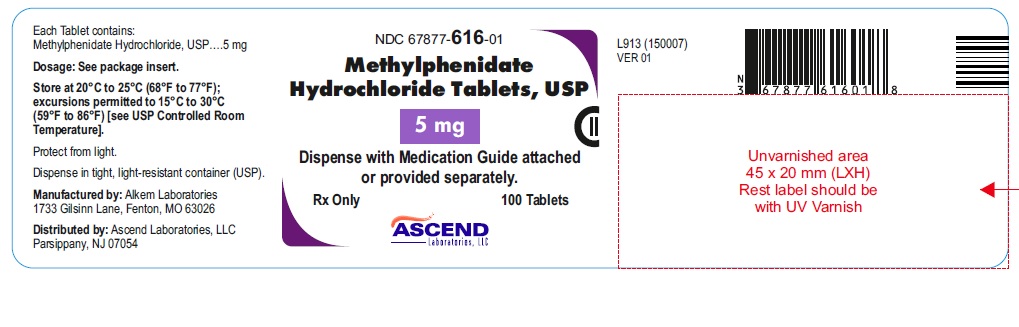
Methylphenidate Hydrochloride 5 mg Tablet, 100-count
Other active recalls for Methylphenidate Hydrochloride (different manufacturers) — 1 · tap to view
🆔 Identity & classification
Where does this data come from?
🏷️ RxNorm drug class
This medicine belongs to the Central Nervous System Stimulant class.
Where does this data come from?
🏭 Manufacturer & labeler
Where does this data come from?
🩺 Clinical
Methylphenidate is used to control symptoms of attention deficit hyperactivity disorder (ADHD; condition that makes it hard to pay attention, control your behavior, and remain still or quiet) and to treat narcolepsy (condition that causes people to be very sleepy during the day and to fall asleep suddenly). Methylphenidate is in a class of medications called central nervous system (CNS) stimulants. It works by changing the amounts of certain natural substances in the brain.
Read the full MedlinePlus article ↗- Methylphenidate helps boost two brain chemicals — dopamine and norepinephrine — that play a big role in attention, focus, and impulse control. When those chemicals are more availab...
- What exactly is methylphenidate supposed to do for my ADHD?
- Methylphenidate is a controlled substance, and it does have a real potential for abuse and dependence — that's something the FDA takes seriously enough to put a boxed warning on th...
- The most common ones — decreased appetite, some trouble sleeping, headache, and a slightly faster heartbeat — are annoying but usually manageable and tend to improve over time. For...
Patient education
Supplement & herbal interactions
Some supplements/herbs that may interact with Methylphenidate Hydrochloride — tap one for details:
Where does this data come from?
Ask a licensed pharmacist directly — free, answered by our team.
💊 What it looks like
Where does this data come from?
🧪 Inactive Ingredients / Excipients
Inactive ingredients, also called excipients, are components of the drug product other than the active ingredient. They may include fillers, dyes, coatings, preservatives, flavors, or other formulation ingredients.
💡 Tap an ingredient (hover on desktop) to see what it is and why it’s used.
-
UNII 35SW5USQ3G
A synthetic yellow dye used to color medicines. It helps make tablets, capsules, and liquids visually distinct so patients can easily identify their medication.
-
UNII H3R47K3TBD
FD&C Blue No. 1 is a synthetic blue dye approved for use in foods and medicines. It serves as a colorant to give the medication its distinctive appearance and help with product identification.
-
UNII EWQ57Q8I5X
Lactose monohydrate is a natural sugar derived from milk. It serves as a filler and binder in tablets and capsules, helping create the proper size, texture, and consistency of the medicine.
-
UNII 70097M6I30
Magnesium stearate is a salt made from magnesium and stearic acid, a fatty substance. It's used in tablets and capsules as a lubricant and glidant to help ingredients flow smoothly during manufacturing and prevent sticking.
-
UNII 3WJQ0SDW1A
Polyethylene glycol is a synthetic liquid or solid polymer used in medicines as a solvent, lubricant, and humectant. It helps dissolve active ingredients, reduces friction during manufacturing, and retains moisture in the final product.
-
UNII ETJ7Z6XBU4
Silicon dioxide is a naturally occurring mineral used as a glidant and anti-caking agent. It helps powder ingredients flow smoothly and prevents clumping during manufacturing and storage.
-
UNII O8232NY3SJ
A plant-based carbohydrate derived from corn kernels. It acts as a filler to add bulk, a binder to hold ingredients together, and a disintegrant to help the tablet break apart in your stomach for absorption.
-
UNII C151H8M554
A natural sugar derived from sugar cane or sugar beets. It's used as a sweetener, filler, and binder to improve taste, add bulk, and help hold tablet or capsule ingredients together.
8 inactive ingredients listed in the exact product block matched to this NDC.
Where does this data come from?
ingredient classCode="IACT" elements from the exact product block matched by this NDC. Label-section narrative from DailyMed / the openFDA label index is shown separately when available.Inactive ingredient FAQ
Are inactive ingredients the same for every manufacturer?
Why might an inactive ingredient be missing?
Can inactive ingredients matter?
💲 Pricing
A drug doesn't have one price. Each row is a different public payment system, and none is what you'd pay at the counter — that depends on your insurance. The ⓘ on each row explains what it measures.
| Price system | Per ea | Per package |
|---|---|---|
| Retail pharmacies payNADAC · weekly | $0.127 | $12.68 / 100 tablets |
| Medicaid paysCMS SDUD · 12 mo | No recent Medicaid claims on file for this NDC — rare and low-volume NDCs are suppressed in the public data. | |
| Medicare drug plans payPart D · Q2 2026 | $0.2171 | $21.71 / 100 tablets |
Where does this data come from?
🔁 Therapeutic equivalents
| Product | Labeler | Pack | NADAC/unit | TE | Status | Price vs. this |
|---|---|---|---|---|---|---|
| Methylphenidate Hydrochloride 5 mg 43386-0573-01 | Lupin | 100 tablets | $0.114 | AB | FDA listed | save 10% |
| Methylphenidate Hydrochloride 5 mg 00115-1800-01 | Amneal | 100 tablets | $0.127 | — | Availability likely | — |
| Methylphenidate Hydrochloride 5 mg 00406-1142-01 | SpecGx | 100 tablets | $0.127 | AB | Availability likely | — |
| Methylphenidate Hydrochloride 5 mg 10702-0100-01 | KVK-TECH, | 100 tablets | $0.127 | AB | Availability likely | — |
| Methylphenidate Hydrochloride 5 mg 16729-0478-01 | Accord | 100 tablets | $0.127 | AB | Availability likely | — |
| Methylphenidate Hydrochloride 5 mg 31722-0173-01 | Camber | 100 tablets | $0.127 | AB | Availability likely | — |
| Methylphenidate hydrochloride 5 mg 43547-0486-10 | Solco | 100 tablets | $0.127 | AB | Availability likely | — |
| Methylphenidate Hydrochloride 5 mgthis 67877-0616-01 | Ascend | 100 tablets | $0.127 | AB | Availability likely | — |
| Methylphenidate Hydrochloride 5 mg 68084-0805-21 | American | 30 tablets | $0.127 | AB | Availability likely | — |
| Methylphenidate Hydrochloride 5 mg 75834-0324-01 | Nivagen | 100 tablets | $0.127 | AB | Availability likely | — |
| Ritalin 5 mg 66758-0273-01 | Sandoz | 100 tablets | $0.794 | AB | Availability likely | +526% |
| Ritalin 5 mg 00078-0439-05 | Novartis | 100 tablets | $0.795 | AB | Discontinued | +527% |
| Methylphenidate Hydrochloride 5 mg 13107-0380-01 | Aurolife | 100 tablets | — | — | FDA listed | — |
| Methylphenidate Hydrochloride 5 mg 55466-0101-12 | Neolpharma, | 100 tablets | — | AB | Discontinued | — |
| Methylphenidate Hydrochloride 5 mg 57664-0228-08 | Sun | 100 tablets | — | AB | FDA listed | — |
| Methylphenidate Hydrochloride 5 mg 63629-1172-01 | Bryant | 100 tablets | — | AB | FDA listed | — |
| Methylphenidate Hydrochloride 5 mg 72162-1636-01 | Bryant | 100 tablets | — | AB | FDA listed | — |
| Methylphenidate Hydrochloride 5 mg 72162-2019-01 | Bryant | 100 tablets | — | — | FDA listed | — |
| Methylphenidate Hydrochloride 5 mg 72162-2428-01 | Bryant | 100 tablets | — | AB | FDA listed | — |
| Methylphenidate Hydrochloride 5 mg 72865-0122-01 | XLCare | 100 tablets | — | AB | FDA listed | — |
Where does this data come from?
⏳ Availability & generic status
This product is an FDA-approved generic. Other versions of the same drug are listed under Therapeutic equivalents, least expensive first.
Where does this data come from?
🔬 Reported adverse events (FAERS)
Top reported reactions
Age at onset
Reporter sex
Serious outcomes
Where does this data come from?
📦 Packaging — all sizes for this product
| Package NDC | Description | Per unit | Per pack | Marketing start | Status |
|---|---|---|---|---|---|
| 67877-0616-01 You're viewing this | 100 TABLET in 1 BOTTLE (67877-616-01) | $0.1268 / ea | $12.68 | 2019-10-06 | Active |
| 67877-0616-33 | 10 BLISTER PACK in 1 CARTON (67877-616-33) / 1 TABLET in 1 BLISTER PACK | — | — | 2019-10-06 | Active |
Pack size FAQ
What quantity is in NDC 67877-0616-01?
What is the difference between NDC 67877-0616-01 and NDC 67877-0616-33?
What NDC number is used to bill for this package of Methylphenidate Hydrochloride 5 mg Tablet?
Prices are the latest CMS NADAC pharmacy acquisition cost per NDC; per-pack figures are per-unit × pack quantity, shown only when the pack is denominated in the same measure NADAC prices.
📄 Full prescribing information FDA SPL
🚨 Boxed Warning ▾
WARNING: ABUSE AND DEPENDENCE CNSstimulants,including methylphenidate hydrochloride tablets, other methylphenidate-containing products, and amphetamines, have a highpotentialforabuseanddependence.Assesstherisk of abuse prior to prescribing, and monitor for signs of abuse and dependence while on therapy [see Warnings and Precautions ( 5.1 ), Drug Abuse and Dependence ( 9.2 , 9.3 )] . WARNING: ABUSE AND DEPENDENCE See full prescribing informationforcomplete boxed warning. CNS stimulants, including methylphenidate hydrochloride tablets, other methylphenidate-containing products, and amphetamines, have a high potential for abuse and dependence ( 5.1 , 9.2 , 9.3 ).
Assess the risk of abuse prior to prescribing, and monitor for signs of abuse and dependence while on therapy( 5.1 , 9.2 ).
🎯 Indications and Usage ▾
1 INDICATIONS AND USAGE Methylphenidate hydrochloride tablets are indicated for the treatment of: Attention Deficit Hyperactivity Disorders (ADHD) in pediatric patients 6 years and older and adults Narcolepsy Methylphenidate hydrochloride is a centralnervoussystem(CNS) stimulant indicated for the treatment of Attention Deficit Hyperactivity Disorders(ADHD) and Narcolepsy(1).
⏱️ Dosage and Administration ▾
2 DOSAGE AND ADMINISTRATION Methylphenidate Hydrochloride Tablets ( 2.2 ): Pediatric Patients 6 Years and Older:Start with 5 mg twice daily (before breakfast and lunch), titrating the dose weekly in 5- to 10- mg increments. Dosages above 60 mg/dayare not recommended. Adults: Average daily dosage is 20 mg to 30 mg,administered 2 or 3 times daily,preferably 30 to 45 minutes before meals. Maximum total daily dosage is 60 mg.
2.1Pretreatment Screening Prior to treatingpediatricpatientsandadultswithcentral nervous system(CNS)stimulants,including methylphenidate hydrochloride tablets,assessforthepresenceofcardiacdisease(i.e.,perform a carefulhistory,includingfamilyhistory of suddendeathorventriculararrhythmia, and physicalexamination) [seeWarningsandPrecautions( 5.2 )] . Assesstheriskofabusepriortoprescribing,and monitorforsignsofabuseanddependencewhileontherapy.Maintaincarefulprescriptionrecords,educatepatientsaboutabuse,monitorforsigns of abuseandoverdose, and periodicallyreevaluate the needformethylphenidate hydrochloride tablets use [seeBoxedWarning,WarningsandPrecautions( 5.1 ),DrugAbuseandDependence( 9 .2, 9.3)].
2.2General Dosing Information Methylphenidate Hydrochloride Tablets Pediatric Patients 6 years and Older: Start with 5 mg orally twice daily (before breakfast and lunch). Increase dosage gradually, in increments of 5- to 10-mgweekly.Daily dosage above 60 mg is not recommended. Adults: Average dosage is 20 to 30 mg daily.
Administer orally in divided doses 2 or 3 times daily, preferably 30 to 45 minutes before meals. Maximum total daily dosage is 60 mg.Patients who are unable to sleep if medication is taken late in the dayshould take the last dose before 6 p.m. Pharmacological treatment of ADHD may be needed for extended periods.
Periodically reevaluate the long-term use of methylphenidate hydrochloride tablets, and adjust dosage as needed.
2.3Dose Reduction and Discontinuation If paradoxical worsening of symptoms or other adverse reactions occur, reduce the dosage,or, if necessary,discontinue methylphenidate hydrochloride tablets.Ifimprovement is notobservedafterappropriatedosageadjustmentover a one-monthperiod, the drugshouldbediscontinued.
💊 Dosage Forms and Strengths ▾
3 DOSAGE FORMS & STRENGTHS Tablets 5 mg, round, pale yellow to yellow uncoated tablet, debossed with "A62" on one side and plain on other side, may have mottled appearance. 10 mg, round, light blue to blue uncoated tablet, debossed with "A63" on one side and functionally scored on other side, may have mottled appearance. 20 mg, round, pale yellow to yellow uncoated tablet, debossed with "A64" on one side and functionally scored on other side, may have mottled appearance.
Tablets: 5mg, 10mg, and 20 mg ( 3 )
⛔ Contraindications ▾
4 CONTRAINDICATIONS Hypersensitivity to methylphenidate or other components of methylphenidate hydrochloride tablets. Hypersensitivity reactions, such as angioedema and anaphylacticreactions, have been reported in patients treated with methylphenidate [seeAdverse Reactions (6.1)]. Concomitant treatment with monoamine oxidase inhibitors (MAOIs), or within 14 daysfollowingdiscontinuation of treatment with an MAOI, because of the risk of hypertensive crises [see Drug Interactions ( 7.1 )].
Known hypersensitivity to methylphenidate or other product components of methylphenidate hydrochloride tablets ( 4 ). Concurrent treatment with a monoamine oxidase inhibitor (MAOI), or use of an MAOI within the preceding 14 days ( 4 ).
⚠️ Warnings and Cautions ▾
5 WARNINGS AND PRECAUTIONS Serious CardiovascularEvents :Sudden death has been reported in association with CNS-stimulant treatment at usual doses in pediatric patients with structural cardiac abnormalities or other serious heart problems.In adults, sudden death, stroke, and myocardialinfarction have been reported. Avoid use in patients with known structuralcardiacabnormalities,cardiomyopathy, serious heart rhythm arrhythmias, or coronary artery disease ( 5.2 ). Blood Pressure and Heart RateIncreases :Monitorblood pressure and pulse.
Consider the benefits and risk in patients for whom an increase in blood pressure or heartrate would be problematic( 5.3 ). Psychiatric Adverse Reactions : Use of stimulantsmay cause psychotic or manicsymptoms in patients with no prior history or exacerbation of symptoms in patients with preexisting psychiatric illness. Evaluate for preexistingpsychotic or bipolar disorder prior to methylphenidate hydrochloride use( 5.4 ).
Priapism :Cases of painful and prolonged penile erections, and priapism have been reported with methylphenidateproducts.Immediatemedical attention should be sought if signs or symptoms of prolonged penile erections or priapism areobserved( 5.5 ). Peripheral Vasculopathy, I ncluding Raynaud’s Phenomenon :Stimulants used to treat ADHD are associated with peripheralvasculopathy,includingRaynaud’sphenomenon.Carefulobservation for digital changes is necessaryduringtreatment with ADHD stimulants( 5.6 ). Long-Term Suppression of Growth : Monitor height and weight at appropriateintervals in pediatric patients ( 5.7 ).
5.1Potential for Abuse and Dependence CNS stimulants,including methylphenidate hydrochloride tablets, other methylphenidate-containingproducts, and amphetamines, have a high potential for abuse and dependence. Assess the risk of abuse prior to prescribing, and monitor for signs of abuse and dependence while on therapy [seeBoxed Warning, Drug Abuse and Dependence (9.2, 9.3)].
5.2Serious Cardiovascular Reactions Sudden death, stroke, and myocardial infarction have been reported in adults with CNS stimulanttreatment at recommended doses. Sudden death has been reported in pediatric patients with structural cardiac abnormalities and other serious heart problems taking CNS stimulants at recommended doses for ADHD. Avoid use in patients with known serious structural cardiac abnormalities,cardiomyopathy, serious heart rhythm abnormalities,coronary artery disease, and other serious heart problems.
Further evaluate patients who develop exertional chest pain, unexplained syncope, or arrhythmias during methylphenidate hydrochloride treatment.
5.3Blood Pressure and Heart Rate Increases CNS stimulants cause an increase in blood pressure (mean increaseapproximately 2 to 4 mmHg) and heart rate (mean increase approximately 3 to 6 beats per minute). Individuals may have larger increases. Monitor all patients for hypertension and tachycardia.
5.4Psychiatric Adverse Reactions Exacerbation of Preexisting Psychosis CNS stimulants may exacerbate symptoms of behavior disturbance and thought disorder in patients with a preexisting psychoticdisorder. Induction of a Manic Episode in Patients with Bipolar Disorder CNS stimulants may induce a manic or mixedmood episode in patients. Prior to initiating treatment, screen patients for risk factors for developing a manic episode (e.g., comorbid or history of depressive symptoms or a family history of suicide, bipolar disorder, or depression).
New Psychotic or Manic Symptoms CNS stimulants, at recommended doses, may cause psychotic or manic symptoms (e.g., hallucinations, delusional thinking, or mania) in patients without a prior history of psychotic illness or mania. If such symptoms occur, consider discontinuing methylphenidate hydrochloride. In a pooled analysis of multipleshort-term, placebo-controlled studies of CNS stimulants,psychotic or manicsymptoms occurred in approximately 0.1% of CNSstimulant-treated patients, compared to 0 in placebo-treat…
🤒 Adverse Reactions ▾
6 ADVERSE REACTIONS The following are discussed in more detail in other sections of the labeling: Abuse and Dependence [see Boxed Warning, Warningsand Precautions ( 5.1 ), Drug Abuse and Dependence ( 9.2 , 9.3 ) ] Knownhypersensitivity to methylphenidate or other ingredients of methylphenidate hydrochloride tablets [see Contraindications( 4 )] Hypertensive crisis with Concomitant Use of Monoamine Oxidase Inhibitors [seeContraindications ( 4 ), Drug Interactions ( 7.1 )] Serious Cardiovascular Reactions [see Warningsand Precautions ( 5.2 )] Blood Pressure and Heart Rate Increases [see Warnings and Precautions ( 5.3 )] Psychiatric Adverse Reactions [seeWarningsandPrecautions( 5.4 )] Priapism [seeWarningsand Precautions ( 5.5 )] Peripheral Vasculopathy, IncludingRaynaud’sPhenomenon [seeWarningsand Precautions ( 5.6 )] Long-Term Suppression of Growth [see Warnings and Precautions ( 5.7 )] The following adverse reactions associated with the use of methylphenidate hydrochloride tablets, and othermethylphenidate products were identified in clinical trials,spontaneous reports, and literature.
Because these reactions were reported voluntarily from a population of uncertain size, it is not always possible to estimate their frequency reliably or to establish a causal relationship to drug exposure. Adverse Reactions Reported With methylphenidate hydrochloride Infections andInfestations: nasopharyngitis Blood and the Lymphatic System Disorders : leukopenia, thrombocytopenia,anemia Immune System Disorders: hypersensitivity reactions, includingangioedema, and anaphylaxis Metabolism and Nutrition Disorders: decreased appetite, reduced weight gain, and suppression of growth during prolongeduse in pediatric patients Psychiatric Disorders: insomnia,anxiety, restlessness, agitation, psychosis(sometimes with visual and tactile hallucinations), depressed mood Nervous System Disorders: headache, dizziness, tremor, dyskinesia, including choreoatheetoid movements, drowsiness, convulsions, cerebrovascular disorders (including vasculitis, cerebral hemorrhages and cerebrovascular accidents), serotonin syndrome in combination with serotonergic drugs Eye Disorders: blurred vision, difficulties in visual accommodation Cardiac Disorders: tachycardia,palpitations, increased blood pressure, arrhythmias, angina pectoris Respiratory, Thoracic, and Mediastinal Disorders: cough Gastrointestinal Disorders: dry mouth, nausea, vomiting,abdominal pain, dyspepsia Hepatobiliary Disorders: abnormal liver function, ranging from transaminase elevation to severe hepatic injury Skin andSubcutaneousTissue Disorders: hyperhidrosis, pruritus, urticaria, exfoliative dermatitis, scalp hair loss, erythemamultiforme rash, thrombocytopenic purpura Musculoskeletal and Connective Tissue Disorders: arthralgia, muscle cramps, rhabdomyolysis Investigations: weight loss (adult ADHD patients) Additional Adverse Reactions Reported with Other Methylphenidate-ContainingProducts The list below shows adverse reactions not listed for methylphenidate hydrochloride tablets that have been reported with other methylphenidate-containingproducts.
Blood and Lymphatic Disorders: pancytopenia Immune System Disorders: hypersensitivity reactions, such as auricular swelling, bullous conditions, eruptions, exanthemas Psychiatric Disorders: affect lability, mania,disorientation, and libido changes Nervous System Disorders: migraine Eye Disorders: diplopia, mydriasis Cardiac Disorders: sudden cardiac death, myocardial infarction, bradycardia, extrasystole Vascular Disorders: peripheral coldness, Raynaud'sphenomenon Respiratory, Thoracic, and Mediastinal Disorders: pharyngolaryngeal pain, dyspnea Gastrointestinal Disorders: diarrhea, constipation Skin andSubcutaneousTissue Disorders: angioneuroticedema,erythema, fixed drug eruption Musculoskeletal, Connective Tissue, and Bone Disorders: myalgia,muscle twitching Renal and Urinary Disorders: hematuria Reproductive System and Breast Disorders: gynecomastia General…
🔄 Drug Interactions ▾
7 DRUG INTERACTIONS Antihypertensive D rugs: Monitorbloodpressure.Adjust dosage of antihypertensive drug as needed ( 7 .1). Halogenated Anesthetics: Avoid use of methylphenidate hydrochloride on the day of surgery if halogenated anesthetics will be used ( 7 .1).
7.1Clinically Important Drug Interactions With methylphenidate hydrochloride Table 1 presents clinically important drug interactions with methylphenidate hydrochloride. Table 1: Clinically ImportantDrugInteractionswith methylphenidate hydrochloride Monoamine Oxidase Inhibitors (MAOI) Clinical Impact Concomitant use of MAOIs and CNS stimulants, including methylphenidate hydrochloride can cause hypertensive crisis. Potential outcomes include death, stroke, myocardial infarction, aortic dissection, ophthalmological complications, eclampsia, pulmonary edema, and renal failure [see Contraindications ( 4 )] .
Intervention Concomitant use of methylphenidate hydrochloride with MAOIs or within 14 days after discontinuing MAOI treatment is contraindicated. Examples selegiline, tranylcypromine, isocarboxazid, phenelzine, linezolid, methylene blue Antihypertensive Drugs Clinical Impact Methylphenidate hydrochloride may decrease the effectiveness of drugs used to treat hypertension [see Warnings and Precautions( 5.3 )] . Intervention Monitor blood pressure and adjust the dosage of the antihypertensive drug as needed.
Examples Potassium-sparing and thiazide diuretics, calcium channel blockers, angiotensin-converting-enzyme (ACE) inhibitors, angiotensin II receptor blockers (ARBs), beta blockers, centrally acting alpha-2 receptor agonists Halogenated Anesthetics Clinical Impact Concomitant use of halogenated anesthetics and methylphenidate hydrochloride may increase the risk of sudden blood pressure and heart rate increase during surgery. Intervention Avoid use of methylphenidate hydrochloride in patients being treated with anesthetics on the day of surgery.
Examples halothane, isoflurane, enflurane, desflurane, sevoflurane Risperidone Clinical Impact Combined use of methylphenidate with risperidone when there is a change, whether an increase or decrease, in dosage of either or both medications, may increase the risk of extrapyramidal symptoms (EPS) Intervention Monitor for signs of EPS
👥 Use in Specific Populations ▾
8 USE IN SPECIFIC POPULATIONS
8.1Pregnancy Pregnancy Exposure Registry There is a pregnancy exposure registry that monitors pregnancy outcomes in women exposed to ADHD medications, including methylphenidate hydrochloride, during pregnancy. Healthcare providers are encouraged to register patients by calling the National Pregnancy Registry for ADHD Medications at 1-866-961-2388 or visit https://womensmentalhealth.org/adhd-medications/. Risk Summary Published studies and postmarketing reports on methylphenidate use during pregnancy have not identified a drug-associated risk of major birth defects, miscarriage or adverse maternal or fetal outcomes.
There may be risks to the fetus associated with the use of CNS stimulants use during pregnancy (see Clinical Considerations) . No effects on morphological development were observed in embryo-fetal development studies with oral administration of methylphenidate to pregnant rats and rabbits during organogenesis at doses up to 10 and 15 times, respectively, the maximum recommended human dose (MRHD) of 60 mg/day given to adolescents on a mg/m 2 basis. However, spina bifida was observed in rabbits at a dose 52 times the MRHD given to adolescents.
A decrease in pup body weight was observed in a pre- and post-natal development study with oral administration of methylphenidate to rats throughout pregnancy and lactation at doses 6 times the MRHD given to adolescents (see Data) . The estimated background risk of major birth defects and miscarriage for the indicated population is unknown. All pregnancies have a background risk of birth defect, loss, or other adverse outcomes.
In the U.S. general population, the estimated background risk of major birth defects and miscarriage in clinically recognized pregnancies is 2% to 4% and 15% to 20%, respectively. Clinical Considerations Fetal/Neonatal Adverse Reactions CNS stimulants, such as methylphenidate hydrochloride, can cause vasoconstriction and thereby decrease placental perfusion. No fetal and/or neonatal adverse reactions have been reported with the use of therapeutic doses of methylphenidate during pregnancy; however, premature delivery and low birth weight infants have been reported in amphetamine-dependent mothers.
Data Animal Data In embryo-fetal development studies conducted in rats and rabbits, methylphenidate was administered orally at doses of up to 75 and 200 mg/kg/day, respectively, during the period of organogenesis. Malformations (increased incidence of fetal spina bifida) were observed in rabbits at the highest dose, which is approximately 52 times the MRHD of 60 mg/day given to adolescents on a mg/m 2 basis. The no effect level for embryo-fetal development in rabbits was 60 mg/kg/day (15times the MRHD given to adolescents on a mg/m 2 basis).
There was no evidence of morphological development effects in rats, although increased incidences of fetal skeletal variations were seen at the highest dose level (10 times the MRHD of 60 mg/day given to adolescents on a mg/m 2 basis), which was also maternally toxic. The no effect level for embryo-fetal development in rats was 25 mg/kg/day (3 times the MRHD on a mg/m 2 basis). When methylphenidate was administered to rats throughout pregnancy and lactation at doses of up to 45 mg/kg/day, offspring body weight gain was decreased at the highest dose (6 times the MRHD of 60 mg/day given to adolescents on a mg/m 2 basis), but no other effects on postnatal development were observed.
The no effect level for pre- and postnatal development in rats was 15 mg/kg/day (~2 times the MRHD given to adolescents on a mg/m 2 basis).
8.2Lactation Risk Summary Limited published literature, based on milk sampling from seven mothers reports that methylphenidate is present in human milk, which resulted in infant doses of 0.16% to 0.7% of the maternal weight-adjusted dosage and a milk/plasma ratio ranging between 1.1 and 2.7. There are no reports of adverse effects on the breastfed infant and no effects on milk produ…
🤰 Pregnancy ▾
8.1Pregnancy Pregnancy Exposure Registry There is a pregnancy exposure registry that monitors pregnancy outcomes in women exposed to ADHD medications, including methylphenidate hydrochloride, during pregnancy. Healthcare providers are encouraged to register patients by calling the National Pregnancy Registry for ADHD Medications at 1-866-961-2388 or visit https://womensmentalhealth.org/adhd-medications/. Risk Summary Published studies and postmarketing reports on methylphenidate use during pregnancy have not identified a drug-associated risk of major birth defects, miscarriage or adverse maternal or fetal outcomes.
There may be risks to the fetus associated with the use of CNS stimulants use during pregnancy (see Clinical Considerations) . No effects on morphological development were observed in embryo-fetal development studies with oral administration of methylphenidate to pregnant rats and rabbits during organogenesis at doses up to 10 and 15 times, respectively, the maximum recommended human dose (MRHD) of 60 mg/day given to adolescents on a mg/m 2 basis. However, spina bifida was observed in rabbits at a dose 52 times the MRHD given to adolescents.
A decrease in pup body weight was observed in a pre- and post-natal development study with oral administration of methylphenidate to rats throughout pregnancy and lactation at doses 6 times the MRHD given to adolescents (see Data) . The estimated background risk of major birth defects and miscarriage for the indicated population is unknown. All pregnancies have a background risk of birth defect, loss, or other adverse outcomes.
In the U.S. general population, the estimated background risk of major birth defects and miscarriage in clinically recognized pregnancies is 2% to 4% and 15% to 20%, respectively. Clinical Considerations Fetal/Neonatal Adverse Reactions CNS stimulants, such as methylphenidate hydrochloride, can cause vasoconstriction and thereby decrease placental perfusion. No fetal and/or neonatal adverse reactions have been reported with the use of therapeutic doses of methylphenidate during pregnancy; however, premature delivery and low birth weight infants have been reported in amphetamine-dependent mothers.
Data Animal Data In embryo-fetal development studies conducted in rats and rabbits, methylphenidate was administered orally at doses of up to 75 and 200 mg/kg/day, respectively, during the period of organogenesis. Malformations (increased incidence of fetal spina bifida) were observed in rabbits at the highest dose, which is approximately 52 times the MRHD of 60 mg/day given to adolescents on a mg/m 2 basis. The no effect level for embryo-fetal development in rabbits was 60 mg/kg/day (15times the MRHD given to adolescents on a mg/m 2 basis).
There was no evidence of morphological development effects in rats, although increased incidences of fetal skeletal variations were seen at the highest dose level (10 times the MRHD of 60 mg/day given to adolescents on a mg/m 2 basis), which was also maternally toxic. The no effect level for embryo-fetal development in rats was 25 mg/kg/day (3 times the MRHD on a mg/m 2 basis). When methylphenidate was administered to rats throughout pregnancy and lactation at doses of up to 45 mg/kg/day, offspring body weight gain was decreased at the highest dose (6 times the MRHD of 60 mg/day given to adolescents on a mg/m 2 basis), but no other effects on postnatal development were observed.
The no effect level for pre- and postnatal development in rats was 15 mg/kg/day (~2 times the MRHD given to adolescents on a mg/m 2 basis).
🧒 Pediatric Use ▾
8.4Pediatric Use The safety and effectiveness of methylphenidate hydrochloride for the treatment of ADHD have been established in pediatric patients 6 to 17 years. The safety and effectiveness of methylphenidate hydrochloride in pediatric patients less than 6 years have not been established. The long-term efficacy of methylphenidate hydrochloride in pediatric patients has not been established.
Long-Term Suppression of Growth Growth should be monitored during treatment with stimulants, including methylphenidate hydrochloride. Pediatric patients who are not growing or gaining weight as expected may need to have their treatment interrupted [see Warnings and Precautions (5.7)] . Juvenile Animal Toxicity Data Rats treated with methylphenidate early in the postnatal period through sexual maturation demonstrated a decrease in spontaneous locomotor activity in adulthood.
A deficit in acquisition of a specific learning task was observed in females only. The doses at which these findings were observed are at least 4 times the MRHD of 60 mg/day given to children on a mg/m 2 basis. In a study conducted in young rats, methylphenidate was administered orally at doses of up to 100 mg/kg/day for 9 weeks, starting early in the postnatal period (postnatal Day 7) and continuing through sexual maturity (postnatal Week 10).
When these animals were tested as adults (postnatal Weeks 13 to 14), decreased spontaneous locomotor activity was observed in males and females previously treated with 50 mg/kg/day (approximately 4 times the MRHD of 60 mg/day given to children on a mg/m 2 basis) or greater, and a deficit in the acquisition of a specific learning task was seen in females exposed to the highest dose (8 times the MRHD given to children on a mg/m 2 basis). The no effect level for juvenile neurobehavioral development in rats was 5 mg/kg/day (approximately 0.5 times the MRHD given to children on a mg/m 2 basis).
The clinical significance of the long-term behavioral effects observed in rats is unknown.
🧓 Geriatric Use ▾
8.5Geriatric Use Methylphenidate hydrochloride has not been studied in the geriatricpopulation.
🆘 Overdosage ▾
10 OVERDOSAGE Human Experience Signs and symptoms of acute overdosage, resulting principally from overstimulation of the central nervous system and from excessive sympathomimetic effects, may include the following: nausea, vomiting, diarrhea, restlessness, anxiety, agitation, tremors, hyperreflexia, muscle twitching, convulsions (which may be followed by coma), euphoria, confusion, hallucinations, delirium, sweating, flushing, headache, hyperpyrexia, tachycardia, palpitations, cardiac arrhythmias, hypertension, hypotension, tachypnea, mydriasis, dryness of mucous membranes, and rhabdomyolysis.
Overdose Management Consult with a Certified Poison Control Center (1-800-222-1222) for the latest recommendations.
🧬 Clinical Pharmacology ▾
12 CLINICAL PHARMACOLOGY
12.1Mechanism of Action Methylphenidatehydrochloride is a CNS stimulant. The mode of therapeutic action in ADHD and narcolepsy is not known.
12.2Pharmacodynamics Methylphenidate is a racemic mixturecomprised of the d- and l-threo enantiomers. The d-threo enantiomer is more pharmacologically active than the l-threo enantiomer.Methylphenidateblocksthe reuptake of norepinephrine and dopamine into the presynaptic neuron and increase the release of these monoamines into the extraneuronal space. Cardiac Electrophysiology A formal QT study has not been conducted in patients taking methylphenidate.
The effect of dexmethylphenidate, the pharmacologically active d-enantiomer of methylphenidate, on the QT interval was evaluated in a double-blind, placebo- and open-label active(moxifloxacin)-controlled study following single doses of dexmethlyphenidate XR 40 mg(maximum recommended adult total daily dosage) in 75 healthyvolunteers. Electrocardiograms were collected up to 12 hourspostdose. Frederica’s method for heart rate correction was employed to derive the corrected QT interval (QTcF).
The maximum mean prolongation of QTcF intervals was less than 5 ms, and the upperlimit of the 90% confidence interval was below 10 ms for all time-matchedcomparisons versus placebo. This was below the threshold of clinical concern and there was no evident exposure response relationship.
12.3Pharmacokinetics Absorption Methylphenidate in the extended-release tablets is more slowly but as extensively absorbed as in the regular tablets. Relative bioavailability of the extended-release tablet compared to the methylphenidate hydrochloride tablet, measured by the urinary excretion of methylphenidate major metabolite (α-phenyl-2-piperidine acetic acid) was 105% (49% to 168%) in children and 101% (85% to 152%) in adults. The time to peak rate in children was 1.9 hours (0.3 to 4.4 hours) for the methylphenidate hydrochloride tablets and 4.7 hours(1.3 to 8.2hours) for the methylphenidate hydrochloride extended-release tablets.
An average of 67% of extended-release tablet dose was excreted in children as compared to 86% in adults. Effect of Food After a high-fat meal, both area under the curve (AUC) (by 25 %) and Cmax (by 27 %) are higher. Time to Cmax (Tmax) is faster after a high-fat meal (median Tmax: 2.5 hours) ascompared to without food (median Tmax: 3 hours).
Distribution Binding toplasma proteins is low (10% to 33%). The volume of distribution was 2.65 ± 1.11L/kg for d-methylphenidate and 1.80 ± 0.91L/kg for l- methylphenidate. Elimination The systemic clearance is 0.40 ±
0.12L/h/kg for d-methylphenidate and 0.73 ± 0.28L/h/kg for l-methylphenidate. Metabolism Methylphenidate is metabolizedprimarily by de-esterification to alpha-phenyl-piperidine acetic acid (ritalinic acid), which has little or no pharmacologic activity. Excretion After oral administration, 78% to 97% of the dose is excreted in the urine and 1% to 3% in feces in the form of metabolites within 48 to 96 hours.
Most of the dose is excreted in the urine as alpha-phenyl-2-piperidine acetic acid (60% to 86%). The cumulative urinary excretion of alpha-phenyl-2-piperidine acetic acid are not significantly different for methylphenidate hydrochloride extended-release tablets. Studies in SpecificPopulations Male and Female Patients In a clinical study involving adult subjects who received methylphenidate hydrochloride extended-release tablets, plasma concentrations of methylphenidate’s major metabolite appeared to be greater in females than in males.
No gender differences were observed for methylphenidate plasma concentration in the same subjects. Racial or Ethnic Groups There is insufficient experience with the use ofmethylphenidate to detectethnic variations in pharmacokinetics. Patients with Renal Impairment Methylphenidate has not been studied in renally-impaired patients.
Renal impairment is expected to have minimal effect on the pharmacokinetics of methylphenidate sinc…
🧬 Mechanism of Action ▾
12.1Mechanism of Action Methylphenidatehydrochloride is a CNS stimulant. The mode of therapeutic action in ADHD and narcolepsy is not known.
📦 How Supplied / Storage and Handling ▾
16 HOW SUPPLIED/STORAGE AND HANDLING Methylphenidate Hydrochloride Tablets, USP 5 mg tablets: Round, pale yellow to yellow uncoated tablet, debossed with "A62" on one side and plain on other side, may have mottled appearance. NDC 67877-616-01 Bottles of 100 Tablets NDC 67877-616-33 Carton of 10 Tablets (1 X 10 Unit-Dose) 10 mg tablets: Round, light blue to blue uncoated tablet, debossed with "A63" on one side and functionally scored on other side, may have mottled appearance. NDC 67877-617-01 Bottles of 100 Tablets NDC 67877-617-33 Carton of 10 Tablets (1 X 10 Unit-Dose) 20 mg tablets: Round, pale yellow to yellow uncoated tablet, debossed with "A64" on one side and functionally scored on other side, may have mottled appearance.
NDC 67877-618-01 Bottles of 100 Tablets NDC 67877-618-33 Carton of 10 Tablets (1 X 10 Unit-Dose) Store at 20°C to 25°C (68°F to 77°F); excursions permitted to 15°C to 30°C (59°F to 86°F) [see USP controlled room temperature]. Protect from light. Dispense in tight, light-resistant container (USP).
Disposal Comply with local laws and regulations on drugdisposal of CNS stimulants. Dispose of remaining, unused, or expired methylphenidate hydrochloride tabletsby a medicine takeback program or by an authorized collector registered with the Drug EnforcementAdministration. If no take-back program or authorized collector is available, mix methylphenidate hydrochloride tablets with an undesirable, nontoxic substance to make it less appealing to children and pets.
Place the mixture in a container, such as a sealed plastic bag and discard methylphenidate hydrochloride tablets in the householdtrash.
📋 Description ▾
11 DESCRIPTION Methylphenidate hydrochloride tablets USP contains methylphenidate hydrochloride, a CNS stimulant. It is available as tablets of 5mg, 10mg, and 20 mg strength for oral administration. Methylphenidate hydrochloride is methyl α-phenyl-2-piperidineacetate hydrochloride, and its structural formula is: Methylphenidate hydrochloride USP is a white, odorless, fine crystalline powder.
Its solutions are acid to litmus. It is freely soluble in water and in methanol, soluble in alcohol, and slightly soluble in chloroform and in acetone. Its molecular weight is 269.77 g/mol.
Methylphenidate hydrochloride tablets USP contains the following inactive ingredients: Colloidal Silicon Dioxide, D&C Yellow #10 Aluminium lake, FD&C Blue #1/Brilliant Blue FCF Aluminium lake (10-mg tablets), Lactose Monohydrate, Magnesium Stearate, Polyethylene glycol, Pregelatinized starch (5-mg and 20-mg tablets), Sucrose. Methylphenidate-structure
💬 Information for Patients ▾
17 PATIENT COUNSELING INFORMATION Advise the patient to read the FDA-approved patient labeling (Medication Guide). Controlled Substance Status/High Potential for Abuse and Dependence Advise patients that methylphenidate hydrochloride tablets are controlled substances, and they can be abused and lead to dependence. Instruct patients that theyshould not give methylphenidate hydrochloride tablets to anyone else.
Advise patients to store methylphenidate hydrochloride tablets in a safe place, preferably locked, to prevent abuse. Advise patients to comply with laws and regulations on drug disposal. Advise patients to dispose of remaining, unused, or expired methylphenidate hydrochloride tablets by a medicine take-back program if available [see Boxed Warning, Warnings and Precautions ( 5.1 ), Drug Abuse and Dependence ( 9.1 , 9.2 , 9.3 ), How Supplied/Storage and Handling( 16 )] .
Serious Cardiovascular Risks Advise patients that there is a potential serious cardiovascular risk, including sudden death, myocardial infarction, stroke, and hypertension with methylphenidate hydrochloride tablets use. Instruct patients to contact a healthcare provider immediately if they develop symptoms, such as exertional chest pain, unexplained syncope, or other symptoms suggestive of cardiac disease [see Warnings and Precautions ( 5.2 )]. Blood Pressure and Heart Rate Increases Instruct patients that methylphenidate hydrochloride tablets can cause elevations of their blood pressure and pulse rate [see Warnings and Precautions ( 5.3 )] .
Psychiatric Risks Advise patients that methylphenidate hydrochloride tablets, at recommended doses, can cause psychotic or manic symptoms, even in patients without prior history of psychotic symptoms or mania [see Warnings and Precautions ( 5.4 )]. Priapism Advise patients of the possibility of painful or prolonged penile erections (priapism). Instruct them to seek immediate medical attention in the event of priapism [see Warnings and Precautions ( 5.5 )] .
Circulation Problems in Fingers and Toes [Peripheral Vasculopathy, Including Raynaud’s Phenomenon] Instruct patients about the risk of peripheral vasculopathy, including Raynaud’s phenomenon, and associated signs and symptoms: fingers or toes may feel numb, cool, painful,and/or may change color from pale, to blue, to red. Instruct patients to report to their physician any new numbness, pain, skin color change, or sensitivity to temperature in fingers or toes. Instruct patients to call their physician immediately with any signs of unexplained wounds appearing on fingers or toes while taking methylphenidate hydrochloride tablets.
Further clinical evaluation (e.g., rheumatology referral) may be appropriate for certain patients [see Warnings and Precautions ( 5.6 )] . Suppression of Growth Advise patients that methylphenidate hydrochloride tablets may cause slowing of growth and weight loss [see Warnings and Precautions ( 5.7 )]. Pregnancy Registry Advise patients that there is a pregnancy exposure registry that monitors pregnancy outcomes in patients exposed to ADHD medications, including methylphenidate hydrochloride tablets , during pregnancy [see Use in Specific Populations ( 8.1 )].
Manufactured by: Alkem Laboratories 1733 Gilsinn Lane, Fenton, MO 63026 Distributed by: Ascend Laboratories, LLC Parsippany, NJ 07054