
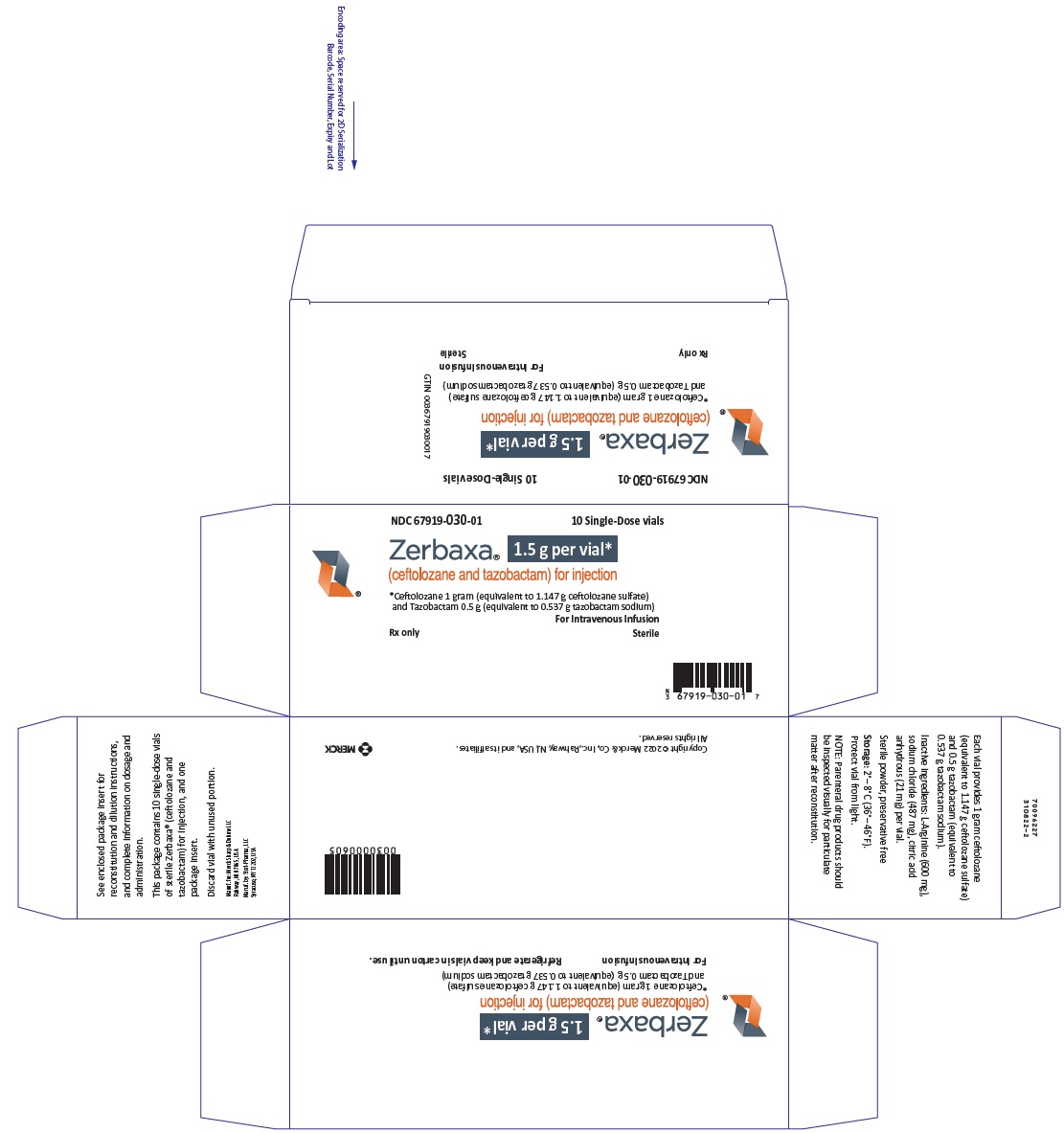
ZERBAXA ceftolozane and tazobactam 1 g/10mL; .5 g/10mL Injection, Powder, Lyophilized, For Solution — NDC 67919-030-01 (Billing 67919-0030-01)
This is a package of ZERBAXA ceftolozane and tazobactam 1 g/10mL; .5 g/10mL Injection, Powder, Lyophilized, For Solution from Merck Sharp & Dohme LLC, marketed since Dec 2014 and currently FDA-listed. It is this product's only package size.
NDC database record
One package, one record: these facts belong to NDC 67919-030-01 alone.
- Record
- FDA NDC Directory package listing · Human prescription drug
- Code segments
- 67919 labeler · 030 product · 01 package
- Package marketed since
- Dec 19, 2014
- Sample package
- No — commercial package
- Listing certified through
- Dec 31, 2027
- Barcode (UPC-A, from the NDC)
- 3 6791903001 7
- Medicaid fills, this package
- 2,396 prescriptions in the last four reported quarters
- FDA record last changed
- Jul 24, 2026
Identity & classification
Regulatory identifiers FDA, NLM and CMS codes for this package
Drug-database identifiers Medi-Span GPI and First Databank GCN / HICL / AHFS classification
- GSN (GCN sequence number): 073233
- GCN: 37609
- GPI-14 (Medi-Span): 02990002352120
- HICL (First Databank): 041641
- AHFS class code: 08:12.06.20
- RxCUI (RxNorm): 1597615
Where does this data come from?
- FDA openFDA NDC Directory · synced Oct 8, 2026
- FDA label on DailyMed · label index refreshed Oct 8, 2026
- RxNorm (NLM RxNav) · catalog refreshed Oct 1, 2026
- Medi-Span GPI (licensed)
- First Databank (licensed) · refreshed Oct 8, 2026
RxNorm drug class
This medicine belongs to the Cephalosporin Antibacterial class.
Where does this data come from?
- RxClass (NLM) · catalog refreshed Oct 1, 2026
Clinical
- It treats complicated abdominal infections (given with metronidazole), complicated urinary tract infections including kidney infections, and pneumonia acquired in the hospital or o...
- It is given through a vein by your healthcare team, usually every 8 hours. Each infusion takes 1 to 2 hours. The total length depends on your infection and how you respond.
- The most common are nausea, diarrhea, headache and fever. Some people have higher liver enzymes or kidney changes, which your team can check with blood tests.
- Tell your nurse or doctor immediately if you have trouble breathing, swelling, hives or faintness. Also report severe or watery diarrhea, which can happen during treatment or even...
Patient education
Supplement & herbal interactions
Where does this data come from?
- MedlinePlus (NLM) · refreshed Oct 8, 2026
- FDA label on DailyMed · label index refreshed Oct 8, 2026
Ask a licensed pharmacist directly — free, answered by our team.
Pricing
A drug doesn't have one price. Each row is a different public payment system, and none is what you'd pay at the counter — that depends on your insurance. The ⓘ on each row explains what it measures.
| Price system | Per mL | Per package |
|---|---|---|
| Retail pharmacies payNADAC · weekly | Not in the retail survey — common for institutional, discontinued, or low-volume packs. | |
| Medicaid paysCMS SDUD · 12 mo | $162.56 | $16,256.36 / 100 ml |
| Medicare drug plans payPart D · Q2 2026 | $190.82 | $19,082.19 / 100 ml |
| Medicare Part B allowsASP · J0695 | $10.038 / J0695 unit | — |
Where does this data come from?
- CMS NADAC weekly file
- CMS ASP pricing files · refreshed Sep 20, 2026
- CMS Medicaid State Drug Utilization Data · through Q1 2026
- CMS Part D plan pricing files · refreshed Sep 24, 2026
- VA National Acquisition Center price file
Billing & reimbursement
Where does this data come from?
- CMS ASP NDC-HCPCS crosswalk · refreshed Sep 22, 2026
- DMEPDAC NDC-HCPCS crosswalk
- openFDA NSDE billing units · refreshed Oct 7, 2026
Packaging — all sizes for this product
| Package NDC | Description | Marketing start | Marketing end | Status |
|---|---|---|---|---|
| 67919-0030-01 You're viewing this Main listing | 10 VIAL, SINGLE-DOSE in 1 CARTON / 10 mL in 1 VIAL, SINGLE-DOSE | 2014-12-19 | — | Active |
Therapeutic equivalents
| Product | Labeler | Pack | NADAC/unit | TE | Status | Price vs. this |
|---|---|---|---|---|---|---|
| Zerbaxa 1 g/10mL; .5 g/10mLthis 67919-0030-01 | Merck | 10 vials | — | — | FDA listed | — |
Where does this data come from?
- FDA openFDA NDC Directory · synced Oct 8, 2026
- FDA Orange Book · refreshed Oct 3, 2026
- CMS NADAC weekly file
Availability & generic status
We did not find an FDA-approved generic match for this exact strength, form and route. Patent/protection dates below may affect future generic timing.
Why the date isn’t exact: Generic timing can change because patents may be challenged, settled, licensed, added, removed, or worked around with a narrower label — and FDA approval does not always mean a pharmacy can get the generic today.
🛈 What do these terms mean?
- Patent
- Legal protection listed in the Orange Book that may delay generic approval or launch. Issued by the U.S. Patent & Trademark Office.
- Substance patent
- Covers the active drug molecule itself — the hardest to design around. A generic generally can’t launch until it expires.
- Formulation (product) patent
- Covers a specific formulation or dosage form. A generic can sometimes work around it with a different formulation.
- Method-of-use patent
- A patent covering one specific approved use of the drug — not necessarily the whole molecule. A generic can sometimes launch with a “skinny label” that carves out the protected use and keeps the others.
- Skinny label
- A generic label that omits a still-patented use when the FDA allows it — letting a generic reach the market for the unprotected uses.
- Exclusivity
- FDA-granted marketing protection, separate from patents — e.g. 5-yr new chemical entity, 7-yr orphan drug, or a +6-month pediatric extension.
- Paragraph IV
- A generic applicant’s formal challenge to a listed patent. It can potentially lead to earlier generic entry, but often involves litigation or a settlement.
- RLD / RS
- Reference Listed Drug — the brand product the FDA uses as the reference for generic applications. Reference Standard — the product the FDA expects generics to compare against in bioequivalence testing.
- TE / AB rating
- FDA therapeutic-equivalence rating. An AB rating generally means the FDA considers a generic therapeutically equivalent to — and substitutable for — the brand.
- LOE (loss of exclusivity)
- The latest patent or exclusivity currently listed — the loss-of-exclusivity / latest-listed-protection date shown on this page. Paragraph-IV challenges and settlements can move the real date earlier; FDA approval and a manufacturer’s decision to market can move it later.
Built from the FDA Orange Book. The bars above are scaled to each protection’s expiry; the red LOE marker is the last one to lapse.
| Patent | Type | Use code | Expires |
|---|---|---|---|
| US 7129232 ↗ | Drug substance | U-36 | May 15, 2028 |
| US 8968753 ↗ | Method of use | U-1673 | Mar 14, 2034 |
| US 8968753 ↗ | Method of use | U-1672 | Mar 14, 2034 |
| US 9724353 ↗ | Method of use | U-2565 | Sep 7, 2032 |
| US 10028963 ↗ | Method of use | U-2566 | Sep 7, 2032 |
| US 7129232 ↗ | Drug substance | U-1676 | May 15, 2028 |
| US 10376496 ↗ | Method of use | U-2611 | Sep 9, 2034 |
| US 10376496 ↗ | Method of use | U-2610 | Sep 9, 2034 |
| US 10420841 ↗ | Method of use | U-2631 | Mar 14, 2034 |
| US 10420841 ↗ | Method of use | U-1672 | Mar 14, 2034 |
| US 10933053 ↗ | Method of use | U-3091 | Sep 9, 2034 |
| US 10933053 ↗ | Method of use | U-3090 | Sep 9, 2034 |
| US 11278622 ↗ | Method of use | U-3335 | Mar 14, 2034 |
| US 11278622 ↗ | Method of use | U-3336 | Mar 14, 2034 |
| US 10028963 ↗ | Method of use | U-2565 | Sep 7, 2032 |
| US 10420841 ↗ | Method of use | U-3361 | Mar 14, 2034 |
| US 10420841 ↗ | Method of use | U-3360 | Mar 14, 2034 |
| US 7129232 ↗ | Drug substance | U-3361 | May 15, 2028 |
| US 7129232 ↗ | Drug substance | U-3360 | May 15, 2028 |
| US 8968753 ↗ | Method of use | U-3361 | Mar 14, 2034 |
| US 8968753 ↗ | Method of use | U-3360 | Mar 14, 2034 |
| US 9724353 ↗ | Method of use | U-2566 | Sep 7, 2032 |
| US 11278622 ↗ | Method of use | U-4542 | Mar 14, 2034 |
| US 11278622 ↗ | Method of use | U-4543 | Mar 14, 2034 |
| US 10933053 ↗ | Method of use | U-4544 | Sep 9, 2034 |
| US 10933053 ↗ | Method of use | U-4545 | Sep 9, 2034 |
| US 10420841 ↗ | Method of use | U-4546 | Mar 14, 2034 |
| US 10420841 ↗ | Method of use | U-4547 | Mar 14, 2034 |
| US 10376496 ↗ | Method of use | U-4548 | Sep 9, 2034 |
| US 10376496 ↗ | Method of use | U-4549 | Sep 9, 2034 |
| US 10028963 ↗ | Method of use | U-4542 | Sep 7, 2032 |
| US 10028963 ↗ | Method of use | U-4543 | Sep 7, 2032 |
| US 9724353 ↗ | Method of use | U-4542 | Sep 7, 2032 |
| US 9724353 ↗ | Method of use | U-4543 | Sep 7, 2032 |
| US 8968753 ↗ | Method of use | U-4550 | Mar 14, 2034 |
| US 8968753 ↗ | Method of use | U-4547 | Mar 14, 2034 |
| US 7129232 ↗ | Drug substance | U-4550 | May 15, 2028 |
| US 7129232 ↗ | Drug substance | U-4547 | May 15, 2028 |
| US 7129232 ↗ | Drug substance | U-4542 | May 15, 2028 |
| US 7129232 ↗ | Drug substance | U-4543 | May 15, 2028 |
| US 10125149 ↗ | Drug product | — | Aug 14, 2035 |
| US 8906898 ↗ | Drug substance | — | May 28, 2034 |
| US 9872906 ↗ | Drug product | — | Mar 14, 2034 |
| US 9320740 ↗ | Drug product | — | Mar 14, 2034 |
| US 7129232*PED ↗ | Drug product | — | Nov 15, 2028 |
| US 8906898*PED ↗ | Drug product | — | Nov 28, 2034 |
| US 8968753*PED ↗ | Drug product | — | Sep 14, 2034 |
| US 9872906*PED ↗ | Drug product | — | Sep 14, 2034 |
| US 9320740*PED ↗ | Drug product | — | Sep 14, 2034 |
| US 10125149*PED ↗ | Drug product | — | Feb 14, 2036 |
| US 10933053*PED ↗ | Drug product | — | Mar 9, 2035 |
| US 10420841*PED ↗ | Drug product | — | Sep 14, 2034 |
| US 9724353*PED ↗ | Drug product | — | Mar 7, 2033 |
| US 10028963*PED ↗ | Drug product | — | Mar 7, 2033 |
| US 11278622*PED ↗ | Drug product | — | Sep 14, 2034 |
| US 10376496*PED ↗ | Drug product | — | Mar 9, 2035 |
| Code | What it grants | Expires |
|---|---|---|
| NPP | New Patient Population | May 12, 2029 |
| PED | Pediatric Exclusivity (+6 months) | Nov 12, 2029 |
Is there a generic version of ZERBAXA 1.5 GRAM VIAL?
The FDA approved a generic — why can’t I get it at my pharmacy yet?
Why do different websites show different generic release dates?
What does “FDA listed” mean?
What does a patent or protection date mean here?
What does “current Orange Book estimate” mean?
Can a generic come out before the last patent expires?
Can a generic come out after the listed dates?
What is the difference between patents and exclusivity?
Why are there multiple patent dates?
Where does this data come from?
- FDA Orange Book · refreshed Oct 3, 2026
What it looks like
Where does this data come from?
- FDA label on DailyMed · label index refreshed Oct 8, 2026
Inactive Ingredients / Excipients
Inactive ingredients, also called excipients, are components of the drug product other than the active ingredient. They may include fillers, dyes, coatings, preservatives, flavors, or other formulation ingredients.
🧪 Avoiding an ingredient? See Ceftolozane and Tazobactam Injection inactive ingredients by manufacturer: every current product's list side by side, so you can ask your pharmacy for the version that does not list it.
💡 Tap an ingredient (hover on desktop) to see what it is and why it’s used.
-
21 mg / 10 mL
UNII XF417D3PSL
Anhydrous citric acid is a sour, crystalline powder derived from citric acid with water removed. In medicines, it acts as a buffer to control pH, adds tartness to improve taste, and helps tablets disintegrate.
-
600 mg / 10 mL
UNII 94ZLA3W45F
Arginine is an amino acid used in medicines as a buffer and pH adjuster. It helps maintain the proper acidity level and stability of liquid formulations.
-
487 mg / 10 mL
UNII 451W47IQ8X
Sodium chloride is common table salt. It's used in medicines as a buffer to maintain proper pH, as a filler to add bulk, or to adjust the osmotic balance in liquid formulations.
3 inactive ingredients listed in the exact product block matched to this NDC.
Where does this data come from?
ingredient classCode="IACT" elements from the exact product block matched by this NDC. Label-section narrative from DailyMed / the openFDA label index is shown separately when available.- FDA label on DailyMed · label index refreshed Oct 8, 2026
- FDA openFDA NDC Directory · synced Oct 8, 2026
Inactive ingredient FAQ
Are inactive ingredients the same for every manufacturer?
Why might an inactive ingredient be missing?
Can inactive ingredients matter?
Manufacturer & labeler
More NDCs from Merck Sharp & Dohme LLC labeler code 67919
Where does this data come from?
- FDA openFDA NDC Directory · synced Oct 8, 2026
- Drugs@FDA
Full prescribing information FDA SPL
🎯 Indications and Usage ▾
1 INDICATIONS AND USAGE ZERBAXA (ceftolozane and tazobactam) is a combination of ceftolozane, a cephalosporin antibacterial, and tazobactam, a beta-lactamase inhibitor, indicated for the treatment of the following infections caused by designated susceptible microorganisms in adult and pediatric patients (at least 32 weeks gestational age): Complicated Intra-abdominal Infections (cIAI), used in combination with metronidazole. ( 1.1 ) Complicated Urinary Tract Infections (cUTI), Including Pyelonephritis. ( 1.2 ) Hospital-acquired Bacterial Pneumonia and Ventilator-associated Bacterial Pneumonia (HABP/VABP).
( 1.3 ) Usage to Reduce Development of Drug-Resistant Bacteria To reduce the development of drug-resistant bacteria and maintain the effectiveness of ZERBAXA and other antibacterial drugs, ZERBAXA should be used only to treat or prevent infections that are proven or strongly suspected to be caused by bacteria. ( 1.4 )
1.1Complicated Intra-abdominal Infections ZERBAXA used in combination with metronidazole is indicated for the treatment of adult and pediatric patients (at least 32 weeks gestational age) with complicated intra-abdominal infections (cIAI) caused by the following susceptible Gram-negative and Gram-positive microorganisms: Enterobacter cloacae, Escherichia coli, Klebsiella oxytoca, Klebsiella pneumoniae, Proteus mirabilis, Pseudomonas aeruginosa, Bacteroides fragilis, Streptococcus anginosus, Streptococcus constellatus, and Streptococcus salivarius .
1.2Complicated Urinary Tract Infections, Including Pyelonephritis ZERBAXA is indicated for the treatment of adult and pediatric patients (at least 32 weeks gestational age) with complicated urinary tract infections (cUTI), including pyelonephritis, caused by the following susceptible Gram-negative microorganisms: Escherichia coli , Klebsiella pneumoniae , Proteus mirabilis , and Pseudomonas aeruginosa .
1.3Hospital-acquired Bacterial Pneumonia and Ventilator-associated Bacterial Pneumonia ZERBAXA is indicated for the treatment of adult and pediatric patients (at least 32 weeks gestational age) with hospital-acquired bacterial pneumonia and ventilator-associated bacterial pneumonia (HABP/VABP), caused by the following susceptible Gram-negative microorganisms: Enterobacter cloacae , Escherichia coli , Haemophilus influenzae , Klebsiella oxytoca , Klebsiella pneumoniae , Proteus mirabilis , Pseudomonas aeruginosa , and Serratia marcescens .
1.4Usage to Reduce Development of Drug-Resistant Bacteria To reduce the development of drug-resistant bacteria and maintain the effectiveness of ZERBAXA and other antibacterial drugs, ZERBAXA should be used only to treat or prevent infections that are proven or strongly suspected to be caused by susceptible bacteria. When culture and susceptibility information are available, they should be considered in selecting or modifying antibacterial therapy. In the absence of such data, local epidemiology and susceptibility patterns may contribute to the empiric selection of therapy.
⏱️ Dosage and Administration ▾
2 DOSAGE AND ADMINISTRATION Administer all doses of ZERBAXA every 8 hours by intravenous infusion over 1 hour in adult patients. ( 2.1 ) Administer all doses of ZERBAXA every 8 hours by intravenous infusion over 1 hour in pediatric patients (at least 32 weeks gestational age) with cIAI or cUTI. ( 2.2 ) Administer all doses of ZERBAXA every 8 hours by intravenous infusion over 2 hours in pediatric patients (at least 32 weeks gestational age) with HABP/VABP.
( 2.2 ) Recommended Dosage of ZERBAXA by Infection in Adult Patients ( 2.1 ) Infection Dose Duration of Treatment cIAI Used in conjunction with metronidazole 500 mg intravenously every 8 hours ZERBAXA 1.5 g Administer all doses of ZERBAXA intravenously every 8 hours over 1 hour Provides 1 g ceftolozane and 0.5 g tazobactam 4 to 14 days cUTI, Including Pyelonephritis ZERBAXA 1.5 g 7 days HABP/VABP ZERBAXA 3 g Provides 2 g ceftolozane and 1 g tazobactam 8 to 14 days Recommended Dosage of ZERBAXA by infection in Pediatric Patients (at least 32 weeks gestational age) ( 2.2 ) Infection Dose Duration of Treatment cIAI Used in conjunction with metronidazole.
ZERBAXA 30 mg/kg Provides 20 mg/kg ceftolozane and 10 mg/kg tazobactam. Pediatric patients with cIAI or cUTI weighing greater than 50 kg should not exceed a maximum dose of 1.5 g. up to a maximum dose of 1.5 g Administer all doses of ZERBAXA intravenously every 8 hours over 1 hour in pediatric patients with cIAI or cUTI. Provides 1 g ceftolozane and 0.5 g tazobactam.
5 to 14 days cUTI, Including Pyelonephritis ZERBAXA 30 mg/kg up to a maximum dose of 1.5 g 7 to 14 days HABP/VABP (at least 32 weeks gestational age to less than 2 years) ZERBAXA 60 mg/kg Provides 40 mg/kg ceftolozane and 20 mg/kg tazobactam. up to a maximum dose of 3 g Administer all doses of ZERBAXA intravenously every 8 hours over 2 hours in pediatric patients with HABP/VABP. Provides 2 g ceftolozane and 1 g tazobactam. Pediatric patients with HABP/VABP weighing greater than 40 kg should not exceed a maximum dose of 3 g.
8 to 14 days HABP/VABP (from 2 years and older) ZERBAXA 75 mg/kg Provides 50 mg/kg ceftolozane and 25 mg/kg tazobactam. up to a maximum dose of 3 g 8 to 14 days Dosage adjustment is recommended in adult patients and in pediatric patients aged 2 years of age and older with renal impairment. There is insufficient information to recommend a dosage for pediatric patients younger than 2 years of age with renal impairment. ( 2.3 , 2.4 ) See Full Prescribing Information for instructions on the preparation of solutions.
( 2.3 ) For doses above 1.5 g, reconstitute a second vial in the same manner as the first one, withdraw an appropriate volume (per Table 4 in the Full Prescribing Information), and add to the same infusion bag. ( 2.3 )
2.1Recommended Dosage in Adult Patients The recommended dosage of ZERBAXA in adult patients is 1.5 gram (g) (ceftolozane 1 g and tazobactam 0.5 g) for cIAI and cUTI and 3 g (ceftolozane 2 g and tazobactam 1 g) for HABP/VABP administered every 8 hours by intravenous infusion over 1 hour. As shown in Table 1, guide the duration of therapy by the severity and site of infection and the patient’s clinical and bacteriological progress. For the treatment of cIAI, administer metronidazole concurrently.
See Table 3 for the recommended dosage in adult patients with renal impairment, [see Dosage and Administration (2.3) ] Table 1: Recommended Dosage of ZERBAXA by Infection in Adult Patients Infection Dose Frequency Infusion Time Duration of Treatment Complicated Intra-abdominal Infections Used in conjunction with metronidazole 500 mg intravenously every 8 hours ZERBAXA 1.5 g Provides 1 g ceftolozane and 0.5 g tazobactam Every 8 Hours 1 hour 4 to 14 days Complicated Urinary Tract Infections, Including Pyelonephritis ZERBAXA 1.5 g Every 8 Hours 1 hour 7 days Hospital-acquired Bacterial Pneumonia and Ventilator-associated Bacterial Pneumonia ZERBAXA 3 g Provides 2 g ceftolozane and 1 g tazobactam Every 8 Hours 1 hour 8 to 14 days
2.2R… [Excerpted — this section continues on DailyMed.]
💊 Dosage Forms and Strengths ▾
3 DOSAGE FORMS AND STRENGTHS ZERBAXA 1.5 g (ceftolozane and tazobactam) for injection is supplied as a white to yellow sterile powder for reconstitution in single-dose vials; each vial contains ceftolozane 1 g (equivalent to 1.147 g of ceftolozane sulfate) and tazobactam 0.5 g (equivalent to 0.537 g of tazobactam sodium). ZERBAXA 1.5 g (ceftolozane and tazobactam) for injection supplied as a sterile powder for reconstitution in single-dose vials containing ceftolozane 1 g (equivalent to 1.147 g ceftolozane sulfate) and tazobactam 0.5 g (equivalent to 0.537 g tazobactam sodium).
( 3 )
⛔ Contraindications ▾
4 CONTRAINDICATIONS ZERBAXA is contraindicated in patients with known serious hypersensitivity to the components of ZERBAXA (ceftolozane and tazobactam), piperacillin/tazobactam, or other members of the beta-lactam class. ZERBAXA is contraindicated in patients with known serious hypersensitivity to the components of ZERBAXA (ceftolozane and tazobactam), piperacillin/tazobactam, or other members of the beta-lactam class. ( 4 )
⚠️ Warnings and Cautions ▾
5 WARNINGS AND PRECAUTIONS Decreased efficacy was observed in a Phase 3 cIAI trial in a subgroup of patients with baseline CrCl of 30 to 50 mL/min. Monitor CrCl at least daily in patients with changing renal function and adjust the dose of ZERBAXA accordingly. ( 5.1 ) Serious hypersensitivity (anaphylactic) reactions have been reported with beta-lactam antibacterial drugs.
Exercise caution in patients with known hypersensitivity to beta-lactam antibacterial drugs. If an anaphylactic reaction to ZERBAXA occurs, discontinue the drug and institute appropriate therapy. ( 5.2 ) Clostridioides difficile -Associated Diarrhea (has been reported with nearly all systemic antibacterial agents, including ZERBAXA.
Evaluate if diarrhea occurs. ( 5.3 )
5.1Decreased Efficacy in Patients with Baseline Creatinine Clearance of 30 to 50 mL/min In a subgroup analysis of a Phase 3 cIAI trial of adult patients, clinical cure rates were lower in patients with baseline CrCl of 30 to 50 mL/min compared to those with CrCl greater than 50 mL/min (Table 6). The reduction in clinical cure rates was more marked in the ZERBAXA plus metronidazole arm compared to the meropenem arm. A similar trend was also seen in the cUTI trial.
Monitor CrCl at least daily in patients with changing renal function and adjust the dosage of ZERBAXA accordingly [see Dosage and Administration (2.2) ] . Table 6: Clinical Cure Rates in a Phase 3 Trial of Adult cIAI Patients by Baseline Renal Function (MITT Population) Baseline Renal Function ZERBAXA plus Metronidazole n/N (%) Meropenem n/N (%) CrCl greater than 50 mL/min 312/366 (85.2) 355/404 (87.9) CrCl 30 to 50 mL/min 11/23 (47.8) 9/13 (69.2)
5.2Hypersensitivity Reactions Serious and occasionally fatal hypersensitivity (anaphylactic) reactions have been reported in patients receiving beta-lactam antibacterial drugs. Before initiating therapy with ZERBAXA, make careful inquiry about previous hypersensitivity reactions to other cephalosporins, penicillins, or other beta-lactams. If this product is to be given to a patient with a cephalosporin, penicillin, or other beta-lactam allergy, exercise caution because cross sensitivity has been established.
If an anaphylactic reaction to ZERBAXA occurs, discontinue the drug and institute appropriate therapy.
5.3Clostridioides difficile -Associated Diarrhea Clostridioides difficile -associated diarrhea (CDAD) has been reported for nearly all systemic antibacterial agents, including ZERBAXA, and may range in severity from mild diarrhea to fatal colitis. Treatment with antibacterial agents alters the normal flora of the colon and may permit overgrowth of C . difficile . C. difficile produces toxins A and B which contribute to the development of CDAD.
CDAD must be considered in all patients who present with diarrhea following antibacterial use. Careful medical history is necessary because CDAD has been reported to occur more than 2 months after the administration of antibacterial agents. If CDAD is confirmed, discontinue antibacterials not directed against C. difficile , if possible.
Manage fluid and electrolyte levels as appropriate, supplement protein intake, monitor antibacterial treatment of C. difficile , and institute surgical evaluation as clinically indicated.
5.4Development of Drug-resistant Bacteria Prescribing ZERBAXA in the absence of a proven or strongly suspected bacterial infection or a prophylactic indication is unlikely to provide benefit to the patient and risks the development of drug-resistant bacteria.
🤒 Adverse Reactions ▾
6 ADVERSE REACTIONS The following serious reactions are described in greater detail in the Warnings and Precautions section: Hypersensitivity reactions [see Warnings and Precautions (5.2) ] Clostridioides difficile -associated diarrhea [see Warnings and Precautions (5.3) ] Adult cIAI, cUTI and HABP/VABP Patients : The most common adverse reactions in adult patients (≥5% in either the cIAI or cUTI indication) are nausea, diarrhea, headache, and pyrexia. ( 6.1 ) The most common adverse reactions (≥5% in the HABP/VABP indication) are increase in hepatic transaminases, renal impairment/renal failure, and diarrhea.
( 6.1 ) Pediatric cIAI, cUTI and HABP/VABP Patients: The most common adverse reactions in pediatric patients (≥7% in cIAI, cUTI, or HABP/VABP) are thrombocytosis, diarrhea, pyrexia, leukopenia, abdominal pain, vomiting, increased aspartate aminotransferase, increased alanine aminotransferase, and anemia. ( 6.1 ) To report SUSPECTED ADVERSE REACTIONS, contact Merck Sharp & Dohme LLC at 1-877-888-4231 or FDA at 1-800-FDA-1088 or www.fda.gov/medwatch .
6.1Clinical Trials Experience Because clinical trials are conducted under widely varying conditions, adverse reaction rates observed in the clinical trials of a drug cannot be directly compared to rates in the clinical trials of another drug and also may not reflect rates observed in practice. Adult Patients Complicated Intra-abdominal Infections and Complicated Urinary Tract Infections, Including Pyelonephritis ZERBAXA was evaluated in Phase 3 comparator-controlled clinical trials of cIAI (Trial 1) and cUTI (Trial 2), which included a total of 1015 patients treated with ZERBAXA (1.5 g every 8 hours, adjusted based on renal function where appropriate) and 1032 patients treated with comparator (levofloxacin 750 mg daily in cUTI or meropenem 1 g every 8 hours in cIAI) for up to 14 days.
The mean age of treated patients was 48 to 50 years (range 18 to 92 years), across treatment arms and indications. In both indications, about 25% of the subjects were 65 years of age or older. Most patients (75%) enrolled in the cUTI trial were female, and most patients (58%) enrolled in the cIAI trial were male.
Most patients (>70%) in both trials were enrolled in Eastern Europe and were White. The most common adverse reactions (5% or greater in either indication) occurring in patients receiving ZERBAXA were nausea, diarrhea, headache, and pyrexia. Table 7 lists adverse reactions occurring in 1% or greater of patients receiving ZERBAXA in Phase 3 cIAI and cUTI clinical trials.
Table 7: Adverse Reactions Occurring in 1% or Greater of Adult Patients Receiving ZERBAXA in Phase 3 cIAI and cUTI Clinical Trials (Trial 1 and Trial 2) Adverse Reaction Complicated Intra-abdominal Infections Complicated Urinary Tract Infections, Including Pyelonephritis ZERBAXA The ZERBAXA for injection dose was 1.5 g intravenously every 8 hours, adjusted to match renal function where appropriate. In the cIAI trials, ZERBAXA was given in conjunction with metronidazole. (N=482) n (%) Meropenem (N=497) n (%) ZERBAXA (N=533) n (%) Levofloxacin (N=535) n (%) Nausea 38 (7.9) 29 (5.8) 15 (2.8) 9 (1.7) Headache 12 (2.5) 9 (1.8) 31 (5.8) 26 (4.9) Diarrhea 30 (6.2) 25 (5) 10 (1.9) 23 (4.3) Pyrexia 27 (5.6) 20 (4) 9 (1.7) 5 (0.9) Constipation 9 (1.9) 6 (1.2) 21 (3.9) 17 (3.2) Insomnia 17 (3.5) 11 (2.2) 7 (1.3) 14 (2.6) Vomiting 16 (3.3) 20 (4) 6 (1.1) 6 (1.1) Hypokalemia 16 (3.3) 10 (2) 4 (0.8) 2 (0.4) ALT increased 7 (1.5) 5 (1) 9 (1.7) 5 (0.9) AST increased 5 (1) 3 (0.6) 9 (1.7) 5 (0.9) Anemia 7 (1.5) 5 (1) 2 (0.4) 5 (0.9) Thrombocytosis 9 (1.9) 5 (1) 2 (0.4) 2 (0.4) Abdominal pain 6 (1.2) 2 (0.4) 4 (0.8) 2 (0.4) Anxiety 9 (1.9) 7 (1.4) 1 (0.2) 4 (0.7) Dizziness 4 (0.8) 5 (1) 6 (1.1) 1 (0.2) Hypotension 8 (1.7) 4 (0.8) 2 (0.4) 1 (0.2) Atrial fibrillation 6 (1.2) 3 (0.6) 1 (0.2) 0 Rash 8 (1.7) 7 (1.4) 5 (0.9) 2 (0.4) Treatment discontinuation due to adverse events occurred in 2.0% (20/1015) of patients receiving ZERBAXA and 1.9%… [Excerpted — this section continues on DailyMed.]
👥 Use in Specific Populations ▾
8 USE IN SPECIFIC POPULATIONS Geriatrics: Higher incidence of adverse reactions was observed in patients aged 65 years and older. In a Phase 3 cIAI trial, cure rates were lower in patients 65 years and older. ( 8.5 )
8.1Pregnancy Risk Summary There are no data available on ZERBAXA, ceftolozane or tazobactam use in pregnant women to allow assessment of a drug-associated risk of major birth defects, miscarriage or adverse maternal or fetal outcomes. Available data from published prospective cohort studies, case series, and case reports over several decades have not identified an association of cephalosporin use during pregnancy with major birth defects, miscarriage, or other adverse maternal or fetal outcomes (see Data ). Neither ceftolozane nor tazobactam produced embryo-fetal toxicity when administered to rodents during the period of organogenesis at ceftolozane doses approximately 3.5 times higher in mice and 2 times higher in rats than the maximum recommended human dose (MRHD) of 2 grams every 8 hours based on plasma AUC comparison or at tazobactam doses approximately 10 times higher in rats than the MRHD of 1 gram every 8 hours based on body surface area comparison.
In pre-postnatal studies, where pregnant rats were administered intravenous ceftolozane or intraperitoneal tazobactam in gestation and through the lactation period, ceftolozane was associated with a decrease in auditory startle response in first generation offspring at a dose lower than the MRHD based on AUC comparison, and tazobactam was associated with reduced maternal body weight gain and increased stillbirths at a dose equivalent to approximately 4 times the MRHD and reduced fetal body weights in first generation offspring at a dose approximately equivalent to the MRHD based on body surface area comparison (see Data ).
The estimated background risk of major birth defects and miscarriage for the indicated population is unknown. All pregnancies have a background risk of birth defect, loss, or other adverse outcomes. In the U.S. general population, the estimated background risk of major birth defects and miscarriage in clinically recognized pregnancies is 2 to 4% and 15 to 20%, respectively.
Data Human Data While available studies with multiple cephalosporins cannot definitively establish the absence of risk, published data from prospective cohort studies, case series, and case reports over several decades have not identified an association of cephalosporin use during pregnancy with major birth defects, miscarriage, or other adverse maternal or fetal outcomes. Available studies have methodologic limitations, including small sample size, retrospective data collection, and inconsistent comparator groups. Animal Data Ceftolozane Embryo-fetal development studies were performed in mice administered intravenous ceftolozane at doses of 300, 1000, and 2000 mg/kg/day during the period of organogenesis (Gestation Day 6 through 15) and in rats administered intravenous ceftolozane in doses of 100, 300, and 1000 mg/kg/day during the period of organogenesis (Gestation Day 6 through 17).
In mice, ceftolozane was not associated with maternal or embryo-fetal toxicity with doses up to the highest dose of 2000 mg/kg/ day (approximately 3.5 times the MRHD of 2 grams every 8 hours based on plasma AUC comparison). In rats, no embryo-fetal toxicity was observed, but maternal body weight gain was reduced at a ceftolozane dose of 1000 mg/kg/day. No adverse maternal effects in rats were observed at a dose of 300 mg/kg/day and no adverse embryo-fetal effects were observed at a dose of 1000 mg/kg/day (respectively equivalent to approximately 0.7- and 2-times the MRHD based on plasma AUC comparison).
In a pre-postnatal study in rats, intravenous ceftolozane administered during pregnancy and lactation (Gestation Day 6 through Lactation Day 20) was associated with a decrease in auditory startle response in postnatal Day 60 male pups at maternal doses greater than or equal to 300 mg/kg/day.… [Excerpted — this section continues on DailyMed.]
🤰 Pregnancy ▾
8.1Pregnancy Risk Summary There are no data available on ZERBAXA, ceftolozane or tazobactam use in pregnant women to allow assessment of a drug-associated risk of major birth defects, miscarriage or adverse maternal or fetal outcomes. Available data from published prospective cohort studies, case series, and case reports over several decades have not identified an association of cephalosporin use during pregnancy with major birth defects, miscarriage, or other adverse maternal or fetal outcomes (see Data ). Neither ceftolozane nor tazobactam produced embryo-fetal toxicity when administered to rodents during the period of organogenesis at ceftolozane doses approximately 3.5 times higher in mice and 2 times higher in rats than the maximum recommended human dose (MRHD) of 2 grams every 8 hours based on plasma AUC comparison or at tazobactam doses approximately 10 times higher in rats than the MRHD of 1 gram every 8 hours based on body surface area comparison.
In pre-postnatal studies, where pregnant rats were administered intravenous ceftolozane or intraperitoneal tazobactam in gestation and through the lactation period, ceftolozane was associated with a decrease in auditory startle response in first generation offspring at a dose lower than the MRHD based on AUC comparison, and tazobactam was associated with reduced maternal body weight gain and increased stillbirths at a dose equivalent to approximately 4 times the MRHD and reduced fetal body weights in first generation offspring at a dose approximately equivalent to the MRHD based on body surface area comparison (see Data ).
The estimated background risk of major birth defects and miscarriage for the indicated population is unknown. All pregnancies have a background risk of birth defect, loss, or other adverse outcomes. In the U.S. general population, the estimated background risk of major birth defects and miscarriage in clinically recognized pregnancies is 2 to 4% and 15 to 20%, respectively.
Data Human Data While available studies with multiple cephalosporins cannot definitively establish the absence of risk, published data from prospective cohort studies, case series, and case reports over several decades have not identified an association of cephalosporin use during pregnancy with major birth defects, miscarriage, or other adverse maternal or fetal outcomes. Available studies have methodologic limitations, including small sample size, retrospective data collection, and inconsistent comparator groups. Animal Data Ceftolozane Embryo-fetal development studies were performed in mice administered intravenous ceftolozane at doses of 300, 1000, and 2000 mg/kg/day during the period of organogenesis (Gestation Day 6 through 15) and in rats administered intravenous ceftolozane in doses of 100, 300, and 1000 mg/kg/day during the period of organogenesis (Gestation Day 6 through 17).
In mice, ceftolozane was not associated with maternal or embryo-fetal toxicity with doses up to the highest dose of 2000 mg/kg/ day (approximately 3.5 times the MRHD of 2 grams every 8 hours based on plasma AUC comparison). In rats, no embryo-fetal toxicity was observed, but maternal body weight gain was reduced at a ceftolozane dose of 1000 mg/kg/day. No adverse maternal effects in rats were observed at a dose of 300 mg/kg/day and no adverse embryo-fetal effects were observed at a dose of 1000 mg/kg/day (respectively equivalent to approximately 0.7- and 2-times the MRHD based on plasma AUC comparison).
In a pre-postnatal study in rats, intravenous ceftolozane administered during pregnancy and lactation (Gestation Day 6 through Lactation Day 20) was associated with a decrease in auditory startle response in postnatal Day 60 male pups at maternal doses greater than or equal to 300 mg/kg/day. No adverse effects were observed in rats at a dose of 100 mg/kg/day, a dose lower than the MRHD of 2 grams every 8 hours based on plasma AUC comparison. Tazobactam In an embryo-fetal study in rats, tazobactam was admi… [Excerpted — this section continues on DailyMed.]
🧒 Pediatric Use ▾
8.4Pediatric Use The safety and effectiveness of ZERBAXA for the treatment of cIAI, cUTI, and HABP/VABP have been established in pediatric patients at least 32 weeks gestational age and older. Use of ZERBAXA in this age group is supported by evidence from adequate and well-controlled trials of ZERBAXA in adults with additional pharmacokinetic and safety data from trials in pediatric patients with cUTI, cIAI, and HABP/VABP [see Adverse Reactions (6.1) , Clinical Pharmacology (12.3) , and Clinical Studies (14) ] . The safety profile of ZERBAXA in pediatric patients was similar to adults with cIAI, cUTI, and HABP/VABP treated with ZERBAXA [see Adverse Reactions (6.1) ] .
See Table 4 for recommended dosage in pediatric patients 2 years of age and older with renal impairment [see Dosage and Administration (2.4) ] . There is insufficient information to establish dosing for pediatric patients younger than 2 years of age with renal impairment [see Dosage and Administration (2.4) and Clinical Pharmacology (12.3) ]. The safety and effectiveness of ZERBAXA have not been established in pediatric patients less than 32 weeks gestational age.
ZERBAXA is not recommended in pediatric patients younger than 2 years of age with renal impairment [see Use in Specific Populations (8.6) and Clinical Pharmacology (12.3) ].
🧓 Geriatric Use ▾
8.5Geriatric Use Of the 1015 patients treated with ZERBAXA in the Phase 3 cIAI and cUTI clinical trials, 250 (24.6%) were 65 years or older, including 113 (11.1%) 75 years or older. The incidence of adverse events in both treatment groups was higher in older subjects (65 years or older) in the trials for both indications. In the cIAI trial, cure rates in the elderly (aged 65 years and older) in the ZERBAXA plus metronidazole arm were 69/100 (69%) and in the comparator arm were 70/85 (82.4%).
This finding in the elderly population was not observed in the cUTI trial. Of the 361 patients treated with ZERBAXA in the Phase 3 HABP/VABP clinical trial, 160 (44.3%) were 65 years or older, including 83 (23%) 75 years or older. The incidence of adverse events in both treatment groups was higher in older subjects (65 years or older).
In the trial, Day 28 all-cause mortality rates in the elderly (aged 65 years and older) were comparable between treatment arms:50/160 (31.3%) in the ZERBAXA arm and 54/160 (33.8%) in the comparator arm. ZERBAXA is substantially excreted by the kidney and the risk of adverse reactions to ZERBAXA may be greater in patients with renal impairment. Because elderly patients are more likely to have decreased renal function, care should be taken in dose selection, and it may be useful to monitor renal function.
Adjust dosage for elderly patients based on renal function [see Dosage and Administration (2.2) and Clinical Pharmacology (12.3) ] .
🆘 Overdosage ▾
10 OVERDOSAGE In the event of overdose, discontinue ZERBAXA and provide general supportive treatment. ZERBAXA can be removed by intermittent hemodialysis. Approximately 66% of ceftolozane, 56% of tazobactam, and 51% of the tazobactam metabolite M1 were removed by dialysis. No information is available on the use of intermittent hemodialysis to treat overdosage.
🧬 Clinical Pharmacology ▾
12 CLINICAL PHARMACOLOGY
12.1Mechanism of Action ZERBAXA is an antibacterial drug [see Clinical Pharmacology (12.4) ] .
12.2Pharmacodynamics As with other beta-lactam antibacterial agents, the percent time of dosing interval that the plasma concentration of ceftolozane exceeds the minimum inhibitory concentration (MIC) of the infecting organism has been shown to be the best predictor of efficacy in animal models of infection. The percent time of dosing interval that the plasma concentration of tazobactam exceeds a threshold concentration has been determined to be the parameter that best predicts the efficacy of tazobactam in in vitro and in vivo models.
The exposure-response analyses in efficacy and safety clinical trials for cIAI, cUTI, and HABP/VABP support the recommended dose regimens of ZERBAXA. Cardiac Electrophysiology In a randomized, positive and placebo-controlled crossover thorough QTc study, 51 healthy subjects were administered a single therapeutic dose of ZERBAXA 1.5 gram (ceftolozane 1 g and tazobactam 0.5 g) and a supratherapeutic dose of ZERBAXA 4.5 gram (ceftolozane 3 g and tazobactam 1.5 g). No significant effects of ZERBAXA on heart rate, electrocardiogram morphology, PR, QRS, or QT interval were detected.
12.3Pharmacokinetics Ceftolozane and tazobactam pharmacokinetics are similar following single- and multiple-dose administrations. The C max and AUC of ceftolozane and tazobactam increase in proportion to dose. The mean steady-state population pharmacokinetic parameters of ZERBAXA in patients with cIAI and cUTI receiving 1-hour intravenous infusions of ZERBAXA 1.5 g (ceftolozane 1 g and tazobactam 0.5 g) or patients with HABP/VABP receiving 1-hour intravenous infusions of ZERBAXA 3 g (ceftolozane 2 g and tazobactam 1 g) every 8 hours are summarized in Table 10.
Table 10: Mean (SD) Steady-State Plasma Population Pharmacokinetic Parameters of ZERBAXA (ceftolozane and tazobactam) after Multiple Intravenous 1-hour Infusions of ZERBAXA 1.5 g (ceftolozane 1 g and tazobactam 0.5 g) or 3 g (ceftolozane 2 g and tazobactam 1 g) Every 8 Hours in Adult Patients with CrCl Greater than 50 mL/min PK parameters ZERBAXA 1.5 g (ceftolozane 1 g and tazobactam 0.5 g) in cIAI and cUTI Patients ZERBAXA 3 g (ceftolozane 2 g and tazobactam 1 g) in HABP/VABP Patients Ceftolozane (n=317) Tazobactam (n=244) Ceftolozane (n=247) Tazobactam (n=247) C max (mcg/mL) 65.7 (27) 17.8 (9) 105 (46) 26.4 (13) AUC 0-8,ss (mcg∙h/mL) 186 (74) 35.8 (57) 392 (236) 73.3 (76) Distribution The binding of ceftolozane and tazobactam to human plasma proteins is approximately 16% to 21% and 30%, respectively.
The mean (CV%) steady-state volume of distribution of ZERBAXA in healthy adult males (n = 51) following a single intravenous dose of ZERBAXA 1.5 g (ceftolozane 1 g and tazobactam 0.5 g) was
13.5 L (21%) and
18.2L (25%) for ceftolozane and tazobactam, respectively, similar to extracellular fluid volume. Following 1-hour intravenous infusions of ZERBAXA 3 g (ceftolozane 2 g and tazobactam 1 g) or adjusted based on renal function every 8 hours in ventilated patients with confirmed or suspected pneumonia (N=22), mean pulmonary epithelial lining fluid-to-free plasma AUC ratios of ceftolozane and tazobactam were approximately 50% and 62%, respectively, and are similar to those in healthy subjects (approximately 61% and 63%, respectively) receiving ZERBAXA 1.5 g (ceftolozane 1 g and tazobactam 0.5 g).
Minimum ceftolozane and tazobactam epithelial lung lining fluid concentrations in ventilated subjects at the end of the dosing interval were 8.2 mcg/mL and 1.0 mcg/mL, respectively. Elimination Ceftolozane is eliminated from the body by renal excretion with a mean half-life of approximately 3 to 4 hours. Tazobactam is eliminated by renal excretion and metabolism with a plasma mean half-life of approximately 2 to 3 hours.
The elimination half-life (t 1/2 ) of ceftolozane or tazobactam is independent of dose. Metabolism Ceftolozane does not appear to be metab… [Excerpted — this section continues on DailyMed.]
🧬 Mechanism of Action ▾
12.1Mechanism of Action ZERBAXA is an antibacterial drug [see Clinical Pharmacology (12.4) ] .
📦 How Supplied / Storage and Handling ▾
16 HOW SUPPLIED/STORAGE AND HANDLING
16.1How Supplied ZERBAXA 1.5 g (ceftolozane and tazobactam) for injection is supplied in single-dose vials containing ceftolozane 1 g (equivalent to 1.147 g of ceftolozane sulfate) and tazobactam 0.5 g (equivalent to 0.537 g of tazobactam sodium) per vial. Vials are supplied in cartons containing 10 vials. (NDC 67919-030-01)
16.2Storage and Handling ZERBAXA vials should be stored refrigerated at 2°C to 8°C (36°F to 46°F) and protected from light. Storage after reconstitution and dilution is described elsewhere in the labeling [see Dosage and Administration (2.7) ] .
📦 Storage and Handling ▾
16.2Storage and Handling ZERBAXA vials should be stored refrigerated at 2°C to 8°C (36°F to 46°F) and protected from light. Storage after reconstitution and dilution is described elsewhere in the labeling [see Dosage and Administration (2.7) ] .
📋 Description ▾
11 DESCRIPTION ZERBAXA (ceftolozane and tazobactam) is an antibacterial combination product consisting of the cephalosporin antibacterial drug ceftolozane sulfate and the beta-lactamase inhibitor tazobactam sodium for intravenous administration. Ceftolozane sulfate is a semi-synthetic antibacterial drug of the beta-lactam class for parenteral administration. The chemical name of ceftolozane sulfate is 1 H -Pyrazolium, 5-amino-4-[[[(2-aminoethyl)amino]carbonyl]amino]-2-[[(6 R ,7 R )-7-[[(2 Z )-2-(5-amino-1,2,4-thiadiazol-3-yl)-2-[(1-carboxy-1-methylethoxy)imino]acetyl]amino]-2-carboxy-8-oxo-5-thia-1-azabicyclo[4.2.0]oct-2-en-3-yl]methyl]-1-methyl-,sulfate (1:1).
The molecular formula is C 23 H 31 N 12 O 8 S 2 + ∙HSO 4 - and the molecular weight is 764.77. Figure 1: Chemical structure of ceftolozane sulfate Tazobactam sodium, a derivative of the penicillin nucleus, is a penicillanic acid sulfone. Its chemical name is sodium (2S,3S,5R)-3-methyl-7-oxo-3-(1H-1,2,3-triazol-1-ylmethyl)-4-thia-1-azabicyclo[3.2.0]heptane-2-carboxylate-4,4-dioxide.
The chemical formula is C 10 H 11 N 4 NaO 5 S and the molecular weight is 322.3. Figure 2: Chemical structure of tazobactam sodium ZERBAXA 1.5 g (ceftolozane and tazobactam) for injection is a white to yellow sterile powder for reconstitution consisting of ceftolozane 1 g (equivalent to 1.147 g of ceftolozane sulfate) and tazobactam 0.5 g (equivalent to 0.537 g of tazobactam sodium) per vial, packaged in single-dose glass vials. The product contains sodium chloride (487 mg/vial) as a stabilizing agent, citric acid (21 mg/vial), and L-arginine (approximately 600 mg/vial) as excipients.
Figure 1 Figure 2
💬 Information for Patients ▾
17 PATIENT COUNSELING INFORMATION Serious Allergic Reactions Advise patient that allergic reactions, including serious allergic reactions, could occur and that serious reactions require immediate treatment. Ask patient about any previous hypersensitivity reactions to ZERBAXA, other beta-lactams (including cephalosporins) or other allergens [see Warnings and Precautions (5.2) ] . Potentially Serious Diarrhea Advise patient that diarrhea is a common problem caused by antibacterial drugs.
Sometimes, frequent watery or bloody diarrhea may occur and may be a sign of a more serious intestinal infection. If severe watery or bloody diarrhea develops, tell patient to contact his or her healthcare provider [see Warnings and Precautions (5.3) ] . Antibacterial Resistance Patients should be counseled that antibacterial drugs including ZERBAXA should only be used to treat bacterial infections.
They do not treat viral infections (e.g., the common cold). When ZERBAXA is prescribed to treat a bacterial infection, patients should be told that although it is common to feel better early in the course of therapy, the medication should be taken exactly as directed. Skipping doses or not completing the full course of therapy may (1) decrease the effectiveness of the immediate treatment and (2) increase the likelihood that bacteria will develop resistance and will not be treatable by ZERBAXA or other antibacterial drugs in the future [see Warnings and Precautions (5.4) ] .
🧬 Pharmacokinetics ▾
12.3Pharmacokinetics Ceftolozane and tazobactam pharmacokinetics are similar following single- and multiple-dose administrations. The C max and AUC of ceftolozane and tazobactam increase in proportion to dose. The mean steady-state population pharmacokinetic parameters of ZERBAXA in patients with cIAI and cUTI receiving 1-hour intravenous infusions of ZERBAXA 1.5 g (ceftolozane 1 g and tazobactam 0.5 g) or patients with HABP/VABP receiving 1-hour intravenous infusions of ZERBAXA 3 g (ceftolozane 2 g and tazobactam 1 g) every 8 hours are summarized in Table 10.
Table 10: Mean (SD) Steady-State Plasma Population Pharmacokinetic Parameters of ZERBAXA (ceftolozane and tazobactam) after Multiple Intravenous 1-hour Infusions of ZERBAXA 1.5 g (ceftolozane 1 g and tazobactam 0.5 g) or 3 g (ceftolozane 2 g and tazobactam 1 g) Every 8 Hours in Adult Patients with CrCl Greater than 50 mL/min PK parameters ZERBAXA 1.5 g (ceftolozane 1 g and tazobactam 0.5 g) in cIAI and cUTI Patients ZERBAXA 3 g (ceftolozane 2 g and tazobactam 1 g) in HABP/VABP Patients Ceftolozane (n=317) Tazobactam (n=244) Ceftolozane (n=247) Tazobactam (n=247) C max (mcg/mL) 65.7 (27) 17.8 (9) 105 (46) 26.4 (13) AUC 0-8,ss (mcg∙h/mL) 186 (74) 35.8 (57) 392 (236) 73.3 (76) Distribution The binding of ceftolozane and tazobactam to human plasma proteins is approximately 16% to 21% and 30%, respectively.
The mean (CV%) steady-state volume of distribution of ZERBAXA in healthy adult males (n = 51) following a single intravenous dose of ZERBAXA 1.5 g (ceftolozane 1 g and tazobactam 0.5 g) was
13.5 L (21%) and
18.2L (25%) for ceftolozane and tazobactam, respectively, similar to extracellular fluid volume. Following 1-hour intravenous infusions of ZERBAXA 3 g (ceftolozane 2 g and tazobactam 1 g) or adjusted based on renal function every 8 hours in ventilated patients with confirmed or suspected pneumonia (N=22), mean pulmonary epithelial lining fluid-to-free plasma AUC ratios of ceftolozane and tazobactam were approximately 50% and 62%, respectively, and are similar to those in healthy subjects (approximately 61% and 63%, respectively) receiving ZERBAXA 1.5 g (ceftolozane 1 g and tazobactam 0.5 g).
Minimum ceftolozane and tazobactam epithelial lung lining fluid concentrations in ventilated subjects at the end of the dosing interval were 8.2 mcg/mL and 1.0 mcg/mL, respectively. Elimination Ceftolozane is eliminated from the body by renal excretion with a mean half-life of approximately 3 to 4 hours. Tazobactam is eliminated by renal excretion and metabolism with a plasma mean half-life of approximately 2 to 3 hours.
The elimination half-life (t 1/2 ) of ceftolozane or tazobactam is independent of dose. Metabolism Ceftolozane does not appear to be metabolized to any appreciable extent and is not a substrate for CYP enzymes. The beta-lactam ring of tazobactam is hydrolyzed to form the pharmacologically inactive tazobactam metabolite M1.
Excretion Ceftolozane, tazobactam and the tazobactam metabolite M1 are excreted by the kidneys. Following administration of a single ZERBAXA 1.5 g (ceftolozane 1 g and tazobactam 0.5 g) intravenous dose to healthy male adults, greater than 95% of ceftolozane was excreted in the urine as unchanged parent drug. More than 80% of tazobactam was excreted as the parent compound with the remainder excreted as the tazobactam M1 metabolite.
After a single dose of ZERBAXA, renal clearance of ceftolozane (3.41 –
6.69L/h) was similar to plasma CL (4.10 to
6.73L/h) and similar to the glomerular filtration rate for the unbound fraction, suggesting that ceftolozane is eliminated by the kidney via glomerular filtration. Tazobactam is a substrate for OAT1 and OAT3 transporters and its elimination has been shown to be inhibited by probenecid, an inhibitor of OAT1/3. Specific Populations Dose adjustment is not warranted on the basis of age (18 years and older), gender, or race/ethnicity.
No significant differences in the pharmacokinetics of ceftolozane and tazob… [Excerpted — this section continues on DailyMed.]
🧬 Pharmacodynamics ▾
12.2Pharmacodynamics As with other beta-lactam antibacterial agents, the percent time of dosing interval that the plasma concentration of ceftolozane exceeds the minimum inhibitory concentration (MIC) of the infecting organism has been shown to be the best predictor of efficacy in animal models of infection. The percent time of dosing interval that the plasma concentration of tazobactam exceeds a threshold concentration has been determined to be the parameter that best predicts the efficacy of tazobactam in in vitro and in vivo models.
The exposure-response analyses in efficacy and safety clinical trials for cIAI, cUTI, and HABP/VABP support the recommended dose regimens of ZERBAXA. Cardiac Electrophysiology In a randomized, positive and placebo-controlled crossover thorough QTc study, 51 healthy subjects were administered a single therapeutic dose of ZERBAXA 1.5 gram (ceftolozane 1 g and tazobactam 0.5 g) and a supratherapeutic dose of ZERBAXA 4.5 gram (ceftolozane 3 g and tazobactam 1.5 g). No significant effects of ZERBAXA on heart rate, electrocardiogram morphology, PR, QRS, or QT interval were detected.
🔬 Clinical Studies ▾
14 CLINICAL STUDIES
14.1Complicated Intra-abdominal Infections Adult Patients A total of 979 adults hospitalized with cIAI were randomized and received study medications in a multinational, double-blind study comparing ZERBAXA 1.5 g (ceftolozane 1 g and tazobactam 0.5 g) intravenously every 8 hours plus metronidazole (500 mg intravenously every 8 hours) to meropenem (1 g intravenously every 8 hours) for 4 to 14 days of therapy (NCT01445678; Trial 1). Complicated intra-abdominal infections included appendicitis, cholecystitis, diverticulitis, gastric/duodenal perforation, perforation of the intestine, and other causes of intra-abdominal abscesses and peritonitis.
The majority of patients (75%) were from Eastern Europe; 6.3% were from the United States. The primary efficacy endpoint was clinical response, defined as complete resolution or significant improvement in signs and symptoms of the index infection at the test-of-cure (TOC) visit which occurred 24 to 32 days after the first dose of study drug. The primary efficacy analysis population was the microbiological intent-to-treat (MITT) population, which included all patients who had at least 1 baseline intra-abdominal pathogen regardless of the susceptibility to study drug.
The key secondary efficacy endpoint was clinical response at the TOC visit in the microbiologically evaluable (ME) population, which included all protocol-adherent MITT patients. The MITT population consisted of 806 patients; the median age was 52 years and 57.8% were male. The most common diagnosis was appendiceal perforation or peri-appendiceal abscess, occurring in 47% of patients.
Diffuse peritonitis at baseline was present in 34.2% of patients. ZERBAXA plus metronidazole was non-inferior to meropenem with regard to clinical cure rates at the TOC visit in the MITT population. Clinical cure rates at the TOC visit are displayed by patient population in Table 14.
Clinical cure rates at the TOC visit by pathogen in the MITT population are presented in Table 15. Table 14: Clinical Cure Rates in a Phase 3 Trial of Complicated Intra-Abdominal Infections (Trial 1) Analysis Population ZERBAXA plus Metronidazole ZERBAXA 1.5 g intravenously every 8 hours + metronidazole 500 mg intravenously every 8 hours n/N (%) Meropenem 1 gram intravenously every 8 hours n/N (%) Treatment Difference (95% CI) The 95% confidence interval (CI) was calculated as an unstratified Wilson Score CI. MITT 323/389 (83) 364/417 (87.3) -4.3 (-9.2, 0.7) ME 259/275 (94.2) 304/321 (94.7) -0.5 (-4.5, 3.2) Table 15: Clinical Cure Rates by Pathogen in a Phase 3 Trial of Complicated Intra-abdominal Infections (Trial 1; MITT Population) Organism Group Pathogen ZERBAXA plus Metronidazole n/N (%) Meropenem n/N (%) Aerobic Gram-negative Escherichia coli 216/255 (84.7) 238/270 (88.1) Klebsiella pneumoniae 31/41 (75.6) 27/35 (77.1) Pseudomonas aeruginosa 30/38 (79) 30/34 (88.2) Enterobacter cloacae 21/26 (80.8) 24/25 (96) Klebsiella oxytoca 14/16 (87.5) 24/25 (96) Proteus mirabilis 11/12 (91.7) 9/10 (90) Aerobic Gram-positive Streptococcus anginosus 26/36 (72.2) 24/27 (88.9) Streptococcus constellatus 18/24 (75) 20/25 (80) Streptococcus salivarius 9/11 (81.8) 9/11 (81.8) Anaerobic Gram-negative Bacteroides fragilis 42/47 (89.4) 59/64 (92.2) Bacteroides ovatus 38/45 (84.4) 44/46 (95.7) Bacteroides thetaiotaomicron 21/25 (84) 40/46 (87) Bacteroides vulgatus 12/15 (80) 24/26 (92.3) In a subset of the E. coli and K. pneumoniae isolates from both arms of the cIAI Phase 3 trial that met pre-specified criteria for beta-lactam susceptibility, genotypic testing identified certain ESBL groups (e.g., TEM, SHV, CTX-M, OXA) in 53/601 (9%).
Cure rates in this subset were similar to the overall trial results. In vitro susceptibility testing showed that some of these isolates were susceptible to ZERBAXA (MIC ≤2 mcg/mL), while some others were not susceptible (MIC >2 mcg/mL). Isolates of a specific genotype were seen in patients who were deemed to be either successes or… [Excerpted — this section continues on DailyMed.]
🧪 Nonclinical Toxicology ▾
13 NONCLINICAL TOXICOLOGY
13.1Carcinogenesis, Mutagenesis, Impairment of Fertility Long-term carcinogenicity studies in animals have not been conducted with ZERBAXA, ceftolozane, or tazobactam. ZERBAXA was negative for genotoxicity in an in vitro mouse lymphoma assay and an in vivo rat bone-marrow micronucleus assay. In an in vitro chromosomal aberration assay in Chinese hamster ovary cells, ZERBAXA was positive for structural aberrations.
Ceftolozane was negative for genotoxicity in an in vitro microbial mutagenicity (Ames) assay, an in vitro chromosomal aberration assay in Chinese hamster lung fibroblast cells, an in vitro mouse lymphoma assay, an in vitro HPRT assay in Chinese hamster ovary cells, an in vivo mouse micronucleus assay, and an in vivo unscheduled DNA synthesis (UDS) assay. Tazobactam was negative for genotoxicity in an in vitro microbial mutagenicity (Ames) assay, an in vitro chromosomal aberration assay in Chinese hamster lung cells, an in vitro mammalian point-mutation (Chinese hamster ovary cell HPRT) assay, an in vivo mouse bone-marrow micronucleus assay, and an in vivo UDS assay.
Ceftolozane was administered in a fertility study at intravenous doses of 100, 300, and 1000 mg/kg/day to male rats for 28 days before mating and through the mating period and to female rats for 14 days before mating, through the mating period, and until the 7th day of gestation. Ceftolozane had no adverse effect on fertility in male or female rats at doses up to 1000 mg/kg/day (approximately 1.4 times the maximum recommended human dose (MRHD) of 2 grams every 8 hours based on AUC comparison). In a rat fertility study, intraperitoneal tazobactam doses of 40, 160, and 640 mg/kg/day were administered twice-daily to male rats beginning 70 days before mating and through the mating period, and to female rats beginning 14 days before mating, during the mating period, and until Gestation Day 21.
Male and female fertility parameters were not affected at doses less than or equal to 640 mg/kg/day (approximately 2 times the MRHD of 1 gram every 8 hours based on body surface comparison).
📄 Carcinogenesis, Mutagenesis, Impairment of Fertility ▾
13.1Carcinogenesis, Mutagenesis, Impairment of Fertility Long-term carcinogenicity studies in animals have not been conducted with ZERBAXA, ceftolozane, or tazobactam. ZERBAXA was negative for genotoxicity in an in vitro mouse lymphoma assay and an in vivo rat bone-marrow micronucleus assay. In an in vitro chromosomal aberration assay in Chinese hamster ovary cells, ZERBAXA was positive for structural aberrations.
Ceftolozane was negative for genotoxicity in an in vitro microbial mutagenicity (Ames) assay, an in vitro chromosomal aberration assay in Chinese hamster lung fibroblast cells, an in vitro mouse lymphoma assay, an in vitro HPRT assay in Chinese hamster ovary cells, an in vivo mouse micronucleus assay, and an in vivo unscheduled DNA synthesis (UDS) assay. Tazobactam was negative for genotoxicity in an in vitro microbial mutagenicity (Ames) assay, an in vitro chromosomal aberration assay in Chinese hamster lung cells, an in vitro mammalian point-mutation (Chinese hamster ovary cell HPRT) assay, an in vivo mouse bone-marrow micronucleus assay, and an in vivo UDS assay.
Ceftolozane was administered in a fertility study at intravenous doses of 100, 300, and 1000 mg/kg/day to male rats for 28 days before mating and through the mating period and to female rats for 14 days before mating, through the mating period, and until the 7th day of gestation. Ceftolozane had no adverse effect on fertility in male or female rats at doses up to 1000 mg/kg/day (approximately 1.4 times the maximum recommended human dose (MRHD) of 2 grams every 8 hours based on AUC comparison). In a rat fertility study, intraperitoneal tazobactam doses of 40, 160, and 640 mg/kg/day were administered twice-daily to male rats beginning 70 days before mating and through the mating period, and to female rats beginning 14 days before mating, during the mating period, and until Gestation Day 21.
Male and female fertility parameters were not affected at doses less than or equal to 640 mg/kg/day (approximately 2 times the MRHD of 1 gram every 8 hours based on body surface comparison).
📄 Recent Major Changes ▾
Indications and Usage ( 1.3 ) 5/2026 Dosage and Administration ( 2.2 , 2.4 ) 5/2026
📄 Package Label / Principal Display Panel ▾
PRINCIPAL DISPLAY PANEL - 1.5 g Vial Carton NDC 67919-030-01 10 Single-Dose vials Zerbaxa ® 1.5 g per vial* (ceftolozane and tazobactam) for injection *Ceftolozane 1 gram (equivalent to 1.147 g ceftolozane sulfate) and Tazobactam 0.5 g (equivalent to 0.537 g tazobactam sodium) For Intravenous Infusion Rx only Sterile PRINCIPAL DISPLAY PANEL - 1.5 g Vial Carton
Medicaid utilization & spend
Medicare Part D spend CMS · PART D · 2026 (Q1)
Reported adverse events (FAERS)
Top reported reactions
Age at onset
Reporter sex
Serious outcomes
Where does this data come from?
About this NDC listing & data coverage
What data is (and isn’t) available for this NDC — tap to expand
| NDC identity (package / product / labeler codes) | ✓ Available |
| Labeler | ✓ Available |
| Product & package description | ✓ Available |
| Marketing category & status | ✓ Available |
| Active ingredient / dosage form / route | ✓ Available |
| FDA label (SPL via DailyMed) | ✓ Available |
| Package photos | ✓ Available |
| Inactive ingredients (structured) | ✓ Available |
| NADAC pharmacy acquisition price (CMS) | — Not published for this NDC CMS publishes NADAC only for NDCs reported in its retail-pharmacy survey. |
| Orange Book / therapeutic-equivalence data | ✓ Available |
| HCPCS J-code billing crosswalk | ✓ Available |
| Medicaid utilization (CMS SDUD) | ✓ Available |