
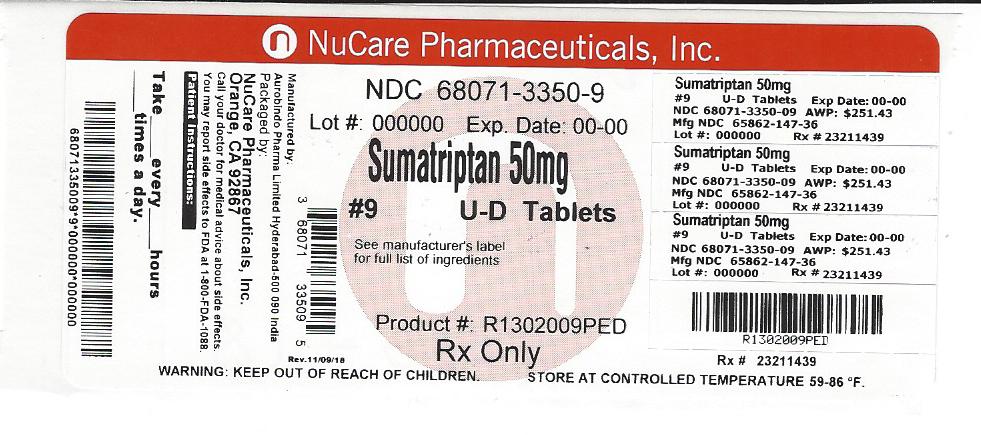
Sumatriptan 50 mg Tablet, 9-count — NDC 68071-3350-9 (Billing 68071-3350-09)
This is a package of 9 tablets of Sumatriptan 50 mg Tablet from NuCare Pharmaceuticals,Inc., marketed since Aug 2009 and currently FDA-listed. It is this product's only package size.
NDC database record
One package, one record: these facts belong to NDC 68071-3350-9 alone.
- Record
- FDA NDC Directory package listing · Human prescription drug
- Code segments
- 68071 labeler · 3350 product · 9 package
- Package marketed since
- Jul 20, 2017
- Sample package
- No — commercial package
- Listing certified through
- Dec 31, 2026
- Barcode (UPC)
- 0368071335095
- FDA record last changed
- Jul 24, 2026
Identity & classification
Regulatory identifiers FDA, NLM and CMS codes for this package
- RxCUI (RxNorm): 313161
Where does this data come from?
- FDA openFDA NDC Directory · synced Oct 1, 2026
- FDA label on DailyMed · label index refreshed Oct 3, 2026
- RxNorm (NLM RxNav) · catalog refreshed Oct 1, 2026
- Medi-Span GPI (licensed)
- First Databank (licensed) · refreshed Oct 1, 2026
RxNorm drug class
This medicine belongs to the Serotonin-1b and Serotonin-1d Receptor Agonist class.
Where does this data come from?
- RxClass (NLM) · catalog refreshed Oct 1, 2026
Clinical
- Sumatriptan stops a migraine that's already started — it does not prevent future attacks. Think of it as a rescue medicine you take when a migraine hits, not something you take eve...
- What exactly does sumatriptan do — does it prevent migraines or stop them?
- Take it as soon as you're sure a migraine attack has started. Sumatriptan works by targeting the blood vessels and nerve pathways involved in the attack, so getting it on board ear...
- When should I take it during a migraine attack?
Patient education
Supplement & herbal interactions
Some supplements/herbs that may interact with Sumatriptan Succinate — tap one for details:
Where does this data come from?
- MedlinePlus (NLM) · refreshed Oct 1, 2026
- FDA label on DailyMed · label index refreshed Oct 3, 2026
Ask a licensed pharmacist directly — free, answered by our team.
Pricing
A drug doesn't have one price. Each row is a different public payment system, and none is what you'd pay at the counter — that depends on your insurance. The ⓘ on each row explains what it measures.
| Price system | Per each | Per package |
|---|---|---|
| Retail pharmacies payNADAC · weekly | Not in the retail survey — common for institutional, discontinued, or low-volume packs. | |
| Medicaid paysCMS SDUD · 12 mo | No recent Medicaid claims on file for this NDC — rare and low-volume NDCs are suppressed in the public data. | |
| Medicare drug plans payPart D · Q2 2026 | $0.8693 | $7.82 / 9 tablets |
Where does this data come from?
- CMS NADAC weekly file
- CMS ASP pricing files · refreshed Sep 20, 2026
- CMS Medicaid State Drug Utilization Data · refreshed Oct 4, 2026
- CMS Part D plan pricing files · refreshed Sep 24, 2026
- VA National Acquisition Center price file
Packaging — all sizes for this product
| Package NDC | Description | Marketing start | Marketing end | Status |
|---|---|---|---|---|
| 68071-3350-09 You're viewing this Main listing | 9 TABLET in 1 BOX | 2017-07-20 | — | Active |
Therapeutic equivalents
| Product | Labeler | Pack | NADAC/unit | TE | Status | Price vs. this |
|---|---|---|---|---|---|---|
| Sumatriptan Succinate 50 mg 00378-5631-59 | Mylan | 9 tablets | $0.302 | AB | Availability likely | — |
| Sumatriptan 50 mg 16714-0797-01 | NorthStar | 9 tablets | $0.302 | AB | Availability likely | — |
| sumatriptan 50 mg 64980-0661-27 | Rising | 9 tablets | $0.302 | AB | Availability likely | — |
| Sumatriptan Succinate 50 mg 65862-0147-36 | Aurobindo | 9 tablets | $0.302 | — | Availability likely | — |
| Sumatriptan 50 mg 69452-0345-72 | Bionpharma | 9 tablets | $0.302 | AB | Availability likely | — |
| Imitrex 50 mg 00173-0736-01 | GlaxoSmithKline | 9 tablets | $73.068 | AB | FDA listed | — |
| Sumatriptan 50 mg 50090-1129-00 | A-S | 9 tablets | — | AB | FDA listed | — |
| Sumatriptan Succinate 50 mg 51407-0012-09 | Golden | 9 tablets | — | AB | FDA listed | — |
| Sumatriptan Succinate 50 mg 55111-0292-01 | Dr. | 100 tablets | — | AB | FDA listed | — |
| Sumatriptan 50 mg 55700-0936-09 | Quality | 9 tablets | — | AB | Discontinued | — |
| sumatriptan succinate 50 mg 62756-0521-01 | Sun | 9 tablets | — | — | FDA listed | — |
| Sumatriptan Succinate 50 mg 63187-0049-09 | Proficient | 9 tablets | — | AB | FDA listed | — |
| Sumatriptan 50 mg 63187-0797-09 | Proficient | 9 tablets | — | AB | FDA listed | — |
| Sumatriptan 50 mg 63304-0098-13 | SUN | 120 tablets | — | — | FDA listed | — |
| Sumatriptan 50 mgthis 68071-3350-09 | NuCare | 9 tablets | — | AB | FDA listed | — |
| Sumatriptan 50 mg 68071-3525-09 | NuCare | 9 tablets | — | AB | FDA listed | — |
| Sumatriptan 50 mg 68071-3802-09 | NuCare | 9 tablets | — | AB | FDA listed | — |
| Sumatriptan Succinate 50 mg 68071-4562-09 | NuCare | 9 tablets | — | AB | FDA listed | — |
| Sumatriptan 50 mg 68071-4815-09 | NuCare | 9 tablets | — | AB | FDA listed | — |
| Sumatriptan 50 mg 68788-8619-09 | Preferred | 9 tablets | — | AB | FDA listed | — |
| Sumatriptan 50 mg 68788-9547-09 | Preferred | 9 tablets | — | AB | FDA listed | — |
| sumatriptan succinate 50 mg 71205-0251-09 | Proficient | 1 tablet | — | — | FDA listed | — |
| Sumatriptan Succinate 50 mg 72189-0433-09 | Direct_Rx | 9 tablets | — | — | FDA listed | — |
| Sumatriptan Succinate 50 mg 76420-0093-09 | Asclemed | 9 tablets | — | AB | FDA listed | — |
| Sumatriptan 50 mg 76420-0498-09 | Asclemed | 9 tablets | — | AB | FDA listed | — |
| Sumatriptan 50 mg 80425-0318-01 | Advanced | 9 tablets | — | AB | FDA listed | — |
| Sumatriptan 50 mg 80425-0475-01 | Advanced | 9 tablets | — | AB | FDA listed | — |
| Sumatriptan 50 mg 82804-0169-09 | Proficient | 9 tablets | — | AB | FDA listed | — |
| Sumatriptan 50 mg 85766-0094-09 | Sportpharm | 9 tablets | — | AB | FDA listed | — |
| sumatriptan succinate 50 mg 71205-0274-09 | Proficient | 1 tablet | — | — | FDA listed | — |
Where does this data come from?
- FDA openFDA NDC Directory · synced Oct 1, 2026
- FDA Orange Book · refreshed Oct 3, 2026
- CMS NADAC weekly file
Availability & generic status
This product is an FDA-approved generic. Other versions of the same drug are listed under Therapeutic equivalents, least expensive first.
Where does this data come from?
- FDA Orange Book · refreshed Oct 3, 2026
Inactive Ingredients / Excipients
Inactive ingredients, also called excipients, are components of the drug product other than the active ingredient. They may include fillers, dyes, coatings, preservatives, flavors, or other formulation ingredients.
Where does this data come from?
IACT rows and label-wide narrative are kept separate; availability and product-level specificity depend on the submitted label.- FDA label on DailyMed · label index refreshed Oct 3, 2026
- FDA openFDA NDC Directory · synced Oct 1, 2026
Inactive ingredient FAQ
Are inactive ingredients the same for every manufacturer?
Why might an inactive ingredient be missing?
Can inactive ingredients matter?
Manufacturer & labeler
More NDCs from NuCare Pharmaceuticals,Inc. labeler code 68071
- Clopidogrel 75 mg Tablet, Film Coated NDC 68071-3319-9
- Hydrochlorothiazide 50 mg Tablet NDC 68071-3323-3
- Benazepril Hydrochloride 5 mg Tablet, Coated NDC 68071-3324-1
- Buspirone Hydrochloride 10 mg Tablet NDC 68071-3336-3
- Alendronate Sodium 70 mg Tablet NDC 68071-3340-4
- Doxazosin 2 mg Tablet NDC 68071-3341-3
- Ciprofloxacin Hydrochloride 3 mg/mL Solution/ Drops NDC 68071-3351-3
- Diphenhydramine HCL 25 mg Capsule NDC 68071-3352-4
- Finasteride 5 mg Tablet, Film Coated NDC 68071-3354-9
- Montelukast Sodium 10 mg Tablet, Film Coated NDC 68071-3355-9
- Citalopram 40 mg Tablet, Film Coated NDC 68071-3357-1
- Neomycin and Polymyxin B Sulfates and Dexamethasone neomycin sulfate, polymyxin b sulfate 3.5 mg/mL; 10000 [USP'U]/mL; 1 mg/mL Suspension NDC 68071-3359-5
Where does this data come from?
- FDA openFDA NDC Directory · synced Oct 1, 2026
- Drugs@FDA
Full prescribing information FDA SPL
🎯 Indications and Usage ▾
1 INDICATIONS AND USAGE Sumatriptan tablets, USP are indicated for the acute treatment of migraine with or without aura in adults. Limitations of Use: Use only if a clear diagnosis of migraine headache has been established. If a patient has no response to the first migraine attack treated with sumatriptan tablets, USP, reconsider the diagnosis of migraine before sumatriptan tablets, USP are administered to treat any subsequent attacks.
Sumatriptan tablets, USP are not indicated for the prevention of migraine attacks. Safety and effectiveness of sumatriptan tablets, USP have not been established for cluster headache. Sumatriptan tablets, USP are a serotonin (5-HT 1B/1D ) receptor agonist (triptan) indicated for acute treatment of migraine with or without aura in adults.
( 1 ) Limitations of Use: Use only if a clear diagnosis of migraine headache has been established. ( 1 ) Not indicated for the prophylactic therapy of migraine attacks. ( 1 ) Not indicated for the treatment of cluster headache.
( 1 )
⏱️ Dosage and Administration ▾
2 DOSAGE AND ADMINISTRATION Single dose of 25 mg, 50 mg, or 100 mg tablet.( 2.1 ) A second dose should only be considered if some response to the first dose was observed. Separate doses by at least 2 hours. ( 2.1 ) Maximum dose in a 24-hour period: 200 mg. ( 2.1 ) Maximum single dose should not exceed 50 mg in patients with mild to moderate hepatic impairment. ( 2.2 )
2.1Dosing Information The recommended dose of sumatriptan tablets is 25 mg, 50 mg, or 100 mg. Doses of 50 mg and 100 mg may provide a greater effect than the 25 mg dose, but doses of 100 mg may not provide a greater effect than the 50 mg dose. Higher doses may have a greater risk of adverse reactions [see Clinical Studies (14) ] .
If the migraine has not resolved by 2 hours after taking sumatriptan tablets, or returns after a transient improvement, a second dose may be administered at least 2 hours after the first dose. The maximum daily dose is 200 mg in a 24-hour period. Use after Sumatriptan Injection : If the migraine returns following an initial treatment with sumatriptan injection, additional single sumatriptan tablets (up to 100 mg/day) may be given with an interval of at least 2 hours between tablet doses.
The safety of treating an average of more than 4 headaches in a 30-day period has not been established.
2.2Dosing in Patients With Hepatic Impairment If treatment is deemed advisable in the presence of mild to moderate hepatic impairment, the maximum single dose should not exceed 50 mg [see Use in Specific Populations (8.6) and Clinical Pharmacology (12.3) ] .
💊 Dosage Forms and Strengths ▾
3 DOSAGE FORMS AND STRENGTHS 25 mg Tablets: White to off-white, round, biconvex uncoated tablets, debossed with ‘C’ on one side and ‘32’ on other side. 50 mg Tablets: White to off-white, capsule shaped, biconvex uncoated tablets, debossed with ‘C’ on one side and ‘33’ on other side. 100 mg Tablets: White to off-white, capsule shaped, biconvex uncoated tablets, debossed with ‘C’ on one side and ‘34’ on other side. Tablets: 25 mg, 50 mg, and 100 mg ( 3 )
⛔ Contraindications ▾
4 CONTRAINDICATIONS Sumatriptan tablets are contraindicated in patients with: Ischemic coronary artery disease (CAD) (angina pectoris, history of myocardial infarction, or documented silent ischemia) or coronary artery vasospasm, including Prinzmetal’s angina [see Warnings and Precautions (5.1) ] Wolff-Parkinson-White syndrome or arrhythmias associated with other cardiac accessory conduction pathway disorders [see Warnings and Precautions (5.2) ] History of stroke or transient ischemic attack (TIA) or history of hemiplegic or basilar migraine because these patients are at a higher risk of stroke [s ee Warnings and Precautions (5.4) ] Peripheral vascular disease [ see Warnings and Precautions (5.5) ] Ischemic bowel disease [ see Warnings and Precautions (5.5) ] Uncontrolled hypertension [ see Warnings and Precautions (5.8) ] Recent use (i.e., within 24 hours) of ergotamine-containing medication, ergot-type medication (such as dihydroergotamine or methysergide), or another 5-hydroxytryptamine 1 (5-HT 1 ) agonist [see Drug Interactions (7.1, 7.3) ] Concurrent administration of a monoamine oxidase (MAO)-A inhibitor or recent (within 2 weeks) use of an MAO-A inhibitor [see Drug Interactions (7.2) and Clinical Pharmacology (12.3) ] Hypersensitivity to sumatriptan tablets (angioedema and anaphylaxis seen) [see Warnings and Precautions (5.9) ] Severe hepatic impairment [see Use in Specific Populations (8.6) and Clinical Pharmacology (12.3) ] History of coronary artery disease or coronary artery vasospasm ( 4 ) Wolff-Parkinson-White syndrome or other cardiac accessory conduction pathway disorders ( 4 ) History of stroke, transient ischemic attack, or hemiplegic or basilar migraine ( 4 ) Peripheral vascular disease ( 4 ) Ischemic bowel disease ( 4 ) Uncontrolled hypertension ( 4 ) Recent (within 24 hours) use of another 5-HT 1 agonist (e.g., another triptan) or of an ergotamine-containing medication.
( 4 ) Concurrent or recent (past 2 weeks) use of monoamine oxidase-A inhibitor. ( 4 ) Hypersensitivity to sumatriptan tablets (angioedema and anaphylaxis seen). ( 4 ) Severe hepatic impairment.
( 4 )
⚠️ Warnings and Cautions ▾
5 WARNINGS AND PRECAUTIONS Myocardial ischemia/infarction and Prinzmetal’s angina: Perform cardiac evaluation in patients with multiple cardiovascular risk factors. ( 5.1 ) Arrhythmias: Discontinue sumatriptan if occurs. ( 5.2 ) Chest/throat/neck/jaw pain, tightness, pressure, or heaviness: Generally not associated with myocardial ischemia; evaluate for coronary artery disease in patients at high risk.
( 5.3 ) Cerebral hemorrhage, subarachnoid hemorrhage, and stroke: Discontinue sumatriptan if occurs. ( 5.4 ) Gastrointestinal ischemic reactions and peripheral vasospastic reactions: Discontinue sumatriptan if occurs. ( 5.5 ) Medication overuse headache: Detoxification may be necessary.
( 5.6 ) Serotonin syndrome: Discontinue sumatriptan if occurs. ( 5.7 ) Seizures: Use with caution in patients with epilepsy or a lowered seizure threshold. ( 5.10 )
5.1Myocardial Ischemia, Myocardial Infarction, and Prinzmetal’s Angina The use of sumatriptan tablets is contraindicated in patients with ischemic or vasospastic CAD. There have been rare reports of serious cardiac adverse reactions, including acute myocardial infarction, occurring within a few hours following administration of sumatriptan tablets. Some of these reactions occurred in patients without known CAD.
Sumatriptan tablets may cause coronary artery vasospasm (Prinzmetal’s angina), even in patients without a history of CAD. Perform a cardiovascular evaluation in triptan-naive patients who have multiple cardiovascular risk factors (e.g., increased age, diabetes, hypertension, smoking, obesity, strong family history of CAD) prior to receiving sumatriptan tablets. If there is evidence of CAD or coronary artery vasospasm, sumatriptan tablets are contraindicated.
For patients with multiple cardiovascular risk factors who have a negative cardiovascular evaluation, consider administering the first dose of sumatriptan tablets in a medically supervised setting and performing an electrocardiogram (ECG) immediately following administration of sumatriptan tablets. For such patients, consider periodic cardiovascular evaluation in intermittent long-term users of sumatriptan tablets.
5.2Arrhythmias Life-threatening disturbances of cardiac rhythm, including ventricular tachycardia and ventricular fibrillation leading to death, have been reported within a few hours following the administration of 5-HT 1 agonists. Discontinue sumatriptan tablets if these disturbances occur. Sumatriptan tablets are contraindicated in patients with Wolff-Parkinson-White syndrome or arrhythmias associated with other cardiac accessory conduction pathway disorders.
5.3Chest, Throat, Neck, and/or Jaw Pain/Tightness/Pressure Sensations of tightness, pain, pressure, and heaviness in the precordium, throat, neck, and jaw commonly occur after treatment with sumatriptan tablets and are usually non-cardiac in origin. However, perform a cardiac evaluation if these patients are at high cardiac risk. The use of sumatriptan tablets is contraindicated in patients with CAD and those with Prinzmetal’s variant angina.
5.4Cerebrovascular Events Cerebral hemorrhage, subarachnoid hemorrhage, and stroke have occurred in patients treated with 5-HT 1 agonists, and some have resulted in fatalities. In a number of cases, it appears possible that the cerebrovascular events were primary, the 5-HT 1 agonist having been administered in the incorrect belief that the symptoms experienced were a consequence of migraine when they were not. Also, patients with migraine may be at increased risk of certain cerebrovascular events (e.g., stroke, hemorrhage, TIA).
Discontinue sumatriptan tablets if a cerebrovascular event occurs. Before treating headaches in patients not previously diagnosed as migraineurs, and in migraineurs who present with atypical symptoms, exclude other potentially serious neurological conditions. Sumatriptan tablets are contraindicated in patients with a history of stroke or TIA.
5.5Other Vasospasm Reactions Sumatriptan table… [Excerpted — this section continues on DailyMed.]
🤒 Adverse Reactions ▾
6 ADVERSE REACTIONS The following adverse reactions are discussed in more detail in other sections of the prescribing information: Myocardial ischemia, myocardial infarction, and Prinzmetal’s angina [see Warnings and Precautions (5.1) ] Arrhythmias [see Warnings and Precautions (5.2) ] Chest, throat, neck, and/or jaw pain/tightness/pressure [see Warnings and Precautions (5.3) ] Cerebrovascular events [see Warnings and Precautions (5.4) ] Other vasospasm reactions [see Warnings and Precautions (5.5) ] Medication overuse headache [see Warnings and Precautions (5.6) ] Serotonin syndrome [see Warnings and Precautions (5.7) ] Increase in blood pressure [see Warnings and Precautions (5.8) ] Hypersensitivity reactions [see Contraindications (4) and Warnings and Precautions (5.9) ] Seizures [see Warnings and Precautions (5.10) ] Most common adverse reactions (≥2% and >placebo) were paresthesia, warm/cold sensation, chest pain/tightness/pressure and/or heaviness, neck/throat/jaw pain/tightness/pressure, other sensations of pain/pressure/tightness/heaviness, vertigo, and malaise/fatigue.
( 6.1 ) To report SUSPECTED ADVERSE REACTIONS, contact Aurobindo Pharma USA, Inc. at 1-866-850-2876 or FDA at 1-800-FDA-1088 or www.fda.gov/medwatch .
6.1Clinical Trials Experience Because clinical trials are conducted under widely varying conditions, adverse reaction rates observed in the clinical trials of a drug cannot be directly compared with rates in the clinical trials of another drug and may not reflect the rates observed in practice. Table 1 lists adverse reactions that occurred in placebo-controlled clinical trials in patients who took at least 1 dose of study drug. Only treatment-emergent adverse reactions that occurred at a frequency of 2% or more in any group treated with sumatriptan tablets and that occurred at a frequency greater than the placebo group are included in Table 1.
Table 1. Adverse Reactions Reported by at Least 2% of Patients Treated With Sumatriptan Tablets and at a Greater Frequency Than Placebo Adverse Reaction Percent of Patients Reporting Sumatriptan Tablets 25 mg (n = 417) Sumatriptan Tablets 50 mg (n = 771) Sumatriptan Tablets 100 mg (n = 437) Placebo (n = 309) Atypical sensations Paresthesia (all types) Sensation warm/cold 5 3 3 6 5 2 6 3 3 4 2 2 Pain and other pressure sensations 6 6 8 4 Chest - pain/tightness/ pressure and/or heaviness 1 2 2 1 Neck/throat/jaw -pain/ tightness/pressure <1 2 3 <1 Pain - location specified 2 1 1 1 Other - pressure/tightness/ heaviness 1 1 3 2 Neurological Vertigo <1 <1 2 <1 Other Malaise/fatigue 2 2 3 <1 The incidence of adverse reactions in controlled clinical trials was not affected by gender or age of the patients.
There were insufficient data to assess the impact of race on the incidence of adverse reactions.
6.2Postmarketing Experience The following adverse reactions have been identified during postapproval use of sumatriptan tablets, sumatriptan nasal spray, and sumatriptan injection. Because these reactions are reported voluntarily from a population of uncertain size, it is not always possible to reliably estimate their frequency or establish a causal relationship to drug exposure. These reactions have been chosen for inclusion due to either their seriousness, frequency of reporting, or causal connection to sumatriptan or a combination of these factors.
Cardiovascular : Hypotension, palpitations. Neurological: Dystonia, tremor.
🔄 Drug Interactions ▾
7 DRUG INTERACTIONS
7.1Ergot-Containing Drugs Ergot-containing drugs have been reported to cause prolonged vasospastic reactions. Because these effects may be additive, use of ergotamine-containing or ergot-type medications (like dihydroergotamine or methysergide) and sumatriptan tablets within 24 hours of each other is contraindicated.
7.2Monoamine Oxidase-A Inhibitors MAO-A inhibitors increase systemic exposure by 7-fold. Therefore, the use of sumatriptan tablets in patients receiving MAO-A inhibitors is contraindicated [see Clinical Pharmacology (12.3) ] .
7.3Other 5-HT 1 Agonists Because their vasospastic effects may be additive, co-administration of sumatriptan tablets and other 5-HT 1 agonists (e.g., triptans) within 24 hours of each other is contraindicated.
7.4Selective Serotonin Reuptake Inhibitors/Serotonin Norepinephrine Reuptake Inhibitors and Serotonin Syndrome Cases of serotonin syndrome have been reported during co-administration of triptans and SSRIs, SNRIs, TCAs, and MAO inhibitors [see Warnings and Precautions (5.7) ] .
👥 Use in Specific Populations ▾
8 USE IN SPECIFIC POPULATIONS Pregnancy: Based on animal data, may cause fetal harm. ( 8.1 )
8.1Pregnancy Teratogenic Effects Pregnancy Category C: There are no adequate and well-controlled trials in pregnant women. In developmental toxicity studies in rats and rabbits, oral administration of sumatriptan to pregnant animals was associated with embryolethality, fetal abnormalities, and pup mortality. When administered by the intravenous route to pregnant rabbits, sumatriptan was embryolethal.
Sumatriptan tablets should be used during pregnancy only if the potential benefit justifies the potential risk to the fetus. Oral administration of sumatriptan to pregnant rats during the period of organogenesis resulted in an increased incidence of fetal blood vessel (cervicothoracic and umbilical) abnormalities. The highest no-effect dose for embryofetal developmental toxicity in rats was 60 mg/kg/day, or approximately 3 times the maximum recommended human dose (MRHD) of 200 mg/day on a mg/m 2 basis.
Oral administration of sumatriptan to pregnant rabbits during the period of organogenesis resulted in increased incidences of embryolethality and fetal cervicothoracic vascular and skeletal abnormalities. Intravenous administration of sumatriptan to pregnant rabbits during the period of organogenesis resulted in an increased incidence of embryolethality. The highest oral and intravenous no-effect doses for developmental toxicity in rabbits were 15 (approximately 2 times the MRHD on a mg/m 2 basis) and 0.75 mg/kg/day, respectively.
Oral administration of sumatriptan to rats prior to and throughout gestation resulted in embryofetal toxicity (decreased body weight, decreased ossification, increased incidence of skeletal abnormalities). The highest no-effect dose was 50 mg/kg/day, or approximately 2 times the MRHD on a mg/m 2 basis. In offspring of pregnant rats treated orally with sumatriptan during organogenesis, there was a decrease in pup survival.
The highest no-effect dose for this effect was 60 mg/kg/day, or approximately 3 times the MRHD on a mg/m 2 basis. Oral treatment of pregnant rats with sumatriptan during the latter part of gestation and throughout lactation resulted in a decrease in pup survival. The highest no-effect dose for this finding was 100 mg/kg/day, or approximately 5 times the MRHD on a mg/m 2 basis.
8.3Nursing Mothers Sumatriptan is excreted in human milk following subcutaneous administration. Infant exposure to sumatriptan can be minimized by avoiding breastfeeding for 12 hours after treatment with sumatriptan tablets.
8.4Pediatric Use Safety and effectiveness in pediatric patients have not been established. Sumatriptan tablets are not recommended for use in patients younger than 18 years of age. Two controlled clinical trials evaluated sumatriptan nasal spray (5 to 20 mg) in 1,248 adolescent migraineurs aged 12 to 17 years who treated a single attack.
The trials did not establish the efficacy of sumatriptan nasal spray compared with placebo in the treatment of migraine in adolescents. Adverse reactions observed in these clinical trials were similar in nature to those reported in clinical trials in adults. Five controlled clinical trials (2 single-attack trials, 3 multiple-attack trials) evaluating oral sumatriptan (25 to 100 mg) in pediatric patients aged 12 to 17 years enrolled a total of 701 adolescent migraineurs.
These trials did not establish the efficacy of oral sumatriptan compared with placebo in the treatment of migraine in adolescents. Adverse reactions observed in these clinical trials were similar in nature to those reported in clinical trials in adults. The frequency of all adverse reactions in these patients appeared to be both dose - and age-dependent, with younger patients reporting reactions more commonly than older adolescents.
Postmarketing experience documents that serious adverse reactions have occurred in the pediatric population after use of subcutaneous, oral, and/or intranasal sumatriptan.… [Excerpted — this section continues on DailyMed.]
🤰 Pregnancy ▾
8.1Pregnancy Teratogenic Effects Pregnancy Category C: There are no adequate and well-controlled trials in pregnant women. In developmental toxicity studies in rats and rabbits, oral administration of sumatriptan to pregnant animals was associated with embryolethality, fetal abnormalities, and pup mortality. When administered by the intravenous route to pregnant rabbits, sumatriptan was embryolethal.
Sumatriptan tablets should be used during pregnancy only if the potential benefit justifies the potential risk to the fetus. Oral administration of sumatriptan to pregnant rats during the period of organogenesis resulted in an increased incidence of fetal blood vessel (cervicothoracic and umbilical) abnormalities. The highest no-effect dose for embryofetal developmental toxicity in rats was 60 mg/kg/day, or approximately 3 times the maximum recommended human dose (MRHD) of 200 mg/day on a mg/m 2 basis.
Oral administration of sumatriptan to pregnant rabbits during the period of organogenesis resulted in increased incidences of embryolethality and fetal cervicothoracic vascular and skeletal abnormalities. Intravenous administration of sumatriptan to pregnant rabbits during the period of organogenesis resulted in an increased incidence of embryolethality. The highest oral and intravenous no-effect doses for developmental toxicity in rabbits were 15 (approximately 2 times the MRHD on a mg/m 2 basis) and 0.75 mg/kg/day, respectively.
Oral administration of sumatriptan to rats prior to and throughout gestation resulted in embryofetal toxicity (decreased body weight, decreased ossification, increased incidence of skeletal abnormalities). The highest no-effect dose was 50 mg/kg/day, or approximately 2 times the MRHD on a mg/m 2 basis. In offspring of pregnant rats treated orally with sumatriptan during organogenesis, there was a decrease in pup survival.
The highest no-effect dose for this effect was 60 mg/kg/day, or approximately 3 times the MRHD on a mg/m 2 basis. Oral treatment of pregnant rats with sumatriptan during the latter part of gestation and throughout lactation resulted in a decrease in pup survival. The highest no-effect dose for this finding was 100 mg/kg/day, or approximately 5 times the MRHD on a mg/m 2 basis.
🧒 Pediatric Use ▾
8.4Pediatric Use Safety and effectiveness in pediatric patients have not been established. Sumatriptan tablets are not recommended for use in patients younger than 18 years of age. Two controlled clinical trials evaluated sumatriptan nasal spray (5 to 20 mg) in 1,248 adolescent migraineurs aged 12 to 17 years who treated a single attack.
The trials did not establish the efficacy of sumatriptan nasal spray compared with placebo in the treatment of migraine in adolescents. Adverse reactions observed in these clinical trials were similar in nature to those reported in clinical trials in adults. Five controlled clinical trials (2 single-attack trials, 3 multiple-attack trials) evaluating oral sumatriptan (25 to 100 mg) in pediatric patients aged 12 to 17 years enrolled a total of 701 adolescent migraineurs.
These trials did not establish the efficacy of oral sumatriptan compared with placebo in the treatment of migraine in adolescents. Adverse reactions observed in these clinical trials were similar in nature to those reported in clinical trials in adults. The frequency of all adverse reactions in these patients appeared to be both dose - and age-dependent, with younger patients reporting reactions more commonly than older adolescents.
Postmarketing experience documents that serious adverse reactions have occurred in the pediatric population after use of subcutaneous, oral, and/or intranasal sumatriptan. These reports include reactions similar in nature to those reported rarely in adults, including stroke, visual loss, and death. A myocardial infarction has been reported in a 14-year-old male following the use of oral sumatriptan; clinical signs occurred within 1 day of drug administration.
Clinical data to determine the frequency of serious adverse reactions in pediatric patients who might receive subcutaneous, oral, or intranasal sumatriptan are not presently available.
🧓 Geriatric Use ▾
8.5Geriatric Use Clinical trials of sumatriptan tablets did not include sufficient numbers of patients aged 65 and older to determine whether they respond differently from younger patients. Other reported clinical experience has not identified differences in responses between the elderly and younger patients. In general, dose selection for an elderly patient should be cautious, usually starting at the low end of the dosing range, reflecting the greater frequency of decreased hepatic, renal, or cardiac function and of concomitant disease or other drug therapy.
A cardiovascular evaluation is recommended for geriatric patients who have other cardiovascular risk factors (e.g., diabetes, hypertension, smoking, obesity, strong family history of CAD) prior to receiving sumatriptan tablets [see Warnings and Precautions (5.1) ] .
🆘 Overdosage ▾
10 OVERDOSAGE Patients in clinical trials (N = 670) received single oral doses of 140 to 300 mg without significant adverse reactions. Volunteers (N = 174) received single oral doses of 140 to 400 mg without serious adverse reactions. Overdose in animals has been fatal and has been heralded by convulsions, tremor, paralysis, inactivity, ptosis, erythema of the extremities, abnormal respiration, cyanosis, ataxia, mydriasis, salivation, and lacrimation.
The elimination half-life of sumatriptan is approximately 2.5 hours [see Clinical Pharmacology (12.3) ] , and therefore monitoring of patients after overdose with sumatriptan tablets should continue for at least 12 hours or while symptoms or signs persist. It is unknown what effect hemodialysis or peritoneal dialysis has on the serum concentrations of sumatriptan.
🧬 Clinical Pharmacology ▾
12 CLINICAL PHARMACOLOGY
12.1Mechanism of Action Sumatriptan binds with high affinity to human cloned 5-HT 1B/1D receptors. Sumatriptan presumably exerts its therapeutic effects in the treatment of migraine headache through agonist effects at the 5-HT 1B/1D receptors on intracranial blood vessels and sensory nerves of the trigeminal system, which result in cranial vessel constriction and inhibition of pro-inflammatory neuropeptide release.
12.2Pharmacodynamics Blood Pressure: Significant elevation in blood pressure, including hypertensive crisis, has been reported in patients with and without a history of hypertension [see Warnings and Precautions (5.8) ] . Peripheral (Small) Arteries: In healthy volunteers (N = 18), a trial evaluating the effects of sumatriptan on peripheral (small vessel) arterial reactivity failed to detect a clinically significant increase in peripheral resistance. Heart Rate: Transient increases in blood pressure observed in some patients in clinical trials carried out during sumatriptan’s development as a treatment for migraine were not accompanied by any clinically significant changes in heart rate.
12.3Pharmacokinetics Absorption and Bioavailability: The mean maximum concentration following oral dosing with 25 mg is 18 ng/mL (range: 7 to 47 ng/mL) and 51 ng/mL (range: 28 to 100 ng/mL) following oral dosing with 100 mg of sumatriptan. This compares with a C max of 5 and 16 ng/mL following dosing with a 5 and 20 mg intranasal dose, respectively. The mean C max following a 6 mg subcutaneous injection is 71 ng/mL (range: 49 to 110 ng/mL).
The bioavailability is approximately 15%, primarily due to presystemic metabolism and partly due to incomplete absorption. The C max is similar during a migraine attack and during a migraine-free period, but the T max is slightly later during the attack, approximately 2.5 hours compared with 2 hours. When given as a single dose, sumatriptan displays dose proportionality in its extent of absorption (area under the curve [AUC]) over the dose range of 25 to 200 mg, but the C max after 100 mg is approximately 25% less than expected (based on the 25 mg dose).
A food effect trial involving administration of sumatriptan tablets 100 mg to healthy volunteers under fasting conditions and with a high-fat meal indicated that the C max and AUC were increased by 15% and 12%, respectively, when administered in the fed state. Distribution: Protein binding, determined by equilibrium dialysis over the concentration range of 10 to 1,000 ng/mL is low, approximately 14% to 21%. The effect of sumatriptan on the protein binding of other drugs has not been evaluated.
The apparent volume of distribution is
2.7L/kg. Metabolism: In vitro studies with human microsomes suggest that sumatriptan is metabolized by MAO, predominantly the A isoenzyme. Most of a radiolabeled dose of sumatriptan excreted in the urine is the major metabolite indole acetic acid (IAA) or the IAA glucuronide, both of which are inactive.
Elimination: The elimination half-life of sumatriptan is approximately 2.5 hours. Radiolabeled 14 C-sumatriptan administered orally is largely renally excreted (about 60%) with about 40% found in the feces. Most of the radiolabeled compound excreted in the urine is the major metabolite, indole acetic acid (IAA), which is inactive, or the IAA glucuronide.
Only 3% of the dose can be recovered as unchanged sumatriptan. Special Populations: Age: The pharmacokinetics of sumatriptan in the elderly (mean age: 72 years, 2 males and 4 females) and in subjects with migraine (mean age: 38 years, 25 males and 155 females) were similar to that in healthy male subjects (mean age: 30 years). Renal Impairment: The effect of renal impairment on the pharmacokinetics of sumatriptan has not been examined.
Hepatic Impairment: The liver plays an important role in the presystemic clearance of orally administered sumatriptan. Accordingly, the bioavailability of sumatriptan following oral administration may be marke… [Excerpted — this section continues on DailyMed.]
🧬 Mechanism of Action ▾
12.1Mechanism of Action Sumatriptan binds with high affinity to human cloned 5-HT 1B/1D receptors. Sumatriptan presumably exerts its therapeutic effects in the treatment of migraine headache through agonist effects at the 5-HT 1B/1D receptors on intracranial blood vessels and sensory nerves of the trigeminal system, which result in cranial vessel constriction and inhibition of pro-inflammatory neuropeptide release.
📦 How Supplied / Storage and Handling ▾
16 HOW SUPPLIED/STORAGE AND HANDLING Sumatriptan Tablets USP, 25 mg, 50 mg, and 100 mg of sumatriptan (base) as the succinate. Sumatriptan Tablets USP, 50 mg are white to off-white, capsule shaped, biconvex uncoated tablets, debossed with ‘C’ on one side and ‘33’ on other side. NDC 68071-3350-9 Box of 9 Store at 20° to 25°C (68° to 77°F); excursions permitted to 15° to 30°C (59° to 86°F) [see USP Controlled Room Temperature].
📋 Description ▾
11 DESCRIPTION Sumatriptan tablets, USP contain sumatriptan succinate, a selective 5-HT 1B/1D receptor agonist. Sumatriptan succinate is chemically designated as 3-[2-(dimethylamino)ethyl]-N-methyl-indole-5-methanesulfonamide succinate (1:1), and it has the following structure: The molecular formula is C 14 H 21 N 3 O 2 S•C 4 H 6 O 4 , representing a molecular weight of 413.5. Sumatriptan succinate USP is a white to off-white powder that is readily soluble in water and in saline.
Each sumatriptan tablet, USP for oral administration contains 35 mg, 70 mg, or 140 mg of sumatriptan succinate USP equivalent to 25 mg, 50 mg, or 100 mg of sumatriptan, respectively. Each tablet also contains the inactive ingredients croscarmellose sodium, dibasic calcium phosphate anhydrous, magnesium stearate, microcrystalline cellulose, polysorbate 80, and sodium bicarbonate. Chemical Structure
💬 Information for Patients ▾
17 PATIENT COUNSELING INFORMATION Advise the patient to read the FDA-approved patient labeling (Patient Information). Risk of Myocardial Ischemia and/or Infarction, Prinzmetal’s Angina, Other Vasospasm-Related Events, Arrhythmias, and Cerebrovascular Events: Inform patients that sumatriptan tablets may cause serious cardiovascular side effects such as myocardial infarction or stroke. Although serious cardiovascular events can occur without warning symptoms, patients should be alert for the signs and symptoms of chest pain, shortness of breath, irregular heartbeat, significant rise in blood pressure, weakness, and slurring of speech, and should ask for medical advice if any indicative sign or symptoms are observed.
Apprise patients of the importance of this follow-up [see Warnings and Precautions (5.1, 5.2, 5.4, 5.5, 5.8) ] . Anaphylactic/Anaphylactoid Reactions: Inform patients that anaphylactic/anaphylactoid reactions have occurred in patients receiving sumatriptan tablets. Such reactions can be life threatening or fatal.
In general, anaphylactic reactions to drugs are more likely to occur in individuals with a history of sensitivity to multiple allergens [see Contraindications (4) and Warnings and Precautions (5.9) ] . Concomitant Use With Other Triptans or Ergot Medications: Inform patients that use of sumatriptan tablets within 24 hours of another triptan or an ergot-type medication (including dihydroergotamine or methysergide) is contraindicated [see Contraindications (4), Drug Interactions (7.1, 7.3) ] . Serotonin Syndrome: Caution patients about the risk of serotonin syndrome with the use of sumatriptan tablets or other triptans, particularly during combined use with SSRIs, SNRIs, TCAs, and MAO inhibitors [see Warnings and Precautions (5.7), Drug Interactions (7.4) ].
Medication Overuse Headache: Inform patients that use of acute migraine drugs for 10 or more days per month may lead to an exacerbation of headache and encourage patients to record headache frequency and drug use (e.g., by keeping a headache diary) [see Warnings and Precautions (5.6) ] . Pregnancy: Inform patients that sumatriptan tablets should not be used during pregnancy unless the potential benefit justifies the potential risk to the fetus [see Use in Specific Populations (8.1) ] . Nursing Mothers: Advise patients to notify their healthcare provider if they are breastfeeding or plan to breastfeed [see Use in Specific Populations (8.3) ] .
Ability to Perform Complex Tasks: Treatment with sumatriptan tablets may cause somnolence and dizziness; instruct patients to evaluate their ability to perform complex tasks after administration of sumatriptan tablets. Manufactured for: Aurobindo Pharma USA, Inc. 2400 Route 130 North Dayton, NJ 08810 Manufactured by: Aurobindo Pharma Limited Hyderabad–500 090, India Revised: 11/2015
🍼 Nursing Mothers ▾
8.3Nursing Mothers Sumatriptan is excreted in human milk following subcutaneous administration. Infant exposure to sumatriptan can be minimized by avoiding breastfeeding for 12 hours after treatment with sumatriptan tablets.
🧬 Pharmacokinetics ▾
12.3Pharmacokinetics Absorption and Bioavailability: The mean maximum concentration following oral dosing with 25 mg is 18 ng/mL (range: 7 to 47 ng/mL) and 51 ng/mL (range: 28 to 100 ng/mL) following oral dosing with 100 mg of sumatriptan. This compares with a C max of 5 and 16 ng/mL following dosing with a 5 and 20 mg intranasal dose, respectively. The mean C max following a 6 mg subcutaneous injection is 71 ng/mL (range: 49 to 110 ng/mL).
The bioavailability is approximately 15%, primarily due to presystemic metabolism and partly due to incomplete absorption. The C max is similar during a migraine attack and during a migraine-free period, but the T max is slightly later during the attack, approximately 2.5 hours compared with 2 hours. When given as a single dose, sumatriptan displays dose proportionality in its extent of absorption (area under the curve [AUC]) over the dose range of 25 to 200 mg, but the C max after 100 mg is approximately 25% less than expected (based on the 25 mg dose).
A food effect trial involving administration of sumatriptan tablets 100 mg to healthy volunteers under fasting conditions and with a high-fat meal indicated that the C max and AUC were increased by 15% and 12%, respectively, when administered in the fed state. Distribution: Protein binding, determined by equilibrium dialysis over the concentration range of 10 to 1,000 ng/mL is low, approximately 14% to 21%. The effect of sumatriptan on the protein binding of other drugs has not been evaluated.
The apparent volume of distribution is
2.7L/kg. Metabolism: In vitro studies with human microsomes suggest that sumatriptan is metabolized by MAO, predominantly the A isoenzyme. Most of a radiolabeled dose of sumatriptan excreted in the urine is the major metabolite indole acetic acid (IAA) or the IAA glucuronide, both of which are inactive.
Elimination: The elimination half-life of sumatriptan is approximately 2.5 hours. Radiolabeled 14 C-sumatriptan administered orally is largely renally excreted (about 60%) with about 40% found in the feces. Most of the radiolabeled compound excreted in the urine is the major metabolite, indole acetic acid (IAA), which is inactive, or the IAA glucuronide.
Only 3% of the dose can be recovered as unchanged sumatriptan. Special Populations: Age: The pharmacokinetics of sumatriptan in the elderly (mean age: 72 years, 2 males and 4 females) and in subjects with migraine (mean age: 38 years, 25 males and 155 females) were similar to that in healthy male subjects (mean age: 30 years). Renal Impairment: The effect of renal impairment on the pharmacokinetics of sumatriptan has not been examined.
Hepatic Impairment: The liver plays an important role in the presystemic clearance of orally administered sumatriptan. Accordingly, the bioavailability of sumatriptan following oral administration may be markedly increased in patients with liver disease. In one small trial of patients with moderate liver impairment (n = 8) matched for sex, age, and weight with healthy subjects (n = 8), the hepatically-impaired patients had an approximately 70% increase in AUC and C max and a T max 40 minutes earlier compared to the healthy subjects.
The pharmacokinetics of sumatriptan in patients with severe hepatic impairment has not been studied. The use of sumatriptan tablets in this population is contraindicated [see Contraindications (4) and Use in Specific Populations (8.6) ] . Gender: In a trial comparing females to males, no pharmacokinetic differences were observed between genders for AUC, C max , T max , and half-life.
Race: The systemic clearance and C max of subcutaneous sumatriptan were similar in black (n = 34) and Caucasian (n = 38) healthy male subjects. Oral sumatriptan has not been evaluated for race differences. Drug Interaction Studies: Monoamine Oxidase-A Inhibitors: Treatment with MAO-A inhibitors generally leads to an increase of sumatriptan plasma levels [see Contraindications (4) and Drug Interactions (7.2) ] .
Due to gut… [Excerpted — this section continues on DailyMed.]
🧬 Pharmacodynamics ▾
12.2Pharmacodynamics Blood Pressure: Significant elevation in blood pressure, including hypertensive crisis, has been reported in patients with and without a history of hypertension [see Warnings and Precautions (5.8) ] . Peripheral (Small) Arteries: In healthy volunteers (N = 18), a trial evaluating the effects of sumatriptan on peripheral (small vessel) arterial reactivity failed to detect a clinically significant increase in peripheral resistance. Heart Rate: Transient increases in blood pressure observed in some patients in clinical trials carried out during sumatriptan’s development as a treatment for migraine were not accompanied by any clinically significant changes in heart rate.
🔬 Clinical Studies ▾
14 CLINICAL STUDIES The efficacy of sumatriptan tablets in the acute treatment of migraine headaches was demonstrated in 3, randomized, double-blind, placebo-controlled trials. Patients enrolled in these 3 trials were predominately female (87%) and Caucasian (97%), with a mean age of 40 years (range of 18 to 65 years). Patients were instructed to treat a moderate to severe headache.
Headache response, defined as a reduction in headache severity from moderate or severe pain to mild or no pain, was assessed up to 4 hours after dosing. Associated symptoms such as nausea, photophobia, and phonophobia were also assessed. Maintenance of response was assessed for up to 24 hours postdose.
A second dose of sumatriptan tablets or other medication was allowed 4 to 24 hours after the initial treatment for recurrent headache. Acetaminophen was offered to patients in Trials 2 and 3 beginning at 2 hours after initial treatment if the migraine pain had not improved or worsened. Additional medications were allowed 4 to 24 hours after the initial treatment for recurrent headache or as rescue in all 3 trials.
The frequency and time to use of these additional treatments were also determined. In all trials, doses of 25, 50, and 100 mg were compared with placebo in the treatment of migraine attacks. In 1 trial, doses of 25, 50, and 100 mg were also compared with each other.
In all 3 trials, the percentage of patients achieving headache response 2 and 4 hours after treatment was significantly greater among patients receiving sumatriptan tablets at all doses compared with those who received placebo. In 1 of the 3 trials, there was a statistically significant greater percentage of patients with headache response at 2 and 4 hours in the 50 mg or 100 mg group when compared with the 25 mg dose groups. There were no statistically significant differences between the 50 mg and 100 mg dose groups in any trial.
The results from the 3 controlled clinical trials are summarized in Table 2. Table 2. Percentage of Patients With Headache Response (Mild or No Headache) 2 and 4 Hours Following Treatment Sumatriptan Tablets 25 mg 2 hr 4 hr Sumatriptan Tablets 50 mg 2 hr 4 hr Sumatriptan Tablets 100 mg 2 hr 4 hr Placebo 2 hr 4 hr Trial 1 52% a 67% a (n = 298) 61% a,b 78% a,b (n = 296) 62% a,b 79% a,b (n = 296) 27% 38% (n = 94) Trial 2 52% a 70% a (n = 66) 50% a 68% a (n = 62) 56% a 71% a (n = 66) 26% 38% (n = 65) Trial 3 52% a 65% a (n = 48) 54% a 72% a (n = 46) 57% a 78% a (n = 46) 17% 19% (n = 47) a P <0.05 in comparison with placebo. b P <0.05 in comparison with 25 mg.
The estimated probability of achieving an initial headache response over the 4 hours following treatment in pooled Trials 1, 2, and 3 is depicted in Figure 1. Figure 1. Estimated Probability of Achieving Initial Headache Response Within 4 Hours of Treatment in Pooled Trials 1, 2, and 3 a a The figure shows the probability over time of obtaining headache response (no or mild pain) following treatment with oral sumatriptan.
The averages displayed are based on pooled data from the 3 clinical controlled trials providing evidence of efficacy. Kaplan-Meier plot with patients not achieving response and/or taking rescue within 240 minutes censored to 240 minutes. For patients with migraine-associated nausea, photophobia, and/or phonophobia at baseline, there was a lower incidence of these symptoms at 2 hours (Trial 1) and at 4 hours (Trials 1, 2, and 3) following administration of sumatriptan tablets compared with placebo.
As early as 2 hours in Trials 2 and 3, or as early as 4 hours in Trial 1, through 24 hours following the initial dose of study treatment, patients were allowed to use additional treatment for pain relief in the form of a second dose of study treatment or other medication. The estimated probability of patients taking a second dose or other medication for migraine over the 24 hours following the initial dose of study treatment is summarized in Figure 2. Figure 2.
The Estimated Probability of… [Excerpted — this section continues on DailyMed.]
🧪 Nonclinical Toxicology ▾
13 NONCLINICAL TOXICOLOGY
13.1Carcinogenesis, Mutagenesis, Impairment of Fertility Carcinogenesis: In carcinogenicity studies in mouse and rat, sumatriptan was administered orally for 78 and 104 weeks, respectively, at doses up to 160 mg/kg/day (the high dose in rat was reduced from 360 mg/kg/day during week 21). There was no evidence in either species of an increase in tumors related to sumatriptan administration. Plasma exposures (AUC) at the highest doses tested were 20 and 8 times that in humans at the maximum recommended human dose (MRHD) of 200 mg/day.
Mutagenesis: Sumatriptan was negative in in vitro (bacterial reverse mutation [Ames], gene cell mutation in Chinese hamster V79/HGPRT, chromosomal aberration in human lymphocytes) and in vivo (rat micronucleus) assays. Impairment of Fertility: When sumatriptan (5, 50, 500 mg/kg/day) was administered orally to male and female rats prior to and throughout the mating period, there was a treatment-related decrease in fertility secondary to a decrease in mating in animals treated with doses greater than 5 mg/kg/day (less than the MRHD on a mg/m 2 basis).
It is not clear whether this finding was due to an effect on males or females or both.
13.2Animal Toxicology and/or Pharmacology Corneal Opacities: Dogs receiving oral sumatriptan developed corneal opacities and defects in the corneal epithelium. Corneal opacities were seen at the lowest dose tested, 2 mg/kg/day, and were present after 1 month of treatment. Defects in the corneal epithelium were noted in a 60-week study.
Earlier examinations for these toxicities were not conducted and no-effect doses were not established. Plasma exposure at the lowest dose tested was approximately 2 times that in humans at the MRHD.
📄 Carcinogenesis, Mutagenesis, Impairment of Fertility ▾
13.1Carcinogenesis, Mutagenesis, Impairment of Fertility Carcinogenesis: In carcinogenicity studies in mouse and rat, sumatriptan was administered orally for 78 and 104 weeks, respectively, at doses up to 160 mg/kg/day (the high dose in rat was reduced from 360 mg/kg/day during week 21). There was no evidence in either species of an increase in tumors related to sumatriptan administration. Plasma exposures (AUC) at the highest doses tested were 20 and 8 times that in humans at the maximum recommended human dose (MRHD) of 200 mg/day.
Mutagenesis: Sumatriptan was negative in in vitro (bacterial reverse mutation [Ames], gene cell mutation in Chinese hamster V79/HGPRT, chromosomal aberration in human lymphocytes) and in vivo (rat micronucleus) assays. Impairment of Fertility: When sumatriptan (5, 50, 500 mg/kg/day) was administered orally to male and female rats prior to and throughout the mating period, there was a treatment-related decrease in fertility secondary to a decrease in mating in animals treated with doses greater than 5 mg/kg/day (less than the MRHD on a mg/m 2 basis).
It is not clear whether this finding was due to an effect on males or females or both.
📄 Patient Package Insert ▾
Patient Information Sumatriptan Tablets, USP [Sumatriptan (soo ma TRIP tan)] Read this Patient Information before you start taking sumatriptan tablets and each time you get a refill. There may be new information. This information does not take the place of talking with your healthcare provider about your medical condition or treatment.
What is the most important information I should know about sumatriptan tablets? Sumatriptan tablets can cause serious side effects, including: Heart attack and other heart problems. Heart problems may lead to death.
Stop taking Sumatriptan tablets and get emergency medical help right away if you have any of the following symptoms of a heart attack: discomfort in the center of your chest that lasts for more than a few minutes, or that goes away and comes back severe tightness, pain, pressure, or heaviness in your chest, throat, neck, or jaw pain or discomfort in your arms, back, neck, jaw, or stomach shortness of breath with or without chest discomfort breaking out in a cold sweat nausea or vomiting feeling lightheaded Sumatriptan tablets are not for people with risk factors for heart disease unless a heart exam is done and shows no problem.
You have a higher risk for heart disease if you: have high blood pressure have high cholesterol levels smoke are overweight have diabetes have a family history of heart disease What are sumatriptan tablets? Sumatriptan tablets are a prescription medicine used to treat acute migraine headaches with or without aura in adults. Sumatriptan tablets are not used to treat other types of headaches such as hemiplegic (that make you unable to move on one side of your body) or basilar (rare form of migraine with aura) migraines.
Sumatriptan tablets are not used to prevent or decrease the number of migraine headaches you have. It is not known if sumatriptan tablets are safe and effective to treat cluster headaches. It is not known if sumatriptan tablets are safe and effective in children under 18 years of age.
Who should not take sumatriptan tablets? Do not take sumatriptan tablets if you have: heart problems or a history of heart problems narrowing of blood vessels to your legs, arms, stomach, or kidneys (peripheral vascular disease) uncontrolled high blood pressure severe liver problems hemiplegic migraines or basilar migraines. If you are not sure if you have these types of migraines, ask your healthcare provider. had a stroke, transient ischemic attacks (TIAs), or problems with your blood circulation taken any of the following medicines in the last 24 hours: almotriptan (AXERT ® ) eletriptan (RELPAX ® ) frovatriptan (FROVA ® ) naratriptan (AMERGE ® ) rizatriptan (MAXALT ® , MAXALT-MLT ® ) sumatriptan and naproxen (TREXIMET ® ) ergotamines (CAFERGOT ® , ERGOMAR ® , MIGERGOT ® ) dihydroergotamine (D.H.E.
45 ® , MIGRANAL ® ) Ask your healthcare provider if you are not sure if your medicine is listed above. an allergy to sumatriptan or any of the ingredients in sumatriptan tablets. See the end of this leaflet for a complete list of ingredients in sumatriptan tablets. What should I tell my healthcare provider before taking sumatriptan tablets?
Before you take sumatriptan tablets, tell your healthcare provider about all of your medical conditions, including if you: have high blood pressure have high cholesterol have diabetes smoke are overweight have heart problems or family history of heart problems or stroke have kidney problems have liver problems have had epilepsy or seizures are not using effective birth control become pregnant while taking sumatriptan tablets. are breastfeeding or plan to breastfeed. Sumatriptan passes into your breast milk and may harm your baby.
Talk with your healthcare provider about the best way to feed your baby if you take sumatriptan tablets. Tell your healthcare provider about all the medicines you take, including prescription and nonprescription medicines, vitamins, and herbal supplements. Sumatriptan tablets and certain other medicines can… [Excerpted — this section continues on DailyMed.]
📄 Package Label / Principal Display Panel ▾
PACKAGE LABEL-PRINCIPAL DISPLAY PANEL - 50 mg Blister Carton (9 Unit-dose) pdp
Medicare Part D spend CMS · PART D · 2026 (Q1)
About this NDC listing & data coverage
What data is (and isn’t) available for this NDC — tap to expand
| NDC identity (package / product / labeler codes) | ✓ Available |
| Labeler | ✓ Available |
| Product & package description | ✓ Available |
| Marketing category & status | ✓ Available |
| Active ingredient / dosage form / route | ✓ Available |
| FDA label (SPL via DailyMed) | ✓ Available |
| Package photos | ✓ Available |
| Inactive ingredients (structured) | — Not published for this NDC The labeler did not submit a structured excipient list, or no SPL is available. |
| NADAC pharmacy acquisition price (CMS) | — Not published for this NDC CMS publishes NADAC only for NDCs reported in its retail-pharmacy survey. |
| Orange Book / therapeutic-equivalence data | ✓ Available |
| HCPCS J-code billing crosswalk | — Not published for this NDC Most self-administered / retail products have no J-code — that is normal. |
| Medicaid utilization (CMS SDUD) | — Not published for this NDC CMS reports utilization only for NDCs with Medicaid claims above its privacy threshold. |