
Oxaliplatin 100 mg/20mL Injection, Powder, Lyophilized, For Solution, 20 mL
🆔 Identity & classification
Where does this data come from?
🏷️ RxNorm drug class
This medicine belongs to the Platinum-based Drug class.
Where does this data come from?
🏭 Manufacturer & labeler
Where does this data come from?
🩺 Clinical
Oxaliplatin is used with other medications to treat advanced colon or rectal cancer (cancer that begins in the large intestine). Oxaliplatin is also used with other medications to prevent colon cancer from spreading in people who have had surgery to remove the tumor. Oxaliplatin is in a class of medications called platinum-containing antineoplastic agents. It works by killing cancer cells.
Read the full MedlinePlus article ↗- Oxaliplatin is a chemotherapy drug that works by damaging the DNA inside cancer cells, stopping them from growing and dividing. It's always used alongside two other drugs — fluorou...
- Why am I getting oxaliplatin — what is it actually doing for my cancer?
- That's called peripheral neuropathy, and it's one of the most common side effects with oxaliplatin — so you're not imagining it, and you're not alone. There are two types. The firs...
- I keep hearing about the tingling and numbness — what's that about, and will it go away?
Patient education
Supplement & herbal interactions
Some supplements/herbs that may interact with Oxaliplatin — tap one for details:
Oxaliplatin may be associated with lower levels of 1 nutrient — worth a chat with your pharmacist, not a cause for alarm.
Where does this data come from?
Ask a licensed pharmacist directly — free, answered by our team.
🧪 Inactive Ingredients / Excipients
Inactive ingredients, also called excipients, are components of the drug product other than the active ingredient. They may include fillers, dyes, coatings, preservatives, flavors, or other formulation ingredients.
💡 Tap an ingredient (hover on desktop) to see what it is and why it’s used.
-
UNII EWQ57Q8I5X
Lactose monohydrate is a natural sugar derived from milk. It serves as a filler and binder in tablets and capsules, helping create the proper size, texture, and consistency of the medicine.
1 inactive ingredient listed in the exact product block matched to this NDC.
Where does this data come from?
ingredient classCode="IACT" elements from the exact product block matched by this NDC. Label-section narrative from DailyMed / the openFDA label index is shown separately when available.Inactive ingredient FAQ
Are inactive ingredients the same for every manufacturer?
Why might an inactive ingredient be missing?
Can inactive ingredients matter?
💲 Pricing
A drug doesn't have one price. Each row is a different public payment system, and none is what you'd pay at the counter — that depends on your insurance. The ⓘ on each row explains what it measures.
| Price system | Per mL | Per package |
|---|---|---|
| Retail pharmacies payNADAC · weekly | Not in the retail survey — common for institutional, discontinued, or low-volume packs. | |
| Medicaid paysCMS SDUD · 12 mo | No recent Medicaid claims on file for this NDC — rare and low-volume NDCs are suppressed in the public data. | |
| Medicare drug plans payPart D · quarterly | No Part D plan price is available for this NDC in our data. | |
Where does this data come from?
🔁 Therapeutic equivalents
| Product | Labeler | Pack | NADAC/unit | TE | Status | Price vs. this |
|---|---|---|---|---|---|---|
| Oxaliplatin 100 mg/20mL 67184-0502-01 | Qilu | 1 vial | — | AP | FDA listed | — |
| Oxaliplatin 100 mg/20mLthis 68083-0171-01 | Gland | 20 ml | — | AP | FDA listed | — |
| Oxaliplatin 100 mg/20mL 31722-0358-20 | Camber | 1 vial | — | AP | FDA listed | — |
| Oxaliplatin 100 mg/20mL 67184-0509-01 | Qilu | 1 vial | — | — | FDA listed | — |
Where does this data come from?
⏳ Availability & generic status
This product is an FDA-approved generic. Other versions of the same drug are listed under Therapeutic equivalents, least expensive first.
Where does this data come from?
📊 Medicare Part D spend CMS · PART D · 2026 (Q1)
📦 Packaging — all sizes for this product
| Package NDC | Description | Marketing start | Status |
|---|---|---|---|
| 68083-0171-01 You're viewing this | 20 mL in 1 VIAL (68083-171-01) | 2017-05-29 | Active |
🧭 About this NDC listing & data coverage
What data is (and isn’t) available for this NDC — tap to expand
| NDC identity (package / product / labeler codes) | ✓ Available |
| Labeler | ✓ Available |
| Product & package description | ✓ Available |
| Marketing category & status | ✓ Available |
| Active ingredient / dosage form / route | ✓ Available |
| FDA label (SPL via DailyMed) | ✓ Available |
| Package photos | ✓ Available |
| Inactive ingredients (structured) | ✓ Available |
| NADAC pharmacy acquisition price (CMS) | — Not published for this NDC CMS publishes NADAC only for NDCs reported in its retail-pharmacy survey. |
| Orange Book / therapeutic-equivalence data | ✓ Available |
| HCPCS J-code billing crosswalk | — Not published for this NDC Most self-administered / retail products have no J-code — that is normal. |
| Medicaid utilization (CMS SDUD) | — Not published for this NDC CMS reports utilization only for NDCs with Medicaid claims above its privacy threshold. |
Questions about this listing
Why is there no price listed?
Is the NDC printed on the package the same as the 11-digit billing NDC?
What do the three segments of this NDC mean?
Is this package still being marketed?
Who lists this product with the FDA?
Do I need a prescription for this product?
Where does this data come from?
📄 Full prescribing information FDA SPL
🚨 Boxed Warning ▾
WARNING: ANAPHYLACTIC REACTIONS Anaphylactic reactions to oxaliplatin for injection have been reported, and may occur within minutes of oxaliplatin for injection administration. Epinephrine, corticosteroids, and antihistamines have been employed to alleviate symptoms of anaphylaxis [see Warnings and Precautions (5.1)]. WARNING: ANAPHYLACTIC REACTIONS See full prescribing information for complete boxed warning.
Anaphylactic reactions to oxaliplatin for injection have been reported, and may occur within minutes of oxaliplatin for injection administration. Epinephrine, corticosteroids, and antihistamines have been employed to alleviate symptoms. (5.1)
🎯 Indications and Usage ▾
1 INDICATIONS & USAGE Oxaliplatin for injection USP, used in combination with infusional 5-fluorouracil/leucovorin, is indicated for: - adjuvant treatment of stage III colon cancer in patients who have undergone complete resection of the primary tumor. - treatment of advanced colorectal cancer. Oxaliplatin for injection USP is a platinum-based drug used in combination with infusional 5-fluorouracil/leucovorin, which is indicated for: - adjuvant treatment of stage III colon cancer in patients who have undergone complete resection of the primary tumor. - treatment of advanced colorectal cancer.
(1)
⏱️ Dosage and Administration ▾
2 DOSAGE & ADMINISTRATION Oxaliplatin for injection should be administered under the supervision of a qualified physician experienced in the use of cancer chemotherapeutic agents. Appropriate management of therapy and complications is possible only when adequate diagnostic and treatment facilities are readily available. - Administer oxaliplatin for injection in combination with 5-fluorouracil/leucovorin every 2 weeks. (2.1): - Day 1: Oxaliplatin for injection 85 mg/m 2 intravenous infusion in 250 to 500 mL 5% Dextrose Injection, USP and leucovorin 200 mg/m 2 intravenous infusion in 5% Dextrose Injection, USP both given over 120 minutes at the same time in separate bags using a Y-line, followed by 5-fluorouracil 400 mg/m 2 intravenous bolus given over 2 to 4 minutes, followed by 5-fluorouracil 600 mg/m 2 intravenous infusion in 500 mL 5% Dextrose Injection, USP (recommended) as a 22-hour continuous infusion. - Day 2: leucovorin 200 mg/m 2 intravenous infusion over 120 minutes, followed by 5-fluorouracil 400 mg/m 2 intravenous bolus given over 2 to 4 minutes, followed by 5-fluorouracil 600 mg/m 2 intravenous infusion in 500 mL 5% Dextrose Injection, USP (recommended) as a 22-hour continuous infusion. - Reduce the dose of oxaliplatin for injection to 75 mg/m 2 (adjuvant setting) or 65 mg/m 2 (advanced colorectal cancer) (2.2) : - if there are persistent grade 2 neurosensory events that do not resolve. - after recovery from grade 3/4 gastrointestinal toxicities (despite prophylactic treatment) or grade 4 neutropenia or febrile neutropenia or grade 3/4 thrombocytopenia.
Delay next dose until neutrophils ≥1.5 x 10 9 /L and platelets ≥75 x 10 9 /L. - For patients with severe renal impairment (Creatinine clearance <30 mL/min), the initial recommended dose is 65 mg/m 2 . (2.2) - Discontinue oxaliplatin for injection if there are persistent Grade 3 neurosensory events. (2.2) - Never reconstitute or prepare final dilution with a sodium chloride solution or other chloride-containing solutions.
(2.3)
2.1Dosage Administer oxaliplatin for injection in combination with 5-fluorouracil/leucovorin every 2 weeks. For advanced disease, treatment is recommended until disease progression or unacceptable toxicity. For adjuvant use, treatment is recommended for a total of 6 months (12 cycles): Day 1: Oxaliplatin for injection 85 mg/m 2 intravenous infusion in 250 to 500 mL 5% Dextrose injection, USP and leucovorin 200 mg/m 2 intravenous infusion in 5% Dextrose Injection, USP both given over 120 minutes at the same time in separate bags using a Y-line, followed by 5-fluorouracil 400 mg/m 2 intravenous bolus given over 2 to 4 minutes, followed by 5-fluorouracil 600 mg/m 2 intravenous infusion in 500 mL 5% Dextrose Injection, USP (recommended) as a 22-hour continuous infusion.
Day 2: Leucovorin 200 mg/m 2 intravenous infusion over 120 minutes, followed by 5-fluorouracil 400 mg/m 2 intravenous bolus given over 2 to 4 minutes, followed by 5-fluorouracil 600 mg/m 2 intravenous infusion in 500 mL 5% Dextrose Injection, USP (recommended) as a 22-hour continuous infusion. Figure 1 The administration of oxaliplatin for injection does not require prehydration. Premedication with antiemetics, including 5-HT 3 blockers with or without dexamethasone, is recommended.
For information on 5-fluorouracil and leucovorin, see the respective package inserts. Oxaliplatin-image1
2.2Dose Modification Recommendations Prior to subsequent therapy cycles, patients should be evaluated for clinical toxicities and recommended laboratory tests [see Warnings and Precautions (5.11)]. Prolongation of infusion time for oxaliplatin for injection from 2 hours to 6 hours may mitigate acute toxicities. The infusion times for 5-fluorouracil and leucovorin do not need to be changed.
Adjuvant Therapy in Patients with Stage III Colon Cancer Neuropathy and other toxicities were graded using the NCI CTC scale version 1 [see Warnings and Precautions (5.2)]. For patients who experience persistent…
💊 Dosage Forms and Strengths ▾
3 DOSAGE FORMS & STRENGTHS Oxaliplatin for injection is supplied in single-dose vials containing 50 mg or 100 mg of oxaliplatin as a sterile, preservative-free lyophilized powder for reconstitution. Single-dose vials of 50 mg or 100 mg oxaliplatin as a sterile, preservative-free lyophilized powder for reconstitution. (3)
⛔ Contraindications ▾
4 CONTRAINDICATIONS Oxaliplatin for injection should not be administered to patients with a history of known allergy to oxaliplatin for injection or other platinum compounds [see Warnings and Precautions (5.1)] . - Known allergy to oxaliplatin for injection or other platinum compounds. (4, 5.1)
⚠️ Warnings and Cautions ▾
5 WARNINGS AND PRECAUTIONS - Allergic Reactions: Monitor for development of rash, urticaria, erythema, pruritis, bronchospasm, and hypotension. (5.1) - Neuropathy: Reduce the dose or discontinue oxaliplatin for injection if necessary. (5.2) - Severe Neutropenia: Delay oxaliplatin for injection until neutrophils are ≥1.5 x 10 9 /L.
Withhold oxaliplatin for injection for sepsis. (5.3) - Pulmonary Toxicity: May need to discontinue oxaliplatin for injection until interstitial lung disease or pulmonary fibrosis are excluded. (5.4) - Hepatotoxicity: Monitor liver function tests.
(5.5) - Cardiovascular Toxicity: Correct hypokalemia or hypomagnesemia prior to initiating oxaliplatin for injection. (5.6) - Rhabdomyolysis: Discontinue oxaliplatin for injection if rhabdomyolysis occurs. (5.7) - Pregnancy.
Fetal harm can occur when administered to a pregnant woman. Women should be apprised of the potential harm to the fetus. (5.8, 8.1)
5.1Allergic Reactions See boxed warning Grade 3/4 hypersensitivity, including anaphylactic/anaphylactoid reactions, to oxaliplatin for injection has been observed in 2 to 3% of colon cancer patients. These allergic reactions which can be fatal, can occur within minutes of administration and at any cycle, and were similar in nature and severity to those reported with other platinum-containing compounds, such as rash, urticaria, erythema, pruritus, and, rarely, bronchospasm and hypotension. The symptoms associated with hypersensitivity reactions reported in the previously untreated patients were urticaria, pruritus, flushing of the face, diarrhea associated with oxaliplatin infusion, shortness of breath, bronchospasm, diaphoresis, chest pains, hypotension, disorientation and syncope.
These reactions are usually managed with standard epinephrine, corticosteroid , antihistamine therapy, and require discontinuation of therapy. Rechallenge is contraindicated in these patients [see Contraindications (4)]. Drug-related deaths associated with platinum compounds from anaphylaxis have been reported.
5.2Neurological Toxicity Neuropathy Oxaliplatin for injection, USP is associated with two types of neuropathy: An acute, reversible, primarily peripheral, sensory neuropathy that is of early onset, occurring within hours or one to two days of dosing, that resolves within 14 days , and that frequently recurs with further dosing. The symptoms may be precipitated or exacerbated by exposure to cold temperature or cold objects and they usually present as transient paresthesia, dysesthesia and hypoesthesia in the hands, feet, perioral area, or throat.
Jaw spasm, abnormal tongue sensation, dysarthria, eye pain, and a feeling of chest pressure have also been observed. The acute, reversible pattern of sensory neuropathy was observed in about 56% of study patients who received oxaliplatin for injection with 5-fluorouracil/leucovorin. In any individual cycle acute neurotoxicity was observed in approximately 30% of patients.
In adjuvant patients the median cycle of onset for grade 3 peripheral sensory neuropathy was 9 in the previously treated patients the median number of cycles administered on the oxaliplatin for injection with 5-fluorouracil/leucovorin combination arm was 6. An acute syndrome of pharyngolaryngeal dysesthesia seen in 1 to 2% (grade 3/4) of patients previously untreated for advanced colorectal cancer, and the previously treated patients, is characterized by subjective sensations of dysphagia or dyspnea, without any laryngospasm or bronchospasm (no stridor or wheezing).
Ice (mucositis prophylaxis) should be avoided during the infusion of oxaliplatin for injection because cold temperature can exacerbate acute neurological symptoms. A persistent (>14 days), primarily peripheral, sensory neuropathy that is usually characterized by paresthesias, dysesthesias, hypoesthesias, but may also include deficits in proprioception that can interfere with daily activities (e.g., writing, buttoning, swallowing, and difficulty walkin…
🤒 Adverse Reactions ▾
6 ADVERSE REACTIONS The following serious adverse reactions are discussed in greaterdetail in other sections of the label: Anaphylaxis and Allergic reactions [see Boxed Warning, Warnings and Precautions (5.1).] Neuropathy [see Warnings and Precautions (5.2).] Severe Neutropenia [see Warnings and Precautions (5.3).] Pulmonary Toxicities [see Warnings and Precautions (5.4).] Hepatotoxicity [see Warnings and Precautions (5.5).] Cardiovascular Toxicities [see Warnings and Precautions (5.6).] Rhabdomyolysis [see Warnings and Precautions (5.7).] Most common adverse reactions (incidence ≥ 40%) were peripheral sensory neuropathy, neutropenia, thrombocytopenia, anemia, nausea, increase in transaminases and alkaline phosphatase, diarrhea, emesis, Fatigue and stomatitis.
Other adverse reactions, including serious adverse reactions, have been reported. (6.1) To report SUSPECTED ADVERSE REACTIONS, contact Gland Pharma at 864-879-994 or FDA at 1-800-FDA-1088 or www.fda.gov/medwatch .
6.1Clinical Trials Experience Because clinical trials are conducted under widely varying conditions, adverse reaction rates observed in the clinical trials of a drug cannot be directly compared to rates in the clinical trials of another drug and may not reflect the rates observed in practice. More than 1100 patients with stage II or III colon cancer and more than 4,000 patients with advanced colorectal cancer have been treated in clinical studies with oxaliplatin for injection. The most common adverse reactions in patients with stage II or III colon cancer receiving adjuvant therapy were peripheral sensory neuropathy, neutropenia, thrombocytopenia, anemia, nausea, increase in transaminases and alkaline phosphatase, diarrhea, emesis, fatigue and stomatitis.
The most common adverse reactions in previously untreated and treated patients were peripheral sensory neuropathies, fatigue, neutropenia, nausea, emesis, and diarrhea [see Warnings and Precautions (5)]. Combination Adjuvant Therapy with Oxaliplatin for Injection and Infusional 5-fluorouracil/leucovorin in Patients with Colon Cancer One thousand one hundred and eight patients with stage II or III colon cancer, who had undergone complete resection of the primary tumor, have been treated in a clinical study with oxaliplatin for injection in combination with infusional 5-fluorouracil/leucovorin [see Clinical Studies (14)].
The incidence of grade 3 or 4 adverse reactions was 70% on the oxaliplatin for injection combination arm, and 31% on the infusional 5-fluorouracil/leucovorin arm. The adverse reactions in this trial are shown in the tables below. Discontinuation of treatment due to adverse reactions occurred in 15% of the patients receiving oxaliplatin for injection and infusional 5-fluorouracil/leucovorin.
Both 5-fluorouracil/leucovorin and oxaliplatin for injection are associated with gastrointestinal or hematologic adverse reactions. When oxaliplatin for injection is administered in combination with infusional 5-fluorouracil/leucovorin, the incidence of these events is increased. The incidence of death within 28 days of last treatment, regardless of causality, was 0.5% (n=6) in both the oxaliplatin for injection combination and infusional 5-fluorouracil/leucovorin arms, respectively.
Deaths within 60 days from initiation of therapy were 0.3% (n=3) in both the oxaliplatin for injection combination and infusional 5-fluorouracil/leucovorin arms, respectively. On the oxaliplatin for injection combination arm, 3 deaths were due to sepsis/neutropenic sepsis, 2 from intracerebral bleeding and one from eosinophilic pneumonia. On the 5-fluorouracil/leucovorin arm, one death was due to suicide, 2 from Steven-Johnson Syndrome (1 patient also had sepsis), 1 unknown cause, 1 anoxic cerebral infarction and 1 probable abdominal aorta rupture.
The following table provides adverse reactions reported in the adjuvant therapy colon cancer clinical trial [see Clinical Studies (14)] by body system and decreasing order of freque…
🔄 Drug Interactions ▾
7 DRUG INTERACTIONS No specific cytochrome P-450-based drug interaction studies have been conducted. No pharmacokinetic interaction between 85 mg/m2 oxaliplatin for injection and 5-fluorouracil/leucovorin has been observed in patients treated every 2 weeks. Increases of 5-fluorouracil plasma concentrations by approximately 20% have been observed with doses of 130 mg/m2 oxaliplatin for injection dosed every 3 weeks.
Because platinum-containing species are eliminated primarily through the kidney, clearance of these products may be decreased by coadministration of potentially nephrotoxic compounds; although, this has not been specifically studied [ see Clinical Pharmacology (12.3)].
👥 Use in Specific Populations ▾
8 USE IN SPECIFIC POPULATIONS
8.1Pregnancy Pregnancy Category D Based on direct interaction with DNA, oxaliplatin for injection may cause fetal harm when administered to a pregnant woman. There are no adequate and well-controlled studies of oxaliplatin for injection in pregnant women. Reproductive toxicity studies in rats demonstrated adverse effects on fertility and embryo-fetal development at maternal doses that were below the recommended human dose based on body surface area.
If this drug is used during pregnancy or if the patient becomes pregnant while taking this drug, the patient should be apprised of the potential hazard to the fetus. Women of childbearing potential should be advised to avoid becoming pregnant and use effective contraception while receiving treatment with oxaliplatin for injection. Pregnant rats were administered oxaliplatin at less than one-tenth the recommended human dose based on body surface area during gestation days 1 to 5 (pre-implantation), 6 to 10, or 11 to 16 (during organogenesis).
Oxaliplatin caused developmental mortality (increased early resorptions) when administered on days 6 to 10 and 11 to 16 and adversely affected fetal growth (decreased fetal weight, delayed ossification) when administered on days 6 to 10. Administration of oxaliplatin to male and female rats prior to mating resulted in 97% post-implantation loss in animals that received approximately one-seventh the recommended human dose based on the body surface area.
8.3Nursing Mothers It is not known whether oxaliplatin for injection or its derivatives are excreted in human milk. Because many drugs are excreted in human milk and because of the potential for serious adverse reactions in nursing infants from oxaliplatin for injection, a decision should be made whether to discontinue nursing or discontinue the drug, taking into account the importance of the drug to the mother.
8.4Pediatric Use The effectiveness of oxaliplatin in children has not been established. Oxaliplatin has been tested in 2 Phase 1 and 2 Phase 2 trials in 235 patients ages 7 months to 22 years with solid tumors (see below) and no significant activity observed. In a Phase 1/2 study, oxaliplatin was administered as a 2-hour intravenous infusion on days 1, 8 and 15 every 4 weeks (1 cycle), for a maximum of 6 cycles, to 43 patients with refractory or relapsed malignant solid tumors, mainly neuroblastoma and osteosarcoma.
Twenty eight pediatric patients in the Phase 1 study received oxaliplatin at 6 dose levels starting at 40 mg/m2 with escalation to 110 mg/m2. The dose limiting toxicity (DLT) was sensory neuropathy at the 110 mg/m2 dose. Fifteen patients received oxaliplatin at a dose of 90 mg/m2 intravenous in the Phase 2 portion of the study.
At this dose, paresthesia (60%, G3/4: 7%), fever (40%, G3/4: 7%) and thrombocytopenia (40%, G3/4: 27%) were the main adverse reactions. No responses were observed. In a second Phase 1 study, oxaliplatin was administered to 26 pediatric patients as a 2-hour intravenous infusion on day 1 every 3 weeks (1 cycle) at 5 dose levels starting at 100 mg/m2 with escalation to 160 mg/m2, for a maximum of 6 cycles.
In a separate cohort, oxaliplatin 85 mg/m2 was administered on day 1 every 2 weeks, for a maximum of 9 doses. Patients had metastatic or unresectable solid tumors mainly neuroblastoma and ganglioneuroblastoma. No responses were observed.
The DLT was sensory neuropathy at the 160 mg/m2 dose. Based on these studies, oxaliplatin 130 mg/m2 as a 2-hour intravenous infusion on day 1 every 3 weeks (1 cycle) was used in subsequent Phase II studies. A dose of 85 mg/m2 on day 1 every 2 weeks was also found to be tolerable.
In one Phase 2 study, 43 pediatric patients with recurrent or refractory embryonal CNS tumors received oxaliplatin 130 mg/m2 every 3 weeks for a maximum of 12 months in absence of progressive disease or unacceptable toxicity. In patients < 10 kg the oxaliplatin dose used was 4.3 mg/kg. The most common adverse rea…
🤰 Pregnancy ▾
8.1Pregnancy Pregnancy Category D Based on direct interaction with DNA, oxaliplatin for injection may cause fetal harm when administered to a pregnant woman. There are no adequate and well-controlled studies of oxaliplatin for injection in pregnant women. Reproductive toxicity studies in rats demonstrated adverse effects on fertility and embryo-fetal development at maternal doses that were below the recommended human dose based on body surface area.
If this drug is used during pregnancy or if the patient becomes pregnant while taking this drug, the patient should be apprised of the potential hazard to the fetus. Women of childbearing potential should be advised to avoid becoming pregnant and use effective contraception while receiving treatment with oxaliplatin for injection. Pregnant rats were administered oxaliplatin at less than one-tenth the recommended human dose based on body surface area during gestation days 1 to 5 (pre-implantation), 6 to 10, or 11 to 16 (during organogenesis).
Oxaliplatin caused developmental mortality (increased early resorptions) when administered on days 6 to 10 and 11 to 16 and adversely affected fetal growth (decreased fetal weight, delayed ossification) when administered on days 6 to 10. Administration of oxaliplatin to male and female rats prior to mating resulted in 97% post-implantation loss in animals that received approximately one-seventh the recommended human dose based on the body surface area.
🧒 Pediatric Use ▾
8.4Pediatric Use The effectiveness of oxaliplatin in children has not been established. Oxaliplatin has been tested in 2 Phase 1 and 2 Phase 2 trials in 235 patients ages 7 months to 22 years with solid tumors (see below) and no significant activity observed. In a Phase 1/2 study, oxaliplatin was administered as a 2-hour intravenous infusion on days 1, 8 and 15 every 4 weeks (1 cycle), for a maximum of 6 cycles, to 43 patients with refractory or relapsed malignant solid tumors, mainly neuroblastoma and osteosarcoma.
Twenty eight pediatric patients in the Phase 1 study received oxaliplatin at 6 dose levels starting at 40 mg/m2 with escalation to 110 mg/m2. The dose limiting toxicity (DLT) was sensory neuropathy at the 110 mg/m2 dose. Fifteen patients received oxaliplatin at a dose of 90 mg/m2 intravenous in the Phase 2 portion of the study.
At this dose, paresthesia (60%, G3/4: 7%), fever (40%, G3/4: 7%) and thrombocytopenia (40%, G3/4: 27%) were the main adverse reactions. No responses were observed. In a second Phase 1 study, oxaliplatin was administered to 26 pediatric patients as a 2-hour intravenous infusion on day 1 every 3 weeks (1 cycle) at 5 dose levels starting at 100 mg/m2 with escalation to 160 mg/m2, for a maximum of 6 cycles.
In a separate cohort, oxaliplatin 85 mg/m2 was administered on day 1 every 2 weeks, for a maximum of 9 doses. Patients had metastatic or unresectable solid tumors mainly neuroblastoma and ganglioneuroblastoma. No responses were observed.
The DLT was sensory neuropathy at the 160 mg/m2 dose. Based on these studies, oxaliplatin 130 mg/m2 as a 2-hour intravenous infusion on day 1 every 3 weeks (1 cycle) was used in subsequent Phase II studies. A dose of 85 mg/m2 on day 1 every 2 weeks was also found to be tolerable.
In one Phase 2 study, 43 pediatric patients with recurrent or refractory embryonal CNS tumors received oxaliplatin 130 mg/m2 every 3 weeks for a maximum of 12 months in absence of progressive disease or unacceptable toxicity. In patients < 10 kg the oxaliplatin dose used was 4.3 mg/kg. The most common adverse reactions reported were leukopenia (67%, G3/4: 12%), anemia (65%, G3/4: 5%), thrombocytopenia (65%, G3/4: 26%), vomiting (65%, G3/4: 7%), neutropenia (58%, G3/4: 16%) and sensory neuropathy (40%, G3/4: 5%).
One partial response was observed. In a second Phase 2 study, 123 pediatric patients with recurrent solid tumors, including neuroblastoma, osteosarcoma, Ewing sarcoma or peripheral PNET, ependymoma, rhabdomyosarcoma, hepatoblastoma, high grade astrocytoma, Brain stem glioma, low grade astrocytoma, malignant germ cell tumor and other tumors of interest received oxaliplatin 130 mg/m2 every 3 weeks for a maximum of 12 months or 17 cycles. In patients < 12 months old the oxaliplatin dose used was 4.3 mg/kg.
The most common adverse reaction reported were sensory neuropathy (52%, G3/4: 12%), thrombocytopenia (37%, G3/4: 17%), anemia (37%, G3/4: 9%), vomiting (26%, G3/4: 4%), ALT increased (24%, G3/4: 6%), AST increased (24%, G3/4: 2%), and nausea (23%, G3/4: 3%). Two partial responses were observed. The pharmacokinetic parameters of ultrafiltrable platinum have been evaluated in 105 pediatric patients during the first cycle.
The mean clearance in pediatric patients estimated by the population pharmacokinetic analysis was
4.7L/h. The inter-patient variability of platinum clearance in pediatric cancer patients was 41%. Mean platinum pharmacokinetic parameters in ultrafiltrate were Cmax of 0.75 ± 0.24 mcg/mL, AUC0-48 of 7.52 ± 5.07 mcg•h/mL and AUCinf of 8.83 ± 1.57 mcg•h/mL at 85 mg/m² of oxaliplatin and Cmax of 1.10 ± 0.43 mcg/mL, AUC0-48 of 9.74 ± 2.52 mcg•h/mL and AUCinf of 17.3 ± 5.34 mcg•h/mL at 130 mg/m² of oxaliplatin.
🧓 Geriatric Use ▾
8.5Geriatric Use No significant effect of age on the clearance of ultrafilterable platinum has been observed. In the adjuvant therapy colon cancer randomized clinical trial, [see Clinical Studies (14)] 723 patients treated with oxaliplatin for injection and infusional 5-fluorouracil/leucovorin were <65 years and 400 patients were ≥65 years. A descriptive subgroup analysis demonstrated that the improvement in DFS for the oxaliplatin for injection combination arm compared to the infusional 5-fluorouracil/leucovorin alone arm appeared to be maintained across genders.
The effect of oxaliplatin for injection in patients ≥65 years of age was not conclusive. Insufficient subgroup sizes prevented analysis by race. Patients ≥ 65 years of age receiving the oxaliplatin for injection combination therapy experienced more grade 3 and 4 granulocytopenia than patients < 65 years of age (45% versus 39 %).
In the previously untreated for advanced colorectal cancer randomized clinical trial [see Clinical Studies (14)] of oxaliplatin for injection, 160 patients treated with oxaliplatin for injection and 5-fluorouracil/leucovorin were < 65 years and 99 patients were ≥65 years. The same efficacy improvements in response rate, time to tumor progression, and overall survival were observed in the ≥65 year old patients as in the overall study population. In the previously treated for advanced colorectal cancer randomized clinical trial [see Clinical Studies (14)] of oxaliplatin for injection, 95 patients treated with oxaliplatin for injection and 5-fluorouracil/leucovorin were <65 years and 55 patients were ≥65 years.
The rates of overall adverse reactions, including grade 3 and 4 events, were similar across and within arms in the different age groups in all studies. The incidence of diarrhea, dehydration, hypokalemia, leukopenia, fatigue and syncope were higher in patients ≥65 years old. No adjustment to starting dose was required in patients ≥65 years old.
🆘 Overdosage ▾
10 OVERDOSAGE There is no known antidote for oxaliplatin for injection overdose. In addition to thrombocytopenia, the anticipated complications of an oxaliplatin for injection overdose include hypersensitivity reaction, myelosuppression, nausea, vomiting, diarrhea and neurotoxicity. Several cases of overdoses have been reported with oxaliplatin for injection.
Adverse reactions observed were Grade 4 thrombocytopenia (<25,000/mm 3 ) without any bleeding, anemia, sensory neuropathy such as paresthesia, dysesthesia, laryngospasm and facial muscle spasms, gastrointestinal disorders such as nausea, vomiting, stomatitis, flatulence, abdomen enlarged and Grade 4 intestinal obstruction, Grade 4 dehydration, dyspnea, wheezing, chest pain, respiratory failure, severe bradycardia and death. Patients suspected of receiving an overdose should be monitored, and supportive treatment should be administered.
The maximum dose of oxaliplatin that has been administered in a single infusion is 825 mg.
🧬 Clinical Pharmacology ▾
12 CLINICAL PHARMACOLOGY
12.1Mechanism of Action Oxaliplatin undergoes nonenzymatic conversion in physiologic solutions to active derivatives via displacement of the labile oxalate ligand. Several transient reactive species are formed, including monoaquo and diaquo DACH platinum, which covalently bind with macromolecules. Both inter- and intrastrand Pt-DNA crosslinks are formed.
Crosslinks are formed between the N7 positions of two adjacent guanines (GG), adjacent adenine-guanines (AG), and guanines separated by an intervening nucleotide (GNG). These crosslinks inhibit DNA replication and transcription. Cytotoxicity is cell-cycle nonspecific.
In vivo studies have shown antitumor activity of oxaliplatin against colon carcinoma. In combination with 5-fluorouracil, oxaliplatin exhibits in vitro and in vivo antiproliferative activity greater than either compound alone in several tumor models [HT29 (colon), GR (mammary), and L1210 (leukemia)].
12.3Pharmacokinetics The reactive oxaliplatin derivatives are present as a fraction of the unbound platinum in plasma ultrafiltrate. The decline of ultrafilterable platinum levels following oxaliplatin administration is triphasic, characterized by two relatively short distribution phases (t 1/2α ; 0.43 hours and t 1/2β ; 16.8 hours) and a long terminal elimination phase (t 1/2ϒ ; 391 hours). Pharmacokinetic parameters obtained after a single 2-hour intravenous infusion of oxaliplatin for injection at a dose of 85 mg/m 2 expressed as ultrafilterable platinum were C max of 0.814 mcg/mL and volume of distribution of 440 L.
Interpatient and intrapatient variability in ultrafilterable platinum exposure (AUC 0-48hr ) assessed over 3 cycles was moderate to low (23% and 6%, respectively). A pharmacodynamic relationship between platinum ultrafiltrate levels and clinical safety and effectiveness has not been established. Distribution At the end of a 2-hour infusion of oxaliplatin for injection, approximately 15% of the administered platinum is present in the systemic circulation.
The remaining 85% is rapidly distributed into tissues or eliminated in the urine. In patients, plasma protein binding of platinum is irreversible and is greater than 90%. The main binding proteins are albumin and gamma-globulins.
Platinum also binds irreversibly and accumulates (approximately 2-fold) in erythrocytes, where it appears to have no relevant activity. No platinum accumulation was observed in plasma ultrafiltrate following 85 mg/m 2 every two weeks. Metabolism Oxaliplatin undergoes rapid and extensive nonenzymatic biotransformation.
There is no evidence of cytochrome P450-mediated metabolism in vitro . Up to 17 platinum-containing derivatives have been observed in plasma ultrafiltrate samples from patients, including several cytotoxic species (monochloro DACH platinum, dichloro DACH platinum, and monoaquo and diaquo DACH platinum) and a number of noncytotoxic, conjugated species. Elimination The major route of platinum elimination is renal excretion.
At five days after a single 2-hour infusion of oxaliplatin for injection, urinary elimination accounted for about 54% of the platinum eliminated, with fecal excretion accounting for only about 2%. Platinum was cleared from plasma at a rate (10 to 17 L/h) that was similar to or exceeded the average human glomerular filtration rate (GFR;
7.5L/h). There was no significant effect of gender on the clearance of ultrafilterable platinum. The renal clearance of ultrafilterable platinum is significantly correlated with GFR.
Pharmacokinetics in Special Populations Pediatric [See Use In Specific Patient Populations (8.4)]. Renal Impairment A study was conducted in 38 patients with advanced GI cancer and varying degrees of renal impairment. Patients in the normal (creatinine clearance (CrCL) > 80 mL/min, N = 11), mild (CrCL = 50 to 80 mL/min, N = 13), and moderate (CrCL = 30 to 49 mL/min, N = 10) groups were treated with 85 mg/m 2 oxaliplatin for injection and those in the sever…
🧬 Mechanism of Action ▾
12.1Mechanism of Action Oxaliplatin undergoes nonenzymatic conversion in physiologic solutions to active derivatives via displacement of the labile oxalate ligand. Several transient reactive species are formed, including monoaquo and diaquo DACH platinum, which covalently bind with macromolecules. Both inter- and intrastrand Pt-DNA crosslinks are formed.
Crosslinks are formed between the N7 positions of two adjacent guanines (GG), adjacent adenine-guanines (AG), and guanines separated by an intervening nucleotide (GNG). These crosslinks inhibit DNA replication and transcription. Cytotoxicity is cell-cycle nonspecific.
In vivo studies have shown antitumor activity of oxaliplatin against colon carcinoma. In combination with 5-fluorouracil, oxaliplatin exhibits in vitro and in vivo antiproliferative activity greater than either compound alone in several tumor models [HT29 (colon), GR (mammary), and L1210 (leukemia)].
📦 How Supplied / Storage and Handling ▾
16 HOW SUPPLIED/STORAGE AND HANDLING
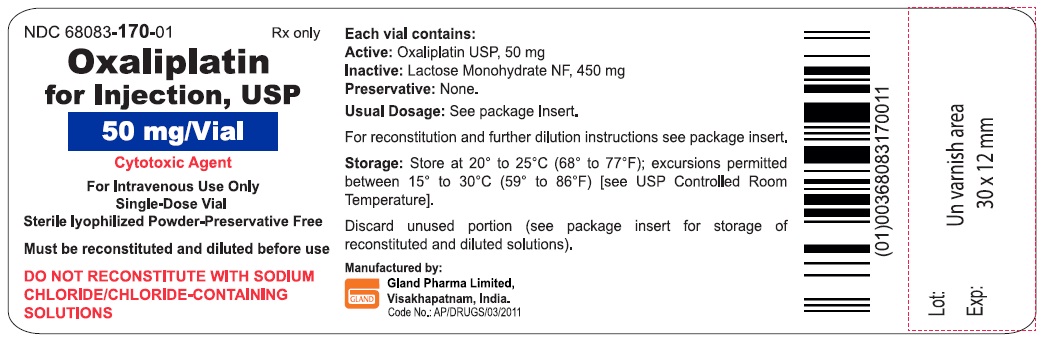
16.1How Supplied Oxaliplatin for Injection USP is supplied in clear, glass, single-use vials with gray elastomeric stoppers and aluminum flip-off seals containing 50 mg or 100 mg of oxaliplatin as a sterile, preservative-free lyophilized powder for reconstitution. Lactose monohydrate is also present as an inactive ingredient. NDC 68083-170-01: 50 mg single-use vial with red flip-off seal individually packaged in a carton.
NDC 68083-171-01: 100 mg single-use vial with yellow flip-off seal individually packaged in a carton.
16.2Storage Store at 20° to 25°C (68° to 77°F); excursions permitted between 15° to 30°C [See USP Controlled Room Temperature].
16.3Handling and Disposal As with other potentially toxic anticancer agents, care should be exercised in the handling and preparation of infusion solutions prepared from oxaliplatin for injection. The use of gloves is recommended. If a solution of oxaliplatin for injection contacts the skin, wash the skin immediately and thoroughly with soap and water.
If oxaliplatin for injection contacts the mucous membranes, flush thoroughly with water. Procedures for the handling and disposal of anticancer drugs should be considered. Several guidelines on the subject have been published [ see References (15) ].
There is no general agreement that all of the procedures recommended in the guidelines are necessary or appropriate.
📋 Description ▾
11 DESCRIPTION Oxaliplatin for injection USP is an antineoplastic agent with the molecular formula C 8 H 14 N 2 O 4 Pt and the chemical name of cis -[(1 R ,2 R )-1,2-cyclohexanediamine- N , N ’] [oxalato(2-)- O , O ’] platinum. Oxaliplatin is an organoplatinum complex in which the platinum atom is complexed with 1,2- diaminocyclohexane(DACH) and with an oxalate ligand as a leaving group. The molecular weight is 397.3.
Oxaliplatin is slightly soluble in water at 6 mg/mL, very slightly soluble in methanol, and practically insoluble in ethanol and acetone. Oxaliplatin for injection, USP is supplied in vials containing 50 mg or 100 mg of Oxaliplatin, USP as a sterile, preservative-free lyophilized powder for reconstitution. Lactose monohydrate is present as an inactive ingredient at 450 mg and 900 mg in the 50 mg and 100 mg dosage strengths, respectively.
Oxaliplatin-image2
💬 Information for Patients ▾
17 PATIENT COUNSELING INFORMATION Advise patients: To expect side effects of oxaliplatin for injection, particularly its neurologic effects, both the acute, reversible effects and the persistent neurosensory toxicity. Patients should be informed that the acute neurosensory toxicity may be precipitated or exacerbated by exposure to cold or cold objects. To avoid cold drinks, use of ice, and should cover exposed skin prior to exposure to cold temperature or cold objects.
Of the risk of low blood cell counts and to contact their physician immediately should fever, particularly if associated with persistent diarrhea, or evidence of infection develop. To contact their physician if persistent vomiting, diarrhea, signs of dehydration, cough or breathing difficulties occur, or signs of allergic reaction appear. To exercise caution when driving and using machines.
No studies on the effects of the ability to operate cars and machines have been performed; however, oxaliplatin treatment resulting in an increase risk of dizziness, nausea and vomiting, and other neurologic symptoms that affect gait and balance may lead to a minor or moderate influence on the ability to drive and use machines. Of the potential effects of vision abnormalities, in particular transient vision loss (reversible following therapy discontinuation), which may affect patients' ability to drive and use machines.
FDA-Approved Patient Labeling Patient Information Oxaliplatin (ox-AL-i-PLA-tin) for injection USP , for intravenous use Read this Patient Information leaflet carefully before you start receiving oxaliplatin for injection. There may be new information. It will help you learn more about oxaliplatin for injection.
This leaflet does not take the place of talking to your doctor about your medical condition or your treatment. Ask your doctor about any questions you have. What is the most important information I should know about Oxaliplatin for injection ?
Oxaliplatin for injection can cause serious allergic reactions, including allergic reactions that can lead to death. oxaliplatin for injection is a platinum base medicine. Serious allergic reactions including death can happen in people who take oxaliplatin for injection and who have had previous allergic reactions to platinum medicines. Serious allergic reactions can happen within a few minutes of your oxaliplatin for injection infusion or any time during your treatment with oxaliplatin for injection.
Get emergency help right away if you: have trouble breathing. feel like your throat is closing up. Call your doctor right away if you have any of the following signs or symptoms of an allergic reaction: rash flushed face hives itching swelling of your lips or tongue sudden cough dizziness or feel faint sweating chest pain See "What are the possible side effects of oxaliplatin for injection ?" for information about other serious side effects. What is Oxaliplatin for injection ?
Oxaliplatin for injection is an anti-cancer (chemotherapy) medicine that is used with other anti-cancer medicines called 5-fluorouracil and leucovorin to treat people with: stage III colon cancer after surgery to remove the tumor advanced colon or rectal cancer (colorectal cancer). It is not known if oxaliplatin for injection is effective in children. Who should not receive oxaliplatin for injection ?
Do not receive oxaliplatin for injection if you are allergic to any of the ingredients in oxaliplatin for injection or other medicines that contain platinum. See the end of this leaflet for a complete list of the ingredients oxaliplatin for injection. Ask your doctor if you are not sure if you take a medicine that contains platinum.
What should I tell my doctor before receiving Oxaliplatin for injection ? Before receiving Oxaliplatin for injection , tell your doctor about all of your medical conditions, including if you: have an infection have lung, liver, or kidney problems have or had heart problems such as an abnormal heart test called an elect…