
Regadenoson .08 mg/mL Injection, Solution — NDC 68083-175-10 (Billing 68083-0175-10)
This is a package of Regadenoson .08 mg/mL Injection, Solution from Gland Pharma Limited, marketed since Jul 2022 and currently FDA-listed. It is this product's only package size.
NDC database record
One package, one record: these facts belong to NDC 68083-175-10 alone.
- Record
- FDA NDC Directory package listing · Human prescription drug
- Code segments
- 68083 labeler · 175 product · 10 package
- Package marketed since
- Jul 12, 2022
- Sample package
- No — commercial package
- Listing certified through
- Dec 31, 2026
- Barcode (UPC)
- 0368083175108
- FDA record last changed
- Jul 24, 2026
Other active recalls for Regadenoson (different manufacturers) — 1 · tap to view
Identity & classification
Regulatory identifiers FDA, NLM and CMS codes for this package
Where does this data come from?
- FDA openFDA NDC Directory · synced Oct 1, 2026
- FDA label on DailyMed · label index refreshed Oct 3, 2026
- RxNorm (NLM RxNav) · catalog refreshed Oct 1, 2026
- Medi-Span GPI (licensed)
- First Databank (licensed) · refreshed Oct 1, 2026
Clinical
- The nuclear heart imaging test — called a myocardial perfusion imaging (MPI) scan — needs your heart to be working hard so the doctor can see how blood flows through it. If you can...
- Why do I need regadenoson if I can't exercise on a treadmill?
- Most people feel something within a minute of the injection. Shortness of breath, headache, flushing (warmth or redness), chest discomfort, and dizziness are the most common reacti...
- What should I expect to feel during and after the injection?
Patient education
Supplement & herbal interactions
Where does this data come from?
- MedlinePlus (NLM) · refreshed Oct 1, 2026
- FDA label on DailyMed · label index refreshed Oct 3, 2026
Ask a licensed pharmacist directly — free, answered by our team.
Pricing
A drug doesn't have one price. Each row is a different public payment system, and none is what you'd pay at the counter — that depends on your insurance. The ⓘ on each row explains what it measures.
| Price system | Per mL | Per package |
|---|---|---|
| Retail pharmacies payNADAC · weekly | Not in the retail survey — common for institutional, discontinued, or low-volume packs. | |
| Medicaid paysCMS SDUD · 12 mo | No recent Medicaid claims on file for this NDC — rare and low-volume NDCs are suppressed in the public data. | |
| Medicare drug plans payPart D · quarterly | No Part D plan price is available for this NDC in our data. | |
Where does this data come from?
- CMS NADAC weekly file
- CMS ASP pricing files · refreshed Sep 20, 2026
- CMS Medicaid State Drug Utilization Data · refreshed Oct 4, 2026
- CMS Part D plan pricing files · refreshed Sep 24, 2026
- VA National Acquisition Center price file
Packaging — all sizes for this product
| Package NDC | Description | Marketing start | Marketing end | Status |
|---|---|---|---|---|
| 68083-0175-10 You're viewing this Main listing | 10 VIAL in 1 CARTON / 5 mL in 1 VIAL | 2022-07-12 | — | Active |
Therapeutic equivalents
| Product | Labeler | Pack | NADAC/unit | TE | Status | Price vs. this |
|---|---|---|---|---|---|---|
| Lexiscan .08 mg/mL 00469-6501-89 | Astellas | 5 ml | — | AP | FDA listed | — |
| Regadenoson .08 mg/mLthis 68083-0175-10 | Gland | 10 vials | — | AP | FDA listed | — |
| Regadenoson .08 mg/mL 71288-0201-85 | Meitheal | 1 syringe | — | AP | FDA listed | — |
| regadenoson .08 mg/mL 55150-0443-01 | Eugia | 1 syringe | — | AP | FDA listed | — |
| regadenoson .08 mg/mL 36000-0364-01 | Baxter | 1 syringe | — | AP | FDA listed | — |
| Regadenoson .08 mg/mL 60505-6288-00 | Apotex | 1 syringe | — | AP | FDA listed | — |
| Regadenoson .08 mg/mL 85742-0012-09 | Kanchan | 1 syringe | — | AP | FDA listed | — |
| Regadenoson .08 mg/mL 10135-0803-51 | Marlex | 1 syringe | — | AP | FDA listed | — |
| Regadenoson .08 mg/mL 16729-0477-31 | Accord | 5 ml | — | AP | FDA listed | — |
| Regadenoson .08 mg/mL 83032-0001-02 | Indies | 1 syringe | — | AP | FDA listed | — |
| Regadenoson .08 mg/mL 60505-6116-00 | Apotex | 1 syringe | — | AP | FDA listed | — |
Where does this data come from?
- FDA openFDA NDC Directory · synced Oct 1, 2026
- FDA Orange Book · refreshed Oct 3, 2026
- CMS NADAC weekly file
Availability & generic status
This product is an FDA-approved generic. Other versions of the same drug are listed under Therapeutic equivalents, least expensive first.
Where does this data come from?
- FDA Orange Book · refreshed Oct 3, 2026
Inactive Ingredients / Excipients
Inactive ingredients, also called excipients, are components of the drug product other than the active ingredient. They may include fillers, dyes, coatings, preservatives, flavors, or other formulation ingredients.
💡 Tap an ingredient (hover on desktop) to see what it is and why it’s used.
-
1 mg / 1 mL
UNII 7FLD91C86K
Edetate disodium is a chemical compound that binds and removes certain metal ions. In medicines, it acts as a preservative and stabilizer by preventing metals like calcium from interfering with the product's shelf life and consistency.
-
150 mg / 1 mL
UNII 6DC9Q167V3
Propylene glycol is a clear liquid derived from petroleum or vegetable sources. It acts as a solvent, humectant, and preservative in medicines, helping dissolve active ingredients and maintain product stability.
-
10.9 mg / 1 mL
UNII 94255I6E2T
Sodium phosphate dibasic dihydrate is a salt that helps control the acidity level of a medicine. It acts as a buffer and pH regulator to keep the medication stable and effective.
-
5.4 mg / 1 mL
UNII 593YOG76RN
A salt made from sodium and phosphate that helps regulate acidity and maintain proper pH balance in the medicine. It also acts as a buffer to keep the product stable.
-
UNII 059QF0KO0R
Water is a liquid solvent that dissolves and mixes ingredients together in liquid medicines, syrups, and injections. It helps distribute the active drug evenly throughout the product.
5 inactive ingredients listed in the exact product block matched to this NDC.
Where does this data come from?
ingredient classCode="IACT" elements from the exact product block matched by this NDC. Label-section narrative from DailyMed / the openFDA label index is shown separately when available.- FDA label on DailyMed · label index refreshed Oct 3, 2026
- FDA openFDA NDC Directory · synced Oct 1, 2026
Inactive ingredient FAQ
Are inactive ingredients the same for every manufacturer?
Why might an inactive ingredient be missing?
Can inactive ingredients matter?
Manufacturer & labeler
More NDCs from Gland Pharma Limited labeler code 68083
- CISPLATIN 1 mg/mL Injection, Solution NDC 68083-163-01
- Oxaliplatin 50 mg/10mL Injection, Powder, Lyophilized, For Solution NDC 68083-170-01
- Oxaliplatin 100 mg/20mL Injection, Powder, Lyophilized, For Solution NDC 68083-171-01
- Deferoxamine mesylate 500 mg Injection, Powder, Lyophilized, For Solution NDC 68083-172-01
- Deferoxamine mesylate 2 g Injection, Powder, Lyophilized, For Solution NDC 68083-173-01
- Polymyxin B 500000 [USP'U]/1 Injection, Powder, Lyophilized, For Solution NDC 68083-174-10
- Oxaliplatin 5 mg/mL Injection, Solution NDC 68083-176-01
- Oxaliplatin 5 mg/mL Injection, Solution NDC 68083-177-01
- PACLITAXEL 6 mg/mL Injection, Solution NDC 68083-178-01
- PACLITAXEL 6 mg/mL Injection, Solution NDC 68083-179-01
- PACLITAXEL 6 mg/mL Injection, Solution NDC 68083-180-01
- CARBOPLATIN 10 mg/mL Injection, Solution NDC 68083-190-01
Where does this data come from?
- FDA openFDA NDC Directory · synced Oct 1, 2026
- Drugs@FDA
Full prescribing information FDA SPL
🎯 Indications and Usage ▾
1 INDICATIONS AND USAGE Regadenoson injection is a pharmacologic stress agent indicated for radionuclide myocardial perfusion imaging (MPI) in patients unable to undergo adequate exercise stress. Regadenoson injection is a pharmacologic stress agent indicated for radionuclide myocardial perfusion imaging (MPI) in patients unable to undergo adequate exercise stress ( 1 ).
⏱️ Dosage and Administration ▾
2 DOSAGE AND ADMINISTRATION The recommended dose of Regadenoson injection is 5 mL (0 .4 mg regadenoson) administered as an intravenous injection within 10 seconds. Patients should be instructed to avoid consumption of any products containing methylxanthines, including caffeinated coffee, tea or other caffeinated beverages, caffeine –containing drug products, aminophylline and theophylline for at least 12 hours before a scheduled radionuclide MPI [ see Drug Interactions (7.1) and Clinical Pharmacology (12.2) ]. Parenteral drug products should be inspected visually for particulate matter and discoloration prior to administration, whenever solution and container permit.
Do not administer Regadenoson injection if it contains particulate matter or is discolored. Administer Regadenoson injection as an intravenous injection within 10 seconds into a peripheral vein using a 22 gauge or larger catheter or needle. Administer a 5 mL saline flush immediately after the injection of Regadenoson injection.
Administer the radionuclide myocardial perfusion imaging agent 10 –20 seconds after the saline flush. The radionuclide may be injected directly into the same catheter as Regadenoson injection. The recommended dose of Regadenoson Injection is 5 mL (0.4 mg regadenoson) administered as an intravenous injection within 10 seconds; followed immediately by saline flush and radiopharmaceutical ( 2 )
💊 Dosage Forms and Strengths ▾
3 DOSAGE FORMS AND STRENGTHS Single-dose vial: clear, colorless solution containing regadenoson 0.4 mg /5 mL (0.08 mg /mL). Single-dose vial: Injection solution containing regadenoson 0.4 mg/5 mL (0.08 mg/mL) ( 3 )
⛔ Contraindications ▾
4 CONTRAINDICATIONS Do not administer Regadenoson injection to patients with: · Second- or third- degree AV block, or · Sinus node dysfunction unless these patients have a functioning artificial pacemaker [ see Warnings and Precautions (5.2) ] . Do not administer Regadenoson injection to patients with: · Second- or third- degree AV block, or · sinus node dysfunction unless the patients have a functioning artificial pacemaker ( 4 ).
⚠️ Warnings and Cautions ▾
5 WARNINGS AND PRECAUTIONS • Myocardial Ischemia: Fatal cardiac events have occurred. Avoid use in patients with symptoms or signs of acute myocardial ischemia, for example unstable angina or cardiovascular instability, who may be at greater risk. Cardiac resuscitation equipment and trained staff should be available before administration ( 5.1 ) • Sinoatrial (SA) and Atrioventricular (AV) Nodal Block.
Adenosine receptor agonists, including Regadenoson Injection, can depress the SA and AV nodes and may cause first-second- or third-degree AV block, or sinus bradycardia ( 5.2 ) • Atrial Fibrillation/Atrial Flutter. New-onset or recurrent atrial fibrillation with rapid ventricular response and atrial flutter have been reported ( 5.3 ) • Hypersensitivity, including anaphylaxis, angioedema, cardiac or respiratory arrest, respiratory distress, decreased oxygen saturation, hypotension, throat tightness, urticaria, and rashes have occurred.
Have personnel and resuscitative equipment immediately available ( 5.4 ) • Hypotension. Adenosine receptor agonists, including Regadenoson injection, induce vasodilation and hypotension. The risk of serious hypotension may be higher in patients with autonomic dysfunction, stenotic valvular heart disease, pericarditis or pericardial effusions, stenotic carotid artery disease with cerebrovascular insufficiency, or hypovolemia ( 5.5 ) • Hypertension.
Adenosine receptor agonists, including Regadenoson injection, may induce clinically significant increases in blood pressure particularly in patients with a history of hypertension and when the MPI includes low level exercise ( 5.6 ) • Bronchoconstriction. Adenosine receptor agonists, including Regadenoson injection, may induce dyspnea, bronchoconstriction and respiratory compromise in patients with chronic obstructive pulmonary disease (COPD) or asthma. Resuscitative measures should be available ( 5.7 ) • Seizure.
Regadenoson injection may lower the seizure threshold. New onset or recurrence of convulsive seizures has occurred. Some seizures are prolonged and require urgent anticonvulsive management.
Methylxanthine use is not recommended in patients who experience a seizure in association with Regadenoson injection ( 5.8 ) • Cerebrovascular Accident (Stroke). Hemorrhagic and ischemic cerebrovascular accidents have occurred ( 5.9 )
5.1Myocardial Ischemia Fatal and nonfatal myocardial infarction, ventricular arrhythmias, and cardiac arrest have occurred following Regadenoson injection. Avoid use in patients with symptoms or signs of acute myocardial ischemia, for example unstable angina or cardiovascular instability; these patients may be at greater risk of serious cardiovascular reactions to Regadenoson injection. Cardiac resuscitation equipment and trained staff should be available before administering Regadenoson injection.
Adhere to the recommended duration of injection [ see Dosage and Administration (2) ]. As noted in an animal study, longer injection times may increase the duration and magnitude of increase in coronary blood flow [ see Clinical Pharmacology (12.2) ]. If serious reactions to Regadenoson injection occur, consider the use of aminophylline, an adenosine antagonist, to shorten the duration of increased coronary blood flow induced by Regadenoson injection [ see Overdosage (10) ].
5.2Sinoatrial and Atrioventricular Nodal Block Adenosine receptor agonists, including Regadenoson injection, can depress the SA and AV nodes and may cause first-, second- or third-degree AV block, or sinus bradycardia requiring intervention. In clinical trials first-degree AV block (PR prolongation > 220 msec) developed in 3% of patients within 2 hours of Regadenoson injection administration; transient second-degree AV block with one dropped beat was observed in one patient receiving Regadenoson injection. In postmarketing experience, third- degree heart block and asystole within minutes of Regadenoson injection administration have occurred [ see Adverse Reaction… [Excerpted — this section continues on DailyMed.]
🤒 Adverse Reactions ▾
6 ADVERSE REACTIONS The following adverse reactions are discussed in more detail in other sections of the labeling. • Myocardial Ischemia [ see Warnings and Precautions (5.1) ] • Sinoatrial and Atrioventricular Nodal Block [ see Warnings and Precautions (5.2) ] • Atrial Fibrillation/Atrial Flutter [see Warnings and Precautions (5.3) ] • Hypersensitivity, Including Anaphylaxis [see Warnings and Precautions (5.4) ] • Hypotension [ see Warnings and Precautions (5.5) ] • Hypertension [ see Warnings and Precautions (5.6) ] • Bronchononstriction [ see Warnings and Precautions (5.7) ] • Seizure [ see Warnings and Precautions (5.8) ] • Cerebrovascular Accident (Stroke) [ see Warnings and Precautions (5.9) ] The most common (incidence ≥ 5%) adverse reactions to Regadenoson injection are dyspnea, headache, flushing, chest discomfort, dizziness, angina pectoris, chest pain, and nausea ( 6 ).
To report SUSPECTED ADVERSE REACTIONS, contact Gland Pharma at 864-879-9994 or FDA at 1-800-FDA-1088 or www.fda.gov/medwatch
6.1Clinical Trials Experience Because clinical trials are conducted under widely varying conditions, adverse reaction rates observed in the clinical trials of a drug cannot be directly compared to rates in the clinical trials of another drug and may not reflect the rates observed in practice. During clinical development, 1,651 subjects were exposed to Regadenoson injection, with most receiving 0.4 mg as a rapid (≤ 10 seconds) intravenous injection. Most of these subjects received Regadenoson injection in two clinical studies that enrolled patients who had no history of bronchospastic lung disease as well as no history of a cardiac conduction block of greater than first-degree AV block, except for patients with functioning artificial pacemakers.
In these studies (Studies 1 and 2), 2,015 patients underwent myocardial perfusion imaging after administration of Regadenoson injection (N = 1,337) or ADENOSCAN® (N = 678). The population was 26– 93 years of age (median 66 years), 70% male and primarily Caucasian (76% Caucasian, 7% African American, 9% Hispanic, 5% Asian). Table 1 shows the most frequently reported adverse reactions.
Overall, any adverse reaction occurred at similar rates between the study groups (80% for the Regadenoson injection group and 83% for the ADENOSCAN group). Aminophylline was used to treat the reactions in 3% of patients in the Regadenoson injection group and 2% of patients in the ADENOSCAN group. Most adverse reactions began soon after dosing, and generally resolved within approximately 15 minutes, except for headache which resolved in most patients within 30 minutes.
Table 1 Adverse Reactions in Studies 1 and 2 Pooled (Frequency ≥ 5%) Regadenoson Injection N = 1,337 A DENO SCAN N = 678 Dyspnea 28% 26% Headache 26% 17% Flushing 16% 25% Chest Discomfort 13% 18% Angina Pectoris or ST Segment Depression 12% 18% Dizziness 8% 7% Chest Pain 7% 10% Nausea 6% 6% Abdominal Discomfort 5% 2% Dysgeusia 5% 7% Feeling Hot 5% 8% ECG Abnormalities: The frequency of rhythm or conduction abnormalities following Regadenoson injection or ADENOSCAN is shown in Table 2 [ see Warnings and Precautions (5.2) ].
Table 2 Rhythm or Conduction Abnormalities* in Studies 1 and 2 Regadenoson Injection N / N evaluable (%) ADENOSCAN N / N evaluable (%) Rhythm or conduction abnormalities # 332/1275 (26%) 192/645 (30%) Rhythm abnormalities 260/1275 (20%) 131/645 (20%) PACs 86/1274 (7%) 57/645 (9%) PVCs 179/1274 (14%) 79/645 (12%) First-degree AV block (PR prolongation > 220 msec) 34/1209 (3%) 43/618 (7%) Second-degree AV block 1/1209 (0.1%) 9/618 (1%) AV conduction abnormalities (other than AV blocks) 1/1209 (0.1%) 0/618 (0%) Ventricular conduction abnormalities 64/1152 (6%) 31/581 (5%) * 12-lead ECG s were recorded before and for up to 2 hrs after dosing # includes rhythm abnormalities (PACs, PVCs, atrial fibrillation/flutter, wandering atrial pacemaker, supraventricular or ventricular arrhythmia) or conduction abnormalities, including AV bl… [Excerpted — this section continues on DailyMed.]
🔄 Drug Interactions ▾
7 DRUG INTERACTIONS No formal pharmacokinetic drug interaction studies have been conducted with Regadenoson injection. • Methylxanthines, e.g., caffeine, aminophylline and theophylline, interfere with the activity of Regadenoson injection ( 7.1 , 12.2 ) • Aminophylline may be used to attenuate severe and/or persistent adverse reactions to Regadenoson injection ( 7.1 , 10 ) • Dipyridamole may increase the activity of Regadenoson injection. When possible, withhold dipyridamole for at least two days prior to Regadenoson injection administration ( 7.1 )
7.1Effects of Other Drugs on Regadenoson Injection • Methylxanthines (e.g., caffeine, aminophylline and theophylline) are non-specific adenosine receptor antagonists that interfere with the vasodilation activity of Regadenoson injection [ see Clinical Pharmacology (12.2) and Patient Counseling Information (17) ]. Patients should avoid consumption of any products containing methylxanthines as well as any drugs containing theophylline or aminophylline for at least 12 hours before Regadenoson injection administration.
Aminophylline may be used to attenuate severe or persistent adverse reactions to Regadenoson injection [ see Overdosage (10 ) ]. • In clinical studies, Regadenoson injection was administered to patients taking other cardioactive drugs (i.e., β-blockers, calcium channel blockers, ACE inhibitors, nitrates, cardiac glycosides, and angiotensin receptor blockers) without reported adverse reactions or apparent effects on efficacy. • Dipyridamole may change the effects of Regadenoson injection. When possible, withhold dipyridamole for at least two days prior to Regadenoson injection administration.
7.2Effect of Regadenoson injection on Other Drugs Regadenoson does not inhibit the metabolism of substrates for CYP1A2, CYP2C8, CYP2C9, CYP2C19, CYP2D6, or CYP3A4 in human liver microsomes, indicating that it is unlikely to alter the pharmacokinetics of drugs metabolized by these cytochrome P450 enzymes.
👥 Use in Specific Populations ▾
8 USE IN SPECIFIC POPULATIONS
8.1Pregnancy Risk Summary There are no available data on Regadenoson injection use in pregnant women to inform a drug-associated risk. In animal reproduction studies, adverse developmental outcomes were observed with the administration of regadenoson to pregnant rats and rabbits during organogenesis only at doses that produced maternal toxicity ( see Data ). In the U.S. general population, the estimated background risk of major birth defects and miscarriage in clinically recognized pregnancies is 2-4% and 15-20%, respectively.
Data Animal Data Reproductive studies in rats showed that regadenoson doses 10 and 20 times the maximum recommended human dose (MRHD) based on body surface area caused reduced fetal body weights and significant ossification delays in fore- and hind limb phalanges and metatarsals; maternal toxicity also occurred at these doses. Skeletal variations were increased in all treated groups. In rabbits, maternal toxicity occurred at regadenoson doses administered during organogenesis at 4 times the MRHD; however, there were no teratogenic effects in offspring at this dose.
At higher doses, 12 and 20 times the MRHD, maternal toxicity occurred along with increased embryo-fetal loss and fetal malformations.
8.2Lactation Risk Summary There is no information on the presence of regadenoson in human milk, the effects on the breastfed infant, or the effects on milk production. Because of the potential risk of serious cardiac reactions in the breastfed infant, advise the nursing mother to pump and discard breast milk for 10 hours after administration of Regadenoson injection.
8.4Pediatric Use Safety and effectiveness in pediatric patients have not been established.
8.5Geriatric Use Of the 1,337 patients receiving Regadenoson injection in Studies 1 and 2, 56% were 65 years of age and over and 24% were 75 years of age and over. Older patients (≥ 75 years of age) had a similar adverse event profile compared to younger patients (< 65 years of age), but had a higher incidence of hypotension (2% vs. ≤ 1%).
8.6Renal Impairment No dose adjustment is needed in patients with renal impairment including patients with end stage renal disease and/or dependent on dialysis [ see Pharmacokinetics (12.3) ].
🤰 Pregnancy ▾
8.1Pregnancy Risk Summary There are no available data on Regadenoson injection use in pregnant women to inform a drug-associated risk. In animal reproduction studies, adverse developmental outcomes were observed with the administration of regadenoson to pregnant rats and rabbits during organogenesis only at doses that produced maternal toxicity ( see Data ). In the U.S. general population, the estimated background risk of major birth defects and miscarriage in clinically recognized pregnancies is 2-4% and 15-20%, respectively.
Data Animal Data Reproductive studies in rats showed that regadenoson doses 10 and 20 times the maximum recommended human dose (MRHD) based on body surface area caused reduced fetal body weights and significant ossification delays in fore- and hind limb phalanges and metatarsals; maternal toxicity also occurred at these doses. Skeletal variations were increased in all treated groups. In rabbits, maternal toxicity occurred at regadenoson doses administered during organogenesis at 4 times the MRHD; however, there were no teratogenic effects in offspring at this dose.
At higher doses, 12 and 20 times the MRHD, maternal toxicity occurred along with increased embryo-fetal loss and fetal malformations.
🧒 Pediatric Use ▾
8.4Pediatric Use Safety and effectiveness in pediatric patients have not been established.
🧓 Geriatric Use ▾
8.5Geriatric Use Of the 1,337 patients receiving Regadenoson injection in Studies 1 and 2, 56% were 65 years of age and over and 24% were 75 years of age and over. Older patients (≥ 75 years of age) had a similar adverse event profile compared to younger patients (< 65 years of age), but had a higher incidence of hypotension (2% vs. ≤ 1%).
🆘 Overdosage ▾
10 OVERDOSAGE Regadenoson injection overdosage may result in serious reactions [ see Warnings and Precautions (5)] . In a study of healthy volunteers, symptoms of flushing, dizziness and increased heart rate were assessed as intolerable at Regadenoson injection doses greater than 0.02 mg/kg. Aminophylline to Reverse Effects Methylxanthines, such as caffeine, aminophylline, and theophylline, are competitive adenosine receptor antagonists and aminophylline has been used to terminate persistent pharmacodynamic effects.
Aminophylline may be administered in doses ranging from 50 mg to 250 mg by slow intravenous injection (50 mg to 100 mg over 30–60 seconds). Methylxanthine use is not recommended in patients who experience a seizure in association with Regadenoson injection administration [ see Warnings and Precautions (5.8) ].
🧬 Clinical Pharmacology ▾
12 CLINICAL PHARMACOLOGY
12.1Mechanism of Action Regadenoson is a low affinity agonist (K i ≈ 1.3 μM) for the A 2A adenosine receptor, with at least 10- fold lower affinity for the A 1 adenosine receptor (K i > 16.5 μM), and weak, if any, affinity for the A 2B and A 3 adenosine receptors. Activation of the A 2A adenosine receptor by regadenoson produces coronary vasodilation and increases coronary blood flow (CBF).
12.2Pharmacodynamics Coronary Blood Flow R egadenoson injection causes a rapid increase in CBF which is sustained for a short duration. In patients undergoing coronary catheterization, pulsed-wave Doppler ultrasonography was used to measure the average peak velocity (APV) of coronary blood flow before and up to 30 minutes after administration of regadenoson (0.4 mg, intravenously). Mean APV increased to greater than twice baseline by 30 seconds and decreased to less than twice the baseline level within 10 minutes [ see Clinical Pharmacology (12.3) ].
Myocardial uptake of the radiopharmaceutical is proportional to CBF. Because Regadenoson injection increases blood flow in normal coronary arteries with little or no increase in stenotic arteries, Regadenoson injection causes relatively less uptake of the radiopharmaceutical in vascular territories supplied by stenotic arteries. MPI intensity after Regadenoson injection administration is therefore greater in areas perfused by normal relative to stenosed arteries.
Effect of duration of injection A study in dogs compared the effects of intravenous injection of 2.5 μg/kg regadenoson (in 10 mL) over 10 seconds and 30 seconds on CBF. The duration of a two-fold increase in CBF was 97±14 seconds (n=6) and 221±20 seconds (n=4), respectively, for the 10 second and 30 second injections. The peak effects (i.e., maximal increase) on CBF after the 10 second and 30 second injections were 217±15% and 297±33% above baseline, respectively.
The times to peak effect on CBF were 17±2 seconds and 27±6 seconds, respectively. Effect of Aminophylline Aminophylline (100 mg, administered by slow intravenous injection over 60 seconds) injected 1 minute after 0.4 mg Regadenoson injection in subjects undergoing cardiac catheterization, was shown to shorten the duration of the coronary blood flow response to Regadenoson injection as measured by pulsed-wave Doppler ultrasonography [ see Overdosage (10) ]. Effect of Caffeine I ngestion of caffeine decreases the ability to detect reversible ischemic defects.
In a placebo controlled, parallel group clinical study, patients with known or suspected myocardial ischemia received a baseline rest/stress MPI followed by a second stress MPI. Patients received caffeine or placebo 90 minutes before the second Regadenoson injection stress MPI. Following caffeine administration (200 or 400 mg), the mean number of reversible defects identified was reduced by approximately 60%.
This decrease was statistically significant. [ see Drug Interactions (7.1) and Patient Counseling Information (17) ]. Hemodynamic Effects In clinical studies, the majority of patients had an increase in heart rate and a decrease in blood pressure within 45 minutes after administration of Regadenoson injection. Maximum hemodynamic changes after Regadenoson injection and Adenoscan in Studies 1 and 2 are summarized in Table 5.
Table 5 Hemodynamic Effects in Studies 1 and 2 Vital Sign Parameter Regadenoson Injection N = 1,337 ADENOSCAN N = 678 Heart Rate > 100 bpm 22% 13% Increase > 40 bpm 5% 3% Systolic Blood Pressure < 90 mm Hg 2% 3% Decrease > 35 mm Hg 7% 8% ≥ 200 mm Hg 1.9% 1.9% Increase ≥ 50 mm Hg 0.7% 0.8% ≥ 180 mm Hg and increase of ≥ 20 mm Hg from baseline 4.6% 3.2% Diastolic Blood Pressure < 50 mm Hg 2% 4% Decrease > 25 mm Hg 4% 5% ≥ 115 mm Hg 0.9% 0.9% Increase ≥ 30 mm Hg 0.5% 1.1% Hemodynamic Effects Following Inadequate Exercise I n a clinical study, Regadenoson injection was administered for MPI following inadequate exercise stress.
More patients with Regadenoson injection administr… [Excerpted — this section continues on DailyMed.]
🧬 Mechanism of Action ▾
12.1Mechanism of Action Regadenoson is a low affinity agonist (K i ≈ 1.3 μM) for the A 2A adenosine receptor, with at least 10- fold lower affinity for the A 1 adenosine receptor (K i > 16.5 μM), and weak, if any, affinity for the A 2B and A 3 adenosine receptors. Activation of the A 2A adenosine receptor by regadenoson produces coronary vasodilation and increases coronary blood flow (CBF).
📦 How Supplied / Storage and Handling ▾
16 HOW SUPPLIED/STORAGE AND HANDLING Regadenoson injection is supplied as a sterile, preservative-free solution containing 0.08 mg/mL regadenoson in the following package: Product Name NDC No. Pack configuration Regadenoson Injection 0.4 mg /5mL (0.08 mg/mL) 68083-175-10 Ten single-dose 5 mL vials in one carton Store at controlled room temperature, 20° to 25°C (68° to 77°F); excursions permitted to 15° to 30°C (59° to 86°F) [ See USP Controlled Room Temperature.]
📋 Description ▾
11 DESCRIPTION Regadenoson is an A 2A adenosine receptor agonist that is a coronary vasodilator [ see Clinical Pharmacology (12.1) ]. Regadenoson is chemically described as adenosine, 2- [4-[(methylamino) carbonyl]-1 H -pyrazol-1-yl]-, monohydrate. Its structural formula is: The molecular formula for regadenoson is C 15 H 18 N 8 O 5 .H 2 O and its molecular weight is 408.37.
Regadenoson injection is a sterile, nonpyrogenic solution for intravenous injection. The solution is clear and colorless. Each 1 mL in the 5 mL vial contains 0.08 mg of regadenoson, 10.9 mg dibasic sodium phosphate dihydrate, 5.4 mg monobasic sodium phosphate monohydrate, 150 mg propylene glycol, 1 mg edetate disodium dihydrate, and Water for Injection, with pH between 6.3 and 7.7. regadenoson-spl-structure
💬 Information for Patients ▾
17 PATIENT COUNSELING INFORMATION Drug Interaction Patients should be instructed to avoid consumption of any products containing methylxanthines, including caffeinated coffee, tea or other caffeinated beverages, caffeine-containing drug products, aminophylline and theophylline for at least 12 hours before a scheduled radionuclide MPI [ see Warnings and Precautions (5.8) and Clinical Pharmacology (12.2) ]. Cardiovascular Advise patients that they may be at increased risk of fatal and nonfatal heart attacks, abnormal heart rhythms, cardiac arrest, significant increase or decrease in blood pressure, or cerebrovascular accidents (stroke) with the use of Regadenoson injection [ see Warnings and Precautions (5.1) , (5.3) , (5.5) , (5.6) and (5.9) ].
Hypersensitivity Inform patients that allergic reactions have been reported with Regadenoson injection. Advise patients how to recognize such a reaction and when to seek medical attention [ see Warnings and Precautions (5.4) ]. Respiratory Advise patients with COPD or asthma about the need for administration of pre- and post-study bronchodilator therapy and to call their clinician if they experience any shortness of breath or difficulty breathing following an MPI study with Regadenoson injection [ see Warnings and Precautions (5.7) ].
Seizures Advise patients that they may be at increased risk of seizures. Question patients about a history of seizures [ see Warnings and Precautions (5.8) ]. Lactation Advise a woman to pump and discard breast milk for 10 hours after Regadenoson injection administration [ see Use in Specific Populations (8.2) ].
Rx Only Manufactured by: Gland Pharma Limited D.P.Pally, Dundigal Post Hyderabad -500-043, INDIA The trademarks are the property of their respective owners. Revised: December 2018
🍼 Nursing Mothers ▾
8.2Lactation Risk Summary There is no information on the presence of regadenoson in human milk, the effects on the breastfed infant, or the effects on milk production. Because of the potential risk of serious cardiac reactions in the breastfed infant, advise the nursing mother to pump and discard breast milk for 10 hours after administration of Regadenoson injection.
🧬 Pharmacokinetics ▾
12.3Pharmacokinetics In healthy subjects, the regadenoson plasma concentration-time profile is multi-exponential in nature and best characterized by 3-compartment model. The maximal plasma concentration of regadenoson is achieved within 1 to 4 minutes after injection of Regadenoson injection and parallels the onset of the pharmacodynamic response. The half-life of this initial phase is approximately 2 to 4 minutes.
An intermediate phase follows, with a half-life on average of 30 minutes coinciding with loss of the pharmacodynamic effect. The terminal phase consists of a decline in plasma concentration with a half-life of approximately 2 hours [see Clinical Pharmacology (12.2)]. Within the dose range of 0.3–20 μg/kg in healthy subjects, clearance, terminal half-life or volume of distribution do not appear dependent upon the dose.
A population pharmacokinetic analysis including data from subjects and patients demonstrated that regadenoson clearance decreases in parallel with a reduction in creatinine clearance and clearance increases with increased body weight. Age, gender, and race have minimal effects on the pharmacokinetics of regadenoson. Special Populations Renally Impaired Patients: The disposition of regadenoson was studied in 18 patients with various degrees of renal function and in 6 healthy subjects.
With increasing renal impairment, from mild (CLcr 50 to < 80 mL/min) to moderate (CLcr 30 to < 50 mL/min) to severe renal impairment (CLcr < 30 mL/min), the fraction of regadenoson excreted unchanged in urine and the renal clearance decreased, resulting in increased elimination half-lives and AUC values compared to healthy subjects (CLcr ≥ 80 mL/min). However, the maximum observed plasma concentrations as well as volumes of distribution estimates were similar across the groups. The plasma concentration-time profiles were not significantly altered in the early stages after dosing when most pharmacologic effects are observed.
No dose adjustment is needed in patients with renal impairment. Patients with End Stage Renal Disease: The pharmacokinetics of regadenoson in patients on dialysis has not been assessed; however, in an in vitro study regadenoson was found to be dialyzable. Hepatically Impaired Patients : The influence of hepatic impairment on the pharmacokinetics of regadenoson has not been evaluated.
Because greater than 55% of the dose is excreted in the urine as unchanged drug and factors that decrease clearance do not affect the plasma concentration in the early stages after dosing when clinically meaningful pharmacologic effects are observed, no dose adjustment is needed in patients with hepatic impairment. Geriatric Patients : Based on a population pharmacokinetic analysis, age has a minor influence on the pharmacokinetics of regadenoson. No dose adjustment is needed in elderly patients.
Metabolism The metabolism of regadenoson is unknown in humans. Incubation with rat, dog, and human liver microsomes as well as human hepatocytes produced no detectable metabolites of regadenoson. Excretion In healthy volunteers, 57% of the regadenoson dose is excreted unchanged in the urine (range 19–77%), with an average plasma renal clearance around 450 mL/min, i.e., in excess of the glomerular filtration rate.
This indicates that renal tubular secretion plays a role in regadenoson elimination.
🧬 Pharmacodynamics ▾
12.2Pharmacodynamics Coronary Blood Flow R egadenoson injection causes a rapid increase in CBF which is sustained for a short duration. In patients undergoing coronary catheterization, pulsed-wave Doppler ultrasonography was used to measure the average peak velocity (APV) of coronary blood flow before and up to 30 minutes after administration of regadenoson (0.4 mg, intravenously). Mean APV increased to greater than twice baseline by 30 seconds and decreased to less than twice the baseline level within 10 minutes [ see Clinical Pharmacology (12.3) ].
Myocardial uptake of the radiopharmaceutical is proportional to CBF. Because Regadenoson injection increases blood flow in normal coronary arteries with little or no increase in stenotic arteries, Regadenoson injection causes relatively less uptake of the radiopharmaceutical in vascular territories supplied by stenotic arteries. MPI intensity after Regadenoson injection administration is therefore greater in areas perfused by normal relative to stenosed arteries.
Effect of duration of injection A study in dogs compared the effects of intravenous injection of 2.5 μg/kg regadenoson (in 10 mL) over 10 seconds and 30 seconds on CBF. The duration of a two-fold increase in CBF was 97±14 seconds (n=6) and 221±20 seconds (n=4), respectively, for the 10 second and 30 second injections. The peak effects (i.e., maximal increase) on CBF after the 10 second and 30 second injections were 217±15% and 297±33% above baseline, respectively.
The times to peak effect on CBF were 17±2 seconds and 27±6 seconds, respectively. Effect of Aminophylline Aminophylline (100 mg, administered by slow intravenous injection over 60 seconds) injected 1 minute after 0.4 mg Regadenoson injection in subjects undergoing cardiac catheterization, was shown to shorten the duration of the coronary blood flow response to Regadenoson injection as measured by pulsed-wave Doppler ultrasonography [ see Overdosage (10) ]. Effect of Caffeine I ngestion of caffeine decreases the ability to detect reversible ischemic defects.
In a placebo controlled, parallel group clinical study, patients with known or suspected myocardial ischemia received a baseline rest/stress MPI followed by a second stress MPI. Patients received caffeine or placebo 90 minutes before the second Regadenoson injection stress MPI. Following caffeine administration (200 or 400 mg), the mean number of reversible defects identified was reduced by approximately 60%.
This decrease was statistically significant. [ see Drug Interactions (7.1) and Patient Counseling Information (17) ]. Hemodynamic Effects In clinical studies, the majority of patients had an increase in heart rate and a decrease in blood pressure within 45 minutes after administration of Regadenoson injection. Maximum hemodynamic changes after Regadenoson injection and Adenoscan in Studies 1 and 2 are summarized in Table 5.
Table 5 Hemodynamic Effects in Studies 1 and 2 Vital Sign Parameter Regadenoson Injection N = 1,337 ADENOSCAN N = 678 Heart Rate > 100 bpm 22% 13% Increase > 40 bpm 5% 3% Systolic Blood Pressure < 90 mm Hg 2% 3% Decrease > 35 mm Hg 7% 8% ≥ 200 mm Hg 1.9% 1.9% Increase ≥ 50 mm Hg 0.7% 0.8% ≥ 180 mm Hg and increase of ≥ 20 mm Hg from baseline 4.6% 3.2% Diastolic Blood Pressure < 50 mm Hg 2% 4% Decrease > 25 mm Hg 4% 5% ≥ 115 mm Hg 0.9% 0.9% Increase ≥ 30 mm Hg 0.5% 1.1% Hemodynamic Effects Following Inadequate Exercise I n a clinical study, Regadenoson injection was administered for MPI following inadequate exercise stress.
More patients with Regadenoson injection administration three minutes following inadequate exercise stress had an increase in heart rate and a decrease in systolic blood pressure compared with Regadenoson injection administered at rest. The changes were not associated with any clinically significant adverse reactions. Maximum hemodynamic changes are presented in Table 6.
Table 6 Hemodynamic Effects in Inadequate Exercise Stress Study Vital Sign Parameter Group 1/MP1… [Excerpted — this section continues on DailyMed.]
🔬 Clinical Studies ▾
14 CLINICAL STUDIES Agreement between Regadenoson injection and ADENOSCAN The efficacy and safety of Regadenoson injection were determined relative to ADENOSCAN in two randomized, double-blind studies (Studies 1 and 2) in 2,015 patients with known or suspected coronary artery disease who were indicated for pharmacologic stress MPI. A total of 1,871 of these patients had images considered valid for the primary efficacy evaluation, including 1,294 (69%) men and 577 (31%) women with a median age of 66 years (range 26–93 years of age).
Each patient received an initial stress scan using ADENOSCAN (6-minute infusion using a dose of 0.14 mg/kg/min, without exercise) with a radionuclide gated SPECT imaging protocol. After the initial scan, patients were randomized to either Regadenoson injection or ADENOSCAN, and received a second stress scan with the same radionuclide imaging protocol as that used for the initial scan. The median time between scans was 7 days (range of 1–104 days).
The most common cardiovascular histories included hypertension (81%), CABG, PTCA or stenting (51%), angina (63%), and history of myocardial infarction (41%) or arrhythmia (33%); other medical history included diabetes (32%) and COPD (5%). Patients with a recent history of serious uncontrolled ventricular arrhythmia, myocardial infarction, or unstable angina, a history of greater than first-degree AV block, or with symptomatic bradycardia, sick sinus syndrome, or a heart transplant were excluded. A number of patients took cardioactive medications on the day of the scan, including β-blockers (18%), calcium channel blockers (9%), and nitrates (6%).
In the pooled study population, 68% of patients had 0–1 segments showing reversible defects on the initial scan, 24% had 2–4 segments, and 9% had ≥ 5 segments. Comparison of the images obtained with Regadenoson injection to those obtained with ADENOSCAN was performed as follows. Using the 17-segment model, the number of segments showing a reversible perfusion defect was calculated for the initial ADENOSCAN study and for the randomized study obtained using Regadenoson injection or ADENOSCAN.
The agreement rate for the image obtained with Regadenoson injection or ADENOSCAN relative to the initial ADENOSCAN image was calculated by determining how frequently the patients assigned to each initial ADENOSCAN category (0–1, 2–4, 5–17 reversible segments) were placed in the same category with the randomized scan. The agreement rates for Regadenoson injection and ADENOSCAN were calculated as the average of the agreement rates across the three categories determined by the initial scan. Studies 1 and 2 each demonstrated that Regadenoson injection is similar to ADENOSCAN in assessing the extent of reversible perfusion abnormalities (Table 7).
Table 7 Agreement Rates in Studies 1 and 2 Study 1 Study 2 ADENOSCAN – ADENOSCAN Agreement Rate (± SE) 61 ± 3% 64 ± 4% ADENOSCAN – Regadenoson injection Agreement Rate (±SE) 62 ± 2% 63 ± 3% Rate Difference (Regadenoson injection– ADENOSCAN) (± SE) 95% Confidence Interval 1 ± 4% -7.5, 9.2% -1 ± 5% -11.2, 8.7% Use of Regadenoson injection in Patients with Inadequate Exercise Stress The efficacy and safety of Regadenoson injection administered 3 minutes (Group 1) or 1 hour (Group 2) following inadequate exercise stress were evaluated in an open-label randomized, multi-center, non-inferiority study.
Adequate exercise was defined as ≥ 85% maximum predicted heart rate and ≥ 5 METS. SPECT MPI was performed 60-90 minutes after Regadenoson injection administration in each group (MPI 1). Patients returned 1-14 days later to undergo a second stress MPI with Regadenoson injection without exercise (MPI 2).
All patients were referred for evaluation of coronary artery disease. Of the 1,147 patients randomized, a total of 1,073 patients received Regadenoson injection and had interpretable SPECT scans at all visits; 538 in Group 1 and 535 in Group 2. The median age of the patients was 62 years (range 28 to… [Excerpted — this section continues on DailyMed.]
🧪 Nonclinical Toxicology ▾
13 NONCLINICAL TOXICOLOGY
13.1Carcinogenesis, Mutagenesis, Impairment of Fertility Regadenoson was negative in the Ames bacterial mutation assay, chromosomal aberration assay in Chinese hamster ovary (CHO) cells, and mouse bone marrow micronucleus assay. Long-term animal studies have not been conducted to evaluate Regadenoson injection's carcinogenic potential or potential effects on fertility.
13.2Animal Toxicology and /or Pharmacology Cardiomyopathy : Minimal cardiomyopathy (myocyte necrosis and inflammation) was observed in rats following single-dose administration of regadenoson . Increased incidence of minimal cardiomyopathy was observed on day 2 in males at doses of 0.08, 0.2 and 0.8 mg/kg (1/5, 2/5, and 5/5) and in females (2/5) at 0.8 mg/kg. In a separate study in male rats, the mean arterial pressure was decreased by 30 to 50% of baseline values for up to 90 minutes at regadenoson doses of 0.2 and 0.8 mg/kg, respectively.
No cardiomyopathy was noted in rats sacrificed 15 days following single administration of regadenoson. The mechanism of the cardiomyopathy induced by regadenoson was not elucidated in this study but was associated with the hypotensive effects of regadenoson. Profound hypotension induced by vasoactive drugs is known to cause cardiomyopathy in rats.
Local Irritation : Intravenous administration of Regadenoson injection to rabbits resulted in perivascular hemorrhage, vein vasculitis, inflammation, thrombosis and necrosis, with inflammation and thrombosis persisting through day 8 (last observation day). Perivascular administration of Regadenoson injection to rabbits resulted in hemorrhage, inflammation, pustule formation and epidermal hyperplasia, which persisted through day 8 except for the hemorrhage which resolved. Subcutaneous administration of Regadenoson injection to rabbits resulted in hemorrhage, acute inflammation, and necrosis; on day 8 muscle fiber regeneration was observed.
📄 Carcinogenesis, Mutagenesis, Impairment of Fertility ▾
13.1Carcinogenesis, Mutagenesis, Impairment of Fertility Regadenoson was negative in the Ames bacterial mutation assay, chromosomal aberration assay in Chinese hamster ovary (CHO) cells, and mouse bone marrow micronucleus assay. Long-term animal studies have not been conducted to evaluate Regadenoson injection's carcinogenic potential or potential effects on fertility.
📄 Recent Major Changes ▾
Dosage and Administration ( 2 ) 5/2018 Warnings and Precautions, Myocardial Ischemia ( 5.1 ) 5/2018
📄 Package Label / Principal Display Panel ▾
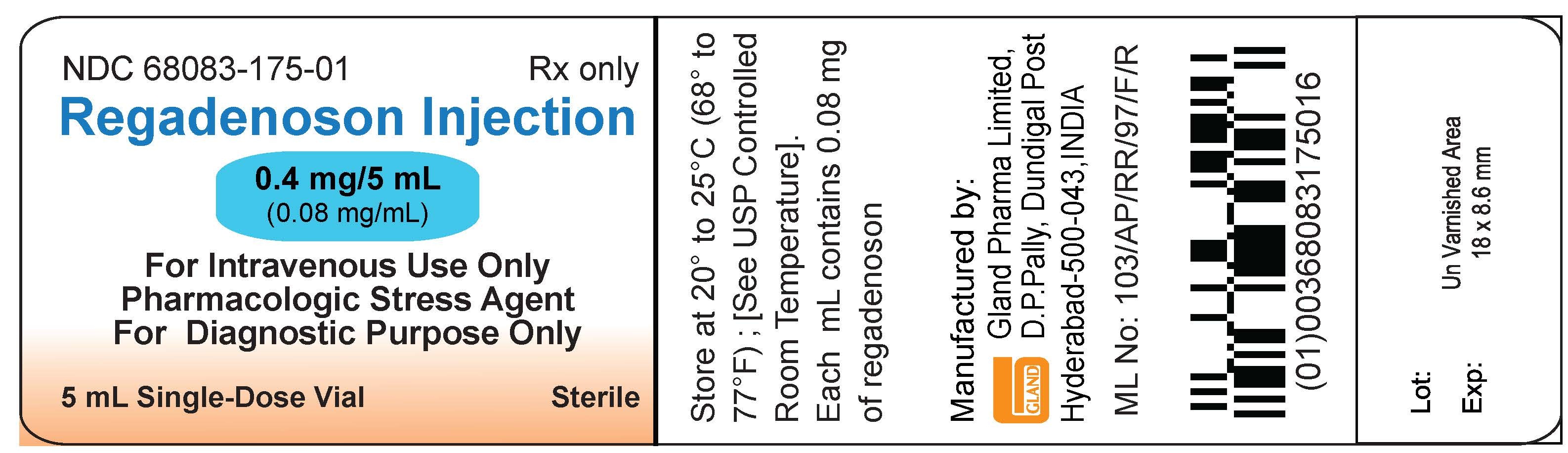
PACKAGE LABEL.PRINCIPAL DISPLAY PANEL Vial Label : NDC 68083-175-01 Rx only Regadenoson Injection 0.4 mg/ 5 mL (0.08 mg/mL) For Intravenous Use Only Pharmacologic Stress Agent For Diagnostic Purpose Only 5 mL Single-Dose Vial Sterile Carton Label : NDC 68083-175-10 10 x 5 mL vials 5 mL Single-Dose Vial Sterile Regadenoson Injection 0.4 mg/ 5 mL vial (0.08 mg/mL) For Intravenous Use Only Pharmacologic Stress Agent For Diagnostic Purpose Only Rx only regadenoson-spl-vial regadenoson-spl-carton
Reported adverse events (FAERS)
Top reported reactions
Age at onset
Reporter sex
Serious outcomes
Where does this data come from?
About this NDC listing & data coverage
What data is (and isn’t) available for this NDC — tap to expand
| NDC identity (package / product / labeler codes) | ✓ Available |
| Labeler | ✓ Available |
| Product & package description | ✓ Available |
| Marketing category & status | ✓ Available |
| Active ingredient / dosage form / route | ✓ Available |
| FDA label (SPL via DailyMed) | ✓ Available |
| Package photos | ✓ Available |
| Inactive ingredients (structured) | ✓ Available |
| NADAC pharmacy acquisition price (CMS) | — Not published for this NDC CMS publishes NADAC only for NDCs reported in its retail-pharmacy survey. |
| Orange Book / therapeutic-equivalence data | ✓ Available |
| HCPCS J-code billing crosswalk | — Not published for this NDC Most self-administered / retail products have no J-code — that is normal. |
| Medicaid utilization (CMS SDUD) | — Not published for this NDC CMS reports utilization only for NDCs with Medicaid claims above its privacy threshold. |