
VOXZOGO 0.4mg vosoritide Kit — NDC 68135-082-36 (Billing 68135-0082-36)
This is a package of VOXZOGO 0.4mg vosoritide Kit from BioMarin Pharmaceutical Inc., marketed since Nov 2021 and currently FDA-listed. It is this product's only package size.
NDC database record
One package, one record: these facts belong to NDC 68135-082-36 alone.
- Record
- FDA NDC Directory package listing · Human prescription drug
- Code segments
- 68135 labeler · 082 product · 36 package
- Package marketed since
- Nov 19, 2021
- Sample package
- No — commercial package
- Listing certified through
- Dec 31, 2026
- Barcode (UPC-A, from the NDC)
- 3 6813508236 1
- Medicaid fills, this package
- 314 prescriptions in the last four reported quarters
- FDA record last changed
- Jul 24, 2026
Identity & classification
Regulatory identifiers FDA, NLM and CMS codes for this package
Drug-database identifiers Medi-Span GPI and First Databank GCN / HICL / AHFS classification
- GSN (GCN sequence number): 082835
- GCN: 51523
- GPI-14 (Medi-Span): 30950080002120
- HICL (First Databank): 047677
- AHFS class code: 92:92.00.00
- RxCUI (RxNorm): 2586364
Where does this data come from?
- FDA openFDA NDC Directory · synced Oct 8, 2026
- FDA label on DailyMed · label index refreshed Oct 8, 2026
- RxNorm (NLM RxNav) · catalog refreshed Oct 1, 2026
- Medi-Span GPI (licensed)
- First Databank (licensed) · refreshed Oct 8, 2026
RxNorm drug class
This medicine belongs to the C-type Natriuretic Peptide Analog class.
Where does this data come from?
- RxClass (NLM) · catalog refreshed Oct 1, 2026
Clinical
- VOXZOGO is helping to release a kind of biological 'brake' on bone growth that's stuck in overdrive because of the achondroplasia gene mutation. By blocking that overactive signal,...
- What exactly is VOXZOGO doing for my child?
- VOXZOGO comes as a powder that you mix with sterile water before each injection — a healthcare professional will train you step by step before you do it at home. You give it as a s...
- How do I give this injection at home, and does it hurt?
Patient education
Supplement & herbal interactions
Where does this data come from?
- MedlinePlus (NLM) · refreshed Oct 8, 2026
- FDA label on DailyMed · label index refreshed Oct 8, 2026
Ask a licensed pharmacist directly — free, answered by our team.
Pricing
A drug doesn't have one price. Each row is a different public payment system, and none is what you'd pay at the counter — that depends on your insurance. The ⓘ on each row explains what it measures.
| Price system | Per each | Per package |
|---|---|---|
| Retail pharmacies payNADAC · weekly | Not in the retail survey — common for institutional, discontinued, or low-volume packs. | |
| Medicaid paysCMS SDUD · 12 mo | $1,082.57 | — |
| Medicare drug plans payPart D · Q2 2026 | $1,121.67 | — |
Where does this data come from?
- CMS NADAC weekly file
- CMS ASP pricing files · refreshed Sep 20, 2026
- CMS Medicaid State Drug Utilization Data · through Q1 2026
- CMS Part D plan pricing files · refreshed Sep 24, 2026
- VA National Acquisition Center price file
Packaging — all sizes for this product
| Package NDC | Description | Marketing start | Marketing end | Status |
|---|---|---|---|---|
| 68135-0082-36 You're viewing this Main listing | 1 KIT in 1 CARTON * 10 VIAL, SINGLE-DOSE in 1 CARTON / .5 mL in 1 VIAL, SINGLE-DOSE * 10 INJECTION, SOLUTION in 1 CARTON | 2021-11-19 | — | Active |
Therapeutic equivalents
| Product | Labeler | Pack | NADAC/unit | TE | Status | Price vs. this |
|---|---|---|---|---|---|---|
| VOXZOGO 0.4mgthis 68135-0082-36 | BioMarin | 1 kit | — | — | FDA listed | — |
| VOXZOGO 1.2mg 68135-0181-93 | BioMarin | 1 kit | — | — | FDA listed | — |
| VOXZOGO 0.56mg 68135-0119-66 | BioMarin | 1 kit | — | — | FDA listed | — |
Where does this data come from?
- FDA openFDA NDC Directory · synced Oct 8, 2026
- FDA Orange Book · refreshed Oct 3, 2026
- CMS NADAC weekly file
Availability & generic status
We did not find an FDA-approved generic match for this exact strength, form and route. Patent/protection dates below may affect future generic timing.
Why the date isn’t exact: Generic timing can change because patents may be challenged, settled, licensed, added, removed, or worked around with a narrower label — and FDA approval does not always mean a pharmacy can get the generic today.
🛈 What do these terms mean?
- Patent
- Legal protection listed in the Orange Book that may delay generic approval or launch. Issued by the U.S. Patent & Trademark Office.
- Substance patent
- Covers the active drug molecule itself — the hardest to design around. A generic generally can’t launch until it expires.
- Formulation (product) patent
- Covers a specific formulation or dosage form. A generic can sometimes work around it with a different formulation.
- Method-of-use patent
- A patent covering one specific approved use of the drug — not necessarily the whole molecule. A generic can sometimes launch with a “skinny label” that carves out the protected use and keeps the others.
- Skinny label
- A generic label that omits a still-patented use when the FDA allows it — letting a generic reach the market for the unprotected uses.
- Exclusivity
- FDA-granted marketing protection, separate from patents — e.g. 5-yr new chemical entity, 7-yr orphan drug, or a +6-month pediatric extension.
- Paragraph IV
- A generic applicant’s formal challenge to a listed patent. It can potentially lead to earlier generic entry, but often involves litigation or a settlement.
- RLD / RS
- Reference Listed Drug — the brand product the FDA uses as the reference for generic applications. Reference Standard — the product the FDA expects generics to compare against in bioequivalence testing.
- TE / AB rating
- FDA therapeutic-equivalence rating. An AB rating generally means the FDA considers a generic therapeutically equivalent to — and substitutable for — the brand.
- LOE (loss of exclusivity)
- The latest patent or exclusivity currently listed — the loss-of-exclusivity / latest-listed-protection date shown on this page. Paragraph-IV challenges and settlements can move the real date earlier; FDA approval and a manufacturer’s decision to market can move it later.
Built from the FDA Orange Book. The bars above are scaled to each protection’s expiry; the red LOE marker is the last one to lapse.
| Patent | Type | Use code | Expires |
|---|---|---|---|
| US 11911446 ↗ | Method of use | U-3927 | Aug 1, 2036 |
| US 11911446 ↗ | Method of use | U-3927 | Aug 1, 2036 |
| US 11911446 ↗ | Method of use | U-3927 | Aug 1, 2036 |
| US 11590204 ↗ | Method of use | U-3927 | Aug 1, 2036 |
| US 11590204 ↗ | Method of use | U-3927 | Aug 1, 2036 |
| US 11590204 ↗ | Method of use | U-3927 | Aug 1, 2036 |
| US 12233106 ↗ | Method of use | U-3927 | Jul 11, 2042 |
| US 12233106 ↗ | Method of use | U-3927 | Jul 11, 2042 |
| US 12233106 ↗ | Method of use | U-3927 | Jul 11, 2042 |
| US 12514906 ↗ | Method of use | U-3927 | Aug 1, 2036 |
| US 12514906 ↗ | Method of use | U-3927 | Aug 1, 2036 |
| US 12514906 ↗ | Method of use | U-3927 | Aug 1, 2036 |
| US RE48267 ↗ | Method of use | U-3927 | May 20, 2030 |
| US RE48267 ↗ | Method of use | U-3927 | May 20, 2030 |
| US RE48267 ↗ | Method of use | U-3927 | May 20, 2030 |
| US 8198242 ↗ | Drug substance | U-3927 | Jun 11, 2035 |
| US 8198242 ↗ | Drug substance | U-3927 | Jun 11, 2035 |
| US 8198242 ↗ | Drug substance | U-3927 | Jun 11, 2035 |
| US 10646550 ↗ | Method of use | U-3927 | Aug 1, 2036 |
| US 10646550 ↗ | Method of use | U-3927 | Aug 1, 2036 |
| US 10646550 ↗ | Method of use | U-3927 | Aug 1, 2036 |
| US 9907834 ↗ | Drug product | — | Aug 1, 2036 |
| US 9907834 ↗ | Drug product | — | Aug 1, 2036 |
| US 9907834 ↗ | Drug product | — | Aug 1, 2036 |
| Code | What it grants | Expires |
|---|---|---|
| NCE | New Chemical Entity (5-year) | Nov 19, 2026 |
| NPP | New Patient Population | Oct 20, 2026 |
| ODE-387 | Orphan Drug Exclusivity (7-year) | Nov 19, 2028 |
| ODE-449 | Orphan Drug Exclusivity (7-year) | Oct 20, 2030 |
| NCE | New Chemical Entity (5-year) | Nov 19, 2026 |
| NPP | New Patient Population | Oct 20, 2026 |
| ODE-387 | Orphan Drug Exclusivity (7-year) | Nov 19, 2028 |
| ODE-449 | Orphan Drug Exclusivity (7-year) | Oct 20, 2030 |
| NCE | New Chemical Entity (5-year) | Nov 19, 2026 |
| NPP | New Patient Population | Oct 20, 2026 |
| ODE-387 | Orphan Drug Exclusivity (7-year) | Nov 19, 2028 |
| ODE-449 | Orphan Drug Exclusivity (7-year) | Oct 20, 2030 |
Is there a generic version of VOXZOGO 0.4 MG VIAL?
The FDA approved a generic — why can’t I get it at my pharmacy yet?
Why do different websites show different generic release dates?
What does “FDA listed” mean?
What does a patent or protection date mean here?
What does “current Orange Book estimate” mean?
Can a generic come out before the last patent expires?
Can a generic come out after the listed dates?
What is the difference between patents and exclusivity?
Why are there multiple patent dates?
Where does this data come from?
- FDA Orange Book · refreshed Oct 3, 2026
What it looks like
Where does this data come from?
- FDA label on DailyMed · label index refreshed Oct 8, 2026
Inactive Ingredients / Excipients
Inactive ingredients, also called excipients, are components of the drug product other than the active ingredient. They may include fillers, dyes, coatings, preservatives, flavors, or other formulation ingredients.
🧪 Avoiding an ingredient? See Vosoritide inactive ingredients by manufacturer: every current product's list side by side, so you can ask your pharmacy for the version that does not list it.
Where does this data come from?
IACT rows and label-wide narrative are kept separate; availability and product-level specificity depend on the submitted label.- FDA label on DailyMed · label index refreshed Oct 8, 2026
- FDA openFDA NDC Directory · synced Oct 8, 2026
Inactive ingredient FAQ
Are inactive ingredients the same for every manufacturer?
Why might an inactive ingredient be missing?
Can inactive ingredients matter?
Manufacturer & labeler
More NDCs from BioMarin Pharmaceutical Inc. labeler code 68135
- laronidase 2.9 mg/5mL Injection, Solution, Concentrate NDC 68135-000-99
- galsulfase 5 mg/5mL Solution NDC 68135-020-01
- Palynziq pegvaliase-pqpz 2.5 mg/.5mL Injection, Solution NDC 68135-058-90
- pegvaliase-pqpz 5 mg/mL Injection, Solution NDC 68135-060-00
- Vosoritide 8 g/kg Injection, Solution, Concentrate NDC 68135-062-99
- VIMIZIM elosulfase alfa 5 mg/5mL Injection, Solution, Concentrate NDC 68135-100-01
- pegvaliase-pqpz 20 mg/mL Injection, Solution NDC 68135-117-00
- VOXZOGO 0.56mg vosoritide Kit NDC 68135-119-66
- VOXZOGO 1.2mg vosoritide Kit NDC 68135-181-93
- Kuvan SAPROPTERIN DIHYDROCHLORIDE 100 mg Tablet NDC 68135-300-02
- Kuvan SAPROPTERIN DIHYDROCHLORIDE 100 mg Powder, For Solution NDC 68135-301-22
Where does this data come from?
- FDA openFDA NDC Directory · synced Oct 8, 2026
- Drugs@FDA
Full prescribing information FDA SPL
🎯 Indications and Usage ▾
1 INDICATIONS AND USAGE VOXZOGO is indicated to increase linear growth in pediatric patients with achondroplasia with open epiphyses. This indication is approved under accelerated approval based on an improvement in annualized growth velocity [see Clinical Studies (14) ] . Continued approval for this indication may be contingent upon verification and description of clinical benefit in confirmatory trial(s).
VOXZOGO is a C type natriuretic peptide (CNP) analog indicated to increase linear growth in pediatric patients with achondroplasia with open epiphyses. This indication is approved under accelerated approval based on an improvement in annualized growth velocity. Continued approval for this indication may be contingent upon verification and description of clinical benefit in confirmatory trial(s).
( 1 )
⏱️ Dosage and Administration ▾
2 DOSAGE AND ADMINISTRATION Ensure adequate food and fluid intake prior to administration. ( 2.1 ) Recommended dosage is based on patient's actual body weight. Administer VOXZOGO subcutaneously once daily.
( 2.2 ) Reconstitute prior to use. Injection volume is based on both patient's weight and concentration of reconstituted VOXZOGO. ( 2.2 ) Monitor growth and adjust dosage according to actual body weight.
Permanently discontinue upon closure of epiphyses. ( 2.3 ) See full prescribing information for reconstitution, dilution, and administration instructions. ( 2.4 )
2.1Important Instructions Prior to Administration of VOXZOGO To reduce the risk of low blood pressure and its associated signs and symptoms, instruct the caregiver and patient that the patient should [see Warnings and Precautions (5.1) ] : Have adequate food intake prior to VOXZOGO administration. Drink approximately 240 to 300 mL of fluid in the hour prior to VOXZOGO administration.
2.2Recommended Dosage and Administration The recommended dosage of VOXZOGO is based on the patient's actual body weight (see Table 1 ). VOXZOGO is administered by subcutaneous injection once daily [see Dosage and Administration (2.4) ] . Inject VOXZOGO at approximately the same time each day, if possible.
The volume of VOXZOGO to be administered (injection volume) is based on the patient's actual body weight and the concentration of reconstituted VOXZOGO (0.8 mg/mL or 2 mg/mL) (see Table 1 ). VOXZOGO must be reconstituted prior to use [see Dosage and Administration (2.4) ] . Table 1: Recommended VOXZOGO Daily Dosage and Injection Volume Actual Body Weight Intermediate body weights that fall within these weight bands should be rounded to the nearest whole number.
Dose Injection Volume Vial Strength for Reconstitution The concentration of vosoritide in reconstituted 0.4 mg vial and 0.56 mg vial is 0.8 mg/mL. The concentration of vosoritide in reconstituted 1.2 mg vial is 2 mg/mL. 3 kg 0.096 mg 0.12 mL 0.4 mg 4 kg 0.12 mg 0.15 mL 0.4 mg 5 kg 0.16 mg 0.2 mL 0.4 mg 6 to 7 kg 0.2 mg 0.25 mL 0.4 mg 8 to 11 kg 0.24 mg 0.3 mL 0.4 mg 12 to 16 kg 0.28 mg 0.35 mL 0.56 mg 17 to 21 kg 0.32 mg 0.4 mL 0.56 mg 22 to 32 kg 0.4 mg 0.5 mL 0.56 mg 33 to 43 kg 0.5 mg 0.25 mL 1.2 mg 44 to 59 kg 0.6 mg 0.3 mL 1.2 mg 60 to 89 kg 0.7 mg 0.35 mL 1.2 mg ≥ 90 kg 0.8 mg 0.4 mL 1.2 mg Missed dose If a dose of VOXZOGO is missed, it can be administered within 12 hours of the scheduled time of administration.
Beyond 12 hours, skip the missed dose and administer the next daily dose according to the usual dosing schedule.
2.3Growth Monitoring Monitor and assess patient body weight, growth, and physical development regularly every 3 to 6 months. Adjust the dosage according to the patient's actual body weight [see Dosage and Administration (2.2) ] . Permanently discontinue VOXZOGO upon confirmation of no further growth potential, indicated by closure of epiphyses.
2.4Preparation and Administration Reconstitute VOXZOGO before administration using the provided diluent syringe containing Sterile Water for Injection, USP (see Reconstitution Instructions below). Caregivers may inject VOXZOGO subcutaneously after proper training by a healthcare professional on the preparation and administration of VOXZOGO [see Instructions for Use ]. Reconstitution Instructions Select the correct VOXZOGO vial strength (co-packaged with prefilled syringe with Sterile Water for Injection diluent) based on the patient's actual body weight [see Dosage and Administration (2.2) ] .
Remove VOXZOGO vial and prefilled diluent syringe from the refrigerator and allow the vial and prefilled diluent syringe to reach room temperature before reconstituting VOXZOGO. Attach the diluent needle provided with ancillary supplies to the diluent prefilled syringe. Inject the entire diluent prefilled syringe volume into the vial (see Table 2 ).
Gently swirl the diluent in the vial until the white powder is completely dissolved. Do not shake. Parenteral drug product… [Excerpted — this section continues on DailyMed.]
💊 Dosage Forms and Strengths ▾
3 DOSAGE FORMS AND STRENGTHS For Injection: 0.4 mg, 0.56 mg, or 1.2 mg of vosoritide as a white to yellow lyophilized powder in a single-dose vial for reconstitution. For injection: 0.4 mg, 0.56 mg, or 1.2 mg of vosoritide as a lyophilized powder in a single-dose vial for reconstitution. ( 3 )
⛔ Contraindications ▾
4 CONTRAINDICATIONS None None. ( 4 )
⚠️ Warnings and Cautions ▾
5 WARNINGS AND PRECAUTIONS Risk of Low Blood Pressure : Transient decreases in blood pressure have been reported. Instruct patients to be well-hydrated and have adequate food intake prior to administration of VOXZOGO ( 5.1 )
5.1Risk of Low Blood Pressure Transient decreases in blood pressure were observed in clinical studies of VOXZOGO. Subjects with significant cardiac or vascular disease and patients on anti-hypertensive medicinal products were excluded from participation in VOXZOGO clinical trials. To reduce the risk of a decrease in blood pressure and associated symptoms (dizziness, fatigue and/or nausea), instruct patients to be well hydrated and have adequate food intake prior to administration of VOXZOGO [see Dosage and Administration (2.1) and Adverse Reactions (6.1) ].
🤒 Adverse Reactions ▾
6 ADVERSE REACTIONS The following clinically significant adverse reactions are described elsewhere in the labeling: Risk of Low Blood Pressure [see Warnings and Precautions (5.1) ] Most common adverse reactions (>10%) are injection site erythema, injection site swelling, rash, vomiting, injection site urticaria, arthralgia, decreased blood pressure, and gastroenteritis. ( 6.1 ) To report SUSPECTED ADVERSE REACTIONS, contact BioMarin Pharmaceutical Inc. at 1-866-906-6100, or FDA at 1-800-FDA-1088 or www.fda.gov/medwatch.
6.1Clinical Trials Experience Because clinical trials are conducted under widely varying conditions, adverse reaction rates observed in the clinical trials of a drug cannot be directly compared to rates in the clinical trials of another drug and may not reflect the rates observed in practice. Pediatric Patients 5 Years of Age and Older VOXZOGO was studied in a 52-week, randomized, double-blind, placebo-controlled trial in 121 subjects with achondroplasia (Study 1) [see Clinical Studies (14) ] . The subjects' ages ranged from 5.1 to 14.9 years with a mean of 8.7 years.
Sixty four (53%) subjects were male and 57 (47%) were female. Overall, 86 (71%) subjects were White, 23 (19%) were Asian, 5 (4%) were Black or African American, and 7 (6%) were classified as "multiple" race. The demographic and baseline characteristics were balanced between treatment groups.
The subjects received either VOXZOGO 15 mcg/kg, or placebo administered subcutaneously once daily. Table 3 shows adverse reactions that occurred in ≥5% of patients treated with VOXZOGO and at a percentage greater than placebo. Table 3: Adverse Reactions that Occurred in ≥5% of Patients Treated with VOXZOGO and at a Percentage Greater than Placebo in Study 1 Includes adverse reactions occurring more frequently in the vosoritide arm and with a risk difference of ≥5% (i.e., difference of >2 subjects) between treatment arms Adverse Reaction Placebo (N=61) n (%) VOXZOGO (N=60) n (%) Abbreviations: N, total number of subjects in the treatment arm; n, number of subjects with the adverse reaction; %, percent of subjects with the adverse reaction.
Injection site erythema 42 (69%) 45 (75%) Injection site swelling 22 (36%) 37 (62%) Vomiting 12 (20%) 16 (27%) Injection site urticaria 6 (10%) 15 (25%) Arthralgia 4 (7%) 9 (15%) Decreased blood pressure 3 (5%) 8 (13%) Gastroenteritis Includes the preferred terms: gastroenteritis and gastroenteritis, viral 5 (8%) 8 (13%) Diarrhea 2 (3%) 6 (10%) Dizziness Includes the preferred terms: dizziness, presyncope, procedural dizziness, vertigo 2 (3%) 6 (10%) Ear pain 3 (5%) 6 (10%) Influenza 3 (5%) 6 (10%) Fatigue Includes the preferred terms: fatigue, lethargy, malaise 2 (3%) 5 (8%) Seasonal allergy 1 (2%) 4 (7%) Dry skin 0 3 (5%) Laboratory Abnormalities Increase in Alkaline Phosphatase More VOXZOGO-treated patients had an increase in alkaline phosphatase levels during the study compared to placebo (17% vs 7%).
Discussion of Selected Adverse Reactions Decreased blood pressure Eight (13%) of 60 subjects treated with VOXZOGO had a total of 11 events of transient decrease in blood pressure compared to 3 (5%) of 61 subjects on placebo, identified predominantly during periods of frequent monitoring at clinical visits after dosing over a 52-week treatment period. The median time to onset from injection was 31 (18 to 120) minutes with resolution within 31 (5 to 90) minutes in VOXZOGO-treated subjects. Two out of 60 (3%) VOXZOGO-treated subjects each had one symptomatic episode of decreased blood pressure with vomiting and/or dizziness compared to 0 of 61 (0%) subjects on placebo.
Injection site reactions Injection site reactions occurred in 51 (85%) subjects receiving VOXZOGO and 50 (82%) subjects receiving placebo over a 52 week period of treatment. Injection site reactions included the preferred terms injection site erythema, injection site reaction, injection site swelling, injection site urticaria, injection site pain, injection site… [Excerpted — this section continues on DailyMed.]
👥 Use in Specific Populations ▾
8 USE IN SPECIFIC POPULATIONS Renal Impairment: Not recommended in patients with eGFR < 60 mL/min/1.73 m 2 . ( 8.6 )
8.1Pregnancy Risk Summary There are no available data on vosoritide use in pregnant women to evaluate for a drug-associated risk of major birth defects, miscarriage, or adverse maternal or fetal outcomes. In animal reproduction studies, there was no evidence of embryo-fetal toxicity or congenital malformations when pregnant rats and rabbits were administered vosoritide subcutaneously at doses equivalent to 14-times and 200-times, respectively, the exposure at the maximum recommended human dose (MRHD) (see Data ). The estimated background risk of major birth defects for the indicated population is higher than the general population.
The estimated background risk of miscarriage for the indicated population is unknown. All pregnancies have a background risk of birth defect, loss, or other adverse outcomes. In the U.S. general population, the estimated background risk of major birth defects and miscarriage in clinically recognized pregnancies is 2% to 4% and 15% to 20%, respectively.
Data Animal Data In an embryofetal developmental toxicity study in rats, vosoritide was administered at 90, 270, 540 mcg/kg once daily by subcutaneous injection during the period of major organogenesis from gestation day (GD) 6 – 17. There were no effects on maternal animals or on embryofetal development at the highest dose administered (14-times the exposure at the MRHD). In an embryofetal developmental toxicity study in rabbits, vosoritide was administered at 45, 135, 240 mcg/kg once daily by subcutaneous injection during the period of major organogenesis (GD 7 – 19).
No effects were observed in maternal animals or on embryofetal development at the highest dose administered (200-times the exposure at the MRHD). In a pre- and postnatal toxicity study in rats, vosoritide was administered at 90, 270, and 540 mcg/kg once daily by subcutaneous injection during the period of major organogenesis and continuing to weaning (GD 6 through postpartum day 20). There were no effects on maternal animals, including maintenance of pregnancy, parturition, or care of offspring, and no effects were noted on offspring growth and development or ability to reproduce at the highest dose (14-times the exposure at the MRHD).
8.2Lactation Risk Summary There is no information regarding the presence of vosoritide in human milk, the effects on the breastfed infant, or the effects on milk production. Vosoritide is present in rat milk. When a drug is present in animal milk, it is likely that the drug will be present in human milk.
The developmental and health benefits of breastfeeding should be considered along with the mother's clinical need for VOXZOGO and any potential adverse effects on the breastfed child from VOXZOGO or from the underlying maternal condition.
8.4Pediatric Use The safety and effectiveness of VOXZOGO have been established in pediatric patients for the improvement in linear growth in patients with achondroplasia with open epiphyses. Use of VOXZOGO for this indication is supported by evidence from an adequate and well-controlled study in 121 pediatric patients aged 5 to 15 years with achondroplasia, pharmacokinetic data in pediatric patients aged 4.5 months to 15 years, and additional safety data in pediatric patients aged 4.4 months to <5 years [see Adverse Reactions (6.1) , Clinical Pharmacology (12.3) , and Clinical Studies (14) ] .
8.6Renal Impairment The effect of renal impairment on the pharmacokinetics of VOXZOGO has not been evaluated. No dosage adjustment is needed for patients with eGFR ≥ 60 mL/min/1.73 m 2 . VOXZOGO is not recommended for patients with eGFR < 60 mL/min/1.73 m 2 .
🤰 Pregnancy ▾
8.1Pregnancy Risk Summary There are no available data on vosoritide use in pregnant women to evaluate for a drug-associated risk of major birth defects, miscarriage, or adverse maternal or fetal outcomes. In animal reproduction studies, there was no evidence of embryo-fetal toxicity or congenital malformations when pregnant rats and rabbits were administered vosoritide subcutaneously at doses equivalent to 14-times and 200-times, respectively, the exposure at the maximum recommended human dose (MRHD) (see Data ). The estimated background risk of major birth defects for the indicated population is higher than the general population.
The estimated background risk of miscarriage for the indicated population is unknown. All pregnancies have a background risk of birth defect, loss, or other adverse outcomes. In the U.S. general population, the estimated background risk of major birth defects and miscarriage in clinically recognized pregnancies is 2% to 4% and 15% to 20%, respectively.
Data Animal Data In an embryofetal developmental toxicity study in rats, vosoritide was administered at 90, 270, 540 mcg/kg once daily by subcutaneous injection during the period of major organogenesis from gestation day (GD) 6 – 17. There were no effects on maternal animals or on embryofetal development at the highest dose administered (14-times the exposure at the MRHD). In an embryofetal developmental toxicity study in rabbits, vosoritide was administered at 45, 135, 240 mcg/kg once daily by subcutaneous injection during the period of major organogenesis (GD 7 – 19).
No effects were observed in maternal animals or on embryofetal development at the highest dose administered (200-times the exposure at the MRHD). In a pre- and postnatal toxicity study in rats, vosoritide was administered at 90, 270, and 540 mcg/kg once daily by subcutaneous injection during the period of major organogenesis and continuing to weaning (GD 6 through postpartum day 20). There were no effects on maternal animals, including maintenance of pregnancy, parturition, or care of offspring, and no effects were noted on offspring growth and development or ability to reproduce at the highest dose (14-times the exposure at the MRHD).
🧒 Pediatric Use ▾
8.4Pediatric Use The safety and effectiveness of VOXZOGO have been established in pediatric patients for the improvement in linear growth in patients with achondroplasia with open epiphyses. Use of VOXZOGO for this indication is supported by evidence from an adequate and well-controlled study in 121 pediatric patients aged 5 to 15 years with achondroplasia, pharmacokinetic data in pediatric patients aged 4.5 months to 15 years, and additional safety data in pediatric patients aged 4.4 months to <5 years [see Adverse Reactions (6.1) , Clinical Pharmacology (12.3) , and Clinical Studies (14) ] .
🧬 Clinical Pharmacology ▾
12 CLINICAL PHARMACOLOGY
12.1Mechanism of Action In patients with achondroplasia, endochondral bone growth is negatively regulated due to a gain of function mutation in fibroblast growth factor receptor 3 ( FGFR3 ). Binding of vosoritide to natriuretic peptide receptor-B (NPR-B) antagonizes FGFR3 downstream signaling by inhibiting the extracellular signal-regulated kinases 1 and 2 (ERK1/2) in the mitogen-activated protein kinase (MAPK) pathway at the level of rapidly accelerating fibrosarcoma serine/threonine protein kinase (RAF-1). As a result, vosoritide, like CNP, acts as a positive regulator of endochondral bone growth as it promotes chondrocyte proliferation and differentiation.
In animal models with open growth plates, vosoritide administration resulted in the promotion of chondrocyte proliferation and differentiation that led to a widening of the growth plate and subsequent increase in skeletal growth. In the mouse models of FGFR3-related chondrodysplasia, a partial or complete normalization of the dwarfism phenotype was observed.
12.2Pharmacodynamics NPR-B Binding Activity Biomarker and Bone Metabolism Biomarker An increase in urinary cyclic guanosine monophosphate (cGMP) concentrations from pre-dose baseline were observed within the first four hours post-dose, with a maximum level at 2 hours post-dose, after VOXZOGO administration to pediatric patients with achondroplasia. Daily administration of VOXZOGO also led to the increase from baseline in serum collagen type X marker (CXM), an endochondral ossification biomarker and remains elevated beyond 24 months.
In subjects aged 5 - 14 years old at screening, exposure-response analyses showed that vosoritide activity measured by urinary cGMP was near saturation at the dose of 15 mcg/kg once daily, while maximal increase in growth plate activity indicated by CXM was achieved at this dose. Cardiac Electrophysiology At the maximum approved recommended dose, VOXZOGO does not prolong the QT interval to any clinically relevant extent.
12.3Pharmacokinetics The area under the concentration-time curve (AUC) and peak concentration (C max ) of vosoritide increased greater than proportionally following subcutaneous administration to pediatric subjects with achondroplasia in the dose range of 7.5 to 30.0 mcg/kg. The pharmacokinetics of vosoritide were evaluated in 58 subjects aged 5 to 13 years with achondroplasia who received subcutaneous injections of vosoritide 15 mcg/kg once daily for 52 weeks. The mean (± SD) C max and area under the concentration-time curve from time zero to the last measurable concentration (AUC 0-t ) observed across 52 weeks of treatment ranged from 4.71 (± 2.32) to 7.18 (± 9.65) ng/mL, and 161 (± 98.1) to 290 (± 235) ng-min/mL, respectively.
No drug accumulation was observed following 15 mcg/kg once daily dosing. The exposure of vosoritide increased with the duration of treatment. The mean AUC 0-t at week 52 increased approximately 20% compared to that at day 1.
Absorption Absolute bioavailability for vosoritide following subcutaneous injection was not determined. Vosoritide was absorbed with a median T max of 15 minutes after dosing. Distribution The mean (± SD) apparent volume of distribution of vosoritide across 52 weeks of subcutaneous administration of VOXZOGO 15 mcg/kg once daily ranged from 2880 (± 2450) to 3020 (± 1980) mL/kg.
Elimination The mean (± SD) apparent clearance of vosoritide across 52 weeks of subcutaneous administration of VOXZOGO 15 mcg/kg once daily ranged from 79.4 (± 53.0) to 104 (± 98.8) mL/min/kg. The mean (± SD) half-life ranged from 21.0 (± 4.7) to 27.9 (± 9.9) minutes. Metabolism The metabolism of vosoritide is expected to occur via catabolic pathways with degradation into small peptide fragments and amino acids.
Specific Populations No clinically significant differences in the vosoritide pharmacokinetics were observed based on age (0.4 to 15 years), sex or race. The effect of hepatic or renal impairment on the pharmacokinetics… [Excerpted — this section continues on DailyMed.]
🧬 Mechanism of Action ▾
12.1Mechanism of Action In patients with achondroplasia, endochondral bone growth is negatively regulated due to a gain of function mutation in fibroblast growth factor receptor 3 ( FGFR3 ). Binding of vosoritide to natriuretic peptide receptor-B (NPR-B) antagonizes FGFR3 downstream signaling by inhibiting the extracellular signal-regulated kinases 1 and 2 (ERK1/2) in the mitogen-activated protein kinase (MAPK) pathway at the level of rapidly accelerating fibrosarcoma serine/threonine protein kinase (RAF-1). As a result, vosoritide, like CNP, acts as a positive regulator of endochondral bone growth as it promotes chondrocyte proliferation and differentiation.
In animal models with open growth plates, vosoritide administration resulted in the promotion of chondrocyte proliferation and differentiation that led to a widening of the growth plate and subsequent increase in skeletal growth. In the mouse models of FGFR3-related chondrodysplasia, a partial or complete normalization of the dwarfism phenotype was observed.
📦 How Supplied / Storage and Handling ▾
16 HOW SUPPLIED/STORAGE AND HANDLING How Supplied VOXZOGO for injection is a white to yellow lyophilized powder for reconstitution and is provided as a co-pack which includes ten: Sterile, single-dose 2 mL glass vials containing VOXZOGO Diluent (Sterile Water for Injection, USP) in a single-dose prefilled syringe Diluent transfer needles (23 gauge) Single-dose administration syringes (30 gauge) both with needle retraction safety devices Strength (mg) Diluent (mL) Co-pack NDC Number Flip Cap Color 0.4
0.5NDC 68135-082-36 White 0.56
0.7NDC 68135-119-66 Magenta 1.2
0.6NDC 68135-181-93 Grey The following items to be obtained separately; alcohol aseptic wipes, gauze, bandages and sharps container. Storage Refrigerate VOXZOGO vials and prefilled diluent syringes at 2°C to 8°C (36°F to 46°F). Do not freeze.
VOXZOGO can be stored at room temperature 20°C to 25°C (68°F to 77°F); excursions permitted to 15°C to 30°C (59°F to 86°F) for 90 days. Do not return VOXZOGO to the refrigerator once stored at room temperature. After reconstitution, VOXZOGO can be held in the vial at room temperature 20°C to 25°C (68°F to 77°F) for a maximum of 3 hours [see Dosage and Administration (2.4) ] .
Record the starting date of room-temperature storage clearly on the unopened product carton. Do not use beyond expiration date on the label. Store in the original package to protect from light.
Handling Reconstituted VOXZOGO must be administered within 3 hours of reconstitution [see Dosage and Administration (2.4) ] .
📦 Storage and Handling ▾
Storage Refrigerate VOXZOGO vials and prefilled diluent syringes at 2°C to 8°C (36°F to 46°F). Do not freeze. VOXZOGO can be stored at room temperature 20°C to 25°C (68°F to 77°F); excursions permitted to 15°C to 30°C (59°F to 86°F) for 90 days.
Do not return VOXZOGO to the refrigerator once stored at room temperature. After reconstitution, VOXZOGO can be held in the vial at room temperature 20°C to 25°C (68°F to 77°F) for a maximum of 3 hours [see Dosage and Administration (2.4) ] . Record the starting date of room-temperature storage clearly on the unopened product carton.
Do not use beyond expiration date on the label. Store in the original package to protect from light.
📋 Description ▾
11 DESCRIPTION VOXZOGO contains vosoritide, a human C type natriuretic peptide (CNP) analog. Vosoritide is a 39 amino acid peptide. Its amino acid sequence includes the 37 C terminal amino acids of the human CNP53 sequence plus Pro Gly on the N terminus to convey resistance to neutral endopeptidase (NEP) degradation.
Vosoritide is manufactured from Escherichia coli using recombinant DNA technology. Vosoritide has a chemical formula of C 176 H 290 N 56 O 51 S 3 with a molecular weight of 4.1 kDa. Vosoritide has the structural formula shown in Figure 1.
Figure 1 VOXZOGO (vosoritide) for injection, is a sterile, preservative-free white-to-yellow lyophilized powder, for subcutaneous administration after reconstitution with Sterile Water for Injection, USP. VOXZOGO is provided as a single-dose vial containing 0.4 mg, 0.56 mg, or 1.2 mg of vosoritide per vial. A pre-filled syringe containing Sterile Water for Injection, USP for use as a diluent is also provided.
The contents of each single dose vial are summarized by strength in Table 4. The product contains no preservative. Table 4: Contents of VOXZOGO Strength Inactive Ingredients per Vial Trehalose dihydrate and D-Mannitol are used as isotonic agent.
Citric acid monohydrate and sodium citrate dihydrate are used as buffering agent. VOXZOGO 0.4 mg Citric acid monohydrate (0.14 mg), mannitol (7.5 mg), methionine (0.36 mg), polysorbate 80 (0.025 mg), sodium citrate dihydrate (0.54 mg) and trehalose dihydrate (29.01 mg). After reconstitution with 0.5 mL Sterile Water for Injection USP, the resulting concentration is 0.4 mg/0.5 mL of vosoritide and the nominal deliverable volume is 0.4 mL.
VOXZOGO 0.56 mg Citric acid monohydrate (0.20 mg), mannitol (10.50 mg), methionine (0.51 mg), polysorbate 80 (0.035 mg), sodium citrate dihydrate (0.76 mg) and trehalose dihydrate (40.61 mg). After reconstitution with 0.7 mL Sterile Water for Injection USP, the resulting concentration is 0.56 mg/0.7 mL of vosoritide and the nominal deliverable volume is 0.6 mL. VOXZOGO 1.2 mg Citric acid monohydrate (0.17 mg), mannitol (9 mg), methionine (0.44 mg), polysorbate 80 (0.030 mg), sodium citrate dihydrate (0.65 mg) and trehalose dihydrate (34.81 mg).
After reconstitution with 0.6 mL Sterile Water for Injection USP, the resulting concentration is 1.2 mg/0.6 mL of vosoritide and the nominal deliverable volume is 0.5 mL. Chemical Structure
💬 Information for Patients ▾
17 PATIENT COUNSELING INFORMATION Advise the patient and caregiver to read the FDA-approved patient labeling (Patient Information and Instructions for Use). Preparation and Administration Instruct caregivers on proper preparation and administration of VOXZOGO. Ensure caregivers have demonstrated the ability to perform a subcutaneous injection [see Dosage and Administration (2.4) ] .
Instruct caregivers in the technique of proper syringe and needle disposal, and advise them not to reuse these items. Instruct caregivers to dispose needles and syringes in a puncture-resistant container. Risk of Low Blood Pressure Inform caregivers and patients that VOXZOGO may lower blood pressure after administration.
Instruct caregivers and patients that prior to VOXZOGO administration, the patient should have adequate food intake and within the hour prior to administration, the patient should drink approximately 8-10 ounces (240-300 mL) of fluid [see Dosage and Administration (2.1) and Warnings and Precautions (5.1) ] .
🧬 Pharmacokinetics ▾
12.3Pharmacokinetics The area under the concentration-time curve (AUC) and peak concentration (C max ) of vosoritide increased greater than proportionally following subcutaneous administration to pediatric subjects with achondroplasia in the dose range of 7.5 to 30.0 mcg/kg. The pharmacokinetics of vosoritide were evaluated in 58 subjects aged 5 to 13 years with achondroplasia who received subcutaneous injections of vosoritide 15 mcg/kg once daily for 52 weeks. The mean (± SD) C max and area under the concentration-time curve from time zero to the last measurable concentration (AUC 0-t ) observed across 52 weeks of treatment ranged from 4.71 (± 2.32) to 7.18 (± 9.65) ng/mL, and 161 (± 98.1) to 290 (± 235) ng-min/mL, respectively.
No drug accumulation was observed following 15 mcg/kg once daily dosing. The exposure of vosoritide increased with the duration of treatment. The mean AUC 0-t at week 52 increased approximately 20% compared to that at day 1.
Absorption Absolute bioavailability for vosoritide following subcutaneous injection was not determined. Vosoritide was absorbed with a median T max of 15 minutes after dosing. Distribution The mean (± SD) apparent volume of distribution of vosoritide across 52 weeks of subcutaneous administration of VOXZOGO 15 mcg/kg once daily ranged from 2880 (± 2450) to 3020 (± 1980) mL/kg.
Elimination The mean (± SD) apparent clearance of vosoritide across 52 weeks of subcutaneous administration of VOXZOGO 15 mcg/kg once daily ranged from 79.4 (± 53.0) to 104 (± 98.8) mL/min/kg. The mean (± SD) half-life ranged from 21.0 (± 4.7) to 27.9 (± 9.9) minutes. Metabolism The metabolism of vosoritide is expected to occur via catabolic pathways with degradation into small peptide fragments and amino acids.
Specific Populations No clinically significant differences in the vosoritide pharmacokinetics were observed based on age (0.4 to 15 years), sex or race. The effect of hepatic or renal impairment on the pharmacokinetics of vosoritide is unknown. Body weight Population pharmacokinetic analyses indicated that body weight is a significant covariate for vosoritide clearance and volume of distribution.
The apparent clearance and volume of distribution of vosoritide increased with increasing body weight in patients with achondroplasia (5 to 74.5 kg). Drug Interaction Studies In vitro assessment of drug-drug interactions In vitro studies showed that vosoritide, at therapeutic concentrations, does not inhibit or induce Cytochrome P450 enzymes. Based on in vitro studies, vosoritide is considered unlikely to inhibit the human drug uptake or efflux transporters such as OAT1, OAT3, OCT1, OCT2, OATP1B1, OATP1B3, MATE1, MATE2-K, BCRP, P-gp, and BSEP at clinically relevant concentrations and therefore, no effect of vosoritide is anticipated on concomitantly administered drugs that are substrates of these transporters.
In vivo assessment of drug-drug interactions No clinical studies evaluating the drug-drug interaction potential of vosoritide have been conducted.
🧬 Pharmacodynamics ▾
12.2Pharmacodynamics NPR-B Binding Activity Biomarker and Bone Metabolism Biomarker An increase in urinary cyclic guanosine monophosphate (cGMP) concentrations from pre-dose baseline were observed within the first four hours post-dose, with a maximum level at 2 hours post-dose, after VOXZOGO administration to pediatric patients with achondroplasia. Daily administration of VOXZOGO also led to the increase from baseline in serum collagen type X marker (CXM), an endochondral ossification biomarker and remains elevated beyond 24 months.
In subjects aged 5 - 14 years old at screening, exposure-response analyses showed that vosoritide activity measured by urinary cGMP was near saturation at the dose of 15 mcg/kg once daily, while maximal increase in growth plate activity indicated by CXM was achieved at this dose. Cardiac Electrophysiology At the maximum approved recommended dose, VOXZOGO does not prolong the QT interval to any clinically relevant extent.
🔬 Clinical Studies ▾
14 CLINICAL STUDIES
14.1Pediatric Patients 5 Years of Age and Older The safety and effectiveness of VOXZOGO in patients with achondroplasia were assessed in one 52-week, multi-center, randomized, double-blind, placebo-controlled, phase 3 study - Study 1 (NCT03197766). Study 1 was conducted in 121 subjects with genetically-confirmed achondroplasia, who were randomized to either VOXZOGO (N=60) or placebo (N=61). The dosage of VOXZOGO was 15 mcg/kg administered subcutaneously once daily.
Baseline standing height, weight Z-score, body mass index (BMI) Z-score, and upper to lower body ratio were collected for at least 6 months prior to randomization. Subjects with limb-lengthening surgery in the prior 18 months or who planned to have limb-lengthening surgery during the study period were excluded. The study included a 52-week placebo-controlled treatment phase followed by an open-label treatment extension study period in which all subjects received VOXZOGO.
The primary efficacy endpoint was the change from baseline in annualized growth velocity (AGV) at Week 52 compared with placebo. The subjects' ages ranged from 5.1 to 14.9 years with a mean of 8.7 years. Sixty four (53%) subjects were male and 57 (47%) were female.
Overall, 86 (71%) subjects were White, 23 (19%) were Asian, 5 (4%) were Black or African American, and 7 (6%) were classified as "multiple" race. The subjects had a mean baseline height standard deviation score (SDS) of -5.13. Treatment with VOXZOGO for 52 weeks resulted in a treatment difference in the change from baseline in AGV of 1.57 cm/year after 52 weeks of treatment (Table 5).
Table 5: Annualized Growth Velocity (cm/year) at Week 52 in Subjects 5 Years of Age and Older with Achondroplasia - Study 1 Placebo (N=61 All randomized subjects. Two patients in the VOXZOGO group discontinued from the study before Week 52. The values for these 2 patients were imputed assuming baseline growth rate for the period with missing data. ) VOXZOGO 15 mcg/kg Daily (N=60 ) Abbreviations: AGV, annualized growth velocity; 95% CI, 95% confidence interval; LS, least-square; SD, standard deviation Baseline mean (SD) Baseline AGV was based on standing height at least 6 months prior to enrollment into the study.
4.06(1.20) 4.26 (1.53) Change from baseline LS means were estimated from the ANCOVA (analysis of covariance) model, which included treatment, stratum defined by sex and Tanner stage, baseline age, baseline AGV and baseline height Z-score. -0.17
1.40Difference in change of VOXZOGO – Placebo (95% CI) 1.57 (1.22, 1.93) 2-sided p-value <0.0001 for superiority. The improvement in AGV in favor of VOXZOGO was consistent across all predefined subgroups analyzed including sex, age group, Tanner stage, baseline height Z-score, and baseline AGV. Height Standard Deviation Score (SDS) The LS mean change from baseline to Week 52 in height SDS was -0.02 in the placebo group and 0.26 in the VOXZOGO group.
The difference in LS mean change from baseline was 0.28 (95% CI 0.17, 0.39; p<0.0001) in favor of VOXZOGO. The LS mean change from baseline to Week 52 in upper to lower body segment ratio was -0.02 in the placebo group and -0.03 in the VOXZOGO group. The difference in LS mean change from baseline was -0.01 (95% CI -0.05, 0.02; p=0.5).
Open-label extension After the 52 week double blind, placebo-controlled, phase 3 study, Study 1, 58 subjects initially randomized to VOXZOGO enrolled into an open-label extension. Among the subjects who had 2 years of follow-up since randomization, the improvement in AGV was maintained.
🧪 Nonclinical Toxicology ▾
13 NONCLINICAL TOXICOLOGY
13.1Carcinogenesis, Mutagenesis, Impairment of Fertility Long term carcinogenicity studies and genotoxicity studies with vosoritide have not been performed. In a fertility and reproductive study in male and female rats at doses up to 540 mcg/kg/day (15-times the exposure at the MRHD), vosoritide had no effect on mating performance, fertility, or litter characteristics.
📄 Carcinogenesis, Mutagenesis, Impairment of Fertility ▾
13.1Carcinogenesis, Mutagenesis, Impairment of Fertility Long term carcinogenicity studies and genotoxicity studies with vosoritide have not been performed. In a fertility and reproductive study in male and female rats at doses up to 540 mcg/kg/day (15-times the exposure at the MRHD), vosoritide had no effect on mating performance, fertility, or litter characteristics.
📄 Patient Package Insert ▾
PATIENT INFORMATION VOXZOGO (vox zoeʹ goe) (vosoritide) for injection, for subcutaneous use This Patient Information has been approved by the U.S. Food and Drug Administration. Revised: 10/2023 What is VOXZOGO?
VOXZOGO is a prescription medicine used to increase linear growth in children with achondroplasia with open bone growth plates (epiphyses). Before you give your child VOXZOGO, tell your child's healthcare provider about all your child's medical conditions, including if they: have kidney problems. are pregnant or plan to become pregnant. It is not known if VOXZOGO will harm your child's unborn baby. are breastfeeding or plan to breastfeed.
It is not known if VOXZOGO passes into your child's breast milk. Talk to your child's healthcare provider about the best way to feed your child's baby if your child takes VOXZOGO. Tell your child's healthcare provider about all the medicines your child takes, including prescription and over-the-counter medicines, vitamins, and herbal supplements.
Know the medicines your child takes. Keep a list of them to show your child's healthcare provider and pharmacist when your child gets a new medicine. How should I give VOXZOGO?
See the detailed Instructions for Use that comes with this Patient Information leaflet for instructions about the right way to store, prepare, and give VOXZOGO injections at home. VOXZOGO is given as an injection under the skin (subcutaneous or SC). Inject VOXZOGO 1 time every day, at about the same time each day.
If your child's healthcare provider decides a caregiver can give the injections of VOXZOGO at home, your child's caregiver should receive training on the right way to prepare and inject VOXZOGO. Do not try to inject VOXZOGO until you have been shown the right way by your child's healthcare provider or nurse. Your child's healthcare provider will tell you how often you should give VOXZOGO.
If your child misses a dose of VOXZOGO, it can be given within 12 hours of the scheduled time of injection. If more than 12 hours have passed, do not give the missed dose. Give the next daily dose according to your child's usual schedule.
Your child should eat a meal and drink about 8 to 10 ounces of fluid within 1 hour before injection. In case you are not sure when to inject VOXZOGO, call your child's healthcare provider or pharmacist. Do not give VOXZOGO more often than as directed by your child's healthcare provider.
Your child's dose of VOXZOGO depends on his or her body weight. Your child's healthcare provider will tell you which strength of VOXZOGO to use and how much to give your child. Your child's healthcare provider will monitor your child's growth and instruct you on when your child should stop VOXZOGO if they determine that your child is no longer able to grow.
Stop giving VOXZOGO to your child if instructed by your child's healthcare provider. What are the possible side effects of VOXZOGO? VOXZOGO may cause serious side effects, including: risk of low blood pressure.
VOXZOGO may temporarily lower blood pressure in some people. To help reduce the risk of low blood pressure and its symptoms (dizziness, feeling tired, or nausea), your child should eat a meal and drink about 8 to 10 ounces of fluid within 1 hour before receiving VOXZOGO. The most common side effects of VOXZOGO include: injection site reactions (redness, itching, swelling, bruising, rash, hives, pain) high levels of blood alkaline phosphatase (shown in blood tests) vomiting joint pain decreased blood pressure stomach ache These are not all the possible side effects of VOXZOGO.
For more information, ask your healthcare provider or pharmacist. Call your doctor for medical advice about side effects. You may report side effects to FDA at 1-800-FDA-1088.
How should I store VOXZOGO? Store the VOXZOGO vial and prefilled diluent syringe in the refrigerator between 36°F to 46°F (2°C to 8°C). You may store VOXZOGO (before mixing) at room temperature between 68°F to 77°F (20°C to 25°C) for 90 days.
Record the d… [Excerpted — this section continues on DailyMed.]
📖 Instructions for Use ▾
INSTRUCTIONS FOR USE VOXZOGO™ [Vox zoeʹ goe] (vosoritide) for injection, for subcutaneous use Single-Use This Instructions for Use contains information for caregivers on how to inject VOXZOGO. Read this Instructions for Use before you start using VOXZOGO and each time you get a refill. There may be new information.
This information does not take the place of talking to your child's healthcare provider about your child's medical condition and their treatment. Before you use VOXZOGO for the first time, make sure your child's healthcare provider shows you the right way to use it. Contact your child's healthcare provider if you or your child have any questions.
Important Information You Need to Know Before Injecting VOXZOGO Wash your hands with soap and water. Do not drop VOXZOGO or put opened items down on surfaces that are not clean. VOXZOGO is available in more than 1 strength.
Make sure the strength matches your prescription strength. Do not open packaging until ready to use. Take the VOXZOGO vial and prefilled diluent syringe out of the refrigerator and allow them to reach room temperature before mixing.
Inspect the vial and supplies for any signs of damage or contamination. Do not use if damaged or contaminated. Check the expiration date.
The expiration date can be found on the carton, vial and prefilled diluent syringe. Do not use if expired. Your child should eat a meal and drink a glass (about 8 to 10 ounces) of fluid (such as water, milk, or juice) within 1 hour before injection.
VOXZOGO should be given at about the same time every day. Do not mix VOXZOGO with other medicines. After mixing the VOXZOGO, use it right away.
Do not use the mixed VOXZOGO if it has been sitting at room temperature for more than 3 hours. Throw it away (dispose of) in a sharps container. See step 18 and " How to Throw Away (Dispose of) VOXZOGO " for more information.
Do not reuse any of the supplies. After the injection, throw away (dispose of) the used vial even if there is VOXZOGO remaining. See step 18 and " How to Throw Away (Dispose of) VOXZOGO " for more information.
How to Store VOXZOGO Store the VOXZOGO vial and prefilled diluent syringe in the refrigerator between 36°F to 46°F (2°C to 8°C). You may store VOXZOGO (before mixing) at room temperature between 68°F to 77°F (20°C to 25°C) for 90 days. Record the date you started storing VOXZOGO at room temperature on the carton to keep track of the 90 days.
Do not return VOXZOGO to the refrigerator after it has been stored at room temperature. Throw VOXZOGO away if unused within 90 days of storing at room temperature. Do not freeze VOXZOGO.
Store VOXZOGO out of direct sunlight. Keep VOXZOGO and all other medicines out of the reach of children. Supplies Needed to Inject VOXZOGO Gather all of these supplies on a clean, flat surface before injecting.
Items supplied Items not supplied If you do not have these items, ask your pharmacist. VOXZOGO Preparing VOXZOGO for Injection ▶ Step 1 On a clean flat surface, flip off the vial cap and wipe the top with an alcohol pad. ▶ Step 2 Gently bend to snap off the cap from the prefilled diluent syringe. ▶ Step 3 Twist the diluent needle onto the prefilled diluent syringe until you can no longer twist it. Do not use the prefilled diluent syringe to give the injection. ▶ Step 4 Pull off the needle cap and insert the needle through the middle of the vial stopper.
Slowly push the plunger rod down to inject all of the liquid. ▶ Step 5 Remove the needle from the vial, then press the blue tab for the needle to pull back (retract). Throw away the needle and syringe in a sharps container. See step 18 and " How to Throw Away (Dispose of) VOXZOGO. " Do not use the prefilled diluent syringe to give the injection. ▶ Step 6 Gently swirl the vial until the powder has completely dissolved and the solution is clear.
Do not shake. ▶ Step 7 Take the injection syringe out of the carton. Pull off the needle cap from the injection syringe and insert the needle straight through… [Excerpted — this section continues on DailyMed.]
📄 Package Label / Principal Display Panel ▾
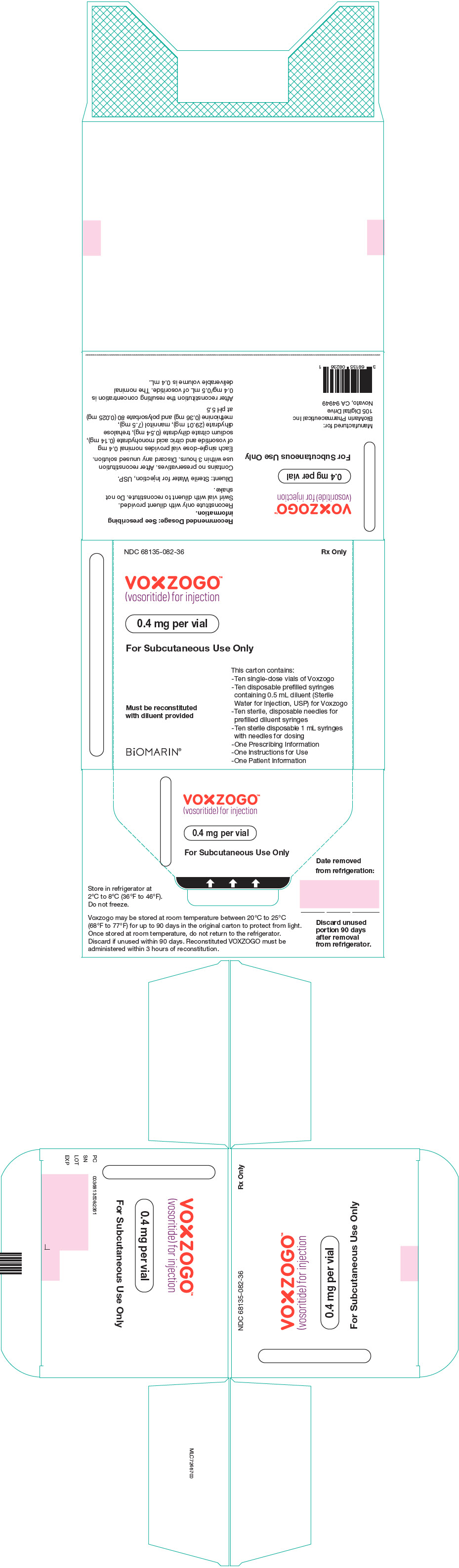
PRINCIPAL DISPLAY PANEL - Kit Carton - 68135-082 NDC 68135-082-36 Rx Only VOXZOGO™ (vosoritide) for injection 0.4 mg per vial For Subcutaneous Use Only This carton contains: - Ten single-dose vials of Voxzogo - Ten disposable prefilled syringes containing 0.5 mL diluent (Sterile Water for Injection, USP) for Voxzogo - Ten sterile, disposable needles for prefilled diluent syringes - Ten sterile disposable 1 mL syringes with needles for dosing - One Prescribing Information - One Instructions for Use - One Patient Information Must be reconstituted with diluent provided BiOMARIN ® PRINCIPAL DISPLAY PANEL - Kit Carton - 68135-082
PRINCIPAL DISPLAY PANEL - 0.4 mg Vial Label VOXZOGO™ (vosoritide) for injection 0.4 mg per vial Reconstitute Prior to Use For Subcutaneous Use Only Single-dose vial Rx Only LOT: EXP: PRINCIPAL DISPLAY PANEL - 0.4 mg Vial Label
PRINCIPAL DISPLAY PANEL - 0.5 mL Syringe Label NDC 68135-070-12 Rx Only Diluent For VOXZOGO™ for Injection 0.5 mL For drug diluent use only- reconstitute as directed Single-dose No preservative Distributed by: BioMarin MLC7246001 LOT: EXP: 10008821-02 PRINCIPAL DISPLAY PANEL - 0.5 mL Syringe Label
PRINCIPAL DISPLAY PANEL - Kit Carton - 68135-119 NDC 68135-119-66 Rx Only VOXZOGO™ (vosoritide) for injection 0.56 mg per vial For Subcutaneous Use Only This carton contains: - Ten single-dose vials of Voxzogo - Ten disposable prefilled syringes containing 0.7 mL diluent (Sterile Water for Injection, USP) for Voxzogo - Ten sterile, disposable needles for prefilled diluent syringes - Ten sterile disposable 1 mL syringes with needles for dosing - One Prescribing Information - One Instructions for Use - One Patient Information Must be reconstituted with diluent provided BiOMARIN ® PRINCIPAL DISPLAY PANEL - Kit Carton - 68135-119
PRINCIPAL DISPLAY PANEL - 0.56 mg Vial Label VOXZOGO™ (vosoritide) for injection 0.56 mg per vial Reconstitute Prior to Use For Subcutaneous Use Only Single-dose vial Rx Only LOT: EXP: PRINCIPAL DISPLAY PANEL - 0.56 mg Vial Label
PRINCIPAL DISPLAY PANEL - 0.7 mL Syringe Label NDC 68135-102-43 Rx Only Diluent For VOXZOGO™ for Injection 0.7 mL For drug diluent use only- reconstitute as directed Single-dose No preservative Distributed by: BioMarin MLC7246001 LOT: EXP: 10008843-02 PRINCIPAL DISPLAY PANEL - 0.7 mL Syringe Label
PRINCIPAL DISPLAY PANEL - Kit Carton - 68135-181 NDC 68135-181-93 Rx Only VOXZOGO™ (vosoritide) for injection 1.2 mg per vial For Subcutaneous Use Only This carton contains: - Ten single-dose vials of Voxzogo - Ten disposable prefilled syringes containing 0.6 mL diluent (Sterile Water for Injection, USP) for Voxzogo - Ten sterile, disposable needles for prefilled diluent syringes - Ten sterile disposable 1 mL syringes with needles for dosing - One Prescribing Information - One Instructions for Use - One Patient Information Must be reconstituted with diluent provided BiOMARIN ® PRINCIPAL DISPLAY PANEL - Kit Carton - 68135-181
PRINCIPAL DISPLAY PANEL - 1.2 mg Vial Label VOXZOGO™ (vosoritide) for injection 1.2 mg per vial Reconstitute Prior to Use For Subcutaneous Use Only Single-dose vial Rx Only LOT: EXP: PRINCIPAL DISPLAY PANEL - 1.2 mg Vial Label
PRINCIPAL DISPLAY PANEL - 0.6 mL Syringe Label NDC 68135-158-17 Rx Only Diluent For VOXZOGO™ for Injection 0.6 mL For drug diluent use only- reconstitute as directed Single-dose No preservative Distributed by: BioMarin MLC7246201 LOT: EXP: 10008822-02 PRINCIPAL DISPLAY PANEL - 0.6 mL Syringe Label
Medicaid utilization & spend
About this NDC listing & data coverage
Kit / multi-component package
This NDC identifies a kit — a package containing more than one component. Structured data (pricing, ingredients, equivalents) is often reported per component rather than for the kit NDC itself, which can make this page look thinner than the components' own pages.
What data is (and isn’t) available for this NDC — tap to expand
| NDC identity (package / product / labeler codes) | ✓ Available |
| Labeler | ✓ Available |
| Product & package description | ✓ Available |
| Marketing category & status | ✓ Available |
| Active ingredient / dosage form / route | ✓ Available |
| FDA label (SPL via DailyMed) | ✓ Available |
| Package photos | ✓ Available |
| Inactive ingredients (structured) | — Not published for this NDC The labeler did not submit a structured excipient list, or no SPL is available. |
| NADAC pharmacy acquisition price (CMS) | — Not published for this NDC CMS publishes NADAC only for NDCs reported in its retail-pharmacy survey. |
| Orange Book / therapeutic-equivalence data | ✓ Available |
| HCPCS J-code billing crosswalk | — Not published for this NDC Most self-administered / retail products have no J-code — that is normal. |
| Medicaid utilization (CMS SDUD) | ✓ Available |