
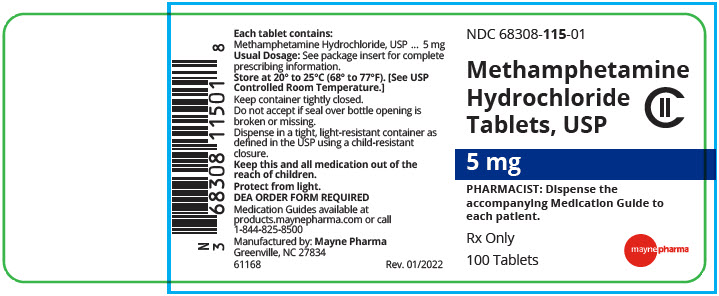
Methamphetamine Hydrochloride 5 mg Tablet, 100-count — NDC 68308-115-01 (Billing 68308-0115-01)
This is a package of 100 tablets of Methamphetamine Hydrochloride 5 mg Tablet from Mayne Pharma Commercial LLC, marketed since Apr 2010 and currently FDA-listed; retail pharmacies pay about $5.10 per tablet (NADAC). It is this product's only package size.
Identity & classification
Regulatory identifiers FDA, NLM and CMS codes for this package
Drug-database identifiers Medi-Span GPI and First Databank GCN / HICL / AHFS classification
- GSN (GCN sequence number): 005014
- GCN: 19932
- GPI-14 (Medi-Span): 61100030100305
- HICL (First Databank): 002067
- AHFS class code: 28:20.04.00
- RxCUI (RxNorm): 977860
Where does this data come from?
- FDA openFDA NDC Directory · synced Oct 1, 2026
- FDA label on DailyMed · label index refreshed Oct 1, 2026
- RxNorm (NLM RxNav) · catalog refreshed Oct 1, 2026
- Medi-Span GPI (licensed)
- First Databank (licensed) · refreshed Oct 1, 2026
RxNorm drug class
This medicine belongs to the Amphetamine Anorectic class.
Where does this data come from?
- RxClass (NLM) · catalog refreshed Oct 1, 2026
Clinical
Methamphetamine is used as part of a treatment program to control symptoms of attention deficit hyperactivity disorder (ADHD; more difficulty focusing, controlling actions, and remaining still or quiet than other people who are the same age) in children. Methamphetamine is also used for a limited period of time (a few weeks) along with a reduced calorie diet and an exercise plan for weight loss in obese people unable to lose weight. Methamphetamine is in a class of medications called central nervous system stimulants. It works by changing the amounts of certain natural substances in the brain.
Read the full MedlinePlus article ↗- Methamphetamine tablets are prescribed for ADHD in children over 6. They work best as one part of a bigger plan that includes behavioral, educational and social support.
- It is taken by mouth once a day or split into two doses. Try to avoid taking it late in the evening because it can keep you awake. Follow your prescriber's directions and the label...
- Common ones include a pounding heartbeat, dizziness, trouble sleeping, shakiness, headache, diarrhea and dry mouth. Call your prescriber if you notice chest pain, fainting, halluci...
- Yes. It must not be used with MAOI antidepressants or within 14 days of stopping one. Tell me about any antidepressants, migraine medicines, tramadol, lithium, St. John's Wort, ant...
Patient education
Supplement & herbal interactions
Where does this data come from?
- MedlinePlus (NLM) · refreshed Oct 1, 2026
- FDA label on DailyMed · label index refreshed Oct 1, 2026
Ask a licensed pharmacist directly — free, answered by our team.
Pricing
A drug doesn't have one price. Each row is a different public payment system, and none is what you'd pay at the counter — that depends on your insurance. The ⓘ on each row explains what it measures.
| Price system | Per ea | Per package |
|---|---|---|
| Retail pharmacies payNADAC · weekly | $5.098 | $509.78 / 100 tablets |
| Medicaid paysCMS SDUD · 12 mo | $7.61 | $760.58 / 100 tablets |
| Medicare drug plans payPart D · Q2 2026 | $8.01 | $801.14 / 100 tablets |
Where does this data come from?
- CMS NADAC weekly file · file of Sep 30, 2026
- CMS ASP pricing files · refreshed Sep 20, 2026
- CMS Medicaid State Drug Utilization Data · through Q1 2026
- CMS Part D plan pricing files · refreshed Sep 24, 2026
- VA National Acquisition Center price file
Packaging — all sizes for this product
| Package NDC | Description | Marketing start | Marketing end | Status |
|---|---|---|---|---|
| 68308-0115-01 You're viewing this Main listing | 100 TABLET in 1 BOTTLE, PLASTIC | 2010-04-26 | — | Active |
Therapeutic equivalents
| Product | Labeler | Pack | NADAC/unit | TE | Status | Price vs. this |
|---|---|---|---|---|---|---|
| Methamphetamine Hydrochloride 5 mg 00054-0389-25 | Hikma | 100 tablets | $5.098 | AA | Availability likely | — |
| Methamphetamine Hydrochloride 5 mgthis 68308-0115-01 | Mayne | 100 tablets | $5.098 | AA | Availability likely | — |
| Methamphetamine Hydrochloride 5 mg 75907-0094-01 | Dr. | 100 tablets | $5.098 | AA | Availability likely | — |
Where does this data come from?
- FDA openFDA NDC Directory · synced Oct 1, 2026
- FDA Orange Book · refreshed Sep 3, 2026
- CMS NADAC weekly file · file of Sep 30, 2026
Availability & generic status
This product is an FDA-approved generic. Other versions of the same drug are listed under Therapeutic equivalents, least expensive first.
Where does this data come from?
- FDA Orange Book · refreshed Sep 3, 2026
What it looks like
Where does this data come from?
- FDA label on DailyMed · label index refreshed Oct 1, 2026
Inactive Ingredients / Excipients
Inactive ingredients, also called excipients, are components of the drug product other than the active ingredient. They may include fillers, dyes, coatings, preservatives, flavors, or other formulation ingredients.
💡 Tap an ingredient (hover on desktop) to see what it is and why it’s used.
-
UNII EWQ57Q8I5X
Lactose monohydrate is a natural sugar derived from milk. It serves as a filler and binder in tablets and capsules, helping create the proper size, texture, and consistency of the medicine.
-
UNII O8232NY3SJ
A plant-based carbohydrate derived from corn kernels. It acts as a filler to add bulk, a binder to hold ingredients together, and a disintegrant to help the tablet break apart in your stomach for absorption.
-
UNII 4ELV7Z65AP
Stearic acid is a fatty acid derived from plant or animal sources. It acts as a binder and lubricant in tablets and capsules, helping them hold together and flow smoothly during manufacturing.
-
UNII 7SEV7J4R1U
A powder made from a naturally occurring mineral. In medicines, talc works as a glidant and anti-caking agent, helping tablets and capsules flow smoothly during manufacturing and preventing clumping.
4 inactive ingredients listed in the exact product block matched to this NDC.
Where does this data come from?
ingredient classCode="IACT" elements from the exact product block matched by this NDC. Label-section narrative from DailyMed / the openFDA label index is shown separately when available.- FDA label on DailyMed · label index refreshed Oct 1, 2026
- FDA openFDA NDC Directory · synced Oct 1, 2026
Inactive ingredient FAQ
Are inactive ingredients the same for every manufacturer?
Why might an inactive ingredient be missing?
Can inactive ingredients matter?
Manufacturer & labeler
Where does this data come from?
- FDA openFDA NDC Directory · synced Oct 1, 2026
- Drugs@FDA
Full prescribing information FDA SPL
🚨 Boxed Warning ▾
METHAMPHETAMINE HAS A HIGH POTENTIAL FOR ABUSE. PARTICULAR ATTENTION SHOULD BE PAID TO THE POSSIBILITY OF SUBJECTS OBTAINING METHAMPHETAMINE FOR NON-THERAPEUTIC USE OR DISTRIBUTION TO OTHERS, AND THE DRUG SHOULD BE PRESCRIBED OR DISPENSED SPARINGLY. MISUSE OF METHAMPHETAMINE MAY CAUSE SUDDEN DEATH AND SERIOUS CARDIOVASCULAR ADVERSE EVENTS.
Methamphetamine hydrochloride tablets are a federally controlled substance (CII) because it can be abused or lead to dependence. Keep methamphetamine hydrochloride tablets in a safe place to prevent misuse and abuse. Selling or giving away methamphetamine hydrochloride tablets may harm others, and is against the law.
Tell your or your child's doctor if you or your child have (or have a family history of) ever abused or been dependent on alcohol, prescription medicines or street drugs.
🎯 Indications and Usage ▾
INDICATIONS AND USAGE Attention Deficit Disorder with Hyperactivity Methamphetamine hydrochloride tablets are indicated as an integral part of a total treatment program which typically includes other remedial measures (psychological, educational, social) for a stabilizing effect in children over 6 years of age with a behavioral syndrome characterized by the following group of developmentally inappropriate symptoms: moderate to severe distractibility, short attention span, hyperactivity, emotional lability, and impulsivity.
The diagnosis of this syndrome should not be made with finality when these symptoms are only of comparatively recent origin. Nonlocalizing (soft) neurological signs, learning disability, and abnormal EEG may or may not be present, and a diagnosis of central nervous system dysfunction may or may not be warranted.
⏱️ Dosage and Administration ▾
DOSAGE AND ADMINISTRATION Methamphetamine hydrochloride tablets are given orally. Methamphetamine should be administered at the lowest effective dosage, and dosage should be individually adjusted. Late evening medication should be avoided because of the resulting insomnia.
Attention Deficit Disorder with Hyperactivity For treatment of children 6 years or older with a behavioral syndrome characterized by moderate to severe distractibility, short attention span, hyperactivity, emotional lability and impulsivity: an initial dose of 5 mg methamphetamine hydrochloride tablets once or twice a day is recommended. Daily dosage may be raised in increments of 5 mg at weekly intervals until an optimum clinical response is achieved. The usual effective dose is 20 to 25 mg daily.
The total daily dose may be given in two divided doses daily. Where possible, drug administration should be interrupted occasionally to determine if there is a recurrence of behavioral symptoms sufficient to require continued therapy.
⛔ Contraindications ▾
CONTRAINDICATIONS In patients known to be hypersensitive to amphetamine, or other components of methamphetamine hydrochloride tablets. Hypersensitivity reactions such as angioedema and anaphylactic reactions have been reported in patients treated with other amphetamine products (see ADVERSE REACTIONS ). Patients taking monoamine oxidase inhibitors (MAOIs), or within 14 days of stopping MAOIs (including MAOIs such as linezolid or intravenous methylene blue), because of an increased risk of hypertensive crisis (see WARNINGS and DRUG INTERACTIONS ).
It is also contraindicated in patients with glaucoma, advanced arteriosclerosis, symptomatic cardiovascular disease, moderate to severe hypertension, hyperthyroidism or known hypersensitivity or idiosyncrasy to sympathomimetic amines. Methamphetamine should not be given to patients who are in an agitated state or who have a history of drug abuse.
⚠️ Warnings ▾
WARNINGS Serious Cardiovascular Events Sudden Death and Pre-existing Structural Cardiac Abnormalities or Other Serious Heart Problems Children and Adolescents : Sudden death has been reported in association with CNS stimulant treatment at usual doses in children and adolescents with structural cardiac abnormalities or other serious heart problems. Although some serious heart problems alone carry an increased risk of sudden death, stimulant products generally should not be used in children or adolescents with known serious structural cardiac abnormalities, cardiomyopathy, serious heart rhythm abnormalities, or other serious cardiac problems that may place them at increased vulnerability to the sympathomimetic effects of a stimulant drug.
Adults : Sudden deaths, stroke, and myocardial infarction have been reported in adults taking stimulant drugs at usual doses for ADHD. Although the role of stimulants in these adult cases is also unknown, adults have a greater likelihood than children of having serious structural cardiac abnormalities, cardiomyopathy, serious heart rhythm abnormalities, coronary artery disease, or other serious cardiac problems. Adults with such abnormalities should also generally not be treated with stimulant drugs.
Hypertension and other Cardiovascular Conditions Stimulant medications cause a modest increase in average blood pressure (about 2-4 mmHg) and average heart rate (about 3-6 bpm), and individuals may have larger increases. While the mean changes alone would not be expected to have short-term consequences, all patients should be monitored for larger changes in heart rate and blood pressure. Caution is indicated in treating patients whose underlying medical conditions might be compromised by increases in blood pressure or heart rate, e.g., those with pre-existing hypertension, heart failure, recent myocardial infarction, or ventricular arrhythmia.
Assessing Cardiovascular Status in Patients being Treated with Stimulant Medications Children, adolescents, or adults who are being considered for treatment with stimulant medications should have a careful history (including assessment for a family history of sudden death or ventricular arrhythmia) and physical exam to assess for the presence of cardiac disease, and should receive further cardiac evaluation if findings suggest such disease (e.g., electrocardiogram and echocardiogram). Patients who develop symptoms such as exertional chest pain, unexplained syncope, or other symptoms suggestive of cardiac disease during stimulant treatment should undergo a prompt cardiac evaluation.
Psychiatric Adverse Events Pre-existing Psychosis Administration of stimulants may exacerbate symptoms of behavior disturbance and thought disorder in patients with a pre-existing psychotic disorder. Bipolar Illness Particular care should be taken in using stimulants to treat ADHD in patients with comorbid bipolar disorder because of concern for possible induction of a mixed/manic episode in such patients. Prior to initiating treatment with a stimulant, patients with comorbid depressive symptoms should be adequately screened to determine if they are at risk for bipolar disorder; such screening should include a detailed psychiatric history, including a family history of suicide, bipolar disorder, and depression.
Emergence of New Psychotic or Manic Symptoms Treatment emergent psychotic or manic symptoms, e.g., hallucinations, delusional thinking, or mania in children and adolescents without a prior history of psychotic illness or mania can be caused by stimulants at usual doses. If such symptoms occur, consideration should be given to a possible causal role of the stimulant, and discontinuation of treatment may be appropriate. In a pooled analysis of multiple short-term, placebo-controlled studies, such symptoms occurred in about 0.1% (4 patients with events out of 3,482 exposed to methylphenidate or amphetamine for several weeks at usual doses) of stimulant-treated patients compared… [Excerpted — this section continues on DailyMed.]
🤒 Adverse Reactions ▾
ADVERSE REACTIONS The following are adverse reactions in decreasing order of severity within each category that have been reported: Cardiovascular: Elevation of blood pressure, tachycardia and palpitation. Fatal cardiorespiratory arrest has been reported, mostly in the context of abuse/misuse. Central Nervous System: Psychotic episodes have been rarely reported at recommended doses.
Dizziness, dysphoria, overstimulation, euphoria, insomnia, tremor, restlessness and headache. Exacerbation of motor and phonic tics and Tourette's syndrome. Gastrointestinal: Diarrhea, constipation, dryness of mouth, unpleasant taste, intestinal ischemia, and other gastrointestinal disturbances.
Hypersensitivity: Urticaria. Endocrine: Impotence and changes in libido; frequent or prolonged erections. Musculoskeletal: Rhabdomyolysis.
Miscellaneous: Suppression of growth has been reported with the long-term use of stimulants in children (see WARNINGS ). Skin and Subcutaneous Tissue Disorders: Alopecia. To report SUSPECTED ADVERSE REACTIONS, contact FDA at 1-800-FDA-1088 or www.fda.gov/medwatch or Mayne Pharma at 1-844-825-8500.
🔄 Drug Interactions ▾
Drug Interactions Insulin requirements in diabetes mellitus may be altered in association with the use of methamphetamine and the concomitant dietary regimen. Methamphetamine may decrease the hypotensive effect of guanethidine . Methamphetamine hydrochloride tablets should not be used concurrently with monoamine oxidase inhibitors (see CONTRAINDICATIONS ).
Concurrent administration of tricyclic antidepressants and indirect-acting sympathomimetic amines such as the amphetamines, should be closely supervised and dosage carefully adjusted. Phenothiazines are reported in the literature to antagonize the CNS stimulant action of the amphetamines.
🔄 Drug / Laboratory Test Interactions ▾
Drug/Laboratory Test Interactions Literature reports suggest that amphetamines may be associated with significant elevation of plasma corticosteroids. This should be considered if determination of plasma corticosteroid levels is desired in a person receiving amphetamines.
🤰 Pregnancy ▾
Pregnancy Teratogenic effects Pregnancy Category C Methamphetamine has been shown to have teratogenic and embryocidal effects in mammals given high multiples of the human dose. There are no adequate and well-controlled studies in pregnant women. Methamphetamine hydrochloride tablets should not be used during pregnancy unless the potential benefit justifies the potential risk to the fetus.
Nonteratogenic effects Infants born to mothers dependent on amphetamines have an increased risk of premature delivery and low birth weight. Also, these infants may experience symptoms of withdrawal as demonstrated by dysphoria, including agitation and significant lassitude.
🧒 Pediatric Use ▾
Pediatric Use Long-term effects of methamphetamine in children have not been established (see WARNINGS ). Drug treatment is not indicated in all cases of the behavioral syndrome characterized by moderate to severe distractibility, short attention span, hyperactivity, emotional lability and impulsivity. It should be considered only in light of the complete history and evaluation of the child.
The decision to prescribe methamphetamine hydrochloride tablets should depend on the physician's assessment of the chronicity and severity of the child's symptoms and their appropriateness for his/her age. Prescription should not depend solely on the presence of one or more of the behavioral characteristics. When these symptoms are associated with acute stress reactions, treatment with methamphetamine hydrochloride tablets is usually not indicated.
Clinical experience suggests that in psychotic children, administration of methamphetamine hydrochloride tablets may exacerbate symptoms of behavior disturbance and thought disorder. Amphetamines have been reported to exacerbate motor and phonic tics and Tourette's syndrome. Therefore, clinical evaluation for tics and Tourette's syndrome in children and their families should precede use of stimulant medications.
🧓 Geriatric Use ▾
Geriatric Use Clinical Studies of methamphetamine hydrochloride tablets did not include sufficient numbers of subjects age 65 years and over to determine whether elderly subjects respond differently from younger subjects. Other reported clinical experience has not identified differences in responses between the elderly and younger patients. In general, dose selection for an elderly patient should be cautious, usually starting at the low end of the dosing range, reflecting the greater frequency of decreased hepatic, renal or cardiac function, and of concomitant disease or other drug therapy observed in this population.
🆘 Overdosage ▾
OVERDOSAGE Manifestations of amphetamine overdose include restlessness, tremor, hyperreflexia, rapid respiration, confusion, assaultiveness, hallucinations, panic states, hyperpyrexia, and rhabdomyolysis. Fatigue and depression usually follow the central nervous system stimulation. Serotonin syndrome has also been reported.
Cardiovascular effects include arrhythmias, hypertension or hypotension, and circulatory collapse. Gastrointestinal symptoms include nausea, vomiting, diarrhea, and abdominal cramps. Fatal poisoning is usually preceded by convulsions and coma.
Treatment Consult with a Certified Poison Control Center for up to date guidance and advice.
🧬 Clinical Pharmacology ▾
CLINICAL PHARMACOLOGY Methamphetamine is a sympathomimetic amine with CNS stimulant activity. Peripheral actions include elevation of systolic and diastolic blood pressures and weak bronchodilator and respiratory stimulant action. Other central nervous system actions, or metabolic effects, may be involved, for example.
The mechanism of action involved in producing the beneficial behavioral changes seen in hyperkinetic children receiving methamphetamine is unknown. In humans, methamphetamine is rapidly absorbed from the gastrointestinal tract. The primary site of metabolism is in the liver by aromatic hydroxylation, N-dealkylation and deamination.
At least seven metabolites have been identified in the urine. The biological half-life has been reported in the range of 4 to 5 hours. Excretion occurs primarily in the urine and is dependent on urine pH.
Alkaline urine will significantly increase the drug half-life. Approximately 62% of an oral dose is eliminated in the urine within the first 24 hours with about one-third as intact drug and the remainder as metabolites.
📦 How Supplied / Storage and Handling ▾
HOW SUPPLIED Methamphetamine Hydrochloride Tablets, USP are available containing 5 mg of methamphetamine hydrochloride, USP. The 5 mg tablets are white, round, unscored tablets debossed with 115 on one side of the tablet and blank on the other side. They are available as follows: NDC 68308-115-01 bottles of 100 tablets Store at 20° to 25°C (68° to 77°F). [See USP Controlled Room Temperature.] Protect from light.
Dispense in a tight, light-resistant container as defined in the USP using a child-resistant closure. Medication Guides available at products.maynepharma.com or call 1-844-825-8500.
📦 Storage and Handling ▾
Store at 20° to 25°C (68° to 77°F). [See USP Controlled Room Temperature.] Protect from light. Dispense in a tight, light-resistant container as defined in the USP using a child-resistant closure. Medication Guides available at products.maynepharma.com or call 1-844-825-8500.
📋 Description ▾
DESCRIPTION Methamphetamine hydrochloride tablets, USP chemically known as (S)-N, α -dimethylbenzeneethanamine hydrochloride, is a member of the amphetamine group of sympathomimetic amines. It has the following structural formula: Methamphetamine hydrochloride tablets contain 5 mg of methamphetamine hydrochloride, USP for oral administration. Chemical Structure Inactive Ingredients Corn starch, lactose monohydrate, stearic acid and talc.
💬 Information for Patients ▾
Information for Patients The patient should be informed that methamphetamine may impair the ability to engage in potentially hazardous activities, such as, operating machinery or driving a motor vehicle. Circulation problems in fingers and toes [Peripheral vasculopathy, including Raynaud's phenomenon] Instruct patients beginning treatment with methamphetamine hydrochloride tablets about the risk of peripheral vasculopathy, including Raynaud's Phenomenon, and associated signs and symptoms: fingers or toes may feel numb, cool, painful, and/or may change color from pale, to blue, to red.
Instruct patients to report to their physician any new numbness, pain, skin color change, or sensitivity to temperature in fingers or toes. Instruct patients to call their physician immediately with any signs of unexplained wounds appearing on fingers or toes while taking methamphetamine hydrochloride tablets. Further clinical evaluation (e.g., rheumatology referral) may be appropriate for certain patients.
The patient should be cautioned not to increase dosage, except on advice of the physician. Prescribers or other health professionals should inform patients, their families, and their caregivers about the benefits and risks associated with treatment with methamphetamine and should counsel them in its appropriate use. A patient Medication Guide is available for methamphetamine hydrochloride tablets.
The prescriber or health professional should instruct patients, their families, and their caregivers to read the Medication Guide and should assist them in understanding its contents. Patients should be given the opportunity to discuss the contents of the Medication Guide and to obtain answers to any questions they may have.
💬 Medication Guide ▾
MEDICATION GUIDE METHAMPHETAMINE HYDROCHLORIDE TABLETS, USP CII (metham-fetă-mēn hīdrŏ-klōrīd) 5 mg Read the Medication Guide that comes with methamphetamine hydrochloride tablets before you or your child starts taking it and each time you get a refill. There may be new information. This Medication Guide does not take the place of talking to your or your child's doctor about your or your child's treatment with methamphetamine hydrochloride tablets.
What is the most important information I should know about methamphetamine hydrochloride tablets? The following have been reported with use of methamphetamine hydrochloride and other stimulant medicines. 1.
Heart-related problems: sudden death in patients who have heart problems or heart defects stroke and heart attack in adults increased blood pressure and heart rate Tell your or your child's doctor if you or your child have any heart problems, heart defects, high blood pressure, or a family history of these problems. Your or your child's doctor should check you or your child carefully for heart problems before starting methamphetamine hydrochloride tablets. Your or your child's doctor should check you or your child's blood pressure and heart rate regularly during treatment with methamphetamine hydrochloride tablets.
Call your or your child's doctor right away if you or your child has any signs of heart problems such as chest pain, shortness of breath, or fainting while taking methamphetamine hydrochloride tablets. 2. Mental (Psychiatric) problems: All Patients new or worse behavior and thought problems new or worse bipolar illness new or worse aggressive behavior or hostility Children and Teenagers new psychotic symptoms (such as hearing voices, believing things that are not true, are suspicious) or new manic symptoms Tell your or your child's doctor about any mental problems you or your child have, or about a family history of suicide, bipolar illness, or depression.
Call your or your child's doctor right away if you or your child have any new or worsening mental symptoms or problems while taking methamphetamine hydrochloride tablets, especially seeing or hearing things that are not real, believing things that are not real, or are suspicious. 3. Circulation problems in fingers and toes [Peripheral vasculopathy, including Raynaud's phenomenon]: fingers or toes may feel numb, cool, painful fingers or toes may change color from pale, to blue, to red Tell your doctor if you have or your child has numbness, pain, skin color change, or sensitivity to temperature in your fingers or toes.
Call your doctor right away if you have or your child has any signs of unexplained wounds appearing on fingers or toes while taking methamphetamine hydrochloride tablets. What are methamphetamine hydrochloride tablets? Methamphetamine hydrochloride tablets are a central nervous system stimulant prescription medicine.
It is used for the treatment of Attention-Deficit Hyperactivity Disorder; (ADHD). Methamphetamine hydrochloride tablets may help increase attention and decrease impulsiveness and hyperactivity in patients with ADHD. Methamphetamine hydrochloride tablets should be used as a part of a total treatment program for ADHD that may include counseling or other therapies.
Methamphetamine hydrochloride tablets are a federally controlled substance (CII) because it can be abused or lead to dependence. Keep methamphetamine hydrochloride tablets in a safe place to prevent misuse and abuse. Selling or giving away methamphetamine hydrochloride tablets may harm others, and is against the law.
Tell your or your child's doctor if you or your child have (or have a family history of) ever abused or been dependent on alcohol, prescription medicines or street drugs. Who should not take methamphetamine hydrochloride tablets? Methamphetamine hydrochloride tablets should not be taken if you or your child: have heart disease or hardening of the arteries have moderate to severe high blood pressure have hyperthyroidism… [Excerpted — this section continues on DailyMed.]
⚠️ Precautions ▾
PRECAUTIONS General Methamphetamine hydrochloride tablets should be used with caution in patients with even mild hypertension. Methamphetamine should not be used to combat fatigue or to replace rest in normal persons. Prescribing and dispensing of methamphetamine should be limited to the smallest amount that is feasible at one time in order to minimize the possibility of overdosage.
Information for Patients The patient should be informed that methamphetamine may impair the ability to engage in potentially hazardous activities, such as, operating machinery or driving a motor vehicle. Circulation problems in fingers and toes [Peripheral vasculopathy, including Raynaud's phenomenon] Instruct patients beginning treatment with methamphetamine hydrochloride tablets about the risk of peripheral vasculopathy, including Raynaud's Phenomenon, and associated signs and symptoms: fingers or toes may feel numb, cool, painful, and/or may change color from pale, to blue, to red.
Instruct patients to report to their physician any new numbness, pain, skin color change, or sensitivity to temperature in fingers or toes. Instruct patients to call their physician immediately with any signs of unexplained wounds appearing on fingers or toes while taking methamphetamine hydrochloride tablets. Further clinical evaluation (e.g., rheumatology referral) may be appropriate for certain patients.
The patient should be cautioned not to increase dosage, except on advice of the physician. Prescribers or other health professionals should inform patients, their families, and their caregivers about the benefits and risks associated with treatment with methamphetamine and should counsel them in its appropriate use. A patient Medication Guide is available for methamphetamine hydrochloride tablets.
The prescriber or health professional should instruct patients, their families, and their caregivers to read the Medication Guide and should assist them in understanding its contents. Patients should be given the opportunity to discuss the contents of the Medication Guide and to obtain answers to any questions they may have. Drug Interactions Insulin requirements in diabetes mellitus may be altered in association with the use of methamphetamine and the concomitant dietary regimen.
Methamphetamine may decrease the hypotensive effect of guanethidine . Methamphetamine hydrochloride tablets should not be used concurrently with monoamine oxidase inhibitors (see CONTRAINDICATIONS ). Concurrent administration of tricyclic antidepressants and indirect-acting sympathomimetic amines such as the amphetamines, should be closely supervised and dosage carefully adjusted.
Phenothiazines are reported in the literature to antagonize the CNS stimulant action of the amphetamines. Drug/Laboratory Test Interactions Literature reports suggest that amphetamines may be associated with significant elevation of plasma corticosteroids. This should be considered if determination of plasma corticosteroid levels is desired in a person receiving amphetamines.
Acidifying Agents Lower blood levels and efficacy of amphetamines. Increase dose based on clinical response. Examples of acidifying agents include gastrointestinal acidifying agents (e.g., guanethidine, reserpine, glutamic acid HCl, ascorbic acid) and urinary acidifying agents (e.g., ammonium chloride, sodium acid phosphate, methenamine salts).
Alkalinizing Agents Increase blood levels and potentiate the action of amphetamine. Co-administration of methamphetamine hydrochloride tablets and gastrointestinal alkalinizing agents should be avoided. Examples of alkalinizing agents include gastrointestinal alkalinizing agents (e.g., sodium bicarbonate) and urinary alkalinizing agents (e.g., acetazolamide, some thiazides).
Tricyclic Antidepressants May enhance the activity of tricyclic or sympathomimetic agents causing striking and sustained increases in the concentration of d-amphetamine in the brain; cardiovascular effects can be potentiated. Monitor fr… [Excerpted — this section continues on DailyMed.]
🍼 Nursing Mothers ▾
Usage in Nursing Mothers Amphetamines are excreted in human milk. Mothers taking amphetamines should be advised to refrain from nursing.
🔒 Drug Abuse and Dependence ▾
DRUG ABUSE AND DEPENDENCE Controlled Substance Methamphetamine hydrochloride tablets are subject to control under DEA schedule II. Abuse Methamphetamine has been extensively abused. Tolerance, extreme psychological dependence, and severe social disability have occurred.
There are reports of patients who have increased the dosage to many times that recommended. Abrupt cessation following prolonged high dosage administration results in extreme fatigue and mental depression; changes are also noted on the sleep EEG. Manifestations of chronic intoxication with methamphetamine include severe dermatoses, marked insomnia, irritability, hyperactivity, and personality changes.
The most severe manifestation of chronic intoxication is psychosis often clinically indistinguishable from schizophrenia. Abuse and/or misuse of methamphetamine have resulted in death. Fatal cardiorespiratory arrest has been reported in the context of abuse and/or misuse of methamphetamine.
🔒 Controlled Substance ▾
Controlled Substance Methamphetamine hydrochloride tablets are subject to control under DEA schedule II.
📄 Carcinogenesis, Mutagenesis, Impairment of Fertility ▾
Carcinogenesis, Mutagenesis, Impairment of Fertility Data are not available on long-term potential for carcinogenicity, mutagenicity, or impairment of fertility.
📄 Package Label / Principal Display Panel ▾
PRINCIPAL DISPLAY PANEL - 5 mg Tablet Bottle Label NDC 68308-115-01 Methamphetamine Hydrochloride Tablets, USP CII 5 mg PHARMACIST: Dispense the accompanying Medication Guide to each patient. Rx Only 100 Tablets mayne pharma PRINCIPAL DISPLAY PANEL - 5 mg Tablet Bottle Label