
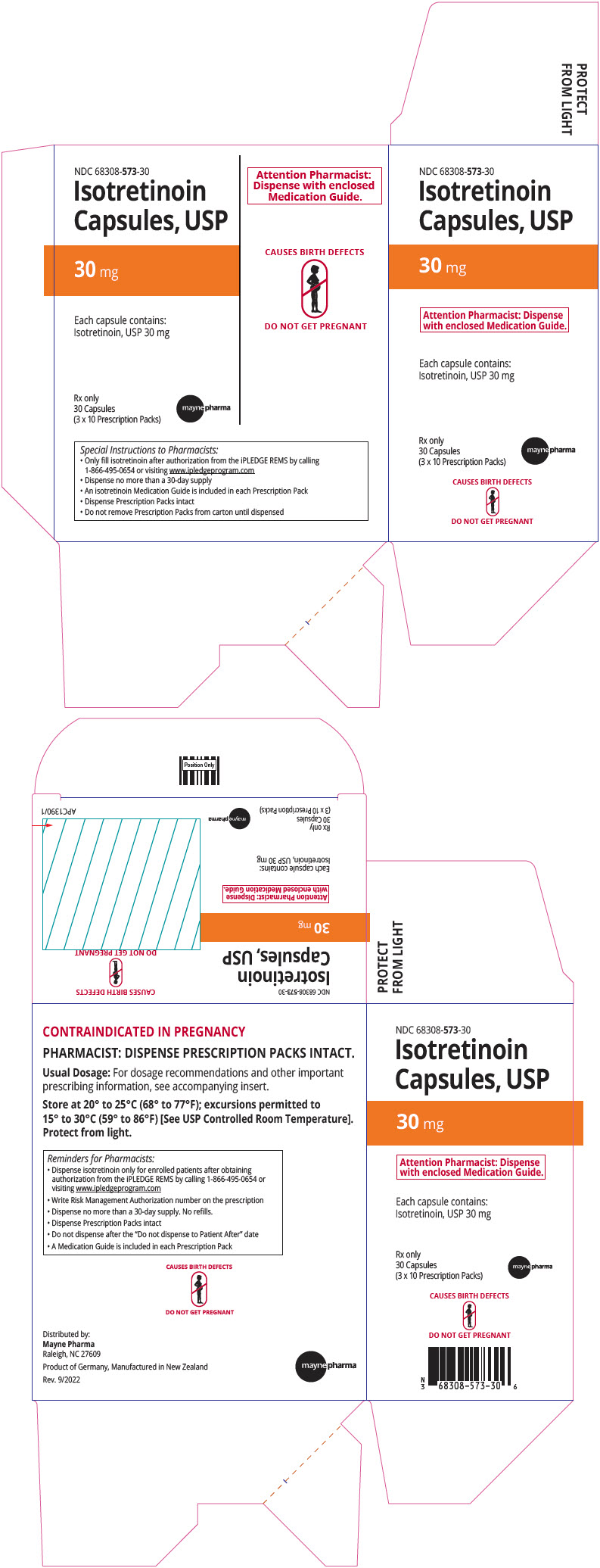
Isotretinoin 30 mg Capsule, Liquid Filled — NDC 68308-573-30 (Billing 68308-0573-30)
This is a package of Isotretinoin 30 mg Capsule, Liquid Filled from Mayne Pharma, marketed since Sep 2021 and currently FDA-listed; retail pharmacies pay about $4.47 per unit (NADAC). It is this product's only package size.
NDC database record
One package, one record: these facts belong to NDC 68308-573-30 alone.
- Record
- FDA NDC Directory package listing · Human prescription drug
- Code segments
- 68308 labeler · 573 product · 30 package
- Package marketed since
- Sep 21, 2021
- Sample package
- No — commercial package
- Listing certified through
- Dec 31, 2026
- Barcode (UPC-A, from the NDC)
- 3 6830857330 6
- Medicaid fills, this package
- 46 prescriptions in the last four reported quarters
- FDA record last changed
- Jul 24, 2026
Other active recalls for Isotretinoin (different manufacturers) — 5 · tap to view
Identity & classification
Regulatory identifiers FDA, NLM and CMS codes for this package
Drug-database identifiers Medi-Span GPI and First Databank GCN / HICL / AHFS classification
- GSN (GCN sequence number): 053055
- GCN: 20383
- GPI-14 (Medi-Span): 90050013000130
- HICL (First Databank): 002476
- AHFS class code: 84:28.00.00
- RxCUI (RxNorm): 197843
Where does this data come from?
- FDA openFDA NDC Directory · synced Oct 8, 2026
- FDA label on DailyMed · label index refreshed Oct 8, 2026
- RxNorm (NLM RxNav) · catalog refreshed Oct 1, 2026
- Medi-Span GPI (licensed)
- First Databank (licensed) · refreshed Oct 8, 2026
RxNorm drug class
This medicine belongs to the Retinoid class.
Where does this data come from?
- RxClass (NLM) · catalog refreshed Oct 1, 2026
Clinical
- Isotretinoin causes extremely serious birth defects — even one dose during pregnancy can cause devastating harm to a developing baby. Because of that risk, the FDA requires everyon...
- Why is there so much paperwork and testing before I can even get this prescription filled?
- For most brands — including Accutane, Amnesteem, Claravis, and generic isotretinoin — yes, taking it with food is essential. Studies show that a fatty meal more than doubles the am...
- Do I really need to take this with food every time?
Patient education
Supplement & herbal interactions
Some supplements/herbs that may interact with Isotretinoin — tap one for details:
Isotretinoin may be associated with lower levels of 4 nutrients — worth a chat with your pharmacist, not a cause for alarm.
Where does this data come from?
- MedlinePlus (NLM) · refreshed Oct 8, 2026
- FDA label on DailyMed · label index refreshed Oct 8, 2026
Ask a licensed pharmacist directly — free, answered by our team.
Pricing
A drug doesn't have one price. Each row is a different public payment system, and none is what you'd pay at the counter — that depends on your insurance. The ⓘ on each row explains what it measures.
| Price system | Per ea | Per package |
|---|---|---|
| Retail pharmacies payNADAC · weekly | $4.472 | $134.17 / 30 capsules |
| Medicaid paysCMS SDUD · 12 mo | $19.61 | $588.19 / 30 capsules |
| Medicare drug plans payPart D · Q2 2026 | $4.13 | $123.90 / 30 capsules |
Where does this data come from?
- CMS NADAC weekly file · file of Oct 7, 2026
- CMS ASP pricing files · refreshed Sep 20, 2026
- CMS Medicaid State Drug Utilization Data · through Q1 2026
- CMS Part D plan pricing files · refreshed Sep 24, 2026
- VA National Acquisition Center price file
Packaging — all sizes for this product
| Package NDC | Description | Marketing start | Marketing end | Status |
|---|---|---|---|---|
| 68308-0573-30 You're viewing this Main listing | 3 BLISTER PACK in 1 BOX / 10 CAPSULE, LIQUID FILLED in 1 BLISTER PACK | 2021-09-21 | — | Active |
Therapeutic equivalents
| Product | Labeler | Pack | NADAC/unit | TE | Status | Price vs. this |
|---|---|---|---|---|---|---|
| Amnesteem 30 mg 00378-6613-93 | Mylan | 30 capsules | $2.125 | AB1 | Availability likely | save 52% |
| Claravis 30 mg 00555-1056-86 | Teva | 10 capsules | $2.125 | AB1 | Availability likely | save 52% |
| Isotretinoin 30 mg 00832-8303-30 | Upsher-Smith | 10 capsules | $2.125 | AB1 | Availability likely | save 52% |
| Zenatane 30 mg 68001-0654-17 | BluePoint | 10 capsules | $2.125 | AB1 | Availability likely | save 52% |
| Isotretinoin 30 mg 68308-0783-30 | Mayne | 10 capsules | $2.125 | AB1 | Availability likely | save 52% |
| Isotretinoin 30 mg 69238-1017-03 | Amneal | 10 capsules | $2.125 | AB1 | Availability likely | save 52% |
| Isotretinoin 30 mg 70710-1024-08 | Zydus | 30 capsules | $2.125 | AB1 | Availability likely | save 52% |
| Isotretinoin 30 mg 00245-0573-01 | Upsher-Smith | 10 capsules | $4.472 | AB2 | Availability likely | — |
| Isotretinoin 30 mg 00591-2435-15 | Actavis | 30 capsules | $4.472 | AB2 | Availability likely | — |
| Isotretinoin 30 mg 57664-0023-97 | Sun | 30 capsules | $4.472 | AB2 | Availability likely | — |
| Isotretinoin 30 mg 59651-0634-03 | Aurobindo | 30 capsules | $4.472 | AB2 | Availability likely | — |
| Isotretinoin 30 mgthis 68308-0573-30 | Mayne | 10 capsules | $4.472 | AB2 | Availability likely | — |
| Isotretinoin 30 mg 70710-1577-08 | Zydus | 30 capsules | $4.472 | AB2 | Availability likely | — |
| Absorica 30 mg 10631-0117-31 | Sun | 30 capsules | $38.209 | AB2 | Availability likely | +754% |
| Zenatane 30 mg 55111-0113-78 | Dr. | 10 capsules | — | AB1 | FDA listed | — |
| Isotretinoin 30 mg 69238-1257-03 | Amneal | 30 capsules | — | — | FDA listed | — |
| Isotretinoin 30 mg 70771-1559-08 | Zydus | 30 capsules | — | AB1 | FDA listed | — |
| Isotretinoin 30 mg 70771-1665-08 | Zydus | 30 capsules | — | AB2 | FDA listed | — |
| Accutane 30 mg 72143-0253-30 | JG | 10 capsules | — | AB1 | FDA listed | — |
| Isotretinoin 30 mg 84386-0010-03 | Aurobindo | 30 capsules | — | AB1 | FDA listed | — |
Where does this data come from?
- FDA openFDA NDC Directory · synced Oct 8, 2026
- FDA Orange Book · refreshed Oct 3, 2026
- CMS NADAC weekly file · file of Oct 7, 2026
Availability & generic status
This product is an FDA-approved generic. Other versions of the same drug are listed under Therapeutic equivalents, least expensive first.
Where does this data come from?
- FDA Orange Book · refreshed Oct 3, 2026
Inactive Ingredients / Excipients
Inactive ingredients, also called excipients, are components of the drug product other than the active ingredient. They may include fillers, dyes, coatings, preservatives, flavors, or other formulation ingredients.
🧪 Avoiding an ingredient? See Isotretinoin inactive ingredients by manufacturer: every current product's list side by side, so you can ask your pharmacy for the version that does not list it.
💡 Tap an ingredient (hover on desktop) to see what it is and why it’s used.
-
UNII H4N855PNZ1
Alpha-tocopherol is a form of vitamin E, a fat-soluble antioxidant derived from natural or synthetic sources. In medicines, it prevents oils and fats from breaking down and becoming rancid, protecting the product's stability and shelf life.
-
UNII REK4960K2U
Butylated hydroxyanisole is a synthetic preservative that prevents oils and fats in medicines from spoiling or becoming rancid. It keeps the medicine stable and extends its shelf life.
-
UNII 7FLD91C86K
Edetate disodium is a chemical compound that binds and removes certain metal ions. In medicines, it acts as a preservative and stabilizer by preventing metals like calcium from interfering with the product's shelf life and consistency.
-
UNII 1K09F3G675
Ferric oxide red is an inorganic iron compound used as a colorant in medicines. It gives tablets, capsules, or other dosage forms a red or reddish tint for identification and appearance.
-
UNII EX438O2MRT
Ferric oxide yellow is a naturally occurring iron compound used as a colorant in medications. It gives tablets, capsules, and other forms a yellow or golden hue for identification and appearance.
-
UNII XM0M87F357
A dark iron oxide compound that gives medicines their black or dark color. It's used as a colorant in tablets and capsules to help identify the product and make it visually distinctive.
-
UNII 2G86QN327L
Gelatin is a protein derived from animal collagen, commonly used in medicines as a gelling agent and capsule material. It helps create soft or hard capsule shells that hold and release medication, and can also thicken liquid formulations.
-
UNII PDC6A3C0OX
Glycerin is a clear, thick liquid derived from plant oils or fats. It acts as a humectant to retain moisture, a sweetener, and a solvent in medications.
-
UNII A2M91M918C
A plant-based oil derived from soybeans that has been chemically hardened to make it solid or semi-solid at room temperature. It acts as a binder, filler, and lubricant to help hold the tablet together and allow it to move smoothly during manufacturing and packaging.
-
UNII 506T60A25R
Sorbitol is a natural sugar alcohol derived from glucose. It serves as a sweetener, humectant, and bulking agent in medications to improve taste and help maintain moisture in the product.
-
UNII 241ATL177A
Soybean oil is a natural plant oil derived from soybean seeds. It's used in medicines as a solvent and carrier to help dissolve or suspend active ingredients and improve how the body absorbs them.
-
UNII 15FIX9V2JP
Titanium dioxide is a bright white mineral powder commonly used as a colorant and opacifying agent. It makes pills and tablets white or lighter in color and helps make coatings non-transparent.
-
UNII 059QF0KO0R
Water is a liquid solvent that dissolves and mixes ingredients together in liquid medicines, syrups, and injections. It helps distribute the active drug evenly throughout the product.
-
UNII 2ZA36H0S2V
Beeswax is a natural wax produced by honeybees. In medicines, it works as a coating agent and thickener to control how fast the drug dissolves and improve the product's texture and appearance.
14 inactive ingredients listed in the exact product block matched to this NDC.
Where does this data come from?
ingredient classCode="IACT" elements from the exact product block matched by this NDC. Label-section narrative from DailyMed / the openFDA label index is shown separately when available.- FDA label on DailyMed · label index refreshed Oct 8, 2026
- FDA openFDA NDC Directory · synced Oct 8, 2026
Inactive ingredient FAQ
Are inactive ingredients the same for every manufacturer?
Why might an inactive ingredient be missing?
Can inactive ingredients matter?
Manufacturer & labeler
More NDCs from Mayne Pharma labeler code 68308
- Methamphetamine Hydrochloride 5 mg Tablet NDC 68308-115-01
- Clindamycin Phosphate and Benzoyl Peroxide 10 mg/g; 37.5 mg/g Gel NDC 68308-127-50
- Dapsone 75 mg/g Gel NDC 68308-342-60
- Isotretinoin 10 mg Capsule, Liquid Filled NDC 68308-570-30
- Isotretinoin 20 mg Capsule, Liquid Filled NDC 68308-571-30
- Isotretinoin 40 mg Capsule, Liquid Filled NDC 68308-575-30
- adapalene and benzoyl peroxide 3 mg/g; 25 mg/g Gel NDC 68308-662-45
- Metronidazole 10 mg/g Gel NDC 68308-663-55
- clobetasol propionate .05 g/100mL Shampoo NDC 68308-664-04
- ADAPALENE 3 mg/g Gel NDC 68308-666-25
- Doxycycline 40 mg Capsule NDC 68308-668-30
Where does this data come from?
- FDA openFDA NDC Directory · synced Oct 8, 2026
- Drugs@FDA
Full prescribing information FDA SPL
🚨 Boxed Warning ▾
WARNING: EMBRYO-FETAL TOXICITY – CONTRAINDICATED IN PREGNANCY Isotretinoin capsules can cause severe life-threatening birth defects and is contraindicated in pregnancy. There is an extremely high risk that life-threatening birth defects will result if pregnancy occurs while taking any amount of isotretinoin capsules even for short periods of time. Potentially any fetus exposed during pregnancy can be affected.
There are no accurate means of determining prenatally whether an exposed fetus has been affected. If pregnancy occurs, discontinue isotretinoin capsules immediately and refer the patient to an Obstetrician-Gynecologist experienced in reproductive toxicity for further evaluation and counseling [see Contraindications (4) , Warnings and Precautions (5.1) , and Use in Specific Populations (8.1) ] . Because of the risk of embryo-fetal toxicity, isotretinoin is available only through a restricted program under a Risk Evaluation and Mitigation Strategy (REMS) called the iPLEDGE REMS [see Warnings and Precautions (5.2) ] .
WARNING: EMBRYO-FETAL TOXICITY – CONTRAINDICATED IN PREGNANCY See full prescribing information for complete boxed warning. Isotretinoin capsules can cause life-threatening birth defects and is contraindicated in pregnancy. There is an extremely high risk that life-threatening birth defects will result if pregnancy occurs while taking isotretinoin capsules in any amount, even for short periods of time.
Potentially any fetus exposed during pregnancy can be affected. There are no accurate means of determining whether an exposed fetus has been affected. ( 4 , 5.1 , 8.1 ) Isotretinoin capsules are available only through a restricted program called the iPLEDGE REMS.
( 5.2 )
🎯 Indications and Usage ▾
1 INDICATIONS AND USAGE Isotretinoin capsules are indicated for the treatment of severe recalcitrant nodular acne in non-pregnant patients 12 years of age and older with multiple inflammatory nodules with a diameter of 5 mm or greater. Because of significant adverse reactions associated with its use, isotretinoin capsules are reserved for patients with severe nodular acne who are unresponsive to conventional therapy, including systemic antibiotics. Isotretinoin capsules are retinoids indicated for the treatment of severe recalcitrant nodular acne in non-pregnant patients 12 years of age and older with multiple inflammatory nodules with a diameter of 5 mm or greater.
Because of significant adverse reactions associated with its use, isotretinoin capsules are reserved for patients with severe nodular acne who are unresponsive to conventional therapy, including systemic antibiotics. ( 1 ) Limitations of Use : If a second course of isotretinoin therapy is needed, it is not recommended before a two-month waiting period because the patient's acne may continue to improve following a 15 to 20-week course of therapy. ( 1 ) Limitations of Use : If a second course of isotretinoin therapy is needed, it is not recommended before a two-month waiting period because the patient's acne may continue to improve following a 15 to 20-week course of therapy [see Dosage and Administration (2.2) ] .
⏱️ Dosage and Administration ▾
2 DOSAGE AND ADMINISTRATION Recommended dosage for isotretinoin capsules is 0.5 to 1 mg/kg/day given in two divided doses without regard to meals for 15 to 20 weeks ( 2.1 ) Adult patients with very severe disease (scarring, trunk involvement) may increase dosage to 2 mg/kg/day of isotretinoin capsules in divided doses. ( 2.1 ) Once daily dosing is not recommended. ( 2.1 ) If a dose of isotretinoin capsules is missed, just skip that dose.
Do not take two doses of isotretinoin capsules at the same time. ( 2.1 ) Perform pregnancy tests prior to prescribing, each month during therapy, end of therapy, and one month after discontinuation. ( 2.3 , 8.3 ) Prior to prescribing, perform fasting lipid profile and liver function tests.
( 2.3 )
2.1Recommended Dosage Isotretinoin capsules is 0.5 to 1 mg/kg/day given in two divided doses with or without meals for 15 to 20 weeks (see Table 1 ). To decrease the risk of esophageal irritation, instruct patients to swallow the capsules with a full glass of liquid. During treatment, the dosage may be adjusted according to response of the disease and/or adverse reactions, some of which may be dose-related.
Adult patients whose disease is very severe with scarring or is primarily manifested on the trunk may require dosage adjustments up to 2 mg/kg/day for isotretinoin capsules in divided doses, as tolerated. The safety and effectiveness of once daily dosing with isotretinoin capsules has not been established and is not recommended. If a dose of isotretinoin capsules is missed, just skip that dose.
Do not take two doses of isotretinoin capsules at the same time. Table 1: Isotretinoin Capsules Daily Dosage by Body Weight Administer in two divided doses with or without meals Body Weight Total Daily Dosage (mg) 0.5 mg/kg 1 mg/kg 2 mg/kg 40 kg 20 40 80 50 kg 25 50 100 60 kg 30 60 120 70 kg 35 70 140 80 kg 40 80 160 90 kg 45 90 180 100 kg 50 100 200
2.2Duration of Use A normal course of treatment is 15 to 20 weeks. If the total nodule count has been reduced by more than 70% prior to completing 15 to 20 weeks of treatment, may discontinue isotretinoin capsules. After a period of 2 months or more off therapy, and if warranted by persistent or recurring severe nodular acne, may initiate a second course of isotretinoin capsules in patients who have completed skeletal growth.
The use of another course of isotretinoin therapy is not recommended before a two-month waiting period because the patient's acne may continue to improve after a 15 to 20-week course of therapy. The optimal interval before retreatment has not been defined for patients who have not completed skeletal growth. Long-term use of isotretinoin capsules, even in low dosages, has not been studied, and is not recommended.
The effect of long-term use of isotretinoin capsules on bone loss is unknown [see Warnings and Precautions (5.12) ] .
2.3Laboratory Testing Prior to Administration The following laboratory testing must be completed prior to isotretinoin use: Pregnancy testing: Ensure patient is not pregnant prior to administering isotretinoin capsules [see Contraindications (4) and Use in Specific Populations (8.1 , 8.3) ] A fasting lipid profile including triglycerides [see Warnings and Precautions (5.8 , 5.15) ] Liver function tests [see Warnings and Precautions (5.10 , 5.15) ]
💊 Dosage Forms and Strengths ▾
3 DOSAGE FORMS AND STRENGTHS Isotretinoin capsules, USP are available in 10 mg, 20 mg and 30 mg. 10 mg: Yellow, oblong, opaque, soft gelatin capsule, containing a yellow/orange viscous liquid, imprinted "570" in black ink. 20 mg: Pink, oblong, opaque, soft gelatin capsule, containing a yellow/orange viscous liquid, imprinted "571" in black ink.
30 mg: Brown, oblong, opaque, soft gelatin capsule, containing a yellow/orange viscous liquid, imprinted "573" in black ink. Capsules: 10 mg, 20 mg and 30 mg ( 3 )
⛔ Contraindications ▾
4 CONTRAINDICATIONS Pregnancy ( 4.1 , 8.1 ) Hypersensitivity to this product or any of its components ( 4.2 , 5.15 )
4.1Pregnancy Isotretinoin capsules are contraindicated in pregnancy [see Warnings and Precautions (5.1) and Use in Specific Populations (8.1) ] .
4.2Hypersensitivity Isotretinoin capsules are contraindicated in patients with hypersensitivity to isotretinoin (or Vitamin A, given the chemical similarity to isotretinoin) or to any of its components (anaphylaxis and other allergic reactions have occurred) [see Warnings and Precautions (5.14) ] .
⚠️ Warnings and Cautions ▾
5 WARNINGS AND PRECAUTIONS Psychiatric Disorders (depression, psychosis, suicidal thoughts and behavior, and aggressive and/or violent behaviors): Prior to and during therapy assess for these conditions; stop if these conditions occur on therapy ( 5.4 ) Intracranial Hypertension (Pseudotumor Cerebri) : Avoid use with concomitant tetracyclines ( 5.5 ) Serious Skin Reactions : Monitor for Stevens-Johnson syndrome (SJS), toxic epidermal necrolysis (TEN), and other serious skin reactions ( 5.6 ) Acute Pancreatitis : If occurs, discontinue treatment ( 5.7 ) Lipid Abnormalities (hypertriglyceridemia, low HDL, and elevation of cholesterol): Monitor lipid levels at regular intervals; stop if hypertriglyceridemia cannot be controlled ( 5.8 ) Hearing Impairment : Discontinue and refer to specialized care ( 5.9 ) Hepatotoxicity : Monitor liver function tests prior to and during therapy ( 5.10 , 5.15 ) Inflammatory Bowel Disease : Discontinue for abdominal pain, rectal bleeding, or severe diarrhea ( 5.11 ) Musculoskeletal Abnormalities : Arthralgias, back pain, decreases in bone mineral density and premature epiphyseal closure ( 5.12 ) Ocular Abnormalities e.g., corneal opacities, decreased night vision: If visual symptoms occur, discontinue and refer for an ophthalmological exam ( 5.13 )
5.1Embryo-Fetal Toxicity Isotretinoin is contraindicated in pregnancy [see Contraindications (4.1) ] . Based on human data, isotretinoin can cause fetal harm when administered to a pregnant patient. There is an extremely high risk that life-threatening birth defects will result if pregnancy occurs while taking any amount of isotretinoin even for short periods of time.
Potentially any fetus exposed during pregnancy can be affected. There are no accurate means of determining prenatally whether an exposed fetus has been affected. Major congenital malformations, spontaneous abortions, and premature births have been documented following exposure to isotretinoin during pregnancy [see Use in Specific Populations (8.1) ] .
If a pregnancy occurs during isotretinoin treatment, discontinue isotretinoin immediately and refer the patient to an obstetrician/gynecologist experienced in reproductive toxicity for further evaluation and counseling. Any suspected fetal exposure during or 1 month after isotretinoin therapy must be reported immediately to the FDA via the MedWatch telephone number 1-800-FDA-1088, and also to the iPLEDGE pregnancy registry at 1-866-495-0654 or via the internet (www.ipledgeprogram.com). Patients must be informed not to donate blood during isotretinoin therapy and for 1 month following discontinuation because the blood might be given to a pregnant patient whose fetus must not be exposed to isotretinoin.
Isotretinoin capsules are available only through a restricted program under a REMS [see Warnings and Precautions (5.2) ] . 5.2 iPLEDGE REMS Isotretinoin capsules are available only through a restricted program under a REMS called the iPLEDGE REMS because of the risk of embryo-fetal toxicity [see Warnings and Precautions (5.1) ] . Notable requirements of the iPLEDGE REMS include the following: Prescribers must be certified with the program and comply with the following requirements: Determine reproductive status of all patients prior to initiating treatment Provide contraception counseling to patients who can get pregnant prior to and during treatment, or refer patients who can get pregnant to an expert for such counseling Provide scheduled pregnancy testing, and verify and document the negative pregnancy test result prior to writing each prescription, for no more than a 30-day supply Patients who can become pregnant must be enrolled by signing an informed consent form and must comply with the following requirements Comply with the pregnancy testing and contraception requirements [see Use in Specific Populations (8.3) ] Demonstrate comprehension of the safe-use conditions of the program every month Obtain the prescription within 7 days of the pre… [Excerpted — this section continues on DailyMed.]
🤒 Adverse Reactions ▾
6 ADVERSE REACTIONS The following adverse reactions with isotretinoin or other isotretinoin capsule products are described in more detail in other sections of the labeling: Embryo-Fetal Toxicity [see Warnings and Precautions (5.1) ] Psychiatric Disorders [see Warnings and Precautions (5.4) ] Intracranial Hypertension (Pseudotumor Cerebri) [see Warnings and Precautions (5.5) ] Serious Skin Reactions [see Warnings and Precautions (5.6) ] Pancreatitis [see Warnings and Precautions (5.7) ] Lipid Abnormalities [see Warnings and Precautions (5.8) ] Hearing Impairment [see Warnings and Precautions (5.9) ] Hepatotoxicity [see Warnings and Precautions (5.10) ] Inflammatory Bowel Disease [see Warnings and Precautions (5.11) ] Musculoskeletal Abnormalities [see Warnings and Precautions (5.12) ] Ocular Abnormalities [see Warnings and Precautions (5.13) ] Hypersensitivity Reactions [see Warnings and Precautions (5.14) ] The following adverse reactions associated with the use of isotretinoin capsules were identified in clinical studies or post-marketing reports.
Because some of these reactions were reported voluntarily from a population of uncertain size, it is not always possible to reliably estimate their frequency or establish a causal relationship to drug exposure. Most common adverse reactions (incidence ≥ 5%) are: dry lips, dry skin, back pain, dry eye, arthralgia, epistaxis, headache, nasopharyngitis, chapped lips, dermatitis, increased creatine kinase, cheilitis, musculoskeletal discomfort, upper respiratory tract infection, reduced visual acuity. ( 6 ) To report SUSPECTED ADVERSE REACTIONS, contact Upsher-Smith Laboratories, LLC at 1-855-899-9180 or FDA at 1-800-FDA-1088 or www.fda.gov/medwatch or iPLEDGE at (1-866-495-0654).
Dose Relationship Cheilitis and hypertriglyceridemia were dose related. Body as a Whole Fatigue, irritability, pain, allergic reactions, systemic hypersensitivity, edema, lymphadenopathy, weight loss. Cardiovascular Vascular thrombotic disease, stroke, palpitation, tachycardia.
Endocrine/Metabolism and Nutritional Decreased appetite, weight fluctuation, alterations in blood sugar. Gastrointestinal Dry lips, chapped lips, cheilitis, nausea, constipation, diarrhea, abdominal pain, vomiting, inflammatory bowel disease, hepatitis, pancreatitis, bleeding and inflammation of the gums, colitis, esophagitis, esophageal ulceration, ileitis. Hematologic Anemia and decreased RBC parameters, thrombocytopenia, increased platelet counts, decreased WBC counts, severe neutropenia, rare reports of agranulocytosis.
Infections and Infestations Nasopharyngitis, hordeolum, infections (including disseminated herpes simplex and upper respiratory tract infection). Laboratory Abnormalities The following lab tests were increased: creatine phosphokinase (CPK), triglycerides, alanine aminotransferase (SGPT), aspartate aminotransferase (SGOT), gamma-glutamyltransferase (GGTP), cholesterol, low density lipoprotein (LDL), alkaline phosphatase, bilirubin, LDH, fasting blood glucose, uric acid, and sedimentation rate. However, high density lipoprotein (HDL) was decreased.
Urine findings included increased white cells, proteinuria, microscopic or gross hematuria. Musculoskeletal and Connective Tissue Decreases in bone mineral density, musculoskeletal symptoms (sometimes severe) including back pain, arthralgia, musculoskeletal pain, neck pain, extremity pain, myalgia, musculoskeletal stiffness [see Warnings and Precautions (5.12) ] , skeletal hyperostosis, calcification of tendons and ligaments, premature epiphyseal closure, tendonitis, arthritis, transient chest pain, and rare reports of rhabdomyolysis.
Neurological Headache, syncope, intracranial hypertension (pseudotumor cerebri), dizziness, drowsiness, lethargy, malaise, nervousness, paresthesia, seizures, stroke, weakness. Psychiatric Suicidal ideation, insomnia, anxiety, depression, irritability, panic attack, anger, euphoria, violent behaviors, emotional instability, suicide attempts, su… [Excerpted — this section continues on DailyMed.]
🔄 Drug Interactions ▾
7 DRUG INTERACTIONS Vitamin A : may cause additive adverse reactions ( 7.1 ) Tetracyclines : avoid concomitant use ( 7.2 )
7.1Vitamin A Isotretinoin capsules are closely related to vitamin A. Therefore, the use of both vitamin A and isotretinoin capsules at the same time may lead to vitamin A related adverse reactions. Patients treated with isotretinoin capsules should be advised against taking supplements containing Vitamin A to avoid additive toxic effects.
7.2Tetracyclines Concomitant treatment with isotretinoin capsules and tetracyclines should be avoided because isotretinoin use has been associated with a number of cases of intracranial hypertension (pseudotumor cerebri), some of which involved concomitant use of tetracyclines [see Warnings and Precautions (5.5) ] .
7.3Phenytoin Phenytoin is known to cause osteomalacia. No formal clinical trials have been conducted to assess if there is an interactive effect on bone loss between phenytoin and isotretinoin. Therefore, caution should be exercised when using these drugs together.
7.4Systemic Corticosteroids Systemic corticosteroids are known to cause osteoporosis. No formal clinical trials have been conducted to assess if there is an interactive effect on bone loss with concomitant use of systemic corticosteroids and isotretinoin. Therefore, caution should be exercised when using these drugs together.
7.5Norethindrone and Ethinyl Estradiol In a trial of 31 premenopausal female patients with severe recalcitrant nodular acne receiving norethindrone and ethinyl estradiol as an oral contraceptive agent, isotretinoin capsules within the recommended dosage, did not induce clinically relevant changes in the pharmacokinetics of ethinyl estradiol and norethindrone and in the serum levels of progesterone, follicle-stimulating hormone (FSH) and luteinizing hormone (LH). Although this study did not show any clinically significant interaction between isotretinoin and norethindrone, it is not known if there is an interaction between isotretinoin with other progestins.
👥 Use in Specific Populations ▾
8 USE IN SPECIFIC POPULATIONS Lactation : Breastfeeding not recommended ( 8.2 )
8.1Pregnancy Pregnancy Exposure Registry There is a pregnancy exposure registry that monitors pregnancy outcomes in patients exposed to isotretinoin during pregnancy. Report any suspected fetal exposure during or 1 month after isotretinoin therapy immediately to the FDA via the MedWatch telephone number 1-800-FDA-1088 and also to the iPLEDGE pregnancy registry at 1-866-495-0654 or via the internet (www.ipledgeprogram.com). Risk Summary Isotretinoin is contraindicated during pregnancy because isotretinoin can cause fetal harm when administered to a pregnant patient.
There is an increased risk of major congenital malformations, spontaneous abortions, and premature births following isotretinoin exposure during pregnancy in humans. If isotretinoin is used during pregnancy, or if the patient becomes pregnant while taking isotretinoin, the patient should be apprised of the potential hazard to a fetus. If pregnancy occurs during treatment of a patient who is taking isotretinoin capsules, isotretinoin capsules must be discontinued immediately and the patient should be referred to an Obstetrician-Gynecologist experienced in reproductive toxicity for further evaluation and counseling.
Data Human Data Major congenital malformations that have been documented following isotretinoin exposure include malformations of the face, eyes, ears, skull, central nervous system, cardiovascular system, and thymus and parathyroid glands. External malformations include: skull; ear (including anotia, micropinna, small or absent external auditory canals); eye (including microphthalmia); facial dysmorphia and cleft palate. Internal abnormalities include: CNS (including cerebral and cerebellar malformations, hydrocephalus, microcephaly, cranial nerve deficit); cardiovascular; thymus gland; parathyroid hormone deficiency.
In some cases, death has occurred as a result of the malformations. Cases of IQ scores less than 85 with or without other abnormalities have been reported in children exposed in utero to isotretinoin. An increased risk of spontaneous abortion and premature births have been reported with isotretinoin exposure during pregnancy.
8.2Lactation Risk Summary There is no data on the presence of isotretinoin in either animal or human milk, the effects on the breastfed infant, or the effects on milk production. Because of the potential for serious adverse reactions in nursing infants from isotretinoin, advise patients that breastfeeding is not recommended during treatment with isotretinoin, and for at least 8 days after the last dose of isotretinoin capsules.
8.3Females and Males of Reproductive Potential All patients who can become pregnant must comply with the iPLEDGE REMS requirements [see Warnings and Precautions (5.2) ] . Pregnancy Testing Isotretinoin capsules must only be prescribed to patients who are known not to be pregnant as confirmed by a negative CLIA-certified laboratory conducted pregnancy test. Patients who can become pregnant must have had two negative urine or serum pregnancy tests with a sensitivity of at least 25 mIU/mL before receiving the initial isotretinoin capsules prescription (the interval between the two tests must be at least 19 days).
The first test (a screening test) is obtained by the prescriber when the decision is made to prescribe isotretinoin therapy. The second pregnancy test (a confirmation test) is performed after the patient has used 2 forms of contraception for 1 month and during the first 5 days of the menstrual period immediately preceding the beginning of isotretinoin therapy (for patients with regular menstrual cycles) or immediately preceding the beginning of isotretinoin therapy (for patients with amenorrhea, irregular cycles, or using a contraceptive method that precludes withdrawal bleeding).
A pregnancy test must be repeated each month, in a CLIA-certified laboratory prior to the patient receiving each prescription. A p… [Excerpted — this section continues on DailyMed.]
🤰 Pregnancy ▾
8.1Pregnancy Pregnancy Exposure Registry There is a pregnancy exposure registry that monitors pregnancy outcomes in patients exposed to isotretinoin during pregnancy. Report any suspected fetal exposure during or 1 month after isotretinoin therapy immediately to the FDA via the MedWatch telephone number 1-800-FDA-1088 and also to the iPLEDGE pregnancy registry at 1-866-495-0654 or via the internet (www.ipledgeprogram.com). Risk Summary Isotretinoin is contraindicated during pregnancy because isotretinoin can cause fetal harm when administered to a pregnant patient.
There is an increased risk of major congenital malformations, spontaneous abortions, and premature births following isotretinoin exposure during pregnancy in humans. If isotretinoin is used during pregnancy, or if the patient becomes pregnant while taking isotretinoin, the patient should be apprised of the potential hazard to a fetus. If pregnancy occurs during treatment of a patient who is taking isotretinoin capsules, isotretinoin capsules must be discontinued immediately and the patient should be referred to an Obstetrician-Gynecologist experienced in reproductive toxicity for further evaluation and counseling.
Data Human Data Major congenital malformations that have been documented following isotretinoin exposure include malformations of the face, eyes, ears, skull, central nervous system, cardiovascular system, and thymus and parathyroid glands. External malformations include: skull; ear (including anotia, micropinna, small or absent external auditory canals); eye (including microphthalmia); facial dysmorphia and cleft palate. Internal abnormalities include: CNS (including cerebral and cerebellar malformations, hydrocephalus, microcephaly, cranial nerve deficit); cardiovascular; thymus gland; parathyroid hormone deficiency.
In some cases, death has occurred as a result of the malformations. Cases of IQ scores less than 85 with or without other abnormalities have been reported in children exposed in utero to isotretinoin. An increased risk of spontaneous abortion and premature births have been reported with isotretinoin exposure during pregnancy.
🧒 Pediatric Use ▾
8.4Pediatric Use The safety and effectiveness of isotretinoin for the treatment of severe recalcitrant nodular acne have been established in pediatric subjects ages 12 to 17 years . Use of isotretinoin in this age group for this indication is supported by evidence from a clinical trial (Study 1) that compared the use of isotretinoin to another isotretinoin capsule product in 397 pediatric subjects (12 to 17 years) [see Clinical Studies (14) ] and pharmacokinetic data in pediatric subjects [see Clinical Pharmacology (12.3) ] .
The safety and effectiveness of isotretinoin in pediatric patients less than 12 years of age have not been established. Adverse Reactions in Pediatric Subjects In trials with isotretinoin capsules, adverse reactions reported in pediatric subjects aged 12 to 17 years old were similar to those described in adults except for the increased incidence of back pain and arthralgia (both of which were sometimes severe) and myalgia in pediatric subjects. In a trial of pediatric subjects aged 12 to 17 years old treated with isotretinoin capsules, approximately 29% (104/358) developed back pain.
Back pain was severe in 14% (14/104) of the cases and occurred at a higher frequency in female subjects than male subjects. Arthralgias were experienced in 22% (79/358) of pediatric subjects including severe arthralgias in 8% (6/79) of subjects. Appropriate evaluation of the musculoskeletal system should be done in adolescents who present with these symptoms during or after a course of isotretinoin.
Consider discontinuing isotretinoin capsules if any significant abnormality is found. Effects on Bone Mineral Density in Pediatric Subjects The effect on bone mineral density (BMD) of a 20-week course of therapy with isotretinoin or another isotretinoin capsule product was evaluated in a double-blind, randomized clinical trial involving 396 adolescents with severe recalcitrant nodular acne (mean age 15.4 years old, range 12 to 17 years old, 80% males). Given that there were no statistically significant differences between the two isotretinoin capsule groups following 20 weeks of treatment, the results are presented for the pooled treatment groups.
The mean changes in BMD from baseline for the overall trial population were 1.8% for lumbar spine, -0.1% for total hip and -0.3% for femoral neck. Mean BMD Z-scores declined from baseline at each of these sites (-0.053, -0.109 and -0.104 respectively). Out of 306 adolescents, 27 (9%) had clinically significant BMD declines defined as ≥4% lumbar spine or total hip, or ≥5% femoral neck, including 2 subjects for lumbar spine, 17 for total hip and 20 for femoral neck.
Repeat DXA scans within 2 to 3 months after the post treatment scan showed no recovery of BMD. Long-term follow-up at 4 to 11 months showed that 3 out of 7 subjects had total hip and femoral neck BMD below pre-treatment baseline, and 2 others did not show the increase in BMD above baseline expected in this adolescent population. The significance of these changes in regard to long-term bone health and future fracture risk is unknown [see Warnings and Precautions (5.12) ] .
In an open-label clinical trial (N=217) of a single course of therapy with isotretinoin capsules for adolescents with severe recalcitrant nodular acne, BMD at several skeletal sites were not significantly decreased (lumbar spine change >-4% and total hip change >-5%) or were increased in the majority of subjects. One patient had a decrease in lumbar spine BMD >4% based on unadjusted data. Sixteen (8%) subjects had decreases in lumbar spine BMD >4%, and all the other subjects (92%) did not have significant decreases or had increases (adjusted for body mass index).
Nine subjects (5%) had a decrease in total hip BMD >5% based on unadjusted data. Twenty-one (11%) subjects had decreases in total hip BMD >5%, and all the other subjects (89%) did not have significant decreases or had increases (adjusted for body mass index). Follow-up trials performed in 8 of the su… [Excerpted — this section continues on DailyMed.]
🧓 Geriatric Use ▾
8.5Geriatric Use Clinical studies of isotretinoin did not include sufficient numbers of geriatric subjects (subjects aged 65 years of age and older) to determine whether they respond differently from younger adults. Although reported clinical experience has not identified differences in responses between geriatric and younger adults, effects of aging may increase some risks associated with an isotretinoin therapy.
🆘 Overdosage ▾
10 OVERDOSAGE In humans, isotretinoin overdosage has been associated with vomiting, facial flushing, cheilosis, abdominal pain, headache, dizziness, and ataxia. These symptoms quickly resolved without apparent residual effects. Patients who can become pregnant who present with an isotretinoin overdosage should be evaluated for pregnancy.
Because an overdosage would be expected to result in higher levels of isotretinoin in semen than found during a normal treatment course, male patients treated with isotretinoin should use a condom, or avoid reproductive sexual activity with a patient who is or might become pregnant, for 1 month after the overdose. All patients with isotretinoin overdose should not donate blood for at least 1 month.
🧬 Clinical Pharmacology ▾
12 CLINICAL PHARMACOLOGY
12.1Mechanism of Action Isotretinoin is a retinoid, which when administered at the recommended dosage [see Dosage and Administration (2.1) ] , inhibits sebaceous gland function and keratinization. Clinical improvement in nodular acne patients occurs in association with a reduction in sebum secretion. The decrease in sebum secretion is temporary and is related to the dose and duration of treatment with isotretinoin capsules and reflects a reduction in sebaceous gland size and an inhibition of sebaceous gland differentiation.
The exact mechanism of action of isotretinoin in the treatment of severe recalcitrant nodular acne is unknown.
12.2Pharmacodynamics The pharmacodynamics of isotretinoin are unknown.
12.3Pharmacokinetics No clinically significant differences in the pharmacokinetics of isotretinoin between patients with nodular acne and healthy subjects without acne were reported in published literature. Absorption Following Isotretinoin Administration The isotretinoin mean T max was 6.4 hours under fed conditions and 2.9 hours under fasting conditions following administration of a single 40 mg dose. Effect on Food No clinically significant differences in isotretinoin pharmacokinetics were observed following administration with a modified high-fat, high-calorie meal (123.2 calories from protein, 265.6 calories from carbohydrates, and 468 calories from fat; total calories 857 calories) with reduced vitamin A content.
The mean AUC 0–t and C max of isotretinoin were 6095 ng*hr/mL and 369 ng/mL, respectively, following administration of a single 40 mg isotretinoin dose under fed conditions; which were approximately 50% and 26% higher, respectively, compared to fasting conditions. However, isotretinoin may be given with or without meals [see Dosage and Administration (2.1) ] . Distribution Isotretinoin is more than 99.9% bound to plasma proteins, primarily albumin.
Elimination The mean elimination half-lives of isotretinoin and its 4-oxo-isotretinoin metabolite were 18 hours and 38 hours, respectively, after a single oral isotretinoin 40 mg dose. Metabolism: Isotretinoin is primarily metabolized by CYP2C8, 2C9, 3A4, and 2B6 in vitro . Isotretinoin and its metabolites are further metabolized into conjugates.
Following oral administration of isotretinoin capsules, at least three metabolites (4-oxo-isotretinoin, retinoic acid (tretinoin), and 4-oxo-retinoic acid (4-oxo-tretinoin)) have been identified in human plasma. The extent of formation of all metabolites was higher under fed conditions. All of these metabolites possess retinoid activity in vitro .
The clinical significance is unknown. Excretion: Following oral administration of an 80 mg dose of radiolabeled-isotretinoin as a liquid suspension, the metabolites of isotretinoin were excreted in feces and urine in relatively equal amounts (total of 65% to 83%). Specific Populations Pediatric Patients: No clinically significant differences in the pharmacokinetics of isotretinoin were observed based on age (12 to 15 years (n=38), and ≥18 years (n=19)).
In both age groups, 4- oxo -isotretinoin was the major metabolite; tretinoin and 4- oxo -tretinoin were also observed [see Use in Specific Populations (8.4) ] . Drug Interaction Studies No clinically significant differences in the pharmacokinetics of phenytoin (CYP2C9 substrate) were observed when used concomitantly with isotretinoin.
🧬 Mechanism of Action ▾
12.1Mechanism of Action Isotretinoin is a retinoid, which when administered at the recommended dosage [see Dosage and Administration (2.1) ] , inhibits sebaceous gland function and keratinization. Clinical improvement in nodular acne patients occurs in association with a reduction in sebum secretion. The decrease in sebum secretion is temporary and is related to the dose and duration of treatment with isotretinoin capsules and reflects a reduction in sebaceous gland size and an inhibition of sebaceous gland differentiation.
The exact mechanism of action of isotretinoin in the treatment of severe recalcitrant nodular acne is unknown.
📦 How Supplied / Storage and Handling ▾
16 HOW SUPPLIED/STORAGE AND HANDLING Isotretinoin Capsules, USP are supplied as follows: 10 mg: Yellow, oblong, opaque, soft gelatin capsule, containing a yellow/orange viscous liquid, imprinted "570" in black ink. Box of 30 capsules (3 × 10 Prescription Packs): NDC 68308-570-30 20 mg: Pink, oblong, opaque, soft gelatin capsule, containing a yellow/orange viscous liquid, imprinted "571" in black ink. Box of 30 capsules (3 × 10 Prescription Packs): NDC 68308-571-30 30 mg: Brown, oblong, opaque, soft gelatin capsule, containing a yellow/orange viscous liquid, imprinted "573" in black ink.
Box of 30 capsules (3 × 10 Prescription Packs): NDC 68308-573-30 Storage and Handling Store at 20° to 25°C (68° to 77°F); excursion permitted between 15° to 30°C (59° to 86°F) [See USP Controlled Room Temperature]. Protect from light.
📦 Storage and Handling ▾
Storage and Handling Store at 20° to 25°C (68° to 77°F); excursion permitted between 15° to 30°C (59° to 86°F) [See USP Controlled Room Temperature]. Protect from light.
📋 Description ▾
11 DESCRIPTION Isotretinoin capsules, USP contain 10 mg, 20 mg or 30 mg of isotretinoin (a retinoid) in soft gelatin capsules for oral administration. In addition to the active ingredient, isotretinoin USP, each capsule contains the following inactive ingredients: butylated hydroxyanisole, disodium edetate, hydrogenated vegetable oil Type I, hydrogenated vegetable oil Type II, soybean oil, vitamin E and yellow wax. The gelatin capsules contain the following: 10 mg – glycerin, iron oxide (yellow), sorbitol and titanium dioxide 20 mg – glycerin, iron oxide (red), sorbitol and titanium dioxide 30 mg – glycerin, iron oxide (red and yellow), ferrosoferric oxide, sorbitol and titanium dioxide Chemically, isotretinoin is 13- cis -retinoic acid and is related to both retinoic acid and retinol (vitamin A).
It is a yellow to orange crystalline powder with a molecular weight of 300.44. It is practically insoluble in water, soluble in chloroform and sparingly soluble in alcohol and in isopropyl alcohol. The structural formula is: Meets USP Dissolution Test 6.
Chemical Structure
💬 Information for Patients ▾
17 PATIENT COUNSELING INFORMATION Advise the patient to read the FDA-approved patient labeling (Medication Guide). Embryo-Fetal Toxicity There is an extremely high risk of life-threatening birth defects when isotretinoin is used in pregnancy [see Warnings and Precautions (5.1) and Use in Specific Populations (8.1) ] . Instruct patients who can become pregnant that they must not be pregnant during or up to one month after isotretinoin therapy.
Instruct patients to not donate blood during isotretinoin therapy and for 1 month following discontinuation to avoid blood donation to a pregnant patient. iPLEDGE Isotretinoin capsules are available only through a restricted program called iPLEDGE [see Warnings and Precautions (5.2) ] . Inform patients who can become pregnant of the following notable requirements. These patients must: Sign an informed consent form to be enrolled in the program Comply with the pregnancy testing and contraception requirements [see Use in Specific Populations (8.3) ] Demonstrate comprehension of the safe-use conditions of the program every month Obtain the prescription within 7 days of the pregnancy test collection Inform patients who cannot become pregnant of the following notable requirements.
These patients must sign an informed consent form to enroll in the program and they must obtain the prescription within 30 days of the office visit. Isotretinoin is available only from certified pharmacies participating in the program. Therefore, provide patients with the telephone number and website for information on how to obtain isotretinoin [see Warnings and Precautions (5.2) ] .
Lactation Because of the potential for serious adverse reactions in nursing infants from isotretinoin, advise patients that breastfeeding is not recommended during treatment with isotretinoin capsules, and for at least 8 days after the last dose of isotretinoin capsules [see Use in Specific Populations (8.2) ] . Psychiatric Disorders Instruct patients and/or their caregivers/families that isotretinoin may cause depression, psychosis, suicidal ideation, suicide attempts, and aggressive or violent behavior. Instruct patients to read the Recognizing Psychiatric Disorders in Adolescents and Young Adults brochure prior to taking isotretinoin capsules.
Instruct patients to stop isotretinoin capsules and to contact a healthcare provider if they develop any of these signs or symptoms [see Warnings and Precautions (5.4) ] . Important Administration Instructions To decrease the risk of esophageal irritation, instruct patients to swallow the capsules with a full glass of liquid [see Dosage and Administration (2.1) ] . Intracranial Hypertension (Pseudotumor Cerebri) Advise patients that intracranial hypertension (pseudotumor cerebri) has occurred with isotretinoin use including concomitant use with tetracyclines.
Thus, advise patients to avoid concomitant use with tetracyclines and to discontinue isotretinoin capsules immediately if they have symptoms of intracranial hypertension [see Warnings and Precautions (5.5) ] . Serious Skin Reactions Advise patients that severe skin reactions (Stevens-Johnson syndrome and toxic epidermal necrolysis) have been reported in patients treated with isotretinoin and to discontinue isotretinoin capsules if clinically significant skin reactions occur [see Warnings and Precautions (5.6) ] . Inflammatory Bowel Disease Advise patients that inflammatory bowel disease (including regional ileitis) have occurred with isotretinoin use including those without a prior history of IBD and if they experience IBD symptoms, they should discontinue isotretinoin capsules immediately [see Warnings and Precautions (5.11) ] .
Musculoskeletal Abnormalities Inform patients that: There have been reports of osteoporosis and fractures and that isotretinoin may have a negative effect on bone mineral density [see Warnings and Precautions (5.12) ] . Isotretinoin use has been associated with musculoskeletal abnormalities (e.g., arthralgia, back… [Excerpted — this section continues on DailyMed.]
💬 Medication Guide ▾
This Medication Guide has been approved by the U.S. Food and Drug Administration. Issued: 9/2022 MEDICATION GUIDE Isotretinoin (eye'' soe tret' i noyn) Capsules, USP Read the Medication Guide that comes with isotretinoin capsules before you start taking it and each time you get a prescription.
There may be new information. This information does not take the place of talking with your healthcare provider about your medical condition or your treatment. What is the most important information I should know about isotretinoin capsules?
Isotretinoin capsules can harm your unborn baby, including birth defects (deformed babies), loss of a baby before birth (miscarriage), death of the baby, and early (premature) births. Patients who are pregnant or who plan to become pregnant must not take isotretinoin capsules. Patients must not get pregnant: for 1 month before starting isotretinoin capsules during treatment with isotretinoin capsules for 1 month after stopping isotretinoin capsules If you get pregnant during treatment with isotretinoin capsules, stop taking it right away and call your healthcare provider.
Healthcare providers and patients should report all cases of pregnancy during treatment or 1 month after stopping treatment to: FDA MedWatch at 1-800-FDA-1088, and the iPLEDGE Pregnancy Registry at 1-866-495-0654 or www.ipledgeprogram.com Because isotretinoin capsules can cause birth defects, isotretinoin capsules are only for patients who can understand and agree to carry out all of the instructions in the iPLEDGE REMS. Serious mental health problems , including: depression psychosis (seeing or hearing things that are not real) suicide.
Some patients taking isotretinoin capsules have had thoughts about hurting themselves or putting an end to their own lives (suicidal thoughts). Some people tried to end their own lives. Some people have ended their own lives.
Stop taking isotretinoin capsules and call your healthcare provider right away if you or a family member notices that you have any of the following signs and symptoms of depression or psychosis: start to feel sad or have crying spells lose interest in activities you once enjoyed sleep too much or have trouble sleeping become more irritable, angry, or aggressive than usual (for example, temper outbursts, thoughts of violence) have a change in your appetite or body weight have trouble concentrating withdraw from your friends or family feel like you have no energy have feelings of worthlessness or guilt start having thoughts about hurting yourself or taking your own life (suicidal thoughts) start acting on dangerous impulses start seeing or hearing things that are not real Your healthcare provider may tell you to see a mental healthcare professional if you had any of these symptoms.
What are isotretinoin capsules? Isotretinoin capsules are prescription medicines used in patients 12 years of age and older, who are not pregnant, for the treatment of severe acne (nodular acne) that cannot be cleared up by any other acne treatments, including antibiotics. Isotretinoin capsules can cause serious side effects (see " What is the most important information I should know about isotretinoin capsules? " ).
Isotretinoin capsules can only be: prescribed by healthcare providers that are enrolled in the iPLEDGE REMS dispensed by a pharmacy that is enrolled with the iPLEDGE REMS given to patients who are enrolled in the iPLEDGE REMS and agree to do everything required in the program. It is not known if isotretinoin capsules are safe and effective in children less than 12 years of age. Do not take isotretinoin capsules if you: are pregnant, plan to become pregnant, or become pregnant during isotretinoin capsules treatment.
Isotretinoin capsules cause life-threatening birth defects. See " What is the most important information I should know about isotretinoin capsules? " are allergic to isotretinoin, vitamin A, or any of the ingredients in isotretinoin capsules. See the end of this Medication Guide… [Excerpted — this section continues on DailyMed.]
🧬 Pharmacokinetics ▾
12.3Pharmacokinetics No clinically significant differences in the pharmacokinetics of isotretinoin between patients with nodular acne and healthy subjects without acne were reported in published literature. Absorption Following Isotretinoin Administration The isotretinoin mean T max was 6.4 hours under fed conditions and 2.9 hours under fasting conditions following administration of a single 40 mg dose. Effect on Food No clinically significant differences in isotretinoin pharmacokinetics were observed following administration with a modified high-fat, high-calorie meal (123.2 calories from protein, 265.6 calories from carbohydrates, and 468 calories from fat; total calories 857 calories) with reduced vitamin A content.
The mean AUC 0–t and C max of isotretinoin were 6095 ng*hr/mL and 369 ng/mL, respectively, following administration of a single 40 mg isotretinoin dose under fed conditions; which were approximately 50% and 26% higher, respectively, compared to fasting conditions. However, isotretinoin may be given with or without meals [see Dosage and Administration (2.1) ] . Distribution Isotretinoin is more than 99.9% bound to plasma proteins, primarily albumin.
Elimination The mean elimination half-lives of isotretinoin and its 4-oxo-isotretinoin metabolite were 18 hours and 38 hours, respectively, after a single oral isotretinoin 40 mg dose. Metabolism: Isotretinoin is primarily metabolized by CYP2C8, 2C9, 3A4, and 2B6 in vitro . Isotretinoin and its metabolites are further metabolized into conjugates.
Following oral administration of isotretinoin capsules, at least three metabolites (4-oxo-isotretinoin, retinoic acid (tretinoin), and 4-oxo-retinoic acid (4-oxo-tretinoin)) have been identified in human plasma. The extent of formation of all metabolites was higher under fed conditions. All of these metabolites possess retinoid activity in vitro .
The clinical significance is unknown. Excretion: Following oral administration of an 80 mg dose of radiolabeled-isotretinoin as a liquid suspension, the metabolites of isotretinoin were excreted in feces and urine in relatively equal amounts (total of 65% to 83%). Specific Populations Pediatric Patients: No clinically significant differences in the pharmacokinetics of isotretinoin were observed based on age (12 to 15 years (n=38), and ≥18 years (n=19)).
In both age groups, 4- oxo -isotretinoin was the major metabolite; tretinoin and 4- oxo -tretinoin were also observed [see Use in Specific Populations (8.4) ] . Drug Interaction Studies No clinically significant differences in the pharmacokinetics of phenytoin (CYP2C9 substrate) were observed when used concomitantly with isotretinoin.
🧬 Pharmacodynamics ▾
12.2Pharmacodynamics The pharmacodynamics of isotretinoin are unknown.
🔬 Clinical Studies ▾
14 CLINICAL STUDIES The effectiveness of isotretinoin for the treatment of severe recalcitrant nodular acne in patients 12 years of age and older has been established and is based on a double-blind, randomized, parallel group trial (Study 1) in subjects with severe recalcitrant nodular acne who received isotretinoin or another isotretinoin capsule product under fed conditions. A total of 925 subjects were randomized 1:1 to receive isotretinoin or another isotretinoin capsule product. Study subjects ranged from 12 to 54 years of age (including 397 pediatric subjects 12 to 17 years old); 60% were male, 40% were female; and the racial groups included 87% White, 4% Black, 6% Asian, and 3% Other.
Enrolled subjects had a weight of 40 to 110 kg and had at least 10 nodular lesions on the face and/or trunk. Subjects were treated with an initial dose of 0.5 mg/kg/day in two divided doses for the first 4 weeks, followed by 1 mg/kg/day in two divided doses for the following 16 weeks. Change from baseline to Week 20 in total nodular lesion count and proportion of subjects with at least a 90% reduction in total nodular lesion count from baseline to Week 20 are presented in Table 3.
Total nodular lesion counts by visit are presented in Figure 1. A single course of isotretinoin and another isotretinoin capsule product therapy for 15 to 20 weeks has been shown to result in complete and prolonged remission of acne in many patients. Table 3: Efficacy Results in Subjects with Severe Recalcitrant Nodular Acne at Week 20 (Study 1) Isotretinoin N=464 Another Isotretinoin Capsule Product* N=461 Nodular Lesions Mean Baseline Count 18.4
17.7Mean Reduction -15.68 -15.62 Subjects Achieving 90% Reduction, n (%) 324 (70%) 344 (75%) * Another isotretinoin capsule product. Figure 1: Total Nodular (Facial and Truncal) Lesion Count in Subjects with Severe Recalcitrant Nodular Acne by Visit in Study 1 Figure 1
🧪 Nonclinical Toxicology ▾
13 NONCLINICAL TOXICOLOGY
13.1Carcinogenesis, Mutagenesis and Impairment of Fertility In male and female Fischer 344 rats given oral isotretinoin at dosages of 8 or 32 mg/kg/day (1.3 or 5.3 times the recommended clinical isotretinoin dosage of 1 mg/kg/day, respectively, after normalization for total body surface area) for greater than 18 months, there was a dose-related increased incidence of pheochromocytoma relative to controls. The incidence of adrenal medullary hyperplasia was also increased at the higher dosage in both sexes. The relatively high level of spontaneous pheochromocytomas occurring in the male Fischer 344 rat makes it an equivocal model for study of this tumor; therefore, the relevance of this tumor to humans is uncertain.
The Ames test was conducted with isotretinoin in two laboratories. The results of the tests in one laboratory were negative, while in the second laboratory, a weakly positive response (less than 1.6 times background) was noted in S. typhimurium TA100 when the assay was conducted with metabolic activation. No dose response effect was seen, and all other strains were negative.
Additionally, other tests designed to assess genotoxicity (Chinese hamster cell assay, mouse micronucleus test, S. cerevisiae D7 assay, in vitro clastogenesis assay with human-derived lymphocytes, and unscheduled DNA synthesis assay) were all negative. In rats, no adverse effects on gonadal function, fertility, conception rate, gestation or parturition were observed at oral dosages of isotretinoin of 2, 8, or 32 mg/kg/day (0.3, 1.3, or 5.3 times the recommended clinical isotretinoin dosage of 1 mg/kg/day, respectively, after normalization for total body surface area).
In dogs, testicular atrophy was noted after treatment with oral isotretinoin for approximately 30 weeks at dosages of 20 or 60 mg/kg/day (10 or 30 times the recommended clinical isotretinoin dosage of 1 mg/kg/day, respectively, after normalization for total body surface area). In general, there was microscopic evidence for appreciable depression of spermatogenesis, but some sperm were observed in all testes examined, and in no instance were completely atrophic tubules seen.
13.2Animal Toxicology In rats given 8 or 32 mg/kg/day of isotretinoin (1.3 or 5.3 times the recommended clinical isotretinoin dosage of 1 mg/kg/day, respectively, after normalization for total body surface area) for 18 months or longer, the incidences of focal calcification, fibrosis and inflammation of the myocardium, calcification of coronary, pulmonary and mesenteric arteries, and metastatic calcification of the gastric mucosa were greater than in control rats of similar age. Focal endocardial and myocardial calcifications associated with calcification of the coronary arteries were observed in two dogs after approximately 6 to 7 months of treatment with isotretinoin at a dosage of 60 to 120 mg/kg/day (30 to 60 times the recommended clinical isotretinoin dosage of 1 mg/kg/day, respectively, after normalization for total body surface area).
📄 Carcinogenesis, Mutagenesis, Impairment of Fertility ▾
13.1Carcinogenesis, Mutagenesis and Impairment of Fertility In male and female Fischer 344 rats given oral isotretinoin at dosages of 8 or 32 mg/kg/day (1.3 or 5.3 times the recommended clinical isotretinoin dosage of 1 mg/kg/day, respectively, after normalization for total body surface area) for greater than 18 months, there was a dose-related increased incidence of pheochromocytoma relative to controls. The incidence of adrenal medullary hyperplasia was also increased at the higher dosage in both sexes. The relatively high level of spontaneous pheochromocytomas occurring in the male Fischer 344 rat makes it an equivocal model for study of this tumor; therefore, the relevance of this tumor to humans is uncertain.
The Ames test was conducted with isotretinoin in two laboratories. The results of the tests in one laboratory were negative, while in the second laboratory, a weakly positive response (less than 1.6 times background) was noted in S. typhimurium TA100 when the assay was conducted with metabolic activation. No dose response effect was seen, and all other strains were negative.
Additionally, other tests designed to assess genotoxicity (Chinese hamster cell assay, mouse micronucleus test, S. cerevisiae D7 assay, in vitro clastogenesis assay with human-derived lymphocytes, and unscheduled DNA synthesis assay) were all negative. In rats, no adverse effects on gonadal function, fertility, conception rate, gestation or parturition were observed at oral dosages of isotretinoin of 2, 8, or 32 mg/kg/day (0.3, 1.3, or 5.3 times the recommended clinical isotretinoin dosage of 1 mg/kg/day, respectively, after normalization for total body surface area).
In dogs, testicular atrophy was noted after treatment with oral isotretinoin for approximately 30 weeks at dosages of 20 or 60 mg/kg/day (10 or 30 times the recommended clinical isotretinoin dosage of 1 mg/kg/day, respectively, after normalization for total body surface area). In general, there was microscopic evidence for appreciable depression of spermatogenesis, but some sperm were observed in all testes examined, and in no instance were completely atrophic tubules seen.
📚 References ▾
15 REFERENCES Cinar SL, Kartal D, Aksoy H, et al. Long-term effect of systemic isotretinoin on female fertility. Cutan Ocul Toxicol. 2017; 36(2):132–134.
📄 Package Label / Principal Display Panel ▾
PRINCIPAL DISPLAY PANEL - 10 mg Capsule Blister Pack Box NDC 68308-570-30 Isotretinoin Capsules, USP 10 mg Each capsule contains: Isotretinoin, USP 10 mg Rx only 30 Capsules (3 x 10 Prescription Packs) mayne pharma Attention Pharmacist: Dispense with enclosed Medication Guide. CAUSES BIRTH DEFECTS DO NOT GET PREGNANT Special Instructions to Pharmacists: Only fill isotretinoin after authorization from the iPLEDGE Program by calling 1-866-495-0654 or visiting www.ipledgeprogram.com Dispense no more than a 30-day supply An isotretinoin Medication Guide is included in each Prescription Pack Dispense Prescription Packs intact Do not remove Prescription Packs from carton until dispensed PRINCIPAL DISPLAY PANEL - 10 mg Capsule Blister Pack Box
PRINCIPAL DISPLAY PANEL - 20 mg Capsule Blister Pack Box NDC 68308-571-30 Isotretinoin Capsules, USP 20 mg Each capsule contains: Isotretinoin, USP 20 mg Rx only 30 Capsules (3 x 10 Prescription Packs) mayne pharma Attention Pharmacist: Dispense with enclosed Medication Guide. CAUSES BIRTH DEFECTS DO NOT GET PREGNANT Special Instructions to Pharmacists: Only fill isotretinoin after authorization from the iPLEDGE Program by calling 1-866-495-0654 or visiting www.ipledgeprogram.com Dispense no more than a 30-day supply An isotretinoin Medication Guide is included in each Prescription Pack Dispense Prescription Packs intact Do not remove Prescription Packs from carton until dispensed PRINCIPAL DISPLAY PANEL - 20 mg Capsule Blister Pack Box
PRINCIPAL DISPLAY PANEL - 30 mg Capsule Blister Pack Box NDC 68308-573-30 Isotretinoin Capsules, USP 30 mg Each capsule contains: Isotretinoin, USP 30 mg Rx only 30 Capsules (3 x 10 Prescription Packs) mayne pharma Attention Pharmacist: Dispense with enclosed Medication Guide. CAUSES BIRTH DEFECTS DO NOT GET PREGNANT Special Instructions to Pharmacists: Only fill isotretinoin after authorization from the iPLEDGE Program by calling 1-866-495-0654 or visiting www.ipledgeprogram.com Dispense no more than a 30-day supply An isotretinoin Medication Guide is included in each Prescription Pack Dispense Prescription Packs intact Do not remove Prescription Packs from carton until dispensed PRINCIPAL DISPLAY PANEL - 30 mg Capsule Blister Pack Box