
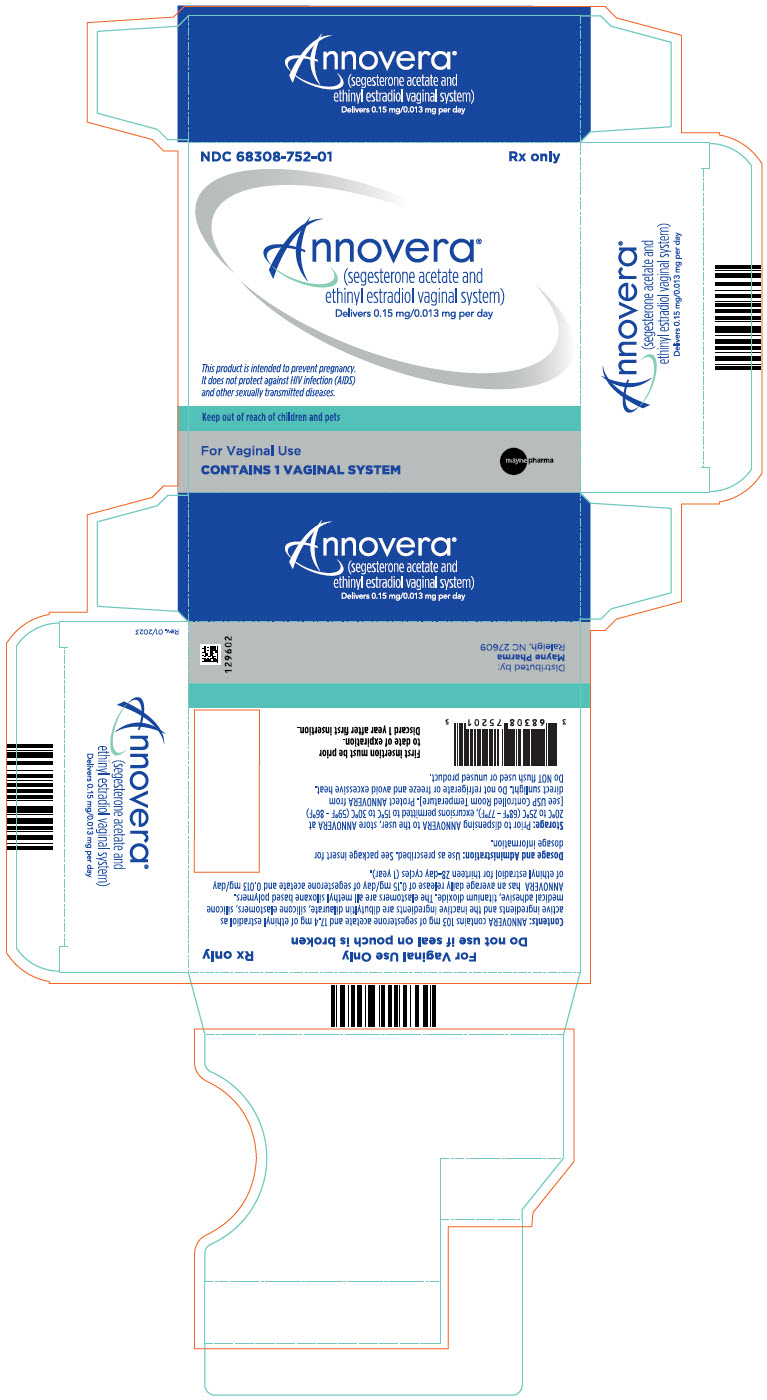
Annovera segesterone acetate and ethinyl estradiol 103 mg; 17.4 mg Ring, 30-count — NDC 68308-752-01 (Billing 68308-0752-01)
This is a package of 30 rings of Annovera segesterone acetate and ethinyl estradiol 103 mg; 17.4 mg Ring from Mayne Pharma, marketed since Aug 2024 and currently FDA-listed; retail pharmacies pay about $2,315.29 per ring (NADAC). It is this product's only package size.
NDC database record
One package, one record: these facts belong to NDC 68308-752-01 alone.
- Record
- FDA NDC Directory package listing · Human prescription drug
- Code segments
- 68308 labeler · 752 product · 01 package
- Package marketed since
- Aug 16, 2024
- Sample package
- No — commercial package
- Listing certified through
- Dec 31, 2027
- Billing quantity
- 30 EA per package
- Barcode (UPC-A, from the NDC)
- 3 6830875201 5
- Medicaid fills, this package
- 2,629 prescriptions in the last four reported quarters
- FDA record last changed
- Oct 8, 2026
Identity & classification
Regulatory identifiers FDA, NLM and CMS codes for this package
Drug-database identifiers Medi-Span GPI and First Databank GCN / HICL / AHFS classification
- GSN (GCN sequence number): 078751
- GCN: 45141
- HICL (First Databank): 045161
- AHFS class code: 68:12.00.00
Where does this data come from?
- FDA openFDA NDC Directory · synced Oct 8, 2026
- FDA label on DailyMed · label index refreshed Oct 8, 2026
- RxNorm (NLM RxNav) · catalog refreshed Oct 1, 2026
- Medi-Span GPI (licensed)
- First Databank (licensed) · refreshed Oct 8, 2026
Clinical
Patient education
Supplement & herbal interactions
Where does this data come from?
- MedlinePlus (NLM) · refreshed Oct 8, 2026
- FDA label on DailyMed · label index refreshed Oct 8, 2026
Ask a licensed pharmacist directly — free, answered by our team.
Pricing
A drug doesn't have one price. Each row is a different public payment system, and none is what you'd pay at the counter — that depends on your insurance. The ⓘ on each row explains what it measures.
| Price system | Per ea | Per package |
|---|---|---|
| Retail pharmacies payNADAC · weekly | $2,315.290 | $69,458.70 / 30 rings |
| Medicaid paysCMS SDUD · 12 mo | $2,307.54 | $69,226.25 / 30 rings |
| Medicare drug plans payPart D · Q2 2026 | $2,349.87 | $70,496.10 / 30 rings |
Where does this data come from?
- CMS NADAC weekly file · file of Oct 7, 2026
- CMS ASP pricing files · refreshed Sep 20, 2026
- CMS Medicaid State Drug Utilization Data · through Q1 2026
- CMS Part D plan pricing files · refreshed Sep 24, 2026
- VA National Acquisition Center price file
Packaging — all sizes for this product
| Package NDC | Description | Marketing start | Marketing end | Status |
|---|---|---|---|---|
| 68308-0752-01 You're viewing this Main listing | 1 POUCH in 1 CARTON / 30 RING in 1 POUCH | 2024-08-16 | — | Active |
Therapeutic equivalents
| Product | Labeler | Pack | NADAC/unit | TE | Status | Price vs. this |
|---|---|---|---|---|---|---|
| Annovera 103 mg/1; 17.4 mgthis 68308-0752-01 | Mayne | 30 rings | $2,315.290 | — | Availability likely | — |
Where does this data come from?
- FDA openFDA NDC Directory · synced Oct 8, 2026
- FDA Orange Book · refreshed Oct 3, 2026
- CMS NADAC weekly file · file of Oct 7, 2026
Availability & generic status
We did not find an FDA-approved generic match for this exact strength, form and route. Patent/protection dates below may affect future generic timing.
Why the date isn’t exact: Generic timing can change because patents may be challenged, settled, licensed, added, removed, or worked around with a narrower label — and FDA approval does not always mean a pharmacy can get the generic today.
🛈 What do these terms mean?
- Patent
- Legal protection listed in the Orange Book that may delay generic approval or launch. Issued by the U.S. Patent & Trademark Office.
- Substance patent
- Covers the active drug molecule itself — the hardest to design around. A generic generally can’t launch until it expires.
- Formulation (product) patent
- Covers a specific formulation or dosage form. A generic can sometimes work around it with a different formulation.
- Method-of-use patent
- A patent covering one specific approved use of the drug — not necessarily the whole molecule. A generic can sometimes launch with a “skinny label” that carves out the protected use and keeps the others.
- Skinny label
- A generic label that omits a still-patented use when the FDA allows it — letting a generic reach the market for the unprotected uses.
- Exclusivity
- FDA-granted marketing protection, separate from patents — e.g. 5-yr new chemical entity, 7-yr orphan drug, or a +6-month pediatric extension.
- Paragraph IV
- A generic applicant’s formal challenge to a listed patent. It can potentially lead to earlier generic entry, but often involves litigation or a settlement.
- RLD / RS
- Reference Listed Drug — the brand product the FDA uses as the reference for generic applications. Reference Standard — the product the FDA expects generics to compare against in bioequivalence testing.
- TE / AB rating
- FDA therapeutic-equivalence rating. An AB rating generally means the FDA considers a generic therapeutically equivalent to — and substitutable for — the brand.
- LOE (loss of exclusivity)
- The latest patent or exclusivity currently listed — the loss-of-exclusivity / latest-listed-protection date shown on this page. Paragraph-IV challenges and settlements can move the real date earlier; FDA approval and a manufacturer’s decision to market can move it later.
Built from the FDA Orange Book. The bars above are scaled to each protection’s expiry; the red LOE marker is the last one to lapse.
| Patent | Type | Use code | Expires |
|---|---|---|---|
| US 10632066 ↗ | Method of use | U-2787 | Feb 1, 2039 |
| US 10780047 ↗ | Method of use | U-2787 | Feb 1, 2039 |
| US 10780047 ↗ | Method of use | U-2786 | Feb 1, 2039 |
| US 10632066 ↗ | Method of use | U-2786 | Feb 1, 2039 |
| US 10765628 ↗ | Method of use | U-2786 | Feb 1, 2039 |
| US 10765628 ↗ | Method of use | U-2787 | Feb 1, 2039 |
| US 11850251 ↗ | Method of use | U-3785 | Jun 21, 2039 |
| US 11529308 ↗ | Drug product | — | Jun 21, 2039 |
| US 10918649 ↗ | Drug product | — | Jun 21, 2039 |
| US 10925882 ↗ | Drug product | — | Jun 21, 2039 |
| US 10940157 ↗ | Drug product | — | Jun 21, 2039 |
| US 12303518 ↗ | Drug product | — | Jun 21, 2039 |
Is there a generic version of ANNOVERA VAGINAL RING?
The FDA approved a generic — why can’t I get it at my pharmacy yet?
Why do different websites show different generic release dates?
What does “FDA listed” mean?
What does a patent or protection date mean here?
What does “current Orange Book estimate” mean?
Can a generic come out before the last patent expires?
Can a generic come out after the listed dates?
What is the difference between patents and exclusivity?
Why are there multiple patent dates?
Where does this data come from?
- FDA Orange Book · refreshed Oct 3, 2026
Inactive Ingredients / Excipients
Inactive ingredients, also called excipients, are components of the drug product other than the active ingredient. They may include fillers, dyes, coatings, preservatives, flavors, or other formulation ingredients.
💡 Tap an ingredient (hover on desktop) to see what it is and why it’s used.
-
UNII L4061GMT90
Dibutyltin dilaurate is an organotin compound used as a catalyst and stabilizer in pharmaceutical formulations. It helps speed up chemical reactions during manufacturing and prevents degradation of the drug product during storage.
-
UNII 15FIX9V2JP
Titanium dioxide is a bright white mineral powder commonly used as a colorant and opacifying agent. It makes pills and tablets white or lighter in color and helps make coatings non-transparent.
2 inactive ingredients listed in the exact product block matched to this NDC.
Where does this data come from?
ingredient classCode="IACT" elements from the exact product block matched by this NDC. Label-section narrative from DailyMed / the openFDA label index is shown separately when available.- FDA label on DailyMed · label index refreshed Oct 8, 2026
- FDA openFDA NDC Directory · synced Oct 8, 2026
Inactive ingredient FAQ
Are inactive ingredients the same for every manufacturer?
Why might an inactive ingredient be missing?
Can inactive ingredients matter?
Manufacturer & labeler
More NDCs from Mayne Pharma labeler code 68308
- Doxycycline Hyclate 200 mg Tablet, Delayed Release NDC 68308-716-30
- Tazarotene 1 mg/g Cream NDC 68308-745-30
- Imvexxy estradiol 4 ug Insert NDC 68308-747-00
- Imvexxy estradiol 10 ug Insert NDC 68308-748-00
- Bijuva estradiol and progesterone 1 mg; 100 mg Capsule NDC 68308-750-00
- Bijuva estradiol and progesterone .5 mg; 100 mg Capsule NDC 68308-751-00
- Rhofade oxymetazoline hydrochloride 10 mg/g Cream NDC 68308-766-30
- Halobetasol propionate .5 mg/g Aerosol, Foam NDC 68308-769-50
- Tretinoin (Microsphere) .8 mg/g Gel NDC 68308-777-50
- Isotretinoin 10 mg Capsule, Liquid Filled NDC 68308-781-30
- Isotretinoin 20 mg Capsule, Liquid Filled NDC 68308-782-30
- Isotretinoin 30 mg Capsule, Liquid Filled NDC 68308-783-30
Where does this data come from?
- FDA openFDA NDC Directory · synced Oct 8, 2026
- Drugs@FDA
Full prescribing information FDA SPL
🚨 Boxed Warning ▾
WARNING: CIGARETTE SMOKING AND SERIOUS CARDIOVASCULAR EVENTS Cigarette smoking increases the risk of serious cardiovascular events from combination hormonal contraceptive (CHC) use. This risk increases with age, particularly in females over 35 years of age, and with the number of cigarettes smoked. For this reason, CHC should not be used by females who are over 35 years of age and smoke. [See Contraindications (4) and Warnings and Precautions (5.5) ].
WARNING: CIGARETTE SMOKING AND SERIOUS CARDIOVASCULAR EVENTS See full prescribing information for complete boxed warning. Females over 35 years old who smoke should not use ANNOVERA. ( 4 ) Cigarette smoking increases the risk of serious cardiovascular events from combination hormonal contraceptive (CHC) use.
( 4 )
🎯 Indications and Usage ▾
1 INDICATIONS AND USAGE ANNOVERA is indicated for use by females of reproductive potential to prevent pregnancy. ANNOVERA is a progestin/estrogen CHC indicated for use by females of reproductive potential to prevent pregnancy. ( 1 ) Limitations of Usage Not adequately evaluated in females with a body mass index of >29 kg/m 2 . ( 1 ) Limitations of Use ANNOVERA has not been adequately studied in females with a BMI >29 kg/m 2 .
⏱️ Dosage and Administration ▾
2 DOSAGE AND ADMINISTRATION One ANNOVERA is inserted in the vagina. The vaginal system must remain in place continuously for 3 weeks (21 days) followed by a 1-week (7-day) vaginal system-free interval. One vaginal system provides contraception for thirteen 28-day cycles (1 year). ( 2 )
2.1How to Use ANNOVERA Instruct patients that ANNOVERA should be used as directed [see How to Start ANNOVERA (2.2) ] . One ANNOVERA should be placed in the vagina. For maximum contraceptive effectiveness, ANNOVERA is to remain in the vagina continuously for 21 days (3 complete weeks).
It is removed for a 1-week dose-free interval, and during this time a withdrawal bleed usually occurs. The removed vaginal system should be cleaned with mild soap and warm water, patted dry with a clean cloth towel or paper towel, and placed in its case during the 1-week dose- free interval. At the end of the dose-free interval, the vaginal system should be cleaned prior to being placed back in the vagina for another 21 continuous days (3 complete weeks).
This pattern of ANNOVERA use made up of 3-weeks in and 1-week out is a cycle of use; one ANNOVERA vaginal system will provide contraception for 13 cycles. With clean hands, the user can choose an insertion position that is comfortable, such as lying down, squatting, or standing. The sides of the vaginal system are pressed together for insertion into the vagina.
When properly inserted, the vaginal system should be entirely in the vagina and behind the pelvic bone. The day and time of insertion should be noted so that the vaginal system can be removed 3 weeks later on the same day and at about the same time. ANNOVERA can be removed by hooking an index finger into the vaginal system inside the vagina and gently pulling the vaginal system.
For patient instructions regarding cleaning the vaginal system, see FDA-approved Patient Information .
2.2How to Start ANNOVERA IMPORTANT: Consider the possibility of ovulation and conception prior to the first use of ANNOVERA. No Hormonal Contraceptive Use in the Preceding Cycle and after Copper IUD Removal : The woman should insert ANNOVERA between days 2 and 5 of her regular menstrual bleeding; no back-up contraception is needed. If menstrual cycles are irregular or if the start is more than 5 days from the last menstrual bleeding, the woman should use an additional barrier method during coitus, such as a male condom or spermicide, for the first 7 days of ANNOVERA use.
Switching from a CHC: A woman who has been using her CHC method consistently and correctly, and who you are reasonably certain is not already pregnant, may switch from her previous CHC to ANNOVERA on any day of the CHC cycle (Day 1-28), without the need for back-up contraception, but no more than 7 hormone-free days should occur before starting ANNOVERA. Switching from a Progestin-Only Method [Progestin-only pills (POP), Progestin Injection, Progestin Implant, Progestin Intrauterine System (IUS)]: If a woman has no contraindications to the use of ethinyl estradiol (EE), she may elect to switch from a progestin-only method to ANNOVERA.
If switching from progestin-only pills, she should begin ANNOVERA at the time she would have taken her next POP pill. If switching from an injection, she should begin ANNOVERA at the time of her next scheduled injection. If switching from an implant or an IUS, she should begin ANNOVERA at the time of implant or IUS removal.
In all of these cases, the woman should use an additional barrier method during coitus, such as a male condom or spermicide, for the first 7 days of ANNOVERA use. Use after Abortion or Miscarriage: If a woman has no contraindications to the use of EE, ANNOVERA may be initiated for contraception within the first 5 days following a complete first trimester abortion or miscarriage without additional back-up contraception. If more than 5 days have elapsed from the first trimester abortion or miscarriage, then follow the instructions for "No Hormonal Contraceptive Use… [Excerpted — this section continues on DailyMed.]
💊 Dosage Forms and Strengths ▾
3 DOSAGE FORMS AND STRENGTHS Vaginal system: Each ANNOVERA releases an approximate average 0.15 mg/day of segesterone acetate (SA) and 0.013 mg/day of ethinyl estradiol (EE) when placed in the vagina over a period of 21 days of each cycle for up to 13 cycles (total of 273 days). Each cycle of use is 28 days with 21 days in and 7 days out. ANNOVERA (segesterone acetate and ethinyl estradiol vaginal system) is a toroidal- shaped (ring), nonbiodegradable, flexible, opaque white, contraceptive vaginal system containing 103 mg of SA and 17.4 mg EE.
ANNOVERA is 56 mm in overall diameter and 8.4 mm in cross-sectional diameter. It contains 2 channels of approximately 3.0 mm diameter and 27 mm length into which steroid-containing cores are inserted. The cores are 3 mm in diameter with one releasing SA alone and the other releasing both SA and EE.
Each ANNOVERA is designed to be used for up to 13 cycles (1 year). ANNOVERA is not made with natural rubber latex. ANNOVERA is a silicone elastomer vaginal system containing 103 mg segesterone acetate (SA) and 17.4 mg ethinyl estradiol (EE), which releases on average 0.15 mg/day of segesterone acetate and 0.013 mg/day of ethinyl estradiol.
( 3 )
⛔ Contraindications ▾
4 CONTRAINDICATIONS ANNOVERA is contraindicated in females who are known to have or develop the following conditions: A high risk of arterial or venous thrombotic diseases. Examples include females who are known to: - Smoke, if over age 35 [see Boxed Warning and Warnings and Precautions (5.1) ]. - Have current or history of deep vein thrombosis or pulmonary embolism [see Warnings and Precautions (5.1) ] . - Have cerebrovascular disease [see Warnings and Precautions (5.1) ]. - Have coronary artery disease [see Warnings and Precautions (5.1) ]. - Have thrombogenic valvular or thrombogenic rhythm diseases of the heart (for example, subacute bacterial endocarditis with valvular disease, or atrial fibrillation) [see Warnings and Precautions (5.1) ] . - Have inherited or acquired hypercoagulopathies [see Warnings and Precautions (5.1) ] . - Have uncontrolled hypertension or hypertension with vascular disease [see Warnings and Precautions (5.4) ] . - Have diabetes mellitus and are over age 35, diabetes mellitus with hypertension or vascular disease, or other end-organ damage, or diabetes mellitus of >20 years duration [see Warnings and Precautions (5.5) , (5.7) ] . - Have headaches with focal neurological symptoms, migraine headaches with aura, or are over age 35 with any migraine headaches [see Warnings and Precautions (5.8) ] .
Current diagnosis of, or history of, breast cancer, which may be hormone-sensitive [see Warnings and Precautions (5.11) ] . Liver tumors, acute hepatitis, or severe (decompensated) cirrhosis [see Warnings and Precautions (5.2) and Use in Specific Populations (8.6) ]. Undiagnosed abnormal uterine bleeding [see Warnings and Precautions (5.9) ] .
Hypersensitivity to any of the components of ANNOVERA. Hypersensitivity reactions reported include: throat constriction, facial edema, urticaria, hives, and wheezing [see Adverse Reactions (6.1) ] . Use of Hepatitis C drug combinations containing ombitasvir/paritaprevir/ritonavir, with or without dasabuvir, due to the potential for alanine transaminase (ALT) elevations [see Warnings and Precautions (5.3) ].
A high risk of arterial or venous thrombotic diseases ( 4 ) Breast cancer ( 4 ) Liver tumors, acute hepatitis, or severe (decompensated) cirrhosis ( 4 ) Undiagnosed abnormal uterine bleeding ( 4 ) Hypersensitivity to any of the components of ANNOVERA ( 4 ) Use of Hepatitis C drug combinations containing ombitasvir/paritaprevir/ritonavir, with or without dasabuvir ( 4 )
⚠️ Warnings and Cautions ▾
5 WARNINGS AND PRECAUTIONS Thrombotic Disorders and Other Vascular Problems: Stop ANNOVERA if a thrombotic or thromboembolic event occurs. Stop ANNOVERA at least 4 weeks before and through 2 weeks after major surgery. Start ANNOVERA no earlier than 4 weeks after delivery, in females who are not breastfeeding.
Consider cardiovascular risk factors before initiating in all females, particularly those over 35 years. ( 5.1 , 5.5 ) Liver Disease: Discontinue if jaundice occurs. ( 5.2 ) Risk of Liver Enzyme Elevations with Concomitant Hepatitis C Treatment: Stop ANNOVERA prior to starting therapy with the combination drug regimen ombitasvir/paritaprevir/ritonavir.
ANNOVERA can be restarted 2 weeks following completion of this regimen. ( 5.3 ) Hypertension: Do not prescribe ANNOVERA for females with uncontrolled hypertension or hypertension with vascular disease. If used in females with well-controlled hypertension, monitor blood pressure and stop use if blood pressure rises significantly.
( 5.4 ) Carbohydrate and lipid metabolic effects: Monitor glucose in pre-diabetic and diabetic females taking ANNOVERA. Consider an alternate contraceptive method for females with uncontrolled dyslipidemias. ( 5.7 ) Headache: Evaluate significant change in headaches and discontinue ANNOVERA if indicated.
( 5.8 ) Bleeding Irregularities and Amenorrhea: May cause irregular bleeding or amenorrhea. Evaluate for other causes if irregular bleeding or amenorrhea persists. ( 5.9 )
5.1Thromboembolic Disorders and Other Vascular Conditions Females are at increased risk for a venous thrombotic event (VTE) when using ANNOVERA. Limited data are available in females with a BMI >29.0 kg/m 2 because this subpopulation was excluded from the clinical trials after VTEs were reported. Stop ANNOVERA if an arterial or deep venous thrombotic event occurs.
Stop ANNOVERA if there is unexplained loss of vision, proptosis, diplopia, papilledema, or retinal vascular lesions and evaluate for retinal vein thrombosis immediately. Discontinue ANNOVERA during prolonged immobilization. If feasible, stop ANNOVERA at least 4 weeks before and through 2 weeks after major surgery or other surgeries known to have an elevated risk of VTE.
Start ANNOVERA no earlier than 4 weeks after delivery in females who are not breastfeeding. The risk of postpartum VTE decreases after the third postpartum week, whereas the risk of ovulation increases after the third postpartum week. Before starting ANNOVERA, evaluate any past medical history or family history of thrombotic or thromboembolic disorders and consider whether the history suggests an inherited or acquired hypercoagulopathy.
ANNOVERA is contraindicated in females with a high risk of arterial or venous thrombotic/thromboembolic diseases [see Contraindications (4) ] . Arterial Events CHCs increase the risk of cardiovascular events and cerebrovascular events, such as stroke and myocardial infarction. The risk is greater among older females (>35 years of age), smokers, and females with hypertension, dyslipidemia, diabetes, or obesity.
ANNOVERA is contraindicated in females over 35 years of age who smoke [see Contraindications (4) ] . Cigarette smoking increases the risk of serious cardiovascular events from CHC use. This risk increases with age, particularly in females over 35 years of age, and with the number of cigarettes smoked.
Venous Events The use of CHCs increases the risk of VTE, such as deep vein thrombosis and pulmonary embolism. Risk factors for VTEs include smoking, obesity, and family history of VTE, in addition to other factors that contraindicate use of CHCs [see Contraindications (4) ] . While the increased risk of VTE associated with use of CHCs is well established, the rates of VTE are even greater during pregnancy, and especially during the postpartum period (see Figure 1 ).
The rate of VTE in females using CHCs has been estimated to be 3–12 cases per 10,000 woman-years. The risk of VTE is highest during the first year of CHC u… [Excerpted — this section continues on DailyMed.]
🤒 Adverse Reactions ▾
6 ADVERSE REACTIONS The following adverse reactions are described elsewhere in other sections of the labeling: Serious cardiovascular events and stroke [see Boxed Warning and Warnings and Precautions (5.1) ] Vascular events [see Warnings and Precautions (5.1) ] Liver disease [see Warnings and Precautions (5.2) ] The most common adverse reactions (>5%) are headache/migraine, nausea/vomiting, vulvovaginal mycotic infection/candidiasis, abdominal pain lower/upper, dysmenorrhea, vaginal discharge, urinary tract infection, breast tenderness/pain/discomfort, bleeding irregularities including metrorrhagia, diarrhea, genital pruritus.
( 6 ) To report SUSPECTED ADVERSE REACTIONS, contact Mayne Pharma at 1-844-825-8500 or FDA at 1-800-FDA-1088 or www.fda.gov/medwatch.
6.1Clinical Trial Experience Because clinical trials are conducted under widely varying conditions, adverse reaction rates observed in the clinical trials of a drug cannot be directly compared to the rates in the clinical trials of another drug and may not reflect the rates observed in practice. The clinical trials that evaluated the safety of ANNOVERA were obtained from three 13- cycle trials. One trial was conducted entirely in the U.S.
(15 sites), and the other two were global studies that included 5 U.S. sites and 7 international sites (Australia, Brazil, Chile, Dominican Republic, Finland, Hungary, Sweden). All three trials were open label and enrolled healthy females, desiring contraception, 18 to 40 years of age. At about 50% enrollment, females with BMI >29 kg/m 2 were excluded due to the occurrence of two VTEs in this subgroup.
In total, 2,308 females contributed 21,590 cycles of exposure for safety evaluation and 999 completed 13 cycles; there were 209 subjects with BMI >29 kg/m 2 who contributed 1,254 cycles of exposure with 36 subjects completing 13 cycles. The demographic profile for subjects was: mean age 26.7 years, mean BMI 24.1 (16.0- 41.5) kg/m 2 ; 67% were from the U.S. The racial distribution was 71% Caucasian, 14% African American, 4% Asian, and 11% Other; 30% of the population was Hispanic.
Most Common Adverse Reactions Table 1 summarizes the most common adverse reactions reported by females using ANNOVERA. This table shows adverse reactions reported in at least 5% of subjects. In addition, 25% of subjects reported at least 1 complete expulsion during their use of ANNOVERA.
Table 1: Adverse Drug Reactions Reported by ≥ 5% of ANNOVERA-treated Subjects Adverse Reactions % (N=2,308) Headache, including migraine
38.6 Nausea/vomiting
25.0 Vulvovaginal mycotic infection/vaginal candidiasis
14.5 Abdominal pain/lower/upper
13.3 Dysmenorrhea
12.5 Vaginal discharge
11.8 UTI/cystitis/pyelonephritis/genitourinary tract infection
10.0 Breast pain/tenderness/discomfort
9.5 Metrorrhagia/menstrual disorder
7.5 Diarrhea
7.2 Genital pruritus
5.5Adverse Reactions Leading to Discontinuation Among subjects using ANNOVERA for contraception, 12% discontinued from the clinical trials due to an adverse reaction. Table 2 summarizes the most common adverse reactions leading to discontinuation. In addition, 1.4% of subjects discontinued ANNOVERA use due to vaginal system expulsions.
Table 2: Adverse Reactions Leading to Discontinuation by ≥ 1% of ANNOVERA treated Subjects Adverse Reactions % (N=2,308) Metrorrhagia/menorrhagia
1.7 Headache, including migraine
1.3 Vaginal discharge/vulvovaginal mycotic infections
1.3 Nausea/vomiting
1.2Serious Adverse Reactions Serious adverse reactions occurring in ≥2 subjects were: VTEs (deep venous thrombosis, cerebral vein thrombosis, pulmonary embolism); psychiatric events; drug hypersensitivity reactions; and spontaneous abortions.
6.2Postmarketing Experience Five studies that compared breast cancer risk between ever-users (current or past use) of COCs and never-users of COCs reported no association between ever use of COCs and breast cancer risk, with effect estimates ranging from 0.90 - 1.12 (Figure 2). Three studies compared breast ca… [Excerpted — this section continues on DailyMed.]
🔄 Drug Interactions ▾
7 DRUG INTERACTIONS The sections below provide information on substances for which data on drug interactions with CHCs are available. There is little information available about the clinical effect of most drug interactions that may affect ANNOVERA. However, based on the known pharmacokinetic effects of these drugs, clinical strategies to minimize any potential adverse effect on contraceptive effectiveness or safety are suggested.
Consult the approved product labeling of all concurrently used drugs to obtain further information about interactions with ANNOVERA or the potential for metabolic enzyme or transporter system alterations. Drugs or herbal products that induce certain enzymes, including CYP3A4, may decrease the effectiveness of ANNOVERA or increase breakthrough bleeding. Counsel patients to use a back-up or alternative method of contraception when enzyme inducers are used with ANNOVERA.
( 7.1 )
7.1Effects of Other Drugs on Combined Hormonal Contraceptives Substances Decreasing the Systemic Exposure of CHCs and Potentially Diminishing the Efficacy of ANNOVERA : Table 3 includes substances that demonstrated an important drug interaction with CHCs. Table 3: Significant Drug Interactions Involving Substances That Decrease Systemic Exposure of CHCs Metabolic Enzyme Inducers Clinical effect Concomitant use of CHCs with metabolic enzyme inducers may decrease the systemic concentrations of the estrogen and/or progestin component of CHCs [see Clinical Pharmacology (12.3) ] .
Decreased exposure of the estrogen and/or progestin component of CHCs may potentially diminish the effectiveness of CHCs and may lead to contraceptive failure or an increase in breakthrough bleeding. Prevention or management Counsel females to use an alternative method of contraception or a back-up method when enzyme inducers are used with CHCs. Continue back-up contraception for 28 days after discontinuing the enzyme inducer to maintain contraceptive reliability.
Examples Aprepitant, barbiturates, bosentan, carbamazepine, efavirenz, felbamate, griseofulvin, oxcarbazepine, phenytoin, rifampin, rifabutin, rufinamide, topiramate, products containing St. John's wort Induction potency of St. John's wort may vary widely based on preparation. , and certain protease inhibitors (see separate section on protease inhibitors below).
Substances Increasing the Systemic Exposure of CHCs and Potentially Increasing Exposure to Estrogen and/or Progestin in ANNOVERA : Co- administration of atorvastatin or rosuvastatin and certain CHCs containing EE increase systemic exposure of EE by approximately 20–25%. Ascorbic acid and acetaminophen may increase plasma EE concentrations, possibly by inhibition of conjugation. CYP3A4 inhibitors such as itraconazole, voriconazole, fluconazole, grapefruit juice, or ketoconazole may increase systemic exposure of the estrogen and/or progestin component of ANNOVERA.
Human Immunodeficiency Virus (HIV)/ Hepatitis C Virus (HCV) Protease Inhibitors and Non-nucleoside Reverse Transcriptase Inhibitors : Significant decreases in systemic exposure of estrogen and/or progestin have been noted when CHCs are co-administered with some HIV protease inhibitors (eg, nelfinavir, ritonavir, darunavir/ritonavir, (fos)amprenavir/ritonavir, lopinavir/ritonavir, and tipranavir/ritonavir), some HCV protease inhibitors (eg, boceprevir and telaprevir), and some non-nucleoside reverse transcriptase inhibitors (eg, nevirapine).
In contrast, significant increases in systemic exposure of estrogen and/or progestin have been noted when CHCs are co-administered with certain other HIV protease inhibitors (eg, indinavir and atazanavir/ritonavir) and with other non-nucleoside reverse transcriptase inhibitors (eg, etravirine).
7.2Effects of Combined Hormonal Contraceptives on Other Drugs Table 4 provides significant drug interaction information for drugs co-administered with CHCs. Table 4: Significant Drug Interaction Information for Drugs Co-Administered with CHCs Lamotrigin… [Excerpted — this section continues on DailyMed.]
👥 Use in Specific Populations ▾
8 USE IN SPECIFIC POPULATIONS Pregnancy: Discontinue if pregnancy occurs. ( 8.1 ) Lactation: Not recommended for nursing mothers; can decrease milk production. ( 8.2 )
8.1Pregnancy Risk Summary Epidemiologic studies and meta-analyses have not found an increased risk of genital or nongenital birth defects (including cardiac anomalies and limb-reduction defects) following exposure to CHCs before conception or during early pregnancy. In the U.S. general population, the estimated background risk of major birth defects and miscarriage in clinically recognized pregnancies is 2–4% and 15–20%, respectively. Discontinue ANNOVERA if pregnancy occurs, because there is no reason to use CHCs during pregnancy.
Data Human Data No studies have been conducted of the use of ANNOVERA in pregnant females.
8.2Lactation Risk Summary Contraceptive hormones and/or metabolites are present in human milk. CHCs can reduce milk production in breastfeeding females. This reduction can occur at any time but is less likely to occur once breastfeeding is well established.
Advise the nursing female to use another method of contraception until she discontinues breastfeeding [see Dosage and Administration (2.2) ] . Data Human Data No studies have been conducted of the use of ANNOVERA in breastfeeding females. Two studies have been conducted in breastfeeding females of segesterone acetate implants delivering lower levels of segesterone acetate than ANNOVERA.
Maternal serum levels of up to 141 pg/mL were associated with infant exposure of up to 7 pg/mL. No safety signals in feeding, growth, and development were observed in the infants between the segesterone acetate implant group and the control group.
8.4Pediatric Use Safety and efficacy of ANNOVERA have been established in women of reproductive age. Efficacy is expected to be the same for postpubertal adolescents under the age of 18 as for users 18 years and older. Use of ANNOVERA before menarche is not indicated.
8.5Geriatric Use ANNOVERA has not been studied in females who have reached menopause and is not indicated in this population.
8.6Hepatic Impairment No studies have been conducted to evaluate the effect of hepatic impairment on the disposition of ANNOVERA. However, steroid hormones may be poorly metabolized in patients with hepatic impairment. Acute or chronic disturbances of liver function may necessitate the discontinuation of CHC use until markers of liver function return to normal and CHC causation has been excluded [see Contraindications (4) and Warnings and Precautions (5.2) ] .
8.7Renal Impairment No studies were conducted in subjects with renal impairment; ANNOVERA is not recommended in patients with renal impairment.
8.8Body Mass Index (BMI)/Body Weight The safety and efficacy of ANNOVERA in females with a BMI >29 kg/m 2 have not been adequately evaluated because this subpopulation was excluded from the clinical trials after 2 VTEs occurred in females with a BMI > 29 kg/m 2 [see Adverse Reactions (6.1) and Clinical Studies (14) ] . Higher body weight is associated with lower systemic exposure of SA and EE [see Clinical Pharmacology (12.3) ] .
🤰 Pregnancy ▾
8.1Pregnancy Risk Summary Epidemiologic studies and meta-analyses have not found an increased risk of genital or nongenital birth defects (including cardiac anomalies and limb-reduction defects) following exposure to CHCs before conception or during early pregnancy. In the U.S. general population, the estimated background risk of major birth defects and miscarriage in clinically recognized pregnancies is 2–4% and 15–20%, respectively. Discontinue ANNOVERA if pregnancy occurs, because there is no reason to use CHCs during pregnancy.
Data Human Data No studies have been conducted of the use of ANNOVERA in pregnant females.
🧒 Pediatric Use ▾
8.4Pediatric Use Safety and efficacy of ANNOVERA have been established in women of reproductive age. Efficacy is expected to be the same for postpubertal adolescents under the age of 18 as for users 18 years and older. Use of ANNOVERA before menarche is not indicated.
🧓 Geriatric Use ▾
8.5Geriatric Use ANNOVERA has not been studied in females who have reached menopause and is not indicated in this population.
🆘 Overdosage ▾
10 OVERDOSAGE There have been no reports of serious ill effects from overdose of CHCs. Overdosage may cause withdrawal bleeding in females and nausea. In case of suspected overdose, all ANNOVERA vaginal systems should be removed and symptomatic treatment given.
🧬 Clinical Pharmacology ▾
12 CLINICAL PHARMACOLOGY
12.1Mechanism of Action CHCs lower the risk of becoming pregnant primarily by suppressing ovulation.
12.2Pharmacodynamics Cardiac Electrophysiology The effect of SA on the QTc interval was evaluated in a Phase 1 randomized, placebo and positive controlled, double-blind, single-dose, three-period, crossover thorough QTc study in 44 healthy adult female subjects. At the single intravenous bolus dose which produces 4.5-fold the therapeutic serum concentrations of SA achieved with ANNOVERA, SA did not prolong the QTc interval to any clinically relevant extent.
12.3Pharmacokinetics Absorption The pharmacokinetics (PK) of ANNOVERA were determined in 39 women who used ANNOVERA for up to 13 cycles. Following vaginal administration, SA and EE were absorbed into systemic circulation with median t max of about 2 hours in Cycle 1, Cycle 3, and Cycle 13. Concentrations of both components declined after t max and became more constant after 96 hours post-dose.
Over subsequent cycles of use, the peak serum concentrations of SA and EE declined. Serum concentration-time profiles of SA and EE for Cycles 1, 3, and 13 of ANNOVERA use are provided in Figure 2 and Figure 3 with PK parameters summarized in Table 5 and Table 6. Figure 3: Mean SA and EE Serum Concentrations Delivered by ANNOVERA Over 21 Days of Dosing for Cycles 1, 3, and 13 Figure 4: Mean SA and EE Serum Concentrations Delivered by ANNOVERA Over the First 48 Hours of Dosing for Cycles 1, 3, and 13 Table 5: Mean (SD) PK Parameters for SA following ANNOVERA Administration Cycle AUC 0-21 day (ng*hr/mL) AUC 0-1 day (ng*hr/mL) C max (pg/mL) C avg (pg/mL) 1 96.2 (16.9) 15 (3.2) 1,147 (315) 191 (34) 3 65.9 (14.8) 5 (1.6) 363 (133) 131 (29) 13 47.2 (10.1) 3.9 (1.4) 294 (116) 94 (20) Table 6: Mean (SD) PK Parameters for EE following ANNOVERA Administration Cycle AUC 0-21 day (ng*hr/mL) AUC 0-1 day (ng*hr/mL) C max (pg/mL) C avg (pg/mL) 1 22.2 (9.8) 2.1 (0.7) 129 (39) 44 (19) 3 14.7 (4.7) 0.9 (0.4) 60 (32) 29 (9) 13 9.6 (4.1) 0.7 (0.3) 39 (16) 19 (8) Figure 3 Figure 4 Distribution The volume of distribution of SA is
19.6L/kg. SA is approximately 95% bound to human serum proteins and has negligible binding affinity for sex hormone-binding globulin (SHBG). EE is highly protein bound but not specifically bound to serum albumin (98.5%) and induces an increase in the serum concentrations of SHBG.
Metabolism In vitro data show that both SA and EE are metabolized by the cytochrome P450 (CYP) 3A4 isoenzyme. In human serum, two oxidative metabolites (5α-dihydro- and 17α- hydroxy-5α-dihydro metabolites) constitute 50% of exposure relative to SA. Both metabolites are not considered as active metabolites with EC 50 to progesterone receptor 10-fold higher than that of SA.
EE is primarily metabolized by aromatic hydroxylation, but a wide variety of hydroxylated and methylated metabolites are formed. These are present as free metabolites and as sulfate and glucuronide conjugates. The hydroxylated EE metabolites have weak estrogenic activity.
Excretion The mean (SD) half-life of SA is 4.5 (3.4) hours. EE is known to be excreted in the urine and feces as glucuronide and sulfate conjugates, and it undergoes enterohepatic recirculation. The mean (SD) half-life of EE is 15.1 (7.5) hours.
Specific Populations Body Mass Index (BMI) Higher body weight associates with lower systemic exposure of SA and EE. In a PK study conducted in 18 females with BMI <25 (16.89–24.34) kg/m 2 and 21 females with BMI >25 (25.15–37.46) kg/m 2 , up to 16% and 33% decreases in the systemic exposure (AUC 0- 21day ) of SA and EE, respectively, were observed between the two BMI groups. Interaction with Vaginal Medications A clinical drug-drug interaction (DDI) study was conducted to evaluate the effect of vaginal antimycotic medication (miconazole nitrate) on the PK of SA and EE in 29 females using ANNOVERA.
The results showed that a single-dose vaginal administration of 1,200 mg miconazole suppository on Day 8 o… [Excerpted — this section continues on DailyMed.]
🧬 Mechanism of Action ▾
12.1Mechanism of Action CHCs lower the risk of becoming pregnant primarily by suppressing ovulation.
📦 How Supplied / Storage and Handling ▾
16 HOW SUPPLIED/STORAGE AND HANDLING
16.1How Supplied ANNOVERA (segesterone acetate and ethinyl estradiol vaginal system) is a toroidal- shaped (ring), nonbiodegradable, flexible, opaque white vaginal system. The vaginal system body has an overall diameter of 56 mm and a cross-sectional diameter of 8.4 mm. When placed inside the vagina, each ANNOVERA releases an approximate average 0.15 mg/day of segesterone acetate and 0.013 mg/day of ethinyl estradiol over 21-day in-use period of each cycle for up to 13 cycles (total 273 days).
Each cycle is 28 days, with 21 days in and 7 days out. Each ANNOVERA is individually packaged in an aluminum pouch. The pouch consists of a laminate from outside to inside of polyester, aluminum foil, and polyethylene.
First insertion of ANNOVERA must be prior to the date of expiration. Discard one year after first insertions. A black compact case is provided with the drug product for storage of ANNOVERA by patients during each 7-day vaginal system-out interval.
The vaginal system should be placed in the compact case after 13 cycles of use and discarded via a drug take-back option if one is available. If a take-back option is unavailable, then discard in the waste receptacle out of reach of children and pets. The vaginal system should NOT be flushed down the toilet.
See www.fda.gov/drugdisposal for more information about disposal of medicines. Each box contains 1 ANNOVERA vaginal system in a pouch and 1 storage case. NDC 68308-752-01
16.2Storage Conditions Prior to dispensing ANNOVERA to the user, store ANNOVERA at 20°C to 25°C (68°F to 77°F), excursions permitted to 15°C to 30°C (59°F to 86°F) [see USP Controlled Room Temperature]. Protect ANNOVERA from direct sunlight. Do not refrigerate or freeze and avoid excessive heat.
📦 Storage and Handling ▾
16.2Storage Conditions Prior to dispensing ANNOVERA to the user, store ANNOVERA at 20°C to 25°C (68°F to 77°F), excursions permitted to 15°C to 30°C (59°F to 86°F) [see USP Controlled Room Temperature]. Protect ANNOVERA from direct sunlight. Do not refrigerate or freeze and avoid excessive heat.
📋 Description ▾
11 DESCRIPTION ANNOVERA (segesterone acetate and ethinyl estradiol vaginal system) is a toroidal- shaped (ring), nonbiodegradable, flexible, opaque white vaginal system containing two active components, a progestin, segesterone acetate, and an estrogen, ethinyl estradiol. When placed in the vagina, each ANNOVERA releases an approximate average 0.15 mg/day of segesterone acetate and 0.013 mg/day of ethinyl estradiol over the 21 days in-use period of each cycle for up to 13 cycles (total of 273 days). Each cycle is 28 days, with 21 days in and 7 days out.
The inactive ingredients are dibutyltin dilaurate, silicone elastomers, silicone medical adhesive, and titanium dioxide. The elastomers are all methyl siloxane-based polymers. The vaginal system body has an overall diameter of 56 mm and a cross-sectional diameter of 8.4 mm.
It contains two channels of approximately 3.0 mm diameter and 27 mm length into which steroid-containing cores are inserted. Each ANNOVERA contains 103 mg of SA distributed throughout both cores and 17.4 mg of EE distributed throughout only one core. The core containing 40% SA and 12% EE of its mass is 3 mm in diameter and 18 mm in length.
The core containing 50% SA of its mass is 3 mm in diameter and 11 mm in length. Contact between the cores and the vaginal system body is fixed by coating the channels with silicone medical adhesive before introducing the cores. After insertion of the cores, the channels are sealed with the silicone medical adhesive.
The structural formulas, and properties for the active components are shown below: STRUCTURAL FORMULAS: Segesterone Acetate (SA) Ethinyl Estradiol (EE) PROPERTIES: Established Name: Segesterone Acetate Chemical Name: 16-methylene-17α-acetoxy-19-nor-pregn-4-ene-3,20-dione Molecular Formula: C 23 H 30 O 4 Molecular Weight: 370.5 Physical Form: White, or yellowish white powder Solubility: Slightly soluble in n-hexane, soluble in ethyl acetate and methanol, freely soluble in acetone (USP classification) Melting Point: 173°C–177°C Established Name: Ethinyl Estradiol Chemical Name: 19-Nor-17α -pregna-1,3,5(10)-trien-20-yne-3,17-diol Molecular Formula: C 20 H 24 O 2 Molecular Weight: 296.4 Physical Form: White to slightly ye ll owish-white crysta ll ine powder Solubility: Practically insoluble in water, freely soluble in alcohol, it dissolves in alkaline solution Melting Point: 181°C–185°C The steroids diffuse out of the vaginal system with release rates that vary over time.
Based on in vitro data, the daily release rates of SA and EE are higher during each initial 24–48 hours of use achieving a somewhat lower steady-state with continued use over the subsequent days in each cycle. The vaginal system is designed to be used for 13 cycles (1 year) on a 21/7 days in/out schedule. The total in-use time with the 21/7 days in/out schedule over 13 cycles is 273 days.
Based on the residual amount of drug in vaginal systems used in clinical trials over 13 cycles, a total of 41.3 mg of SA and 3.4 mg of EE are released over this period. This translates to an approximate average daily dose of 0.15 mg of segesterone acetate and 0.013 mg of ethinyl estradiol with higher release rate expected at the beginning of dosing and a lower release rate toward the end. Chemical Structure Chemical Structure
💬 Information for Patients ▾
17 PATIENT COUNSELING INFORMATION Advise the patient to read the FDA-approved patient labeling (Patient Information and Instructions for Use). Cigarette Smoking Cigarette smoking increases the risk of serious cardiovascular events from CHC use, and females who are over 35 years old and smoke should not use ANNOVERA [see Boxed Warning and Warnings and Precautions (5.1) ] . Venous Thromboembolism Increased risk of VTE compared to nonusers of CHCs is greatest after initially starting a CHC or restarting (following a 4-week or greater dose-free interval) the same or a different CHC [see Warnings and Precautions (5.1) ] .
Sexually Transmitted Infections ANNOVERA does not protect against HIV-infection (AIDS) and other sexually transmitted infections. ANNOVERA is compatible with male condoms made with natural rubber latex, polyisoprene, and polyurethane. Use During Pregnancy ANNOVERA is not to be used during pregnancy; instruct the patient to remove ANNOVERA if pregnancy is confirmed during treatment [see Use in Specific Populations (8.1) ] .
ANNOVERA Dosing and Instructions Advise the woman on proper use of ANNOVERA and what to do if she does not comply with the labeled timing of insertion and removal. The efficacy of ANNOVERA is greatest when ANNOVERA is kept in the vagina continuously for the scheduled 21 consecutive days. Removal of ANNOVERA even briefly during the scheduled 21 days of use can reduce efficacy.
ANNOVERA should be washed with mild soap and water and rinsed and patted dry with a clean cloth towel or paper towel prior to each insertion and at each removal. Prior to initial use, the storage case should be labeled with the discard date to avoid using the product beyond 13 cycles [see Dosage and Administration (2) and FDA-approved Patient Information ]. Place the completely used ANNOVERA in the case provided and discard via a drug take- back option if one is available.
If a take-back option is unavailable, then discard in the waste receptacle out of reach of children and pets. The vaginal system should NOT be flushed down the toilet. See www.fda.gov/drugdisposal for more information about disposal of medicines. [see How Supplied (16.1) ] .
Use with Vaginal Products Water-based vaginal lubricants have no effect on the vaginal system; however, oil-based (including silicone-based) vaginal lubricants will alter the vaginal system and/or exposure to EE and SA and should not be used [see Drug Interactions (7.3) ] . Need for Additional Contraception Use a back-up or alternative method of contraception when: Enzyme inducers are used with CHCs [see Drug Interactions (7.1) ] . ANNOVERA has been out for more than 2 hours cumulative during the 21 days of continuous use or the vaginal system-free interval exceeds 7 days [see Dosage and Administration (2.3) ] .
Postpartum females who have not yet had a period should use an additional method of contraception until ANNOVERA has been in place for 7 consecutive days [see Dosage and Administration (2.2) ] . Lactation ANNOVERA may reduce breast milk production. This is less likely to occur if breastfeeding is well established.
Females who are breastfeeding should not use ANNOVERA until after weaning [see Use in Specific Populations (8.2) ] . Amenorrhea and Possible Symptoms of Pregnancy Amenorrhea may occur. Consider pregnancy in the event of amenorrhea and rule out pregnancy if amenorrhea is associated with symptoms of pregnancy, such as morning sickness or unusual breast tenderness [see Warnings and Precautions (5.9) ] .
Fertility Following Discontinuation of ANNOVERA Resumption of fertility after discontinuation of ANNOVERA is expected. All women followed for return of fertility experienced a return of fertility by 6 months after discontinuing ANNOVERA [see Clinical Studies (14) ] .
🧬 Pharmacokinetics ▾
12.3Pharmacokinetics Absorption The pharmacokinetics (PK) of ANNOVERA were determined in 39 women who used ANNOVERA for up to 13 cycles. Following vaginal administration, SA and EE were absorbed into systemic circulation with median t max of about 2 hours in Cycle 1, Cycle 3, and Cycle 13. Concentrations of both components declined after t max and became more constant after 96 hours post-dose.
Over subsequent cycles of use, the peak serum concentrations of SA and EE declined. Serum concentration-time profiles of SA and EE for Cycles 1, 3, and 13 of ANNOVERA use are provided in Figure 2 and Figure 3 with PK parameters summarized in Table 5 and Table 6. Figure 3: Mean SA and EE Serum Concentrations Delivered by ANNOVERA Over 21 Days of Dosing for Cycles 1, 3, and 13 Figure 4: Mean SA and EE Serum Concentrations Delivered by ANNOVERA Over the First 48 Hours of Dosing for Cycles 1, 3, and 13 Table 5: Mean (SD) PK Parameters for SA following ANNOVERA Administration Cycle AUC 0-21 day (ng*hr/mL) AUC 0-1 day (ng*hr/mL) C max (pg/mL) C avg (pg/mL) 1 96.2 (16.9) 15 (3.2) 1,147 (315) 191 (34) 3 65.9 (14.8) 5 (1.6) 363 (133) 131 (29) 13 47.2 (10.1) 3.9 (1.4) 294 (116) 94 (20) Table 6: Mean (SD) PK Parameters for EE following ANNOVERA Administration Cycle AUC 0-21 day (ng*hr/mL) AUC 0-1 day (ng*hr/mL) C max (pg/mL) C avg (pg/mL) 1 22.2 (9.8) 2.1 (0.7) 129 (39) 44 (19) 3 14.7 (4.7) 0.9 (0.4) 60 (32) 29 (9) 13 9.6 (4.1) 0.7 (0.3) 39 (16) 19 (8) Figure 3 Figure 4 Distribution The volume of distribution of SA is
19.6L/kg. SA is approximately 95% bound to human serum proteins and has negligible binding affinity for sex hormone-binding globulin (SHBG). EE is highly protein bound but not specifically bound to serum albumin (98.5%) and induces an increase in the serum concentrations of SHBG.
Metabolism In vitro data show that both SA and EE are metabolized by the cytochrome P450 (CYP) 3A4 isoenzyme. In human serum, two oxidative metabolites (5α-dihydro- and 17α- hydroxy-5α-dihydro metabolites) constitute 50% of exposure relative to SA. Both metabolites are not considered as active metabolites with EC 50 to progesterone receptor 10-fold higher than that of SA.
EE is primarily metabolized by aromatic hydroxylation, but a wide variety of hydroxylated and methylated metabolites are formed. These are present as free metabolites and as sulfate and glucuronide conjugates. The hydroxylated EE metabolites have weak estrogenic activity.
Excretion The mean (SD) half-life of SA is 4.5 (3.4) hours. EE is known to be excreted in the urine and feces as glucuronide and sulfate conjugates, and it undergoes enterohepatic recirculation. The mean (SD) half-life of EE is 15.1 (7.5) hours.
Specific Populations Body Mass Index (BMI) Higher body weight associates with lower systemic exposure of SA and EE. In a PK study conducted in 18 females with BMI <25 (16.89–24.34) kg/m 2 and 21 females with BMI >25 (25.15–37.46) kg/m 2 , up to 16% and 33% decreases in the systemic exposure (AUC 0- 21day ) of SA and EE, respectively, were observed between the two BMI groups. Interaction with Vaginal Medications A clinical drug-drug interaction (DDI) study was conducted to evaluate the effect of vaginal antimycotic medication (miconazole nitrate) on the PK of SA and EE in 29 females using ANNOVERA.
The results showed that a single-dose vaginal administration of 1,200 mg miconazole suppository on Day 8 of ANNOVERA use increased the systemic exposure of EE (AUC Day8-21 ) by approximately 67%. A similar trend was observed with SA with AUC Day8-9 , AUC Day8-10, and AUC Day8-21 increasing by approximately 30%, 32%, and 19%, respectively. When 200 mg miconazole vaginal suppositories were administered on Day 8, Day 9, and Day 10 of ANNOVERA use, EE AUC Day8-11 and AUC Day8-21 were increased by 9% and 42%, respectively.
SA AUC Day8-11 and AUC Day8- 21 were increased by 28% and 27%, respectively. Water-based vaginal miconazole cream had no effect on ANNOVERA [see Drug Interactions (7.3) ] .… [Excerpted — this section continues on DailyMed.]
🧬 Pharmacodynamics ▾
12.2Pharmacodynamics Cardiac Electrophysiology The effect of SA on the QTc interval was evaluated in a Phase 1 randomized, placebo and positive controlled, double-blind, single-dose, three-period, crossover thorough QTc study in 44 healthy adult female subjects. At the single intravenous bolus dose which produces 4.5-fold the therapeutic serum concentrations of SA achieved with ANNOVERA, SA did not prolong the QTc interval to any clinically relevant extent.
🔬 Clinical Studies ▾
14 CLINICAL STUDIES The efficacy of ANNOVERA was evaluated in two 1-year multicenter trials enrolling 2,265 females, age 18–40 years, who were healthy and sexually active with regular menstrual cycles. The trials were conducted in the U.S., Dominican Republic, Brazil, Chile, Finland, Hungary, Sweden, and Australia, with 67.1% of females from the U.S. The racial/ethnic distribution was Caucasian (71.2%), African-American (14.1%), Asian (3.5%), other/multiple races (11.2%); 28.7% of the study population was Hispanic.
The mean age was 26.7 years and the mean (range) BMI was 24.1 (16.0, 41.5) kg/m 2 . At approximately 50% enrollment, women with BMI >29.0 kg/m 2 were no longer enrolled in the two trials and all women with a BMI >29.0 kg/m 2 were discontinued from the trials. Based on pooled data from the two trials, 2,111 females ≤35 years of age completed 17,427 evaluable 28-day cycles (cycles in which no back-up contraception was used).
The pooled pregnancy rate, evaluated by the Pearl Index (PI), was 2.98 (95% Confidence Interval [2.13, 4.06]) per 100 woman-years of ANNOVERA use. Return to fertility was assessed in 290 of the subjects in the two trials who either desired pregnancy or switched to a nonhormonal method after the trials, and all 290 subjects reported a return to fertility during the 6-month follow-up period (defined as a return of menses or pregnancy).
🧪 Nonclinical Toxicology ▾
13 NONCLINICAL TOXICOLOGY
13.1Carcinogenesis, Mutagenesis, Impairment of Fertility Carcinogenesis In a 2-year carcinogenicity study in rats with subdermal implants releasing 40, 100, and 200 mcg segesterone acetate per day (approximately 17–86 times the daily dose of segesterone acetate in females using ANNOVERA, based on body surface area), no drug-related increase in tumor incidence was observed. In a 2-year intravaginal carcinogenicity study in mice, segesterone acetate gel produced an increased incidence of adenocarcinoma and lobular hyperplasia in the breast at a dose of 30 mg/kg/day, approximately 10 times the systemic exposure of segesterone acetate per day in females using ANNOVERA, based on AUC.
A dose of 10 mg/kg/day in the mouse, approximately 3 times the systemic exposure of segesterone acetate per day based on AUC, did not result in carcinogenic findings. Long-term continuous administration of natural and synthetic estrogens in certain animal species increases the frequency of carcinomas of the breast, uterus, cervix, vagina, testis, and liver. Mutagenesis Segesterone acetate was neither mutagenic nor clastogenic in the Ames/Salmonella reverse mutation assay, the chromosomal aberration assay in Chinese hamster ovary cells, or in the in vivo mouse micronucleus test.
Impairment of Fertility A return to fertility study was conducted with segesterone acetate in rats, using subdermal implants releasing a dose approximately 25 times the anticipated daily vaginal human dose (based on body surface area). Three months of treatment with segesterone acetate suppressed fertility, but 7 weeks after cessation of treatment, there were no adverse effects on ovulation or resulting litter parameters.
📄 Carcinogenesis, Mutagenesis, Impairment of Fertility ▾
13.1Carcinogenesis, Mutagenesis, Impairment of Fertility Carcinogenesis In a 2-year carcinogenicity study in rats with subdermal implants releasing 40, 100, and 200 mcg segesterone acetate per day (approximately 17–86 times the daily dose of segesterone acetate in females using ANNOVERA, based on body surface area), no drug-related increase in tumor incidence was observed. In a 2-year intravaginal carcinogenicity study in mice, segesterone acetate gel produced an increased incidence of adenocarcinoma and lobular hyperplasia in the breast at a dose of 30 mg/kg/day, approximately 10 times the systemic exposure of segesterone acetate per day in females using ANNOVERA, based on AUC.
A dose of 10 mg/kg/day in the mouse, approximately 3 times the systemic exposure of segesterone acetate per day based on AUC, did not result in carcinogenic findings. Long-term continuous administration of natural and synthetic estrogens in certain animal species increases the frequency of carcinomas of the breast, uterus, cervix, vagina, testis, and liver. Mutagenesis Segesterone acetate was neither mutagenic nor clastogenic in the Ames/Salmonella reverse mutation assay, the chromosomal aberration assay in Chinese hamster ovary cells, or in the in vivo mouse micronucleus test.
Impairment of Fertility A return to fertility study was conducted with segesterone acetate in rats, using subdermal implants releasing a dose approximately 25 times the anticipated daily vaginal human dose (based on body surface area). Three months of treatment with segesterone acetate suppressed fertility, but 7 weeks after cessation of treatment, there were no adverse effects on ovulation or resulting litter parameters.
📚 References ▾
15 REFERENCES 1. Dinger, J, Mohner S, Heinemann K. Cardiovascular risk associated with the use of an etonogestrel- containing vaginal ring.
Obstetrics & Gynecology 2013; 122(4): 800-808. 2. Sidney, S, Cheetham TC, Connell FA, Oullet-Hellstrom R, Graham DJ, Davis D,, Recent combined hormonal contraceptives (CHCs) and the risk of thromboembolism and other cardiovascular events in new users.
Contraception 2013; 87: 93–100. 3. Combined hormonal contraceptives (CHCs) and the risk of cardiovascular endpoints.
Sidney, S. (primary author) http://www.fda.gov/downloads/Drugs/DrugSafety/UCM277384.pdf, accessed 04- April-2019.
📄 Patient Package Insert ▾
Patient Information ANNOVERA ® (ann-o-VER-ah) (segesterone acetate and ethinyl estradiol vaginal system) Read this Patient Information carefully before you decide if ANNOVERA is right for you. This information does not take the place of talking with your gynecologist or other healthcare provider who specializes in women's health. If you have any questions about ANNOVERA, ask your healthcare provider.
You should also learn about other birth control methods to choose the one that is best for you. What is the most important information I should know about ANNOVERA? Do not use ANNOVERA if you smoke cigarettes and are over 35 years old.
Smoking increases your risk of serious heart and blood vessel (cardiovascular) side effects from hormonal birth control methods, including death from heart attack, blood clots, or stroke. This risk increases with age and the number of cigarettes you smoke. ANNOVERA does not protect against HIV infection (AIDS) and other sexually transmitted infections (STIs).
What is ANNOVERA? ANNOVERA is a hormone-releasing system used by females who are able to become pregnant to prevent pregnancy. You insert ANNOVERA into your vagina.
ANNOVERA is in the shape of a ring that is reusable for 1 year. The vaginal system is made of silicone and contains two female hormones that are slowly released into your vagina and then enter your blood. One hormone is an estrogen called ethinyl estradiol.
The other hormone is a progestin called segesterone acetate. How well does ANNOVERA work for contraception? Your chance of getting pregnant depends on how well you follow the directions for using the vaginal system.
The more carefully you follow the directions, the less chance you have of getting pregnant. Based on the results of two clinical studies that lasted 12 months, about 2 to 4 women out of 100 women may get pregnant during the first year they use ANNOVERA. ANNOVERA was designed to be reused for 1 year.
Replace ANNOVERA at the end of 1 year if you choose to continue using ANNOVERA. There is not enough hormone left in the vaginal system to provide you effective birth control after 1 year of use. The following chart shows the chance of getting pregnant for women who use different methods of birth control.
Each box on the chart contains a list of birth control methods that are similar in how well they work to prevent pregnancy. The most effective methods are at the top of the chart. The box at the bottom of the chart shows the chance of getting pregnant for women who do not use birth control and are trying to get pregnant.
ANNOVERA, a vaginal system with hormones, is in the second box from the top of the chart. Who should not use ANNOVERA? Do not use ANNOVERA if you: smoke and are over 35 years old. have or have had a blood clot in your arms, legs, lungs, or eyes. have had a stroke. have reduced blood flow to your brain (cerebrovascular disease). have reduced blood flow or blockage in 1 or more of the arteries that supply blood to your heart (coronary artery disease). have had a heart attack. have heart rhythm or heart valve problems that increase your risk of having blood clots, such as an infection of the inner lining of the heart and heart valves or a type of irregular heartbeat called atrial fibrillation. have a problem with your blood that makes it clot more than normal. have high blood pressure that is not controlled with medicine or have high blood pressure with blood vessel damage. have diabetes and are over 35 years old; have diabetes with high blood pressure or problems with your kidneys, blood vessels, eyes, or nerves; or have had diabetes for longer than 20 years. have headaches with changes in vision, numbness or weakness, have migraine headaches with aura, or are over age 35 years old and have any type of migraine headaches. have liver disease or liver tumors. have or have had breast cancer or any cancer that is sensitive to the female hormones estrogen or progesterone. have unexplained vaginal bleeding. are al… [Excerpted — this section continues on DailyMed.]
📖 Instructions for Use ▾
Instructions for Use ANNOVERA ® (ann-o-VER-ah) (segesterone acetate and ethinyl estradiol vaginal system) Read this Instructions for Use carefully before you decide if ANNOVERA is right for you. This information does not take the place of talking with your gynecologist or other healthcare provider who specializes in women's health. If you have any questions about ANNOVERA, ask your healthcare provider.
You should also learn about other birth control methods to choose the one that is best for you. How should I start using ANNOVERA? If you are not currently using hormonal birth control, start using ANNOVERA between Days 2 and 5 of your menstrual period.
If your menstrual periods are not regular or if you start using ANNOVERA more than 5 days from when you started your menstrual period, you should use a barrier method of birth control, such as a male condom or spermicide during sexual intercourse for the first 7 days you use ANNOVERA. If you are changing from a birth control pill or patch or monthly disposable contraceptive vaginal ring to ANNOVERA: If you have been using your birth control method correctly and are certain that you are not pregnant, you can change to ANNOVERA any day of your birth control cycle.
Do not start ANNOVERA any later than the day you would start your next birth control pill, apply your next patch or insert your next monthly disposable contraceptive vaginal ring. If you are changing from a progestin-only birth control method, such as a minipill, injection, implant or intrauterine system (IUS): You may switch from a minipill on any day. Start using ANNOVERA on the day that you would have taken your next minipill.
You should switch from an injectable and start using ANNOVERA on the day when your next injection would be due. You should switch from an implant or the IUS and start using ANNOVERA at the time the implant or IUS is removed. If you are changing from a minipill, injection, implant, or an intrauterine system to ANNOVERA, you should use a barrier method of birth control, such as a male condom or spermicide, during sexual intercourse for the first 7 days you use ANNOVERA.
If you start using ANNOVERA after an abortion or miscarriage: Following a first trimester abortion or miscarriage: You may start ANNOVERA within 5 days following a first trimester abortion or miscarriage (the first 12 weeks of pregnancy). You do not need to use an additional birth control method. If you do not start ANNOVERA within 5 days after a first trimester abortion or miscarriage, use a non-hormonal birth control method, such as male condoms or spermicide, while you wait for your menstrual period to start.
Start using ANNOVERA between days 2 and 5 of your menstrual period. If you start using ANNOVERA more than 5 days from when you started your menstrual period, you should use a barrier method of birth control, such as a male condom or spermicide during sexual intercourse for the first 7 days you use ANNOVERA. Following a second trimester abortion or miscarriage: You may start using ANNOVERA no sooner than 4 weeks (28 days) after a second trimester abortion (after the first 12 weeks of pregnancy).
If you are starting ANNOVERA after childbirth: You may start using ANNOVERA no sooner than 4 weeks (28 days) after having a baby if you are not breastfeeding. If you have not gotten your menstrual period after childbirth, you should talk to your healthcare provider. You may need a pregnancy test to make sure you are not pregnant before you start using ANNOVERA.
Use another birth control method, such as a male condom or spermicide, during sexual intercourse for the first 7 days you use ANNOVERA if you have not yet had a period. If you are breastfeeding, you should not use ANNOVERA. Use other birth control methods until you are no longer breastfeeding.
How do I use ANNOVERA? Step 1. Open the package and remove ANNOVERA.
Wash your hands with mild soap and water. Dry them well. Take ANNOVERA out of its package (See Figure, Step 1 ).
Wash… [Excerpted — this section continues on DailyMed.]
📄 Recent Major Changes ▾
Warnings and Precautions ( 5.11 ) 04/2022
📄 Package Label / Principal Display Panel ▾
PRINCIPAL DISPLAY PANEL - 30 Ring Pouch Carton NDC 68308-752-01 Rx only Annovera ® (segesterone acetate and ethinyl estradiol vaginal system) Delivers 0.15 mg/0.013 mg per day This product is intended to prevent pregnancy. It does not protect against HIV infection (AIDS) and other sexually transmitted diseases. Keep out of reach of children and pets For Vaginal Use CONTAINS 1 VAGINAL SYSTEM mayne pharma PRINCIPAL DISPLAY PANEL - 30 Ring Pouch Carton